
You know that moment when you walk into your tiny living-dining combo and think, “How the heck am I supposed to make this work?” Yeah, I’ve been there.
My first apartment had a living-dining space that could barely fit a couch and a coffee table, let alone a proper dining setup. But here’s the thing – small spaces can actually be incredible when you know the right tricks.
After years of experimenting (and yes, plenty of furniture-arranging fails), I’ve discovered that combining your living and dining areas doesn’t mean sacrificing style or function.
Actually, some of my favorite design moments have happened in these compact combos. Ready to transform that cramped space into something you’ll actually love showing off?
Minimalist Open-Plan Living & Dining
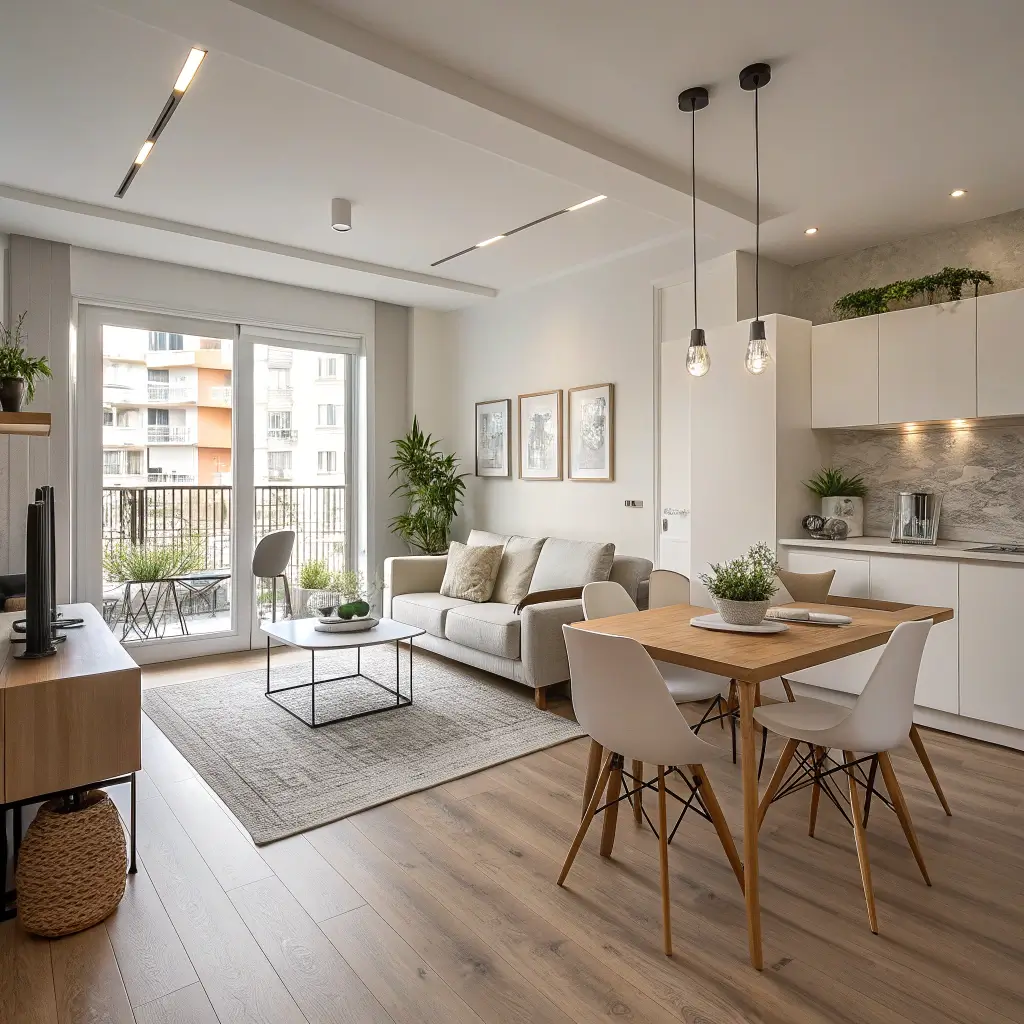
Let me tell you why minimalism and small spaces are basically best friends. When you strip away the clutter and focus on essential pieces only, your combo room suddenly feels twice as big. I learned this the hard way after trying to cram my grandmother’s entire dining set into my 200-square-foot living area. Spoiler alert: it didn’t work.
The secret here? Choose furniture with clean lines and simple silhouettes. Skip the ornate dining chairs with curvy backs – go for sleek, modern pieces that don’t visually crowd the space. I swear by my simple white dining table with hairpin legs; it practically disappears when I’m not using it.
Creating Flow in Your Space
Think about how you move through the room. You want a clear path from your sofa to the dining area without doing an obstacle course around furniture. Position your main pieces against walls when possible, leaving the center open for movement.
Here’s what works brilliantly:
- Low-profile furniture that doesn’t block sightlines
- Glass or acrylic pieces that maintain visual flow
- Consistent color palette throughout both zones
- Strategic negative space (yes, empty areas are your friend!)
Multifunctional Furniture Layouts
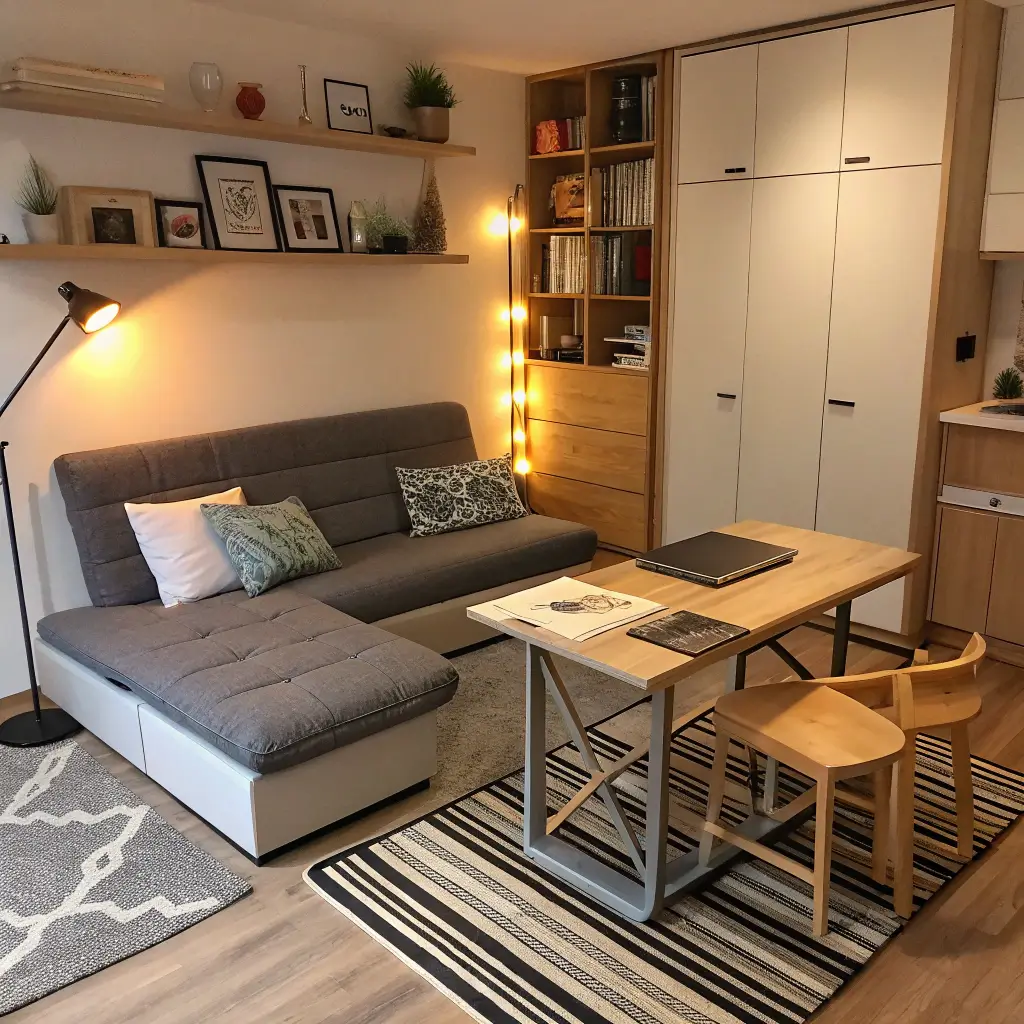
This is where things get really fun. Why have a dining table AND a desk when you can have one piece that does both? Multifunctional furniture is basically magic for small combo rooms.
My personal game-changer was discovering extendable dining tables. During the week, it’s a compact console against the wall. Come dinner party time? Boom – it seats six comfortably. Mind blown, right?
Smart Layout Strategies
The layout can make or break your combo space. I’ve tried about twenty different arrangements in my current place (my neighbors probably think I’m nuts), and here’s what actually works:
The L-Shape Configuration: Position your sofa perpendicular to your dining table, creating distinct zones while maintaining openness. This layout gives you the best of both worlds – separation without walls.
The Linear Layout: Everything along one wall – sofa, console, dining table in a row. Sounds weird? It actually creates this amazing gallery-like feel and leaves the rest of your room wide open.
Cozy Corner Dining Nooks
Who says you need a traditional dining setup? Corner nooks are having a major moment, and honestly, they’re perfect for small combos. Transform that awkward corner into your favorite breakfast spot – trust me on this one.
I built a simple banquette in my corner using IKEA kitchen cabinets as the base (hello, hidden storage!) and added some comfy cushions on top. Paired with a small round table, it’s now where I have my morning coffee every single day.
Making Corners Work Hard
Don’t let corners go to waste. They’re prime real estate in small spaces:
- Install floating corner shelves for display and storage
- Add a corner plant stand for vertical greenery
- Use corner floor lamps to save table space
- Create built-in seating with storage underneath
Also Read: 15 Beautiful Small Space Living Room Ideas Instantly
Floating Shelves & Storage Solutions
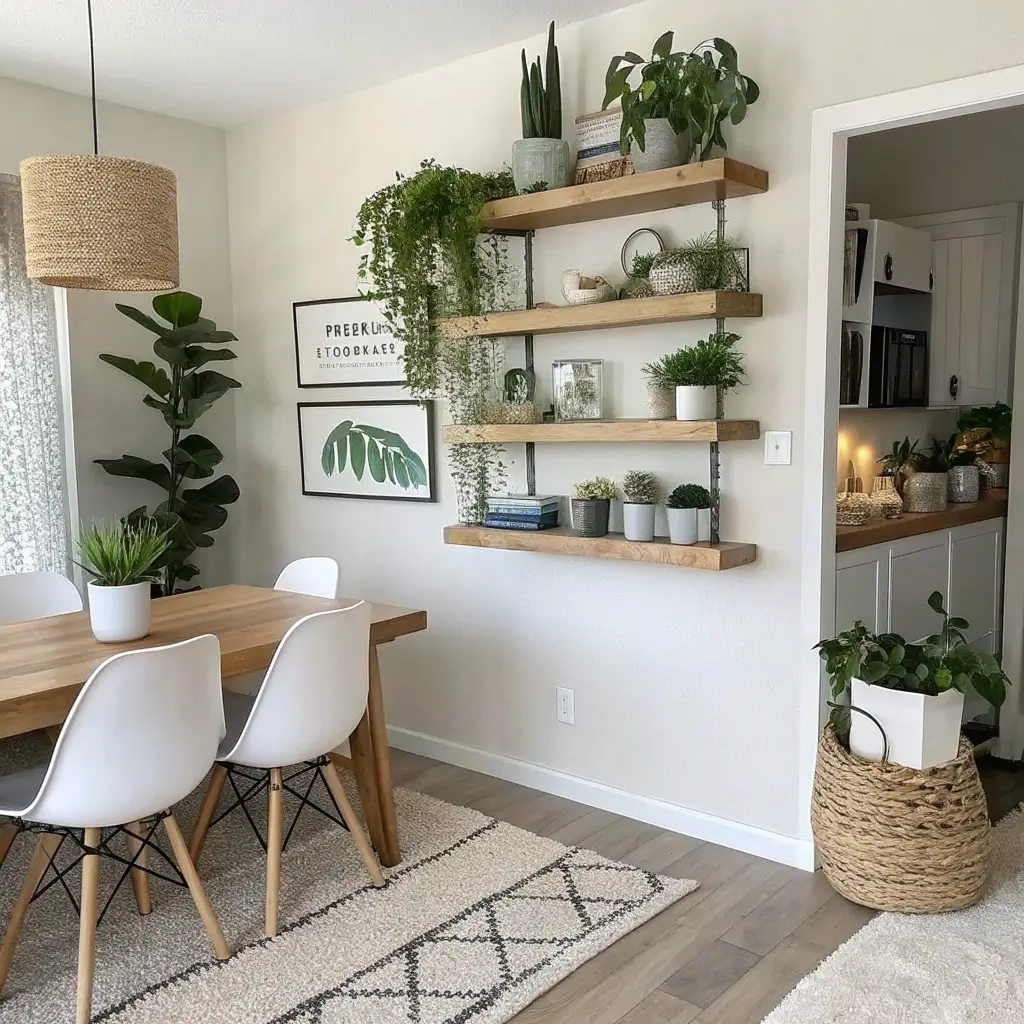
Can we talk about how floating shelves are basically the superheroes of small spaces? They give you storage without eating up floor space. I’ve got them everywhere – above my sofa, flanking my TV, even above my dining area for wine glasses and plates.
The trick is mounting them at the right height. Too low and they feel cramped; too high and they’re useless. I keep mine at eye level or slightly above for the perfect balance of function and style.
Storage That Doesn’t Suck
Here’s where most people mess up – they think small spaces mean no storage. Wrong! You just need to be creative:
Vertical Storage Winners:
- Floor-to-ceiling bookcases as room dividers
- Wall-mounted media consoles (floor space = saved)
- Hanging organizers on the back of doors
- Ceiling-mounted pot racks in dining areas
Compact Sofa + Foldable Table Hacks
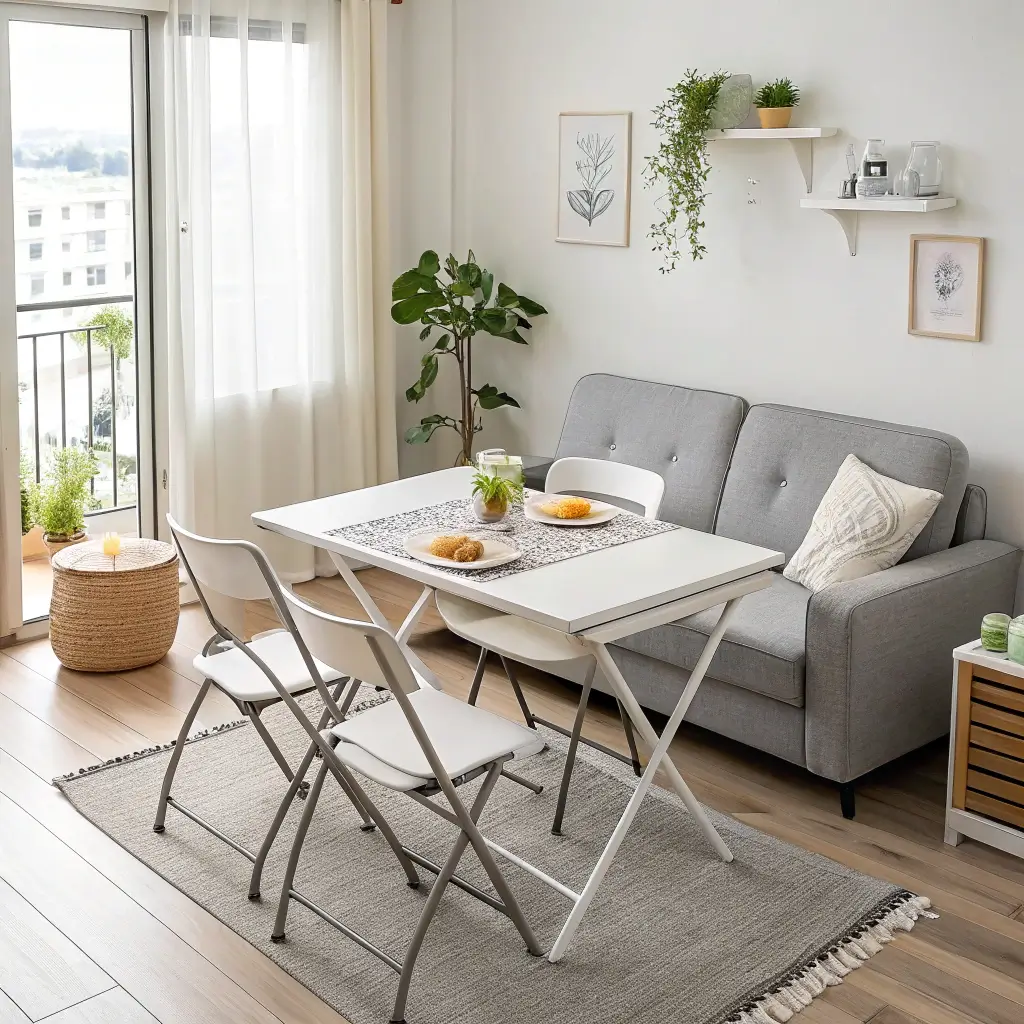
This combo changed my life, and I’m not being dramatic. A compact loveseat plus a foldable dining table means you can have friends over without playing furniture Tetris every time.
My foldable table lives behind my sofa when not in use. Takes literally 30 seconds to set up for dinner. Best $150 I ever spent, IMO.
The Fold-Down Revolution
Wall-mounted drop-leaf tables are having their moment, and for good reason:
- They disappear completely when not needed
- Perfect for studio apartments or tiny combos
- Can double as a bar or serving station
- Some models even include built-in storage
Scandinavian Style Small Space Design
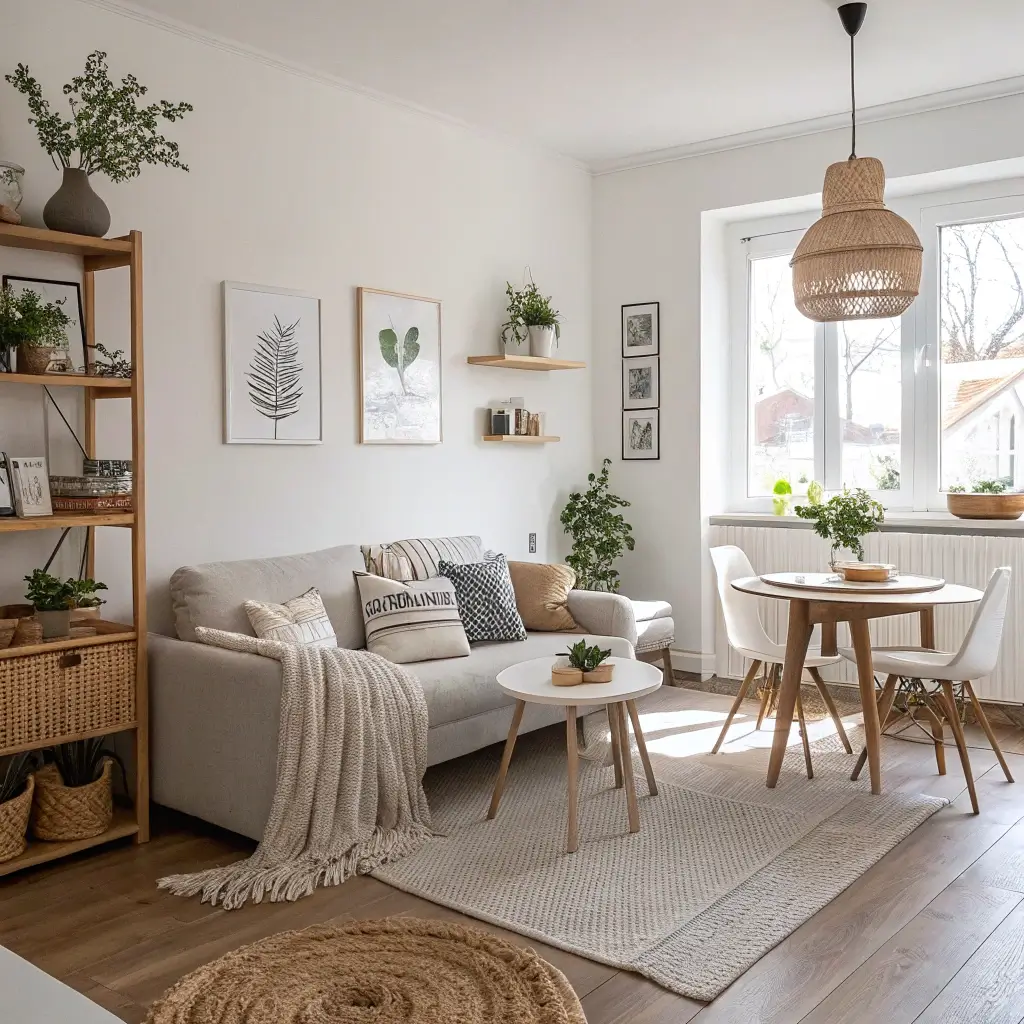
Scandinavian design and small spaces go together like coffee and mornings. The whole philosophy revolves around functionality, simplicity, and coziness – exactly what your combo room needs.
I went full Scandi in my last apartment: white walls, light wood furniture, tons of texture through throws and pillows. The space felt twice as big and infinitely more peaceful.
Hygge Your Heart Out
Creating that cozy Scandinavian vibe doesn’t require a Swedish furniture store pilgrimage:
- Layer different textures (wool, linen, wood)
- Stick to a neutral color palette with one accent color
- Add warmth through lighting, not clutter
- Incorporate natural materials wherever possible
Also Read: 15 Trendy Very Small Living Room Ideas and Space Magic
Bright & Airy Small Room Makeover
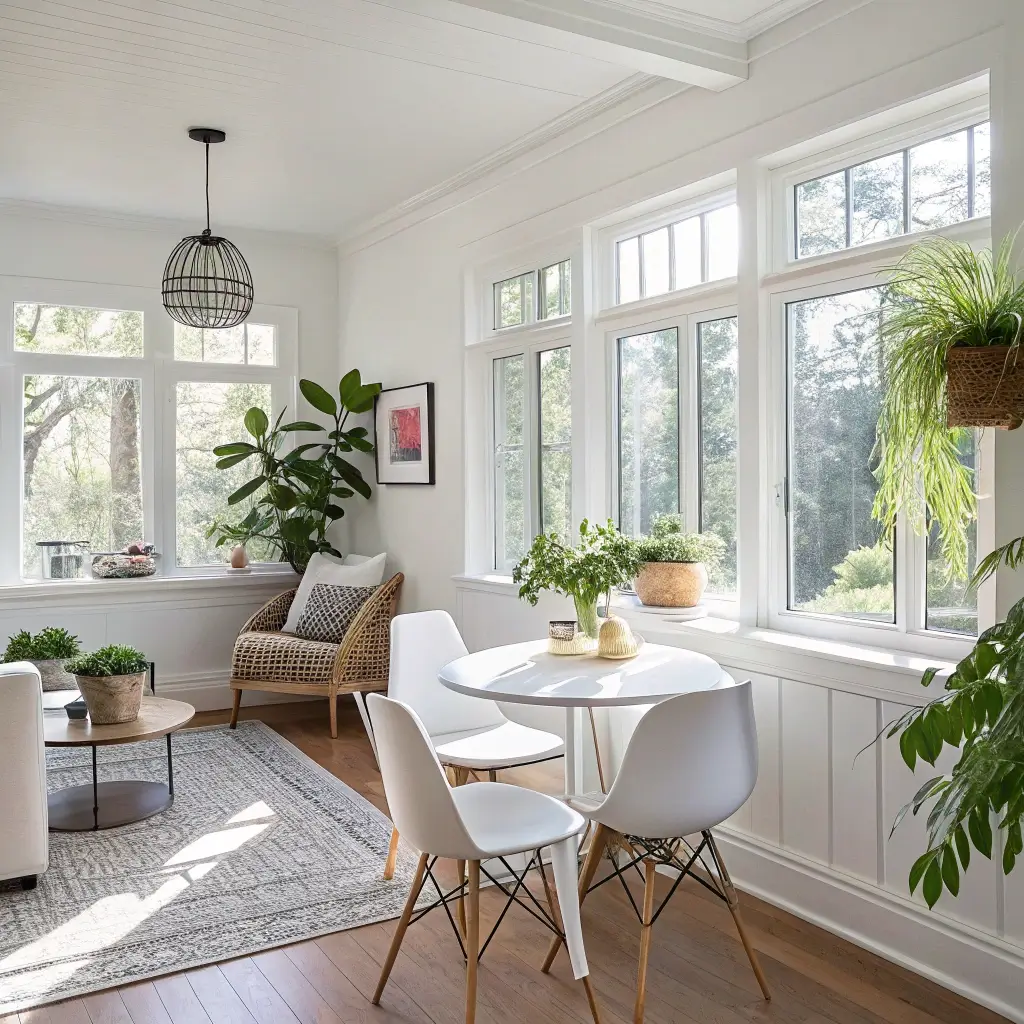
Want to know the fastest way to make your combo room feel bigger? Paint everything white and maximize natural light. Sounds too simple? It works like magic.
I once helped a friend transform her dark, cramped living-dining combo just by painting the walls white, hanging sheer curtains, and adding mirrors. Same furniture, same layout – completely different feeling.
Light Maximization Tricks
Every bit of light counts in small spaces:
- Replace heavy curtains with sheer or light-filtering options
- Position mirrors opposite windows to bounce light
- Use metallic accents to reflect light
- Keep window sills clear of clutter
Hidden Storage Dining Benches
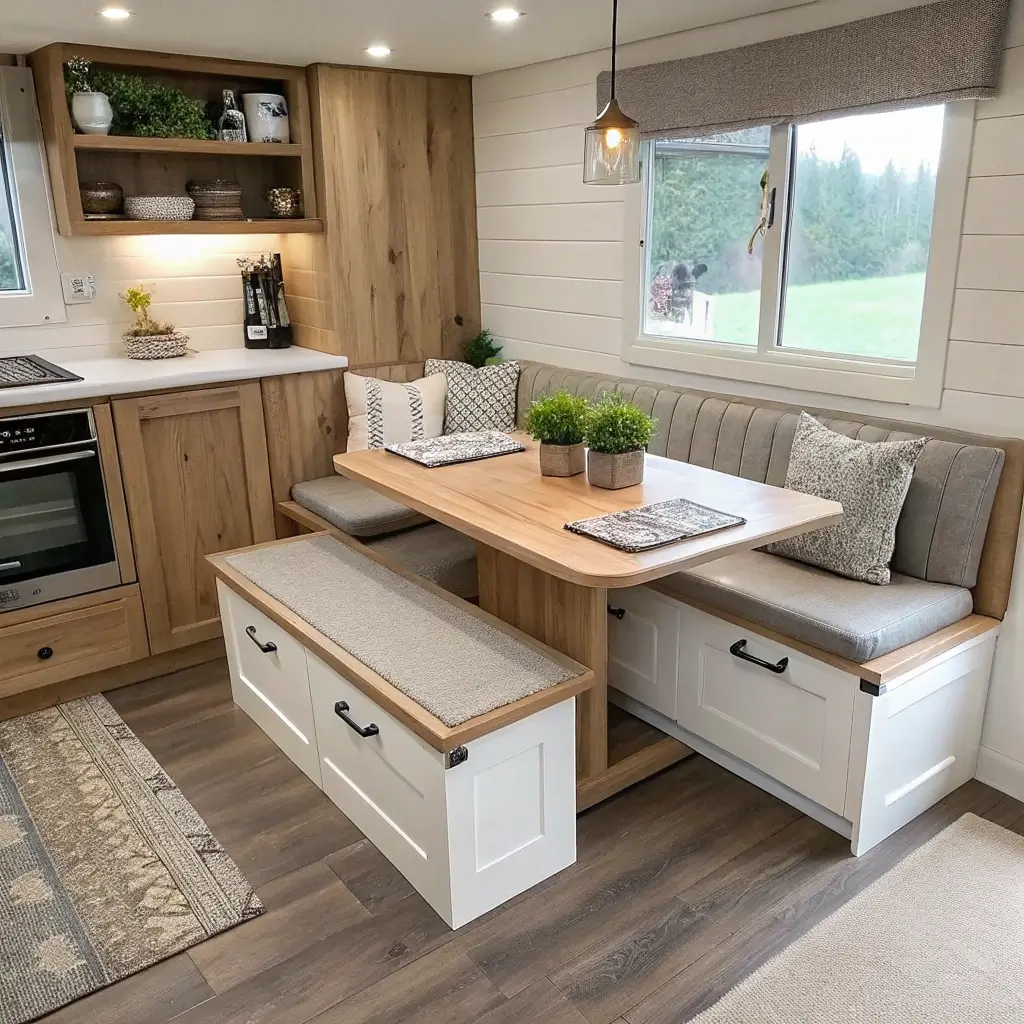
This might be my favorite small-space hack ever. Dining benches with hidden storage solve like three problems at once: seating, storage, and they take up less visual space than chairs.
I DIYed mine using a basic storage bench and added a custom cushion. Now it holds all my table linens, candles, and serving pieces. Plus, it slides perfectly under the table when not in use.
Bench Benefits That Rock
Why benches beat chairs in small spaces:
- Can squeeze more people in during parties
- Kids love them (no chair legs to trip over)
- Perfect for corner placement
- Can double as extra seating in living area
Vertical Wall Decor for Small Spaces
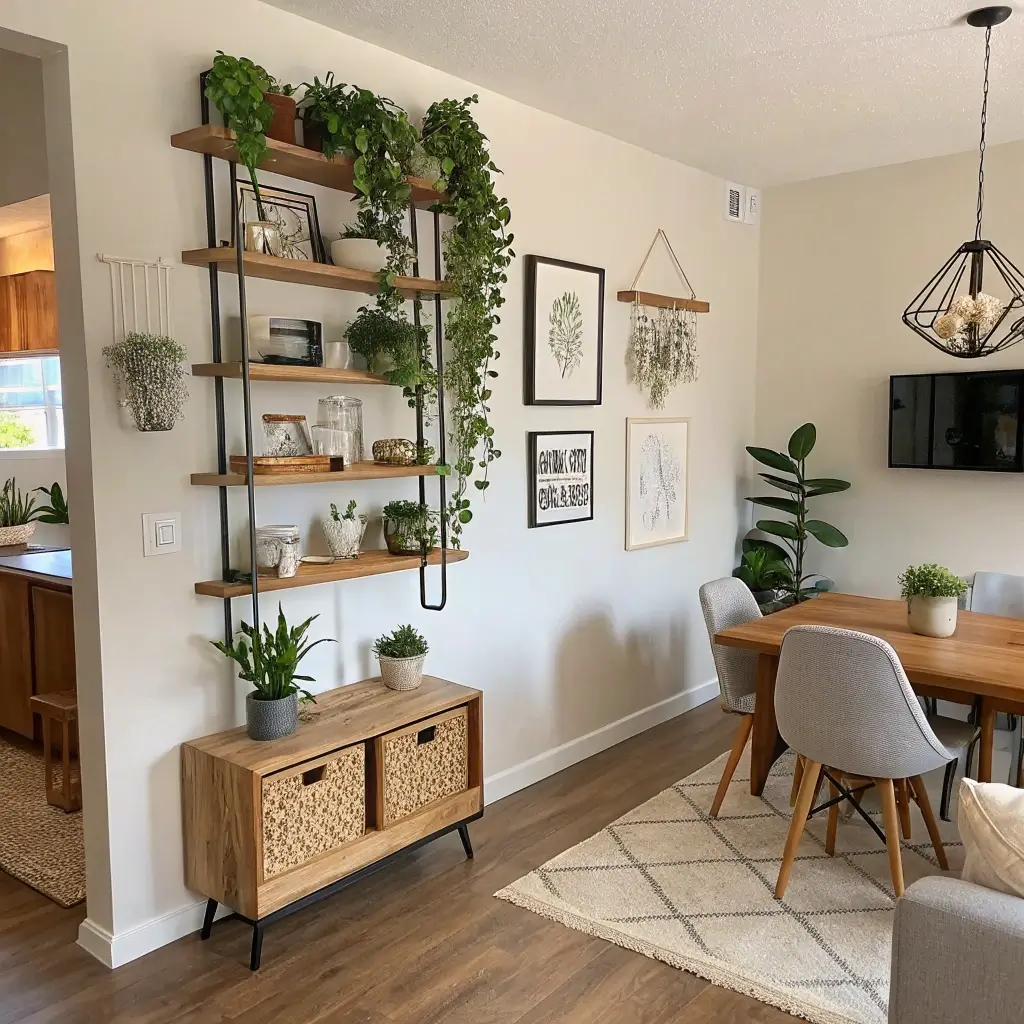
Here’s something nobody tells you – vertical decor makes your ceilings look higher. Gallery walls that go up instead of out? Game changer.
I created a floor-to-ceiling gallery wall behind my dining table using a mix of frames and floating shelves. It draws the eye up and makes my 8-foot ceilings feel like 10.
Going Vertical Without Going Crazy
The key is balance:
- Start with one statement vertical element
- Use odd numbers for visual interest
- Mix functional and decorative pieces
- Leave some breathing room between items
Also Read: 15 Trendy Small Living Room Ideas for Cozy, Modern Homes
Space-Saving Room Divider Ideas
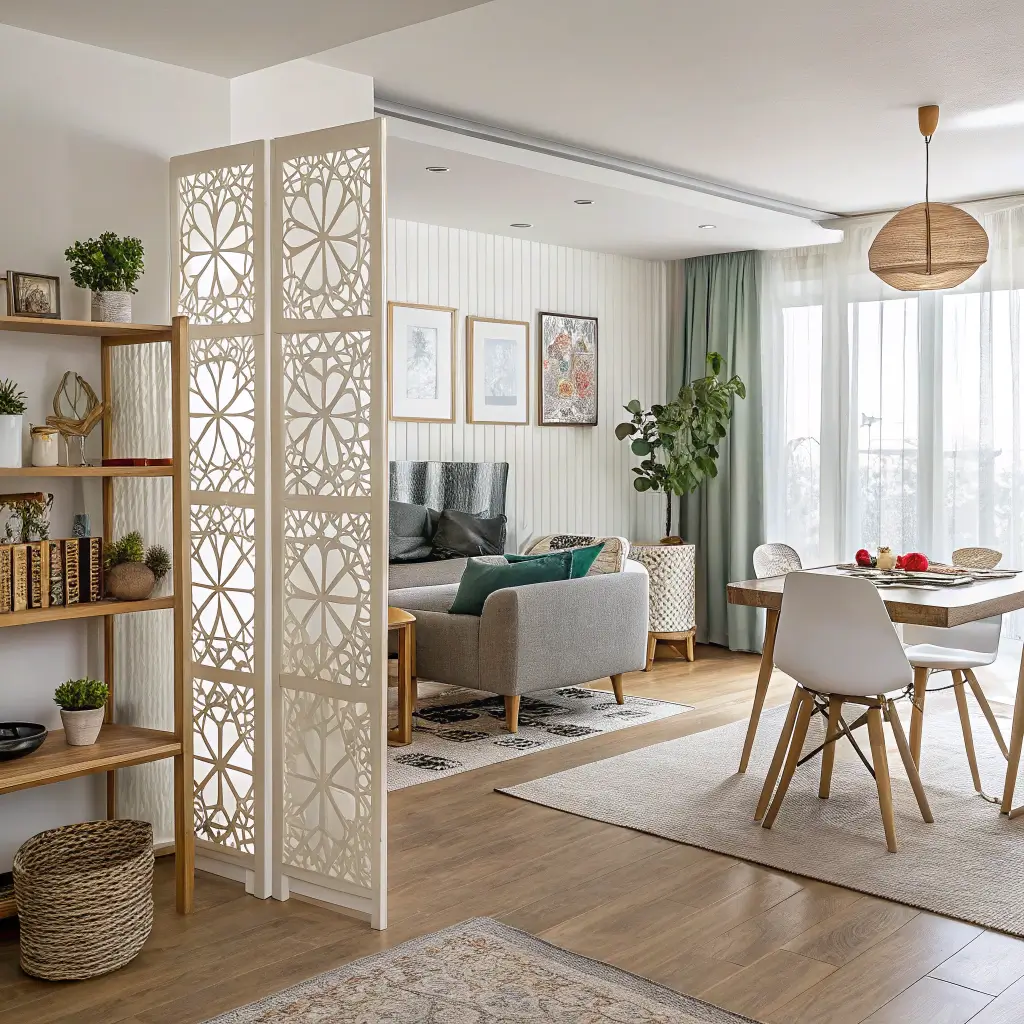
Who needs walls when you have creative dividers? Open bookcases are my personal favorite – they separate spaces while keeping things open and airy.
Currently, I’m using a curtain rod with a gorgeous linen curtain to separate my dining area from the living space. Cost me $40 and I can open it up for parties 🙂
Divider Options That Don’t Divide
Smart dividers that maintain openness:
- Rope or macramé screens (very trendy right now)
- Plants on tall stands
- Open shelving units
- Hanging panels or fabric
Multipurpose Coffee + Dining Tables
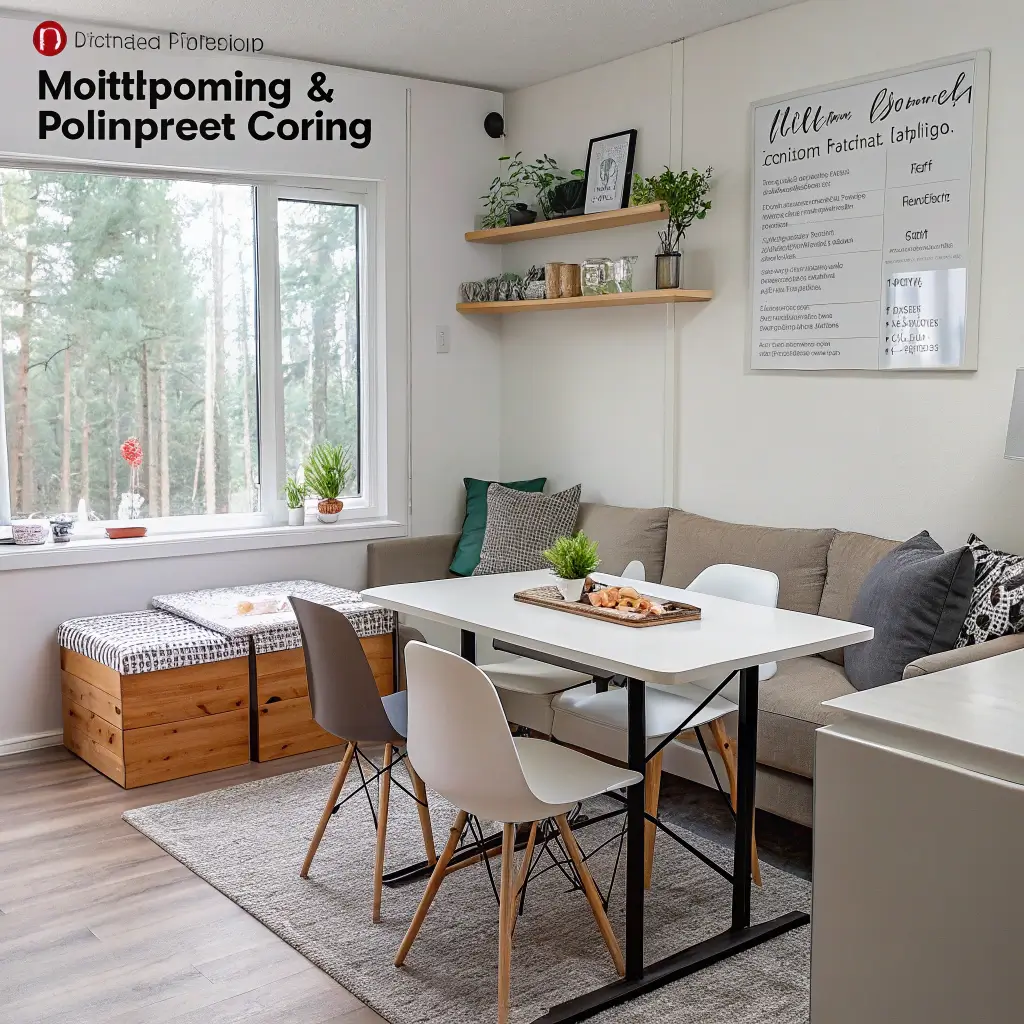
This is the ultimate small-space move. Convertible coffee tables that transform into dining tables are basically furniture wizardry.
Mine has a lift-top mechanism that raises to dining height. During Netflix binges, it’s a coffee table. During dinner? Full dining mode activated. Plus, there’s storage inside for placemats and napkins.
Double-Duty Table Features
What to look for in convertible tables:
- Smooth lifting mechanisms (test before buying!)
- Hidden storage compartments
- Wheels for easy repositioning
- Expandable surfaces for guests
Light & Neutral Color Schemes
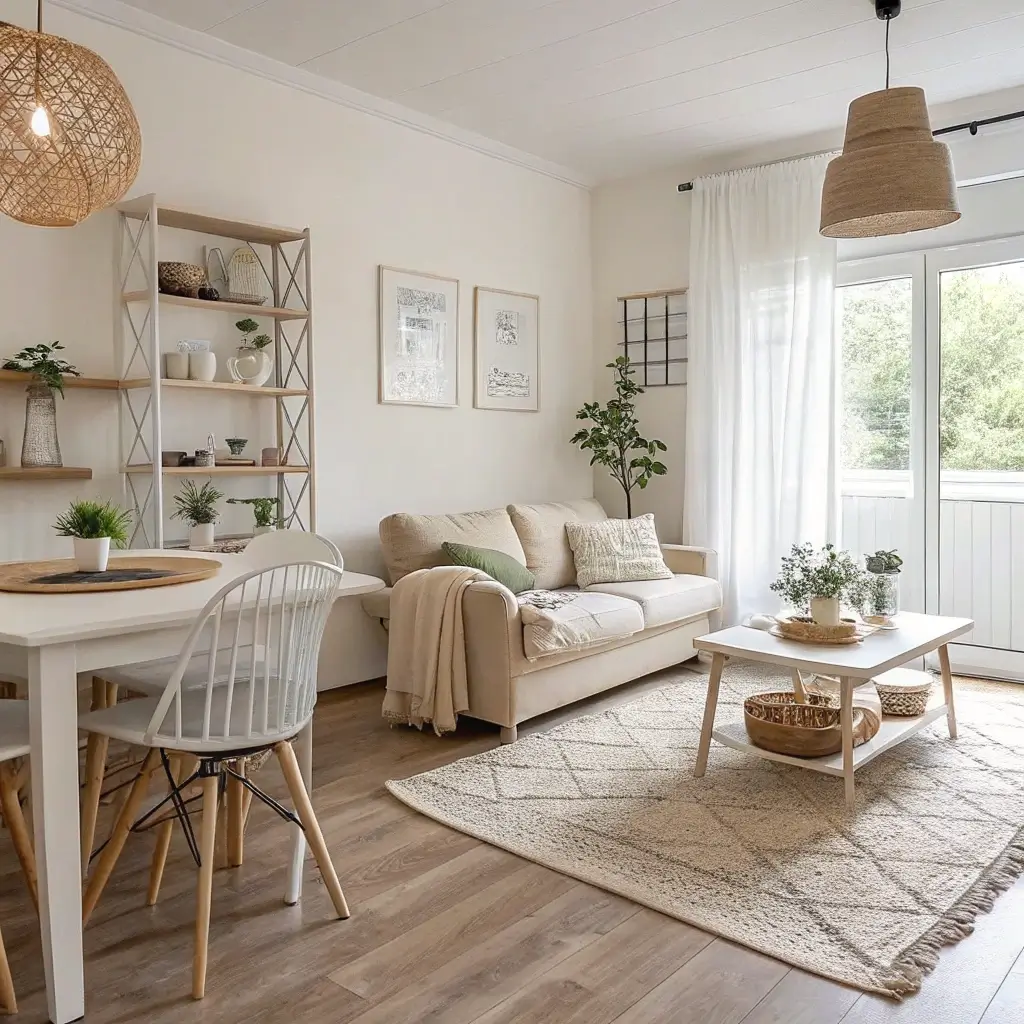
I know, I know – another person telling you to go neutral. But hear me out. Light, neutral colors literally make walls recede visually. It’s not just designer talk; it’s science.
My current palette? Warm whites, soft grays, and natural wood tones with pops of sage green. The whole space feels cohesive and calm, which is exactly what you want in a multi-use room.
Color Psychology That Works
Strategic color use in small combos:
- Use the 60-30-10 rule: 60% dominant color, 30% secondary, 10% accent
- Keep bold colors to accessories (easier to change)
- Use similar tones throughout for flow
- Add personality through texture, not just color
Mirror Tricks to Expand Small Rooms
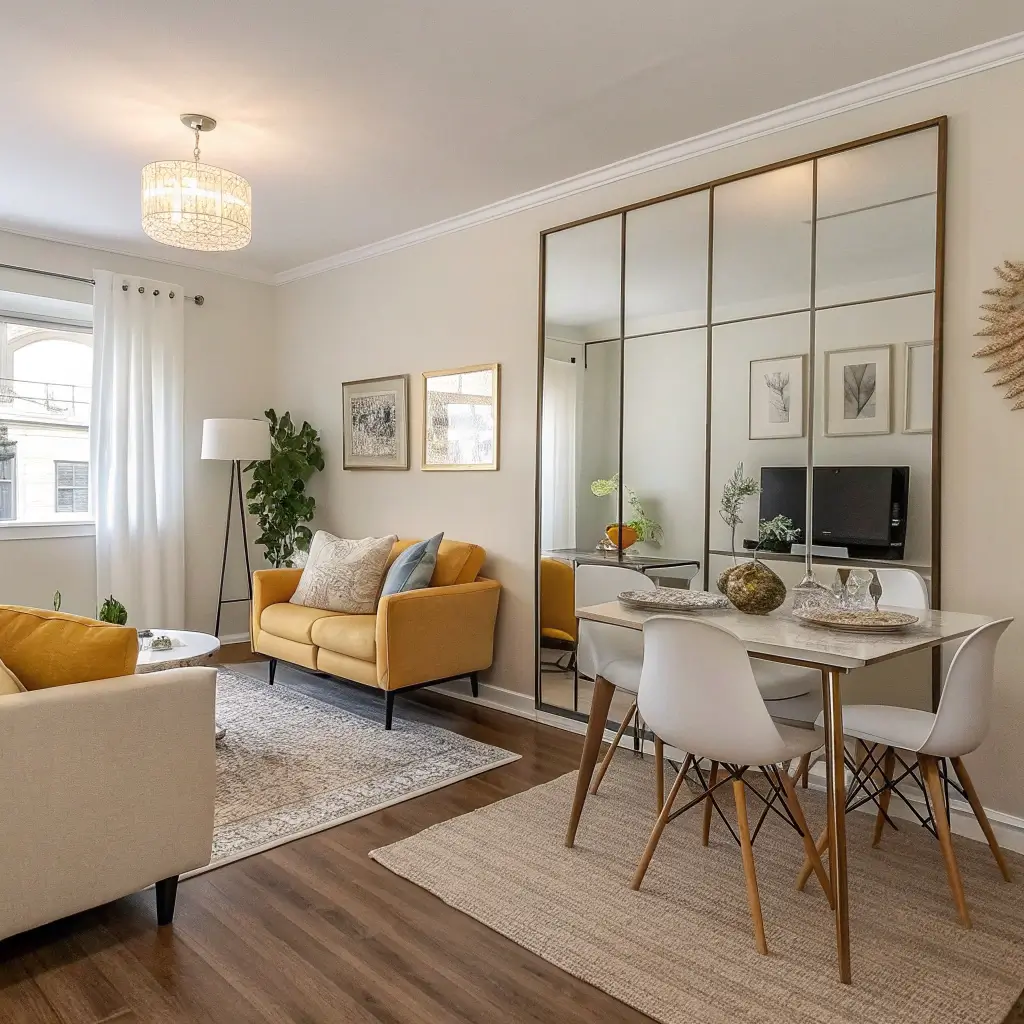
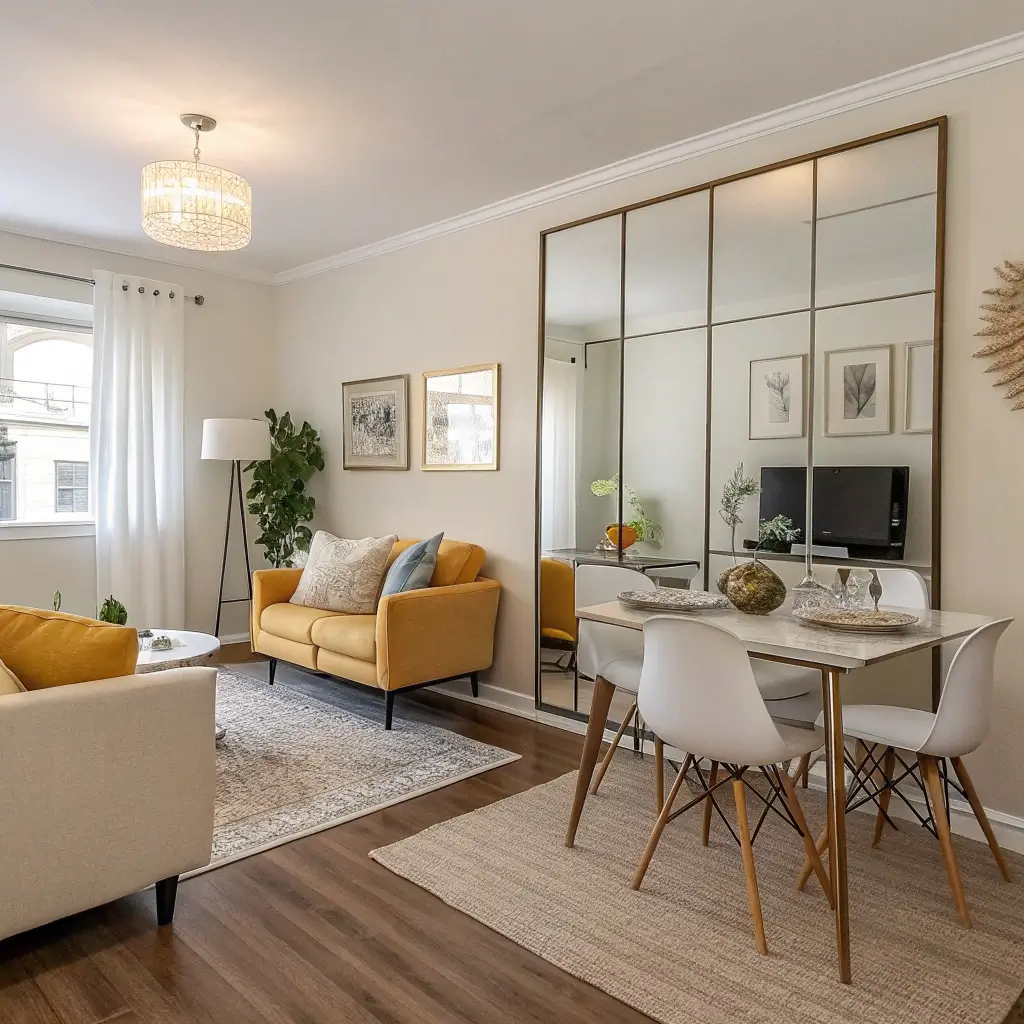
Mirrors are basically visual space doublers, and I’m obsessed. The right mirror placement can make your combo room feel massive.
I have a huge floor mirror leaning against the wall opposite my window. Not only does it reflect natural light, but it also creates the illusion of another room beyond. Instant space expansion!
Mirror Placement Magic
Where mirrors work hardest:
- Opposite windows for maximum light reflection
- Behind light sources to amplify brightness
- Along narrow walls to add width
- Above dining tables as statement pieces
Indoor Plants for Living-Dining Harmony
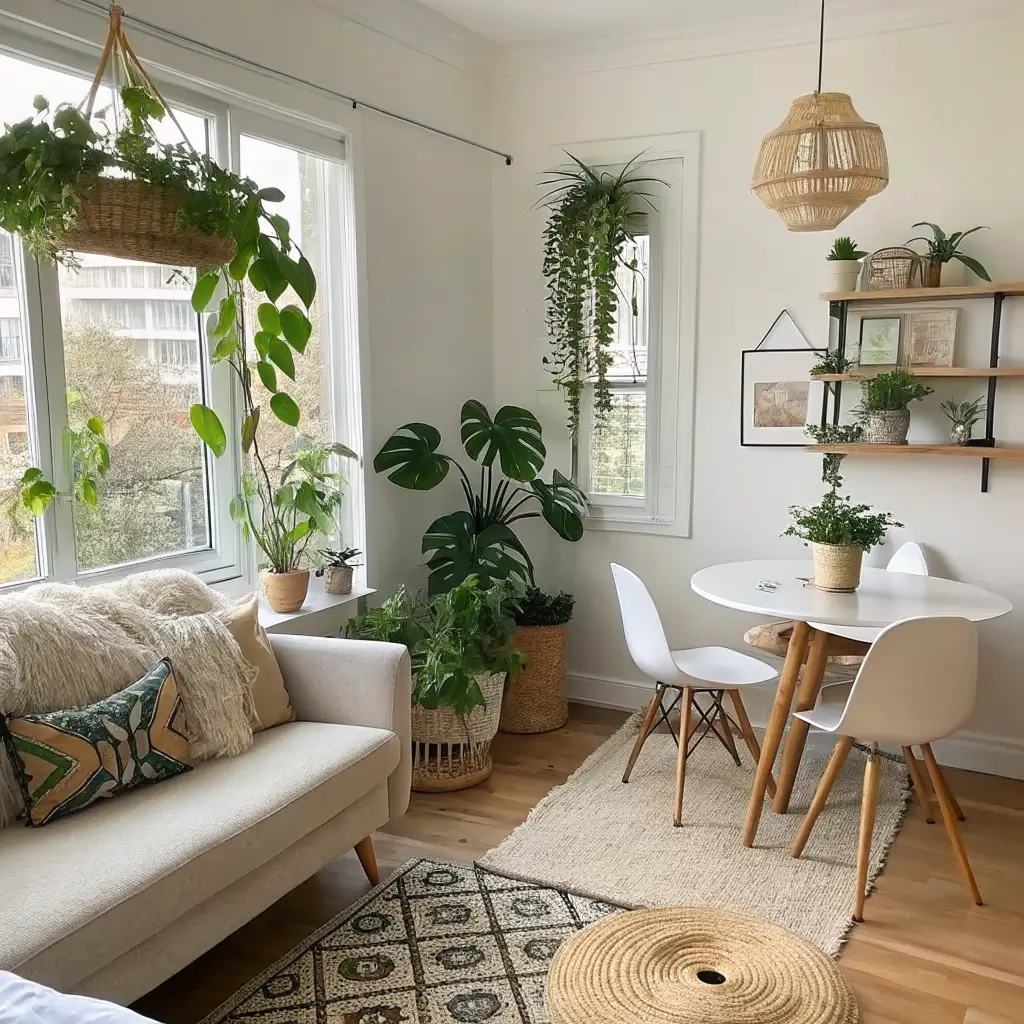
Plants do something magical in combo rooms – they create natural boundaries without walls. Plus, they make everything look more expensive and put-together.
My fiddle leaf fig stands between my sofa and dining table, acting as a living divider. Pro tip: fake plants have gotten really good lately. No judgment if you go faux!
Green Space Solutions
Best plants for combo rooms:
- Tall floor plants for natural dividers
- Hanging plants to draw eyes up
- Small succulents for table centerpieces
- Wall-mounted planters for vertical gardens
Smart Lighting for Tiny Combo Spaces
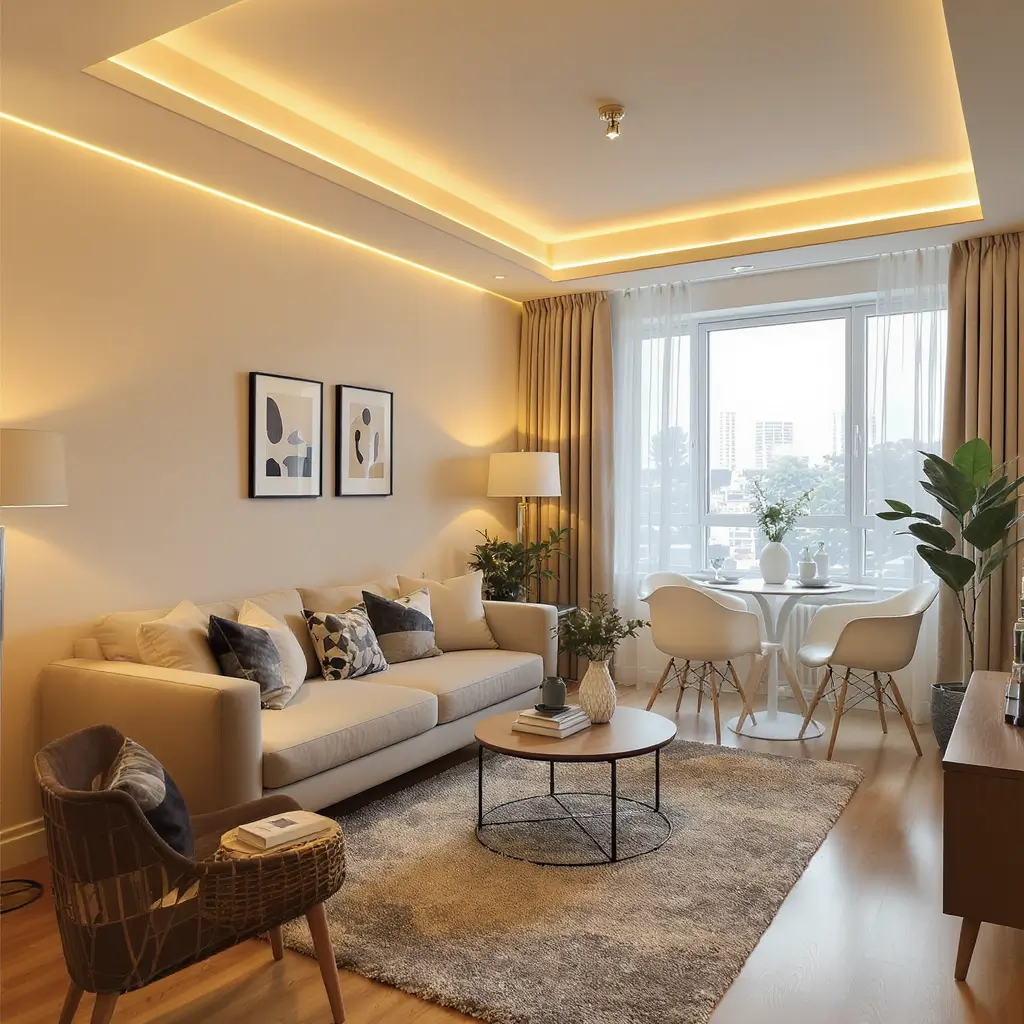
Lighting can completely transform how your combo room feels and functions. Layer your lighting like you’re creating moods for a movie set.
I use dimmers everywhere (seriously, put them on every switch). My pendant light over the dining table dims for intimate dinners, while my floor lamp creates a cozy living room vibe.
Lighting Layers That Work
The three-layer approach:
- Ambient lighting: Overall room illumination
- Task lighting: For specific activities (reading, dining)
- Accent lighting: Highlighting art or architectural features
FYI, smart bulbs are worth the investment. Being able to control brightness and color from your phone? Total game-changer for setting different moods in the same space.
Making It All Work Together
Here’s the thing about small living room-dining room combos – they force you to be intentional about every single choice. Can’t just throw furniture in and hope for the best. But when you nail it? These spaces become the heart of your home.
My combo room is where I work, eat, entertain, and relax. It’s taken tons of tweaking (and a few furniture returns), but now it’s exactly what I need it to be. Every piece has a purpose, every corner works hard, and the whole space flows beautifully.
Remember, your space doesn’t have to be big to be amazing. Some of the most stunning rooms I’ve seen have been tiny combos where every element was chosen with care. Start with one or two of these ideas and build from there. Your perfect small space is totally achievable – you just need the right approach.
The best part? Small spaces are actually easier to transform than large ones. Less square footage means less furniture to buy, less to decorate, and faster makeovers. So really, your tiny combo room is kind of a blessing in disguise. Who knew, right?
Now stop scrolling Pinterest and start moving furniture around. Your dream living-dining combo is waiting to happen!
