The living room is one of the most important spaces in any home. It is where we welcome guests, relax after a tiring day, enjoy family time, watch television, and create countless everyday memories. Because this room serves so many purposes, decorating it requires more than simply choosing attractive furniture. A successful living room should feel stylish, comfortable, functional, and personal at the same time.
When I think about modern living room design, I do not imagine a cold room filled with expensive furniture and empty white walls. To me, modern design is about simplicity, balance, clean lines, practical choices, and carefully selected decorative details. A modern living room can still feel warm, inviting, and full of personality.
These 15 decor home living room modern design ideas will help you refresh your space without making it feel overcrowded or uncomfortable. Whether you have a small apartment, a spacious family home, or a living room that needs a complete makeover, these ideas can help you create a modern interior that suits your lifestyle.
1. Begin With a Clear and Balanced Layout
Before buying cushions, lamps, artwork, or decorative accessories, start by looking carefully at the layout of your living room. The way furniture is arranged has a major effect on how comfortable and spacious the room feels.
I always recommend identifying the main purpose of the room first. Some living rooms are mainly used for watching television, while others are designed for conversation, reading, entertaining guests, or spending time with family. Once you understand the main function, furniture placement becomes much easier.
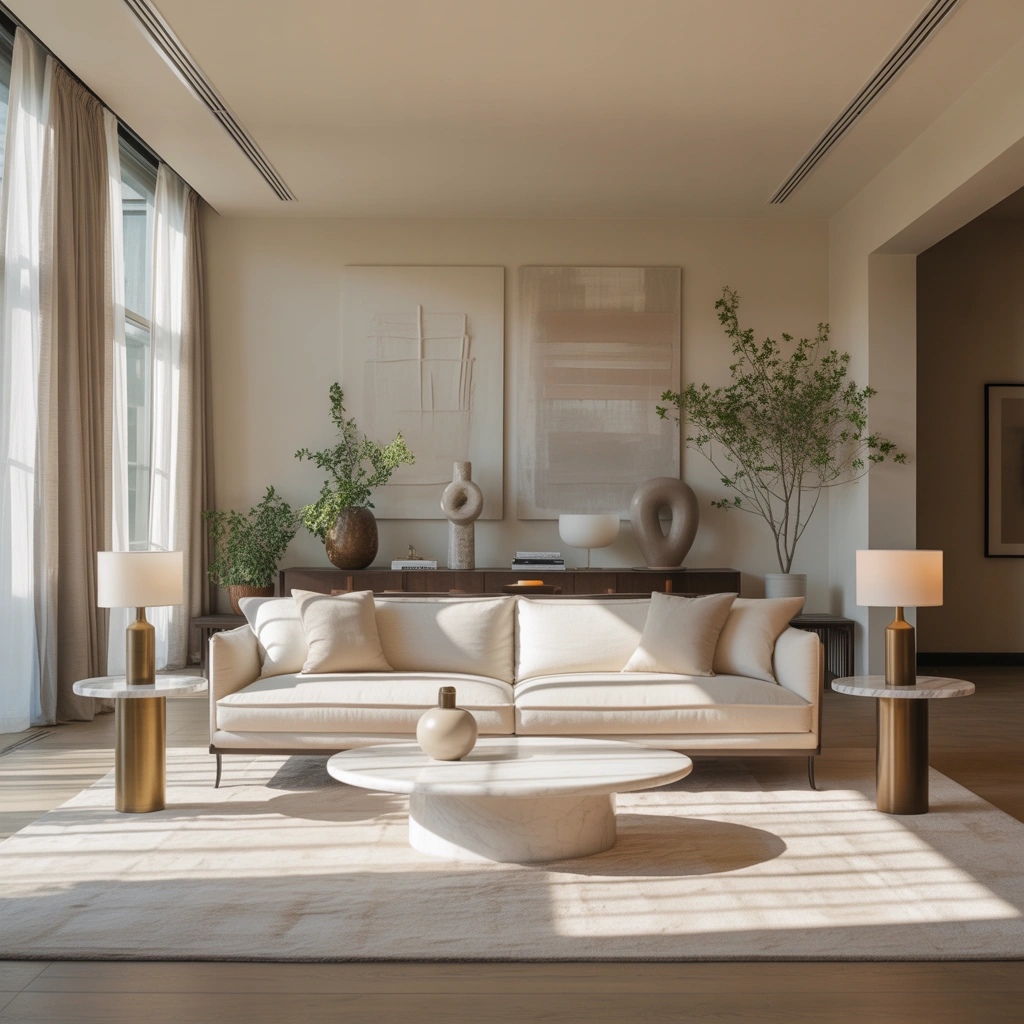
In a modern living room, avoid pushing every piece of furniture against the walls. Instead, try creating a central seating area. Position the sofa toward the main focal point, such as a television, fireplace, large window, or statement wall. Add chairs or a smaller sofa at an angle that encourages conversation.
Leave enough space between furniture pieces so people can move around comfortably. Ideally, there should be clear pathways through the room without anyone having to walk around large obstacles.
For small living rooms, use fewer but more purposeful pieces. A compact sofa, one accent chair, a slim coffee table, and a practical storage unit may be all you need. A well-planned layout will always feel more modern than a room filled with too much furniture.
2. Choose a Modern Neutral Color Palette
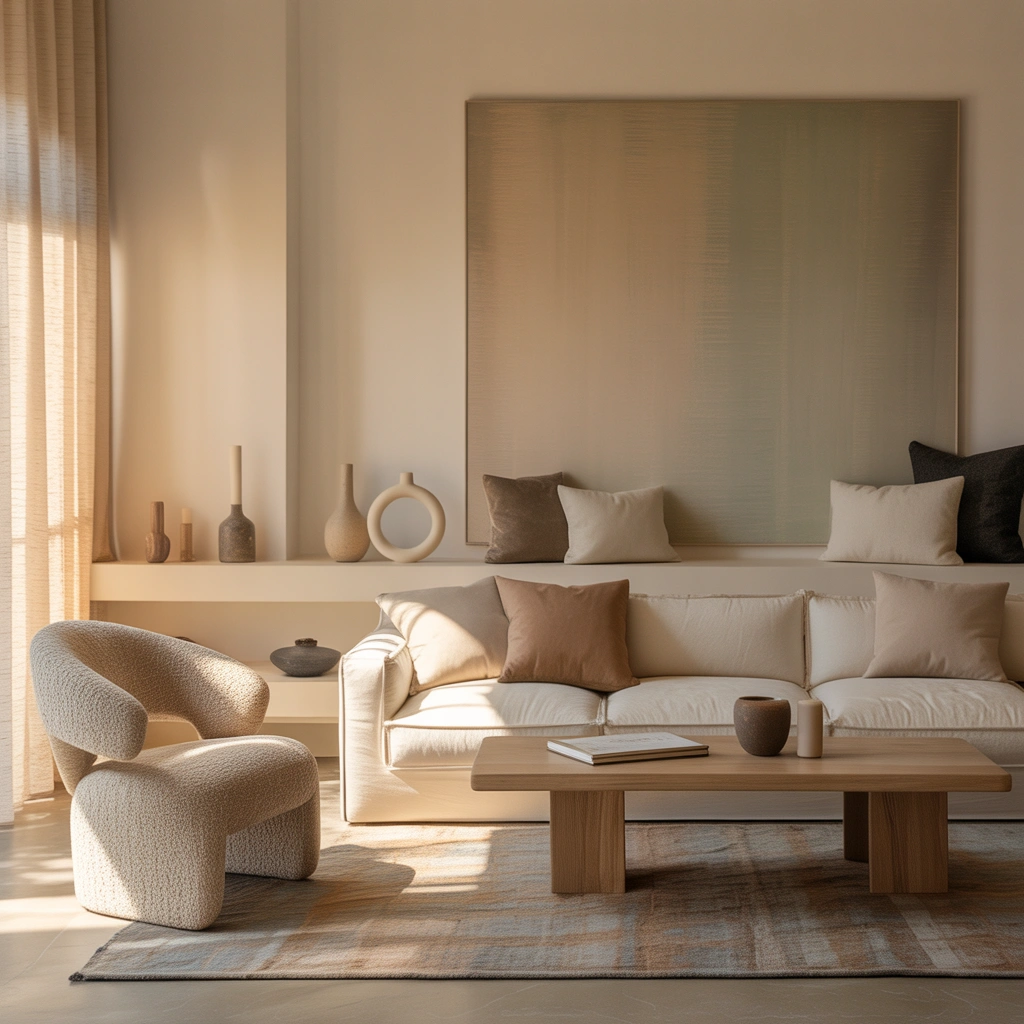
Neutral colors are strongly associated with modern interior design because they create a calm and timeless foundation. White, cream, beige, taupe, soft gray, charcoal, and warm brown can make a living room feel clean, sophisticated, and visually balanced.
However, using neutral colors does not mean your room has to look boring. The secret is to combine different shades and textures.
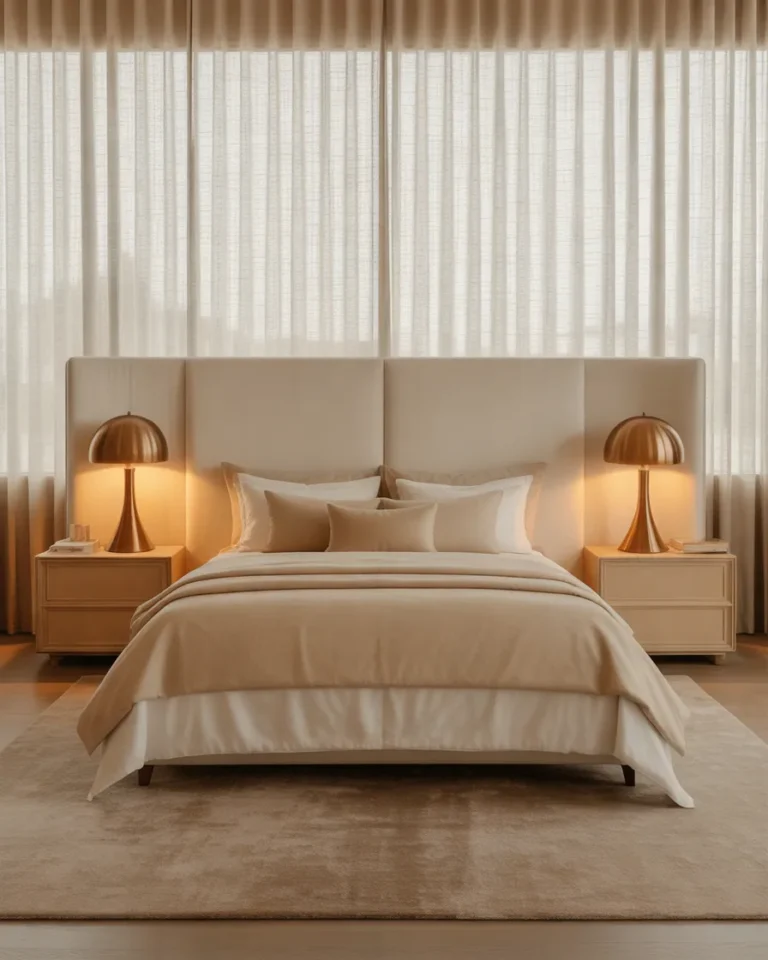
For example, you could pair warm white walls with a beige sofa, a light wood coffee table, cream curtains, and a textured gray rug. Although the colors are subtle, the different materials prevent the room from looking flat.
I personally prefer warm neutrals over very cool gray tones because they make a living room feel more welcoming. Shades such as ivory, sand, oatmeal, mushroom, and soft caramel work beautifully in modern homes.
You can also use darker colors for contrast. A charcoal accent chair, black metal lamp, dark wood cabinet, or deep brown coffee table can add depth to a neutral room.
When creating a color palette, choose one main shade, one supporting shade, and one or two accent colors. This simple approach keeps the overall design coordinated.
3. Add a Statement Sofa With Clean Lines
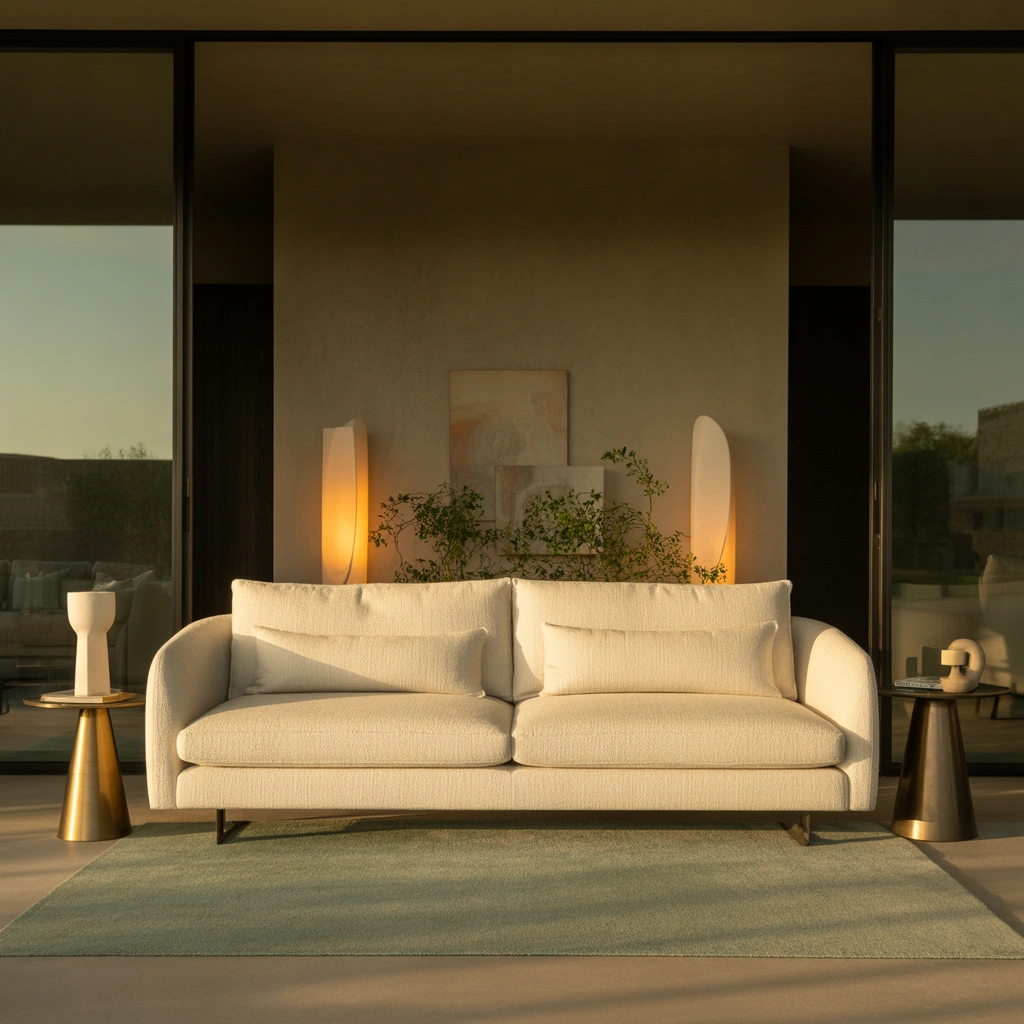
The sofa is usually the largest and most noticeable piece of furniture in a living room. For that reason, it often sets the tone for the entire space.
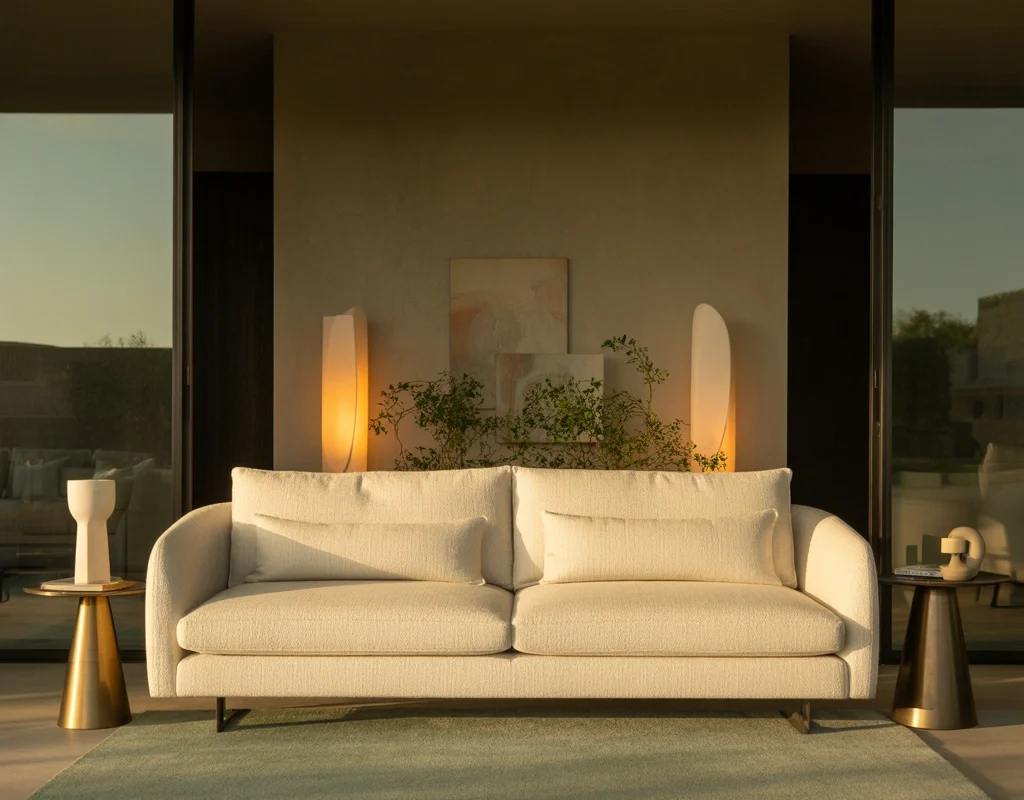
Modern sofas usually feature clean lines, simple shapes, low or medium-height backs, and minimal decorative details. They may have slim legs, structured cushions, or gently rounded edges.
When choosing a sofa, think about comfort as well as appearance. A beautiful sofa that feels uncomfortable will quickly become a disappointing purchase. Test the seat depth, cushion firmness, fabric texture, and back support before making a decision.
Neutral sofas are particularly versatile. Beige, cream, light gray, taupe, and soft brown can work with many different decorative styles. You can easily update the room later by changing cushions, throws, rugs, and artwork.
For a stronger visual statement, consider a sofa in olive green, navy blue, rust, deep teal, or charcoal. These colors can still feel modern when the shape of the sofa remains simple.
If your living room is small, select a sofa with raised legs. Being able to see the floor underneath creates a greater sense of openness. In a larger space, an L-shaped sectional can define the seating area while providing generous space for family and guests.
4. Create One Strong Focal Point
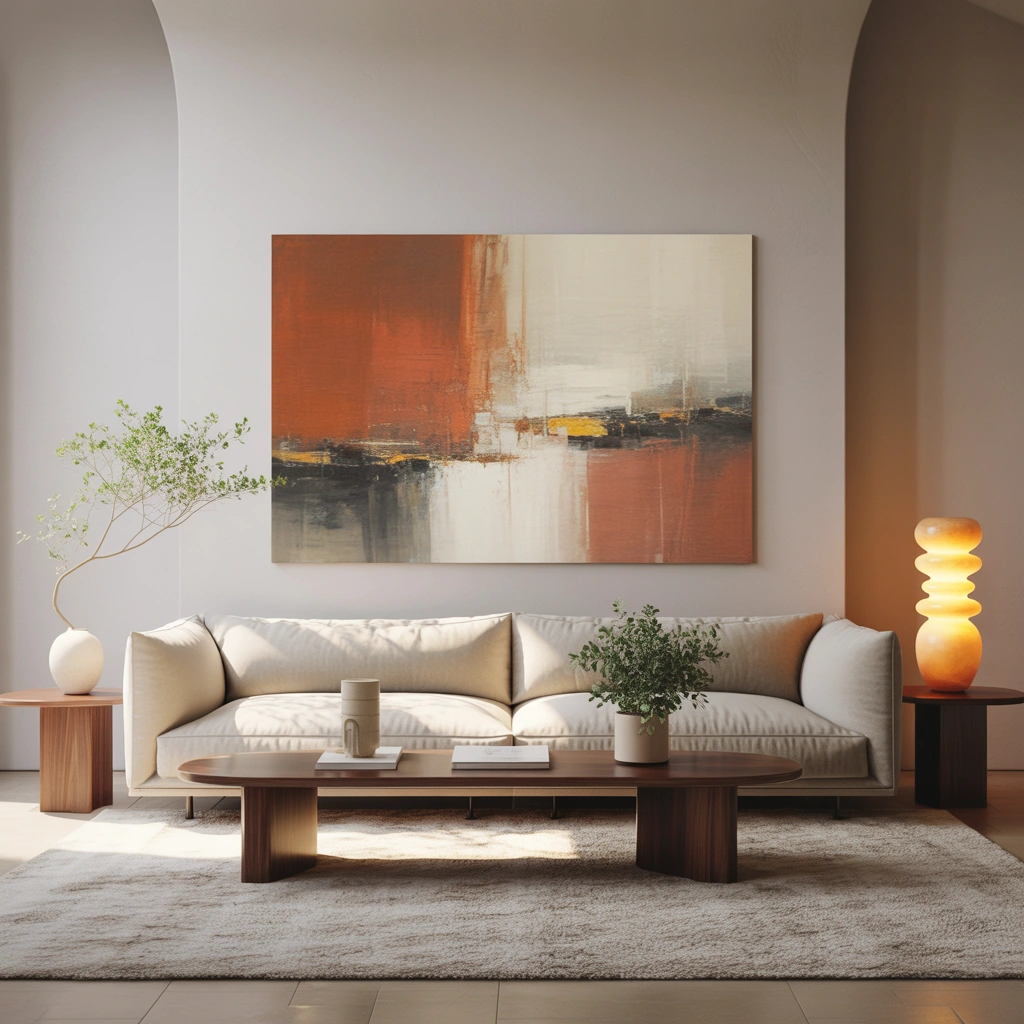
Every well-designed living room needs a focal point. This is the first area that naturally attracts attention when someone enters the room.
A focal point may be a fireplace, television wall, oversized artwork, large window, decorative shelving unit, or feature wall. The important thing is to choose one main focus rather than allowing several elements to compete with one another.
For example, if you have a beautiful fireplace, arrange the seating to highlight it. Decorate the mantel with a few carefully selected pieces instead of covering it with many small objects.
If the television is the main focus, create a clean media wall. You could mount the television, place a low console underneath, and add subtle wall panels, shelving, or lighting. Concealing visible cables will make the arrangement look much more polished.
Large artwork can also become an effective focal point. One oversized painting or framed print often looks more modern than a scattered collection of unrelated pictures.
When I decorate a room, I find that selecting the focal point early makes every other decision easier. Furniture, lighting, colors, and accessories can then support that feature rather than distracting from it.
5. Layer Different Types of Lighting
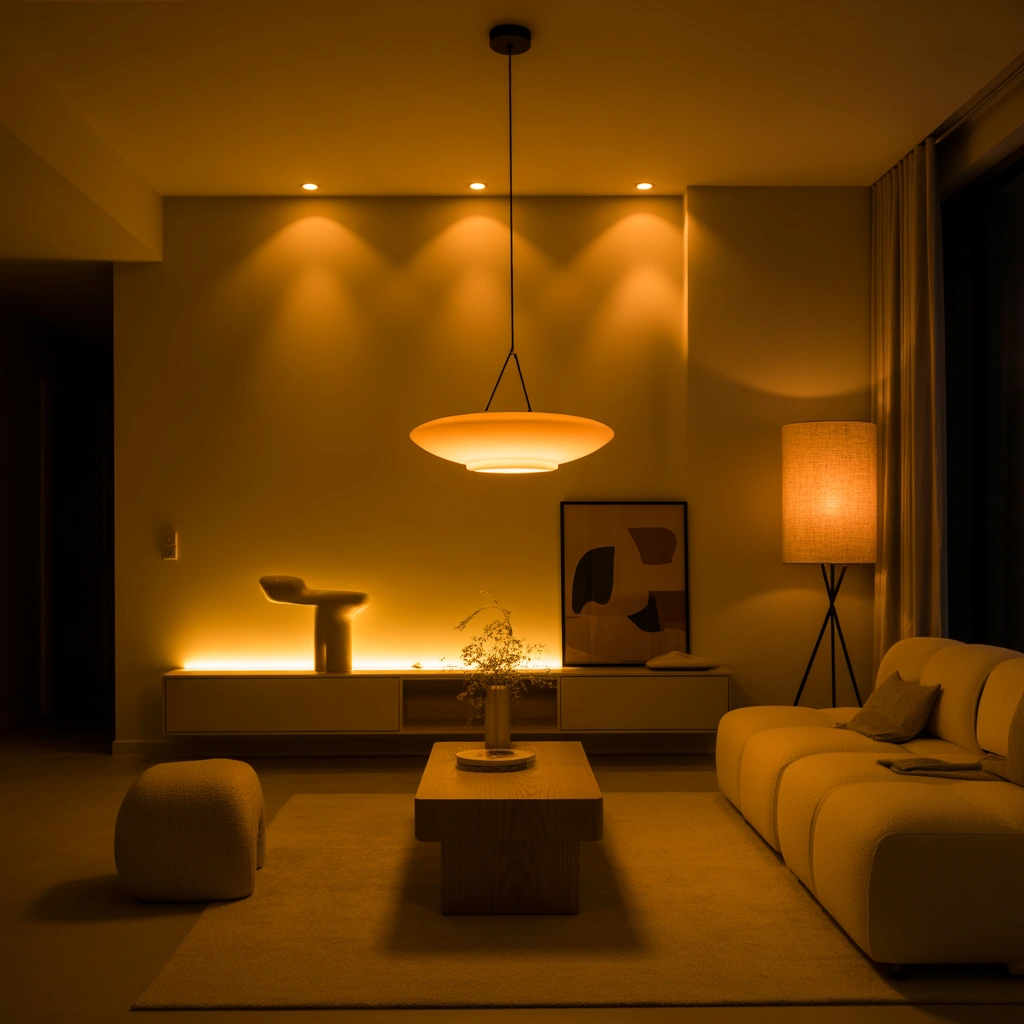
Lighting is one of the most powerful elements in home decor, yet it is often treated as an afterthought. A single ceiling light is rarely enough to create a comfortable and attractive living room.
Modern living room lighting should include several layers:
- General lighting for the whole room
- Task lighting for reading or working
- Accent lighting for artwork or decorative features
- Mood lighting for creating a relaxing atmosphere
A central pendant light, chandelier, or recessed ceiling lights can provide general illumination. Floor lamps placed beside a sofa or reading chair offer practical task lighting. Table lamps add warmth to side tables and consoles.
Wall sconces, LED strips, or picture lights can highlight architectural details, shelves, wall panels, and artwork.
I especially like using warm white bulbs in living rooms because they create a soft and comfortable glow. Very bright, cool-toned lighting can make the space feel harsh and clinical.
Dimmer switches are also worth considering. They allow you to adjust the atmosphere depending on the time of day or activity. Bright lighting may be useful when cleaning or entertaining, while softer lighting is ideal for relaxing in the evening.
6. Use a Large Area Rug to Define the Space
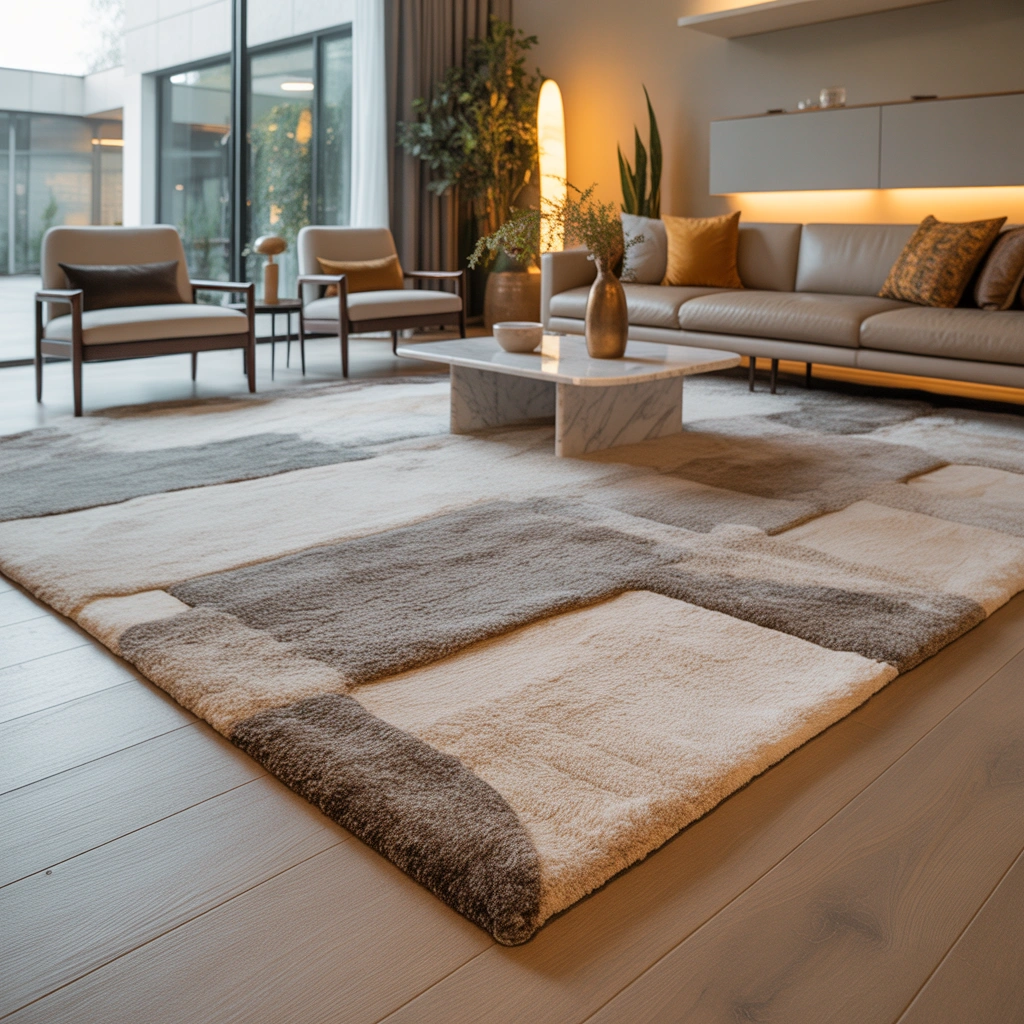
An area rug can instantly make a living room feel more complete. It helps define the seating zone, introduces texture, adds warmth, and connects furniture pieces visually.
One of the most common decorating mistakes is choosing a rug that is too small. A tiny rug placed only beneath the coffee table can make the room feel disconnected.
Ideally, the front legs of the sofa and chairs should rest on the rug. In a spacious living room, all the seating furniture may fit entirely on it. This creates a more unified and luxurious appearance.
For a modern look, choose rugs with subtle geometric patterns, abstract designs, soft lines, or simple solid colors. Natural materials and textured weaves also work beautifully.
If your room already contains bold artwork or colorful furniture, a neutral rug may provide balance. If the rest of the room is simple, a patterned rug can become a striking decorative feature.
Practicality is important too. Low-pile rugs are generally easier to clean and maintain, especially in busy family homes. Washable rugs can be useful in homes with children or pets.
7. Introduce Natural Wood for Warmth
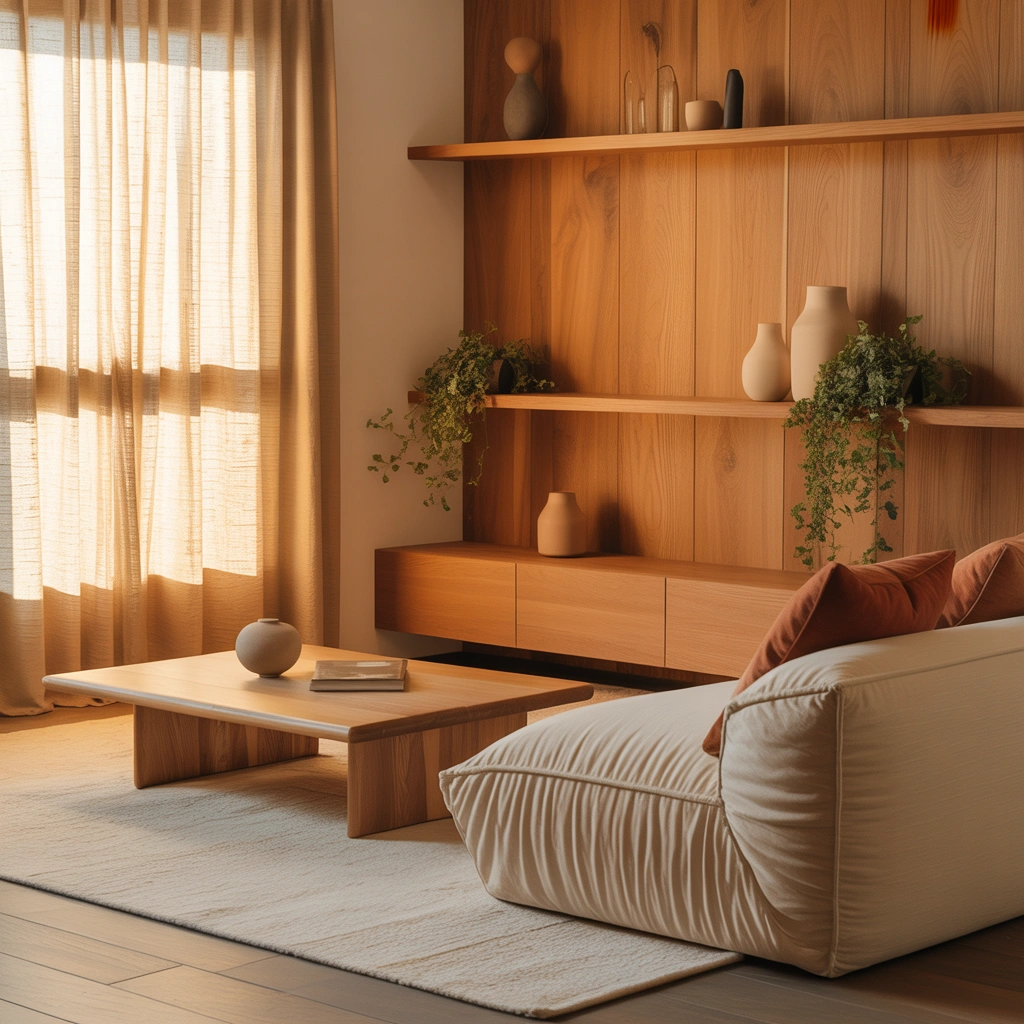
Modern living rooms can sometimes feel cold when they contain too many hard surfaces, cool colors, or metal finishes. Natural wood is an excellent way to bring warmth and balance into the space.
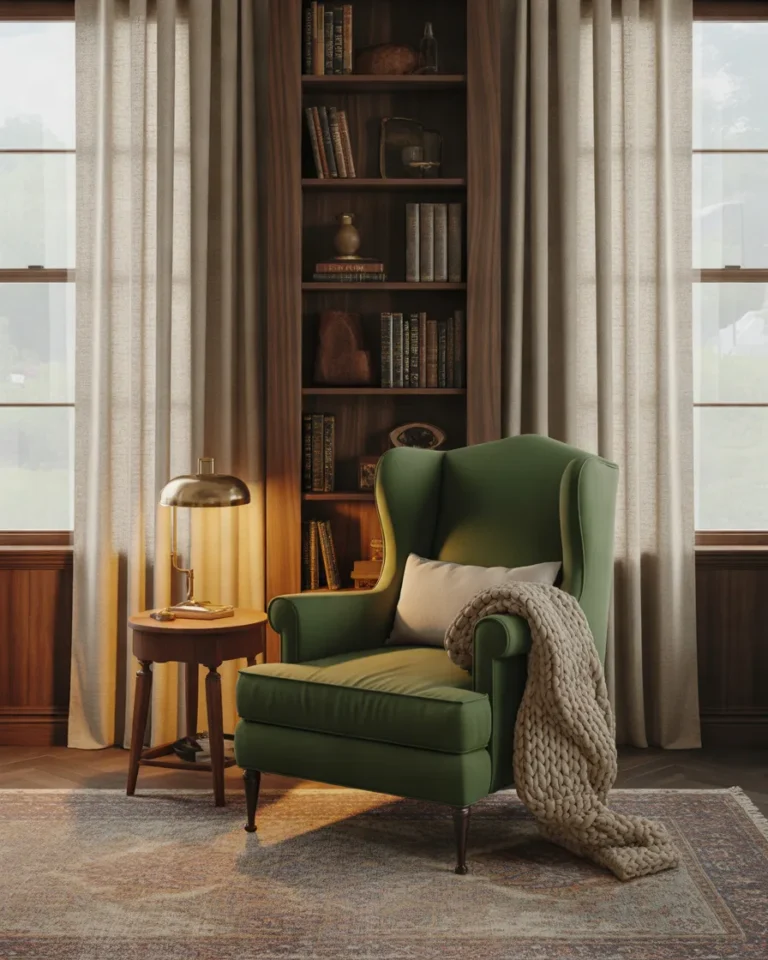
You can introduce wood through a coffee table, sideboard, shelving unit, television console, side table, armchair, picture frame, or decorative bowl.
Light woods such as oak, ash, and maple create a soft Scandinavian-inspired appearance. Medium wood tones add warmth without feeling too heavy. Dark walnut or espresso finishes create contrast and sophistication.
You do not need every wooden item to match perfectly. In fact, using slightly different wood tones can make the room feel more natural and thoughtfully layered. However, try to keep the undertones compatible. Warm woods usually look best together, while cooler gray-brown woods can form another coordinated group.
Wooden slat wall panels have also become popular in modern living room design. They can be used behind a television, around a fireplace, or on a narrow feature wall. The vertical lines add texture and can make the ceiling appear higher.
8. Mix Soft Textures for a Comfortable Look
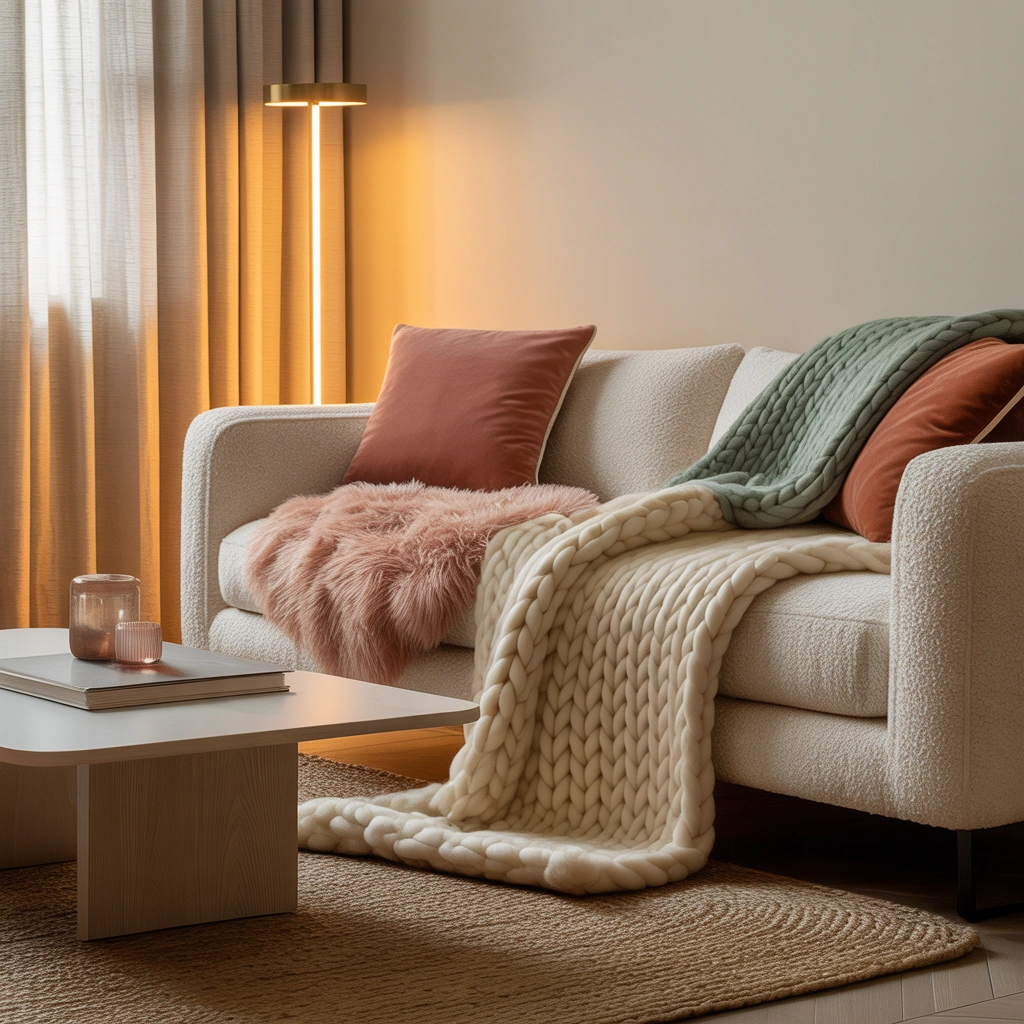
A modern living room should look refined, but it should also feel comfortable enough for everyday life. Texture is what transforms a simple room into an inviting one.
Layer materials such as linen, cotton, wool, velvet, boucle, leather, wood, glass, metal, and woven fibers. These surfaces reflect light differently and make the decor feel more interesting.
For example, a smooth leather chair can be softened with a knitted throw. A structured sofa can be decorated with velvet and linen cushions. A wooden table may sit on a thick wool rug, while woven baskets add natural texture nearby.
When working with a neutral color palette, texture becomes even more important. A cream room can still feel rich and detailed when it includes ribbed cushions, soft curtains, a loop-pile rug, brushed metal fixtures, and natural wood.
I like to think of texture as the element that makes a living room feel touchable. It encourages people to sit down, relax, and enjoy the room rather than simply admire it from a distance.
9. Decorate With Modern Wall Art
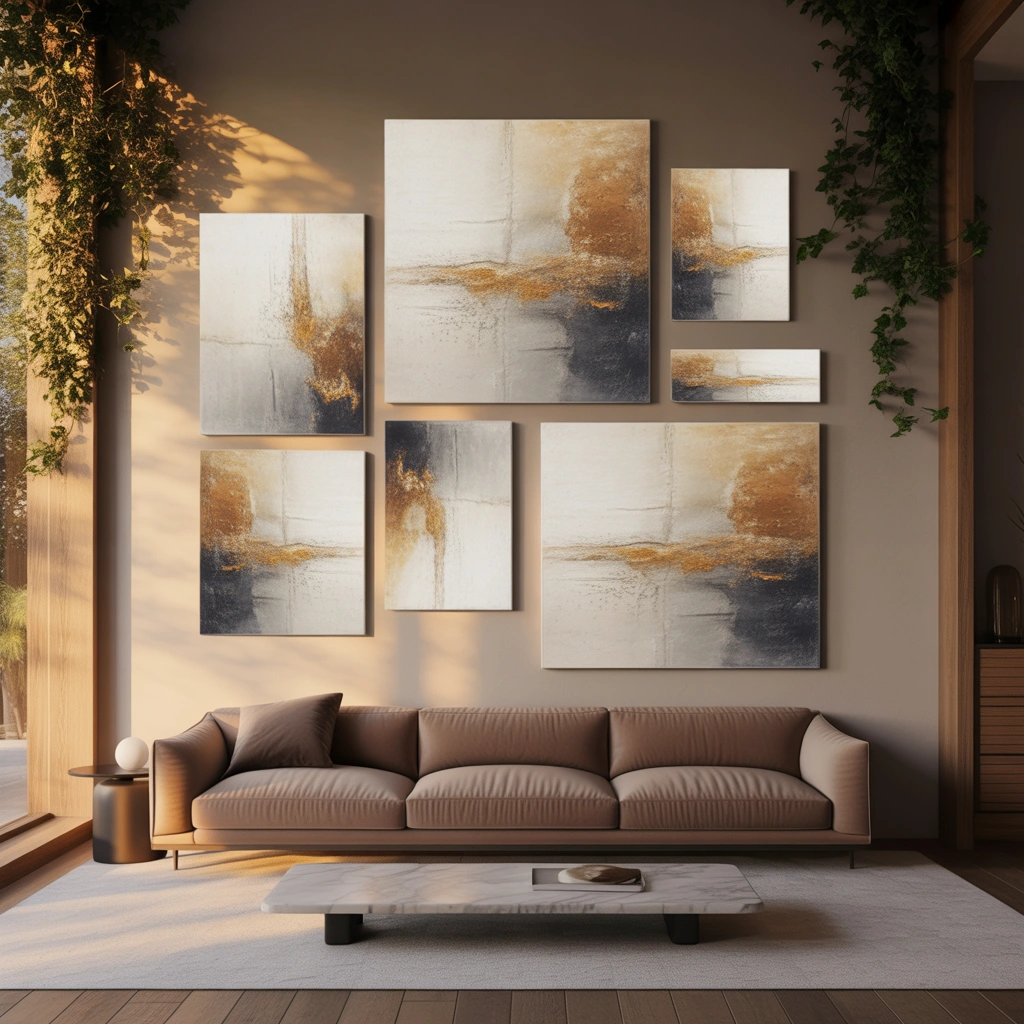
Blank walls can make a living room feel unfinished, but covering every available surface can create visual clutter. Modern wall decor works best when it is intentional.
One large artwork above the sofa can create a strong and elegant statement. Abstract paintings, minimalist prints, architectural photography, landscapes, and black-and-white photographs are all suitable options.
A gallery wall can also work in a modern living room, but it should have a clear sense of structure. Use matching frames, a consistent color palette, or evenly spaced artwork to maintain a clean appearance.
Mirrors are another excellent wall decoration. A large mirror reflects natural light and can make a small room appear more spacious. Round, arched, rectangular, and irregularly shaped mirrors can all complement modern decor.
Textured wall art, fabric panels, wooden sculptures, and metal installations can add dimension without introducing too many colors.
Choose art that genuinely connects with you. A modern living room should not feel like a furniture showroom. Personal artwork, travel photography, or meaningful prints can make the space feel authentic.
10. Keep the Coffee Table Styling Simple
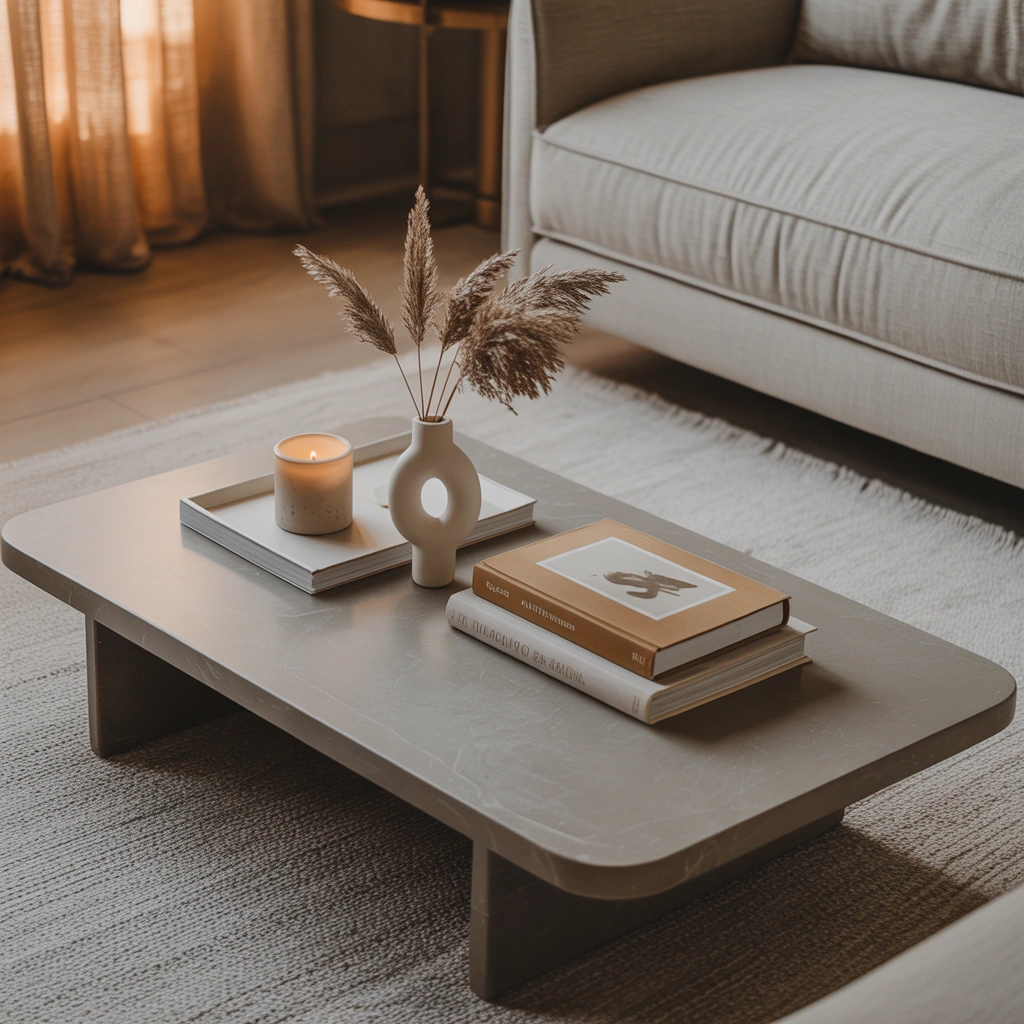
The coffee table often sits in the center of the living room, which makes it an important decorative surface. However, it still needs to remain practical.
Instead of filling the table with many small objects, use a few well-chosen pieces. A simple arrangement might include a decorative tray, two or three books, a candle, and a small plant or sculptural object.
Varying the height of items creates visual interest. For example, stack books horizontally and place a small object on top. Add a taller vase nearby and balance it with a lower bowl or candle.
A tray helps group smaller items and prevents the surface from looking messy. It can also be moved easily when you need more space.
Leave part of the coffee table empty for drinks, snacks, remote controls, or everyday use. Modern design values function, so decoration should never make the table inconvenient.
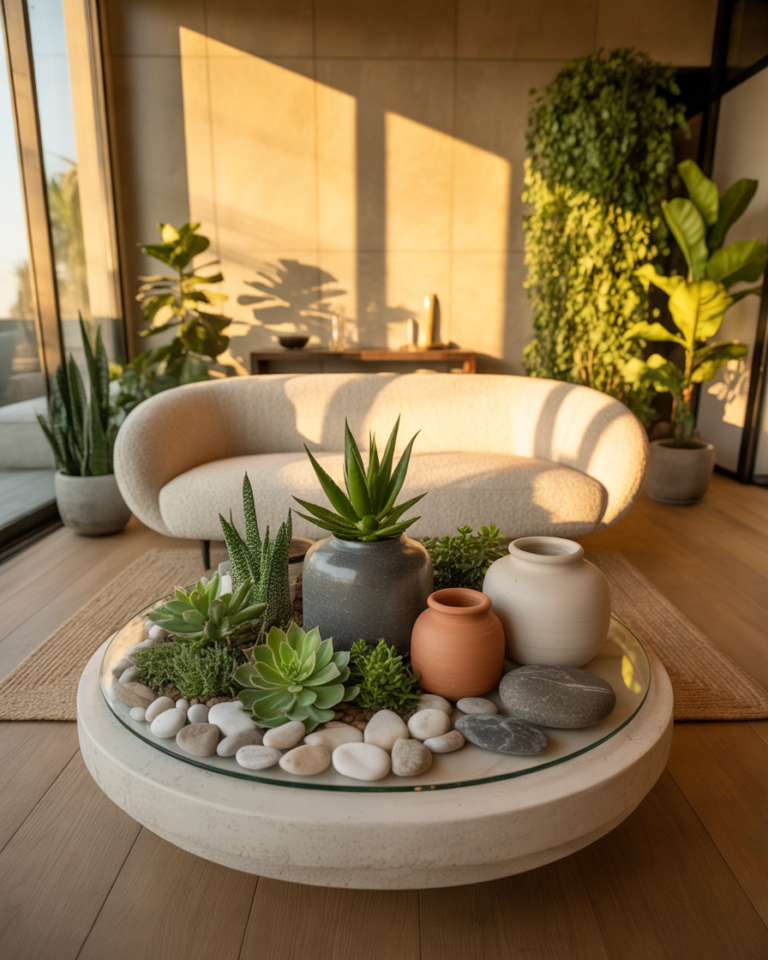
The coffee table itself can also become a design feature. Round tables soften rooms with many straight lines, while glass tables help small spaces feel open. Wood adds warmth, stone brings luxury, and black metal provides contemporary contrast.
11. Add Indoor Plants and Natural Greenery
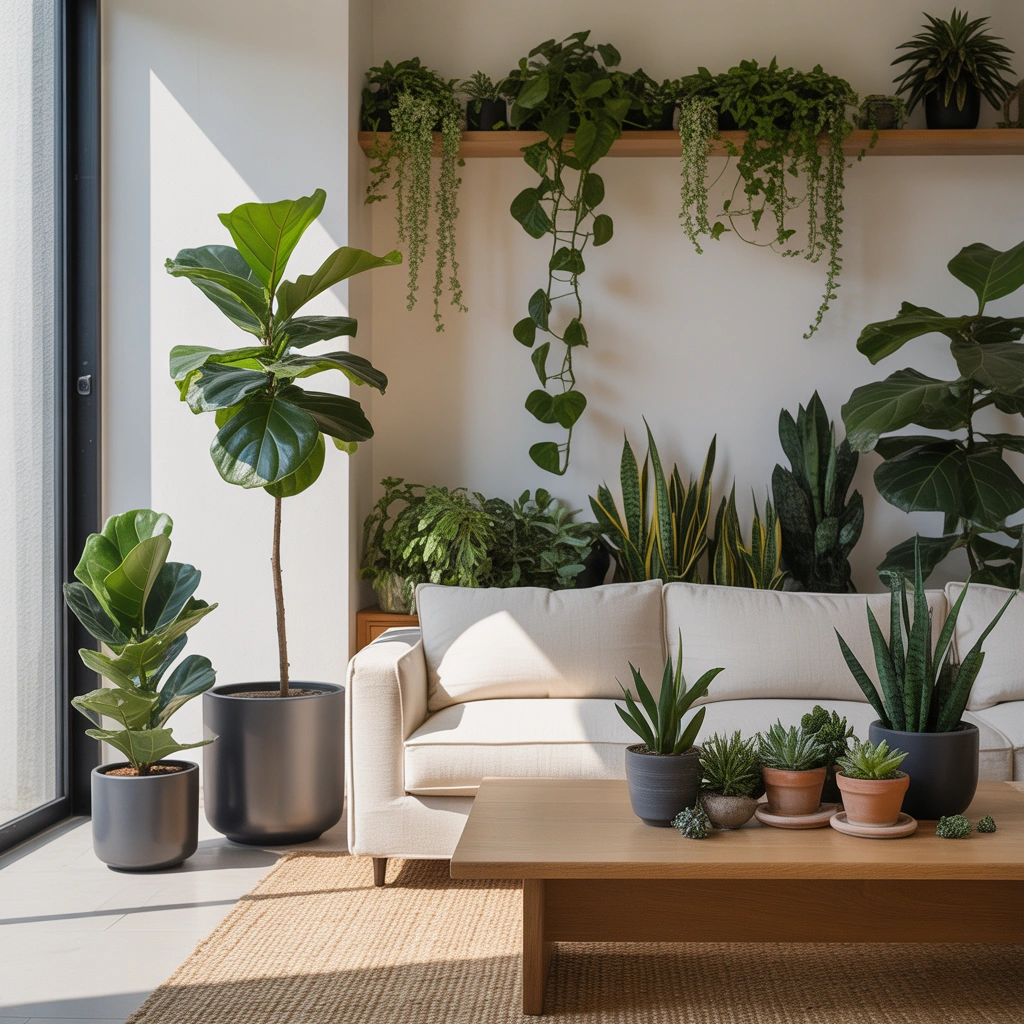
Plants bring freshness, color, and life into a modern living room. They can soften hard furniture lines, fill awkward corners, and make a neutral space feel more vibrant.
A tall indoor plant can look beautiful beside a sofa, window, or media console. Smaller plants can be placed on shelves, side tables, or decorative stands.
Popular living room plants include snake plants, pothos, rubber plants, fiddle-leaf figs, peace lilies, palms, and monstera plants. The best choice depends on the amount of natural light available and how much plant care you can realistically provide.
If you are not confident about maintaining live plants, high-quality artificial greenery can still add visual softness. Choose realistic leaves and simple planters for a more natural appearance.
Planters should complement the rest of the room. Ceramic pots, woven baskets, stone containers, and matte black planters work particularly well with modern interiors.
I find that even one healthy plant can change the mood of a living room. It adds an organic shape that contrasts beautifully with structured furniture and clean architectural lines.
12. Use Smart Storage to Reduce Clutter
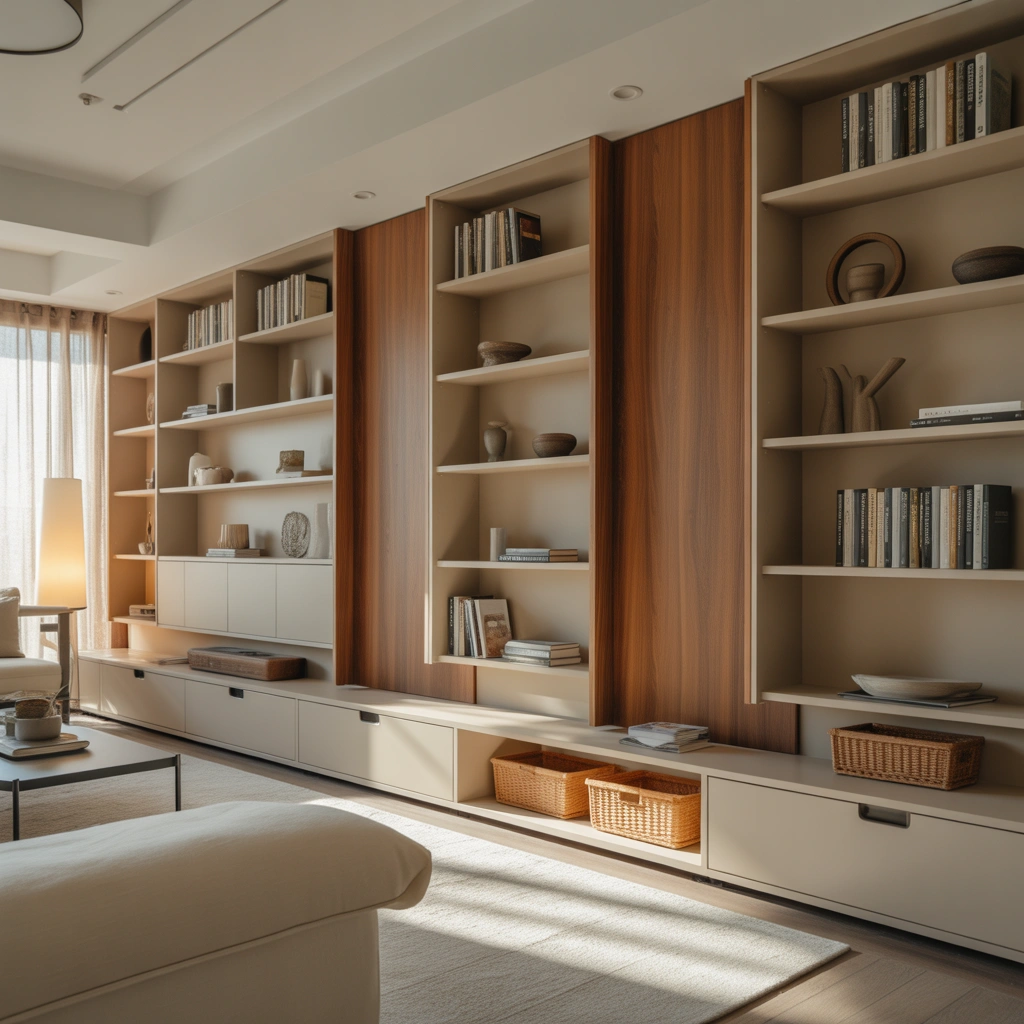
Clutter can quickly make even the most expensive living room look disorganized. Modern design depends on clean surfaces, but that does not mean you must get rid of everything you use.
The solution is smart storage.
Choose furniture that provides both style and function. A television console with drawers can hide cables, gaming accessories, and remote controls. A storage ottoman can hold blankets, toys, or extra cushions. A sideboard can store books, tableware, electronics, or household items.
Built-in cabinets create a streamlined look and make excellent use of wall space. Open shelving can display attractive objects, while closed cupboards hide less decorative belongings.
Baskets are useful for storing throws, magazines, children’s toys, and other everyday items. Select woven, fabric, or structured baskets that coordinate with your color scheme.
Try to give every object a permanent place. When storage is easy to access, keeping the room tidy becomes much more manageable.
13. Combine Open Shelving With Curated Decor
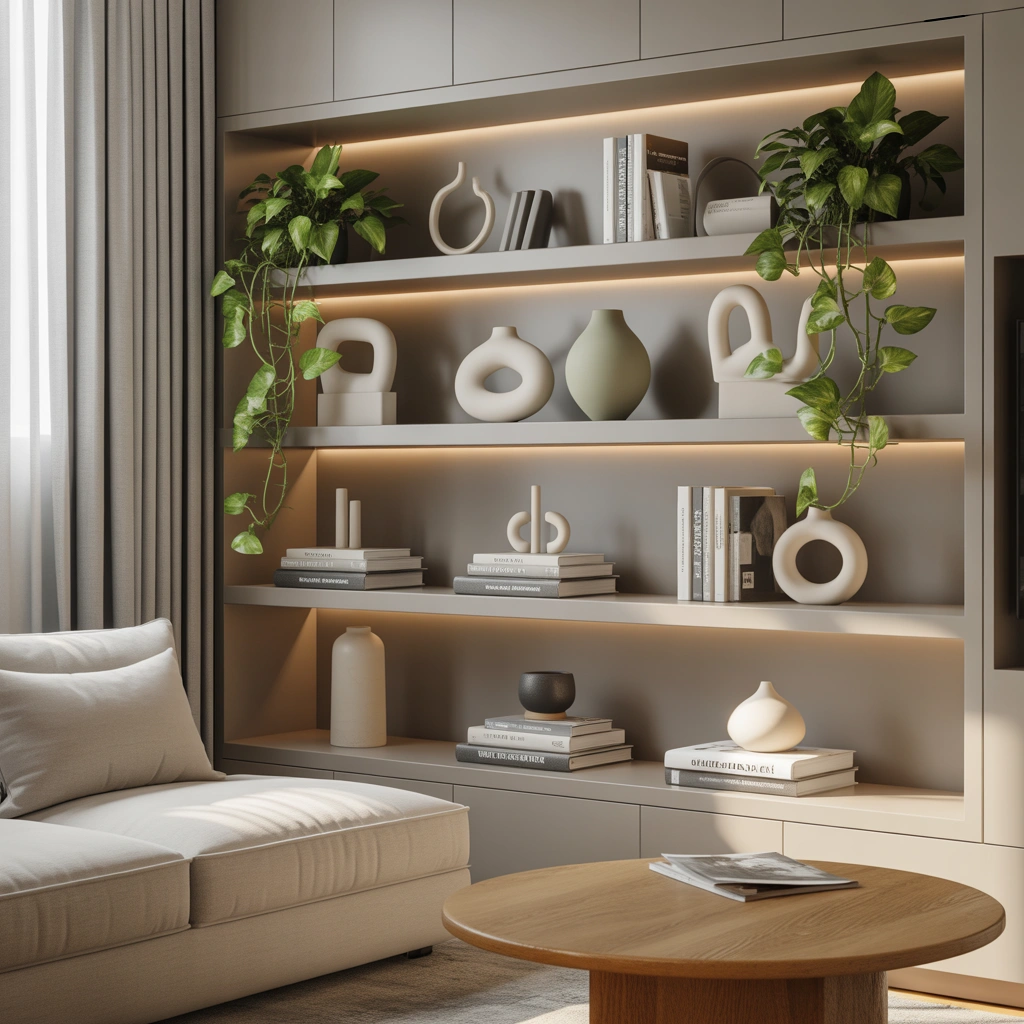
Open shelves can add personality and architectural interest to a modern living room, but they require careful styling.
Avoid filling every shelf completely. Empty space is an important part of modern design because it allows individual objects to stand out.
Combine different types of items, such as books, framed photographs, small plants, ceramics, candles, bowls, and sculptures. Arrange some books vertically and stack others horizontally to create variety.
Use a limited color palette so the shelves do not look chaotic. You could repeat black, white, beige, wood, and green throughout the arrangement.
Odd-numbered groupings often look natural. Three objects with different heights can create a pleasing composition. However, each shelf does not need to follow the same formula.
Personal items make shelving more meaningful. A family photograph, a souvenir from a memorable trip, or an inherited decorative object can sit comfortably beside modern accessories.
The goal is to create a display that feels collected rather than crowded.
14. Add Character Through Accent Colors
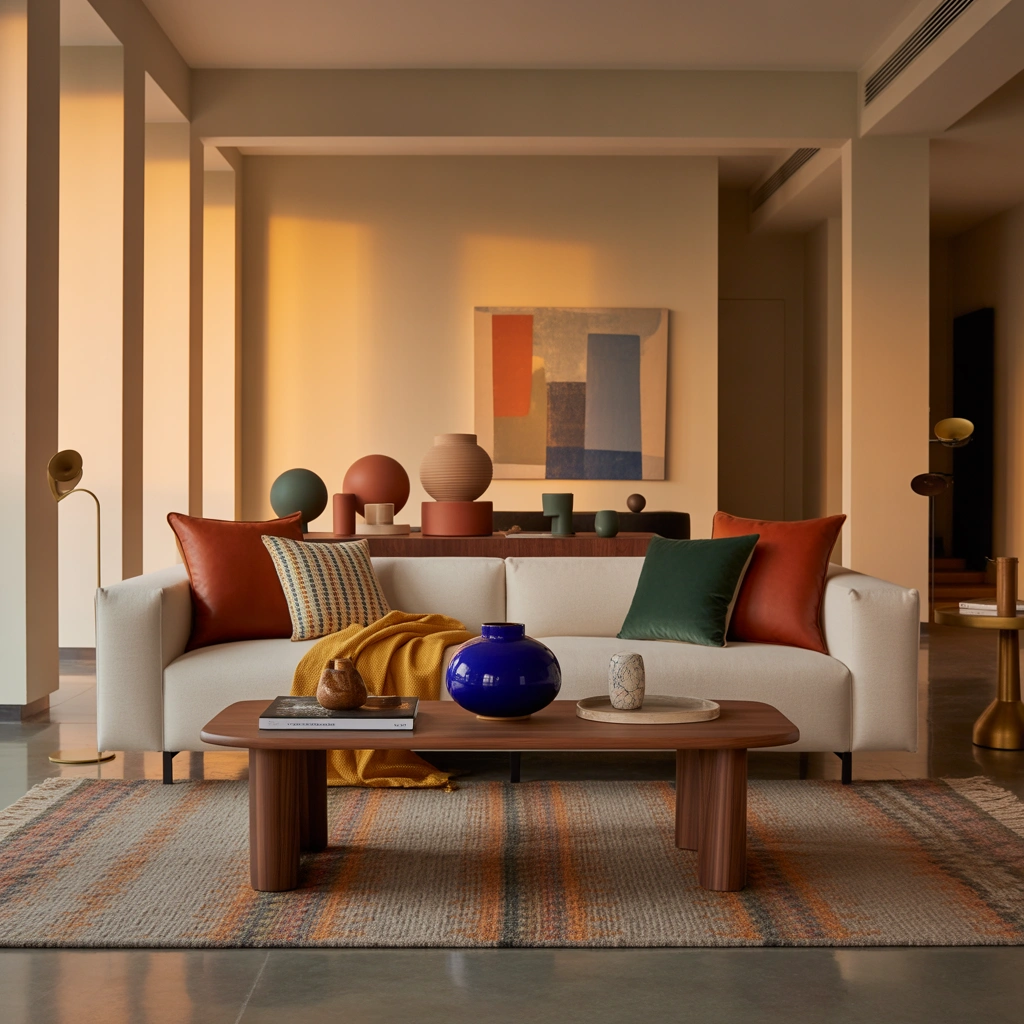
Neutral rooms are timeless, but accent colors prevent them from feeling too plain. You can introduce color through cushions, throws, artwork, lamps, vases, rugs, flowers, and small furniture pieces.
Popular modern accent colors include olive green, terracotta, burnt orange, mustard, navy blue, burgundy, deep teal, dusty rose, and black.
Choose one or two accent colors and repeat them in several areas of the room. For example, an olive cushion could connect with green artwork and a nearby plant. A rust-colored throw might coordinate with details in the rug.
You do not need to use the accent color in equal amounts. One shade can be dominant while another appears in smaller decorative details.
Seasonal updates are easy when the main furniture remains neutral. You might use light blue and soft green in spring, warmer earthy shades in autumn, and deep jewel tones during winter.
This approach allows your living room to evolve without requiring expensive changes.
15. Finish the Room With Personal Details
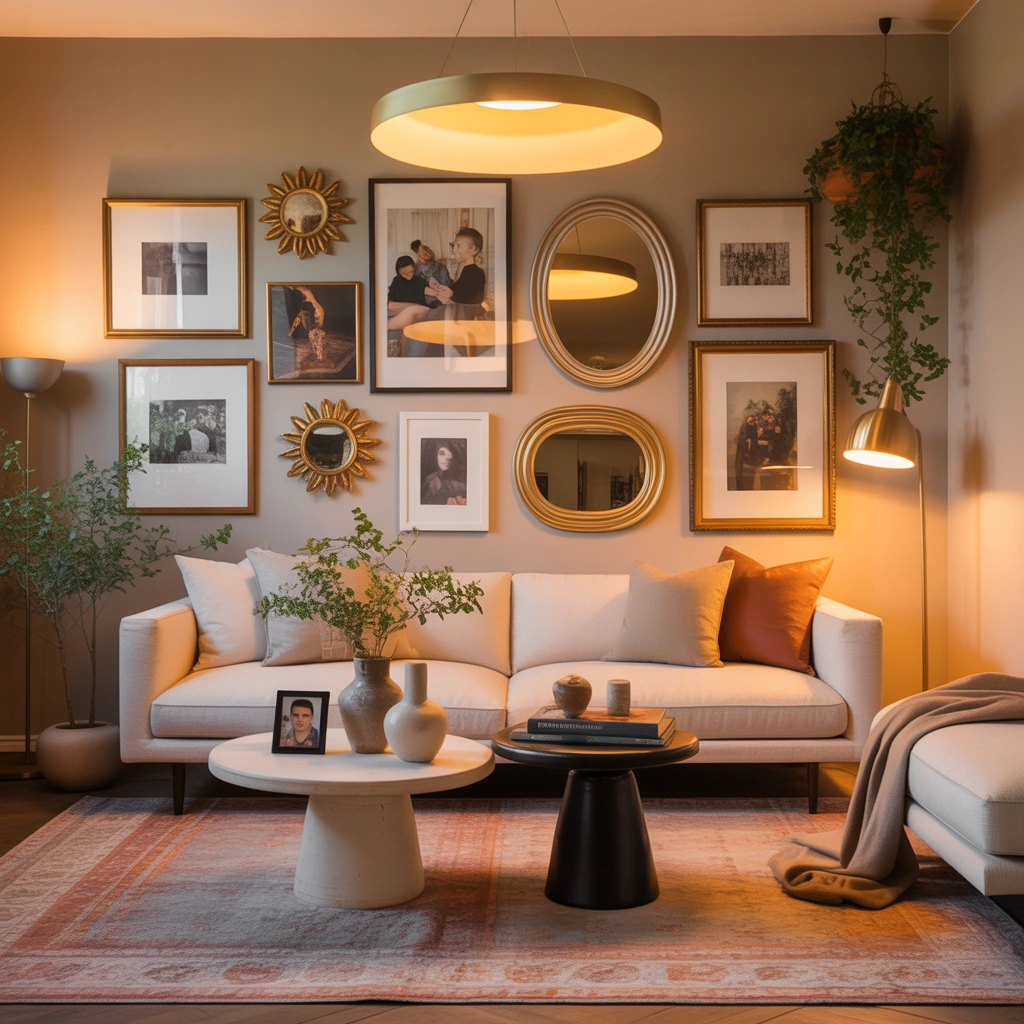
The final and most important step is adding elements that reflect your own story. A living room may follow every design rule and still feel incomplete if it lacks personality.
Display a few meaningful family photographs, favorite books, handmade items, travel souvenirs, musical instruments, or objects connected to your interests.
The key is moderation. Personal decor should feel intentional rather than scattered. Choose items that deserve to be seen and group them thoughtfully.
A beautiful tray can hold objects collected during your travels. A shelf can display books that you genuinely enjoy. Framed photographs can be arranged beside artwork rather than placed on every available surface.
You can also make the space personal through scent and sound. Candles, diffusers, fresh flowers, soft music, and comfortable throws all contribute to the living room experience.
For me, a successful modern living room is not simply one that photographs well. It should support daily life. It should be comfortable when you are alone, welcoming when guests arrive, and practical enough for ordinary routines.
How to Make a Small Living Room Look Modern
A small living room can look just as stylish as a large one when every choice is purposeful.
Start with furniture that suits the room’s scale. Oversized sofas and bulky cabinets can overwhelm limited floor space. Choose slimmer furniture with clean lines and raised legs.
Use light colors on the walls to reflect natural light. Hang curtains close to the ceiling and allow them to reach the floor. This draws the eye upward and gives the impression of greater height.
Mirrors can increase the sense of space, especially when positioned opposite or near a window. Glass, acrylic, and reflective surfaces also help maintain an open appearance.
Select multifunctional furniture whenever possible. A nesting coffee table, storage ottoman, foldable desk, or sofa bed can provide flexibility without occupying unnecessary space.
Most importantly, avoid overdecorating. A few larger decorative items usually look more refined than many tiny accessories.
Common Modern Living Room Decorating Mistakes
Even attractive furniture can look disappointing when the room lacks balance. Here are several mistakes worth avoiding.
Choosing Furniture That Is Too Large
Measure your room, doorways, and walking paths before purchasing furniture. Large pieces can make the space difficult to use.
Using Only One Light Source
A single ceiling fixture often produces flat or harsh lighting. Add floor lamps, table lamps, or wall lights for depth.
Selecting a Rug That Is Too Small
The rug should visually connect the main seating furniture rather than floating alone beneath the coffee table.
Matching Everything Perfectly
A room where every table, chair, cushion, and accessory belongs to one matching set can feel impersonal. Mix complementary materials and shapes.
Displaying Too Many Decorations
Modern design depends on editing. Keep your favorite pieces visible and store or remove the rest.
Ignoring Comfort
Do not sacrifice comfort just to achieve a particular appearance. Choose furniture that supports how you actually live.
Frequently Asked Questions About Modern Living Room Decor
What colors are best for a modern living room?
Neutral shades such as warm white, beige, taupe, soft gray, and cream make an excellent foundation. You can add character through darker tones or accent colors such as green, blue, terracotta, mustard, or black.
How can I make my living room look expensive?
Use correctly sized curtains, layered lighting, a large rug, coordinated colors, textured fabrics, and carefully arranged accessories. Keeping the room tidy and avoiding excessive clutter can also create a more luxurious appearance.
What type of furniture suits modern living room design?
Furniture with simple shapes, clean lines, practical storage, and minimal decoration works well. Sofas with structured cushions, slim-legged tables, low media consoles, and sculptural accent chairs are popular choices.
Can modern decor feel warm and cozy?
Yes. Combine clean modern furniture with warm lighting, natural wood, soft rugs, cushions, curtains, throws, plants, and personal objects. Modern design does not need to feel cold.
How many colors should I use in a living room?
A simple approach is to use one dominant color, one supporting color, and one or two accent shades. This creates variety while maintaining a coordinated appearance.
How do I decorate a modern living room on a budget?
Begin by rearranging the furniture and removing unnecessary clutter. Then update affordable details such as cushion covers, curtains, lampshades, artwork, plants, and decorative trays. Painting a wall or refinishing an existing table can also create a noticeable transformation.
Final Thoughts
Creating a beautiful modern living room does not require following every design trend or purchasing expensive furniture. The most successful spaces are created through thoughtful planning, balanced colors, practical furniture, comfortable textures, layered lighting, and meaningful personal details.
These 15 decor home living room modern design ideas can be adapted to almost any home. Start with the layout, choose a calm color palette, establish a focal point, and then build the room gradually. Add natural materials, storage, artwork, plants, and decorative accents in a way that supports your everyday lifestyle.
Remember that modern design is not about making a room look empty or perfect. It is about making intentional choices. Every piece should contribute to the comfort, function, or beauty of the space.
Your living room should ultimately feel like your own. When you combine modern simplicity with warmth and personality, you create a room that is not only stylish but also enjoyable to live in every day.