
Kitchen shelves may seem like simple storage surfaces, but with a little creativity, they can become one of the most attractive features in your home. Whether you have open floating shelves, built-in shelving, a small corner shelf, or a traditional kitchen hutch, thoughtful styling can instantly make your kitchen feel warmer, more organized, and more personal.
I have always loved the idea of decorating kitchen shelves because they offer the perfect balance between beauty and function. Unlike purely decorative spaces, kitchen shelves still need to hold items that we use regularly. The challenge is finding a way to display everyday essentials without making the shelves look crowded or untidy.
The good news is that you do not need expensive accessories or a complete kitchen makeover. A few ceramic dishes, wooden accents, plants, glass jars, or framed prints can completely transform an ordinary shelf.
In this guide, I am sharing 15 kitchen shelf decor ideas that can work in large kitchens, small apartments, farmhouse spaces, modern homes, and everything in between.
Why Kitchen Shelf Decor Matters
Decorating kitchen shelves is not only about making the room look beautiful. Well-styled shelves can also improve how your kitchen functions.
When frequently used items are displayed neatly, they become easier to reach. Attractive containers can reduce visual clutter, while carefully selected colors and textures can make the kitchen feel more connected to the rest of your home.
Kitchen shelf styling also gives you an opportunity to show your personality. Your shelves might include inherited dishes, handmade pottery, travel souvenirs, cookbooks, artwork, or a collection of mugs that you genuinely enjoy using.
The goal is not to create shelves that look like a showroom. The most welcoming kitchens usually include a combination of useful objects, meaningful pieces, and decorative details.
1. Display Everyday Dishes in Coordinated Colors
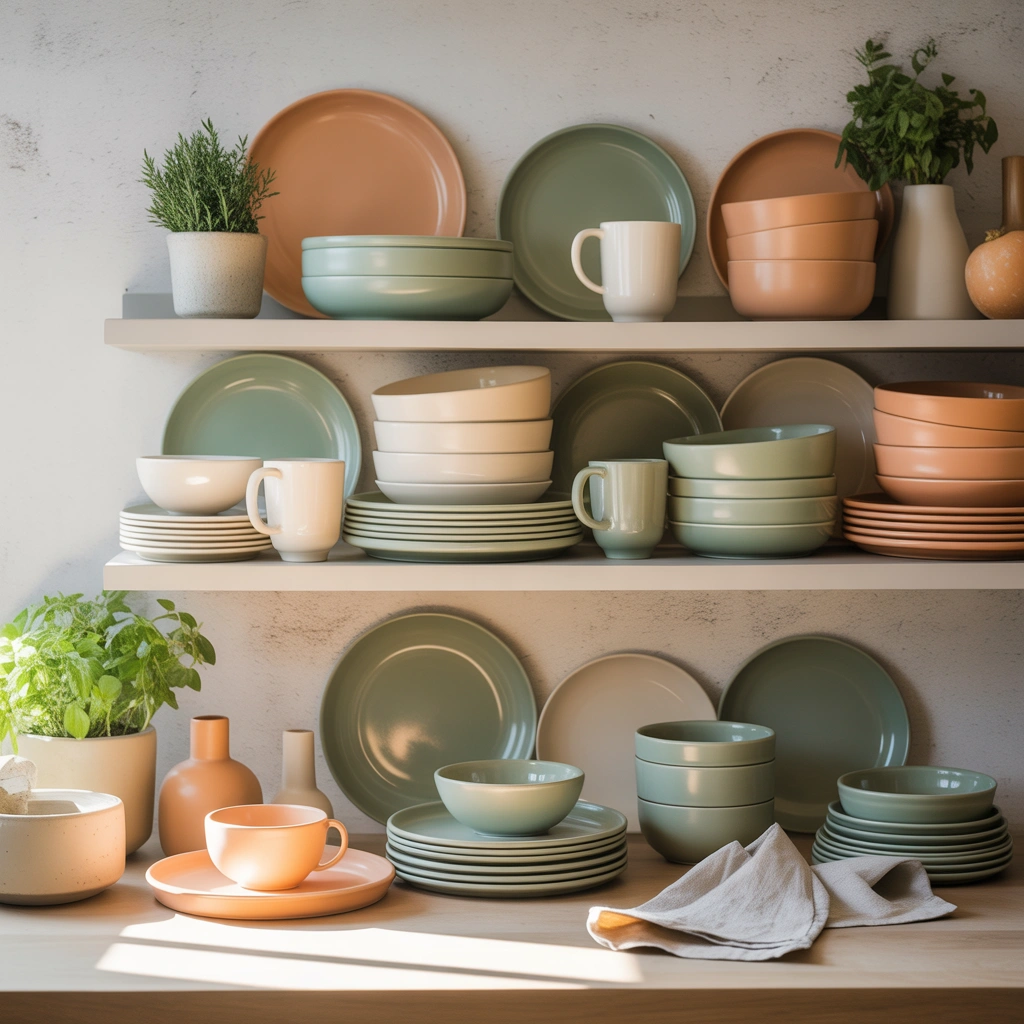
One of the easiest kitchen shelf decor ideas is to use the dishes you already own. Plates, bowls, cups, and small serving dishes can look surprisingly elegant when they are grouped thoughtfully.
I recommend choosing a simple color palette before arranging your shelves. White dishes are especially versatile because they create a clean, timeless look. However, soft blue, sage green, cream, charcoal, or earthy terracotta dishes can also create a beautiful display.
Stack similar plates together, place bowls in small groups, and line up mugs without overcrowding the shelf. If all your dishes are different, try organizing them by color rather than by style. This will make the collection feel intentional.
For a balanced look, place heavier stacks of dishes on the lower shelves and lighter pieces on the upper shelves. Everyday items should remain within easy reach, while dishes used less frequently can be displayed higher up.
Using functional tableware as decor is especially helpful in small kitchens because every item serves a purpose.
2. Add Warmth With Wooden Cutting Boards
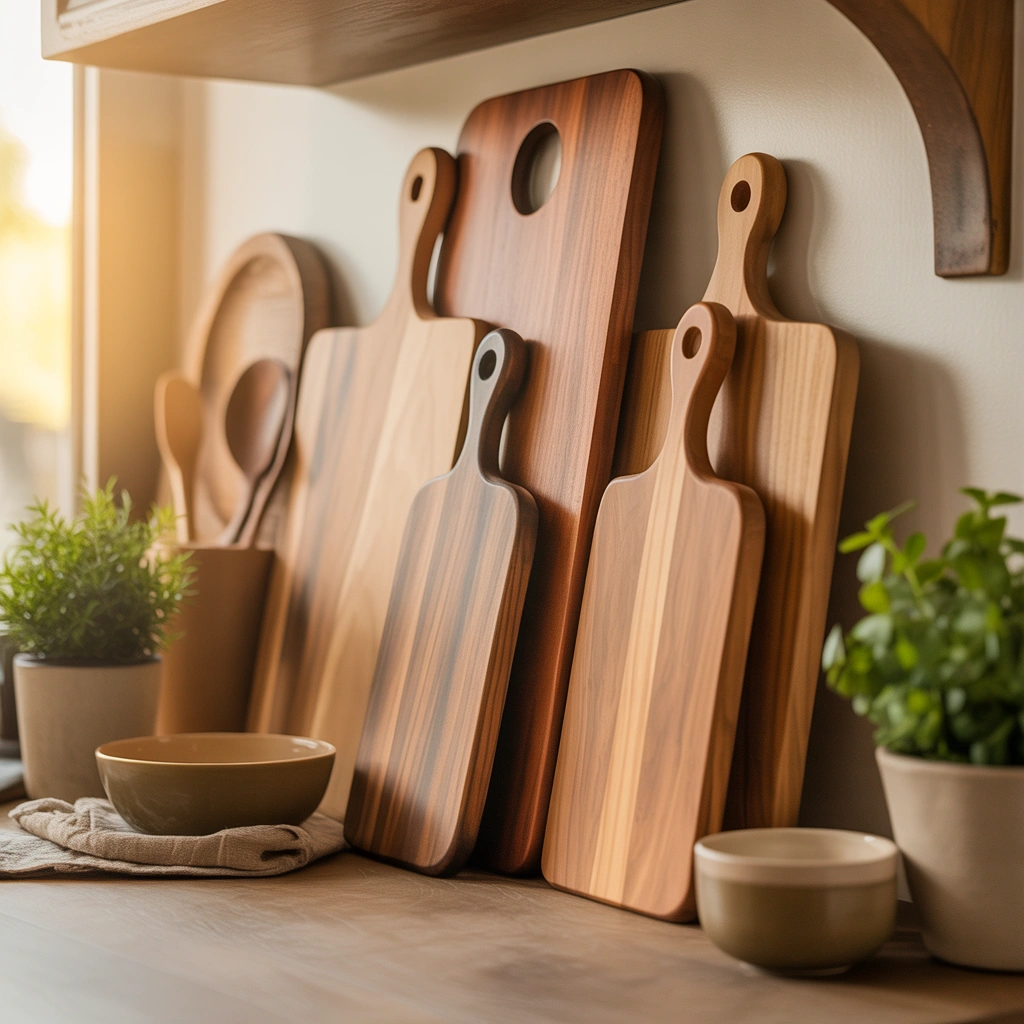
Wooden cutting boards bring warmth, texture, and natural character to kitchen shelves. They work beautifully in farmhouse, rustic, Scandinavian, coastal, and modern organic kitchens.
Instead of storing all your cutting boards inside a cabinet, lean two or three against the wall at the back of an open shelf. Choose boards in different shapes and sizes to create depth. A round board placed behind a rectangular one can make the arrangement feel layered without looking messy.
You can also display a small serving board, breadboard, or vintage wooden tray. Boards with visible grain, worn edges, or handmade details often look particularly charming.
I like to mix wooden boards with white ceramics because the contrast feels clean and inviting. You can also combine them with glass jars, greenery, or black metal accents.
Avoid displaying too many boards in one place. A small, carefully selected group will usually look more stylish than a large collection.
3. Style Shelves With Clear Glass Storage Jars
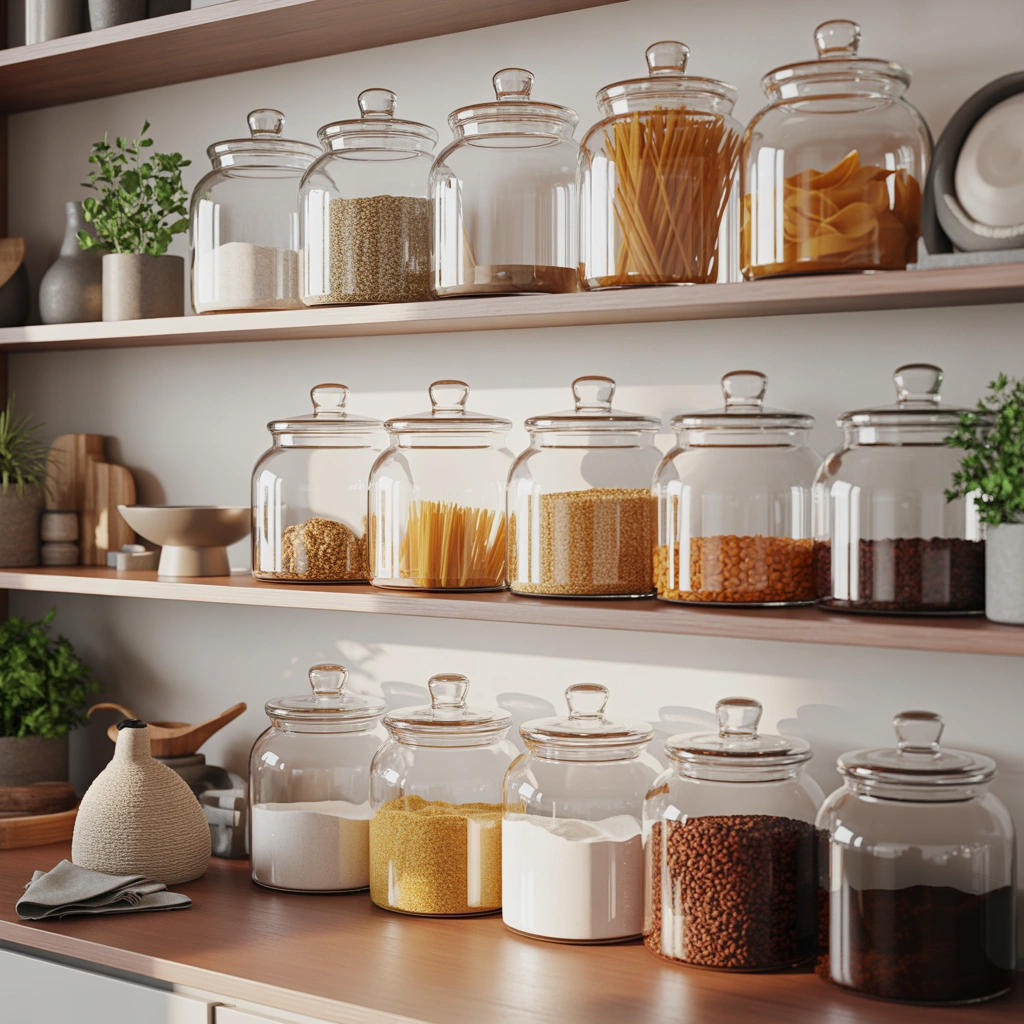
Clear glass jars are both practical and decorative. They allow you to store dry ingredients while adding texture and visual interest to your kitchen shelves.
Fill jars with ingredients such as:
- Flour
- Sugar
- Rice
- Pasta
- Coffee beans
- Tea
- Oats
- Lentils
- Nuts
- Baking ingredients
The natural colors and shapes of these foods become part of the decor. Pasta adds warm golden tones, coffee beans introduce rich brown shades, and white flour creates a clean, neutral appearance.
For a more organized look, use jars in the same style but vary their heights. Matching lids can help the display feel cohesive. Wooden lids create a warm, natural look, while black or metal lids suit a more modern kitchen.
Add simple labels if you want to identify ingredients quickly. Choose clean, readable labels rather than oversized decorative lettering.
Be careful not to fill every shelf with containers. Combine glass jars with dishes or decorative pieces so the arrangement does not begin to look like a pantry aisle.
4. Bring Life to the Shelves With Greenery
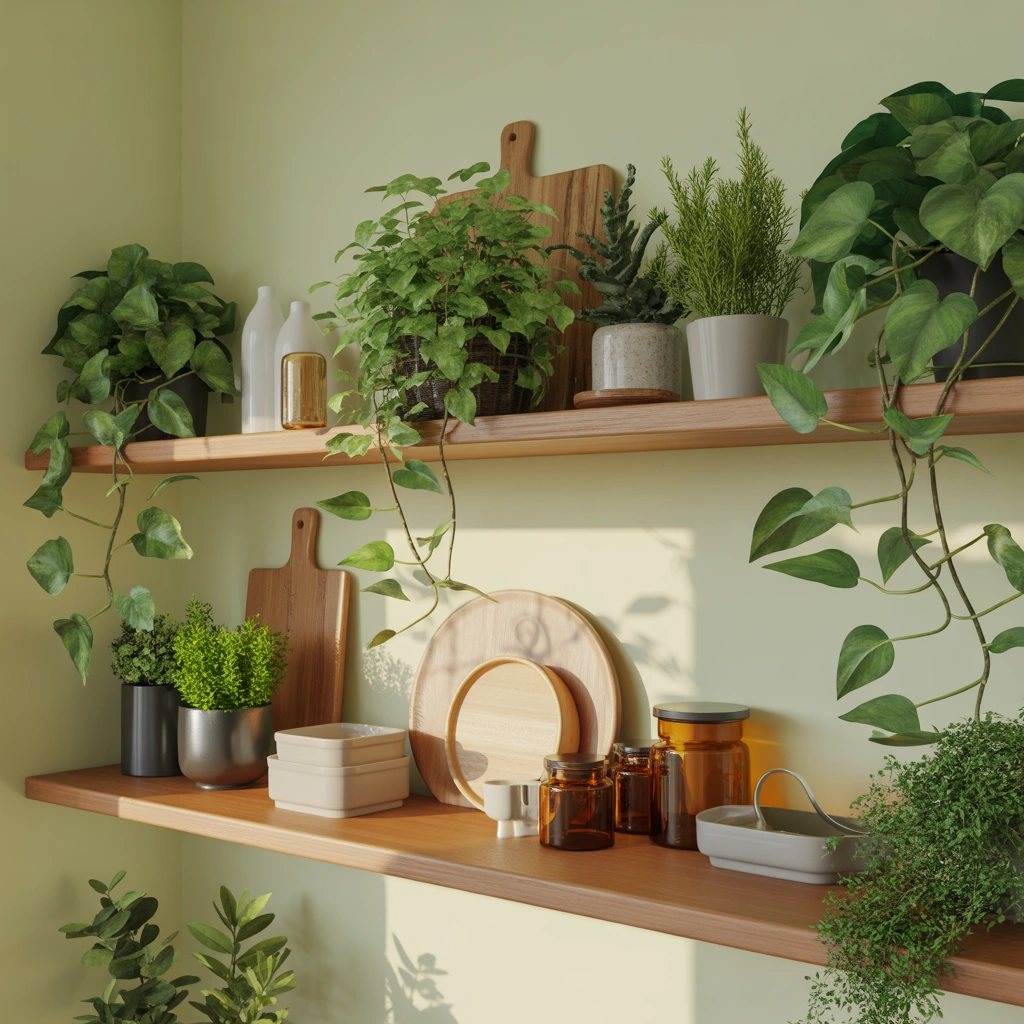
Plants can instantly make kitchen shelves feel fresh and welcoming. Even a small amount of greenery can soften hard surfaces and prevent an arrangement from looking too rigid.
Trailing plants are ideal for upper shelves because their leaves can gently fall over the edge. Pothos, heartleaf philodendron, and small ivy plants can work well if your kitchen receives suitable light.
Herbs are another practical choice. Basil, mint, rosemary, parsley, or thyme can add natural beauty while also providing fresh ingredients for cooking. Place them near a sunny window and make sure excess water cannot damage the shelf.
For kitchens with limited natural light, high-quality artificial plants can provide a similar visual effect. Choose realistic greenery with natural leaf variations rather than overly glossy plastic plants.
I usually prefer one or two small plants instead of placing greenery on every shelf. This keeps the display fresh without making it feel like an indoor garden.
A simple plant in a ceramic, stone, or terracotta pot can also introduce another layer of texture.
5. Create a Mini Coffee Station
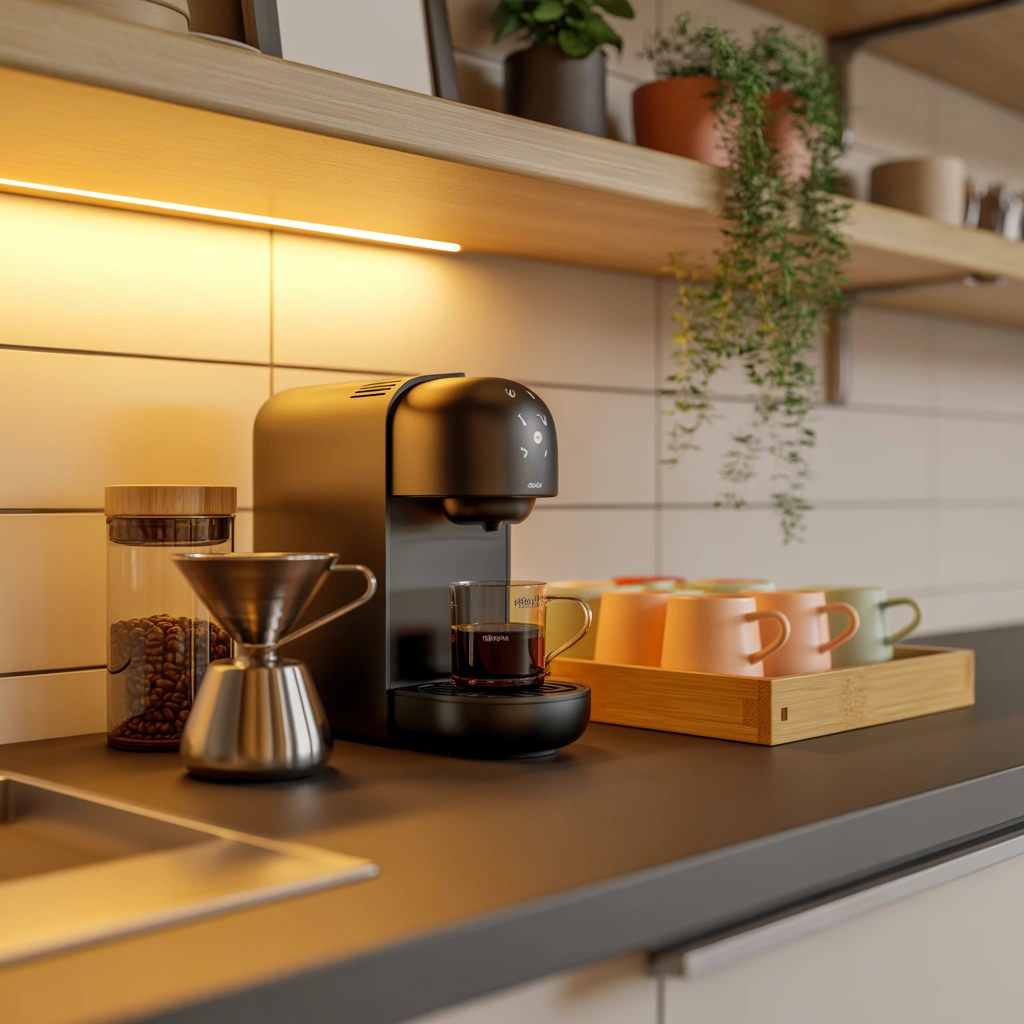
If coffee is part of your daily routine, turn one kitchen shelf into a small coffee station. This idea keeps your essentials organized while creating a cozy focal point.
Begin with the items you use most often, such as mugs, coffee beans, filters, sweeteners, and a small coffee maker if the shelf is deep enough. Store coffee beans or ground coffee in an airtight decorative container.
Place your favorite mugs on the shelf rather than displaying every mug you own. Two to four coordinated mugs will usually look more polished than a crowded row.
You can also include a small tray to hold sugar, spoons, or flavored syrups. A framed coffee print, small sign, or piece of artwork can add personality, but avoid using too many themed decorations.
The best coffee shelf decor feels natural rather than overly staged. Keep the setup practical so that you can prepare your morning drink without moving several decorative objects first.
For added warmth, include a small wooden scoop, linen napkin, or ceramic creamer.
6. Use Cookbooks as Decorative Accents
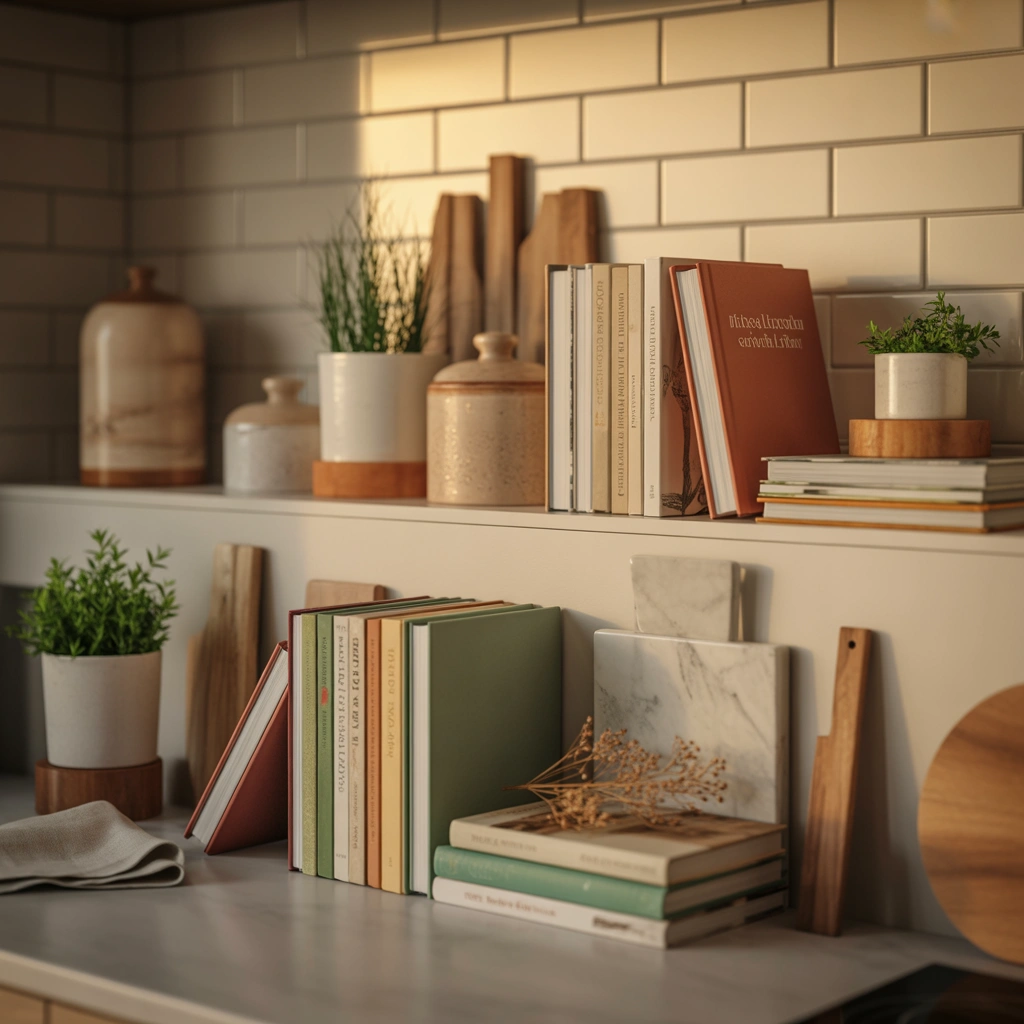
Cookbooks are ideal for kitchen shelf styling because they are useful, colorful, and full of personality.
You can arrange cookbooks vertically like a traditional library or stack two or three horizontally. A horizontal stack can also act as a small platform for a bowl, candle, vase, or decorative object.
Choose books with attractive spines or covers that complement your kitchen color palette. You do not need to display your entire cookbook collection. Select the books you use most often or the ones that look best together.
I like placing larger books on lower shelves because they create a strong visual base. Smaller cookbooks can be displayed higher or used as part of a layered arrangement.
If your cookbooks have very bright or mismatched covers, try turning a few so the page edges face outward. However, only do this if you can still identify them easily.
A small decorative bookend can keep vertical books upright while adding character. Brass, wood, ceramic, or stone bookends can all work depending on your kitchen style.
7. Decorate With Handmade Pottery
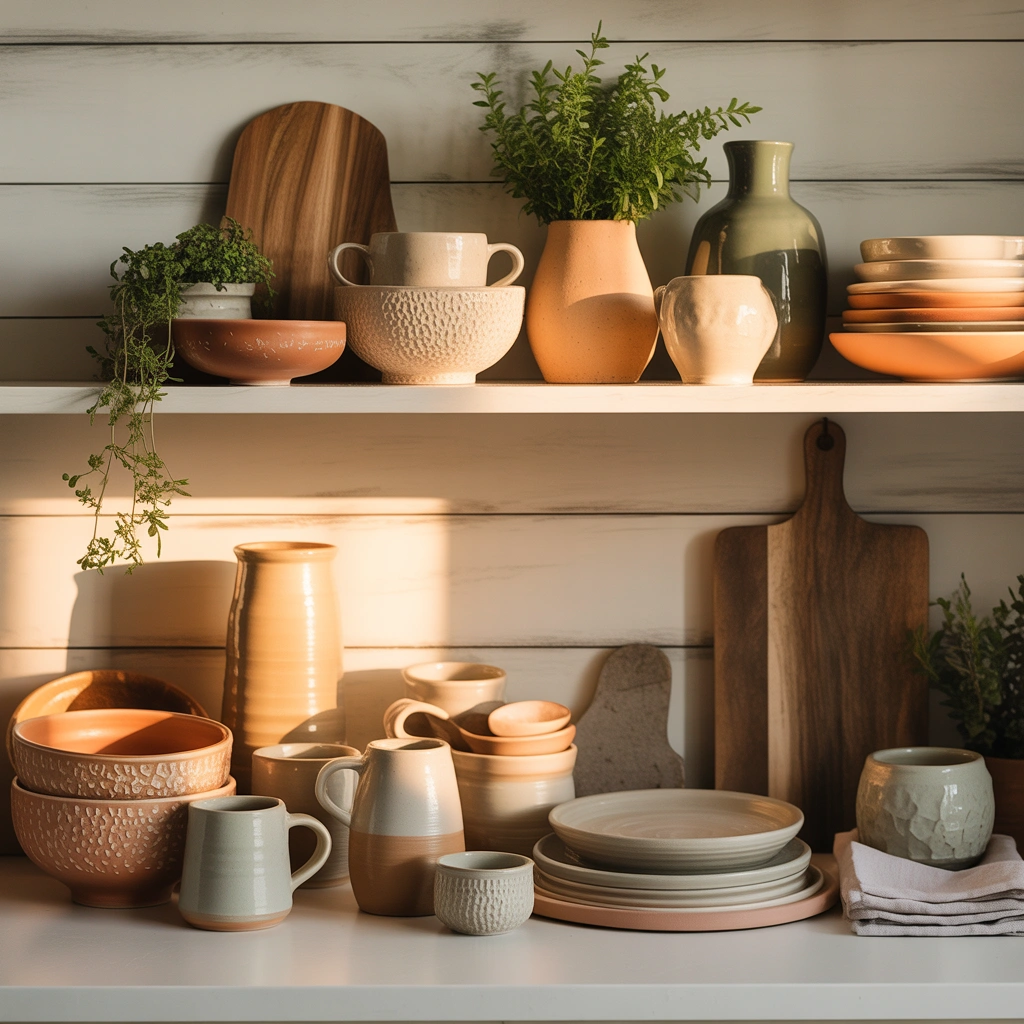
Handmade pottery gives kitchen shelves a collected, personal appearance. Slight variations in shape, glaze, and texture make each piece feel unique.
Consider displaying ceramic bowls, pitchers, mugs, vases, or small serving dishes. Pieces in neutral colors are easy to mix, while colorful pottery can become a striking focal point.
You do not need to purchase a matching set. In fact, a combination of different handmade pieces often feels more interesting. The key is to repeat at least one element, such as color, material, or shape.
For example, you could combine three different ceramic vessels that all feature soft blue glazing. Alternatively, you might display pottery in several earthy shades, including cream, rust, sand, and olive.
Leave some empty space around special pieces so their details can be appreciated. If every pottery item is placed close together, the shelf may feel cluttered.
Handmade ceramics also provide an opportunity to support local artists and small businesses while adding something meaningful to your home.
8. Lean Small Framed Artwork Against the Wall
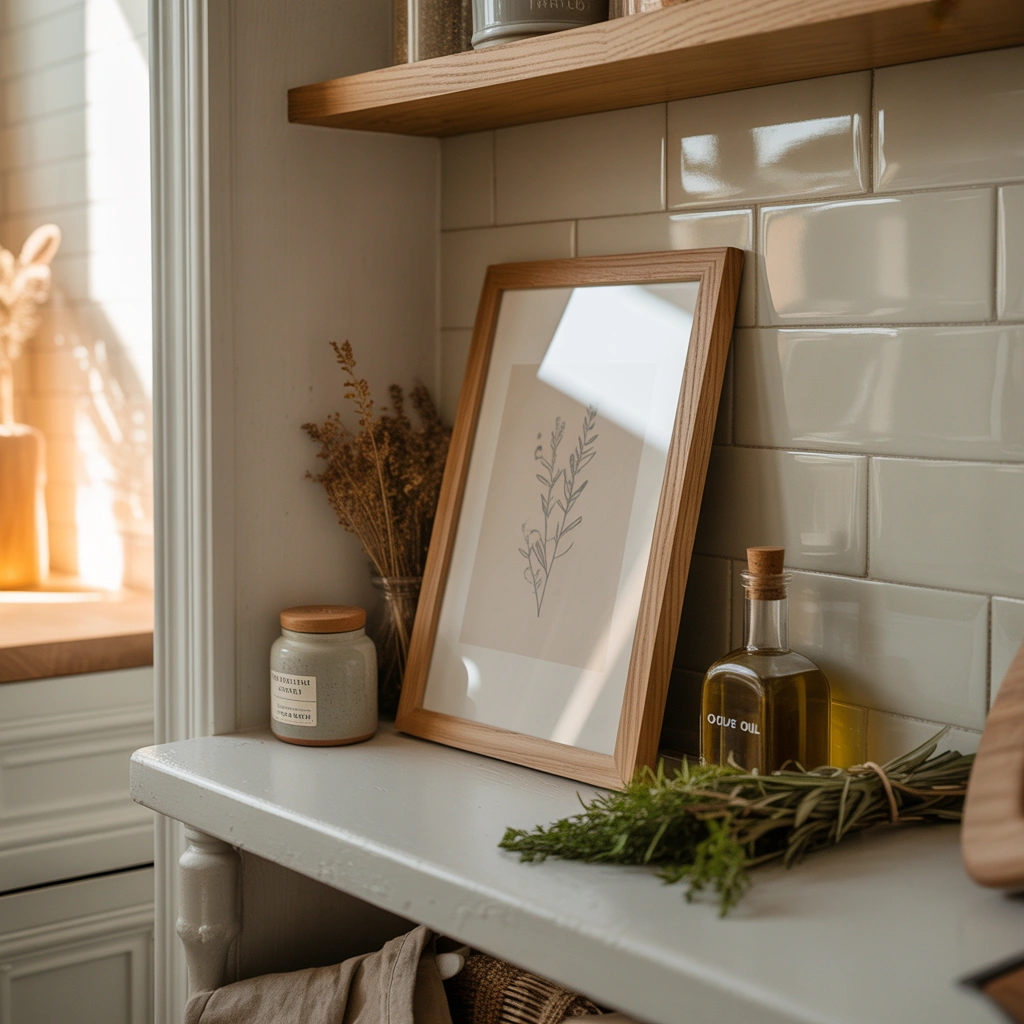
Artwork is not limited to living rooms and bedrooms. A small framed print can add color, personality, and height to a kitchen shelf.
Instead of hanging the artwork, lean it against the wall behind dishes or decorative objects. This creates a relaxed, layered look and makes it easy to change the display later.
Botanical prints, food illustrations, landscapes, vintage advertisements, abstract art, and simple typography can all work well in a kitchen.
Choose artwork that complements the shelf rather than overpowering it. A small frame can provide a subtle backdrop, while a larger print can act as the main focal point.
I prefer frames made from natural wood, black metal, or aged brass because they are easy to coordinate with kitchen finishes. However, painted frames can be a fun way to introduce a small pop of color.
Keep framed artwork away from areas where it may be exposed to heavy steam, heat, or splashes. Moisture can damage paper prints and wooden frames over time.
9. Add Vintage Kitchen Finds
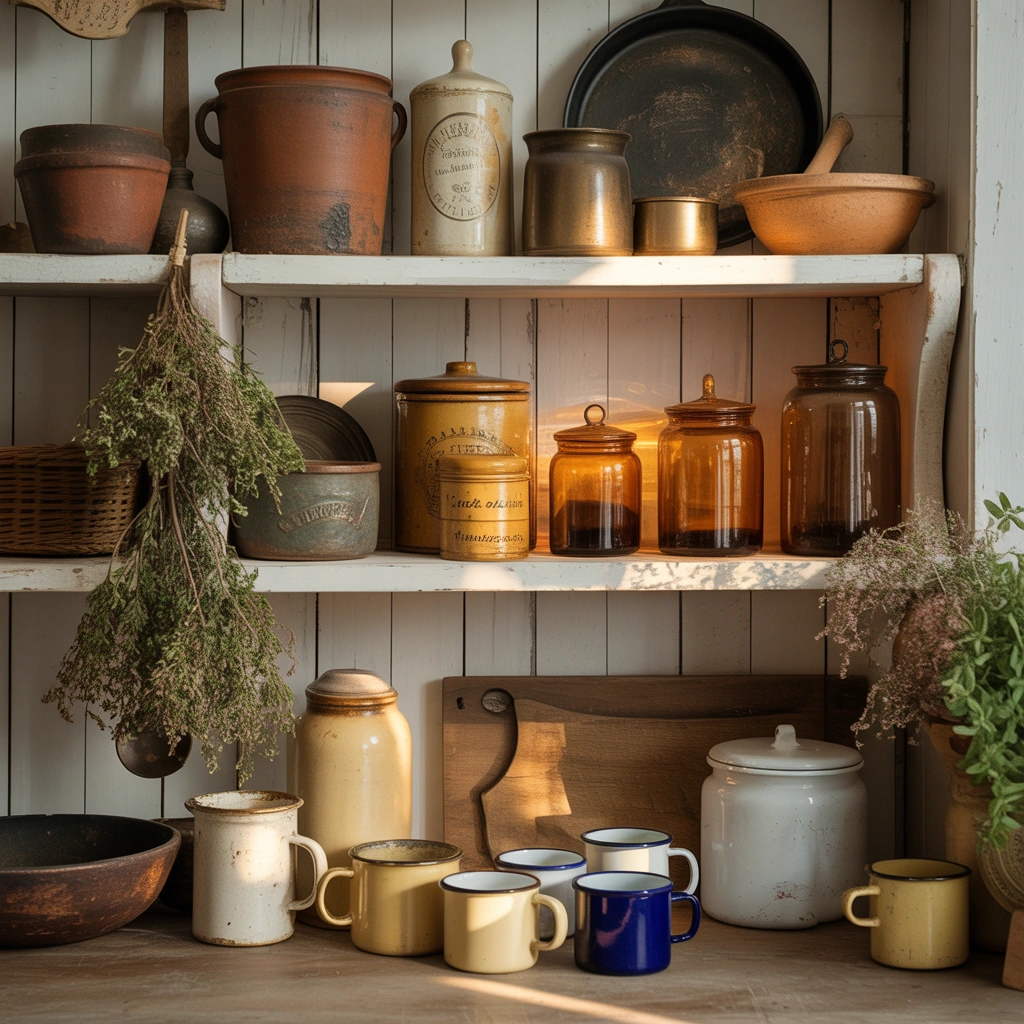
Vintage pieces can make kitchen shelf decor feel more personal and less predictable. A well-chosen antique or secondhand object can introduce history and character that new accessories sometimes lack.
Look for items such as old measuring cups, ceramic crocks, enamelware, copper molds, wooden utensils, small scales, glass bottles, or vintage tins.
You do not need to create a fully vintage-themed kitchen. One or two older pieces can blend beautifully with modern dishes and storage containers.
For example, an aged brass container can hold wooden spoons, while a vintage stoneware bowl can sit beside contemporary glass jars. The contrast between old and new often makes the shelf more visually interesting.
When shopping for vintage kitchen decor, focus on pieces that are in good condition and easy to clean. Be cautious about using old containers for direct food storage unless you know they are food-safe.
Displaying family heirlooms can be especially meaningful. A bowl, teapot, or serving dish passed down through generations can become both a decorative element and a reminder of family traditions.
10. Introduce Texture With Woven Baskets
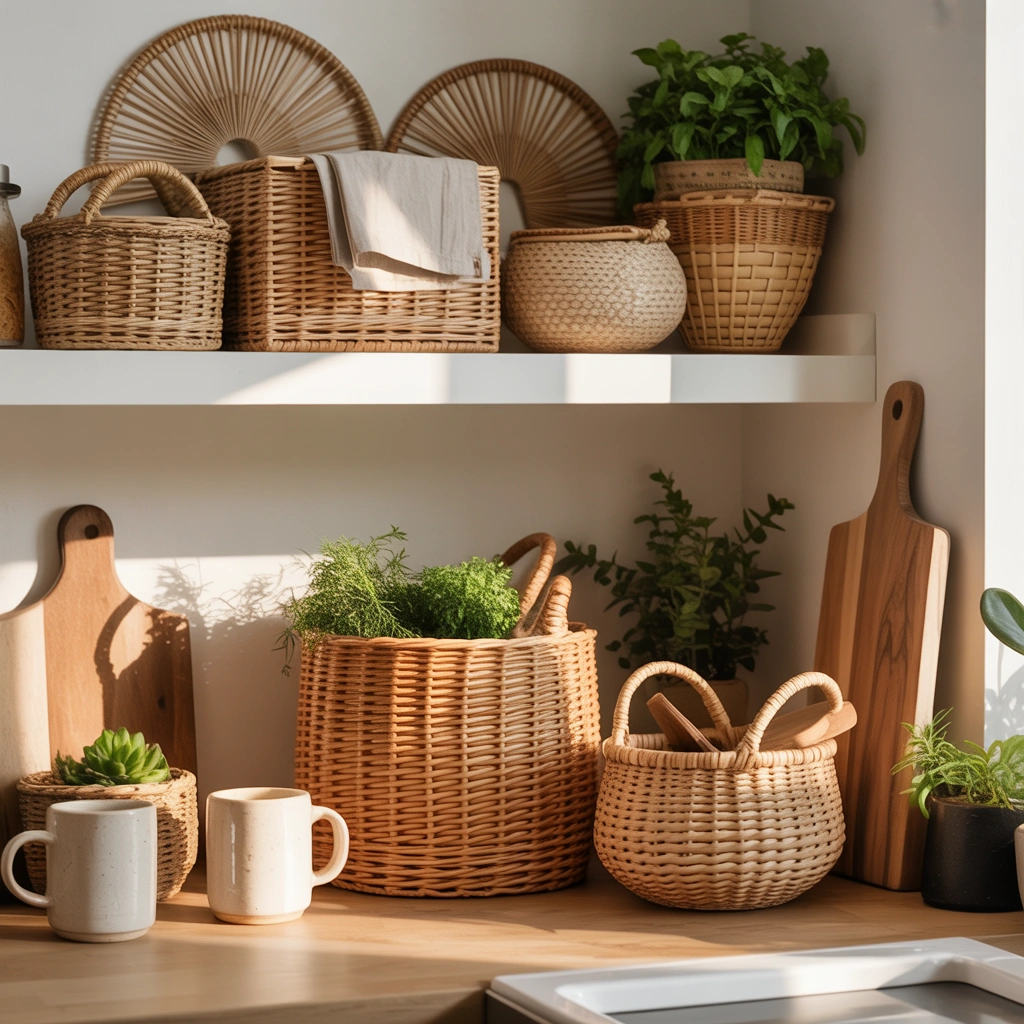
Woven baskets are excellent for hiding small items that might otherwise create visual clutter. They also add natural texture and warmth to open kitchen shelves.
Use baskets to store napkins, tea towels, snack packets, extra utensils, baking supplies, or small kitchen tools. Choose a basket that fits the depth of the shelf and leaves enough room to lift it out easily.
Natural materials such as rattan, seagrass, water hyacinth, and wicker work well in relaxed and organic interiors. Wire baskets may be a better match for industrial or farmhouse kitchens.
For a polished look, use baskets in similar materials rather than mixing several unrelated weaving styles. However, the baskets do not need to be identical.
Place larger baskets on lower shelves, where their visual weight feels more balanced. Smaller baskets can be used higher up for lightweight items.
I recommend limiting baskets to one or two per shelving area. Too many can make the shelves appear heavy and reduce the open, airy feeling that makes open shelving attractive.
11. Arrange Decorative Bowls With Fresh Fruit
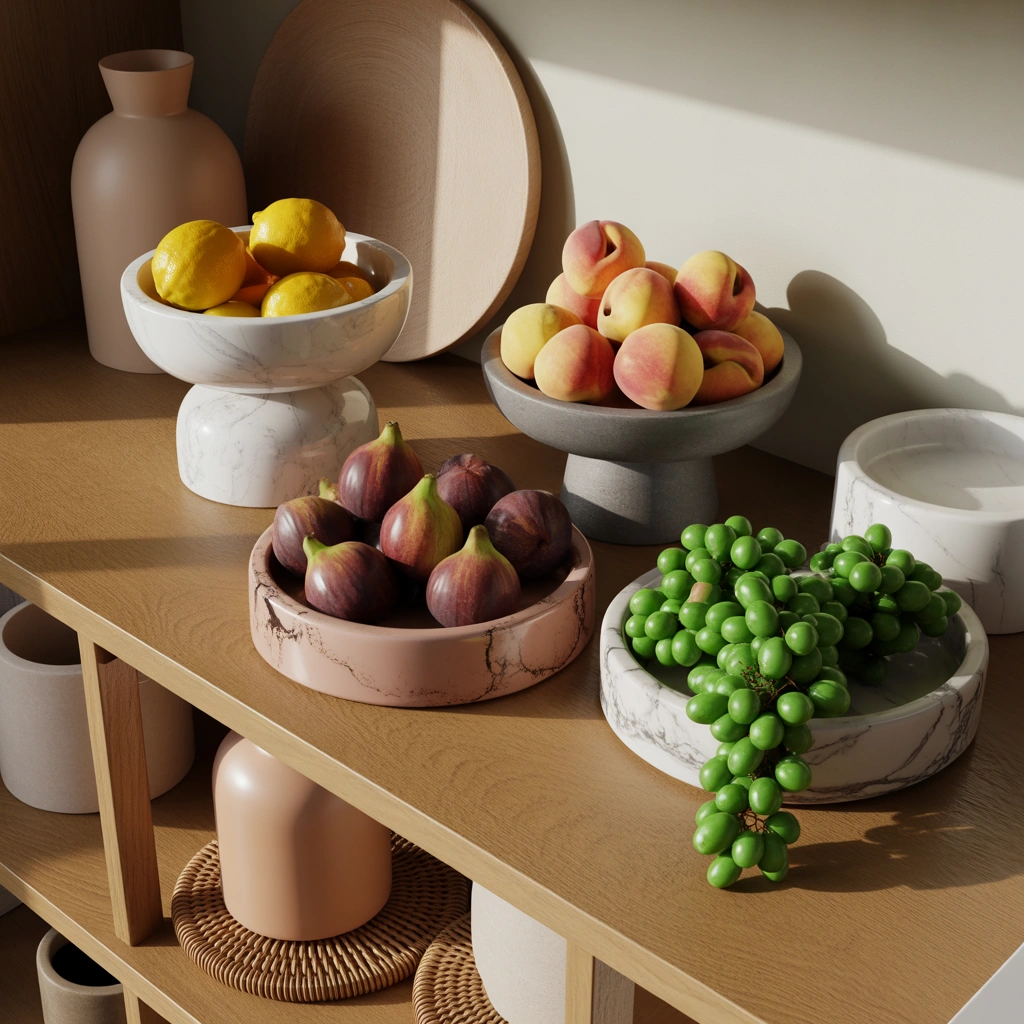
A bowl of fresh fruit adds natural color and makes kitchen shelf decor feel alive. It is one of the simplest ways to create a beautiful display without purchasing new decorations.
Choose fruits that you regularly eat and that can be stored safely at room temperature. Lemons, oranges, apples, pears, and pomegranates can all create an attractive arrangement.
The bowl itself is equally important. A wooden bowl creates warmth, a white ceramic bowl feels clean and classic, and a metal bowl can introduce a modern or industrial touch.
Avoid overfilling the bowl. A smaller amount of fruit arranged loosely often looks better than a large pile. It also allows air to circulate, which can help reduce spoilage.
Check the fruit regularly and remove any damaged pieces. Because the display is part of a working kitchen, freshness matters as much as appearance.
You can also change the fruit seasonally. Lemons feel bright in spring and summer, while pears, apples, and pomegranates create a richer autumn look.
12. Display Attractive Oils and Vinegars
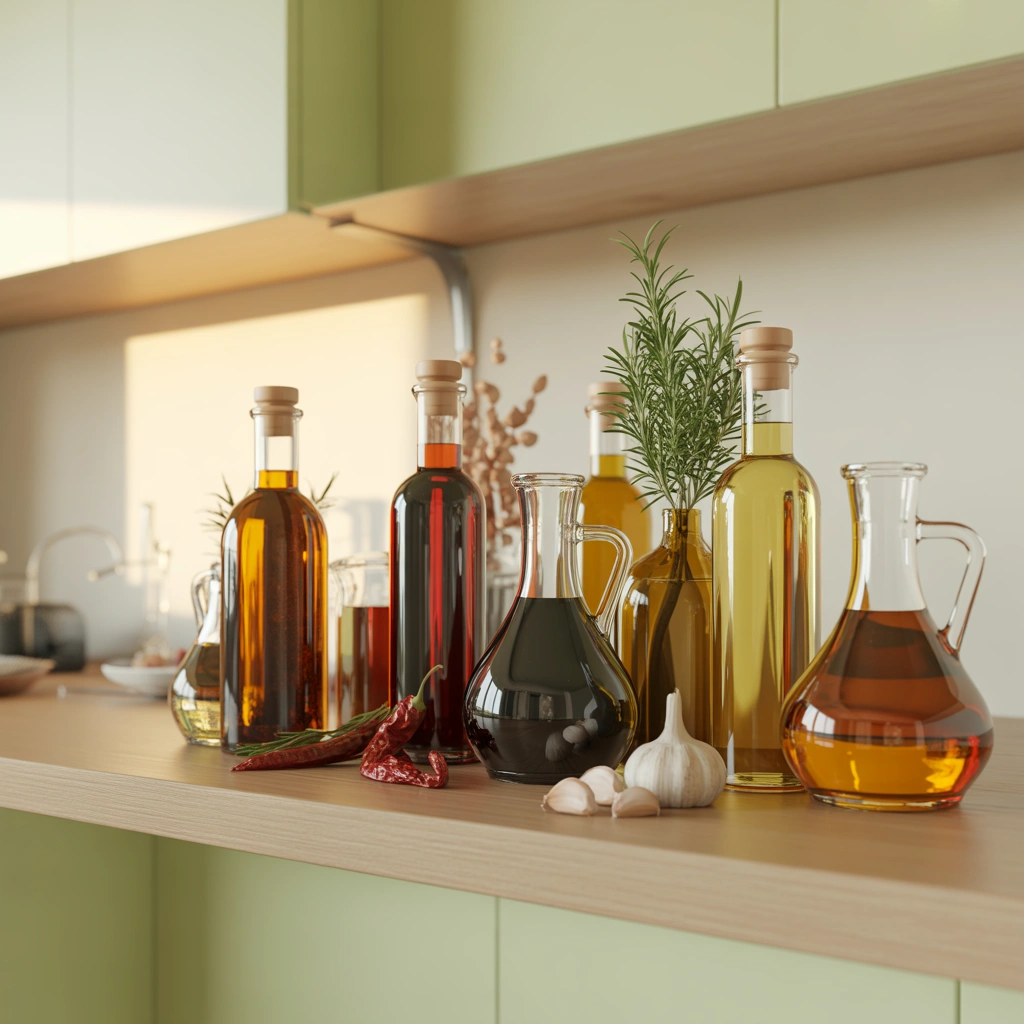
Cooking oils, vinegars, and seasonings can become part of your kitchen shelf decor when they are displayed carefully.
Choose a small selection of bottles that you use regularly. Olive oil, infused oils, balsamic vinegar, or specialty vinegars often come in attractive glass bottles.
Place the bottles on a small tray to keep them grouped together and protect the shelf from drips. A wooden, marble, or metal tray can make the arrangement feel organized.
You may also transfer frequently used oils into matching dispensers. Dark glass containers are often practical because they can help protect oils from light. Keep them away from direct sunlight and high heat.
Pair the bottles with a small salt cellar, pepper grinder, or jar of herbs. This creates a useful cooking station near your preparation area.
Do not display too many condiments. A carefully edited group will look stylish, while a crowded collection may make the shelf appear untidy.
Regularly wipe the bottles and tray because oil residue can quickly collect dust.
13. Create a Seasonal Shelf Display
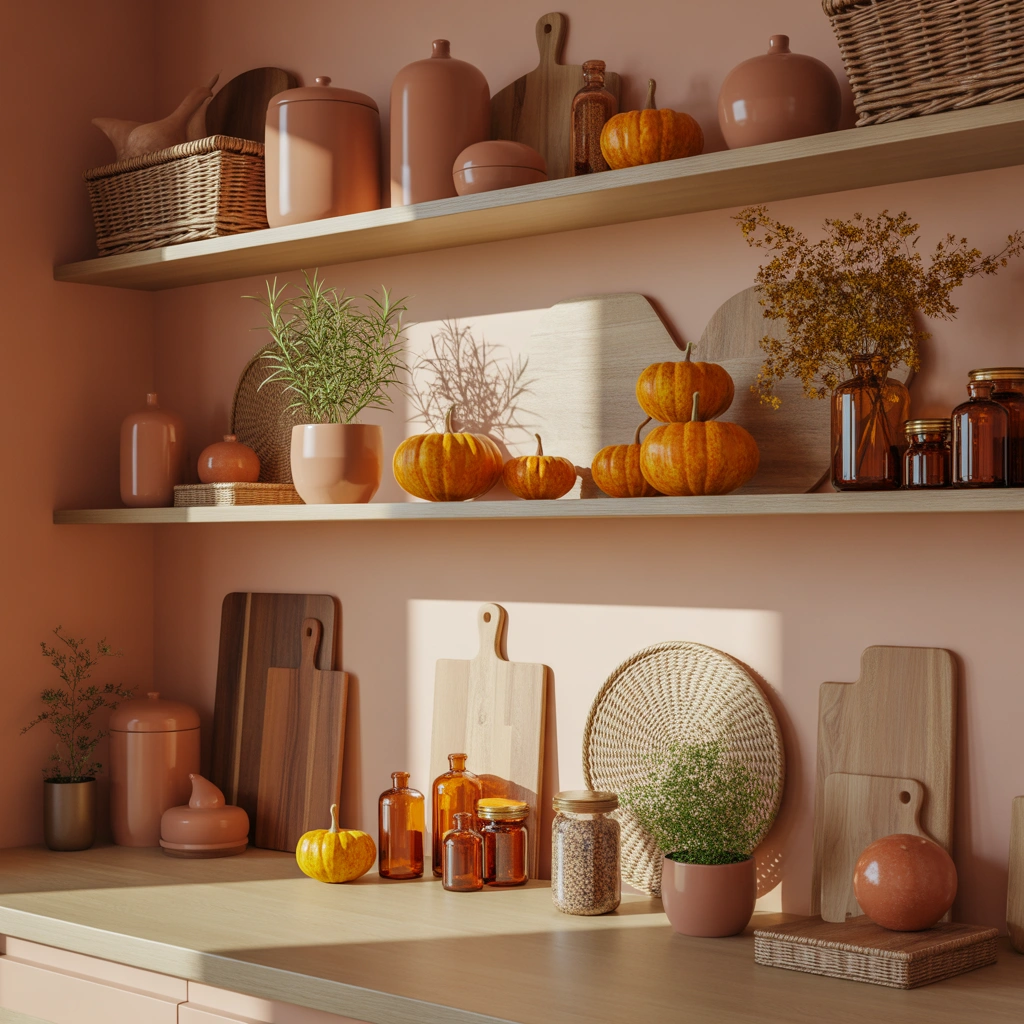
Changing a few shelf decorations throughout the year can keep your kitchen feeling fresh without requiring a major redesign.
In spring, consider adding fresh flowers, soft-colored ceramics, and light linen accents. Summer shelves can feature lemons, clear glass, woven textures, and bright greenery.
For autumn, introduce warm tones through amber glass, wooden pieces, dried leaves, small pumpkins, or copper details. During winter, simple evergreen branches, candles, white ceramics, and subtle metallic accents can create a cozy atmosphere.
The key is to keep seasonal decor understated. You do not need to replace everything on the shelf. Changing two or three details is usually enough.
For example, you could switch the flowers in a vase, replace a framed print, and introduce one seasonal decorative object. The functional items can remain in place.
I find that subtle seasonal styling feels more sophisticated and is easier to maintain. It also prevents shelves from becoming crowded with holiday-specific accessories.
14. Mix Metals for a Layered Look
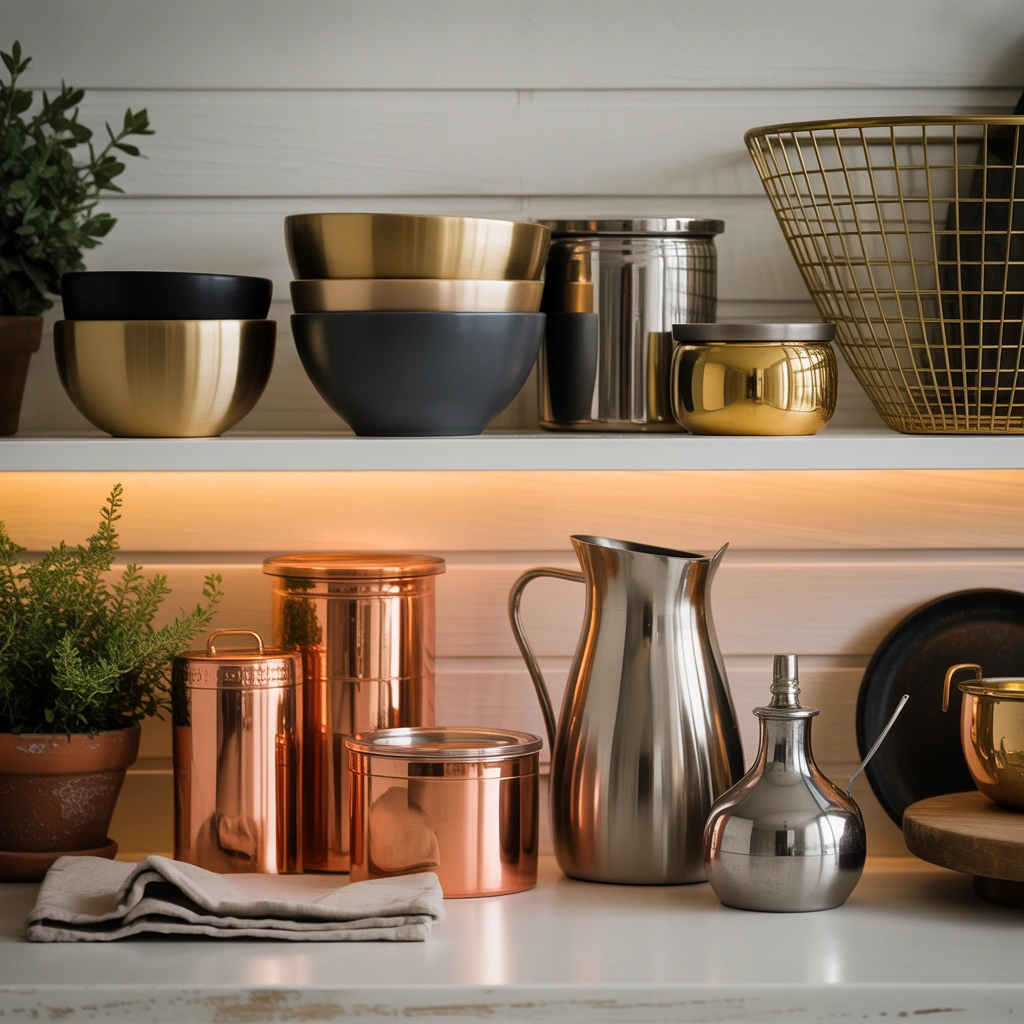
Metal accents can add contrast and sophistication to kitchen shelves. Brass, copper, stainless steel, black iron, and aged bronze each create a different mood.
You do not have to match every metal finish in the kitchen. Thoughtfully mixing two finishes can make the space feel layered and collected.
For example, brass candlesticks can sit near black metal shelf brackets, or a copper bowl can be paired with stainless-steel appliances. The repetition of each finish in small amounts helps the combination feel intentional.
Metal objects might include trays, bowls, measuring cups, utensil holders, small sculptures, framed artwork, or vintage kitchen tools.
Use reflective finishes sparingly because too much shine can feel distracting. A balance of metal, wood, glass, and ceramic will usually produce a more comfortable result.
If your kitchen already contains several metal finishes, choose shelf decor that connects with one or two of them. This will help the shelving feel integrated with the room.
15. Follow the Rule of Three
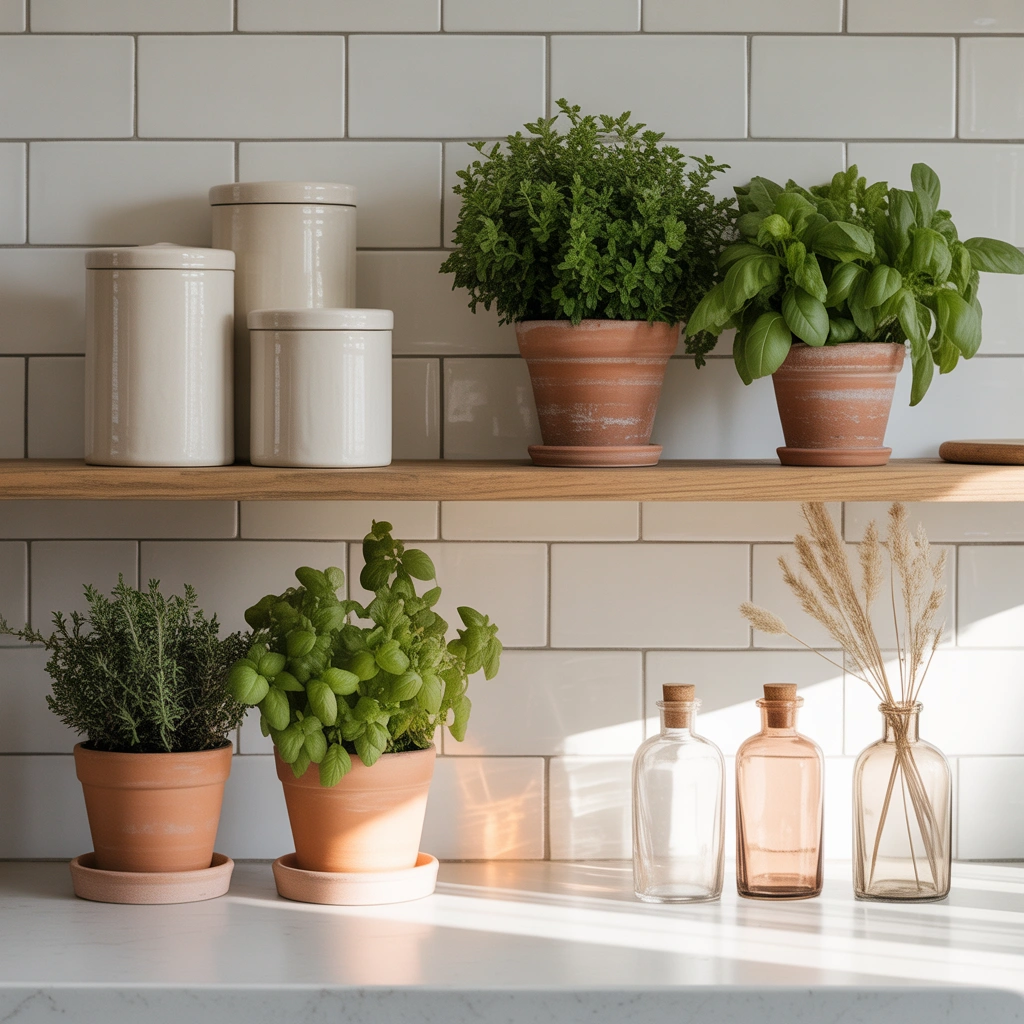
When I am unsure how to arrange a kitchen shelf, I often use the rule of three. Grouping objects in odd numbers tends to create a natural, visually pleasing composition.
A group might include:
- A small plant
- A ceramic bowl
- A framed print
Another shelf might feature a stack of cookbooks, a vase, and a candle. The objects do not need to match, but they should have some relationship through color, scale, or material.
Vary the height of the three items. Place the tallest object toward the back, the medium-height object beside it, and the smallest item slightly forward. This creates depth and allows each piece to remain visible.
You can also create visual triangles by arranging items at different heights across the shelf. The eye naturally moves between them, making the display feel balanced.
The rule of three is not a strict requirement. Some shelves may look better with two large objects or one statement piece. However, it is a helpful starting point when an arrangement feels incomplete.
How to Style Kitchen Shelves Without Making Them Look Cluttered
Open shelves can become messy quickly, especially when they hold both decorative and practical items. A few simple styling principles can help maintain a clean appearance.
Choose a Limited Color Palette
Select two or three main colors and repeat them throughout the shelves. Neutral tones can form the base, while one accent color adds interest.
For example, you might combine white ceramics, natural wood, and soft green details. A consistent palette allows different objects to feel connected.
Vary Object Heights
Shelves look flat when every object is the same height. Mix tall pitchers, medium bowls, low stacks of plates, and small decorative pieces.
Height variation creates movement and makes the arrangement more interesting.
Leave Empty Space
Not every inch of the shelf needs to be filled. Empty space gives the eye a place to rest and helps special pieces stand out.
In my experience, removing one or two objects often improves a shelf more than adding something new.
Combine Practical and Decorative Items
The most successful kitchen shelves are both attractive and useful. Pair everyday dishes with artwork, glass jars with greenery, or cookbooks with handmade pottery.
This combination keeps the space functional while preventing it from feeling purely utilitarian.
Repeat Materials and Shapes
Repetition creates visual harmony. If you use a wooden cutting board on one shelf, repeat a small wooden object somewhere else. If one shelf contains a round bowl, echo that shape with a round plate or plant pot.
These repeated details subtly connect the entire display.
Kitchen Shelf Decor Ideas for Small Kitchens
In a small kitchen, every shelf needs to work efficiently. Focus on items that are attractive but also serve a clear purpose.
Use matching jars for dry ingredients, stack dishes vertically, and add hooks beneath shelves for mugs or utensils. A small basket can conceal miscellaneous items, while a narrow row of cookbooks can provide both decoration and practical inspiration.
Avoid oversized accessories that take up valuable storage space. One small plant or framed print may be enough to soften the arrangement.
You can also use the top shelf for less frequently used serving pieces and keep daily essentials on the lower shelves.
Light colors, clear glass, and open space can help a compact kitchen feel less crowded.
Kitchen Shelf Decor Ideas for Different Design Styles
Modern Kitchens
Choose clean lines, simple ceramics, clear glass, black accents, and a restrained color palette. Keep decorative objects minimal and allow plenty of space between groups.
Farmhouse Kitchens
Use wooden cutting boards, white pitchers, vintage crocks, woven baskets, enamelware, and soft greenery. Mix practical objects with pieces that feel collected over time.
Minimalist Kitchens
Display only the items you genuinely use or love. Choose consistent shapes and colors, conceal small clutter, and leave generous empty space.
Rustic Kitchens
Highlight natural wood, handmade pottery, aged metals, stoneware, and vintage kitchen tools. Slight imperfections will add character.
Coastal Kitchens
Combine white ceramics, pale wood, woven textures, clear glass, and subtle shades of blue or green. Avoid using too many obvious beach-themed accessories.
Bohemian Kitchens
Mix colorful ceramics, plants, artwork, woven baskets, and globally inspired decorative pieces. Repeat a few colors to keep the display from becoming chaotic.
Common Kitchen Shelf Decorating Mistakes
One common mistake is trying to display too many items. Even beautiful objects lose their impact when they are crowded together.
Another mistake is ignoring function. If you need to move several decorations every time you reach for a plate, the shelf will become frustrating to use.
Placing only small objects on a long shelf can also make the arrangement feel scattered. Include at least one larger piece, such as a pitcher, framed print, basket, or cutting board, to anchor the display.
It is also important to consider safety. Heavy items should be stored on sturdy lower shelves, while fragile pieces should be positioned away from edges.
Finally, do not feel pressured to create perfect symmetry. Kitchen shelves often look more inviting when the balance is relaxed and slightly asymmetrical.
Final Thoughts
Decorating kitchen shelves is a simple way to bring warmth, organization, and personality into the heart of your home. You do not need to follow every design trend or purchase an entirely new collection of accessories.
Start with practical items you already own, such as dishes, cookbooks, jars, cutting boards, and serving bowls. Then add a few personal details through plants, artwork, pottery, vintage finds, or seasonal accents.
The best kitchen shelf decor ideas combine beauty with everyday usefulness. Your shelves should reflect how you cook, what you love, and how you want your kitchen to feel.
Begin by clearing the shelves completely and choosing a simple color palette. Add your largest functional pieces first, layer in smaller objects, and stop before the arrangement becomes crowded.
Most importantly, allow your kitchen shelves to evolve. As your routines, collections, and style change, your shelves can change too. A display that feels personal, practical, and welcoming will always be more meaningful than one designed only to look perfect.
