
Kitchen cabinets are one of the first things I notice when I walk into a kitchen. They cover a large portion of the room, influence the overall color palette, and determine how organized the space feels. Even a beautiful kitchen can feel unfinished when the cabinets do not match the style or storage needs of the homeowner.
When I think about renovating a kitchen, I always believe cabinetry deserves just as much attention as countertops, appliances, and flooring. The right kitchen cabinet design can make a small kitchen feel bigger, introduce personality into a neutral space, and create smarter storage without sacrificing style.
The good news is that kitchen cabinetry has moved far beyond basic white cupboards. Today, there are countless ways to combine colors, materials, finishes, hardware, and layouts to create something that feels personal.
Whether you are planning a complete renovation or simply looking for inspiration to refresh your existing kitchen, these 14 kitchen cabinet design ideas offer a mix of modern, timeless, cozy, and practical options.
1. Choose Timeless White Shaker Cabinets
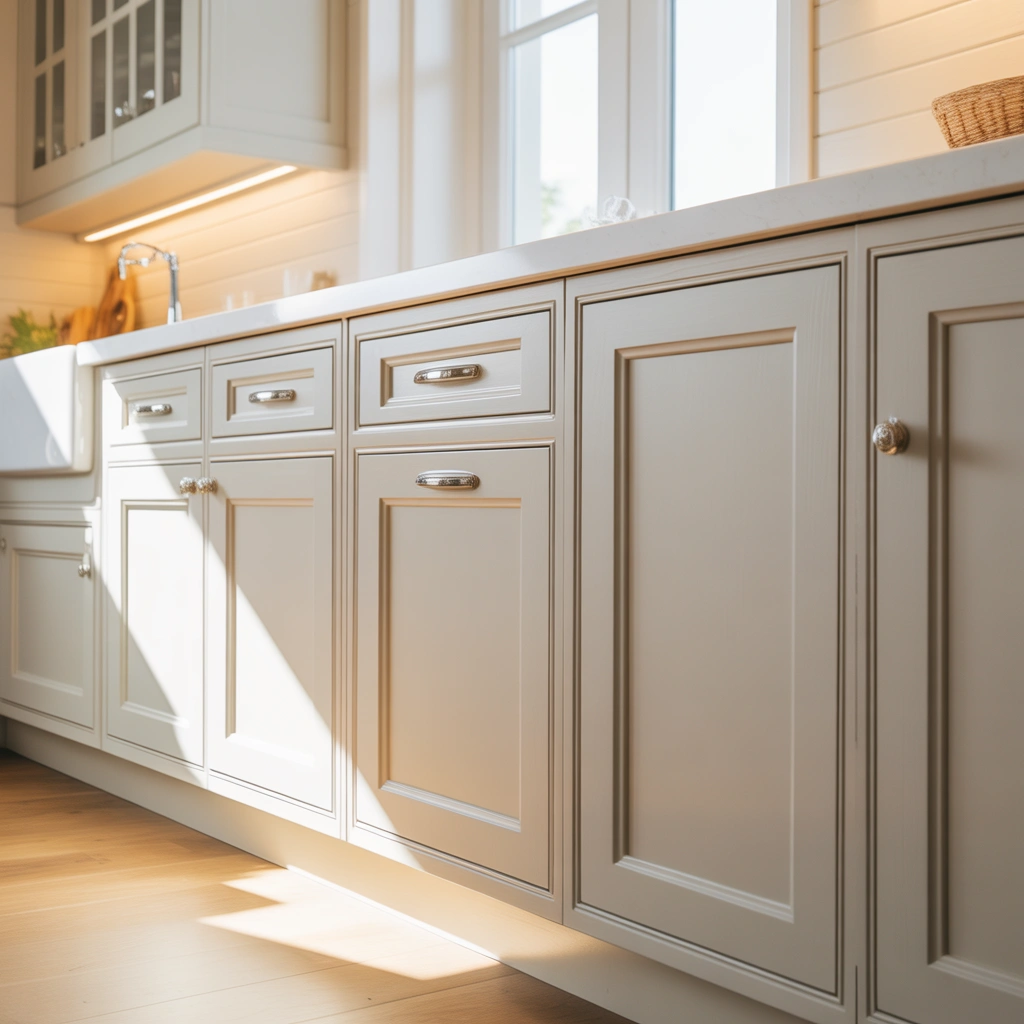
Whenever I want a kitchen design that feels fresh without being overly trendy, white Shaker cabinets are one of my first choices. Their simple recessed-panel doors create enough detail to be interesting while remaining understated enough to complement almost any interior style.
White cabinetry reflects natural and artificial light, which makes it especially useful in smaller kitchens or rooms that do not receive much sunlight. It can make the entire space feel cleaner, brighter, and more open.
The beauty of white Shaker cabinets is their versatility. Pair them with marble-look countertops and polished metal handles for an elegant kitchen, or combine them with butcher-block counters and warm wooden flooring for something more relaxed.
I also like how easy they are to update later. Changing the backsplash, cabinet hardware, wall color, or lighting can completely change the personality of a white kitchen without requiring new cabinetry.
For extra visual depth, avoid using only stark white surfaces. Introduce warmer whites, cream-colored walls, natural wood, woven accessories, or subtle stone textures. These details prevent the room from feeling cold or overly clinical.
2. Create Contrast With Two-Tone Kitchen Cabinets
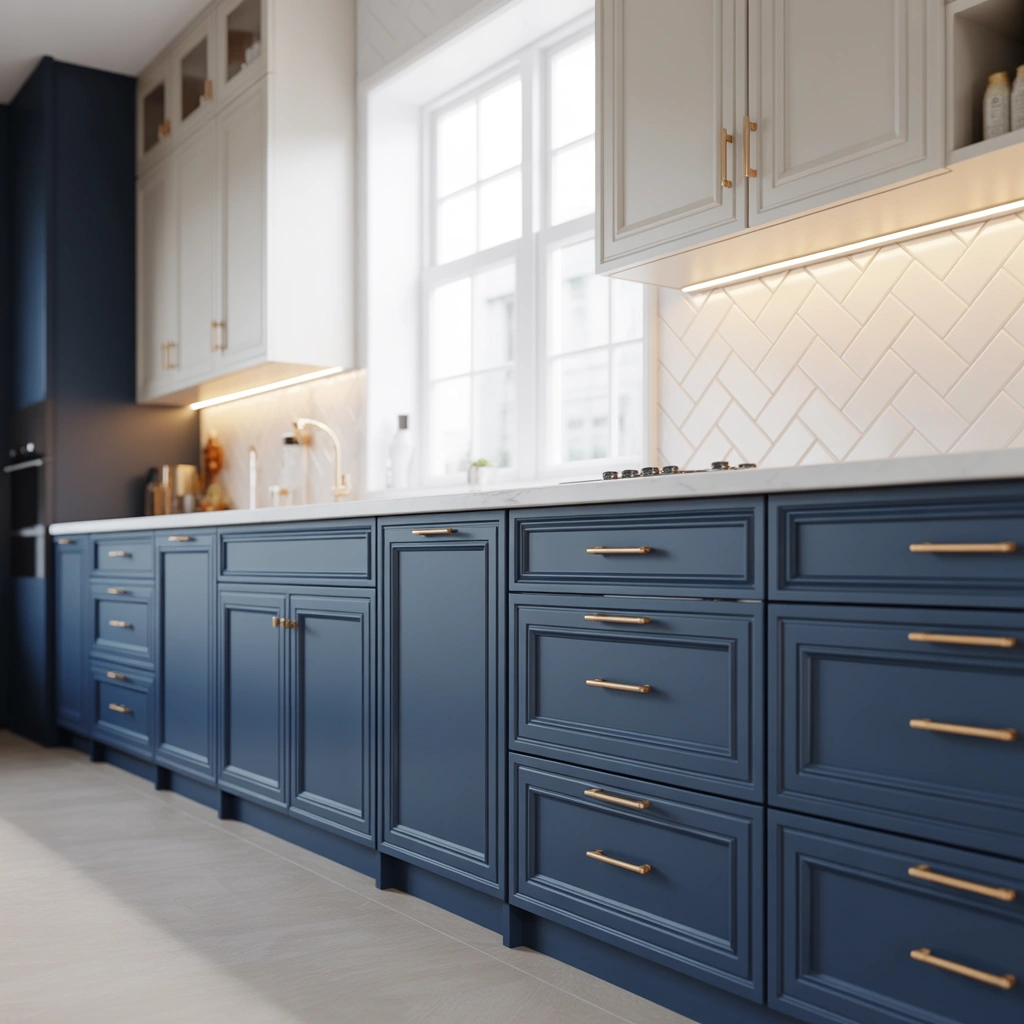
Two-tone cabinetry is one of my favorite ways to introduce contrast without overwhelming the kitchen.
Instead of choosing one cabinet color for the entire room, use one shade for the upper cabinets and another for the base cabinets. Another popular approach is keeping the perimeter cabinetry neutral while giving the kitchen island a contrasting finish.
For example, creamy white upper cabinets paired with deep navy lower cabinets create a sophisticated look. Sage green and natural oak can feel softer and more organic, while black and white create stronger contemporary contrast.
There is also a practical advantage to using darker colors on lower cabinets. They tend to hide everyday marks and fingerprints better than very light finishes.
If you try this idea, I recommend connecting the two cabinet colors through another feature. Your backsplash, countertop veining, flooring, or hardware can repeat elements from both shades and make the combination feel intentional.
Two-tone kitchen cabinets work particularly well when you want personality but are hesitant to commit to a bold color across the entire room.
3. Bring Warmth Into the Kitchen With Natural Wood Cabinets
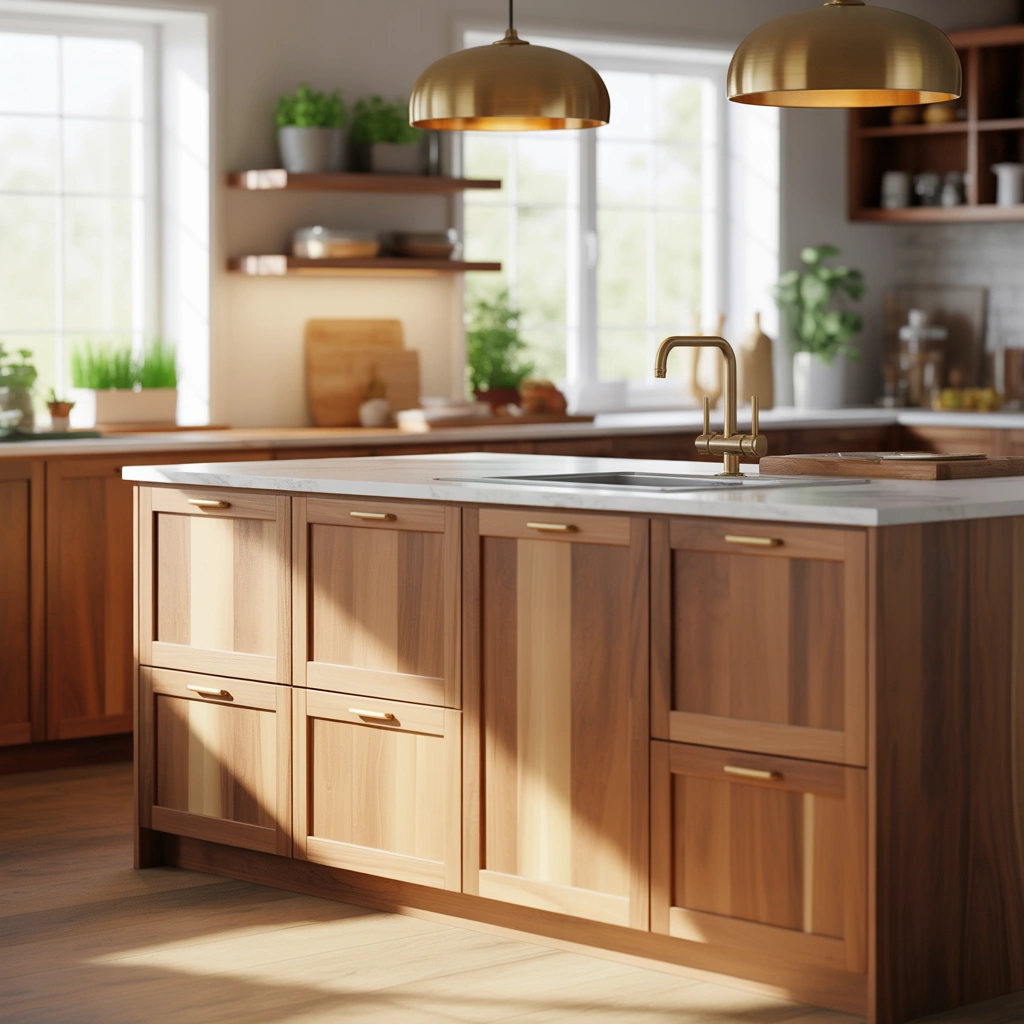
Natural wood cabinetry has returned in a big way, and I can understand why. Wood instantly introduces warmth, texture, and character into a kitchen.
Oak, walnut, maple, and other wood finishes can work beautifully in both traditional and modern spaces. The secret is choosing the right door style and finish.
Flat-panel oak cabinets can feel very contemporary, especially when paired with minimalist hardware and pale stone countertops. Walnut cabinets have a richer appearance and work wonderfully in sophisticated kitchens. Lighter wood tones, meanwhile, create an airy Scandinavian-inspired atmosphere.
I personally prefer wood cabinets where the grain remains visible rather than being covered with a heavy stain. Natural variation makes each cabinet door slightly different and gives the room an authenticity that manufactured finishes sometimes lack.
To keep a wood-heavy kitchen from appearing too dark, balance the cabinetry with lighter countertops, walls, backsplashes, or flooring.
You can also use natural wood selectively. A wooden kitchen island surrounded by painted cabinetry is an excellent way to enjoy the warmth of timber without committing to it everywhere.
4. Try Modern Flat-Panel Cabinets for a Minimalist Look
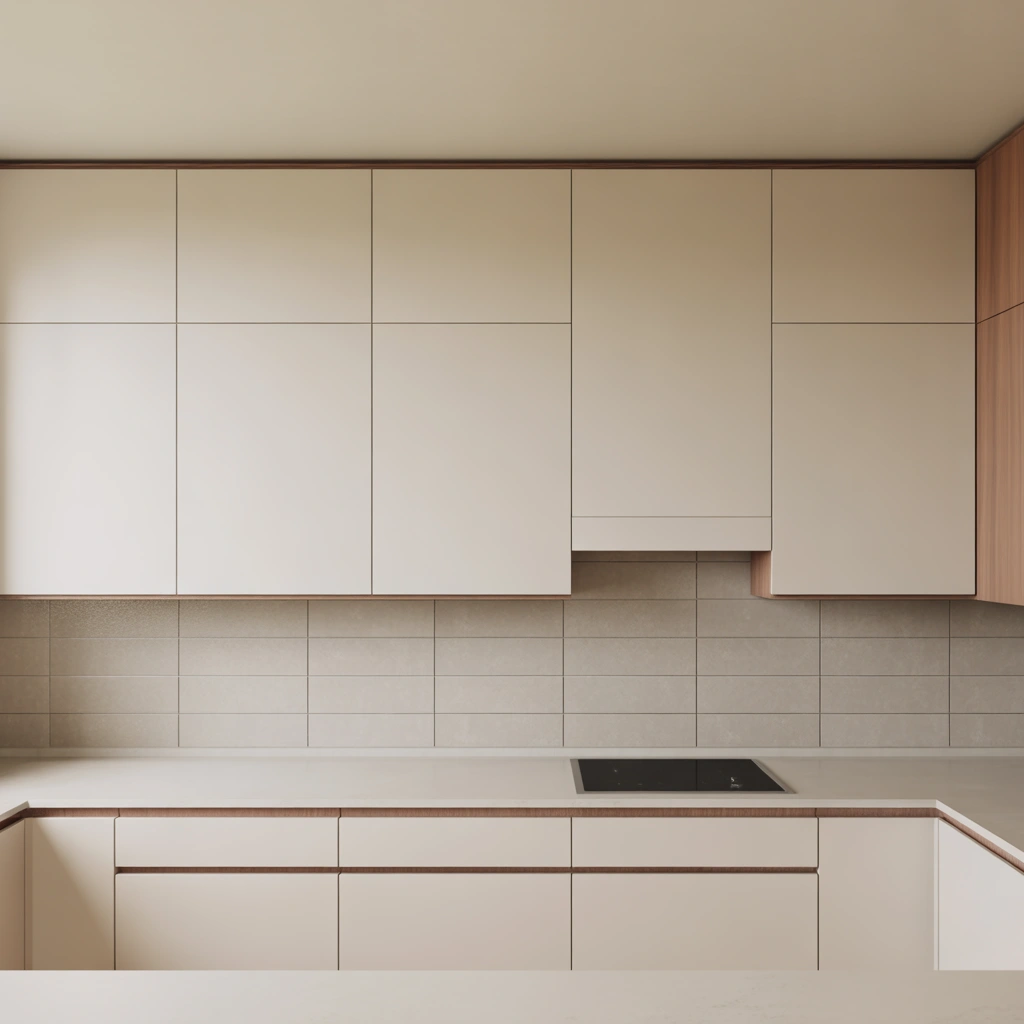
If you love clean lines and uncluttered interiors, flat-panel cabinets are worth considering.
Unlike Shaker or raised-panel doors, flat-panel cabinets have completely smooth fronts. This simple construction creates a streamlined appearance that fits particularly well in modern, contemporary, and minimalist kitchens.
I love these cabinets when they are paired with integrated handles or discreet edge pulls. Removing large pieces of hardware allows the cabinetry to look almost like architectural paneling rather than traditional cupboards.
Colors can range from soft beige and white to charcoal, black, navy, and natural wood veneer.
One detail I would pay particular attention to is the finish. Matte finishes create a softer and more sophisticated appearance, while glossy surfaces reflect light and can make compact kitchens seem slightly larger.
Because there are fewer decorative details, craftsmanship becomes more noticeable. Door alignment, spacing, hinges, and installation should be precise.
When designed properly, flat-panel cabinetry creates a calm kitchen where countertops, lighting, stone, and architectural features are allowed to stand out.
5. Add Character With Sage Green Kitchen Cabinets
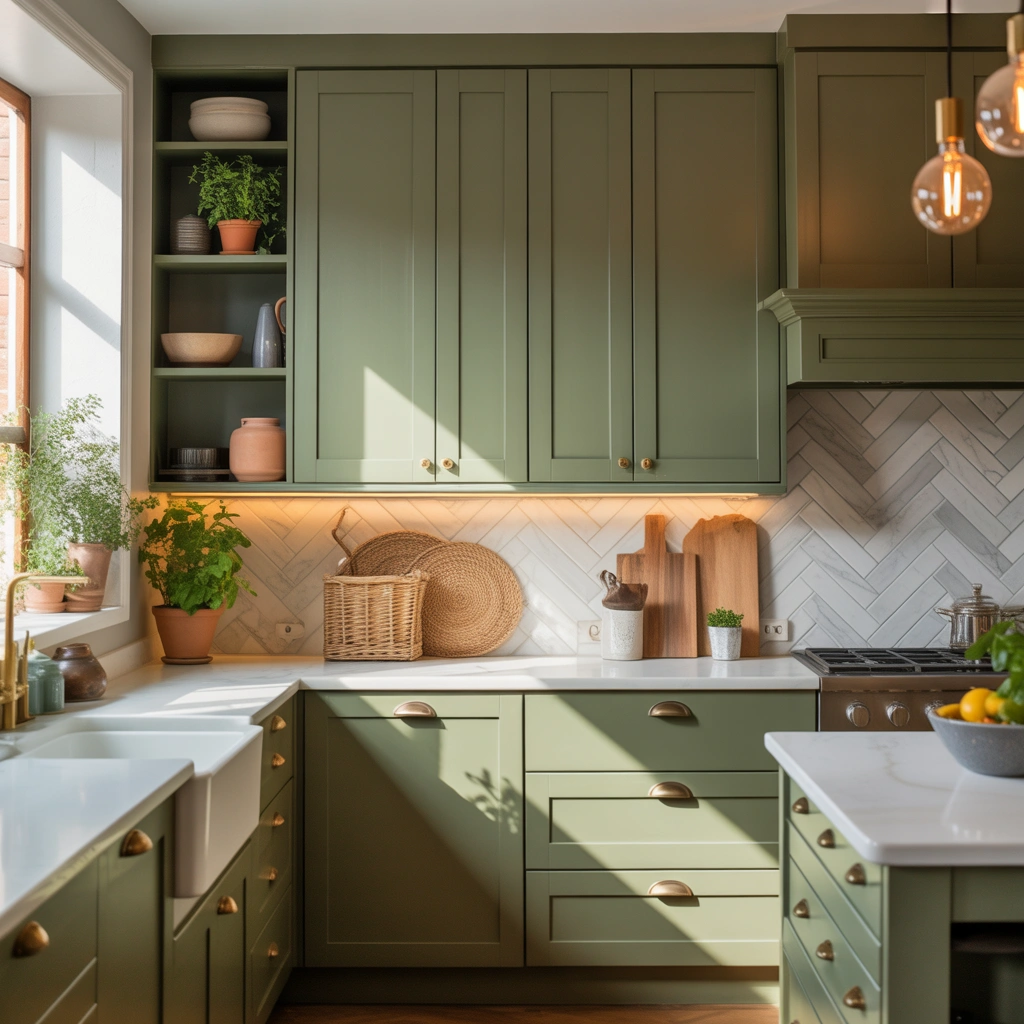
Green cabinetry has become one of my favorite alternatives to traditional gray or white kitchens.
Sage green is especially appealing because it feels colorful without being overpowering. Its muted undertones create a peaceful, natural atmosphere that works beautifully with wood, stone, brass, and warm neutral colors.
I particularly like sage cabinetry with creamy white countertops and brushed brass handles. The combination feels elegant but still relaxed enough for an everyday family kitchen.
For a softer look, pair sage green cabinets with pale oak flooring and an off-white backsplash. If you prefer more contrast, darker stone countertops or black hardware can make the color feel more contemporary.
Lighting also affects how sage green appears. Some shades can look gray in low light and greener near bright windows, so testing paint or cabinet samples inside the actual kitchen is important.
This is one of those kitchen cabinet design ideas that can add personality while still remaining relatively timeless.
6. Use Dark Kitchen Cabinets for a Dramatic Statement
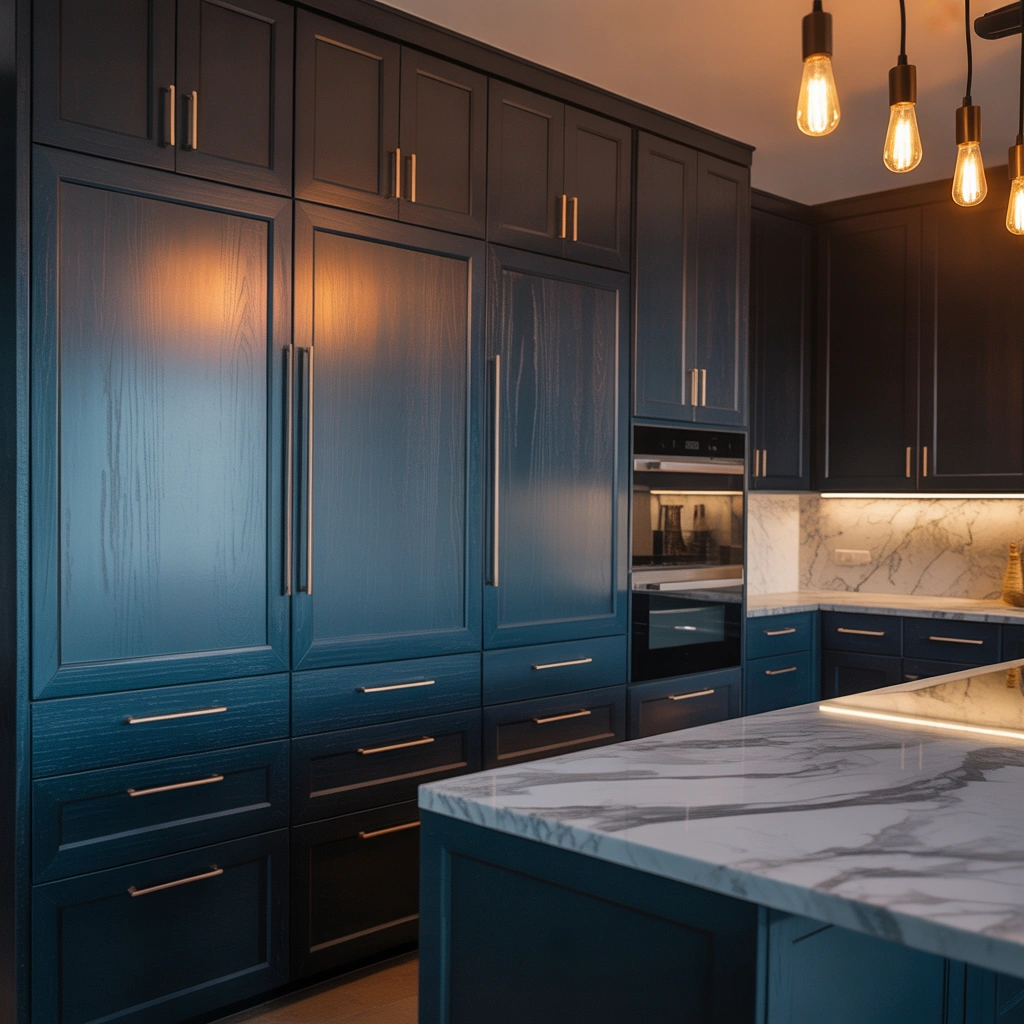
Dark cabinets can completely transform the mood of a kitchen.
Deep charcoal, black, midnight blue, forest green, and espresso finishes create richness and sophistication that lighter kitchens cannot always achieve.
I especially love dark cabinetry in kitchens with generous windows because natural light prevents the space from becoming visually heavy. Light-colored countertops and backsplashes also help create balance.
Black cabinets paired with white quartz countertops are a classic example. Add warm wooden flooring and aged brass hardware, and the kitchen suddenly feels luxurious rather than harsh.
Dark cabinetry can also work in smaller kitchens, although I would use it more strategically. Lower cabinets in a deep color combined with lighter upper cabinets can provide drama while keeping the room open.
Matte finishes are particularly attractive with darker colors because they create a softer surface and often show fewer reflections.
If your goal is a kitchen that feels bold, intimate, and sophisticated, dark cabinetry can make a surprisingly powerful difference.
7. Replace Some Upper Cabinets With Glass-Front Doors
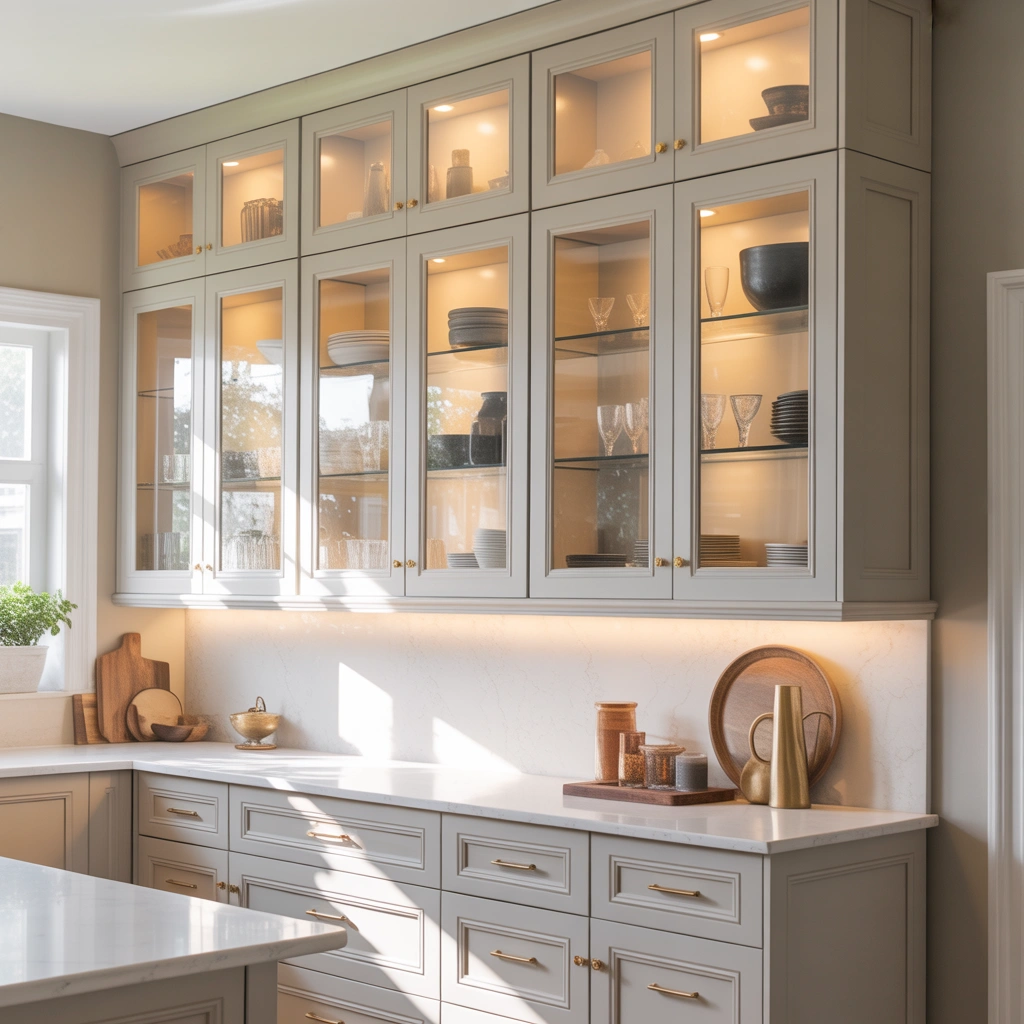
Glass-front cabinets offer a beautiful compromise between completely closed storage and open shelving.
I like using them selectively rather than installing glass doors throughout the entire kitchen. One or two sections are usually enough to introduce visual interest.
They work especially well for displaying attractive dishes, wine glasses, ceramics, or serving pieces. Because the contents remain visible, they can also make large banks of upper cabinets feel lighter.
Clear glass creates the most open appearance, but it does require organized shelves. If you prefer more privacy, consider fluted, reeded, frosted, or textured glass.
Interior cabinet lighting can make glass-front cupboards even more attractive. A subtle warm LED strip turns everyday dishware into part of the kitchen décor, especially in the evening.
I would avoid storing mismatched pantry packages behind clear glass unless you genuinely enjoy organizing them. Decorative cabinets should enhance the room rather than create another area that constantly needs arranging.
8. Design Floor-to-Ceiling Cabinets for Maximum Storage
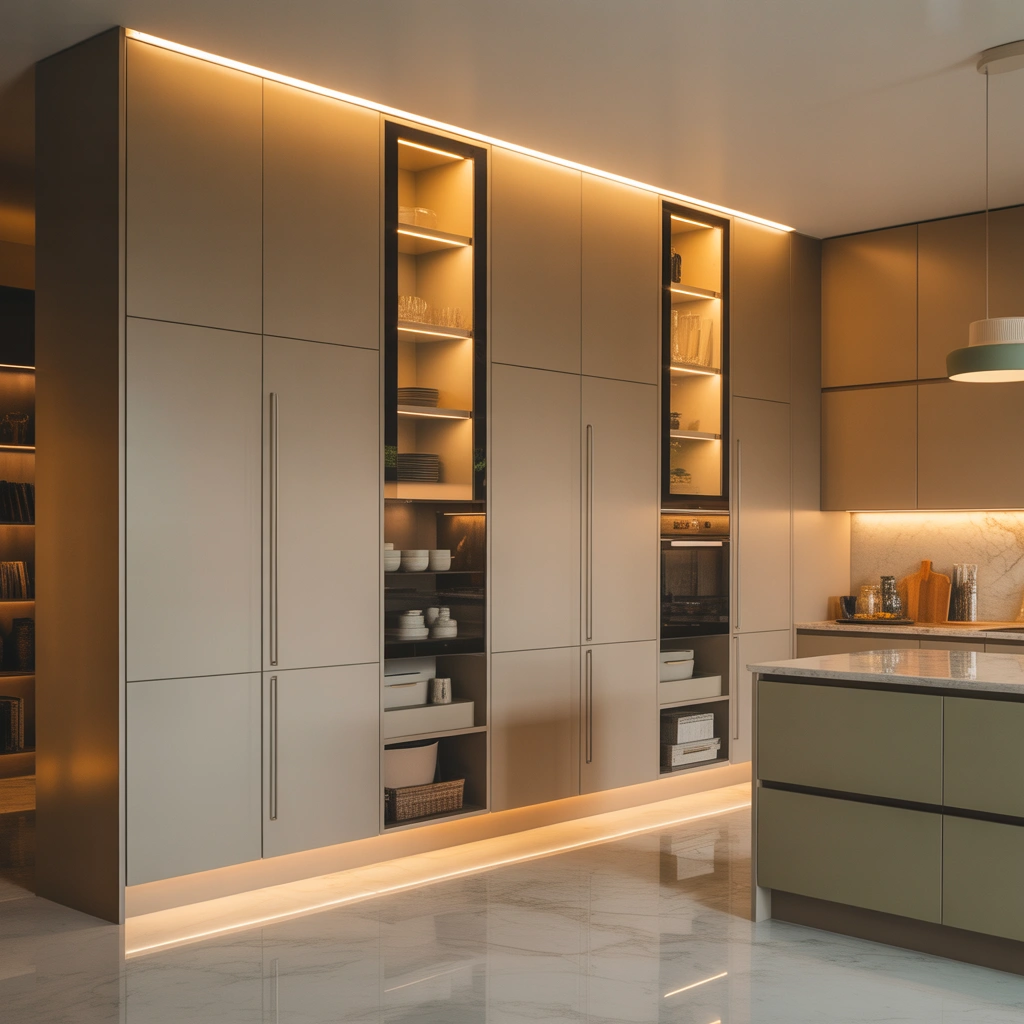
One thing I rarely regret in a kitchen is having extra storage.
Floor-to-ceiling cabinetry uses vertical space that might otherwise remain empty. Instead of stopping cabinets below the ceiling and creating a dust-catching gap above them, take the cabinetry all the way up.
This approach creates a polished, built-in appearance while providing storage for appliances, serving dishes, seasonal items, and pantry supplies.
The uppermost cabinets do not need to hold things you use every day. I usually imagine them storing holiday dishes, oversized platters, spare containers, and equipment that only comes out occasionally.
Tall cabinetry can also hide practical elements such as refrigerators, ovens, pantry pullouts, coffee stations, and cleaning supplies.
In smaller kitchens, matching tall cabinetry to the wall color can prevent it from feeling too bulky.
Adding crown molding to traditional cabinets or using clean flush panels in modern kitchens helps make the entire installation look intentional.
Floor-to-ceiling cabinets are particularly valuable when storage efficiency matters just as much as appearance.
9. Incorporate Open Shelving Between Cabinets
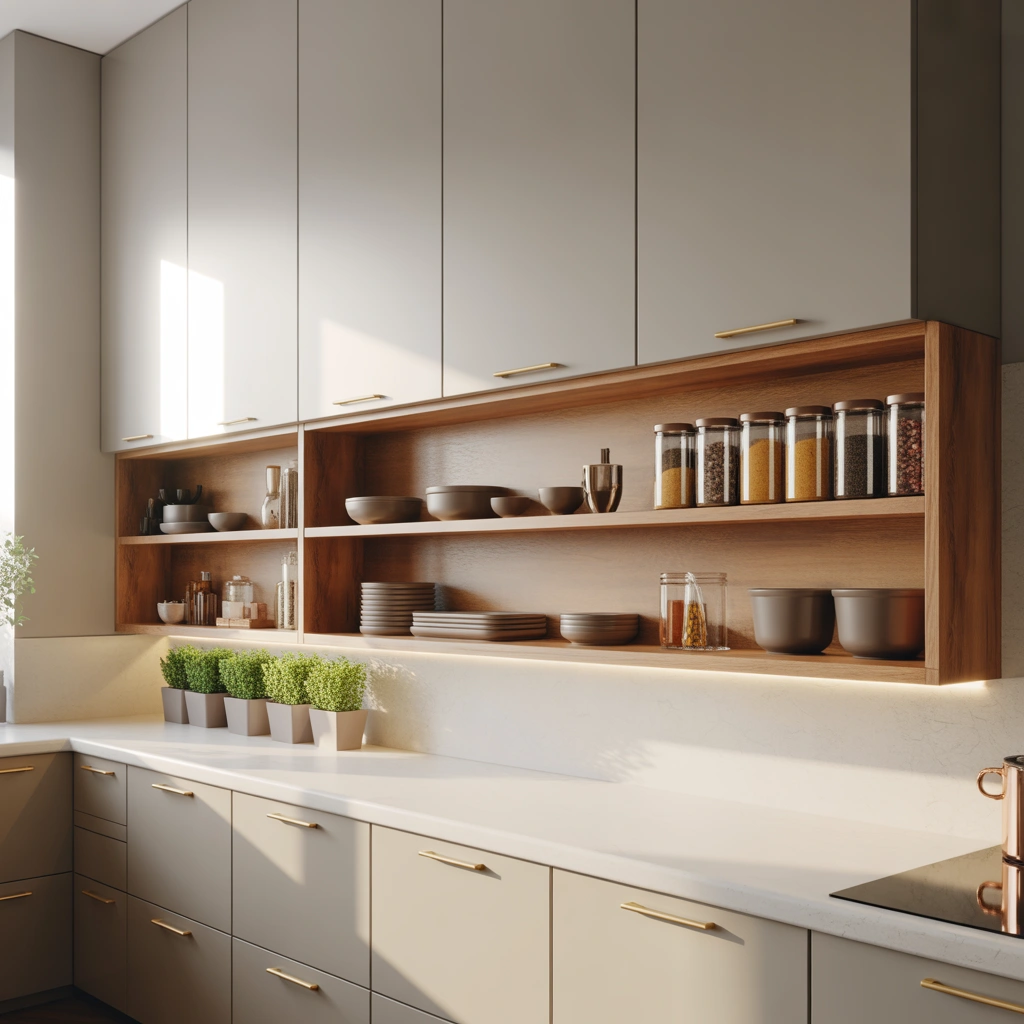
Although I would not replace every upper cabinet with shelves, I love mixing small areas of open shelving into a kitchen.
Open shelves give the eye somewhere to rest between blocks of cabinetry and provide a convenient place for frequently used dishes or decorative objects.
Wooden floating shelves look beautiful beside painted cabinets because they introduce natural warmth. Stone shelves can create a more luxurious architectural effect, especially when they match the countertop or backsplash.
Placement matters. Open shelving works particularly well near coffee stations, breakfast areas, sinks, or decorative corners.
Keep the styling relatively simple. A few bowls, glasses, cookbooks, plants, and ceramics usually look better than overcrowded shelves.
The most successful open shelving should still be functional. I prefer storing items I actually use rather than creating shelves filled entirely with objects that exist only for decoration.
Combining shelves with traditional cabinetry gives you the best of both worlds: closed storage for clutter and open space for personality.
10. Make the Kitchen Island Cabinetry Stand Out
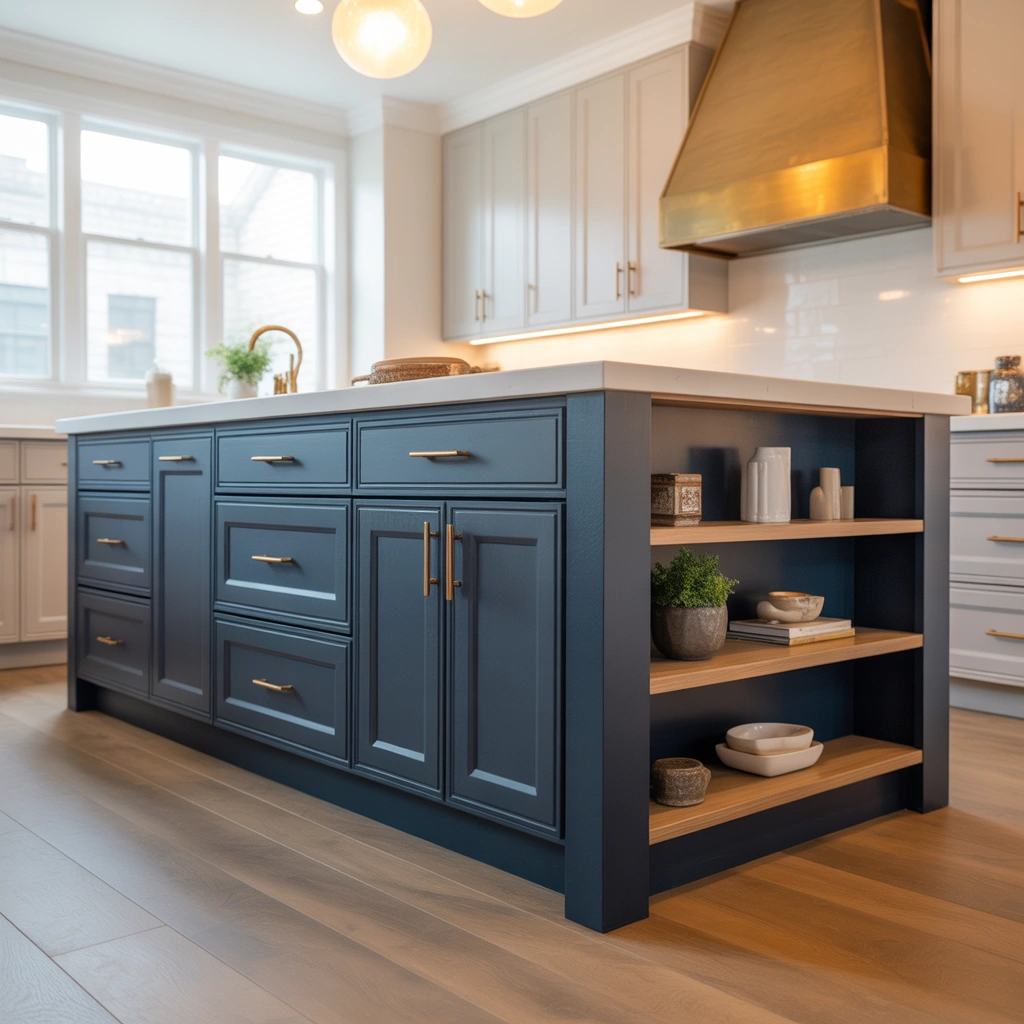
A kitchen island provides the perfect opportunity to experiment with cabinet design.
Rather than matching the island perfectly to the surrounding cabinetry, consider turning it into a focal point.
A deep blue island in an otherwise white kitchen can introduce elegant contrast. A walnut island surrounded by creamy cabinets adds warmth. Even a muted terracotta or olive-green finish can create beautiful personality when the rest of the room remains neutral.
I also like incorporating decorative panels into the sides and back of larger islands. Shaker detailing, vertical fluting, wood slats, or traditional molding can make the island feel more like a custom piece of furniture.
Storage should still be a priority. Deep drawers, pullout bins, cookbook shelves, appliance storage, or cabinets beneath seating areas can make the island much more useful.
When designed thoughtfully, the island becomes more than an extra countertop. It anchors the entire kitchen layout.
11. Choose Handleless Cabinets for a Seamless Appearance
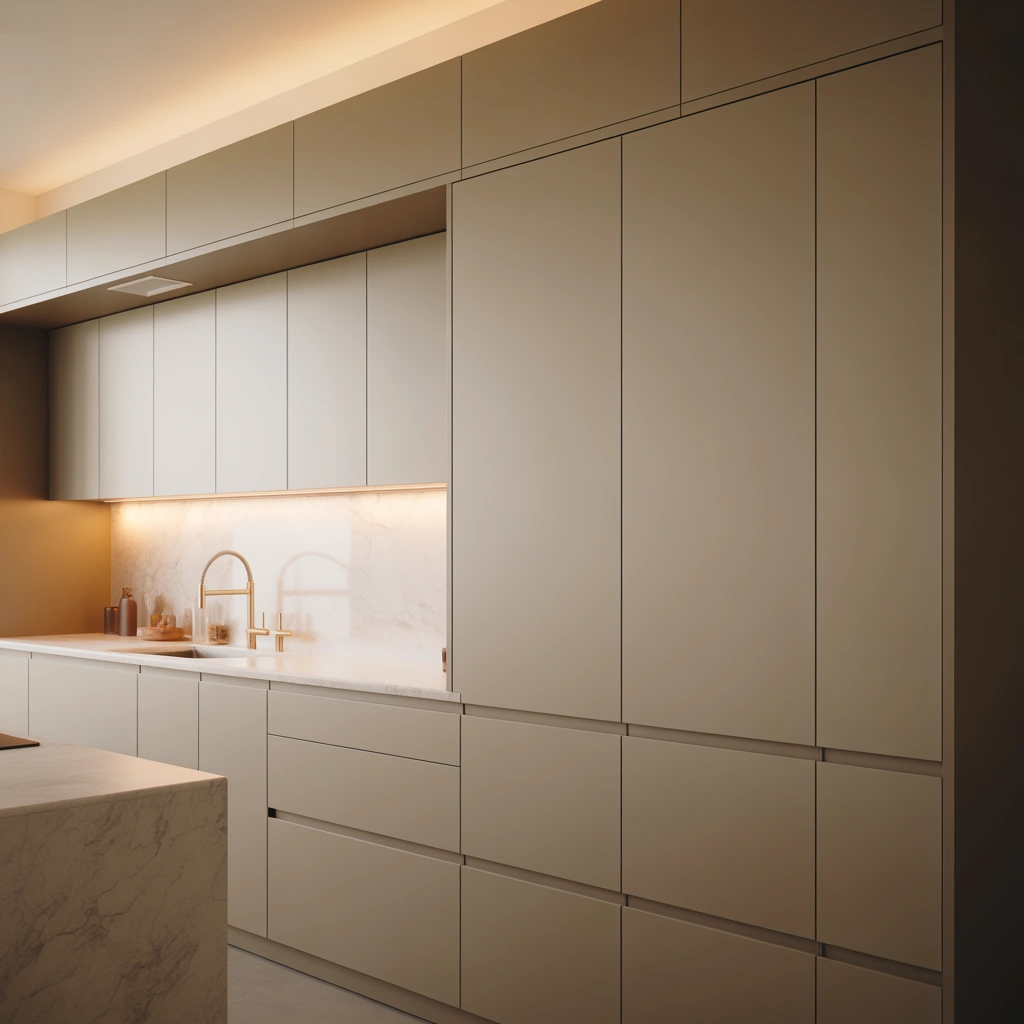
Handleless cabinetry is ideal when you want the kitchen to feel sleek and visually quiet.
Instead of traditional knobs or pulls, these cabinets may use push-to-open mechanisms, recessed channels, or integrated edge handles.
I find this style particularly effective in open-plan homes where the kitchen is constantly visible from the living or dining area. Without prominent hardware, the cabinets blend more naturally into the surrounding architecture.
Handleless designs also work beautifully with large cabinet fronts because uninterrupted surfaces make the room appear more streamlined.
However, practicality matters. Push-to-open systems can show fingerprints, particularly on glossy finishes. Matte or textured materials can make maintenance easier.
Integrated channels provide another solution because you can open the doors without touching the front surfaces as much.
Pair handleless cabinets with concealed appliances, simple countertops, and minimal accessories if you want a genuinely modern kitchen.
12. Add Fluted or Reeded Cabinet Details
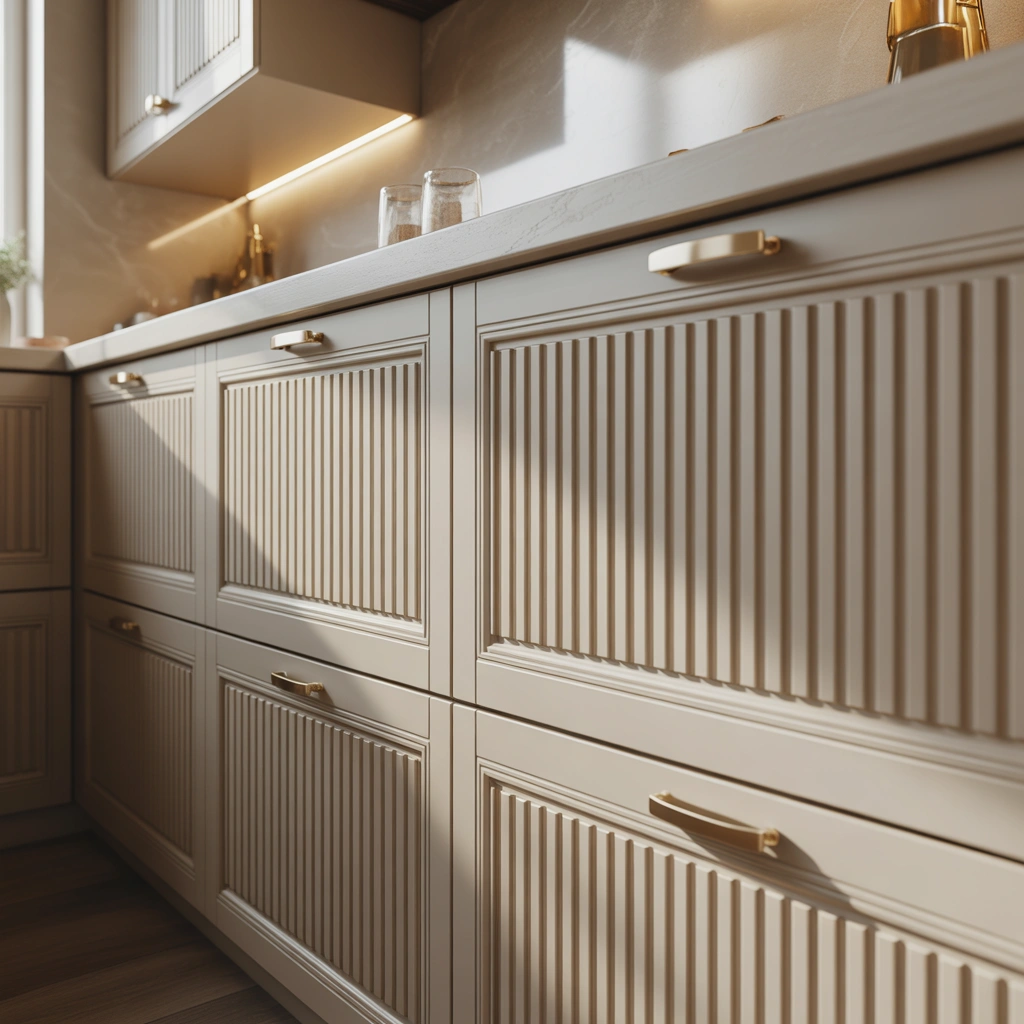
Texture can make cabinetry feel far more interesting, especially when the color palette is simple.
Fluted and reeded cabinet fronts introduce subtle vertical lines that catch light and create gentle shadow. I particularly like using this detail on kitchen islands, bar areas, appliance garages, or selected upper cabinets.
Applying it to every cabinet can sometimes become visually busy, so treating it as an accent usually creates a more sophisticated effect.
Fluted wood looks beautiful in warm contemporary kitchens, while painted reeded panels can provide character without changing the overall color scheme.
These details are especially effective when paired with simple countertops and minimal hardware. The texture becomes the decorative feature.
Vertical lines can also create the illusion of greater height, which can be useful in kitchens with relatively low ceilings.
For homeowners who want something more distinctive than plain cabinetry but less traditional than ornate molding, fluted cabinet doors provide an excellent middle ground.
13. Hide Appliances Behind Integrated Cabinetry
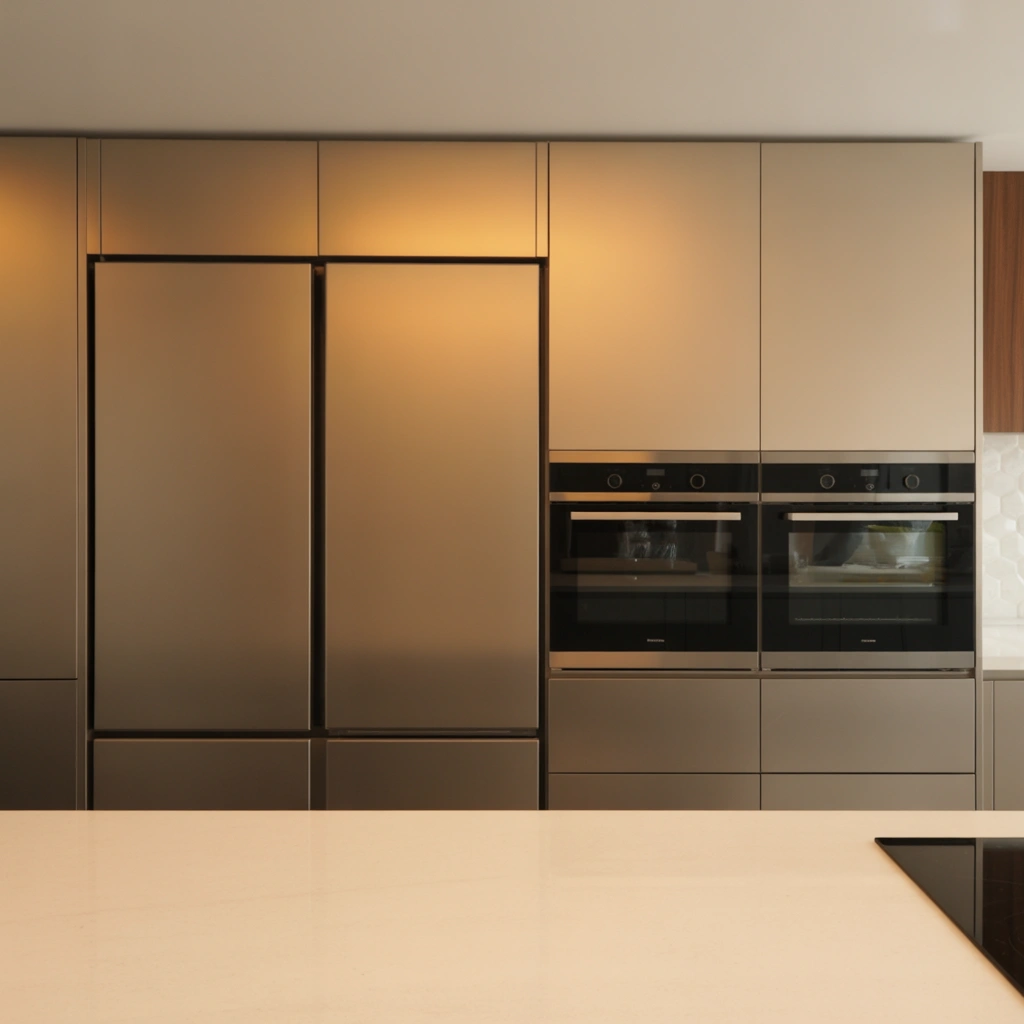
One of the most luxurious kitchen design tricks is making appliances disappear.
Integrated refrigerators, dishwashers, freezers, and even smaller appliance stations can be concealed behind cabinet panels that match the rest of the kitchen.
I love this approach because appliances often interrupt the visual rhythm of cabinetry. Once they are hidden, the kitchen appears calmer and more cohesive.
An appliance garage is another useful addition. Instead of leaving the toaster, coffee machine, blender, and other small appliances across the countertop, create a dedicated cabinet with retractable or pocket doors.
Open the cabinet when you need the appliances and close it afterward.
Tall pantry cabinetry can also incorporate ovens and microwaves in a more organized arrangement.
This type of cabinet design is particularly useful in open-concept homes because the kitchen can feel less like a purely functional workspace and more like part of the living environment.
Just remember that proper ventilation and manufacturer installation requirements must still be considered when appliances are enclosed.
14. Use Smart Interior Cabinet Storage
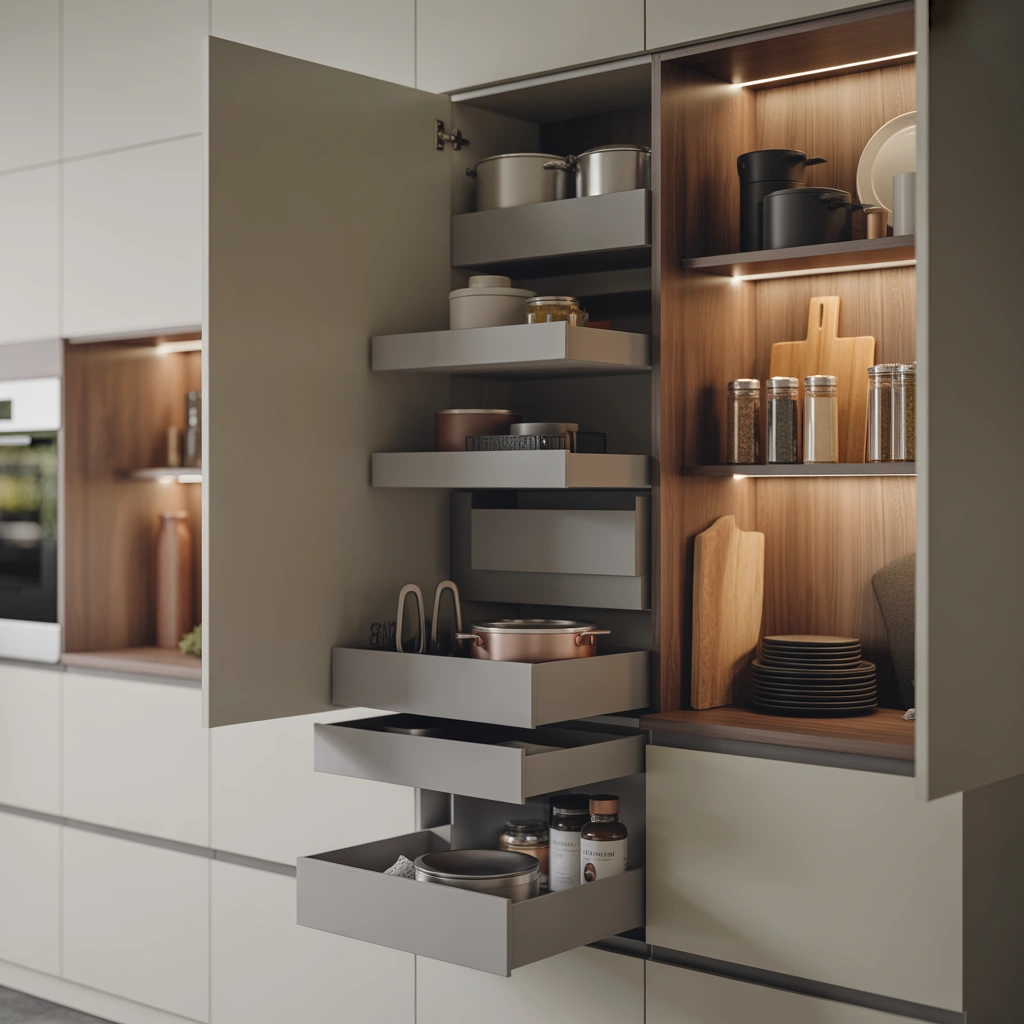
Beautiful cabinet doors are important, but what happens behind those doors matters even more.
I have seen gorgeous kitchens become frustrating simply because the interior storage was poorly planned. Deep cupboards where everything disappears into the back quickly become inconvenient.
Modern cabinet interiors can solve many of these problems.
Consider deep drawers for pots and pans, pullout spice racks, vertical tray dividers, corner cabinet systems, hidden trash bins, drawer organizers, pantry pullouts, and dedicated storage for cutting boards.
Deep drawers are one of my personal favorites because they allow you to see everything from above rather than reaching into the back of a lower cabinet.
Internal drawers can also create additional storage without changing the appearance of the cabinet exterior.
Before designing the interiors, think about how you actually cook. Keep cookware near the stove, dishes near the dishwasher, knives near the food preparation area, and pantry ingredients within easy reach.
The best kitchen cabinet design is not just attractive in photographs. It should make your daily routine easier.
How to Choose the Right Kitchen Cabinet Design
With so many kitchen cabinet design ideas available, choosing one style can feel overwhelming. I find it easier to focus on four things: the size of the kitchen, the amount of natural light, the overall interior style, and the level of storage required.
Small kitchens often benefit from lighter finishes, simple door styles, and efficient vertical storage. Larger kitchens give you more freedom to experiment with dramatic colors, decorative islands, or mixed materials.
Your home’s existing architecture should also influence the decision. Ultra-modern handleless cabinets may feel perfect in a contemporary apartment, while traditional Shaker cabinets might complement an older home more naturally.
Most importantly, think beyond trends.
A cabinet finish may look beautiful on social media today, but kitchen cabinetry is a major investment that you will probably live with for years. Choose materials and colors that genuinely appeal to you.
Best Colors for Kitchen Cabinets
Cabinet color can completely change how a kitchen feels.
White and cream remain popular because they reflect light and create a timeless background. Warm beige and greige offer a slightly softer alternative.
Green shades, particularly sage, olive, and muted forest green, bring an earthy quality into the kitchen. Navy blue creates elegant contrast, while charcoal and black can deliver a more dramatic contemporary appearance.
Natural wood should also be considered a color in its own right. Oak, walnut, and maple introduce warmth that painted finishes cannot exactly replicate.
If you are nervous about choosing a bold cabinet color, use it selectively. A colorful kitchen island or lower cabinets can provide personality while neutral cabinetry keeps the overall design balanced.
Kitchen Cabinet Hardware Ideas
Hardware may seem like a small decision, but it can significantly influence the final look of your cabinetry.
Brushed brass adds warmth and works beautifully with green, blue, white, and wood cabinets. Matte black hardware provides stronger contrast and suits contemporary kitchens.
Polished nickel and chrome have a cleaner, brighter appearance, while aged bronze can complement more traditional spaces.
I also like mixing knobs and pulls when it makes functional sense. Knobs can work well on cabinet doors, while longer pulls are often easier to use on large drawers.
Pay attention to scale. Tiny hardware can look lost on oversized cabinet fronts, while extremely large handles may overpower narrow doors.
If possible, test hardware samples directly against the cabinet finish before making your final decision.
Common Kitchen Cabinet Design Mistakes to Avoid
Even beautiful cabinet ideas can become frustrating when practical details are overlooked.
One common mistake is prioritizing appearance while ignoring storage. Before finalizing your cabinet layout, consider everything you need to store and where you naturally use it.
Another issue is choosing cabinet colors without testing them in the actual room. Artificial lighting and natural sunlight can dramatically change how paint and wood finishes appear.
Do not forget door clearance either. Cabinet doors, refrigerator doors, dishwashers, and drawers need enough room to open without colliding.
Poorly positioned handles can also make doors awkward to use.
Finally, avoid following trends simply because they are popular. The most successful kitchens combine current inspiration with personal preferences and practical needs.
Frequently Asked Questions About Kitchen Cabinet Design
What kitchen cabinet style is the most timeless?
Shaker-style cabinets are among the most timeless options because their simple recessed-panel design works with traditional, transitional, farmhouse, and contemporary interiors. White, cream, natural wood, and muted colors can all work well with Shaker doors.
What cabinet colors make a small kitchen look bigger?
White, warm cream, pale beige, light gray, and light natural wood can help a small kitchen appear more spacious because they reflect more light. Using similar colors on the walls and cabinets can create an even more seamless appearance.
Should upper and lower kitchen cabinets match?
Not necessarily. Mixing upper and lower cabinet colors can add visual interest. Keeping upper cabinets lighter and lower cabinets darker is particularly effective because it maintains an open feeling while adding contrast.
Are wood kitchen cabinets still popular?
Yes. Natural wood cabinets have become especially appealing in contemporary kitchens. Lighter oak finishes, warm walnut, and mixed wood-and-painted cabinetry can create a timeless and welcoming look.
What is the best cabinet design for a modern kitchen?
Flat-panel and handleless cabinets are excellent choices for modern kitchens because they create clean, uninterrupted lines. Matte finishes, integrated appliances, and simple hardware can reinforce the modern aesthetic.
How can I make inexpensive cabinets look more luxurious?
Changing the hardware, adding under-cabinet lighting, installing decorative end panels, upgrading the backsplash, extending cabinets toward the ceiling, or repainting the cabinetry can dramatically improve their appearance without replacing the entire kitchen.
Final Thoughts
Choosing kitchen cabinetry is about much more than selecting a door color. Cabinets influence storage, lighting, movement, organization, and the overall personality of the room.
Among these 14 kitchen cabinet design ideas, I particularly love solutions that combine visual beauty with everyday practicality. Natural wood cabinetry can add warmth, two-tone cabinets can create personality, floor-to-ceiling storage can maximize space, and smart interior organizers can make cooking much more enjoyable.
You do not necessarily need the trendiest kitchen to create a beautiful one. Sometimes a simple Shaker cabinet, thoughtful hardware, and a carefully chosen color palette are all that is needed.
Before making your final decision, think about how your kitchen is actually used. Consider what you cook, what you need to store, how much natural light the room receives, and which materials you would enjoy seeing every day.
Ultimately, the best kitchen cabinet design should look beautiful when the room is perfectly styled, but it should also continue to work beautifully on an ordinary busy morning. When style, storage, and functionality come together, cabinetry becomes the foundation of a kitchen that truly feels like home.
