
When I first started thinking about adding floating shelves to my kitchen, I assumed the project would be simple. I imagined installing two wooden boards, placing a few pretty mugs on them, and calling it a day. However, once I began exploring different floating shelf decor kitchen ideas, I realized how much personality, storage, and visual warmth these small surfaces could bring into a room.
Floating shelves can make a kitchen feel more open without sacrificing useful storage. They allow you to display everyday items, introduce natural textures, showcase your favorite dishes, and fill an empty wall without making the space feel crowded. Unlike bulky upper cabinets, floating shelves create a light and airy appearance, which is especially valuable in smaller kitchens.
The challenge is finding the right balance. Shelves that are too empty can look unfinished, while shelves packed with unrelated objects can make the kitchen feel cluttered. The best floating shelf decor combines beauty with function. It gives frequently used items an attractive home while adding character to the overall kitchen design.
In this guide, I am sharing 12 floating shelf decor ideas for the kitchen that can work with modern, farmhouse, minimalist, rustic, coastal, traditional, and small-space interiors. Each idea can be adapted according to your shelf size, kitchen color palette, storage needs, and personal style.
Why Floating Shelves Are Perfect for Kitchen Decor
Before getting into the decorating ideas, it helps to understand why floating shelves work so well in kitchens.
First, they provide storage without visually closing off the room. Traditional cabinets can sometimes make a compact kitchen feel dark or heavy, especially when installed above every counter. Floating shelves maintain an open line of sight, helping the room feel larger and brighter.
Second, they make everyday items easier to reach. Plates, bowls, glasses, spices, and coffee supplies can all be displayed within arm’s reach. This makes cooking and serving more convenient while turning practical items into part of the decor.
Finally, floating shelves create an opportunity to personalize the kitchen. Many kitchens contain similar cabinets, counters, and appliances. Shelves allow you to add color, artwork, plants, family pieces, pottery, and decorative objects that make the room feel like your own.
The key is to choose items that look intentional together. Repeating colors, materials, shapes, or finishes can help separate objects feel like a coordinated collection.
1. Display Everyday White Dishes for a Clean and Timeless Look
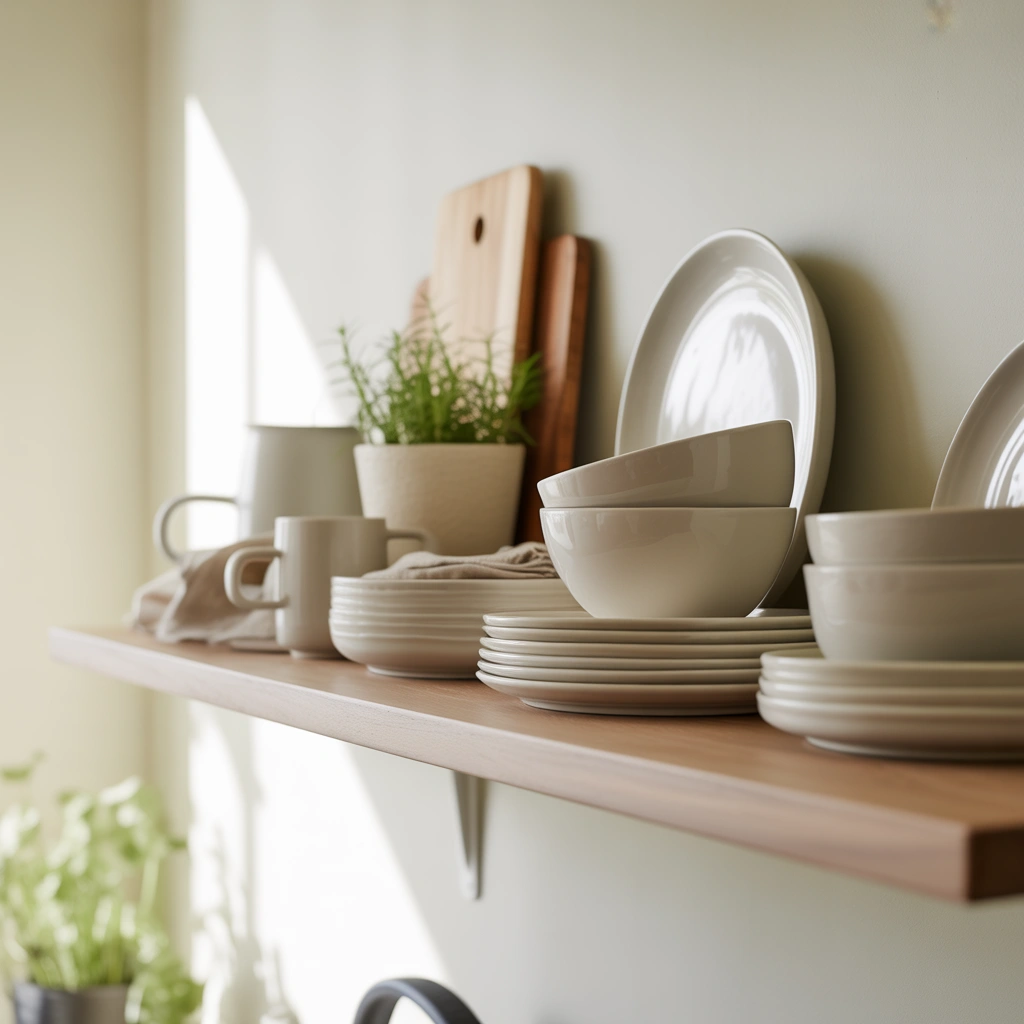
One of my favorite floating shelf decor kitchen ideas is also one of the simplest: displaying everyday white dishes.
White plates, bowls, serving dishes, and mugs create a clean, calm, and timeless appearance. Because they share the same basic color, they naturally look coordinated even when they come from different collections. This makes white dinnerware especially useful when you want open shelving to feel organized.
Try stacking dinner plates in groups of four to six, then place smaller bowls on top or beside them. Mugs can be arranged in a neat row or grouped near your coffee-making area. Add one or two serving bowls with interesting shapes to prevent the display from looking too repetitive.
The beauty of this idea is that the decor remains functional. You are not using valuable shelf space for objects that only collect dust. Instead, your most frequently used dishes become part of the kitchen’s visual design.
To add warmth, combine the white dishes with wooden shelves, woven baskets, or a small cutting board. If your kitchen feels too neutral, place a single colored bowl or patterned plate within the arrangement as a subtle focal point.
Avoid placing every dish you own on the shelves. Leave some breathing room between stacks so the display remains light rather than crowded.
2. Create a Dedicated Coffee Station Shelf
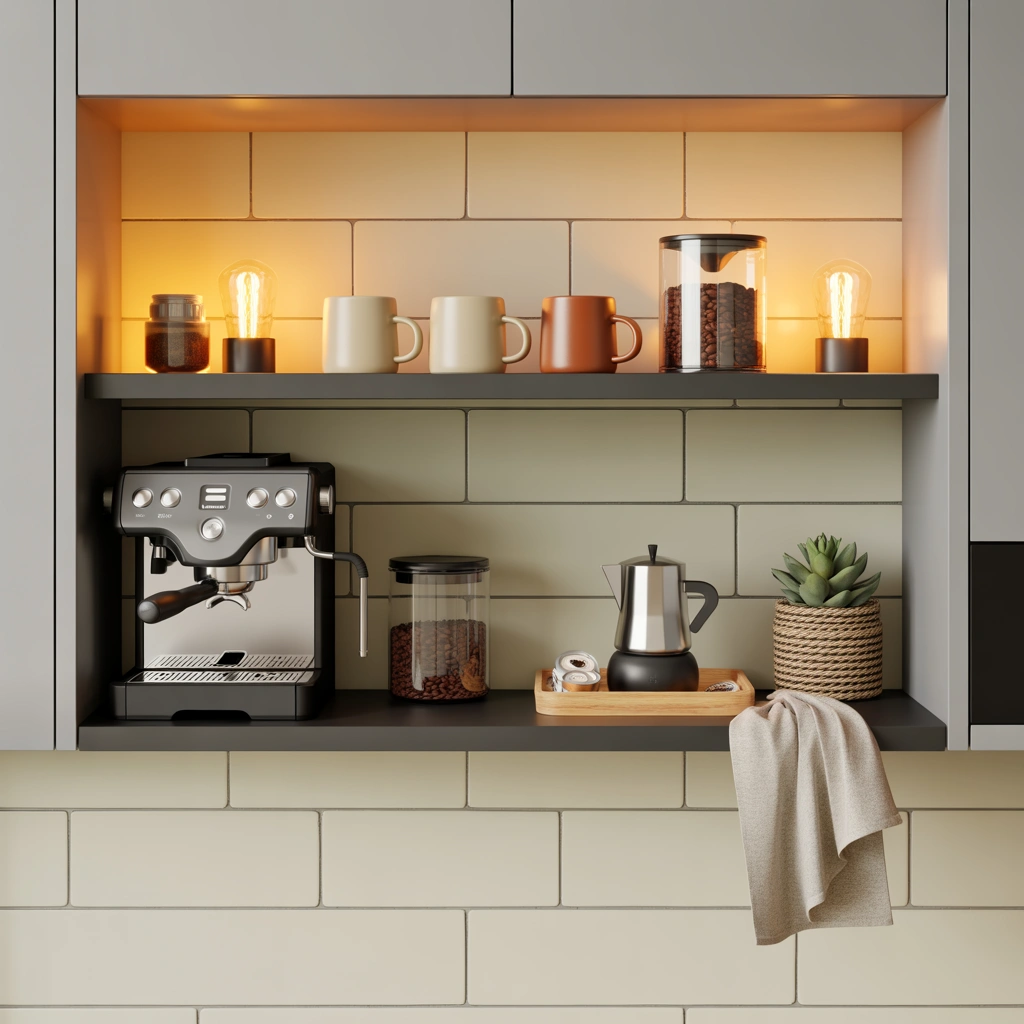
A floating shelf above a coffee machine can transform an ordinary corner into a charming home coffee station.
I love this idea because it brings all the coffee essentials together in one convenient place. Instead of searching through cabinets every morning, you can keep mugs, coffee beans, sugar, tea, spoons, and syrups close to the machine.
Start with your favorite mugs. You can use matching mugs for a streamlined look or mix a few handmade and sentimental pieces for more personality. Store coffee beans or ground coffee in clear glass jars with airtight lids. Small ceramic containers can hold sugar, tea bags, or coffee pods.
A narrow tray can keep smaller items contained and make the shelf look organized. You might also include a small framed print, a simple coffee-themed sign, or a tiny plant, but the station does not need a large amount of decorative wording. The supplies themselves can provide plenty of visual interest.
If you have two floating shelves, use the lower shelf for practical items and the upper shelf for less frequently used mugs, teapots, or decorative accessories. This creates a natural hierarchy and keeps the most useful pieces easy to reach.
Choose containers that repeat colors already used in your kitchen. For example, black lids can coordinate with black cabinet handles, while wooden canisters can complement warm countertops or flooring.
3. Add Fresh or Artificial Greenery
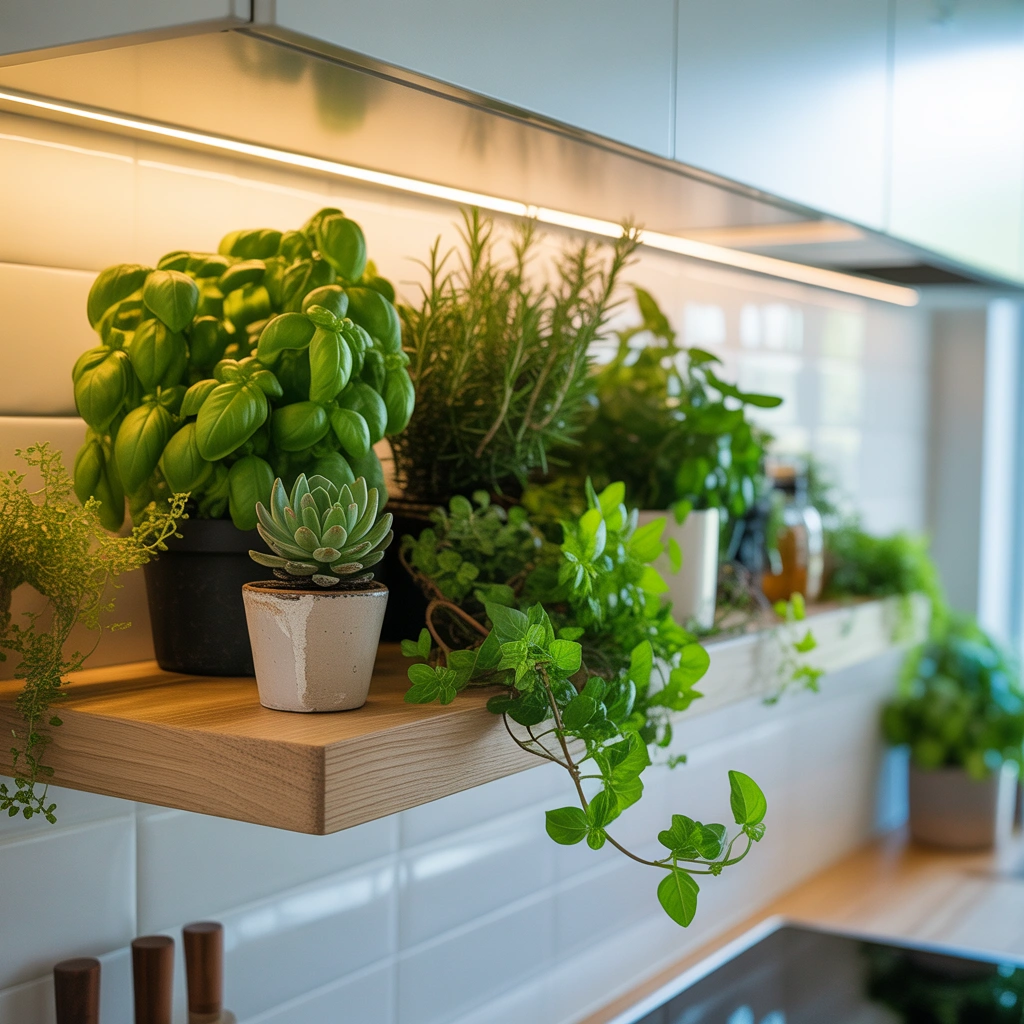
Plants can instantly soften the hard surfaces commonly found in kitchens. Cabinets, appliances, tiles, counters, and shelves often have straight lines, so greenery introduces a natural shape that makes the room feel more welcoming.
Small trailing plants look especially beautiful on floating shelves. Pothos, ivy, string-of-pearls, and heartleaf philodendron can gently hang over the shelf edge, creating movement and visual softness.
Before adding a live plant, consider the amount of sunlight and heat in the area. A shelf near a bright window may be suitable for herbs or sun-loving plants, while a darker corner may require a low-light variety. Avoid placing delicate plants directly above a stove, where heat and cooking residue may damage them.
If your kitchen does not receive enough light, high-quality artificial plants can offer a similar decorative effect without requiring regular care. Choose greenery with realistic leaf shapes and natural color variation. A small artificial plant in a ceramic or stone pot often looks more convincing than a large, overly glossy arrangement.
Herbs are another practical choice. Basil, mint, thyme, rosemary, and parsley can provide both beauty and fresh ingredients. Place them in matching pots or simple glass containers to create a cohesive mini herb garden.
I usually recommend using greenery as an accent rather than covering every shelf with plants. One trailing plant, one small herb pot, or a simple vase of leafy stems may be all you need.
4. Layer Cutting Boards for Warmth and Texture
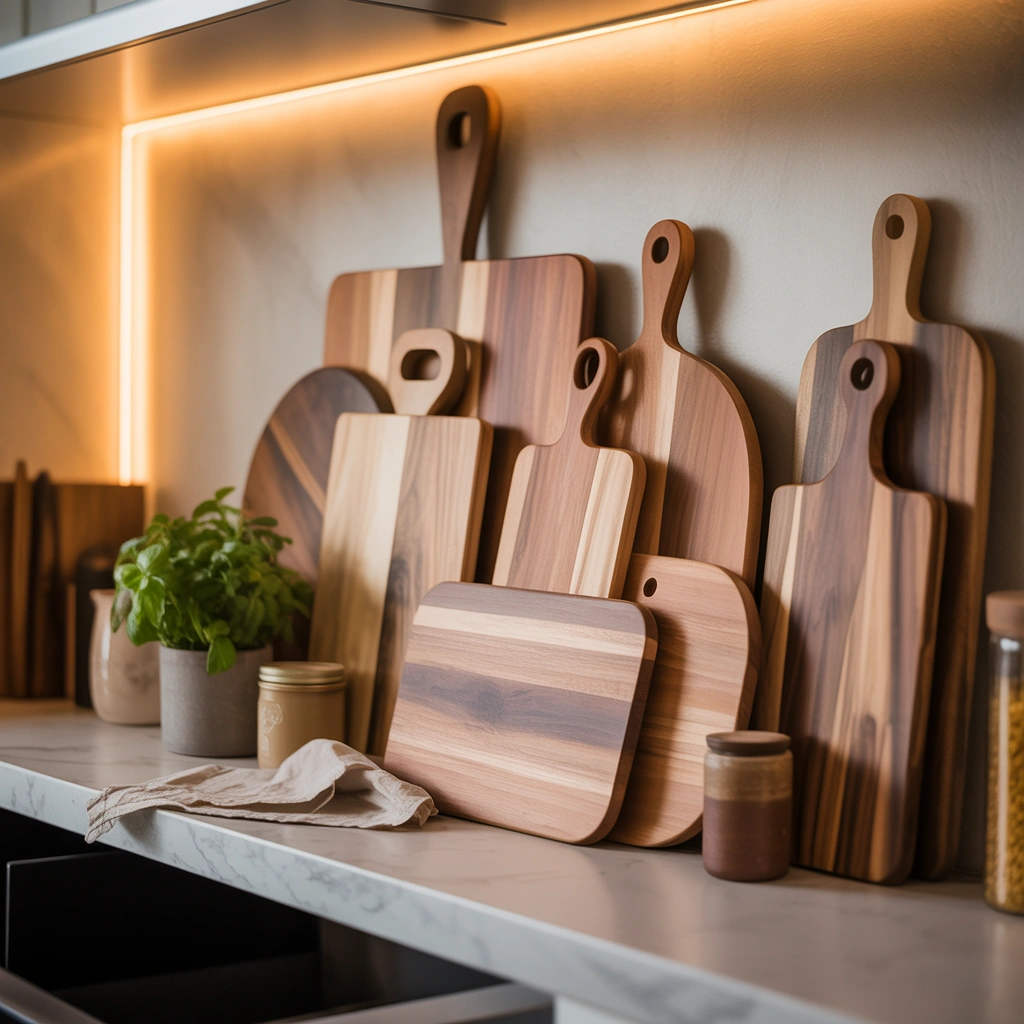
Wooden cutting boards are not only useful kitchen tools; they are also some of the easiest objects to use as floating shelf decor.
Leaning cutting boards against the wall creates height and provides a warm background for smaller items placed in front. You can layer boards in different shapes, including round, rectangular, and handled designs. The variation adds depth while the repeated wood material keeps the arrangement connected.
This idea works particularly well in farmhouse, rustic, Scandinavian, organic-modern, and neutral kitchens. Wood helps soften white cabinets, marble counters, metal appliances, and tiled backsplashes.
When choosing boards for display, look for differences in size and tone. A pale maple board can be layered with a medium oak board and a darker walnut piece. However, avoid using too many contrasting wood finishes, as the shelf may begin to look busy.
Place a ceramic bowl, small jar, candle, or plant in front of the boards. This creates a layered composition rather than a flat row of objects.
You can also display a favorite serving board that you regularly use for bread, cheese, or appetizers. Keeping it on the shelf makes it easily accessible while allowing its natural grain to become part of the room’s decor.
Be careful not to place damp cutting boards directly on a shelf. Allow them to dry completely before displaying them to protect both the board and the shelf surface.
5. Organize Spices in Matching Glass Jars
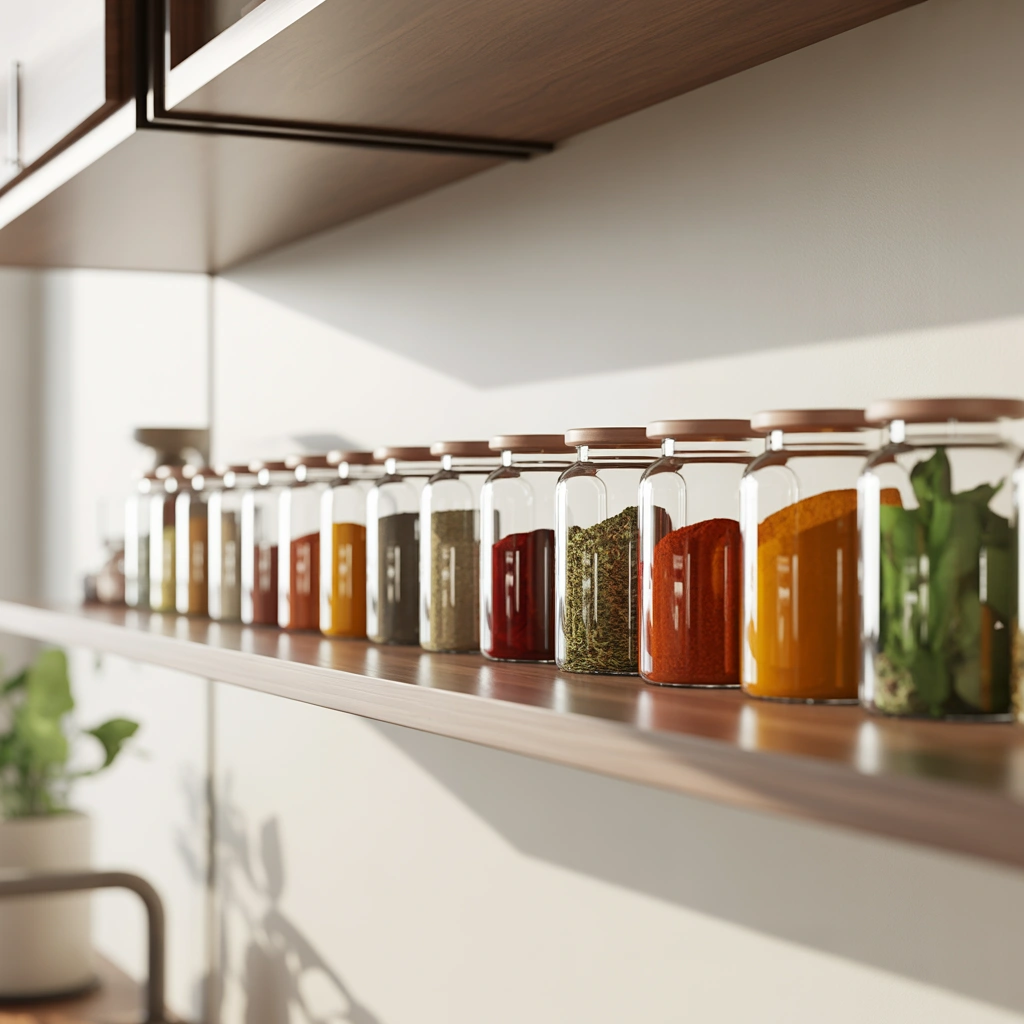
Spices can look surprisingly attractive when transferred into matching jars and arranged neatly on a floating kitchen shelf.
Original spice packaging often comes in different colors, sizes, and label styles. While the containers are practical, displaying all of them together can make open shelving look cluttered. Matching glass jars create a more unified and intentional appearance.
Clear jars are helpful because you can quickly identify the contents. They also allow the natural colors of turmeric, paprika, cinnamon, herbs, pepper, and other seasonings to become part of the decor.
For a polished look, choose jars with identical lids and labels. Wood lids bring warmth, black lids create modern contrast, and silver lids can coordinate with stainless-steel appliances. Labels should be easy to read without becoming the main visual focus.
Arrange spices alphabetically, by color, or according to how often you use them. Frequently used seasonings should be placed toward the front or on the lowest shelf.
A small wooden riser can create a second level, making jars at the back easier to see. You can also place the jars inside a shallow tray to define the area and prevent the arrangement from spreading across the entire shelf.
Keep the shelf away from direct heat and strong sunlight whenever possible, as both can affect spice quality. The goal is to create attractive storage without reducing the freshness of the ingredients.
6. Showcase Handmade Pottery and Ceramic Pieces
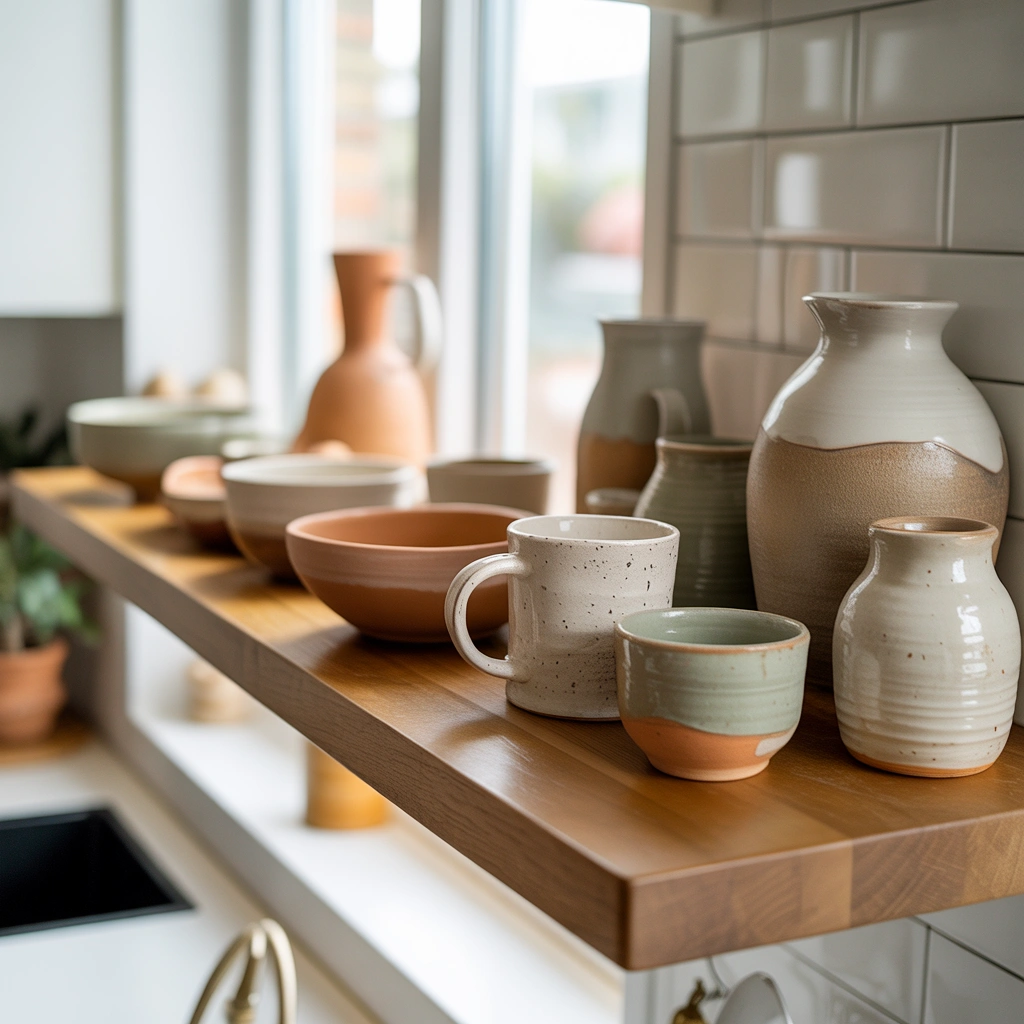
Handmade pottery can give floating shelves a collected, personal, and artistic look.
Instead of using only mass-produced kitchen accessories, display a few ceramic bowls, pitchers, mugs, or vases with visible texture and slight variations in shape. These imperfections often make the kitchen feel warmer and more authentic.
I particularly like mixing pottery in related neutral tones, such as cream, beige, warm gray, terracotta, and soft brown. The colors do not need to match exactly. They simply need enough similarity to create a connected palette.
You can stack shallow bowls, place a pitcher beside a smaller cup, or use a ceramic vase to hold wooden spoons. One statement piece is often more effective than several small objects competing for attention.
If you own pottery made by a local artist, collected during travel, or passed down through your family, floating shelves provide a meaningful place to display it. These objects can add a story to the kitchen, making the room feel more personal than a space decorated entirely with new accessories.
Leave enough empty space around handmade pieces so their shapes and textures can be appreciated. Open shelving does not need to be filled from end to end.
7. Style Shelves with Cookbooks and Recipe Books
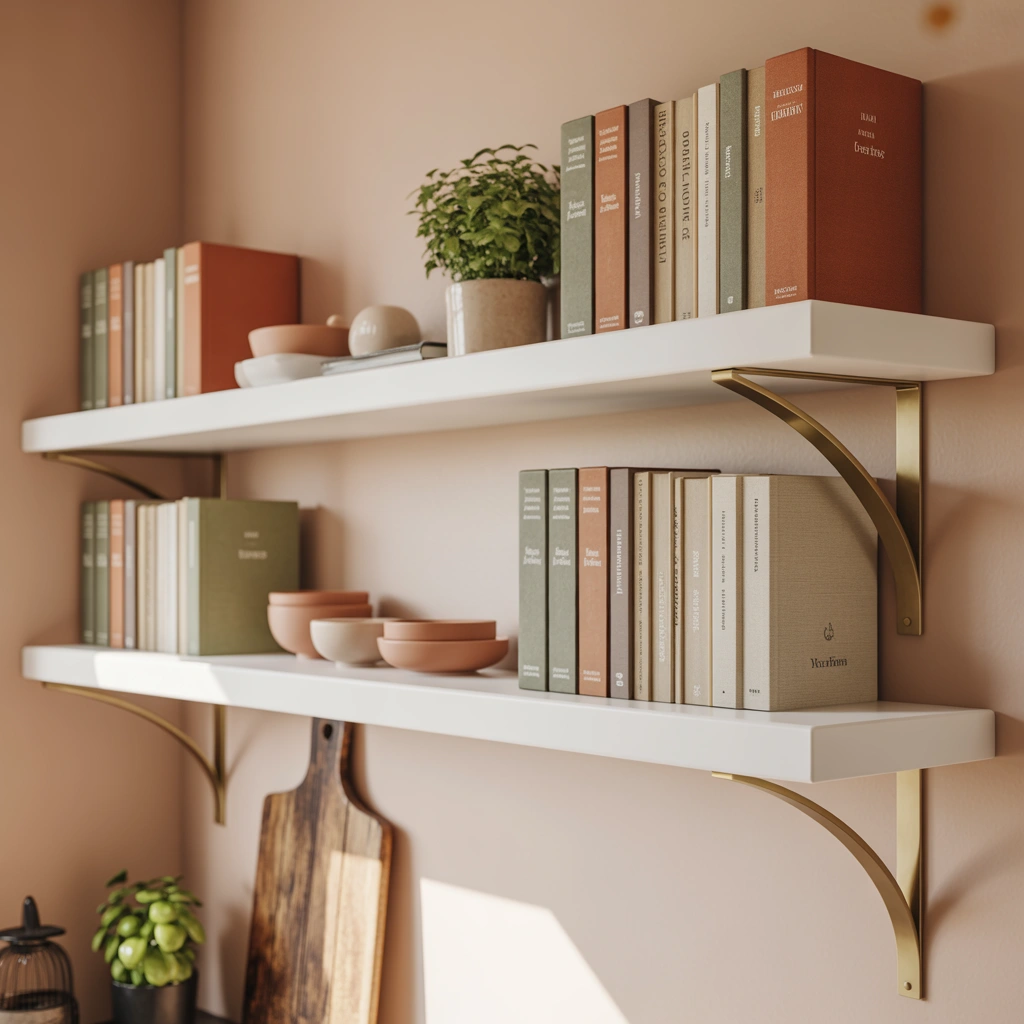
Cookbooks add color, personality, and practicality to floating kitchen shelves.
Instead of hiding your favorite recipe books in a closed cabinet, place a few on an open shelf where they can be easily reached. Choose books you genuinely use or enjoy looking through. This keeps the display authentic rather than purely decorative.
There are several ways to style cookbooks. You can stand them vertically between bookends, stack two or three horizontally, or place one open on a wooden cookbook stand. A horizontal stack can also serve as a small platform for a bowl, candle, or decorative object.
When selecting books for display, consider the colors of their spines. A group of books with similar tones can support the kitchen’s color scheme. However, I do not think every visible cover needs to match perfectly. A few bright spines can bring welcome energy to a neutral kitchen.
Avoid placing valuable books too close to the sink or cooking surface. Steam, oil, splashes, and food residue can damage pages over time. A shelf near a breakfast area, unused wall, or kitchen island may be more suitable.
For a more personal detail, include a handwritten family recipe notebook. It can create a meaningful contrast beside newer published cookbooks.
8. Use Baskets to Hide Small Kitchen Clutter
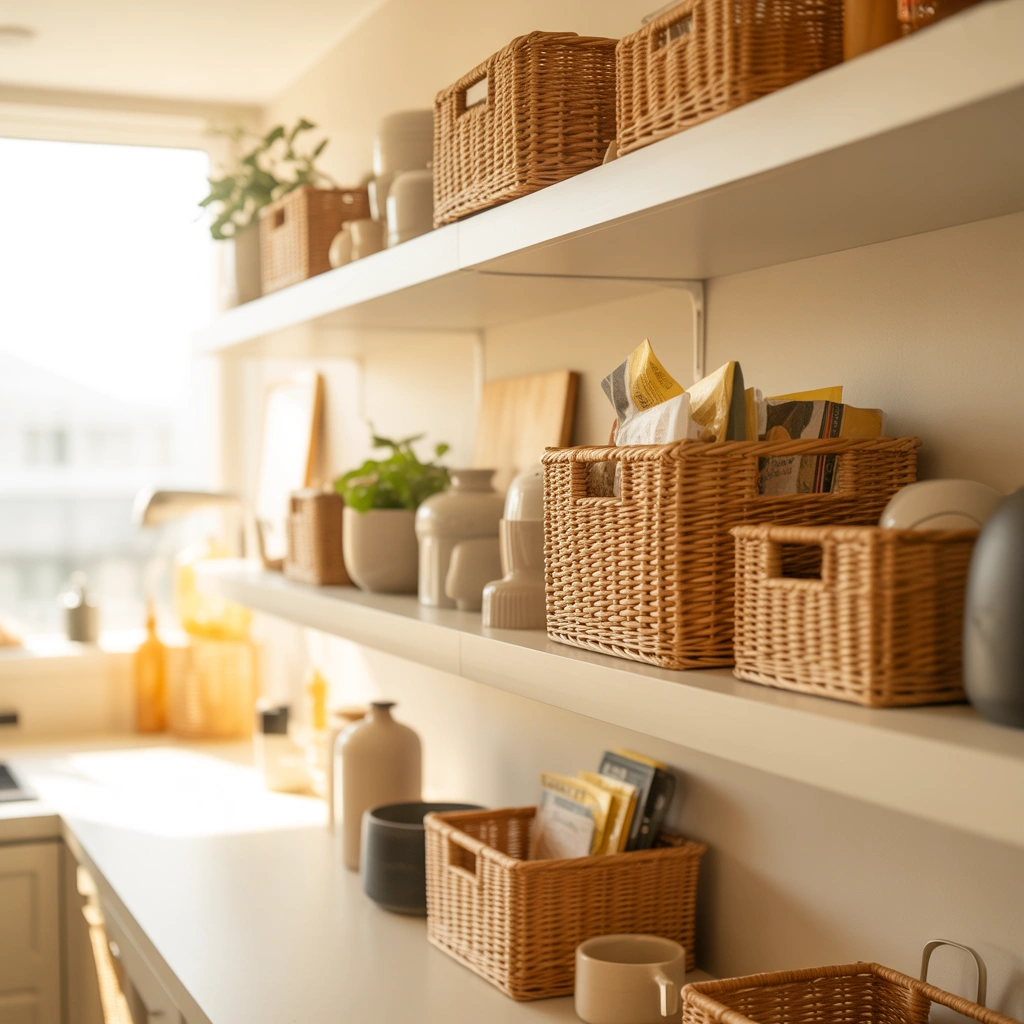
Not every useful kitchen item is attractive enough to display openly. This is where baskets become extremely helpful.
Small woven baskets can hold packets, napkins, reusable cloths, measuring tools, snack bars, tea bags, baking supplies, or other loose items. The basket conceals visual clutter while adding texture and warmth to the shelf.
Choose baskets that fit comfortably without hanging too far over the shelf edge. Measure the shelf depth before buying storage containers, especially when working with narrow floating shelves.
Natural seagrass, rattan, cane, and water-hyacinth baskets work well in farmhouse, coastal, bohemian, and organic-modern kitchens. Black wire baskets create a more industrial look, while fabric bins may suit casual family kitchens.
Use baskets sparingly. Filling every shelf with identical bins can make open shelving feel more like a storage system than a decorative feature. One or two baskets mixed with dishes, jars, books, and greenery usually create a better balance.
Labels can be useful, but keep them small and simple. Large decorative labels may make the arrangement feel overly themed.
A basket is especially helpful on a higher shelf, where less frequently used items can be stored without needing to look perfectly arranged at all times.
9. Decorate with Vintage Kitchen Finds
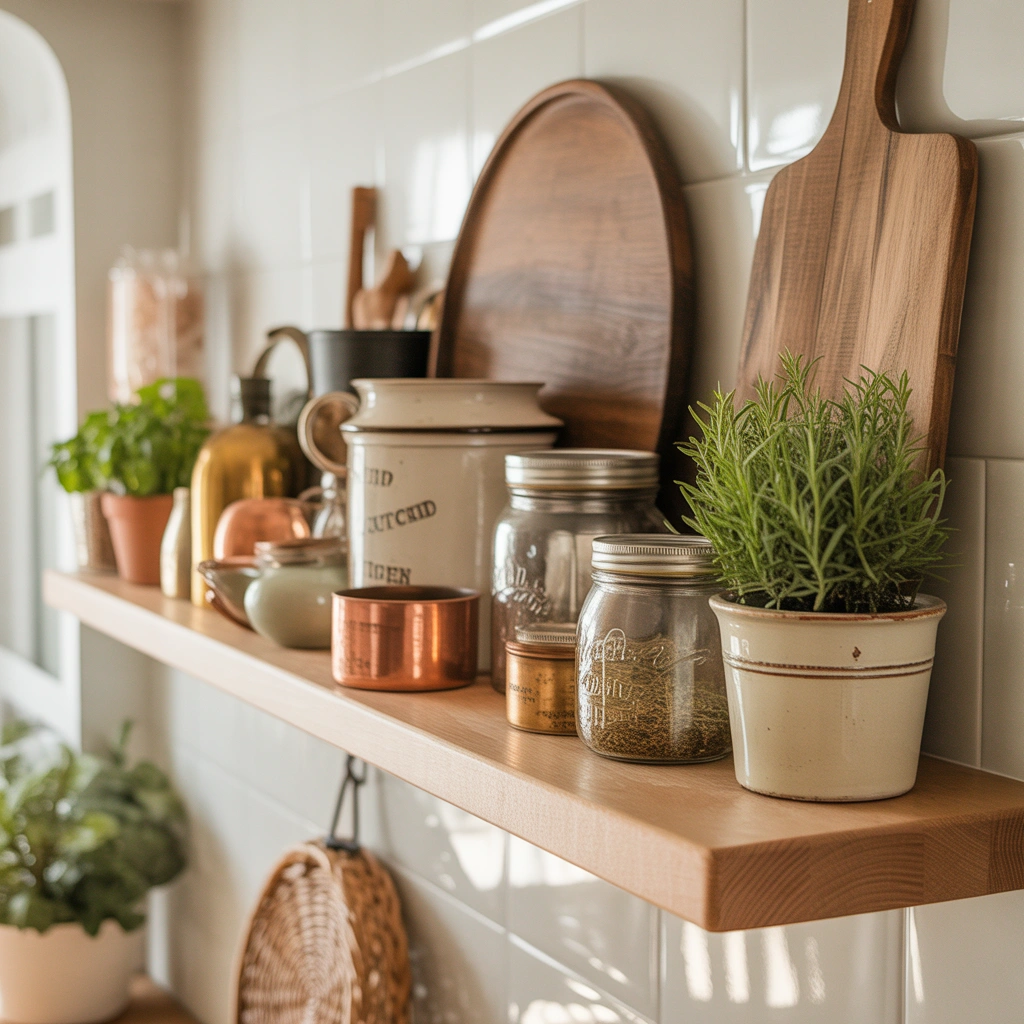
Vintage kitchen accessories can bring charm, history, and individuality to floating shelves.
Items such as old scales, enamel pitchers, copper molds, stoneware crocks, antique grinders, wooden rolling pins, or vintage glass bottles can become beautiful focal points. These pieces often have unique shapes and worn finishes that add contrast to newer cabinetry and appliances.
The best vintage displays feel collected rather than staged. Choose objects that connect to cooking, serving, or family life. A single inherited teapot may carry more meaning than several decorative items purchased only to fill the shelf.
Try pairing one vintage object with simple modern pieces. For example, place an old brass scale beside white bowls, or display an aged wooden breadboard behind clean glass jars. This contrast helps the antique item stand out without making the kitchen feel outdated.
Avoid placing too many vintage objects together unless you intentionally want a maximalist or cottage-style look. A shelf crowded with small antiques can quickly become difficult to clean and visually overwhelming.
Before displaying older food containers or metal pieces, make sure they are clean and safe. Some vintage items may contain finishes that are not suitable for direct food contact, so use them as decorative objects rather than active storage when necessary.
10. Create a Neutral Minimalist Shelf Arrangement
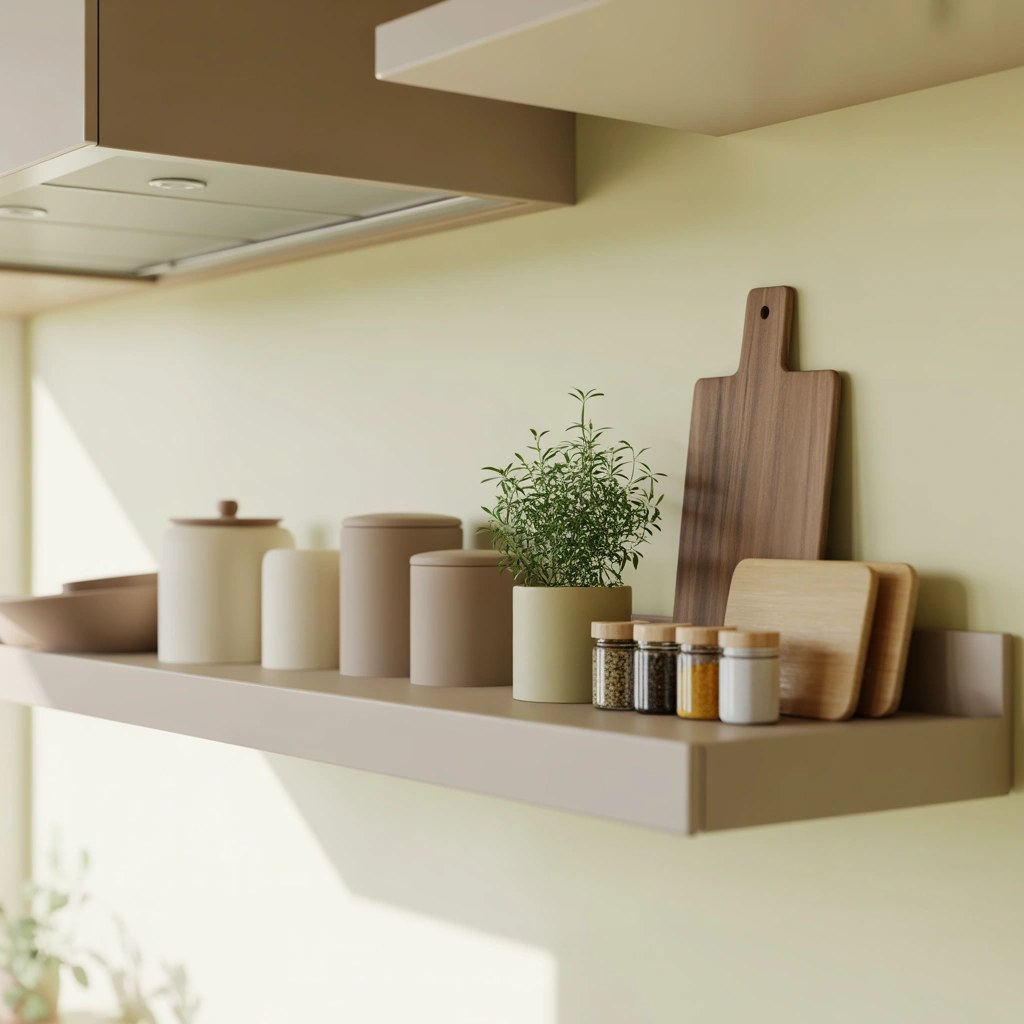
For a peaceful and uncluttered kitchen, use a limited neutral palette when decorating floating shelves.
A minimalist arrangement does not mean the shelf must be completely empty. It means every object has room to breathe and contributes to the overall composition.
Choose a small selection of items in white, cream, beige, soft gray, black, or natural wood. For example, you might combine a stack of white bowls, one wooden cutting board, a cream ceramic vase, and a small black-framed print.
Vary the heights and shapes to keep the arrangement interesting. A tall vase can balance a low stack of dishes, while a round bowl can soften rectangular boards and frames.
Negative space is essential. Leave visible gaps between groups of objects instead of lining items continuously across the shelf. These open areas help the eye rest and make the displayed pieces feel more intentional.
In my experience, minimalist shelves are easiest to maintain when most objects are useful. A few everyday dishes, one container of utensils, and one decorative accent can be enough.
To prevent a neutral shelf from feeling flat, introduce different textures. Matte ceramic, smooth glass, woven fibers, natural wood, and linen can all appear within the same quiet color scheme.
11. Add Framed Art or a Small Kitchen Print
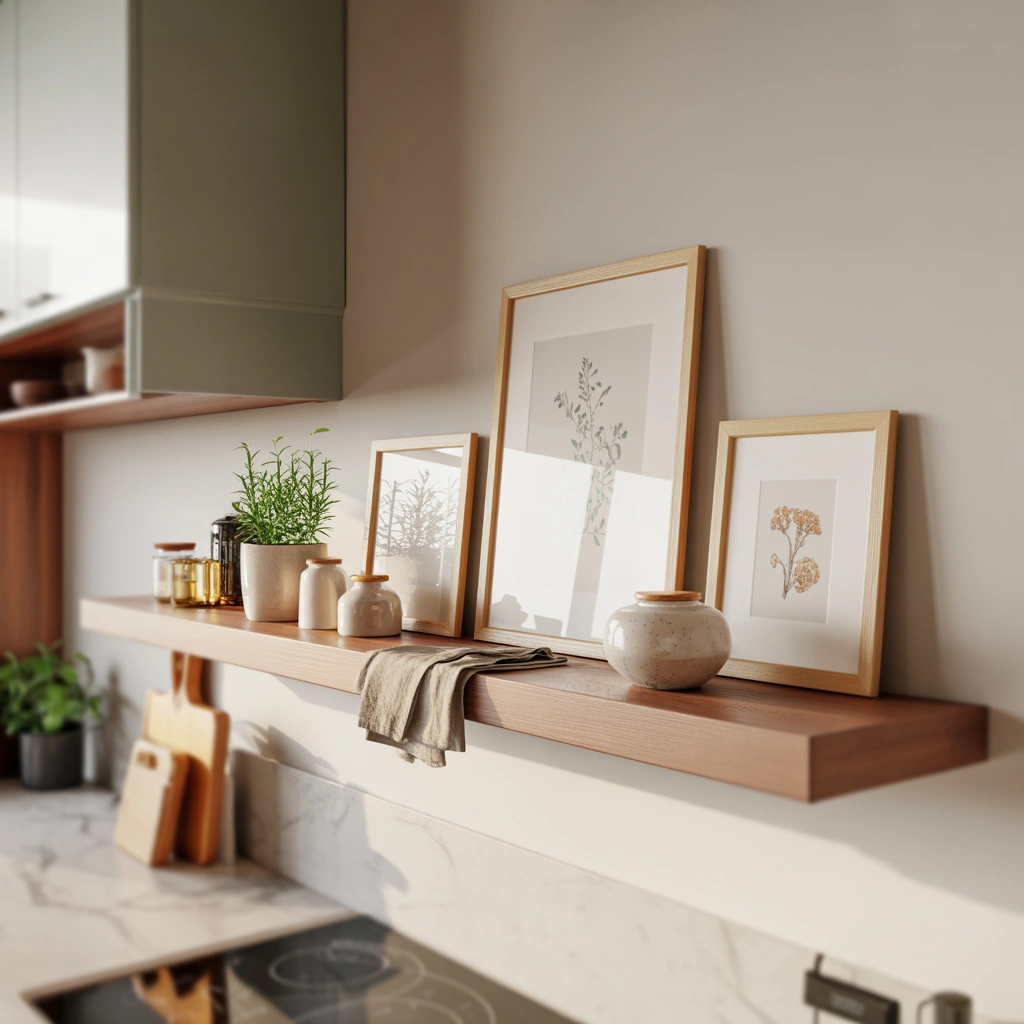
Artwork is often associated with living rooms and bedrooms, but it can also make a kitchen feel more complete.
A small framed print can be leaned against the wall on a floating shelf rather than hung above it. This creates a relaxed, layered appearance and makes it easy to update the decor later.
Choose artwork that suits your kitchen without relying on overly predictable food-related sayings. Botanical prints, landscapes, abstract designs, vintage illustrations, family photographs, and simple line drawings can all work beautifully.
Consider the scale carefully. The frame should be large enough to create visual impact but small enough to leave room for practical objects. A piece that is approximately one-third of the shelf width is often easy to style.
Place a bowl, candle, plant, or stack of books partially in front of one corner of the frame. This layering helps connect the artwork to the rest of the shelf rather than making it look like an isolated object.
Frames can also repeat other finishes in the kitchen. A black frame may coordinate with cabinet hardware, while a natural wood frame can echo the shelf material. Brass or antique-gold frames may complement warm lighting and fixtures.
Keep paper artwork away from areas with frequent steam, splashes, and grease. A protective glass or acrylic front will help, but location still matters.
12. Change the Decor with the Seasons
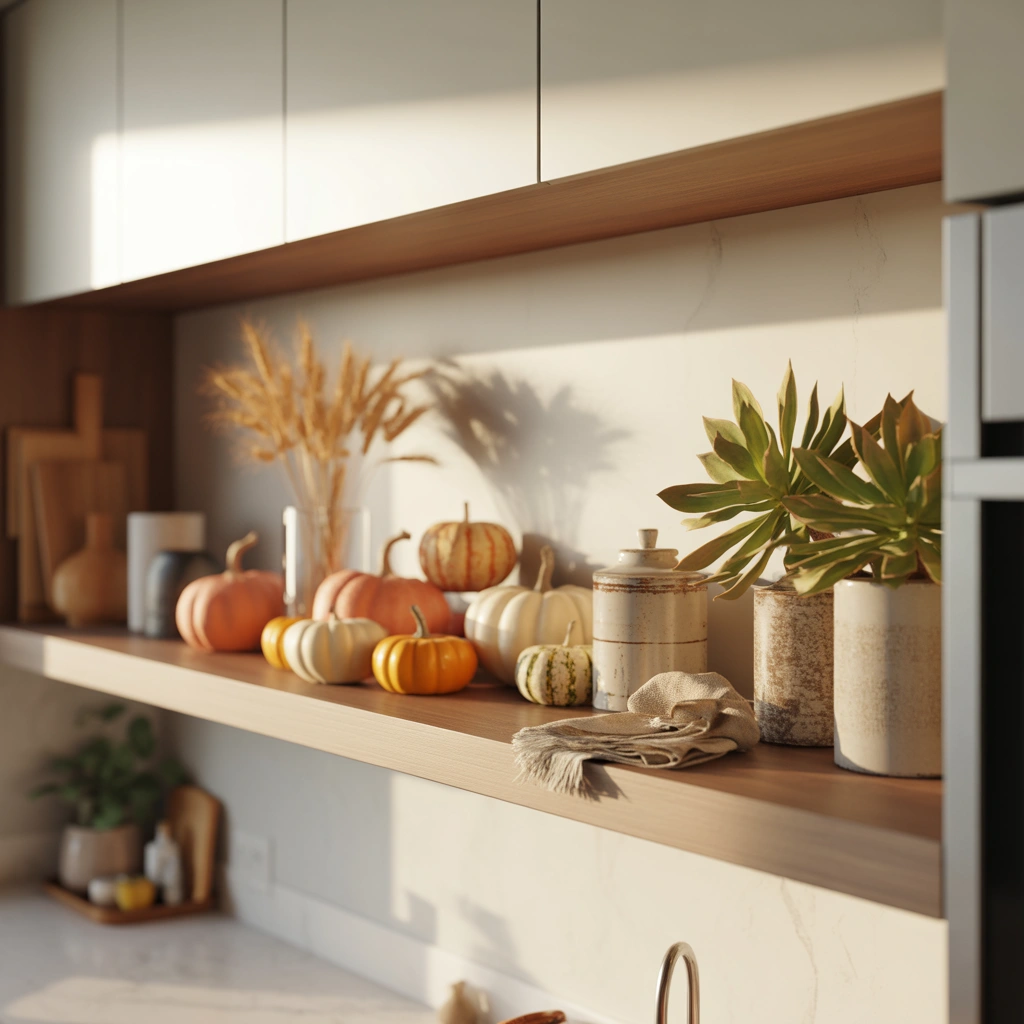
Floating shelves provide an easy place to introduce subtle seasonal changes without redecorating the entire kitchen.
During spring, you might add a small vase of flowers, pastel ceramics, or a bowl of lemons. Summer shelves can include fresh herbs, woven textures, light-colored glassware, or coastal-inspired accessories.
In autumn, wooden boards, amber glass, small pumpkins, dried stems, copper accents, and warm-toned pottery can create a cozy atmosphere. Winter decor might include evergreen branches, white candles, dark mugs, or a restrained festive detail.
The key word is restraint. Seasonal floating shelf decor should complement the kitchen rather than turn every shelf into a holiday display. Replacing two or three accents is usually enough to change the mood.
I prefer to keep the main functional pieces in place throughout the year. White dishes, glass jars, cookbooks, and cutting boards remain on the shelves, while smaller decorative elements change with the season. This approach saves time and reduces the need for large amounts of storage.
Natural seasonal items are especially effective. A bowl of apples, a vase of branches, fresh citrus, or dried herbs can reflect the time of year while remaining appropriate for a kitchen.
How to Arrange Floating Shelf Decor Like a Designer
Choosing attractive objects is only part of the process. The way you arrange them determines whether the shelves feel balanced or cluttered.
Begin with the largest pieces. These may include framed art, tall pitchers, cutting boards, or large serving bowls. Place them first to establish the structure of the display.
Next, add medium-sized functional items such as stacked plates, jars, baskets, and cookbooks. Finish with smaller accents, including cups, candles, plants, or decorative bowls.
Try grouping objects in sets rather than spacing everything evenly. A group of three objects can feel more natural than three objects placed at equal distances. Vary the heights within each group to create movement.
Repeat at least one element across multiple shelves. This could be a color, material, shape, or finish. For example, wooden details on both shelves can create continuity, even when the objects themselves are different.
Step back frequently while styling. Shelves often look different from across the room than they do when viewed up close. Taking a quick photograph can also help you notice areas that feel too heavy, empty, or unbalanced.
Choosing the Right Floating Shelves for Your Kitchen
The appearance of the shelf itself is just as important as the decor placed on it.
Natural wood shelves bring warmth and work well with white, green, blue, gray, or black cabinetry. Dark-stained wood can create contrast, while lighter woods support Scandinavian and minimalist interiors.
White shelves blend into pale walls and create a subtle, seamless appearance. Black shelves provide a stronger architectural statement and can coordinate with modern hardware, windows, or appliances.
Shelf thickness also affects the overall style. Thick wooden shelves feel substantial and rustic, while thin shelves appear sleek and contemporary.
Always consider weight capacity. Dishes, books, jars, and pottery can become heavy when grouped together. Use appropriate wall anchors and install shelves into wall studs whenever possible. Decorative shelves that are not designed to carry significant weight should only hold light accessories.
Depth matters as well. Narrow shelves may be suitable for spices, mugs, and small decor, while plates and serving bowls usually require deeper surfaces.
Common Floating Shelf Decorating Mistakes to Avoid
One of the most common mistakes is overcrowding. When every inch of the shelf is filled, individual objects lose their impact and the kitchen becomes harder to clean.
Another issue is using too many unrelated colors. Open shelves already display multiple shapes and objects, so a controlled palette can help maintain visual order.
Placing only tiny items on a long shelf can also create an unbalanced appearance. Include at least one or two larger pieces to anchor the arrangement.
Do not ignore daily function. Beautiful shelves can become frustrating when frequently used dishes are difficult to reach or when decorative objects must be moved every time you need a bowl.
Finally, consider cleaning requirements. Kitchen shelves are exposed to dust, steam, and cooking residue. Avoid displaying a large number of delicate objects with complicated surfaces unless you are prepared to clean them regularly.
Floating Shelf Decor Ideas for a Small Kitchen
In a small kitchen, floating shelves should work especially hard.
Use them to store items that would otherwise take up counter space. Coffee supplies, mugs, spices, cooking oils, and everyday dishes are good candidates.
Choose lighter shelf colors when you want the room to feel open. Keeping the wall and shelf colors similar can reduce visual interruption.
Vertical space is valuable, but avoid installing too many shelves close together. Two well-spaced shelves often feel cleaner than four narrow shelves filled with small items.
Use clear jars and matching containers to reduce visual noise. A restrained color palette will also help prevent the room from feeling busy.
Most importantly, decorate with useful objects. In a compact kitchen, every displayed piece should earn its place through beauty, function, or meaningful personal value.
Frequently Asked Questions About Floating Shelf Decor in the Kitchen
What should I put on floating shelves in a kitchen?
You can display everyday dishes, mugs, glasses, spices, cutting boards, cookbooks, jars, serving bowls, plants, baskets, pottery, framed artwork, and seasonal accents. The best arrangement usually combines useful kitchen items with a small number of decorative pieces.
How do I decorate kitchen shelves without making them look cluttered?
Use a limited color palette, group related objects together, vary item heights, and leave empty space between arrangements. Avoid filling every inch of the shelf. Repeating materials such as wood, ceramic, or glass can also help create a coordinated look.
Are floating shelves practical in a kitchen?
Yes, floating shelves can be highly practical when installed securely and placed in convenient locations. They provide easy access to frequently used items while keeping the room visually open. However, they require more regular dusting and cleaning than closed cabinets.
How many floating shelves should I install?
The right number depends on the wall size, storage requirements, and overall kitchen layout. One shelf may work as a small decorative feature, while two or three shelves can provide more substantial storage. Avoid installing so many shelves that the wall feels crowded.
How much space should be left between kitchen floating shelves?
A spacing of approximately 12 to 18 inches often works well, depending on the height of the objects you plan to display. Taller pitchers, artwork, and plants may require more vertical space.
Should floating shelves match the kitchen cabinets?
They do not have to match. Matching shelves can create a seamless look, while contrasting shelves can add warmth or visual definition. Wood shelves often pair beautifully with painted cabinets, and black shelves can coordinate with dark hardware or fixtures.
How do I keep kitchen floating shelves clean?
Remove items regularly and wipe the shelves with a suitable cleaner for the shelf material. Keep displays away from direct grease and steam whenever possible. Limiting the number of small decorative objects will make cleaning faster and easier.
Final Thoughts
Floating shelves may seem like a small kitchen feature, but they can completely change how the room feels and functions. They create accessible storage, open up wall space, and provide a place to display the dishes, books, plants, and personal objects that make a kitchen feel lived-in.
The most successful floating shelf decor kitchen designs are not necessarily the most elaborate. A few stacks of dishes, a wooden board, a plant, and a meaningful ceramic piece can create more impact than a shelf filled with trendy accessories.
Start with the items you already use and love. Choose a simple color palette, vary the heights and textures, and allow a little empty space around each grouping. From there, you can slowly add pieces until the shelves feel balanced.
Whether your kitchen is modern, rustic, traditional, minimalist, or small, floating shelves offer enough flexibility to reflect your own style. With thoughtful arrangement and practical choices, they can become one of the most attractive and useful features in the entire room.
