Creating a beautiful garden does not require a huge backyard, an expensive landscaping budget, or years of gardening experience. Some of the most charming outdoor spaces I have ever seen were created in compact courtyards, narrow side gardens, tiny patios, balconies, and even small corners beside a front door.
A limited outdoor area can actually encourage more creativity. When every inch matters, you begin to think carefully about plant selection, furniture placement, storage, lighting, color, and vertical space. The result can feel more thoughtful and inviting than a larger garden that has not been planned properly.
Whether you have a small backyard, a compact patio, or just a narrow strip of land, these 15 small garden inspiration ideas will help you make the space feel greener, larger, more comfortable, and more personal.
The key is not to fit everything into your garden. It is to choose the right elements and arrange them in a way that feels balanced.
Why Small Gardens Can Be So Special
A small garden has a sense of intimacy that is sometimes difficult to create in a large landscape. Plants, furniture, lighting, and decorative details all sit closer together, which can make the space feel warm and connected.
Smaller gardens are also easier to maintain. You may spend less time mowing, watering, pruning, and clearing leaves. This gives you more time to relax and enjoy the garden instead of constantly working in it.
Another advantage is that small changes can make a big difference. Adding one mirror, repainting a wall, introducing a vertical planter, or changing the seating arrangement can completely transform the appearance of the area.
Before making changes, think about how you want to use your garden. Do you want a peaceful reading corner, a place for morning coffee, a family dining space, a productive vegetable garden, or a colorful area filled with flowers?
Once you know the purpose, it becomes much easier to choose the right small garden ideas.
1. Create a Cozy Garden Seating Corner
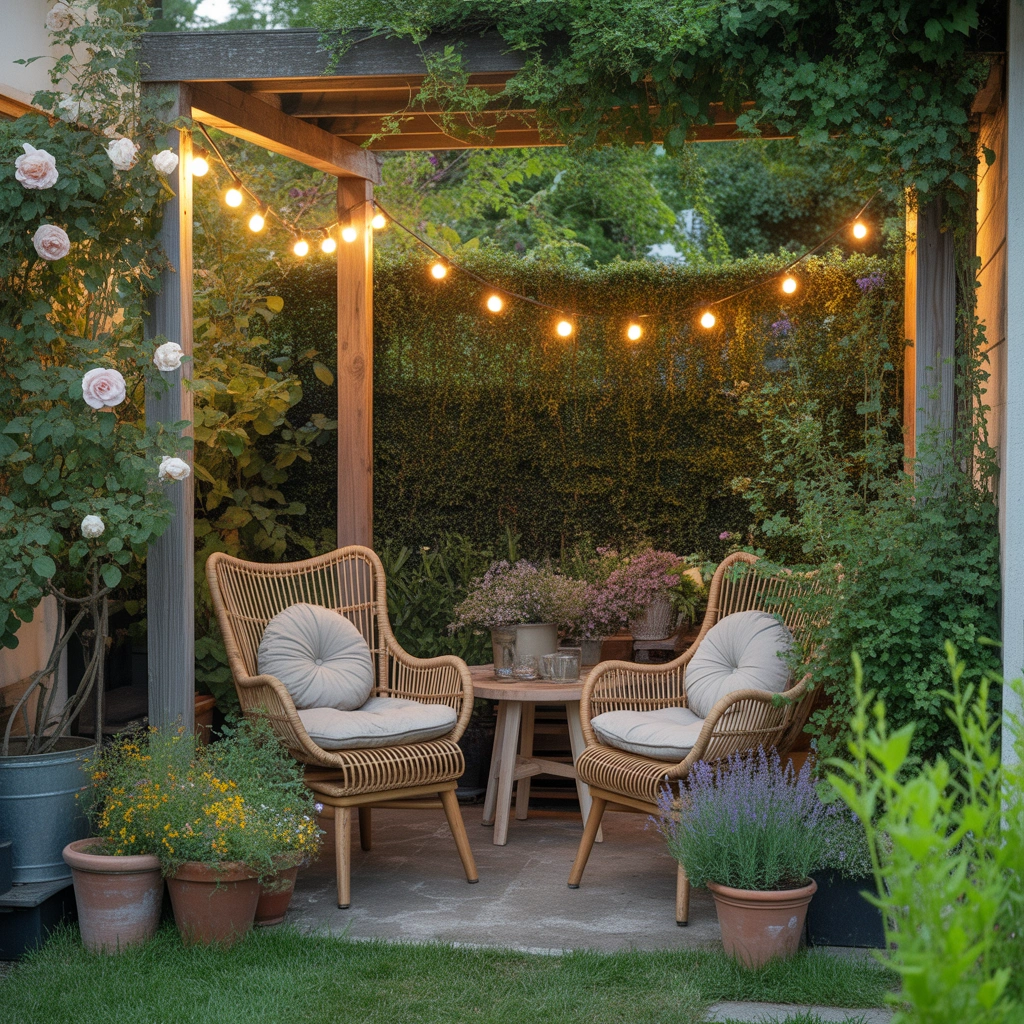
One of my favorite ways to improve a small garden is to create a dedicated seating corner. Even if you only have enough room for one chair and a small side table, that simple arrangement can make the garden feel like an extension of your home.
Choose a quiet corner that receives comfortable sunlight or partial shade. A compact bench, folding chair, small bistro set, or built-in wooden seat can work beautifully.
Avoid placing oversized furniture in a tiny space. Large sofas and deep chairs can quickly make the garden feel crowded. Instead, choose furniture with slim frames, open legs, and light visual weight.
You can soften the seating area with outdoor cushions, a small rug, potted herbs, or flowering plants. I also like adding a lantern or string lights nearby so the corner remains welcoming in the evening.
The seating area does not need to be elaborate. Its purpose is to give you a reason to step outside, slow down, and enjoy the garden.
2. Use Vertical Gardening to Save Floor Space
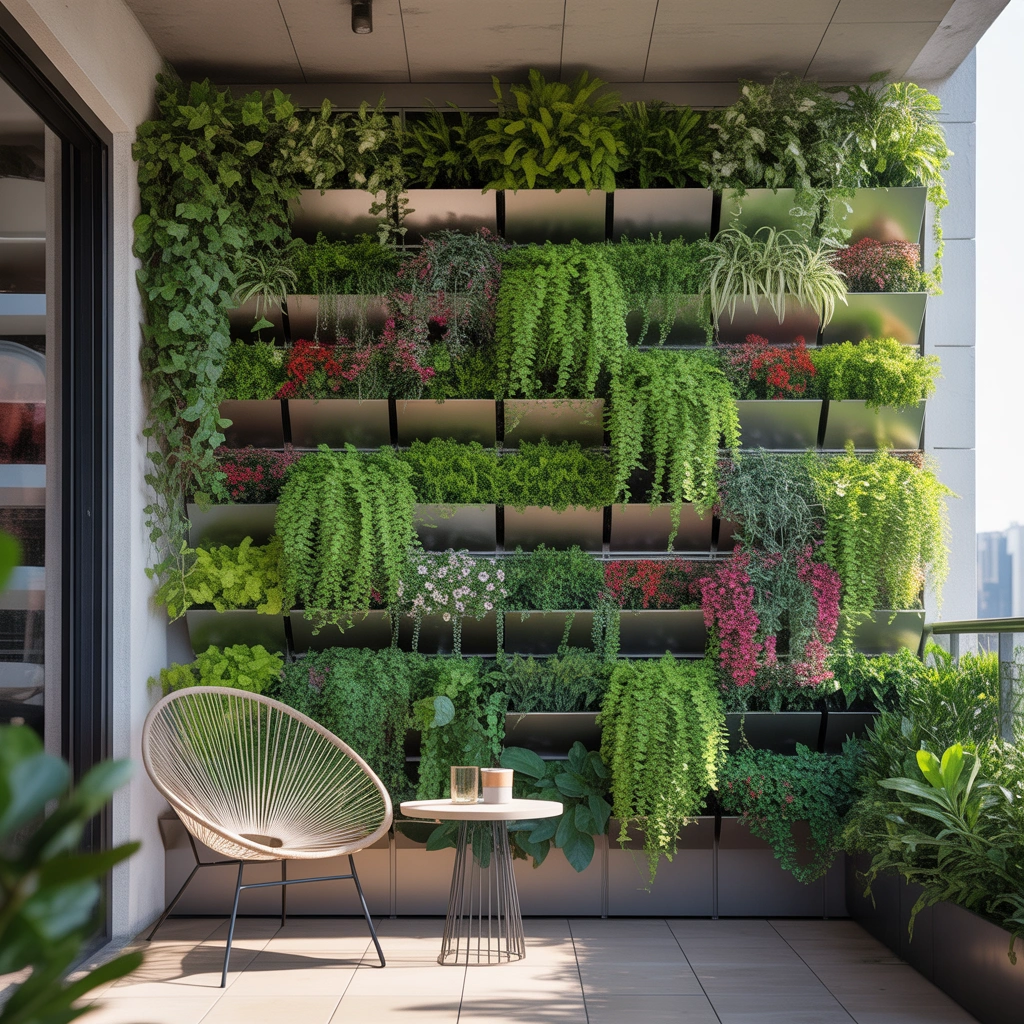
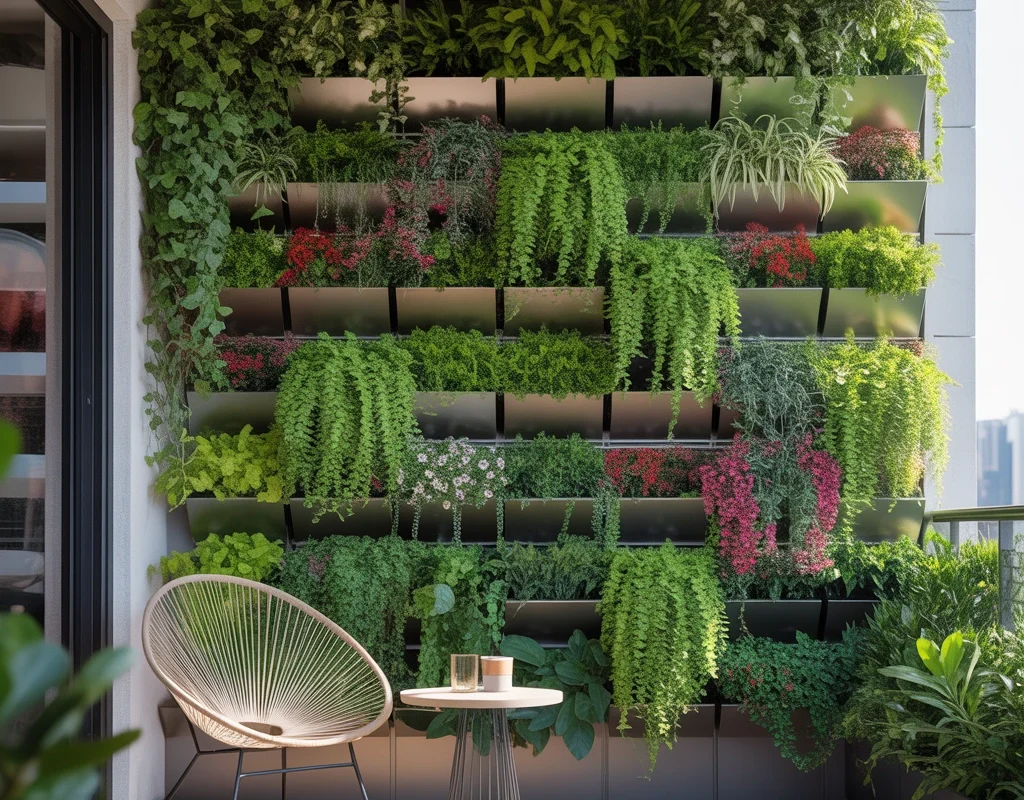
When the ground area is limited, the walls become extremely valuable. Vertical gardening allows you to grow more plants without filling the entire floor with pots.
A vertical garden can be created using wall-mounted planters, wooden pallets, hanging pockets, trellises, tiered shelves, or climbing plant supports. You can place one against a fence, brick wall, balcony railing, or garden shed.
Climbing plants such as jasmine, clematis, climbing roses, ivy, and honeysuckle can soften hard surfaces while adding height and privacy. For an edible vertical garden, consider growing herbs, strawberries, lettuce, or compact tomato varieties.
Try arranging plants at different heights instead of lining them up evenly. This makes the display look more natural and visually interesting.
Vertical gardening is especially useful in narrow courtyards because it introduces greenery without blocking pathways. It can also hide unattractive walls and transform them into beautiful living features.
3. Add a Small Garden Mirror
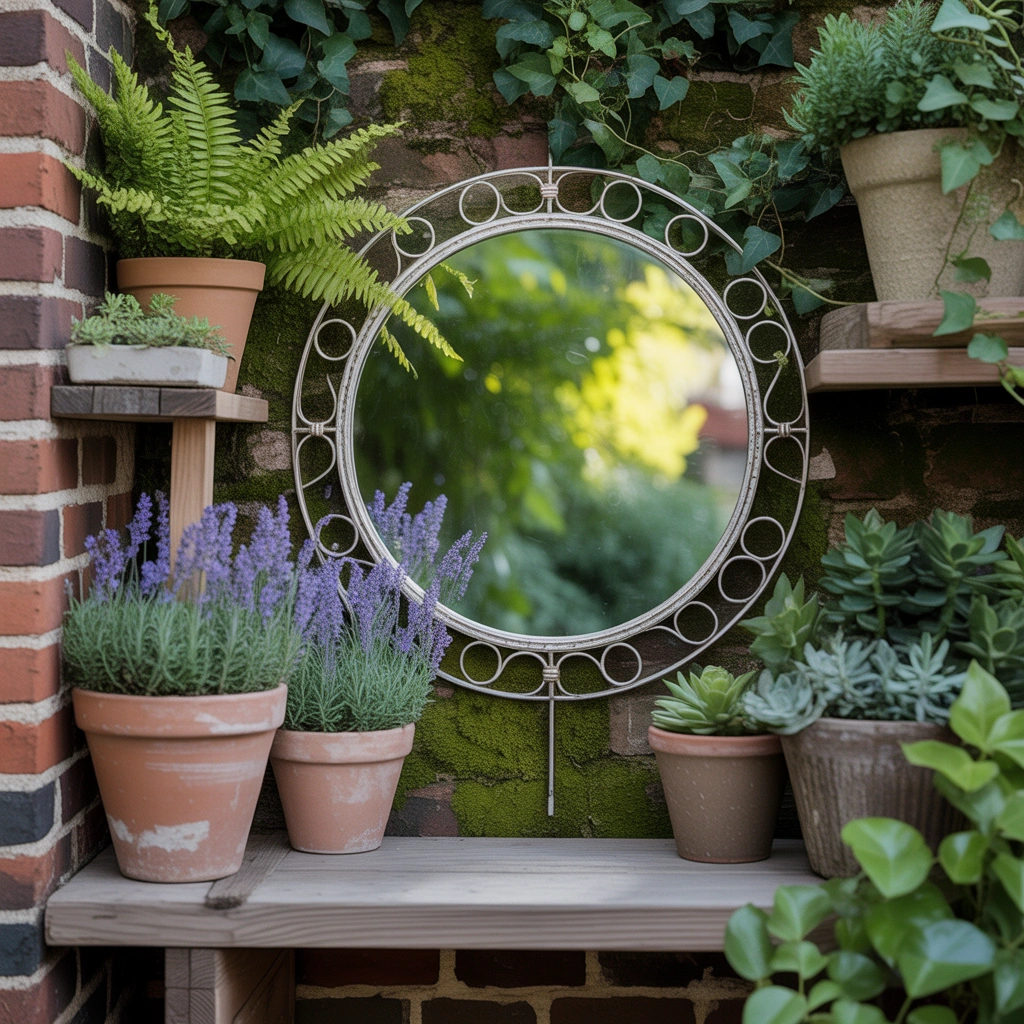
A carefully positioned mirror can make a small garden appear larger and brighter. It reflects light, plants, and open space, creating the illusion that the garden continues beyond its actual boundaries.
Garden mirrors work particularly well in enclosed courtyards, shady patios, and narrow outdoor areas surrounded by fencing or walls.
Choose a mirror designed for outdoor use, or make sure the frame and backing are properly protected from moisture. Arched mirrors can resemble garden gates or windows, while simple rectangular mirrors can create a modern look.
Place the mirror where it reflects greenery rather than bins, tools, doors, or clutter. You can surround it with climbing plants so it blends naturally into the garden.
Be thoughtful about its position if birds frequently visit your space. Avoid placing the mirror where birds may mistake the reflection for an open flight path.
Used carefully, a garden mirror becomes more than a decoration. It can completely change the sense of depth in a compact outdoor area.
4. Choose Multi-Purpose Garden Furniture
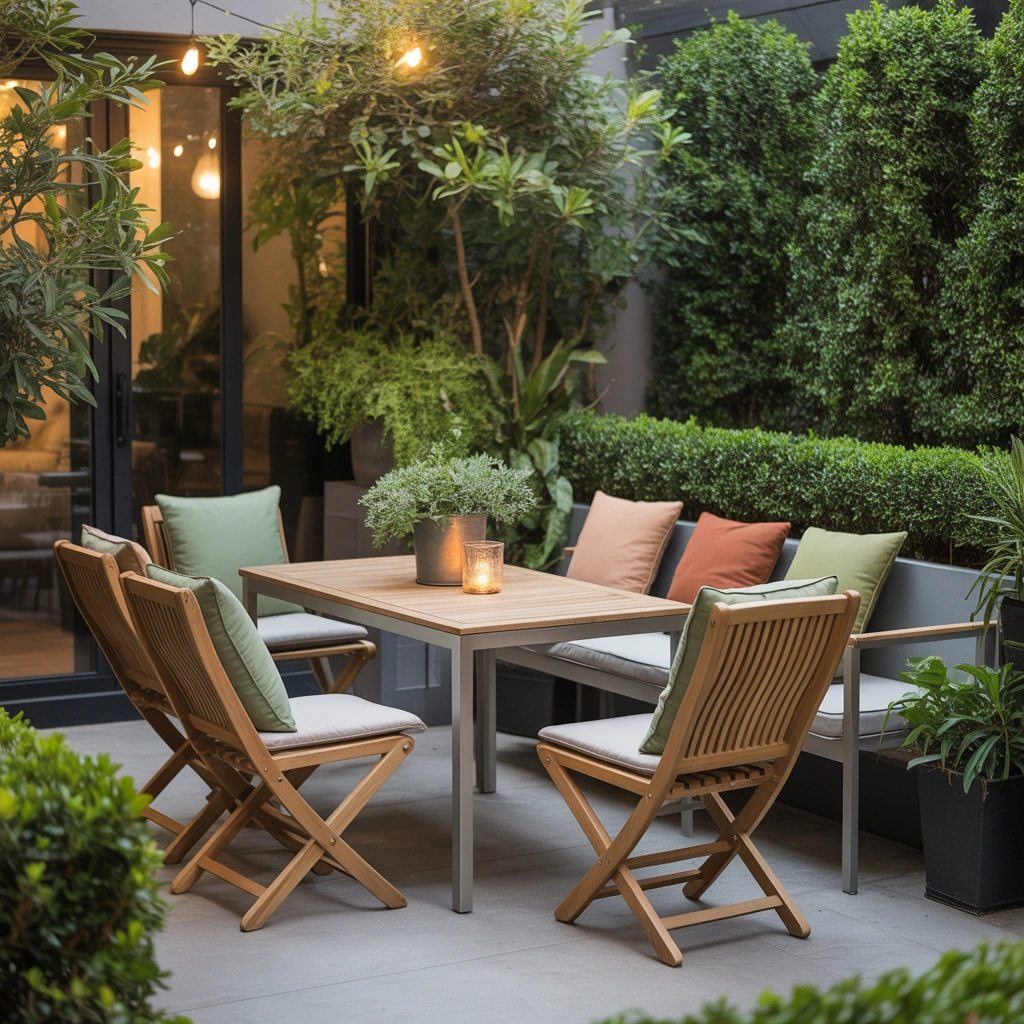
Every item in a small garden should earn its place, which is why multi-purpose furniture can be so useful.
A storage bench can provide seating while hiding cushions, gardening gloves, watering cans, and small tools. A folding table can be opened for meals and stored away when more floor space is needed. Stools can work as extra seating, plant stands, or side tables.
Built-in seating is another clever option. A narrow bench positioned along a boundary wall often uses space more efficiently than separate chairs.
When buying furniture, think beyond its basic function. Ask whether the item can fold, stack, store, extend, or serve more than one purpose.
I always recommend measuring the garden before purchasing anything. Furniture often appears smaller in a showroom or online photograph than it does in a compact patio.
Multi-functional furniture keeps the garden practical while preventing it from feeling overcrowded.
5. Build a Mini Raised Garden Bed
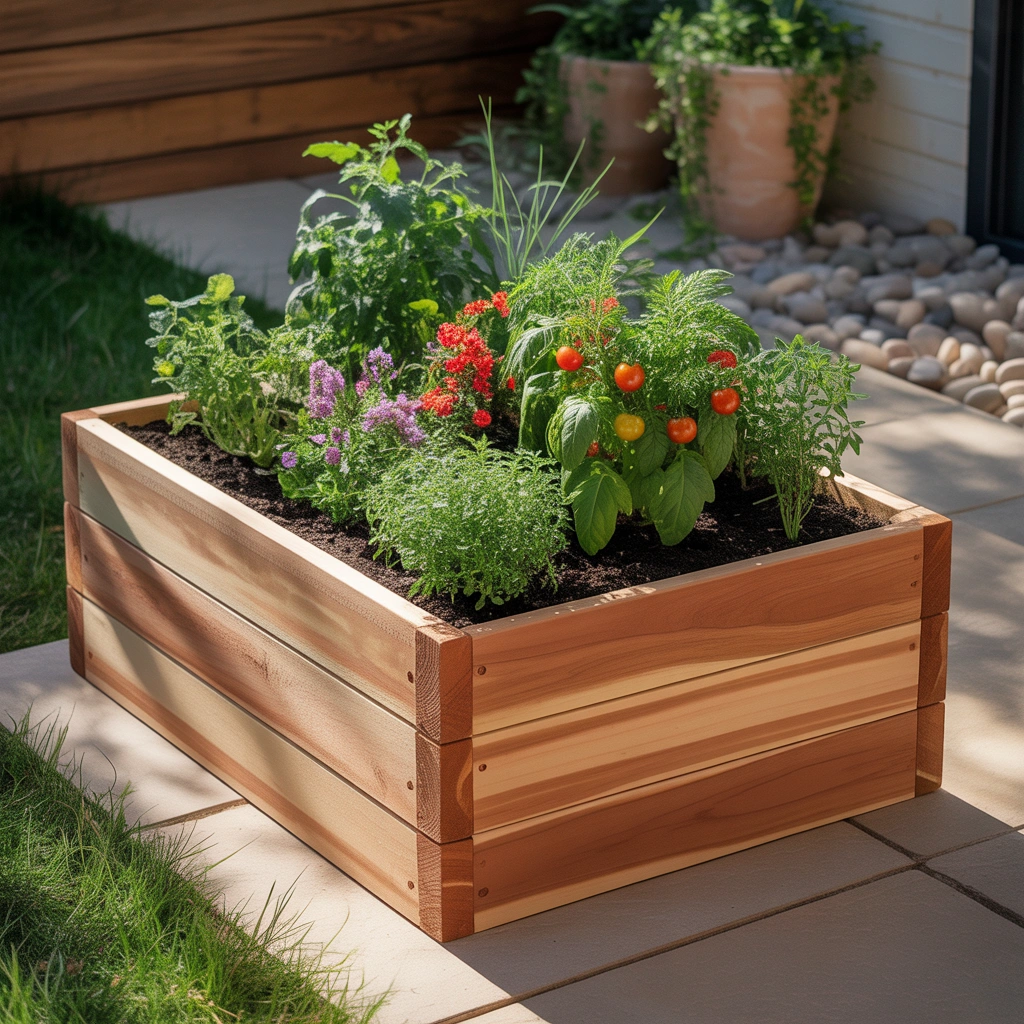
You do not need a large vegetable plot to enjoy homegrown produce. A small raised bed can fit into a patio corner, narrow backyard, or sunny area beside a fence.
Raised beds make planting easier because the soil can be improved and controlled more effectively. They also create a clean, organized appearance.
A compact raised bed can be used for salad leaves, radishes, spinach, herbs, spring onions, peppers, strawberries, or dwarf vegetable varieties. Choose plants based on the amount of sunlight your garden receives.
If your space is extremely limited, consider a raised planter on legs. It provides growing space without occupying too much ground area and can be easier to reach.
Divide the bed into small sections and avoid planting too many crops at once. Overcrowding can reduce airflow and make maintenance more difficult.
A mini edible garden is not only productive. It also brings texture, color, fragrance, and seasonal interest into the space.
6. Use Large Pots Instead of Many Small Ones
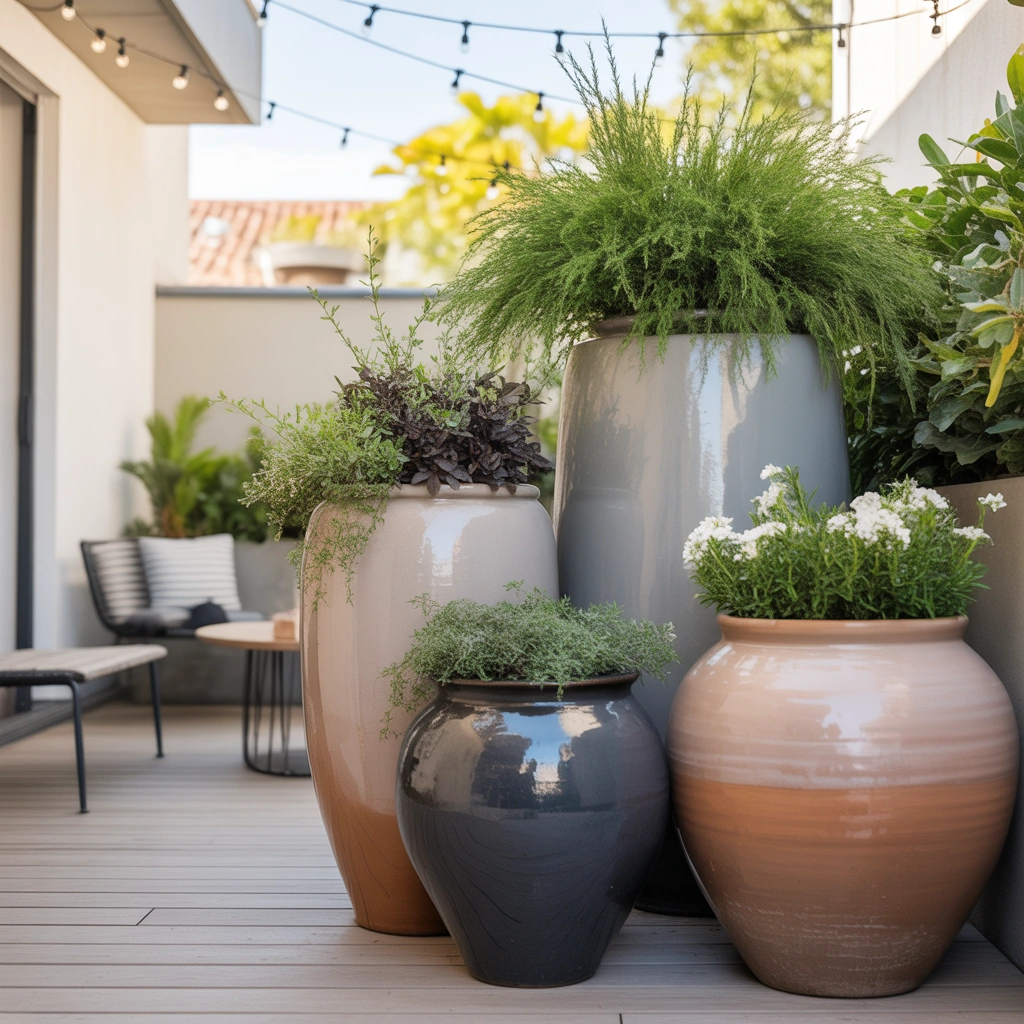
It may seem logical to fill a tiny garden with lots of little pots, but too many containers can make the area look cluttered.
A smaller number of larger pots often creates a calmer and more stylish appearance. Large containers also hold moisture for longer and provide plants with more room to develop healthy roots.
Choose pots in coordinating colors or materials to create visual harmony. Terracotta adds warmth, stone-effect containers feel traditional, and simple black or grey planters suit contemporary gardens.
You can plant one statement shrub in each pot or combine a tall plant, a medium filler plant, and a trailing variety. This creates a layered arrangement without requiring many containers.
Place pots in groups of three or position them near entrances, seating areas, and empty corners. Avoid spreading them randomly across the garden, as this can interrupt movement.
Large planters can also be used to define different zones or create privacy around a seating area.
7. Introduce Layers of Height
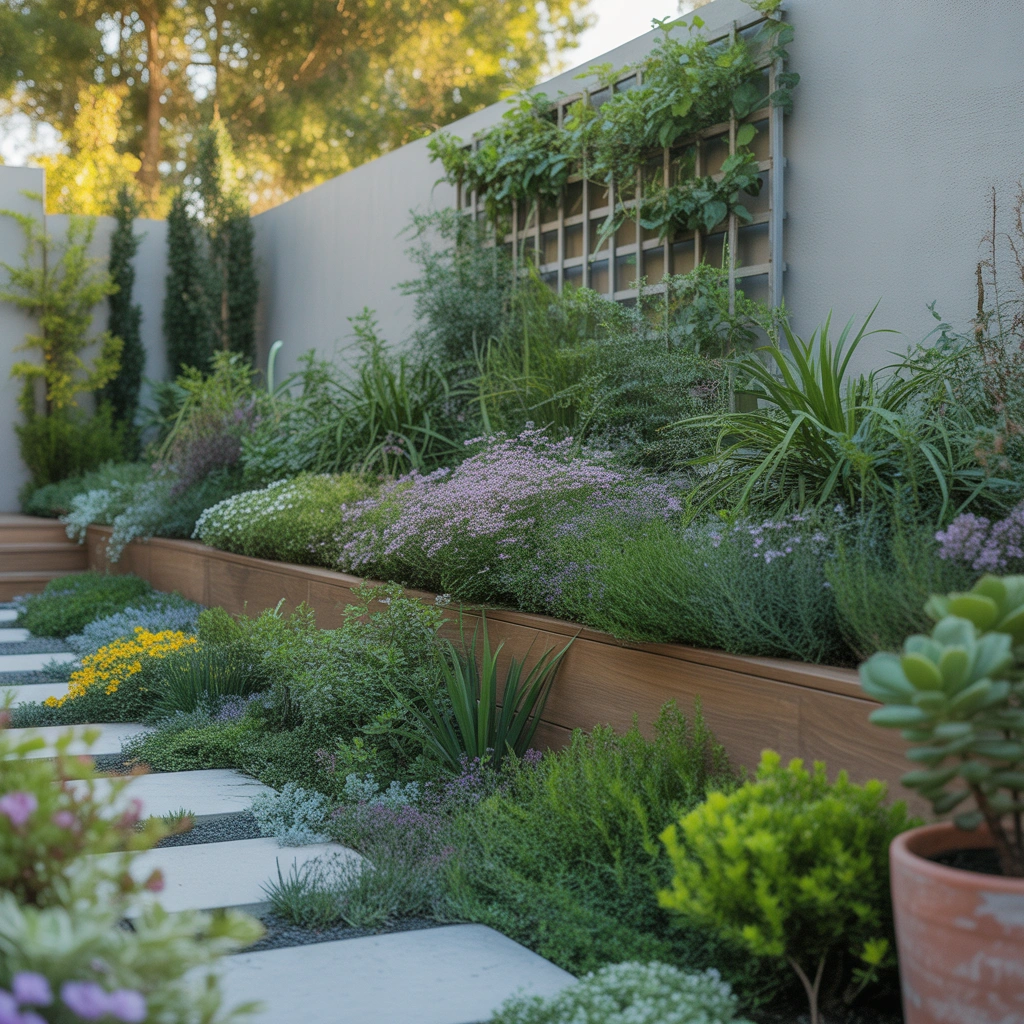
A small garden can feel flat when every plant and object sits at the same level. Adding different heights makes the space appear more dynamic and can create the illusion of depth.
Use a combination of ground-cover plants, medium-height flowers, shrubs, tall ornamental grasses, climbing plants, hanging baskets, and small trees.
You can also introduce height through plant stands, raised beds, shelves, wall planters, and trellises.
Place taller plants toward the back or along the boundaries, while keeping lower plants near pathways and seating areas. However, do not follow this rule too strictly. A tall plant placed slightly forward can sometimes create an interesting sense of enclosure.
Ornamental grasses are particularly useful because they add height without feeling heavy. Their movement also brings softness into hard-landscaped spaces.
Layering the garden vertically helps the eye travel upward and around the area rather than focusing only on its limited floor size.
8. Design a Narrow Garden Path
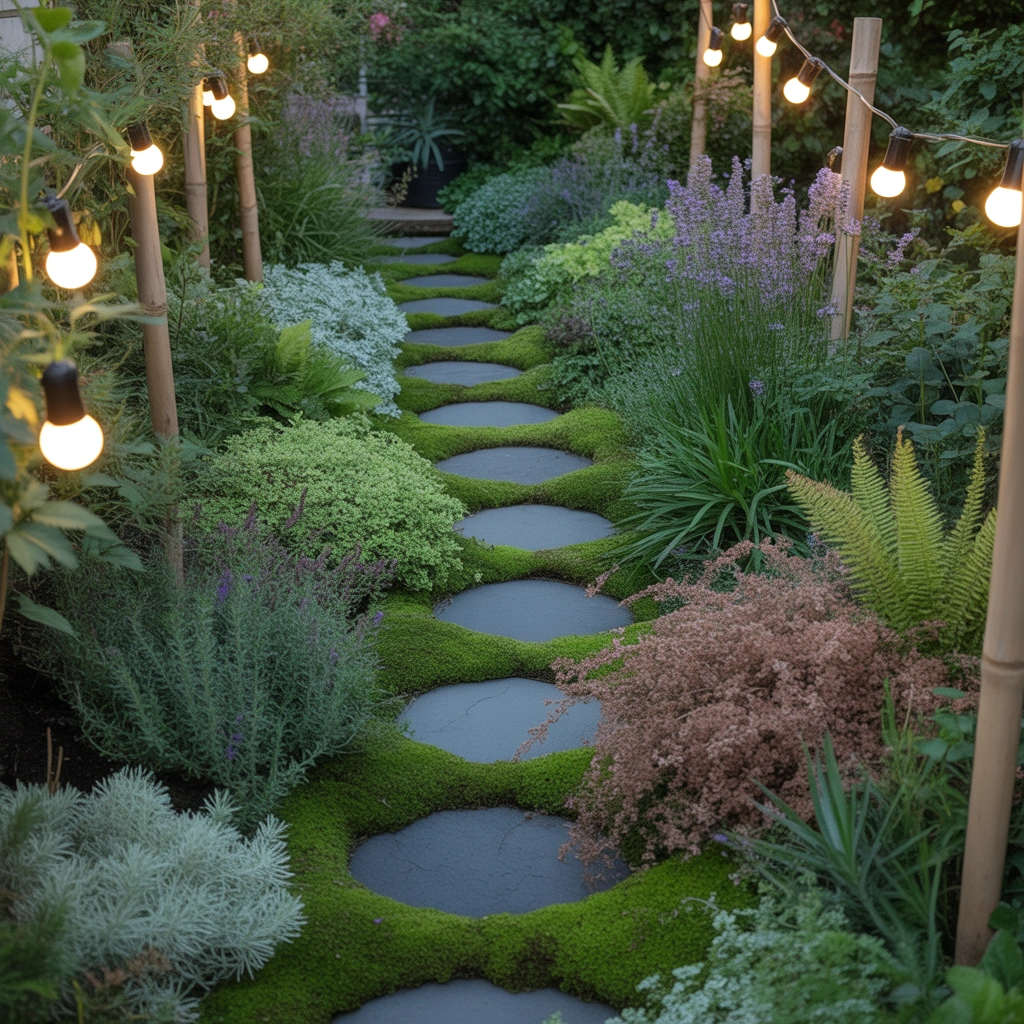
Even the smallest garden can benefit from a clear pathway. A path creates direction, structure, and a sense of journey.
In a narrow garden, you can use stepping stones, gravel, brick, timber boards, or compact paving slabs. Instead of creating a completely straight route, consider a gentle curve or staggered stepping stones. This can make the garden feel longer and more interesting.
Allow plants to soften the edges of the path. Creeping thyme, small grasses, lavender, and low-growing flowers can help the path blend into the surrounding garden.
The path should lead somewhere meaningful, such as a bench, feature pot, small fountain, garden shed, or decorative screen.
Avoid using too many different materials in a small area. One or two complementary surfaces will usually look more cohesive.
A well-designed path encourages people to explore the garden rather than viewing it as one small open rectangle.
9. Add Soft Outdoor Lighting
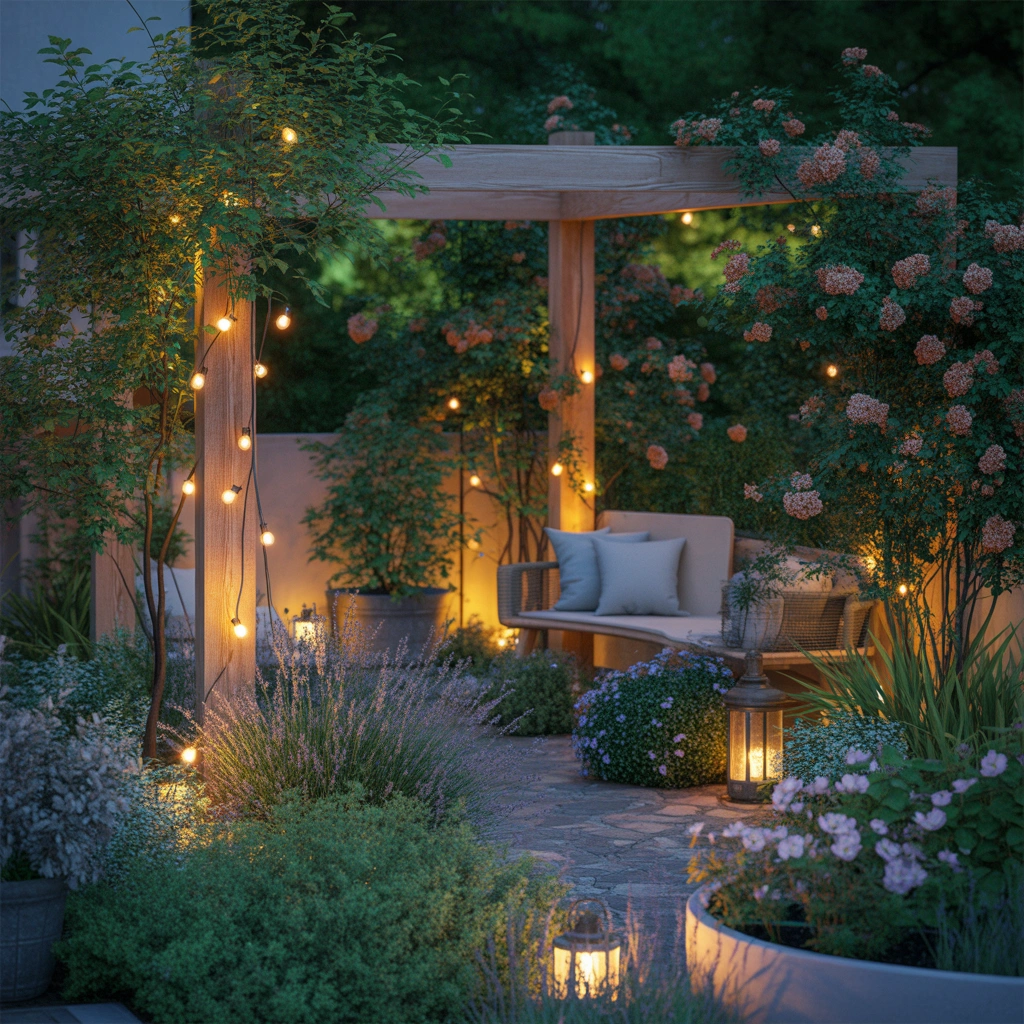
Lighting can transform a small garden after sunset. It creates atmosphere, highlights plants, improves safety, and allows you to use the outdoor space for longer.
String lights are one of the easiest choices. They can be placed along a fence, wrapped around a pergola, or hung above a seating area.
Solar lanterns, wall lights, stake lights, and small uplighters can also work well. Use uplighting beneath a tree, sculpture, or textured wall to create a dramatic focal point.
Try not to over-light the garden. Bright white lights placed everywhere can remove the sense of warmth and intimacy. A few soft light sources usually create a more relaxing effect.
I prefer combining different levels of lighting. For example, wall lights can provide general illumination, while lanterns and candles add a softer glow near the seating area.
Good lighting makes even a basic garden feel more polished and welcoming.
10. Create Privacy with Plants and Screens
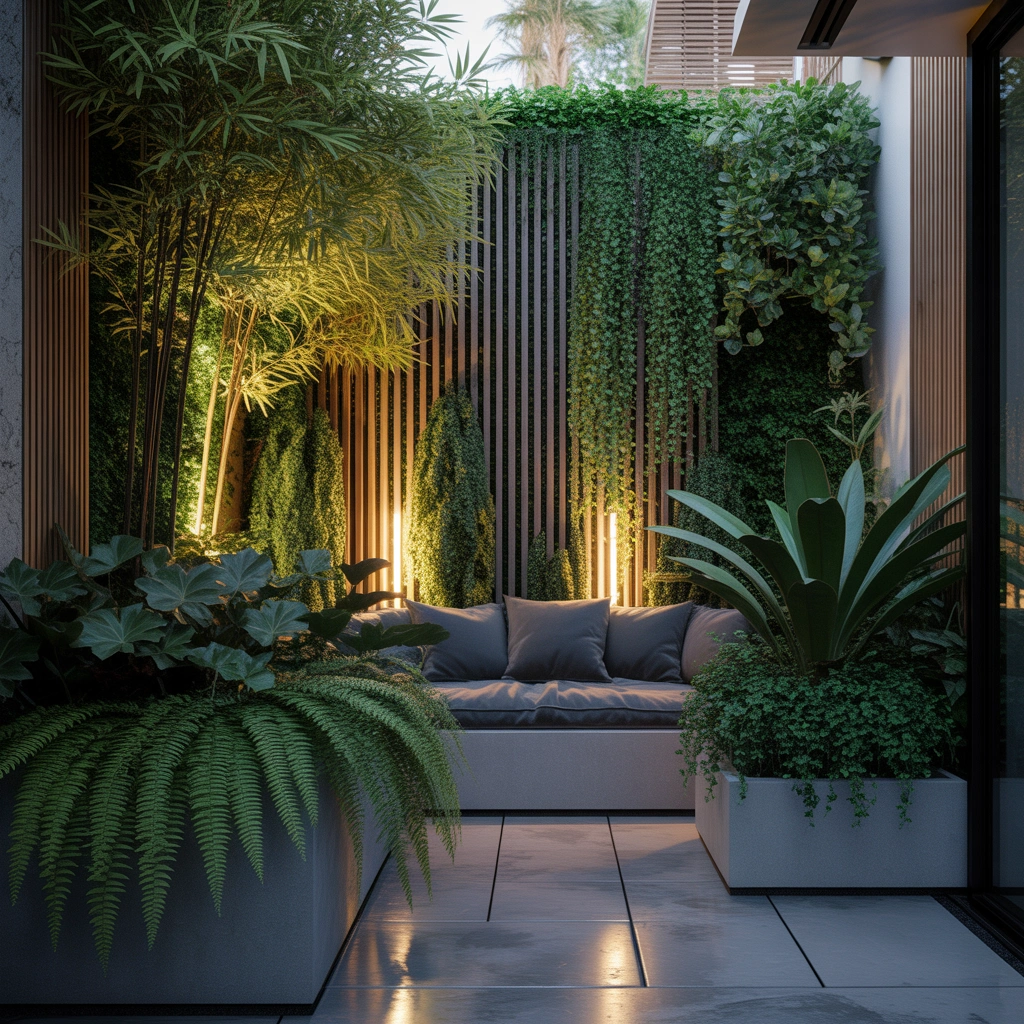
Privacy can be challenging in small urban gardens, especially when neighboring houses, balconies, or windows overlook the area.
Tall fencing may solve the problem, but it can also make the garden feel enclosed. A better approach is to combine privacy screens with plants.
Slatted wooden panels, decorative metal screens, bamboo fencing, trellises, and outdoor curtains can create separation without appearing too solid.
Climbing plants can be trained over trellises to form a green screen. Evergreen varieties provide year-round coverage, while flowering climbers add seasonal color.
Tall potted bamboo, ornamental grasses, olive trees, or compact evergreen shrubs can also help block unwanted views. Be careful with bamboo planted directly in the ground, as some varieties spread aggressively. Containers are often a safer choice.
Focus privacy features around the areas where you sit rather than trying to hide the entire garden. This approach uses less space and feels more natural.
11. Choose a Simple Garden Color Scheme
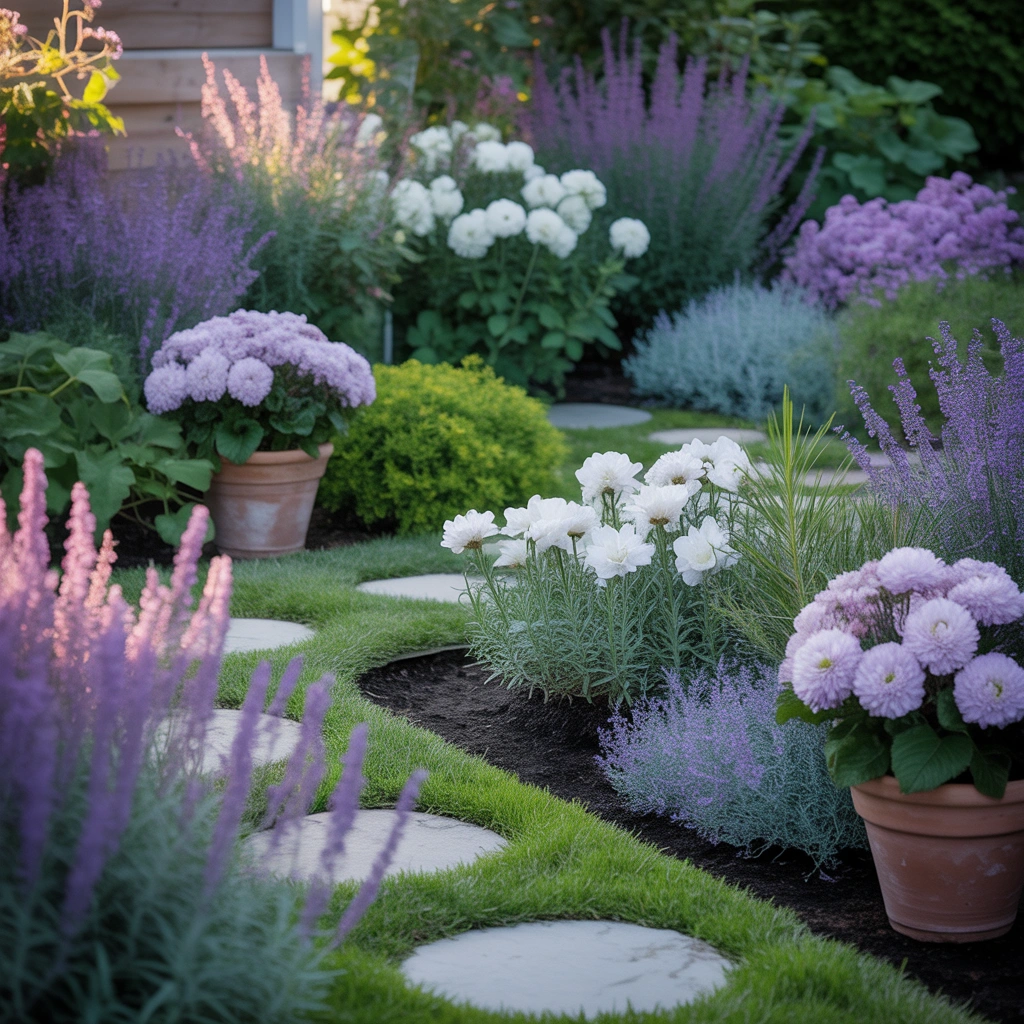
Too many unrelated colors can make a small garden feel busy. A limited color palette creates a stronger sense of order.
You might choose white and green for a fresh, peaceful garden, or combine purple, blue, and silver for a cooler look. Warm shades such as orange, red, and yellow create energy, while soft pinks and creams feel romantic.
The color scheme can include more than flowers. Consider the shades of plant pots, cushions, fencing, walls, furniture, and decorative accessories.
Painting a dark fence in a soft green, warm neutral, or deep charcoal can help it blend into the planting. In some gardens, dark boundaries visually recede and make the greenery stand out.
You do not need to remove every color outside your chosen palette. The goal is simply to establish one dominant visual direction.
A consistent color scheme can make inexpensive furniture and simple planting combinations look much more intentional.
12. Build a Small Water Feature
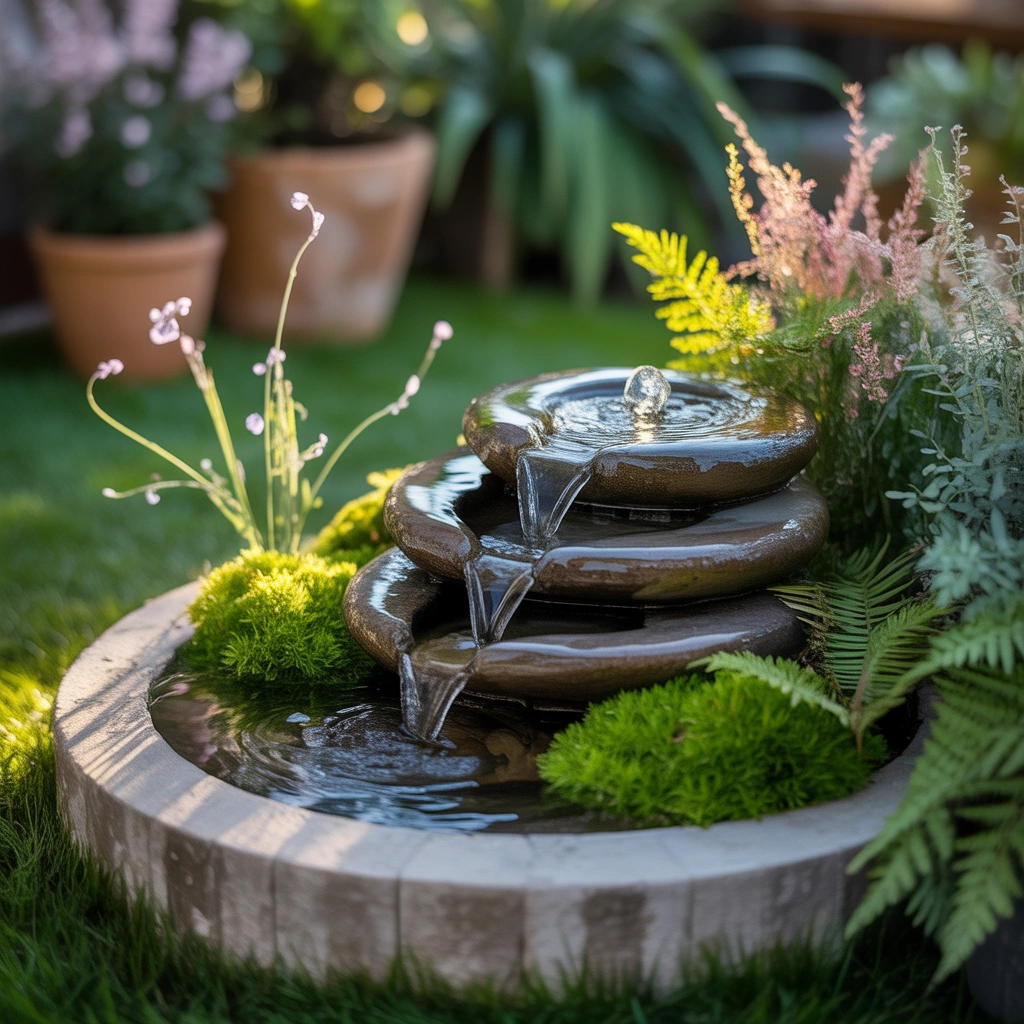
Water introduces movement, sound, and calmness into a garden. Fortunately, you do not need a pond or large fountain to enjoy these benefits.
A compact bowl fountain, tabletop water feature, wall-mounted fountain, or container pond can fit into a surprisingly small space.
The gentle sound of flowing water can also help reduce the impact of traffic noise and nearby conversations.
For a container pond, choose a watertight pot or bowl and add aquatic plants suitable for the depth and sunlight conditions. Make sure the water feature is safely positioned if young children or pets use the garden.
A small solar-powered fountain can be a convenient option because it may not require electrical installation. However, its performance will depend on sunlight.
Position the water feature where it can be seen and heard from the seating area. Surrounding it with ferns, grasses, stones, or moisture-loving plants can make it feel integrated into the garden.
13. Turn a Blank Wall into a Feature
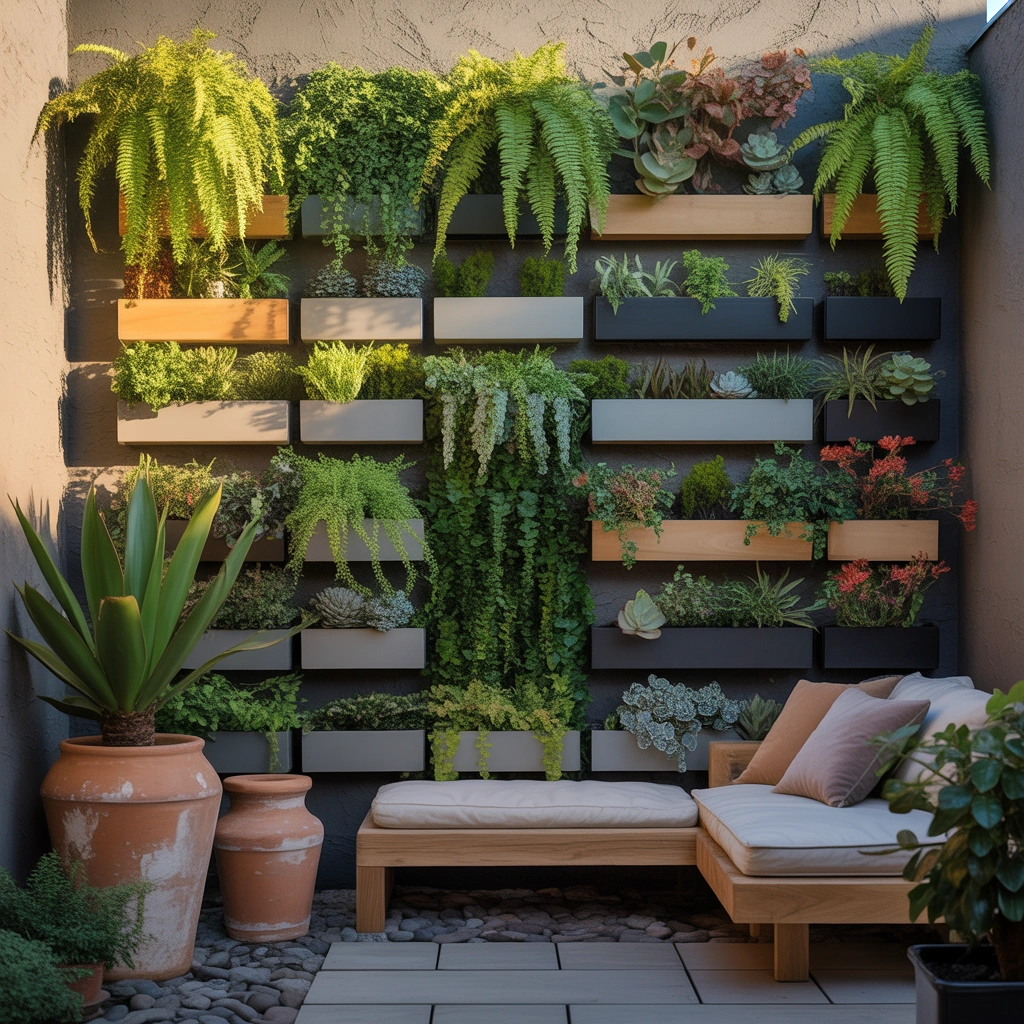
A blank wall takes up no floor space, yet it can become one of the most attractive parts of a small garden.
You could paint it in a bold color, cover it with climbing plants, add outdoor artwork, install decorative tiles, or create a collection of wall-mounted pots.
A painted mural can bring personality into a courtyard, while a simple geometric design can create a modern focal point.
Shelving is another practical option. Narrow outdoor shelves can hold herbs, small pots, candles, and gardening accessories.
If the wall receives plenty of sunlight, it may be suitable for heat-loving plants such as rosemary, thyme, or certain climbing fruits. A shaded wall can become a home for ferns and other foliage plants.
Avoid adding too many unrelated decorations. One strong feature usually has more impact than several small items competing for attention.
The wall should support the overall atmosphere of the garden rather than feeling like a separate display.
14. Create a Wildlife-Friendly Corner
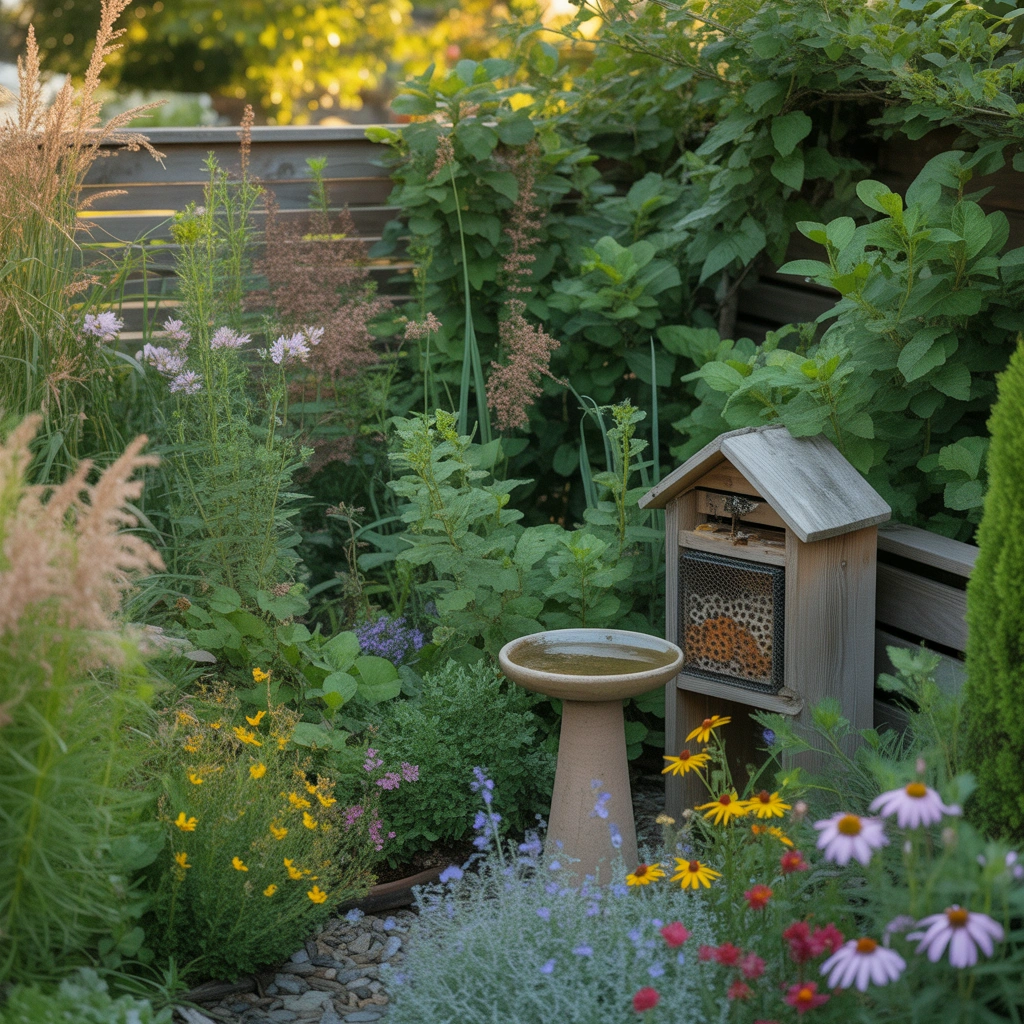
Even a tiny garden can support birds, bees, butterflies, and other beneficial wildlife.
Plant nectar-rich flowers, include different flowering seasons, and avoid relying heavily on chemical pesticides. Lavender, salvia, thyme, verbena, sedum, and native wildflowers can provide useful food sources for pollinators.
A small bird feeder, shallow water dish, insect hotel, or nesting box can also encourage wildlife to visit.
You do not need to make the entire garden wild. A single corner with pollinator-friendly plants can make a meaningful difference.
Allowing some seed heads to remain through autumn and winter can provide food and shelter. Dense shrubs may also give birds a protected place to rest.
I find that wildlife brings a small garden to life. Watching bees move between flowers or hearing birds near the seating area makes the space feel connected to nature, even in a busy town or city.
15. Design the Garden Around One Strong Focal Point
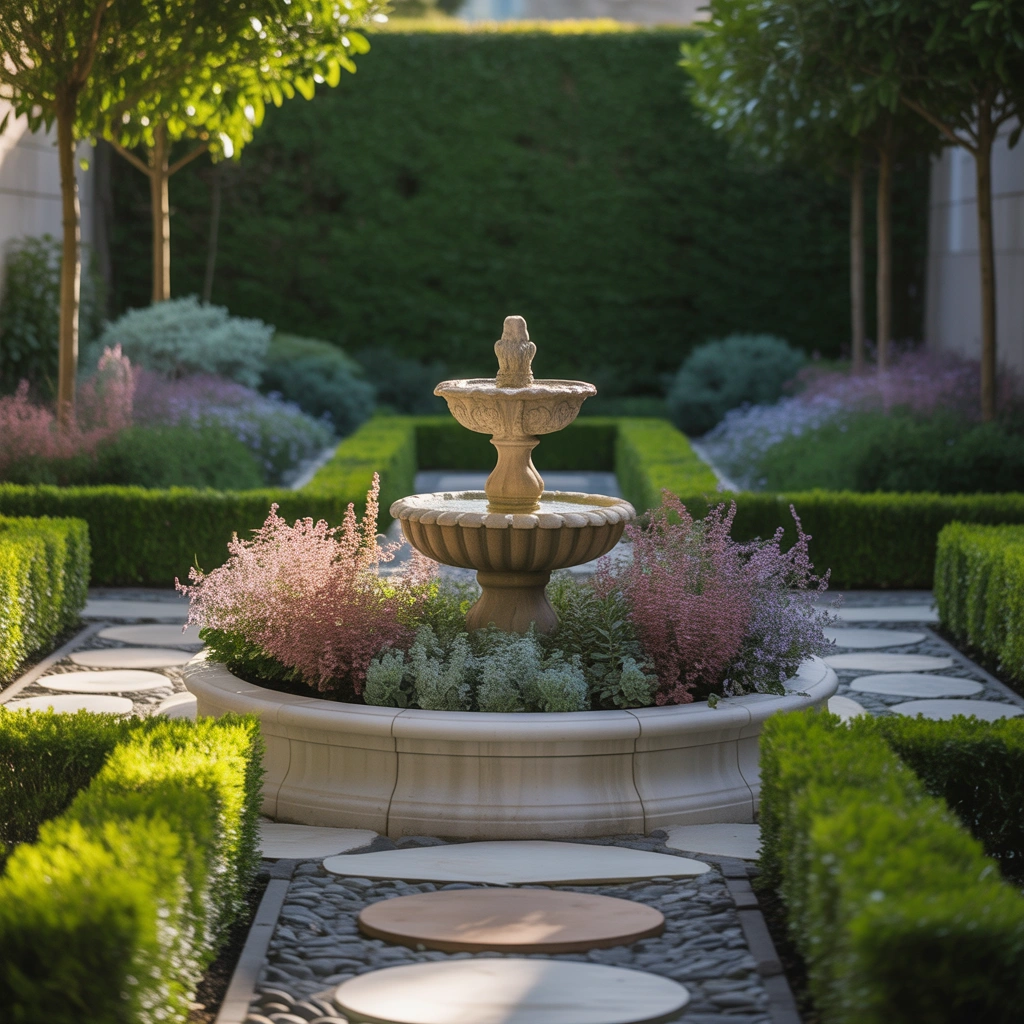
One of the most useful small garden design ideas is to choose one main focal point.
Without a focal point, the eye may notice the garden boundaries immediately. A strong feature draws attention inward and gives the space a clear identity.
Your focal point could be a beautiful tree, colorful bench, large planter, sculpture, water feature, garden mirror, decorative wall, or flowering arch.
Place it where it can be seen from the house or main entrance to the garden. This ensures that the outdoor space looks appealing even when you are viewing it from indoors.
Keep the surrounding design slightly simpler so the focal point remains noticeable. For example, if you choose a brightly painted bench, use more neutral containers and planting nearby.
The feature does not have to be expensive. A repainted chair, handmade planter, or carefully pruned shrub can become the center of the garden when positioned thoughtfully.
How to Make a Small Garden Look Bigger
A few design techniques can make a compact garden appear more spacious.
Use diagonal or curved lines rather than dividing the area into rigid rectangles. Keep the center relatively open and move larger elements toward the boundaries. Introduce vertical planting to draw the eye upward.
Repeating the same materials, plant varieties, or colors can create visual flow. When every section looks completely different, the garden may feel broken into smaller pieces.
Partially hiding the far end of the garden can also create mystery. A tall plant, screen, or curved path may make visitors wonder what lies beyond it, even when the area is quite small.
Light-colored paving can brighten a shaded garden, while darker boundary colors can help walls and fences appear less prominent.
Most importantly, avoid overcrowding. A small garden does not need every available feature. Leaving some open space gives plants and decorative elements room to stand out.
Best Plants for Small Gardens
The best plants for a small garden are those that provide more than one benefit. Look for varieties that offer flowers, fragrance, attractive foliage, autumn color, edible produce, or year-round structure.
Compact evergreen shrubs can create a stable framework. Herbs such as rosemary, mint, thyme, basil, and parsley are useful as well as decorative. Just remember that mint is usually best kept in a container because it spreads quickly.
Climbing plants are ideal for adding greenery without using much floor space. Small ornamental trees can provide height, shade, and seasonal interest, but always check their mature size before planting.
Dwarf and patio varieties are particularly useful. Many fruits, vegetables, shrubs, and trees are now available in compact forms designed for smaller spaces.
Avoid buying plants only because they look small at the garden center. Check their final height and spread so they do not overwhelm the garden later.
Common Small Garden Design Mistakes to Avoid
One common mistake is filling every available corner. Too many pots, ornaments, furniture pieces, and plant varieties can make a small garden feel stressful rather than relaxing.
Another mistake is ignoring storage. Tools, bags of compost, watering cans, and outdoor cushions can quickly create clutter. A storage bench, narrow cabinet, or small shed can help maintain a clean appearance.
Poor plant selection can also cause problems. Fast-growing shrubs and large trees may require constant pruning or eventually outgrow the space.
Using too many materials is another issue. Brick, gravel, decking, tiles, concrete, artificial grass, and stone may all look attractive individually, but combining all of them in one tiny garden can feel confusing.
Finally, do not forget the view from inside your home. Your garden is often seen through windows and doors, so place attractive features where they can be enjoyed throughout the year.
Final Thoughts on Small Garden Inspiration Ideas
A tiny garden can still become a peaceful, productive, and beautiful place. The size matters far less than the thought behind the design.
Start by deciding how you want the space to function. Then choose a few ideas that support that purpose. You might create a seating corner, add vertical planting, introduce a simple water feature, or grow herbs in a compact raised bed.
Do not feel pressured to complete everything at once. Small gardens often develop gradually as you learn which plants grow well, where the sunlight falls, and how you naturally use the space.
The most successful small gardens feel personal. They may include a favorite chair, a handmade planter, herbs used in family meals, flowers that attract butterflies, or lighting that makes summer evenings feel special.
With careful planning, even the smallest outdoor area can become a garden you genuinely look forward to visiting.
These 15 small garden inspiration ideas prove that limited space does not have to limit your creativity. By using walls, corners, containers, lighting, thoughtful planting, and multi-purpose features, you can turn an overlooked outdoor area into a comfortable and memorable retreat.