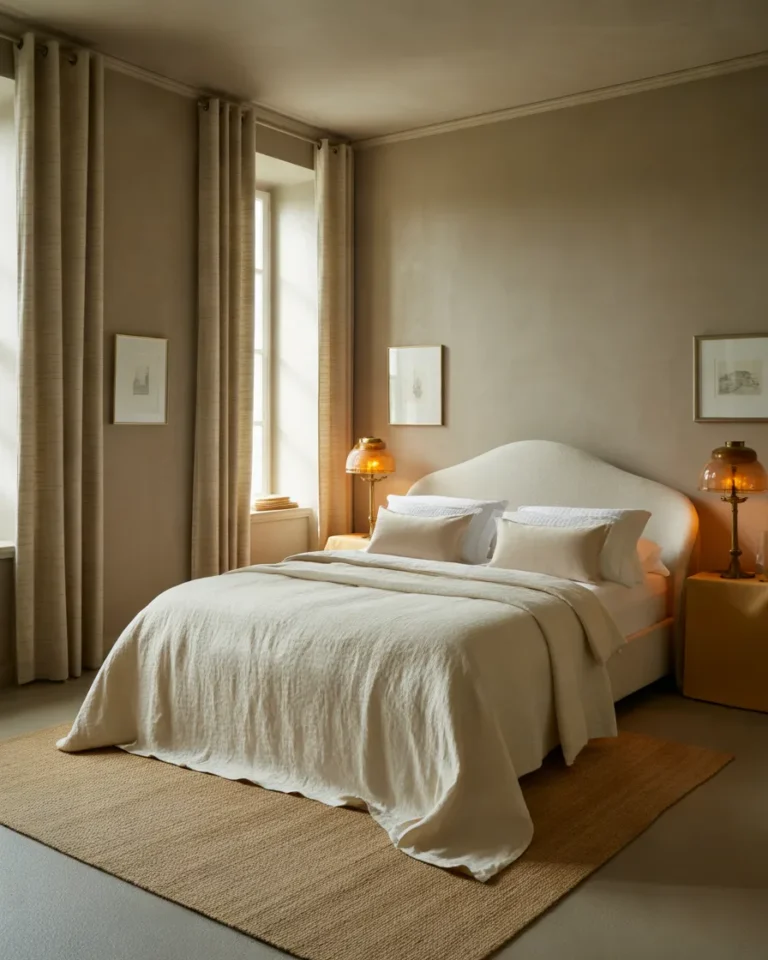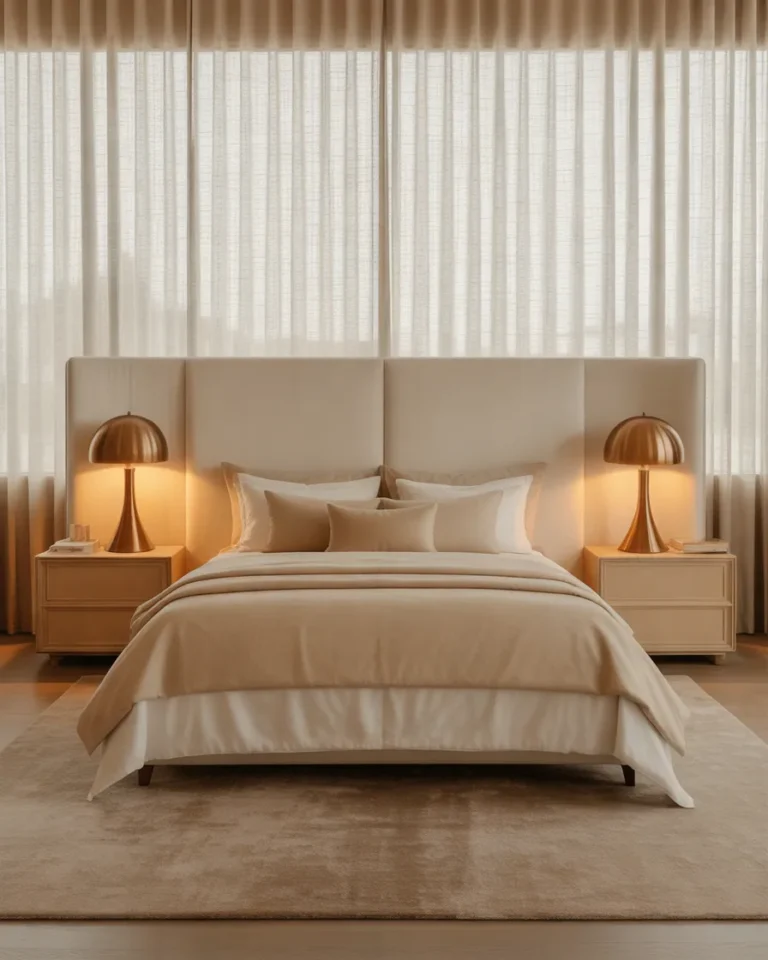
Homework on the bed, a laptop balanced on the pillows, and notes spread across the duvet — 16 bedroom ideas with study table setups are the answer when a bedroom has no proper place to work. The mattress blurs the line between rest and study, and the ache in your back by nine o’clock is the proof. A desk gives the room a second job, so the bed can go back to being for sleep.
This collection covers window desks, corner setups, floating desks, vanity combos, and study nooks for teens and remote workers, with step-by-step setup and budget-friendly swaps for every layout. Pick the corner that fits your room and start there.
1. Bedroom Ideas With a Study Table: Start by the Window
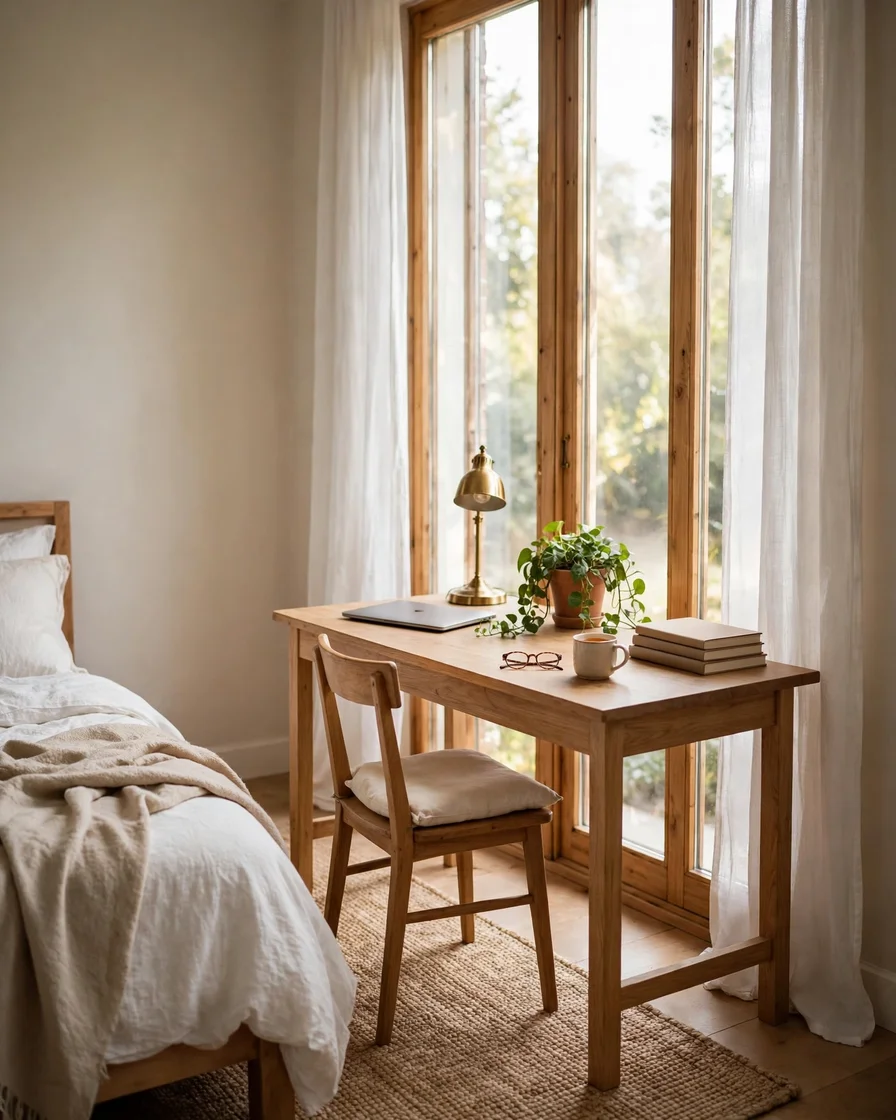
The window is the best seat in the bedroom, and a desk placed under it turns daylight into your study lamp. In the photo, a light oak desk sits beneath tall wood-framed windows dressed with sheer white curtains, holding a closed laptop, a brass dome lamp, a trailing pothos in a terracotta pot, a stack of three plain books, a mug, and reading glasses, with a wooden chair tucked in and a bed with white linen beside it. Measure the window wall first, then push the desk flush against it so the sill sits just above the work surface. Put the lamp on the left if you write with your right hand, and lay a woven rug under the chair to mark the study zone. The setup takes about half an hour once the desk is in the room. For a budget-friendly version, use a plain wooden table you already own and hang sheer curtains from a tension rod.
Quick Tip: Angle the desk sideways to the window if sun glares on your screen.
2. Tuck a Corner Desk Into the Dead Space
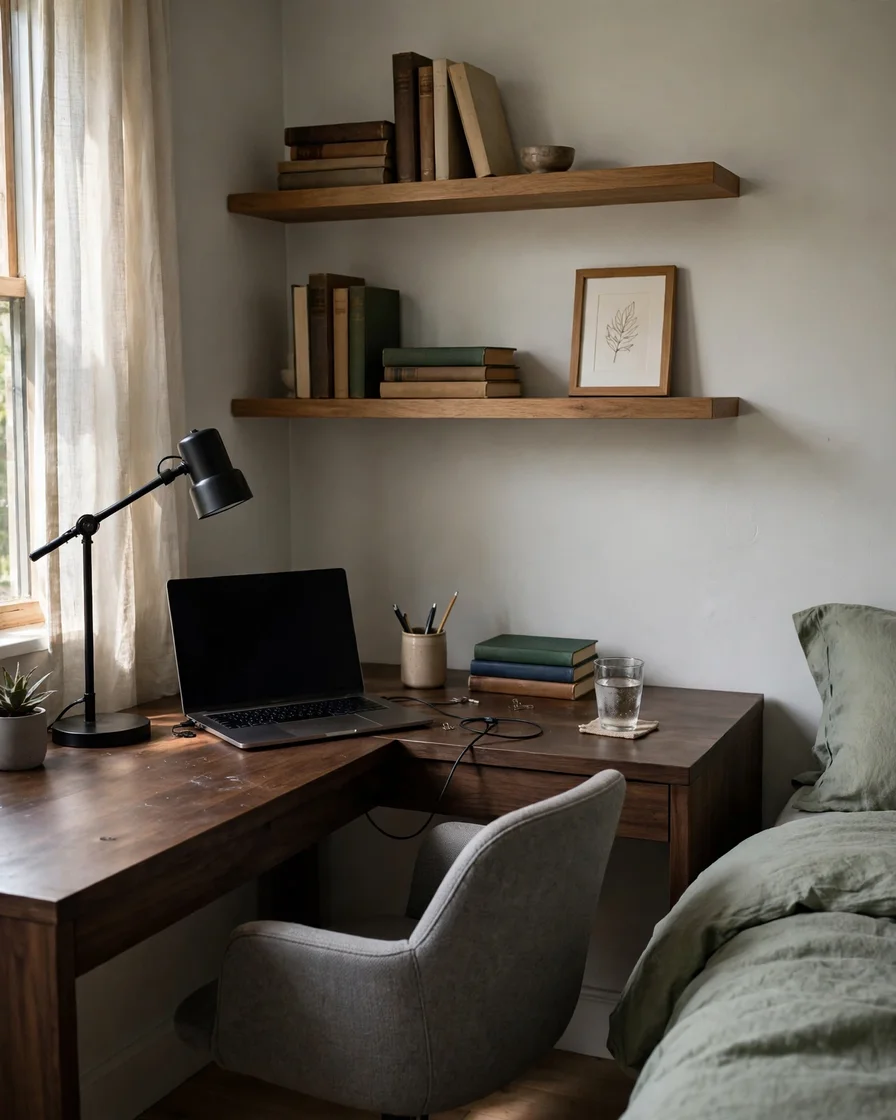
Every bedroom has a corner that collects nothing but dust, and a corner desk turns it into the hardest-working spot in the room. In the photo, a dark walnut L-shaped desk fills the corner, holding an open laptop, a black adjustable task lamp, a ceramic pen cup, a stack of three books, and a glass of water, with two floating wooden shelves above holding books and a framed leaf print, a grey upholstered chair in front, and a bed with sage-green bedding to the right. Measure both walls of the corner before you buy, since a desk a few inches too long will not sit flush. Slide the desk in, fix the shelves at arm’s reach above it, and put the lamp where your writing hand does not shadow it. The setup takes about an hour. For a budget-friendly version, join two plain desks at a right angle instead of buying one L-shaped unit.
Quick Tip: Keep the corner for the lamp and cables, so both desk arms stay clear.
3. Mount a Floating Desk on the Wall
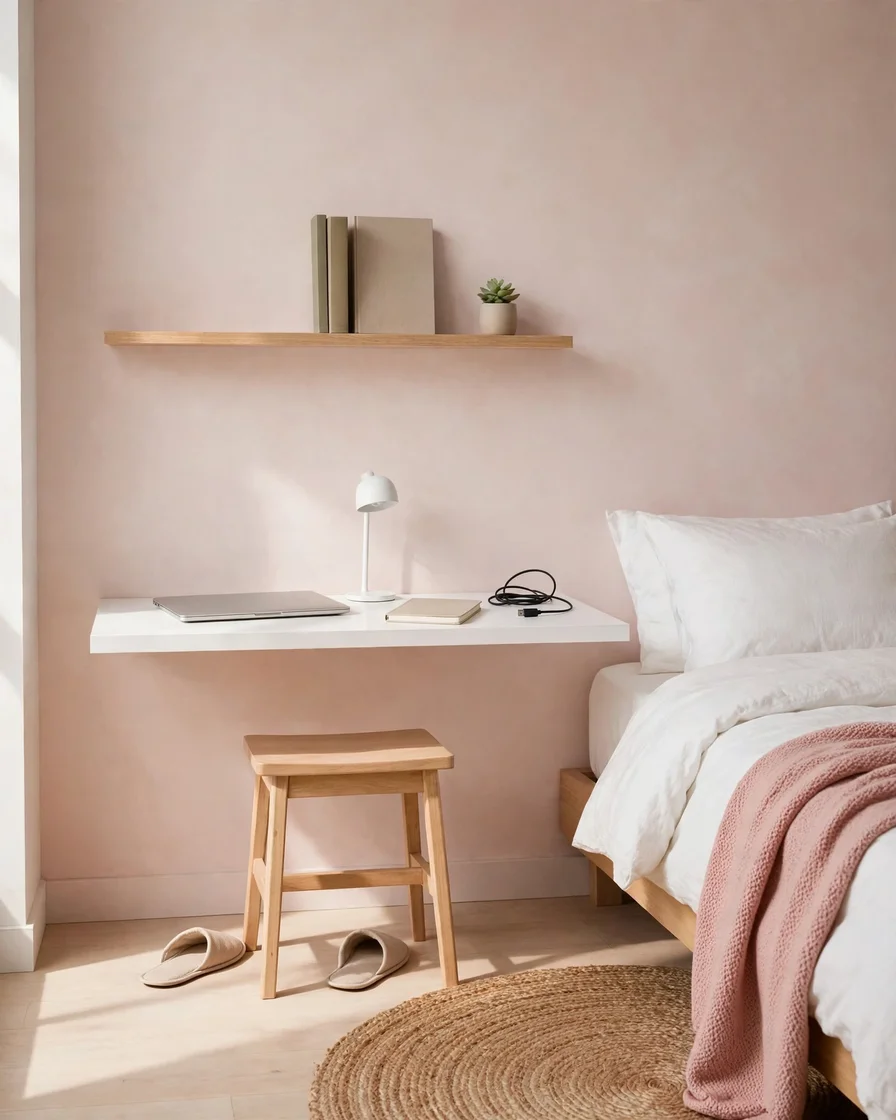
A floating desk gives you a full workspace without giving up a single inch of floor, which matters in a bedroom where the bed already takes most of the room. In the photo, a slim white desk is fixed to a blush-pink wall with no legs at all, holding a closed laptop, a small white dome lamp, and a notebook, with a wooden stool tucked underneath, a narrow shelf above holding three books and a tiny succulent, and a bed with white bedding and a dusty-pink throw beside it. Find the wall studs first with a stud finder, then fix the brackets at desk height, about 29 inches from the floor. Check the level twice before you tighten anything, since a floating desk shows every tilt. Mounting takes about an hour. For a budget-friendly version, use a single plank of pine on two steel brackets instead of a ready-made floating desk.
Quick Tip: Leave the space below the desk empty so a stool slides straight under.
4. Double Up With a Desk and Vanity Combo
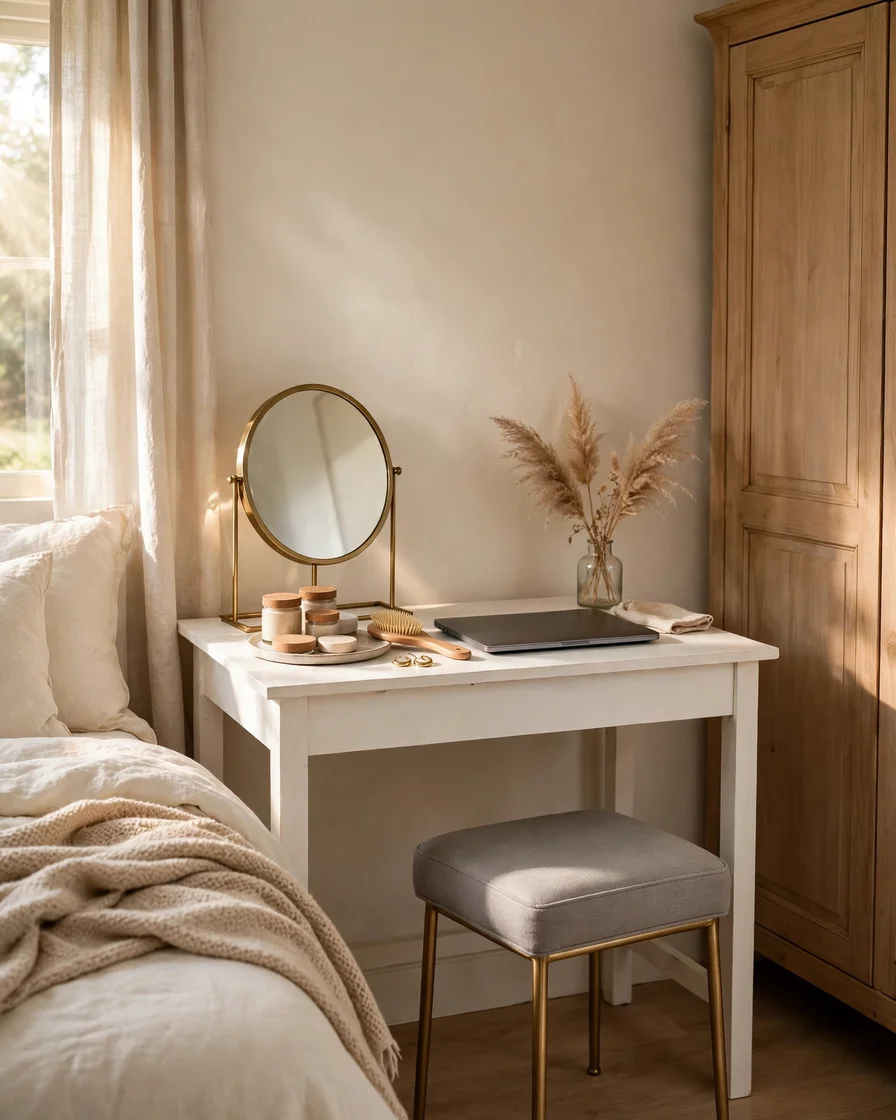
One desk can do two jobs if you plan it that way, and a vanity combo is the smartest use of a bedroom wall. In the photo, a white desk holds a round brass-framed mirror on a stand, a tray of cosmetic jars with wooden lids, a hairbrush, a pair of gold earrings, a closed laptop, and a glass vase of pampas grass, with a grey upholstered stool on brass legs in front and a bed with cream bedding and a beige knit throw beside it. Set the mirror at one end and keep the other end clear for the laptop, so neither job crowds the other. Group the jars on a tray that lifts off in one move when it is time to work. The whole setup takes about half an hour. For a budget-friendly version, use a mirror you already own and gather the jars from the bathroom shelf instead of buying a matching set.
Quick Tip: Put the mirror near the window so morning light falls on your face.
5. Bedroom Ideas With a Study Table: Carve Out an Alcove Nook
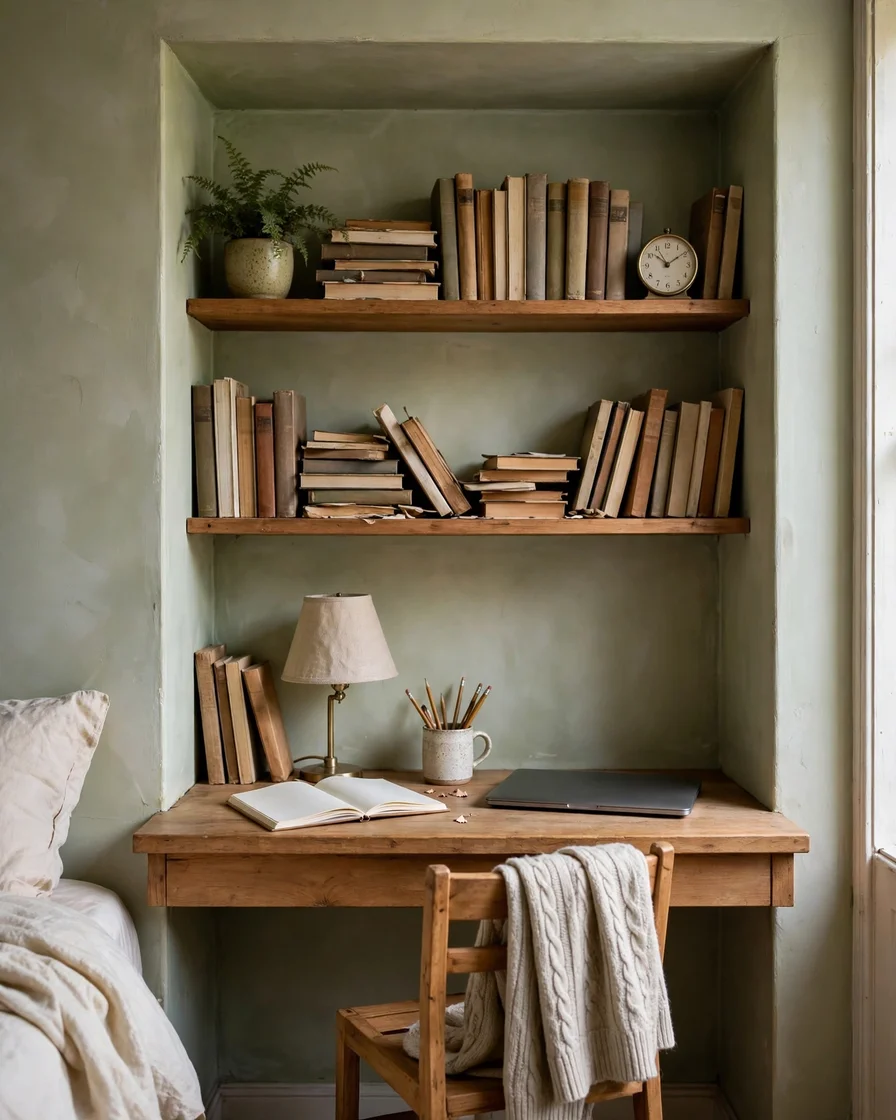
An alcove is a ready-made study room in miniature, with walls on three sides that shut out the rest of the bedroom. In the photo, a built-in wooden desk spans the width of a sage-green alcove, with two shelves above holding rows of books, a fern in a speckled pot, and a small round clock, while the desk holds a brass lamp with a linen shade, a speckled mug of pencils, an open notebook, and a closed laptop, with a wooden chair and a cream cable-knit sweater draped over it. Measure the alcove at three heights, since old walls are rarely straight, then cut the desk board to the narrowest measurement. Fix the shelves first, then the desk, so you can still reach the upper brackets. The build takes a weekend afternoon. For a budget-friendly version, use a single shelf board as the desk and paint the alcove a color you already have at home.
Quick Tip: Add the lamp before you fix the shelves, so light lands on the desk.
6. Set Up a Teen Study Corner That Actually Gets Used
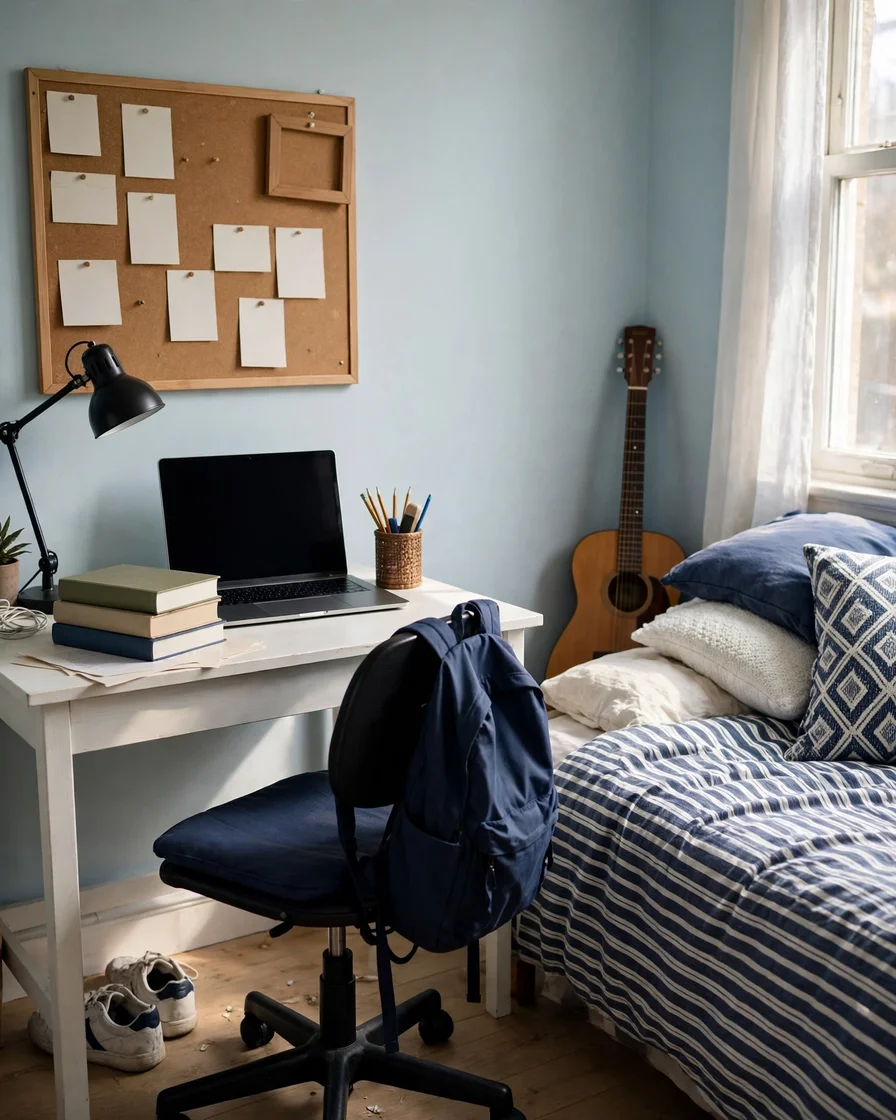
A teen’s desk only works if it feels like their space, not a classroom moved into the bedroom. In the photo, a white desk stands against a pale blue wall, holding an open laptop, a black task lamp, a stack of three books, and a woven pencil cup, with a corkboard above pinned with blank cards and a small empty frame, a swivel chair with a navy cushion and a backpack hanging on it, a guitar leaning in the corner, and a bed with a navy and white striped duvet beside it. Let the teen pick the wall color and chair, then set the desk at right angles to the bed so homework and sleep stay apart. Pin the timetable and a few photos on the corkboard. The setup takes about an hour. For a budget-friendly version, repaint a desk from another room and make the corkboard from a sheet of cork pinned to the wall.
Quick Tip: Put the phone charger across the room, so homework time stays phone-free.
7. Build a Work-From-Home Desk That Hides at Night
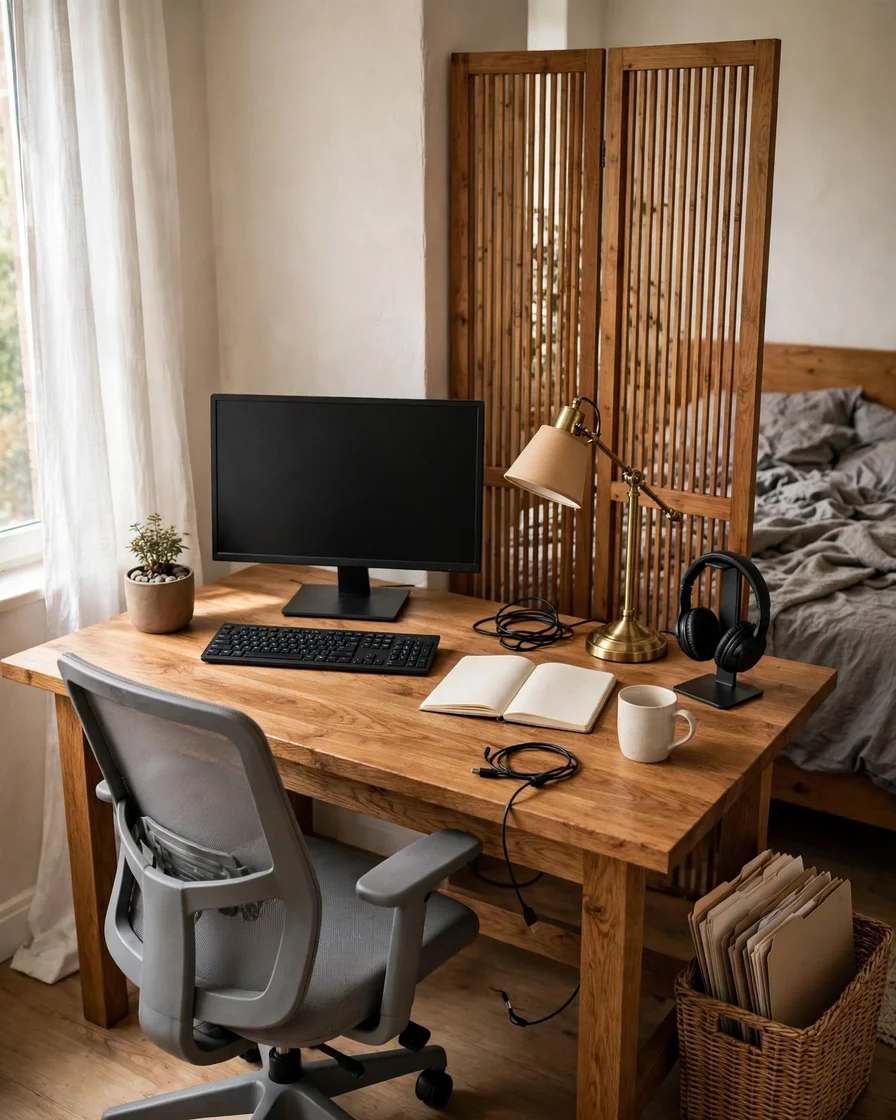
Working from the bedroom only works when the office can disappear at the end of the day, and a room divider does exactly that. In the photo, a large oak desk holds a monitor, a keyboard, a brass lamp with a fabric shade, headphones on a stand, an open notebook, a mug, and a small potted plant, with a grey ergonomic chair in front and a tall wooden slatted divider standing between the desk and a bed with rumpled grey bedding behind it. Place the desk near the window and the divider on the bed side, so your video-call background is a plain wall, not the bed. Keep the monitor at arm’s length so long days do not end in a stiff neck. Keep a basket beside the desk for files, and clear the desk surface every evening. The setup takes about an hour. For a budget-friendly version, use a curtain on a tension rod instead of a wooden divider.
Quick Tip: Face the desk toward the door, not the bed, so you stop seeing the pillows.
8. Turn the Nightstand Into a Mini Desk
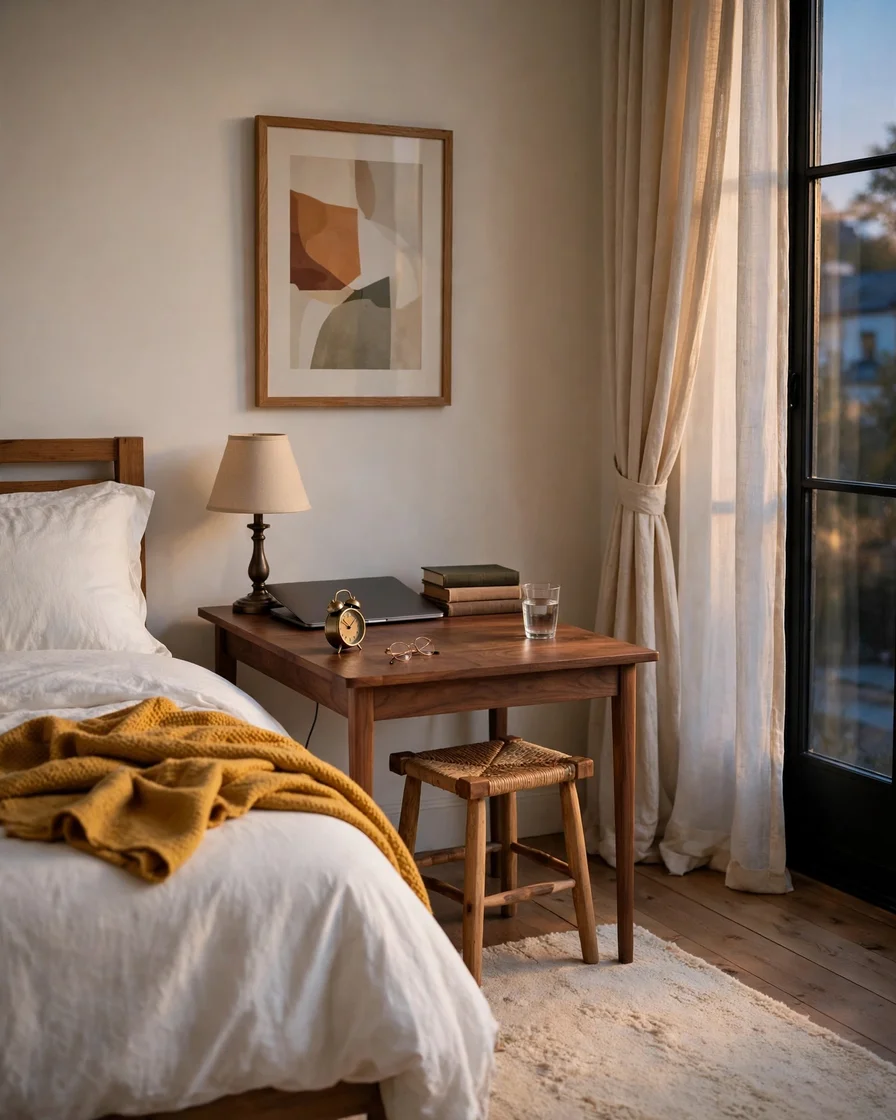
When the bedroom is too small for a desk and a nightstand, one table can be both, and it works better than you would expect. In the photo, a narrow walnut desk stands beside a bed with white bedding and a mustard-yellow throw, holding a fabric-shade lamp, a closed laptop, a brass alarm clock, a stack of three books, a glass of water, and reading glasses, with a woven rush stool tucked underneath and a framed abstract print hanging above it. Pick a desk about 20 inches deep so it still fits the gap beside the bed, and keep the lamp at the back so the front edge stays free for writing. Slide the stool under at night and the desk goes back to being a nightstand. The setup takes about thirty minutes. For a budget-friendly version, use the nightstand you already have and add a slim stool that tucks underneath it.
Quick Tip: Keep a small tray for glasses and water, so the work surface stays clear.
9. Stretch an L-Shaped Desk Along Two Walls
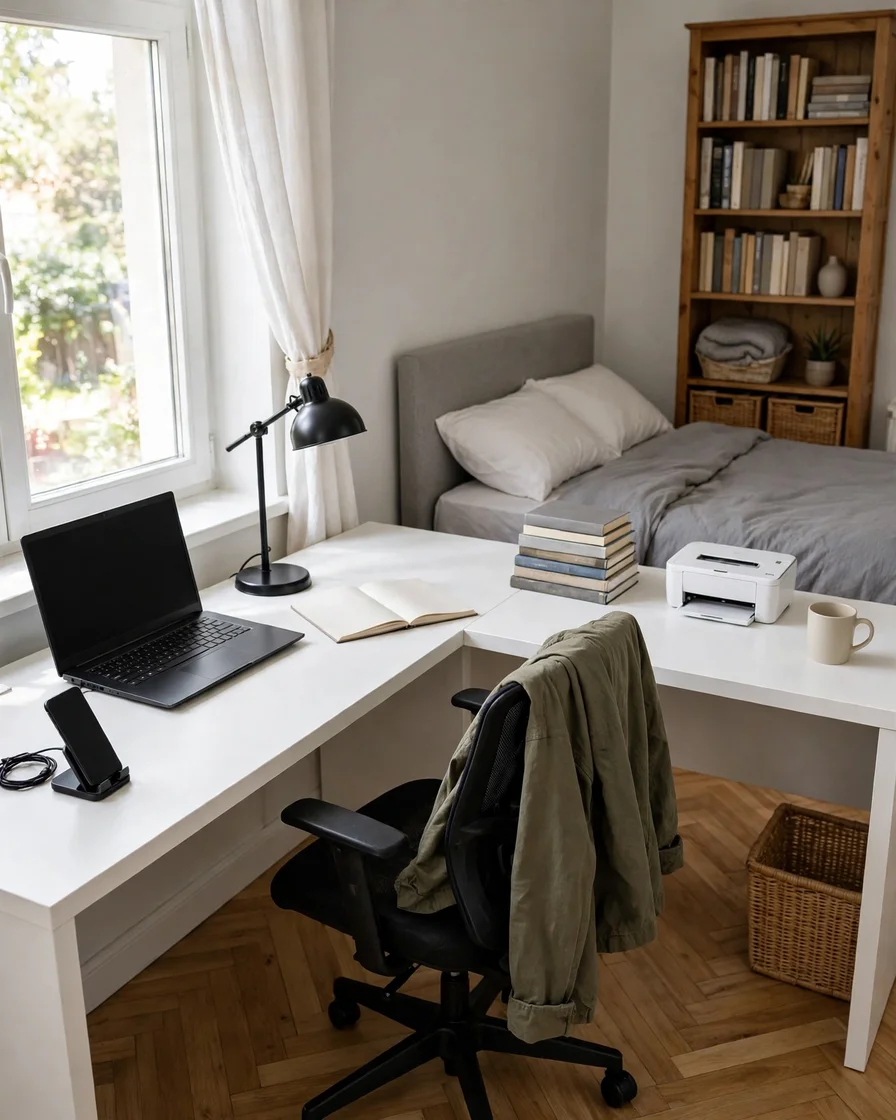
An L-shaped desk gives you two work surfaces for the price of one corner, with one arm for the screen and one for paper. In the photo, a white L-shaped desk runs along two walls, holding an open laptop, a black task lamp, an open notebook, a stack of books, a white printer, a ceramic mug, and a phone on a charging stand, with a black rolling chair and an olive-green jacket draped over it, a bed with a grey duvet behind, and a tall wooden bookcase beside it. Put the laptop on the arm by the window and the printer and books on the other arm, so the screen never fights the paper for space. Leave the corner itself for the lamp and a charging station. Assembly takes about two hours. For a budget-friendly version, butt a plain desk against a secondhand table of the same height to make the L shape.
Quick Tip: Sit at the corner join, where both desk arms are within reach.
10. Bedroom Ideas With a Study Table: Use the Space Under a Loft Bed
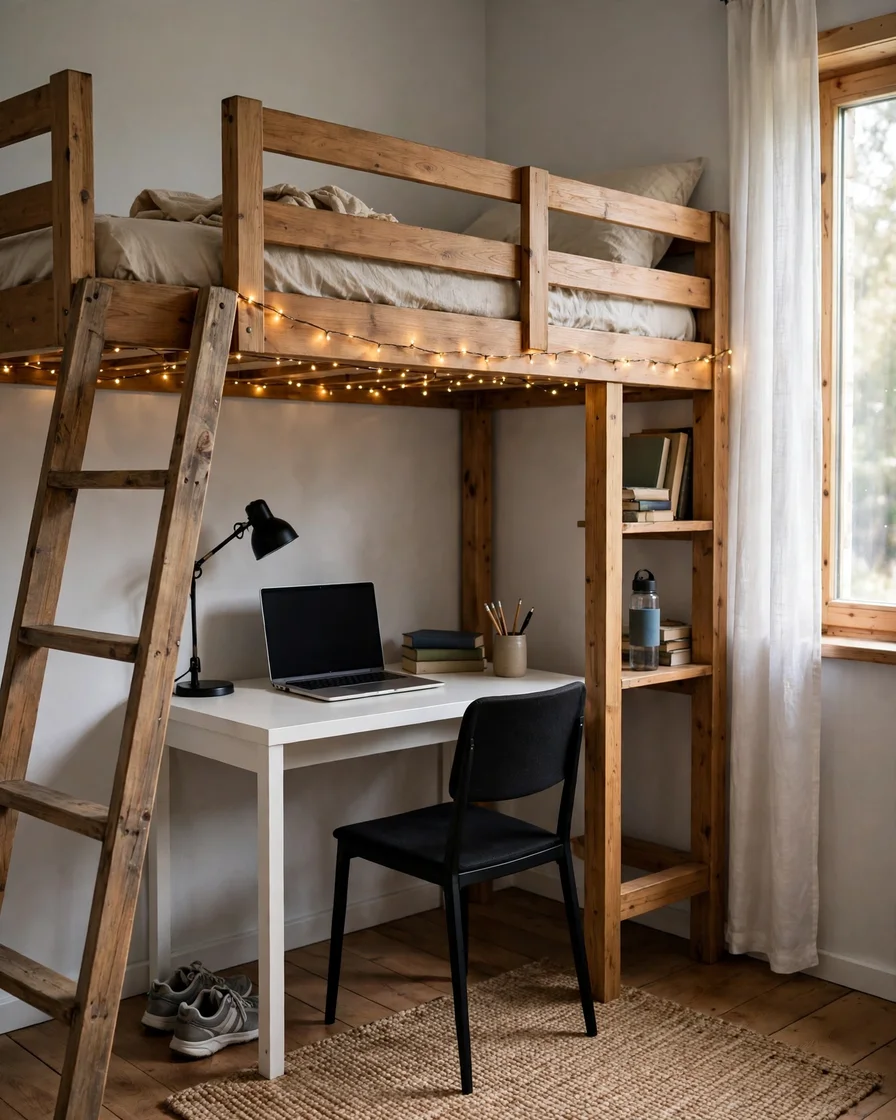
A loft bed is the one move that doubles a small bedroom, because the desk takes the floor space the bed used to need. In the photo, a wooden loft bed with a ladder rises above a white desk holding an open laptop, a black desk lamp, a stack of books, and a pencil cup, with fairy lights strung along the underside of the bed frame, shelves built into the side of the frame holding books and a water bottle, a black chair in front, and trainers tucked under the desk. Check the ceiling height first: you need at least 30 inches above the mattress for sitting up, and a full 5 feet under the bed for the desk. Anchor the frame to the wall, then slide the desk in. Assembly takes a full afternoon. For a budget-friendly version, buy the loft frame secondhand and use a plain desk you already own underneath it.
Quick Tip: Clip the desk lamp to the bed frame to free up desk space.
11. Keep It Minimal: One Desk, One Lamp, One Chair
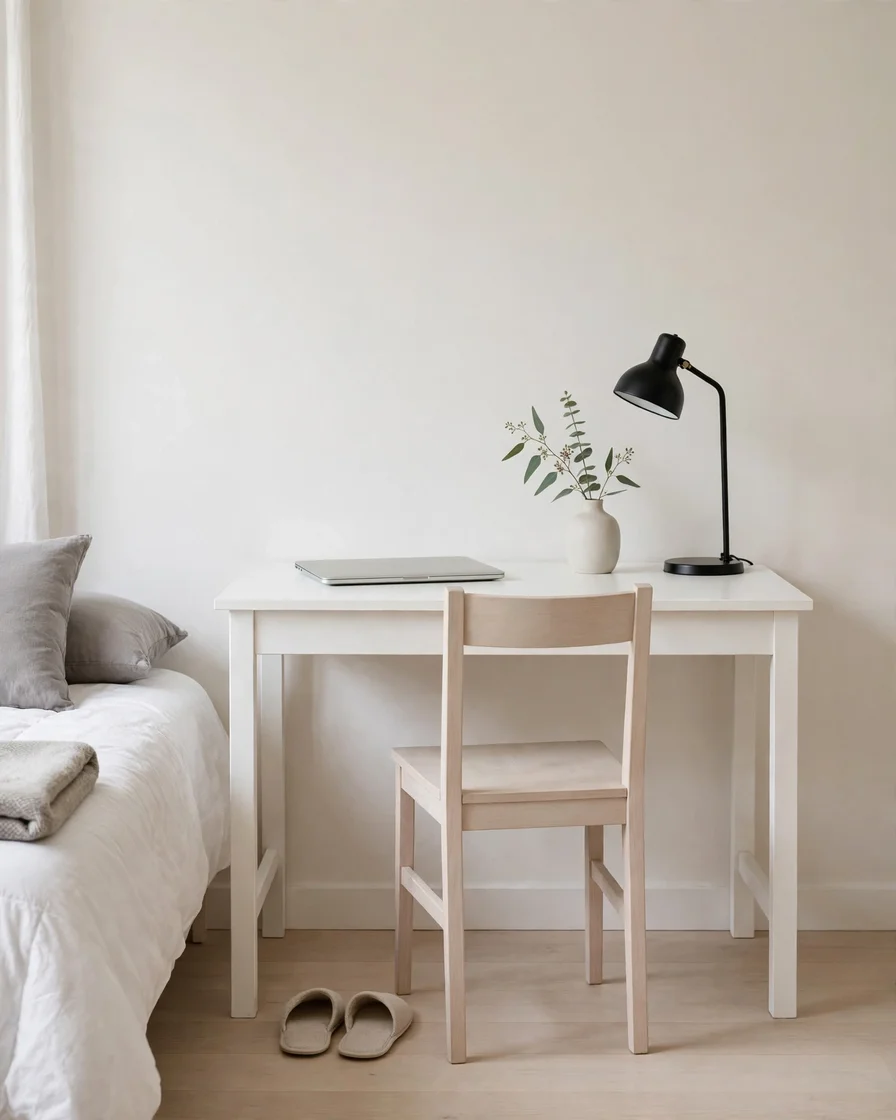
A desk with almost nothing on it is easier to sit down at, because there is nothing to clear away first. In the photo, a plain white desk stands against a bare warm-white wall holding only a closed laptop, a black desk lamp, and a small white vase with a single eucalyptus stem, with a light ash-wood chair in front, a pair of beige slippers on the floor, and a bed with white bedding and grey cushions beside it. Start by taking everything off the desk, then put back only the laptop, the lamp, and one thing you enjoy looking at. Keep books and chargers in a drawer out of sight. The whole reset takes about twenty minutes. For a budget-friendly version, use the desk and chair you already own and spend nothing at all: the look comes from what you remove. These minimalist home office ideas show the same stripped-back approach in bigger rooms.
Quick Tip: Clear the desk to bare wood every night, so tomorrow starts clean.
12. Light the Desk Properly for Evening Work
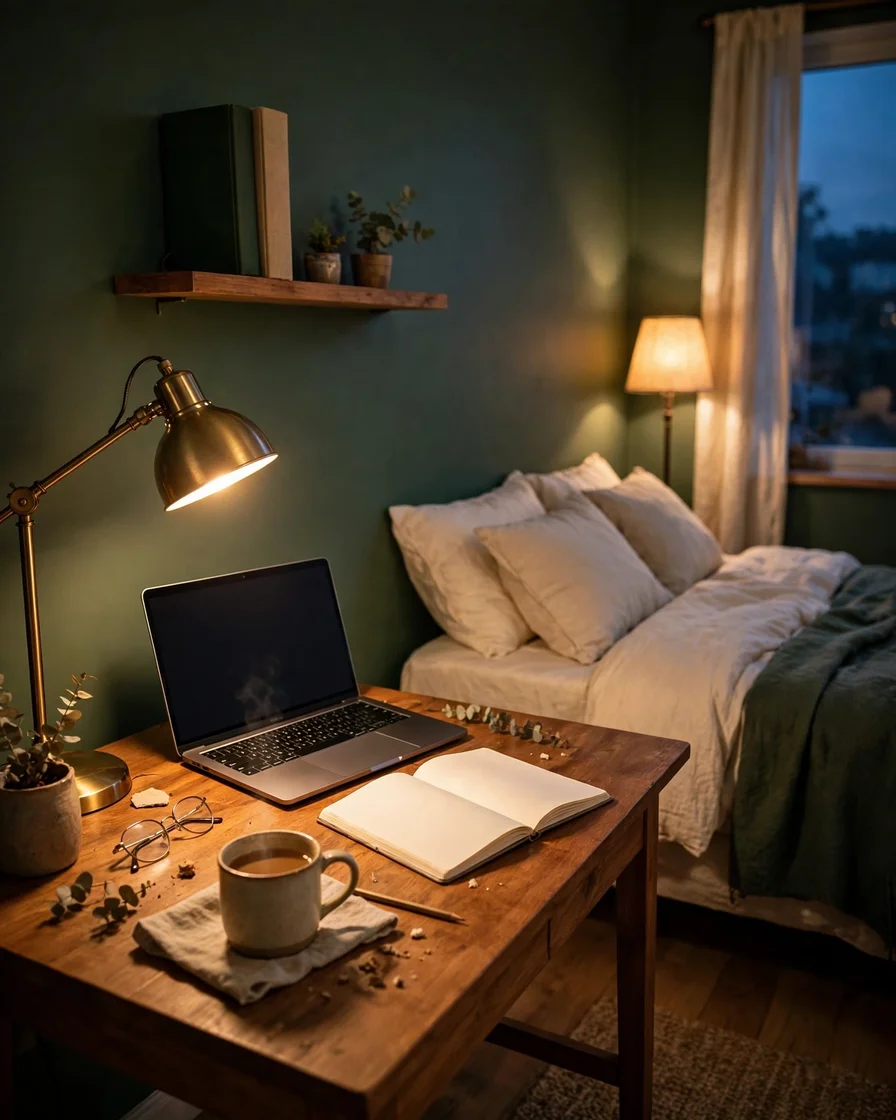
A desk that only works in daylight is half a desk, and good lighting is what makes evening study possible without straining your eyes. In the photo, a wooden desk against a deep green wall holds an open laptop, an open notebook, a steaming mug, reading glasses, and a small potted plant, lit by a brass swing-arm task lamp, with a wooden shelf above holding books and two small plants, a floor lamp glowing in the corner, and a bed with cream bedding and a dark green throw behind it. Aim the task lamp at the work surface from the side your writing hand does not shadow, and add the floor lamp behind the chair. The setup takes about thirty minutes. For a budget-friendly version, use a clip-on lamp on the shelf and move a lamp you already own into the corner. These home office lighting ideas cover more lamp placements for late-night work.
Quick Tip: Use a warm bulb in the evening so your eyes tire less quickly.
13. Try a Fold-Down Desk for the Smallest Bedrooms
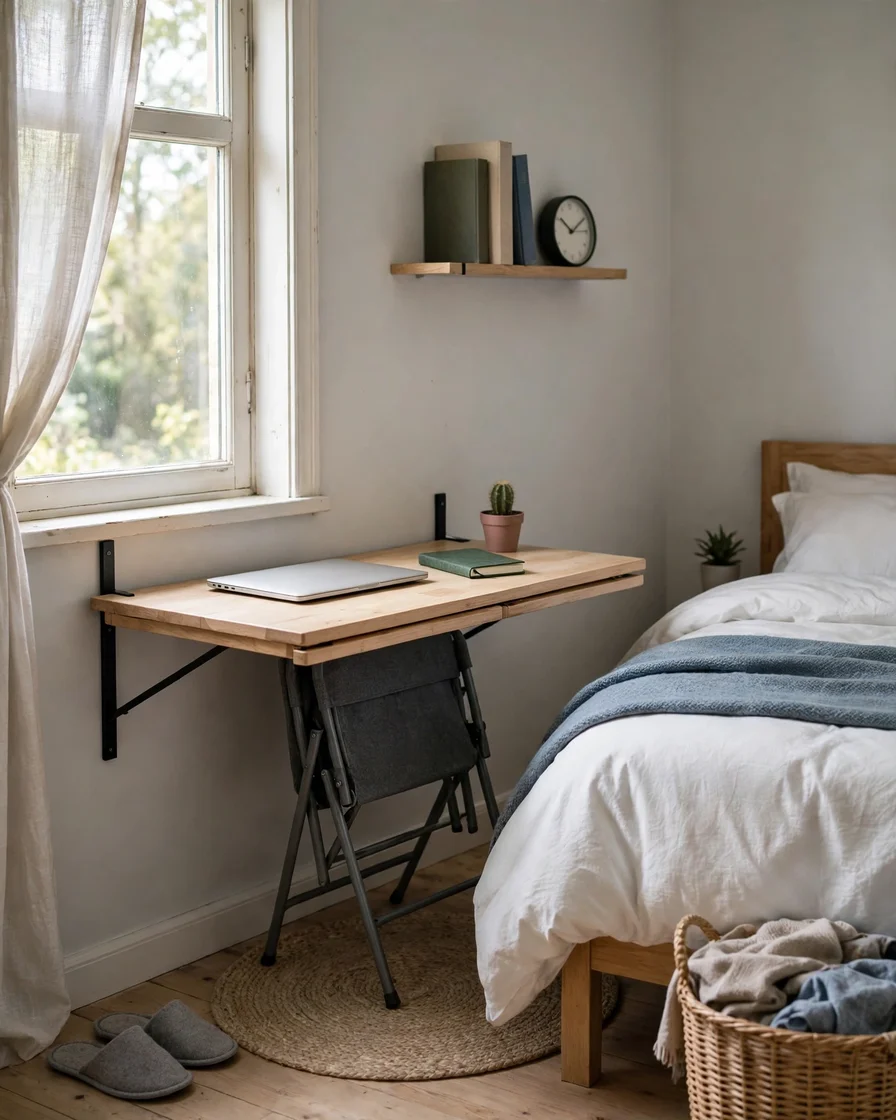
A fold-down desk is a desk only when you need it, and a flat wall the rest of the time, which is why it suits the smallest bedrooms best. In the photo, a light wood desk is folded out flat on black wall brackets, holding a closed laptop, a green notebook, and a small potted cactus, with a narrow shelf above holding books and a round wall clock, a grey folding chair tucked underneath, and a bed with a blue-grey throw beside it. Fix the brackets into wall studs at desk height, screw the board to the hinges, and test the fold twice before you load it. Keep books on the shelf above, so nothing lives on the desk overnight. Mounting takes about an hour. For a budget-friendly version, use a pine board on folding brackets and a chair from the dining room. These small bedroom ideas have more ways to save space in a tight room.
Quick Tip: Fold the desk up every night so the bedroom feels like a bedroom again.
14. Surround the Desk With Bookshelves
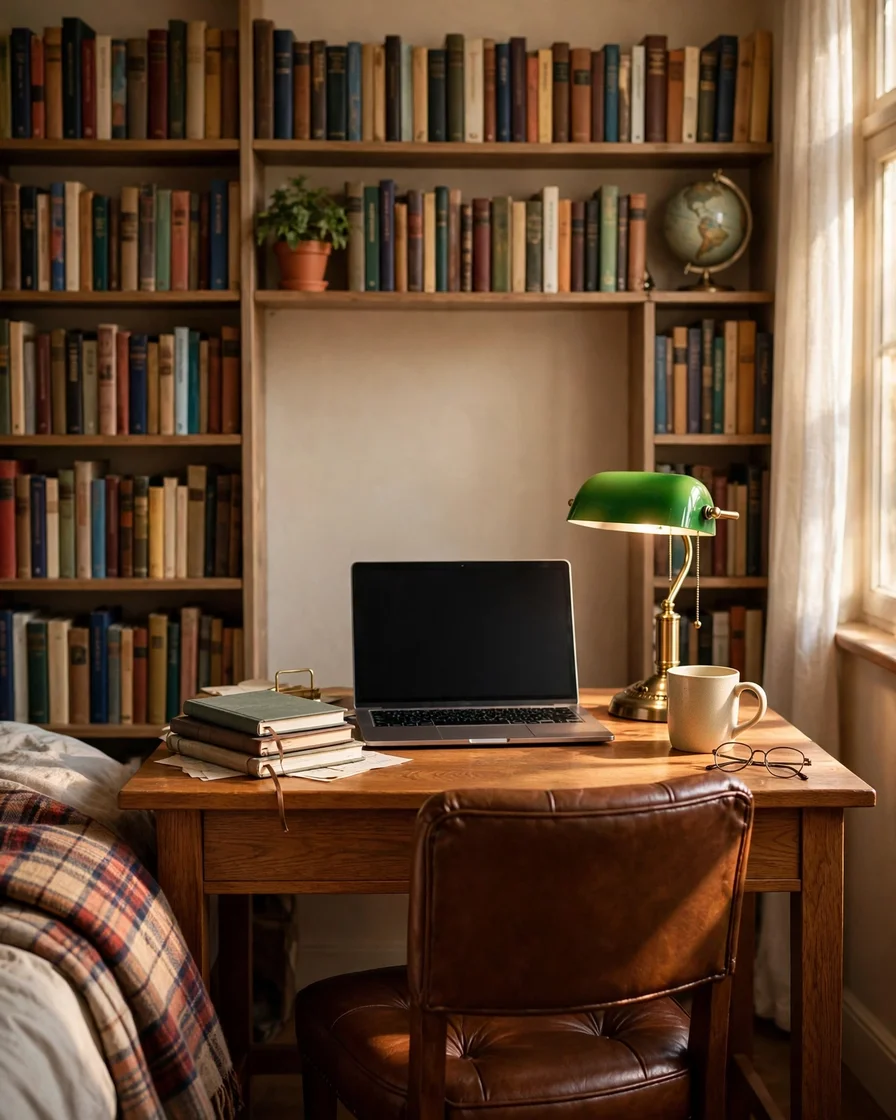
Bookshelves around a desk do two jobs at once: they hold everything you need within reach, and they make the corner feel like a private library. In the photo, a warm oak desk sits between two tall open bookshelves filled with books of many colors, with a globe and a potted plant on the upper shelves, while the desk holds an open laptop, a green banker’s lamp, a stack of three notebooks, a ceramic mug, and reading glasses, with a brown leather chair in front and a bed with a plaid throw beside it. Place the tallest shelves first and anchor them to the wall, then slide the desk between them so the shelf edges frame it. Keep the books you use daily at desk height and the rest higher up. The setup takes about two hours. For a budget-friendly version, use two secondhand bookcases and fill them with books you already own.
Quick Tip: Leave one shelf empty on purpose, so new books have somewhere to go.
15. Fit Two Study Spots in One Shared Room
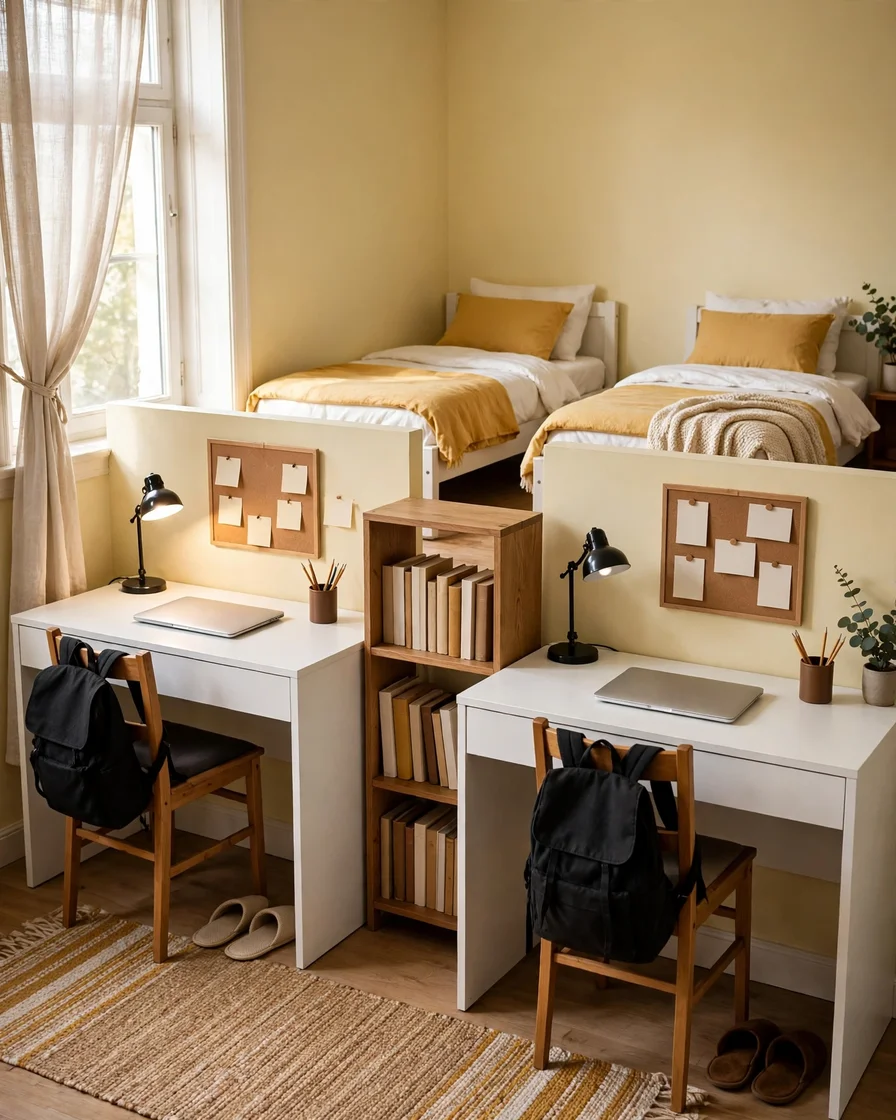
Two people sharing one bedroom need two desks, or one of them ends up studying on the bed. In the photo, two identical white desks stand side by side against a pale yellow wall, each with a black desk lamp, a closed laptop, a pencil cup, and a corkboard with blank cards above it, separated by a narrow wooden divider shelf full of books, with wooden chairs and black backpacks in front and two single beds with mustard-yellow bedding behind. Set the desks side by side with the divider between them, so each person has their own lamp, board, and shelf without seeing the other’s clutter. Give each desk its own chair and its own pencil cup, and agree that the divider shelf is shared, keeping its middle shelf for things you both use. The setup takes about two hours. For a budget-friendly version, use two matching secondhand desks and a small bookcase as the divider.
Quick Tip: Give each desk a different color pencil cup so nobody argues over pens.
16. Organize the Wall With a Pegboard
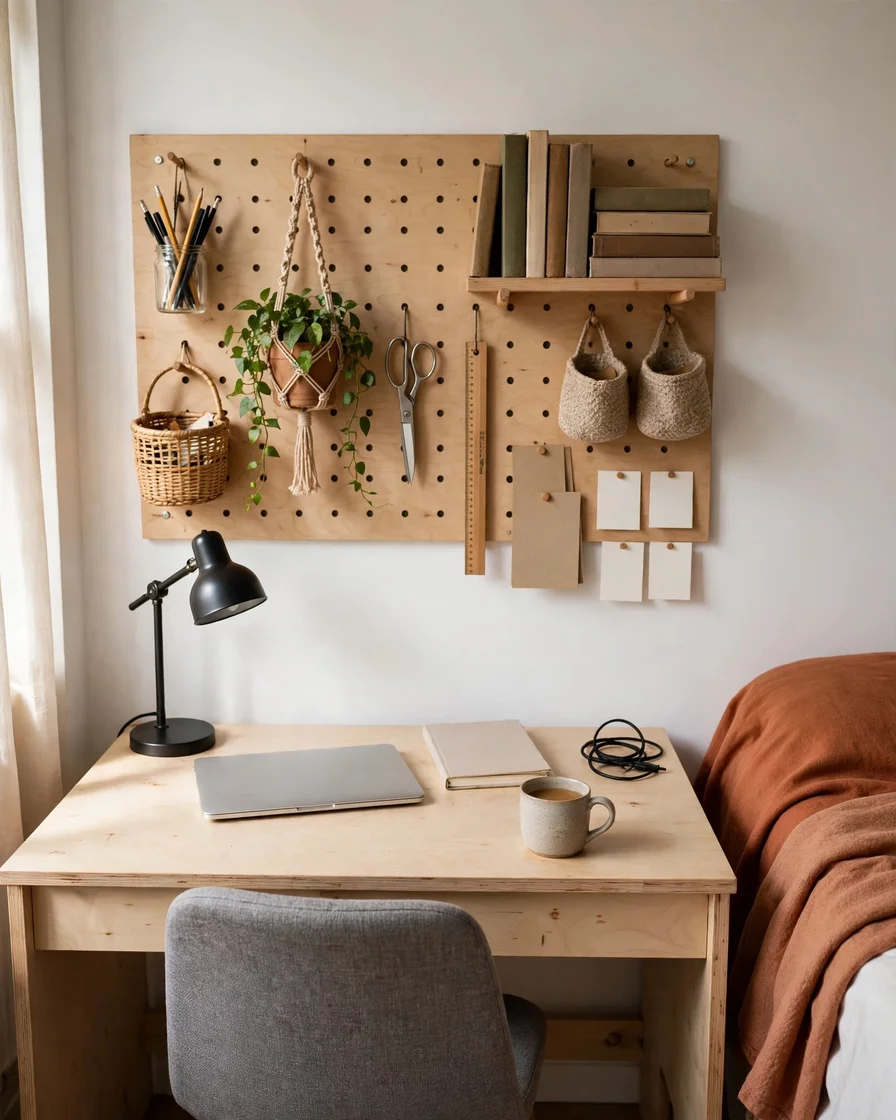
A pegboard moves the clutter off the desk and onto the wall, where you can see everything and still have a clear surface to work on. In the photo, a light birch desk holds a closed laptop, a black task lamp, a notebook, a mug, and a coiled cable, while a large wooden pegboard above it holds a jar of pencils, a hanging macramé plant, scissors, a ruler, two woven baskets, a small shelf of books, and blank pinned cards, with a grey fabric chair in front and a bed with a terracotta throw beside it. Hang the pegboard at arm’s reach above the desk, then place the hooks before you hang anything: pens and scissors near your writing hand, baskets for cables and chargers. The setup takes about an hour. For a budget-friendly version, use a single pegboard panel from a hardware store and hang jars and baskets you already own.
Quick Tip: Photograph the pegboard once it is set up, so you can reset it fast.
Expert Tips
- Measure twice, buy once: check the wall length, the desk depth, and the chair space behind it before you order anything.
- Keep the bed out of your eyeline: face the desk toward a wall or a window, not the bed.
- One lamp is never enough: pair a task lamp with a second light in the room.
- Anchor tall furniture to the wall: bookcases, loft beds, and floating desks all need proper wall fixings.
- Clear the desk every night: a five-minute reset keeps the surface usable, and a desk you can sit down at gets used more.
Final Thoughts
Start with the window desk, the floating desk, or the fold-down desk — each one takes an hour or less and uses a corner your bedroom already has. Pick one and set it up this weekend.
How much space do you need for a study table in a bedroom?
You need a desk about 40 inches wide and 20 inches deep, plus about 30 inches of clear floor behind it for the chair to slide out. A smaller desk works with a laptop instead of a monitor, and a fold-down desk needs no floor space at all when folded away.
Where is the best place to put a study desk in a bedroom?
The best spot is against a wall near a window, with the desk facing the wall or sideways to the glass so daylight falls on your work without glaring on the screen. Avoid placing the desk facing the bed, since the pillows will pull your attention away.
Can you put a study desk in a small bedroom?
Yes, a small bedroom can hold a study desk if you pick the right one: a floating desk, a fold-down desk, or a narrow desk that doubles as a nightstand all fit where a full desk cannot. Keep the desk under 40 inches wide and use the wall above it for shelves.
What is the best desk height for studying in a bedroom?
A desk height of 29 to 30 inches suits most adults, with the chair set so your elbows rest at a right angle when your hands are on the keyboard. If the desk is too high, raise the chair and add a footrest; if it is too low, use a laptop stand.
How do you keep a bedroom study desk tidy?
Give every item a home off the desk surface: pens in a cup or a pegboard jar, books on a shelf, and chargers in a small basket. Clear the desk to bare wood every night, and do a quick sort once a week so papers never pile up.