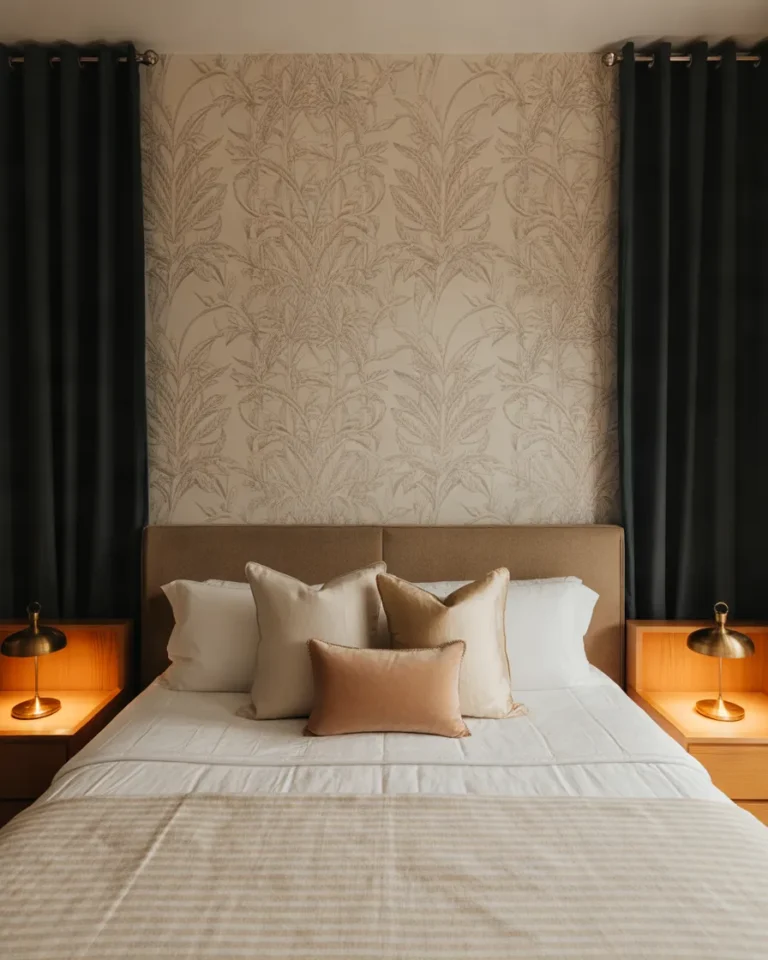
A bedroom should feel like more than a place where you sleep. For me, it is one of the most personal spaces in a home—a room where I want to feel comfortable, relaxed, and surrounded by details that reflect my style. One of the easiest ways I have found to completely change the personality of a bedroom without redesigning everything is by adding an accent wall.
The beauty of an accent wall is that it gives you a focal point without requiring four walls of dramatic paint, wallpaper, wood, or texture. It can make a small bedroom feel intentional, give a plain room architectural character, or turn the area behind the bed into a statement feature.
There are also so many directions you can take. You can create a cozy painted wall, install wooden slats, experiment with wallpaper, use molding for a sophisticated look, or even bring natural materials into the space.
If you are looking for inspiration, I have put together 15 bedroom ideas with accent wall designs that work with modern, cozy, minimalist, rustic, luxurious, and contemporary interiors.
1. Create a Dark Moody Accent Wall Behind the Bed
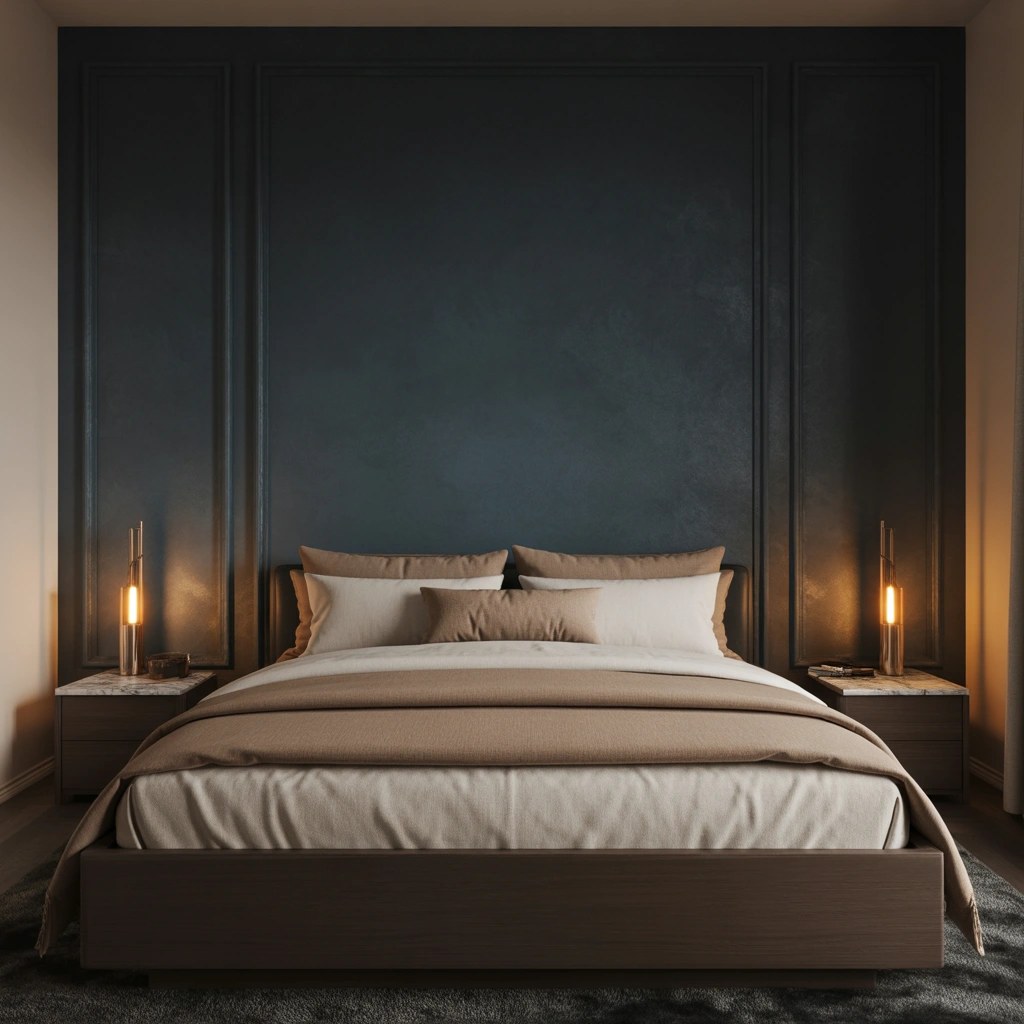
One of my favorite bedroom accent wall ideas is also one of the simplest: painting the wall behind the bed in a deep, dramatic color.
Think charcoal gray, midnight blue, forest green, chocolate brown, or almost-black. These shades create an intimate atmosphere that works beautifully in bedrooms because darker colors naturally make a space feel more enclosed and relaxing.
I especially like placing a dark accent wall behind a lighter upholstered bed. A cream, beige, white, or light-gray headboard immediately stands out against the darker background.
You don’t necessarily need a huge bedroom for this idea either. Many people assume dark walls make small rooms look smaller, but a carefully chosen dark accent wall can actually add visual depth. The important part is keeping the surrounding colors lighter.
For example, you could combine:
- A charcoal accent wall
- Warm white side walls
- Beige bedding
- Light oak nightstands
- Brass bedside lamps
- Soft cream curtains
This combination feels sophisticated without becoming overly formal.
I would also recommend using warm bedside lighting instead of extremely bright white bulbs. Dark paint looks much richer when illuminated with soft, warm light.
2. Use Wood Slats for a Modern Bedroom Accent Wall
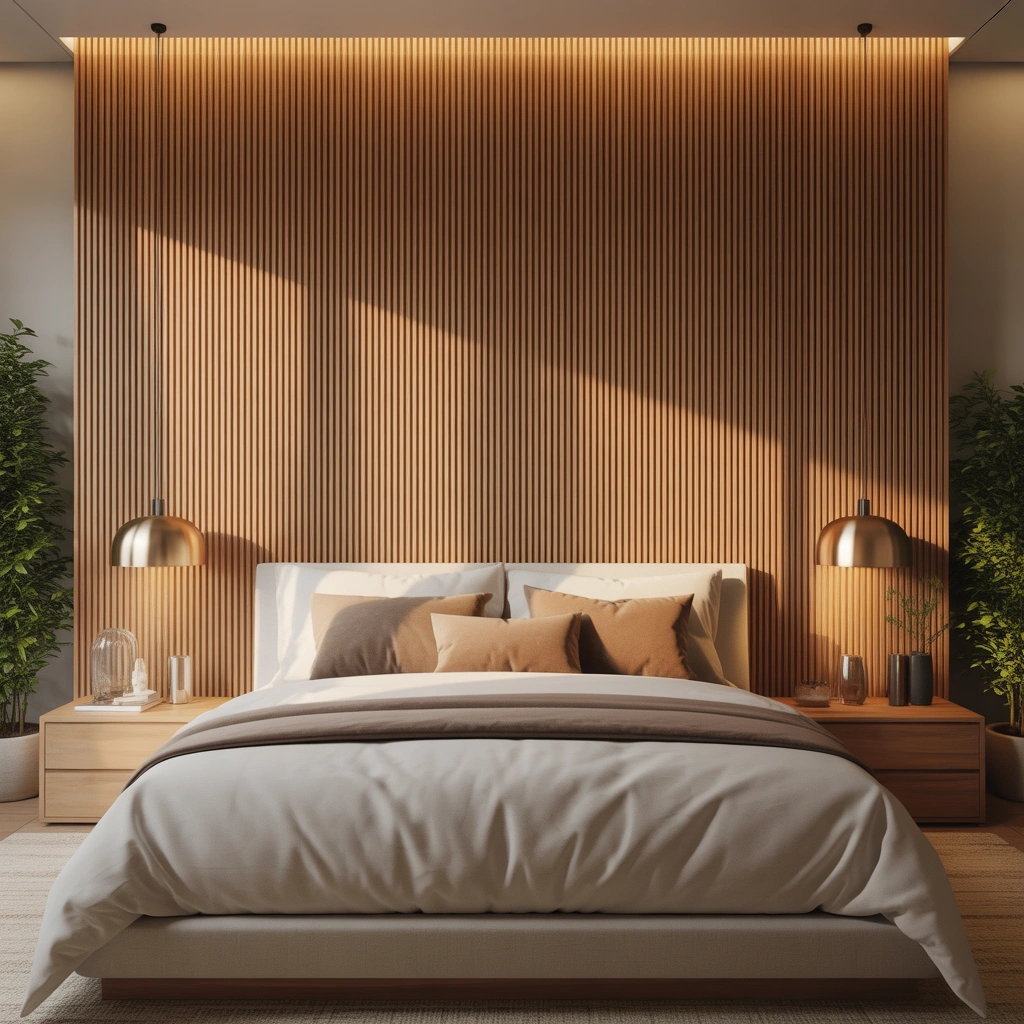
If you want your bedroom to feel architectural, a wood slat accent wall can make an incredible difference.
Vertical wooden slats have become especially popular in modern bedrooms because they introduce texture while maintaining clean lines. I love how they bring warmth into rooms dominated by neutral colors.
A slatted wall works particularly well behind the bed.
You can cover the entire wall or create a smaller section that visually frames the bed. For a contemporary appearance, try evenly spaced narrow wooden strips over a black, dark gray, or neutral backdrop.
Light oak works beautifully in Scandinavian-inspired bedrooms, while walnut creates a darker and more luxurious atmosphere.
One design I particularly like combines a walnut slat wall with:
- A low-profile upholstered bed
- Floating nightstands
- Pendant lights
- Warm white bedding
- Black accents
- Minimal artwork
The vertical lines can also make the ceiling appear slightly higher, which is helpful if your bedroom feels short or compact.
Another advantage is that wooden slats don’t require excessive decoration. The material itself becomes the artwork.
3. Try Botanical Wallpaper for a Relaxing Bedroom
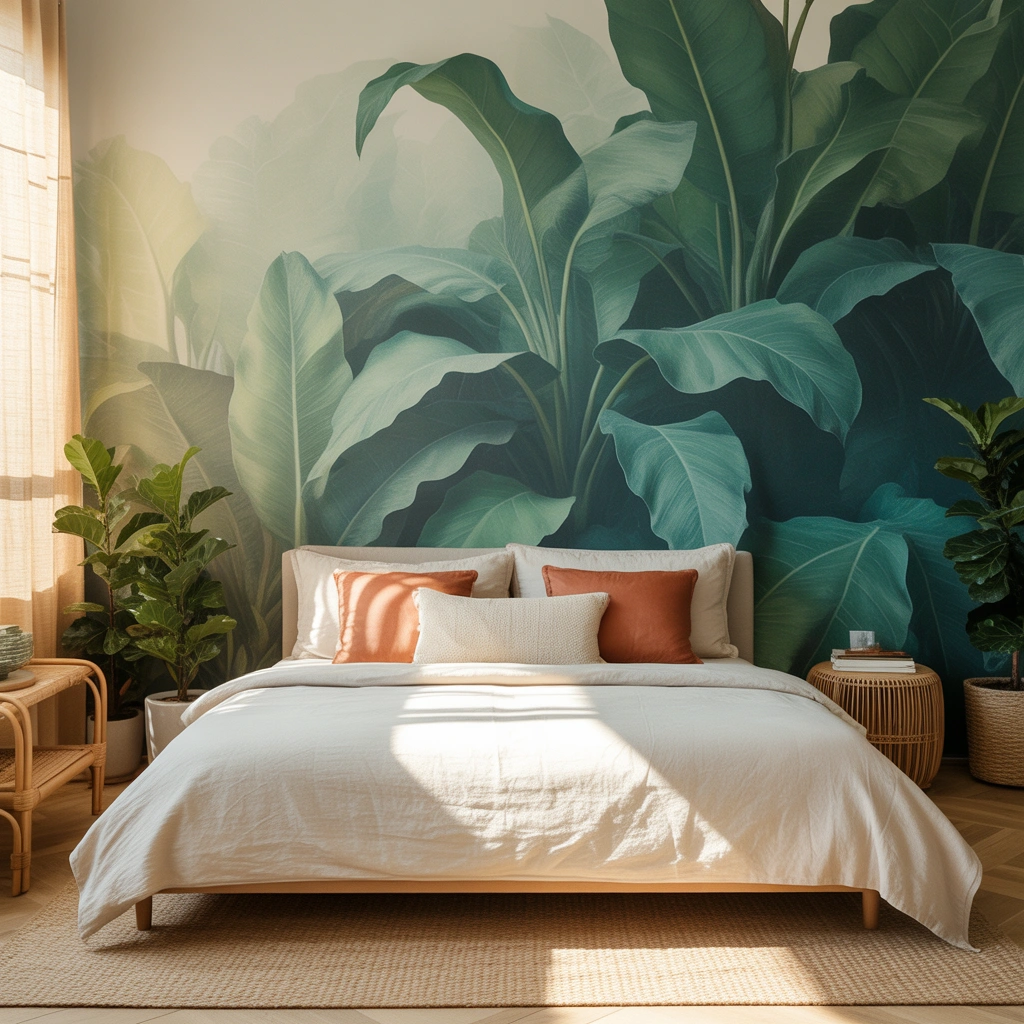
Wallpaper is one of the easiest ways to introduce pattern into a bedroom, and botanical designs are particularly beautiful when you want the room to feel peaceful.
A botanical accent wall can feature oversized leaves, delicate branches, tropical foliage, wildflowers, or watercolor-inspired greenery.
Personally, I would use botanical wallpaper on the wall behind the headboard and keep the remaining walls relatively quiet.
If the wallpaper has green, beige, cream, and brown tones, you can repeat those colors throughout your bedding and accessories.
For instance, pair botanical wallpaper with sage green pillows, natural linen bedding, woven baskets, and wooden nightstands.
The result feels connected to nature without turning the bedroom into a literal jungle.
If large tropical leaves seem too dramatic, look for softer botanical patterns with muted colors. They work beautifully in modern farmhouse, cottage, bohemian, and transitional bedrooms.
Wallpaper also works particularly well when your furniture is simple. The pattern adds the visual interest that plain furniture may be missing.
4. Add Board and Batten for Timeless Character
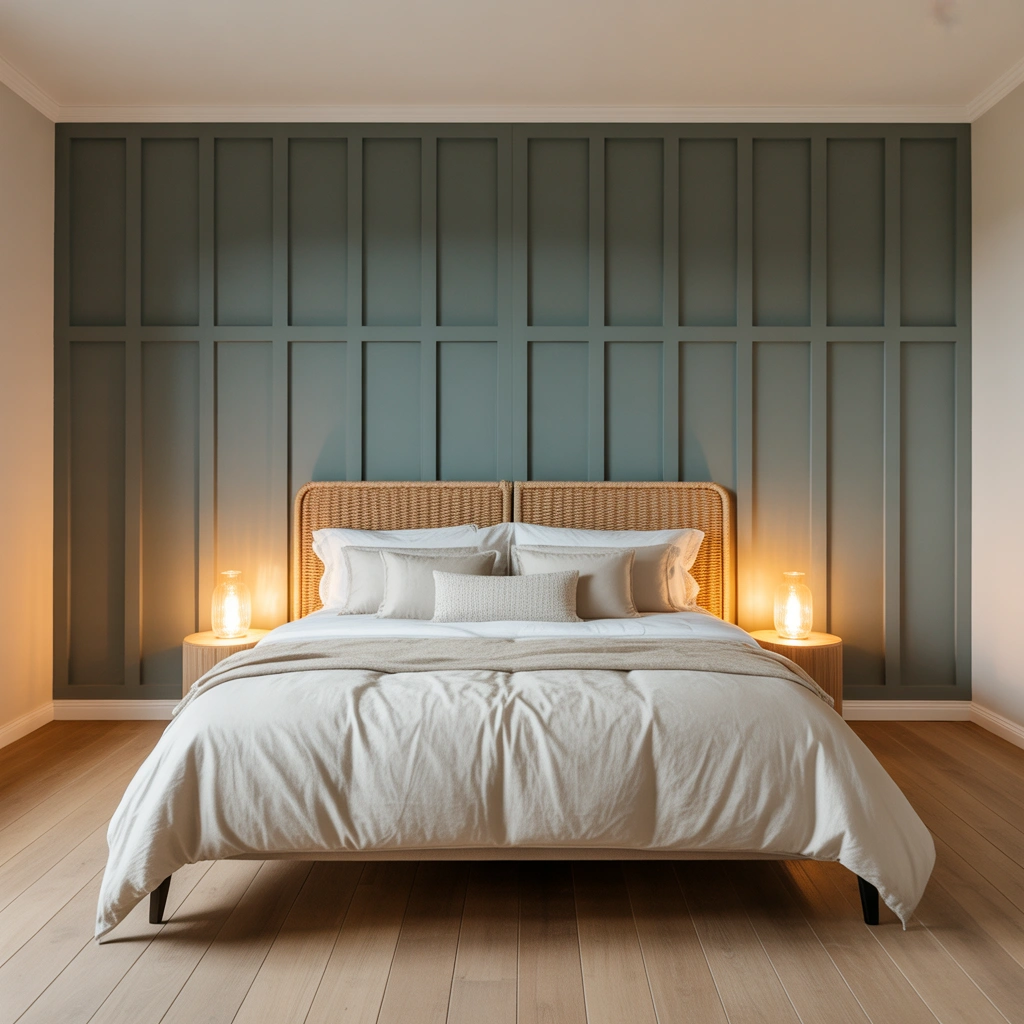
A board and batten accent wall is perfect when you want your bedroom to feel polished but not overly trendy.
This treatment uses vertical and horizontal trim pieces to create architectural panels across the wall. Once painted in a single color, the entire surface feels like a custom-built feature.
What I appreciate about board and batten is how flexible it is.
Paint it white for a classic bedroom, sage green for something soft and calming, navy for drama, or beige for a warm modern look.
You can create full-height board and batten or install it only on the lower portion of the wall.
Behind a bed, I prefer the full-wall version because it creates a stronger focal point.
You could pair a sage board and batten wall with:
- White bedding
- Natural wood furniture
- Black reading sconces
- Linen curtains
- Neutral throw blankets
It is a particularly good accent wall idea if you love transitional, farmhouse, cottage, or modern-classic interiors.
5. Paint a Warm Terracotta Accent Wall
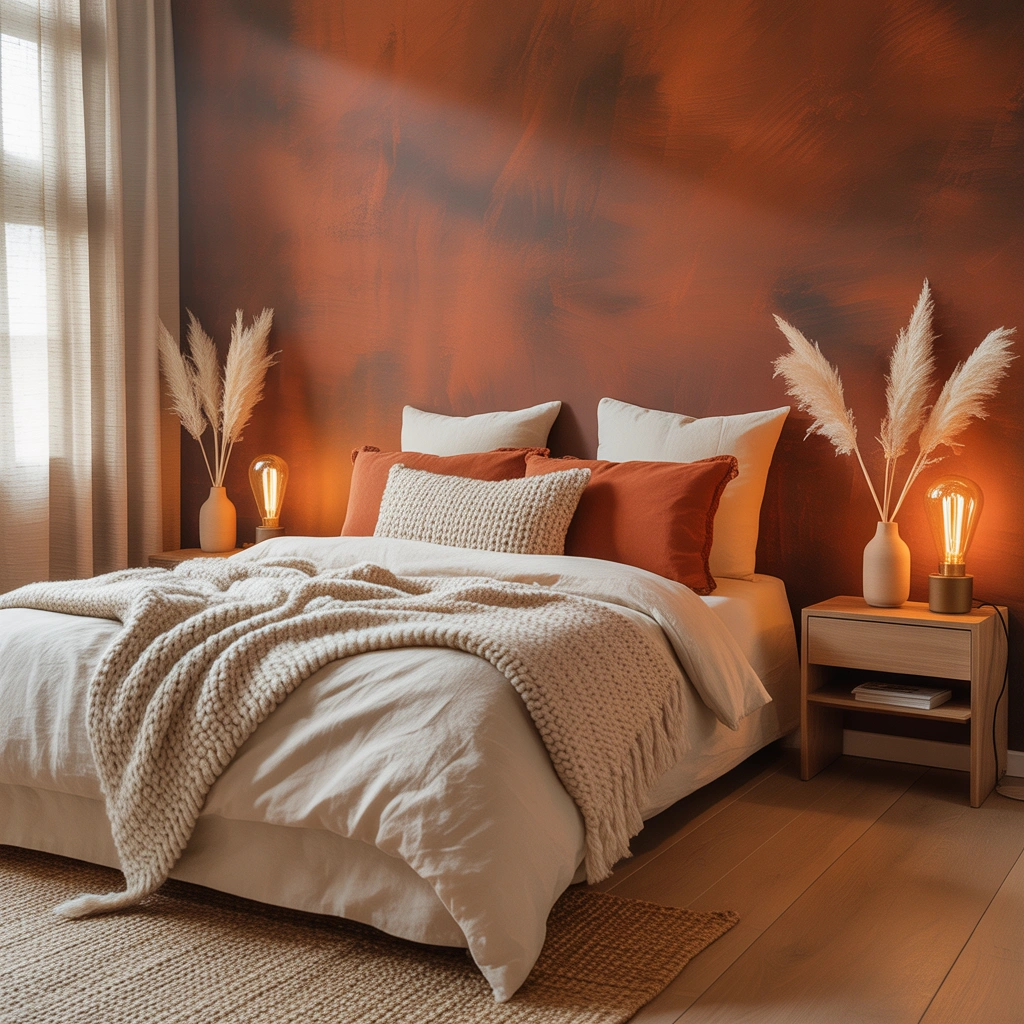
If your bedroom feels cold or uninspiring, a terracotta accent wall can instantly bring warmth into the space.
Terracotta sits somewhere between orange, clay, brown, and muted red, depending on the exact shade. It has an earthy quality that makes bedrooms feel inviting and comfortable.
I love terracotta next to natural textures.
Imagine a clay-colored wall behind a wooden bed with cream linen bedding, woven pendant lights, ceramic accessories, and a textured beige rug.
The combination feels relaxed and slightly Mediterranean.
Terracotta also works beautifully in boho bedrooms because it coordinates naturally with rattan, cane, jute, wood, and greenery.
If a strong terracotta feels intimidating, choose a dusty or muted version instead. You will still get that warm effect without overpowering the room.
For a balanced palette, combine terracotta with cream, beige, camel, olive green, or warm white.
6. Use Geometric Molding for an Elegant Accent Wall
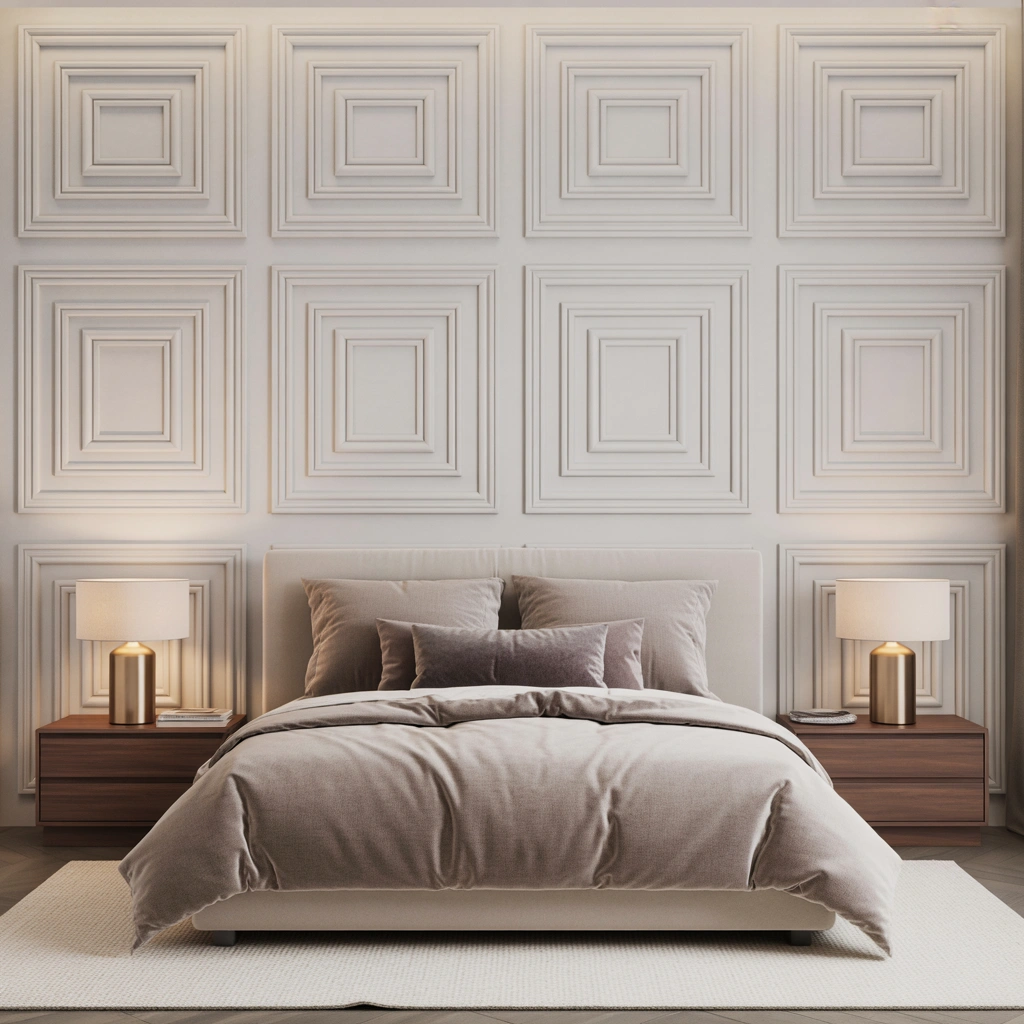
Wall molding doesn’t always need to look traditional.
One of the most stylish bedroom ideas with accent wall detailing involves arranging slim molding strips into geometric patterns.
You can create intersecting diagonal lines, rectangular frames, oversized squares, or asymmetrical designs.
Once everything is painted the same color, the texture becomes subtle but noticeable.
I particularly like this technique in modern bedrooms because it introduces dimension without requiring wallpaper or multiple paint colors.
For an elegant effect, paint the wall and molding in deep blue, charcoal, dusty green, taupe, or warm beige.
Add a simple upholstered headboard so the wall treatment remains visible.
For lighting, symmetrical wall sconces on both sides of the bed can reinforce the tailored appearance.
This is also a smart idea if your bedroom currently looks too plain but you don’t necessarily want bold patterns or bright colors.
7. Create a Soft Sage Green Accent Wall
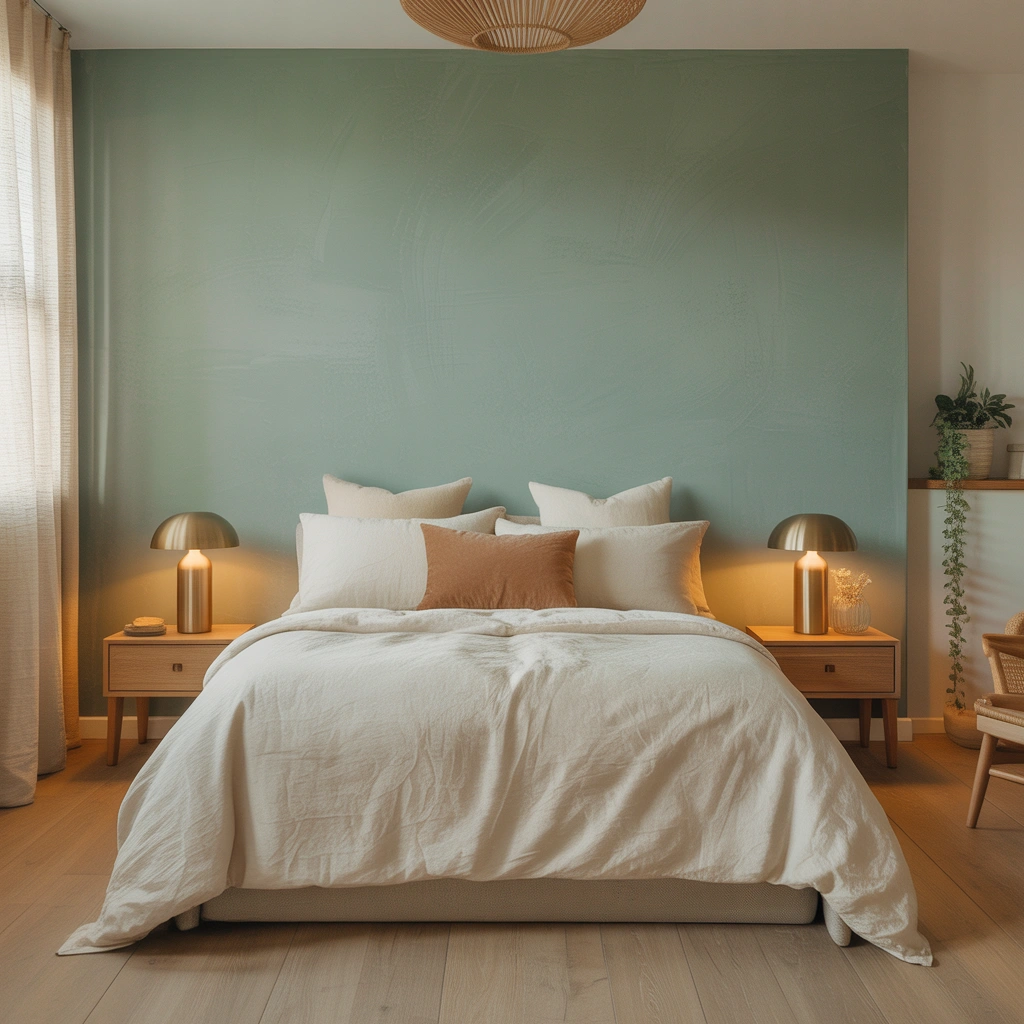
Sage green has become one of my favorite colors for bedrooms because it feels calm without being boring.
Unlike brighter greens, sage has muted gray undertones that make it easy to live with. It works with both cool and warm color palettes.
A sage green accent wall behind the bed looks gorgeous with white bedding and natural wood furniture.
You can make the room feel modern by pairing sage with black fixtures or softer by using cream, beige, and brass.
For an organic bedroom, consider:
- Sage accent wall
- Oak bed frame
- White or ivory bedding
- Linen curtains
- Woven storage baskets
- Small indoor plants
- Warm neutral rug
The overall room feels peaceful and refreshing.
If you enjoy subtle color but don’t want anything too dark or dramatic, this may be one of the safest bedroom accent wall choices.
8. Install Reclaimed Wood for a Rustic Bedroom
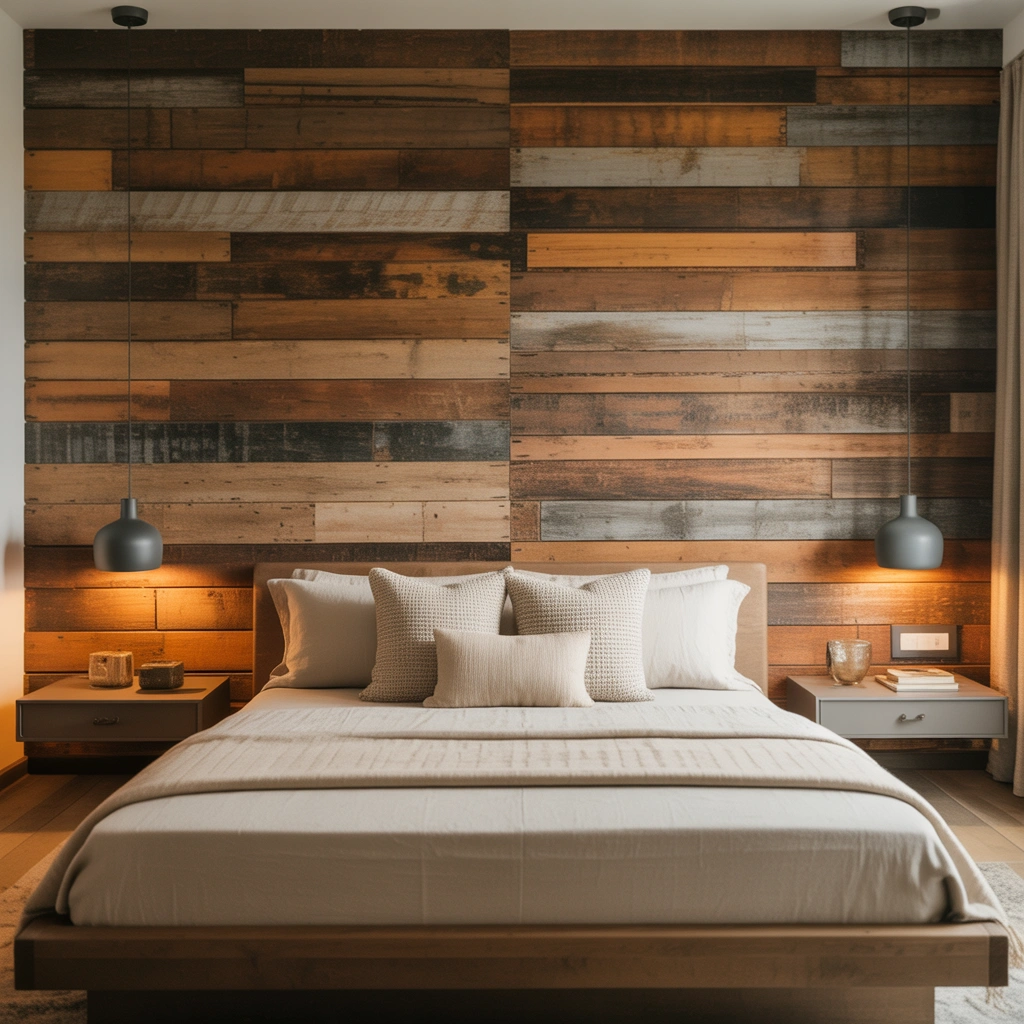
For a bedroom filled with warmth and texture, consider using reclaimed wood as your accent wall material.
Wooden planks instantly give the room character. Every knot, grain, variation, and natural imperfection contributes to the look.
I especially like reclaimed wood in rustic bedrooms, cabins, farmhouse homes, or industrial-inspired interiors.
The key is preventing the room from becoming overly heavy.
If the wooden wall has deep brown tones, use lighter bedding and simple furniture around it.
Cream bedding, soft gray blankets, white walls, and warm lamps can keep the bedroom balanced.
You can also use weathered gray wood if traditional brown feels too rustic.
Another possibility is installing planks horizontally. Horizontal lines visually widen the wall and work beautifully behind a king- or queen-sized bed.
When the wall itself has this much natural character, you usually don’t need much artwork.
9. Design a Luxury Marble-Look Accent Wall
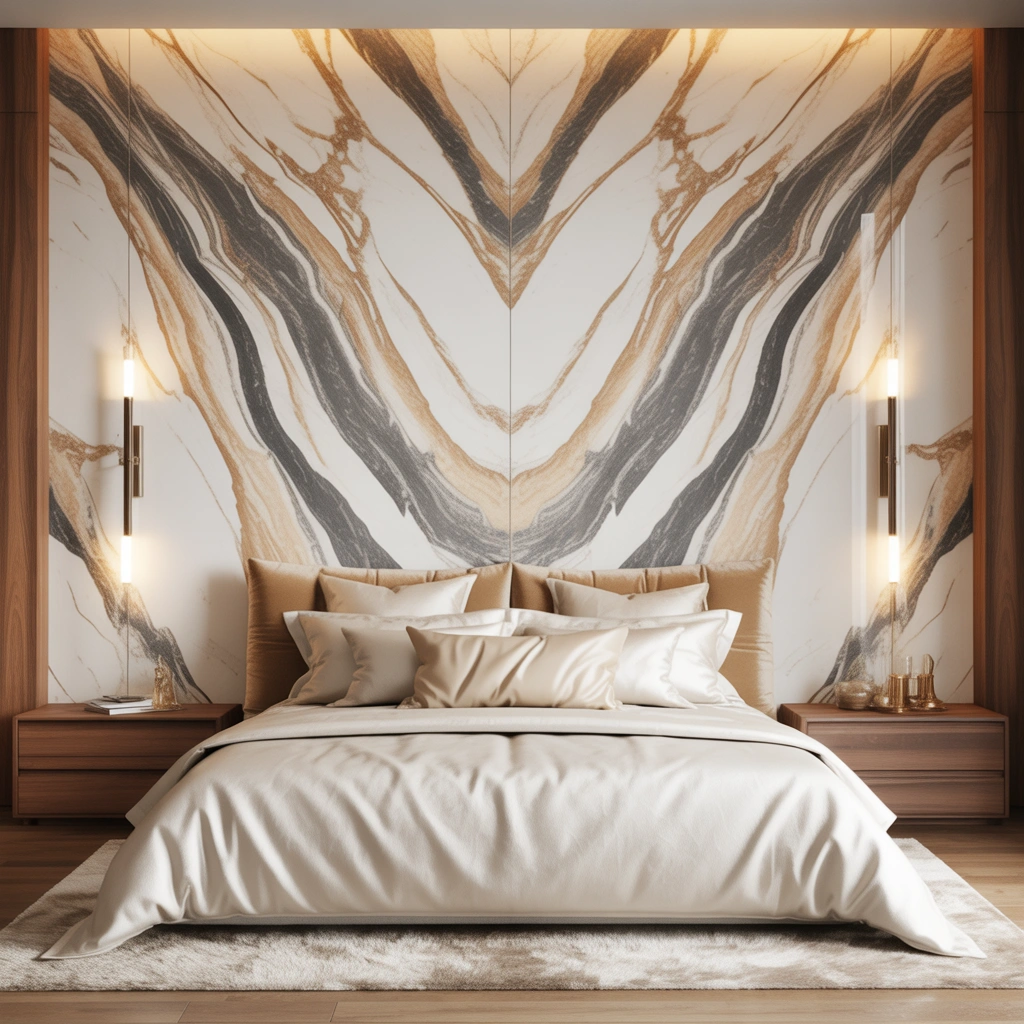
If you want your bedroom to feel more like a boutique hotel, a marble-look accent wall can create an impressive focal point.
Real marble can be expensive and heavy, but you can achieve a similar appearance with marble-look panels, porcelain slabs, high-quality wallpaper, or decorative wall boards.
I prefer large-scale marble patterns with subtle veining rather than extremely busy ones.
White marble with gray veins creates a crisp modern look, while cream marble with gold or beige veining feels warmer.
For a luxurious bedroom, combine the marble accent wall with:
- An upholstered bed
- Brass or gold lighting
- Floating nightstands
- Layered neutral bedding
- Soft indirect lighting
- Minimal accessories
Hidden LED lighting around panels can make the wall look even more dramatic.
However, restraint is important. Marble already creates a strong visual statement, so keep the rest of the room relatively simple.
10. Try a Two-Tone Painted Accent Wall
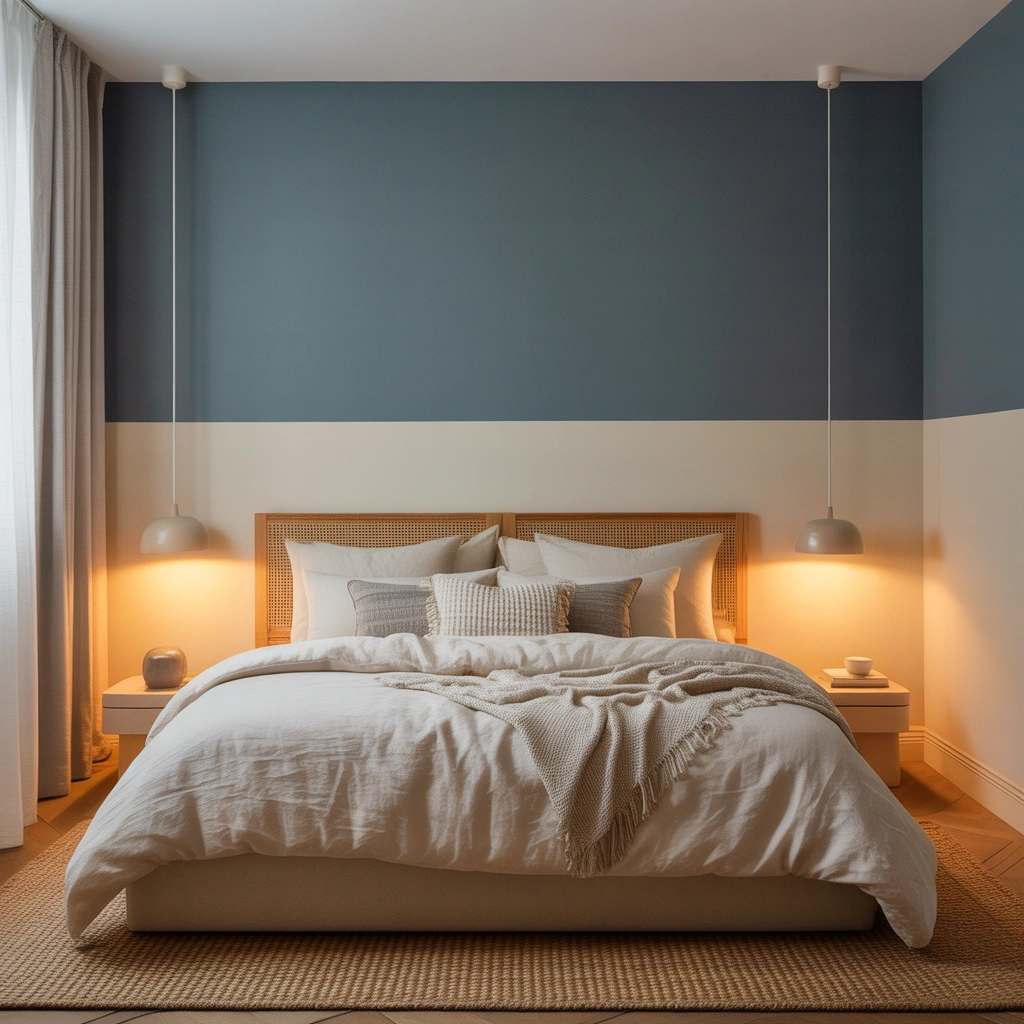
You don’t always need wallpaper or expensive materials to create something interesting.
A two-tone painted wall can become a stylish bedroom focal point with little more than paint and painter’s tape.
You could divide the wall horizontally, vertically, or diagonally.
One of my favorite versions is painting the lower half of the wall a deeper color and leaving the upper half lighter.
For example:
- Beige and white
- Dusty blue and cream
- Olive green and warm white
- Taupe and ivory
- Terracotta and beige
You can position the color break around headboard height for a visually connected look.
Another idea is creating an oversized painted arch behind the bed. It gives the illusion of an architectural feature while requiring very little material.
This approach is ideal for renters or anyone decorating on a budget.
11. Create a Black Accent Wall for Modern Drama
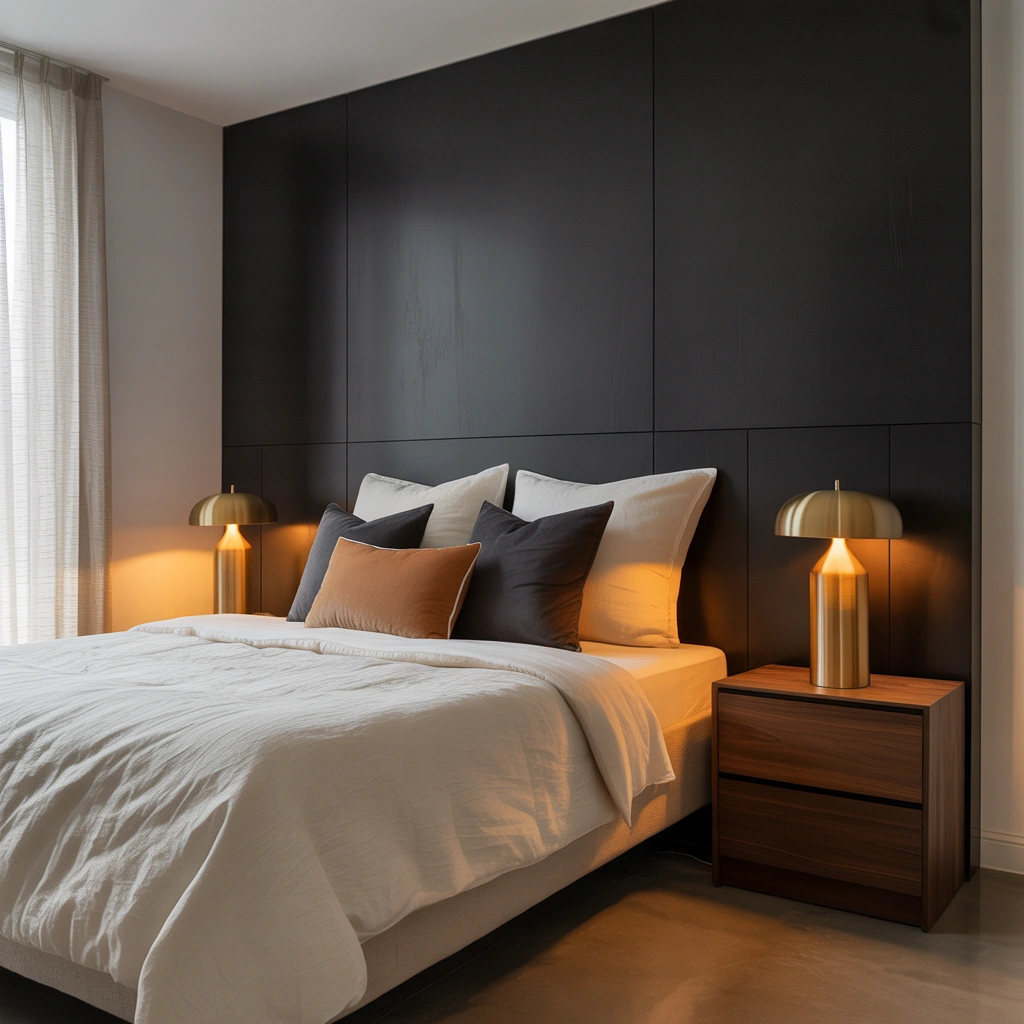
A black bedroom accent wall can look incredibly sophisticated when styled correctly.
I especially like black behind the bed because it creates contrast and naturally draws attention toward the sleeping area.
The trick is balancing the darkness with lighter materials.
Instead of filling the entire bedroom with black furniture, combine the accent wall with oak, beige, white, cream, or light gray.
For a modern masculine bedroom, you could use black walls with walnut furniture, gray bedding, and metal lighting.
For something softer, use black behind a cream upholstered bed with beige bedding and light wood nightstands.
Matte or eggshell paint usually looks more sophisticated than high-gloss black for bedroom walls.
Another benefit is that artwork with white or metallic frames looks especially striking against a dark background.
If you want maximum visual impact with minimal decoration, black can be surprisingly effective.
12. Use Fabric or Upholstered Panels Behind the Bed
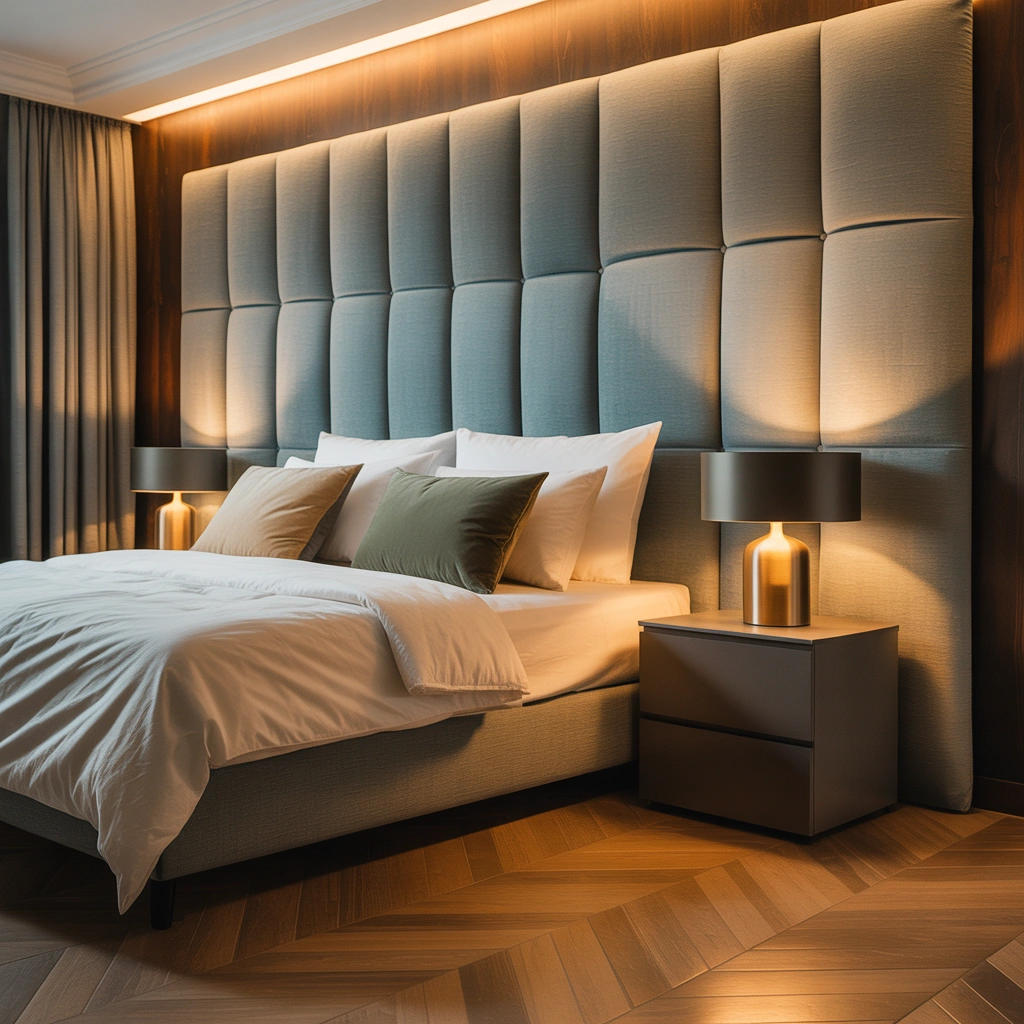
One accent wall idea I wish more people considered is the upholstered wall.
Instead of simply placing a headboard against the wall, you can install padded fabric panels that extend across a large section—or even the entire width—of the wall.
This creates a luxurious hotel-inspired appearance while also making the room feel softer.
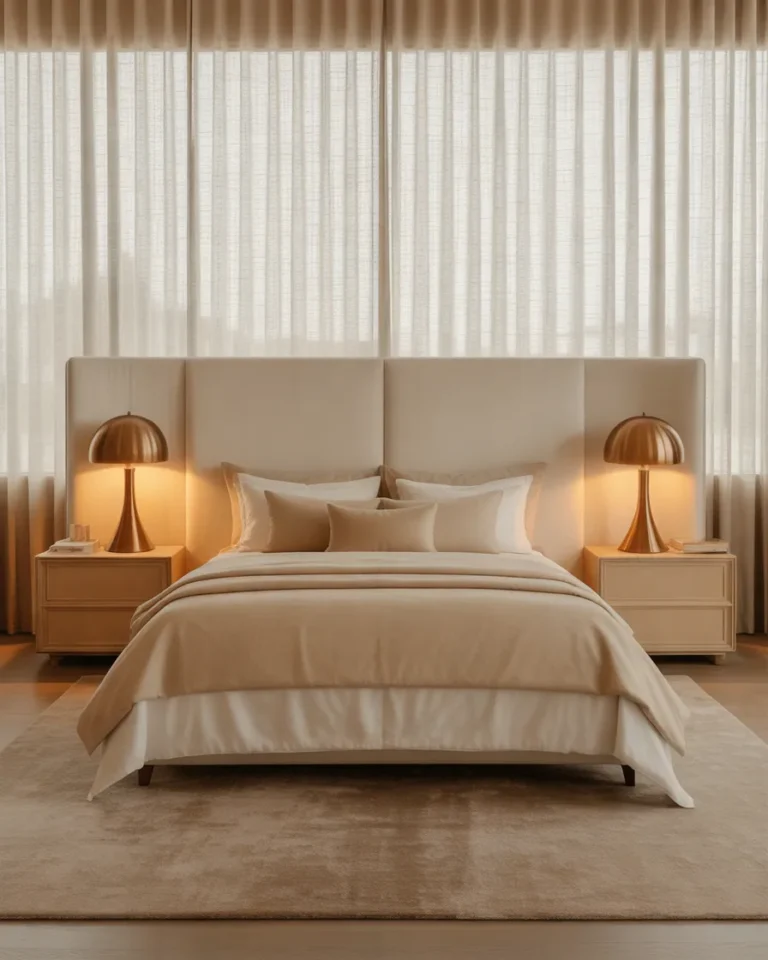
Neutral fabrics such as beige, taupe, cream, gray, and camel work particularly well.
You can arrange panels vertically for a taller appearance or horizontally to make the bed area feel wider.
For a modern luxury bedroom, floor-to-ceiling vertical panels behind the bed can look stunning.
Combine them with floating nightstands and pendant lights for a beautifully symmetrical arrangement.
Another advantage is that soft wall panels can help absorb some sound, making the bedroom feel quieter and more comfortable.
If you prefer cozy interiors over hard architectural finishes, this is an excellent option.
13. Create a Deep Blue Bedroom Accent Wall
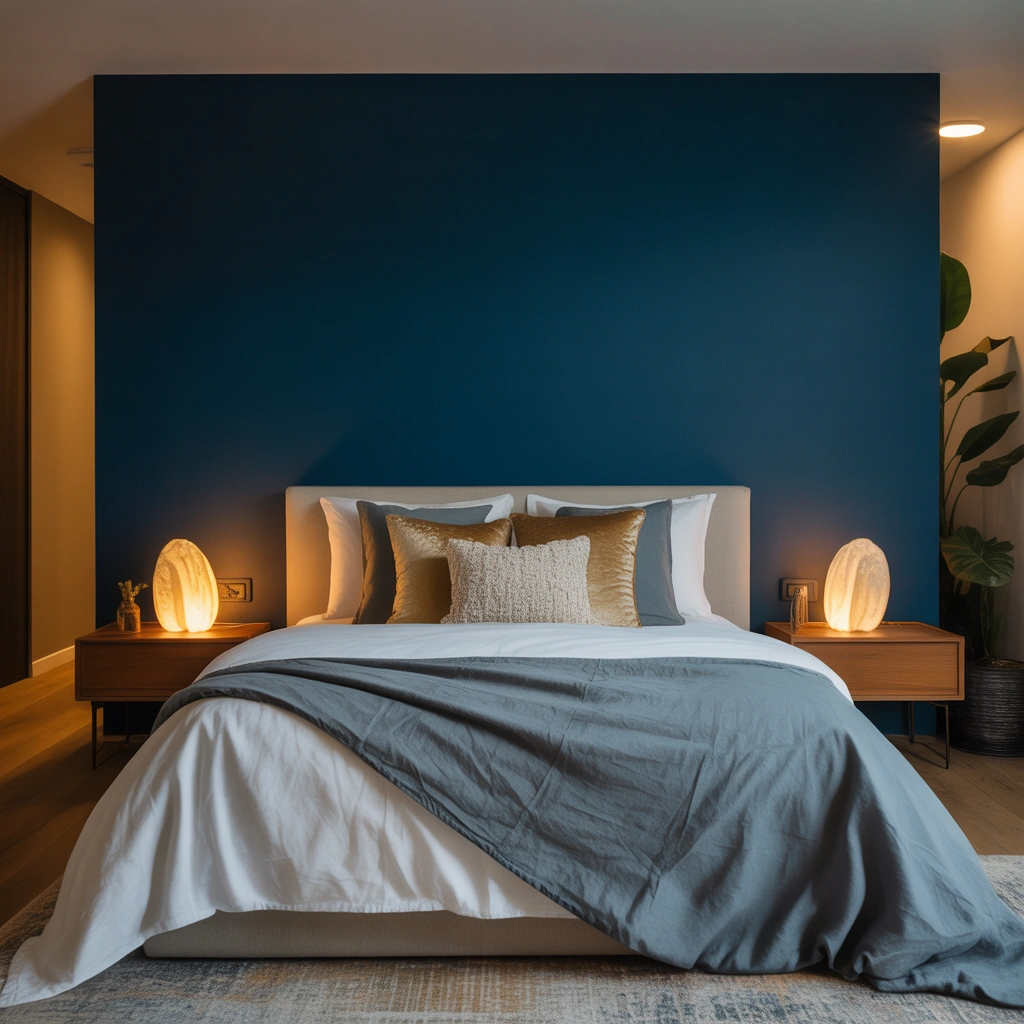
Blue is naturally associated with calmness, which is why it works so well in bedrooms.
Instead of pale baby blue, I prefer deeper shades such as navy, denim blue, slate blue, or dusty midnight blue for an accent wall.
Navy especially looks timeless.
It pairs beautifully with crisp white bedding, warm wood furniture, gold lighting, and natural fabrics.
If you want a coastal-inspired look without obvious nautical decorations, use navy blue with white, beige, and woven textures.
For a more luxurious room, combine navy with velvet, brass, and warm gray.
A dusty blue wall can also work wonderfully in smaller bedrooms because it provides color without feeling overly intense.
You can make the wall even more interesting by adding picture-frame molding painted in the same blue shade.
The result feels sophisticated, layered, and surprisingly timeless.
14. Use Textured Plaster for an Organic Modern Look
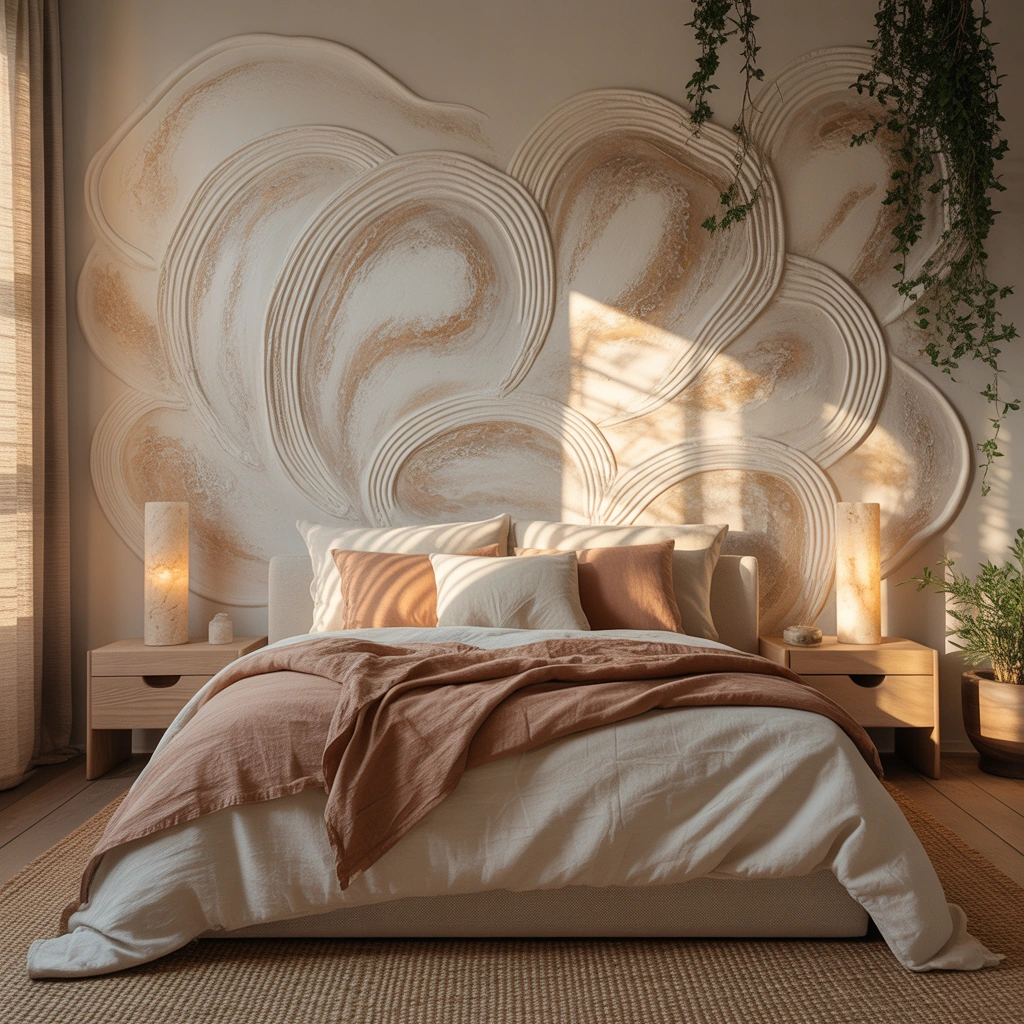
If perfectly smooth painted walls feel too ordinary, textured plaster can give your bedroom a subtle handcrafted appearance.
Limewash, Roman clay, Venetian plaster, and similar decorative finishes create slight variations across the surface.
That irregularity is exactly what makes them beautiful.
I love textured walls in earthy shades such as sand, warm beige, mushroom, greige, clay, and pale taupe.
During the day, natural light moves across the surface and highlights the texture. At night, bedside lamps create gentle shadows.
Unlike patterned wallpaper, plaster texture doesn’t demand attention. It quietly adds depth.
For an organic modern bedroom, pair a textured plaster accent wall with:
- Low-profile wooden furniture
- Linen bedding
- Rounded lamps
- Neutral curtains
- Handmade ceramics
- Minimal wall art
This approach works especially well if you want the bedroom to feel calm, mature, and carefully designed rather than trendy.
15. Create a Full Gallery Wall as Your Bedroom Accent
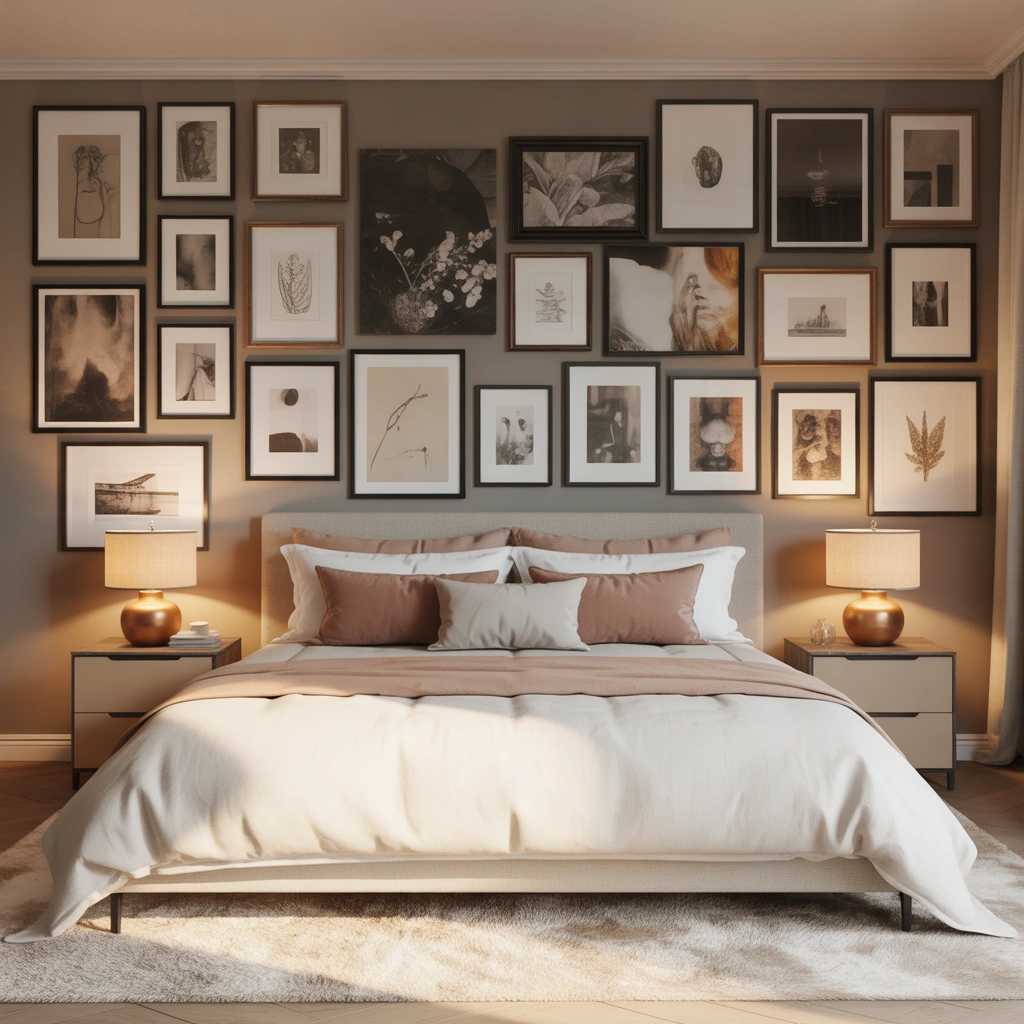
An accent wall doesn’t technically need a different paint color or material.
Sometimes the decoration itself can create the accent.
A gallery wall behind or beside the bed can transform a plain bedroom into something personal and visually interesting.
I particularly like this idea because it gives you an opportunity to display meaningful photographs, artwork, prints, travel memories, sketches, or typography.
You can keep everything coordinated by using matching frames, or create a more relaxed arrangement with different materials and sizes.
For a modern look, choose black frames with neutral artwork.
For a cozy vintage bedroom, mix wooden and brass frames.
For a minimalist space, three or four oversized pieces may work better than dozens of smaller frames.
Before hanging anything, I recommend arranging your frames on the floor first. This helps you experiment with spacing and proportions without filling the wall with unnecessary holes.
If you place artwork above a headboard, leave enough breathing room between the furniture and frames so the arrangement doesn’t feel crowded.
A gallery wall is especially useful if you want an accent wall that can evolve over time.
How to Choose the Right Bedroom Accent Wall
After exploring different bedroom ideas with accent wall designs, the next question is usually: Which wall should actually become the accent wall?
In most bedrooms, the wall behind the bed is the natural choice.
Your bed is already the largest piece of furniture in the room, so emphasizing the wall behind it reinforces an existing focal point.
However, there are exceptions.
If your bedroom has a fireplace, dramatic window, vaulted architectural feature, or unusually shaped wall, emphasizing that area may make more sense.
Stand at the bedroom entrance and notice where your eyes naturally travel first. That wall is often a strong candidate.
Try not to create competition between several focal points. If you have a dramatic accent wall, the other walls can remain quieter.
What Color Is Best for a Bedroom Accent Wall?
There isn’t one universal best color because the right choice depends on the mood you want.
For a calming bedroom, I usually recommend:
Sage green: peaceful and organic.
Dusty blue: relaxed and timeless.
Warm beige: subtle and cozy.
Taupe: sophisticated and neutral.
For a dramatic bedroom, consider:
Charcoal: modern and intimate.
Navy blue: elegant and classic.
Forest green: rich and natural.
Black: bold and contemporary.
For a warmer space, terracotta, clay, caramel, and muted rust can make the room feel more inviting.
Always consider your bedroom’s natural light before committing to a color. The same paint can look significantly different in a sunny south-facing room compared with a darker north-facing bedroom.
I recommend testing paint samples directly on the wall and looking at them during morning, afternoon, and evening light.
Should an Accent Wall Be Lighter or Darker?
Either approach can work.
A darker accent wall creates stronger contrast and usually makes the room feel more dramatic. This works beautifully behind beds because the dark background visually anchors the furniture.
A lighter accent wall can work when texture is doing most of the visual work.
For example, white board and batten, cream textured plaster, or pale wooden slats can become focal points without introducing dark color.
The important thing is contrast.
If every wall, piece of furniture, and accessory looks nearly identical, the accent wall won’t feel intentional.
Contrast can come from color, pattern, material, depth, or texture.
How to Make a Bedroom Accent Wall Look Expensive
One thing I have noticed about high-end bedrooms is that they rarely depend on excessive decoration. Instead, they use a few strong materials and repeat details consistently.
If you want your accent wall to look more luxurious, pay attention to proportion.
Extend wood paneling or molding all the way to the ceiling rather than stopping awkwardly halfway.
Align wall lights with nightstands.
Center panel details behind the bed.
Choose artwork that is appropriately scaled for the wall.
Use warm layered lighting.
And most importantly, avoid overcrowding the focal wall.
A beautiful walnut slat wall, for example, might only need an upholstered bed and two elegant sconces. Adding shelves, ten pictures, signs, mirrors, plants, and decorative objects could actually make it look less refined.
Often, simpler styling allows the material itself to shine.
Final Thoughts on Bedroom Ideas With Accent Wall Designs
An accent wall has the ability to completely change a bedroom without requiring a complete renovation.
Whether your style is modern, rustic, minimalist, bohemian, classic, or luxurious, there is an accent wall idea that can work within your space.
If I wanted a quick and affordable transformation, I would choose a dramatic paint color or two-tone wall. For something timeless, board and batten or decorative molding would be my choice. If I wanted maximum warmth, I would lean toward wooden slats or reclaimed wood. And for a truly luxurious bedroom, upholstered panels, marble-look surfaces, or textured plaster can make an ordinary wall feel custom-designed.
The most important thing is choosing a design that contributes to the feeling you want when you enter your bedroom.
You don’t need to follow every current decorating trend. Your bedroom should ultimately feel personal.
Start with the wall that naturally draws your attention, choose one strong design idea, and allow the rest of the space to support it. Sometimes one thoughtfully designed wall is all it takes to make an entire bedroom feel new.