
There is something incredibly comforting about walking into a home that feels connected to nature. Soft earth tones, natural wood, woven textures, handmade pottery, linen fabrics, and plenty of greenery can instantly make a room feel warmer and more peaceful. That is exactly why I have always been drawn to earthy natural home decor.
Unlike decorating styles that depend heavily on trends, earthy interiors tend to feel timeless. They are relaxed without looking unfinished, stylish without feeling overly formal, and beautiful without needing an excessive number of decorative pieces. The focus is usually on natural materials, organic shapes, muted colors, and textures that make a home feel lived-in and welcoming.
The best part is that you do not need to completely remodel your house to achieve the look. Even a few thoughtful changes—such as adding a jute rug, switching to linen curtains, bringing in a wooden side table, or displaying handmade ceramic pieces—can create a noticeable difference.
If you want your home to feel calmer, warmer, and closer to nature, these 13 earthy natural home decor ideas can help you create a space that feels organic, comfortable, and beautifully personal.
What Is Earthy Natural Home Decor?
Earthy natural home decor is an interior style inspired by landscapes, natural materials, and organic colors. Think about the shades you would find outdoors: warm brown soil, beige sand, muted green leaves, terracotta clay, stone gray, creamy white, and deep wood tones.
The style also emphasizes materials that feel genuine and tactile. Wood, stone, clay, rattan, jute, linen, wool, cotton, and dried plants are commonly used throughout earthy interiors.
For me, the appeal of this decorating style is its simplicity. An earthy room does not need to be perfectly coordinated. In fact, slight variations in wood grain, handmade ceramics, imperfect finishes, and natural textures usually make the space more interesting.
Rather than filling every corner, earthy decorating is about choosing pieces that bring warmth, texture, and character into the room.
1. Build Your Color Palette Around Warm Earth Tones
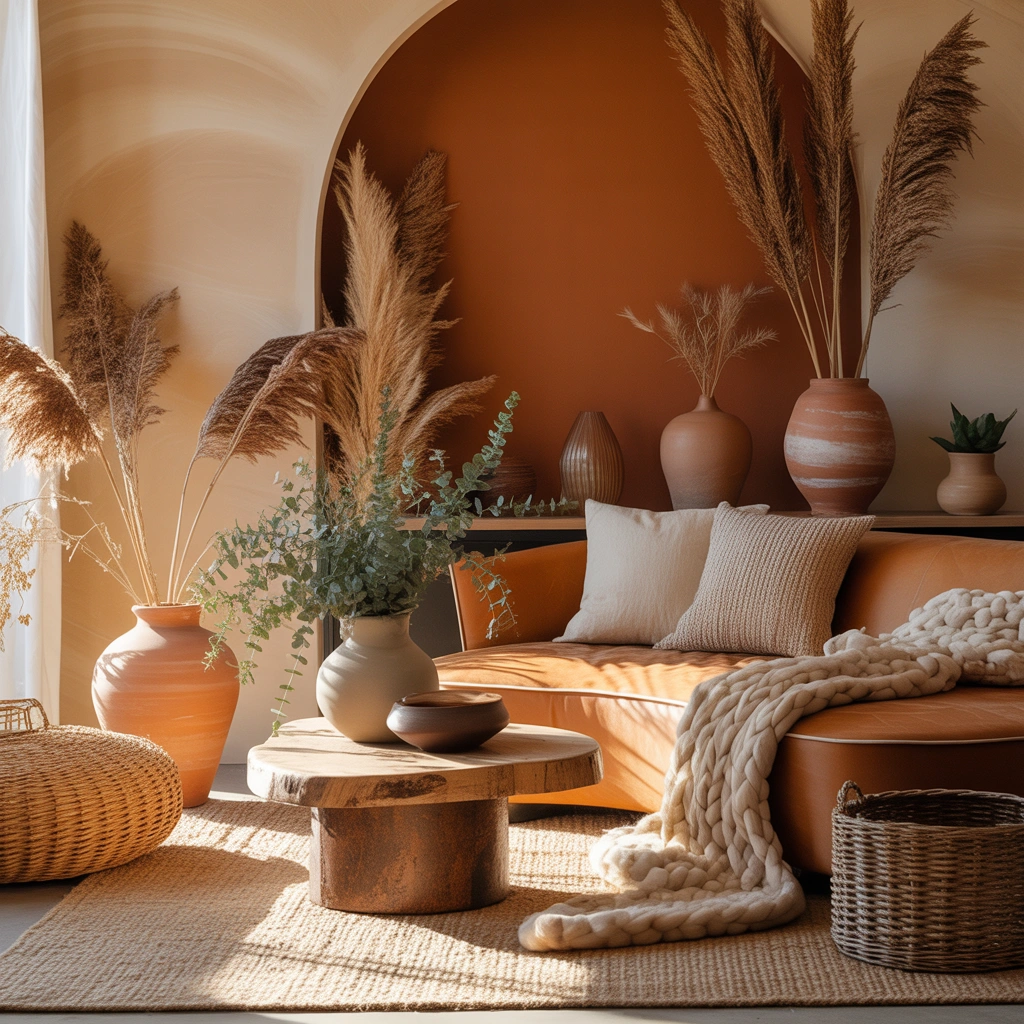
The easiest place to begin with earthy natural home decor is the color palette.
Instead of bright primary colors or icy cool shades, look toward colors found naturally in landscapes. Some of my favorites include:
- Warm beige
- Sand
- Taupe
- Terracotta
- Rust
- Olive green
- Sage green
- Mushroom brown
- Clay
- Caramel
- Cream
- Soft stone gray
You do not have to use every earthy shade in one space. In fact, choosing three or four main colors usually creates a much calmer result.
For example, a living room could start with warm cream walls, a beige sofa, medium-toned wooden furniture, and accents of olive green. Terracotta cushions or pottery could then add a subtle layer of warmth.
I especially like using neutral colors as the foundation because they allow natural textures to stand out. A simple cream wall makes wood grain, woven baskets, linen fabrics, and green plants much more noticeable.
Another trick is to avoid making every surface exactly the same shade. Layering slightly different tones of beige, brown, cream, and green makes the room feel deeper and more natural.
Nature itself is rarely perfectly matched, so your earthy interior does not have to be either.
2. Bring in Plenty of Natural Wood
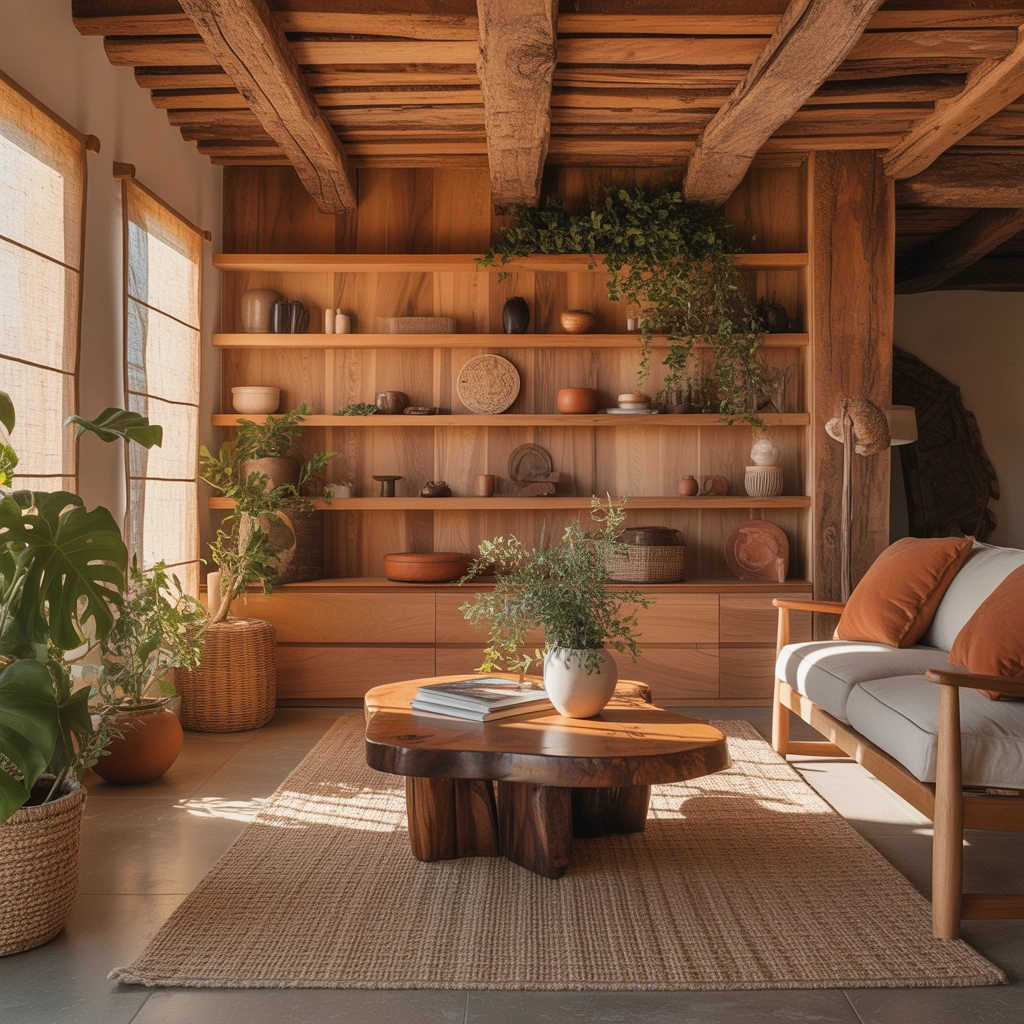
Few materials create warmth as quickly as wood.
Wood furniture is one of the foundations of earthy natural home decor, especially when the grain and texture remain visible.
Instead of glossy furniture with highly polished finishes, I prefer pieces that have a matte, raw, reclaimed, or lightly stained appearance.
Consider adding wooden elements such as:
- Coffee tables
- Bedside tables
- Dining tables
- Benches
- Shelves
- Picture frames
- Console tables
- Wooden stools
- Decorative bowls
You also do not need to match every wood tone perfectly.
Mixing lighter oak with medium brown wood or a slightly darker accent can make the room feel more collected and natural.
One of my favorite approaches is pairing a simple wooden coffee table with a neutral sofa and textured rug. That single element can instantly make a modern living room feel softer and more grounded.
Reclaimed wood is another beautiful choice because every scratch, knot, and variation gives the piece its own personality.
If buying large furniture is not currently part of your decorating budget, start smaller. A wooden tray, candle holder, picture frame, or decorative bowl can still introduce an organic element.
3. Layer Linen, Cotton, and Other Natural Fabrics
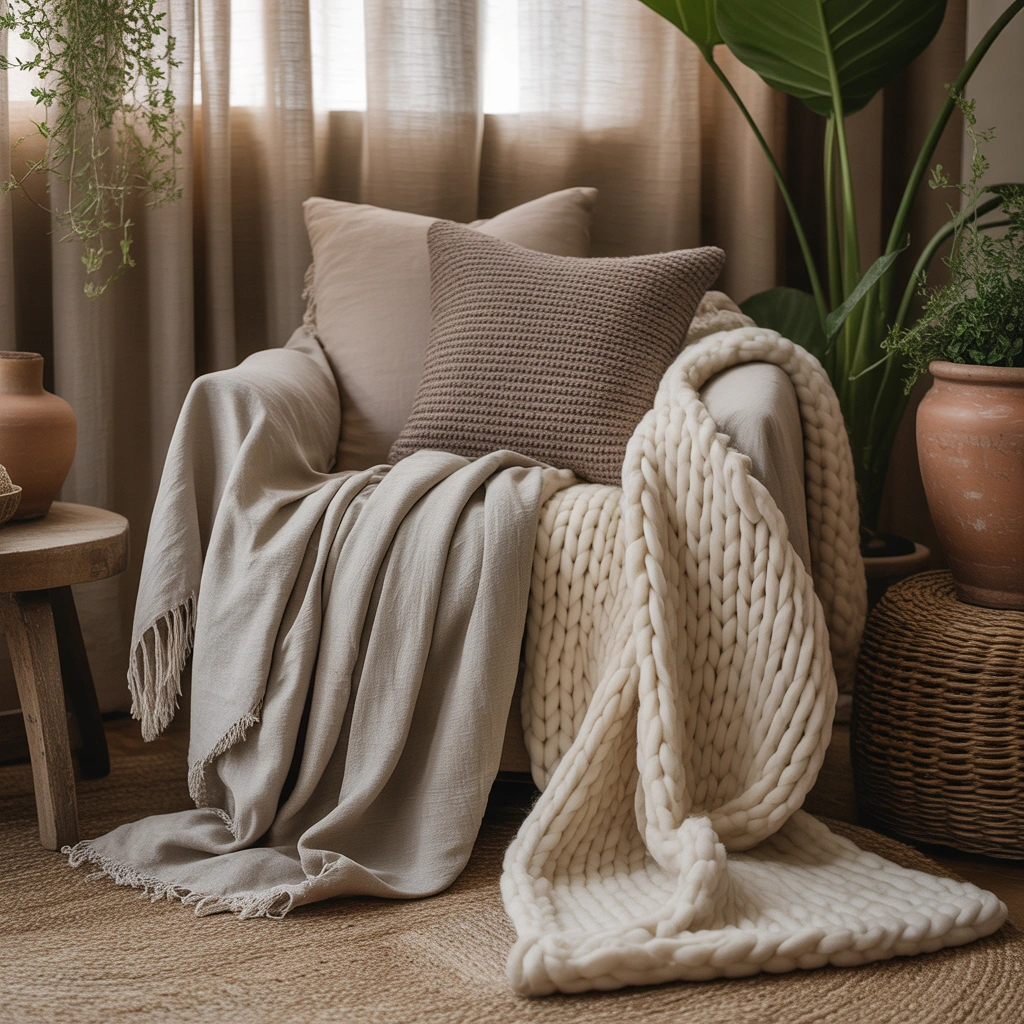
Fabric has a huge influence on how comfortable a room feels.
Synthetic materials can sometimes look overly smooth or shiny, while natural fabrics usually have a softer and more relaxed texture.
For an earthy home, I love using materials such as linen, organic cotton, wool, and lightweight woven fabrics.
Linen curtains are especially effective.
They allow natural light to filter through softly instead of completely blocking it, which gives the entire room a calm and airy feeling.
You can also introduce natural fabrics through:
- Cushion covers
- Sofa throws
- Bedding
- Table runners
- Napkins
- Upholstery
- Curtains
- Fabric storage baskets
When layering textiles, do not worry about everything matching.
For example, you might combine a cream linen cushion with a rust-colored cotton pillow and a chunky wool throw.
The slight differences in texture create visual interest even when the colors remain simple.
In bedrooms, neutral linen bedding is one of my favorite ways to achieve an effortlessly earthy look. Slight wrinkles actually make linen more attractive because they reinforce the relaxed, natural character of the material.
4. Decorate With Indoor Plants and Greenery
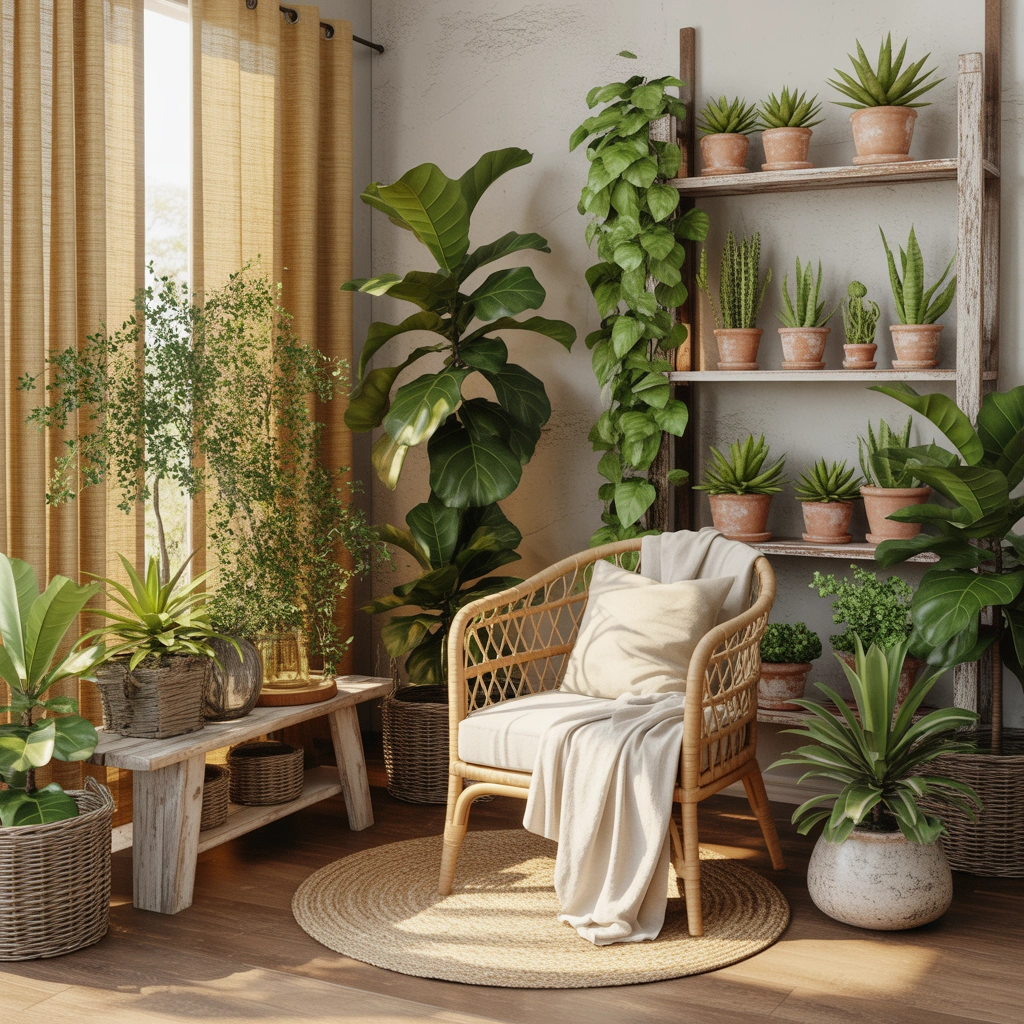
No earthy interior feels completely finished without some form of greenery.
Plants add color, movement, texture, and life to a room. Even spaces with very neutral palettes instantly feel more vibrant once greenery is introduced.
Large plants can become decorative focal points.
A tall plant placed beside a sofa, window, or empty corner can sometimes replace the need for additional furniture or wall decor.
Smaller plants work beautifully on:
- Bookshelves
- Kitchen counters
- Bedside tables
- Coffee tables
- Bathroom shelves
- Desks
- Console tables
I personally prefer mixing plant sizes rather than placing several similar pots together.
A tall floor plant, medium-sized tabletop plant, and a few small trailing plants create a more organic arrangement.
The containers matter too.
Terracotta pots, stone planters, woven baskets, and matte ceramic pots usually work better with earthy decor than brightly colored plastic containers.
If caring for many houseplants feels overwhelming, even one or two statement plants can create the natural effect you want.
You can also use dried branches, eucalyptus, grasses, or preserved foliage for a lower-maintenance alternative.
5. Add Texture With Jute, Rattan, and Woven Materials
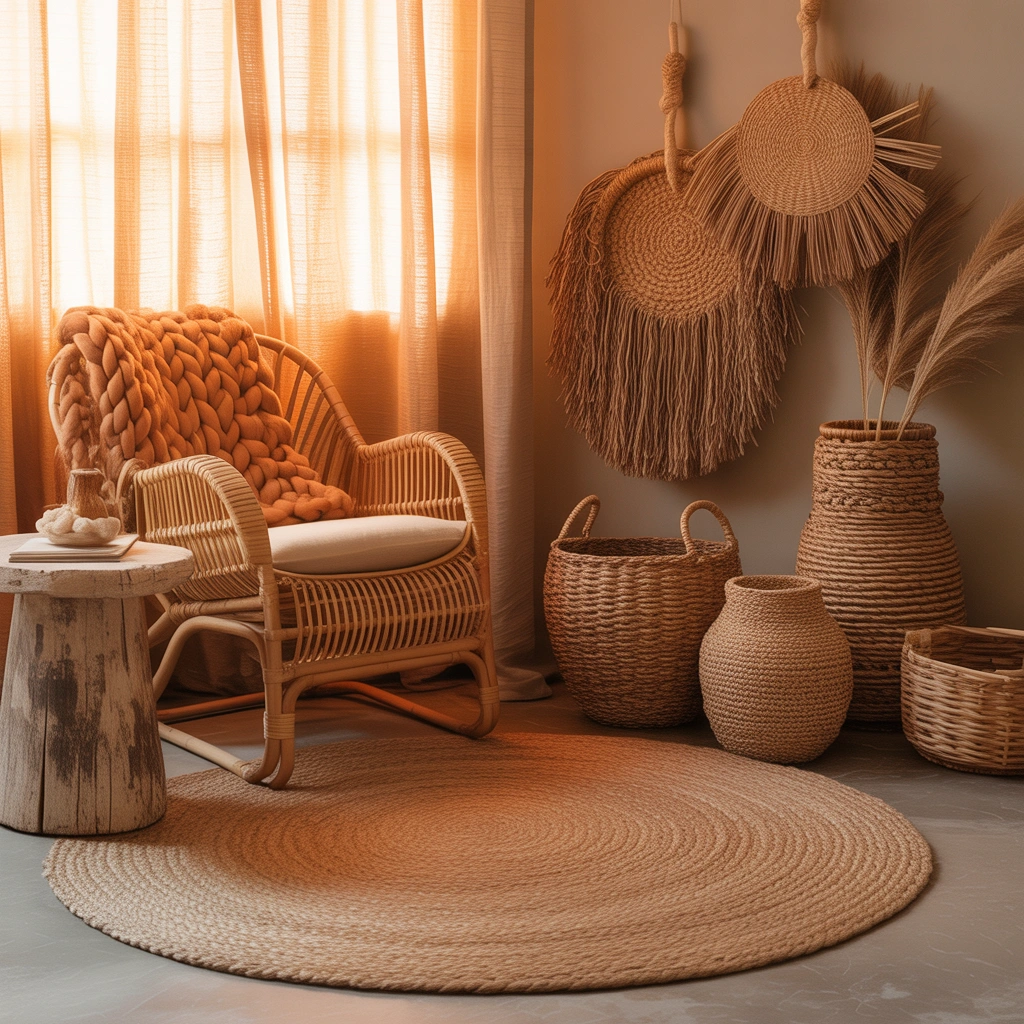
When an earthy room feels flat, texture is usually the missing ingredient.
Natural woven materials are perfect for solving that problem.
Jute, seagrass, rattan, cane, and wicker all have visible fibers that create warmth without introducing loud patterns.
A jute rug is one of the easiest additions because it covers a large area and immediately changes the overall character of a room.
I especially like jute rugs underneath dining tables, coffee tables, or beds.
Woven baskets are another practical option. They provide storage while also acting as decor.
Use them for:
- Blankets
- Children’s toys
- Laundry
- Magazines
- Firewood
- Extra pillows
- Bathroom towels
Rattan chairs, cane-front cabinets, woven pendant lights, and decorative wall baskets can also introduce natural texture.
The key is not to use every woven material at once.
Choose a few pieces and distribute them throughout the room so the result looks intentional rather than themed.
6. Use Handmade Pottery and Ceramic Decor
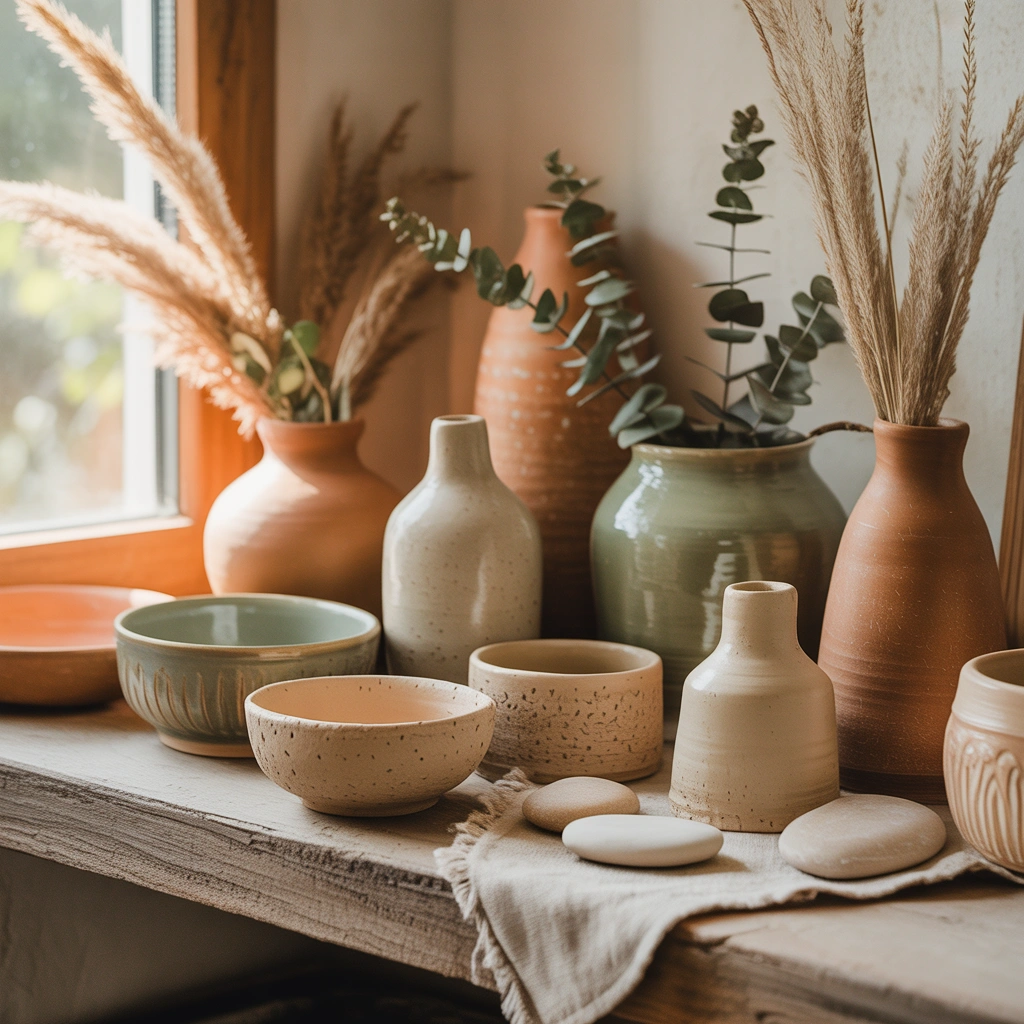
Handmade pottery fits beautifully into earthy natural interiors because it carries the subtle imperfections that factory-made decor often lacks.
I love ceramic pieces with slightly uneven shapes, matte glazes, speckled surfaces, and muted colors.
They look particularly beautiful in shades such as:
- Sand
- Terracotta
- Cream
- Charcoal
- Olive
- Warm brown
- Off-white
A large ceramic vase can become a centerpiece on a dining table or console.
Smaller pottery pieces work well on open shelving, coffee tables, and kitchen counters.
You can also display functional ceramics.
Mugs, serving bowls, pitchers, and plates do not need to remain hidden inside cabinets. When displayed thoughtfully, everyday pieces can become part of your home decor.
One thing I try to avoid is filling every available surface with pottery. Earthy design looks strongest when decorative objects have room around them.
A few carefully chosen pieces usually create more impact than a crowded collection.
7. Incorporate Stone and Clay Elements
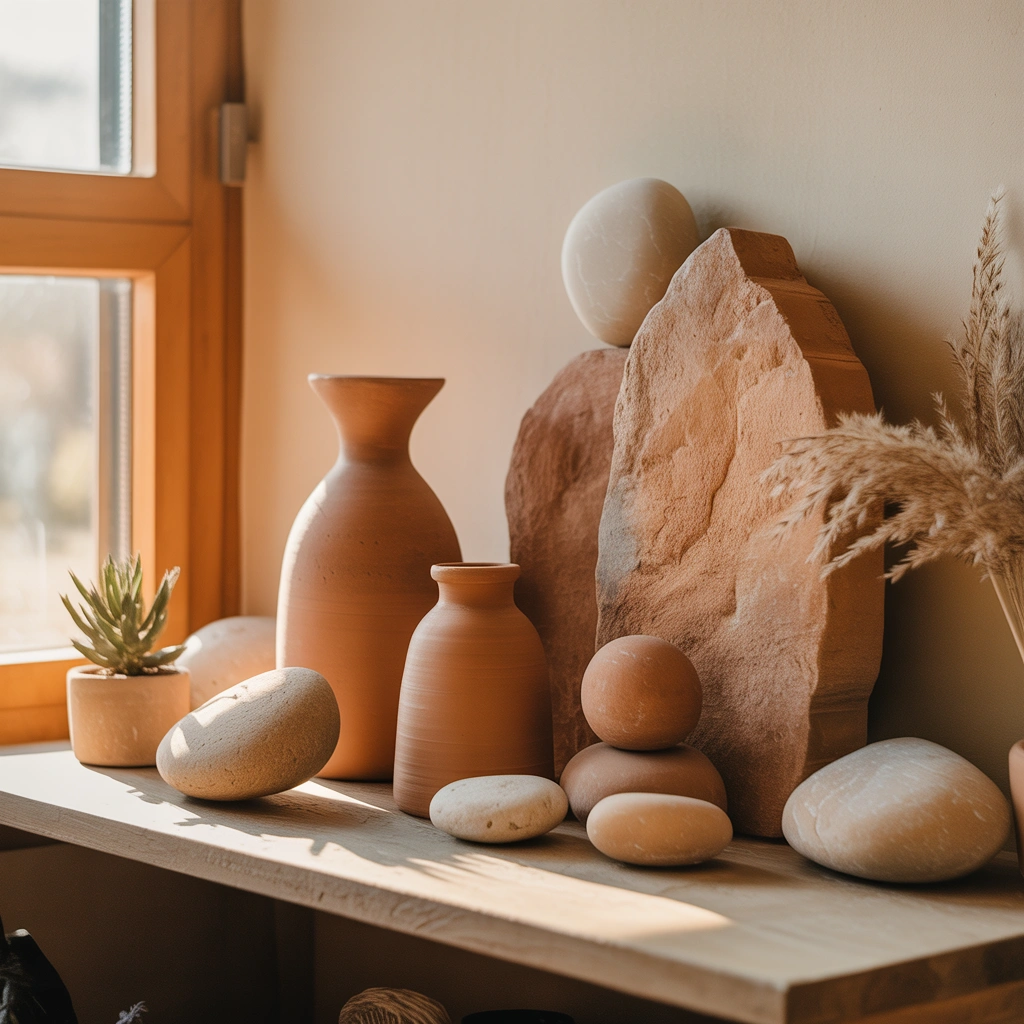
Wood gets a lot of attention in natural interiors, but stone and clay deserve just as much consideration.
These materials bring a cooler, grounded quality that balances softer textiles and warm wooden furniture.
You do not need a stone fireplace or expensive countertop to introduce this look.
Smaller stone-inspired elements can work beautifully, including:
- Travertine trays
- Marble bowls
- Stone candle holders
- Clay vases
- Terracotta planters
- Stoneware dishes
- Sculptural decor
- Concrete-style side tables
Terracotta is especially useful because its warm orange-brown tone creates contrast against cream, beige, and olive green.
I like incorporating terracotta in small doses.
For example, a neutral living room could include two terracotta cushions, a clay planter, and a rustic ceramic vase.
Those few accents add warmth while keeping the overall room calm.
8. Choose Organic and Curved Shapes
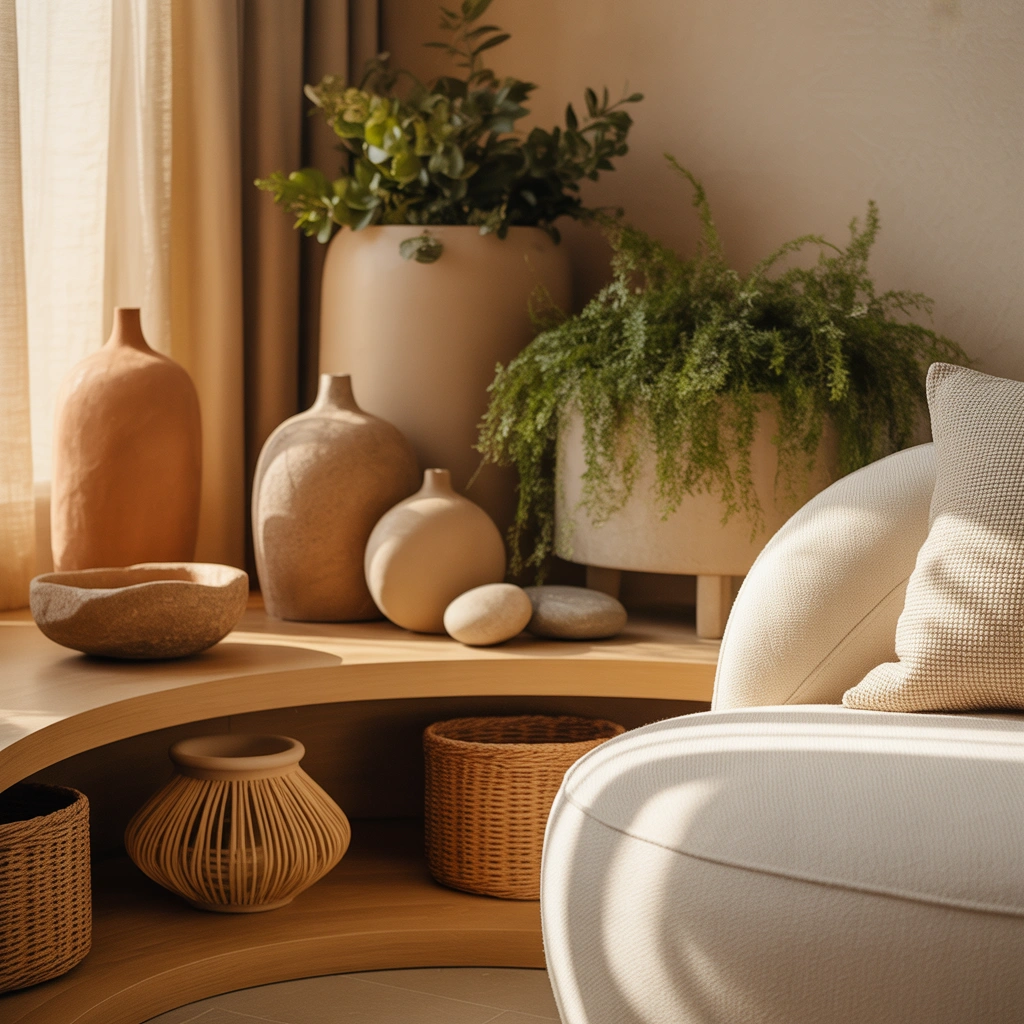
Nature rarely produces perfectly straight lines.
That is why curved and irregular shapes feel so comfortable in earthy interiors.
Instead of using only rectangular furniture and sharp geometric decor, introduce softer silhouettes.
Consider:
- Round coffee tables
- Oval mirrors
- Curved armchairs
- Organic-shaped vases
- Arched shelving
- Rounded lamps
- Irregular wooden bowls
- Sculptural tables
Even one curved object can soften a room full of straight architectural lines.
An oversized round mirror above a wooden console, for instance, creates a beautiful natural focal point.
I also like asymmetrical decorative objects because they make spaces feel less formal.
Earthy decorating is not about creating perfect symmetry. It is about creating visual balance.
A slightly irregular vase, naturally shaped wooden stool, or imperfect ceramic bowl often looks more interesting than something that feels perfectly manufactured.
9. Create Warmth Through Layered Lighting
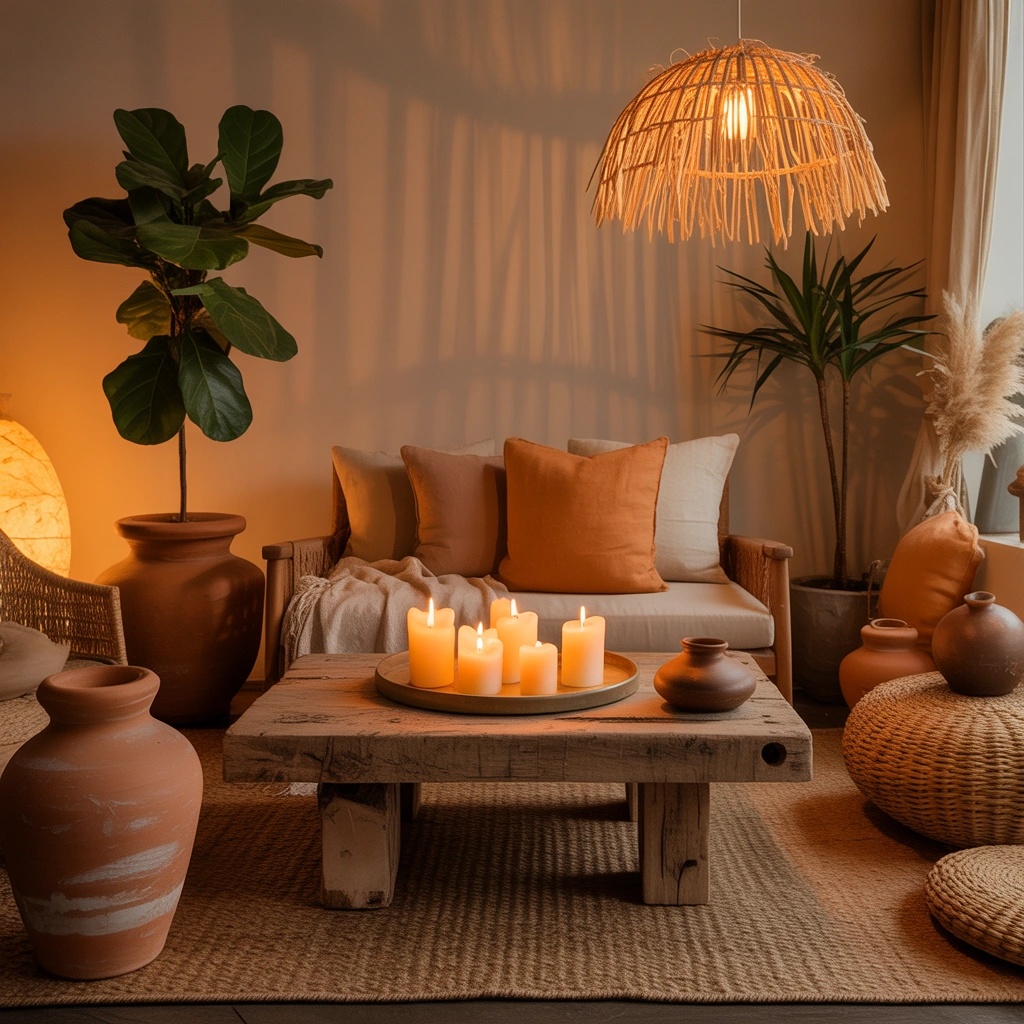
Lighting completely changes the atmosphere of a room.
An earthy natural home should feel warm and inviting, especially in the evening.
Instead of relying only on bright overhead lights, try creating several smaller sources of light around the room.
I usually think about lighting in three layers.
First comes general lighting, such as ceiling fixtures.
Second is functional lighting, such as reading lamps or kitchen task lights.
Third is ambient lighting, including table lamps, floor lamps, candles, and decorative wall lights.
For earthy interiors, lamps made from natural materials work especially well.
Look for bases or shades made from:
- Ceramic
- Wood
- Rattan
- Linen
- Paper
- Woven fibers
Warm-toned bulbs also make beige, terracotta, wood, and natural fabrics appear richer.
Candles are another simple addition.
Placed inside stone, clay, or glass candle holders, they add a soft glow that makes a room feel instantly more intimate.
10. Keep Wall Decor Simple and Nature Inspired
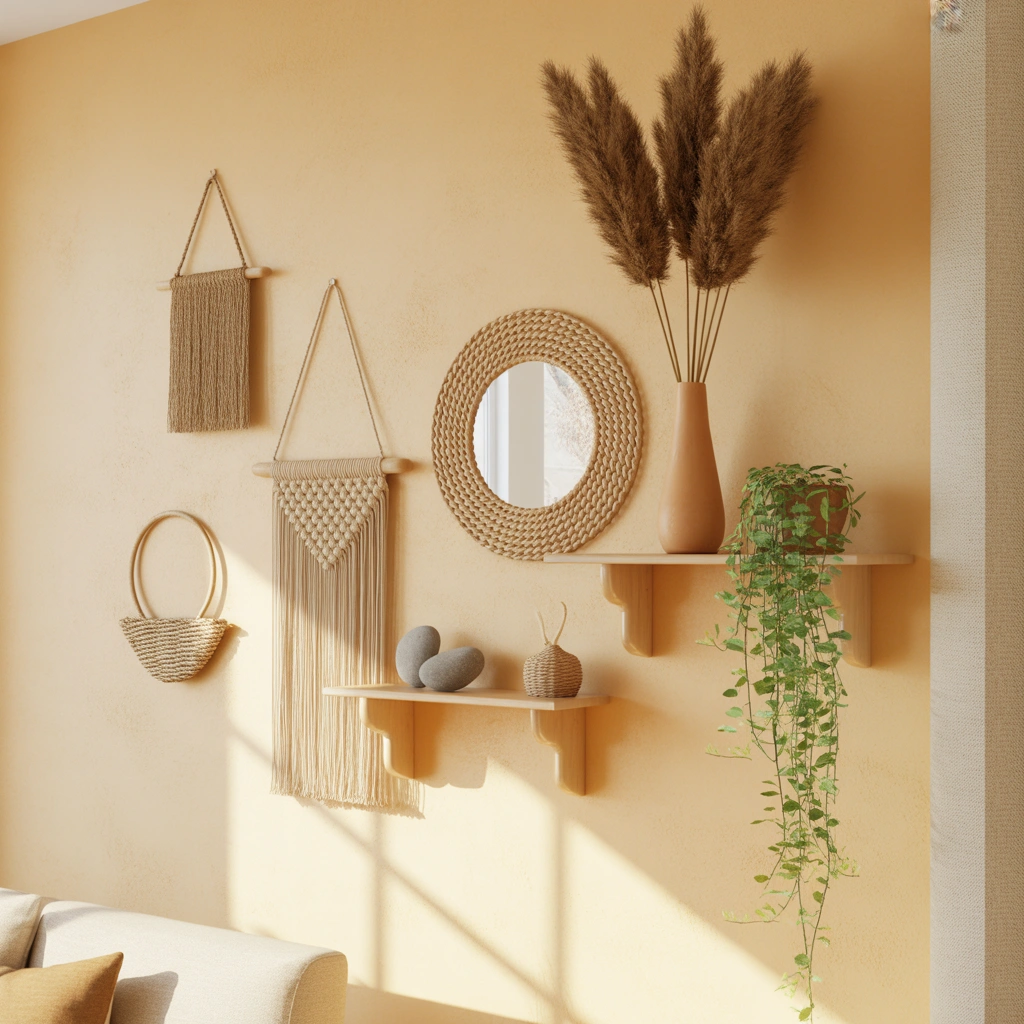
Walls provide an opportunity to reinforce the earthy aesthetic without overwhelming the room.
Instead of highly saturated artwork, consider pieces inspired by landscapes, plants, abstract organic shapes, or natural textures.
I especially like botanical prints and minimalist landscape artwork because they introduce nature without making the room feel overly decorative.
Other earthy wall decor ideas include:
- Woven wall hangings
- Neutral abstract paintings
- Vintage botanical prints
- Wooden frames
- Textured plaster artwork
- Landscape photography
- Handmade fiber art
- Decorative wall baskets
A large piece of artwork can sometimes work better than a gallery wall.
One oversized landscape or abstract painting above a sofa, bed, or dining table creates a calm focal point.
If you do create a gallery wall, I recommend keeping the frame materials and colors relatively simple.
Natural wood, black, cream, and aged brass frames usually complement earthy interiors nicely.
11. Style With Dried Flowers, Branches, and Pampas Grass
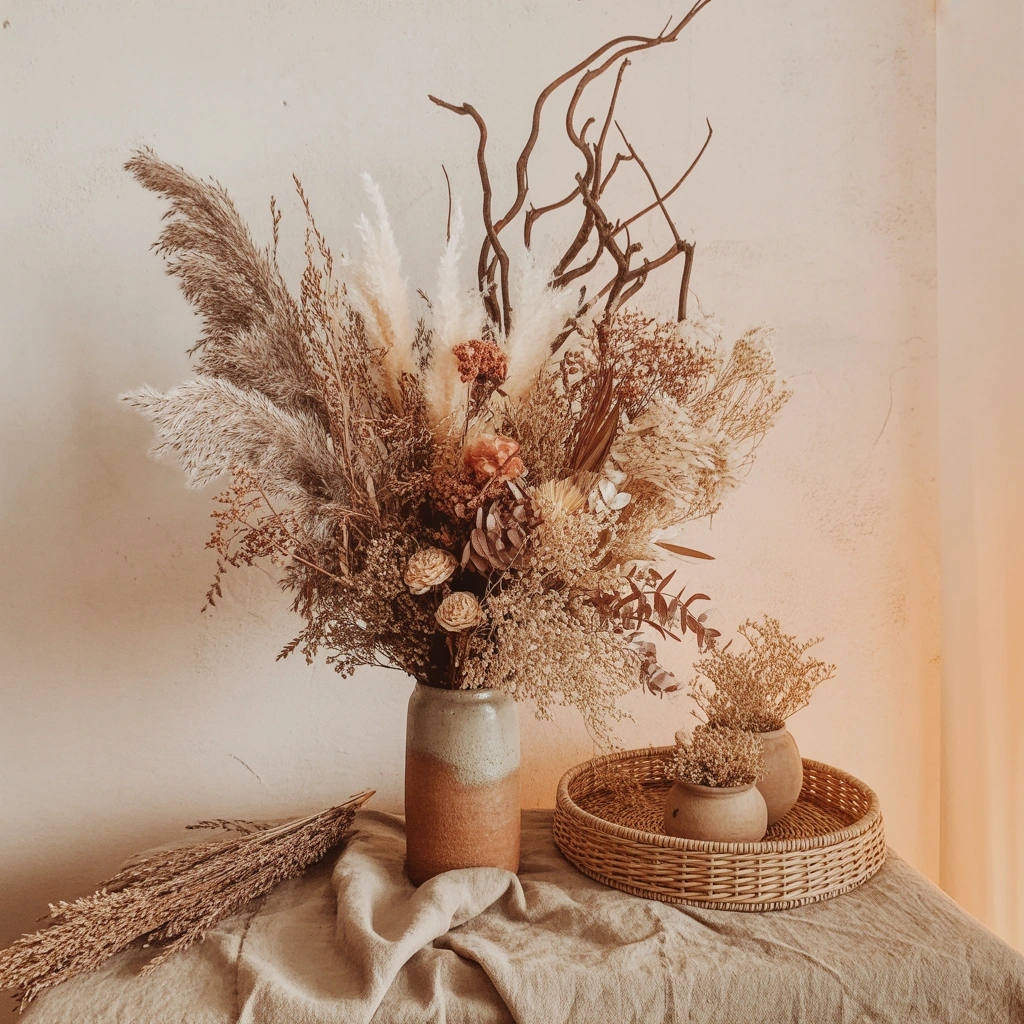
Fresh flowers are beautiful, but dried botanical arrangements can be equally attractive in earthy spaces.
They bring nature indoors while requiring almost no maintenance.
I enjoy using dried branches because their sculptural shapes create visual interest without adding strong color.
A few tall branches in a large ceramic vase can make an impressive statement on a dining table, console, or floor.
Other options include:
- Pampas grass
- Dried eucalyptus
- Wheat stems
- Dried palm leaves
- Bunny tails
- Cotton branches
- Dried wildflowers
The trick is keeping arrangements slightly loose.
Perfectly symmetrical bouquets can sometimes look too formal for an earthy interior.
Instead, allow stems to fall naturally and vary their heights.
This creates the effortless, collected feeling that works so well with organic home decor.
12. Embrace Imperfection and Handmade Details
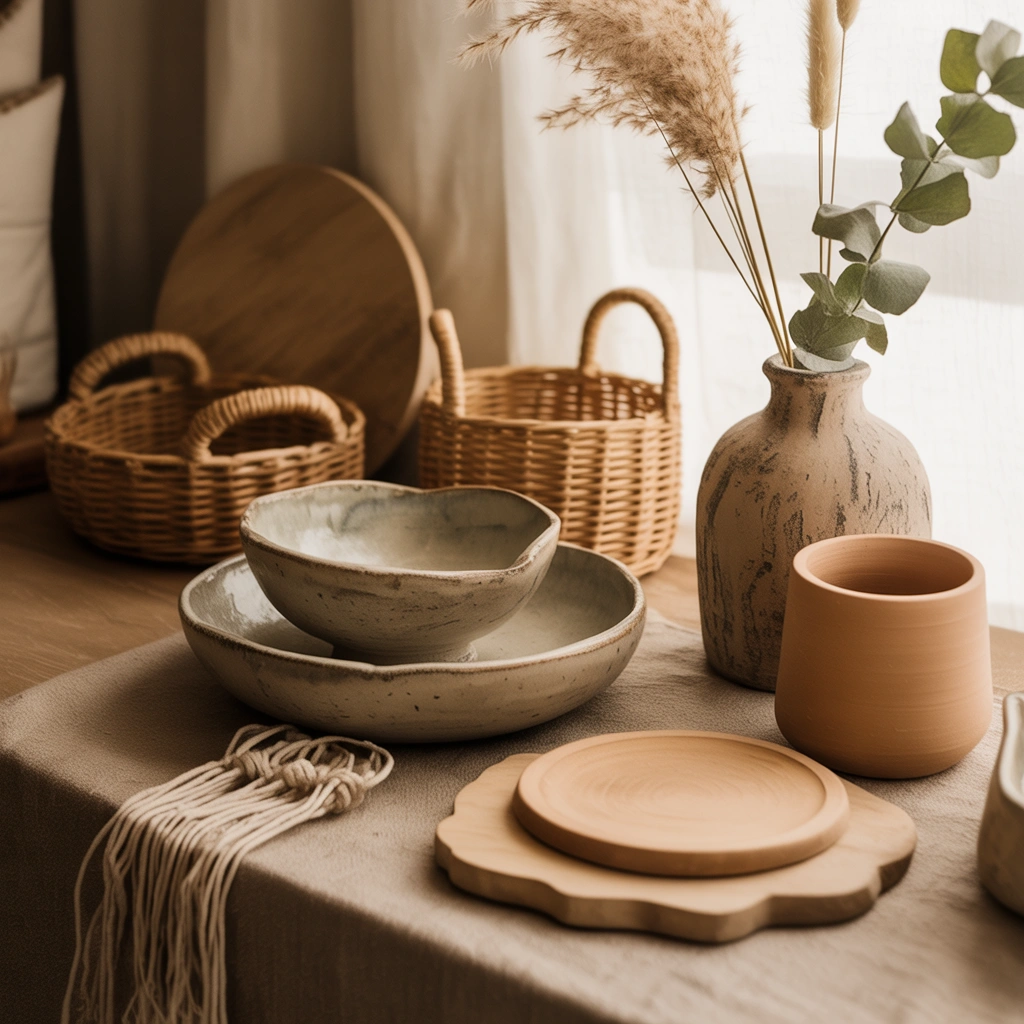
One of the things I appreciate most about earthy decorating is that it does not demand perfection.
Natural materials have marks, variations, knots, cracks, texture, and uneven surfaces. Handmade pieces may not be perfectly symmetrical.
Those characteristics are not flaws—they are what make the objects interesting.
Try adding handmade details such as:
- Hand-thrown pottery
- Woven baskets
- Hand-carved wooden bowls
- Artisan textiles
- Handmade candle holders
- Vintage furniture
- Handwoven rugs
Vintage pieces are particularly useful because they prevent an earthy room from looking like everything was purchased at the same time.
A vintage wooden stool beside a modern sofa or an old ceramic pitcher on open kitchen shelving can add instant character.
I always feel that homes become more inviting when they include objects with personality.
Instead of trying to create a perfectly staged interior, allow your home to tell a story through materials, textures, and meaningful pieces.
13. Create a Calm, Uncluttered Layout
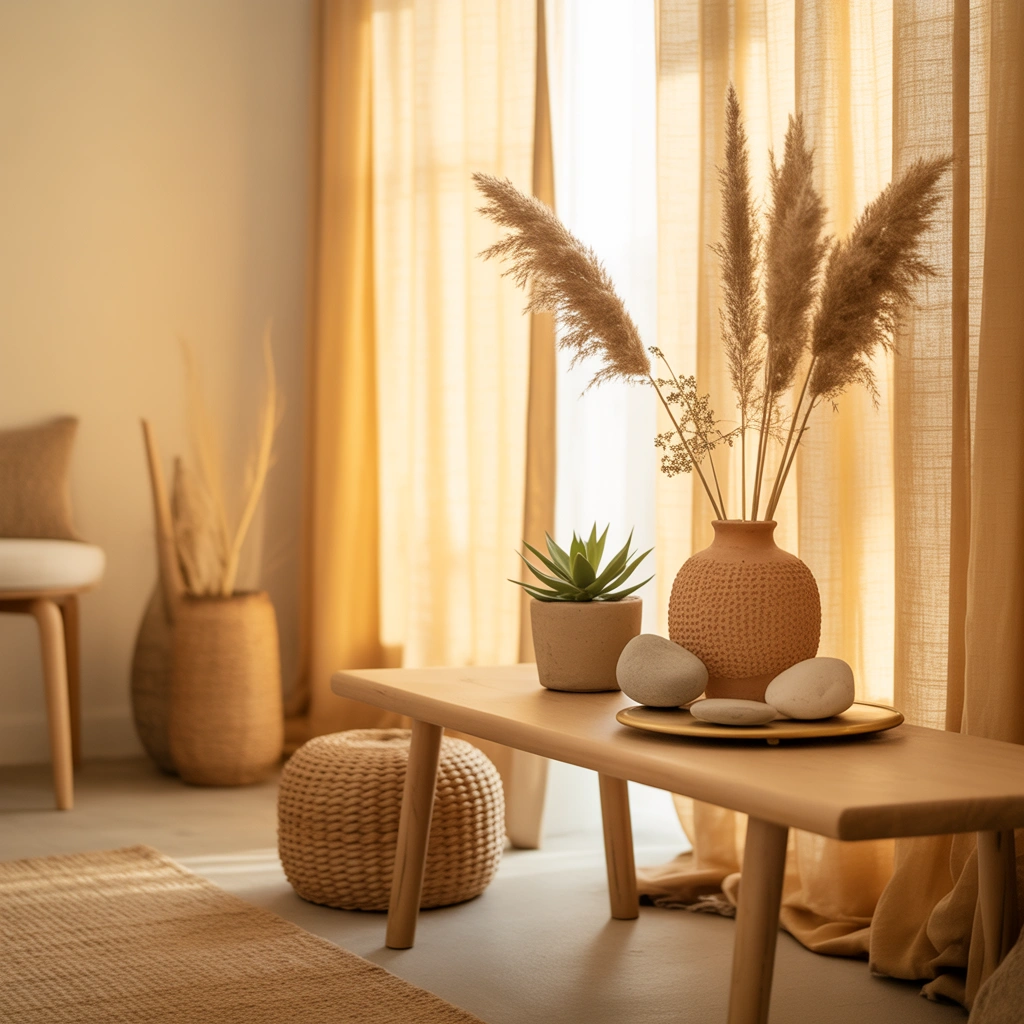
You can use every natural material imaginable, but if the room feels overcrowded, it may still lack the peaceful atmosphere associated with earthy interiors.
Negative space is important.
Not every wall needs artwork.
Not every tabletop needs decorative accessories.
Not every corner needs furniture.
Giving objects breathing room allows you to appreciate their shapes and textures.
I usually prefer arranging a few substantial items instead of many tiny decorations.
For example, a coffee table might only need a ceramic bowl, a small stack of books, and a vase with natural branches.
A console table could feature a lamp, one decorative vessel, and a large mirror.
This simplified approach makes the entire room feel calmer.
It also makes cleaning and everyday living easier, which is something I always consider when decorating.
A beautiful home should still function comfortably.
How to Mix Earthy Decor With Modern Interiors
You do not have to completely change your decorating style to embrace earthy natural home decor.
Natural elements actually pair very well with modern spaces.
If your home currently has sleek furniture, white walls, and clean architectural lines, simply introduce softer materials.
A modern gray sofa can feel warmer with linen cushions, a wooden coffee table, a jute rug, and an olive tree nearby.
A minimalist bedroom can gain personality through linen bedding, wooden bedside tables, woven lighting, and ceramic accessories.
The contrast between modern lines and organic textures often creates a sophisticated result.
I recommend keeping the larger modern elements simple and then allowing natural textures to bring warmth.
How to Make Earthy Home Decor Look Expensive
Earthy interiors do not have to be expensive, but a few styling decisions can make them look much more refined.
First, focus on texture instead of quantity.
A large textured rug, substantial wooden table, or beautiful linen curtain will usually create more impact than dozens of small accessories.
Second, use a limited color palette.
Rooms often look more sophisticated when the same three or four colors repeat throughout the space.
Third, mix different materials.
Wood paired with linen, stone, ceramic, and woven fibers creates depth.
Fourth, pay attention to scale.
One large plant often looks more intentional than six tiny plants scattered around a room.
Finally, avoid trying to make everything perfectly matched.
Natural variation creates character.
Earthy Natural Home Decor on a Budget
Creating an earthy home does not require purchasing designer furniture.
Some of the most effective changes are surprisingly affordable.
Thrift stores and secondhand marketplaces can be excellent places to find wooden furniture, ceramic pottery, baskets, mirrors, and vintage decor.
You can also repurpose items you already own.
For instance, an old wooden table can be sanded down to reveal a more natural finish.
Existing cushion covers can be replaced with linen or cotton alternatives.
Glass jars can hold dried branches.
Old pottery can be grouped on shelves.
Branches collected responsibly outdoors can become free seasonal decor.
I also recommend decorating gradually.
When you buy everything at once, a room can sometimes feel too coordinated. Collecting pieces over time usually creates a more authentic and personal result.
Common Mistakes to Avoid With Earthy Natural Decor
Although earthy interiors are relatively flexible, a few mistakes can make the style feel less natural.
One common mistake is using too much brown.
Earthy does not mean covering every surface with brown furniture. Cream, beige, green, clay, gray, and muted black can all help create balance.
Another mistake is overusing one material.
Too much rattan, for example, can make a room feel themed rather than sophisticated.
Mix materials instead.
Wood, linen, stone, clay, wool, and woven fibers should support one another.
Also avoid overcrowding surfaces.
Earthy homes usually look best when the eye has somewhere to rest.
Finally, remember that natural decorating should still reflect your personality.
Do not remove meaningful artwork, photographs, books, or objects simply because they do not perfectly match an aesthetic.
The goal is to create a home that feels connected to nature while still feeling like yours.
Frequently Asked Questions About Earthy Natural Home Decor
What colors are best for an earthy home?
Earthy interiors typically use warm neutrals and muted natural shades. Beige, cream, taupe, terracotta, olive green, sage, warm brown, rust, and stone gray are excellent options.
Rather than using one color everywhere, layer several related shades to create depth.
What materials work best with earthy decor?
Natural materials work particularly well, including wood, linen, cotton, wool, jute, rattan, cane, stone, clay, ceramic, and seagrass.
Mixing several materials usually creates a richer and more balanced interior.
Can earthy decor work in a small apartment?
Absolutely.
In smaller spaces, focus on a few impactful elements such as a neutral rug, wooden furniture, linen curtains, indoor plants, and ceramic accessories.
Keeping the color palette light and the layout uncluttered can also make a small home feel more spacious.
Is earthy natural decor the same as boho decor?
They can overlap, but they are not exactly the same.
Boho interiors often use more patterns, global influences, layered accessories, and stronger colors.
Earthy natural decor tends to be calmer, simpler, and more focused on organic materials and muted tones.
You can, however, combine elements of both styles.
How can I make my home feel more earthy without redecorating everything?
Start with accessories.
Replace a few decorative items with wooden, ceramic, woven, or linen pieces. Add one large plant, introduce warm-colored cushions, use a woven basket, and bring in a natural fiber rug.
Small changes can significantly shift the overall mood.
What furniture looks best in an earthy interior?
Furniture with simple forms and natural finishes works especially well.
Wooden tables, linen sofas, cane cabinets, curved armchairs, woven benches, and rustic stools are all good choices.
Try to prioritize texture and material over elaborate ornamentation.
Final Thoughts
For me, the beauty of earthy natural home decor is that it encourages a slower, more thoughtful approach to decorating.
Instead of chasing every interior trend, you can build your home around materials and colors that have been used for generations—wood, stone, clay, linen, cotton, greenery, and warm neutral tones.
Start with your color palette, then slowly introduce texture.
Add wood where the room feels cold. Bring in linen where it feels too polished. Use plants where it feels empty. Introduce pottery, stone, baskets, and handmade objects where you want more character.
Most importantly, resist the pressure to make the space perfect.
Natural homes are beautiful because they contain variation, texture, history, and personality.
A slightly weathered wooden table, a handmade ceramic vase, a wrinkled linen throw, or a branch placed casually in a clay pot can sometimes create more warmth than an entire collection of perfectly coordinated decorations.
Whether you are decorating a large house, a small apartment, a bedroom, or simply one quiet corner, these 13 earthy natural home decor ideas can help you create a space that feels calm, warm, grounded, and genuinely connected to nature.
