
Your home’s entrance is the first thing people notice when they walk through the door. It’s also the space that welcomes you back after a long day. That’s why I believe a beautiful entryway deserves just as much attention as your living room, bedroom, or kitchen.
The interesting thing about home entry wall design is that you don’t need a large foyer or an expensive renovation to make it look stunning. Sometimes, a simple accent wall, an oversized mirror, a few decorative hooks, or a carefully chosen piece of artwork can completely change how your entrance feels.
I’ve always loved entryways that tell a little story about the home. Some feel warm and cozy, with wooden textures and soft lighting. Others make a bold statement with dramatic colors, architectural details, and modern artwork. The best designs, in my opinion, find a comfortable balance between beauty and everyday functionality.
Whether you’re decorating a narrow apartment entrance, a spacious foyer, or a small hallway near your front door, there are plenty of creative ways to make your entry wall stand out.
In this guide, I’m sharing 15 home entry wall design ideas that combine attractive decorating choices with practical solutions. Each idea includes styling tips, material suggestions, and an image prompt you can use in Ideogram to visualize the finished look.
1. Create a Warm Welcome With a Natural Wood Slat Accent Wall
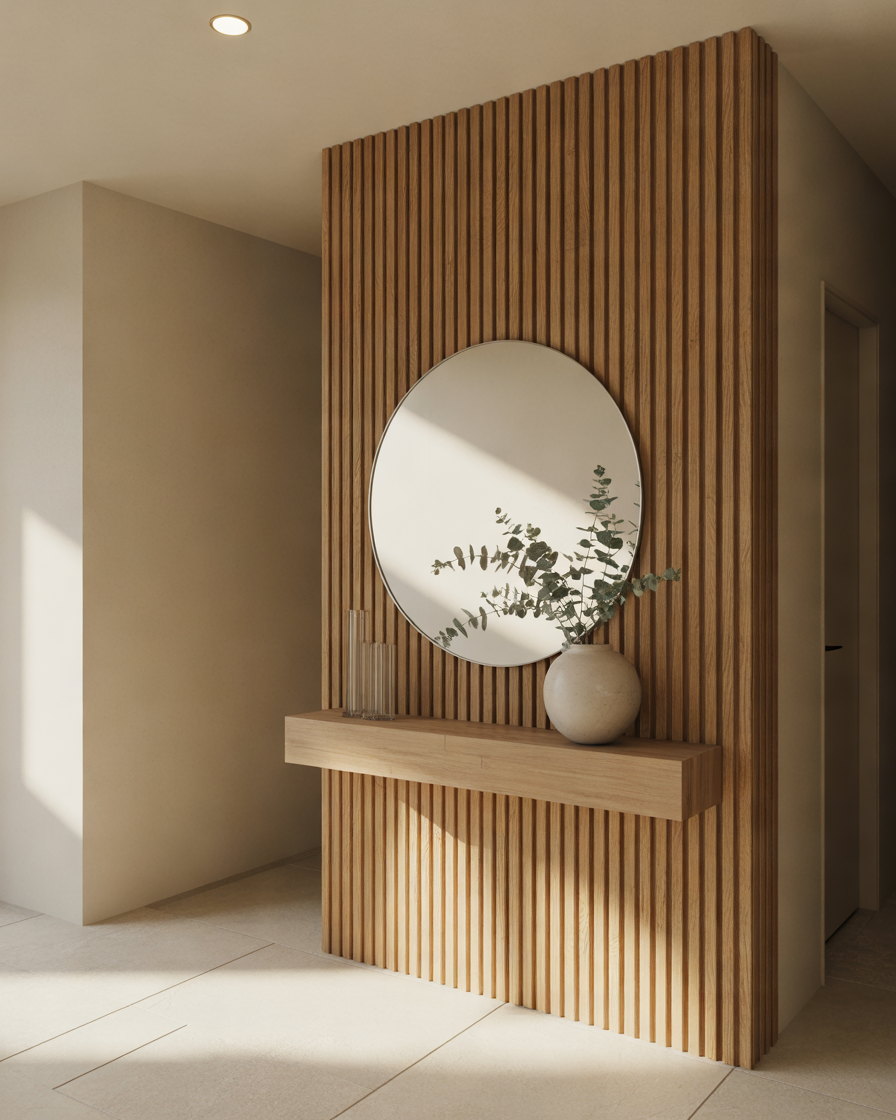
One of my favorite ways to give an entrance a modern yet welcoming appearance is by using vertical wooden slats. There’s something about the natural grain of wood that instantly makes a space feel warm, even when the surrounding decor is minimal.
A wood slat accent wall works particularly well in contemporary homes, Scandinavian interiors, and modern minimalist entryways. The vertical lines also create an illusion of height, which can make a small entrance appear taller and more spacious.
For a bright and airy look, I would choose light oak or ash wood. If you’re hoping for something more dramatic, walnut-colored slats against a warm neutral background create a sophisticated contrast.
You don’t necessarily have to cover the entire entrance wall. A narrow section behind a console table or a floating shelf can become a beautiful focal point without overwhelming the room.
To complete the look, consider adding a round mirror, a slim wooden bench, or a small wall-mounted light. These simple accessories complement the wood texture instead of competing with it.
Styling tip: Leave a little breathing room between decorative objects so the beautiful vertical pattern remains visible. A matte finish often feels more natural than a glossy surface.
2. Make a Small Entrance Feel Bigger With an Oversized Statement Mirror
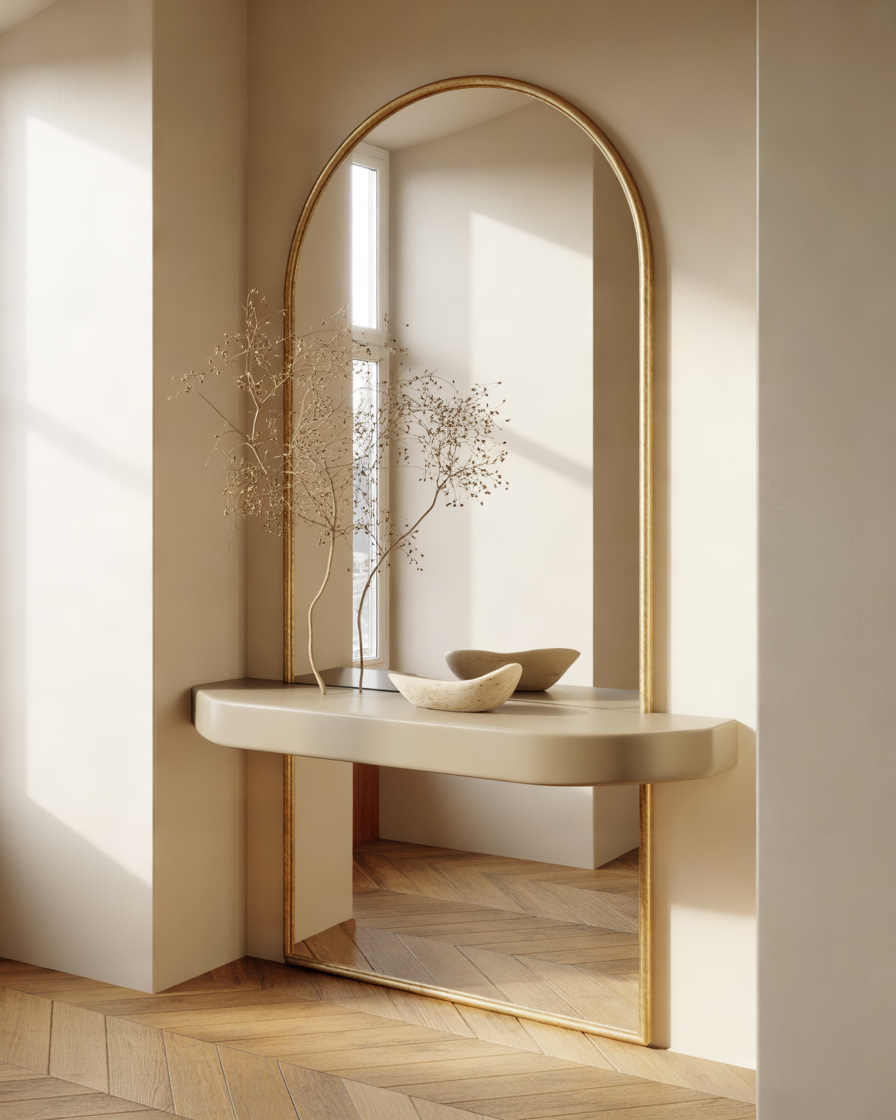
If your entryway is small, I genuinely think a large mirror is one of the smartest decorative investments you can make.
Mirrors reflect light and create visual depth, helping a compact entrance feel brighter and more open. They also make sense in a practical area of the home because you can quickly check your appearance before heading outside.
For a narrow entry wall, I love tall rectangular mirrors with thin black, brass, or natural wooden frames. In a softer interior, an arched mirror adds elegant curves and prevents the space from feeling too rigid.
A large round mirror is another beautiful option, especially when placed above a narrow console table. The curved shape creates a pleasing contrast against straight walls, door frames, and furniture.
I recommend considering what the mirror reflects before installing it. Ideally, it should capture natural light, an attractive decorative feature, or another pleasant part of the home rather than a cluttered storage area.
If floor space is limited, use a wall-mounted mirror and a slim floating shelf instead of a bulky console.
Styling tip: Match the mirror frame with one other accent in the entrance, such as a wall sconce, table lamp, or hardware finish, to create a cohesive appearance.
3. Add Character With a Beautifully Curated Entryway Gallery Wall
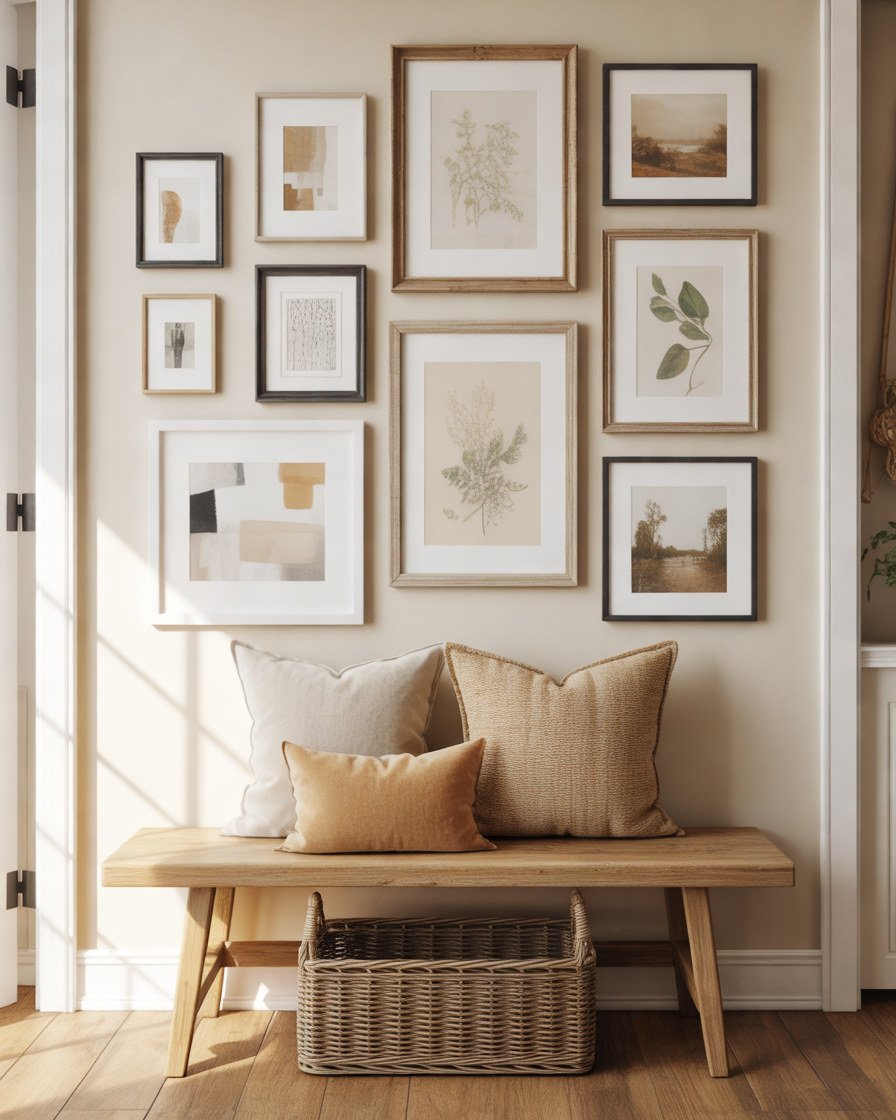
A gallery wall is a wonderful way to make your home’s entrance feel personal and memorable.
Instead of leaving the wall empty, you can turn it into a small collection of meaningful photographs, artwork, sketches, and decorative prints. I particularly love this approach because it allows your home to reflect your personality rather than look like a completely staged showroom.
The secret to an attractive gallery wall is choosing a common element that connects everything.
For example, you could use black frames in different sizes, select artwork with a similar color palette, or combine vintage botanical prints with neutral abstract illustrations.
Before hanging anything, arrange the frames on the floor and experiment with different layouts. This helps you understand how the pieces work together without repeatedly making holes in the wall.
For a classic look, keep the spacing between frames relatively consistent. For a more relaxed atmosphere, try an organic arrangement that mixes portrait and landscape formats.
A gallery wall can also look wonderful above a wooden entryway bench or a slim console.
Styling tip: Include a combination of larger and smaller pieces. One prominent artwork can anchor the arrangement, while smaller frames add visual interest around it.
4. Use Elegant Board and Batten Paneling for Timeless Entry Wall Design
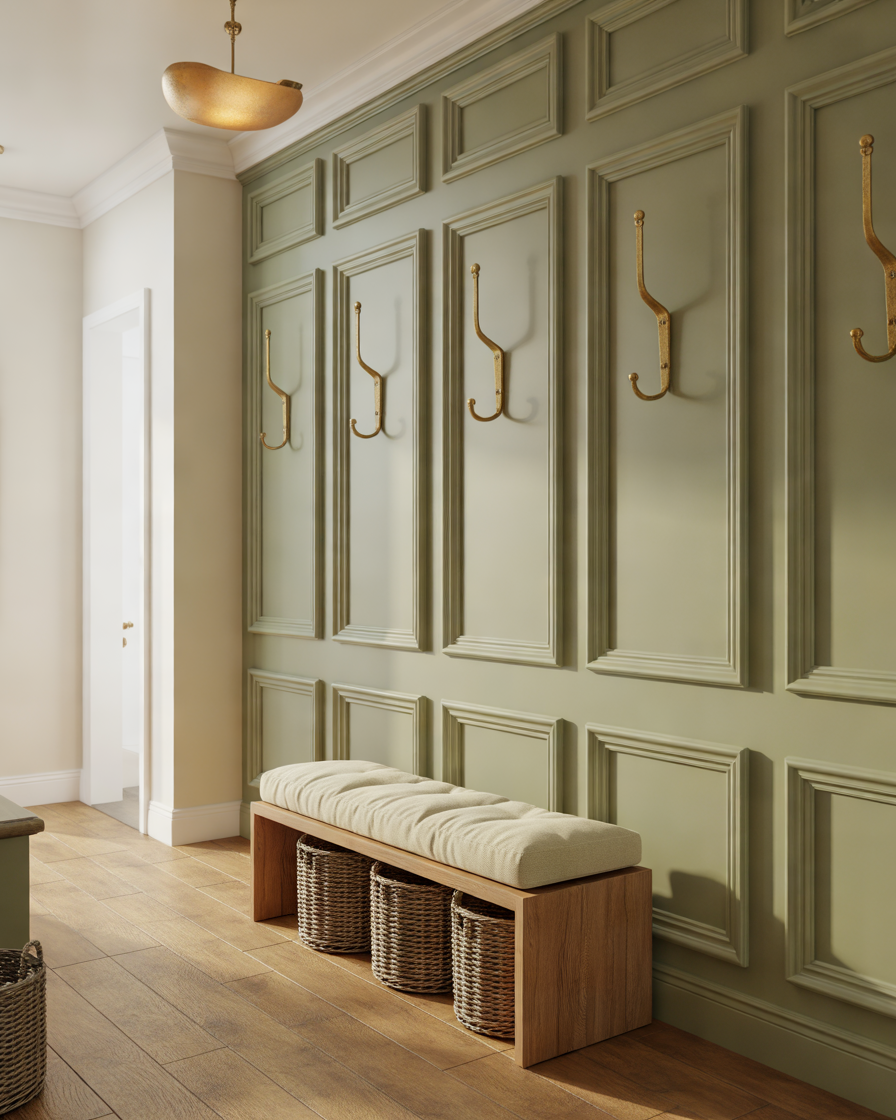
If you appreciate traditional decorating details but still want your home to feel fresh and contemporary, board and batten wall paneling is worth considering.
This style uses narrow trim pieces arranged across the wall to create raised geometric sections. The result is architectural interest without requiring an elaborate design.
I especially like board and batten in an entryway because it makes an otherwise plain wall feel intentional and finished.
For a soft, timeless look, choose warm white, cream, or light greige. If you want a more distinctive appearance, sage green, dusty blue, or muted charcoal can make the paneling stand out.
You can install the trim across the full wall or create a lower section of paneling with painted drywall above it.
A half-height treatment works beautifully with coat hooks, a narrow bench, or a small shoe cabinet. It can also help protect the lower wall when finished with a durable, washable paint.
To keep the design from feeling too traditional, pair the paneling with a contemporary mirror and simple metallic accents.
Styling tip: Plan the trim spacing around door frames, switches, and furniture before installation. Balanced proportions make the finished wall look professionally designed.
5. Introduce a Bold Wallpaper Accent Wall for Instant Personality
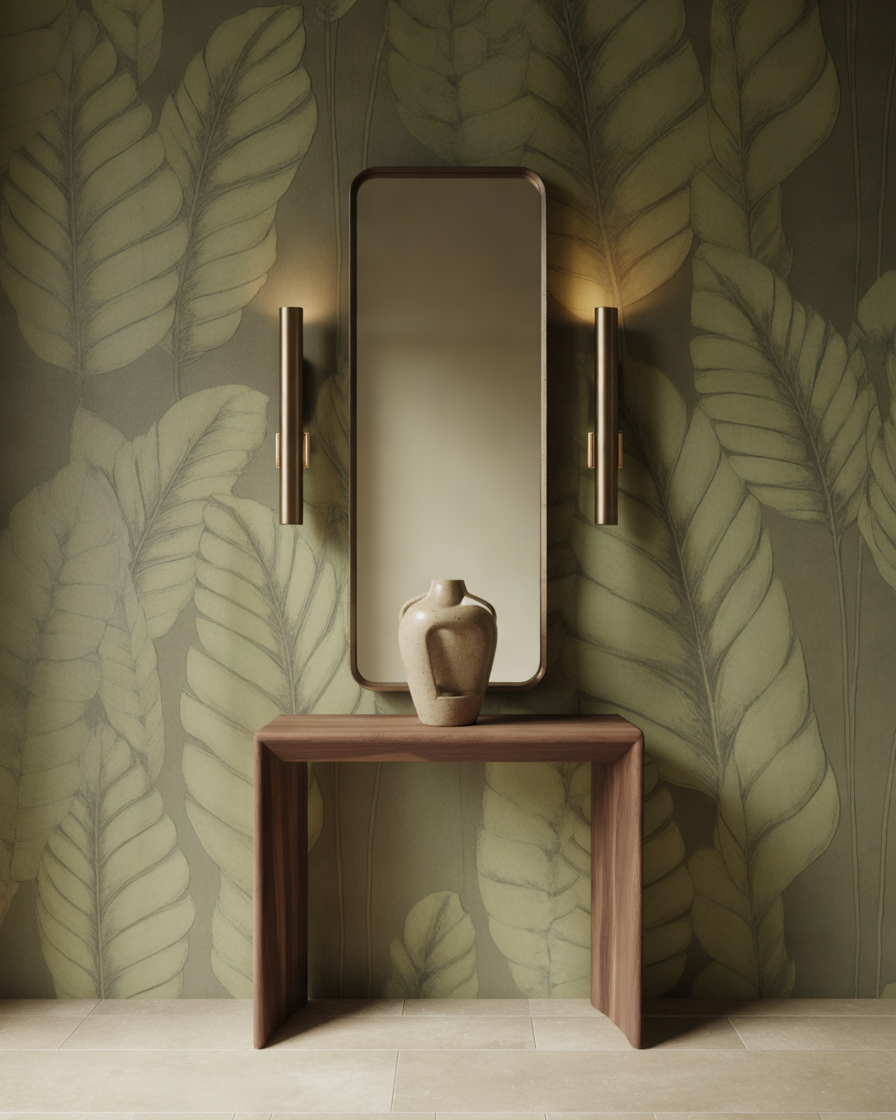
Wallpaper is one of the easiest ways to transform an ordinary entry wall into something special.
I love the idea of using wallpaper near the front door because it’s a space where you can experiment with patterns and colors without committing to them throughout an entire room.
A botanical wallpaper can create a fresh, nature-inspired atmosphere, while geometric patterns suit modern homes. Delicate florals work beautifully in romantic or vintage-inspired interiors, and textured grasscloth-style coverings provide a more understated appearance.
For smaller entryways, I usually prefer wallpaper with a soft background and a thoughtfully scaled pattern. Oversized, high-contrast designs can look fantastic too, but they need a little more consideration in a tight space.
If you’re renting or enjoy updating your decor regularly, removable peel-and-stick wallpaper may be a useful option. Just check that the product is compatible with your wall surface and paint finish.
A wallpapered entrance often looks best when the remaining accessories are simple. A slim console, understated mirror, and a small decorative object allow the pattern to remain the main attraction.
Styling tip: Choose one subtle color from the wallpaper and repeat it in a cushion, vase, or piece of furniture for a coordinated look.
6. Design a Functional Entry Wall With Stylish Hooks and Floating Shelves
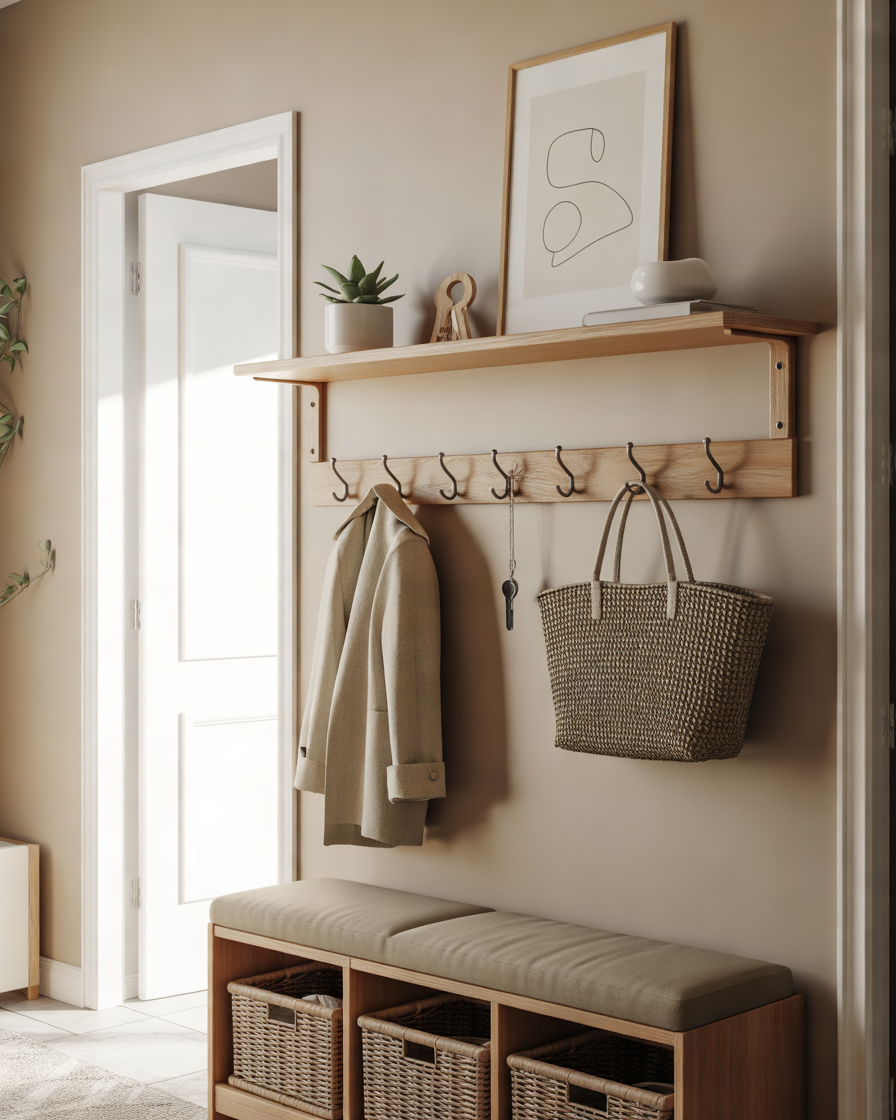
A beautiful entryway shouldn’t just look good in photographs. It should make everyday life easier too.
That’s why I always appreciate an entrance wall that combines decorative styling with practical storage.
Wall hooks are ideal for keeping frequently used jackets, handbags, scarves, and hats organized. When paired with floating shelves, they also provide a convenient place for decorative objects and everyday essentials.
For a contemporary look, consider matte black hooks installed along a light wooden mounting rail. Brass hooks on a cream wall create a softer, more elegant feeling.
You could add one floating shelf above the hooks for a small plant, framed photograph, or decorative basket. A shallow shelf underneath can hold keys and mail if it doesn’t interfere with hanging coats.
In a narrow hallway, I would avoid installing overly deep shelves. Keeping everything close to the wall helps preserve walking space.
For heavier items, make sure hooks and shelves are secured to suitable wall studs or properly rated anchors.
Styling tip: Choose matching hooks and keep only frequently used items on display. Too many hanging jackets can make even a beautiful wall look cluttered.
7. Create a Cozy Atmosphere With a Soft Limewash or Textured Paint Wall
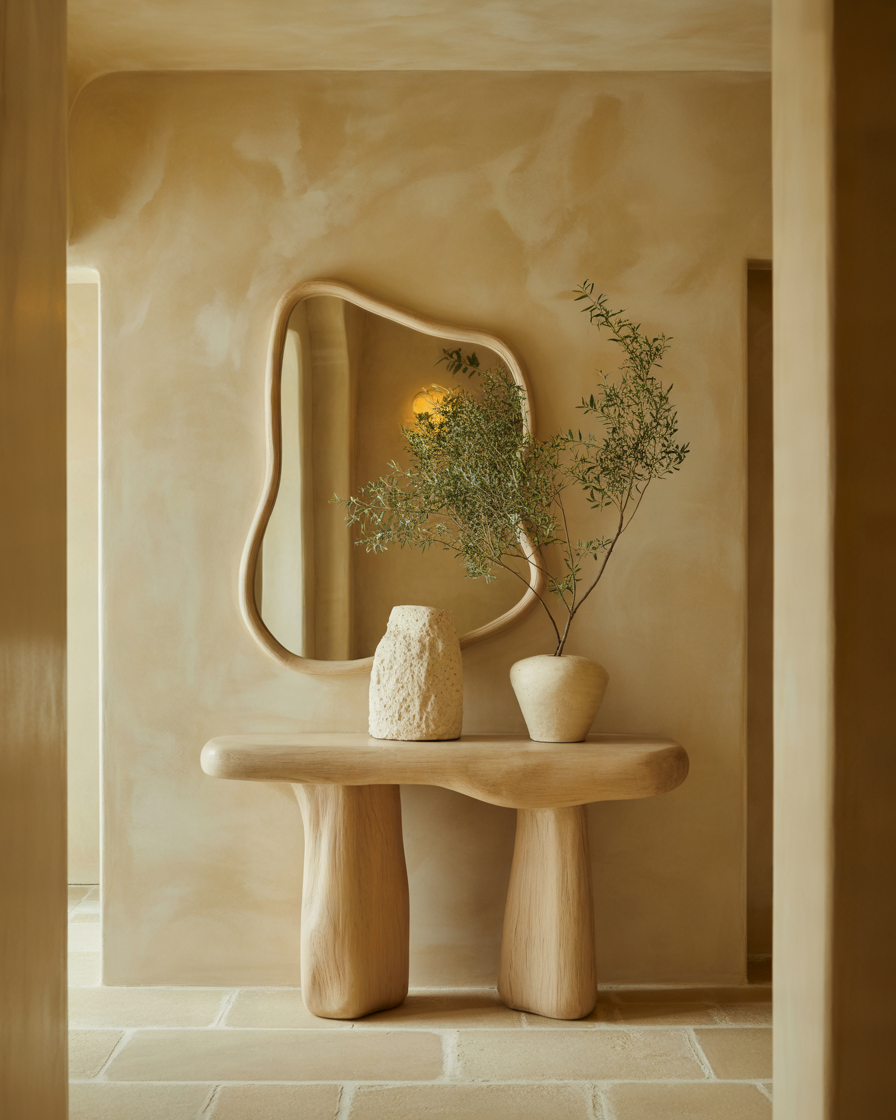
Not every statement wall needs bold patterns or complicated architectural details.
Sometimes, a subtle textured finish can make a stronger impression than an elaborate decoration.
Limewash-inspired walls have a soft, cloudy appearance that brings movement and depth to a surface. I especially enjoy this finish in warm beige, taupe, muted terracotta, and earthy gray because it makes an entrance feel calm and inviting.
The beauty of a textured wall lies in its natural variation. Depending on the lighting, different areas of the surface appear slightly lighter or darker, adding a gentle visual richness.
This approach works wonderfully in minimalist, Mediterranean, rustic, and organic modern interiors.
I would pair a warm limewash feature wall with an asymmetrical mirror, a simple wooden console, and one oversized ceramic vase.
Rather than filling the wall with many decorative pieces, allow the texture to be part of the design.
Genuine limewash and decorative plaster products can require particular preparation or application techniques, so always follow the manufacturer’s instructions and check wall compatibility.
Styling tip: Use warm, indirect lighting to emphasize the depth of the finish and make the wall feel especially welcoming in the evening.
8. Install a Narrow Picture Ledge for an Easily Changeable Entry Wall Display
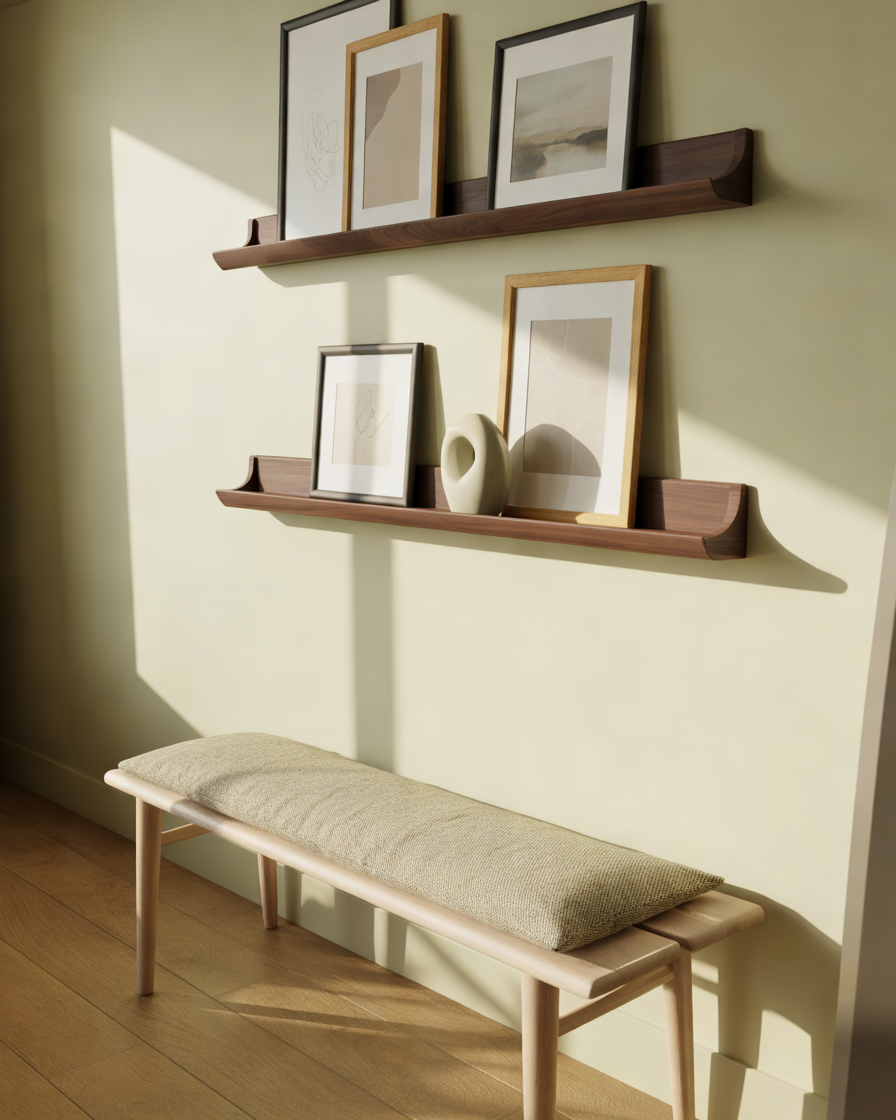
One of the most flexible entry wall decorating ideas is a picture ledge.
Unlike a traditional gallery wall, a picture ledge allows you to layer and rearrange framed artwork without creating new nail holes every time you want to change the display.
This makes it particularly useful if you love decorating with seasonal artwork or frequently update the style of your home.
I prefer thin wooden picture ledges in oak, walnut, or painted white finishes. They are understated enough to work with many decorating styles.
A single long ledge can look beautiful above a hallway bench, while two shorter ledges arranged vertically create a more collected appearance.
To make the display interesting, combine different frame sizes and allow a few pieces to overlap. You might include a black-and-white photograph, a small landscape painting, and a modern abstract print.
Adding a tiny ceramic vase or another lightweight decorative object can soften the arrangement.
Make sure framed pieces are stable, especially in a busy entrance where doors, bags, or coats might bump into the display.
Styling tip: Limit the artwork to two or three coordinating colors. This keeps the layered arrangement from looking visually overwhelming.
9. Make a Modern Statement With an Arched Wall Niche
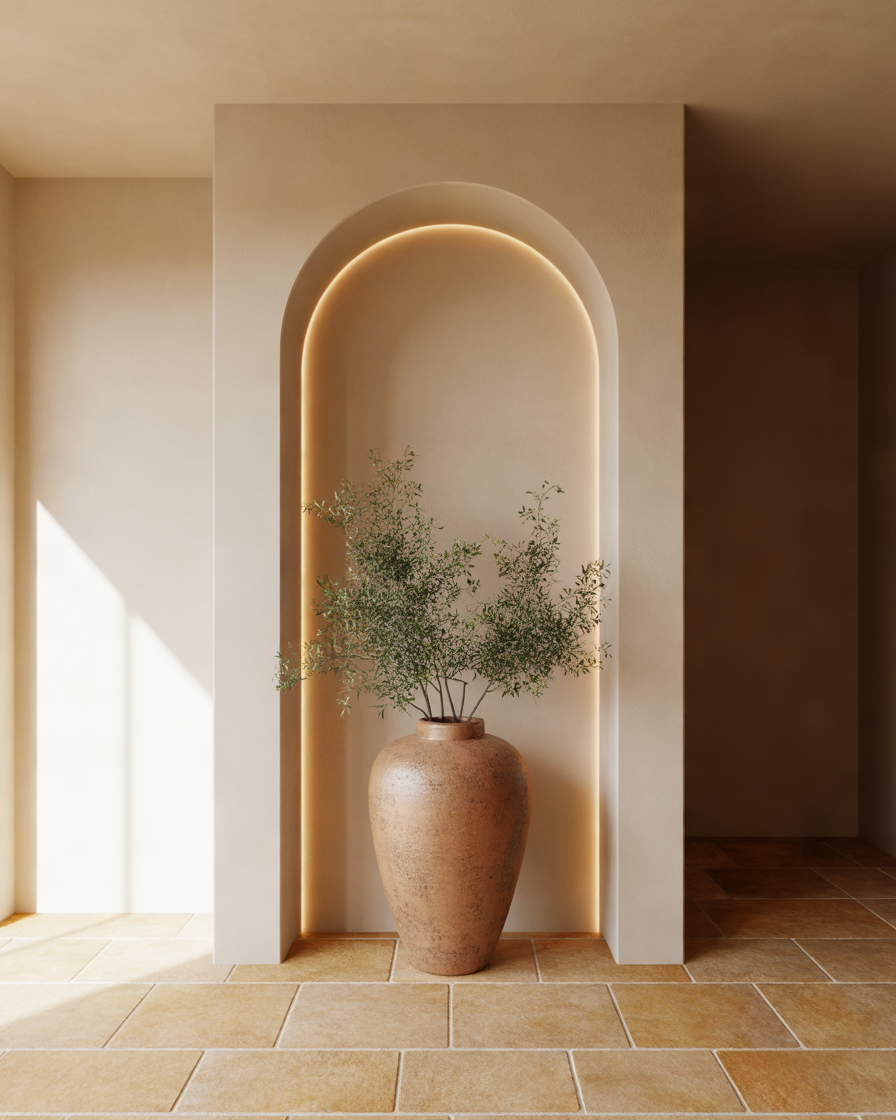
Arches have a timeless quality that can make even a simple entrance feel architecturally interesting.
An arched wall niche is a recessed decorative area built into the wall. It creates a beautiful place to display a sculpture, vase, plant, or small collection of meaningful objects.
I love the softer silhouette of an arch because most hallways already contain plenty of straight edges from doors, flooring, and furniture.
If you have a spacious entrance and an appropriate wall, a recessed arch with subtle lighting can become an elegant focal point.
For smaller entryways, you can achieve a similar visual effect by painting an arch directly onto the wall or adding a shallow arched decorative panel.
Warm neutral colors such as cream, sand, terracotta, and muted clay emphasize the organic shape beautifully.
If you’re considering a recessed niche, consult a qualified professional first to check whether the wall contains structural elements, plumbing, or electrical wiring.
Styling tip: Keep the decorative arrangement simple. One tall vase with branches or a single sculptural object is often more striking than several small accessories.
10. Create a Dramatic Focal Point With a Dark Painted Entry Wall
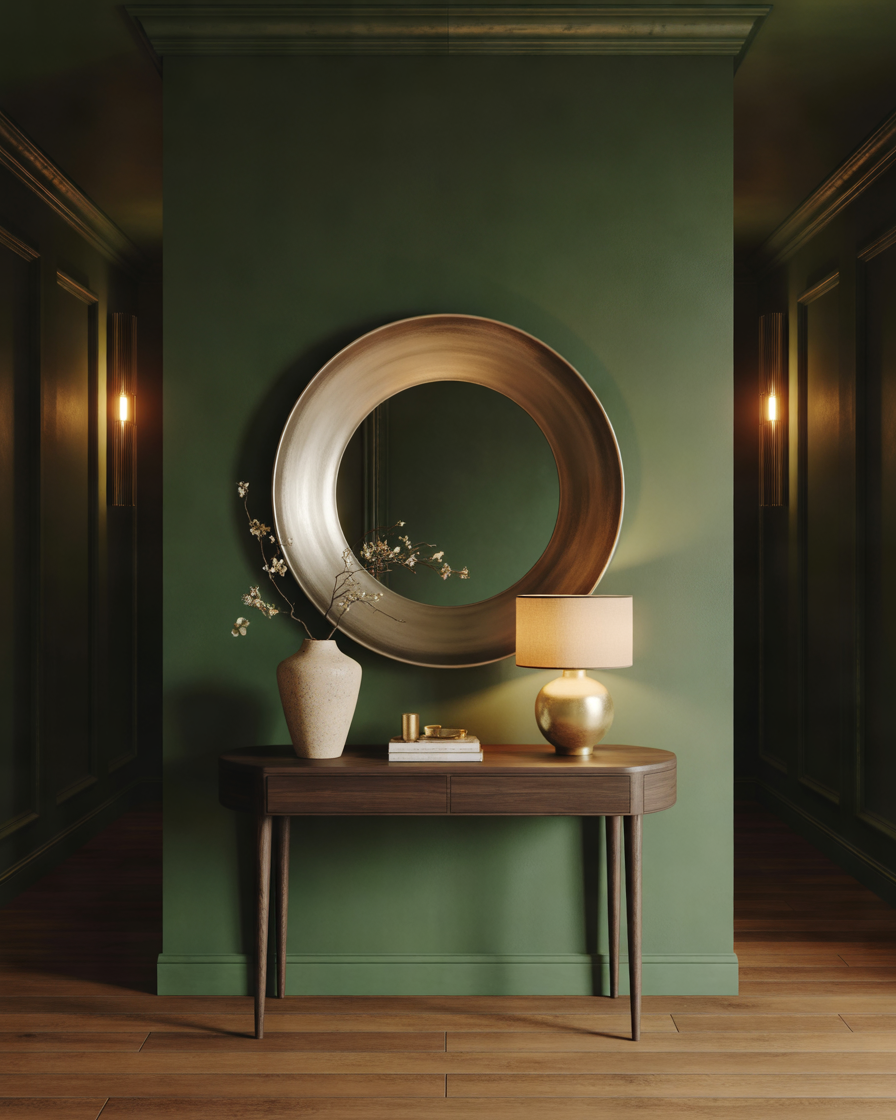
While light colors are popular for entryways, a darker feature wall can create a completely different kind of beauty.
Deep charcoal, forest green, navy blue, and warm black can give an entrance a rich, sophisticated appearance.
I particularly like dark accent walls when they are paired with warm wood tones, soft lighting, and contrasting artwork.
For example, a deep olive green entry wall with a walnut console and aged brass mirror can feel both cozy and luxurious.
A dark wall also provides an excellent background for sculptural lighting, pale artwork, and natural textures.
The key is balance. If your entryway doesn’t receive much daylight, consider keeping the surrounding walls and ceiling lighter or incorporating carefully placed lighting.
In a very narrow hallway, I would usually start with a single dark feature wall rather than painting every surface.
A matte or low-sheen paint finish often works beautifully, although durability and washability are important considerations near busy entrances.
Styling tip: Add a mirror or light-colored artwork to break up the dark surface and prevent it from feeling too heavy.
11. Bring Nature Indoors With a Beautiful Green Entry Wall Display
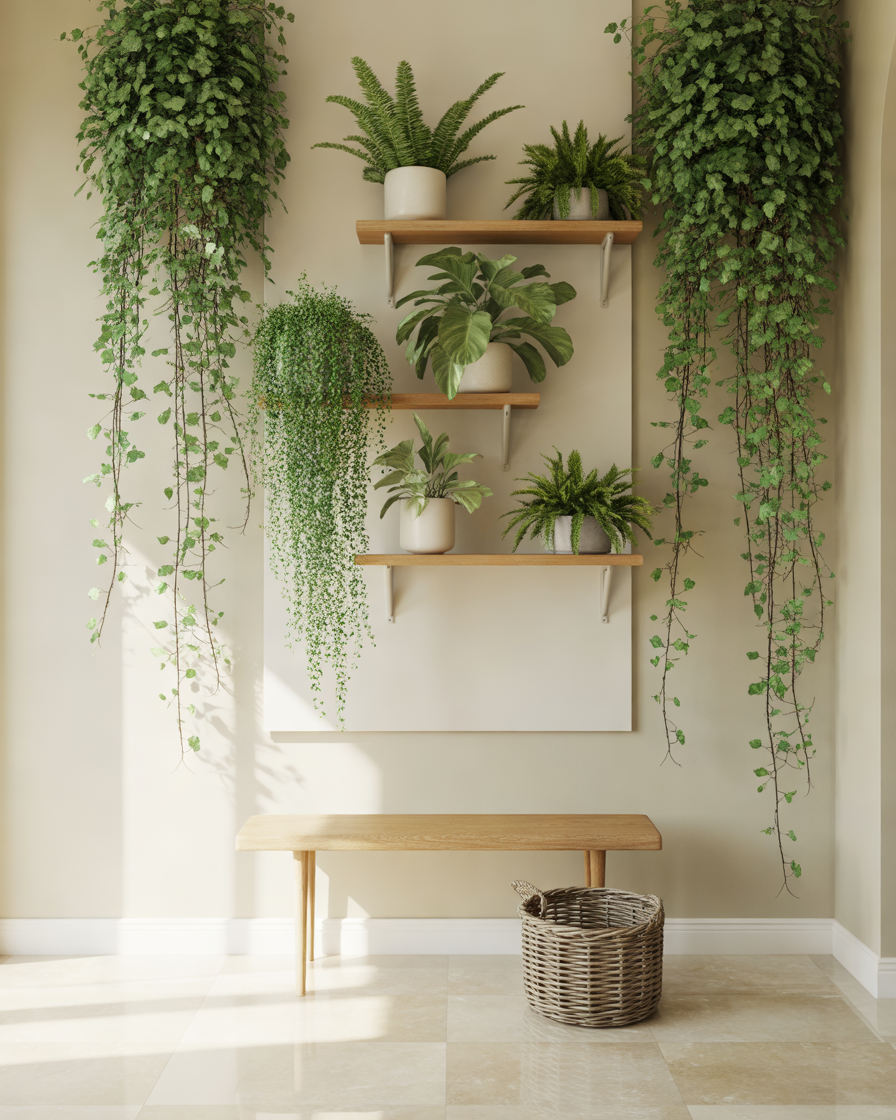
Plants have a wonderful ability to make an indoor space feel fresh, lively, and welcoming.
Instead of placing just one potted plant on the floor, consider using your entry wall to create a small botanical display.
Wall-mounted planters, floating plant shelves, and hanging trailing vines can transform an ordinary entrance into a calming, nature-inspired corner.
For an elegant look, I recommend choosing just a few varieties rather than filling the wall with different plants.
Pothos, heartleaf philodendron, and some ferns can work beautifully in indoor environments, provided their particular light and moisture requirements are met.
If your entrance is dark, choose plants that tolerate lower light levels or consider well-made artificial greenery.
I especially like pairing plants with light wood shelving, white ceramic planters, and warm neutral walls. This combination brings freshness without making the entrance feel crowded.
Remember to protect the wall from moisture and use secure mounting hardware. Planter trays are useful for keeping water from damaging painted surfaces.
Styling tip: Mix upright and trailing plant shapes at different heights to create a natural arrangement with visual movement.
12. Add Rustic Charm With Reclaimed Wood and Vintage-Inspired Decor
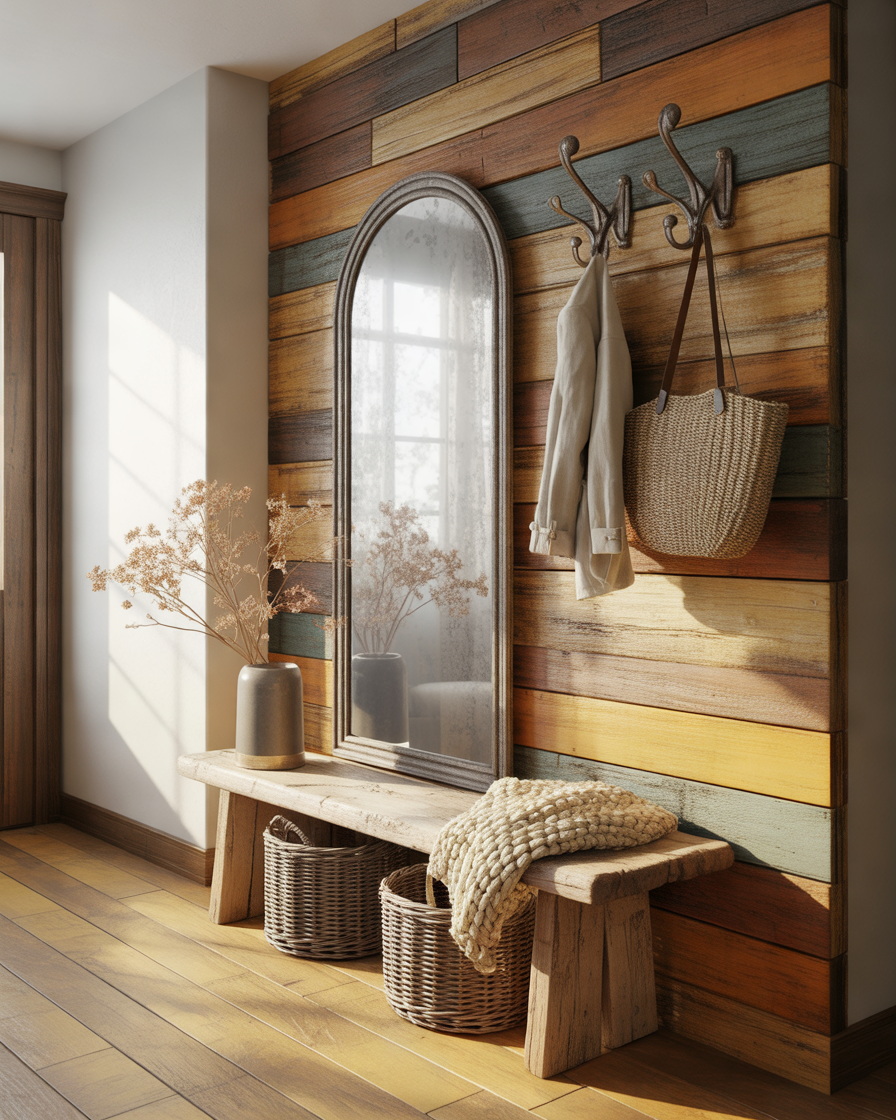
If you enjoy warm, lived-in interiors, a rustic entry wall may be exactly what your home needs.
Reclaimed wood can bring beautiful grain patterns, weathered finishes, and natural character to the entrance.
Unlike perfectly uniform decorative panels, reclaimed wood often features subtle imperfections that make the finished space feel authentic.
I love combining rustic wood with an antique-style mirror, wrought iron hooks, and a simple upholstered bench.
You could use reclaimed wood planks as an accent panel, create a decorative wall section, or install a wide wooden coat rail.
To prevent the space from becoming too visually heavy, balance the rustic elements with soft white or cream surrounding walls.
Natural fabrics such as linen, cotton, and jute complement weathered wood beautifully.
If you’re sourcing reclaimed materials, check that they’re clean, dry, stable, and suitable for indoor installation. Avoid wood with unknown chemical treatments, pest damage, or unsafe old finishes.
Styling tip: Mix one or two vintage-looking accents with simpler modern accessories. This helps the entrance feel charming rather than overly themed.
13. Try a Two-Tone Color-Blocked Wall for a Fresh Contemporary Look
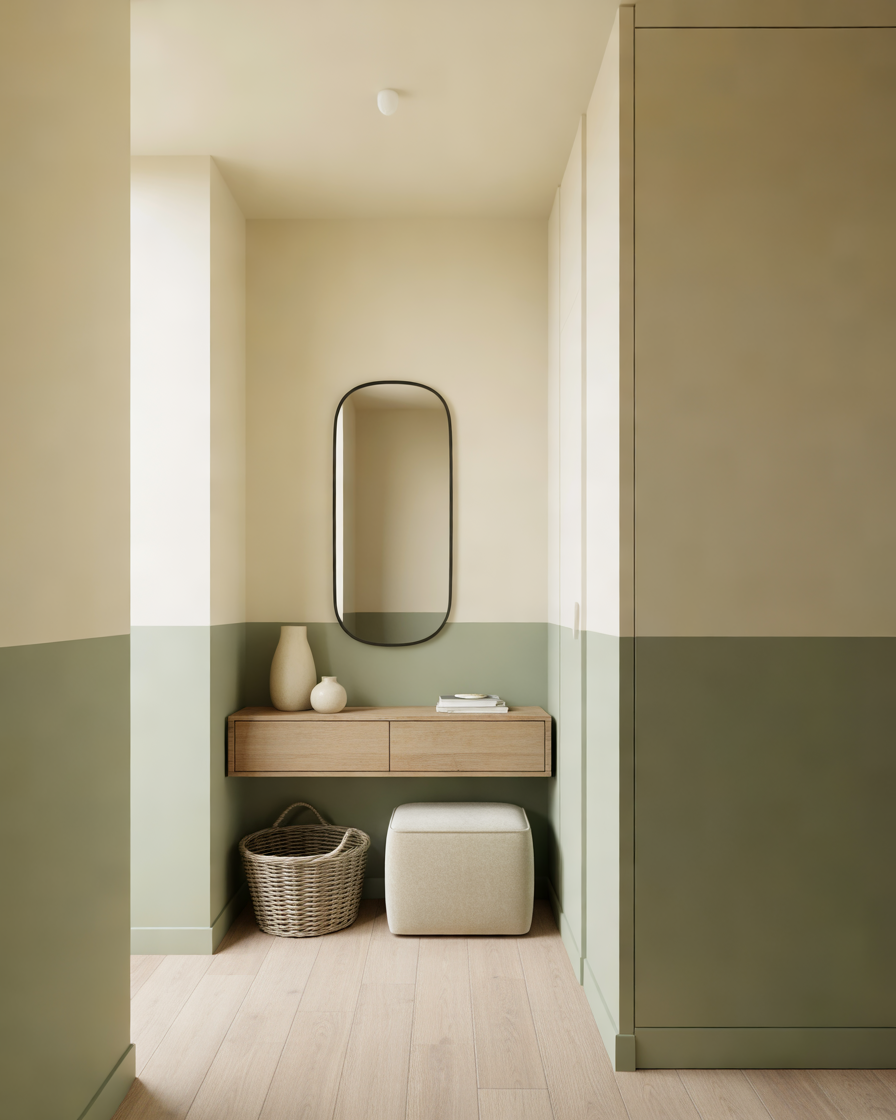
If you want an inexpensive but creative entry wall transformation, two-tone paint is an excellent choice.
Color blocking uses two or more paint colors to create defined sections of the wall. It’s an approachable way to introduce personality without installing wallpaper, paneling, or complicated decorative features.
One of my favorite combinations is warm white on the upper wall and muted sage green below.
The contrast feels fresh and calm while adding enough definition to make the entryway interesting.
For a more playful look, consider dusty pink with creamy beige, terracotta with ivory, or soft blue with warm gray.
Horizontal color blocking can visually widen a narrow entry. A vertical painted panel behind a mirror or bench can also help establish a specific decorative zone.
I would use painter’s tape and measure the boundary carefully to achieve a clean, professional finish.
The transition line can sit around the height of an entryway bench, extend just above a console table, or be placed according to the room’s proportions.
Styling tip: Choose colors that already appear in nearby rooms so the entrance feels connected to the rest of the house.
14. Create an Elegant Entryway With Sculptural Wall Lighting
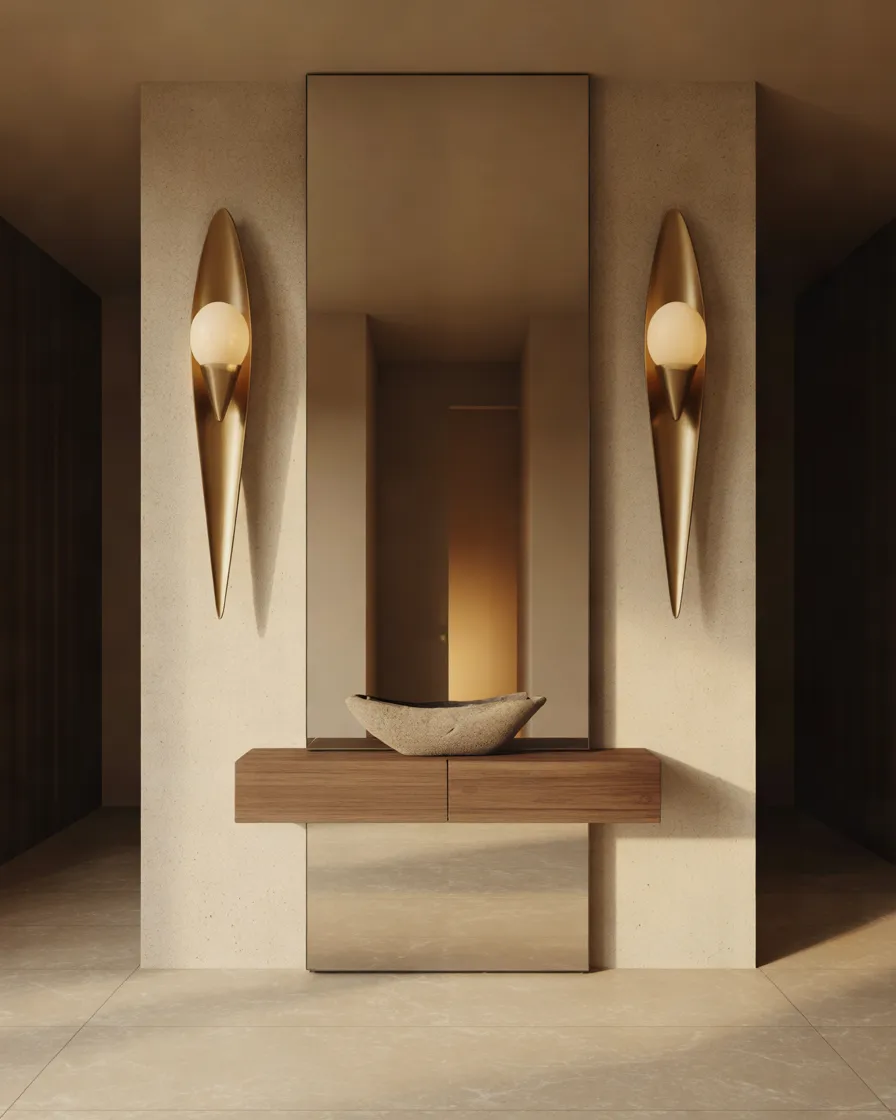
Lighting is often treated as a finishing detail, but I think it can be the defining feature of a beautiful entry wall.
A carefully chosen wall sconce doesn’t simply illuminate the entrance. It can act like a piece of artwork.
For modern homes, sculptural wall lights with curved metal arms, frosted glass globes, or minimalist geometric shapes look particularly attractive.
For a more traditional foyer, a pair of lantern-inspired sconces can frame a mirror or artwork beautifully.
I love the effect of warm, diffused lighting against a softly textured wall. It creates a welcoming atmosphere in the evening and makes the entrance feel more considered.
If your entryway has a long wall, two evenly spaced sconces can establish a pleasant rhythm. In a smaller entrance, one decorative fixture above a console may be sufficient.
You can also combine a wall light with a small mirror to reflect the glow throughout the space.
Where electrical wiring is required, use a qualified electrician and select fixtures suitable for the installation location.
Styling tip: Avoid overly harsh light. A warm color temperature and a diffused shade generally create a more comfortable residential atmosphere.
15. Design a Complete Entry Wall With a Floating Console and Layered Decor
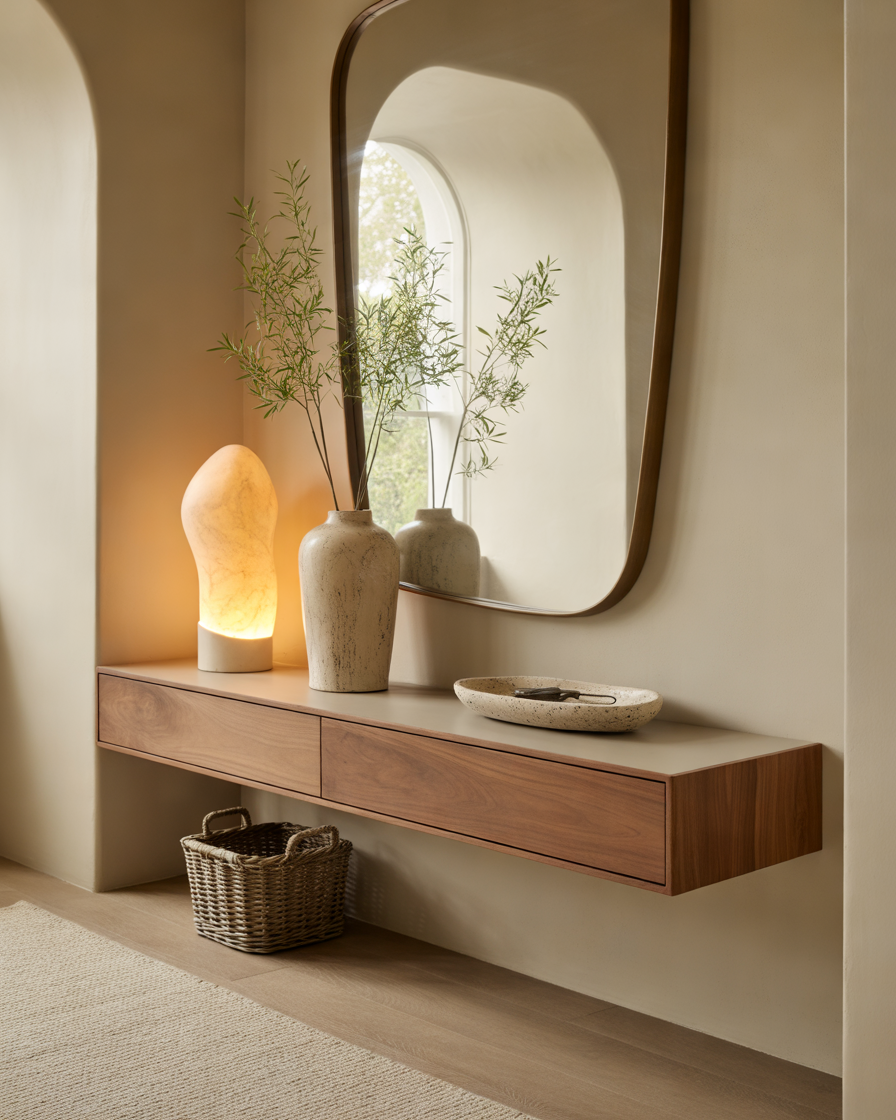
Sometimes, the best home entry wall design isn’t about one dramatic feature. It’s about bringing several simple elements together into a beautifully balanced arrangement.
A floating console is an excellent starting point because it provides a surface for everyday essentials without occupying as much visual space as bulky furniture.
I love the combination of a floating wooden console, a large framed mirror, a small table lamp, and one sculptural decorative object.
The mirror creates depth, the console offers practical storage, and the accessories add warmth and personality.
If your entrance is wide enough, you could place an upholstered stool or woven basket beneath the console. For a narrow hallway, leave the space below clear to maintain an open appearance.
Consider adding a shallow drawer to store keys, sunglasses, and other small belongings. Hidden storage helps keep the surface neat.
The arrangement should feel layered but not crowded. A tall vase on one side and a shorter bowl on the other can create visual balance without making the display too symmetrical.
You can finish the look with a soft wall color or a subtly textured background.
Styling tip: Use objects of different heights and materials, such as wood, ceramic, glass, and metal, to create an inviting arrangement with depth.
How to Choose the Right Home Entry Wall Design for Your Space
With so many beautiful entryway wall ideas available, choosing one can feel a little overwhelming. My advice is to begin with the space itself rather than a decorating trend.
A design that looks wonderful in a large foyer may not work as well in a narrow apartment hallway. The goal is to choose something that complements your home while making the entrance comfortable and functional.
Think about the size of your entryway.
For a small entrance, I would prioritize mirrors, floating shelves, pale wall colors, and slim furniture. These elements provide decoration without taking up too much physical or visual space.
A larger foyer gives you more freedom to experiment with full-height paneling, bold wallpaper, gallery walls, and statement lighting.
Consider how much natural light you receive.
Bright entrances can accommodate deeper colors and stronger patterns more easily. Darker hallways may benefit from reflective surfaces, lighter finishes, and carefully positioned artificial lighting.
Choose materials that match your lifestyle.
The entryway experiences more everyday activity than many other areas of the home. Shoes, bags, coats, children, and pets can all contribute to scuffs and wear.
Washable paint, durable paneling, secure hooks, and easy-to-clean surfaces are often practical choices.
Make the design feel connected to the rest of your home.
Your entrance doesn’t need to match every room perfectly, but it should introduce the overall decorating style.
For example, a modern home might benefit from clean lines and understated wall decor, while a cozy farmhouse interior could feature wooden accents and traditional paneling.
Create one clear focal point.
This is probably the design principle I return to most often. Rather than filling the entrance with multiple statement features, choose one main attraction.
It could be an oversized mirror, a stunning wallpaper pattern, textured wood, or a beautiful lighting fixture. Let the other elements support it.
Budget-Friendly Home Entry Wall Decorating Ideas
A stylish entryway doesn’t have to involve an expensive renovation.
In fact, some of my favorite decorating changes are the simplest ones.
If you’re working with a limited budget, painting one wall can dramatically refresh the entrance. A soft neutral color gives the space a clean foundation, while a deeper shade adds personality.
Another affordable option is creating a small gallery wall with artwork you already own. You can refresh existing frames with paint or arrange them in a new composition for a completely different look.
Decorative wall hooks are also worth considering because they improve functionality while contributing to the overall style.
If you have leftover wood from another project, you might use it to make a simple picture ledge or coat rail, provided the materials are safe and suitable.
Secondhand mirrors and console tables can be particularly good finds. A little cleaning or refinishing may be enough to give them a fresh appearance.
I would invest first in features that have the greatest visual impact, such as wall color, lighting, or a focal mirror, and add smaller accessories gradually.
This approach makes it easier to create a thoughtful design rather than buying lots of decorations that don’t necessarily work together.
Common Home Entry Wall Design Mistakes to Avoid
Even beautiful decorative pieces can make an entrance feel awkward if they’re not arranged carefully.
One common mistake is using too many accessories on a small wall. I find that a few well-chosen pieces usually create a more polished result than an overcrowded collection.
Another issue is selecting furniture that’s too deep for the hallway. Before buying a console, bench, or wall-mounted shelf, measure your available space and ensure the walkway remains comfortable and unobstructed.
Lighting is another important detail. An attractive wall can lose much of its impact if the entrance feels dark or has harsh overhead illumination.
It’s also worth thinking about everyday storage. A wall filled with decorative artwork may look beautiful, but if there’s nowhere to put your keys or hang a bag, the entrance can quickly become disorganized.
Finally, don’t overlook proportions. A very small mirror above a large console can feel unbalanced, while oversized artwork in a tight hallway may overwhelm the space.
Taking measurements and planning the arrangement before installing anything will help you avoid these problems.
Frequently Asked Questions About Home Entry Wall Design
What is the best wall design for a small home entrance?
For a small entrance, a large wall-mounted mirror paired with a narrow floating shelf is one of my favorite solutions. Light-colored walls, simple hooks, and minimal decorative accessories can also make the space feel open and organized.
Which color is best for an entryway wall?
Warm white, beige, greige, sage green, and light gray are versatile choices. If you want a bold statement, deep green, navy blue, charcoal, or terracotta can work beautifully. The best color depends on the amount of natural light and the surrounding interior style.
How can I decorate an entry wall without furniture?
You can create a beautiful entrance using framed artwork, decorative paneling, wallpaper, wall sconces, mirrors, or painted architectural shapes. Wall-mounted hooks and shallow shelves also provide functionality without requiring a full furniture piece.
How do I make my entryway look expensive on a budget?
Focus on a cohesive color palette, balanced proportions, a statement mirror, and simple but attractive lighting. Carefully arranged decor often looks more sophisticated than numerous expensive accessories.
Should an entryway accent wall match the living room?
It doesn’t need to match exactly, but repeating a few colors, textures, or materials can create a natural connection between the two spaces. This is especially helpful in open-plan homes where the entrance is visible from the living area.
What can I put on a tall, empty foyer wall?
A tall wall offers an opportunity to use vertical wood slats, oversized artwork, stacked picture ledges, tall mirrors, or full-height decorative molding. Choose a feature that takes advantage of the wall’s height while complementing the scale of the room.
Final Thoughts: Give Your Home Entry Wall the Attention It Deserves
A beautiful home begins with a welcoming entrance, and your entry wall plays an important role in creating that first impression.
What I love most about these 15 home entry wall design ideas is that they offer something for almost every space and decorating preference. You can keep things simple with an oversized mirror, introduce warmth through natural wooden slats, add architectural character with wall paneling, or create a bold focal point using wallpaper and rich paint colors.
For a more personal touch, a gallery wall tells your story. For everyday convenience, floating shelves and decorative hooks help create an organized entrance. And if you want a calm, sophisticated atmosphere, textured walls and warm lighting can make a remarkable difference.
My biggest recommendation is to choose a design that feels natural to your home and the way you live. Don’t feel pressured to incorporate every trend or fill every empty section of the wall.
Sometimes, one thoughtfully chosen decorative feature is all it takes to make an entrance feel complete.
Whether your space is large or small, modern or traditional, a carefully designed entry wall can make coming home feel just a little more special.
