
A beautiful garden is not simply a collection of plants. It is a place where you can slow down, breathe deeply, and enjoy a little distance from the demands of everyday life. Whether you have a large backyard, a narrow side garden, a small patio, or even a compact balcony, thoughtful garden design can transform it into a space that feels personal and inviting.
Whenever I begin planning an outdoor area, I try not to focus only on what looks fashionable. Instead, I think about how the garden will be used. Will it be a quiet place for morning coffee? A safe area for children to play? A colorful retreat filled with flowers? Or perhaps a practical space for growing herbs and vegetables?
The most successful gardens usually combine beauty with purpose.
In this guide, I am sharing 15 garden design ideas for inspiration that can work across different garden sizes, budgets, and styles. You do not need to copy every idea exactly. Use them as starting points, then adapt the colors, materials, plants, and layout to suit your own home.
1. Create a Welcoming Garden Entrance
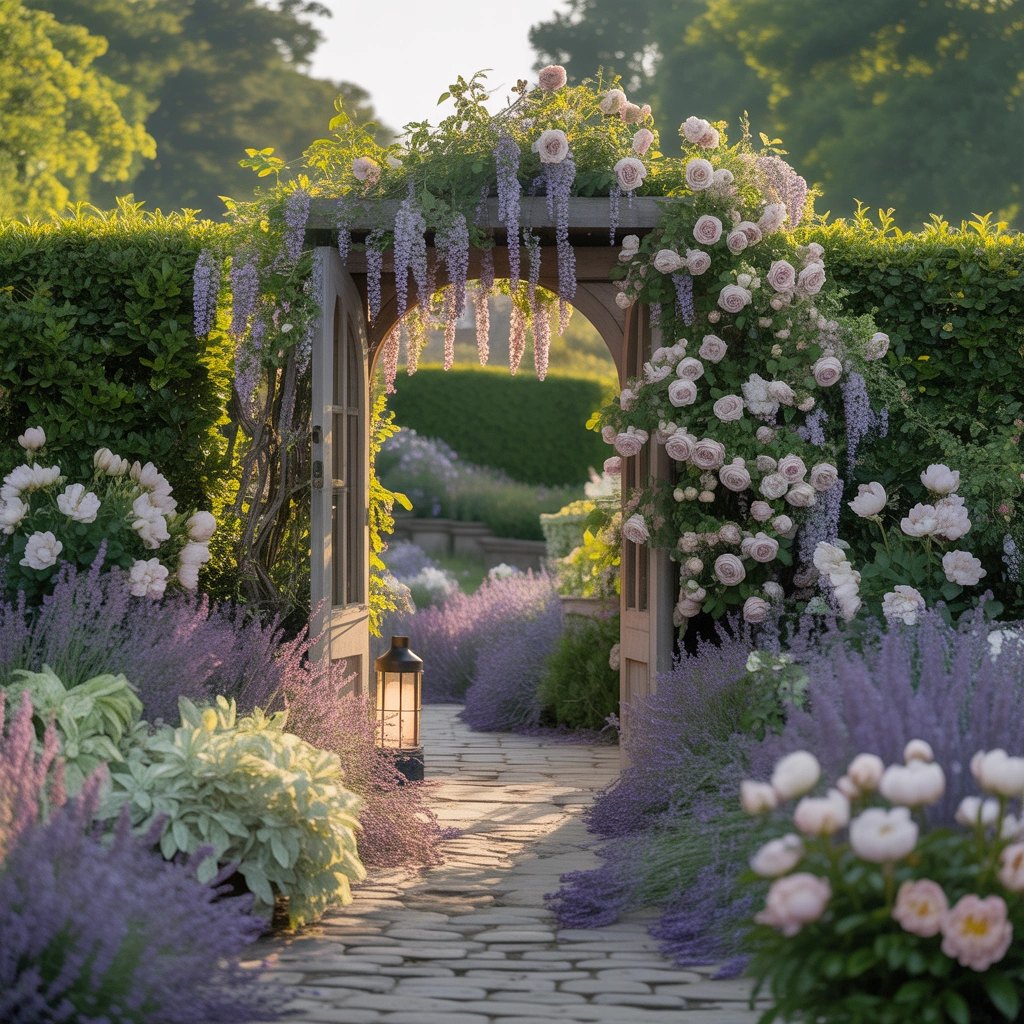
The entrance sets the mood for the entire garden. Even before someone steps fully into the space, the pathway, gate, arch, or surrounding plants can create a sense of anticipation.
A welcoming garden entrance does not need to be large or expensive. A simple wooden gate painted in a soft color can immediately add character. You could frame the entrance with climbing roses, jasmine, clematis, or another vine that suits your climate.
For a more structured appearance, place matching pots on both sides of the entrance. Evergreen shrubs, small trees, lavender, or ornamental grasses can create balance without making the area feel too formal.
I especially like entrances that reveal the garden gradually. Instead of allowing the whole space to be seen at once, use planting, screens, or a curved pathway to hide part of the view. This small touch adds mystery and encourages people to explore.
Consider adding:
- A decorative garden gate
- An arch covered with climbing plants
- Solar lanterns beside the path
- Coordinated planters
- A personalized garden sign
- Fragrant flowers near the doorway
A strong entrance is one of the simplest garden design ideas for creating an immediate impression.
2. Design a Cozy Outdoor Seating Area
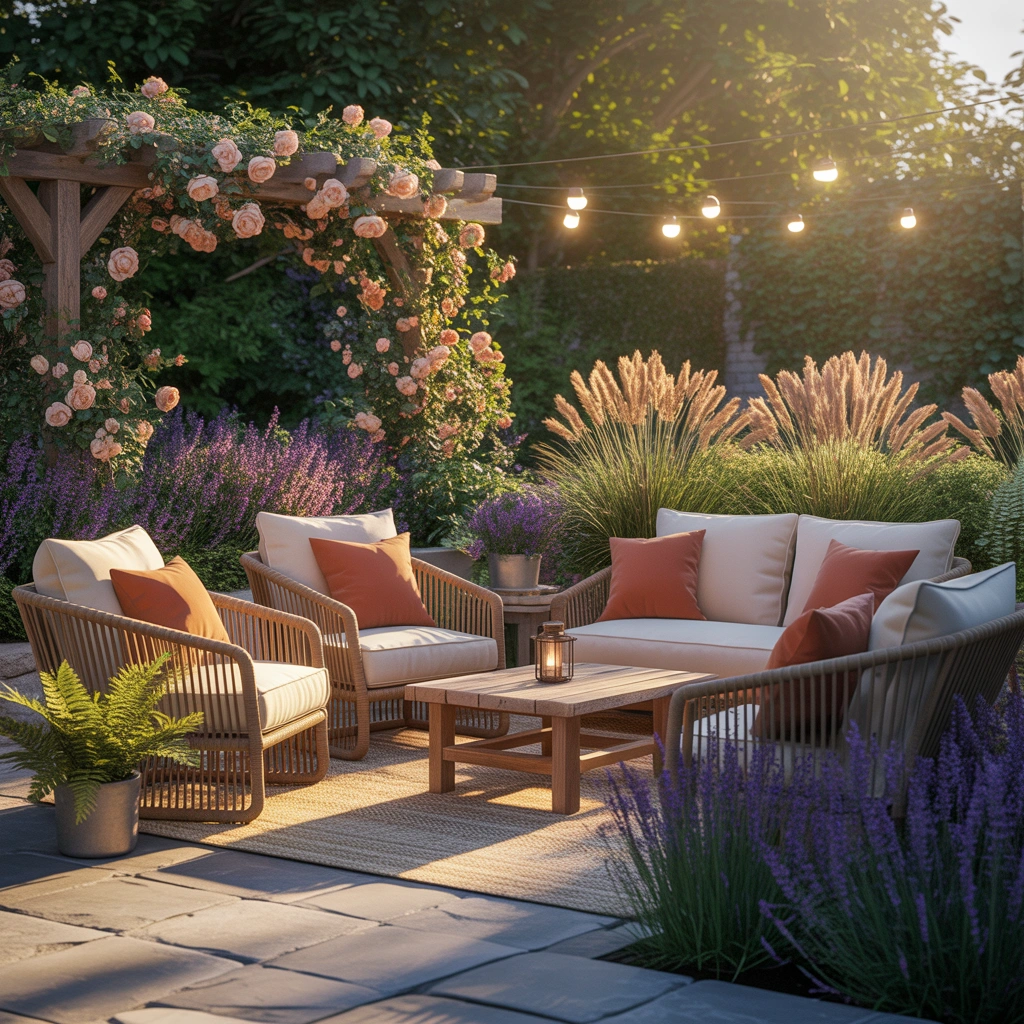
A garden becomes much more enjoyable when there is a comfortable place to sit. Without seating, even the prettiest outdoor space may be admired only from a window.
Before choosing furniture, observe how sunlight moves through your garden. A spot that feels peaceful in the morning may become extremely hot in the afternoon. Likewise, a shaded corner may be perfect for summer but too cold during cooler months.
Choose seating according to how you want to use the area. A small bench works beautifully in a quiet corner, while a larger dining set is better for family meals and entertaining. For informal relaxation, consider lounge chairs, floor cushions, a hammock, or a built-in seating wall.
To make the area feel like an outdoor room, add:
- Weather-resistant cushions
- An outdoor rug
- Side tables
- Potted plants
- Lanterns or string lights
- A pergola or shade sail
- Soft throws for cooler evenings
Try to position the seating where it faces something attractive, such as a flower border, water feature, tree, or garden sculpture. This creates a stronger visual connection between the seating area and the rest of the garden.
3. Use Curved Pathways to Add Movement
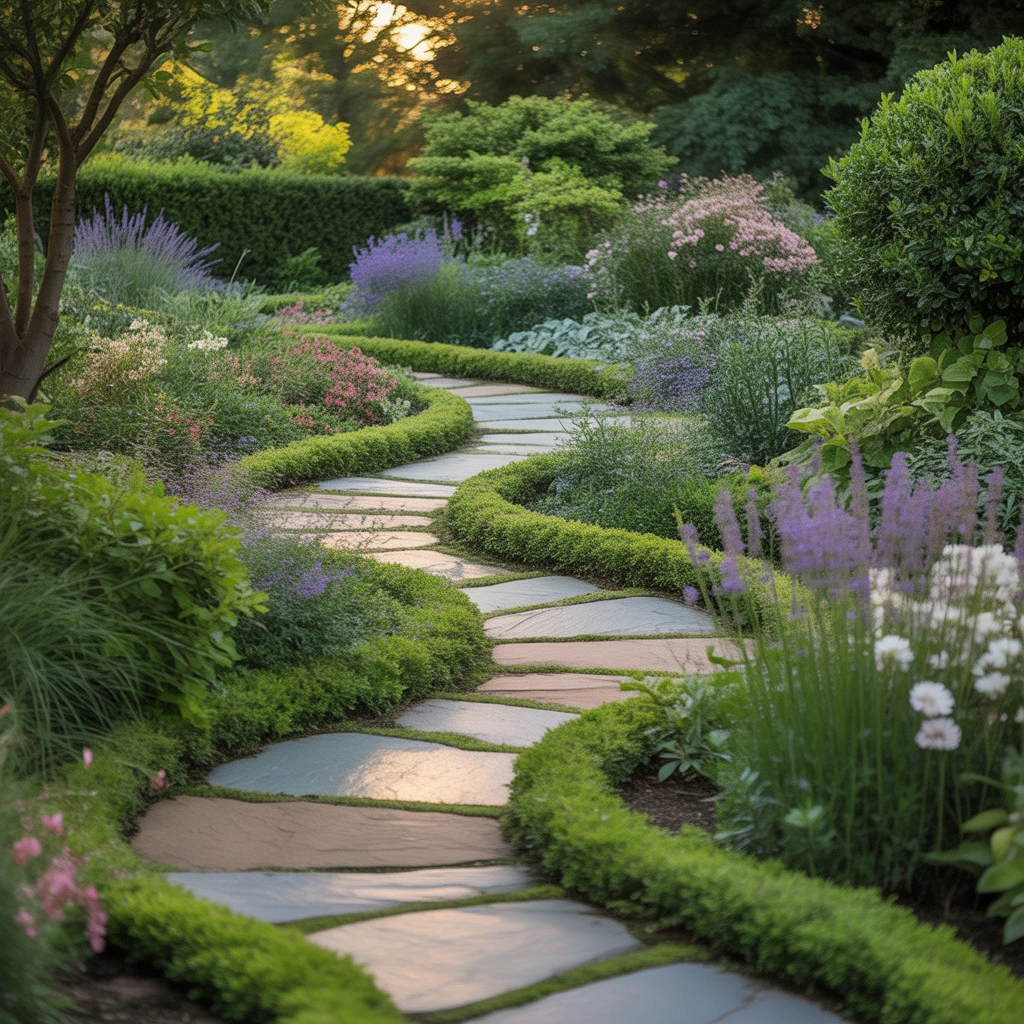
Straight paths are practical, but curved pathways often feel more natural and inviting. They encourage slower movement and can make a small garden seem more spacious by preventing the entire route from being visible at once.
A curved path can lead visitors toward a seating area, garden shed, vegetable patch, or hidden feature. It can also help divide the garden into separate zones without using walls or fences.
The material you choose will influence the overall style. Gravel feels relaxed and works well in cottage gardens. Large paving stones create a cleaner, more contemporary appearance. Brick offers warmth and traditional character, while stepping stones surrounded by ground-cover plants create a soft, informal effect.
When designing a curved pathway, avoid making the curves too sharp or unnecessary. The path should still feel comfortable and logical to walk along.
You can soften the edges with:
- Low-growing herbs
- Creeping thyme
- Small ornamental grasses
- Lavender
- Ground-cover flowers
- Decorative stones
- Solar path lights
A well-designed pathway is not only functional. It becomes part of the garden’s visual story.
4. Build Layers with Plants of Different Heights
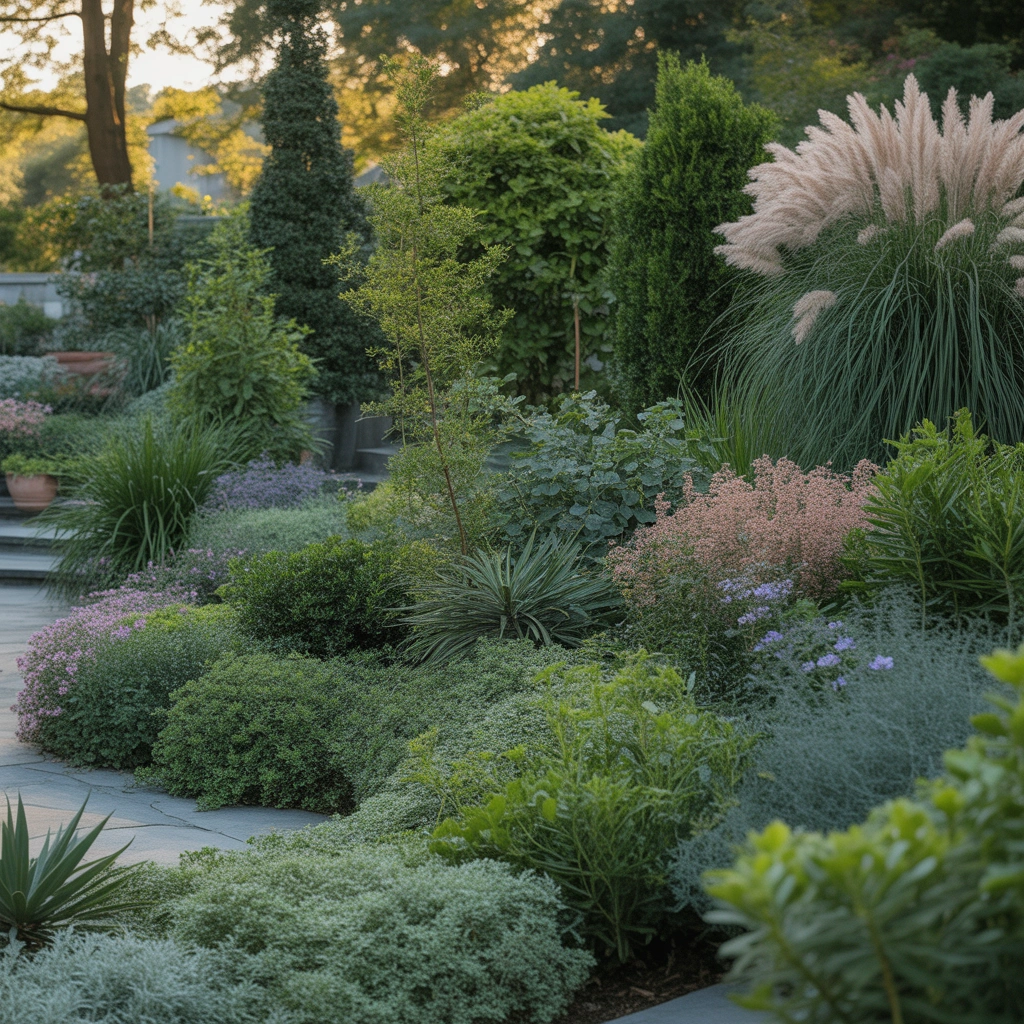
One of the easiest ways to make a garden look fuller and more professionally designed is to arrange plants in layers.
In a traditional border, taller plants are usually placed toward the back, medium-height plants in the center, and shorter plants near the front. However, you can also break this rule occasionally by bringing a taller plant forward to create rhythm and visual interest.
Start with the structural layer. This might include small trees, evergreen shrubs, hedges, or tall ornamental grasses. These plants provide height and shape, even when seasonal flowers are not blooming.
Next, add medium-sized flowering shrubs and perennials. Finally, fill the front of the border with compact flowers, herbs, and ground-cover plants.
For a natural appearance, repeat the same plants in several areas instead of using one of everything. Repetition helps connect different sections of the garden and prevents the planting scheme from looking random.
Think about:
- Height
- Flowering season
- Leaf shape
- Plant texture
- Color combinations
- Mature plant size
- Sunlight and soil needs
Layered planting can make even a narrow border feel rich, balanced, and carefully considered.
5. Choose a Simple Garden Color Scheme
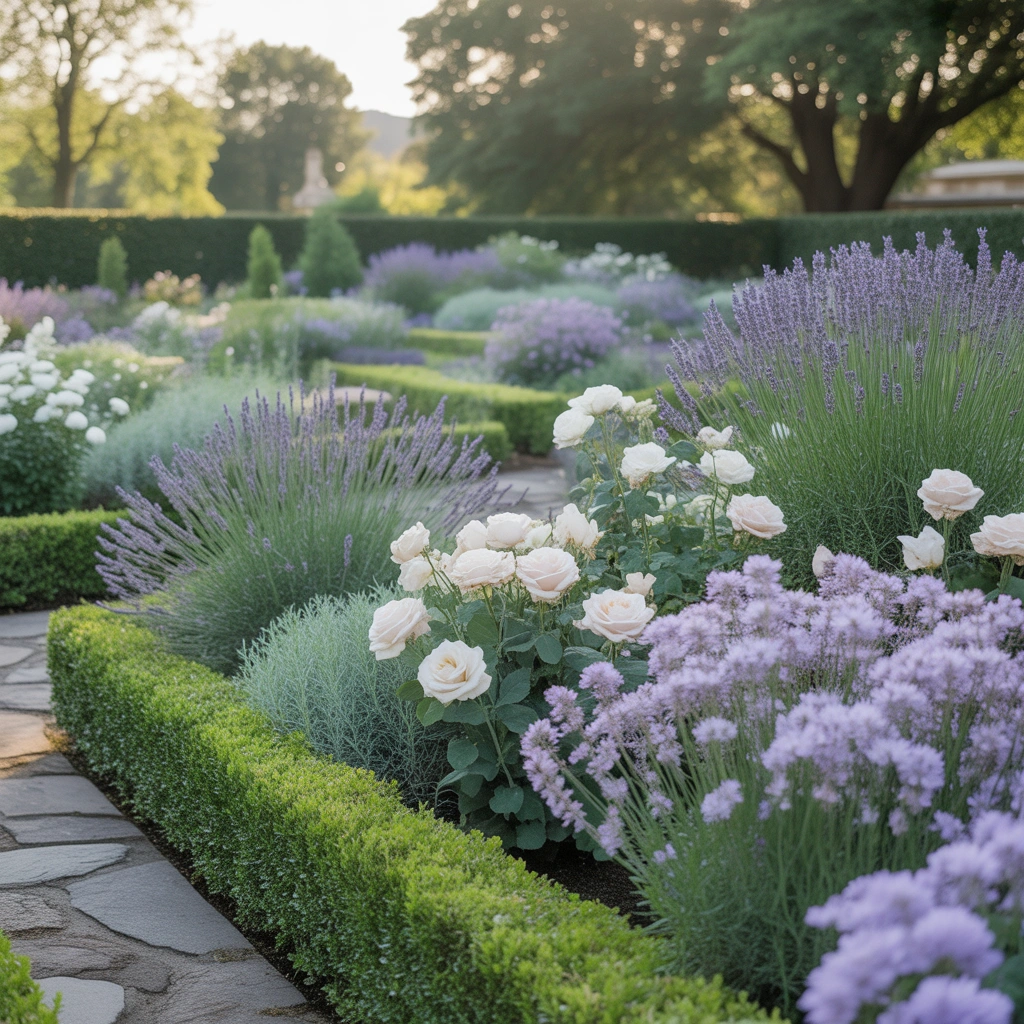
It is tempting to buy every beautiful plant you see, but too many unrelated colors can make a garden feel busy. Choosing a basic color scheme creates harmony and makes plant shopping much easier.
A limited palette does not mean your garden has to look boring. You can create variety through different shades, leaf shapes, plant heights, and textures.
For a calm and elegant garden, try white, pale pink, lavender, and soft blue. For a warm, energetic space, use orange, red, golden yellow, and deep purple. If you love a fresh natural look, combine different shades of green with white flowers.
You can also use the colors of your house as inspiration. For example, a gray exterior may look beautiful with white flowers and silver foliage, while a brick home may suit warmer reds, creams, and deep greens.
Remember that color does not come only from flowers. Consider:
- Painted fences
- Garden furniture
- Plant containers
- Outdoor cushions
- Decorative tiles
- Autumn leaves
- Bark and stems
- Foliage colors
Personally, I prefer choosing two or three main colors and then adding one contrasting shade in smaller amounts. This keeps the garden coordinated while still allowing room for personality.
6. Add a Vertical Garden to Save Space
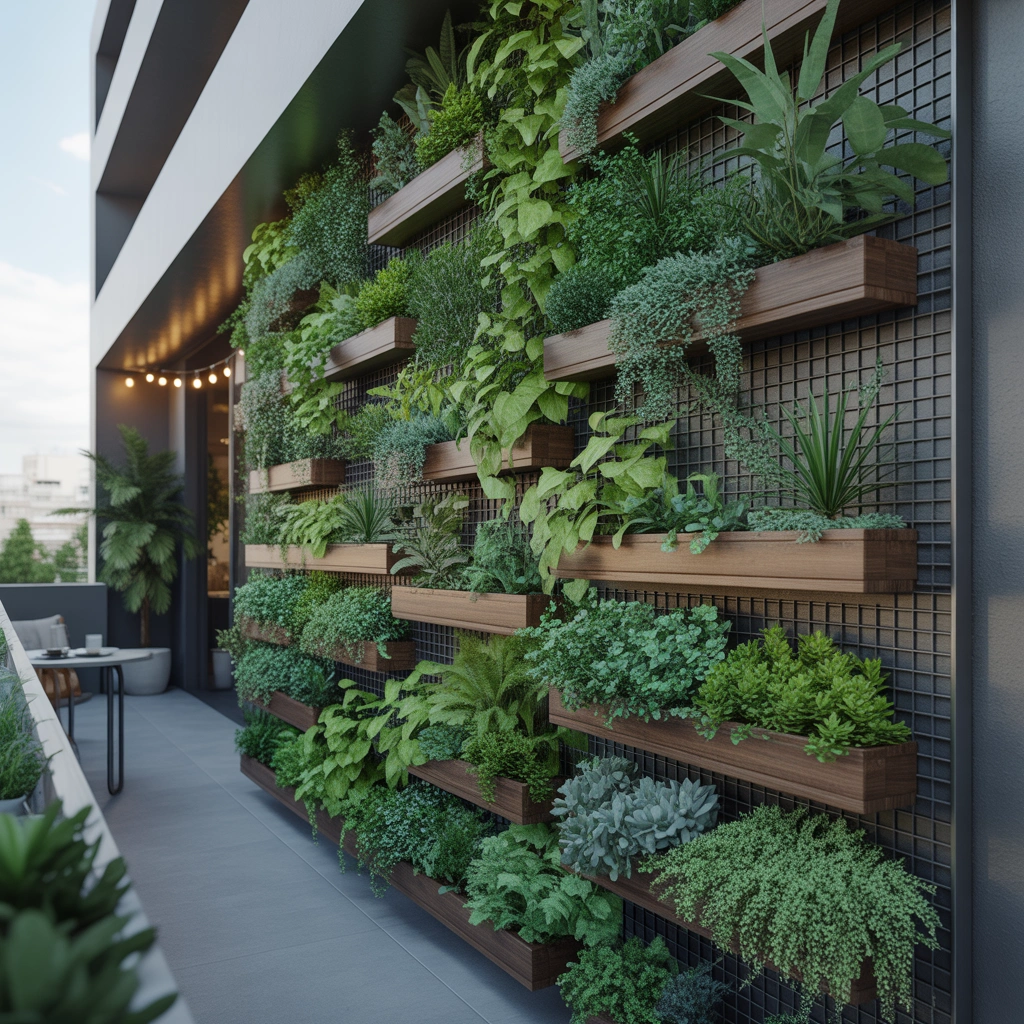
Vertical gardening is especially useful in small gardens, balconies, courtyards, and narrow outdoor areas. Instead of relying only on ground space, you can grow upward using walls, fences, trellises, shelves, and hanging containers.
A vertical garden can be decorative, productive, or both. You might grow flowering vines for color, herbs near an outdoor kitchen, or strawberries and leafy vegetables in stacked planters.
Trellises are ideal for climbing roses, clematis, sweet peas, beans, and jasmine. Wall-mounted pockets can hold compact herbs and flowers. Wooden ladders or shelves can display multiple pots without taking up much floor space.
Before attaching planters to a wall, make sure the structure can support their weight, especially after watering. Good drainage is also essential.
Vertical garden ideas include:
- Hanging baskets
- Living walls
- Wall-mounted planters
- Climbing plants
- Tiered plant stands
- Trellis panels
- Recycled wooden pallet planters
- Suspended herb pots
Vertical planting can also hide an unattractive wall or fence, making it one of the most practical garden design ideas for inspiration in compact spaces.
7. Introduce a Relaxing Water Feature
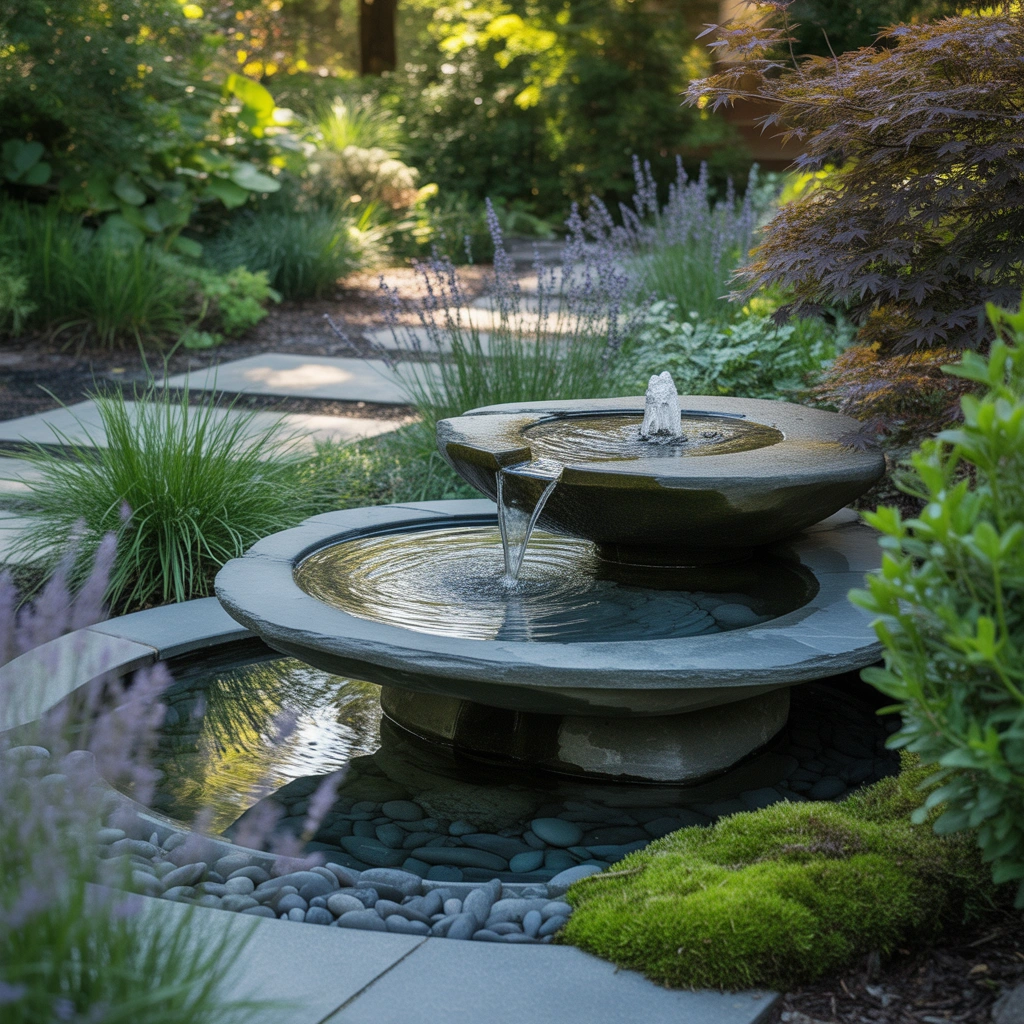
Water brings movement, sound, and a sense of calm to a garden. Even a small water feature can change the atmosphere of an outdoor space.
You do not necessarily need a large pond. A simple bowl filled with water and floating plants can create a beautiful focal point. Small fountains, bubbling rocks, wall fountains, and narrow water channels are also excellent options.
When choosing the location, place the water feature where you can see or hear it from a seating area. Avoid hiding it in a corner that is rarely visited.
For a natural garden, surround a pond with stones, ferns, grasses, and moisture-loving plants. For a modern space, choose a geometric basin with clean edges and minimal planting.
Water features may also attract birds and beneficial wildlife. However, they should be kept clean and designed with safety in mind, particularly in gardens used by young children or pets.
A solar-powered fountain can be a convenient option because it may not require complicated electrical installation. The soft sound of moving water can also help reduce the distraction of nearby traffic or neighborhood noise.
8. Divide the Garden into Purposeful Zones
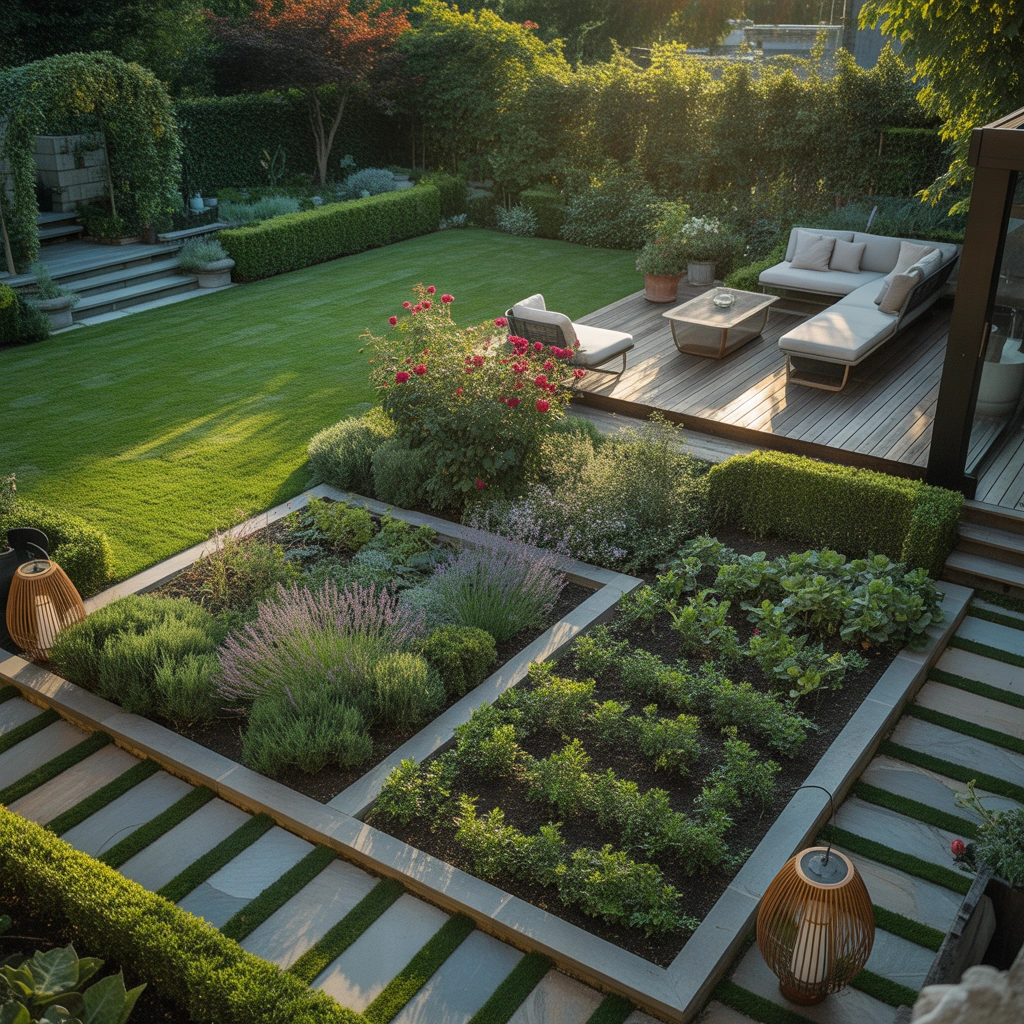
A garden often feels larger and more organized when it is divided into different zones. Each section can serve a specific purpose while still connecting visually with the rest of the space.
For example, you might create:
- A dining area near the house
- A lawn or play area in the center
- A quiet reading corner at the back
- A vegetable garden in a sunny position
- A storage area hidden by screening
You do not need solid walls to separate these zones. Use changes in paving, plant borders, low hedges, trellis panels, raised beds, pergolas, or outdoor rugs.
The transitions between zones are important. A pathway can guide people from one area to another, while repeated plants or materials can make the whole garden feel unified.
In smaller gardens, avoid creating too many tiny sections. Two or three clear zones usually work better than several cramped areas.
I find that zoning is especially helpful for family gardens because it allows different activities to take place at the same time. One person can relax, another can garden, and children can play without the space feeling chaotic.
9. Create Raised Garden Beds
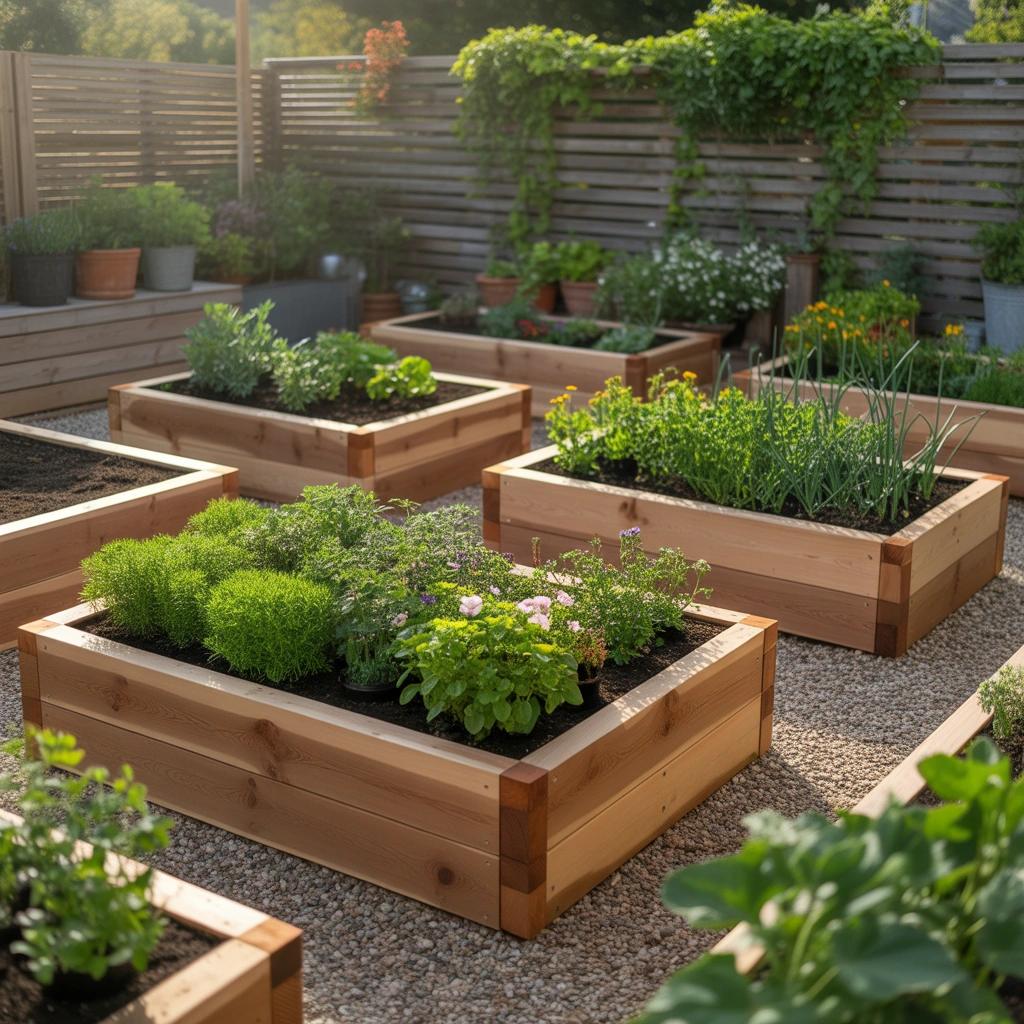
Raised beds bring structure and height to a garden while making planting areas easier to manage. They can be used for vegetables, herbs, flowers, shrubs, or mixed planting.
Materials such as timber, brick, stone, metal, and concrete can all be used to build raised beds. Choose a material that complements the style of your home and garden.
Raised beds are particularly useful where the existing soil is poor, compacted, or difficult to work with. You can fill them with a suitable soil mixture rather than trying to improve the entire garden.
They may also reduce bending, especially when designed at a comfortable height. This can make gardening more accessible for people with limited mobility.
For a polished design, use raised beds to frame a patio, border a pathway, or define the edge of a seating area. Wide bed edges can sometimes double as informal seating.
Make sure the beds have suitable drainage and are not too wide. You should be able to reach the center without stepping onto the soil.
10. Design a Garden That Supports Wildlife
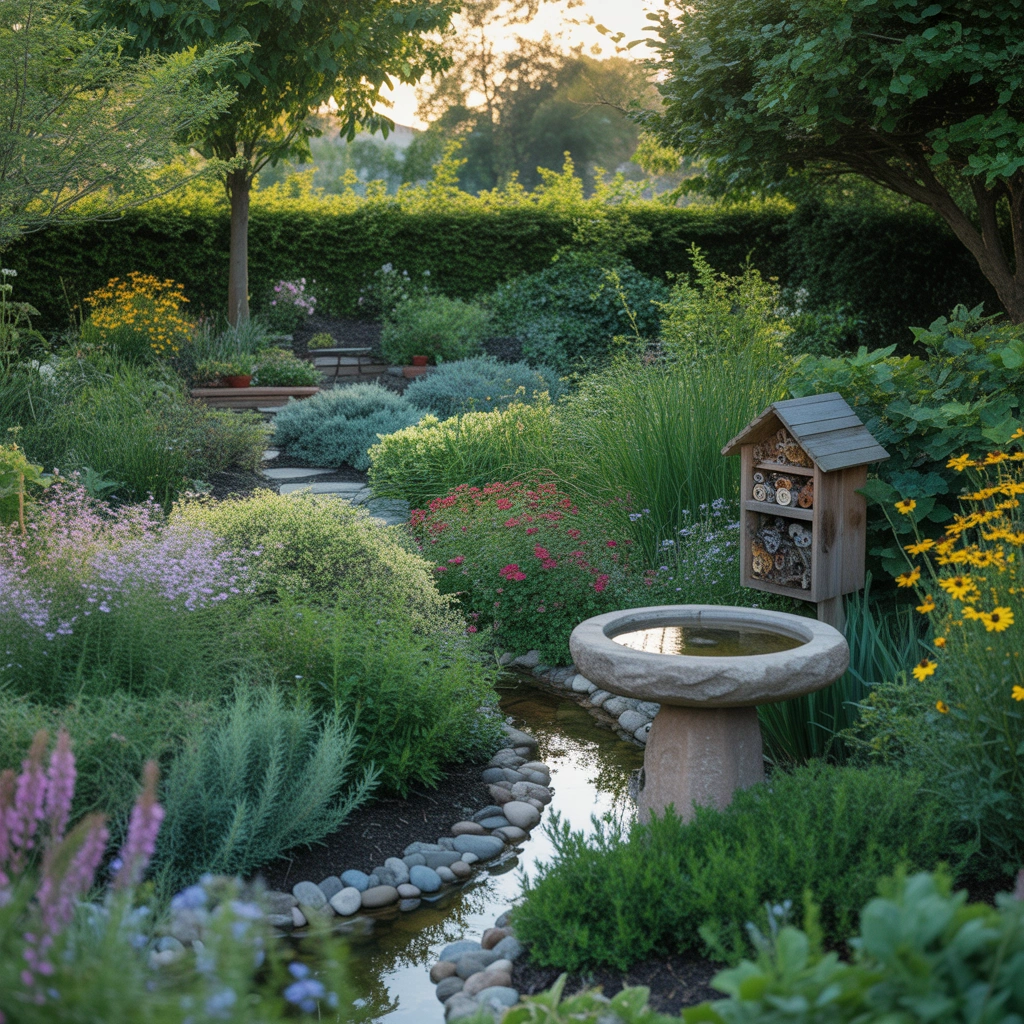
A wildlife-friendly garden can be beautiful, lively, and environmentally valuable. You do not have to let the entire space become wild. Small, thoughtful choices can provide food, water, and shelter for birds, bees, butterflies, and other beneficial creatures.
Choose a variety of flowering plants that bloom at different times of the year. This helps provide nectar and pollen across multiple seasons. Native plants are often particularly useful because local wildlife is already adapted to them.
Trees and shrubs offer nesting places, shelter, and berries. A shallow water source can help birds and insects, while a small pile of logs can provide habitat for beetles and other creatures.
Wildlife-friendly features may include:
- Pollinator-friendly flowers
- Bird feeders
- Birdhouses
- A shallow birdbath
- Native shrubs
- A small pond
- Bee hotels
- Log piles
- Areas of longer grass
Avoid using pesticides unless absolutely necessary, as they can harm helpful insects as well as pests.
I love wildlife gardens because they never feel static. There is always something moving, visiting, blooming, or changing.
11. Use Outdoor Lighting to Extend the Evening
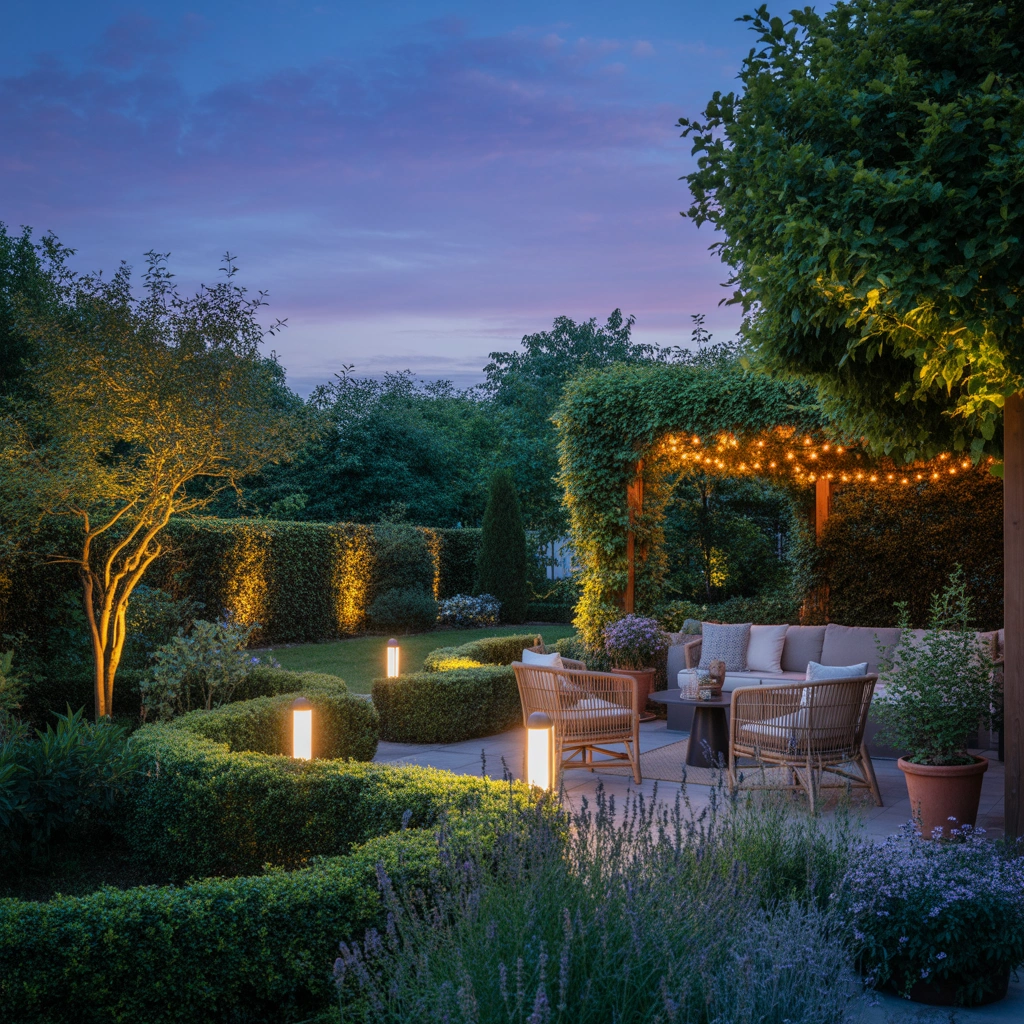
Good garden lighting makes an outdoor space more usable after sunset and adds atmosphere throughout the year.
Rather than using one extremely bright light, combine several softer sources. This creates warmth and prevents the garden from feeling harsh.
Use pathway lights for safety, wall lights near doors, and subtle spotlights to highlight trees or architectural plants. String lights can create a relaxed mood around a pergola or seating area, while lanterns add flexibility because they can be moved when needed.
Try lighting different levels. Low lights can define pathways, mid-level lights can illuminate seating, and uplights can emphasize tree trunks or garden structures.
Be careful not to overlight the space. Dark areas are important for contrast and may also be better for nocturnal wildlife. Choose warm-toned lighting where possible and direct it only where needed.
Solar lights are simple to install, but their performance depends on the amount of sunlight they receive. For important areas, wired outdoor lighting may offer greater reliability.
12. Add a Pergola for Height and Shade
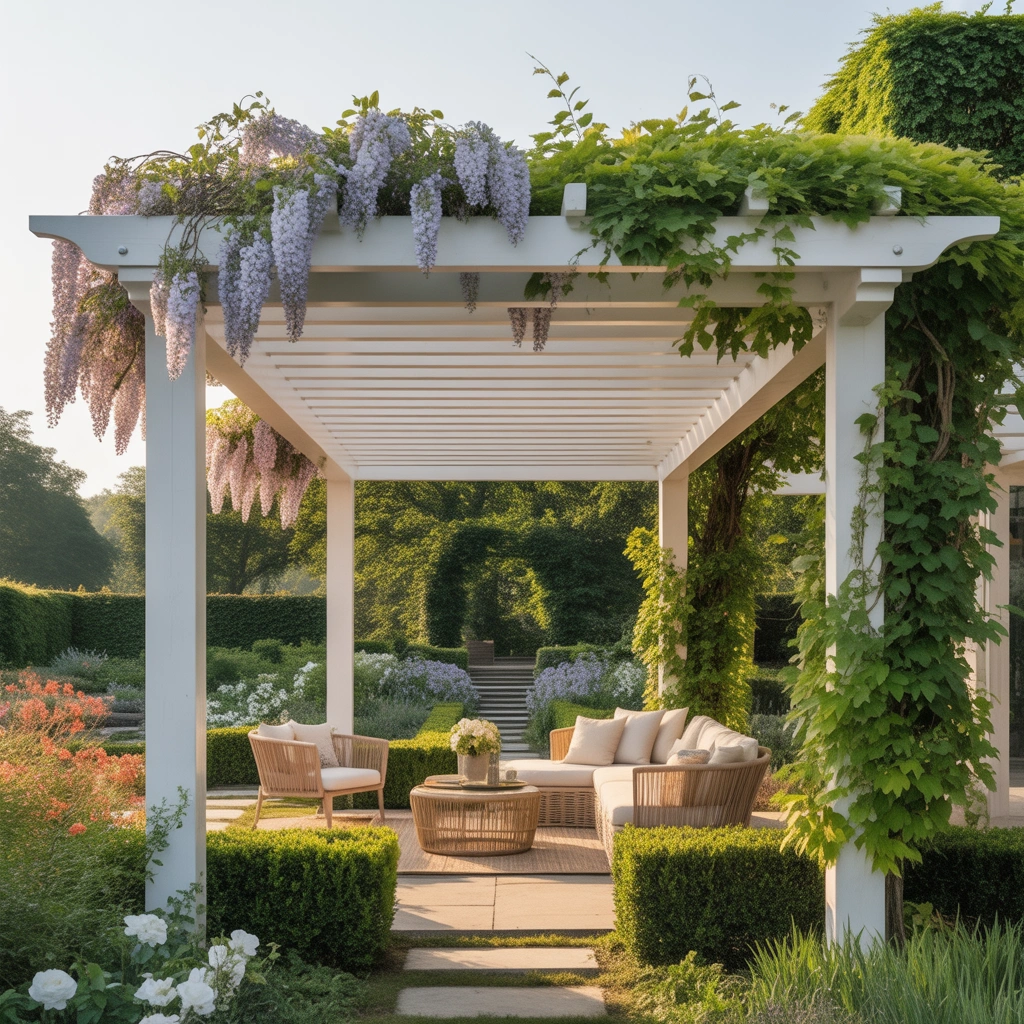
A pergola can become one of the strongest architectural features in a garden. It adds height, defines a specific area, and provides support for climbing plants.
Place a pergola over a dining area, seating space, pathway, or transition between garden zones. Even a simple timber frame can make an open area feel more intimate.
For natural shade, grow climbing plants across the structure. Wisteria, grapevines, climbing roses, jasmine, and clematis can all work, depending on the climate and available sunlight.
Remember that some climbers become very heavy as they mature, so the pergola must be strong enough to support them. Fast-growing plants may also require regular pruning.
For immediate shade, add a fabric canopy, bamboo screening, or adjustable cover while the plants establish themselves.
Decorate the pergola with:
- Hanging lights
- Outdoor curtains
- Climbing flowers
- Suspended planters
- Lanterns
- Wind chimes
- A hanging chair
A pergola can help an outdoor area feel like a true extension of the home rather than an empty space behind it.
13. Grow an Attractive Kitchen Garden
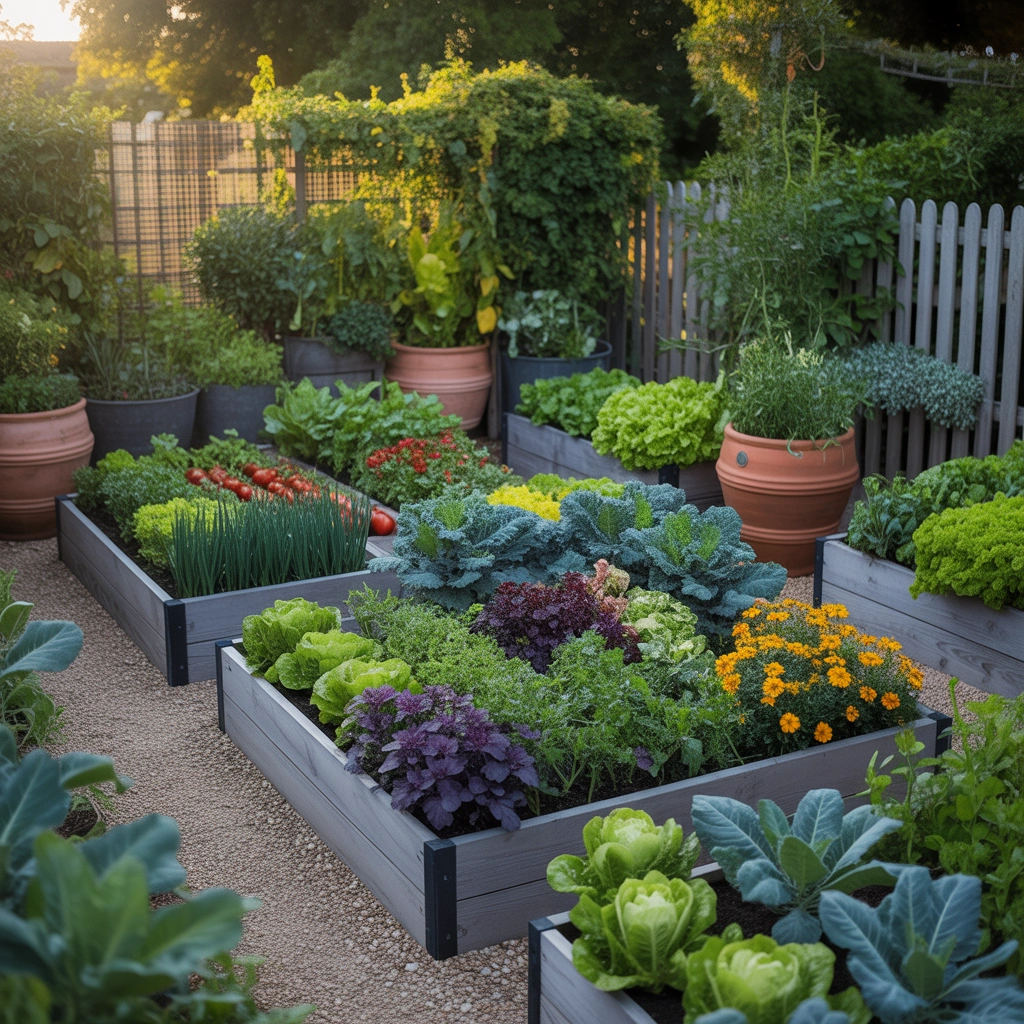
A productive garden does not have to look purely practical. Herbs, vegetables, and fruit can be arranged in a way that is both useful and visually appealing.
Create neat planting areas using raised beds, containers, or geometric sections. Add gravel or brick paths between the beds to improve access and reduce muddy surfaces.
Mix edible plants with flowers. Marigolds, nasturtiums, calendula, lavender, and other flowering plants can bring color while attracting pollinators.
Herbs are particularly suitable for decorative kitchen gardens. Rosemary, sage, thyme, basil, parsley, mint, and chives offer different colors, heights, textures, and scents.
Place frequently used herbs close to the kitchen or outdoor cooking area. There is something very satisfying about stepping outside to collect fresh ingredients while preparing a meal.
For limited spaces, grow:
- Tomatoes in large containers
- Salad leaves in window boxes
- Herbs in wall planters
- Strawberries in hanging baskets
- Dwarf fruit trees in pots
- Beans on a trellis
A kitchen garden adds purpose to your design and makes the outdoor space feel more connected to daily life.
14. Create a Low-Maintenance Garden
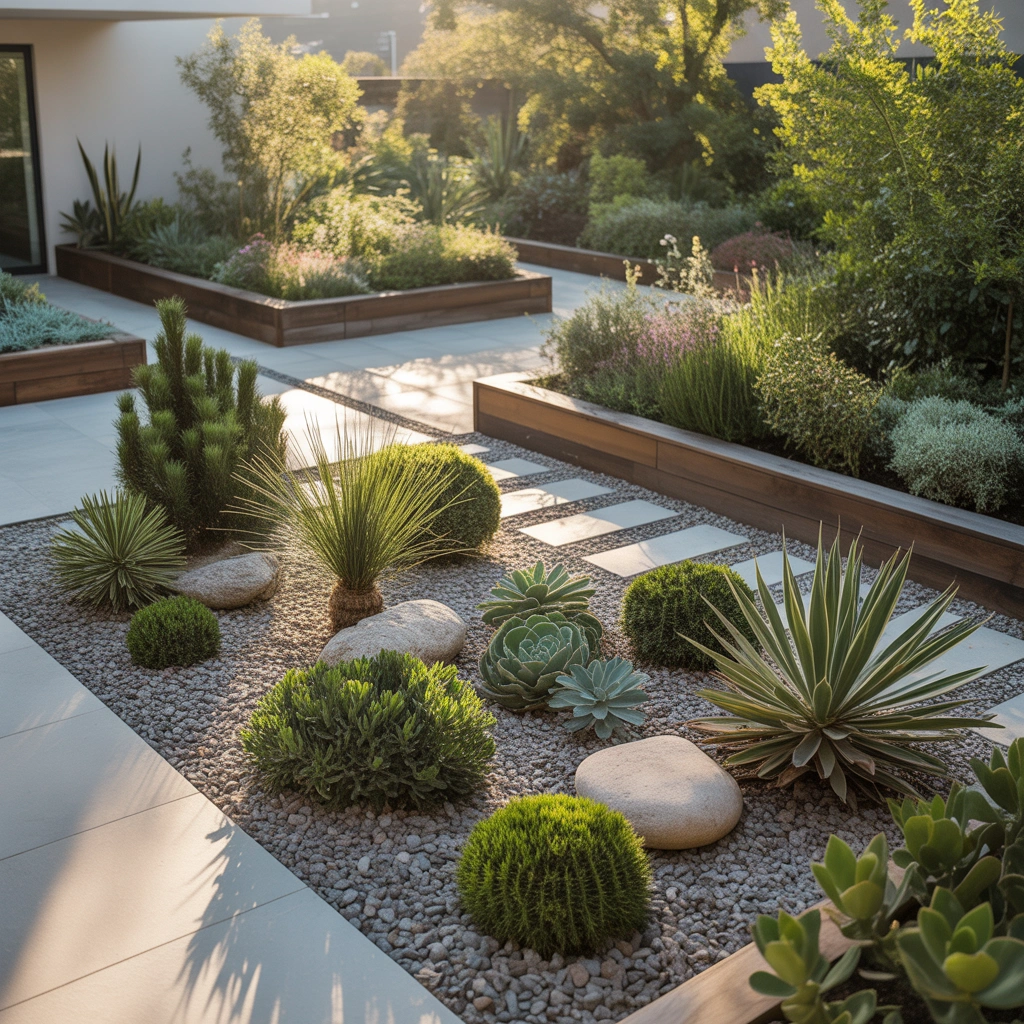
A beautiful garden should bring pleasure, not become a constant source of stress. If you have limited time, choose design features and plants that reduce maintenance.
Start by selecting plants that naturally suit your soil, sunlight, rainfall, and climate. A plant growing in the wrong conditions will usually require more watering, feeding, pruning, and pest management.
Use mulch around planting areas to help retain moisture and reduce weeds. Ground-cover plants can fill bare soil, while evergreen shrubs provide year-round structure without requiring seasonal replanting.
Replace difficult lawn areas with gravel, paving, decking, or low-growing alternatives. Lawns can be attractive, but they often require regular mowing, watering, edging, and feeding.
Low-maintenance garden ideas include:
- Drought-tolerant plants
- Automatic irrigation
- Large planting groups
- Slow-growing shrubs
- Perennial flowers
- Gravel pathways
- Quality landscape fabric where appropriate
- Durable outdoor furniture
Low maintenance does not mean no maintenance. Every garden needs some care, but good planning can greatly reduce unnecessary work.
15. Add a Personal Garden Focal Point
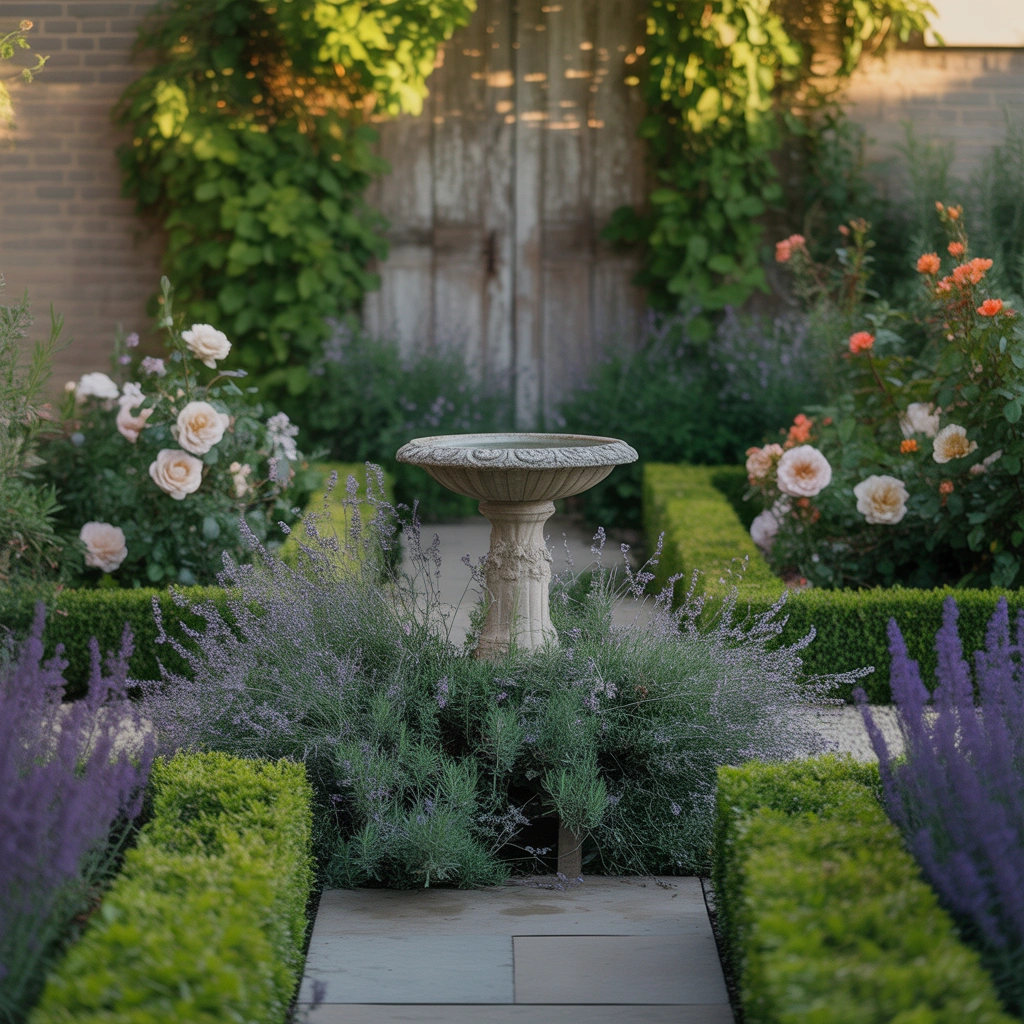
Every memorable garden needs something that naturally catches the eye. A focal point gives the design direction and prevents the space from feeling like an unrelated collection of features.
Your focal point could be a small tree, sculpture, fountain, painted wall, statement planter, decorative bench, fire bowl, or unusual plant.
The best focal point is usually something that reflects your personality. It does not need to be expensive or dramatic. An old chair used as a plant stand, a handmade mosaic, or a collection of vintage pots can become just as meaningful as a large designer feature.
Position the focal point where it can be seen from an important viewpoint, such as a kitchen window, patio door, main path, or seating area.
Avoid using too many competing focal points. In a small garden, one strong feature may be enough. In a larger space, you can use several, but they should appear gradually as people move through the garden.
This is where garden design becomes deeply personal. Your outdoor space should contain something that makes you smile because it feels connected to your own taste, memories, or lifestyle.
How to Choose the Right Garden Design Ideas
With so many possibilities, it is easy to feel overwhelmed. The best approach is to begin with your practical needs before choosing decorative details.
First, consider how much time you realistically want to spend maintaining the garden. A flower-filled cottage garden may look wonderful, but it can require regular care. A simpler design with shrubs, grasses, and paved areas may be more suitable for a busy schedule.
Next, study the conditions. Notice which areas receive full sun, partial shade, or very little direct light. Check whether the soil stays dry, drains quickly, or becomes waterlogged. Choosing plants according to the actual conditions will save time and money.
You should also think about who will use the space. A garden designed for entertaining will need different features from a garden intended for quiet relaxation. Families may need flexible lawn areas, safe surfaces, and storage, while keen gardeners may prefer larger planting beds and a greenhouse.
Finally, set a budget and divide the project into stages. You do not need to complete everything at once. Start with the main structure, such as pathways, seating, fencing, and large plants. Smaller decorative details can be added gradually.
Common Garden Design Mistakes to Avoid
Even creative garden ideas can be disappointing when the basic planning is overlooked.
One common mistake is buying plants without checking their mature size. A small shrub in a nursery pot may eventually become wider than the space available. Always read the plant label and allow enough room for growth.
Another mistake is ignoring the view from inside the house. Your garden will often be seen through windows, especially during cold or rainy weather. Position attractive plants and focal points where they can be appreciated from indoors.
Using too many different materials can also make a garden feel disconnected. Try to repeat the same paving, timber, metal, or stone in several areas.
Do not forget storage. Garden tools, cushions, toys, watering cans, and bins need a practical place. A well-positioned shed, storage bench, or screened utility area can keep the main garden tidy.
Most importantly, avoid designing the garden only for appearance. A beautiful space should also be comfortable, accessible, and easy to use.
Frequently Asked Questions About Garden Design
How can I make a small garden look bigger?
Use curved or diagonal pathways, create several visual layers, and avoid revealing the whole garden at once. Light-colored materials, mirrors used carefully, vertical planting, and repeated plants can also create a sense of depth.
Choose furniture that fits the scale of the space. Oversized pieces can make a small garden feel crowded, while too many tiny objects may create clutter.
What is the easiest garden style to maintain?
Gardens with well-spaced shrubs, perennial plants, mulch, simple pathways, and limited lawn areas are generally easier to maintain. The exact design should be based on plants that naturally perform well in your local conditions.
How do I design a garden on a small budget?
Begin with a clear plan so you do not waste money on unsuitable materials or plants. Reuse existing containers, grow plants from seeds or cuttings, buy smaller plants, and complete the garden in stages.
Painting a fence, reshaping a border, adding mulch, and moving existing plants can make a noticeable difference without a large investment.
How many colors should I use in my garden?
There is no strict rule, but two or three main colors often create a coordinated appearance. You can then add small amounts of a contrasting color for energy and interest.
What should I plan first in a new garden?
Start with the layout. Decide where you need pathways, seating, storage, planting beds, lawns, and activity areas. After the main structure is planned, choose plants and decorative features.
Final Thoughts
The best gardens are not always the largest, most expensive, or most perfectly maintained. They are the spaces that feel comfortable, useful, and connected to the people who enjoy them.
These 15 garden design ideas for inspiration offer many different ways to shape an outdoor area. You might begin by creating a cozy seating corner, adding a curved pathway, introducing a water feature, or simply choosing a more coordinated planting scheme.
Do not feel pressured to transform the entire garden immediately. Start with one area that matters most to you. Watch how you use the space, notice how the light changes, and allow the design to develop gradually.
A garden is never truly finished. Plants grow, seasons change, and your needs evolve. That is part of what makes gardening so rewarding. With thoughtful planning and a few personal touches, your outdoor space can become a place you genuinely look forward to spending time in.
