
You want a room that feels like yours, not a template from a store. This article shows 13 easy room decor ideas diy ways to update your space using simple materials and doable steps so you can create a fresh, personal look without a big budget or a contractor.
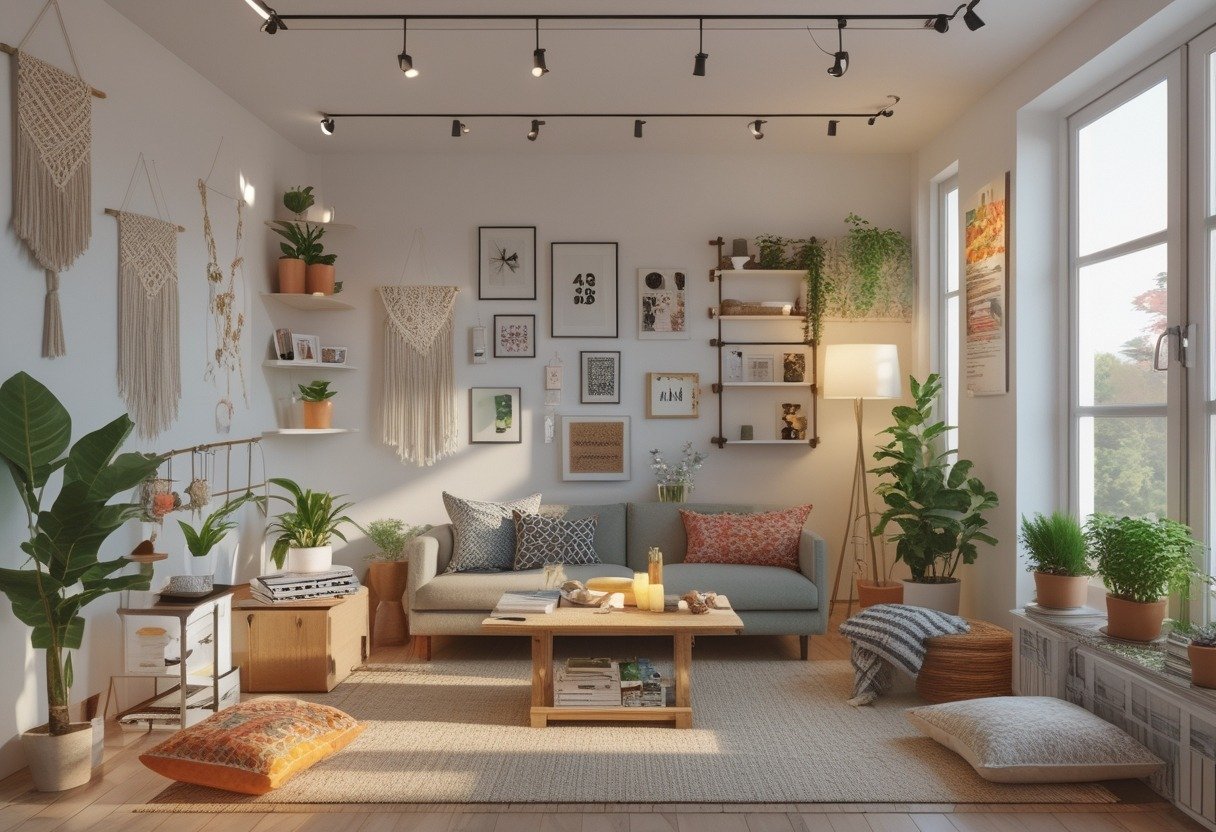
Bold choices and small fixes both matter, and you’ll learn projects that add style, storage, and texture across walls, furniture, and bedside surfaces. You can pick projects that match your skill level and budget to make a real change in days, not weeks.
1) Macramé plant hanger for trailing pothos
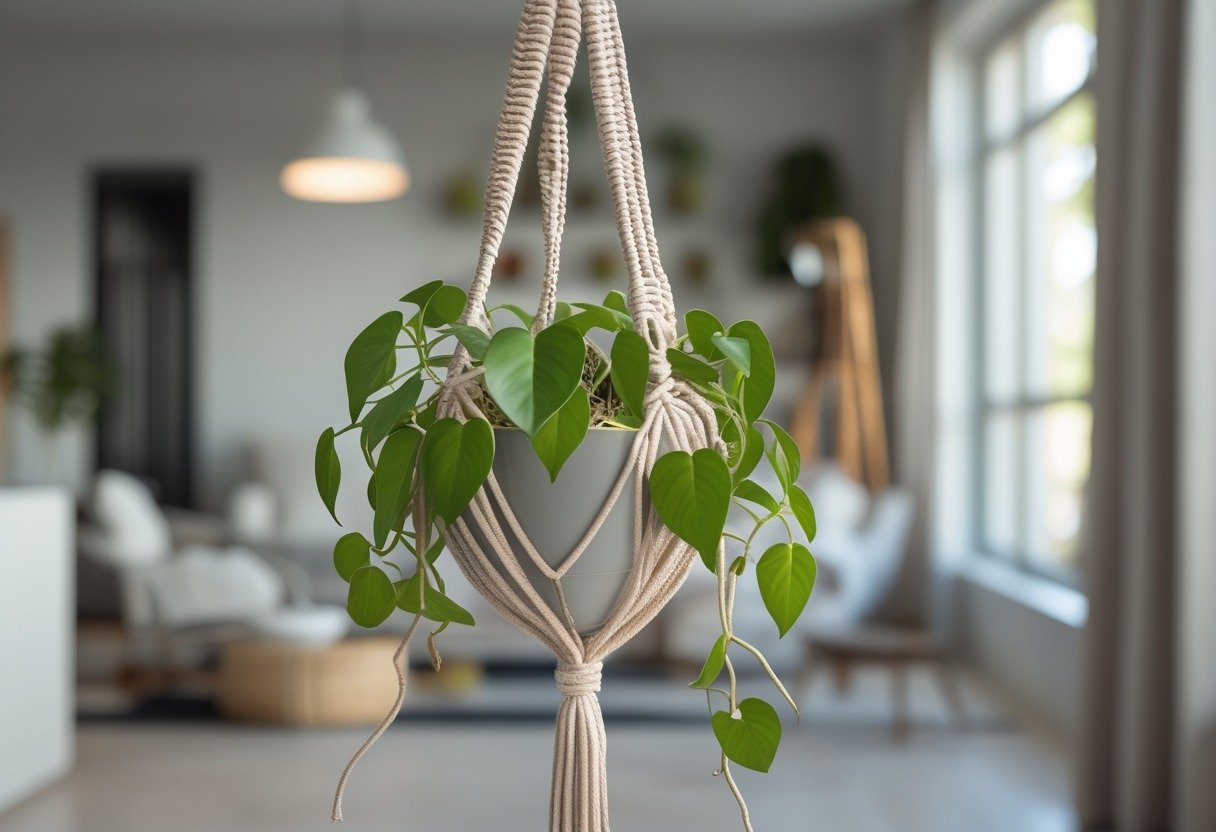
You can make a simple macramé hanger with basic knots to show off a trailing pothos. Use cotton cord and a small pot to keep the hanger light and balanced.
Hang it near a bright window so the pothos gets indirect light. The trailing vines will soften the room and add vertical interest without taking floor space.
This project is quick for beginners and easy to customize with color or bead accents. It also makes a useful, handmade gift.
2) DIY gallery wall with mismatched frames and printed photos
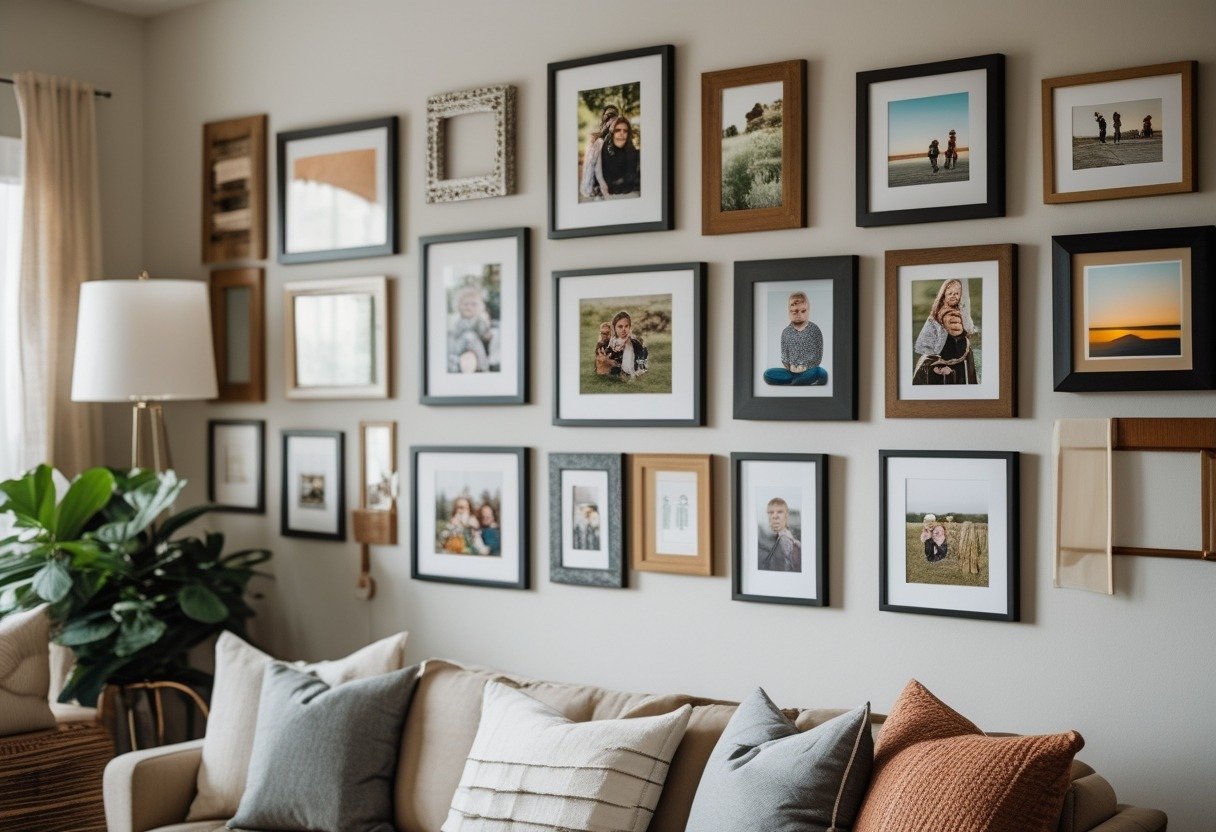
Choose a wall and lay out frames on the floor until the arrangement feels balanced. Use different frame styles and sizes for a collected look that still reads as one display.
Print photos in matching tones or resize them to fit frames you already own. Paint thrifted frames the same color if you want more unity, or leave them varied for contrast.
Hang the largest pieces first, then fill gaps with smaller frames. Use a simple template or trace paper cutouts on the wall to keep spacing even.
3) Pallet wood floating shelves stained walnut
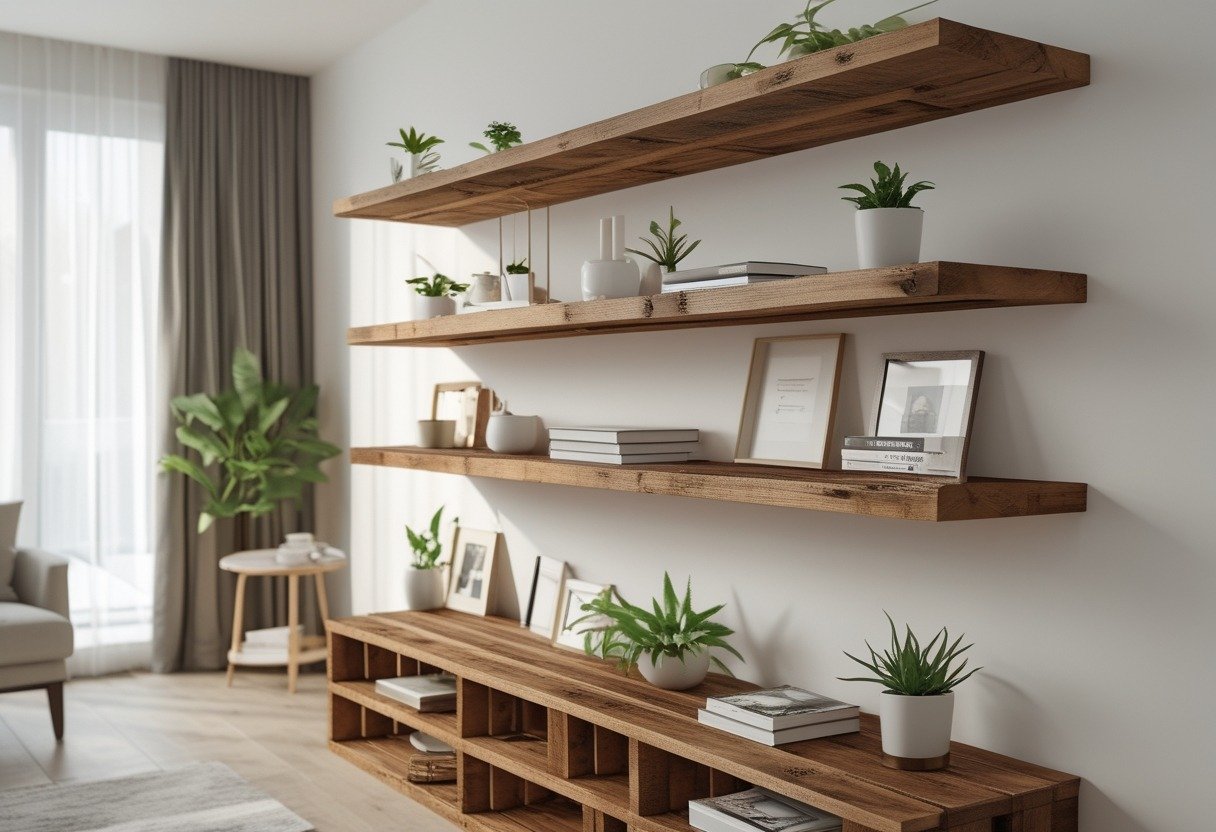
You can turn old pallets into warm walnut-colored floating shelves that fit any room. Staining hides imperfections and gives a rich, consistent look.
Cut, sand, and seal the pallet planks for smooth edges. Mount with hidden brackets so the shelves appear to float and hold books, plants, or decor.
Use reclaimed pallets from stores to save money and add character. Test stain on a scrap first to match your room’s tone.
4) Hand-painted geometric accent wall in muted tones
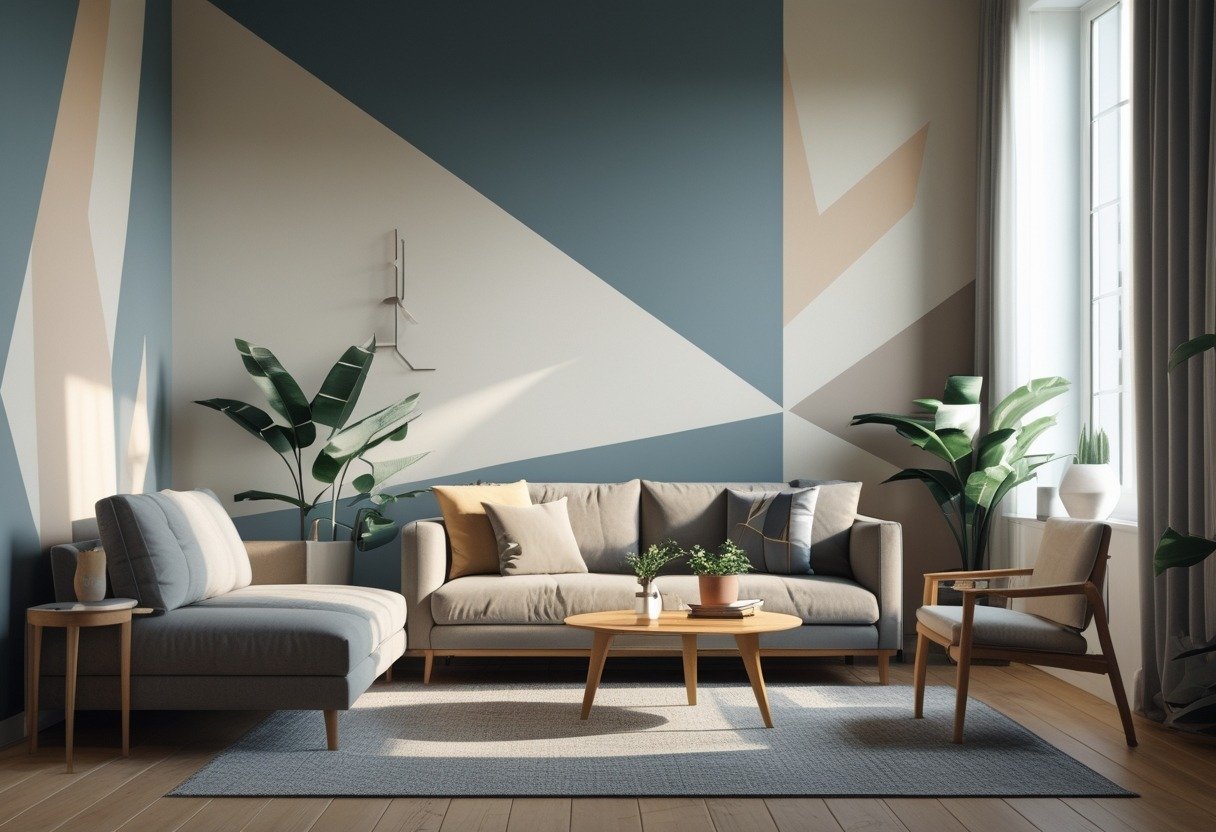
You can create a calm, modern focal point with soft triangles, lines, or hexagons painted in muted colors.
Use painter’s tape to map shapes, paint one color at a time, and remove tape while paint is tacky for clean edges.
Choose two to four colors that match your room’s palette, like warm greys, dusty blues, or soft blush.
Keep shapes simple and repeat a pattern to add depth without overwhelming the space.
5) String light canopy over bed with sheer curtains
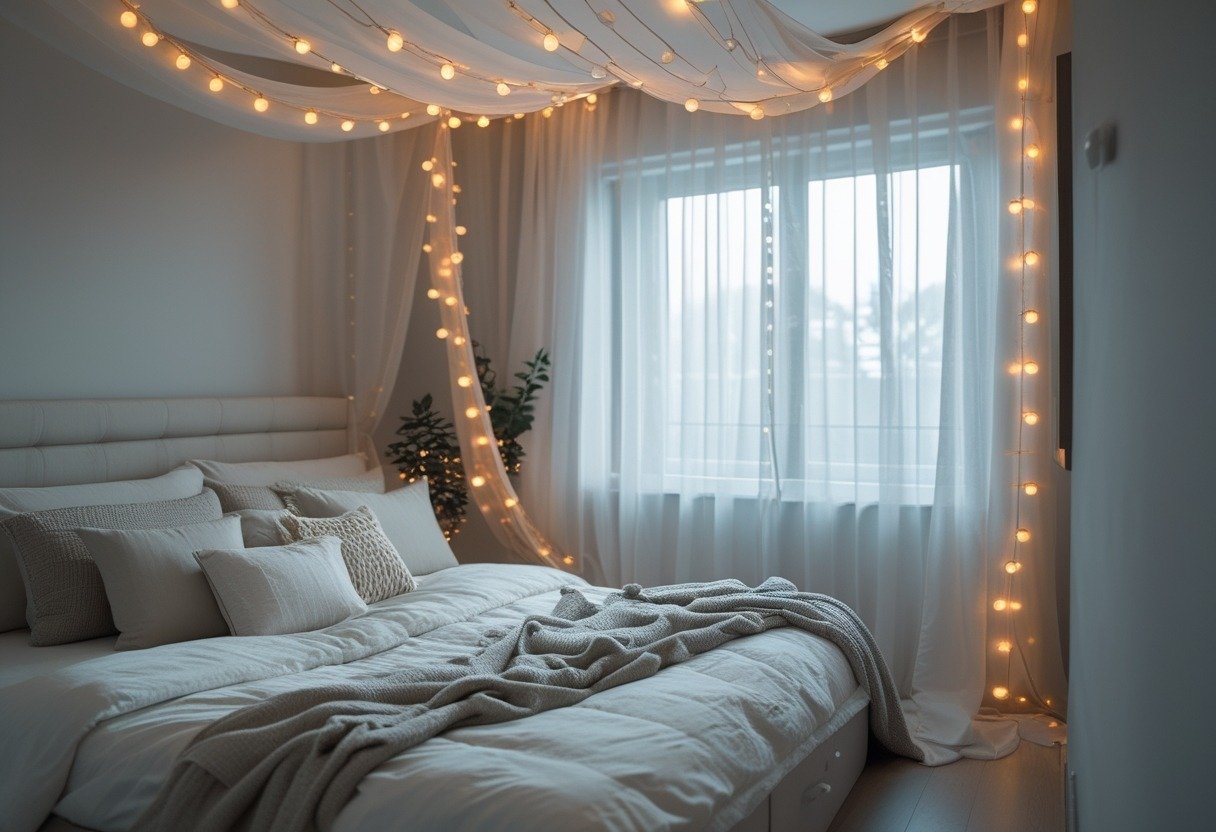
You can make a cozy canopy by hanging sheer curtains from ceiling hooks and draping string lights inside.
Use warm white LED fairy lights for soft, even glow that won’t get hot.
Measure your bed first and place hooks so fabric hangs evenly.
Secure lights to the frame or weave them through the curtain to hide cords and add sparkle.
Keep curtains lightweight and washable to avoid dust buildup.
Use adhesive hooks or a simple rod for a damage-free setup.
6) Upcycled dresser with chalk paint and new brass knobs
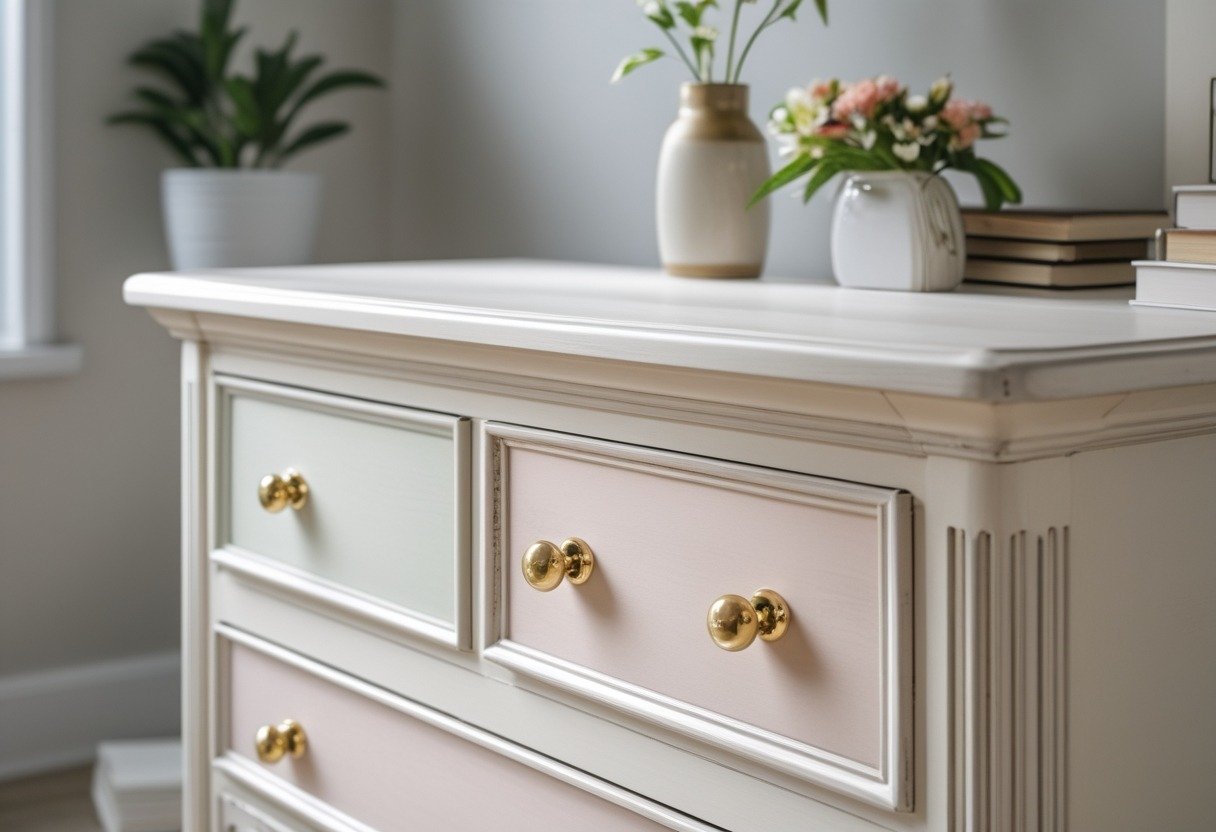
You can refresh a worn dresser with chalk paint for a matte, modern look that hides scratches. Light sanding and a bonding primer help the paint stick if the finish is shiny.
Choose a soft color to brighten the room, then distress edges lightly for character. Swap old pulls for brass knobs to add warmth and a polished contrast.
Finish with a clear wax or sealant to protect the surface and make cleaning easier.
7) No-sew throw pillow covers from linen fabric
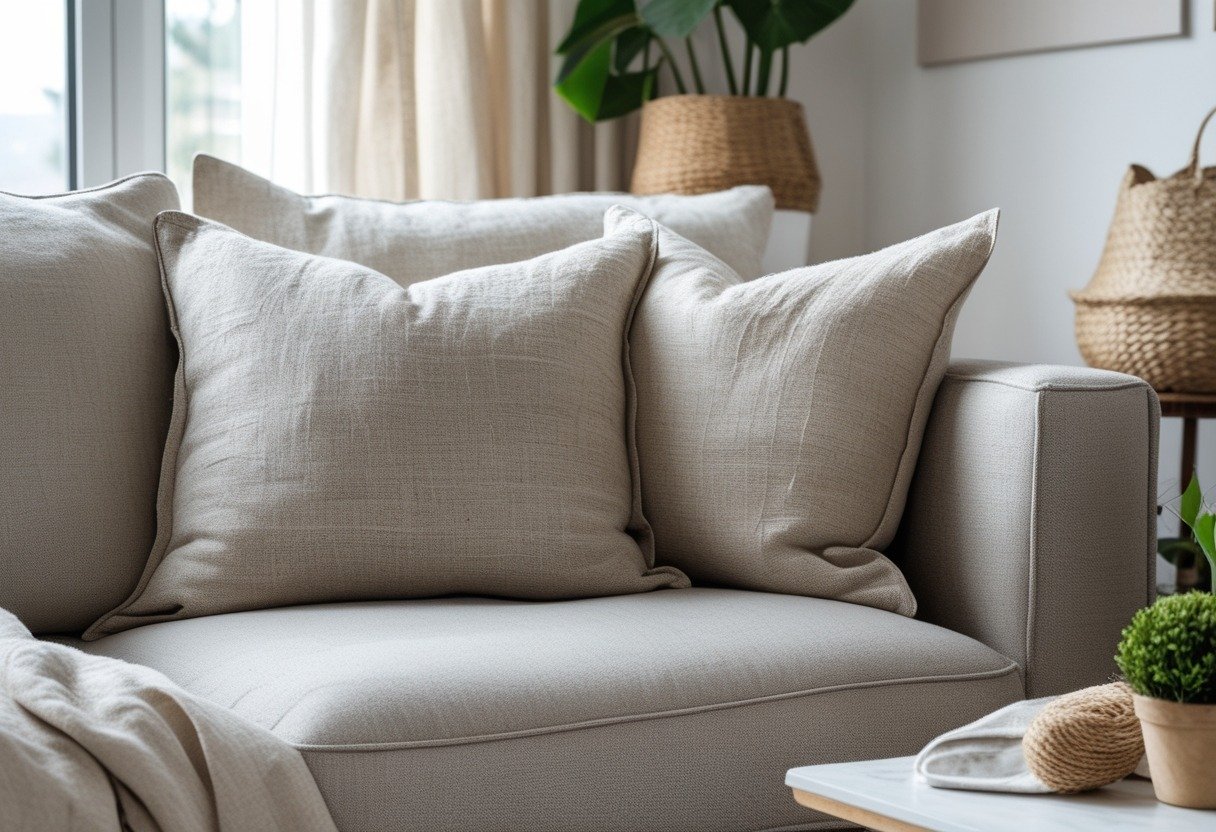
You can update your room fast with no-sew linen pillow covers. Linen looks natural and wears well, so it suits many styles.
Cut two fabric pieces slightly larger than your pillow. Use fabric adhesive or fusible bonding tape along the edges to join them, leaving one side open to insert the pillow.
Press seams with an iron if using fusible tape. Slip the pillow in and close the final edge with adhesive or a simple knot for a casual look.
8) Pressed-flower resin coasters for nightstand
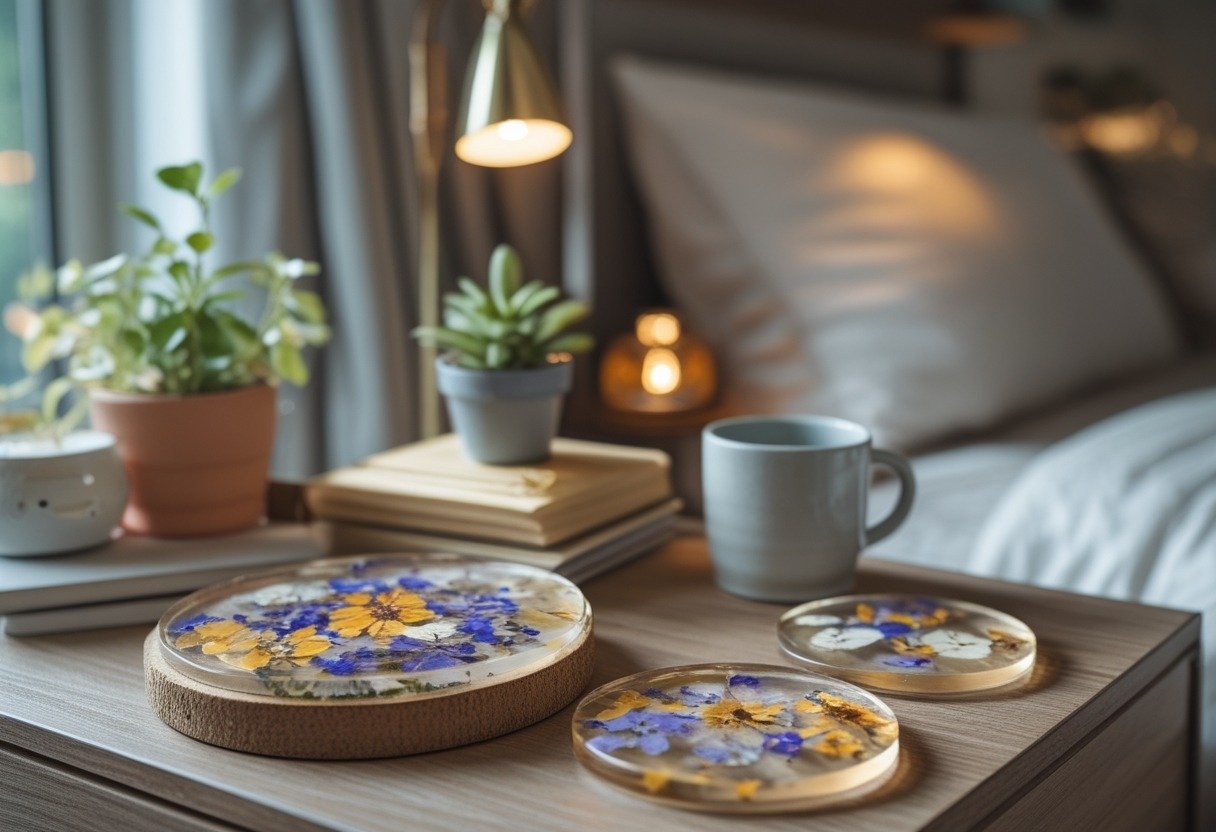
You can make small resin coasters using pressed flowers to protect your nightstand from spills and rings. They add color and a personal touch without taking much space.
Use UV or epoxy resin and arrange flowers on wooden or silicone molds. Let the resin cure fully before use to avoid stickiness.
These coasters make easy gifts and match many decor styles. Clean them with a soft cloth to keep the shine.
9) Leather cord bedside catchall from scrap leather
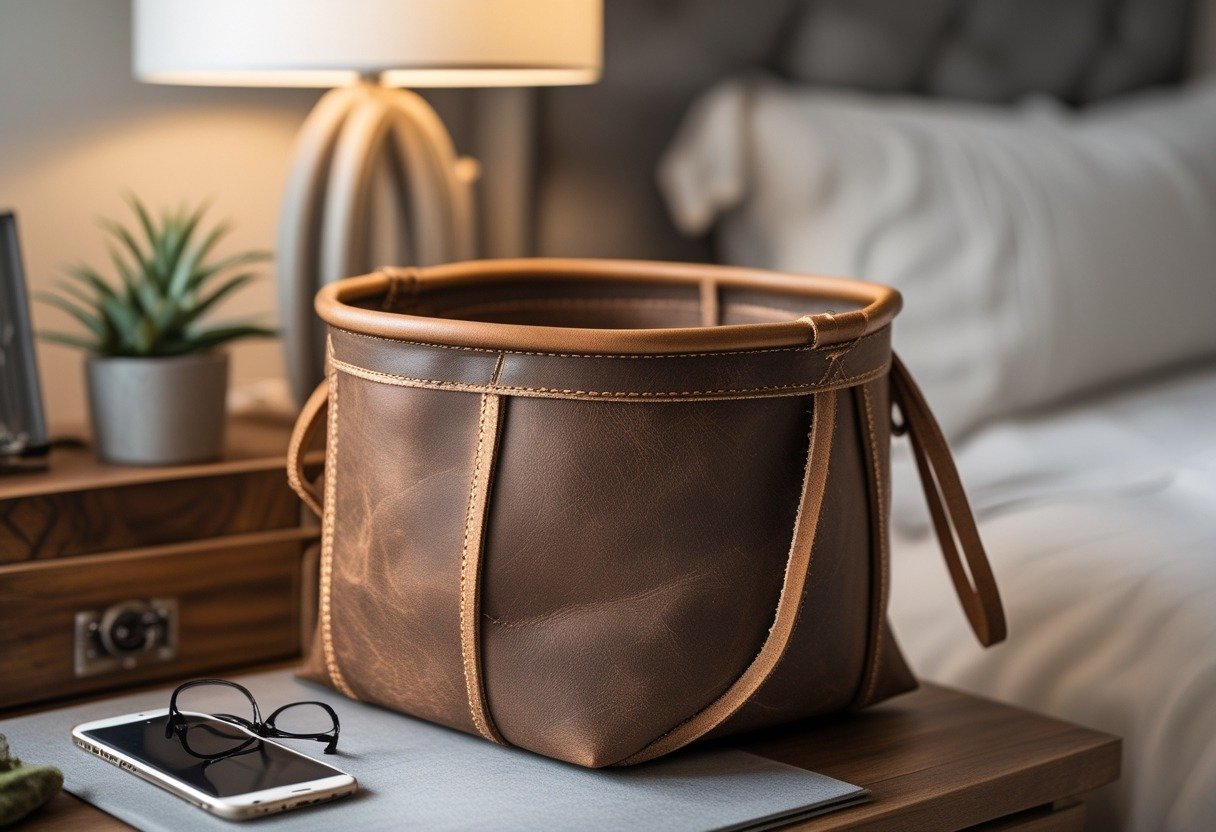
Use a small scrap of leather to make a tidy catchall for your bedside. You can fold and snap the edges or stitch them to form a shallow tray that holds chargers, earbuds, and keys.
This project needs only basic tools: scissors, a snap or needle and thread, and a ruler. It’s quick, durable, and keeps cords from tangling on your nightstand.
10) DIY pegboard vanity organizer with acrylic trays
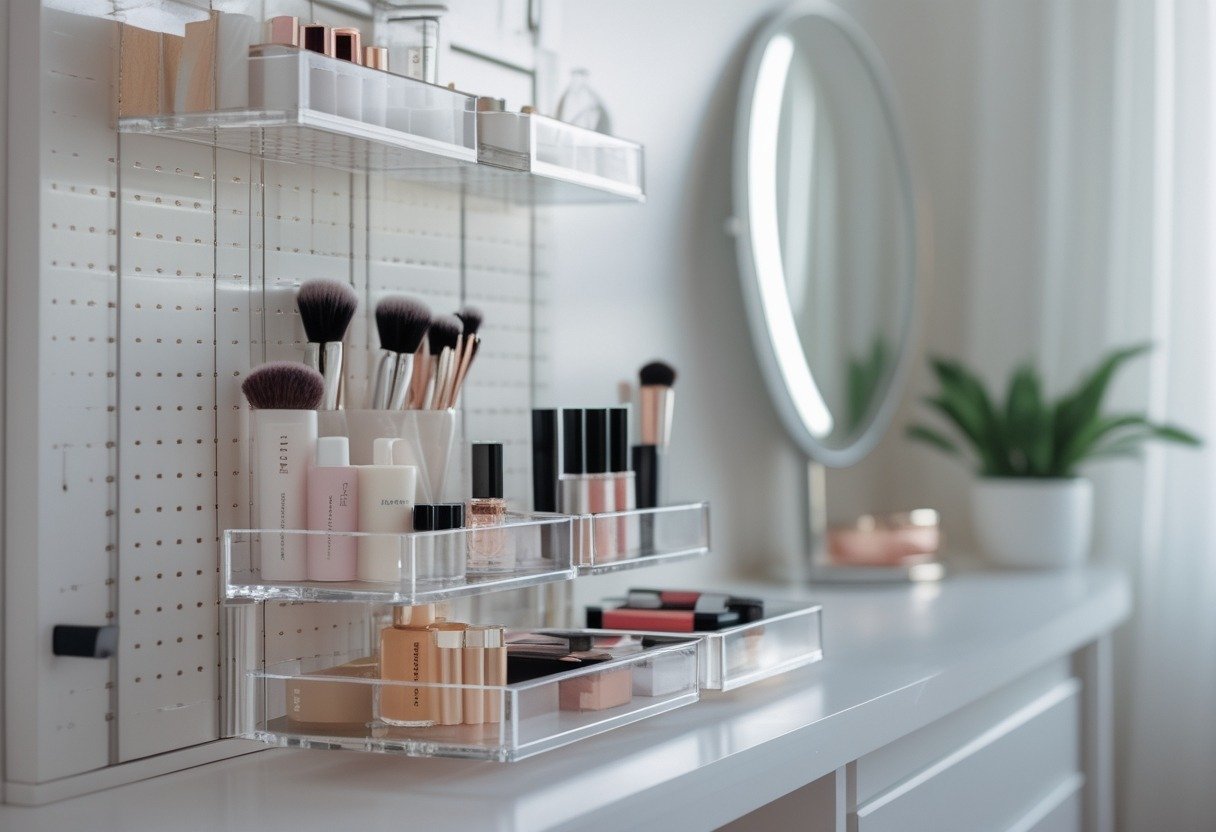
You can mount a pegboard above your vanity to keep makeup and tools within reach. Acrylic trays clip onto pegs and hold brushes, palettes, and bottles neatly.
Pick a pegboard size that fits your wall and measure for even placement. Clear trays make it easy to find items while keeping the look sleek and modern.
Drill anchors for secure mounting and arrange trays at different heights for brushes, skincare, and jewelry. Change the layout anytime without tools.
11) Framed fabric headboard upholstered with foam
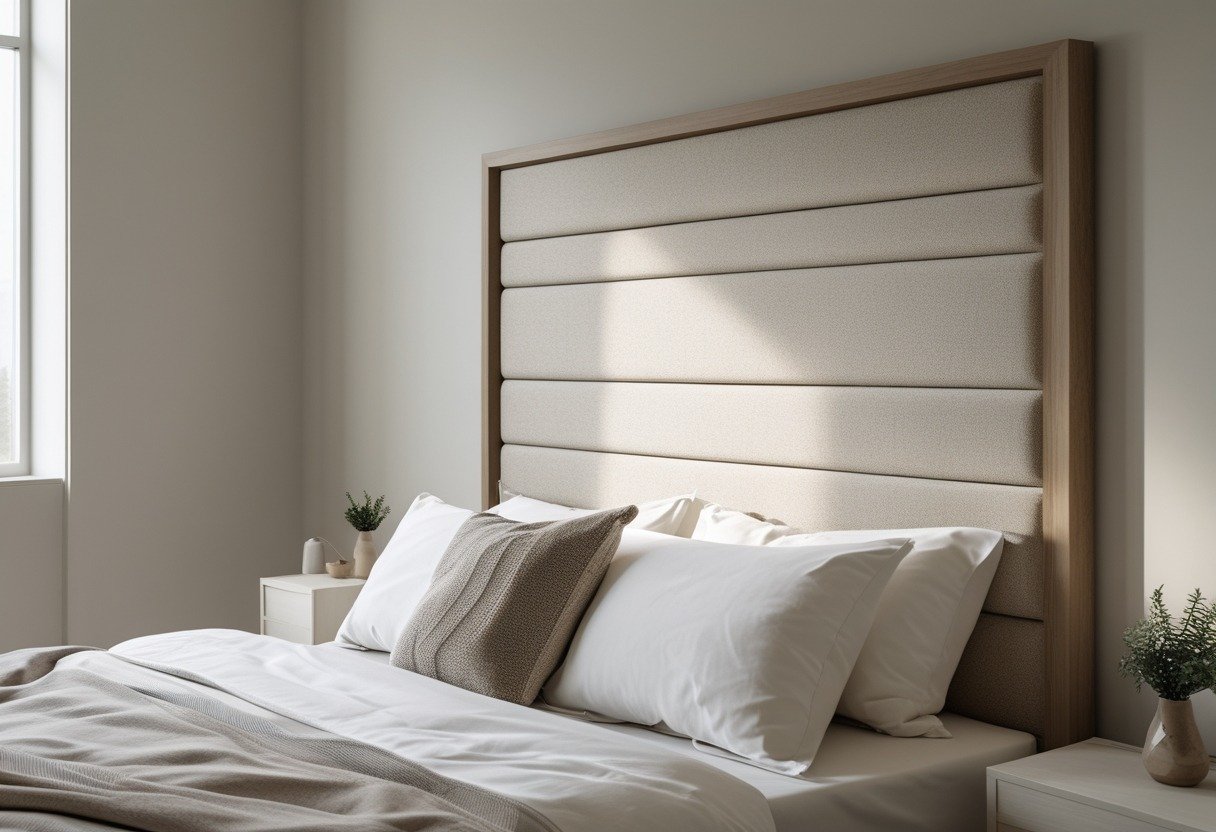
You can make a slim, padded headboard using plywood, foam, batting, and fabric. Cut the plywood to size, glue foam to it, and wrap with batting for smooth edges.
Stretch your chosen fabric over the batting and staple it to the back of the board. Mount the finished headboard to the wall or attach it to the bed frame for a neat, custom look.
Pick a durable fabric and moderate-thickness foam for comfort without bulk. This project is quick and works for many styles and budgets.
12) Peg rail display for hats and woven baskets
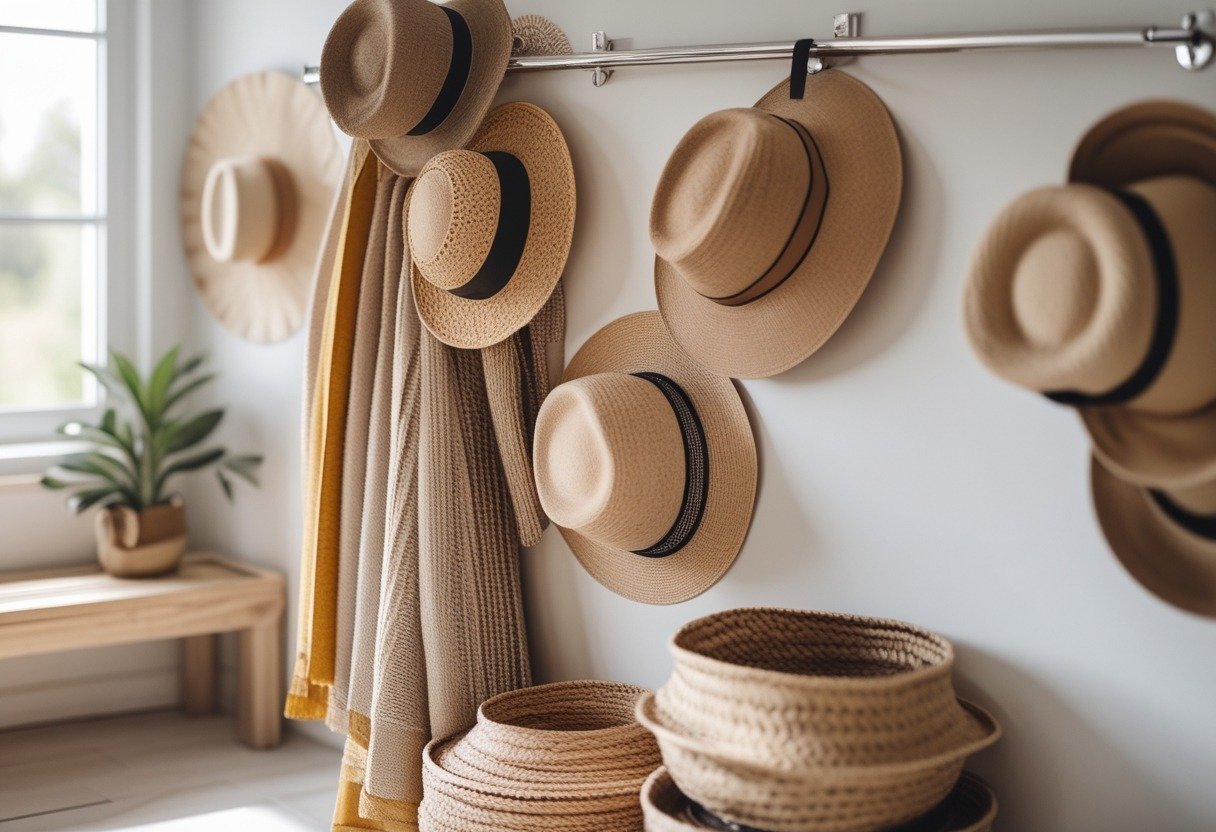
A peg rail lets you hang hats and woven baskets neatly on the wall. You save floor space and keep items within easy reach.
Choose pegs spaced to fit basket handles and hat brims. Paint or stain the rail to match your room for a clean, finished look.
Use baskets to hold scarves, keys, or small plants. Change the display seasonally to keep the wall fresh and useful.
13) Painted terra-cotta plant pots with metallic dip-dye
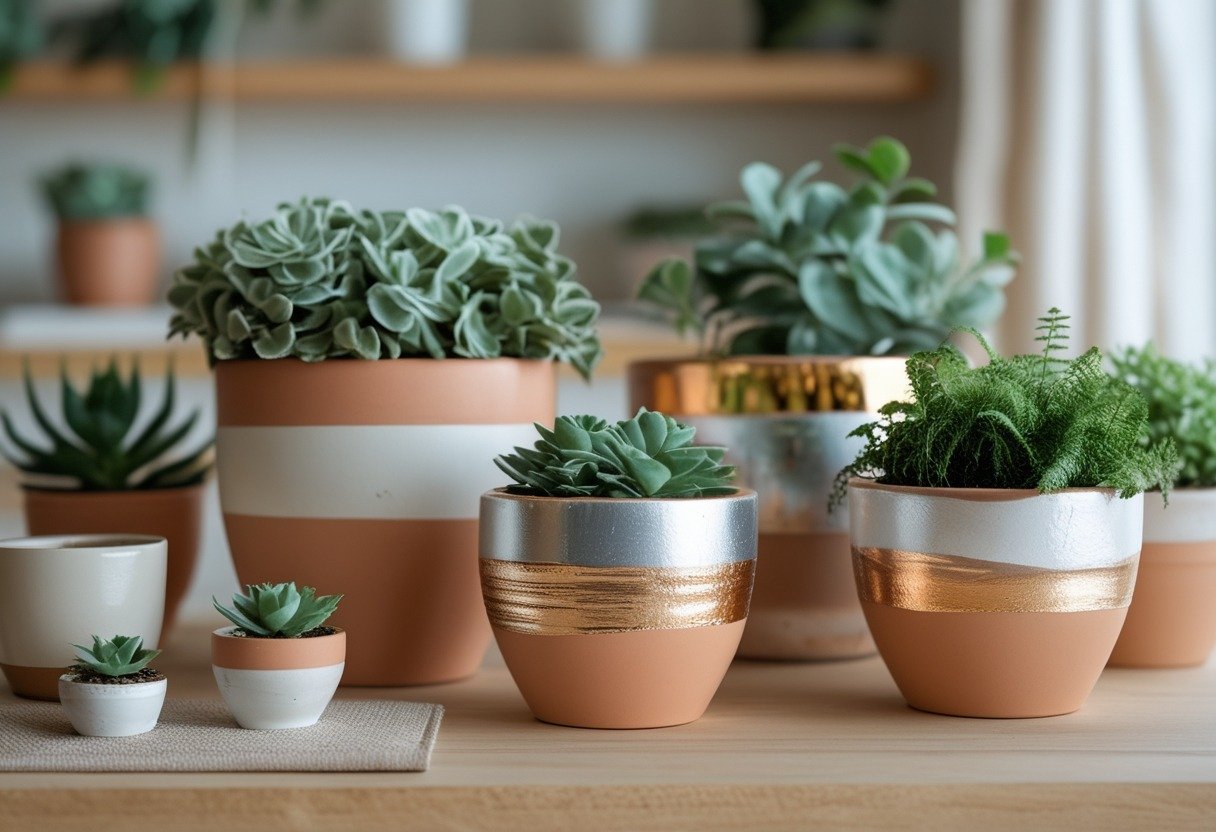
You can refresh plain pots with a simple dip-dye and metallic paint. Start by painting the bottom half in a solid color, then blend a metallic spray or acrylic into the top edge for a soft gradient.
Work on a protected surface and let each layer dry fully to avoid drips. The result adds subtle shine to your plants without overpowering the room.
Choosing the Right Color Palette
Pick colors that match the room’s purpose and the fixed items you already own. Think about light, larger surfaces, and one or two bold accents to tie the space together.
Understanding Color Psychology
Colors change how a room feels and how you act in it. Use soft blues or greens in bedrooms to help you relax. Choose warm tones like ochre or terracotta in kitchens to make the space feel cozy and social.
Match color intensity to room size and light. Dark, saturated colors work in well-lit rooms or as an accent wall. Pale shades open up small or dim rooms and keep them from feeling cramped.
Test colors at different times of day. Paint sample cards or small swatches on the wall and view them morning, afternoon, and evening. Note changes so you don’t pick a color that looks great in one light but dulls the rest of the day.
Combining Textures and Accent Hues
Layer texture to make a simple palette look rich. Add a woven rug, matte paint, glossy tiles, or metal fixtures to create contrast without extra colors. Texture gives depth when you stick to two or three main hues.
Choose one strong accent color and repeat it in small doses. Use throw pillows, a lamp, or framed art to echo the accent across the room. Keep the main palette neutral or muted so the accent pops without overwhelming the space.
Balance warm and cool elements. If your furniture is warm wood, pick cooler wall tones or metallic accents to stop the room from feeling too heavy. If you use patterned fabrics, pull a single color from the pattern to tie everything together.
Budget-Friendly Material Sourcing
You can save money and get better materials by choosing used items, discount outlets, and small batches of supplies. Focus on paint, hardware, fabric, and lighting — those change a room most for the least cost.
Recycling and Upcycling Tips
Look for sturdy items you can remake: solid wood furniture, picture frames, and mason jars are great starting points. Strip old finishes with a heat gun or sandpaper, then repaint or stain for a fresh look.
Turn thrifted fabric into throw pillow covers or slipcovers. Use a simple envelope closure to avoid zippers and save time. Cut larger pieces from curtains or tablecloths to match your scale.
Repurpose drawer knobs, cabinet pulls, and vintage hinges to add character. Clean metal hardware with vinegar and baking soda, then seal with clear spray to prevent rust. For wall art, frame old maps, sheet music, or fabric samples rather than buying new prints.
Where to Find Quality Supplies
Buy paint during sales and use leftover samples for accent walls or furniture. Look for contractor or advance-purchase deals at big-box stores, and ask for leftover mixed paint at the customer service desk. A quarter- to half-gallon often covers accent projects.
Check online marketplaces and local freecycle groups for usable goods. Habitat for Humanity ReStores sell doors, tiles, and light fixtures at deep discounts. For new basics, shop dollar stores for brushes, foam rollers, and basic hardware, but buy quality sandpaper and wood glue from a hardware store to avoid project failure.
Keep a small toolkit: a good utility knife, cordless drill, set of screwdrivers, and a compact sander. These tools pay off quickly and let you use cheaper materials more effectively.
