Template details
About this template
You want bedroom curtains that do more than hang on a rod — they should control light, add texture, and match your sleep needs and style. This article shows 10 practical curtains for bedroom window ideas that help you balance privacy, light control, and decor so your bedroom feels comfortable and finished.
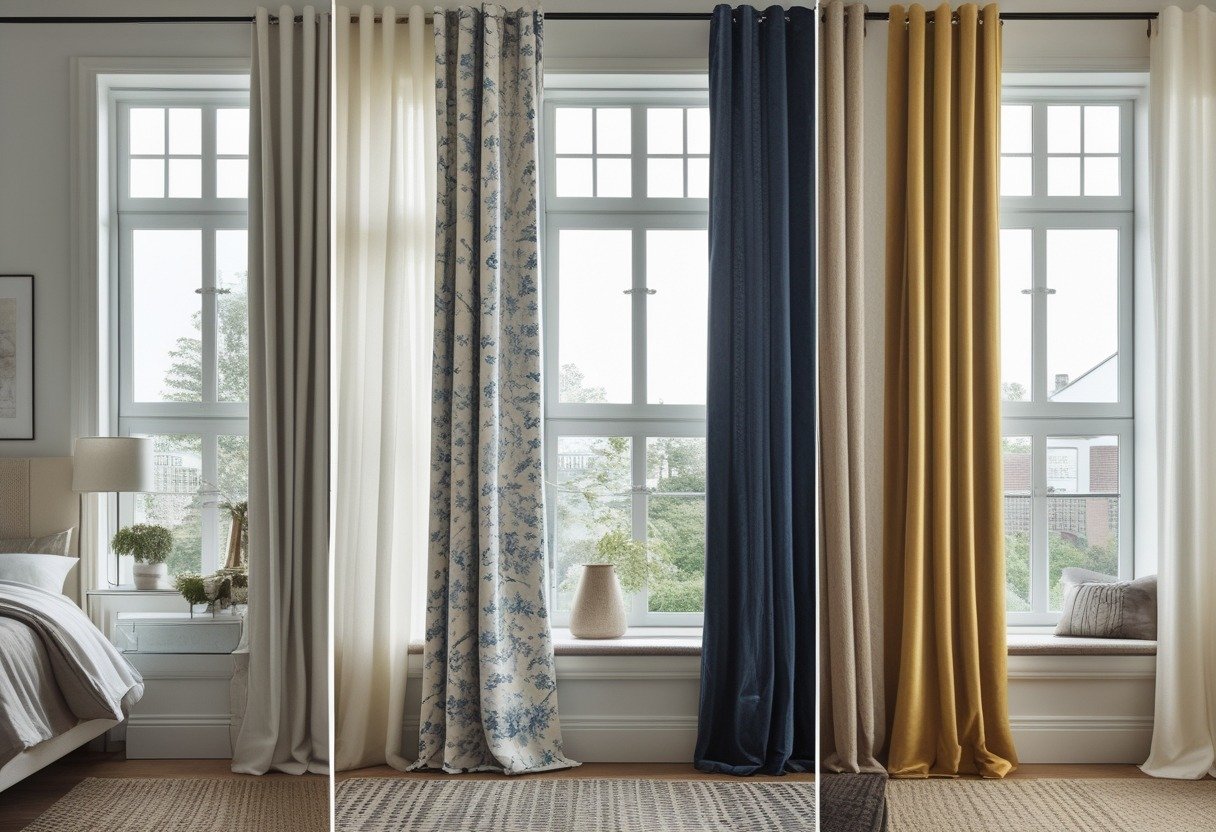
You’ll find options that work for bright mornings, chilly nights, small windows, and luxe looks, with clear choices for fabrics, hardware, and combos that fit different rooms. Use these ideas to pick curtains that solve real problems and make your bedroom look intentional.
1) Floor-to-ceiling blackout linen panels
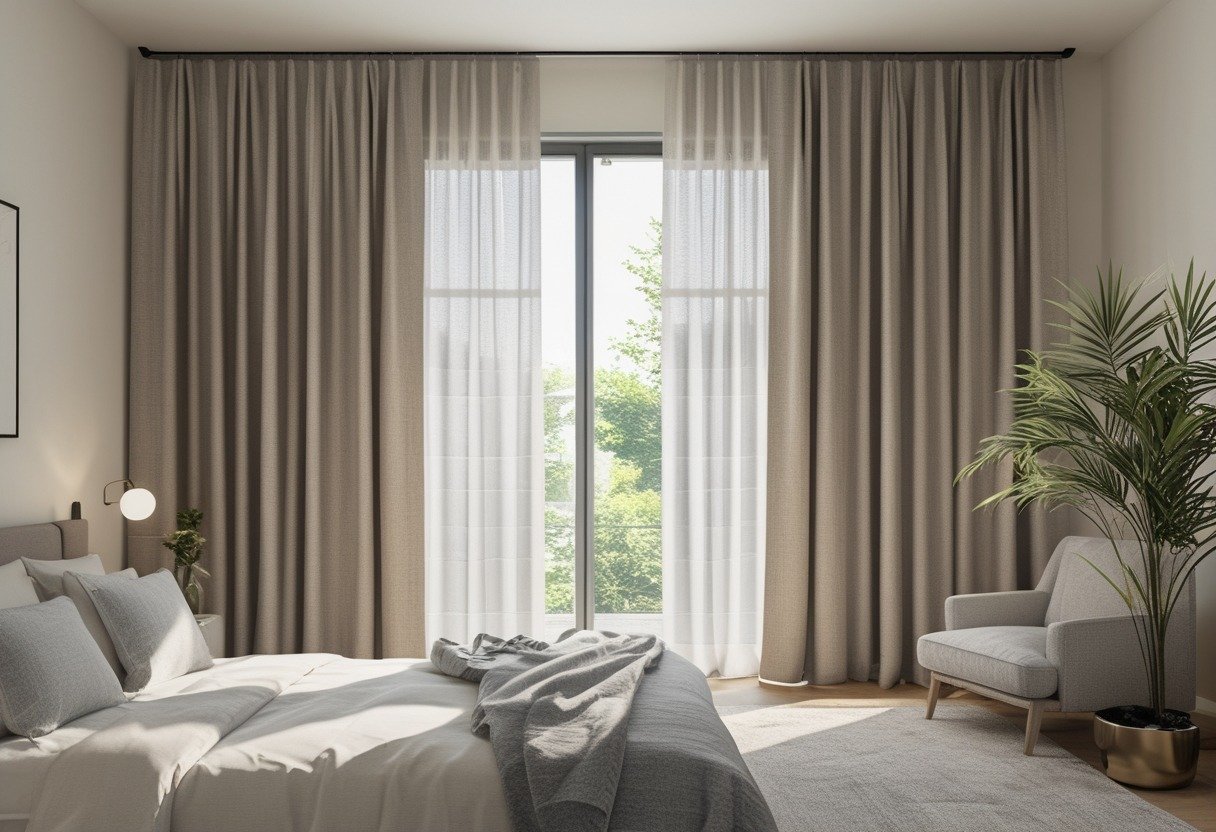
Choose floor-to-ceiling linen panels to make your bedroom feel taller and calmer. They block most light while keeping a soft, textured look that fits many styles.
Hang them close to the ceiling and let them graze the floor for a clean, tailored effect. You can pick neutral tones to match bedding or bolder colors to add contrast.
These panels help your sleep by reducing streetlight and glare. They also add privacy without looking heavy or bulky.
2) Layered sheer voile with heavyweight velvet drapes
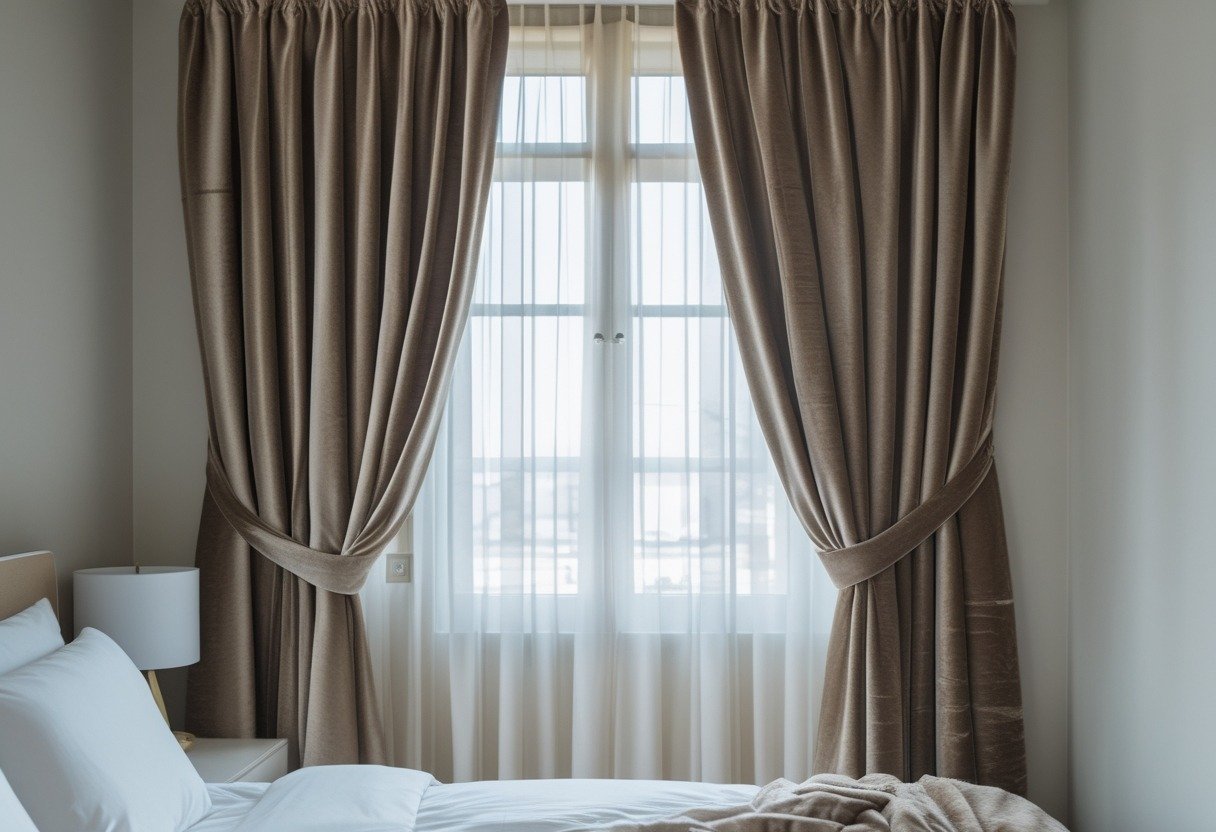
You can pair light voile sheers with thick velvet drapes to get soft light control and strong privacy when you need it.
Sheers let daylight filter in and add texture, while velvet blocks light and adds warmth.
Hang both on a double rod so you can open one layer without touching the other.
This combo works for cozy bedrooms and helps reduce noise and drafts.
3) Motorized blackout roller shades with side curtains
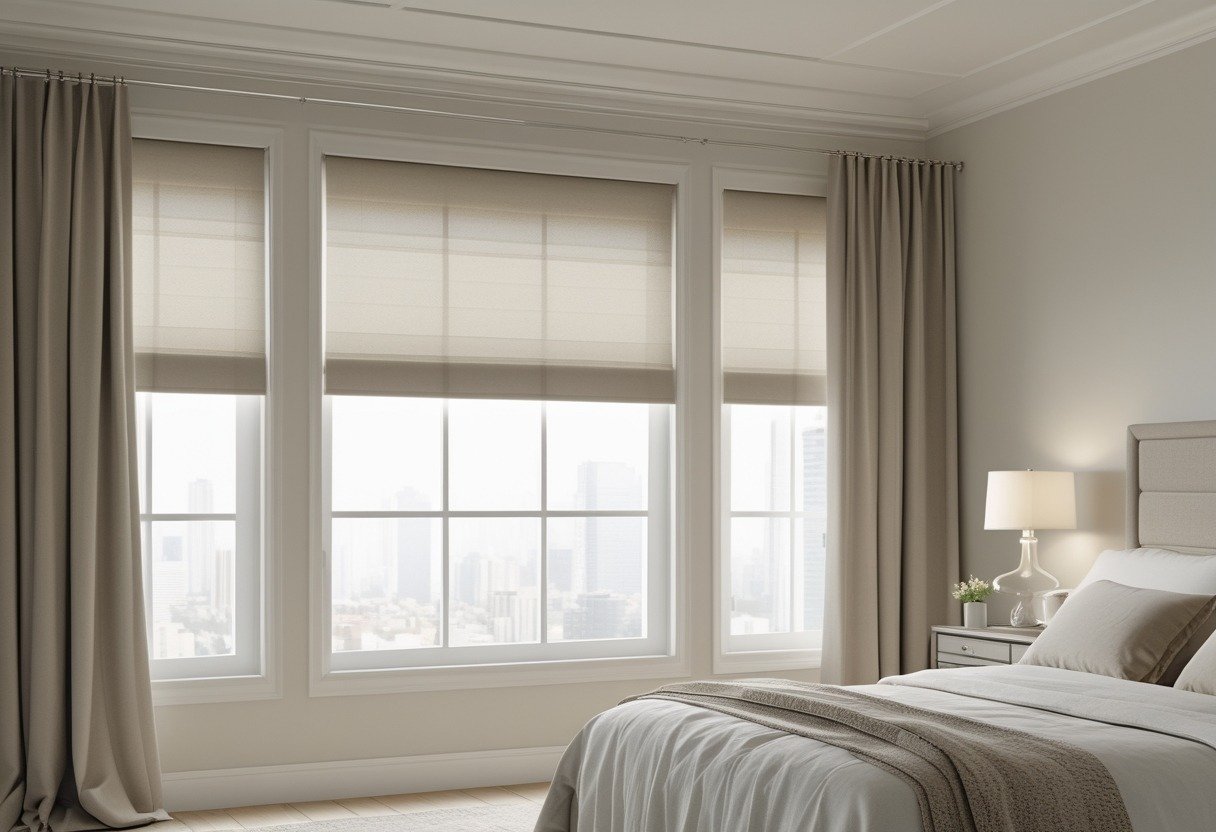
You get full darkness with motorized blackout roller shades that lower at the touch of a button. They block light well and help your room stay quiet for sleep.
Add side curtains for a softer look and better insulation. Curtains hide the shade hardware and reduce light gaps at the edges.
Combine smart controls so you can schedule lowering at night and raising in the morning. This setup keeps things neat, modern, and practical for a bedroom.
4) Thermal insulated grommet-top panels for cold rooms
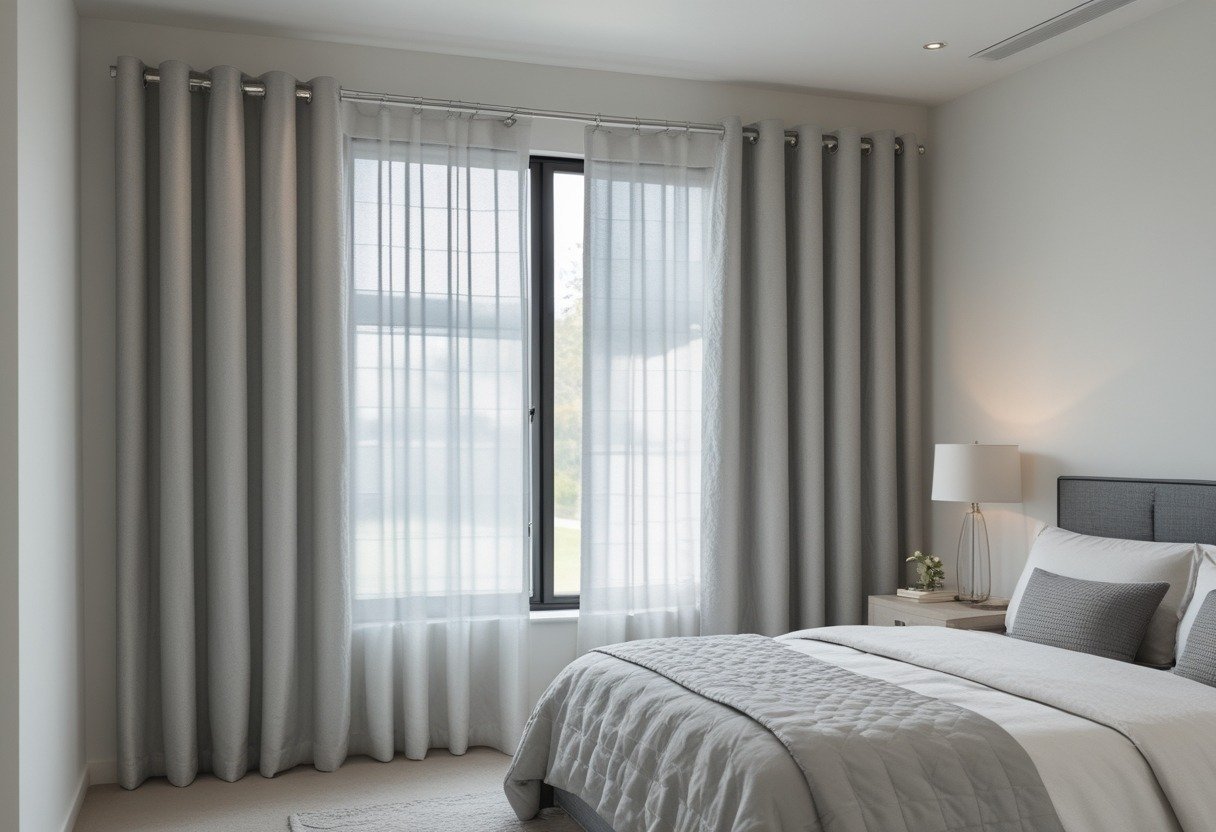
Choose grommet-top panels if you want easy hanging and a modern look. They slide smoothly on the rod, so you can open and close them without fuss.
Thermal insulated fabric helps block drafts and keeps your room warmer at night. That can lower heating use a little and make your space more comfortable.
Pick colors and textures that match your decor; faux linen and fleece linings work well. Measure your window so panels cover edges and reduce cold spots.
5) Double-rod combo: sheer inner + patterned outer panels
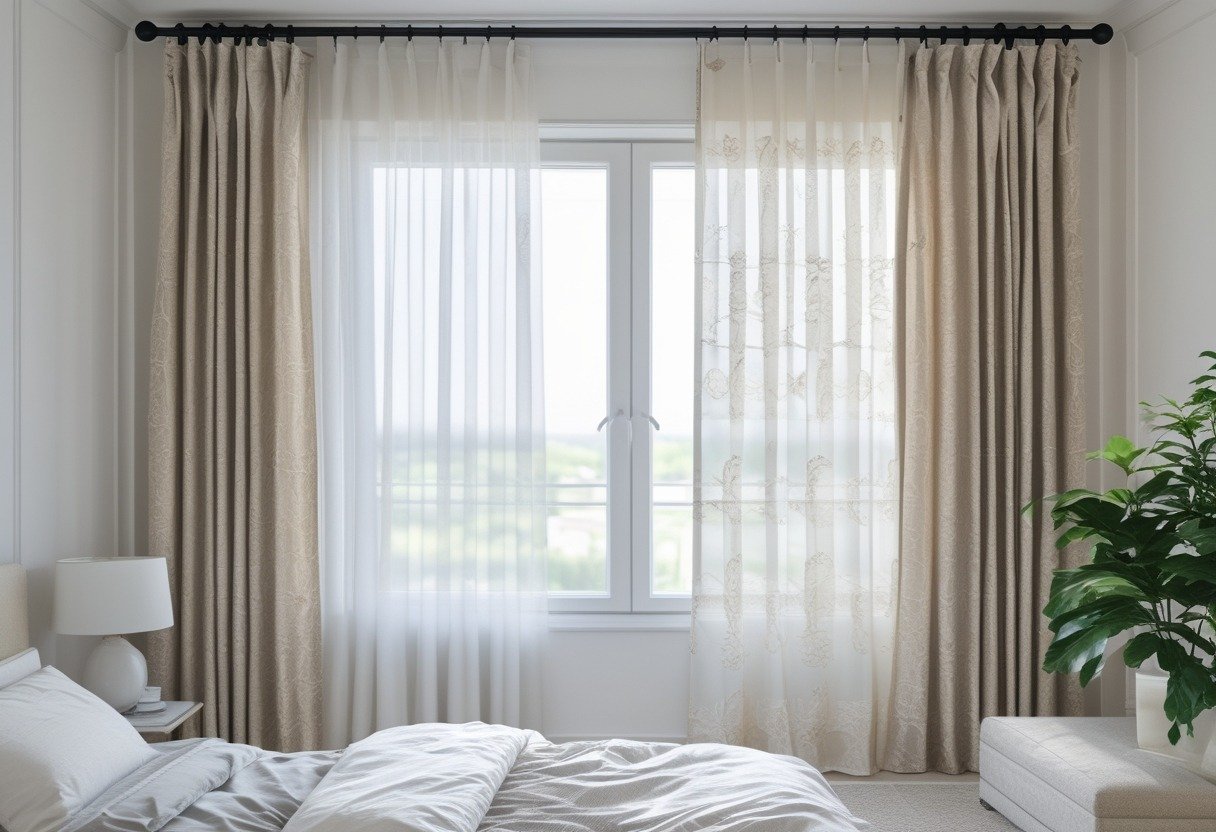
You hang a thin sheer on the inner rod to soften daylight and keep privacy while still brightening the room.
Place patterned outer panels on the front rod to add color, texture, and style that match your bedding or decor.
Use a double curtain rod so you can open or close each layer independently.
This combo works well in bedrooms where you want both light control and a decorative focal point.
6) Linen tab-top curtains in soft neutrals
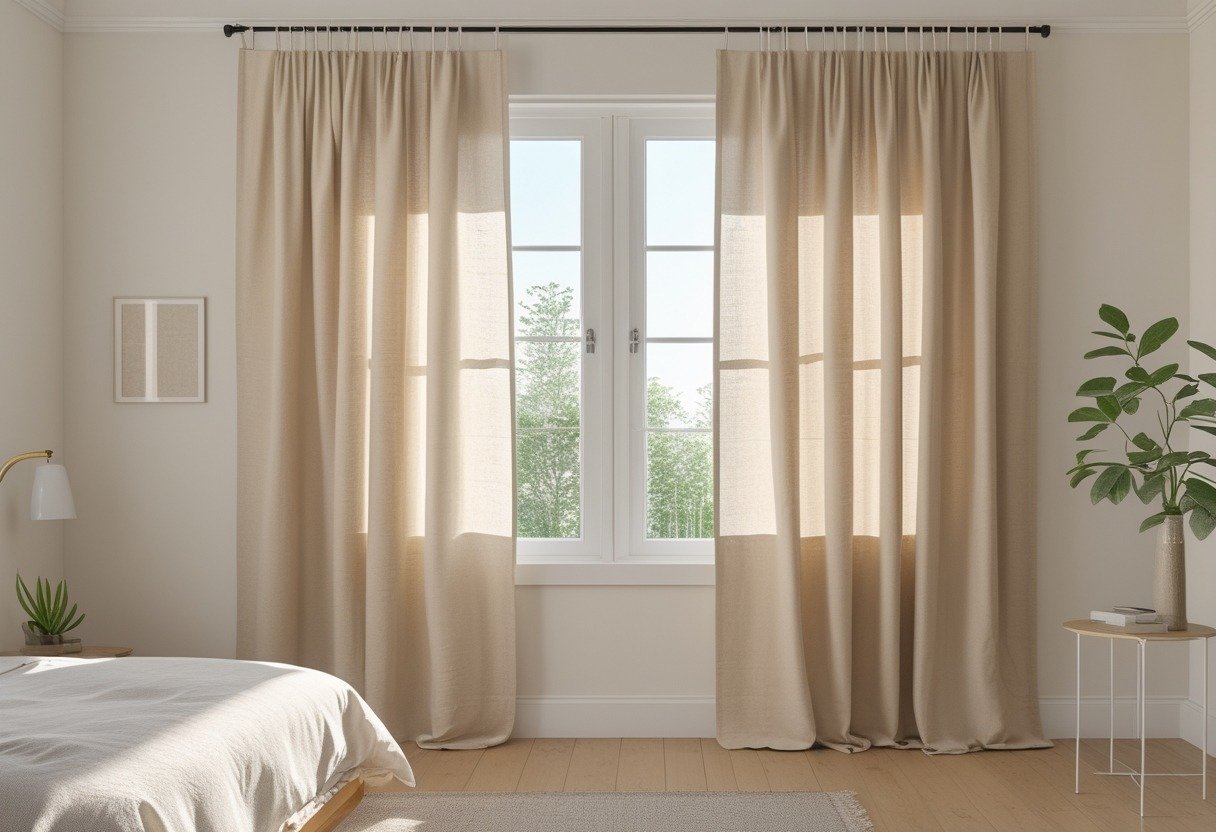
Choose linen tab-top curtains to give your bedroom a calm, natural feel. The tab-top header creates casual folds that suit relaxed or farmhouse decor.
Soft neutrals like cream, off-white, and light beige brighten the room without harsh contrast. Linen’s texture adds subtle depth while letting light filter gently through.
7) Velvet pinch-pleat drapes for a luxurious look

You can choose velvet pinch-pleat drapes to add a rich, tailored feel to your bedroom. The pinch pleats create neat folds that hang evenly and look formal without extra effort.
Velvet blocks light well and feels soft to the touch, which helps your room feel cozy and private. Pick a color that complements your walls and bedding for a polished result.
8) Cafe curtains on lower sash for cottage bedrooms
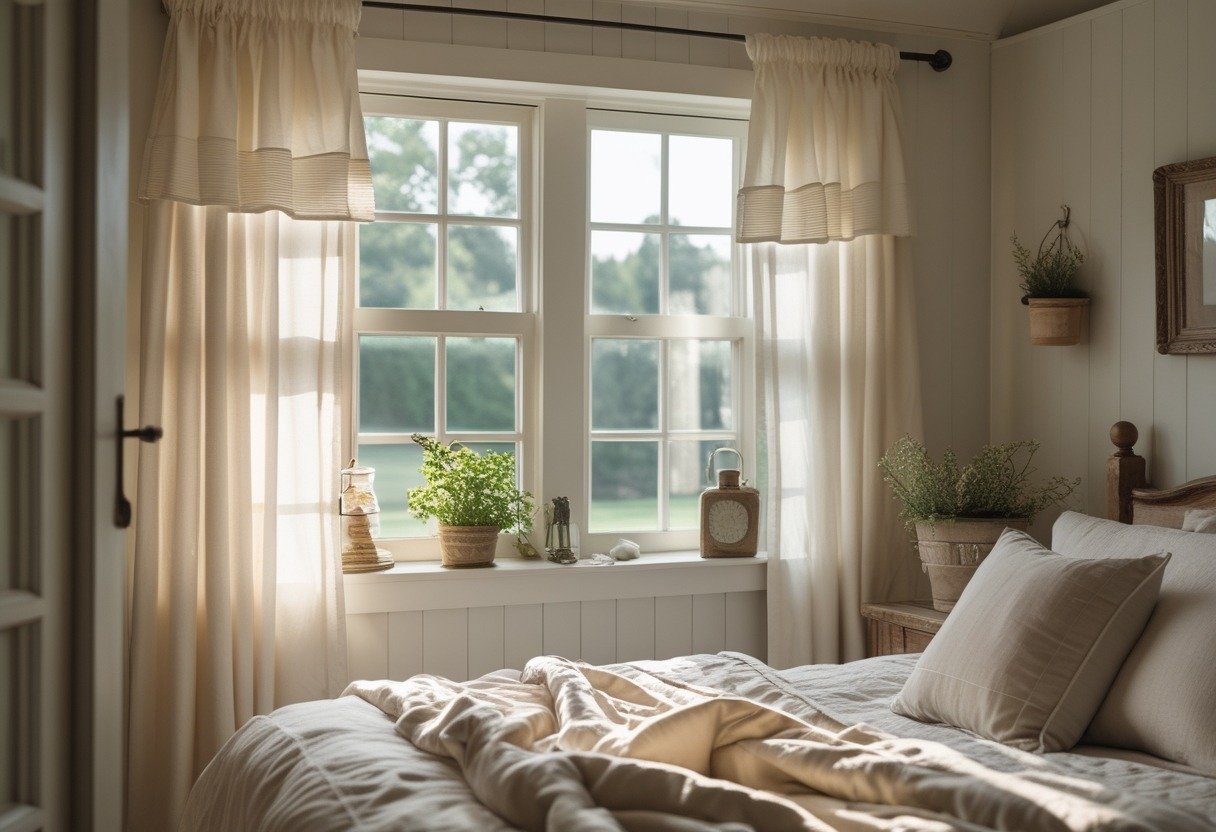
Choose cafe curtains that cover only the lower sash to keep light while keeping privacy. You can pick soft florals or simple linens to match a cottage palette.
Install a slim rod at the middle of the window for easy opening. This look keeps the top glass clear for sun and views while adding charm at eye level.
Keep panels short and slightly gathered for a vintage feel. Machine-washable fabrics work well for busy bedrooms.
9) Roman fabric shades paired with tailored side panels

Pair a Roman shade with fitted side panels to get both clean lines and soft texture. The shade gives precise light control while panels frame the window and add height.
Choose a neutral shade for calm, or a patterned fabric for a focal point. Mount panels on a rod outside the frame so they stack neatly when open.
Keep fabrics similar in weight for a balanced look. This combo works well in bedrooms where you want privacy and a polished style.
10) Light-filtering bamboo or woven wood shades

Choose bamboo or woven wood shades to add natural texture and warm light to your bedroom. They softly filter sunlight while keeping privacy, so mornings feel bright without glare.
Many styles come cordless and custom-fit, making installation simple and safer for children. You can pair them with a blackout liner if you need darker nights.
Choosing Curtain Materials for Comfort and Style
Pick fabrics that match your light needs, privacy, and the feel you want in the room. Think about how much daylight you want, how much noise and draft the fabric blocks, and how the texture fits your decor.
Comparing Light-Filtering and Blackout Fabrics
Light-filtering fabrics let daylight in while keeping soft privacy. Choose linen blends or sheer polyester if you want daylight that lowers glare but still brightens the room. These work well when you like morning light or need a softer feel.
Blackout fabrics block nearly all light and help keep the room dark for sleep. Look for triple-weave polyester, backed fabrics, or curtains labeled “room darkening.” They also reduce outside noise and improve energy efficiency by adding insulation.
Use a layered approach: hang a sheer panel under a blackout drape. This gives daytime brightness with nighttime darkness. Check curtain linings and weight—heavier weaves improve blackout and sound control but need sturdier rods.
Considering Texture for Bedroom Ambiance
Texture changes how the room feels and how the fabric hangs. Velvet and heavy twill create a cozy, formal look and add warmth. They feel dense and drape in deep folds.
Light cotton, linen, and gauze feel casual and breezy. They move with air and suit relaxed or coastal styles. Their looser weave shows light and may need lining for privacy.
Match texture to function: choose smoother, tighter weaves for better light control and thicker textures for warmth and sound dampening. Test fabric samples against your window in different light to see true color and drape.
Harmonizing Curtains With Bedroom Decor
Match curtain choices to the room’s color, texture, and scale so they look intentional and fit your needs. Think about how curtains will sit next to your bed, dresser, and rugs, and pick fabrics and colors that support both function and style.
Coordinating With Bedding and Furniture
Start by picking one dominant color from your bedding or a large furniture piece. Use that color for curtain accents—like a stripe, trim, or tieback—so the window feels tied to the rest of the room.
Match curtain fabric weight to furniture finishes. Heavy velvets pair well with dark wood or leather. Lightweight linens and sheers pair better with painted or mid-century pieces.
Use contrast to avoid a flat look. If your bedspread is patterned, choose solid curtains in a color that appears in the pattern. If your furniture is neutral, patterned curtains can add interest without clashing.
Keep scale in mind: large floral prints suit bigger rooms and high ceilings. Narrow stripes help make low ceilings feel taller. Measure the window and hang the rod higher than the frame for a polished result.
Selecting Patterns and Colors for Visual Impact
Choose patterns by thinking about room size and the existing mix of prints. Limit yourself to two pattern types: one dominant (like a bold geometric) and one subtle (a small-scale texture or stripe).
Use a simple formula for color balance:
- Dominant color (60%): walls, large furniture.
- Secondary color (30%): bedding, curtains.
- Accent color (10%): pillows, lamp shades.
If you want a calm, restful bedroom, pick muted tones and small patterns. For energy or drama, select saturated colors like deep navy or emerald green in solid panels or large-scale prints.
Test colors in natural light before buying. Clip fabric swatches to your headboard and check them at morning and evening light to ensure the color reads the way you expect.