
Look, we both know the struggle. You walk into your living room, and suddenly you’re playing an intense game of human Tetris just to reach the couch.
Small living rooms can feel like trying to solve a Rubik’s cube while blindfolded – frustrating, confusing, and occasionally making you question your life choices.
But here’s the thing: I’ve lived in shoebox apartments for years, and I’ve discovered that small spaces can actually be incredible when you know the right tricks.
After helping dozens of friends transform their cramped quarters into cozy havens, I’m sharing the magic that actually works. No fluff, no Pinterest-perfect fantasies that require a trust fund – just real solutions that’ll make your tiny living room feel twice its size.
Multi-Functional Furniture Layouts
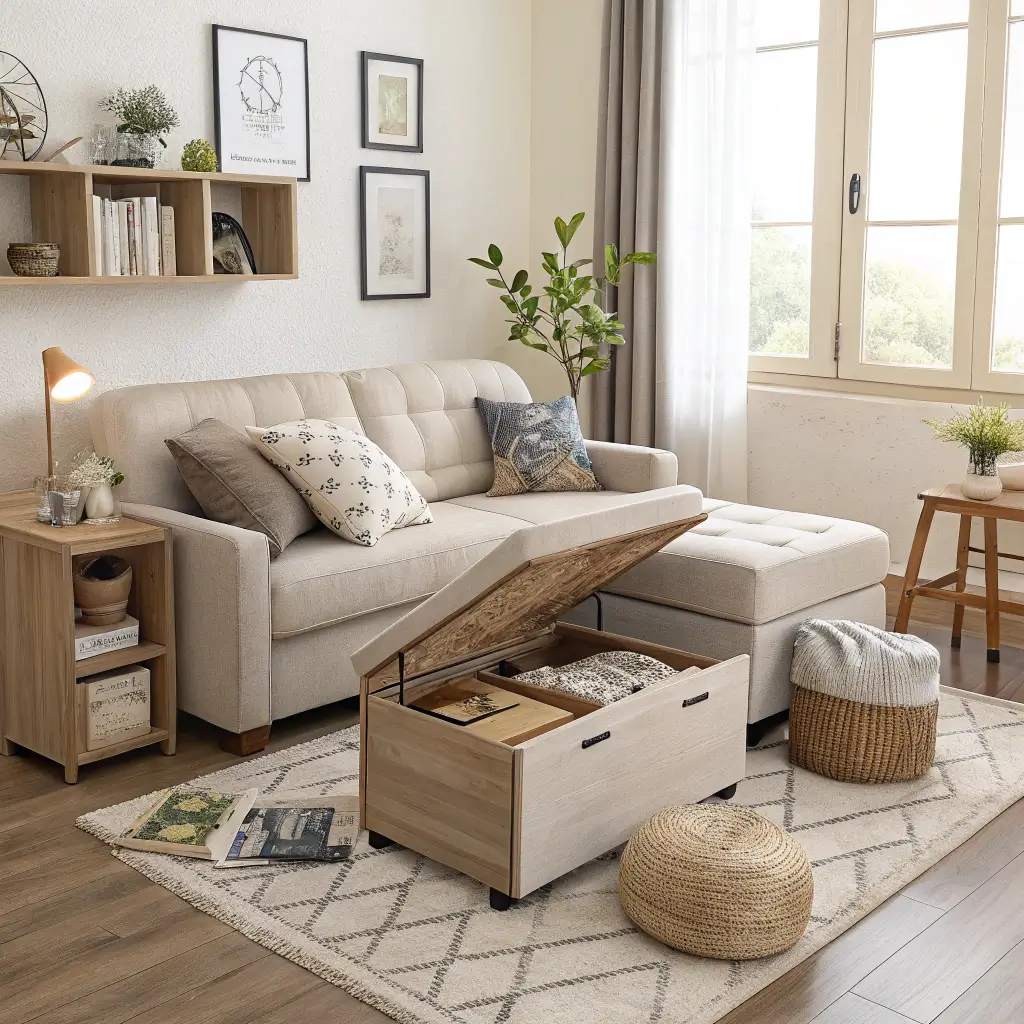
Let me tell you about the game-changer that saved my sanity: multi-functional furniture. Remember when I thought buying that massive entertainment center was a good idea? Yeah, that lasted about two weeks before I realized I’d basically built a wall in my living room.
The secret sauce here is choosing pieces that work overtime. I swapped my bulky coffee table for an ottoman with hidden storage – suddenly I had a footrest, extra seating for guests, and a place to hide all those random cables and magazines. Pure genius, right?
Smart Layout Strategies
Think about traffic flow first. You want to create clear pathways through your room, not an obstacle course. I arrange my furniture along the walls, leaving the center open. This creates what designers call “negative space” – basically breathing room for your eyes and your body.
Here’s what works:
- L-shaped arrangements against two walls
- Floating furniture slightly away from walls (sounds counterintuitive, but trust me)
- Diagonal positioning to create dynamic flow
- Modular pieces you can rearrange for different occasions
Vertical Storage Solutions
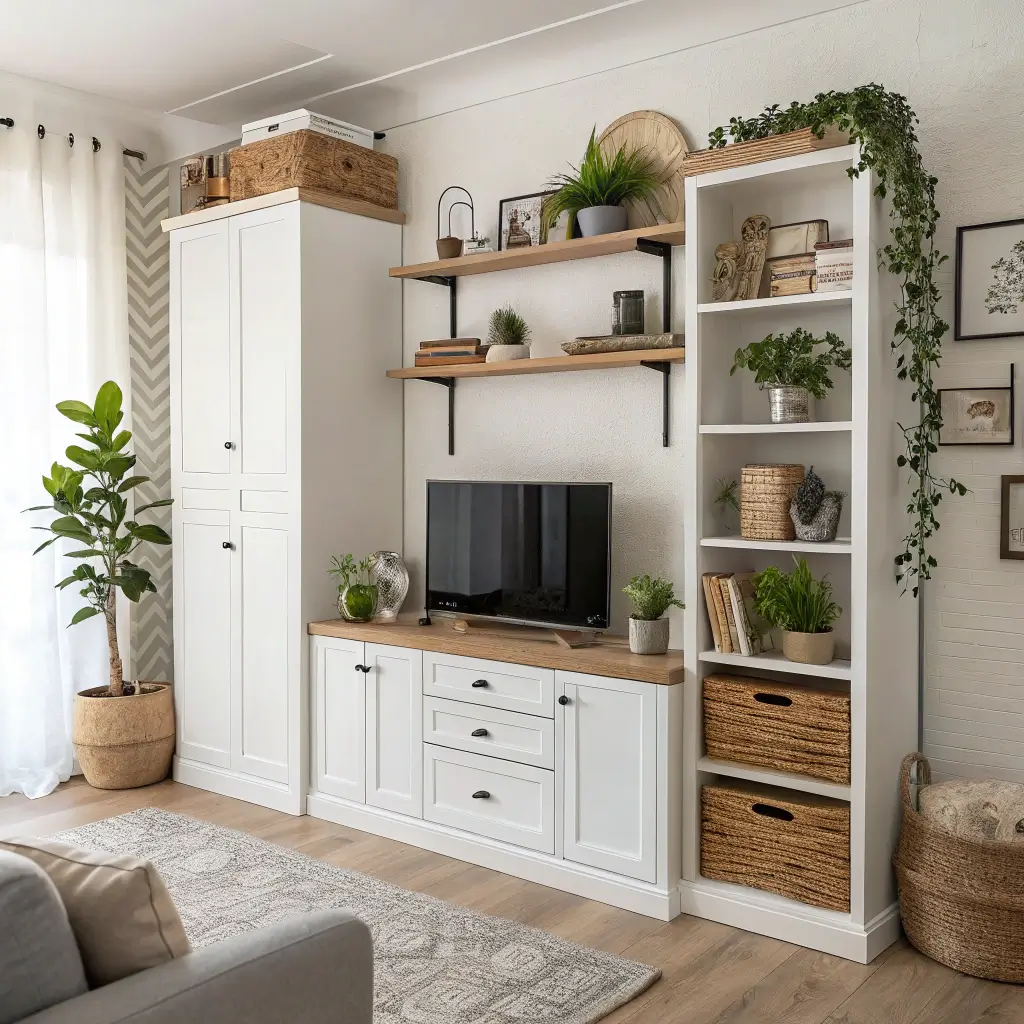
Why do we always forget about our walls? Seriously, you’ve got all this vertical real estate just sitting there, begging to be used. I learned this lesson the hard way after tripping over floor baskets one too many times.
Floor-to-ceiling shelving units became my best friend. They draw the eye upward, making your ceiling feel higher while giving you tons of storage. I installed one behind my sofa, and suddenly my living room looked like it belonged in an architecture magazine (okay, maybe a budget version, but still).
Making Vertical Work for You
The trick is keeping things visually light. Heavy, dark shelving units will make your room feel like it’s closing in on you. Go for:
- Open shelving in light wood or metal
- Ladder-style bookcases that lean against the wall
- Floating corner shelves for dead spaces
- Wall-mounted cubbies at varying heights
Hidden Storage Hacks
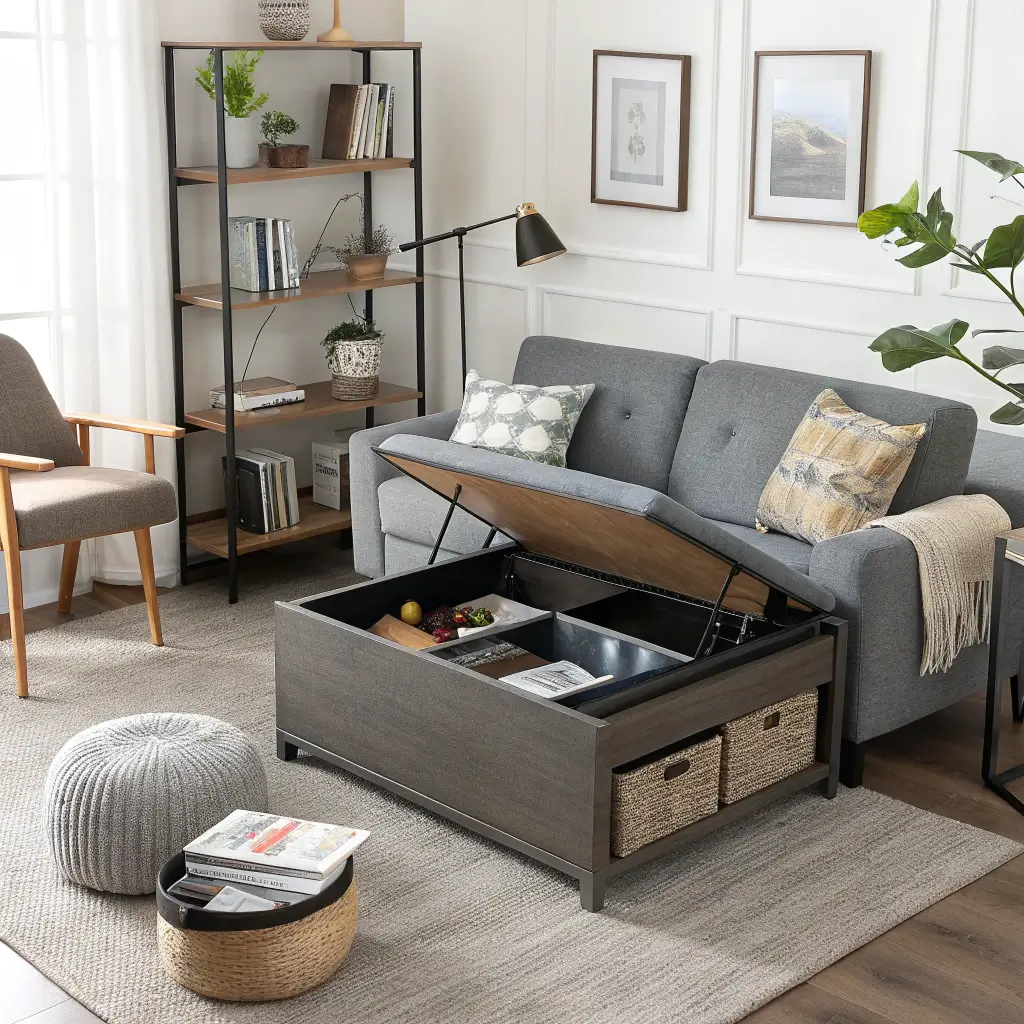
This is where things get sneaky – and I love it. Every surface in your small living room should be pulling double duty. That innocent-looking bench? Storage goldmine. The space under your sofa? Prime real estate.
I discovered the magic of storage furniture after living with piles of blankets on my couch for months. Now I have a sofa with built-in drawers underneath. Game changer! My living room went from “college dorm chic” to “actual adult lives here” practically overnight.
Clever Hiding Spots
Get creative with these spots:
- Behind door organizers for remotes and small items
- Hollow ottomans for blankets and pillows
- Side tables with shelves or drawers
- Wall-mounted boxes that double as art
FYI, the key is making sure your storage solutions don’t scream “I’M HIDING STUFF!” They should blend seamlessly with your decor.
Also Read: 15 Trendy Small Living Room Ideas for Cozy, Modern Homes
Light-Reflecting Decor Tricks
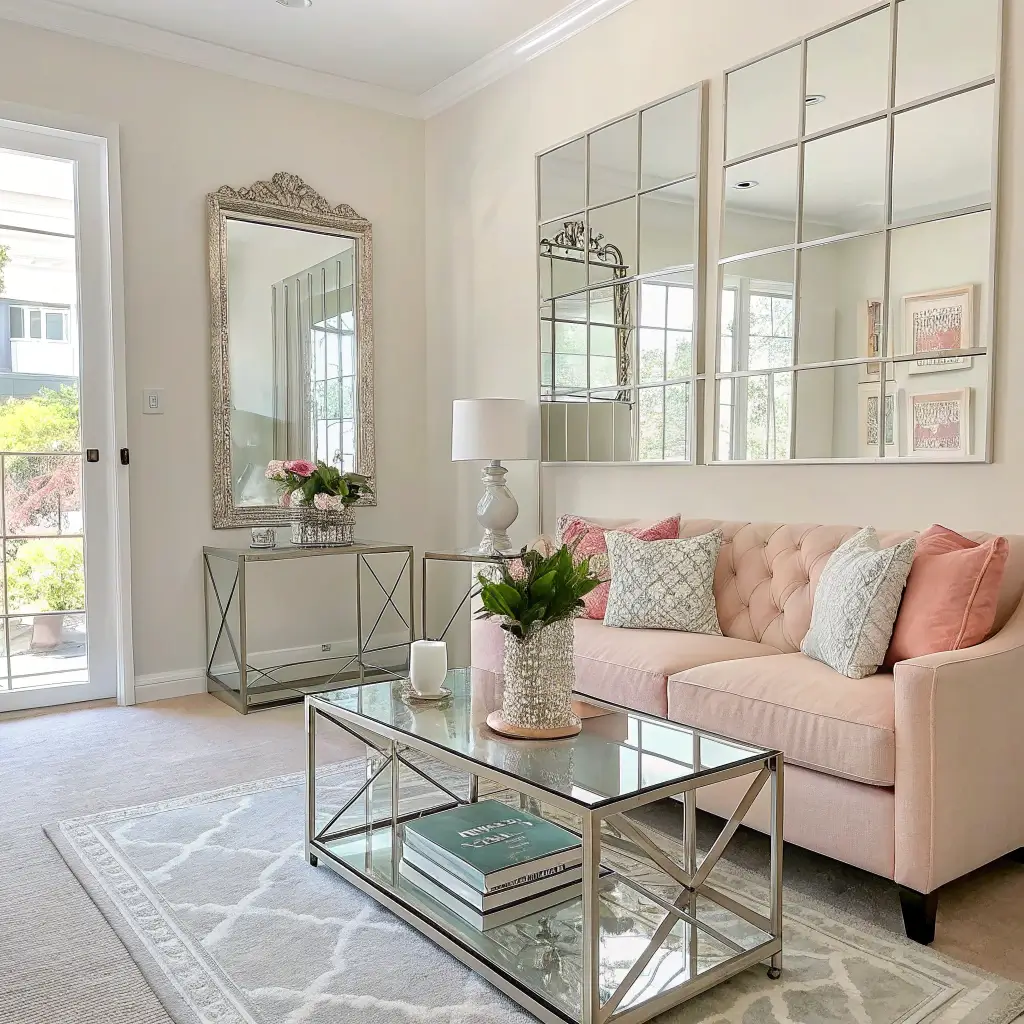
Light is basically magic pixie dust for small spaces. The more you have, the bigger your room feels. I learned this after painting my first apartment cave-black (what was I thinking?) and wondering why I felt like I was living in a bunker.
Strategic placement of reflective surfaces can literally double the perceived light in your room. I’m talking mirrors, glass tables, metallic accents – anything that bounces light around like a disco ball, but classier.
Maximizing Natural Light
Never, and I mean never, block your windows with heavy furniture. Keep window treatments light and airy. I use sheer curtains that let light filter through while still giving me privacy.
Consider these light-amplifying tricks:
- Glass or acrylic furniture that seems to disappear
- Metallic picture frames clustered on walls
- Light-colored lampshades that glow when lit
- Glossy paint finishes on accent pieces
Minimalist Scandinavian Design
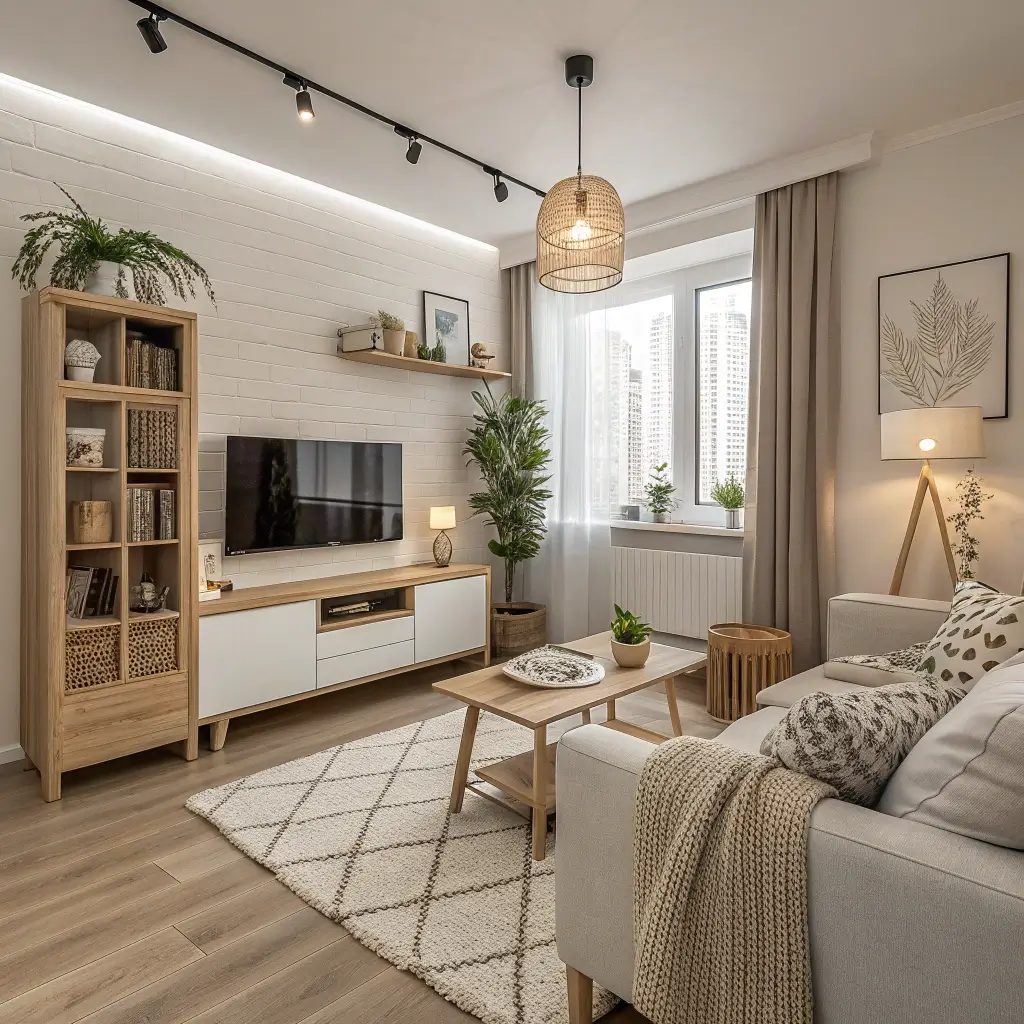
Okay, I know what you’re thinking – “Not another Scandinavian design lecture!” But hear me out. This style was basically invented for small spaces. The Swedes know what they’re doing when it comes to making tiny apartments feel spacious.
The philosophy is simple: less stuff, more life. I adopted this approach after my Marie Kondo phase (we all had one), and my living room transformed from cluttered chaos to zen paradise. Well, zen-ish – I kept my collection of weird coffee mugs.
The Scandi Secret Sauce
The magic formula includes:
- Neutral color palettes with pops of muted color
- Natural materials like wood and wool
- Clean lines without fussy details
- Cozy textiles (they call it “hygge” for a reason)
Keep your color scheme simple – whites, grays, and natural wood tones. Then add warmth with soft throws and cushions. Your room will feel twice as big and infinitely more peaceful.
Cozy Reading Nooks
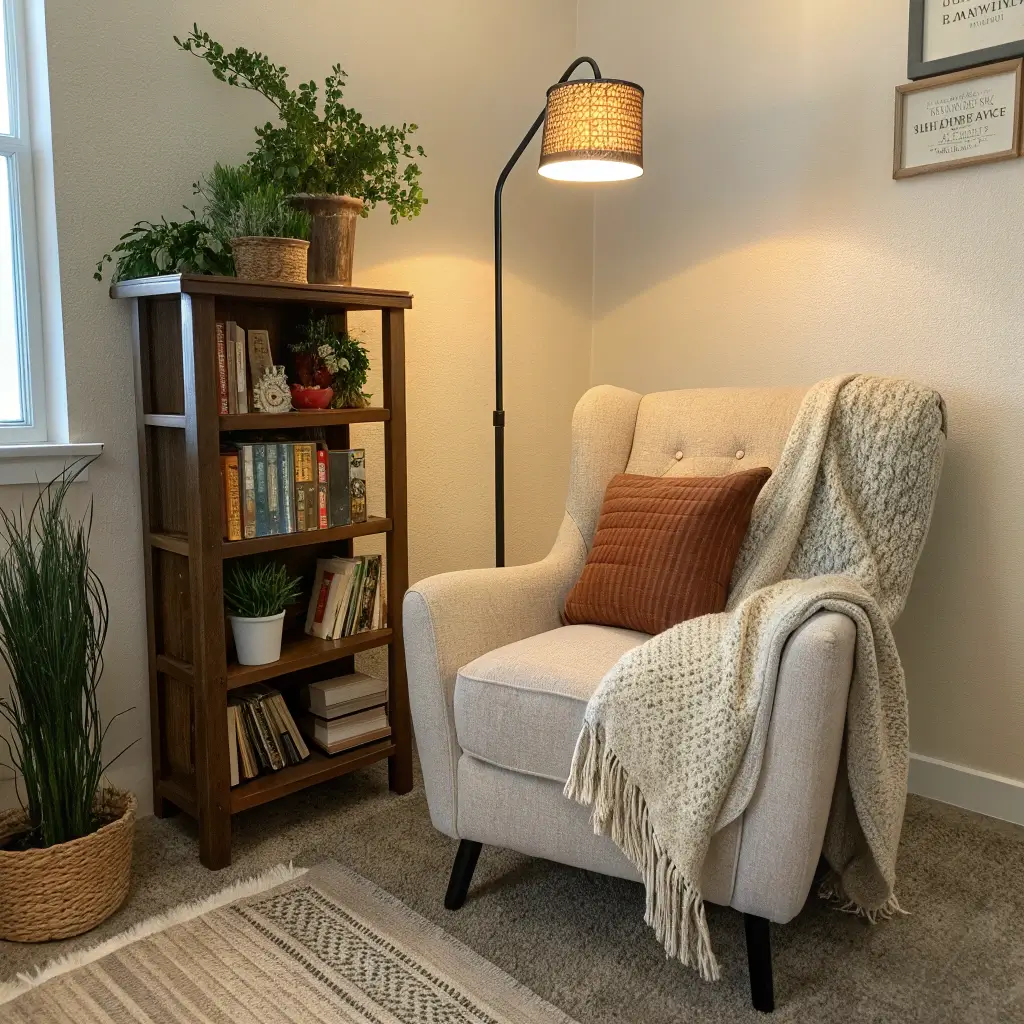
Who says you need a separate room for a reading spot? I carved out a perfect little reading corner in my 10×12 living room, and it’s become everyone’s favorite spot. Even my cat agrees, though she thinks I created it specifically for her afternoon naps.
The secret is choosing a corner that feels separate but not isolated. I positioned a compact armchair at an angle in the corner, added a small side table, and boom – instant reading nook that doesn’t eat up precious floor space.
Creating Your Perfect Nook
Essential elements for success:
- A comfortable chair that fits your space (measure twice, buy once!)
- Good lighting – floor lamp or wall-mounted reading light
- Small surface for your coffee/wine/emotional support beverage
- Soft textiles to make it irresistibly cozy
Also Read: 15 Stunning Living Room Decor Ideas to Transform Your Space
Floating Shelves Styling
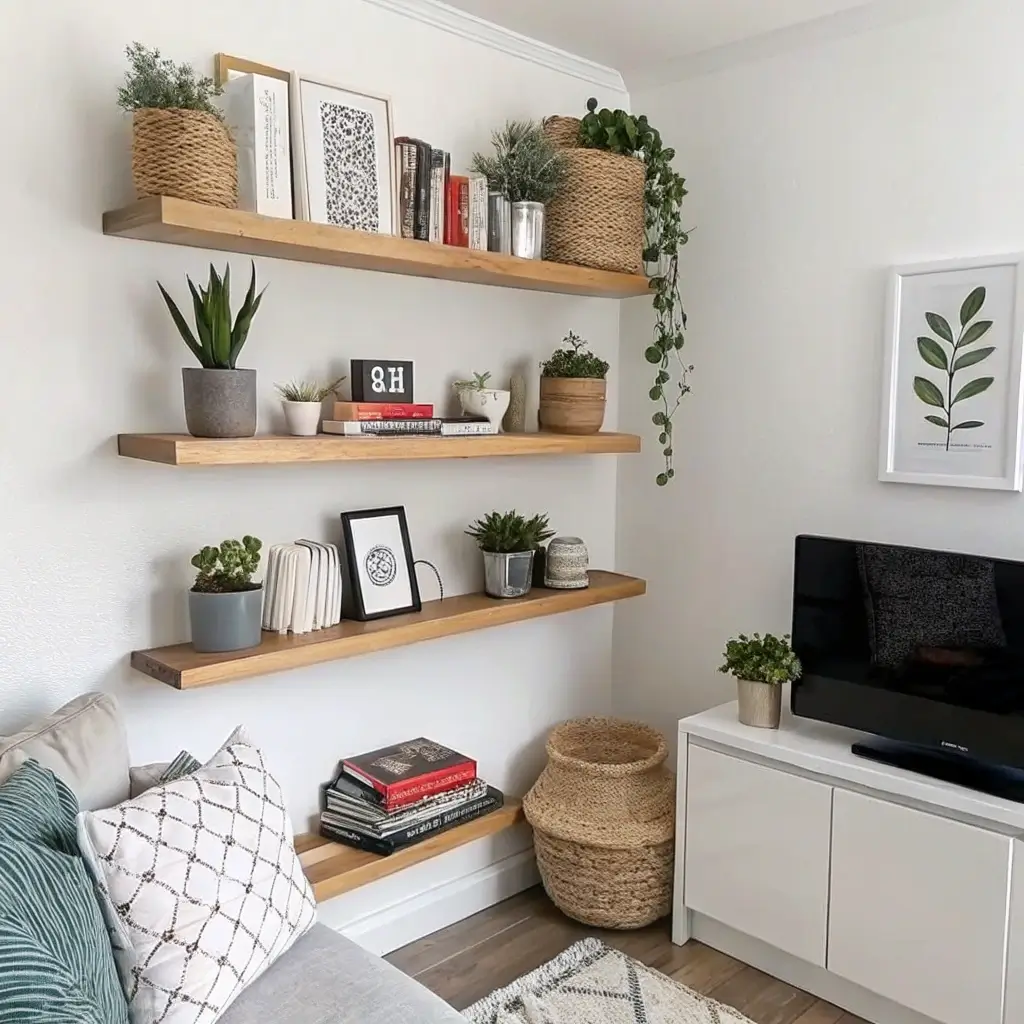
Floating shelves are like the Swiss Army knife of small living rooms. They provide storage, display space, and wall art all in one. Plus, they make you look like you actually have your life together 🙂
I installed three staggered floating shelves above my TV, and suddenly I had a place for books, plants, and those random decorative objects I couldn’t bear to throw away. The key is not overdoing it – nobody wants their living room looking like a cluttered bookstore.
The Art of Shelf Styling
Follow the rule of odds – group items in threes or fives. Mix these elements:
- Books (vertical and horizontal stacks)
- Plants for life and color
- Personal objects that tell your story
- Negative space (yes, empty space is important!)
Compact Sectional Sofas
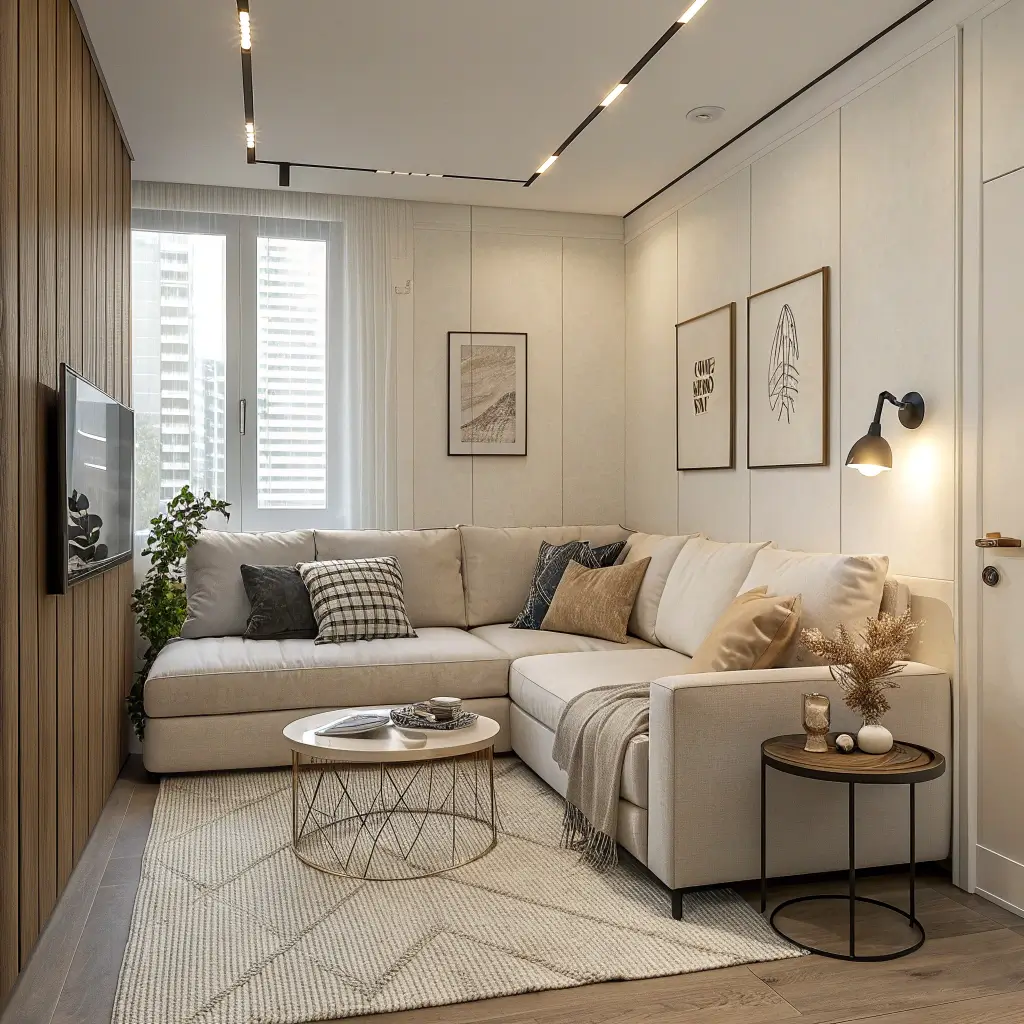
Let’s talk about the elephant in the room – or rather, the sofa that’s trying to be one. Traditional sofas can dominate small living rooms faster than you can say “buyer’s remorse.”
Enter the compact sectional. I was skeptical at first (how can something sectional be small?), but modern designs are brilliant. My L-shaped compact sectional fits perfectly in my corner, seats four comfortably, and doesn’t make my living room feel like a furniture showroom.
Choosing the Right Sectional
Look for these features:
- Low backs that don’t block sightlines
- Raised legs so you can see the floor underneath
- Reversible chaise for flexibility
- Light colors to maintain airiness
Mirrors to Expand Space
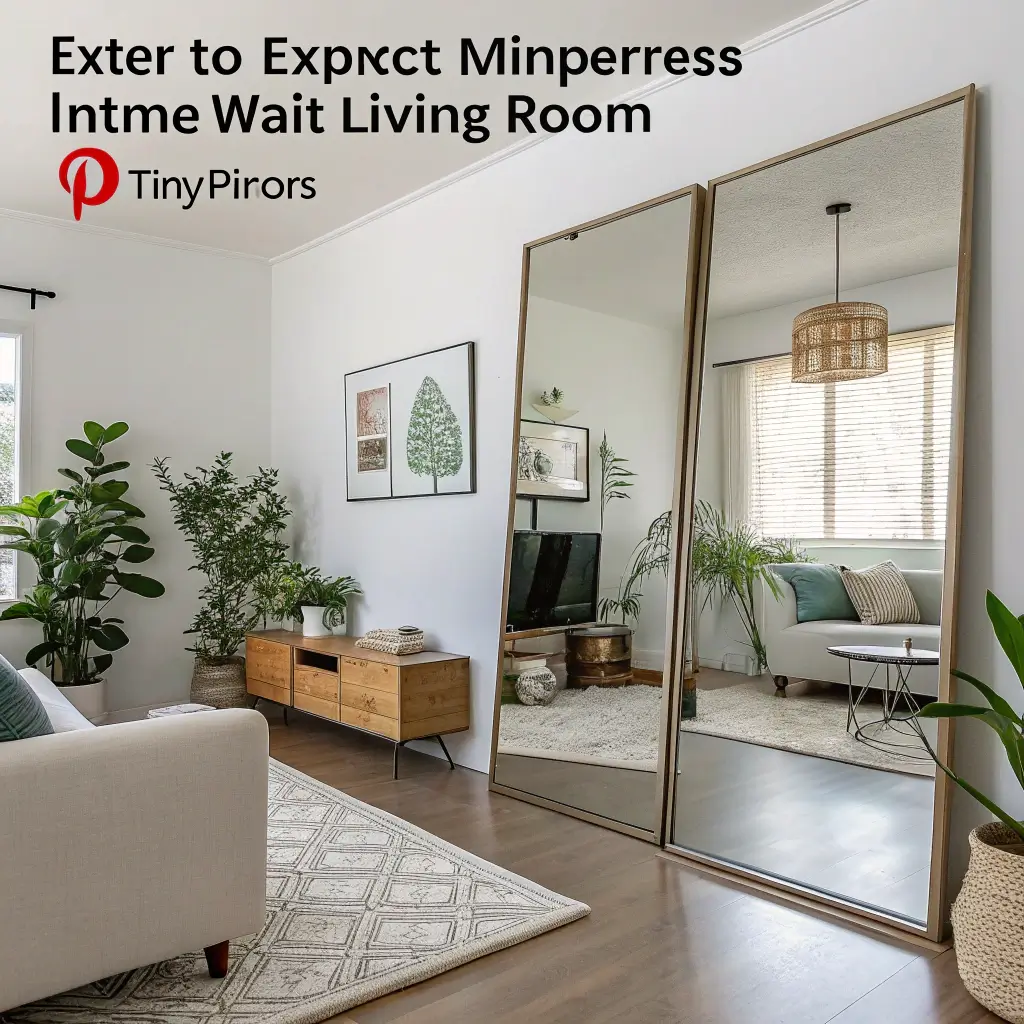
Mirrors are basically cheat codes for small spaces. One well-placed mirror can make your living room feel twice its actual size. I hung a large mirror opposite my window, and suddenly I had twice the natural light and what felt like an extra window.
The trick is placement and proportion. A tiny mirror on a big wall looks lost, while an oversized mirror can be a stunning focal point that transforms your entire room.
Mirror Magic Tricks
Strategic mirror placement:
- Behind light sources to amplify brightness
- Opposite windows to reflect outdoor views
- Above sofas as statement pieces
- In groups for artistic impact
Also Read: 15 Stylish Peel and Stick Floor Tile Bathroom Ideas Made Simple
Wall-Mounted TV Ideas
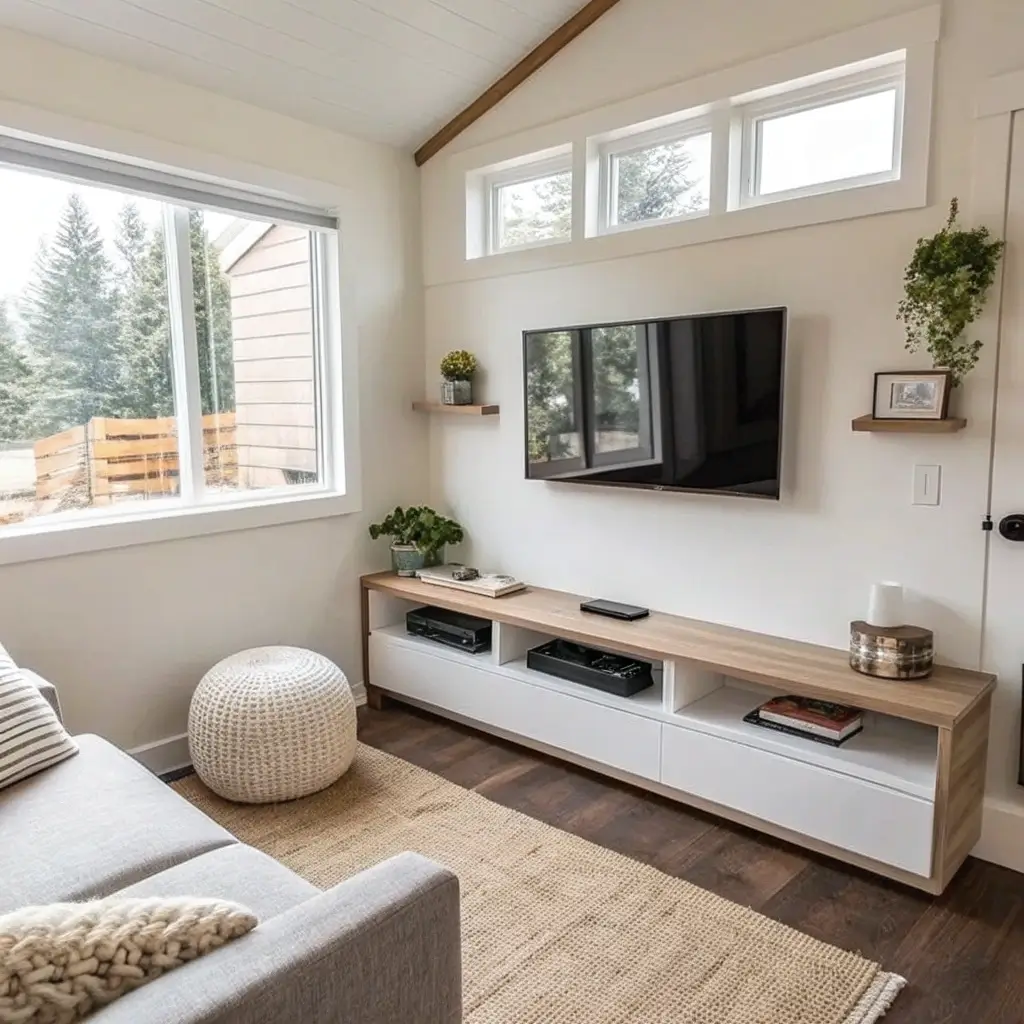
Remember when TVs were giant boxes that ate up half your living room? Thank goodness those days are over. Wall-mounting your TV frees up so much floor space, you’ll wonder why you didn’t do it sooner.
I mounted mine at eye level when seated (super important for neck health, trust me), and suddenly my TV stand became unnecessary. That freed up space became home to a sleek console table with – you guessed it – more storage.
Smart TV Mounting
Consider these factors:
- Height – center should be at seated eye level
- Cable management – hide those ugly wires!
- Swivel mounts for flexible viewing angles
- Floating shelves above or below for equipment
Foldable Furniture Solutions
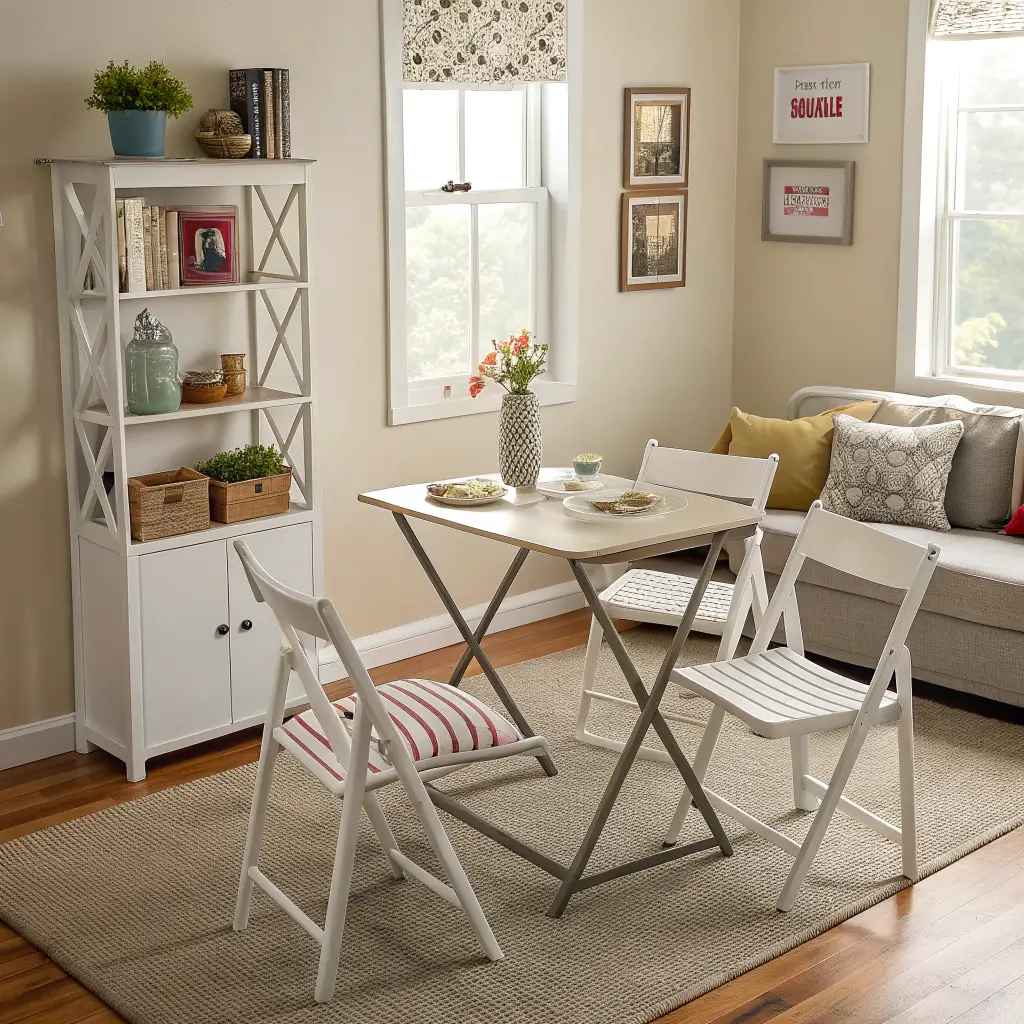
This is where we get into transformer territory. Foldable furniture lets you have your cake and eat it too – or in this case, have a dining table and still be able to walk through your living room.
My folding console table lives against the wall most days, but transforms into a dining table for six when friends come over. It’s like having a secret superpower, except instead of fighting crime, you’re hosting dinner parties.
Folding Favorites
Game-changing pieces:
- Drop-leaf tables that expand when needed
- Nesting tables that tuck away
- Folding chairs (stylish ones exist, I promise!)
- Collapsible bar carts for entertaining
Open Floor Plan Tricks
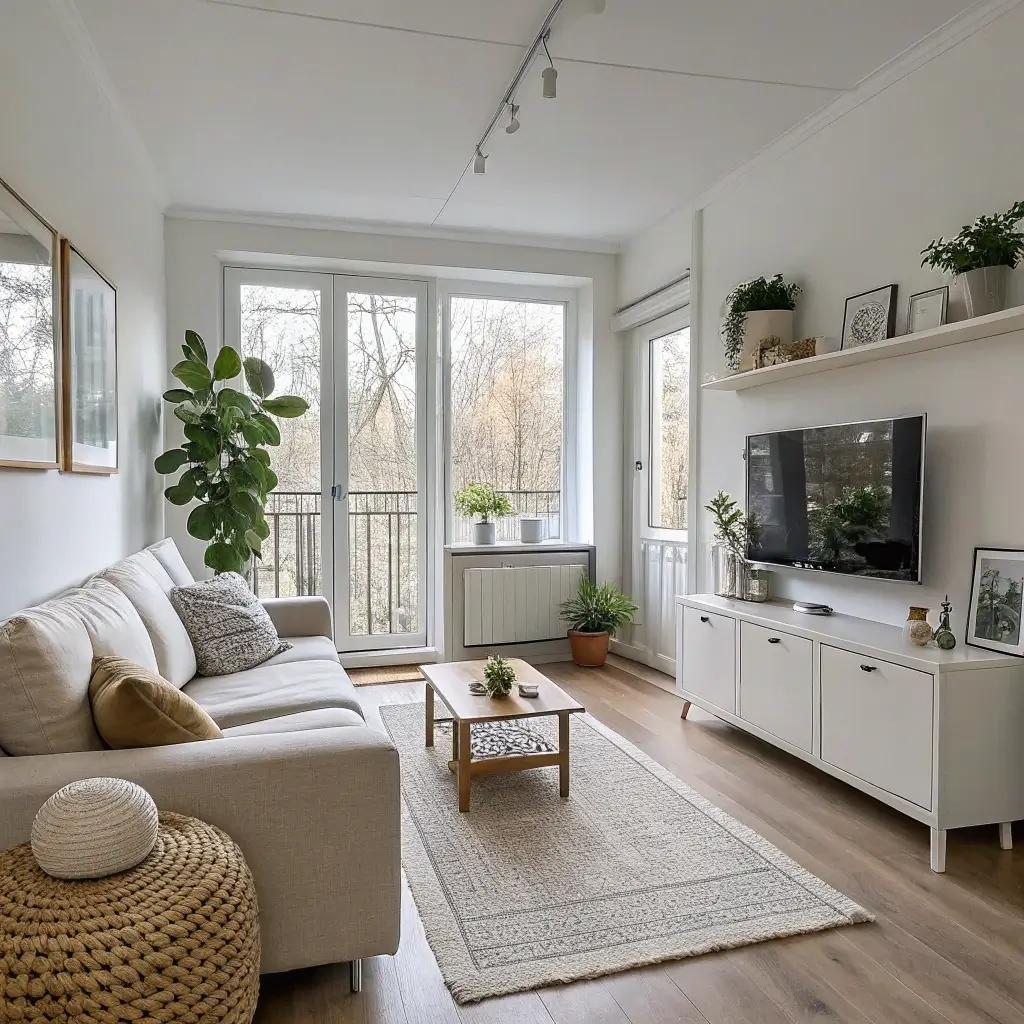
Even in a tiny living room, you can create the illusion of an open floor plan. The key is defining zones without building walls. I use my rug to anchor the seating area, creating a visual boundary without any physical barriers.
Think of your living room as having invisible zones – entertainment, conversation, reading. You define these with furniture placement and lighting, not walls.
Zone Creation Strategies
Define spaces using:
- Area rugs to ground seating areas
- Lighting to highlight different zones
- Furniture backs as subtle dividers
- Color changes in accessories
Bright Color Schemes
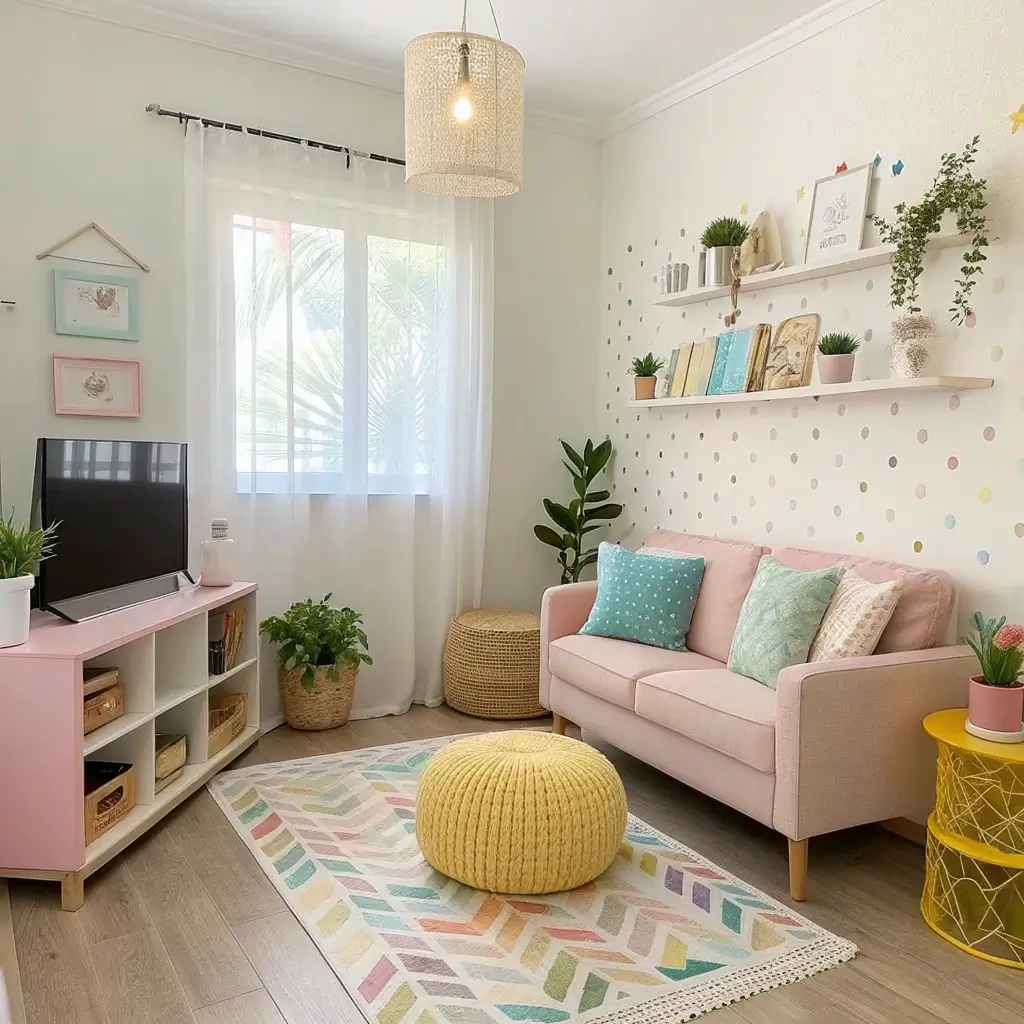
I know, I know – everyone says “paint it white!” But here’s the thing: bright doesn’t always mean white. My living room has soft sage green walls, and it feels more spacious than when it was beige. The key is choosing colors with lots of light in them.
Avoid dark, heavy colors that absorb light. Instead, go for colors that reflect and bounce light around your room. Think soft pastels, warm whites, or pale versions of your favorite colors.
Color Psychology for Small Spaces
Best color choices:
- Soft whites with warm undertones
- Pale blues for a calming, airy feel
- Light grays for modern sophistication
- Soft greens for natural tranquility
IMO, the accent colors matter just as much. Use bold colors sparingly in pillows, art, or throws to add personality without overwhelming the space.
Indoor Plant Arrangements
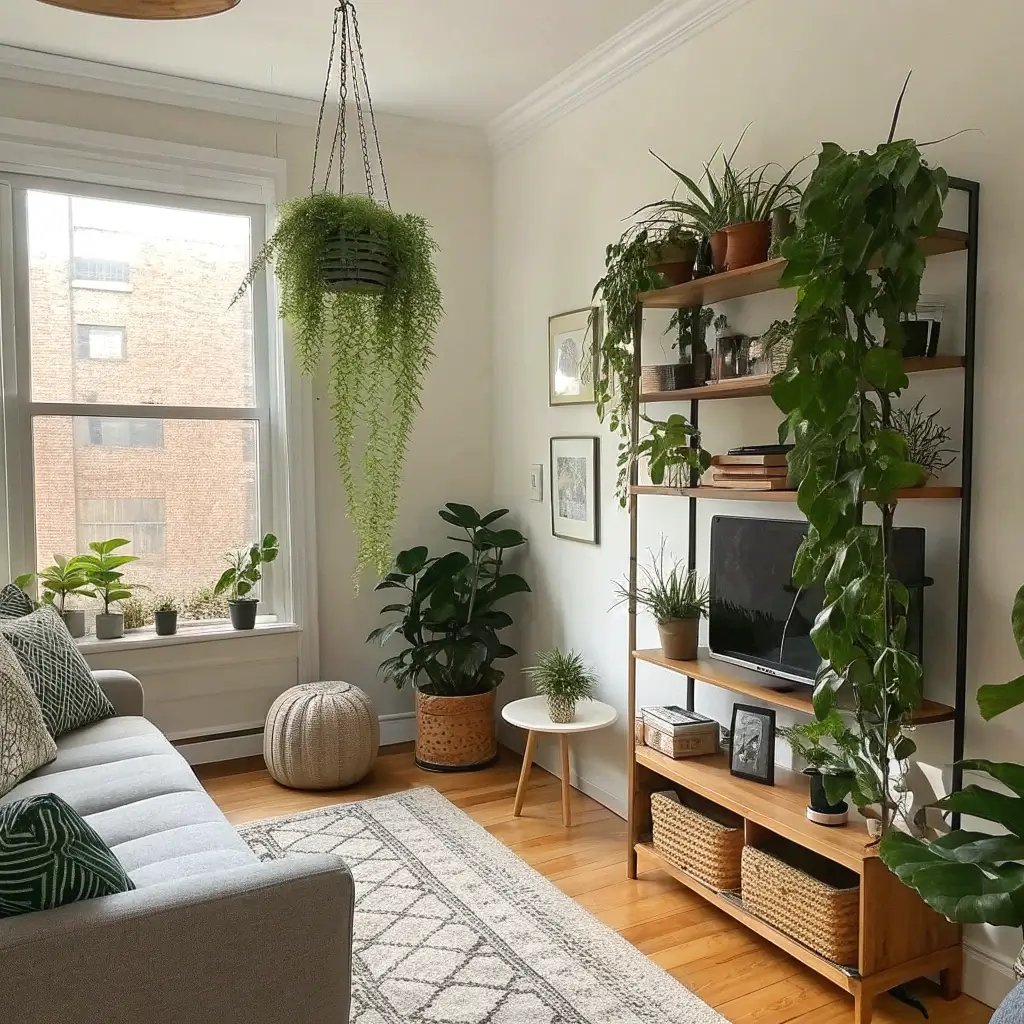
Plants are like nature’s decorators – they add life, color, and somehow make any space feel more expensive. But in small living rooms, you need to be strategic about your green friends.
I learned this after my “plant parent” phase got out of hand. Suddenly my living room looked like a jungle, and not in a good way. Now I stick to a few statement plants that add impact without taking over.
Plants That Work in Small Spaces
Choose wisely:
- Tall, narrow plants like snake plants for corners
- Hanging plants to use vertical space
- Small succulents grouped on shelves
- One large statement plant instead of many small ones
Keep them healthy and they’ll keep your room looking fresh. Dead plants make any space feel smaller and sadder – trust me on this one.
Accent Wall Inspirations
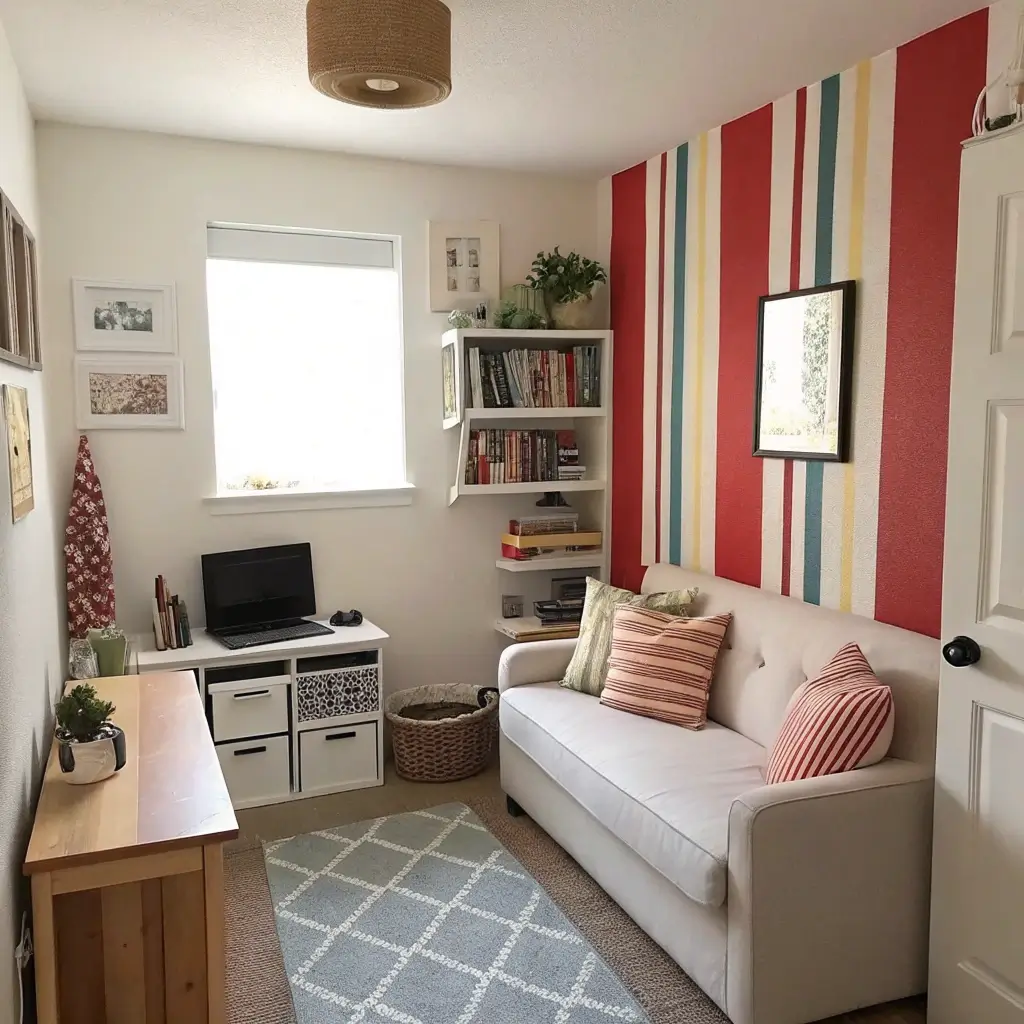
Here’s where you can have some real fun. An accent wall in a small living room might seem counterintuitive, but it actually creates depth and interest that makes the space feel larger.
I painted one wall in my living room a deep navy blue (brave, I know), and instead of making the room feel smaller, it created this gorgeous focal point that makes the other walls seem to recede. It’s like an optical illusion, but for your house.
Accent Wall Ideas That Work
Try these approaches:
- Bold paint colors on the smallest wall
- Geometric wallpaper for modern impact
- Wood paneling for texture and warmth
- Gallery walls with cohesive framing
The trick is choosing just one wall. Any more and your room will feel like it’s closing in on you. Been there, done that, had to repaint.
Wrapping Up the Magic
So there you have it – fifteen ways to transform your tiny living room from cramped catastrophe to cozy paradise. The biggest lesson I’ve learned? Small spaces force you to be creative, and that creativity often leads to more interesting, personalized rooms than any mansion could offer.
Start with one or two ideas that resonate with you. Maybe it’s finally mounting that TV on the wall, or perhaps investing in that storage ottoman you’ve been eyeing. Small changes add up to big transformations.
Remember, your small living room isn’t a limitation – it’s an opportunity to create something uniquely yours. Every square foot counts, so make them all work for you. And hey, at least you’ll never lose the remote in a couch that’s three rooms away!
The real magic isn’t in making your space bigger; it’s in making it better. Your tiny living room can be just as stylish, comfortable, and functional as any larger space – it just takes a little creativity and the right tricks up your sleeve. Now go forth and transform that small space into something spectacular. Your future self (and your guests) will thank you.
