
Designing a toddler bedroom is one of those home projects that looks simple at first, but once you start planning, you realize just how many little decisions are involved. A toddler’s room needs to be comfortable enough for sleep, safe enough for independent exploration, practical enough for everyday messes, and playful enough to spark imagination.
When I think about the best toddler bedroom ideas, I always come back to one principle: the room should grow with the child instead of feeling outdated after a few months. Toddlers change quickly. One week they are fascinated by animals, and the next they may suddenly love construction trucks, rainbows, dinosaurs, or outer space. That is why I prefer creating a flexible foundation and bringing personality into the room through bedding, artwork, toys, baskets, and small decorative pieces.
You also do not need a huge budget or a professionally designed home to create a beautiful toddler bedroom. A thoughtful layout, a calming color palette, accessible storage, comfortable lighting, and a few playful details can completely transform the space.
Below are 15 toddler bedroom ideas that balance style, functionality, comfort, storage, and childhood imagination.
1. Create a Calm Neutral Toddler Bedroom
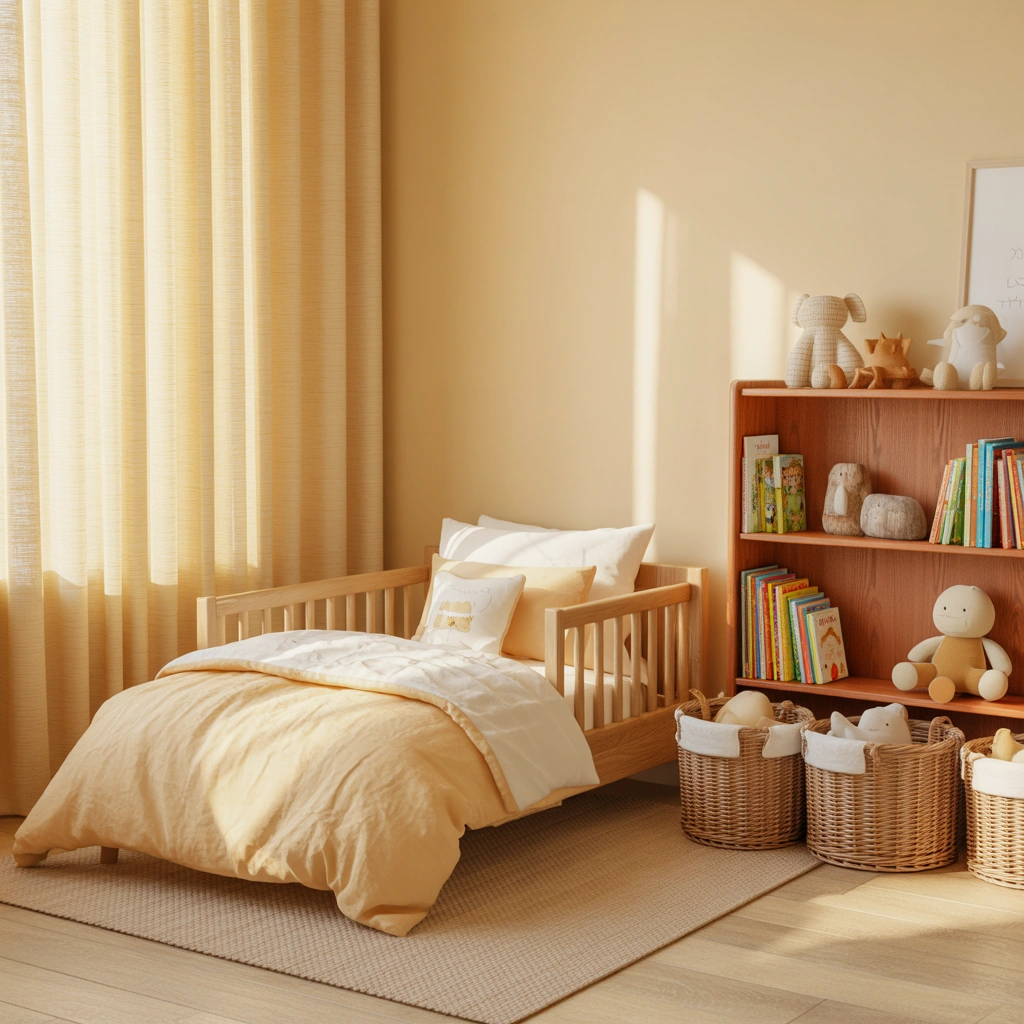
A neutral toddler bedroom is one of my favorite approaches because it creates a peaceful environment while giving you endless flexibility with decor. Instead of filling every wall with bright colors, start with a soft foundation using warm white, cream, light beige, pale greige, or muted taupe.
Neutral does not have to mean boring.
Texture is what makes this type of toddler room interesting. A woven rug, linen-look curtains, knitted blankets, wooden furniture, canvas storage baskets, and soft cotton bedding can bring warmth into a simple color scheme.
I especially like adding natural wood furniture to neutral toddler rooms because it prevents the space from feeling too cold or overly polished. A light oak toddler bed, small wooden bookshelf, and matching toy storage unit can make the room feel cozy while still maintaining a clean appearance.
Small accents can introduce personality. Add animal prints, colorful books, stuffed toys, or a patterned cushion without overwhelming the room.
Another advantage is that neutral bedrooms are easier to update. When your child develops a new favorite theme, you can change a few accessories instead of redesigning the entire bedroom.
2. Add a Montessori-Style Floor Bed
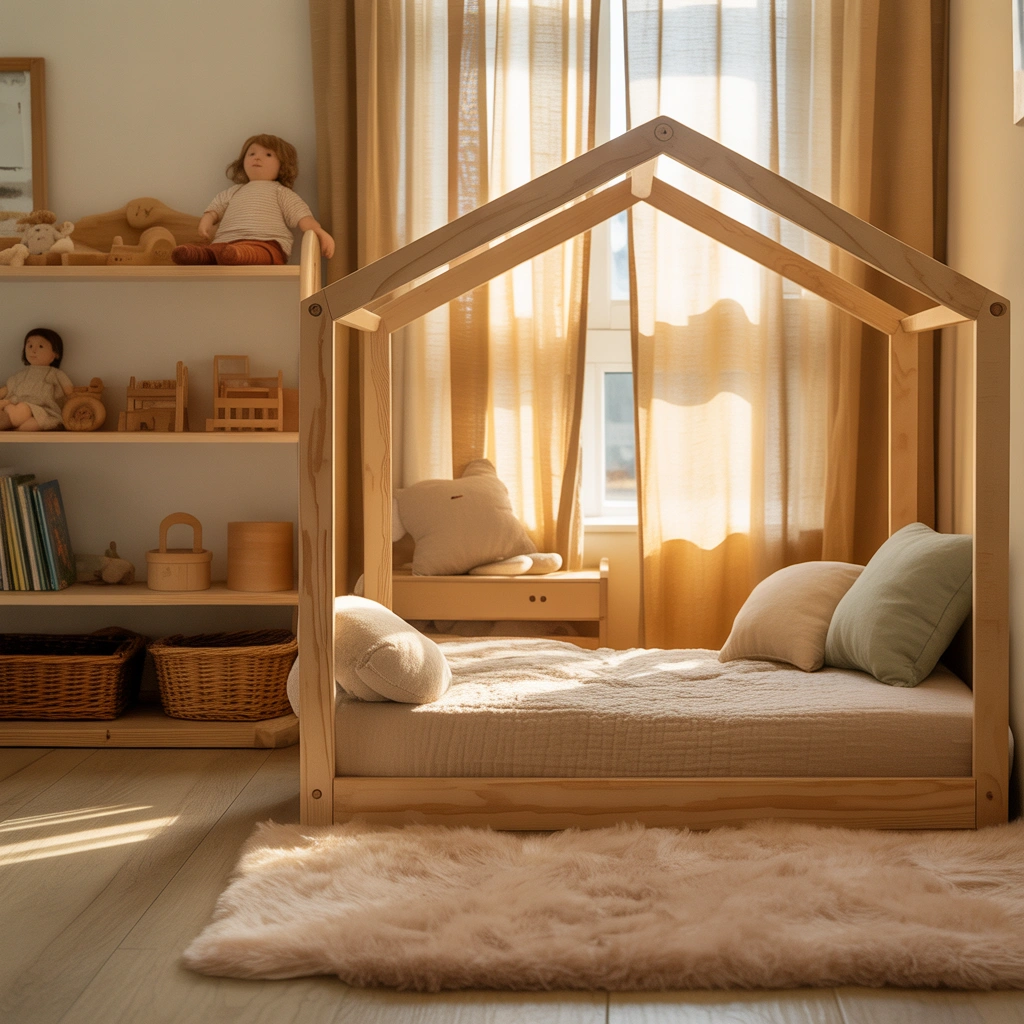
A Montessori-inspired bedroom can be both beautiful and practical for toddlers. One of the most recognizable features is the low floor bed.
A floor-level or very low toddler bed gives children easier access to their sleeping area and creates a greater sense of independence. Instead of having to ask an adult to lift them into bed, toddlers can climb in and out more comfortably.
I love the way wooden house-frame beds look in Montessori-inspired spaces. They provide a playful shape without adding unnecessary clutter. You can leave the frame simple or decorate it with subtle fabric garlands.
Keep the rest of the furniture low as well. Install bookshelves at toddler height, use low toy storage, and place frequently used items where your child can reach them.
This approach can also make the bedroom feel visually larger because most of the furniture sits closer to the floor.
Safety should always come before aesthetics. Furniture should be stable and appropriately secured, cords should remain inaccessible, and the room should be carefully childproofed based on your child’s age and abilities.
3. Design a Soft Pastel Toddler Bedroom
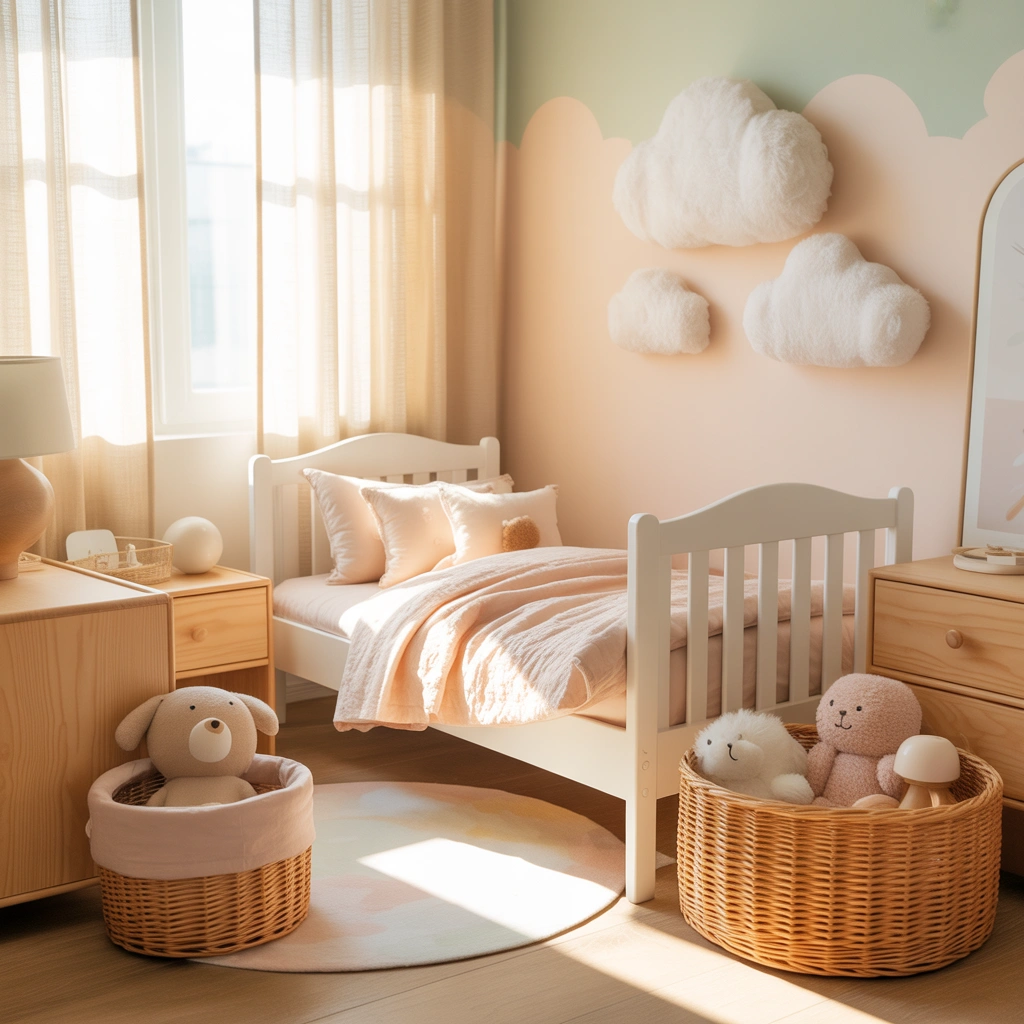
Pastel colors are perfect when you want a toddler bedroom to feel cheerful without becoming visually overwhelming.
Instead of using very intense primary colors everywhere, consider muted shades such as dusty pink, powder blue, mint green, lavender, peach, butter yellow, or soft sage.
One technique I love is choosing one main pastel and pairing it with two neutral tones. For example, sage green walls can look beautiful with cream bedding and light wood furniture. Dusty pink works wonderfully with white and warm beige, while powder blue feels fresh when combined with natural oak.
Pastels can also be introduced through smaller pieces rather than paint. Try pastel bedding, storage baskets, framed illustrations, lamps, cushions, or curtains.
Keeping the color palette relatively consistent makes the room feel intentional instead of chaotic.
You can still include colorful toys—the softer background simply gives all of those childhood items somewhere visually calm to live.
4. Build a Cute Animal-Themed Toddler Room
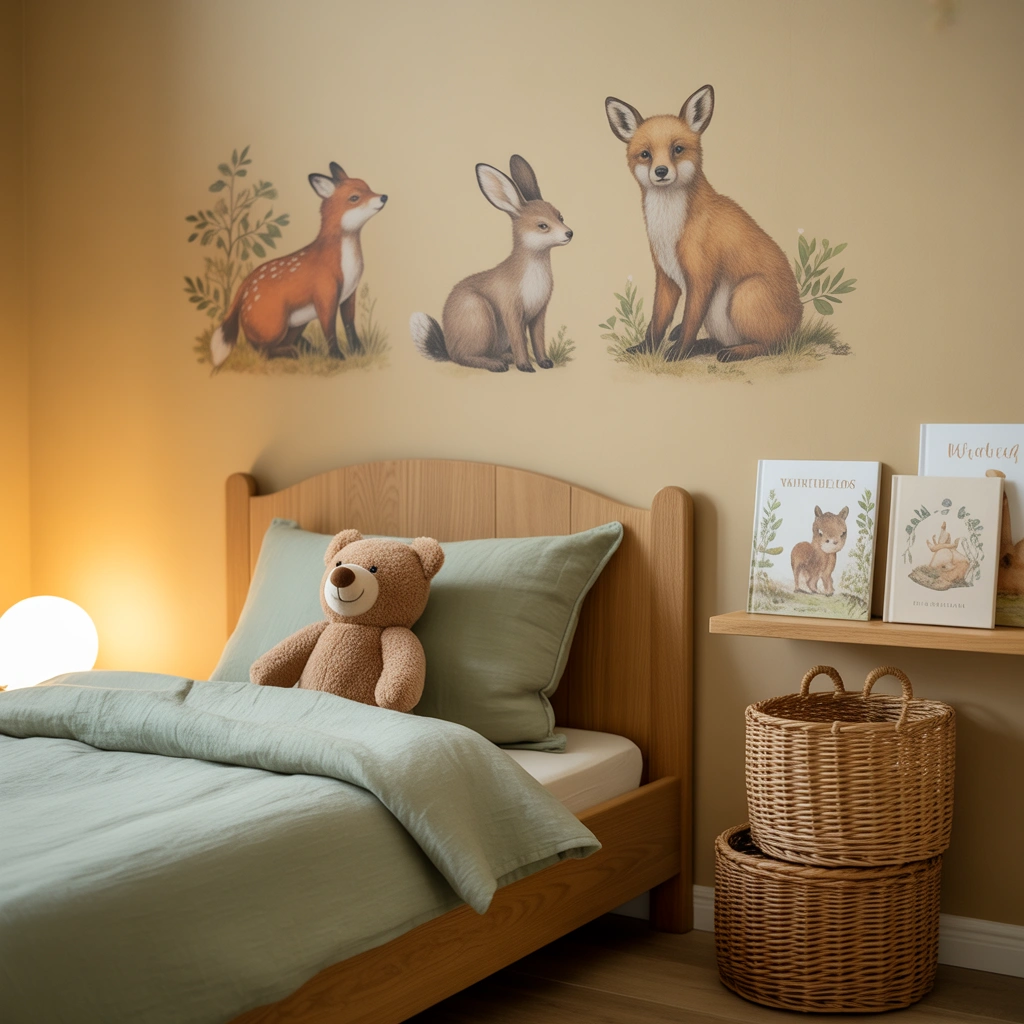
Animal-themed bedrooms are timeless because they can work for almost any toddler age.
Rather than turning every surface into an animal print, I prefer choosing a general theme such as woodland animals, safari animals, farm animals, ocean creatures, or forest wildlife.
For a woodland toddler bedroom, you might include foxes, rabbits, deer, bears, trees, and mushrooms. A safari room could feature elephants, giraffes, lions, zebras, and tropical plants.
Start with two or three larger decorative features. A removable wall decal, illustrated artwork, and animal-shaped cushion may be all you need.
Then reinforce the theme through smaller details such as stuffed animals, bedding, book selections, or storage baskets.
The trick is leaving enough breathing room between themed items. When every object matches perfectly, the bedroom can start looking like a showroom rather than a comfortable child’s space.
A few carefully chosen animal pieces create much more charm.
5. Introduce a Nature-Inspired Green Bedroom
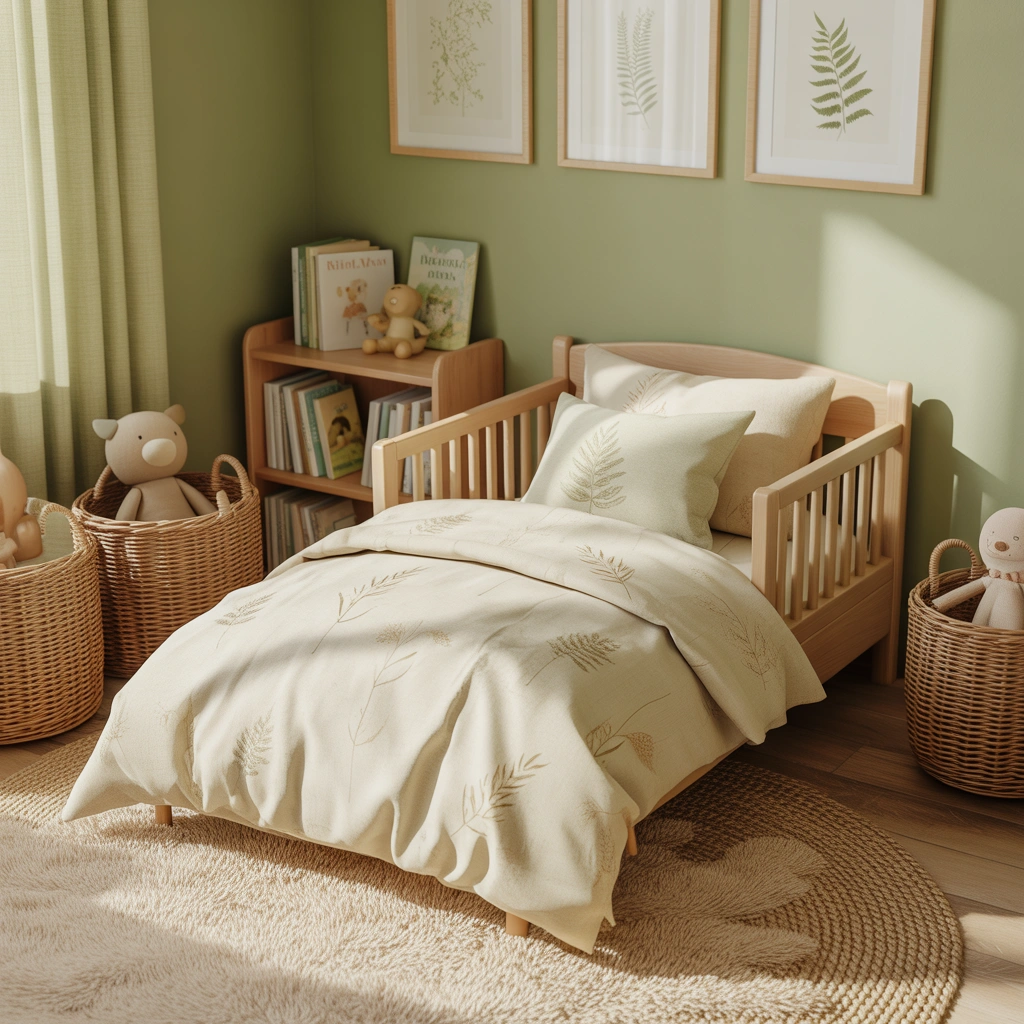
Green is one of my favorite colors for toddler bedrooms because it works beautifully with natural materials and creates a calm connection to the outdoors.
Sage, olive, eucalyptus, moss, and muted forest green can all work depending on the mood you want.
For a softer bedroom, use sage green on the walls and combine it with cream textiles and light wood furniture. For a slightly more dramatic look, consider a darker green accent wall behind the bed while keeping the other walls neutral.
Natural elements make the room even better.
Add wooden furniture, woven storage, botanical artwork, cotton bedding, leafy patterns, or a small child-safe artificial plant.
A nature-inspired bedroom is also easy to adapt as your child gets older. Remove the toddler-specific toys and replace them with older children’s accessories, and the same basic color palette can continue working for years.
6. Create a Fun Rainbow Toddler Bedroom
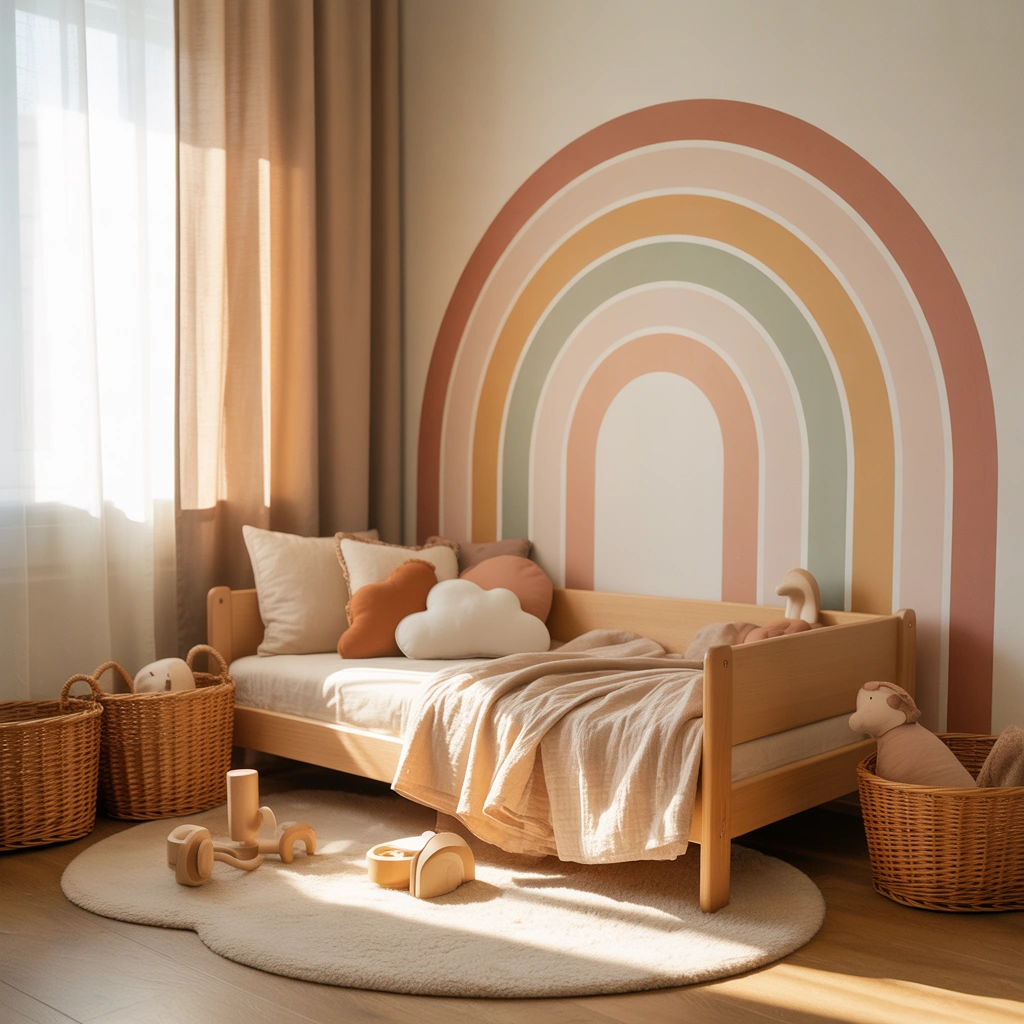
If you love color but do not want the bedroom to feel overwhelming, a soft rainbow theme can give you the perfect balance.
Instead of using strong red, blue, yellow, and green everywhere, try a muted rainbow palette featuring terracotta, dusty rose, mustard, sage, pale blue, and lavender.
A painted rainbow mural behind the bed can become a beautiful focal point. If painting feels too permanent, removable wall decals are an easier alternative.
You could also keep the walls neutral and introduce the rainbow theme through a rug, bedding, artwork, cushions, and toys.
What I like most about rainbow toddler bedrooms is that they feel naturally happy.
There is also plenty of room for creativity. You can combine rainbows with clouds, stars, sunshine, flowers, or simple geometric shapes.
Keep the main furniture relatively simple so the colorful decorative elements have space to stand out.
7. Make Storage Part of the Bedroom Design
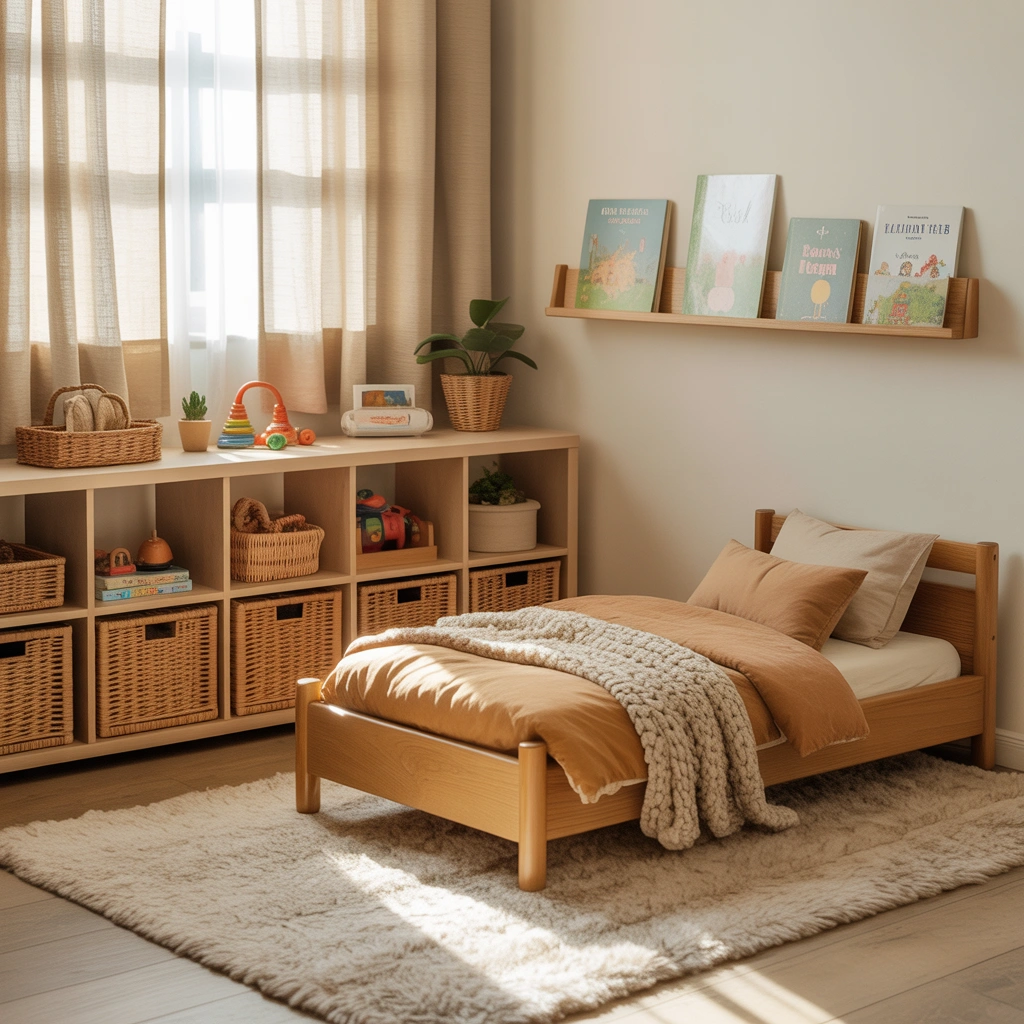
Toddler bedrooms can become messy incredibly quickly. Books, stuffed animals, blocks, clothes, puzzles, dolls, vehicles, and random toy pieces seem to multiply overnight.
That is why good storage is not simply a bonus—it is one of the most important parts of toddler bedroom design.
I recommend combining open and closed storage.
Open baskets make everyday toys easy to access, while drawers or cabinets can hide items that create visual clutter. Low cube shelving is particularly useful because toddlers can reach the lower sections independently.
Use larger baskets for stuffed animals and blankets, medium baskets for building toys, and smaller containers for tiny pieces.
A low bookshelf can also help turn books into part of the decor rather than something that needs to be hidden.
One of my favorite tricks is leaving some shelves partially empty. A bedroom instantly feels calmer when every storage space is not packed from edge to edge.
Rotating toys can help too. Keep a manageable selection in the bedroom and store the rest elsewhere until you are ready to swap them.
8. Create a Cozy Reading Corner
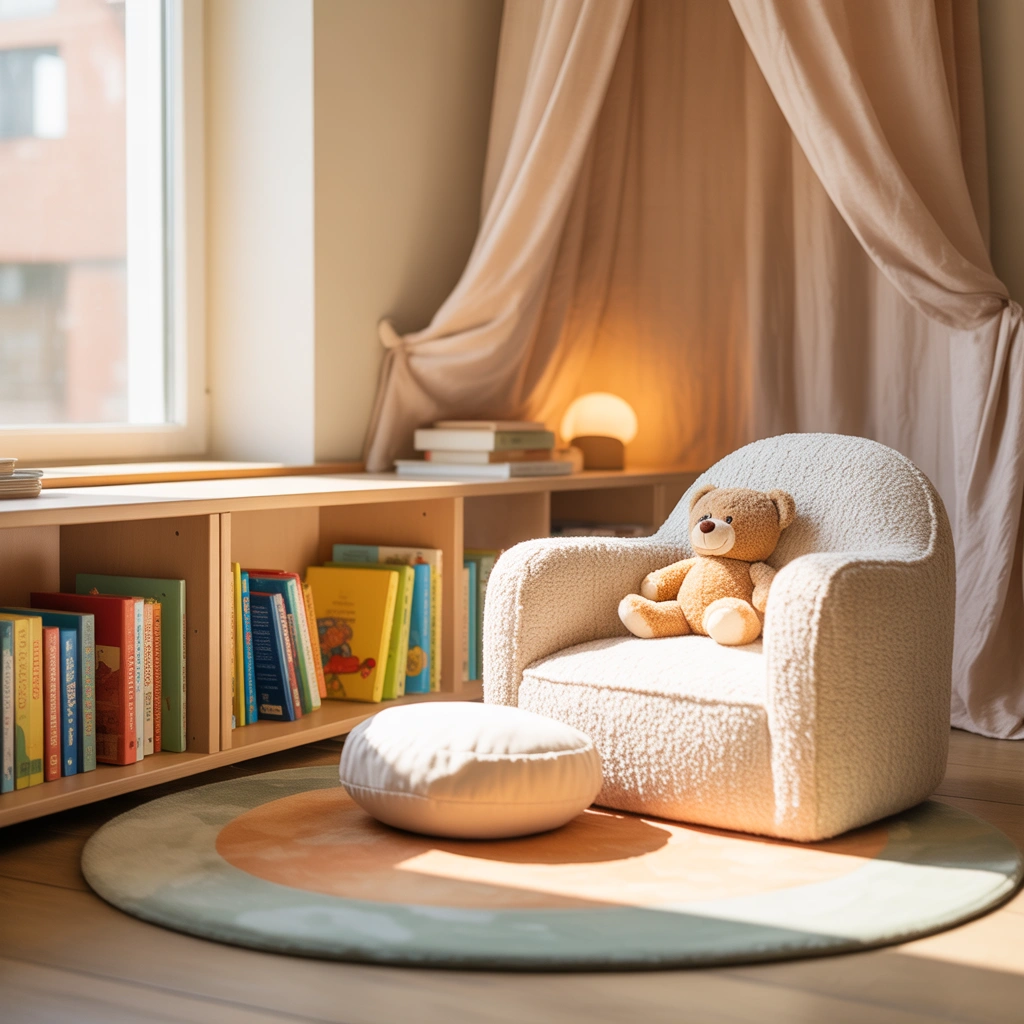
A reading nook is one of the simplest additions that can make a toddler bedroom feel special.
You do not need much space. An unused corner beside the bed or near a window can be transformed with a small rug, cushions, a child-sized chair, or a soft floor mattress.
Add a low bookshelf so books are displayed with their covers facing forward. Toddlers are often more attracted to visible book covers than rows of narrow book spines.
I also like adding a small wall-mounted reading light or soft lamp nearby, provided it is installed and positioned safely.
Make the corner inviting rather than overly formal. A large stuffed animal, canopy, soft blanket, or playful cushion can make it feel like your toddler has their own little retreat.
The best reading corners are ones children naturally want to use—not just ones that look good in photos.
9. Use a Statement Wallpaper Without Overwhelming the Room
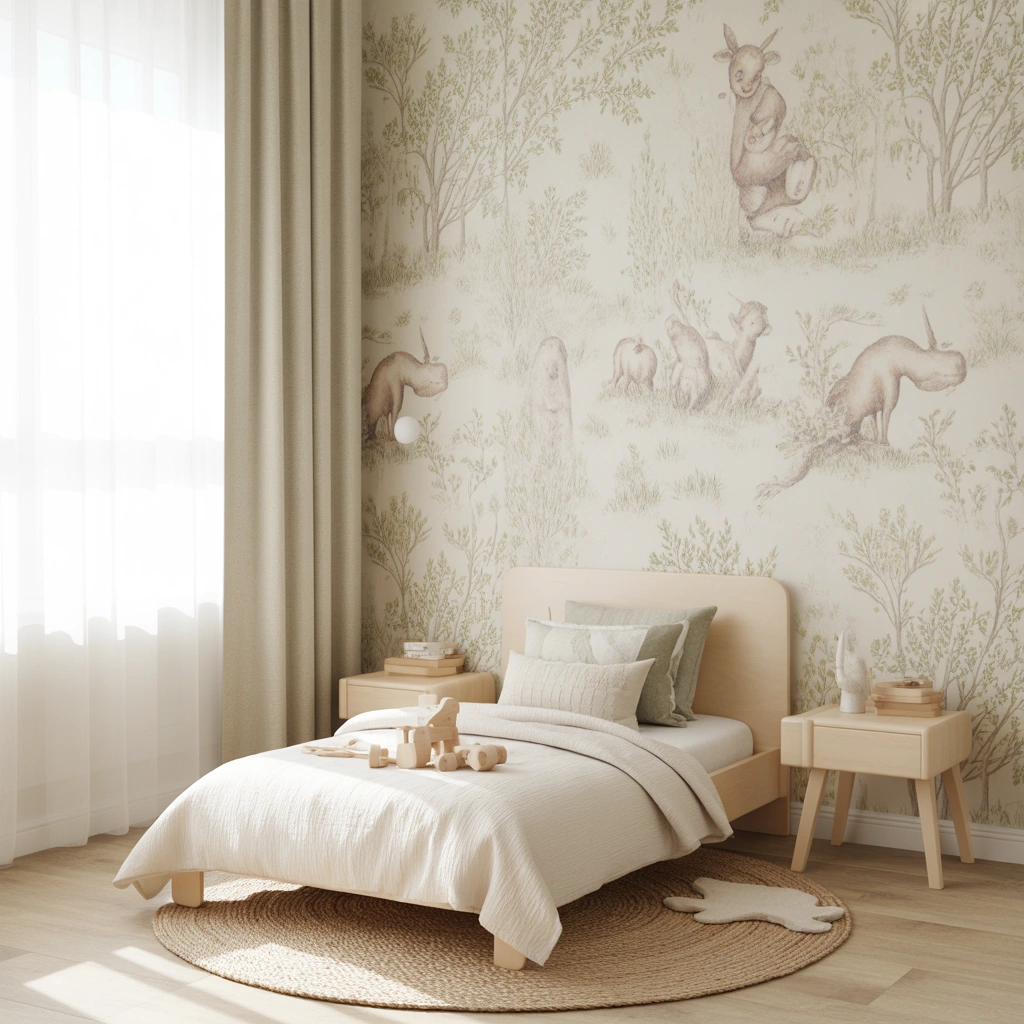
Wallpaper can completely transform a toddler bedroom, but the key is knowing where to use it.
I generally prefer wallpaper on one feature wall rather than covering the entire room, especially when the print is detailed.
Popular toddler wallpaper themes include tiny stars, woodland forests, dinosaurs, floral patterns, clouds, birds, vehicles, rainbows, and abstract shapes.
Place the statement wallpaper behind the toddler bed or on the wall opposite the doorway so it becomes the visual focal point when you enter.
Then pull one or two colors from the wallpaper into the rest of the room. If the wallpaper contains sage green leaves, for example, repeat that color in the bedding or storage baskets.
This simple technique makes the entire space feel connected.
Removable peel-and-stick wallpaper can also be helpful if you expect your toddler’s interests to change over time.
10. Design a Toddler Bedroom Around a House-Shaped Bed
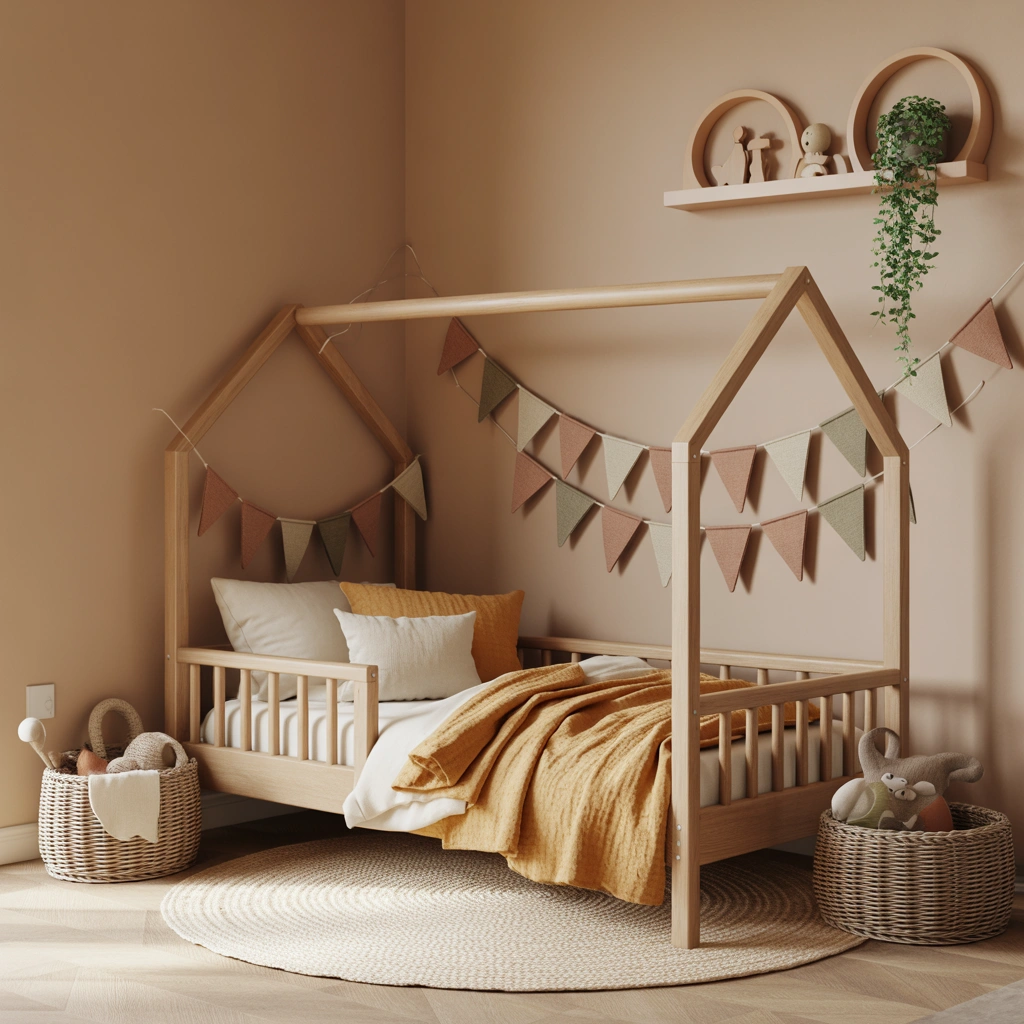
There is something undeniably charming about a house-shaped toddler bed.
It immediately creates a playful feeling without requiring lots of themed decorations.
A wooden house-frame bed can work beautifully in minimalist, Scandinavian, bohemian, Montessori, neutral, or colorful toddler rooms.
I prefer keeping the frame relatively simple. Too many hanging decorations can make it visually busy. A lightweight fabric garland or a few subtle decorative elements can provide enough personality.
Build the rest of the room around the bed with a soft rug, small bedside shelf, accessible storage, and warm lighting.
Because the bed itself becomes a major design feature, you can keep the walls relatively understated.
This idea works especially well if you want a toddler bedroom that feels imaginative but still stylish enough to blend naturally with the rest of your home.
11. Add a Creative Wall Mural
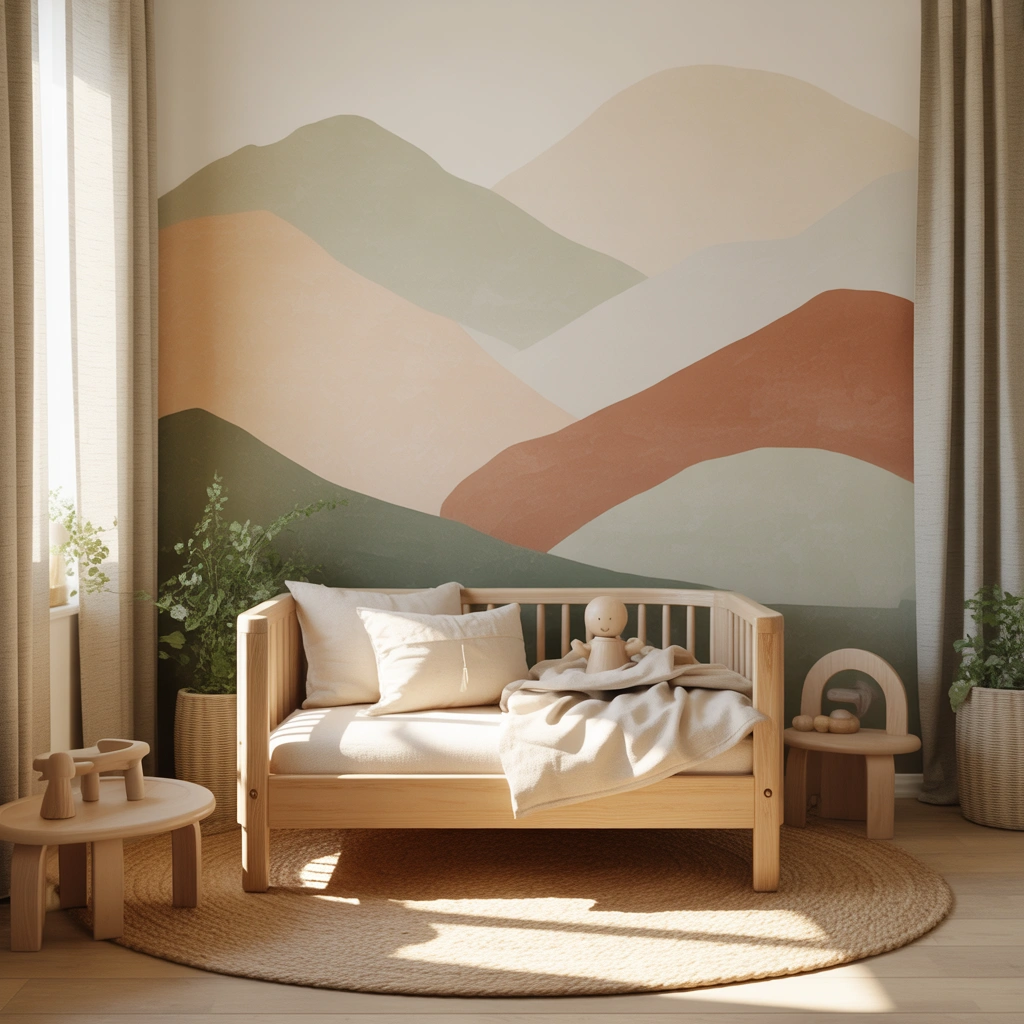
A mural is a great way to make a toddler bedroom feel completely unique.
And it does not need to be complicated.
Simple mountains, rolling hills, clouds, abstract arches, oversized flowers, trees, stars, or a soft sunset can create a dramatic effect even with a limited color palette.
If I were decorating a smaller toddler room, I would choose a mural that uses large shapes rather than lots of tiny details. Large-scale patterns usually make a room feel cleaner and more spacious.
You can paint a mural yourself using painter’s tape and a few coordinating colors, commission an artist, or use a mural-style wall decal.
Keep the furniture in front of the mural fairly simple so the wall remains the focal point.
A mural is also an easy way to introduce your child’s personality without filling the room with extra objects.
12. Build a Space-Themed Toddler Bedroom
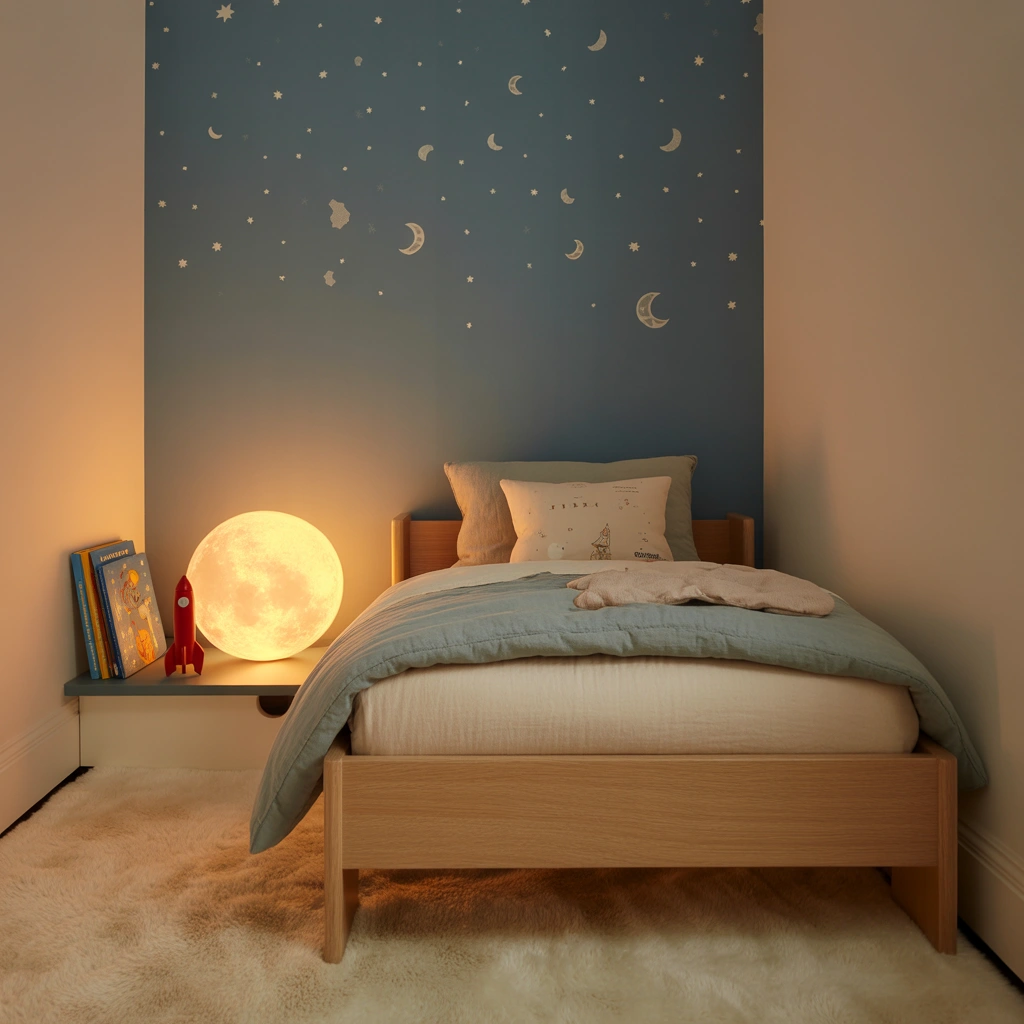
A space-themed bedroom can feel magical without requiring glowing planets on every wall.
Start with a subtle base such as deep navy, dusty blue, light gray, or warm white.
Then add stars, moons, planets, rockets, or astronaut illustrations selectively.
For example, you could paint one dark blue accent wall and add small gold or white star decals. Pair it with neutral bedding and light wood furniture to prevent the room from becoming too dark.
A moon-shaped night light can add both atmosphere and functionality.
I also love the idea of displaying a few illustrated astronomy books on a front-facing shelf. They reinforce the theme while giving the room an educational element.
The result can feel imaginative during the day and wonderfully cozy at bedtime.
13. Create a Dinosaur Bedroom That Still Feels Stylish
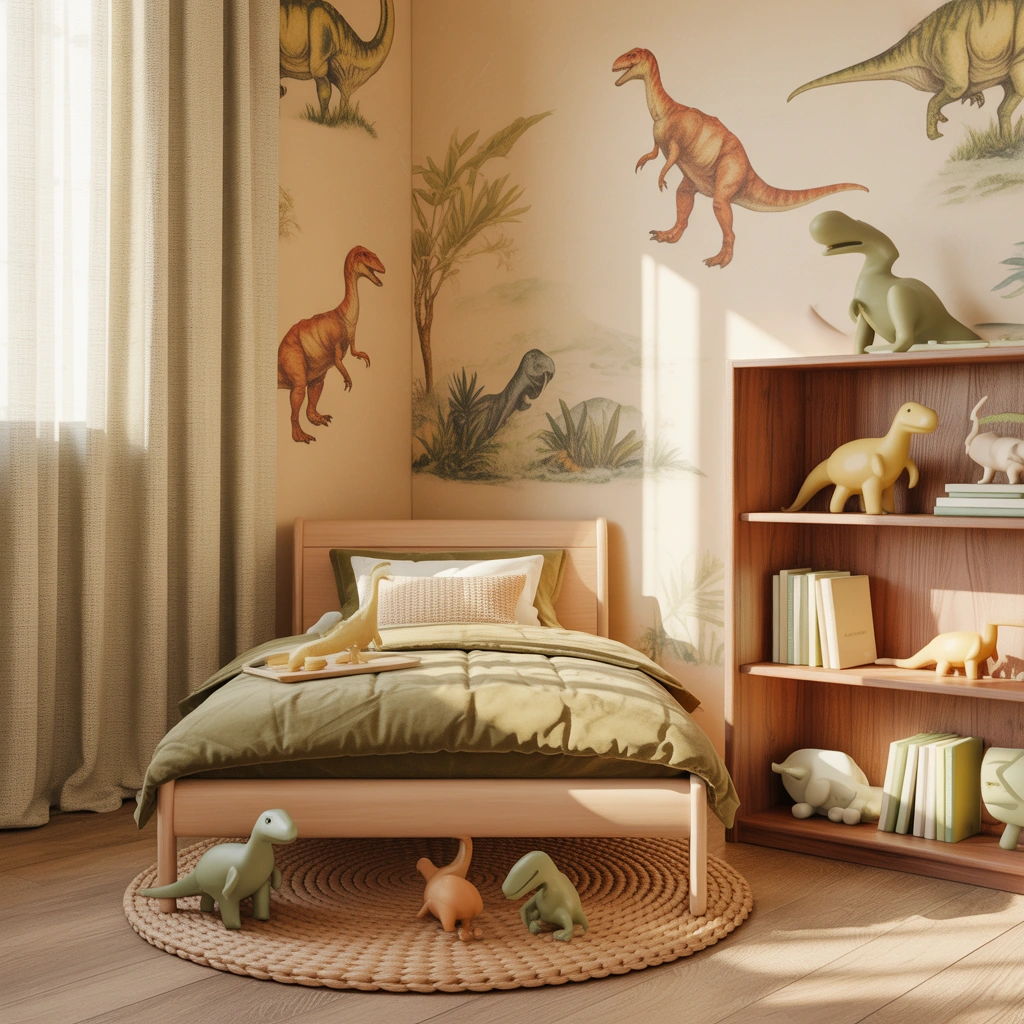
Dinosaurs are a classic toddler obsession, but dinosaur bedrooms do not have to be neon green and overly cartoonish.
Try using a softer prehistoric palette with olive green, sandy beige, rust, cream, and muted brown.
A few dinosaur illustrations or removable decals can establish the theme immediately.
Then add dinosaur toys, books, or a subtle patterned blanket.
You could even create a prehistoric landscape feature wall with mountains, palms, and small dinosaur silhouettes.
I like combining dinosaur themes with natural wood because it gives the room an earthy appearance that suits the subject perfectly.
Keeping the permanent pieces fairly neutral also makes it easy to transition away from dinosaurs whenever your toddler discovers a new favorite interest.
14. Use Smart Furniture in a Small Toddler Bedroom
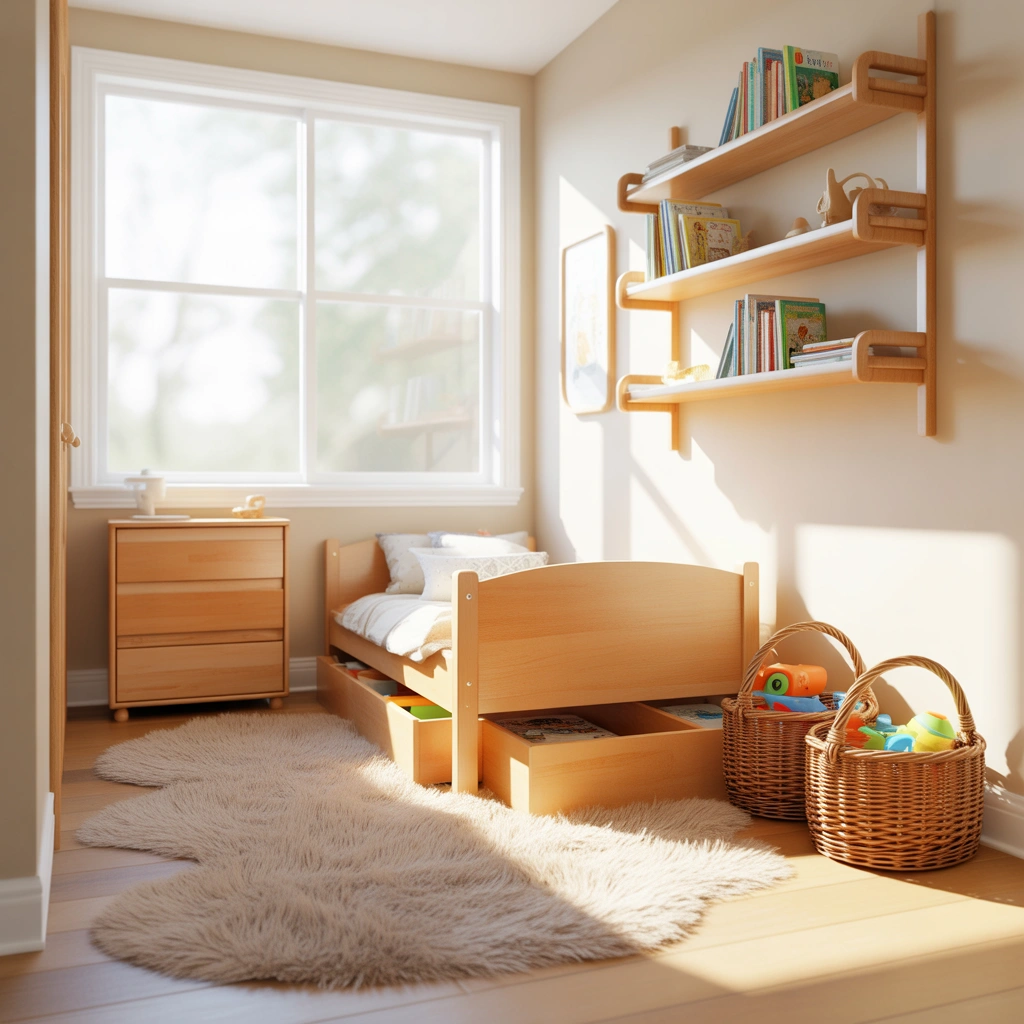
A small toddler bedroom can still feel beautiful and functional when every piece of furniture has a clear purpose.
The biggest mistake I see in small children’s bedrooms is simply trying to fit too much inside.
Start with the essentials: a toddler bed, clothing storage, toy storage, and a small area for books or play.
Choose furniture with a lighter visual profile. Low wooden beds, narrow dressers, floating shelves, and wall-mounted book ledges can help reduce visual heaviness.
Under-bed storage can be extremely useful for extra bedding, seasonal clothing, or toys that are not used every day.
Take advantage of vertical wall space as well. Instead of adding another floor cabinet, install secure shelving higher on the wall for decorative or adult-access items.
Keep floor space relatively open so your toddler still has room to move and play.
A large mirror can visually expand the bedroom, but any mirror or furniture used in a toddler’s space should be safely positioned and secured.
15. Create a Bedroom That Can Grow With Your Toddler
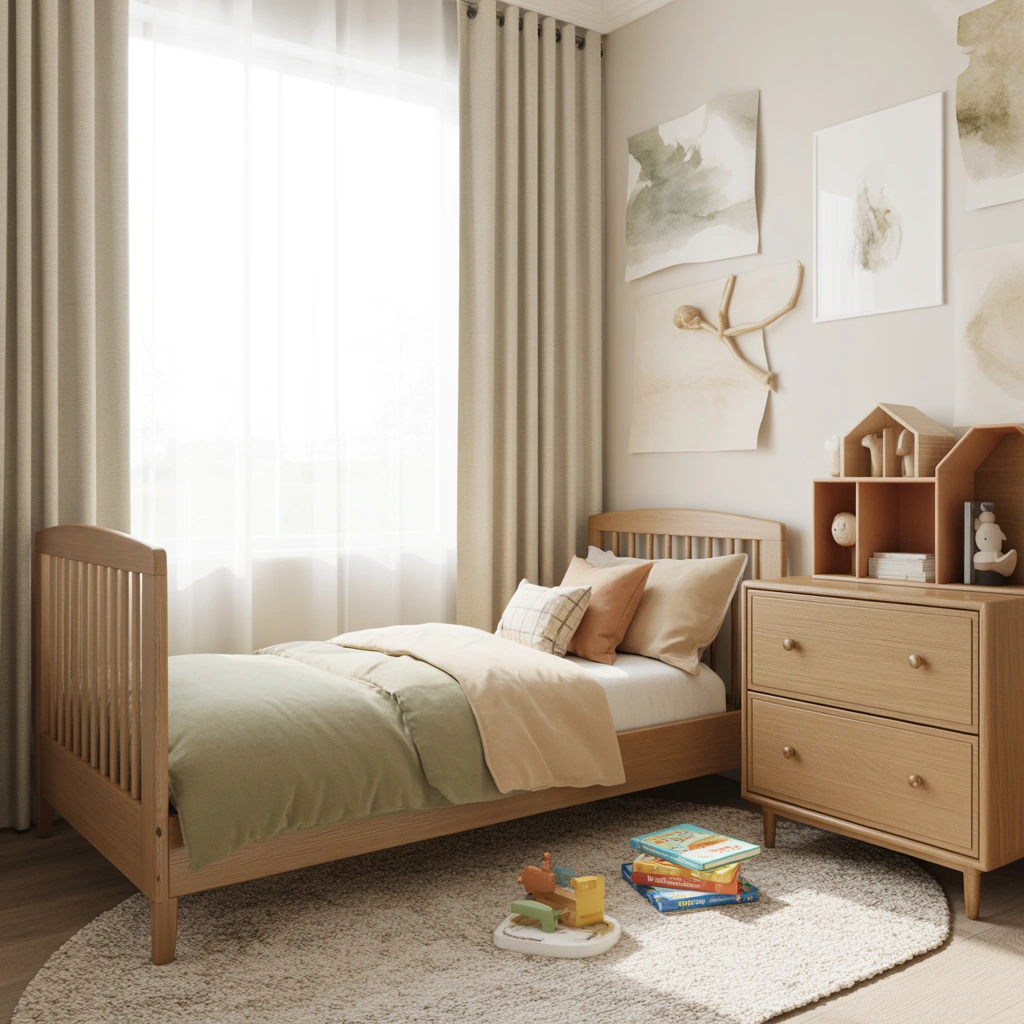
Out of all these toddler bedroom ideas, this may be the most practical.
Children’s interests change quickly, so I prefer investing in furniture and major design elements that can last for several years.
Choose a relatively timeless bed, dresser, shelves, curtains, and rug.
Then use easily replaceable items to reflect your toddler’s current personality.
Bedding, posters, cushions, wall decals, toys, and decorative baskets are far easier and less expensive to update than permanent furniture or elaborate built-in designs.
For example, a warm white room with natural wood furniture could currently have a dinosaur theme. Two years later, you could replace the dinosaur bedding and artwork with vehicles, sports, animals, or another interest without changing the basic room.
Consider furniture dimensions carefully as well. Some convertible beds can adapt through different stages, while larger dressers may continue serving the child long after the toddler years.
I love this approach because it creates a room that feels personal today without locking you into a design you will need to replace tomorrow.
How to Choose the Best Toddler Bedroom Color Scheme
Choosing colors becomes much easier when you limit the palette.
I usually recommend selecting three main categories: a dominant neutral, one primary accent color, and one smaller secondary accent.
For example:
- Cream walls can pair with sage green bedding and warm terracotta accessories.
- Warm white can work with dusty blue and mustard.
- Soft beige looks beautiful with blush pink and muted burgundy.
A simple color formula prevents the bedroom from becoming visually chaotic while still leaving room for colorful toys and books.
Remember that the bedroom will naturally gain more color once your toddler’s belongings enter the room. You do not need to create all the visual interest through paint and furniture.
Toddler Bedroom Storage Ideas That Actually Work
Storage should be easy enough that both adults and toddlers can use it.
Large baskets are excellent for quick cleanups because children can simply place toys inside rather than sorting everything perfectly.
Use low shelves for toys that are used daily and reserve higher storage areas for items that require supervision.
Drawers are useful for clothing, while shallow bins can work well for puzzles, blocks, craft items, and small toys.
Labels can also help as your child gets older. For younger toddlers, picture labels showing cars, books, animals, or blocks can make organizing easier to understand.
Most importantly, avoid keeping more toys in the room than your storage can comfortably handle.
Sometimes the best organizing solution is simply reducing how much needs to be organized.
Toddler Bedroom Lighting Ideas
Lighting can completely change the mood of a toddler bedroom.
Start with general ceiling lighting for everyday activities, then layer in softer light for evenings.
A bedside night light, wall lamp, or warm table lamp can make bedtime feel much calmer than bright overhead lighting.
Blackout curtains can also be helpful for daytime naps and bright summer evenings.
Whenever choosing lamps or lighting accessories, think about placement from a toddler’s perspective. Cords, plugs, bulbs, and fixtures should be positioned appropriately and securely.
Warm, soft lighting generally creates a more relaxing bedtime atmosphere than very bright, cool-toned light.
How to Make a Toddler Bedroom Feel Cozy
A cozy bedroom is usually more about texture than decoration.
Try layering a soft rug, comfortable bedding, curtains, cushions, stuffed toys, and natural woven materials.
Avoid overcrowding the room with decorations just to make it feel complete.
Empty space is useful in toddler bedrooms because children need room to move, play, dress, and interact with their environment.
I would rather have a room with five thoughtful decorative elements than one with fifty objects competing for attention.
Warm lighting, soft textiles, accessible books, and a comfortable bed can create more coziness than excessive themed decor.
Toddler Bedroom Safety Considerations
Beautiful design should never come before safety.
Toddler abilities vary greatly, so the bedroom should be childproofed according to your individual child’s stage of development.
Furniture that could tip should be appropriately secured. Window cords, electrical cords, outlets, unstable decorative objects, and other potential hazards should be considered carefully.
Avoid placing climbable furniture where it creates access to unsafe areas.
Bed selection and mattress setup should also follow the manufacturer’s age, size, and safety guidance.
When in doubt, treat the bedroom from your toddler’s perspective. Get down to their height and look around the room. You may notice cords, sharp corners, climbable surfaces, or accessible objects that are easy to overlook from adult height.
Final Thoughts
The best toddler bedroom ideas are not necessarily the most expensive or elaborate. A successful toddler room is one that feels comfortable, encourages independence, provides practical storage, and gives your child enough room to play and grow.
Personally, I would begin with a timeless foundation—neutral walls, quality storage, a comfortable toddler bed, and simple furniture—and then introduce personality through smaller decorative pieces.
Whether you choose a peaceful Montessori bedroom, colorful rainbow theme, adventurous dinosaur room, cozy woodland space, or sophisticated neutral design, try to keep the room flexible.
Toddlers grow quickly, and their bedrooms should be able to grow with them.
A beautiful toddler bedroom does not need to look perfect every day either. There will be toys on the floor, books beside the bed, stuffed animals everywhere, and probably a few mysterious objects hiding underneath the furniture.
That is part of what makes it a real child’s room.
Focus on creating a space where your toddler can sleep comfortably, explore safely, play freely, and begin developing a little independence.
When you combine those practical needs with colors and details that bring your child joy, you will have a bedroom that feels both beautiful and genuinely useful.
A thoughtfully designed toddler bedroom becomes more than just a place to sleep. It becomes a small world where your child can imagine, learn, relax, and create memories during some of the most important early years of life.
