
You want a kids’ bedroom that works for play, sleep, and learning without wasting space or money. This article gives you 12 practical kids bedroom decor ideas that help you make a room that grows with your child, saves clutter, and sparks imagination.
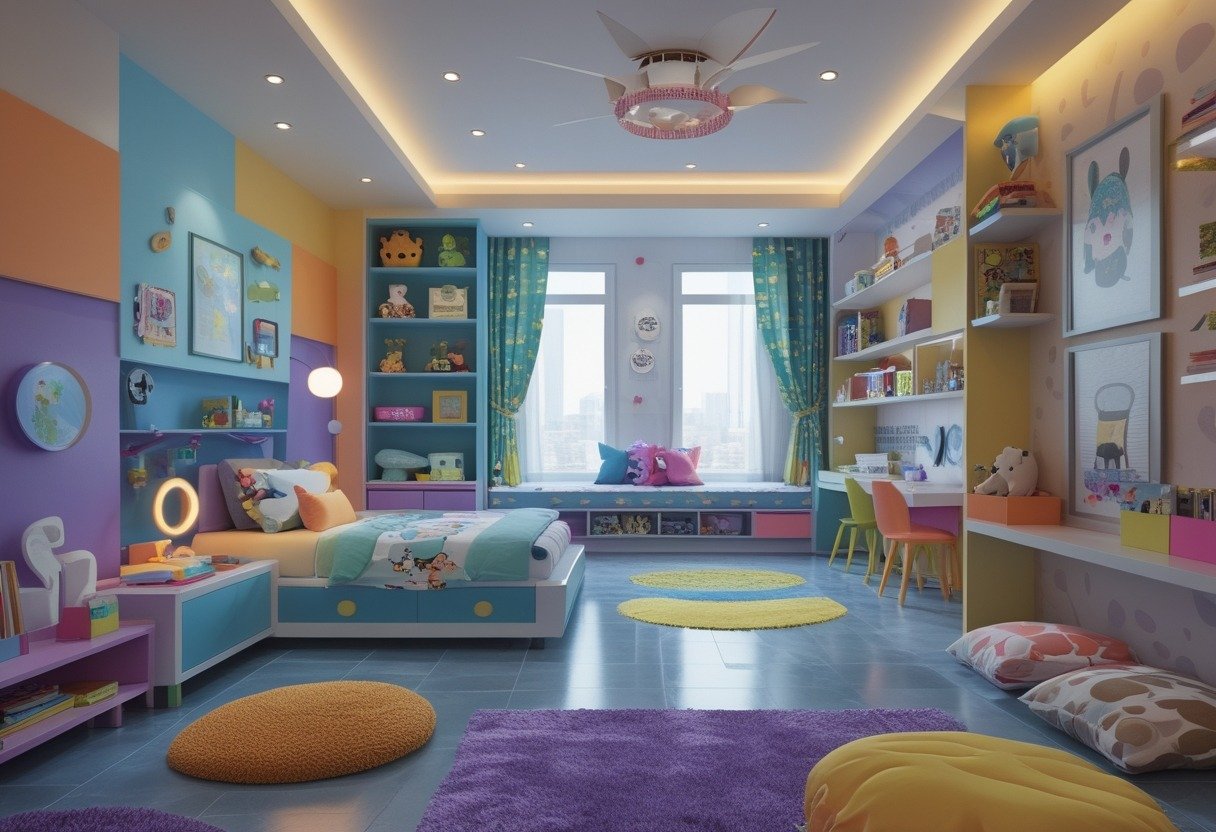
You’ll find simple ways to add cozy nooks, smart storage, playful themes, and durable finishes so the room stays useful and inviting as needs change. Use these ideas to mix comfort, creativity, and function in a space your child will love.
1) Canopy Reading Nook with Fairy Lights
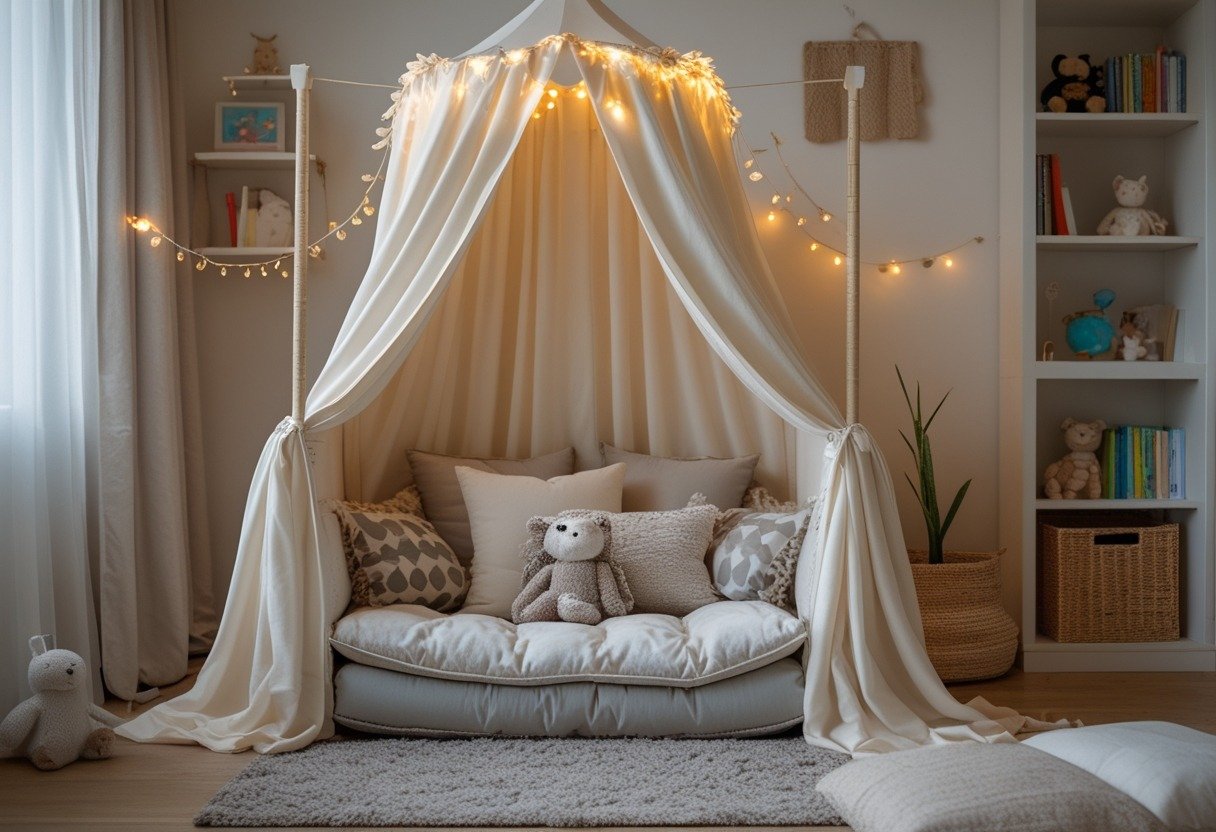
Create a small canopy over a corner bed or floor cushion to form a cozy hideaway. Drape sheer fabric from a ceiling hook so light filters softly.
String warm-white fairy lights inside the canopy for gentle, even glow. Add cushions and a soft throw so your child can read or rest comfortably.
2) Built-in Window Seat with Storage Drawers
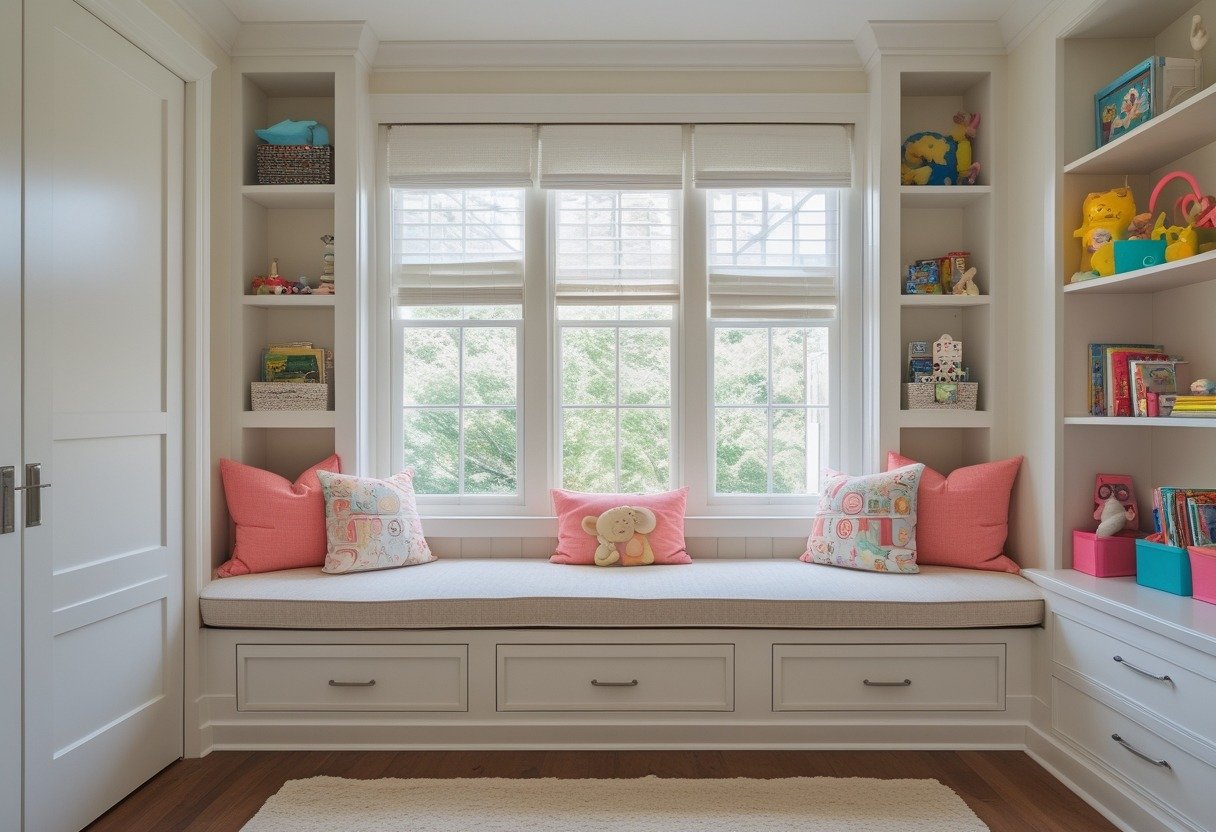
A built-in window seat gives your child a cozy reading nook and adds useful storage. You can tuck toys, books, and bedding into deep drawers to keep the room tidy.
Choose durable materials and child-safe hardware. Add a washable cushion and soft pillows for comfort and easy cleaning.
3) Loft Bed with Study Desk Underneath
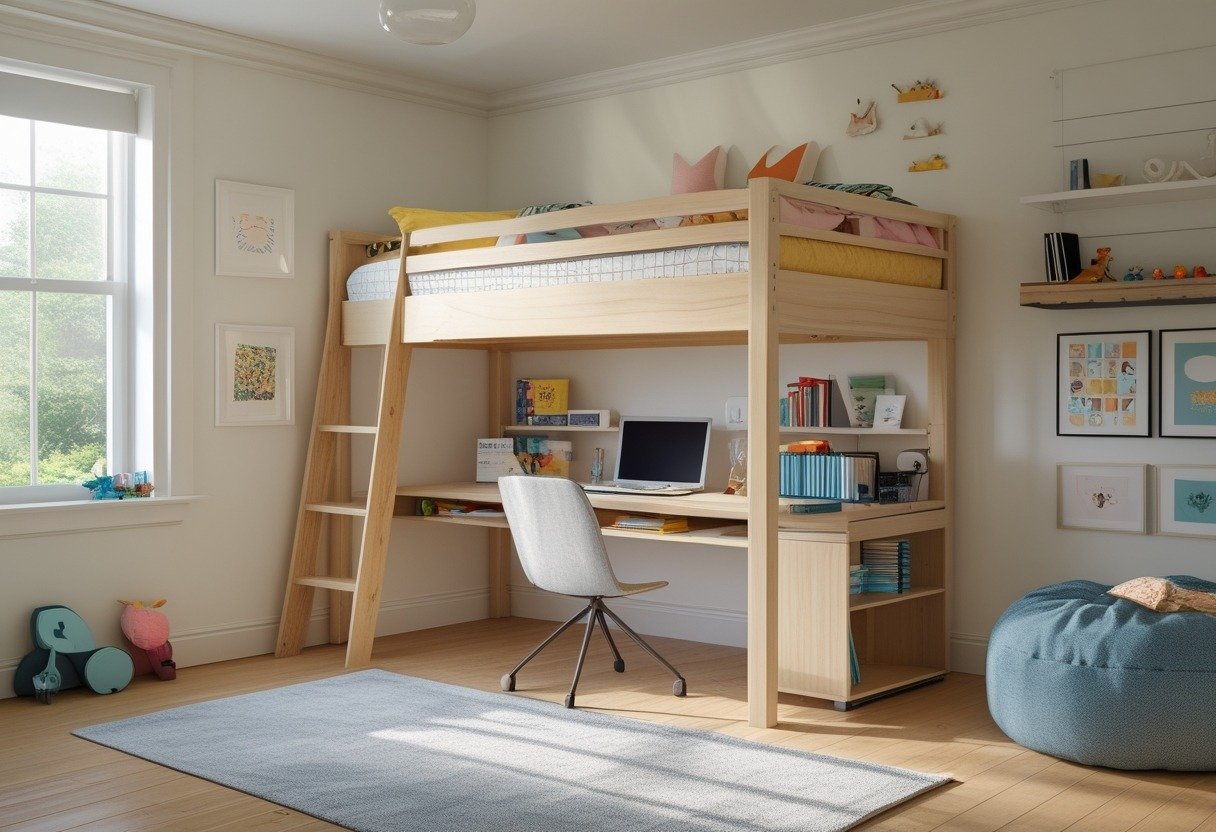
A loft bed lets you turn vertical space into a smart study nook. You get a raised sleeping area and a desk below without losing floor room.
Choose a desk size that fits your child’s needs and the room layout. Add shelves or drawers for books and supplies to keep the area tidy.
Pick sturdy materials and guardrails for safety. Good lighting and a comfy chair make the space work for homework and projects.
4) Gallery Wall of Personalized Art Prints
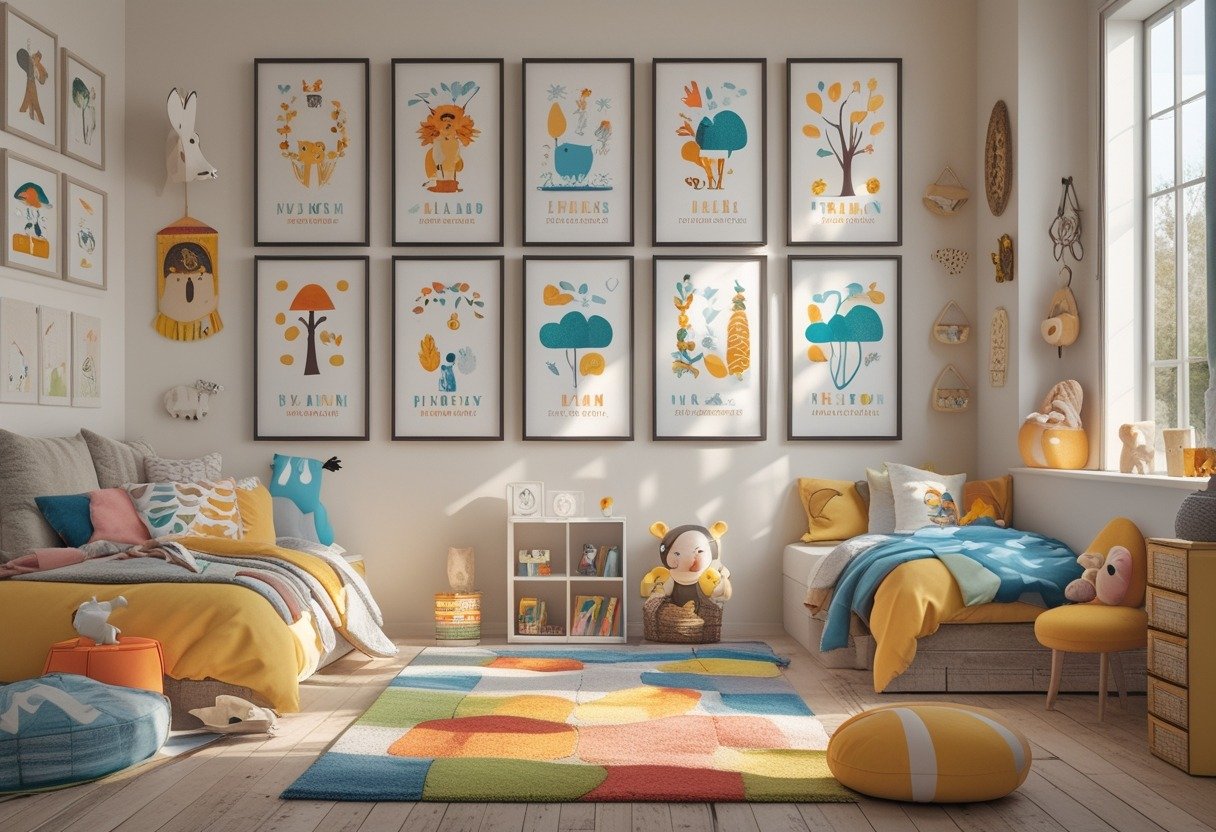
Create a gallery wall with prints that show your child’s name, photos, or favorite themes. Mix frames, shelves, and small 3D items to add texture and interest.
Use different sizes and styles but keep a simple color palette so the display feels unified. Swap prints as your child grows or on special occasions to keep the wall fresh.
5) Chalkboard Accent Wall for Doodles
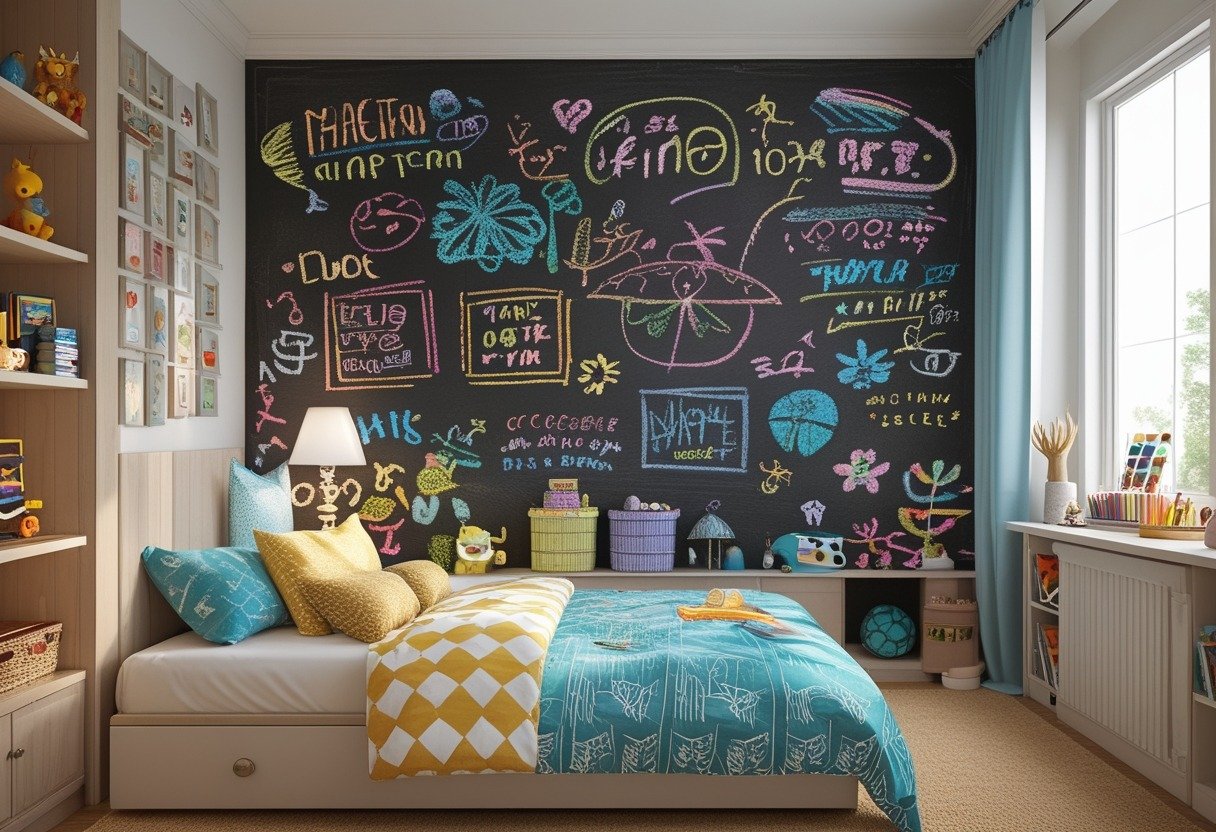
Give your child a wall they can really use. Paint a section with chalkboard paint so your child can draw, practice letters, or leave notes without making a mess.
You can choose black or a colored chalkboard finish to match the room. Add a small shelf or basket nearby to hold chalk and erasers for easy cleanup.
6) Modular Cube Storage System (IKEA Kallax)
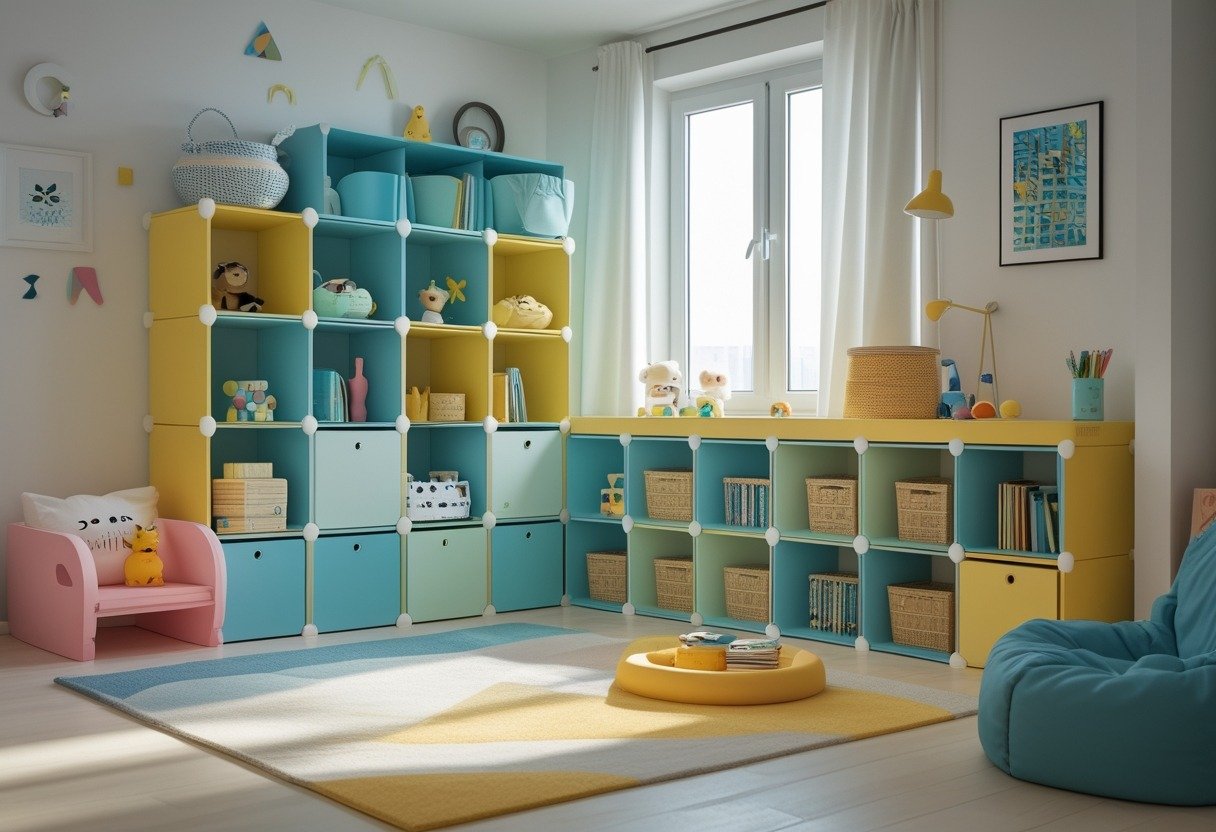
You can use a Kallax to keep toys, books, and clothes neat while matching any room style.
Its cube design makes it easy to add bins, baskets, or doors for hidden storage.
Place units at kid height so your child can reach items and learn to tidy up.
Stack or divide units to create a room divider, play station, or low bookshelf.
7) Nature-Inspired Mural with Tree Decals
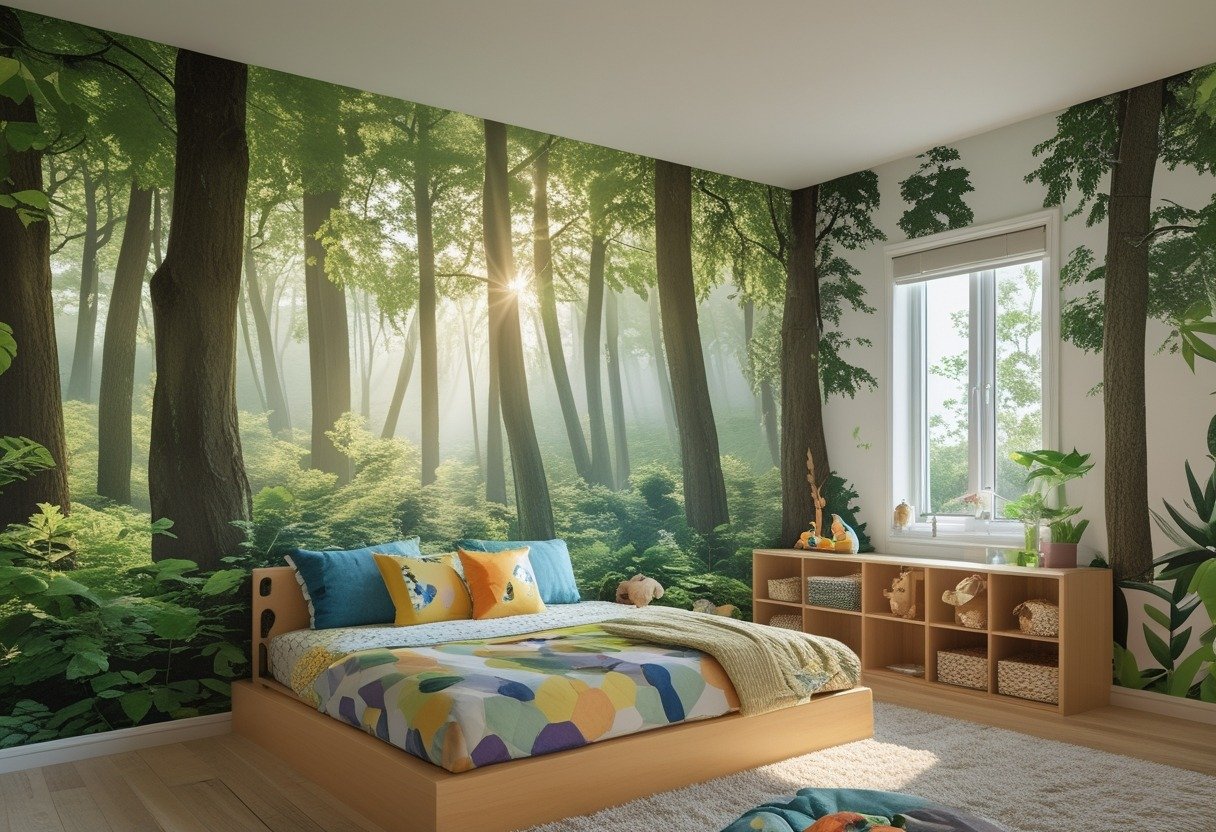
You can bring the outdoors into your child’s room with a nature mural and tree decals. Simple peel-and-stick trees let you change the layout as your child grows.
Choose calming colors and scale the trees to fit the wall without crowding the space. Add small animal or leaf decals for learning moments and visual interest.
8) Gender-Neutral Neutral Palette with Textured Layers
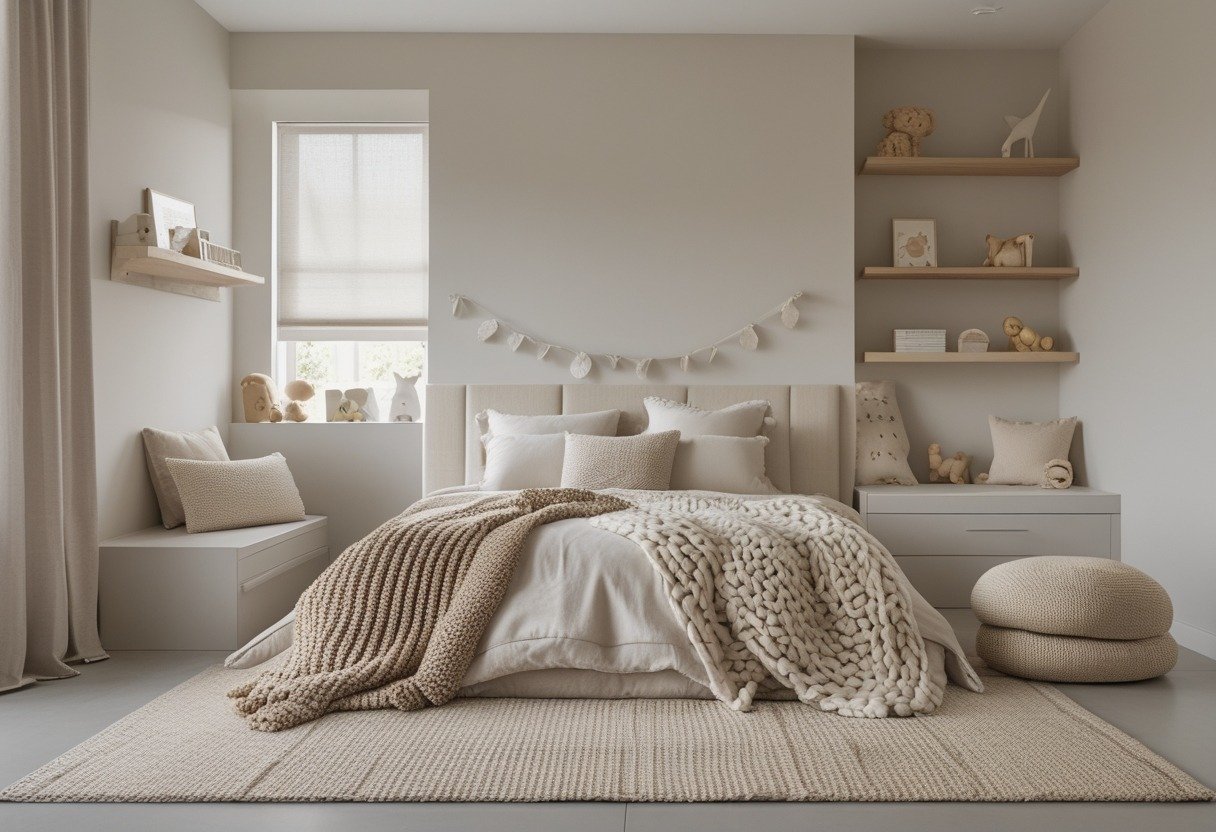
Choose a soft neutral palette—beiges, warm grays, and off-whites—to keep the room calm and flexible. You can add color later with accessories.
Layer textures like woven rugs, knit throws, and linen curtains to add interest without bright hues. Textures make the space feel cozy and grown-up.
Mix natural wood furniture with matte metal or painted pieces for balance. This lets the room adapt as your child grows and tastes change.
9) Bunk Bed with Slide and Safety Rails
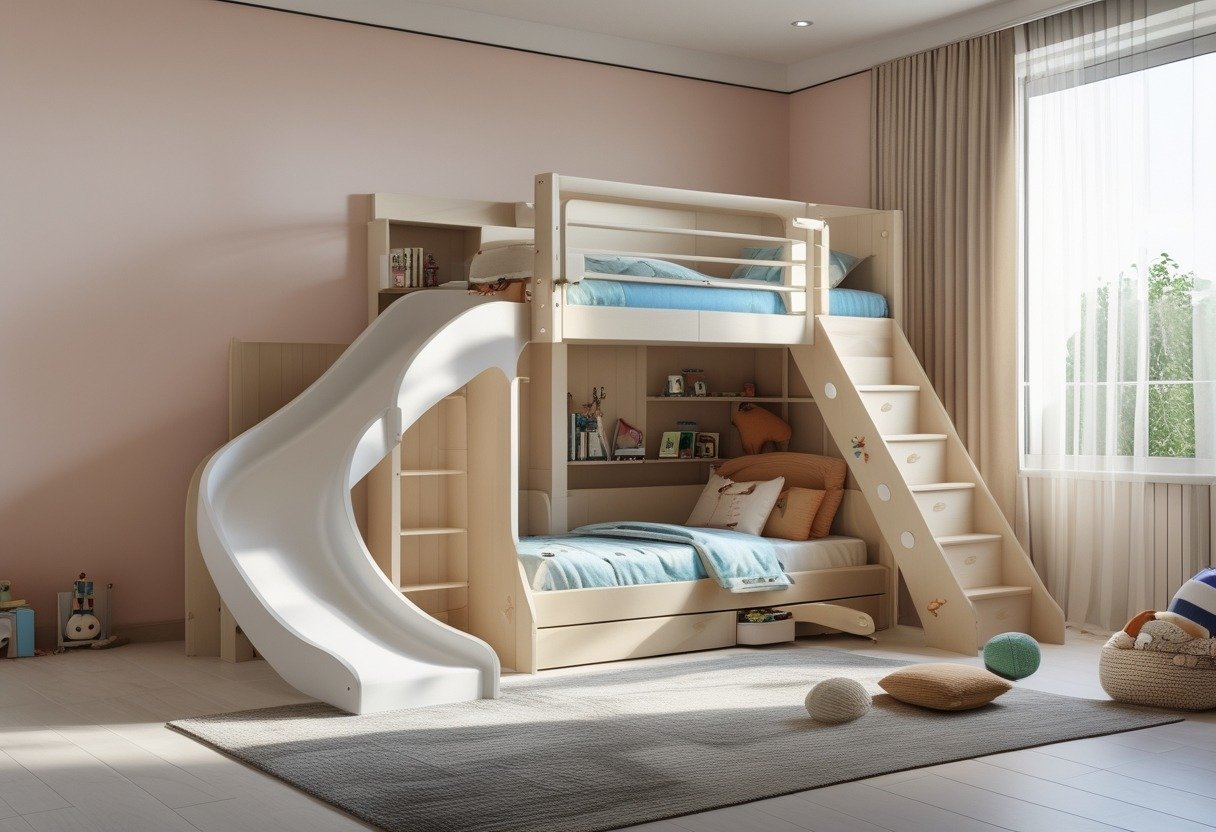
Choose a bunk bed with a slide to add fun and save floor space. You get play and sleep areas in one piece of furniture.
Look for sturdy safety rails and a solid ladder or stairs. Make sure rails meet height standards and attach firmly.
Pick models with built-in storage drawers or shelves to reduce clutter. Measure your room and ceiling height before buying.
10) Rotating Themed Bedding Sets (space, jungle, mermaid)
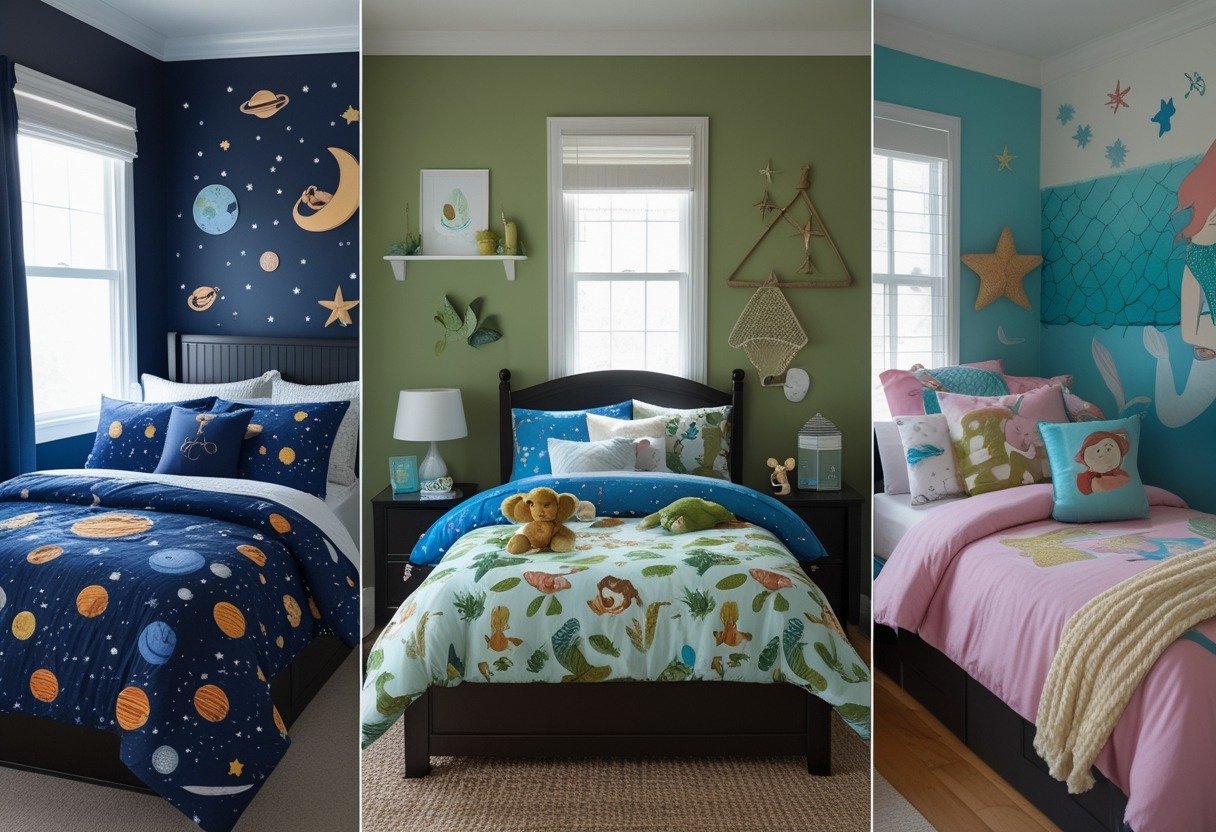
Switching themed bedding lets you change your child’s room look fast and affordably. You can pick space, jungle, or mermaid sets that match current interests and swap them seasonally or as tastes change.
Choose easy-care fabrics and matching pillowcases to keep swaps simple. Store off-season sets in labeled bins so you can rotate without clutter.
11) Under-Bed Rolling Toy Organizers
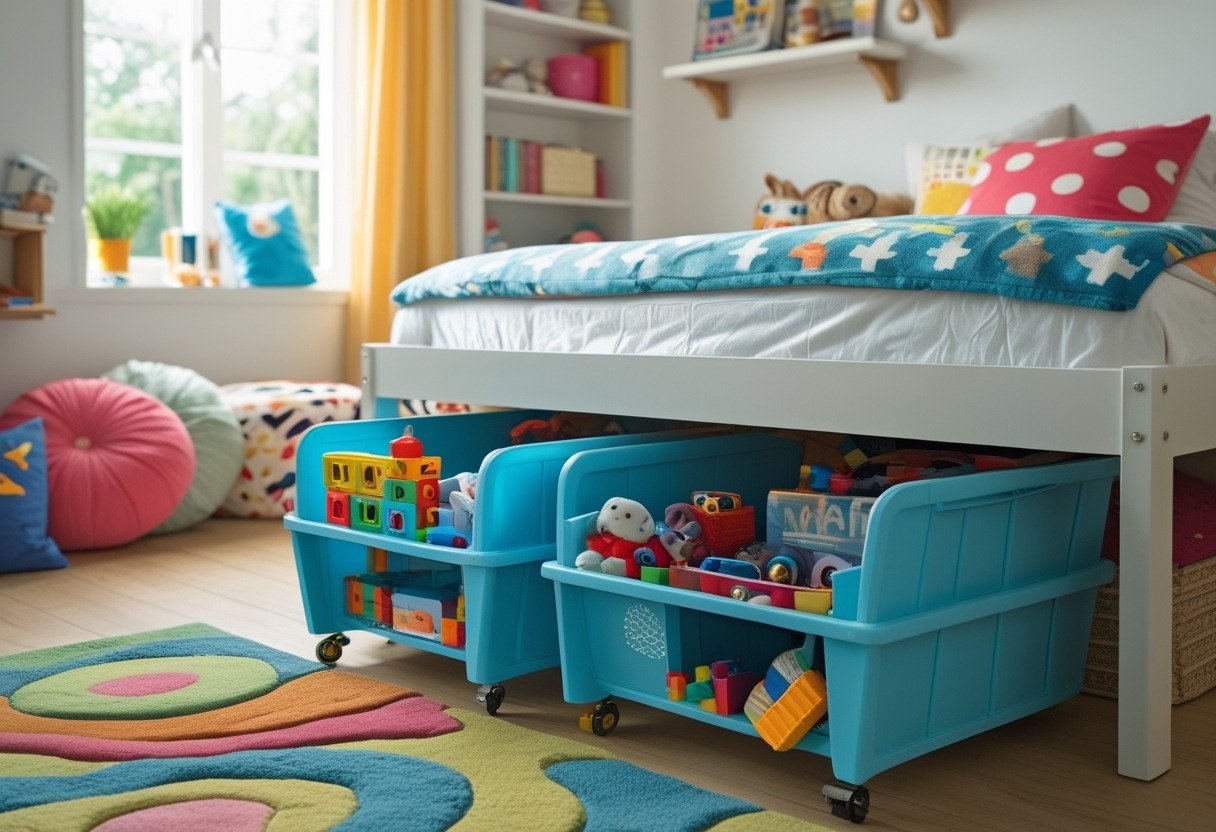
You can use rolling bins or drawers to store toys under the bed and free up floor space. They slide out easily, so kids can reach toys without help.
Look for sturdy wheels and breathable materials to keep things tidy and dry. Clear or labeled bins help kids find what they want fast.
Choose low-profile designs that fit your bed frame height. This keeps the room neat while making clean-up quicker.
12) Soft Play Corner with Foam Mats and Cushions
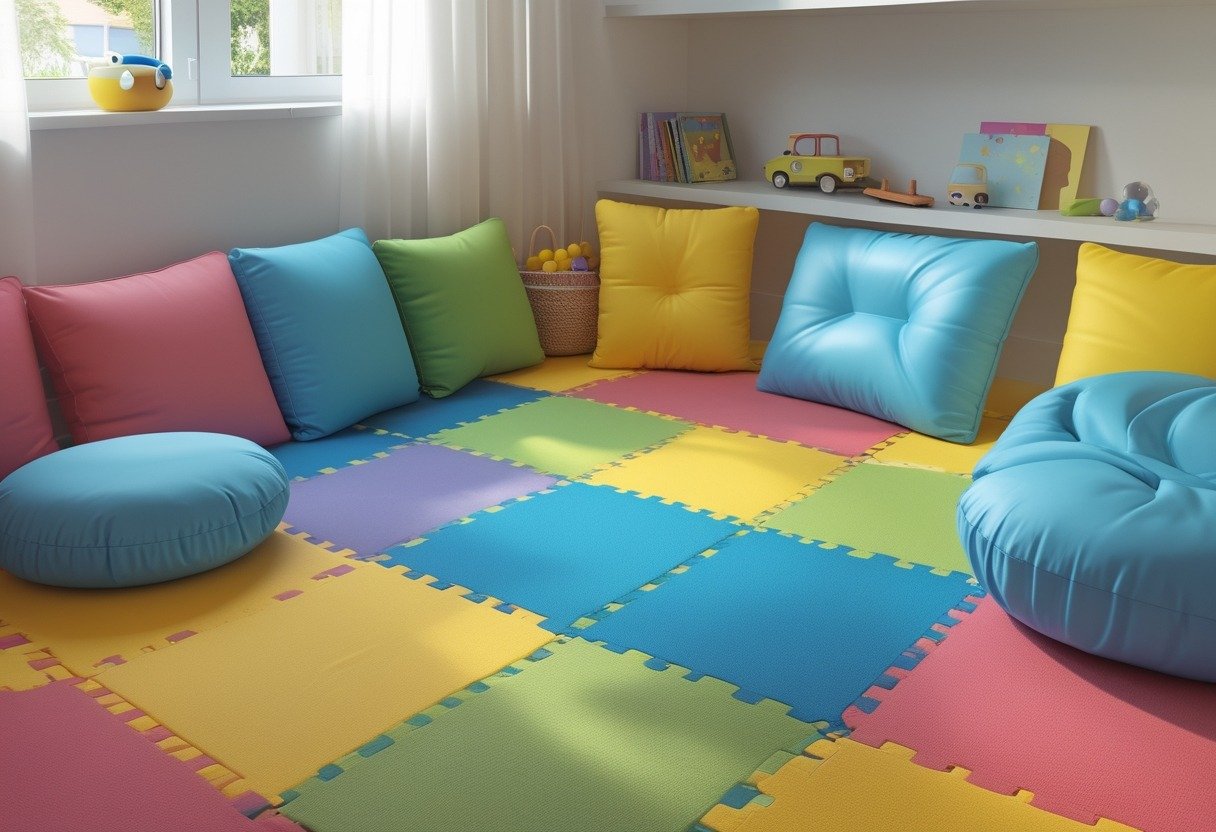
Create a soft play corner with foam mats and cushions to give your child a safe place to play. Use interlocking foam tiles and a few large cushions to cushion falls and make the area comfy.
Choose washable covers and low-profile pieces so the space stays tidy and fits your room. Arrange pieces into a seat, ramp, or fort to spark simple, active play.
Design Principles for Children’s Bedrooms
Keep daily routines simple, make cleanup fast, and choose pieces that change with your child. Focus on layout, storage, and safety first, then add color and personality where it helps function.
Maximizing Functionality in Shared Spaces
In a shared room, put sleeping areas on opposite walls or use a loft bed to create distinct zones. Give each child a clear personal space: labeled bins, a shelf, and a bedside caddy for nightly items.
Use modular furniture like stackable drawers or a dresser with interchangeable bins. These let you change storage as kids grow or swap items between siblings quickly.
Plan lighting for multiple tasks. A ceiling light provides general light, while clip-on lamps or wall sconces at each bed give focused reading light without crossing into the other child’s space.
Keep a single shared desk or two small desks back-to-back if homework overlap is frequent. Add cable clips and a power strip with surge protection to keep devices tidy and safe.
Adapting Decor for Different Age Groups
Choose a neutral base—paint, rug, and major furniture—so you can swap accents as kids age. A painted wall, peel-and-stick wallpaper, or removable decals update style without new furniture.
For toddlers, focus on soft corners, washable fabrics, and low storage bins they can reach. Add a reading nook with a sturdy low shelf and bright, simple art to encourage play.
For school-age kids, introduce a proper desk, task lighting, and open shelving for books and projects. Use wall hooks at reachable heights for backpacks and jackets.
For teens, prioritize privacy and study space. Let them choose colors and posters. Swap small furniture for a larger desk and add under-bed storage or a dresser that fits folded clothing neatly.
Encouraging Creativity and Personal Expression
Make the room invite making, thinking, and trying new things. Use clear spots for art, places to show work, and zones that change with the day.
Incorporating Artwork and DIY Projects
Give your child an art wall or rotating gallery where they can pin, clip, or tape finished pieces. Use a simple wire with clips, magnetic paint on one wall strip, or a framed corkboard. Change displays weekly to boost pride and keep the space fresh.
Set up a low table or craft cart stocked with basic supplies: washable markers, scissors with blunt tips, glue sticks, paper, and a sketchbook. Store items in labeled bins so your child can reach and put things away. Add a small easel or clip-frame for painting and mixed media.
Encourage DIY decor projects you can do together. Paint a mural, make paper garlands, or decorate storage boxes. Let your child choose colors or patterns so the room reflects their taste.
Flexible Spaces for Play and Learning
Create zones that switch between play, study, and chill time. Use a rug plus a floor cushion cluster for reading and playing. Place a desk near natural light for homework, with a task lamp for evening use.
Choose furniture that moves or folds. A rolling cart can hold art supplies during play and become a homework station later. Modular shelving with open bins adapts to toys, books, or display items as your child grows.
Keep clear sightlines and flexible storage. Label shelves with pictures for younger kids and words for older ones. This makes cleanup faster and keeps the room ready for new projects or quiet study.
