
A narrow hallway can easily become one of those forgotten spaces in a home. It is often treated as nothing more than a passage between the front door and the rest of the house, but I think that is a missed opportunity. Your hallway is usually the first part of your home that guests see, which means even the smallest entrance deserves some attention.
I have always found narrow entrances especially interesting to decorate because they force you to be creative. You cannot simply place a large console table, oversized bench, and several decorative accessories in the space and expect everything to work. Every piece needs a purpose, and every decorating decision has to consider both appearance and movement.
The good news is that you do not need a wide foyer to create an inviting entrance. With mirrors, smart lighting, slim furniture, wall decor, rugs, paint, and a few carefully selected accessories, even an awkward corridor can become one of the most attractive areas of your home.
If you are struggling with a small entrance, these 15 narrow hallway decorating entrance ideas will help you make the space look brighter, wider, more organized, and much more welcoming.
1. Use a Large Mirror to Visually Widen the Hallway
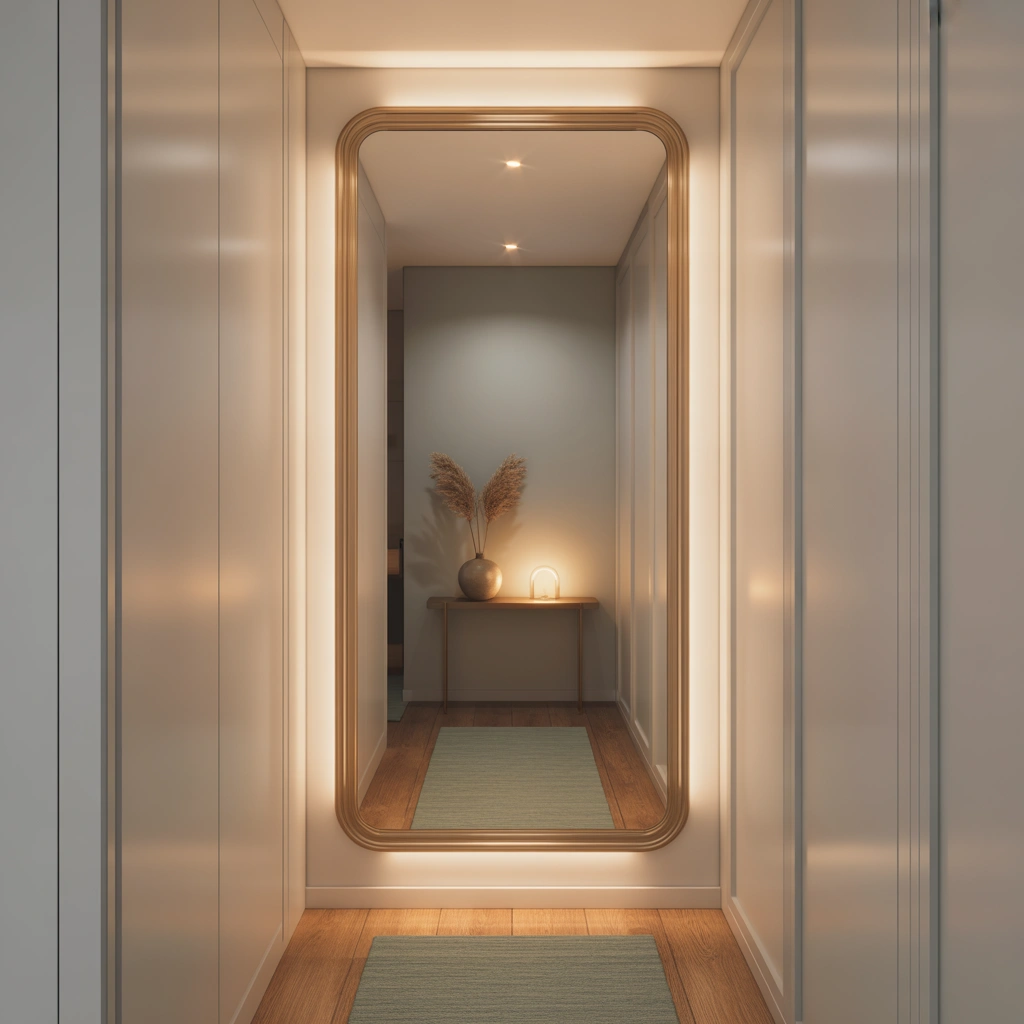
Whenever I am decorating a narrow entrance, a mirror is usually one of the first things I consider. It is one of the easiest ways to make a small hallway feel larger without physically changing the space.
A large wall mirror reflects both natural and artificial light, which immediately makes the hallway appear brighter. It also creates visual depth, helping the wall feel as though it extends beyond its actual boundaries.
For a very narrow hallway, I prefer a mirror that stays relatively close to the wall instead of a thick, bulky frame. A simple black, brass, wood, or frameless design can give the entrance a polished look without making it feel crowded.
The placement matters as well. If your entrance receives natural light from the front door or a nearby room, position the mirror where it can reflect that light.
You could hang one large rectangular mirror above a narrow console table or use a tall vertical mirror near the entrance. An arched mirror is another beautiful option if you want the hallway to feel softer and more elegant.
Just remember that bigger is often better in a narrow space. Several tiny mirrors can sometimes create visual clutter, while one larger mirror makes a stronger and cleaner statement.
2. Choose a Slim Console Table Instead of Bulky Furniture
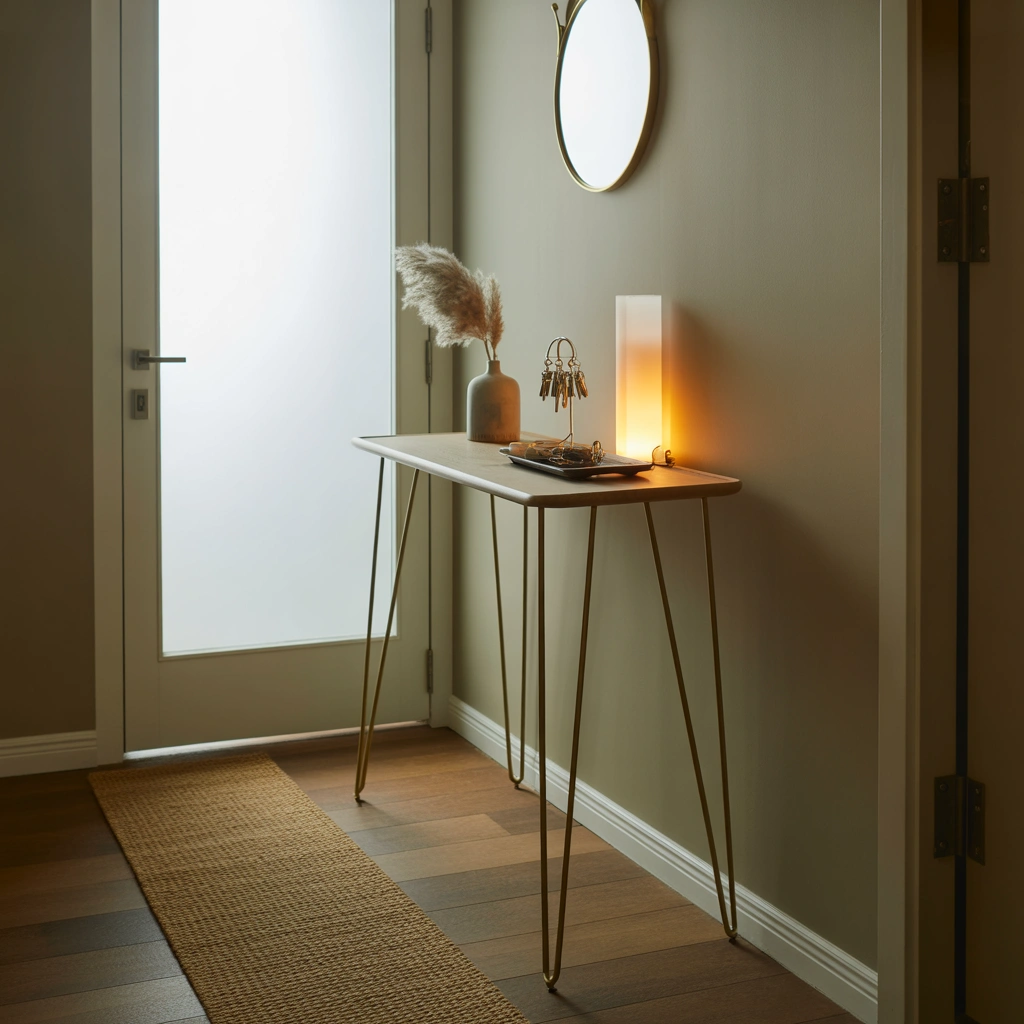
A console table can make an entrance feel finished, but standard furniture is often too deep for a narrow hallway.
That is why I recommend looking specifically for a slim console table for a narrow hallway. Ideally, choose something shallow enough that people can comfortably walk past it.
A simple console gives you a place to set keys, mail, sunglasses, or small decorative accessories while adding structure to an otherwise empty wall.
I especially like console tables with open legs because they allow you to see more of the floor. This creates a lighter appearance than a solid cabinet.
You can style the surface with a table lamp, ceramic vase, small tray, or stack of books. Try not to cover every inch of the tabletop. Negative space is incredibly important when decorating a narrow entrance.
If storage is essential, look for a console with one or two shallow drawers. That gives you somewhere to hide everyday clutter without introducing a large piece of furniture.
In extremely tight hallways, consider a wall-mounted floating console instead. Because it does not have legs, it gives you functionality while keeping the floor completely open.
3. Create a Gallery Wall Along One Side
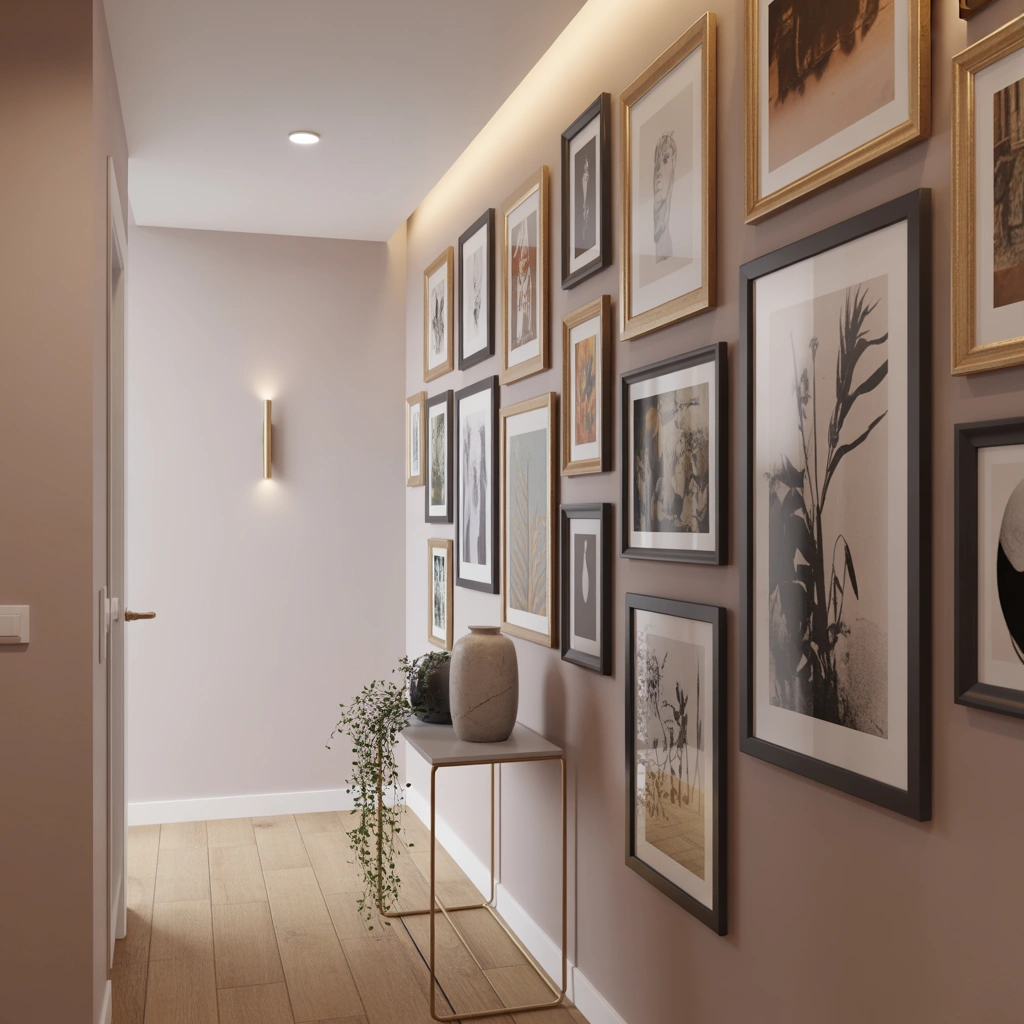
A narrow hallway often has long stretches of empty wall, making it an ideal location for a gallery wall.
I love this approach because it allows you to add personality without using any valuable floor space.
Your gallery wall can include family photographs, travel pictures, illustrations, abstract artwork, typography, or a combination of different pieces. The important thing is to create some visual consistency.
For example, you could use identical black frames with white mats for a clean and modern appearance. If your home has a more relaxed or eclectic style, mixing wood, brass, and black frames can work beautifully.
One thing I would avoid is making every piece oversized. Large art can be stunning, but in an extremely narrow hallway, too many large frames may make the walls feel as though they are closing in.
Instead, create a balanced arrangement with enough breathing room between each frame.
For a more organized appearance, arrange artwork in a symmetrical grid. For something casual and collected, create an organic gallery wall using frames in multiple sizes.
It turns an ordinary corridor into a space that tells a story about the people living inside the home.
4. Add a Runner Rug to Create Length and Warmth
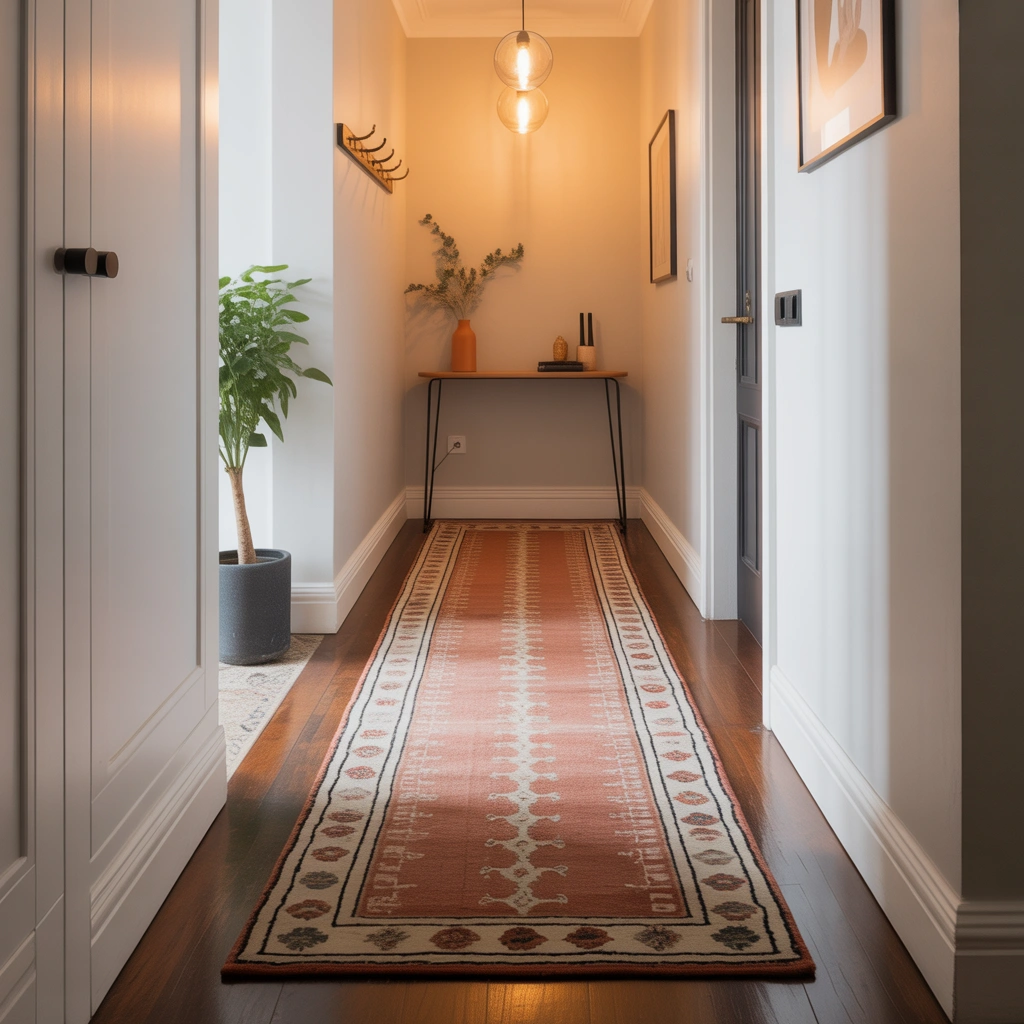
If your narrow entrance feels cold or unfinished, a hallway runner can completely change the atmosphere.
A long rug visually guides the eye through the entrance, making the hallway feel intentional rather than simply transitional.
When choosing a runner rug for a narrow hallway, make sure you leave a little visible flooring on both sides. A runner that completely fills the width can sometimes make the area feel tighter.
Pattern is also important. A subtle striped runner can visually lengthen the hallway, while a vintage-inspired rug adds warmth and character.
If your entrance receives a lot of foot traffic, choose something durable and easy to clean. Low-pile rugs are usually more practical than thick, fluffy designs because doors can open easily over them.
I also suggest using a non-slip rug pad underneath. Narrow hallways are busy walking areas, and the last thing you want is a rug constantly moving around.
For neutral homes, a patterned runner can introduce just enough personality. In colorful interiors, a simple solid or lightly textured runner may create a better balance.
5. Paint the Hallway in Light and Airy Colors
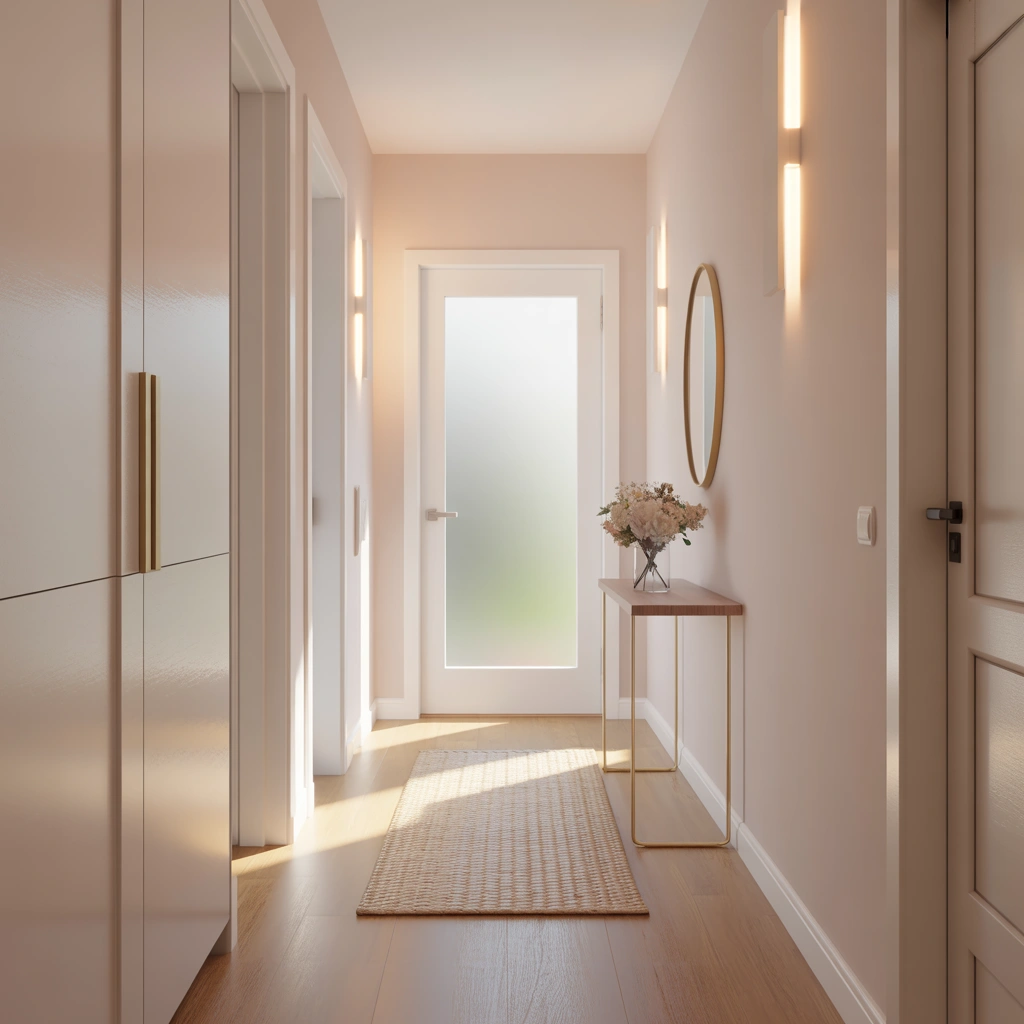
Paint is one of the most affordable ways to transform a narrow hallway entrance.
Light colors reflect more light than dark shades, which can help the walls feel farther apart.
Soft white, warm ivory, pale beige, light greige, muted sage, and gentle gray can all work beautifully depending on the overall style of your home.
Personally, I prefer slightly warm neutrals in entrances because they make the area feel inviting rather than clinical.
However, using light paint does not mean the hallway has to be boring.
You could paint the walls a warm off-white while introducing color through artwork, rugs, lighting, and accessories.
Another technique is painting the walls, doors, trims, and ceiling in similar tones. Reducing strong color contrast can make the architecture appear smoother and more continuous.
If your hallway receives very little natural light, test paint samples before committing. Some whites can look blue or gray in dark corridors.
The right paint color should brighten the hallway while complementing the rooms visible from the entrance.
6. Install Wall-Mounted Lighting to Save Space
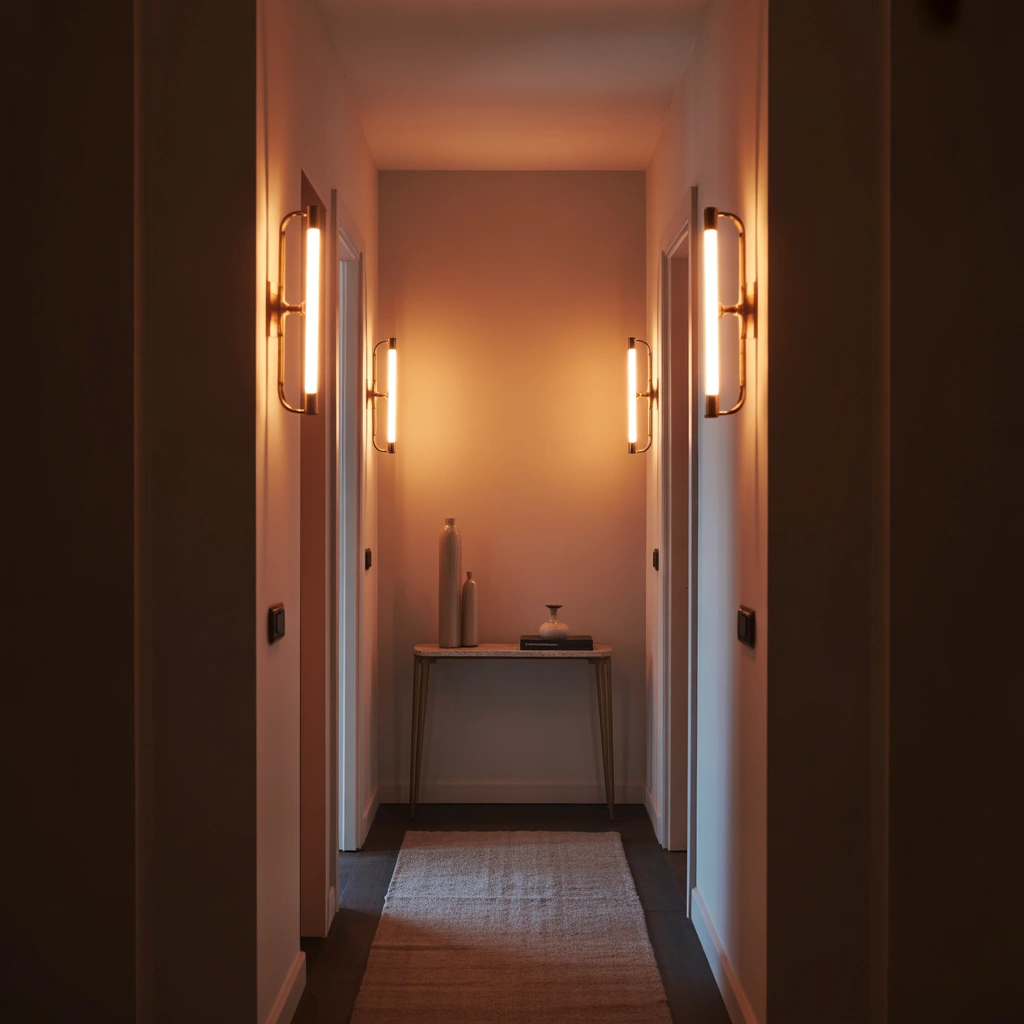
Good lighting is essential in narrow hallways, especially those without windows.
Instead of relying entirely on one ceiling fixture, consider adding wall sconces.
Wall-mounted lights can introduce layers of illumination while doubling as decorative features.
Slim sconces work particularly well because they do not project too far into the walkway. Choose fixtures that fit the architecture of your home, whether that means contemporary globe lights, traditional brass sconces, minimalist black fixtures, or soft fabric shades.
I especially like installing sconces beside artwork or mirrors because they create a more intentional, designed appearance.
If electrical work is difficult, rechargeable or plug-in wall lights can provide a similar look without complicated installation.
Warm lighting generally works best in an entrance. Very cool white bulbs can make a hallway feel harsh, whereas warm light creates a comfortable atmosphere.
Think of lighting as decoration rather than simply a practical necessity. A beautiful fixture can become one of the main features of your small hallway.
7. Use Vertical Wall Decor to Make the Ceiling Feel Higher
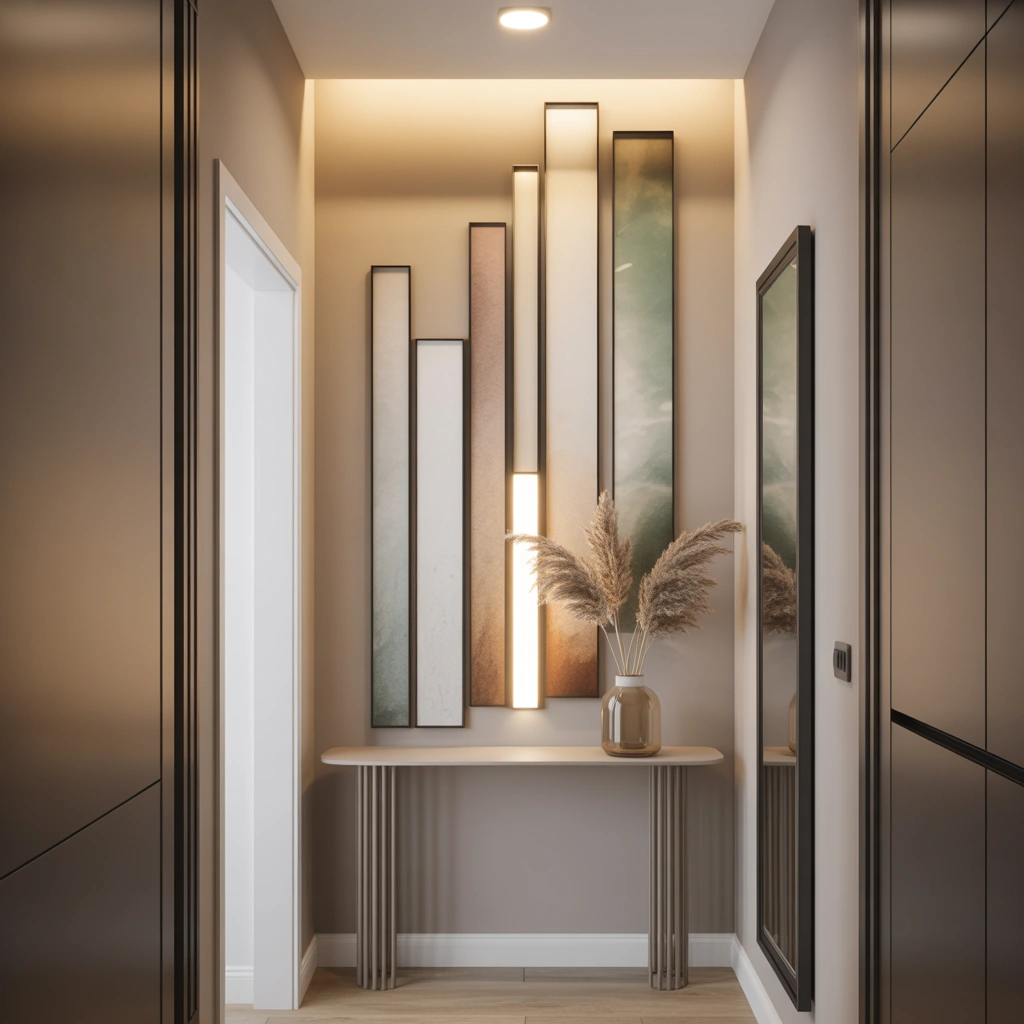
When floor width is limited, directing attention upward can make a surprising difference.
Vertical artwork, tall mirrors, narrow wall panels, hanging plants, and elongated light fixtures naturally pull the eye toward the ceiling.
This makes the hallway feel taller and reduces the focus on its limited width.
For example, instead of hanging three horizontal pictures, try one tall framed print.
You could also install decorative wall molding that extends vertically from floor to ceiling.
Tall architectural features bring structure to plain walls and can make even a simple hallway feel expensive.
Another idea is hanging a series of small framed pieces vertically rather than horizontally.
This technique is especially effective in entrances with standard-height ceilings because it creates the illusion of additional height.
The goal is not necessarily to fill every inch of the wall. You are simply using vertical proportions to make the dimensions of the hallway feel more balanced.
8. Add Hooks or a Peg Rail for Stylish Everyday Storage
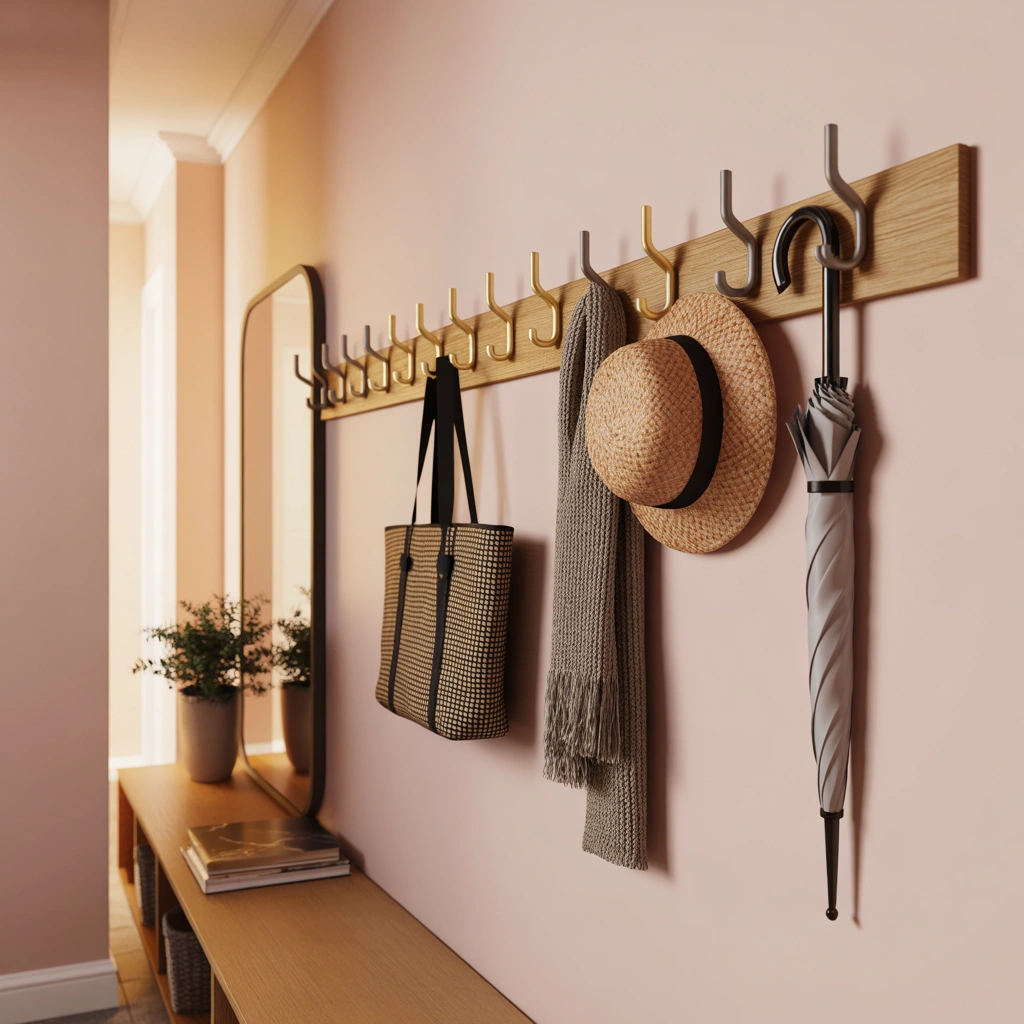
One challenge with small entrances is finding somewhere to put coats, bags, hats, scarves, or dog leads.
A freestanding coat rack might take up too much floor space, but wall-mounted hooks solve the problem beautifully.
I particularly like wooden peg rails because they combine storage and decoration.
Install one along a section of wall near the entrance and use it for the belongings you actually reach for every day.
Try to avoid overloading every hook. Too many coats can quickly make a narrow hallway look smaller.
Instead, keep seasonal or less frequently used items somewhere else.
You can also hang small baskets from hooks for lightweight accessories.
For a more modern design, choose individual brass, matte black, or wooden wall hooks arranged in a simple row.
If children use the entrance, install a second row of hooks slightly lower so they can hang backpacks and jackets themselves.
Functional details like these help prevent clutter from spreading onto the floor.
9. Install a Floating Shelf for a Minimal Entrance Display
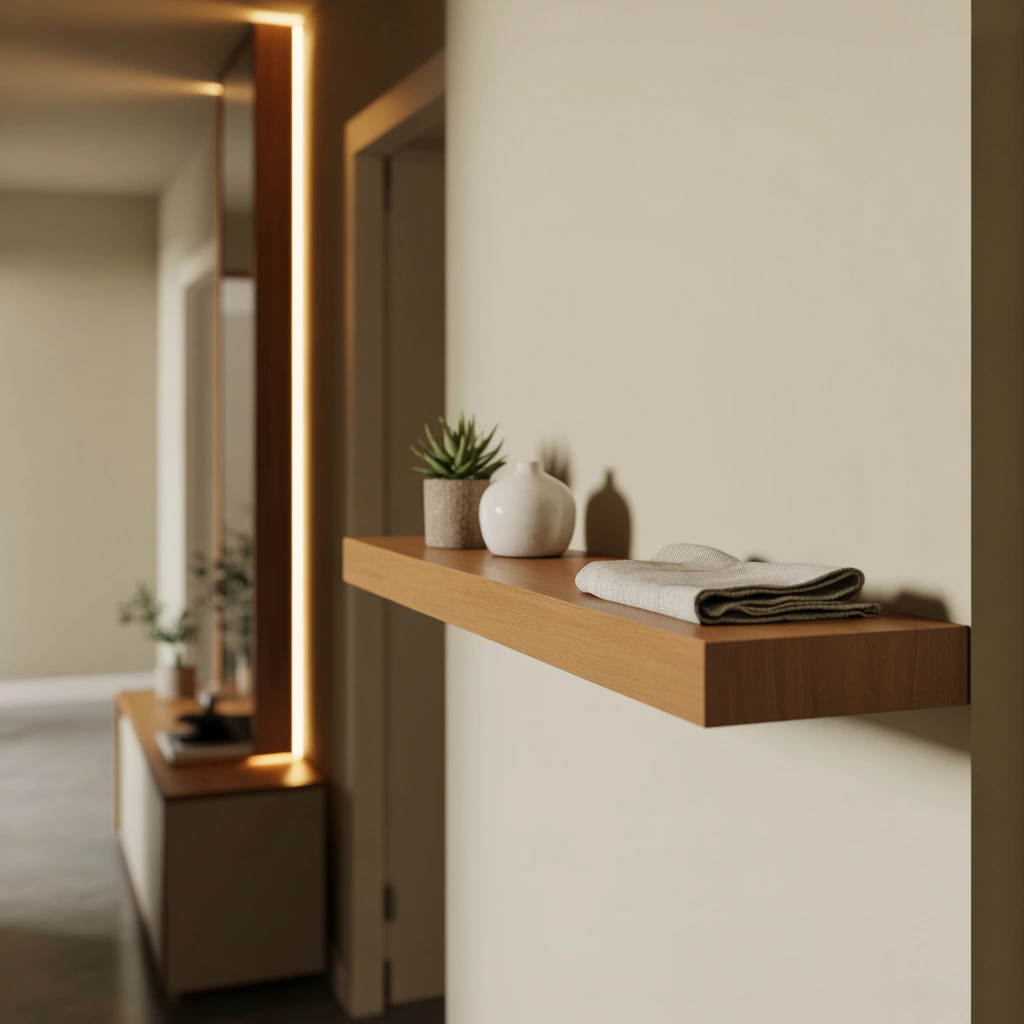
Sometimes there simply is not enough room for furniture.
In those situations, a floating shelf can become your miniature entryway console.
A narrow shelf only needs a few inches of depth, yet it provides enough space for a key bowl, framed picture, candle, plant, or decorative object.
Install a mirror or artwork above it, and the arrangement immediately feels intentional.
I would keep the shelf styling simple. One of the most common mistakes in narrow hallway decorating is using too many tiny decorative pieces.
Instead, select two or three items with different heights.
For example, combine a small lamp, decorative bowl, and taller vase.
If you prefer a Scandinavian or minimalist interior, a simple natural wood shelf against white walls can look beautiful.
For modern spaces, black or white floating shelves provide a clean architectural effect.
You can even install several narrow shelves vertically and use them to display photographs or small art prints without sacrificing walking space.
10. Introduce Decorative Wall Molding for Architectural Interest
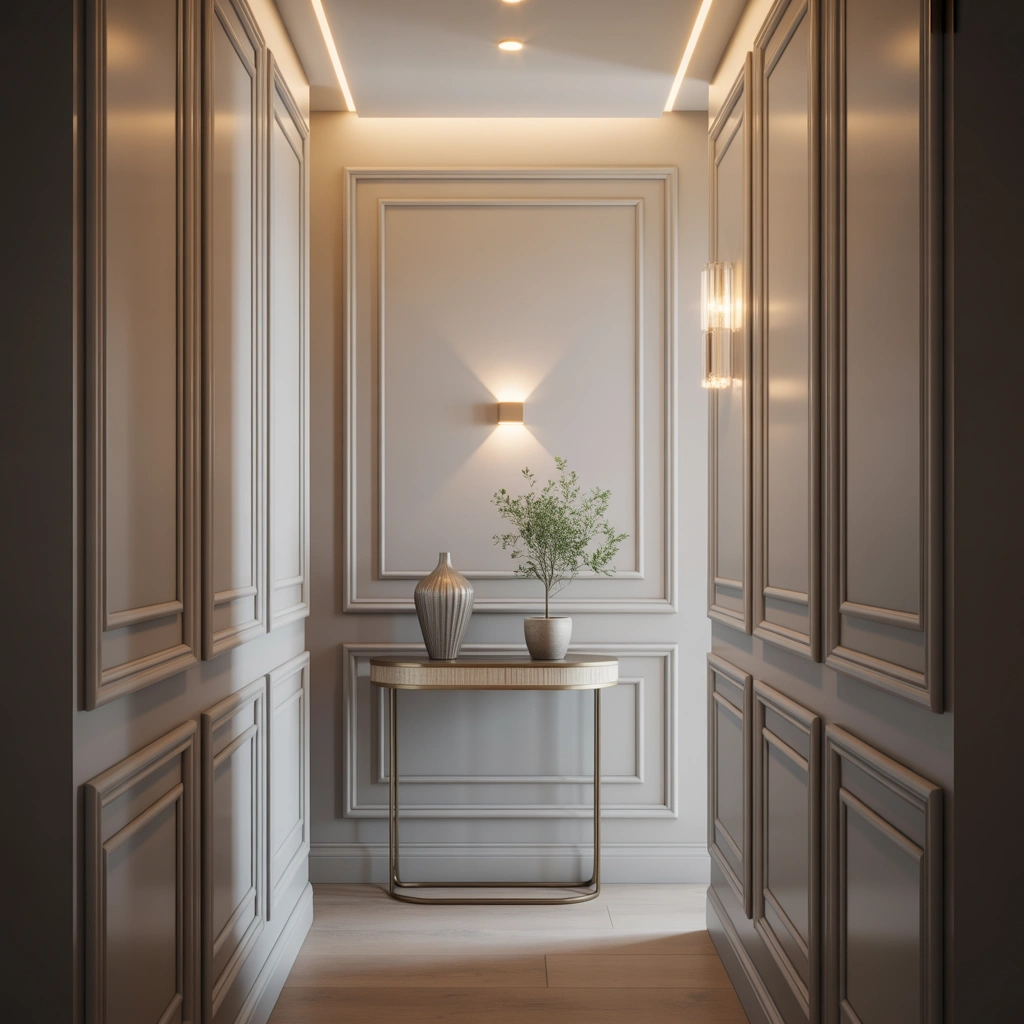
If your hallway feels plain, wall molding is one of my favorite ways to give it character.
Picture-frame molding, board and batten, beadboard, or simple paneling can transform a narrow entrance without adding bulky decoration.
Because the details remain relatively flat against the wall, they work perfectly in small spaces.
You can paint the molding the same color as the walls for a subtle, sophisticated effect.
Another option is using two-tone paint. For instance, paint the lower section a slightly deeper color and keep the upper wall lighter.
This technique gives the entrance definition while still maintaining brightness.
Traditional homes look especially beautiful with classic picture-frame molding, while simple vertical battens can suit farmhouse, coastal, contemporary, or transitional interiors.
Wall molding also gives you a natural framework for positioning mirrors, artwork, and wall lights.
Even an inexpensive hallway can feel thoughtfully designed once architectural detail is introduced.
11. Create a Statement Ceiling
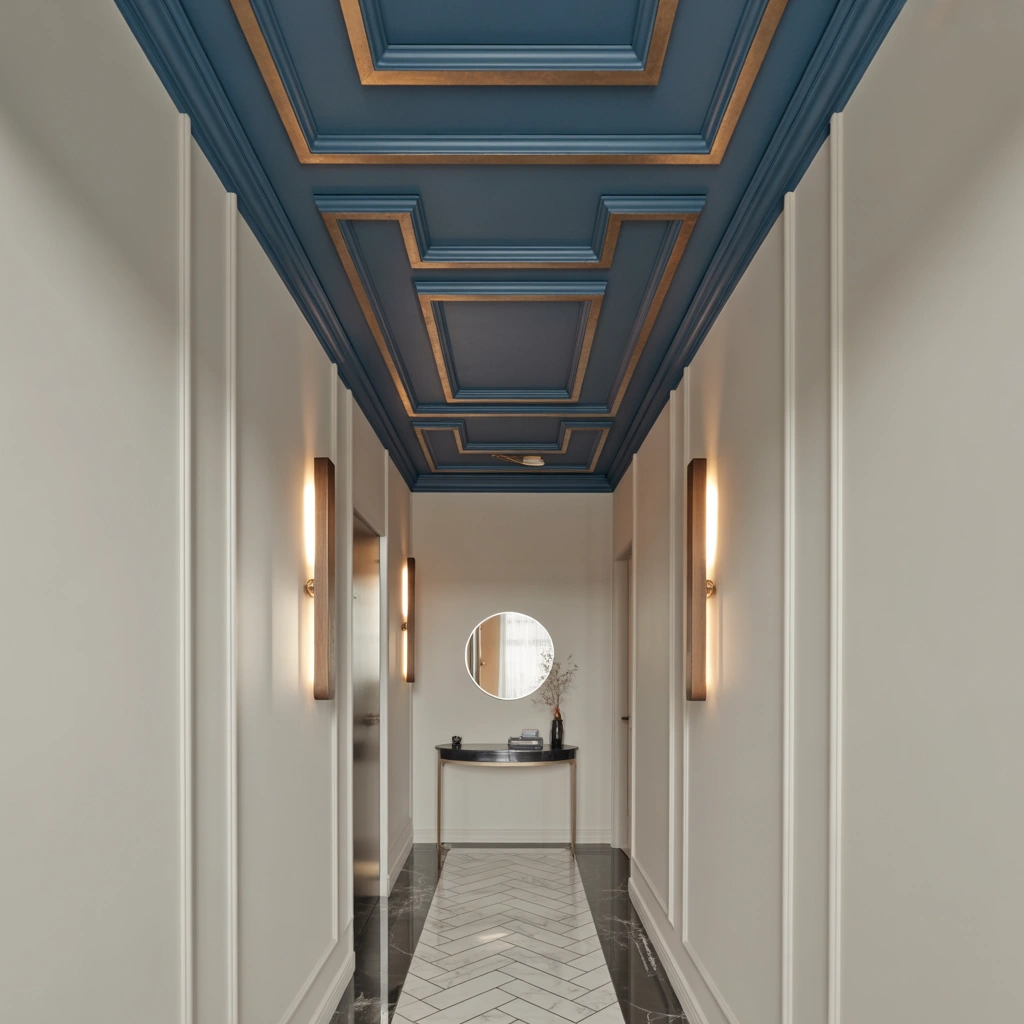
Most people focus entirely on the walls and floor when decorating an entrance, but the ceiling is another surface waiting to be used.
A statement ceiling can make a narrow hallway feel far more interesting without reducing any usable space.
You might paint the ceiling a soft contrasting color, apply patterned wallpaper, add wooden detailing, or install an attractive ceiling light.
In a neutral hallway, a muted green, blue, or warm beige ceiling can add subtle personality.
Wallpaper is another exciting option. Because hallways are relatively small, using a bold pattern overhead can feel less overwhelming than covering every wall.
If your style is more traditional, ceiling molding or a decorative medallion around the light fixture can create an elegant appearance.
Just make sure the ceiling treatment relates to the rest of the home. The entrance should feel like an introduction to your interior rather than a completely separate design experiment.
12. Decorate with Plants Without Blocking the Walkway
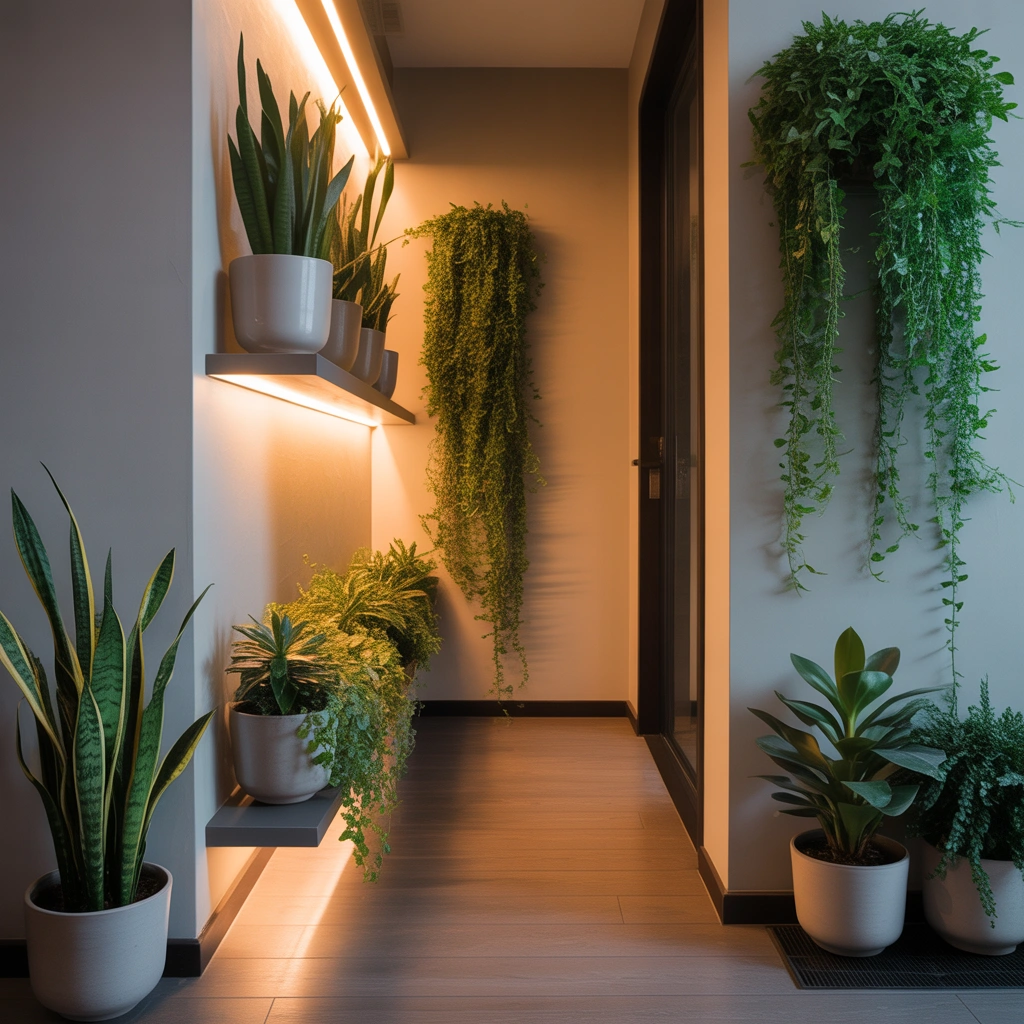
Plants instantly make an entrance feel fresher and more welcoming, but placement becomes especially important in a narrow hallway.
Large floor planters can easily block the walkway, so I prefer using plants vertically.
A small plant on a console table, wall-mounted planter, hanging plant, or tall narrow pot in an unused corner can provide greenery without taking over the space.
If your hallway receives very little natural light, choose low-light indoor plants or use high-quality artificial greenery.
A trailing plant placed on a high shelf can look particularly beautiful because the foliage adds softness while keeping the floor clear.
If you have a small space beside the front door, one tall narrow plant can also create a strong visual focal point.
Try not to scatter lots of tiny plants everywhere. In tight areas, fewer but slightly larger pieces usually look more intentional.
Greenery works especially well in white, beige, wooden, or earthy-colored entrances because it provides natural contrast.
13. Use a Small Bench with Hidden Storage
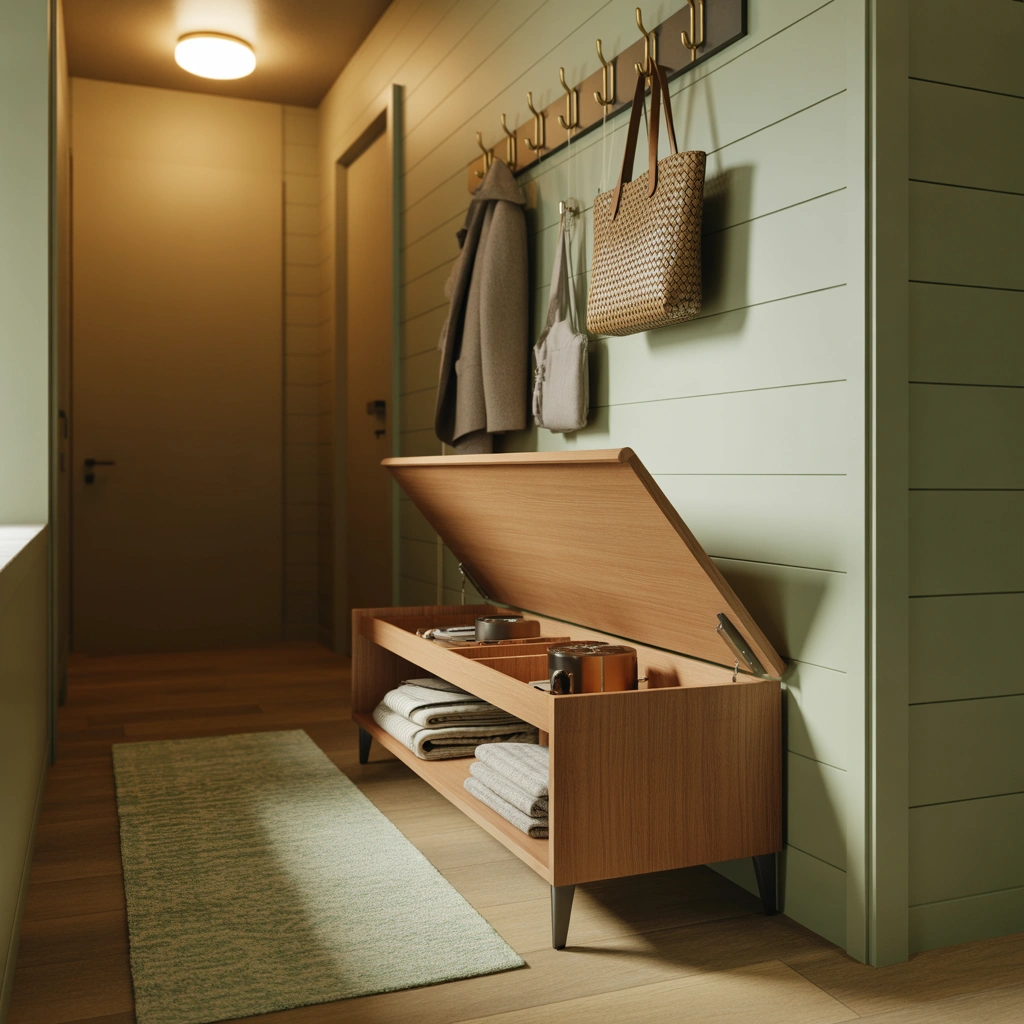
If your hallway is wide enough, a compact bench can be one of the most practical additions you make.
Having somewhere to sit while putting on or removing shoes makes an entrance much more comfortable.
The key is choosing the right proportions.
Look for a narrow bench that sits close to the wall. Better yet, choose a design with built-in storage underneath.
A storage bench can hide shoes, bags, umbrellas, or seasonal accessories while keeping the hallway looking clean.
Open benches with baskets underneath are another attractive option.
If your hallway is extremely narrow, consider a wall-mounted folding seat. It can be opened when needed and folded flat afterward.
Style the bench with one or two cushions, but avoid adding so many textiles that the seating becomes impractical.
Above the bench, you can install hooks, a mirror, or framed artwork to create a complete mini mudroom-style entrance.
This approach works particularly well for families because it gives everyday items a designated location.
14. Use One Bold Focal Point Instead of Too Many Decorations
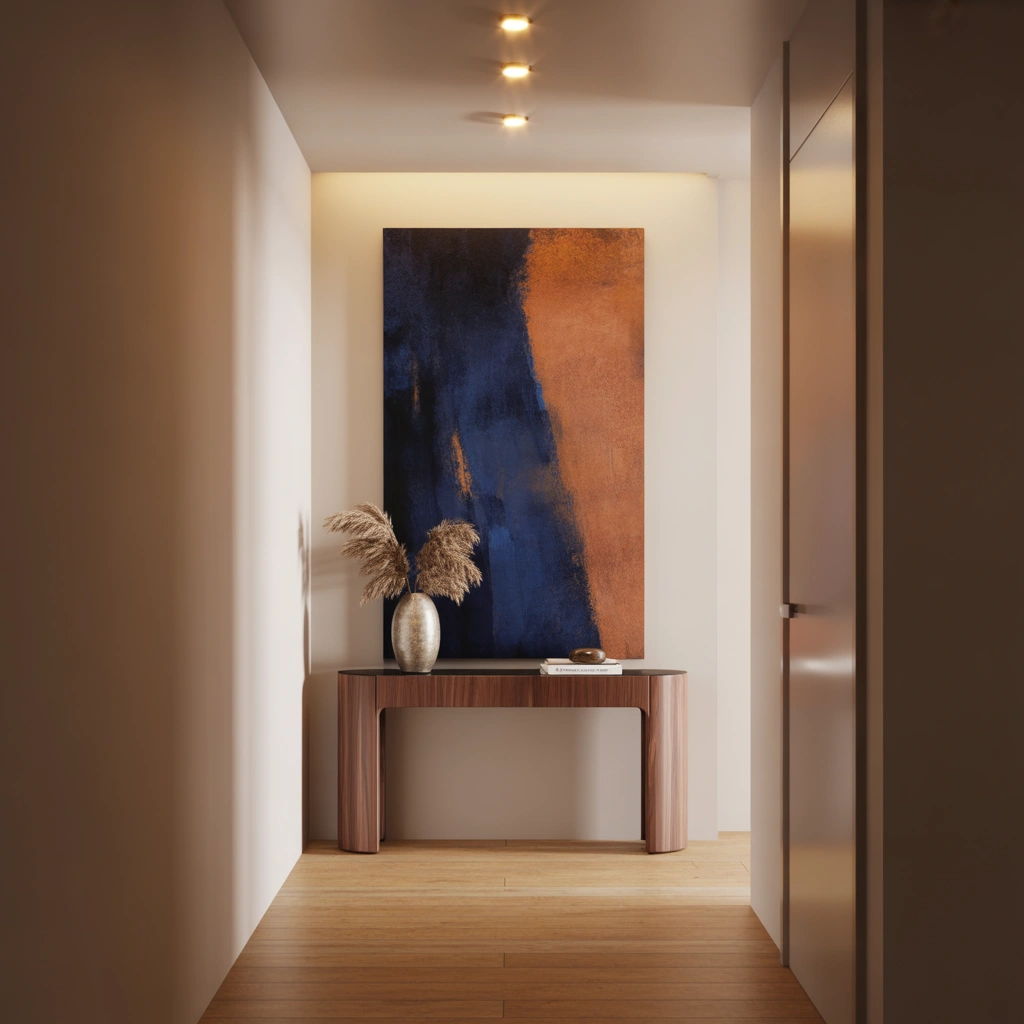
Small spaces often look best when there is one strong feature rather than several competing decorative elements.
Choose something that immediately attracts attention when someone enters the hallway.
It could be a striking piece of artwork, an oversized mirror, dramatic pendant light, patterned runner, painted door, statement wallpaper, or beautiful console table.
Once you choose your focal point, keep surrounding decorations quieter.
For example, if you use colorful wallpaper, you probably do not need a complicated gallery wall on top of it.
If your runner contains a bold geometric pattern, consider simple walls and understated accessories.
This method prevents the narrow entrance from feeling visually busy.
I personally find that limiting the number of major decorative statements creates a more sophisticated result.
A small hallway does not need less personality. It simply needs more intentional personality.
15. Keep the Entrance Clutter-Free with Smart Hidden Storage
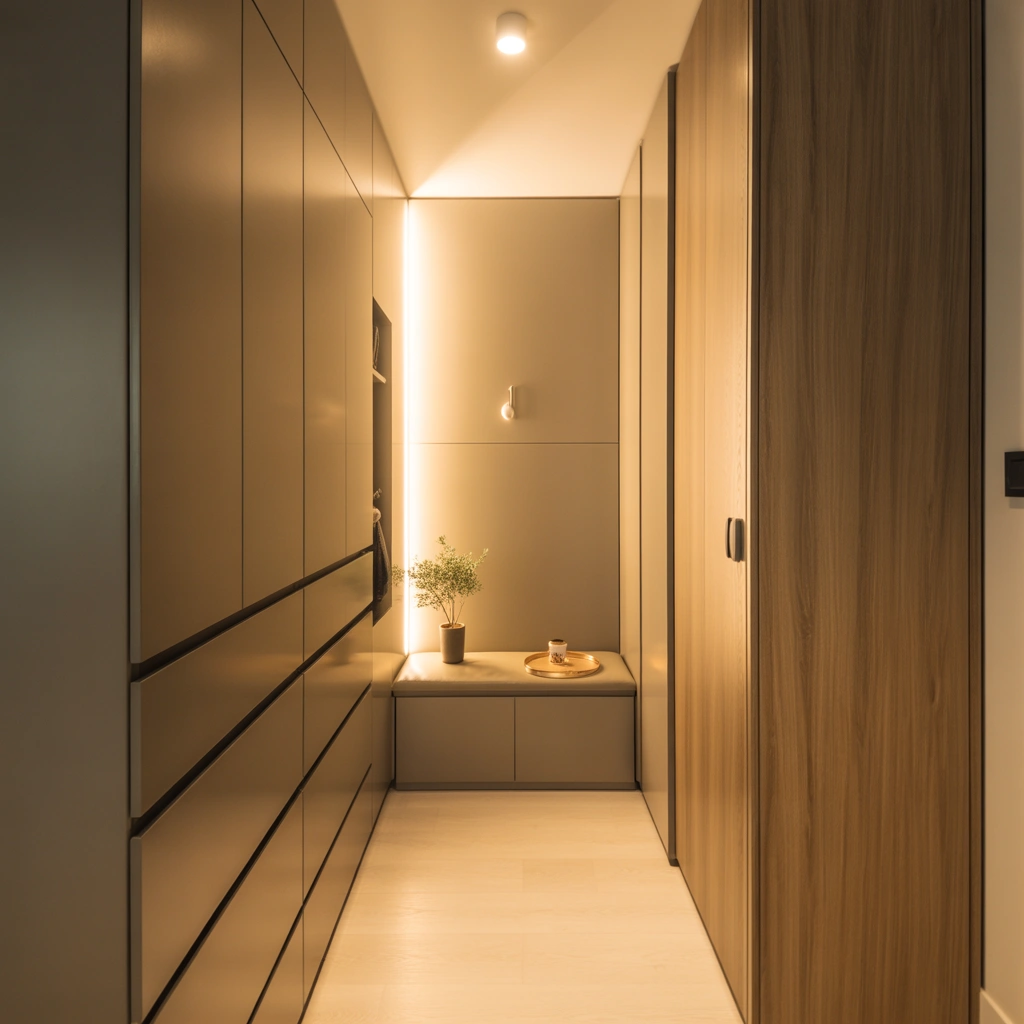
No decorating trick can make a narrow hallway look spacious if the floor is covered with shoes, bags, boxes, and everyday clutter.
Good storage is therefore one of the most important narrow hallway entrance ideas.
Start by identifying what usually gets dropped near your front door.
If keys are always scattered around, add a small tray or wall-mounted organizer.
If shoes are the problem, use a slim shoe cabinet. These cabinets are designed with shallow depth, making them perfect for narrow entrances.
Mail can go inside a wall pocket or small drawer.
Umbrellas can be stored in a tall narrow stand.
You could also use decorative baskets on high shelves to store items that are not needed every day.
The important thing is giving everything a designated place.
I have noticed that when storage is easy to access, keeping an entrance organized becomes much more realistic.
You should not need to reorganize the hallway every evening. The design should naturally support your daily habits.
How to Make a Narrow Hallway Look Wider
Beyond individual decorating ideas, there are several visual tricks that can help make a narrow hallway appear wider.
Start by keeping the floor as visible as possible. Furniture with raised legs or wall-mounted pieces allows the eye to see underneath, making the space feel more open.
Mirrors are another obvious advantage because they create visual depth.
Lighting also matters significantly. Dark corners make walls feel closer together, so make sure the entire hallway receives balanced illumination.
You can also use horizontal visual elements carefully. For example, a long floating shelf or continuous wall molding can emphasize the hallway’s length.
Avoid placing too many objects directly in the walking path.
Even a beautiful piece of furniture will feel frustrating if everyone has to turn sideways to get around it.
Finally, maintain visual consistency. Using too many colors, patterns, frames, and accessories in one small area can make it feel cluttered.
A restrained color palette usually gives narrow entrances a calmer and more spacious appearance.
How to Make a Small Entrance Feel More Welcoming
A practical hallway should also feel inviting.
Start with warm lighting rather than relying on a harsh overhead bulb.
Introduce something personal, whether that is family photography, artwork you love, travel memories, or a meaningful decorative object.
Natural textures can also soften the space.
Wood, woven baskets, linen lampshades, ceramics, and plants make a hallway feel less sterile.
Fragrance is another detail people sometimes overlook. A lightly scented candle or diffuser can create a pleasant first impression.
Just avoid overpowering fragrances, particularly near the main entrance.
Even simple elements such as a clean doormat, beautiful runner, organized shoe storage, and fresh greenery can completely change how the hallway feels.
The goal is to create an entrance that says something about the rest of your home before visitors even reach the living room.
Narrow Hallway Decorating Mistakes to Avoid
When decorating a narrow hallway, it is surprisingly easy to make the area feel smaller.
One common mistake is choosing furniture that is simply too deep. Always measure the available walkway before buying anything.
Another mistake is using excessive decoration on both sides of the hallway.
If you create a large gallery wall on one side, consider keeping the opposite wall relatively quiet.
Poor lighting can also make even beautifully decorated hallways look cramped.
Another issue is ignoring scale. Tiny decorative pieces scattered everywhere often create more visual clutter than one or two larger elements.
Finally, avoid treating storage as an afterthought.
Shoes, coats, bags, packages, and mail naturally collect around entrances. If your design does not provide somewhere for them to go, clutter will eventually take over your carefully styled hallway.
Choosing the Right Color Scheme for a Narrow Entrance
Your color palette can influence how spacious your hallway feels.
Neutral shades such as white, cream, beige, taupe, and light gray are popular because they reflect light and create visual calm.
However, you do not have to avoid darker colors completely.
Dark paint can actually look sophisticated when used intentionally.
For example, you could paint the front door dark green while keeping surrounding walls light.
Another option is creating a darker lower wall with lighter paint above.
Natural wood tones pair particularly well with narrow entrances because they introduce warmth without requiring bold color.
Green is another beautiful choice because it connects easily with plants and natural materials.
If your hallway connects directly to several rooms, try repeating one or two colors already used elsewhere in your home. This helps the entrance transition smoothly into surrounding spaces.
Final Thoughts on Narrow Hallway Decorating Entrance Ideas
Decorating a narrow hallway is not about trying to squeeze as much furniture and decor into the area as possible. In fact, I think the best small entrances usually succeed because they do the opposite.
They use fewer elements, but every element has a clear purpose.
A mirror creates light and depth. A runner adds warmth. A slim console provides storage. Wall hooks organize everyday essentials. Artwork brings personality. Good lighting makes everything feel more inviting.
The secret is working with the shape of the hallway rather than fighting against it.
Start with one or two of these narrow hallway decorating entrance ideas and build the design gradually. You might begin with a mirror and runner, then introduce better lighting, storage, or wall decor once you understand what the space actually needs.
Even the smallest entrance can become stylish when every inch is considered thoughtfully.
Your hallway may only be a passage, but it is also the opening chapter of your home. With the right details, it can create a beautiful first impression every single day.
Frequently Asked Questions About Narrow Hallway Decorating
What is the best way to decorate a very narrow hallway?
For a very narrow hallway, prioritize wall-mounted decor instead of floor furniture. Use a large mirror, slim wall shelf, framed artwork, sconces, hooks, and a hallway runner. Keeping the floor relatively open will make the entrance easier to navigate and visually larger.
What furniture works best in a narrow hallway entrance?
Shallow console tables, floating shelves, slim shoe cabinets, narrow benches, and wall-mounted storage work best. Always measure the depth of the furniture and make sure there is enough clear walking space.
What colors make a narrow hallway look bigger?
Light neutrals such as warm white, cream, soft beige, light greige, and pale gray can help reflect light and make the hallway feel more open. Soft muted colors such as sage green or dusty blue can also work beautifully.
Should you put a mirror in a narrow hallway?
Yes. A mirror is one of the most effective decorating features for a narrow hallway because it reflects light and creates the illusion of additional space. Large mirrors usually provide more visual impact than several small ones.
How do you decorate a narrow hallway without making it cluttered?
Choose a limited number of decorative elements and use vertical wall space whenever possible. Keep everyday items hidden inside shallow cabinets, baskets, drawers, or wall organizers. One strong focal point generally works better than many competing decorations.
Can dark colors work in a narrow entrance?
They can. While light colors generally make a small hallway feel brighter, darker shades can create a dramatic and sophisticated entrance when combined with good lighting and lighter surrounding elements. Consider using dark color on one door, one feature wall, or the lower section of the hallway rather than covering every surface.
What type of rug is best for a narrow hallway?
A durable low-pile runner is usually the best choice. Select a size that leaves a small amount of visible flooring on either side. Patterns can help disguise everyday dirt while adding personality to the entrance.
How can I decorate a narrow hallway on a budget?
Paint, thrifted mirrors, inexpensive frames, floating shelves, hooks, secondhand runners, and DIY wall molding can all make a significant difference without requiring a large budget. Focus on one area at a time instead of trying to completely redesign the entrance at once.
