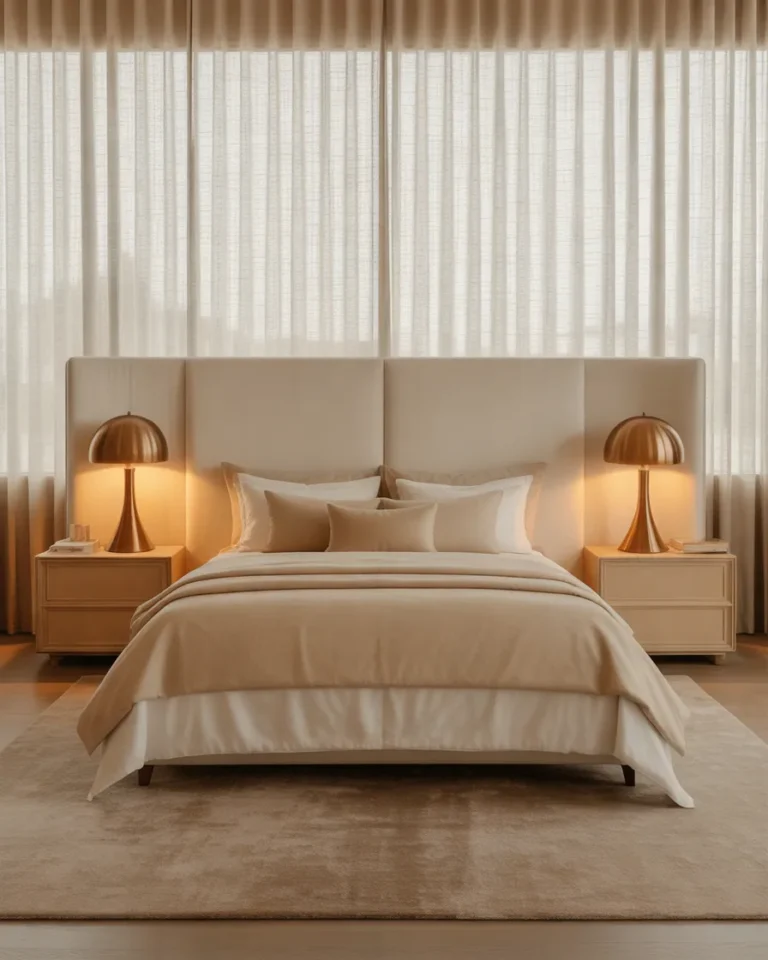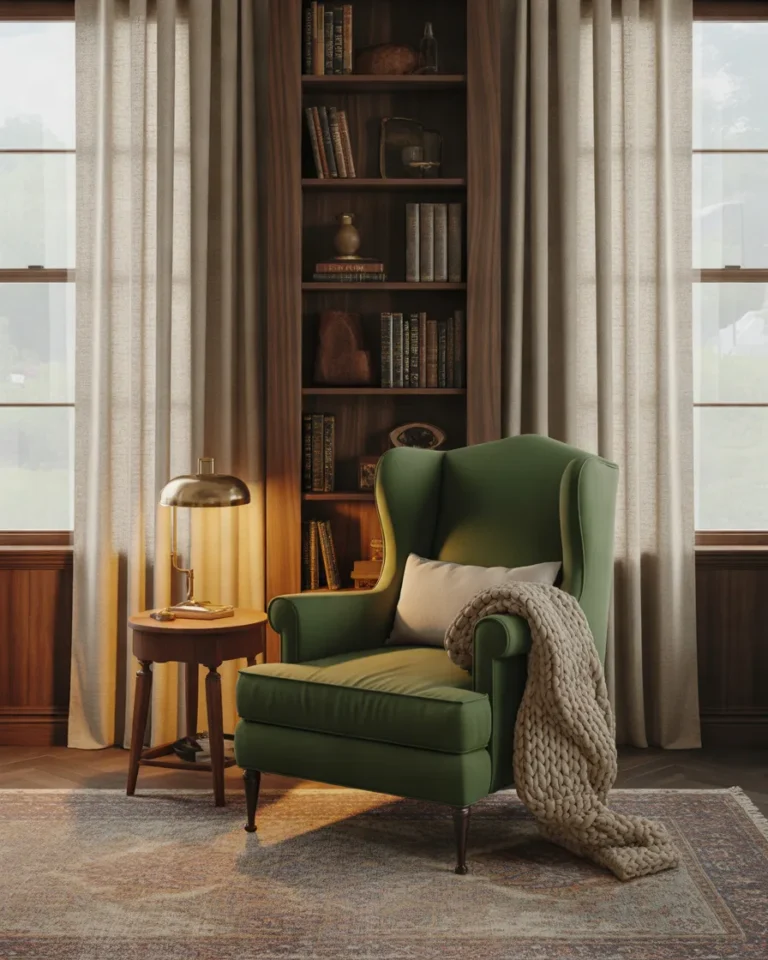
The dining room is one of those spaces in a home that deserves more attention than it often receives. We spend time carefully choosing the dining table, chairs, lighting, and even the tableware, but the walls sometimes remain completely empty. I have always felt that dining room walls offer one of the best opportunities to give the space personality without making major changes to the furniture.
The right wall decor can completely transform how a dining room feels. A large mirror can make a compact room appear brighter and more spacious, while a gallery wall can instantly make the space feel personal and collected. Wood paneling can add warmth, oversized artwork can create a sophisticated focal point, and decorative shelves can combine beauty with practical storage.
What I especially love about decorating dining room walls is that there really isn’t one correct approach. Some dining rooms look best with just one dramatic piece of artwork, while others benefit from layered textures, shelves, plates, plants, or framed photographs. Your wall decor should work with the mood you want to create.
If you’re looking for inspiration, these 15 wall decor dining room ideas include everything from modern statement pieces to cozy farmhouse details and elegant traditional designs. Whether you are decorating a formal dining room, breakfast area, open-plan dining space, or small apartment dining corner, there is an idea here that can work beautifully.
1. Create a Statement Wall With Oversized Artwork
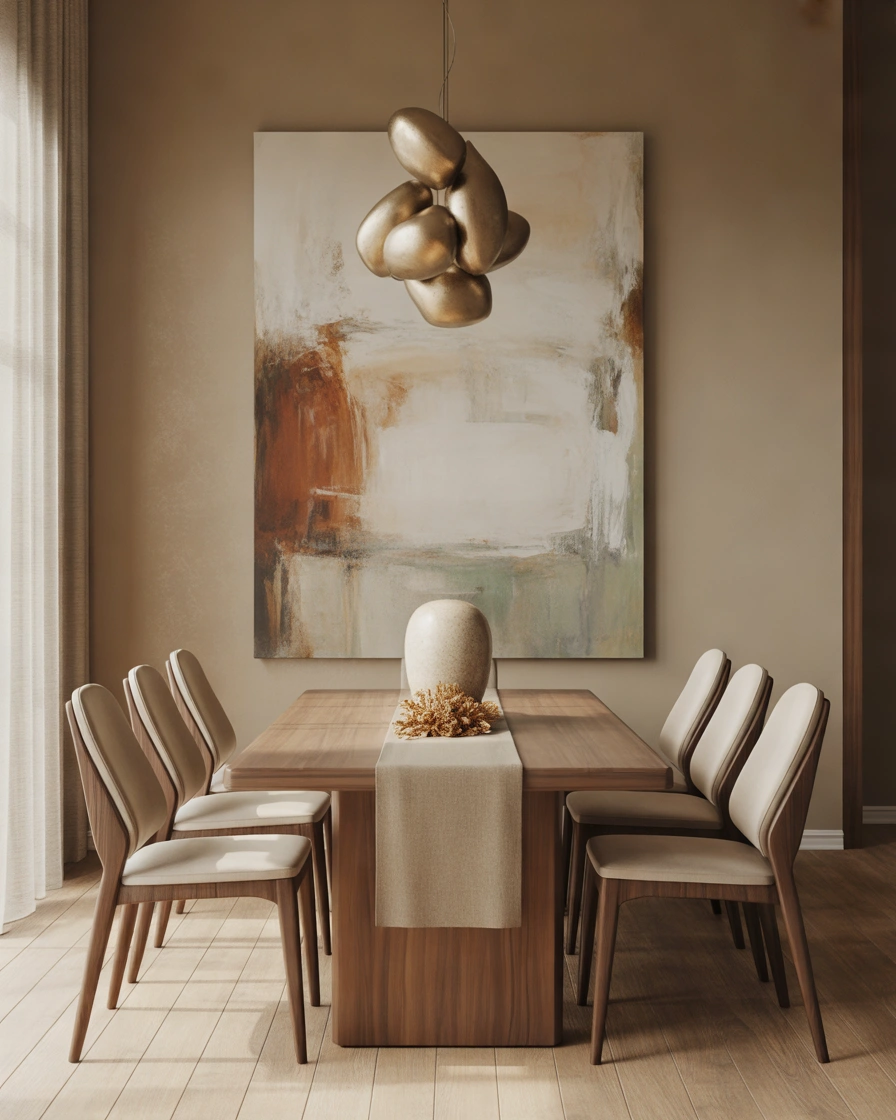
Oversized artwork is one of my favorite ways to decorate a dining room because it can instantly make the space feel polished without requiring a complicated arrangement.
Instead of filling the wall with several small decorations, choose one large canvas or framed artwork that takes up a generous portion of the available wall. Abstract paintings work particularly well in contemporary interiors, while landscapes, botanical prints, and vintage-inspired artwork can complement traditional, farmhouse, or cottage dining rooms.
The key is choosing artwork that feels proportional to your dining table. If your table is wide, a tiny picture floating in the middle of the wall may look unfinished. A larger piece visually connects the wall to the furniture underneath it.
I also like repeating one or two colors from the artwork elsewhere in the room. For example, if the painting contains muted terracotta tones, you could introduce terracotta napkins, ceramics, or chair cushions. This creates a cohesive look without making everything perfectly matched.
For a calmer dining room, consider soft neutral artwork with beige, cream, charcoal, sage, or muted blue tones. If your room feels too plain, colorful abstract artwork can introduce energy without changing the furniture.
2. Add a Large Decorative Mirror
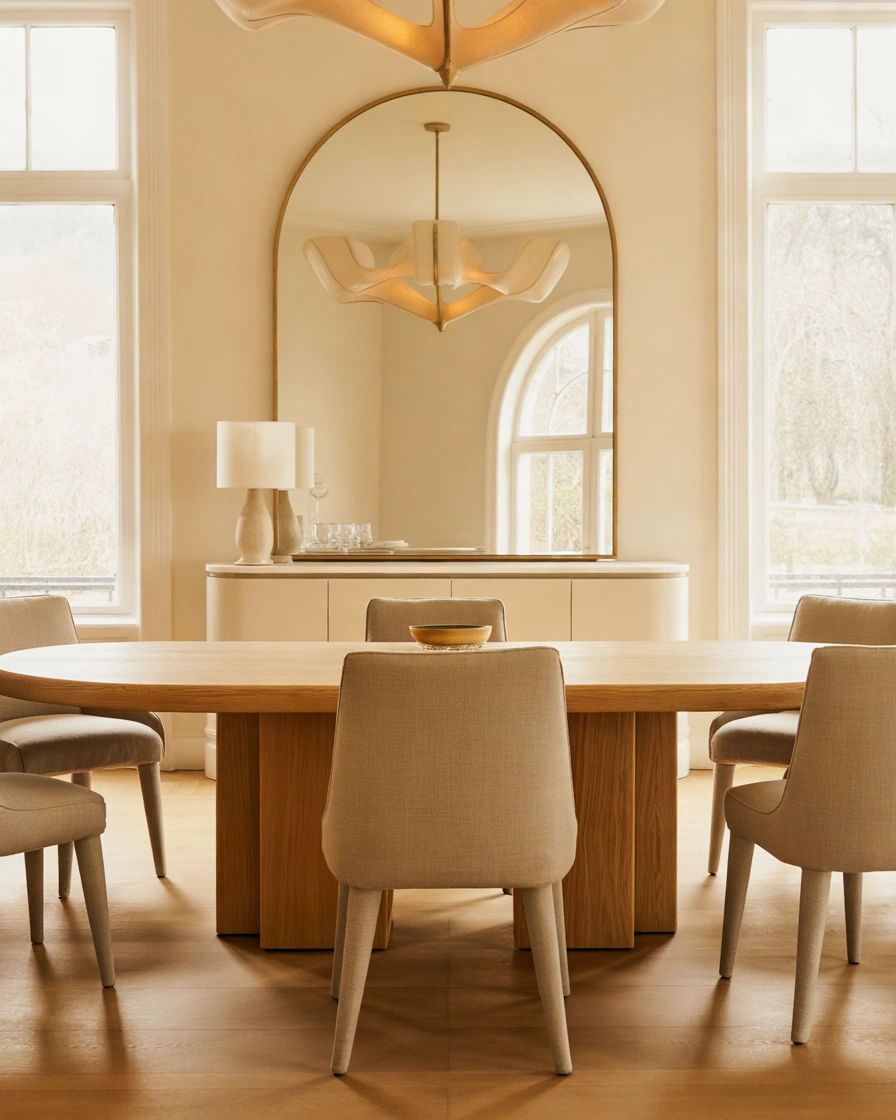
A large mirror can be both decorative and functional, especially when you’re working with a smaller dining room.
Mirrors reflect natural and artificial light, which can make the room appear brighter and more open. I particularly like positioning a mirror where it can reflect a chandelier, window, or attractive piece of furniture rather than an empty wall.
The frame style can completely change the character of the room. A thin black frame creates a modern look, while antique brass or gold feels more traditional and elegant. A distressed wood frame can fit beautifully into a farmhouse dining room, and an arched mirror creates a softer architectural feeling.
For narrow dining spaces, consider one tall vertical mirror. For a long wall above a console or buffet, a wide horizontal mirror usually feels more balanced.
You can also lean an oversized floor mirror against the wall if you prefer a relaxed, contemporary style. Just make sure it is safely secured, particularly in homes with children or pets.
3. Design a Personal Gallery Wall
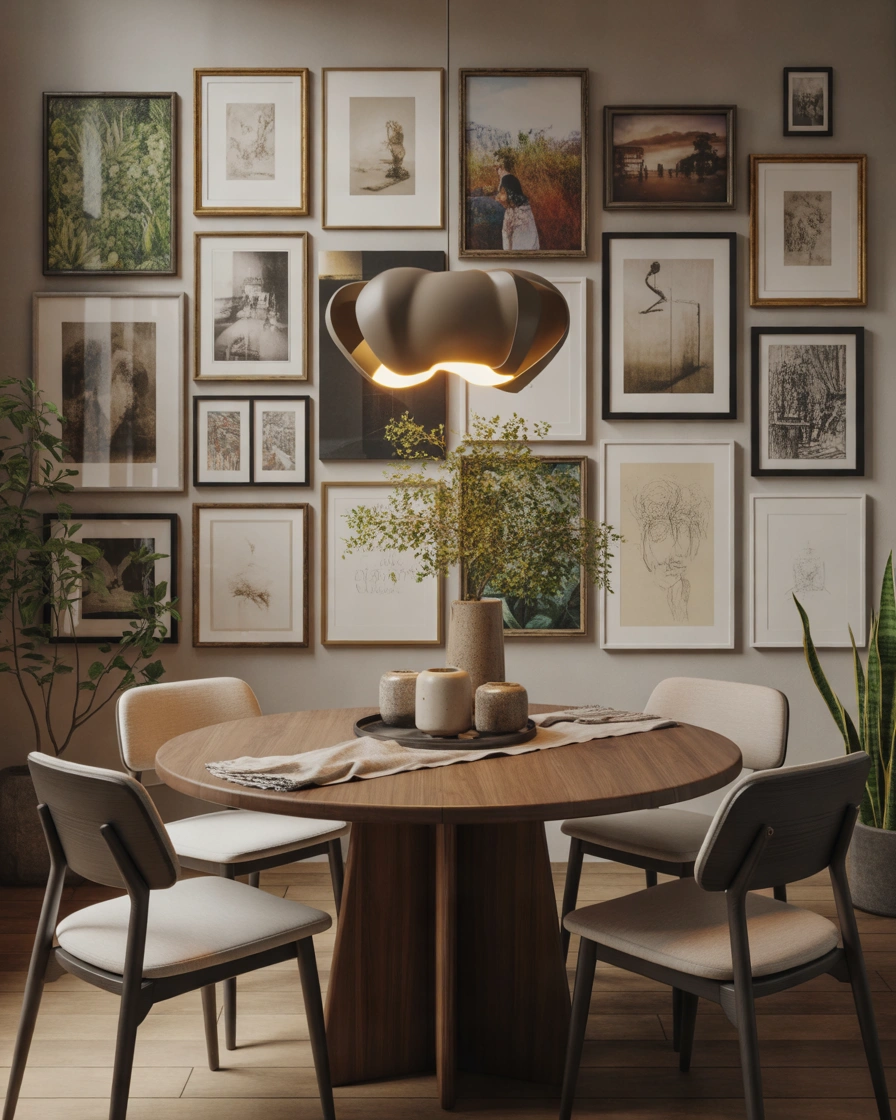
A gallery wall is perfect if you want your dining room to feel collected, personal, and full of character.
Instead of purchasing an entire matching set, I prefer combining pieces that have some connection while still looking different. You might mix family photographs, vintage botanical prints, travel photography, small paintings, typography, sketches, and meaningful artwork.
The frames do not necessarily have to match. Black, wood, brass, and white frames can look beautiful together when there is some repetition throughout the arrangement.
Before hanging anything, arrange the frames on the floor or trace them onto paper and temporarily attach the templates to the wall. This allows you to experiment with spacing without making unnecessary holes.
For a formal dining room, a symmetrical gallery wall can feel sophisticated. For a casual or eclectic home, an organic arrangement with different frame sizes creates a more relaxed look.
A gallery wall also gives you the freedom to update your dining space over time. You can replace photographs, add new artwork, or incorporate meaningful pieces from trips and family events.
4. Install Decorative Wall Molding
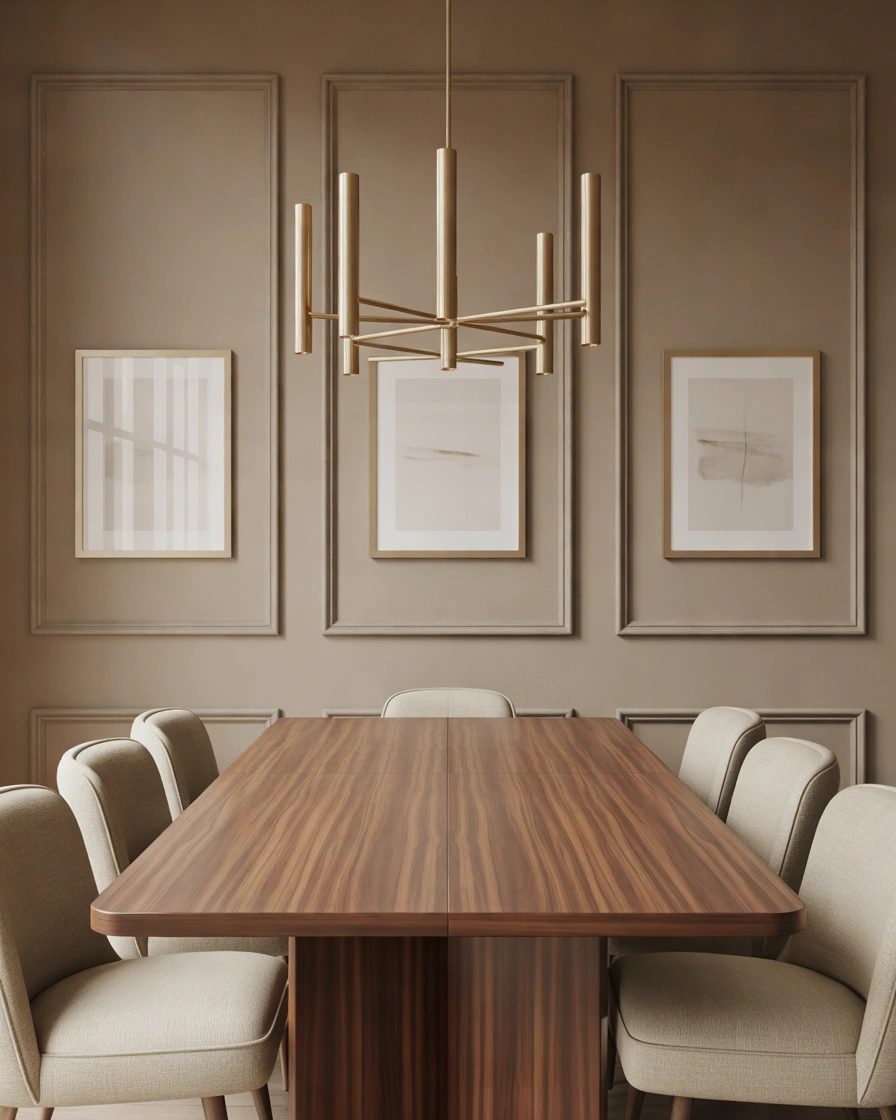
Wall molding is an excellent choice if you want your dining room to feel more architectural and refined.
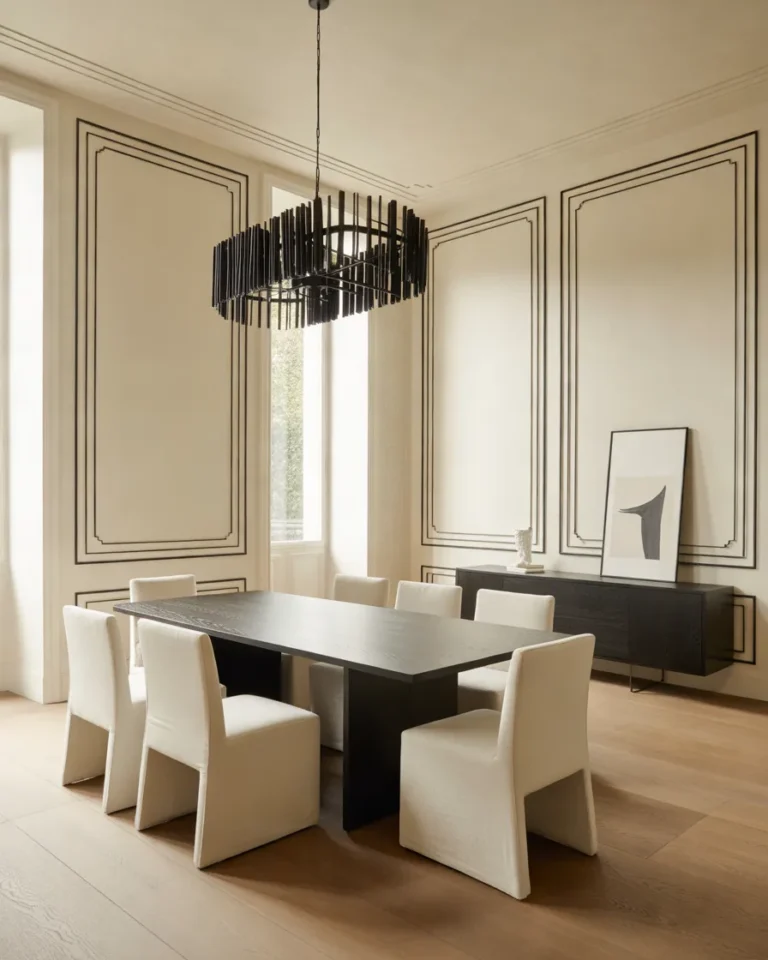
Picture-frame molding, wainscoting, chair rails, and decorative panel molding can transform a completely plain wall without relying heavily on artwork. I especially love this approach in dining rooms because molding naturally adds a slightly formal, intentional feeling.
You can paint the molding the same color as the wall for a subtle effect. For something more dramatic, use a darker color such as charcoal, forest green, navy, burgundy, or warm taupe.
One beautiful approach is to install picture-frame molding across the entire dining room and place artwork inside selected panels. This creates the appearance of a thoughtfully designed interior rather than simply decorating a blank wall.
Wall molding works equally well in modern homes when the profiles are kept clean and simple.
If you want a luxurious result without overwhelming the space, use molding on the lower half of the wall and keep the upper section lighter.
5. Display Decorative Plates on the Wall
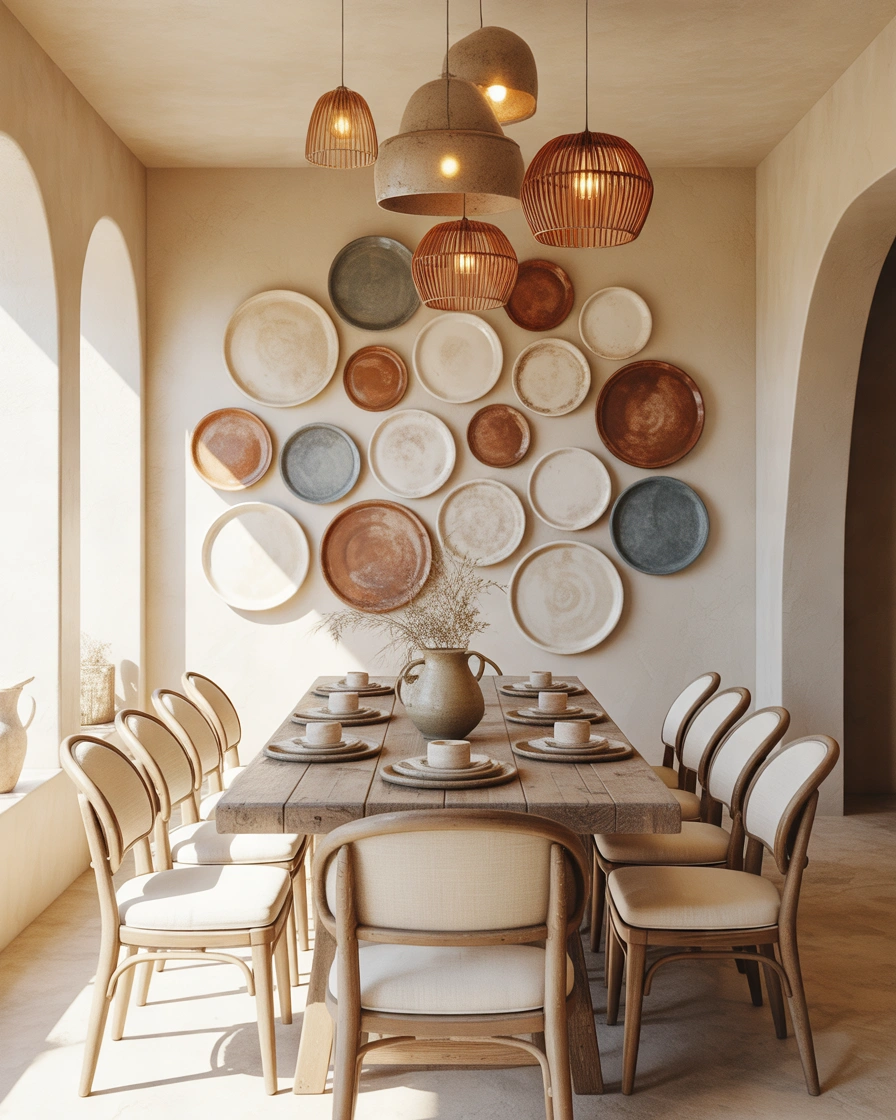
Decorative plate walls have been around for generations, but they can look surprisingly fresh when styled thoughtfully.
Instead of using only traditional floral china, consider combining handmade ceramic plates, minimalist pottery, Mediterranean patterns, blue-and-white porcelain, woven shallow baskets, or artisan stoneware.
I like arrangements where the pieces vary in size because the wall feels more dynamic. You could create a cluster above a sideboard, arrange the plates around a central mirror, or build an organic display that gradually moves upward along the wall.
This idea works particularly well in farmhouse, cottage, French country, Mediterranean, and vintage-inspired dining rooms.
If you already own beautiful dishes that rarely leave your cabinets, displaying them on the wall gives them a purpose beyond special occasions.
For a more contemporary look, stick with one color family. Matte white, earthy beige, charcoal, or blue pottery can create a sophisticated installation while still adding texture.
6. Add Floating Shelves for Flexible Decor
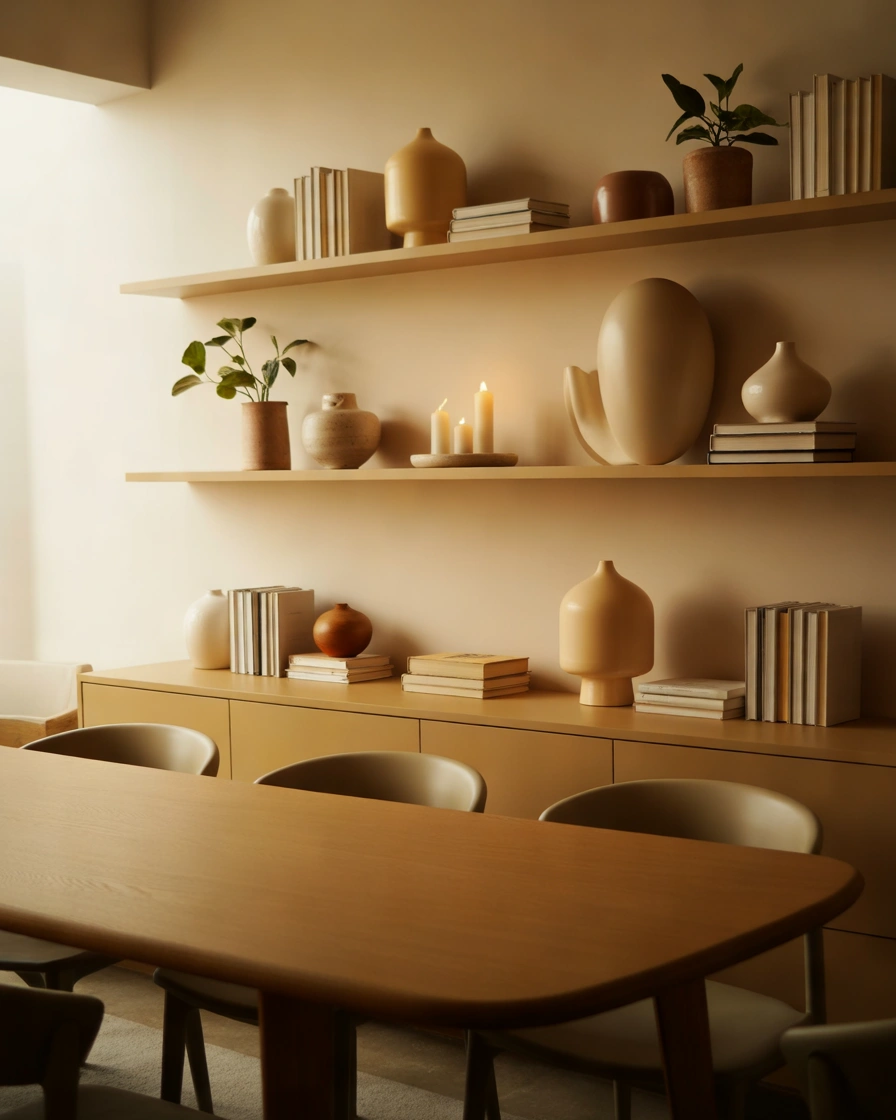
Floating shelves are one of the most practical dining room wall decor ideas because you can change the styling whenever you want.
I especially like using two or three long wooden shelves above a sideboard or on an otherwise empty dining room wall. You can decorate them with framed artwork, small plants, pottery, candles, cookbooks, glassware, and seasonal accessories.
The secret is avoiding overcrowding. Leave some empty space around the objects so each piece has room to breathe.
Try layering small framed prints behind ceramic pieces to create depth. A trailing plant can soften the straight lines of the shelves, while a few sculptural objects make the display feel intentional.
Floating shelves are also useful in compact homes because they provide decorative storage without taking up floor space.
If your dining room already contains a lot of wood, black metal or painted shelves may create better contrast. In minimal interiors, matching the shelves to the wall color creates a subtle built-in effect.
7. Introduce a Textured Accent Wall
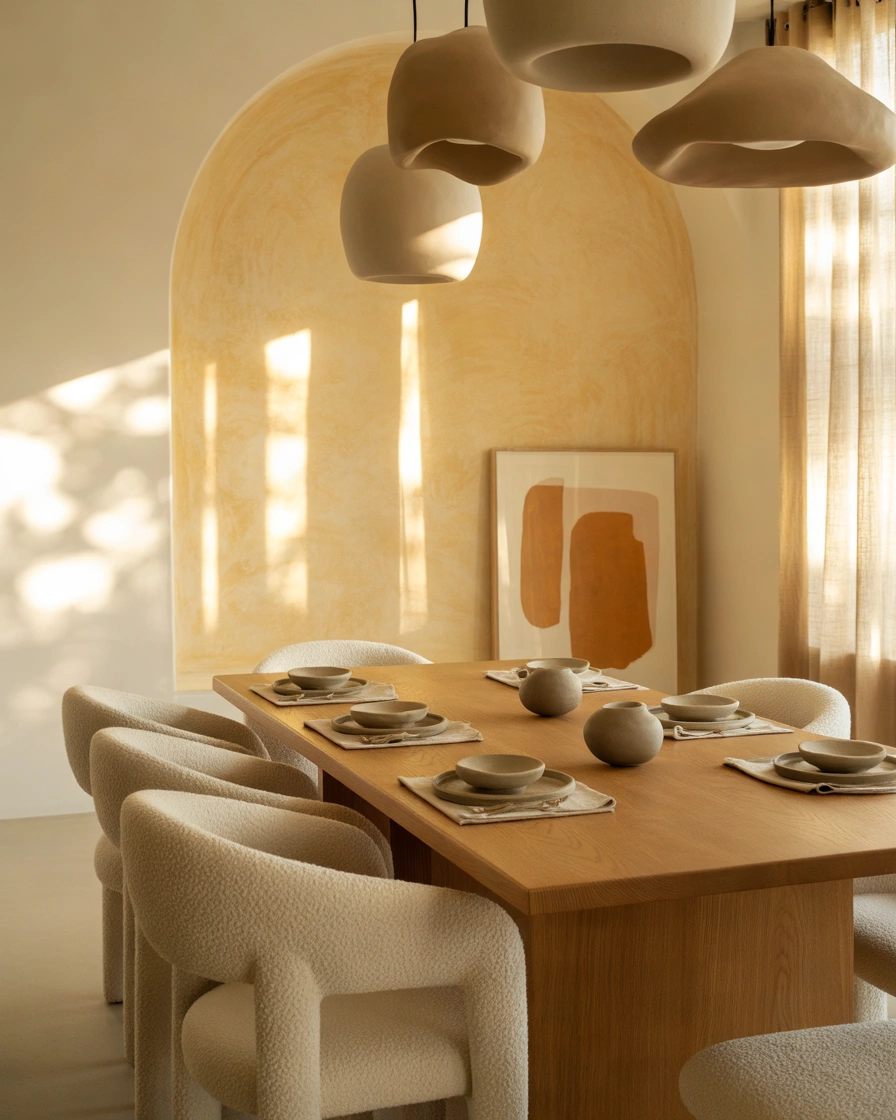
Sometimes the most effective wall decor isn’t something you hang at all.
A textured accent wall can become the main decorative feature of your dining room. Limewash, Roman clay, plaster, brick, stone, wood slats, and textured wallpaper all add visual depth that flat paint cannot provide.
I love limewash and plaster finishes because they change subtly throughout the day as light moves across the wall. They create a soft, organic look that works beautifully with wood furniture, linen upholstery, ceramics, and natural materials.
Wood slat walls are another option if you prefer a modern style. Vertical slats can visually increase the height of the room while bringing warmth to contemporary furniture.
For an industrial or rustic dining room, exposed brick can create a strong architectural backdrop.
If you choose a highly textured wall treatment, you may not need much additional wall decor. A single painting, mirror, or wall sconce can be enough.
8. Hang a Statement Clock
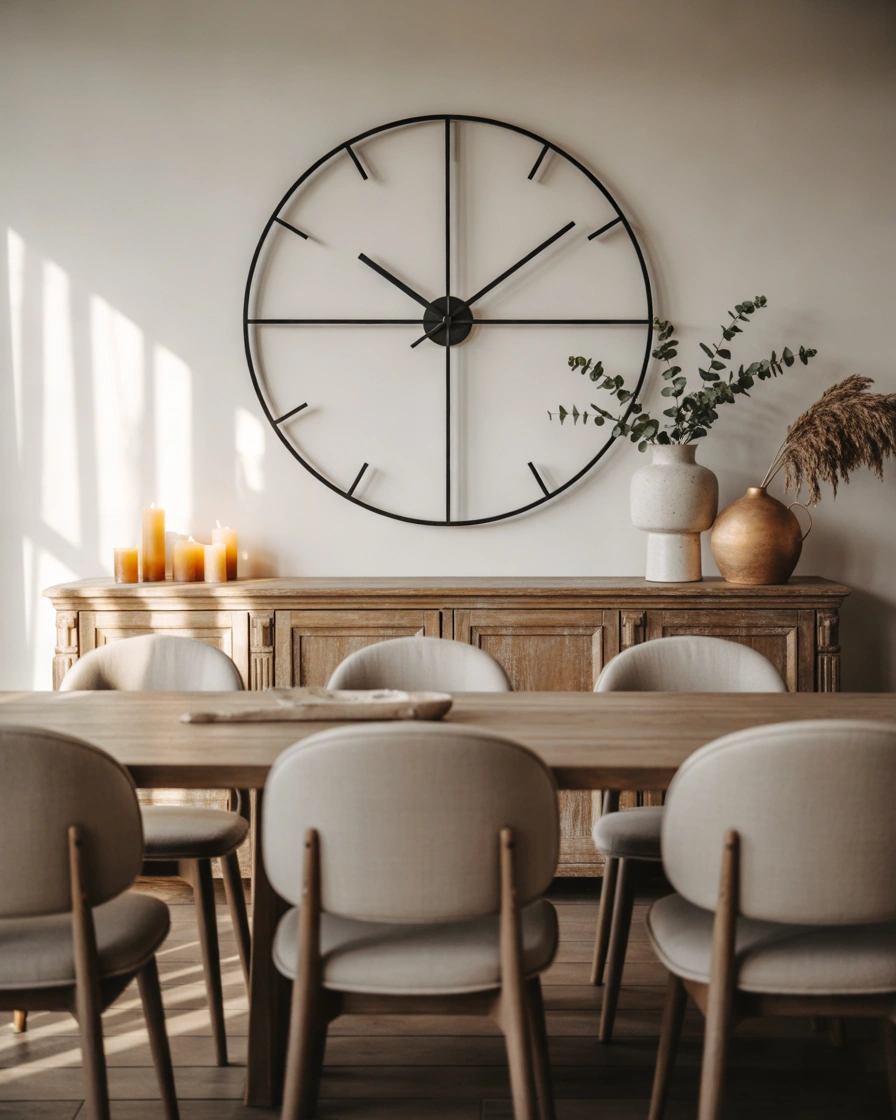
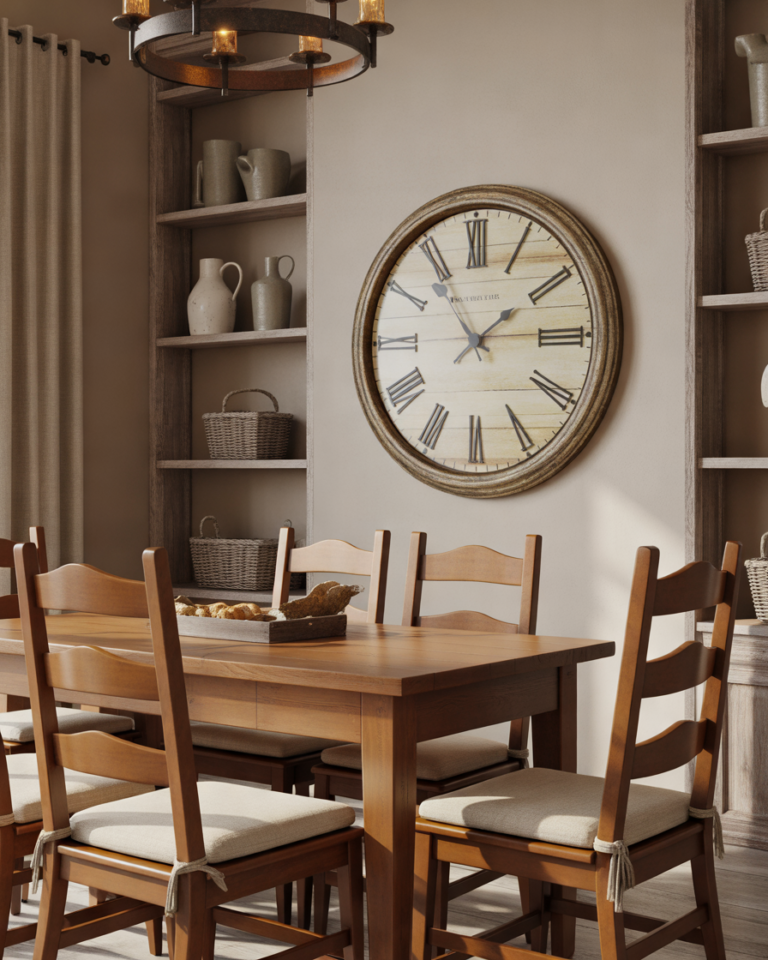
A wall clock can function as artwork when you choose a design with enough visual presence.
Large minimalist clocks work particularly well in industrial, farmhouse, modern, and transitional dining rooms. Instead of treating the clock as a small practical accessory, choose one that is large enough to become a focal point.
For farmhouse interiors, a distressed wood or black metal clock can create a familiar cozy look. In modern dining rooms, a simple clock with thin metal hands and minimal markers feels cleaner.
I would avoid combining a large clock with too many competing decorations nearby. Give it enough empty wall space so the design feels intentional.
A clock can also work nicely above a buffet cabinet where a mirror or painting might normally be placed.
To make the display feel complete, add a lamp, vase, or decorative objects to the surface underneath it.
9. Use Botanical Prints for a Fresh Natural Look
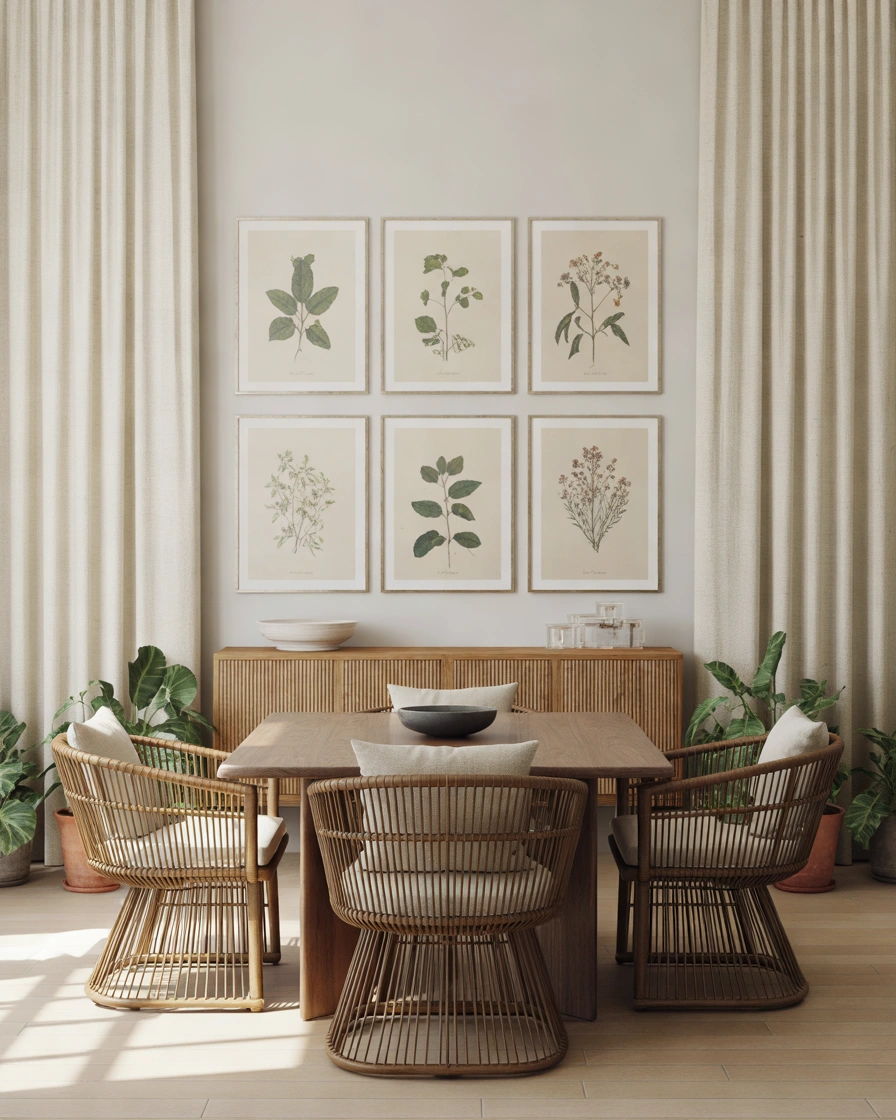
Botanical prints are a timeless option for dining room walls because they introduce color without overwhelming the room.
You can use vintage botanical illustrations for a traditional look or contemporary plant photography for a more modern approach.
I particularly like arranging four or six coordinating botanical prints in a neat grid. The repetition creates structure while the natural imagery keeps the room feeling relaxed.
Green botanical artwork pairs beautifully with wood dining tables, white walls, rattan chairs, linen fabrics, and brass fixtures.
For something moodier, choose botanical prints with dark backgrounds. They can look dramatic against deep green, charcoal, or navy walls.
If you enjoy changing decorations seasonally, botanical artwork is also easy to update. Spring florals can be replaced with autumn leaves, winter branches, or warmer landscape artwork.
10. Create a Built-In Display Wall
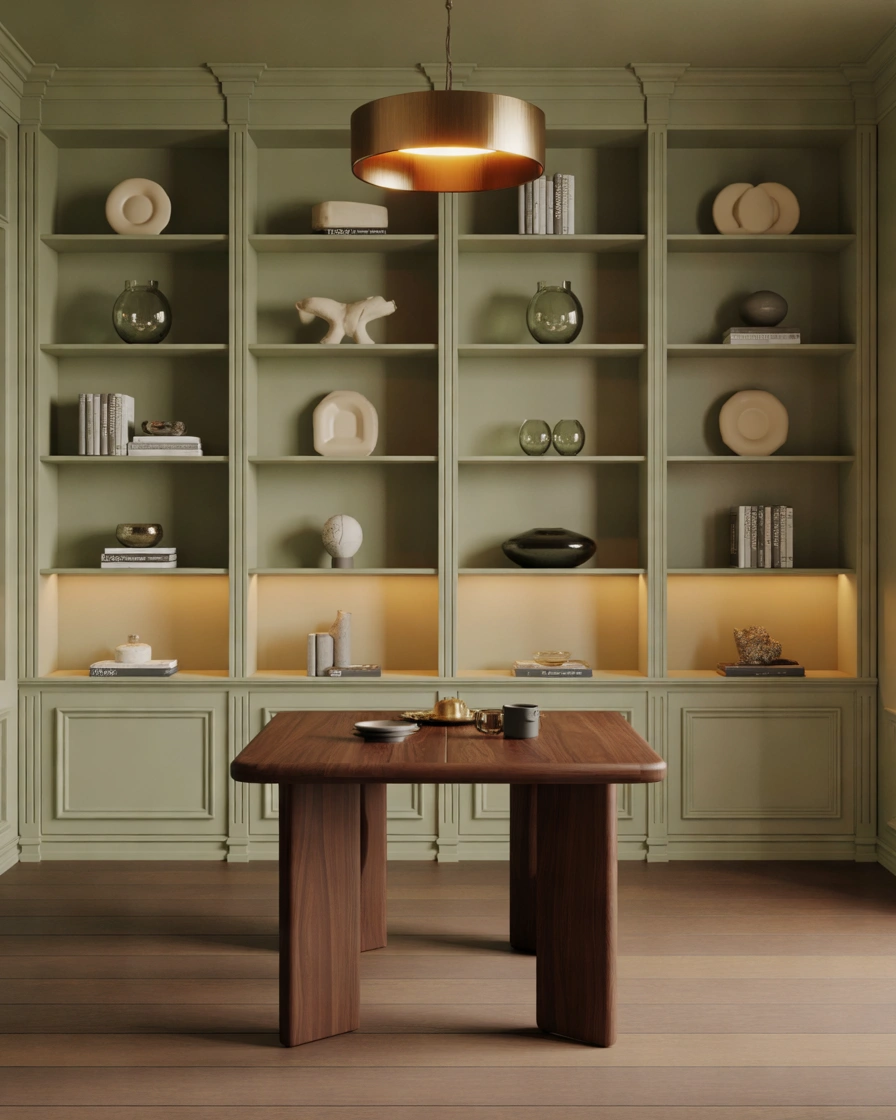
If you have enough room, a built-in display wall can become one of the most impressive features in your dining area.
Built-ins combine decoration and storage, making them ideal for displaying dishes, glassware, serving pieces, artwork, books, and decorative objects.
A floor-to-ceiling cabinet with open shelves above and closed storage below can make the dining room look custom designed. You could paint the cabinetry the same color as the walls for a seamless appearance or choose a contrasting shade to make it stand out.
Deep green, muted blue, charcoal, and warm beige cabinetry can all look beautiful in dining spaces.
I especially like adding subtle lighting inside open shelves. Small integrated lights or picture lights can create a warm glow during evening meals.
If full built-ins are not possible, you can achieve a similar look with a tall bookcase, freestanding hutch, or modular shelving system.
11. Decorate With Woven Baskets
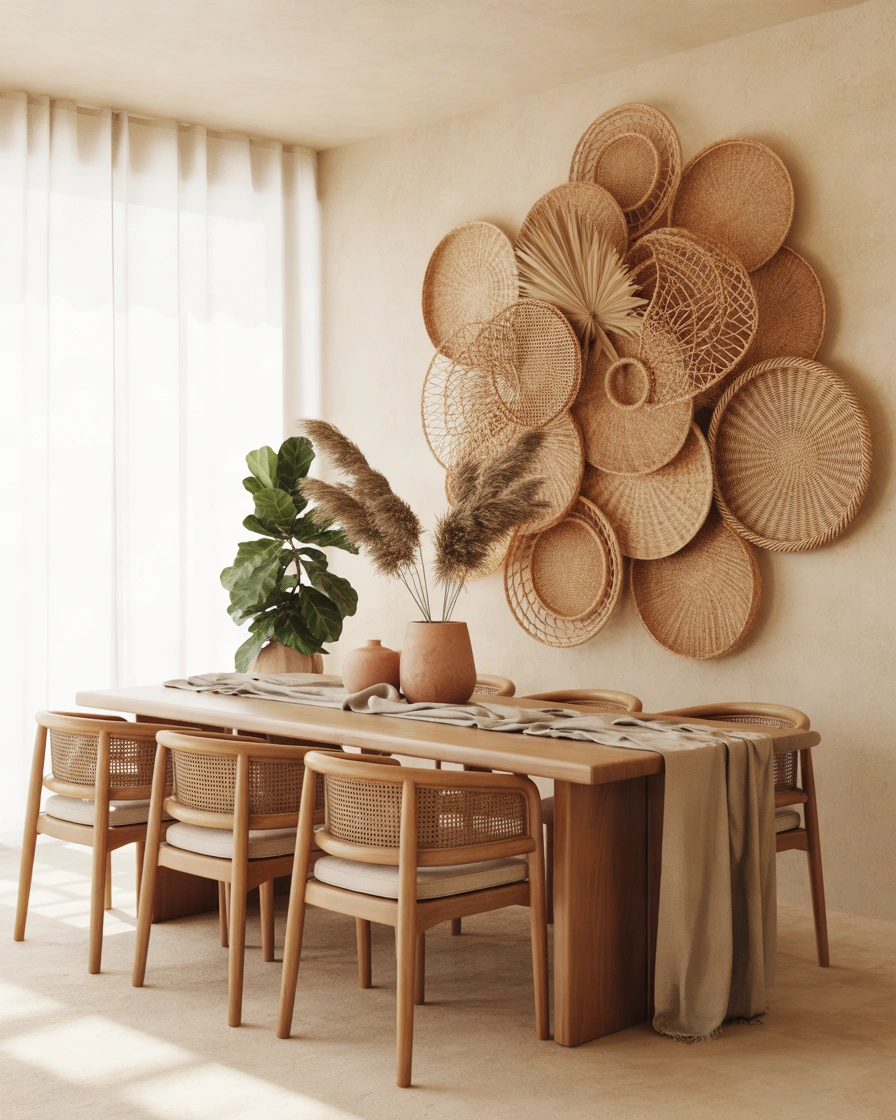
Woven baskets are one of my favorite ways to introduce texture to a dining room, especially when the furniture and walls are fairly neutral.
Flat African baskets, rattan trays, seagrass pieces, and handwoven wall baskets can be arranged in clusters similar to a gallery wall.
Because each piece has its own weave and texture, even a monochromatic collection creates plenty of visual interest.
This type of wall decor works particularly well in bohemian, coastal, organic modern, rustic, and globally inspired dining rooms.
I recommend mixing different sizes but keeping the overall arrangement balanced. Start with the largest basket slightly off center and arrange smaller pieces around it.
Natural materials look especially beautiful against white, cream, clay, sage green, or charcoal walls.
Add plants, wood furniture, linen textiles, and handmade pottery to continue the organic theme throughout the room.
12. Add Elegant Wall Sconces
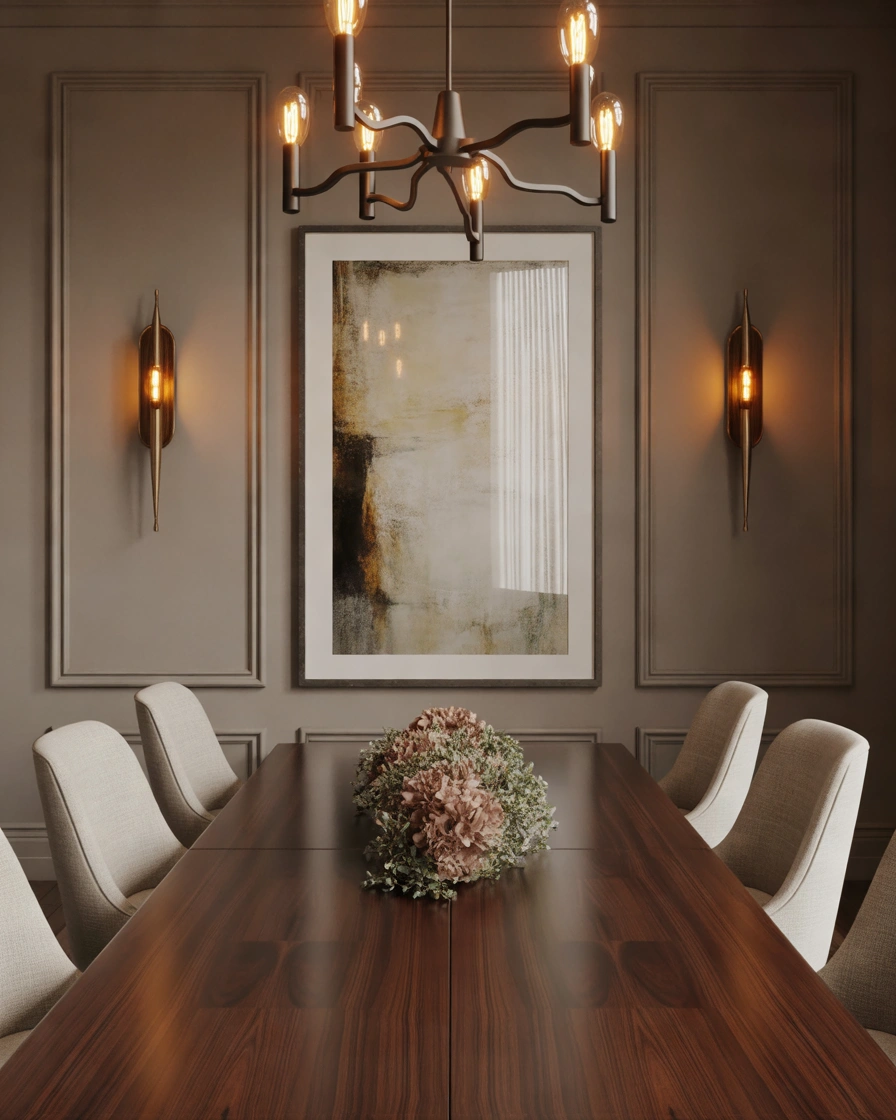
Wall sconces can provide both decoration and atmosphere, making them particularly useful in dining rooms where lighting plays an important role.
I love placing a pair of sconces on either side of a mirror, painting, or framed artwork. The symmetry immediately makes the wall feel more formal and balanced.
For traditional dining rooms, brass or antique-inspired sconces can add warmth. Black fixtures work well in modern and industrial spaces, while sculptural plaster or ceramic sconces suit minimalist interiors.
The light should feel soft rather than harsh. Warm bulbs create a much more flattering dining atmosphere than bright white lighting.
If electrical installation is difficult, rechargeable wall sconces are increasingly available and can offer a similar decorative effect without extensive wiring.
Sconces also help fill tall walls where artwork alone might look too small.
13. Create a Dramatic Wallpaper Feature Wall
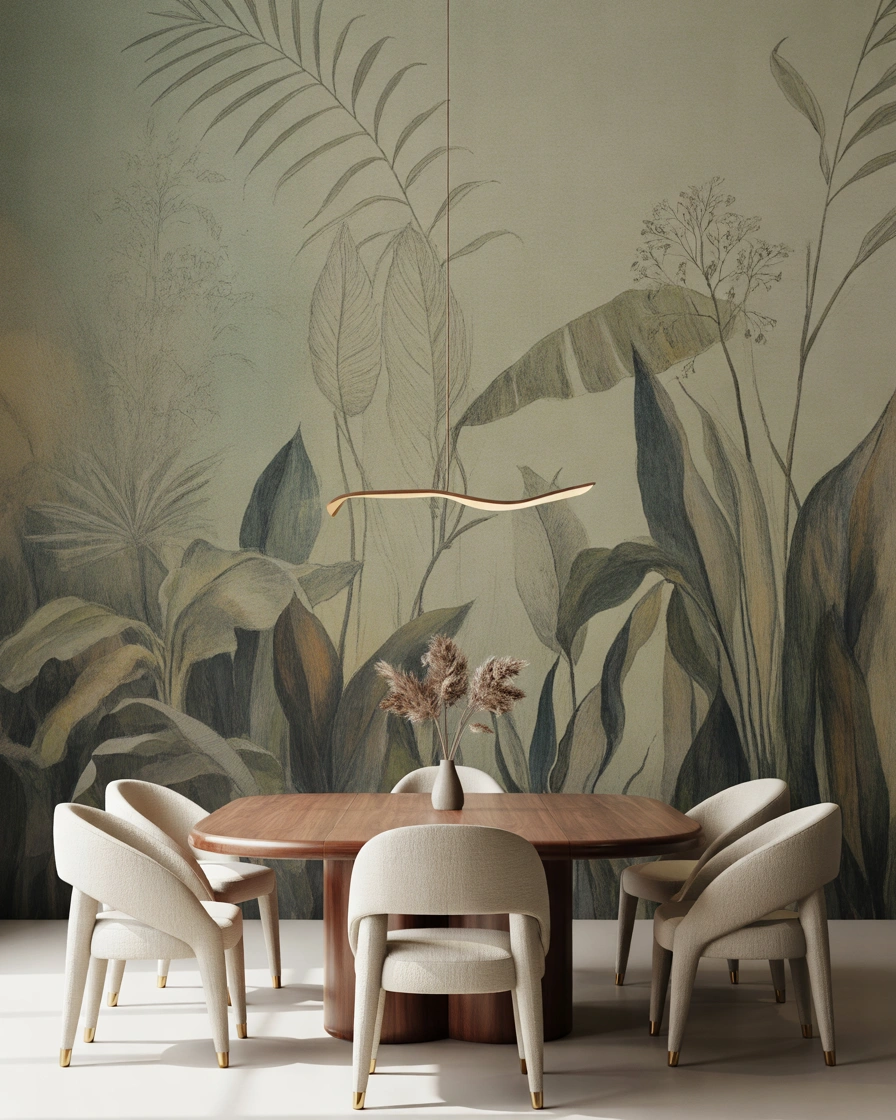
Wallpaper can completely change the character of a dining room, making it one of the most powerful decorating tools for an otherwise simple space.
I find dining rooms especially suitable for wallpaper because they are often used for shorter periods than kitchens or living rooms. This means you can be slightly more adventurous with pattern and color.
Botanical murals can create a romantic atmosphere, while geometric patterns feel modern. Grasscloth introduces subtle texture, and traditional damask designs can give a formal dining room timeless elegance.
If covering the entire room feels overwhelming, use wallpaper on only one focal wall—typically the wall behind the dining table or buffet.
You can even frame sections of wallpaper with decorative molding for a custom look.
When choosing a busy wallpaper, keep some of the surrounding elements quieter. Simple furniture and solid-colored textiles will prevent the room from feeling overly complicated.
14. Lean Large Art Against the Wall
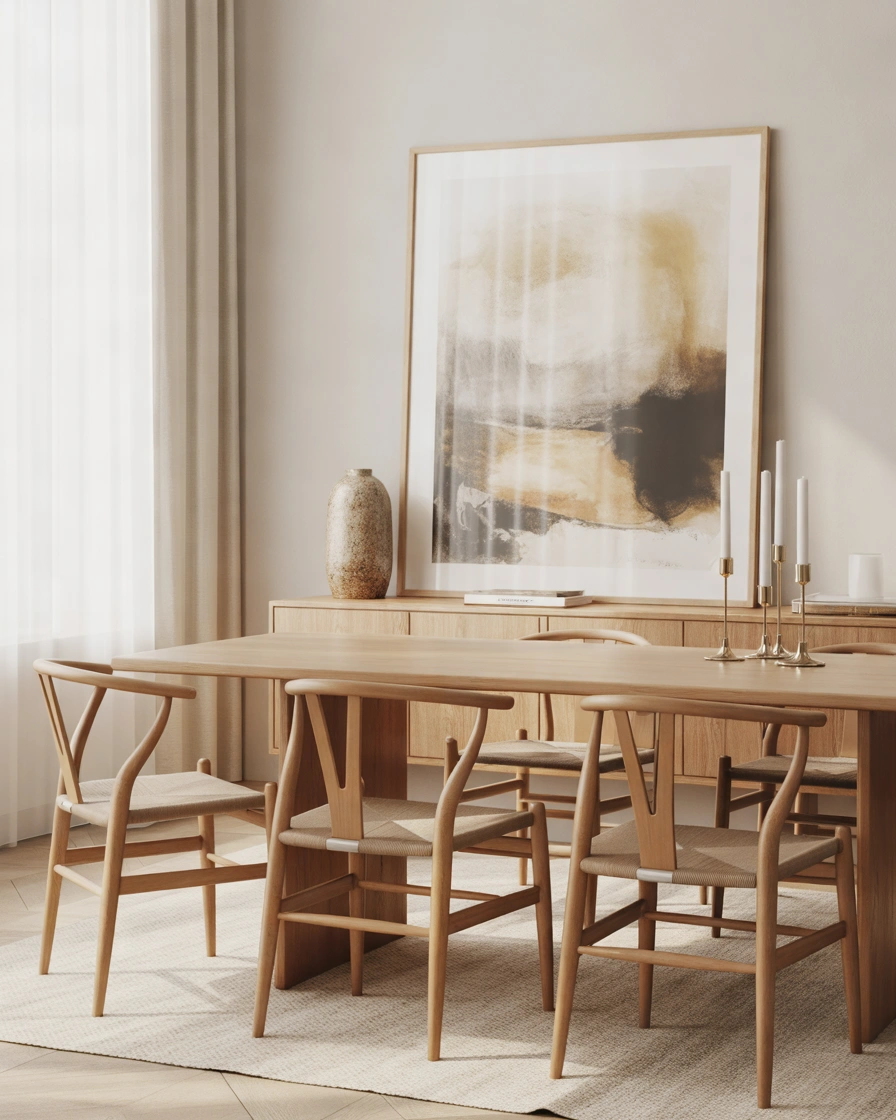
Not every piece of dining room art needs to be hung.
Leaning a large framed artwork on a buffet, console, or floating shelf creates a relaxed, layered style that I personally love. It feels less formal than perfectly centered artwork while still looking deliberate.
This approach also gives you flexibility because the artwork can be changed without creating new holes in the wall.
Try leaning one large print behind smaller objects such as candlesticks, pottery, or a table lamp. You can also layer two pieces of artwork with different heights for added depth.
Just avoid placing too many objects in front of the artwork. You still want enough of the piece to remain visible.
This style works particularly well in contemporary, Scandinavian, eclectic, and casual dining spaces.
For a more cohesive look, repeat colors from the artwork in flowers, ceramics, table linens, or nearby furniture.
15. Add a Personalized Dining Room Wall Feature
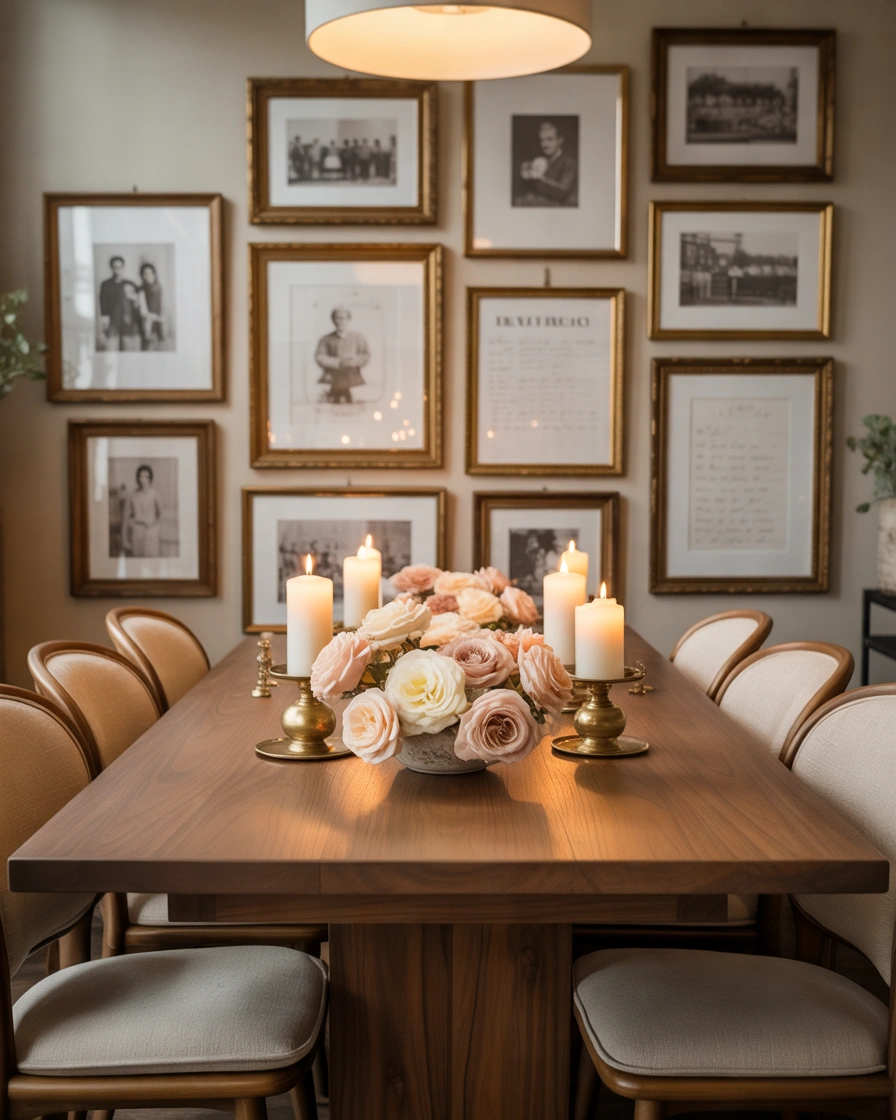
A dining room feels more memorable when the decor has a personal connection rather than looking like everything came from the same store.
Consider displaying meaningful objects such as family photographs, framed recipes, inherited dishes, artwork collected during travels, architectural sketches of places you love, or even a beautifully framed handwritten family recipe.
You could also frame a vintage map of your hometown or favorite travel destination.
One idea I particularly like is creating a small memory wall with black-and-white family photographs in matching frames. It feels elegant while still adding emotional meaning to the room.
The important thing is to keep personalization visually intentional. Instead of covering the wall with unrelated objects, choose pieces with similar frames, colors, or themes.
Your dining room is a space where people gather, share meals, celebrate milestones, and create memories. Adding decor that reflects your own story makes the room feel far more meaningful.
How to Choose the Right Wall Decor for Your Dining Room
With so many dining room wall decor ideas available, choosing one can feel overwhelming. I usually start by looking at the largest empty wall in the room and asking what the space actually needs.
If the room feels small or dark, a large mirror may solve both problems. If the space lacks personality, artwork or a gallery wall can immediately make it feel more personal. If everything feels visually flat, textured wallpaper, wood panels, baskets, or decorative molding can add depth.
Scale is extremely important. One of the most common decorating mistakes is using wall decor that is too small for the furniture underneath it.
As a general visual guideline, artwork above a buffet or dining table should feel substantial in relation to the width of the furniture. Several smaller pieces can also be grouped together so they visually function as one larger composition.
Color matters too, but your wall decor does not need to perfectly match your dining furniture. In fact, a little contrast often makes the room more interesting.
For example, light artwork can stand out beautifully against dark walls, while black frames can add definition to soft neutral interiors.
How to Decorate a Small Dining Room Wall
Small dining rooms benefit from wall decor that adds personality without creating visual clutter.
A large mirror is often one of the best choices because it reflects light and creates the illusion of additional depth.
You could also use one large artwork rather than many small pieces. A single focal point keeps the visual arrangement simple.
Floating shelves are another smart choice because they allow you to decorate vertically while keeping the floor clear.
If your dining area is part of an open-plan living space, wall decor can also help define the dining zone. A gallery wall, wallpaper section, or painted accent wall visually separates the dining space without requiring physical partitions.
Vertical elements