
A black and white dining room has a special kind of charm. It feels sophisticated without being overly formal, modern without losing warmth, and timeless enough to look beautiful even when interior design trends change. Personally, I love how these two contrasting colors can transform an ordinary dining space into something that looks thoughtfully designed. Whether you prefer a minimalist home, a luxurious dining area, or a cozy space for everyday family meals, black and white dining room decor offers endless possibilities.
The best part is that you do not need to renovate your entire home to achieve this look. Sometimes, a black dining table, white upholstered chairs, a statement chandelier, or a few carefully chosen accessories can make a remarkable difference. The secret is balancing the two colors, choosing suitable materials, and adding enough texture to keep the room from feeling cold or monotonous.
In this guide, I am sharing 14 black and white dining room decor ideas that combine practical design advice with beautiful styling inspiration. Each idea explores how to create a cohesive dining space, including furniture choices, lighting, wall treatments, accessories, and finishing touches.
1. Create a Sophisticated Look with a Black Dining Table and White Chairs
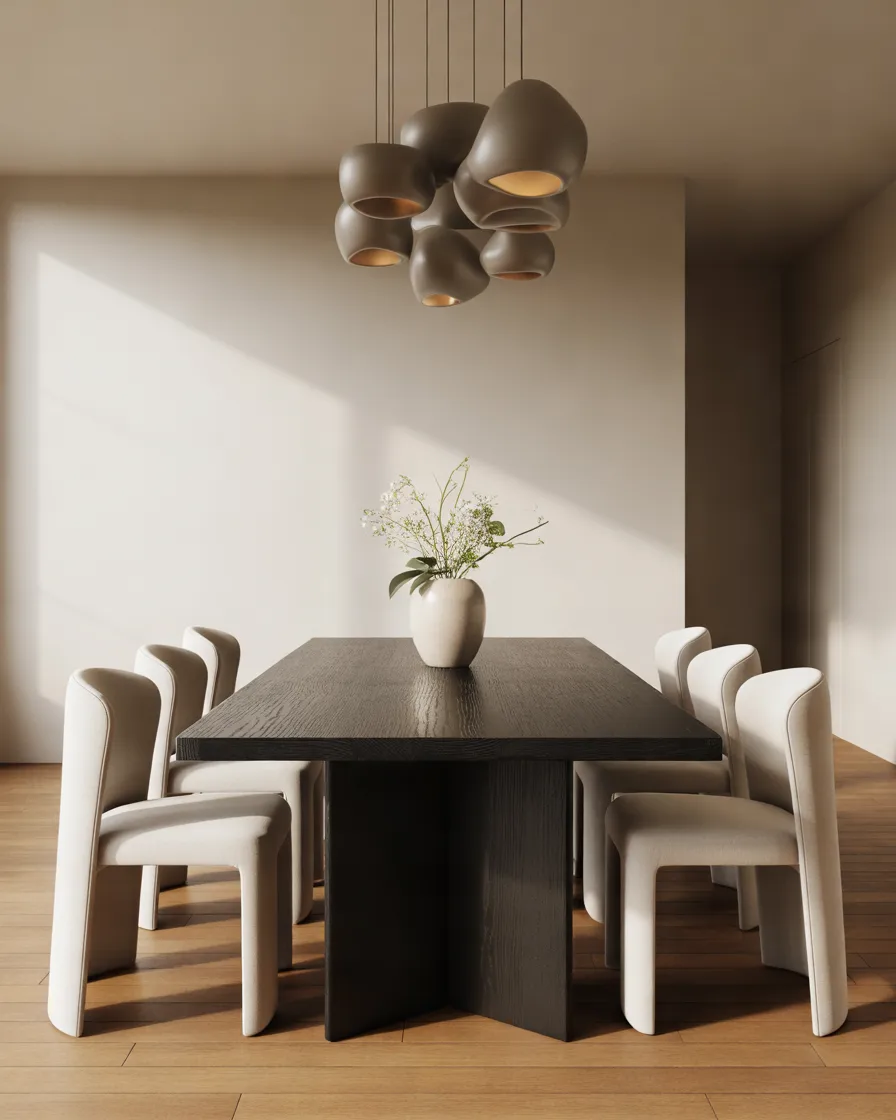
One of my favorite ways to decorate a black and white dining room is to start with a bold black dining table and surround it with white chairs. This combination immediately creates contrast while keeping the dining area elegant and visually balanced. A matte black rectangular table works particularly well in contemporary homes, while a round black pedestal table can make a smaller dining room feel more intimate.
White dining chairs soften the darker appearance of the table and help reflect natural light around the room. You can choose upholstered chairs for a comfortable, luxurious appearance or white molded chairs for a more casual, minimalist atmosphere. If you want something especially stylish, consider chairs with curved backs, textured upholstery, or subtle black metal legs.
I would keep the surrounding decor relatively simple so the furniture remains the main attraction. White walls, light flooring, and a black pendant light can complete the look without making the room feel crowded. A small ceramic vase containing fresh flowers can introduce a natural element that makes the setting feel welcoming.
For everyday use, choose a dining table with a durable finish and chairs that are easy to clean. This arrangement works beautifully for both family dining and entertaining guests.
2. Design a Luxurious Dining Room with Black Marble and White Accents
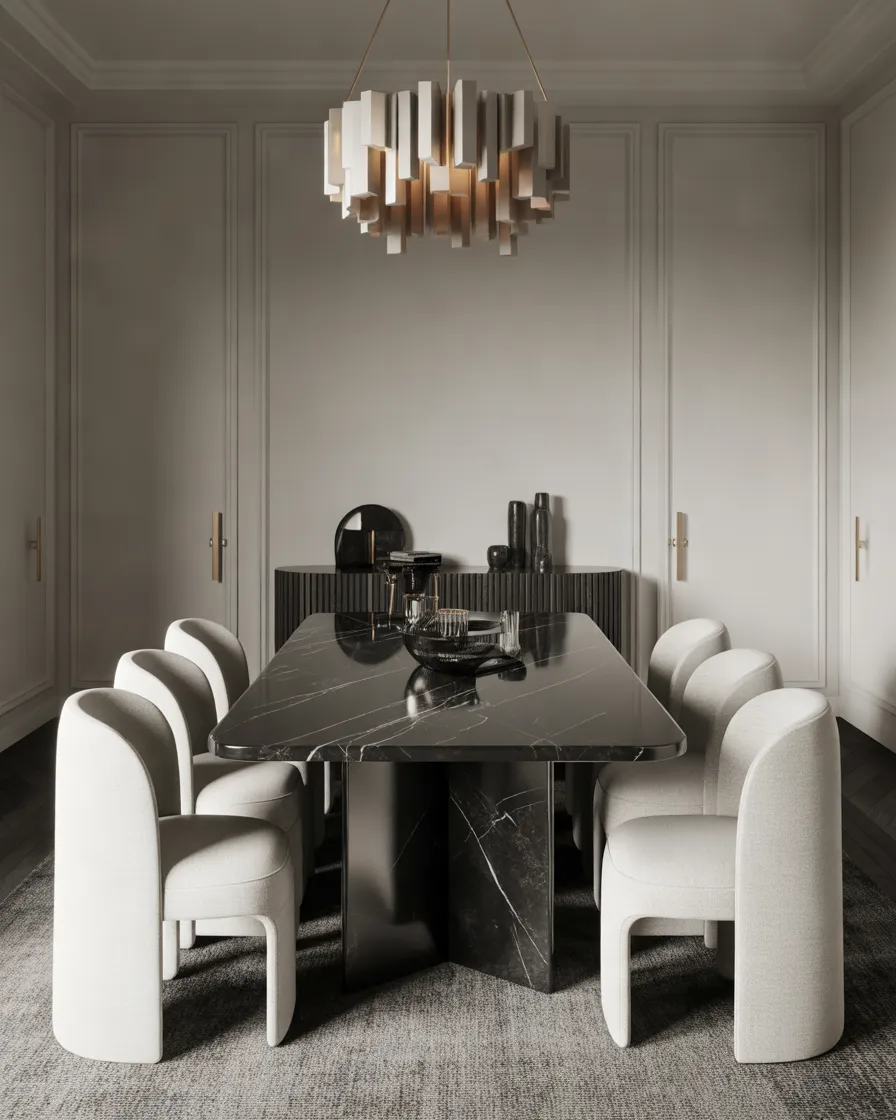
Black marble can instantly make a dining room feel upscale. Its naturally occurring veins, glossy finish, and rich appearance add depth that ordinary painted surfaces sometimes lack. When paired with white walls and elegant white dining chairs, black marble creates a striking focal point without requiring excessive decoration.
A black marble dining table with delicate white veining is an excellent starting point. You can complement it with white velvet chairs, brushed brass details, and a contemporary chandelier. If your dining room already has a table you love, consider introducing black marble through a console table, serving accessories, or decorative trays instead.
I especially like the idea of combining marble with soft fabrics. The smooth, cool surface of the stone looks more inviting when balanced with textured upholstery, linen curtains, or a plush area rug. These materials prevent the room from feeling too formal or resembling a showroom.
Lighting also plays an important role in highlighting marble. A pendant light positioned above the table can reveal the stone’s natural patterns and create subtle reflections across its surface. Warm lighting generally works well because it softens the strong contrast between black and white.
If genuine marble is outside your budget, porcelain with a marble-inspired finish can provide a similar visual effect. The key is choosing a convincing pattern and avoiding too many competing decorative finishes.
3. Add Drama with Black Accent Walls
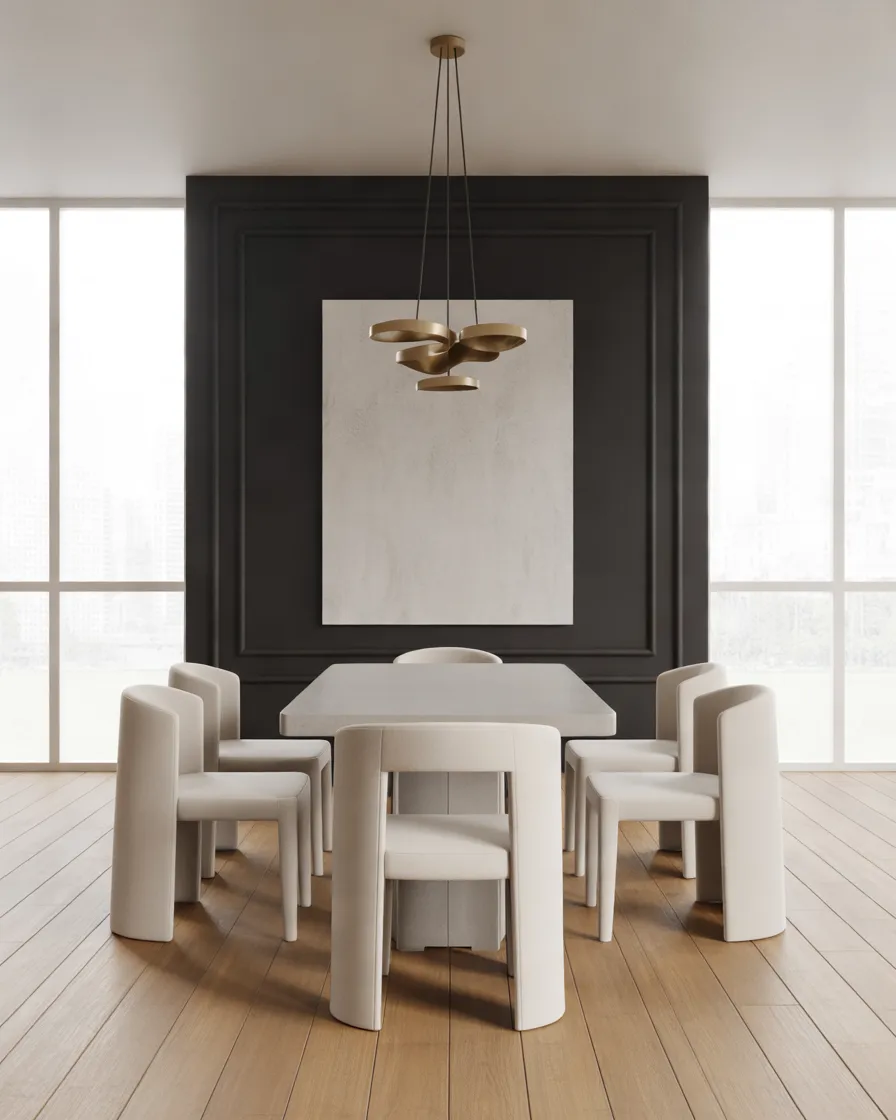
A black accent wall can give a dining room a dramatic, designer-inspired appearance. Instead of painting every wall dark, focus on one surface, preferably the wall behind the dining table or the area where a sideboard is positioned. This approach introduces depth while allowing the remaining white walls to keep the space bright.
There are several ways to create this effect. Matte black paint offers a clean, contemporary appearance, while black wall panels introduce architectural interest. Vertical slats can make the room feel taller, and decorative molding painted black creates a more traditional, sophisticated atmosphere.
To keep the dining area balanced, combine the dark wall with a white dining table, pale upholstered chairs, or light-colored flooring. If you prefer a stronger contrast, choose a black table and white chairs against the black wall, then introduce white artwork or a large mirror to break up the darker surface.
I would also pay attention to the room’s natural light. A black accent wall can look beautiful in a bright dining room, but a poorly lit space may feel smaller when too many dark surfaces are used together. Add a wall sconce, pendant light, or floor lamp where appropriate.
The result is a dining room that feels intentional and polished rather than simply decorated. It is particularly effective when you want a simple space to have more personality.
4. Choose a Black and White Geometric Rug
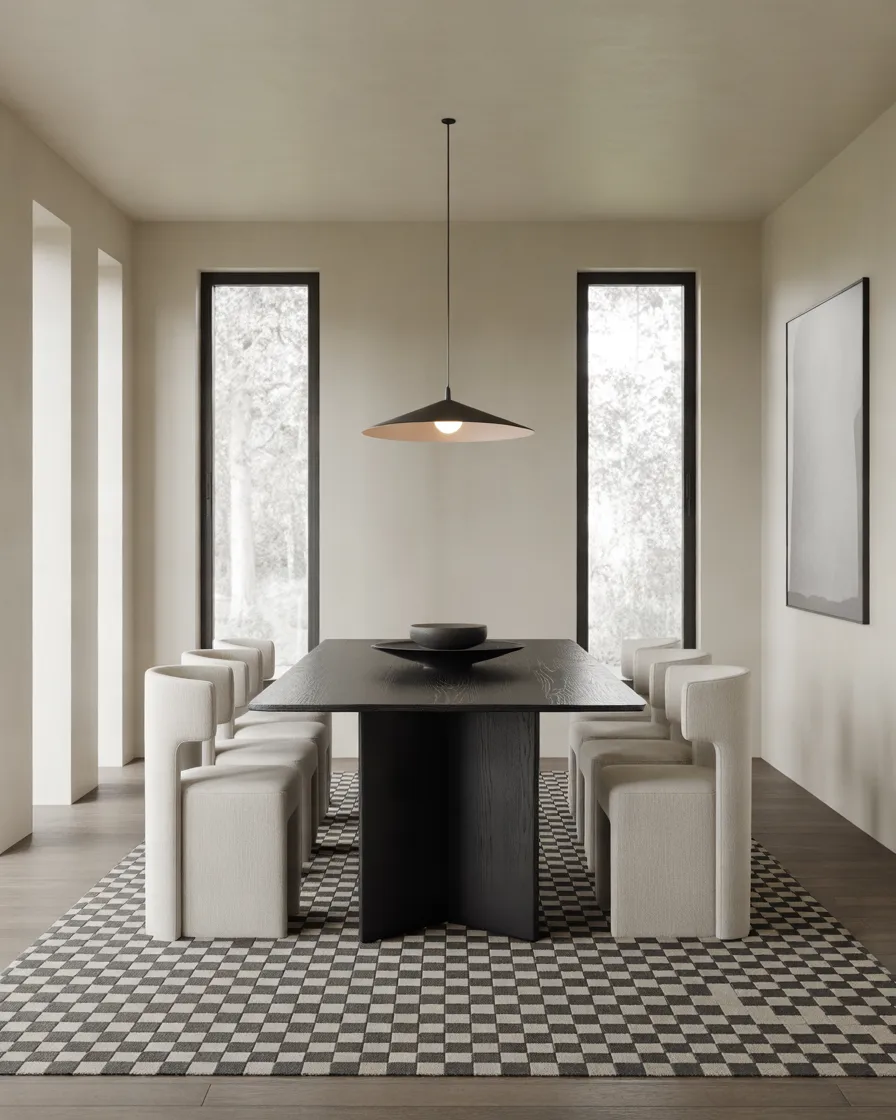
A geometric rug is an easy way to introduce pattern into a black and white dining room without committing to permanent changes. It can also help define the dining area, especially in open-plan homes where the kitchen, living room, and dining space share one large room.
Look for rugs featuring stripes, diamonds, checkerboard patterns, abstract shapes, or simple linear designs. A bold black and white pattern creates a modern statement, while a smaller, more subtle geometric print can provide visual interest without competing with the furniture.
When selecting a rug, size matters just as much as appearance. Ideally, the rug should extend beyond the dining table far enough that chairs remain on the rug when people pull them out. This makes the arrangement more comfortable and prevents chair legs from catching on the edges.
For a dining room used every day, I would choose a low-pile rug or a washable design made from a durable material. Thick, shaggy rugs may look comfortable, but crumbs and spills can make them difficult to maintain under a dining table.
If the room already contains several strong patterns, choose a rug with a simple design. On the other hand, if your furniture is plain, a checkerboard or oversized geometric pattern can become the defining feature of the space.
5. Hang a Statement Black Chandelier Above the Dining Table
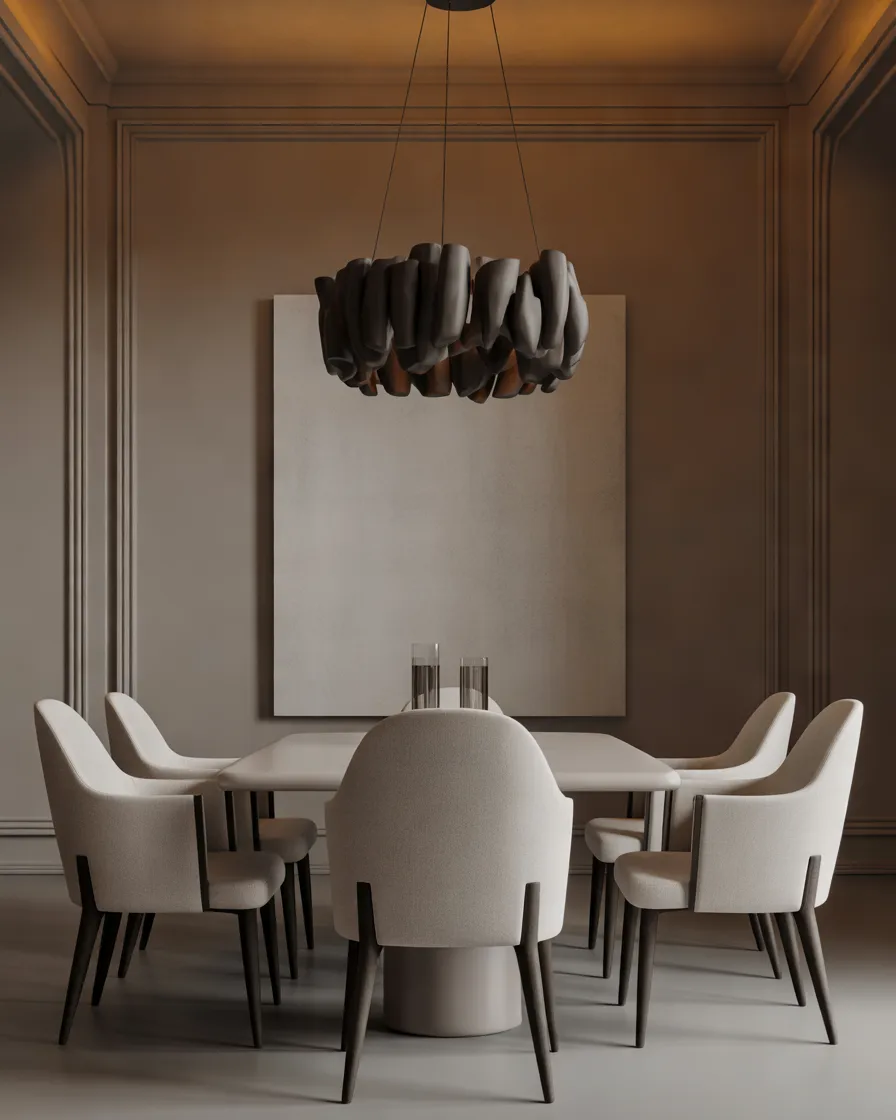
Lighting is one of the most effective ways to establish the mood of a dining room. A statement black chandelier can become the centerpiece of a black and white interior, connecting the darker furniture and accessories while adding visual interest overhead.
For a contemporary dining room, I would consider a linear chandelier with several arms or a sculptural fixture made from thin black metal. These designs work especially well above long rectangular tables. In a smaller dining area, a rounded pendant or compact chandelier can create a similar effect without overwhelming the space.
The fixture’s shape should complement the dining table. A long rectangular table generally pairs well with an elongated light, while a round table can look more balanced beneath a circular or globe-shaped pendant.
White ceilings help the black fixture stand out, and white walls reflect the light around the room. You can introduce additional layers of illumination through wall sconces, recessed lights, or a lamp placed on a nearby sideboard.
I recommend choosing dimmable lighting whenever possible. Bright illumination is useful for family meals, homework, or serving food, while a softer setting creates a relaxed atmosphere for dinner parties.
Remember that a beautiful fixture should also provide practical lighting. Choose a size and position that illuminate the table adequately without obstructing the view across it.
6. Decorate with Black-Framed Artwork and Photography
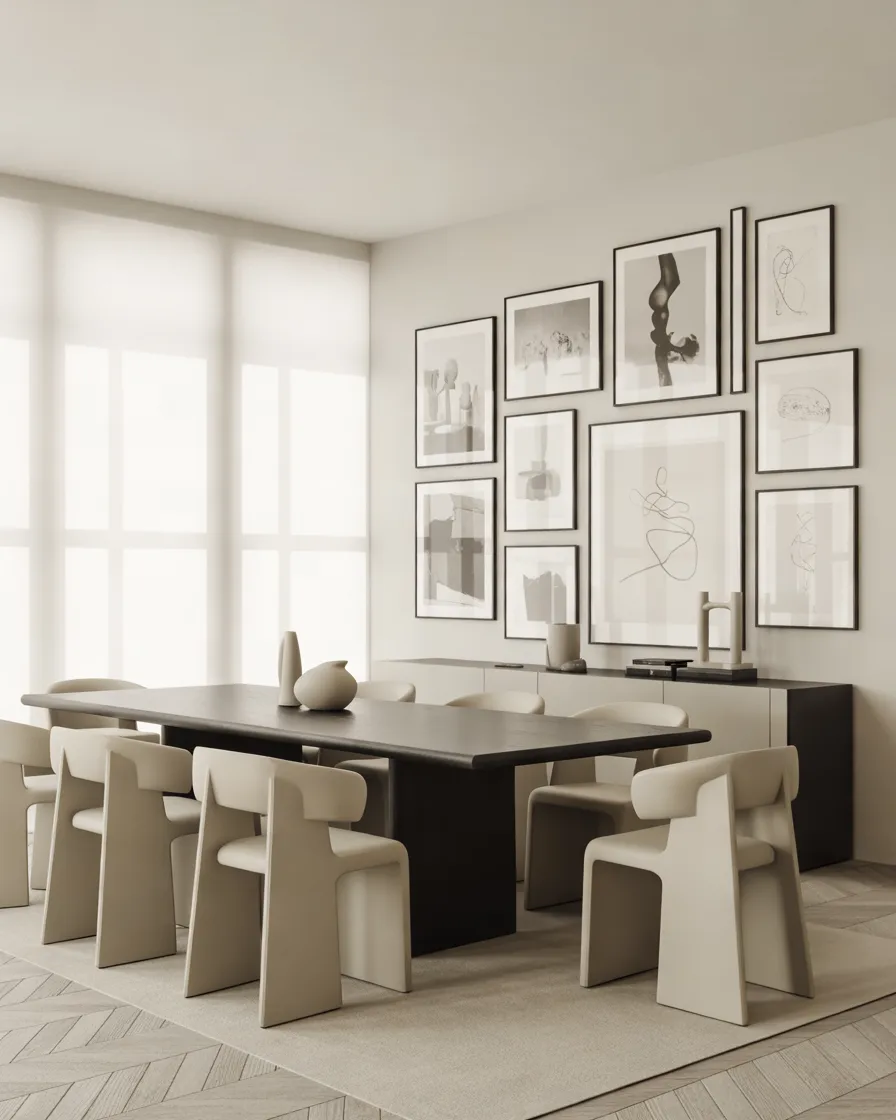
Artwork is an excellent way to make a dining room feel personal without introducing additional colors. Black and white photography, abstract prints, architectural illustrations, and minimalist line drawings all work beautifully in a monochrome interior.
One approach is to create a gallery wall featuring several black frames with white mats. You can combine photographs of architecture, botanical illustrations, abstract shapes, and landscapes while maintaining a consistent color palette. The frames connect the individual pieces and make the arrangement look cohesive.
If you prefer a cleaner aesthetic, choose one oversized black and white artwork and position it above the sideboard or behind the dining table. A large piece can make a stronger statement than several smaller decorations, particularly in a minimalist room.
I would arrange the artwork according to the furniture beneath it. A gallery wall should feel visually connected to the dining table or console rather than floating awkwardly on the wall. Before hanging anything, lay the frames on the floor and experiment with different arrangements.
Black frames stand out particularly well against white walls, while white-framed prints can create a subtler effect against a black accent wall. Mixing photographic and abstract artwork adds personality, but keeping the frame style consistent helps prevent visual clutter.
This is also one of the most affordable ways to refresh your dining room because you can change the artwork whenever you want a different atmosphere.
7. Bring Softness with White Upholstered Dining Chairs
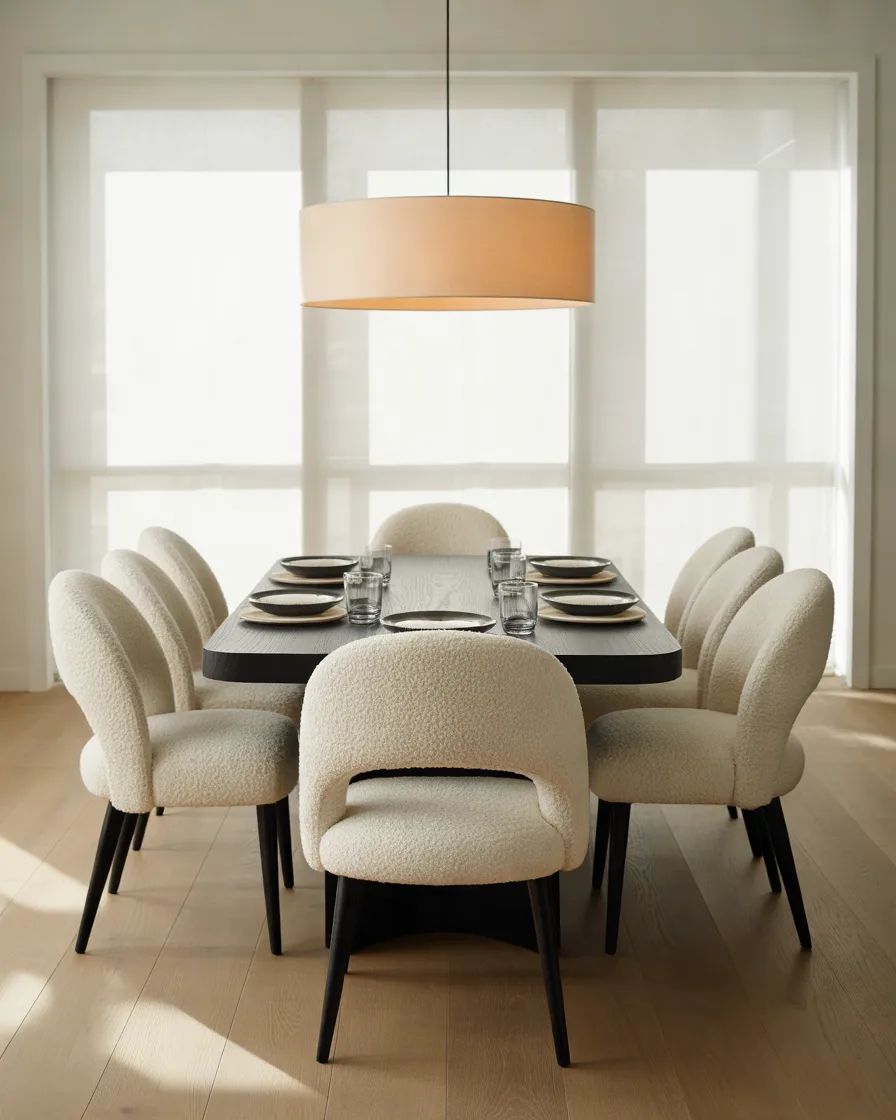
White upholstered dining chairs are a wonderful choice when you want a monochrome dining room to feel luxurious and comfortable. Their soft appearance balances the strong lines of black tables, dark cabinetry, and metal lighting fixtures.
There are several upholstery options to consider. White linen and linen-look fabrics create a relaxed, natural atmosphere, while textured bouclé adds a contemporary designer feel. White velvet can make a dining area look more glamorous, particularly when combined with a black marble table or elegant chandelier.
Chair design is equally important. Curved backs soften a room filled with straight lines, while slim upholstered chairs work well in compact spaces. If you prefer a modern appearance, choose chairs with black metal legs to connect the white seating to other dark elements in the room.
For everyday family dining, practicality should influence your choice. Performance fabrics, removable covers, or stain-resistant upholstery can make white chairs easier to maintain. You can also reserve more delicate chairs for occasional entertaining and select durable options for daily use.
To complete the arrangement, keep the table styling simple. Black ceramic plates, white napkins, and a low centerpiece will reinforce the color scheme without distracting from the furniture.
I find that comfortable seating makes a dining room feel more inviting. After all, the room should look beautiful in photographs but also encourage people to sit, talk, and enjoy their meals.
8. Introduce Black and White Checkerboard Flooring
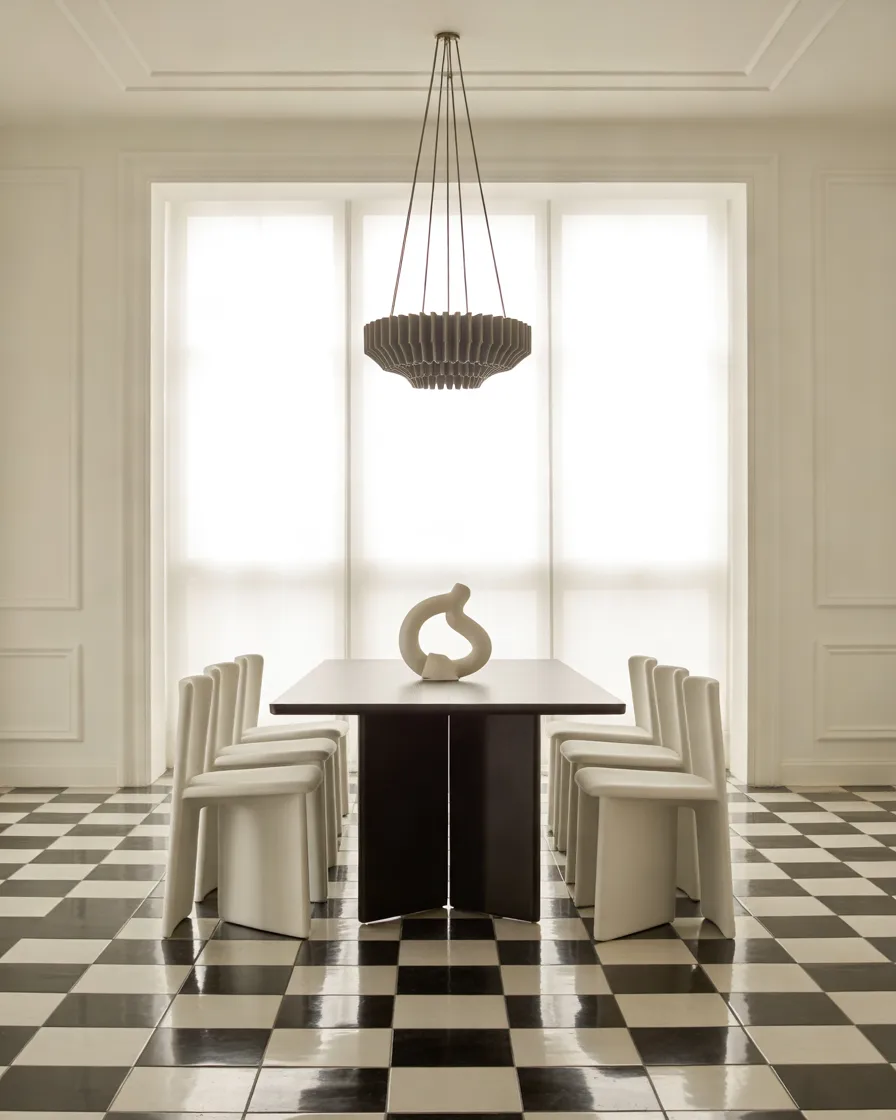
Checkerboard flooring is a classic design feature that can make a dining room feel distinctive and full of character. Although it has been used in traditional interiors for generations, it also looks striking in modern homes when paired with simple furniture and restrained accessories.
Large black and white squares create a bold graphic effect and work particularly well in spacious dining rooms. Smaller squares can produce a more traditional appearance, especially when combined with decorative molding, vintage furniture, or an elegant chandelier.
You can achieve this look with natural stone, ceramic tiles, porcelain, or suitable patterned flooring materials. If replacing the existing floor is not practical, a black and white checkerboard rug can introduce a similar pattern with much less effort.
Because the flooring already provides a strong visual statement, I would keep the furniture relatively simple. A black dining table with white chairs or a white table with black chairs will work beautifully. Avoid combining an extremely busy floor with too many patterned textiles, as the overall effect can become overwhelming.
The scale of the squares should also suit the room. Oversized checks may dominate a small dining area, while very small checks can look visually busy across a large floor.
When planned carefully, checkerboard flooring gives a dining room a memorable identity and provides a strong foundation for the rest of the decor.
9. Style a Minimalist Dining Room with Clean Lines
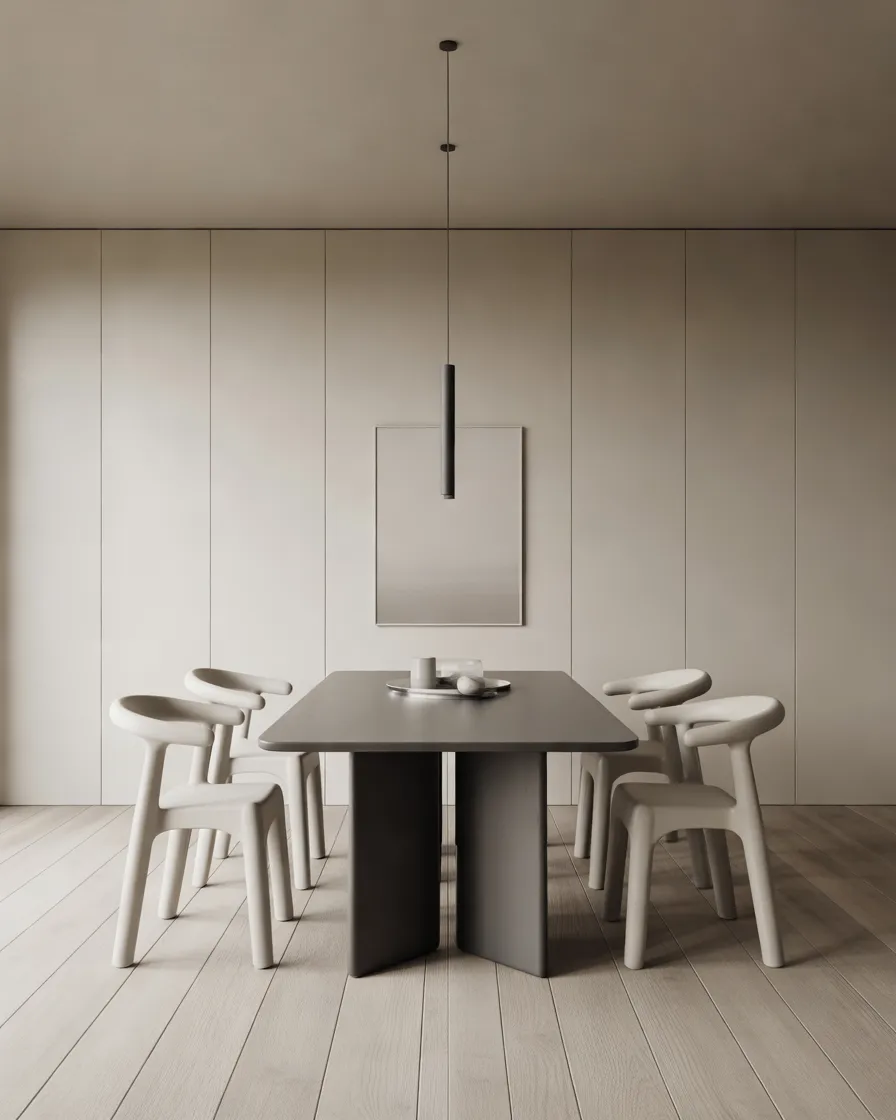
A minimalist black and white dining room proves that beautiful design does not require a large collection of accessories. By focusing on clean lines, carefully selected furniture, and uncluttered surfaces, you can create a space that feels calm, organized, and sophisticated.
Start with a dining table that has a simple silhouette. A black rectangular table with slim legs or a white pedestal table can establish the room’s overall style. Pair it with streamlined chairs and avoid unnecessary decorative details.
The walls should remain relatively simple. White paint, discreet wall molding, or a single monochrome artwork can provide enough visual interest without distracting from the furniture. Built-in storage or a low-profile sideboard can keep serving dishes, table linens, and everyday items out of sight.
Texture becomes particularly important in minimalist spaces. Without colorful decorations or elaborate furniture, differences between matte finishes, natural wood, smooth ceramics, and soft fabrics give the room depth.
I would also leave some empty space around the dining table instead of filling every corner. A clear circulation path makes the room easier to use and allows the furniture to stand out.
Minimalist design works especially well in apartments and smaller homes because it helps reduce visual clutter. The goal is not to make the dining room feel empty, but to ensure that every item has a purpose and contributes to the overall design.
10. Add Warmth with Natural Wood and Monochrome Decor
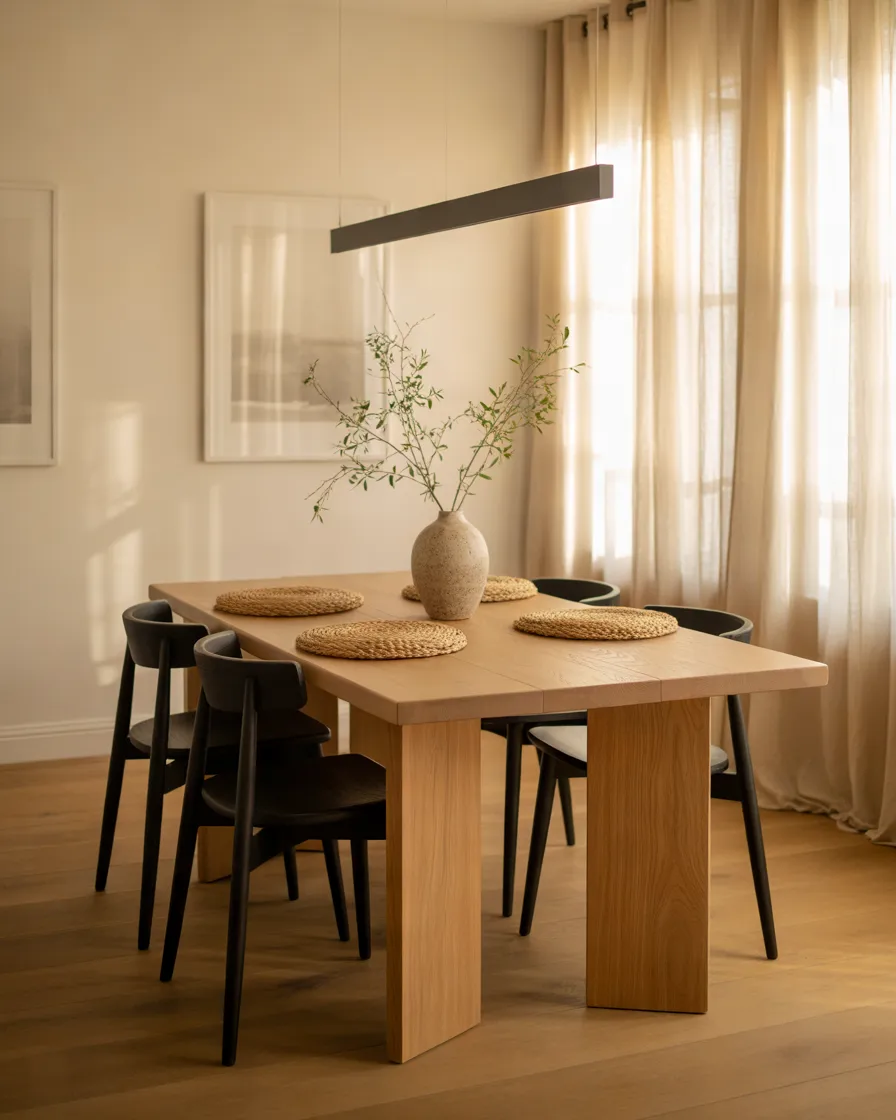
Black and white interiors can sometimes feel too stark when every surface is glossy, smooth, and highly contrasting. Natural wood is an excellent way to introduce warmth while preserving the monochrome color scheme.
A light oak dining table paired with black chairs and white walls creates a relaxed, contemporary appearance. Alternatively, a black dining table can sit on pale wood flooring with white upholstered chairs to achieve a similar balance. The natural grain introduces visual texture that prevents the room from looking overly uniform.
You can also bring wood into the space through a sideboard, open shelving, ceiling beams, or decorative serving boards. These smaller elements help connect the dining room with the rest of the home, particularly if your kitchen already features wooden cabinets or countertops.
For a cohesive result, choose one main wood tone and repeat it in two or three places. You do not need every wooden surface to match exactly, but keeping the undertones compatible will make the room feel more intentional.
Soft linen curtains, woven placemats, and a ceramic vase can further soften the contrast between black and white. A few green branches or fresh flowers can add a natural finishing touch without changing the room’s overall palette.
This combination is particularly appealing if you want a modern dining room that feels warm enough for everyday family life rather than overly formal or theatrical.
11. Create a Beautiful Dining Room with White Walls and Black Molding
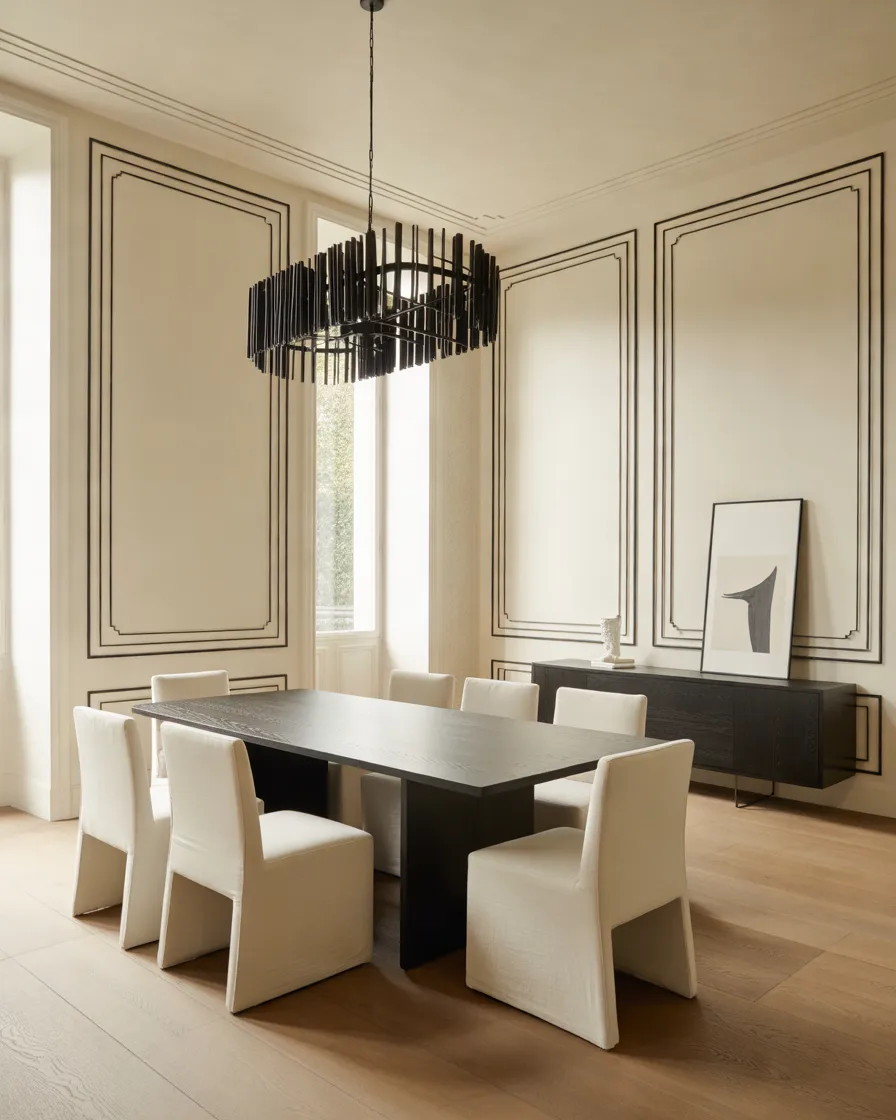
Decorative wall molding is a wonderful option if you want your dining room to feel architectural and elegant. Black molding against white walls introduces contrast while creating visual structure, making the room feel more carefully designed even when the furniture is relatively simple.
You can use rectangular molding panels behind the dining table, around doorways, or across a feature wall. Thin black trim creates a subtle contemporary effect, while more elaborate panel designs can produce a traditional or Parisian-inspired atmosphere.
The proportions of the molding matter. In a room with high ceilings, taller panels can emphasize the vertical space. In a smaller dining room, simpler rectangular shapes and narrower trim may look more balanced. Keep the spacing consistent so the wall treatment feels deliberate rather than decorative for its own sake.
Furniture should complement the wall design. A black dining table and white upholstered chairs work particularly well because they echo the wall’s contrasting lines. A simple chandelier and framed artwork can complete the arrangement without competing with the molding.
If you prefer a less permanent solution, consider decorative trim that can be painted or removed according to the type of wall and installation method.
This idea is ideal for homeowners who appreciate classic architectural details but still want a modern monochrome dining room. It adds personality without relying on bold colors or excessive accessories.
12. Decorate the Dining Table with Monochrome Table Settings
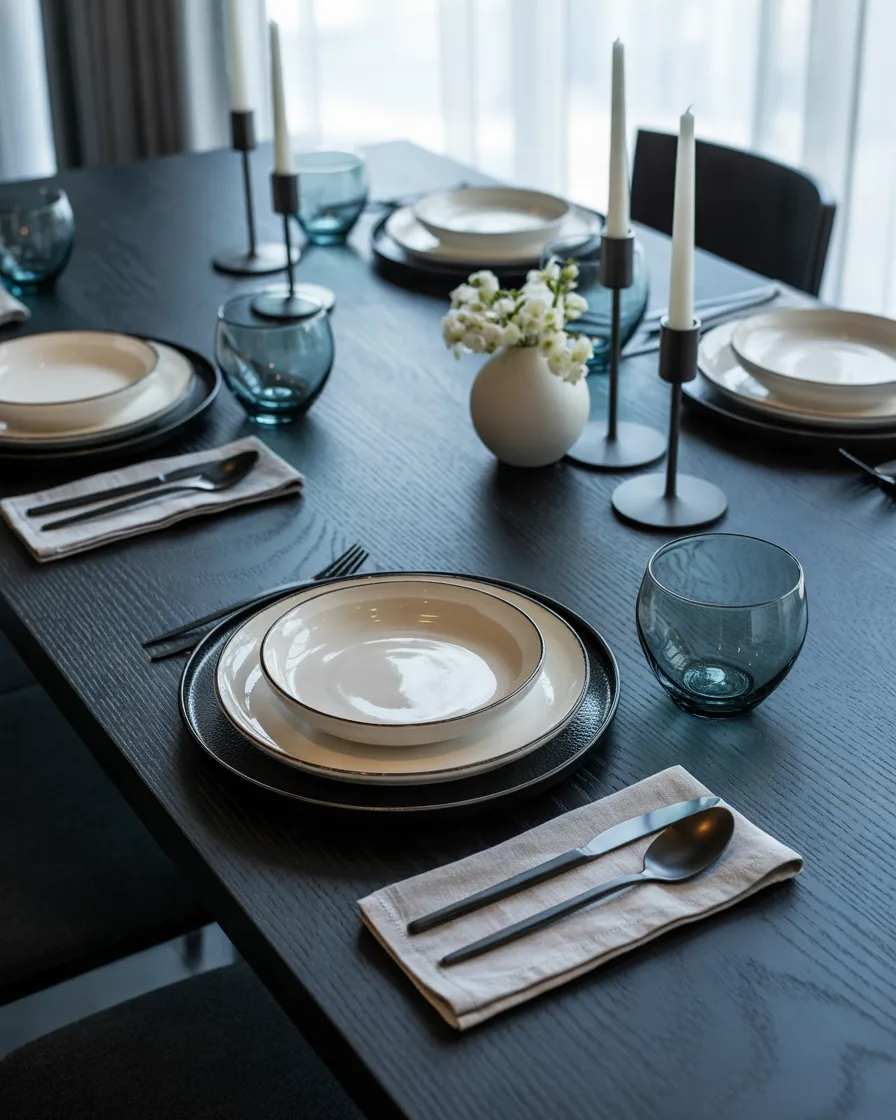
You do not always need new furniture or major renovations to create a beautiful black and white dining room. Sometimes, the dining table itself offers the perfect opportunity to refresh the space through thoughtful styling.
Start with a simple combination of black and white plates. White dinner plates with black rims create a refined appearance, while matte black plates against a white tablecloth produce a more dramatic effect. You can also mix black bowls, white serving dishes, and monochrome napkins to create a coordinated setting.
Texture helps make the table feel more interesting. Linen napkins, ceramic plates, woven placemats, and clear glassware introduce subtle differences without disturbing the color scheme. If you want a touch of luxury, add restrained metallic details through cutlery or candleholders.
A centerpiece should complement the table rather than block conversation. A low ceramic vase with fresh flowers, a few elegant candleholders, or a shallow decorative bowl can provide enough visual interest.
For everyday meals, keep the arrangement practical. Large centerpieces may look beautiful for special occasions but can take up valuable space when serving food. I prefer decorations that can be moved easily and do not require constant maintenance.
The advantage of monochrome table styling is its flexibility. You can use the same dishes for casual family dinners, weekend brunches, and formal gatherings while creating a slightly different mood through linens and accessories.
13. Use a Black Sideboard for Stylish Storage
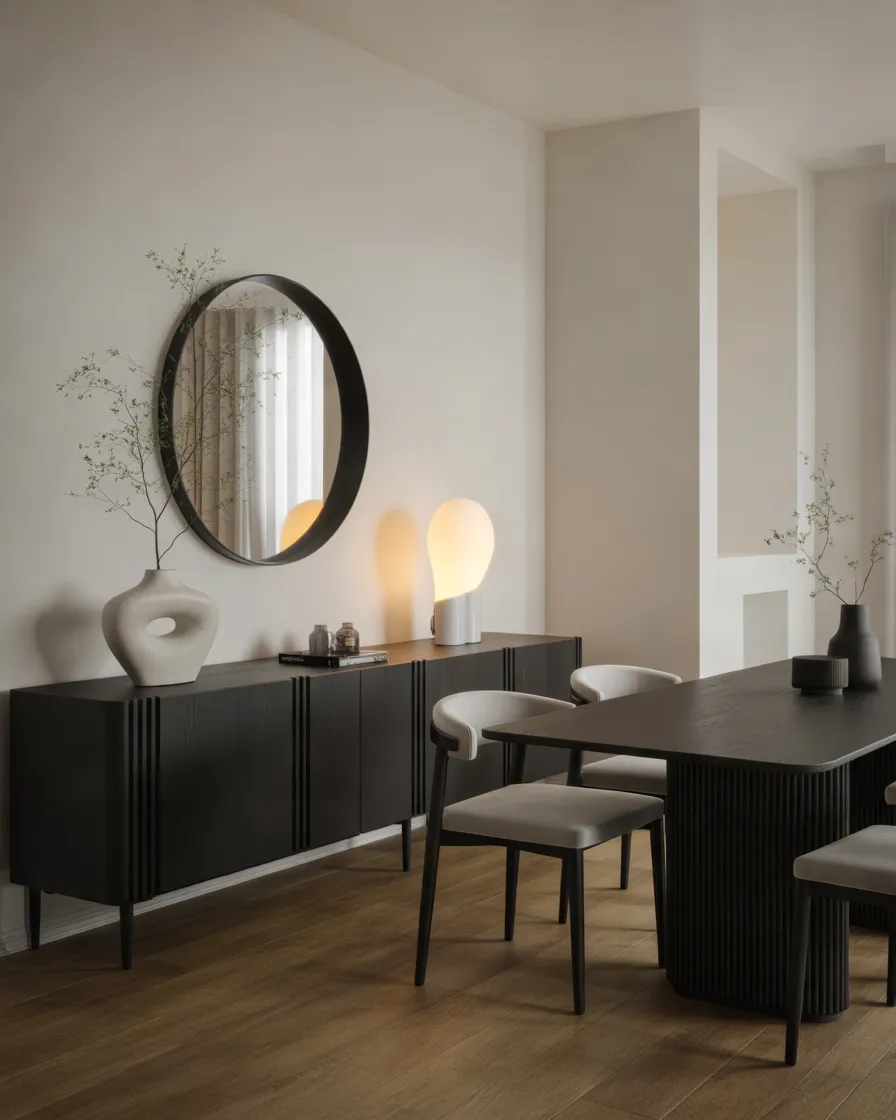
A black sideboard can be both a practical storage solution and an attractive focal point in a black and white dining room. It provides a convenient place to store table linens, serving dishes, cutlery, and entertaining essentials while keeping the dining table free from clutter.
For a modern interior, I would choose a low black sideboard with clean lines and understated handles. A fluted or ribbed front adds texture, while a smooth matte finish creates a more minimalist appearance. If you prefer a traditional style, consider a sideboard with decorative detailing or gently curved legs.
Position the sideboard along an available wall where it can be accessed comfortably without obstructing the dining chairs or main walking paths. Above it, you can hang a large black-framed mirror, monochrome artwork, or a pair of wall sconces.
The surface should be styled selectively. A white ceramic lamp, a sculptural vase, and a small stack of decorative books can create a polished arrangement. Leaving some of the surface empty will prevent the area from looking crowded.
In a smaller dining room, choose a narrower sideboard with drawers or closed cabinets. This keeps essential items accessible without using too much floor space.
I particularly like this idea because it combines everyday functionality with decorative appeal. When the storage furniture is thoughtfully chosen, even practical items can contribute to the room’s overall design.
14. Finish the Room with Black Curtains and White Sheer Panels
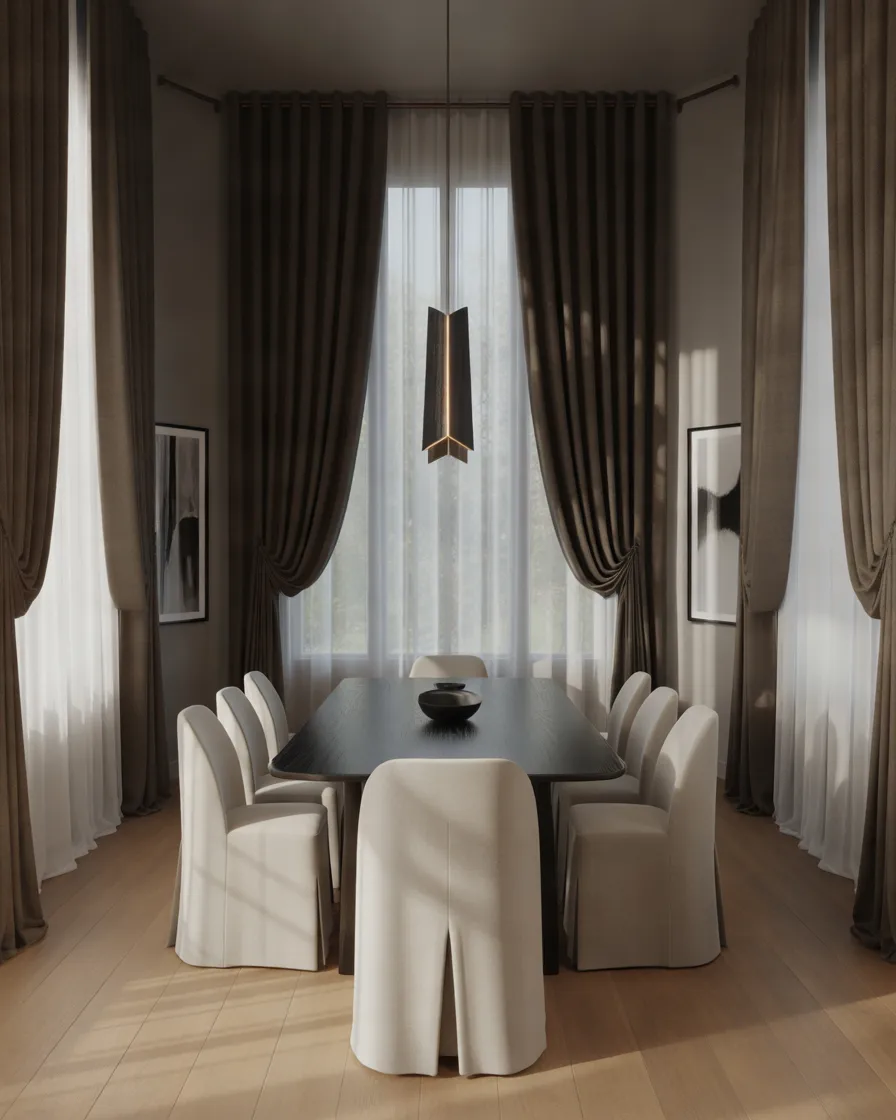
Window treatments are often overlooked when decorating a dining room, but they can make a significant difference to the finished appearance. Black curtains paired with white sheer panels introduce contrast, frame the windows, and help connect the room’s decor.
White sheers allow natural daylight to filter into the dining room while providing a soft, airy appearance. Black curtains add structure and create a more dramatic outline around the windows. Together, they offer flexibility because you can adjust the curtains depending on the time of day, desired privacy, and overall atmosphere.
For a contemporary look, choose plain black curtains with a matte fabric and minimal hardware. If you prefer a softer aesthetic, textured linen-look curtains can make the combination feel less formal. Hang the curtain rod slightly above the window frame and extend it beyond the sides where practical. This can make the window appear wider and allow the curtains to stack without blocking too much light.
The rest of the dining room can remain relatively simple. White walls, a black dining table, pale upholstered chairs, and a restrained centerpiece will complement the window treatment without competing with it.
Fabric weight also matters. Heavier curtains can improve privacy and help reduce incoming light, while sheer panels preserve brightness during the day. Choose materials according to your room’s orientation and practical needs.
This finishing touch is especially effective when you want the dining room to feel complete without introducing more furniture or decorative objects.
How to Make Black and White Dining Room Decor Feel Balanced
After exploring these 14 ideas, it is worth considering how the individual elements work together. A successful black and white dining room is not simply a collection of black and white objects. It is a space where contrast, proportions, lighting, and texture support one another.
Start by deciding which color should dominate. A room with mostly white walls, light flooring, and white chairs will feel brighter and more open, especially when black is reserved for the dining table, lighting, and accessories. A darker room with black walls, cabinetry, and furniture can feel dramatic and intimate, provided there is sufficient lighting and enough contrast to prevent the space from becoming visually heavy.
Next, introduce different materials. Wood, linen, ceramic, marble, metal, glass, and textured upholstery all behave differently under natural and artificial light. These variations make a monochrome interior feel richer without requiring additional colors.
Pay attention to scale as well. A large dining table needs a suitably sized light fixture, artwork, and rug. Small accessories can disappear visually in a spacious room, while oversized furniture may overwhelm a compact dining area. Measure your space before buying major pieces and allow enough room to pull chairs out comfortably.
Finally, think about how you actually use the dining room. If it is a busy family space, prioritize durable finishes, easy-to-clean surfaces, and comfortable chairs. If you mainly entertain guests, you might prefer a statement chandelier, elegant table settings, and more decorative furniture.
Final Thoughts on Black and White Dining Room Decor
Black and white dining room decor offers an enduring way to create a space that feels stylish, organized, and personal. From dramatic black accent walls and luxurious marble tables to geometric rugs, natural wood, upholstered chairs, and carefully styled table settings, there are countless ways to interpret this classic combination.
My advice is to begin with one or two elements that genuinely appeal to you instead of trying to incorporate every trend at once. A black dining table and white chairs may be all you need to establish the look. You can then introduce artwork, lighting, curtains, or accessories gradually as you discover what works best for your home.
Remember that a beautiful dining room should be more than visually impressive. It should also be comfortable, practical, and welcoming enough for everyday meals, celebrations, and long conversations around the table.
Choose pieces you enjoy looking at, balance strong contrasts with softer textures, and leave enough room for the space to breathe. With a little planning, black and white dining room decor can help you create a timeless interior that feels sophisticated today and remains appealing for years to come.
