A dining room buffet is one of those pieces of furniture that can completely change the atmosphere of a room. It provides valuable storage, gives you an extra surface for serving food, and creates the perfect place to display decorative items. However, decorating it can sometimes feel more difficult than expected.
I have often found myself standing in front of a completely empty buffet, holding a vase or candleholder and wondering where everything should go. Add too many accessories, and the surface starts to look cluttered. Use too few pieces, and the buffet can feel unfinished or disconnected from the rest of the dining room.
The good news is that buffet styling does not have to be complicated. With the right combination of height, texture, color, lighting, and personal details, you can create a display that looks polished without appearing overly formal.
In this guide, I am sharing 12 dining room buffet decor ideas that can work with many interior styles, including modern, farmhouse, traditional, minimalist, coastal, rustic, and contemporary homes. Whether you are decorating a new buffet or simply refreshing your current arrangement, these ideas will help you create a dining room that feels warm, balanced, and thoughtfully designed.
1. Create a Strong Focal Point Above the Buffet
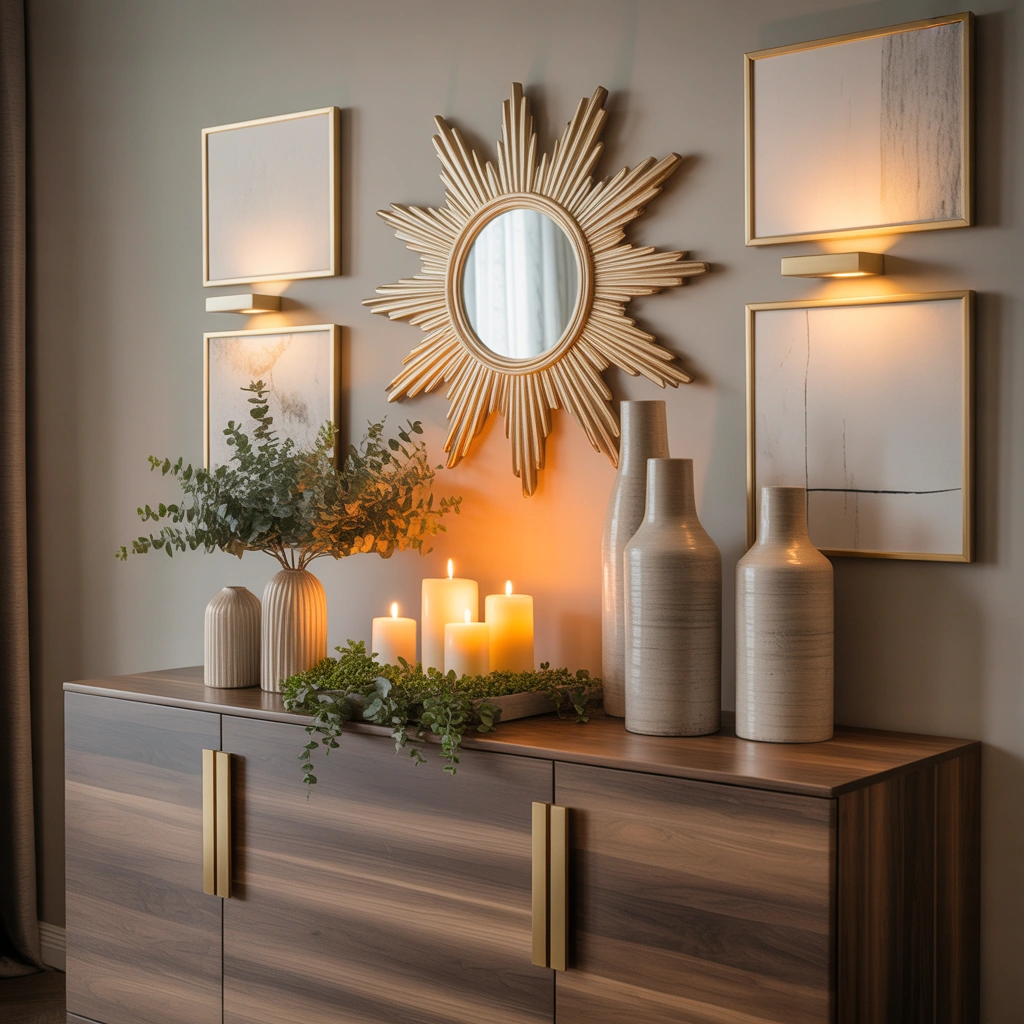
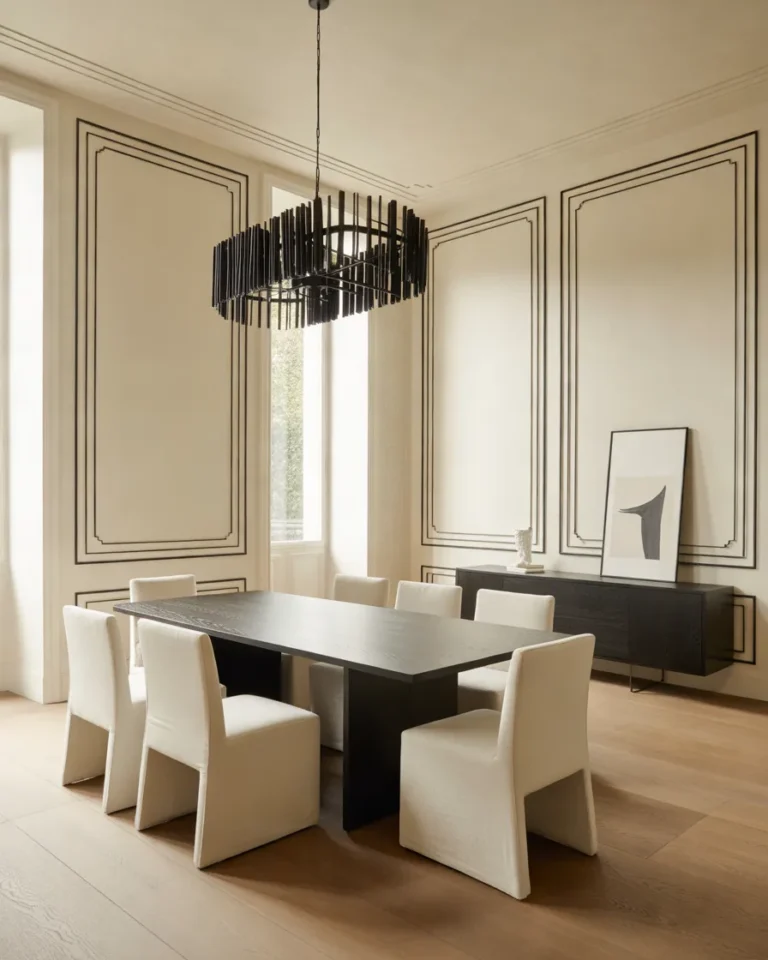
One of the easiest ways to begin decorating a dining room buffet is to choose a large focal point for the wall above it. This central piece gives the entire arrangement a visual anchor and makes the buffet feel connected to the room instead of looking like a separate piece of furniture.
A large mirror is a classic choice. It reflects natural and artificial light, makes the dining room appear more spacious, and adds an elegant finish. A rectangular mirror can create a structured appearance, while a round mirror softens the straight lines of a buffet and dining table.
Artwork is another beautiful option. You can display one oversized painting, a framed print, a textile wall hanging, or a collection of smaller pieces arranged as a gallery wall. I personally prefer choosing artwork that includes one or two colors already used elsewhere in the dining room. This creates a subtle connection between the wall decor, table linens, chairs, curtains, and accessories.
When choosing the size of your focal piece, avoid selecting something that is much wider than the buffet. As a general design approach, the artwork or mirror should usually be around two-thirds of the buffet’s width. This proportion helps the arrangement feel balanced.
You should also leave some space between the buffet surface and the bottom of the mirror or artwork. Hanging it too high can make the display feel disconnected, while placing it too low can make the surface appear crowded.
Once the main focal point is in place, it becomes much easier to choose the accessories that will sit below it.
2. Add Matching Buffet Lamps for Elegant Symmetry
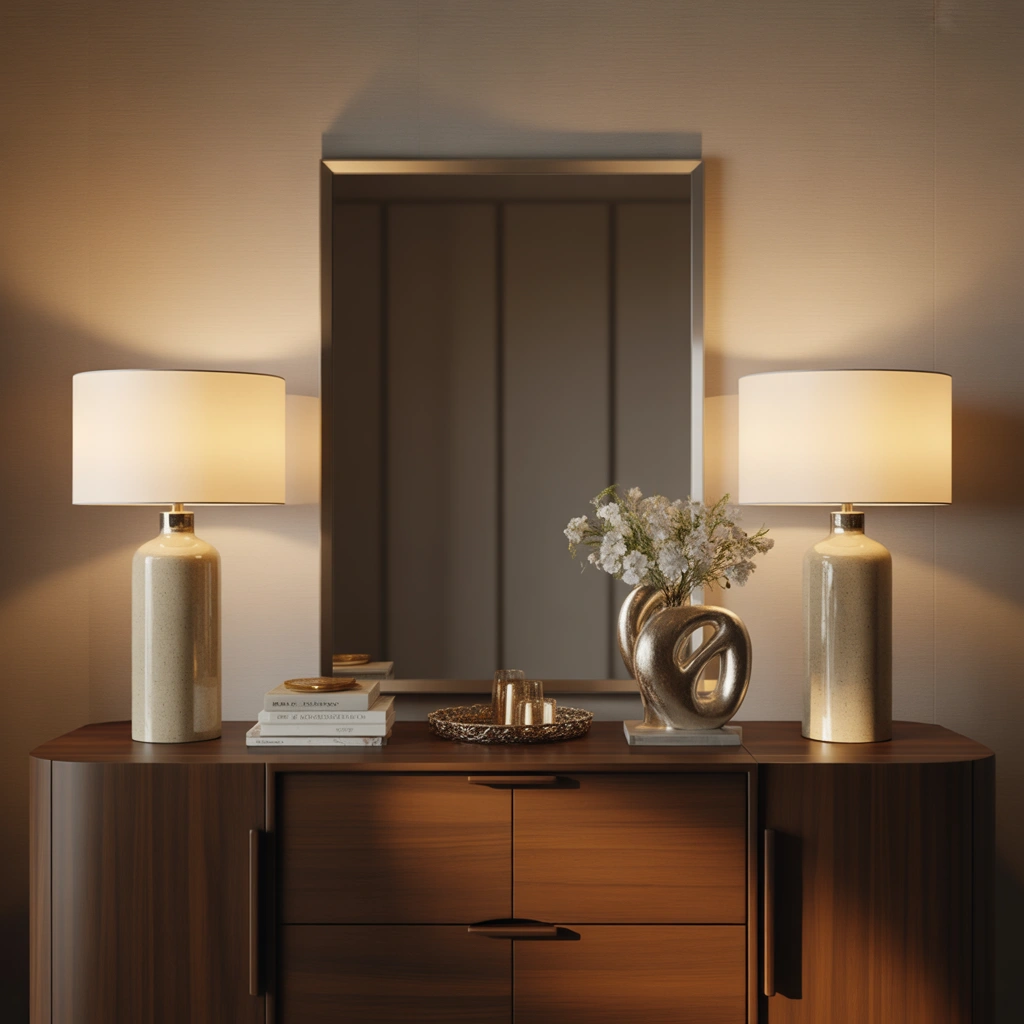
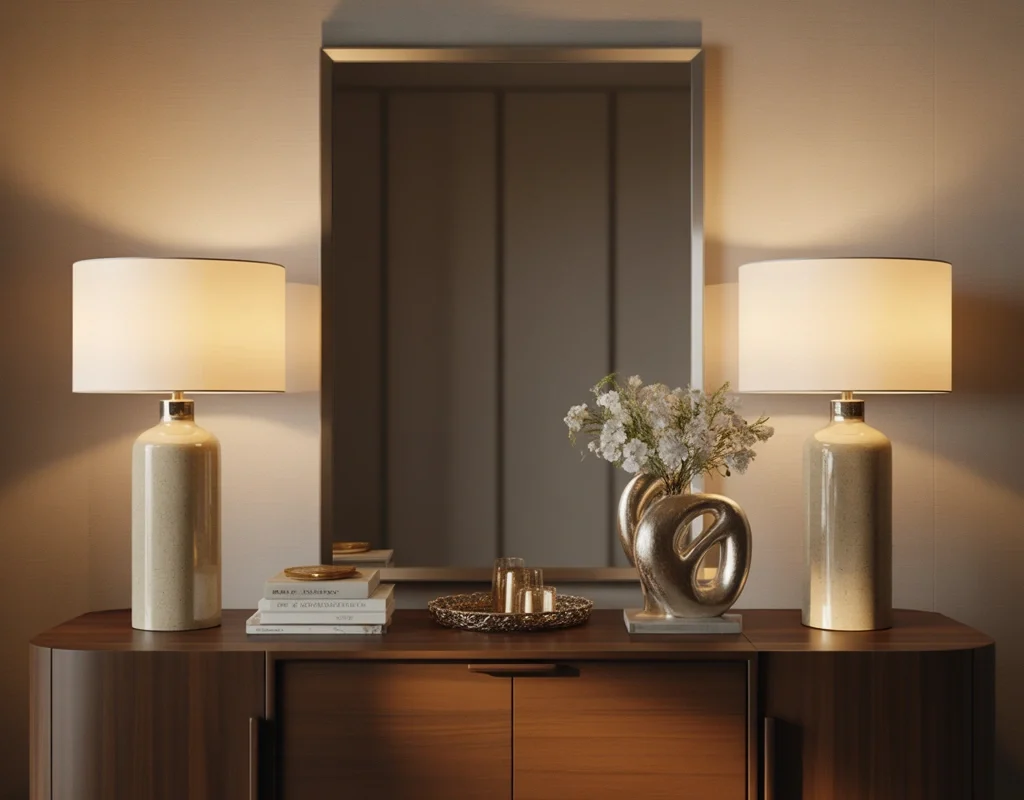
Matching lamps are among the most timeless dining room buffet decor ideas. They instantly create symmetry, bring warmth to the room, and provide soft lighting during evening meals.
Placing one lamp at each end of the buffet creates a balanced frame around the central artwork or mirror. This arrangement works especially well in traditional, transitional, modern classic, and formal dining rooms.
Buffet lamps are usually taller and narrower than standard table lamps. Their slim shape allows them to add height without taking up too much surface space. However, you do not have to use traditional buffet lamps. Small ceramic lamps, glass lamps, sculptural lamps, or modern metal lamps can also look beautiful.
Consider the material and shape of the lamp bases carefully. Ceramic bases can add softness and texture, while brass or black metal bases create a more structured look. Clear glass lamps are useful when you want the lighting to feel light and unobtrusive.
The lampshades also influence the mood. White or cream shades provide a soft, classic glow. Darker shades can add drama and contrast, especially in a dining room with deep wall colors.
I love buffet lamps because they make a dining space feel more intimate. Instead of relying only on a bright ceiling fixture, you can turn on the buffet lamps during dinner to create a relaxed, layered atmosphere.
Make sure the lamps are properly scaled to the furniture. Very small lamps may disappear visually, while oversized lamps can overwhelm a narrow buffet. The best arrangement should feel substantial without interfering with serving space.
3. Display an Oversized Vase with Seasonal Branches
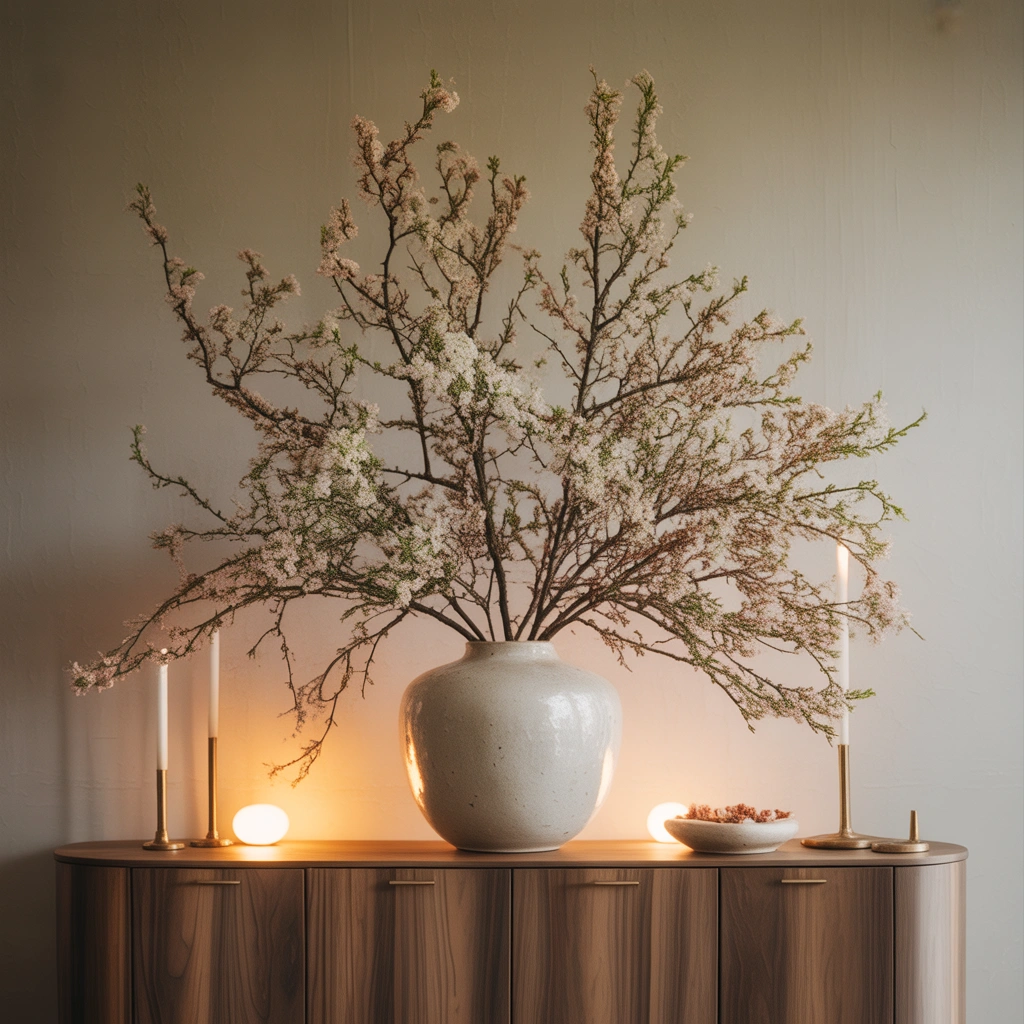
If you want a buffet display that feels stylish but does not require many accessories, start with one oversized vase filled with branches, flowers, or greenery.
A large vase adds height and creates an immediate focal point. Depending on the season, you can fill it with fresh eucalyptus, olive branches, flowering stems, dried grasses, magnolia leaves, cherry blossoms, or simple branches from your garden.
I particularly enjoy using branches because they create a natural, slightly relaxed appearance. Their height draws the eye upward, while their organic shapes prevent the buffet from looking too stiff or formal.
Choose a vase that complements the dining room’s overall style. A smooth white ceramic vase works beautifully in minimalist or contemporary interiors. A weathered clay vessel can suit a rustic or farmhouse dining room. Clear glass feels fresh and light, while a patterned vase can add color and personality.
Do not be afraid to use a vase that feels slightly larger than expected. A common decorating mistake is choosing accessories that are too small for the furniture. Several tiny objects can easily create visual clutter, while one generously sized vase often looks more intentional.
You can place the vase in the center of the buffet for symmetry or position it on one side for an asymmetrical arrangement. If you place it off-center, balance the opposite side with a lamp, stack of books, tray, or decorative bowl.
For a low-maintenance display, high-quality faux branches can be a practical choice. Look for realistic colors and flexible stems that can be shaped naturally. Avoid packing the vase too tightly. A few carefully arranged stems usually look more sophisticated than an overly full bouquet.
4. Style the Buffet with a Decorative Tray
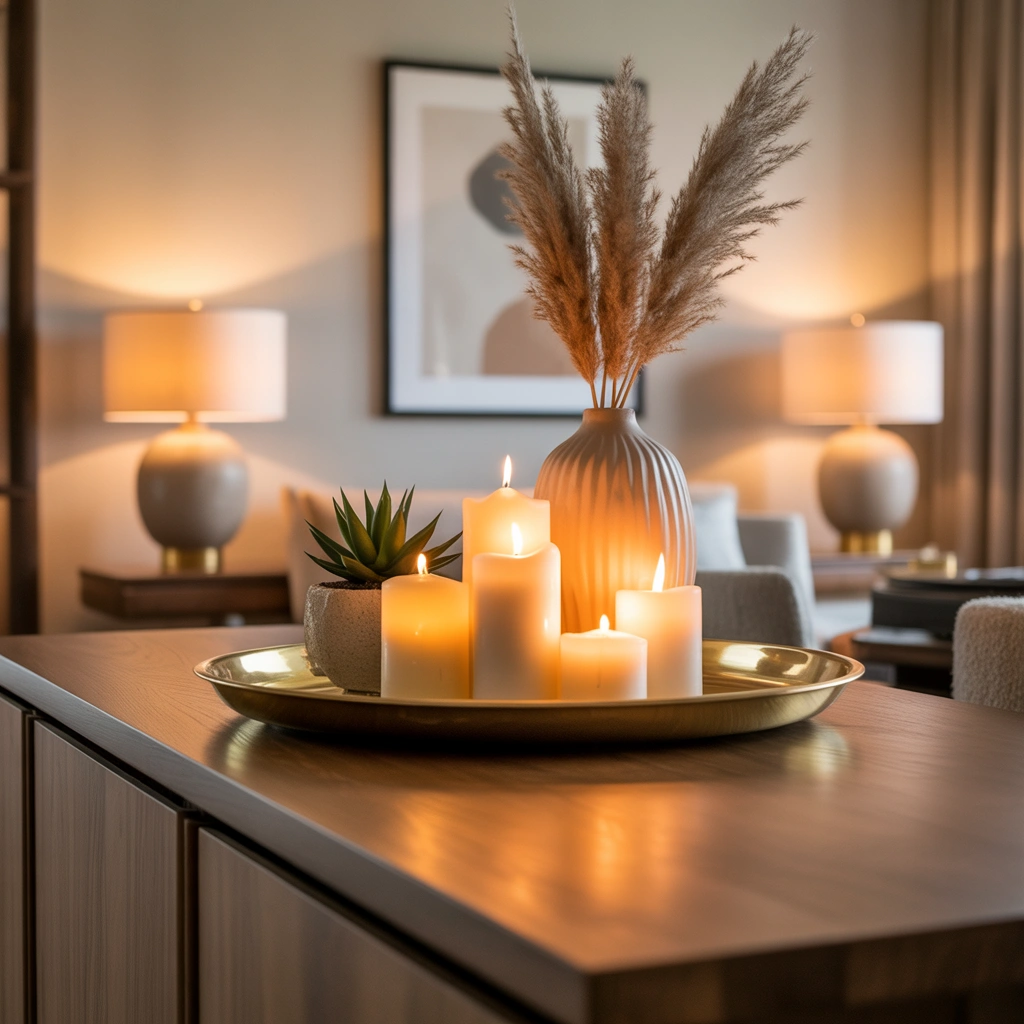
A decorative tray is both attractive and practical. It helps organize smaller accessories, defines a specific area of the buffet, and makes several objects look like one coordinated display.
Without a tray, items such as candles, bottles, small bowls, and decorative objects may appear scattered. Once they are grouped together, the arrangement looks more deliberate.
You can use a wooden tray for warmth, a mirrored tray for elegance, a woven tray for texture, or a metal tray for a modern finish. The tray does not need to match the buffet exactly. In fact, a contrasting material can make the display more interesting.
For example, a light wood tray can soften a dark buffet. A black tray can provide contrast on a white sideboard. A woven rattan tray adds warmth to a painted or glossy surface.
Inside the tray, combine objects with different heights and shapes. You might include a small vase, a candle, a bowl, a decorative box, or a pair of glass bottles. Keep the number of items limited so that the tray still feels tidy.
I also like using a tray as a small beverage station. You can arrange a decanter, glassware, cocktail tools, or bottles on it for an elegant entertaining area. For a non-alcoholic setup, display a water carafe, glasses, tea accessories, or sparkling beverage bottles.
The main advantage of a tray is flexibility. When you need the buffet for serving food, you can lift the entire decorative grouping and move it quickly. This makes it one of the most functional dining room buffet decor ideas for people who regularly host family meals or dinner parties.
5. Layer Artwork for a Relaxed, Collected Look
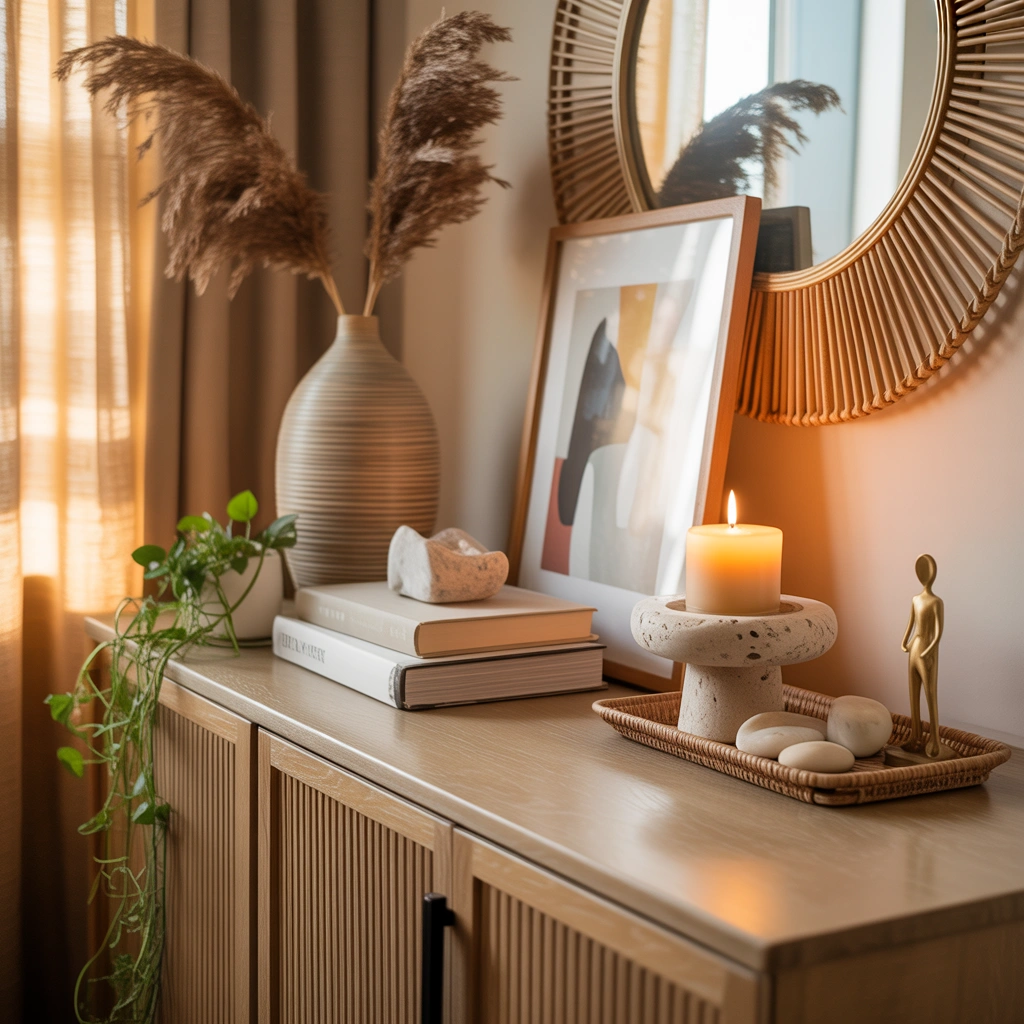
Not every piece of artwork needs to be hung on the wall. Leaning framed art directly on the buffet can create a relaxed, layered look that feels personal and collected over time.
Start with one larger framed piece leaning against the wall. Place a smaller frame slightly in front of it, allowing the two pieces to overlap. The artwork can include photography, botanical prints, landscapes, sketches, abstract paintings, or meaningful family images.
This approach is especially useful for renters or anyone who prefers not to create additional holes in the wall. It also allows you to change the display easily whenever you want a seasonal or decorative update.
To prevent the arrangement from looking flat, add a three-dimensional item near the artwork. A vase, lamp, candleholder, small sculpture, or ceramic vessel can provide depth and create visual contrast.
Try to vary the frame sizes while keeping one common element. The frames might share a similar color, material, or style, even if the artwork is different. This creates cohesion without making the display look overly matched.
I love layered artwork because it makes a dining room feel lived-in. A perfectly symmetrical arrangement can look formal, but leaning frames create a softer atmosphere. It gives the impression that the space has developed naturally rather than being decorated all at once.
Avoid using too many frames on a small buffet. Two or three well-chosen pieces are usually enough. Leave visible areas of the buffet surface so the arrangement has room to breathe.
6. Add Warmth with Candles and Candleholders
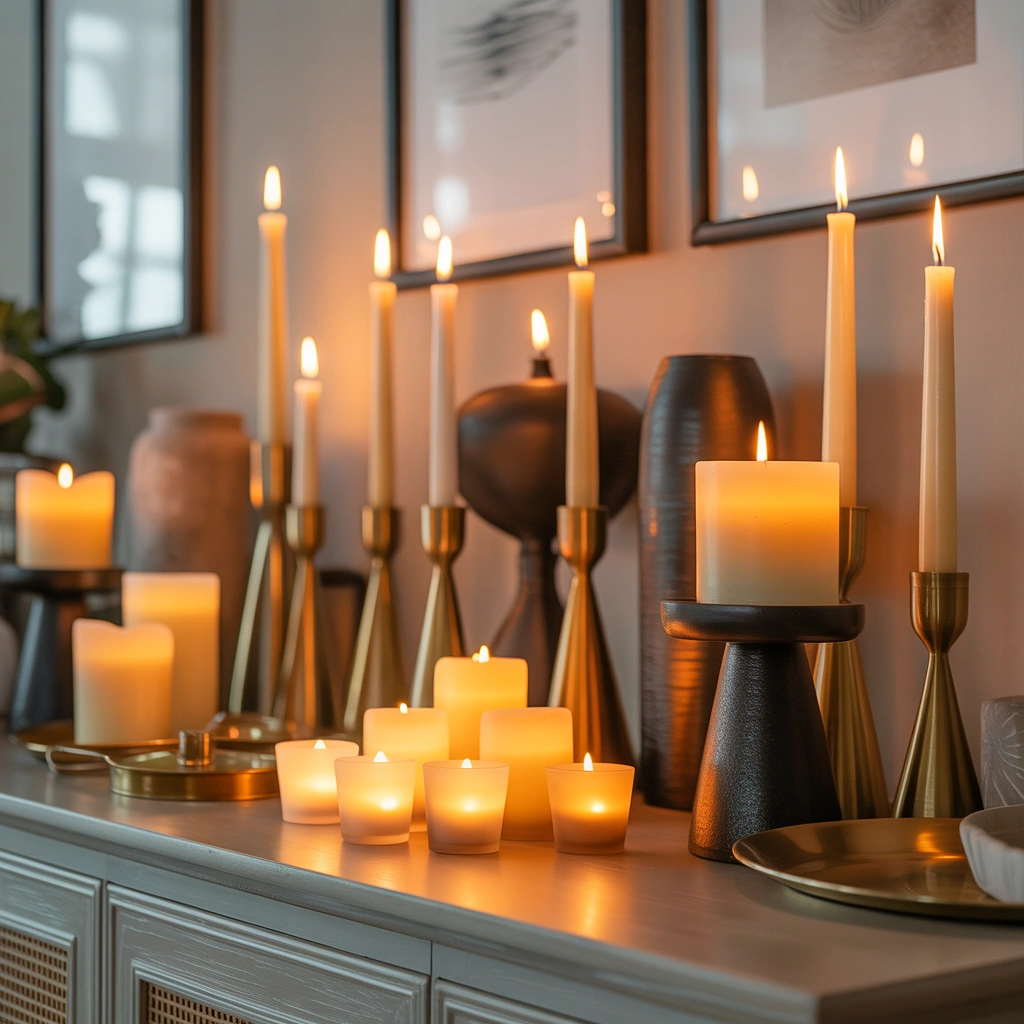
Candles are a simple way to make a dining room feel warm, inviting, and ready for entertaining. They work in almost every decorating style and can be displayed throughout the year.
For a polished look, use candleholders in different heights. This creates movement and prevents the arrangement from appearing flat. You could combine two tall taper holders with a shorter pillar candle, or group three holders with similar finishes but slightly different shapes.
Brass candleholders bring warmth and elegance. Black metal designs feel modern and dramatic. Glass holders create a lighter appearance, while wooden candleholders work well in rustic or farmhouse settings.
You can also use lanterns, hurricanes, or enclosed glass candleholders. These options add visual weight and help protect the flame.
When styling candles, pay attention to their color. White and ivory candles are timeless and easy to coordinate. Muted colors such as sage green, dusty blue, warm beige, or soft terracotta can connect the display to other elements in the dining room.
I often use unscented candles in dining spaces because strong fragrances can compete with the aroma of food. If the candles are mainly decorative, flameless LED versions offer convenience and are especially helpful in homes with children or pets.
Group candles on a tray, place them beneath a mirror, or use them to balance a tall vase on the opposite side of the buffet. During special occasions, light them just before guests arrive. That simple glow can make the entire dining room feel more welcoming.
7. Use Decorative Bowls for Beauty and Function
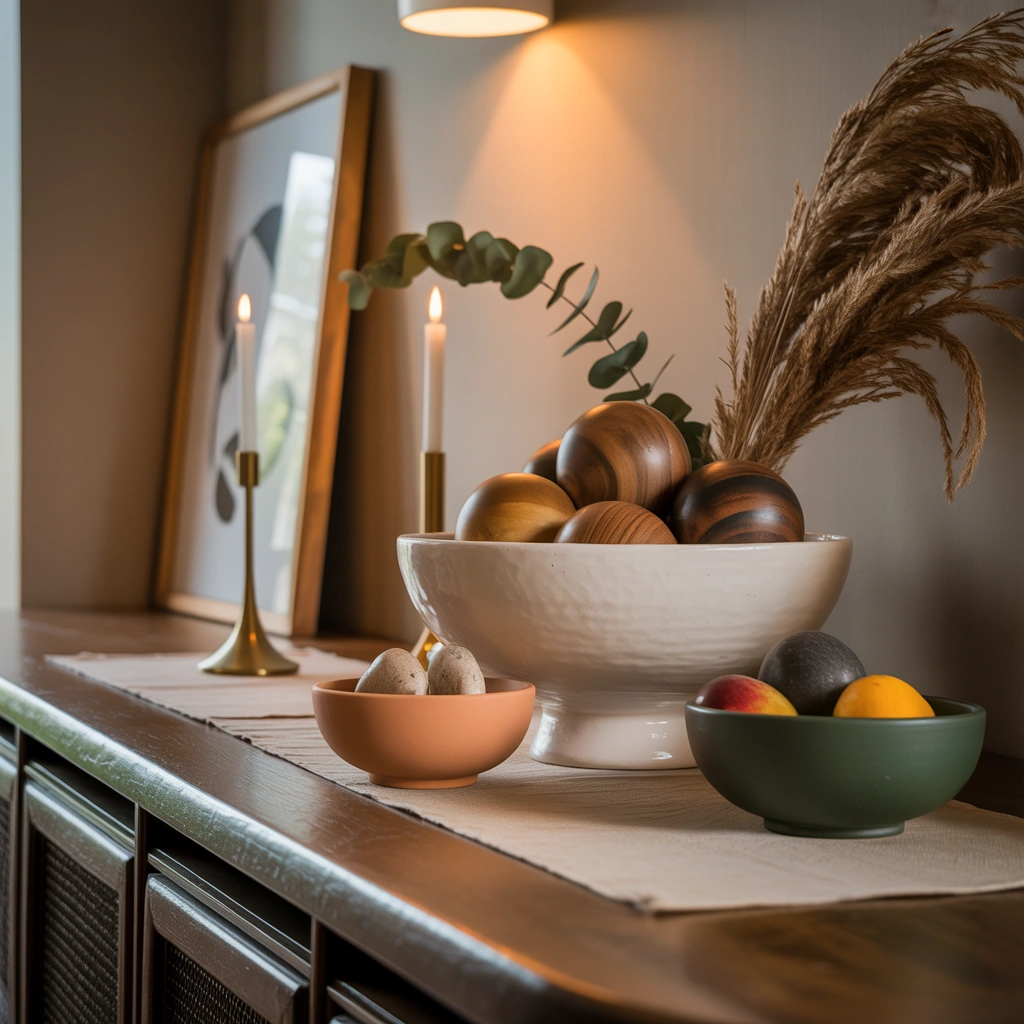
A decorative bowl is one of the easiest accessories to place on a dining room buffet. It adds shape, texture, and function without requiring complicated styling.
A large bowl can stand alone in the center of the buffet, particularly when it has an interesting material or sculptural form. Consider ceramic, marble, wood, metal, glass, or woven materials. Each one creates a different mood.
A wooden bowl adds natural warmth and works well with farmhouse, organic modern, or rustic decor. A marble bowl feels elegant and substantial. A hammered metal bowl adds shine and texture, while a colorful ceramic bowl can introduce a cheerful accent.
You can leave the bowl empty for a clean, modern look or fill it with decorative objects. Seasonal fruit, artichokes, moss balls, pinecones, ornaments, dried flowers, or decorative beads can all work well.
Fresh fruit is particularly appropriate in a dining room because it feels natural and functional. Lemons, pears, apples, or pomegranates can provide beautiful color. However, remember to replace them regularly so the display always looks fresh.
A bowl can also help anchor a collection of smaller objects. Place it beside a stack of books or under a wall mirror to soften the straight lines of the arrangement.
The most important thing is choosing a bowl that is large enough for the buffet. A tiny bowl can look lost on a long surface. A generously sized piece will make the display feel more intentional and visually balanced.
8. Introduce Natural Texture with Woven Accessories
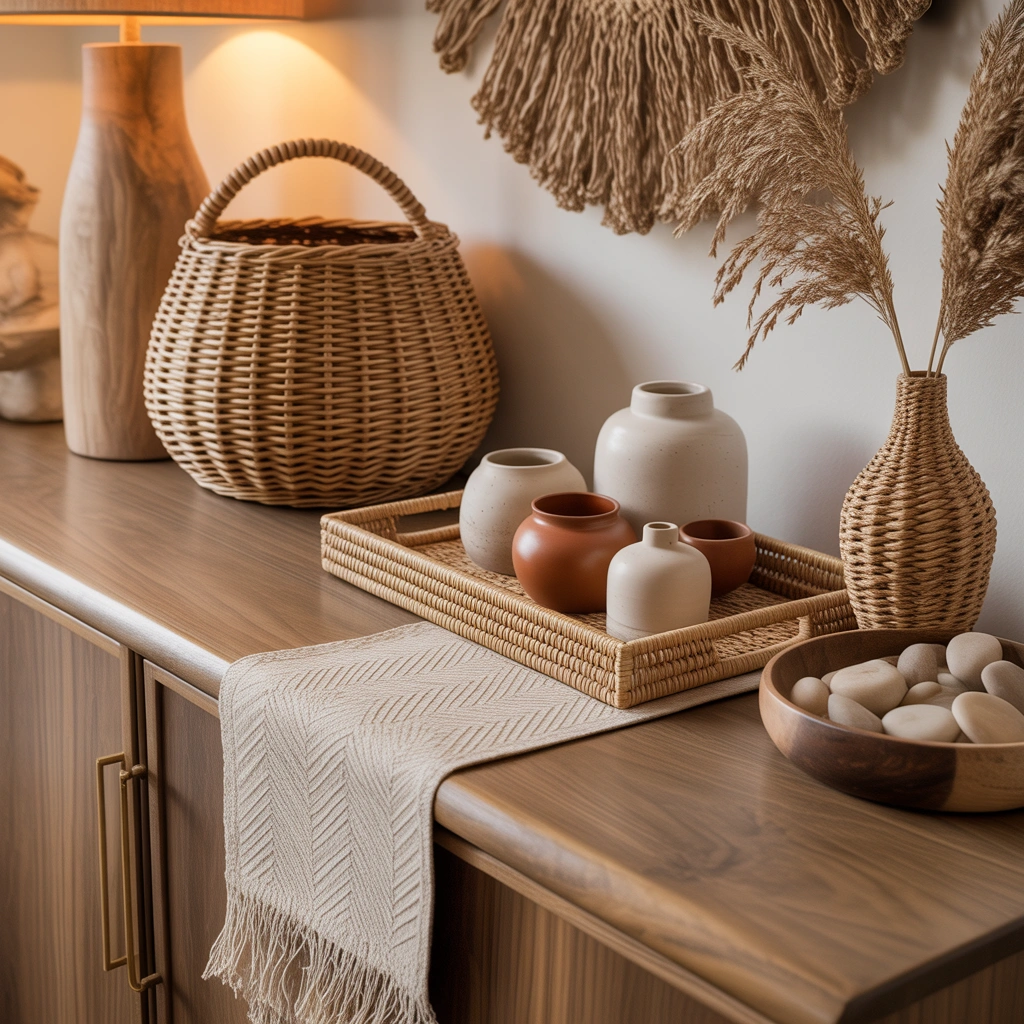
A dining room can contain many hard surfaces, including wood furniture, glass, metal fixtures, and ceramic dishes. Adding woven textures helps soften the room and makes it feel warmer.
Woven baskets are particularly useful because they provide both storage and decoration. Place a large basket beneath an open buffet, inside a lower shelf, or beside the furniture if space allows. It can hold table linens, placemats, serving pieces, or items you want to keep nearby but out of sight.
On top of the buffet, use a woven tray, rattan box, cane container, or small basket. These pieces add detail without creating visual heaviness.
Texture is especially important when your dining room uses a neutral color palette. A room filled with white, beige, cream, or gray can sometimes feel flat if every surface is smooth. Natural materials such as rattan, seagrass, jute, and wicker create subtle contrast.
I find that even one woven item can make a buffet arrangement feel more relaxed. It breaks up the polished appearance of glass and ceramic accessories and introduces a casual, comfortable quality.
You can combine woven elements with greenery for an organic look. For example, place a ceramic vase filled with branches on a rattan tray, or set a small potted plant beside a woven storage box.
Be careful not to use too many competing textures at once. Choose one or two woven elements and repeat similar natural tones elsewhere in the dining room, such as through a rug, light fixture, chair seats, or window shades.
9. Decorate with Books and Personal Objects
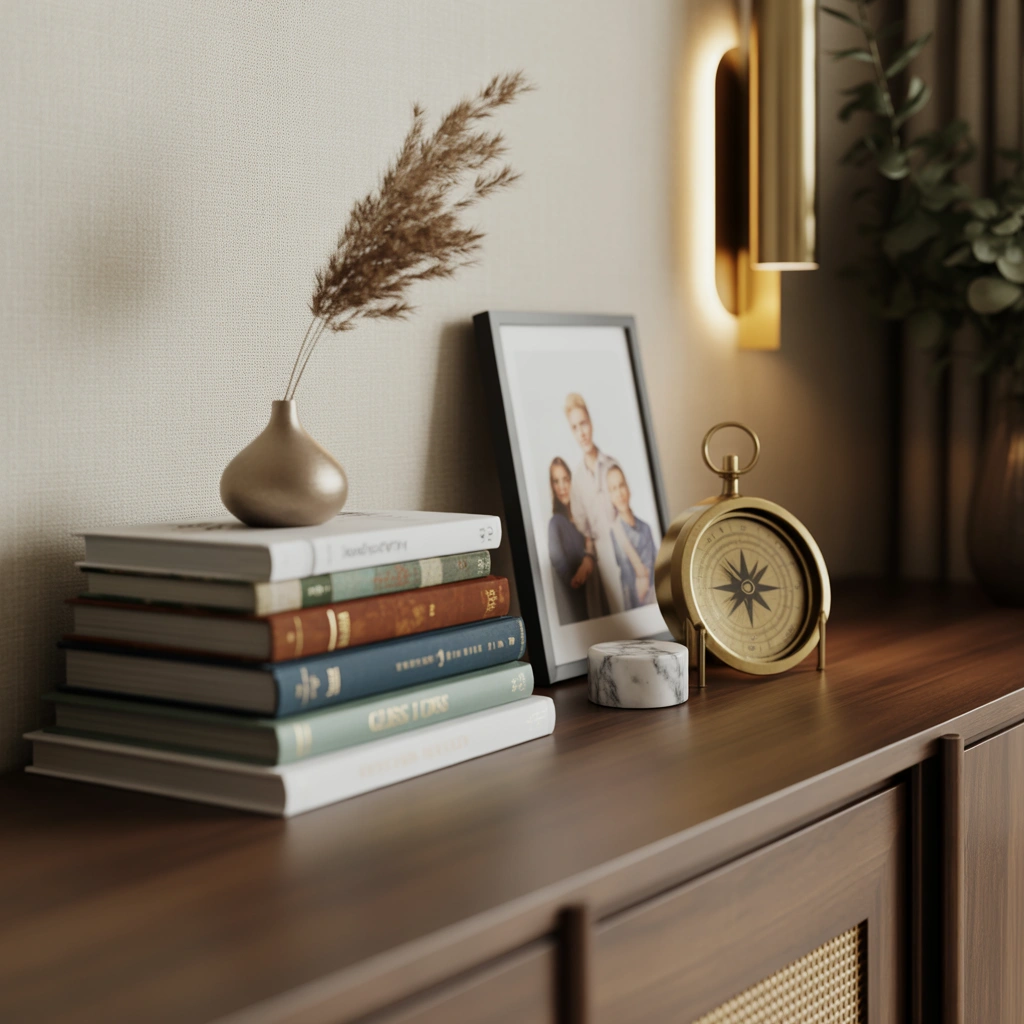
Books are a wonderful styling tool because they add color, height, and personality. They also create a base for smaller decorative objects that might otherwise look too low.
Choose two or three attractive hardcover books and stack them horizontally. Place a small bowl, candle, framed photograph, sculpture, or decorative box on top. The books elevate the object and make the arrangement more visually interesting.
Coffee-table books about food, travel, art, architecture, gardens, or interior design are especially suitable for a dining room. You can also use cookbooks with beautiful covers, particularly if the buffet is located near the kitchen.
Remove brightly colored dust jackets when necessary. The clothbound cover underneath may coordinate better with the room’s color palette.
Personal objects are what transform a styled buffet from a generic display into something meaningful. Consider adding an heirloom serving dish, a handmade ceramic piece, a framed family photograph, a souvenir from a memorable trip, or an object connected to your culture or traditions.
I believe the best rooms always include something personal. A buffet decorated entirely with newly purchased accessories may look attractive, but meaningful items give the space character.
The key is editing. You do not need to display every sentimental object at once. Choose a few pieces that work well together and rotate them throughout the year. This keeps the arrangement fresh while allowing different memories and objects to have their moment.
10. Create an Asymmetrical Modern Display
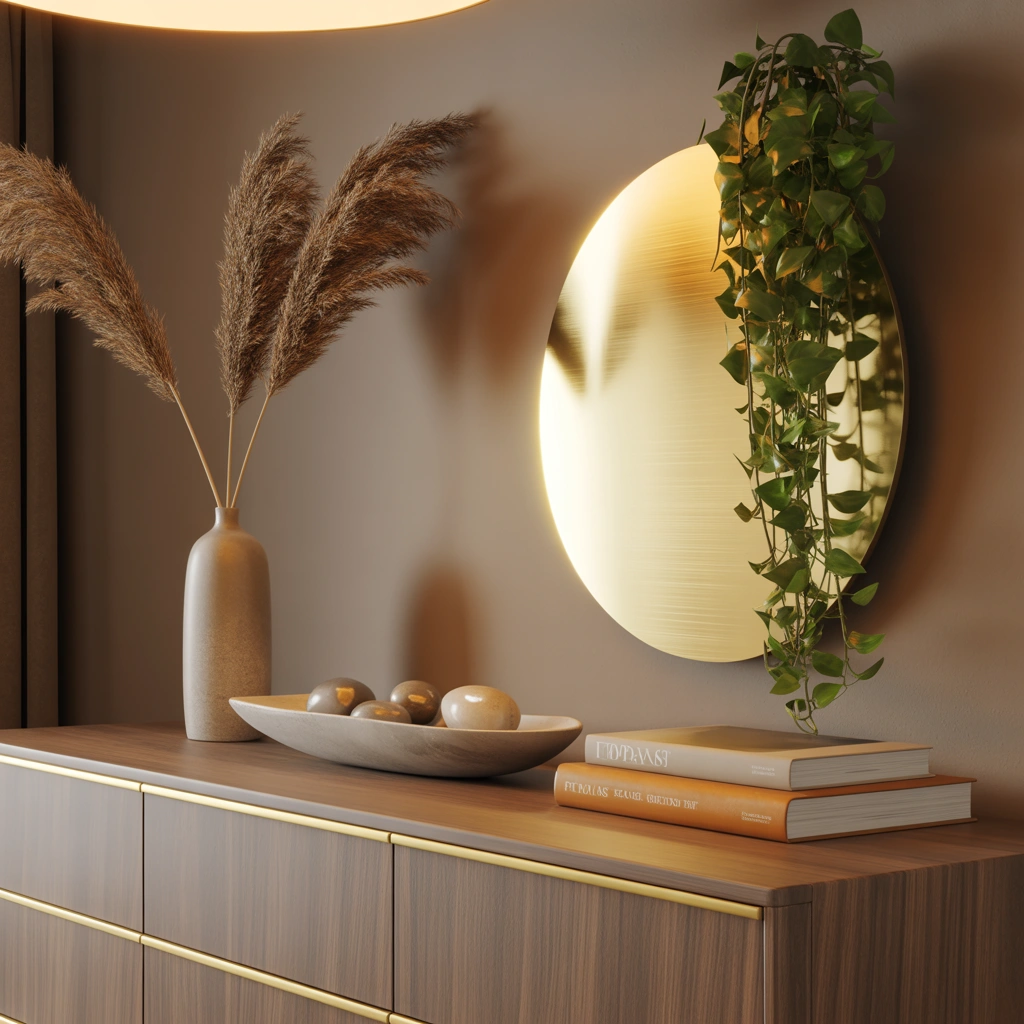
Symmetry is beautiful, but it is not the only way to style a buffet. An asymmetrical arrangement can feel more modern, creative, and visually dynamic.
Begin with one tall item on one side of the buffet, such as a lamp, vase, or cluster of branches. On the opposite side, create a lower grouping using books, a bowl, candles, or decorative objects.
The goal is not to make both sides identical. Instead, focus on balancing their visual weight. A tall, narrow vase may be balanced by a wider grouping of several shorter objects.
For example, you could place a large vase with greenery on the left side. On the right, arrange a stack of books, a candleholder, and a ceramic bowl. Although the two sides are different, they can still feel balanced because they occupy a similar amount of visual space.
A large piece of artwork can be positioned slightly off-center above the buffet to reinforce the asymmetrical design. Alternatively, use two overlapping frames with different sizes.
Asymmetrical styling works especially well in contemporary, Scandinavian, minimalist, bohemian, and organic modern interiors. It creates a more casual feeling than matching lamps or perfectly paired accessories.
When I create an asymmetrical display, I usually step back several times to view the arrangement from across the room. Up close, individual objects may look fine, but distance helps reveal whether one side feels too heavy.
Leave open space between groupings. Negative space is essential because it allows each object to stand out. A modern buffet should feel carefully edited, not crowded.
11. Style the Buffet for Each Season
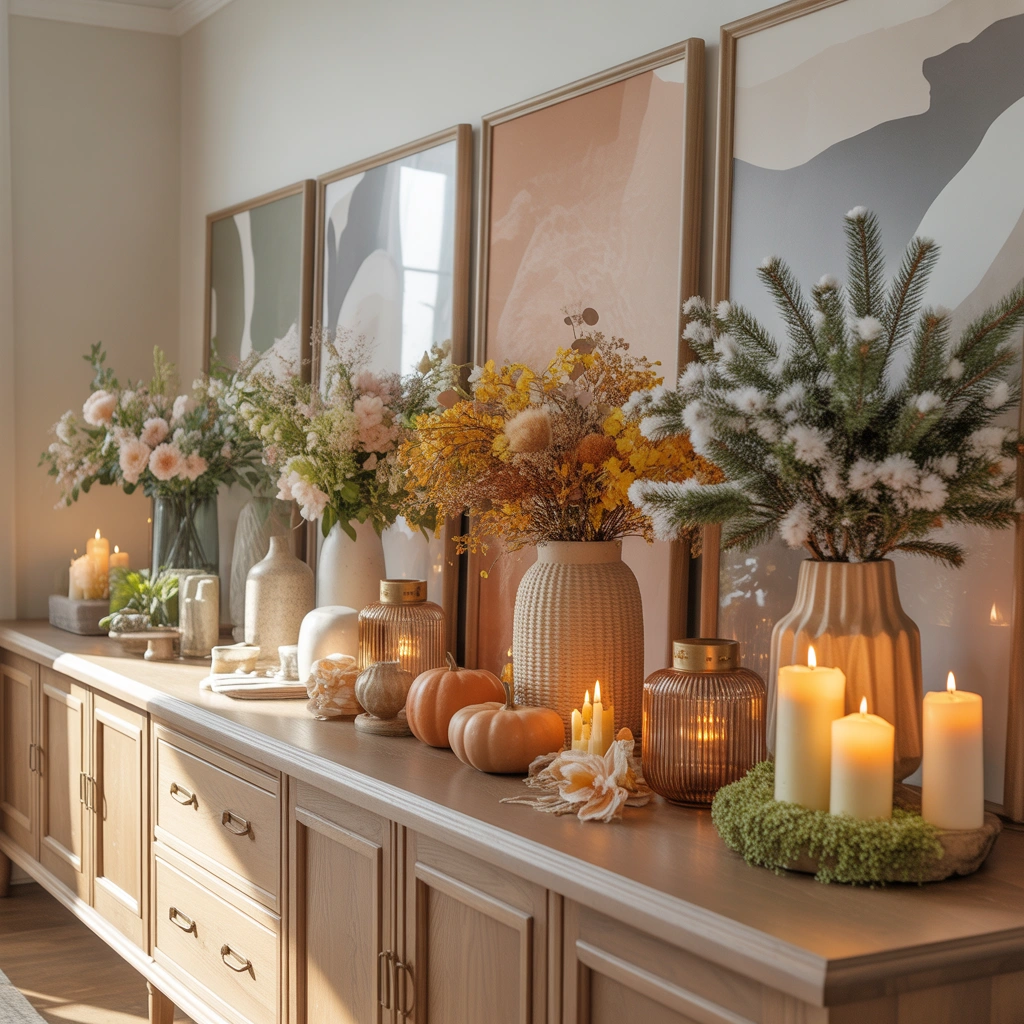
Seasonal decorating is a simple way to keep your dining room feeling fresh throughout the year. You do not need to replace everything on the buffet. A few thoughtful changes can completely shift the mood.
Spring Buffet Decor
For spring, use fresh or faux blossoms, light-colored ceramics, clear glass, and soft pastel accents. Tulips, daffodils, flowering branches, and greenery can bring life to the room. A small bowl of decorative eggs can be included around Easter, but keep the arrangement simple for a more sophisticated appearance.
Summer Buffet Decor
Summer decor can feel airy and natural. Consider using a clear glass vase, leafy branches, lemons, woven trays, coastal artwork, or light blue accessories. Keep the display uncluttered so the room feels open and relaxed.
Fall Buffet Decor
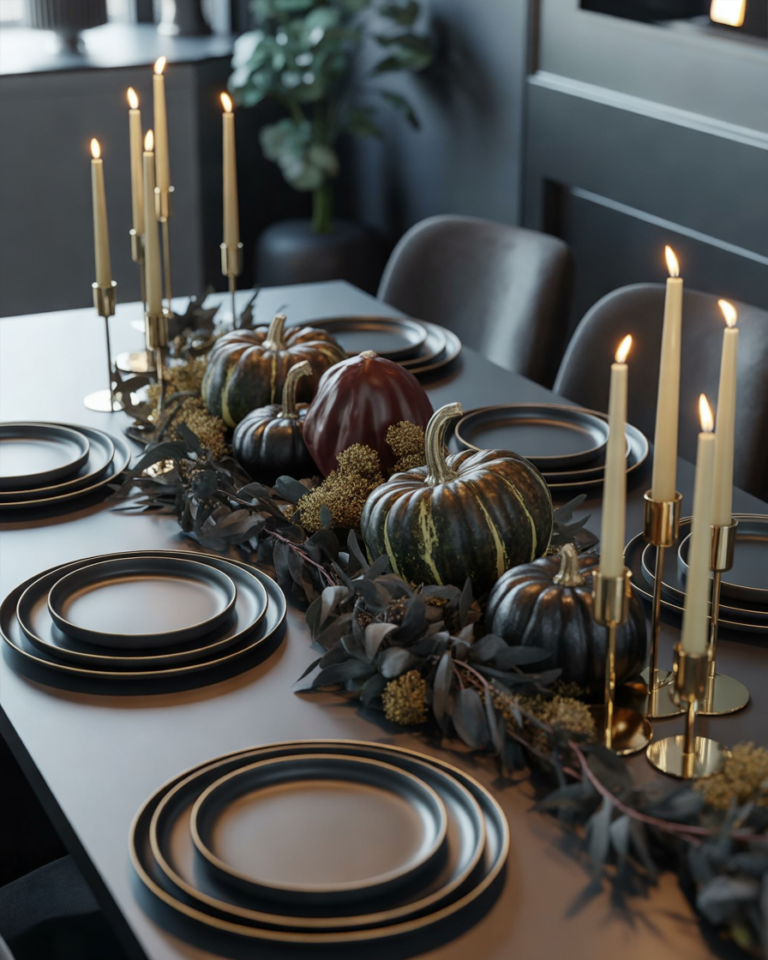
In autumn, introduce warm colors and natural textures. Dried leaves, wheat stems, small pumpkins, wooden bowls, amber glass, brass candleholders, and earthy ceramics all work beautifully.
Rather than covering the buffet with many small pumpkins, choose a few pieces in different sizes. Pair them with greenery or candles to create a layered arrangement.
Winter and Holiday Buffet Decor
During winter, use evergreen branches, pinecones, candles, metallic accents, and warm lighting. For the holidays, you can add a garland across the buffet or around the mirror.
A small tabletop tree, ceramic houses, ornaments in a decorative bowl, or a collection of candles can create a festive display. Keep the room’s existing color palette in mind so the seasonal decor feels integrated rather than separate.
I prefer storing a few seasonal stems, candle colors, and small accents rather than buying an entirely new collection every year. By keeping the basic elements in place, such as the mirror, lamps, tray, and vase, you can update the buffet quickly without spending too much money.
12. Turn the Buffet into a Stylish Serving Station
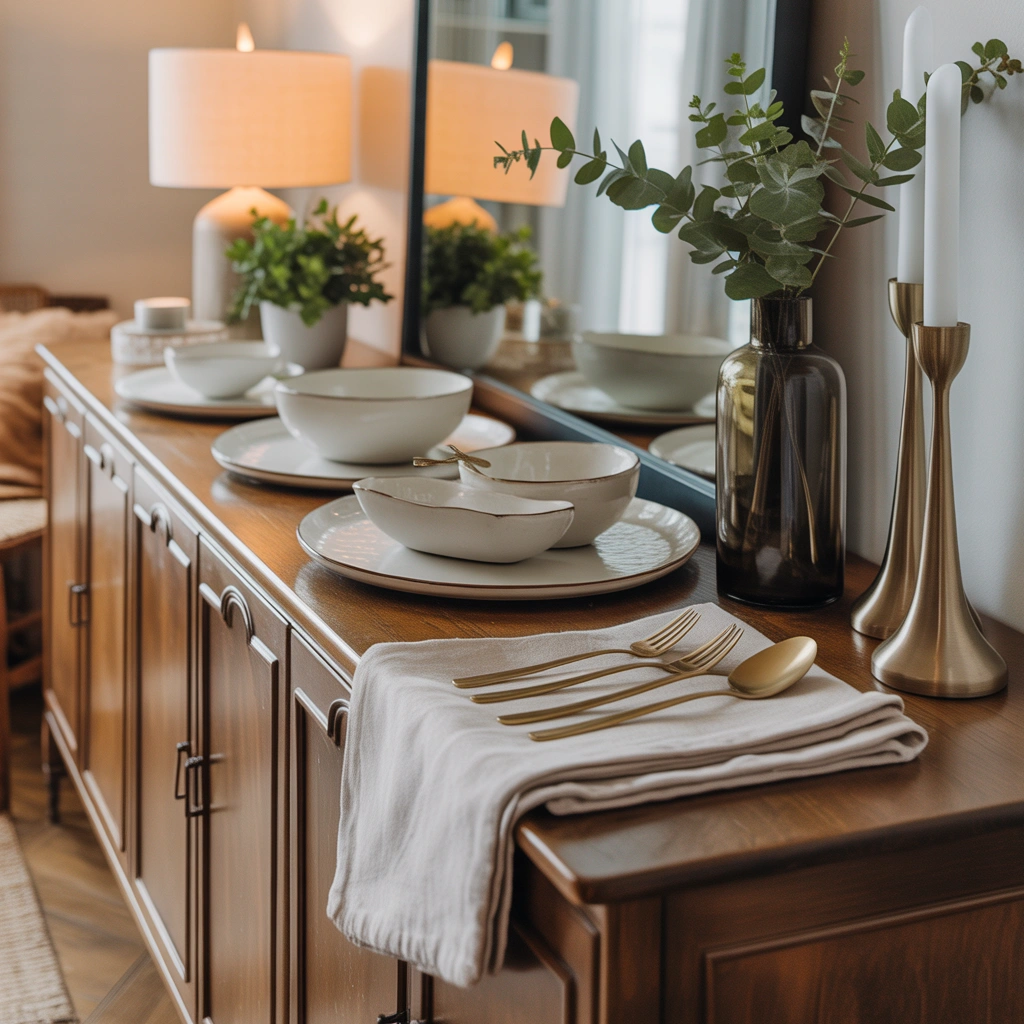
A buffet is not only decorative. It can also become a practical serving area during family meals, holidays, and dinner parties.
Before guests arrive, remove a few everyday decorative items to create open space. Leave one or two pieces, such as lamps or a tall vase at the far end, to maintain the styled appearance.
Use trays, cake stands, serving boards, bowls, and platters to organize food and drinks. Varying the height of serving pieces makes the presentation more attractive and allows guests to see everything easily.
You can dedicate one section to beverages. Arrange glasses, a water pitcher, napkins, and drink options on a tray. Another section can hold appetizers, desserts, or additional dinnerware.
Labels can be helpful when serving several dishes, particularly if guests have dietary restrictions. Small cards can identify vegetarian, dairy-free, or gluten-free options.
If your buffet has drawers or cabinets, store serving utensils, extra napkins, tablecloths, candles, and special-occasion dishes inside. This allows you to prepare the dining room quickly without searching through the kitchen.
After the event, return the everyday accessories to their original positions. Taking a quick photograph of your regular buffet arrangement can help you remember where everything belongs.
This combination of style and function is one of the reasons I love dining room buffets. They can look beautiful on an ordinary day and become incredibly useful whenever you entertain.
How to Arrange Decor on a Dining Room Buffet
Once you have chosen your favorite dining room buffet decor ideas, the next step is arranging everything in a balanced way.
Start with the largest item, such as a mirror, artwork, lamp, or vase. Large pieces establish the structure of the display. After that, add medium-sized accessories, followed by smaller details.
Use different heights to create movement. If every item is the same height, the arrangement may feel flat. A tall lamp, medium vase, and low bowl create a more interesting visual line.
Group smaller items instead of spreading them evenly across the entire surface. Three candles placed together will usually look more intentional than three candles positioned far apart.
Odd-numbered groupings often feel natural. A collection of three objects with different shapes and heights is a reliable decorating formula. However, this is a guideline rather than a strict rule. Matching pairs can look equally beautiful in symmetrical arrangements.
Repeat colors and materials already found in the dining room. A brass chandelier can be echoed through brass candleholders. Black dining chairs can connect with black picture frames. A wooden table can be complemented by a wooden bowl or tray.
Most importantly, leave some empty space. Your buffet does not need to be covered from one end to the other. Open space helps the display feel calm and allows room for serving dishes when needed.
Common Dining Room Buffet Decorating Mistakes
Even beautiful accessories can look awkward when the scale or arrangement is incorrect. Fortunately, most styling problems are easy to fix.
One common mistake is using too many small items. Small objects can make the buffet look cluttered, especially when they are spread across the entire surface. Replace several tiny accessories with one or two larger pieces.
Another mistake is ignoring the wall above the buffet. An empty wall can make the furniture appear unfinished. Add a mirror, large artwork, gallery wall, or decorative wall feature to connect the buffet to the room.
Poor scale is another issue. Lamps, vases, and artwork should be proportional to the buffet. A narrow buffet may require slim accessories, while a long, substantial sideboard can support larger pieces.
Using accessories that are all the same height can also create a flat appearance. Introduce variation through tall branches, medium-sized frames, stacked books, and low bowls.
Finally, avoid decorating the buffet so heavily that it can no longer serve its practical purpose. A dining room buffet should still provide space for food, dishes, or drinks when necessary.
How to Choose the Right Decor Style for Your Buffet
Your buffet display should complement the overall atmosphere of the dining room.
For a modern dining room, use clean lines, sculptural objects, neutral colors, abstract artwork, and a limited number of accessories.
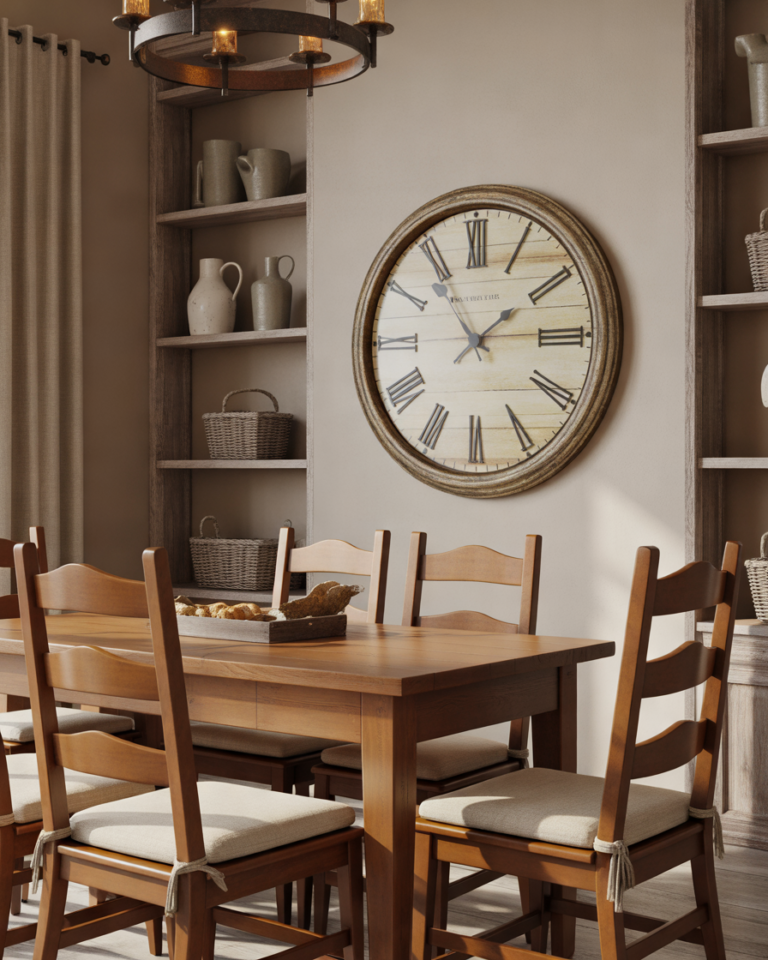
For a farmhouse dining room, consider weathered wood, ceramic pitchers, woven baskets, botanical prints, greenery, and black metal accents.
For a traditional dining room, matching lamps, framed artwork, silver or brass accessories, classic candleholders, and symmetrical arrangements work well.
For a coastal dining room, use pale wood, glass, woven textures, blue accents, airy greenery, and artwork inspired by water or nature.
For an eclectic or bohemian space, combine collected artwork, colorful ceramics, handmade objects, patterned textiles, and plants.
You do not need to follow one design category perfectly. My favorite interiors often mix styles. A traditional buffet can look fresh with modern artwork, while a contemporary sideboard can feel warmer with an antique vase or handmade bowl.
Frequently Asked Questions About Dining Room Buffet Decor
What should I put on top of a dining room buffet?
You can decorate a dining room buffet with lamps, artwork, mirrors, vases, greenery, candles, bowls, trays, books, framed photographs, and decorative objects. Choose a limited number of pieces in different heights and sizes to create a balanced arrangement.
Should a buffet mirror be wider than the buffet?
In most cases, the mirror should not be wider than the buffet. A mirror measuring approximately two-thirds of the buffet’s width usually creates pleasing proportions. However, the ideal size can vary depending on the room and the shape of the mirror.
How high should artwork hang above a buffet?
Artwork should be close enough to feel visually connected to the buffet. A gap of approximately 6 to 10 inches between the buffet surface and the bottom of the artwork often works well, although the correct height depends on the artwork’s size and the ceiling height.
How do I decorate a buffet without making it look cluttered?
Use fewer, larger accessories rather than many small objects. Group smaller items on a tray, vary the heights, and leave open areas of the buffet surface. Removing one or two unnecessary objects can often make the entire display look more polished.
Do buffet lamps have to match?
Buffet lamps do not have to match, but matching lamps create a classic symmetrical appearance. Different lamps can work in an eclectic or asymmetrical arrangement when they share a similar color, material, size, or overall style.
Can I place a television above a dining room buffet?
You can place a television above a buffet when the dining room also functions as a living or entertainment space. Keep the surface decor simple so it does not block the screen. Low bowls, small plants, and short decorative objects are better than tall branches or lamps in this situation.
How can I decorate a small buffet?
For a small buffet, choose one main focal point and a few carefully selected accessories. A mirror, one lamp, a small vase, and a decorative bowl may be enough. Avoid using oversized groupings that leave no functional space.
Final Thoughts on Dining Room Buffet Decor
The best dining room buffet decor ideas are not necessarily the most expensive or complicated. A well-styled buffet is usually built around a few strong elements: a focal point on the wall, accessories in different heights, a balanced arrangement, and personal details that make the room feel like your home.
Start with what you already own. Move artwork from another room, stack a few beautiful books, fill a vase with branches, or group candles on a tray. Sometimes a simple rearrangement is all it takes to create a fresh look.
You can also allow the display to evolve. Change the greenery with the seasons, rotate meaningful objects, or update the artwork when you want a different mood. Your buffet does not need to remain exactly the same throughout the year.
Most importantly, make sure the arrangement supports the way you use your dining room. If you entertain frequently, leave enough open space for serving. If the room is mostly used for everyday family meals, focus on creating a warm display that you enjoy seeing each day.
With the right combination of beauty, balance, and function, your dining room buffet can become one of the most attractive and useful features in the entire room.