Purple has always felt like one of the most expressive colors in interior design. It can look soft and romantic, bold and luxurious, calm and comforting, or even modern and dramatic. That flexibility is exactly why purple bedroom decor works for so many different styles.
When I first considered adding purple to a bedroom, I worried that it might make the room feel too dark or overly feminine. However, I quickly realized that the result depends entirely on the shade, balance, lighting, and materials used around it. A pale lavender bedroom can feel fresh and peaceful, while a deep plum bedroom can look elegant and expensive. Dusty mauve creates warmth, whereas violet adds energy and personality.
The best part is that you do not need to redesign the entire room to enjoy this beautiful color. A purple comforter, an upholstered headboard, a pair of curtains, or even a few decorative cushions can completely change the atmosphere.
In this guide, I am sharing 13 purple bedroom decor ideas that can help you create a space that feels stylish, restful, and personal. Whether you prefer minimalist interiors, glamorous rooms, cozy cottage decor, or modern bedroom styling, you will find plenty of inspiration here.
Why Choose Purple for Bedroom Decor?
Purple combines the calmness of blue with the warmth and richness of red. Because of this unique balance, it can create a bedroom that feels both soothing and visually interesting.
Lighter purple shades such as lavender, lilac, and pale violet are often associated with peace, softness, and relaxation. These colors work beautifully in bedrooms because they help create a gentle environment that feels separate from the busyness of the rest of the home.
Darker tones such as eggplant, aubergine, royal purple, and plum create depth. They can make a room feel more intimate, luxurious, and dramatic. When paired with warm lighting, velvet textures, metallic accents, and neutral walls, deep purple can look incredibly sophisticated.
Purple also works well with many other colors. It pairs naturally with white, cream, beige, gray, black, blush pink, gold, silver, navy blue, and even muted green. This makes it easier to add purple bedroom decor without replacing every item you already own.
1. Create a Soft Lavender Bedroom
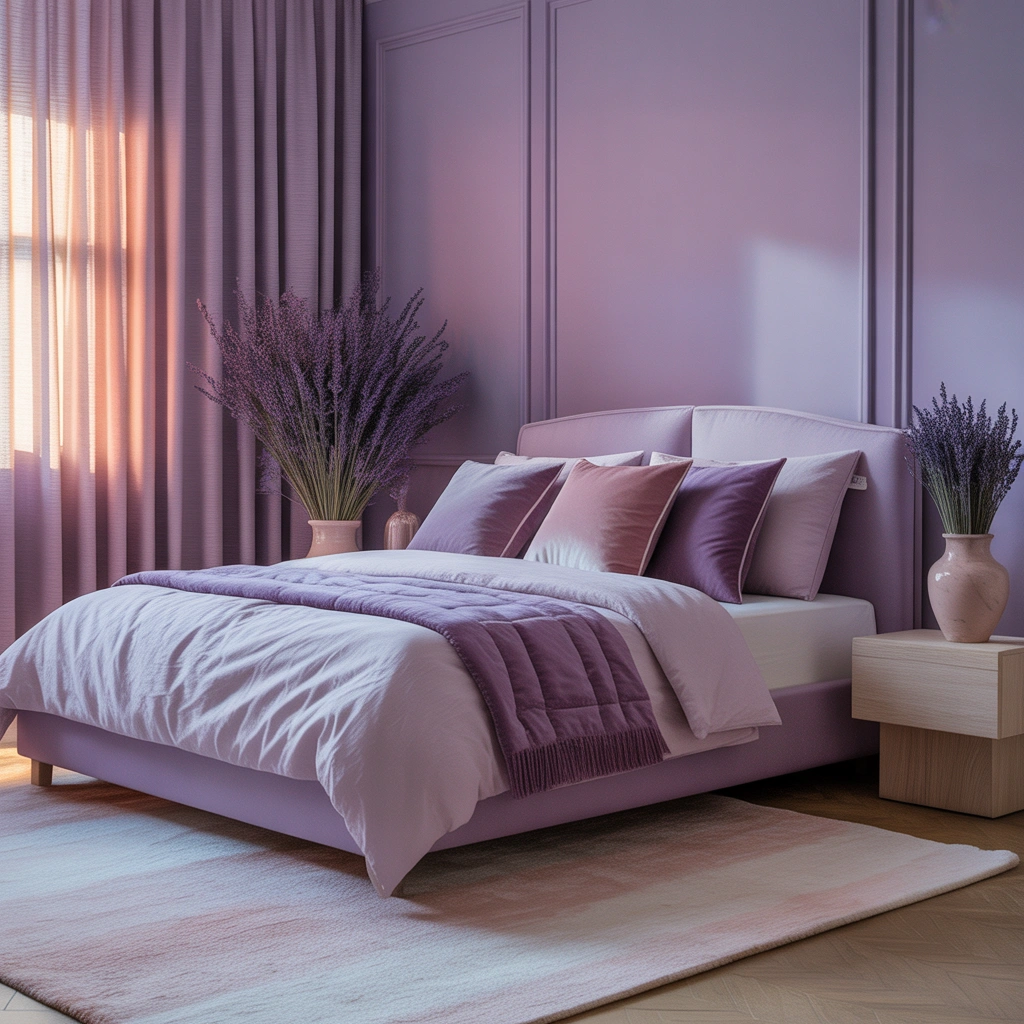
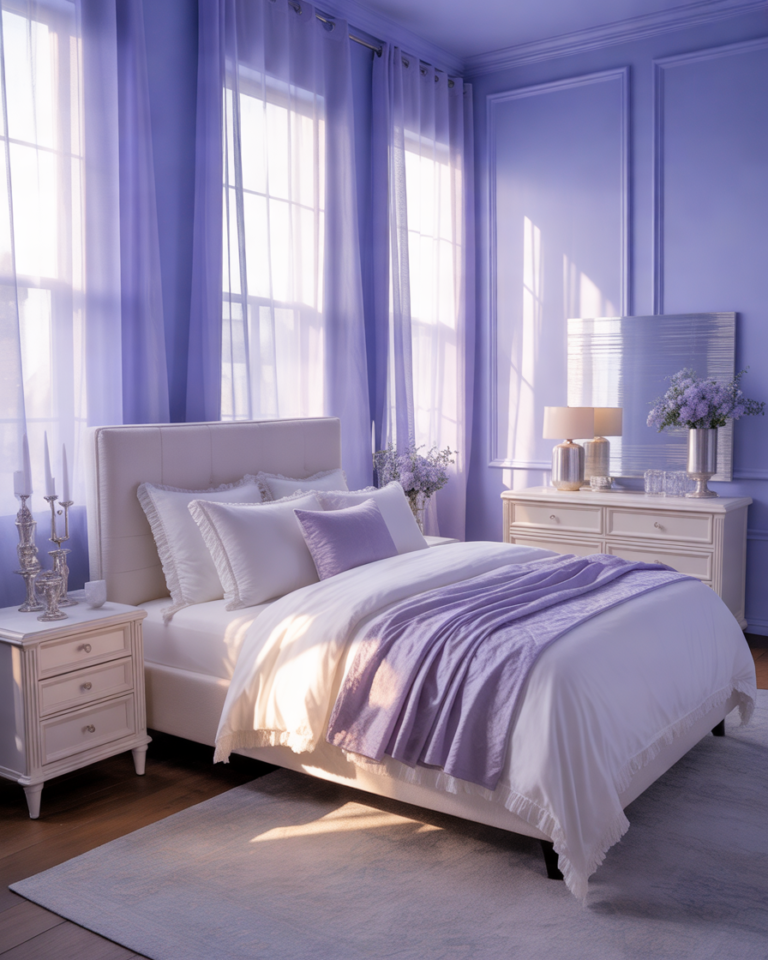
A soft lavender bedroom is one of the easiest ways to use purple without making the space feel overwhelming. Lavender is light, calming, and slightly romantic, making it ideal for bedrooms where relaxation is the main priority.
You can begin with lavender walls or choose one feature wall behind the bed. If painting the entire room feels like too much of a commitment, keep the walls warm white and introduce lavender through bedding, curtains, cushions, and decorative accessories.
For a fresh and airy appearance, pair lavender with crisp white furniture. A white bed frame, bedside tables, and dresser will help the purple elements feel light rather than heavy. Cream-colored rugs and natural wood details can add warmth and prevent the room from looking too cold.
I especially love lavender bedrooms with sheer curtains because daylight makes the color appear soft and almost glowing. At night, warm bedside lamps create a cozy atmosphere that feels peaceful and inviting.
To complete the look, add small details such as lavender candles, floral prints, ceramic vases, or a soft purple throw blanket. The result should feel gentle and layered rather than overly coordinated.
2. Add a Deep Purple Accent Wall
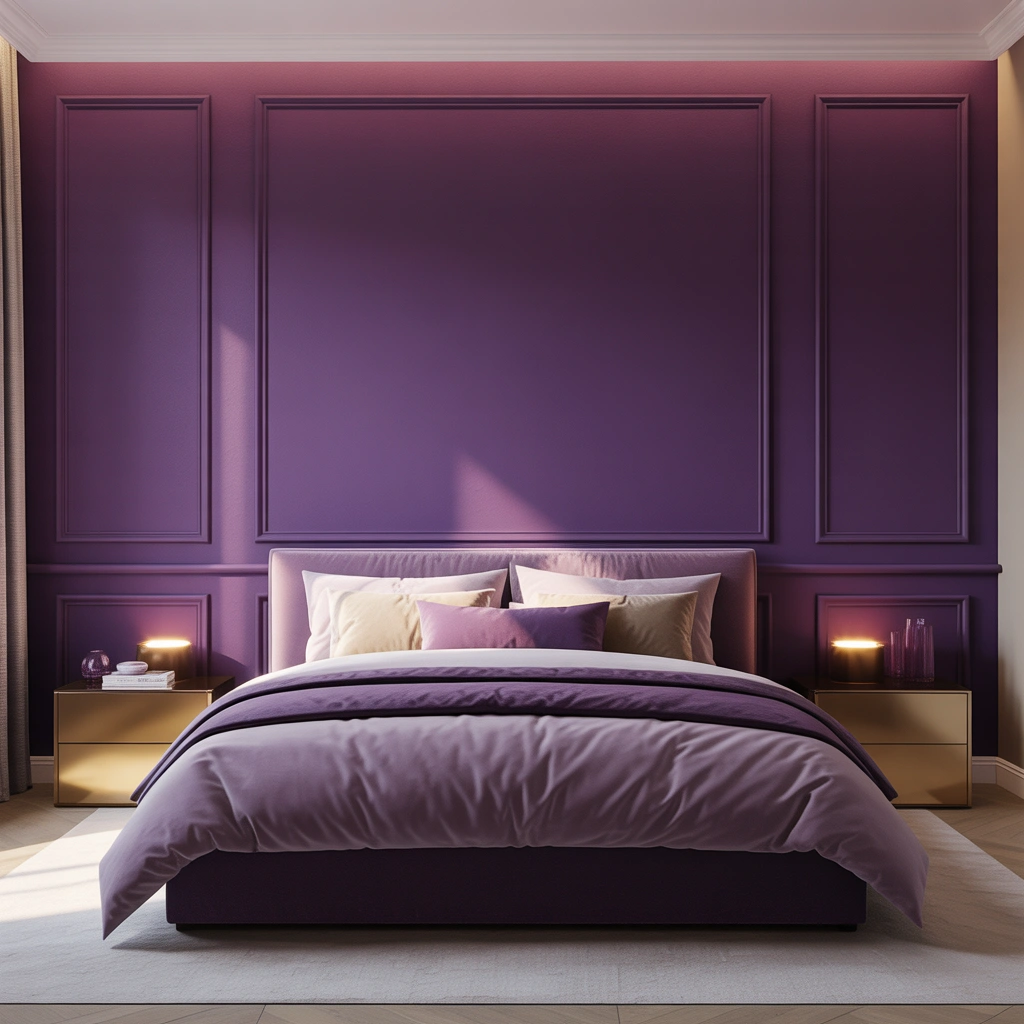
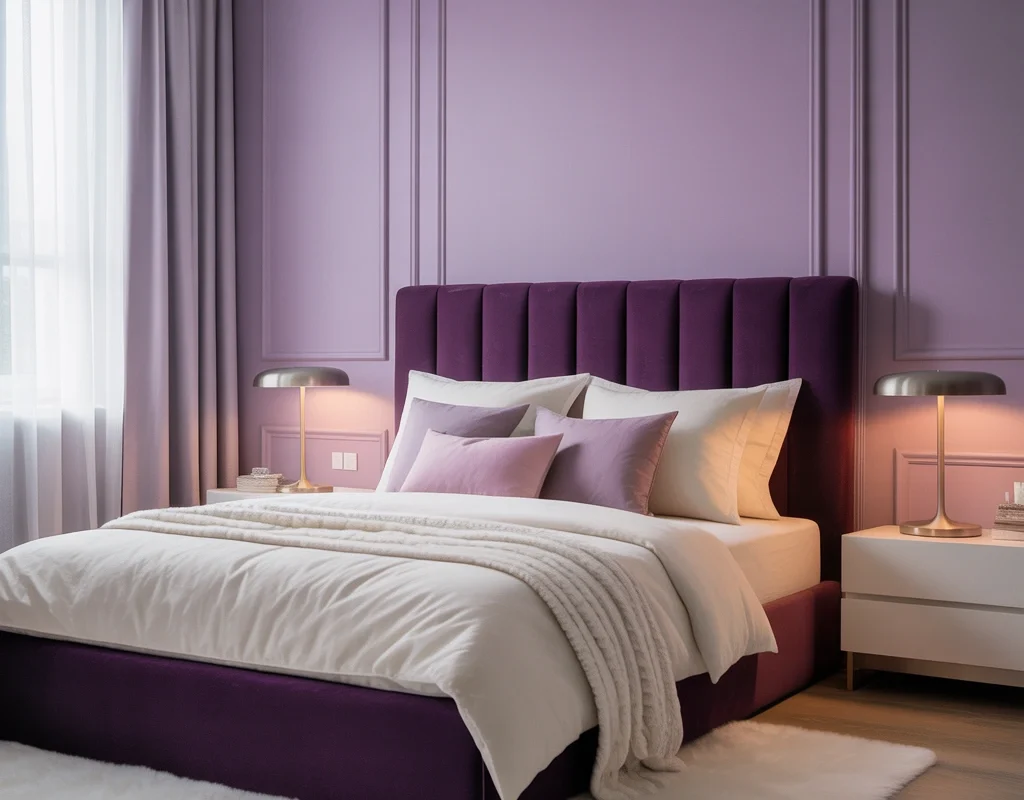
A deep purple accent wall can instantly transform an ordinary bedroom into a bold and elegant space. Shades such as plum, aubergine, blackberry, and royal purple work particularly well behind the headboard because they create a strong focal point.
Since dark purple absorbs more light, it is important to balance it with lighter elements. White bedding, beige curtains, pale wood furniture, or a light-colored rug can keep the room from feeling closed in.
In smaller bedrooms, I would recommend painting only one wall in deep purple. This gives you the drama of the color without reducing the visual openness of the space. In a larger bedroom, you can use deep purple on multiple walls, especially if the room receives plenty of natural light.
Gold-framed mirrors, brass lamps, or metallic bedside tables look beautiful against a rich purple wall. Silver and chrome accents can also work, particularly in contemporary interiors.
The wall itself can be plain, textured, paneled, or covered with patterned wallpaper. For a more luxurious finish, consider adding wall molding painted in the same purple shade. This small architectural detail can make the room feel more polished and custom-designed.
3. Use Purple Bedding as the Main Feature
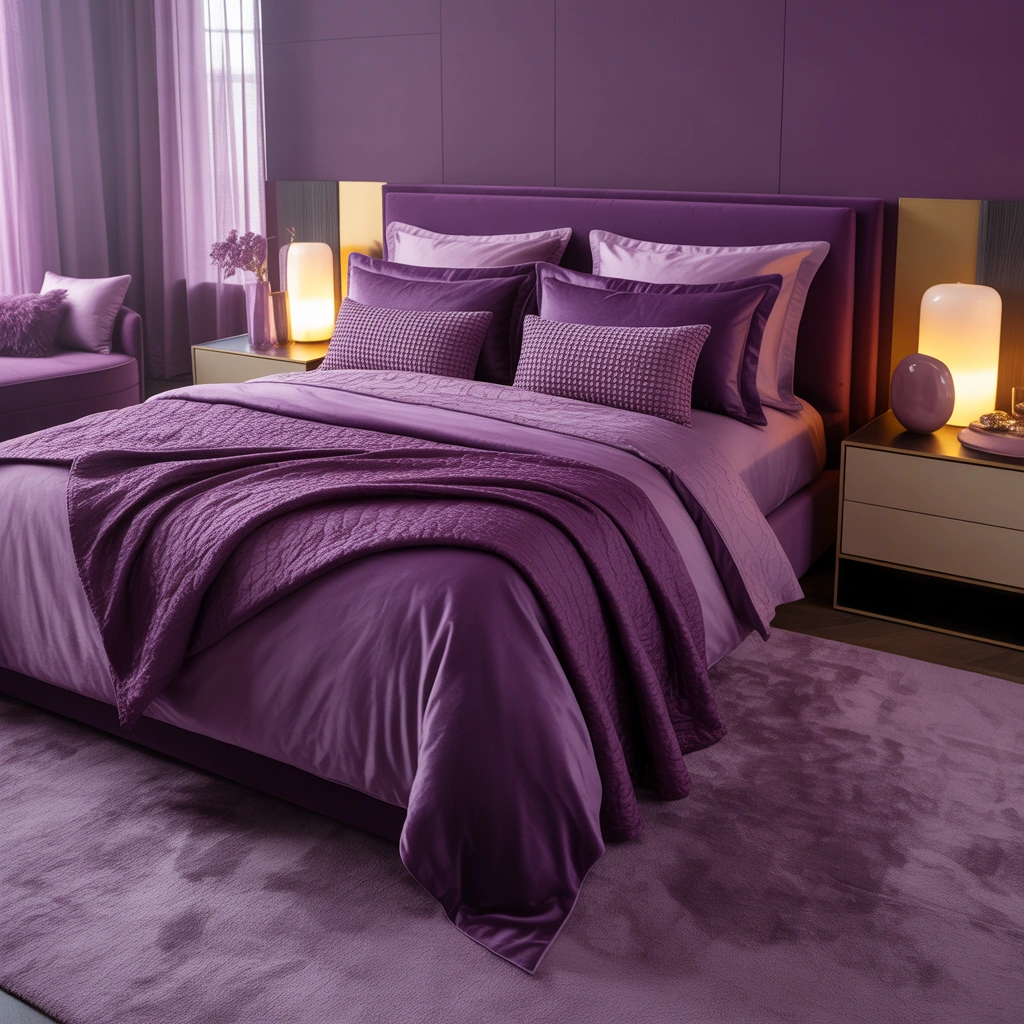
Purple bedding is perfect when you want to update your bedroom without painting walls or buying new furniture. Since the bed is usually the largest visual element in the room, changing the bedding can make a surprisingly big difference.
A deep plum duvet can add richness to a neutral room, while a pale lilac comforter creates a softer and more relaxed look. You can also combine multiple purple tones through layered pillows, sheets, blankets, and throws.
For example, use a dusty mauve duvet, lavender pillows, and a darker purple throw folded across the end of the bed. The variation in shades creates dimension and prevents the bedding from looking flat.
Texture is just as important as color. Velvet cushions, quilted bedspreads, knitted throws, linen sheets, and faux-fur blankets can make purple bedding feel more luxurious and inviting.
If your bedding has a bold pattern, keep the rest of the room simple. Floral purple bedding looks lovely with plain walls and minimal accessories. Solid purple bedding, on the other hand, can be paired with patterned curtains, wallpaper, or decorative pillows.
The goal is to create a bed that looks comfortable and styled without feeling too formal.
4. Combine Purple and White for a Clean Look
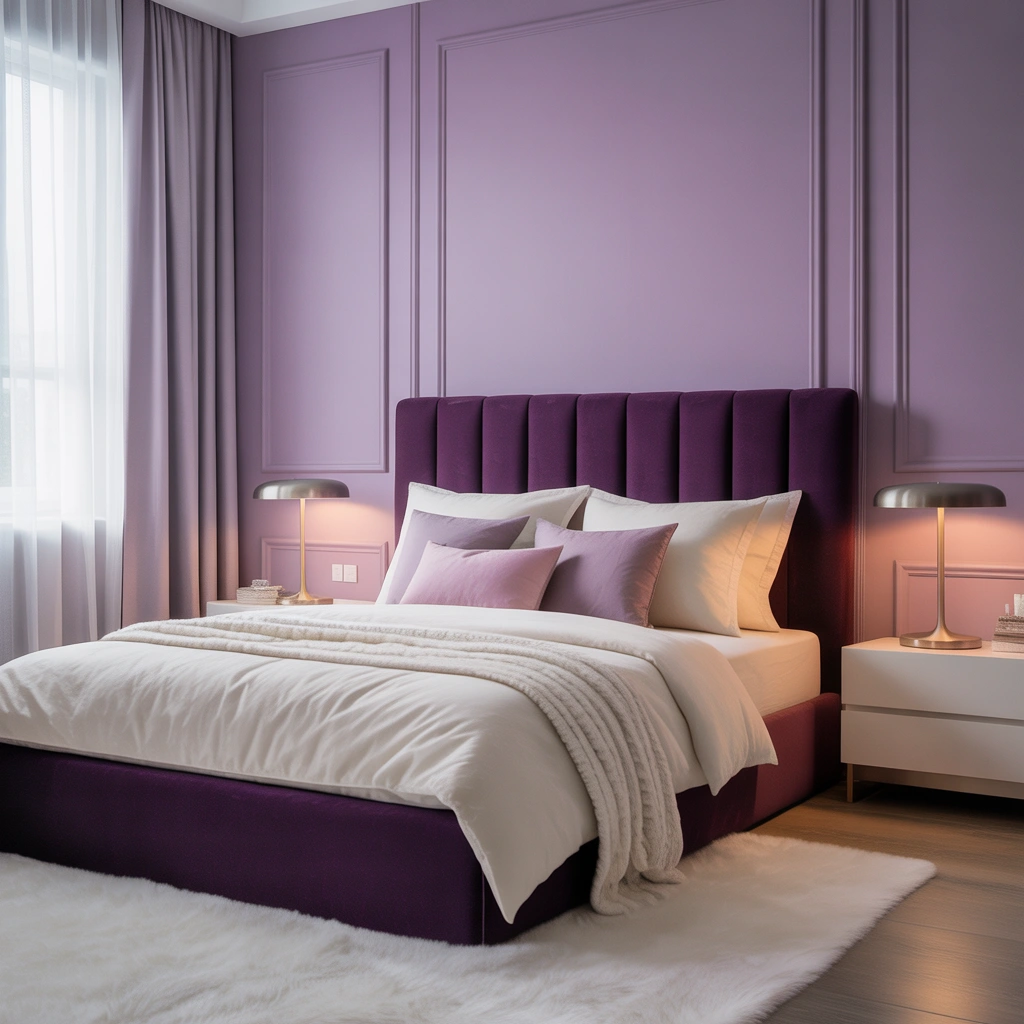
Purple and white are a classic bedroom color combination because white brightens the richness of purple. Together, they can create a room that feels clean, balanced, and refreshing.
You could use white walls with purple bedding, purple curtains, and a purple rug. Another option is to paint the walls pale lilac and introduce white through the bed frame, lamps, furniture, and decorative trim.
For a modern bedroom, choose bright white and a cool-toned violet. For a softer and more traditional style, use warm white with lavender or muted mauve.
White helps separate purple elements visually, which is especially helpful when using several shades in one room. For instance, a white bed can sit against a purple accent wall, while white pillowcases break up a dark purple comforter.
I also recommend adding a few natural materials so the room does not feel too clinical. A woven basket, wooden bench, jute rug, or dried flower arrangement can introduce texture and warmth.
This color scheme is especially useful for small bedrooms because white reflects light, while purple adds personality without requiring too many decorative objects.
5. Decorate With Purple and Gold Accents
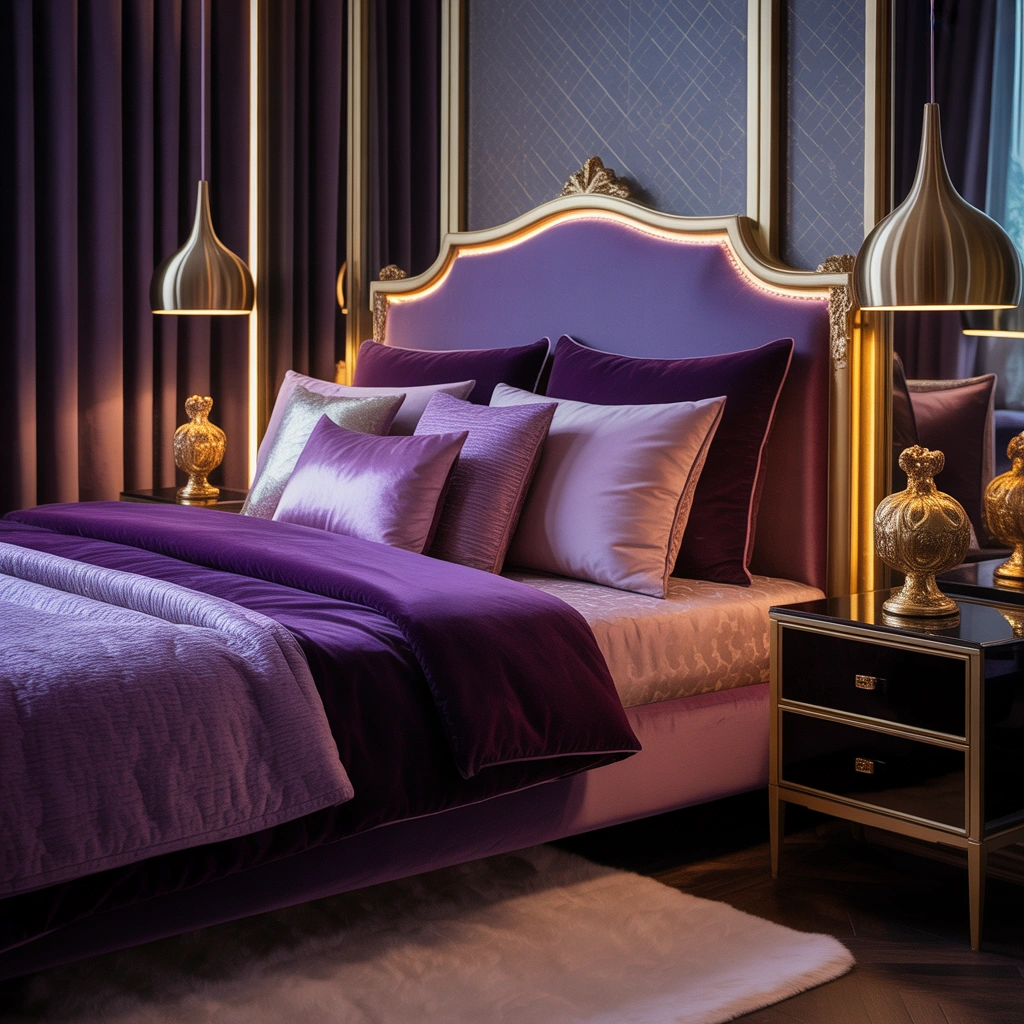
Purple and gold are a natural pairing for anyone who wants a glamorous or luxurious bedroom. Historically, purple has been associated with royalty, and gold enhances that rich, elegant feeling.
The key is to use gold as an accent rather than allowing it to compete with the purple. Small gold details can make a strong impression. Consider gold bedside lamps, drawer handles, picture frames, mirrors, candleholders, or a slim metallic side table.
Deep purple shades work especially well with warm gold. Plum bedding against a dark purple wall can look stunning with brass lighting and cream-colored curtains. For a lighter look, pair dusty lavender with champagne gold and warm beige.
Velvet is an excellent fabric for this color combination. A purple velvet headboard or bench can become the statement piece of the room. Add gold lighting and soft neutral bedding to keep the design elegant rather than excessive.
Warm lighting is important in a purple-and-gold bedroom. Cool white bulbs can make gold look harsh and purple appear blue. Soft yellow or warm white light enhances both colors and creates a more welcoming atmosphere.
A few reflective surfaces, such as a mirror or glass lamp base, can also help distribute light throughout the room.
6. Choose a Purple Upholstered Headboard
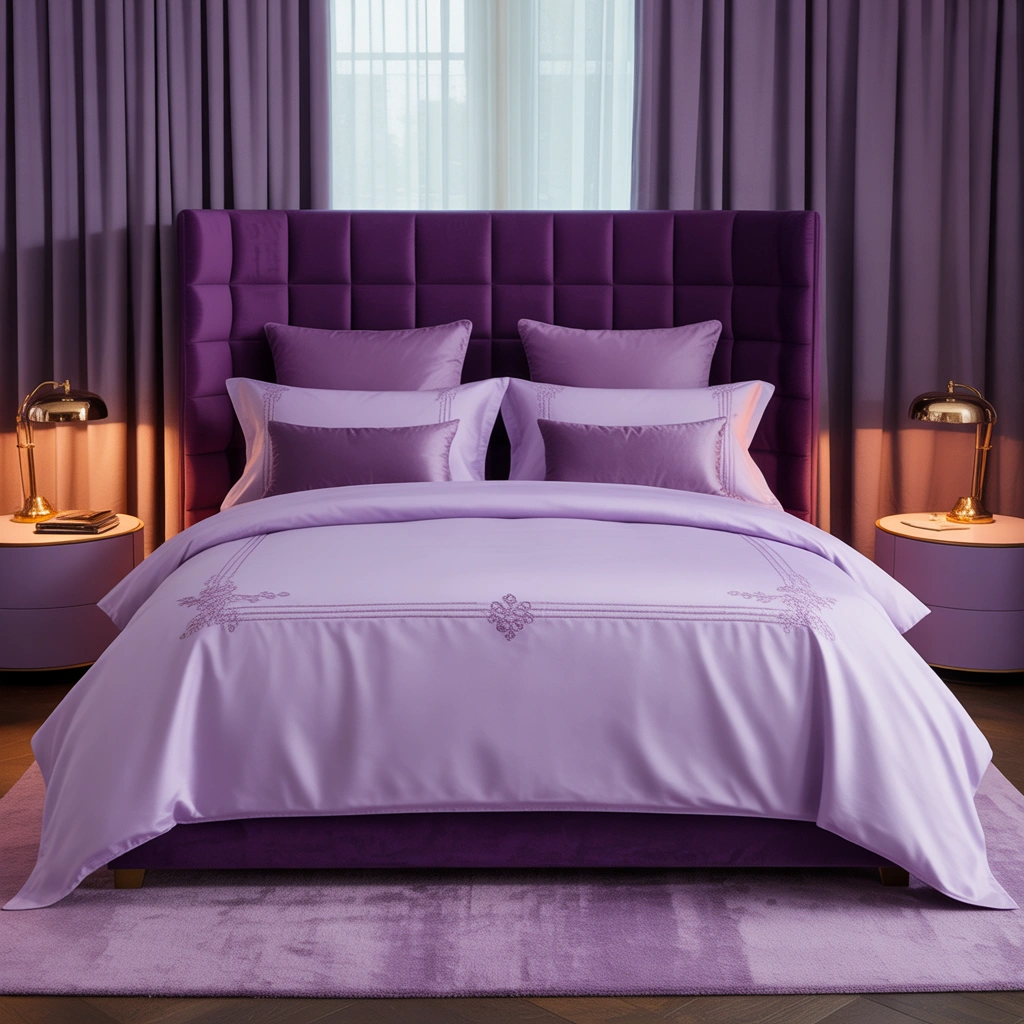
A purple upholstered headboard is an excellent focal point, especially when you prefer neutral walls. It adds color, softness, and texture without requiring a major renovation.
Velvet headboards in plum, violet, or aubergine create a luxurious appearance. Linen or cotton upholstery in lavender and dusty mauve feels more casual and relaxed.
The shape of the headboard can also influence the room’s overall style. A tall, tufted design feels glamorous and traditional. A simple rectangular headboard works well in modern bedrooms. Curved or scalloped shapes create a softer, more feminine effect.
When styling a purple headboard, choose bedding that allows it to remain visible. White, cream, light gray, or blush bedding can provide contrast. You can repeat the purple shade in one or two cushions to connect the headboard with the rest of the room.
A purple headboard also looks beautiful against wallpaper. Try a subtle floral print, a soft geometric pattern, or a textured neutral design. Make sure the wallpaper and headboard are not both overly busy.
For a balanced look, place matching lamps or wall sconces on both sides of the bed. This frames the headboard and strengthens its role as the room’s central feature.
7. Design a Purple and Gray Bedroom
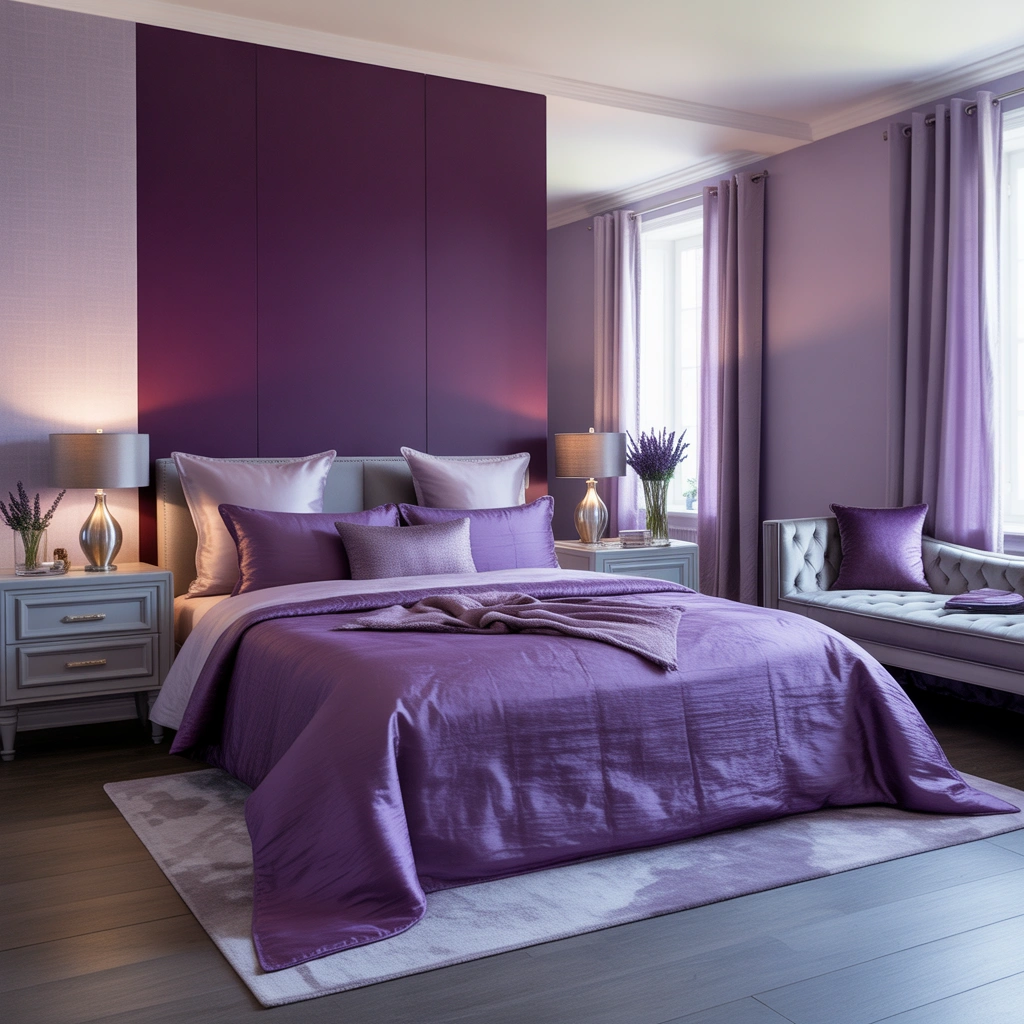
Purple and gray create a stylish, contemporary color scheme that feels calm and mature. Gray reduces the sweetness of purple, while purple prevents gray from looking dull or overly industrial.
Light gray walls work beautifully with lavender, mauve, and violet accents. Dark charcoal walls can be paired with pale purple bedding for a dramatic contrast.
When decorating with purple and gray, pay attention to undertones. Cool gray pairs well with blue-based purples such as violet and lavender. Warm gray, sometimes called greige, works better with reddish purples such as plum, wine, and mauve.
You can create balance by using gray as the main color and purple as the accent. For example, choose gray walls, a gray bed frame, and purple bedding. Alternatively, use a muted purple wall color with gray curtains and furniture.
Silver hardware, mirrored furniture, black picture frames, and glass lighting fixtures all complement this combination. To soften the design, add a plush rug, velvet cushions, and layered blankets.
If the bedroom begins to feel too cool, introduce warm wood, cream-colored fabrics, or gold accents. Even a small amount of warmth can make the space feel more comfortable.
8. Bring in Purple Floral Patterns
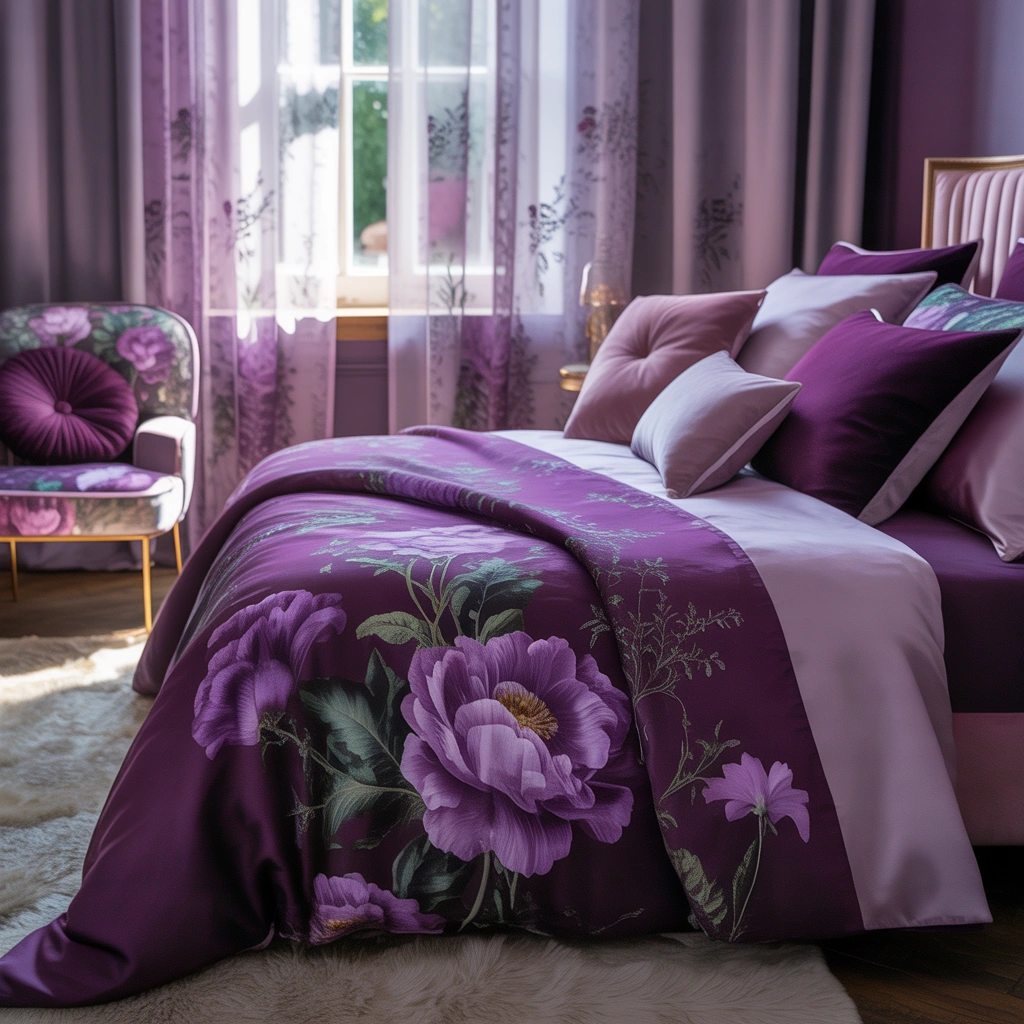
Purple floral decor can make a bedroom feel romantic, elegant, or cottage-inspired. The final effect depends on the size and style of the flowers.
Large floral prints create drama and work well on an accent wall or oversized artwork. Small floral patterns feel softer and are ideal for bedding, curtains, or decorative cushions.
A purple floral wallpaper behind the bed can become the main decorative feature of the room. Keep the remaining walls neutral so the pattern does not overwhelm the space. Choose one or two colors from the wallpaper and repeat them in the bedding or accessories.
For a vintage-inspired bedroom, combine purple flowers with cream furniture, lace details, antique-style lamps, and soft pink accents. For a modern look, choose abstract floral prints with clean-lined furniture and minimal accessories.
You can also use real or artificial flowers. Lavender stems, purple hydrangeas, orchids, and lilacs look beautiful in simple glass or ceramic vases. A small arrangement on a bedside table can make the room feel more finished.
Avoid using floral prints on every surface. One main pattern, supported by solid-colored fabrics, usually creates a more sophisticated result.
9. Style a Bohemian Purple Bedroom
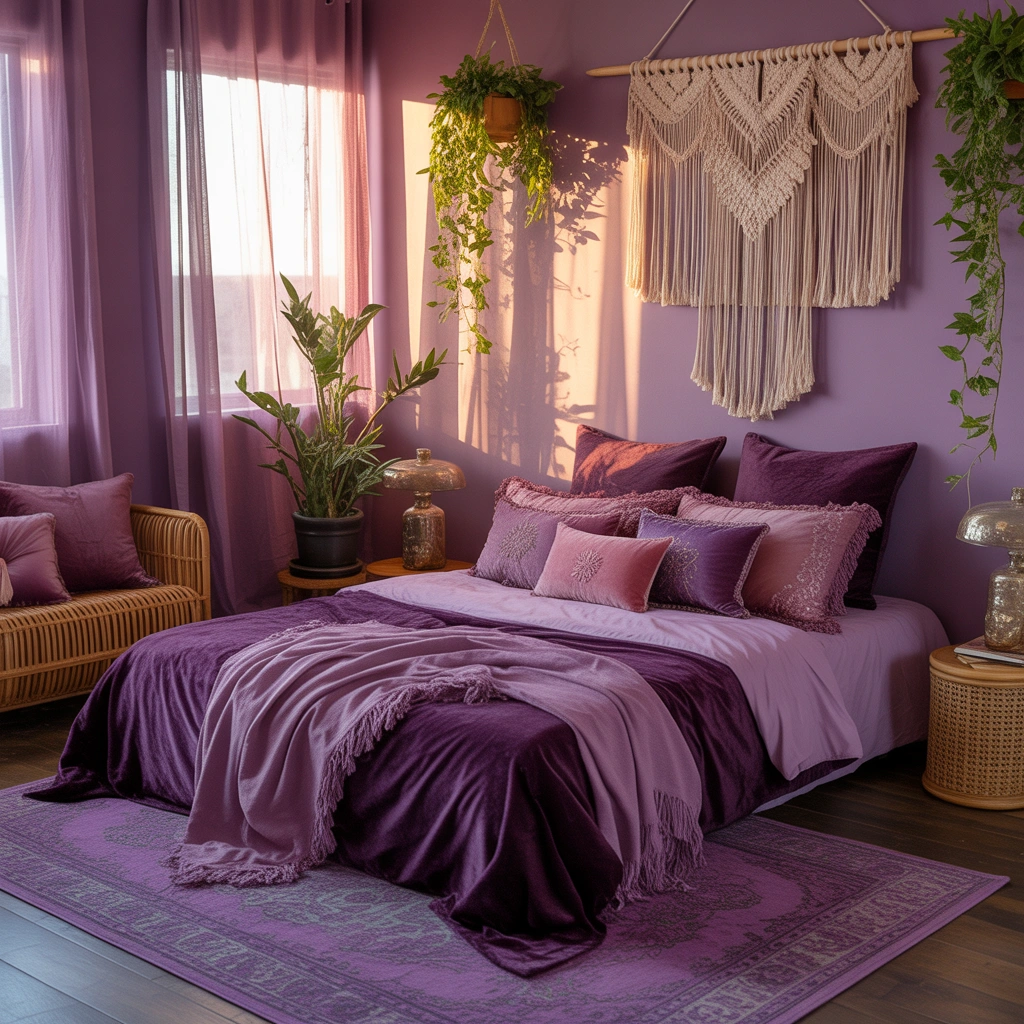
Purple fits naturally into bohemian bedroom decor because it works well with layered colors, artistic patterns, plants, and handmade textures.
Start with a base of warm white, beige, terracotta, or natural wood. Then add purple through a tapestry, bedspread, floor cushions, curtains, or patterned rug.
A bohemian purple bedroom does not need to match perfectly. In fact, slight variations make the room feel more relaxed and collected. Combine lavender, plum, burgundy, dusty rose, mustard, and earthy orange in a balanced way.
Texture is essential in this style. Use macramé wall hangings, woven baskets, tasseled cushions, embroidered blankets, and natural-fiber rugs. Plants add freshness and help purple feel connected to nature.
String lights or warm lanterns can create a cozy atmosphere. You might also add framed artwork, travel-inspired accessories, handcrafted pottery, or a low wooden bench.
The room should feel personal rather than professionally staged. Display meaningful books, photographs, art, or objects that tell a story. Purple becomes part of the room’s creative personality instead of looking like a strict color theme.
10. Use Purple Curtains to Frame the Room
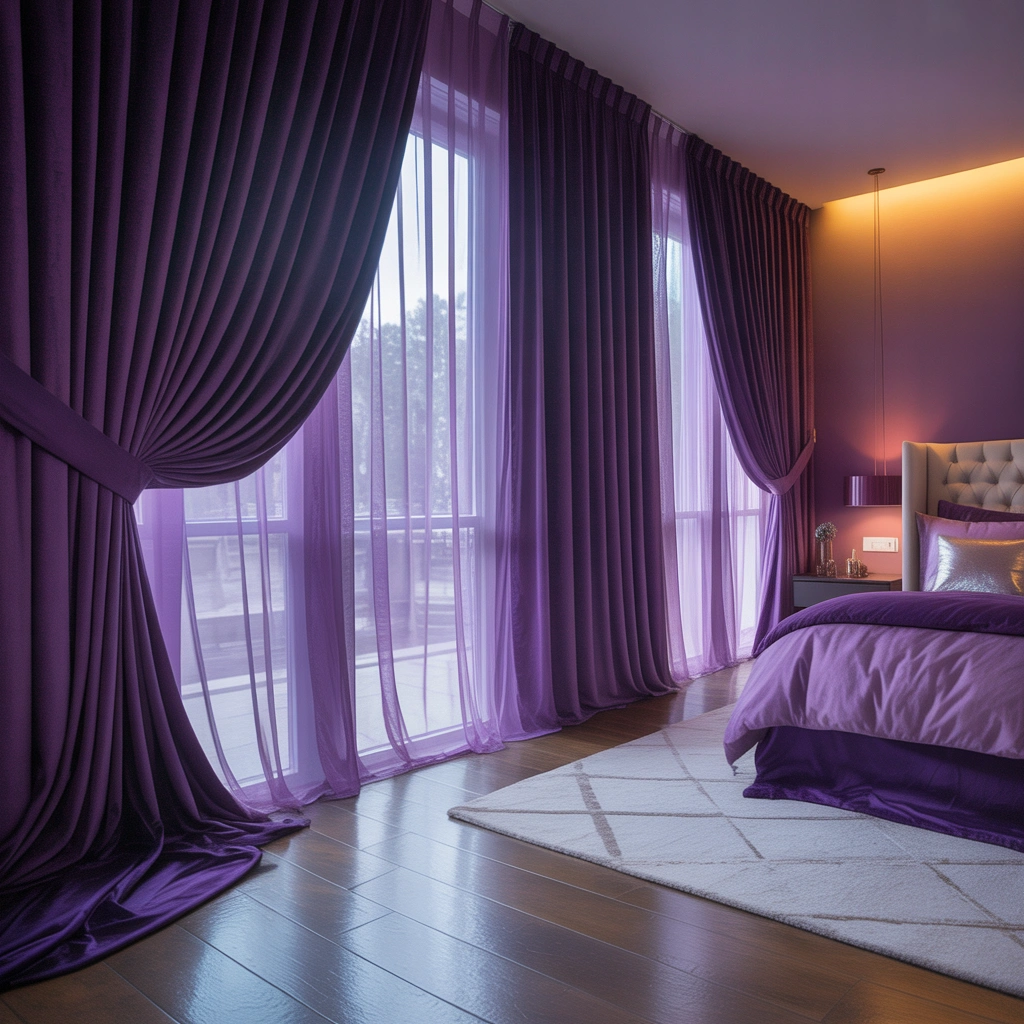
Curtains are often overlooked, but they can change the mood of a bedroom immediately. Purple curtains add height, softness, and color, particularly when the walls are neutral.
For a light and airy room, choose sheer lavender curtains. They gently filter sunlight and create a subtle purple glow. For privacy and a more luxurious look, use heavy plum velvet curtains.
Hang the curtain rod several inches above the window and extend it beyond the window frame. This makes the ceiling appear higher and allows more light to enter when the curtains are open.
If the bedroom already contains a lot of purple, choose curtains in a slightly different shade or select a subtle pattern. If the room is mostly neutral, solid purple curtains can become a strong accent.
Layering can also work beautifully. Use white sheer panels behind darker purple curtains. During the day, the white layer keeps the room bright. At night, the purple panels create privacy and warmth.
Match the curtain hardware to other details in the room. Black rods suit modern interiors, while gold or brass rods complement glamorous spaces.
11. Create a Dark and Moody Purple Bedroom
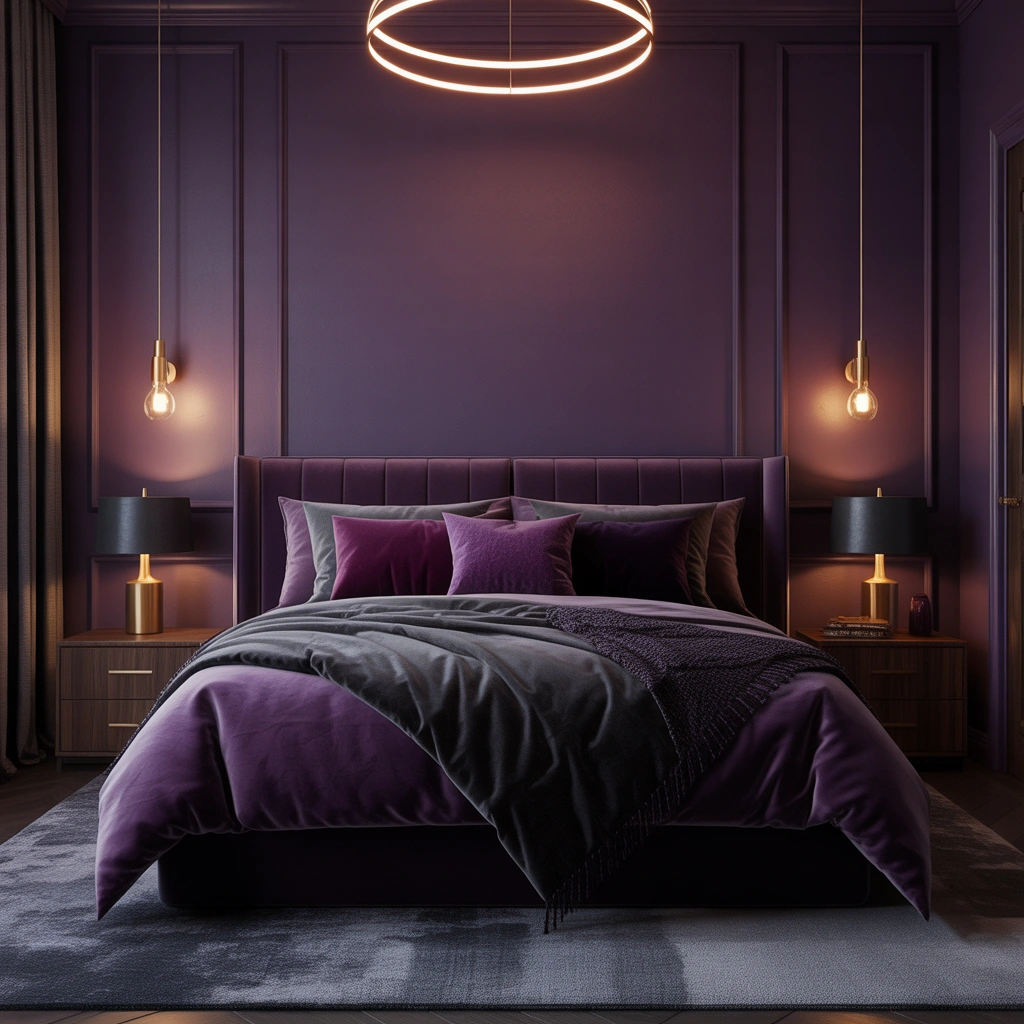
A dark purple bedroom can feel intimate, dramatic, and surprisingly restful. This style works particularly well for people who enjoy cocoon-like spaces and rich, saturated colors.
Consider painting the walls in aubergine, blackberry, or deep plum. You can even paint the ceiling in the same shade for a fully immersive look. However, this approach works best when the room has good lighting and enough visual contrast.
Use bedding in charcoal, black, cream, or another purple tone. Dark wood furniture can enhance the mood, while lighter wood creates a more balanced appearance.
Layered lighting is essential. Instead of relying on one bright ceiling light, combine bedside lamps, wall sconces, floor lamps, and subtle accent lighting. Warm bulbs will make the purple walls feel softer and more inviting.
Metallic accessories, mirrors, and glass surfaces can reflect light and prevent the room from feeling flat. Artwork with pale backgrounds can also break up the dark walls.
To keep the design sophisticated, limit clutter. Dark colors already create visual weight, so choose a few meaningful decorative pieces rather than filling every surface.
12. Add Purple Through Small Decorative Accessories
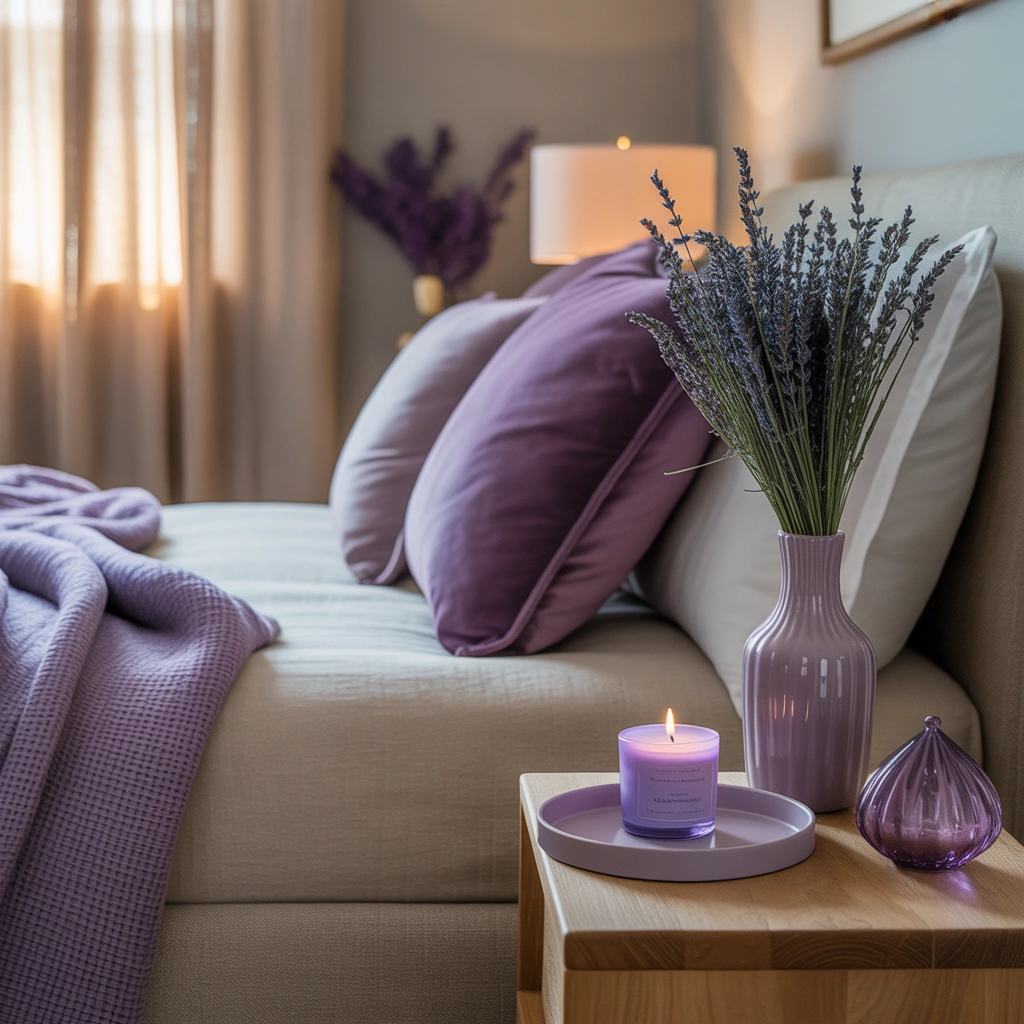
You do not need to make a large commitment to enjoy purple bedroom decor. Small accessories are ideal for renters, budget-friendly makeovers, or anyone who likes to change colors seasonally.
Start with decorative pillows, a throw blanket, lampshades, candles, artwork, storage boxes, or a small rug. These elements can introduce purple without changing permanent features.
Try repeating the color in three different areas of the room. For example, place purple cushions on the bed, purple flowers on the dresser, and a framed purple print on the wall. This creates visual connection and makes the color look intentional.
Different textures can make a small amount of purple feel more interesting. Combine a velvet cushion, a ceramic vase, and a knitted blanket rather than using identical materials.
A purple bedside lamp can also become a charming accent. Choose a ceramic base in lavender or a clear glass lamp with a purple shade.
The advantage of accessories is flexibility. You can easily move, replace, or update them. If you later decide to use a different accent color, you will not need to repaint the entire bedroom.
13. Mix Multiple Shades of Purple
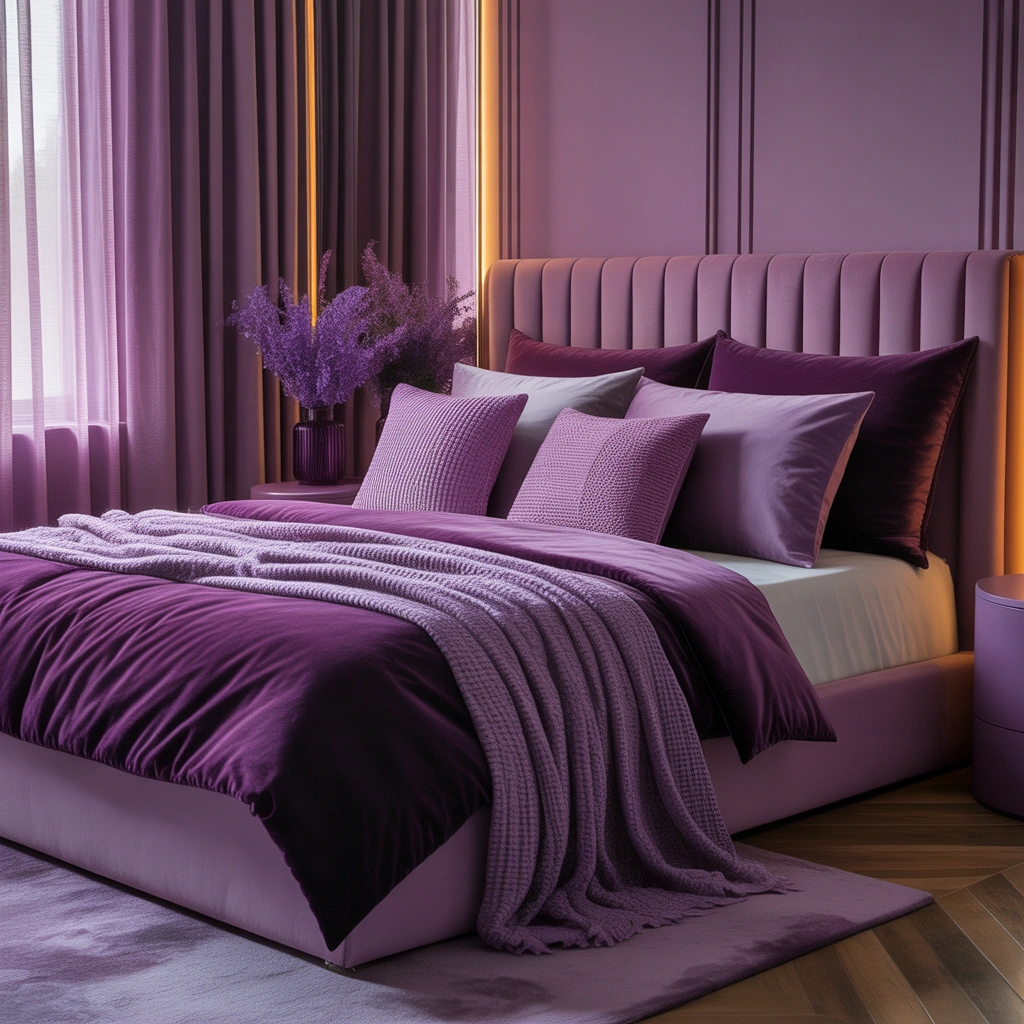
Using several shades of purple can create a rich, layered bedroom with plenty of depth. The secret is choosing one dominant shade and allowing the others to support it.
For example, pale lavender could be the main wall color. You might then add a plum headboard, mauve bedding, and violet accessories. Because all the colors belong to the same family, they feel connected even though they are different.
To avoid an overly busy result, include neutral colors between the purple layers. White, cream, gray, and beige provide visual breathing space.
You should also vary the intensity of the shades. If every purple is equally bright, the room may feel overwhelming. Combine muted, light, and deep tones for a more balanced design.
Pattern can help bring the shades together. A rug, wallpaper, or piece of artwork containing several purple tones can act as a bridge between the different elements.
I find this approach especially effective when the room has simple furniture. The layered colors create interest, while the clean furniture shapes prevent the design from becoming too decorative.
How to Choose the Right Purple Shade for Your Bedroom
Before selecting a purple shade, consider the size of the room, the amount of natural light, and the atmosphere you want to create.
Small bedrooms often benefit from pale shades such as lavender, lilac, and soft mauve. These colors reflect more light and help the space feel open.
Large bedrooms can handle deeper shades such as plum, aubergine, and royal purple. Dark colors can make a spacious room feel warmer and more intimate.
North-facing rooms may receive cooler light, which can make blue-based purple appear colder. In these spaces, warmer purples with red or pink undertones may feel more inviting.
South-facing rooms usually receive warmer, brighter light. Both cool and warm purples can work well, although very bright shades may appear more intense during the day.
Always test paint samples on different walls and observe them in morning, afternoon, and evening light. A purple that looks soft in a store may appear much darker inside your bedroom.
Best Colors to Pair With Purple Bedroom Decor
White is one of the safest colors to combine with purple. It creates freshness and allows the purple to stand out.
Cream and beige soften purple and create a warm, relaxing bedroom. These shades work especially well with mauve, plum, and dusty purple.
Gray adds a modern and balanced appearance. Light gray looks clean with lavender, while charcoal creates drama with violet or plum.
Blush pink creates a gentle and romantic color palette. Use muted shades to keep the room elegant.
Gold adds luxury and warmth, whereas silver creates a cooler, more contemporary finish.
Green can also pair beautifully with purple because the combination is inspired by nature. Sage green and lavender create a soft botanical look, while emerald and deep purple feel bold and luxurious.
Black provides contrast and works well in modern or moody bedrooms. Use it in smaller amounts through furniture, frames, lamps, or hardware.
Tips for Balancing Purple in a Bedroom
The easiest way to balance purple is to decide whether it will be the main color or the accent color. If purple covers the walls, use more neutral bedding and furniture. If the walls are neutral, you can introduce stronger purple elements through fabrics and accessories.
Avoid choosing every item in exactly the same shade. A room with matching purple walls, bedding, curtains, rug, and furniture can feel flat and artificial. Use tonal variation and contrasting neutrals instead.
Lighting also affects the final look. Warm light usually makes purple feel cozy and rich. Cool light can make it appear sharper and bluer.
Natural textures such as wood, linen, cotton, jute, and woven materials help ground purple. These materials are especially useful when the color scheme begins to feel too polished or glamorous.
Finally, leave some empty visual space. Not every wall or surface needs a purple accessory. A few carefully chosen elements often make a stronger impact than excessive decoration.
Final Thoughts on Purple Bedroom Decor
Purple bedroom decor offers far more variety than many people realize. It can be subtle, dramatic, romantic, modern, cozy, or luxurious depending on how it is used.
For a peaceful bedroom, choose lavender walls, soft white bedding, and delicate accessories. For a bold interior, use a plum accent wall, velvet textures, and gold details. A purple-and-gray bedroom feels modern, while purple floral prints create a more romantic atmosphere.
You can also begin with small changes. A purple throw, a few cushions, new curtains, or a piece of wall art may be enough to refresh the entire room.
The most successful purple bedrooms are not necessarily the ones with the most purple. They are the ones where color, texture, light, and personal style work together. Choose a shade that makes you feel comfortable, pair it with balanced neutrals, and build the room gradually.
Your bedroom should feel like a place where you can rest, recharge, and enjoy your surroundings. With the right shade and thoughtful styling, purple can help you create exactly that kind of space.