A high school classroom should be more than a place where students sit, listen to lessons, and complete assignments. It should be an inspiring environment that encourages creativity, curiosity, communication, and a genuine love of learning. One of the easiest ways to achieve this is by decorating classroom walls with thoughtful educational displays that make students feel comfortable while keeping them interested in their studies.
When it comes to English classrooms, the possibilities are especially exciting. You can use literature-inspired displays, vocabulary walls, grammar posters, motivational quotations, reading corners, and creative bulletin boards to turn ordinary classroom walls into meaningful learning spaces. The best part is that you don’t need an expensive budget or professional interior designer to create something beautiful.
Whether you are decorating a small high school English classroom or redesigning a larger learning space, the right combination of colors, educational materials, and creative arrangements can make a remarkable difference.
If you are looking for inspiration, here are 12 high school classroom decorating ideas that combine attractive wall designs with practical educational value. Each idea offers a different approach to English classroom wall decoration, helping you create a space that students will enjoy looking at every day.
1. Create a Beautiful English Literature Wall Display
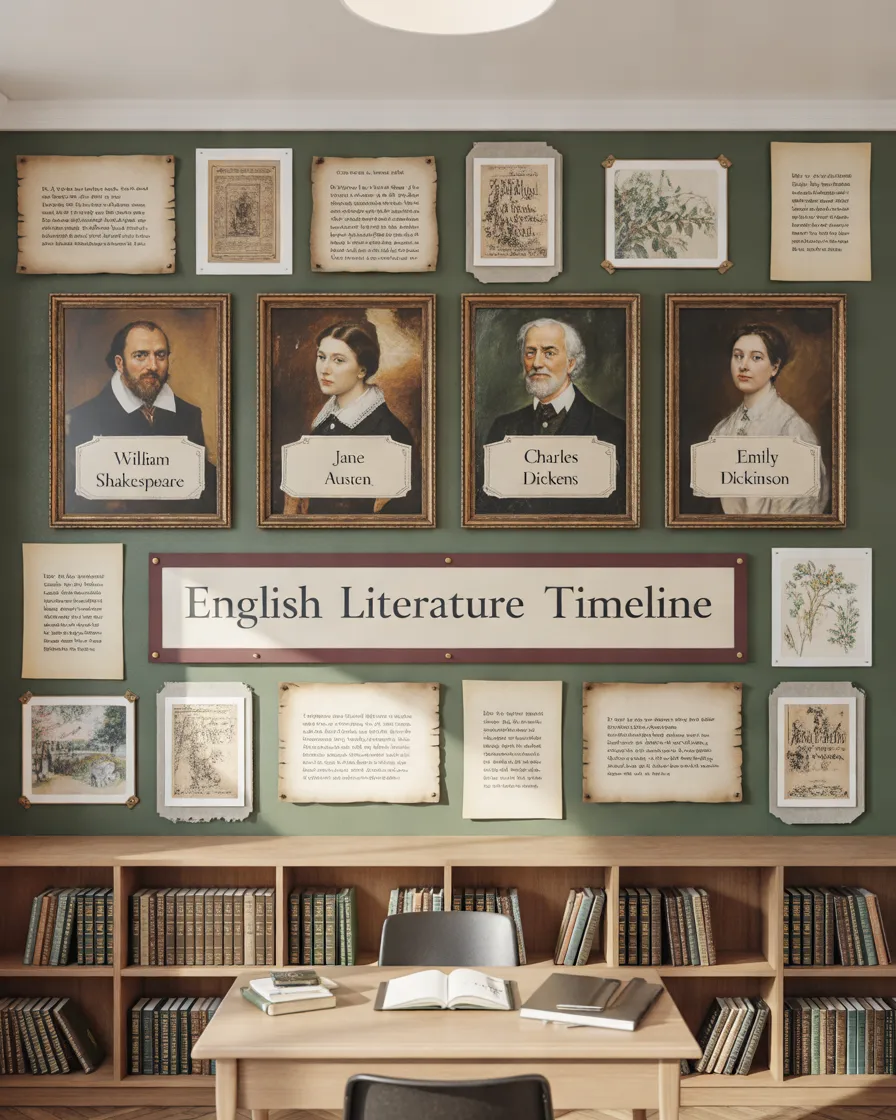
An English literature wall is a wonderful way to introduce students to the world of books, authors, poetry, and storytelling. Instead of leaving a large classroom wall empty, transform it into a colorful literary display featuring famous writers, classic novels, memorable characters, and interesting literary facts.
You can dedicate different sections to different literary genres, such as poetry, drama, fiction, and nonfiction. Include small portraits of well-known authors like William Shakespeare, Jane Austen, Charles Dickens, and Emily Dickinson. Under each portrait, add a short introduction explaining their contribution to literature.
Another interesting approach is to create a timeline of English literature. Divide the wall into historical periods, including the Renaissance, Romantic Period, Victorian Era, and Modern Literature. Use attractive labels, small illustrations, and decorative borders to make the information easier to explore.
For a more interactive experience, leave a small section where students can recommend their favorite books or write short reviews. This encourages students to participate instead of simply looking at the decorations.
Choose a warm color palette featuring cream, dark green, brown, and burgundy to create a sophisticated library-inspired atmosphere. Wooden frames, paper book illustrations, and vintage-style lettering can make the display look especially attractive.
2. Design an Attractive English Vocabulary Word Wall
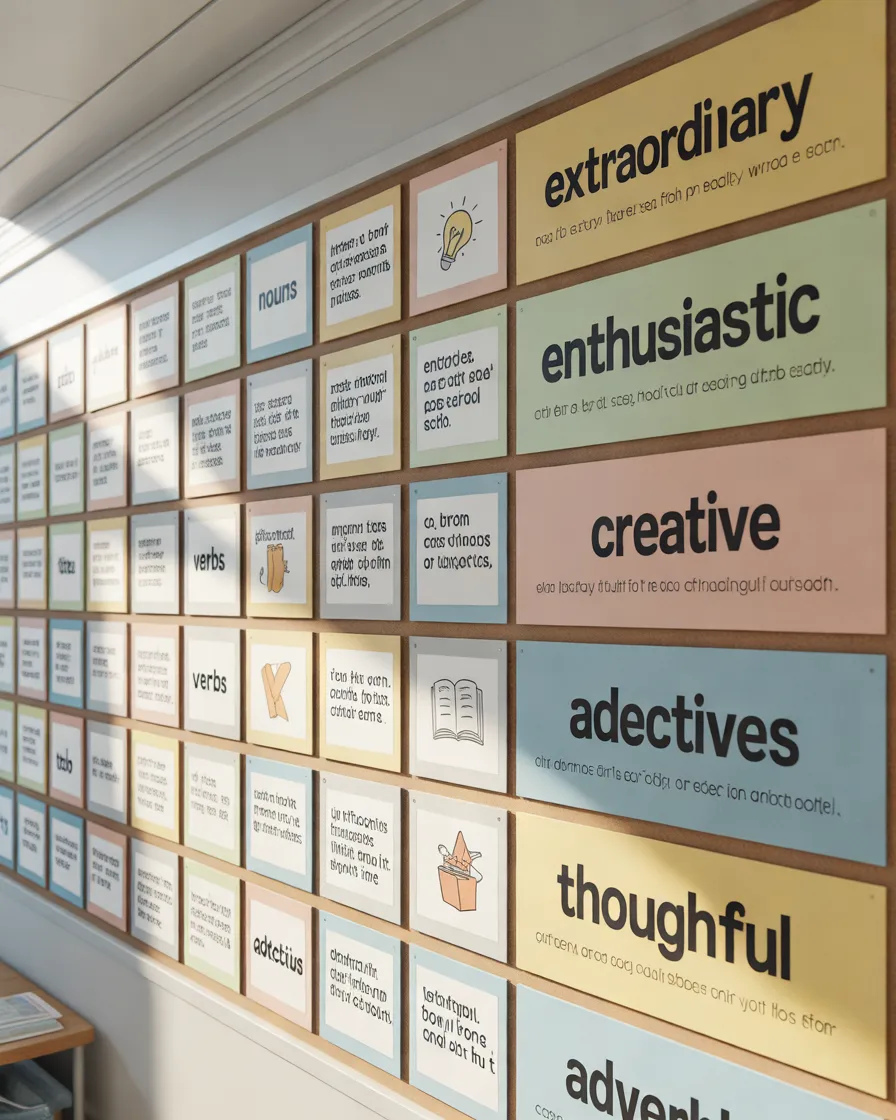
A vocabulary wall is one of the most useful English classroom decorating ideas because it combines visual appeal with everyday learning. High school students regularly encounter unfamiliar words, and having an organized vocabulary display can help them develop stronger reading, writing, and communication skills.
Start by selecting a dedicated wall or bulletin board where you can display new and interesting English words. Divide the display into categories such as adjectives, verbs, nouns, adverbs, academic vocabulary, and commonly confused words.
For example, under adjectives, you could include words like extraordinary, confident, thoughtful, and enthusiastic. Add their meanings, simple example sentences, and small illustrations to help students understand how each word is used.
You can also introduce a weekly word section. Every Monday, display a new word with its definition, pronunciation, synonyms, and an example sentence. Encourage students to use that word in their conversations or written assignments throughout the week.
For an attractive design, use colorful individual word cards arranged in neat rows or creative clusters. Choose two or three complementary colors rather than using too many bright shades. Large, readable typography is particularly important because students should be able to read the words from different parts of the classroom.
Leave a little empty space so that new vocabulary can be added regularly without making the display look overcrowded.
3. Decorate Your Classroom with Inspirational English Quotes

Motivational quotations can bring personality and positive energy to an English classroom. They also provide an opportunity to introduce students to influential writers, thinkers, poets, and historical personalities.
Instead of covering the wall with random motivational phrases, select quotations that connect with education, creativity, reading, imagination, and personal growth. For example, you could feature the famous phrase by Nelson Mandela, “Education is the most powerful weapon which you can use to change the world.”
Other options include quotations about reading, curiosity, perseverance, and the importance of expressing ideas. Make each quotation visually interesting by using different font combinations, decorative frames, and small illustrations.
You could create one large centerpiece featuring an inspiring educational quotation and surround it with smaller quote cards. Another approach is to use individual frames arranged in a gallery-style layout.
Consider using neutral backgrounds with black lettering and occasional accent colors such as mustard yellow, navy blue, or terracotta. This creates a mature, elegant appearance that is suitable for high school students.
You can also introduce a student quotation section where learners contribute their favorite inspirational lines. Change the selected quotations every month to keep the wall interesting and relevant.
4. Build a Creative Grammar Rules and Parts of Speech Wall
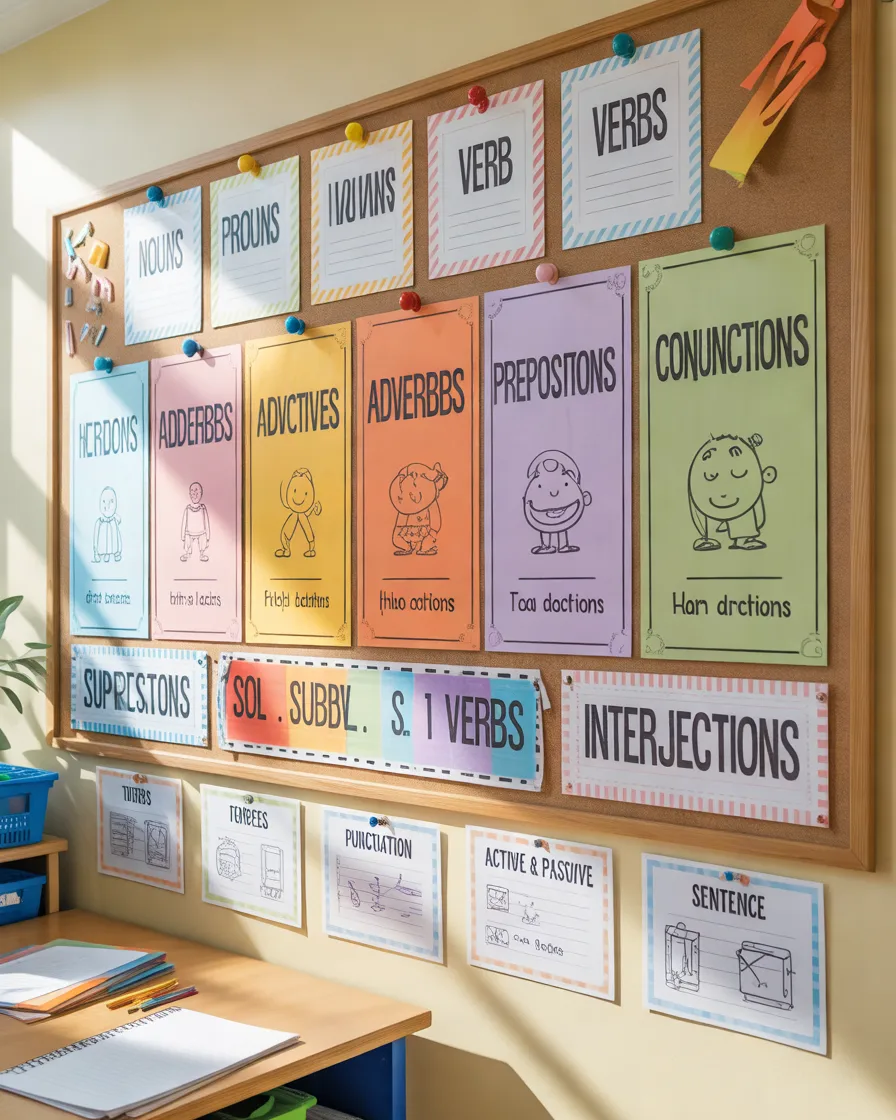
Grammar can sometimes feel challenging for high school students, particularly when they have to remember different sentence structures, punctuation rules, and parts of speech. A dedicated grammar wall makes these topics easier to understand by presenting information in a simple visual format.
Start by dividing the wall into clearly defined sections. You might include nouns, pronouns, verbs, adjectives, adverbs, prepositions, conjunctions, and interjections. Give every category its own color so students can quickly recognize the different parts of speech.
For example, the noun section could include examples such as teacher, classroom, happiness, and mountain. The verb section could feature action words like write, explore, explain, and discover.
You can also dedicate smaller areas to essential grammar concepts, including subject-verb agreement, tenses, active and passive voice, direct and indirect speech, and punctuation.
Use colorful sentence examples to demonstrate how grammar works in everyday communication. For instance, highlight the subject, verb, and object in a sentence using three different colors.
To keep the design visually organized, use matching borders, consistent heading styles, and simple illustrations. Avoid writing lengthy explanations on the wall. Short definitions and clear examples will be much easier for students to remember.
5. Create a Stunning English Reading Corner Wall
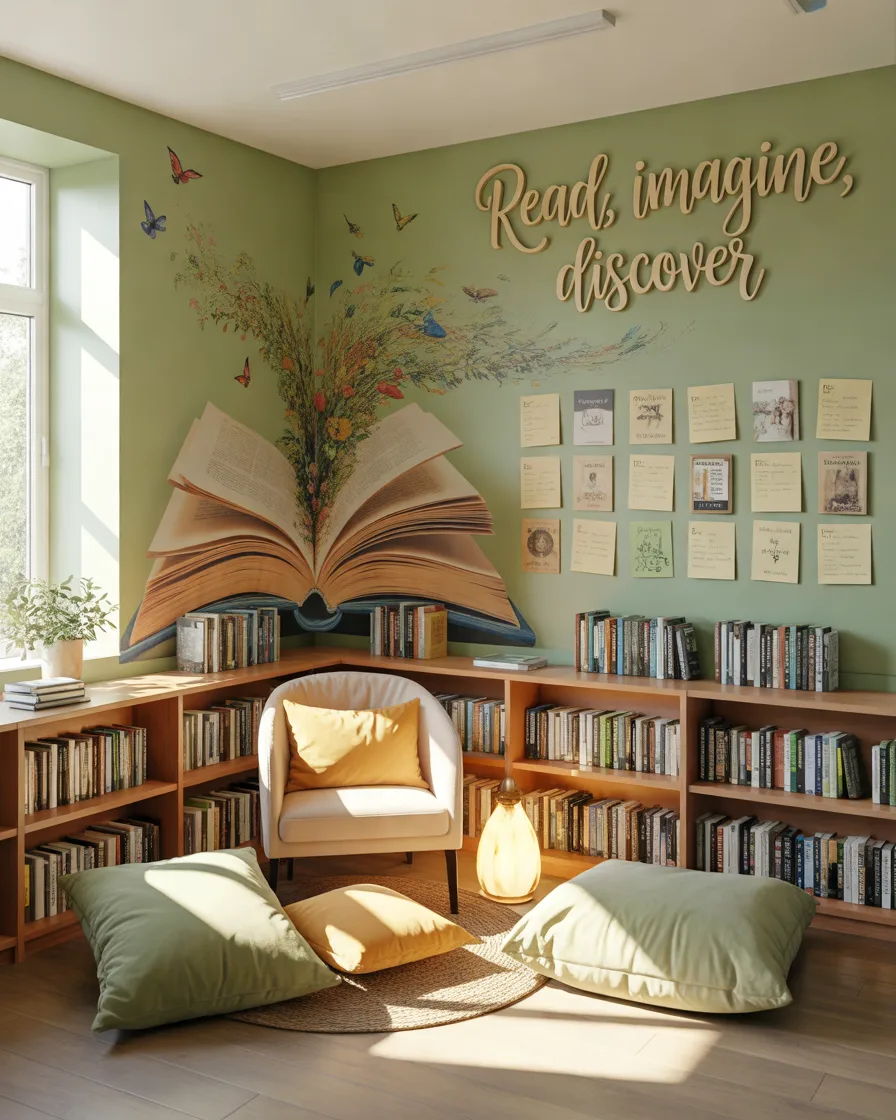
A reading corner can make an English classroom feel welcoming, comfortable, and intellectually stimulating. It gives students a dedicated place to explore books, enjoy short reading sessions, and develop independent reading habits.
Choose an unused corner of the classroom and decorate the surrounding walls with book-themed artwork. You can add large illustrations of open books, floating pages, reading-related quotations, and colorful book covers.
A simple wall-mounted bookshelf can be an attractive and practical addition. Arrange books by genre, reading difficulty, or author. If space is limited, use small floating shelves or decorative book display pockets.
Consider adding a comfortable chair, a small rug, and a few cushions in coordinating colors. A soft reading lamp can also make the area feel more inviting, provided it is suitable for the classroom environment.
For the wall itself, a combination of warm beige, sage green, soft blue, and natural wood tones can create a peaceful atmosphere. You could also add a large sign saying “READ, IMAGINE, DISCOVER” above the book collection.
To make the reading corner more engaging, create a student book recommendation board. Students can write the title of a book they enjoyed and explain why they would recommend it to their classmates.
6. Make an Interactive Student Achievement and Recognition Wall
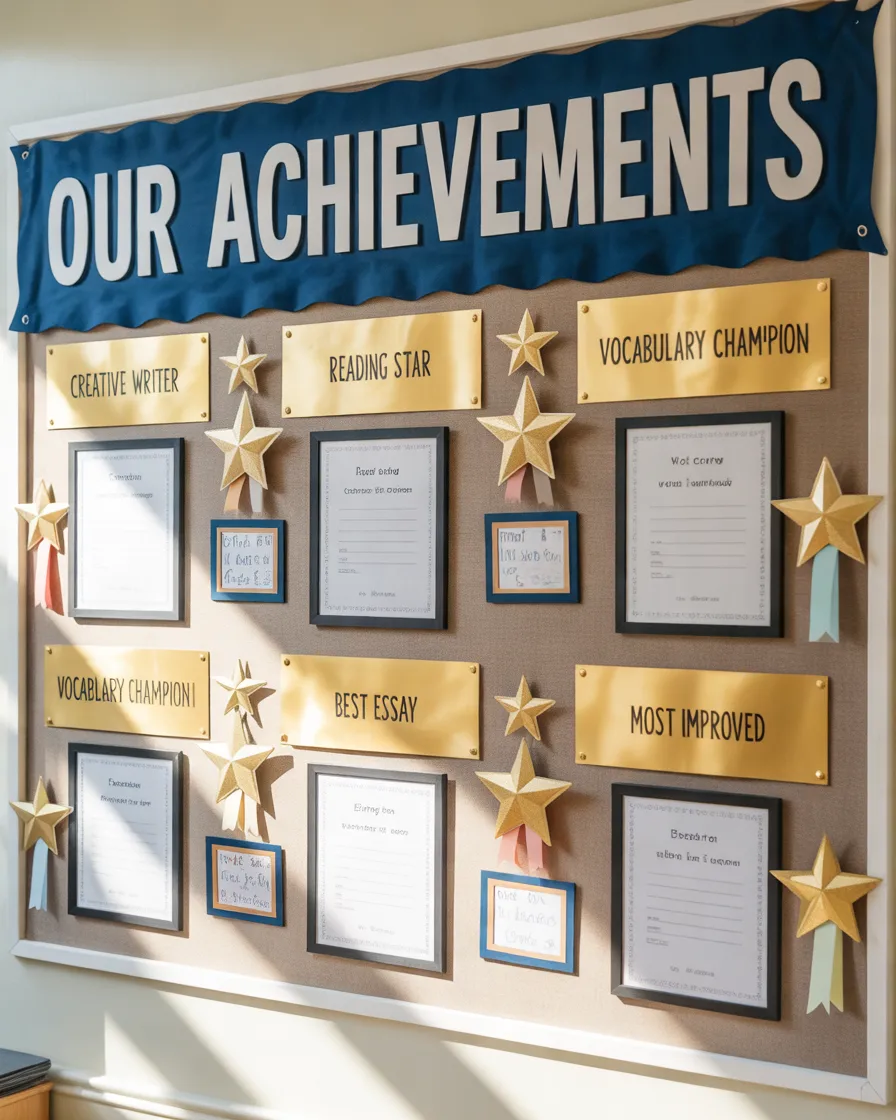
Every student appreciates having their efforts recognized. An achievement wall provides a simple way to celebrate academic progress, creativity, participation, and personal improvement.
Rather than displaying only the highest grades or competition winners, create a recognition space that celebrates different types of achievements. You can include categories such as Best Essay, Creative Writer of the Month, Vocabulary Champion, Reading Star, Outstanding Participation, and Most Improved Student.
Use individual name cards or small display frames that can be updated regularly. Include students’ short writing samples, certificates, creative poetry, artwork, or photographs of classroom projects where appropriate.
A large heading such as “OUR ACHIEVEMENTS” or “EVERY EFFORT COUNTS” can serve as the centerpiece. Arrange the recognition cards underneath in a balanced layout.
You can make the wall more visually attractive by using colorful borders, star-shaped cutouts, paper ribbons, and decorative lettering. Gold, navy blue, white, and soft yellow work particularly well for an academic recognition theme.
One important thing to remember is that the wall should encourage everyone. Avoid making it feel like a competition that only a few students can win. Rotate the recognition categories and provide opportunities for different learners to be appreciated.
7. Design an Eye-Catching English Bulletin Board
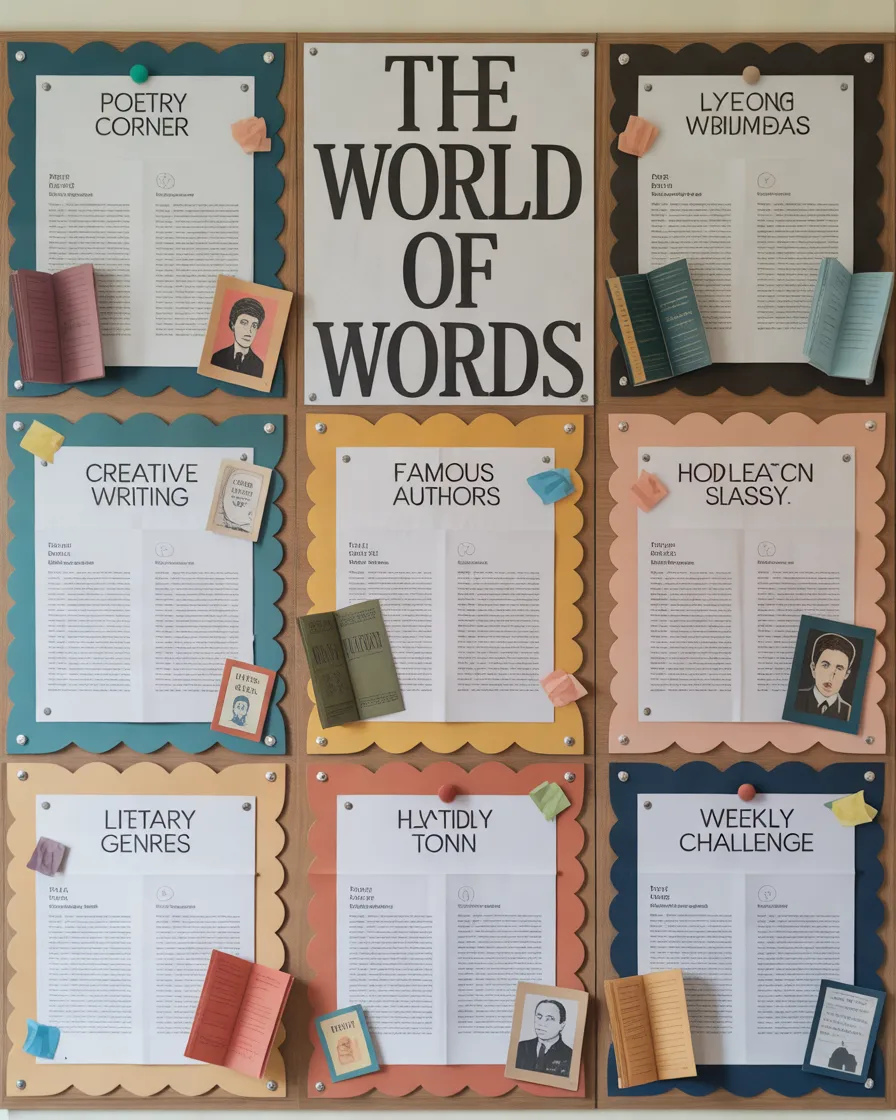
An English bulletin board is a versatile decorating feature that can be updated throughout the school year. It gives teachers a central place to communicate important information while providing students with useful educational content.
You can design your bulletin board around a specific monthly theme. For example, one month could focus on poetry, another on creative writing, and another on famous English authors. Seasonal themes and important literary celebrations can also provide fresh inspiration.
Create a central heading that immediately communicates the topic. Underneath, arrange smaller information cards, illustrations, student contributions, and short educational activities.
For example, a poetry-themed board could include different poetry forms, examples of rhyme schemes, short poems, and a section where students can display their own writing. A creative writing board might feature story starters, interesting characters, descriptive vocabulary, and writing challenges.
Use fabric, colored paper, decorative borders, and printed headings to create a layered appearance. Choose a background color that makes the content stand out without distracting from the information.
The most important advantage of this design is flexibility. You can reuse the same board throughout the year by replacing the central theme and updating the educational materials.
8. Introduce a World Literature and Language Map Wall
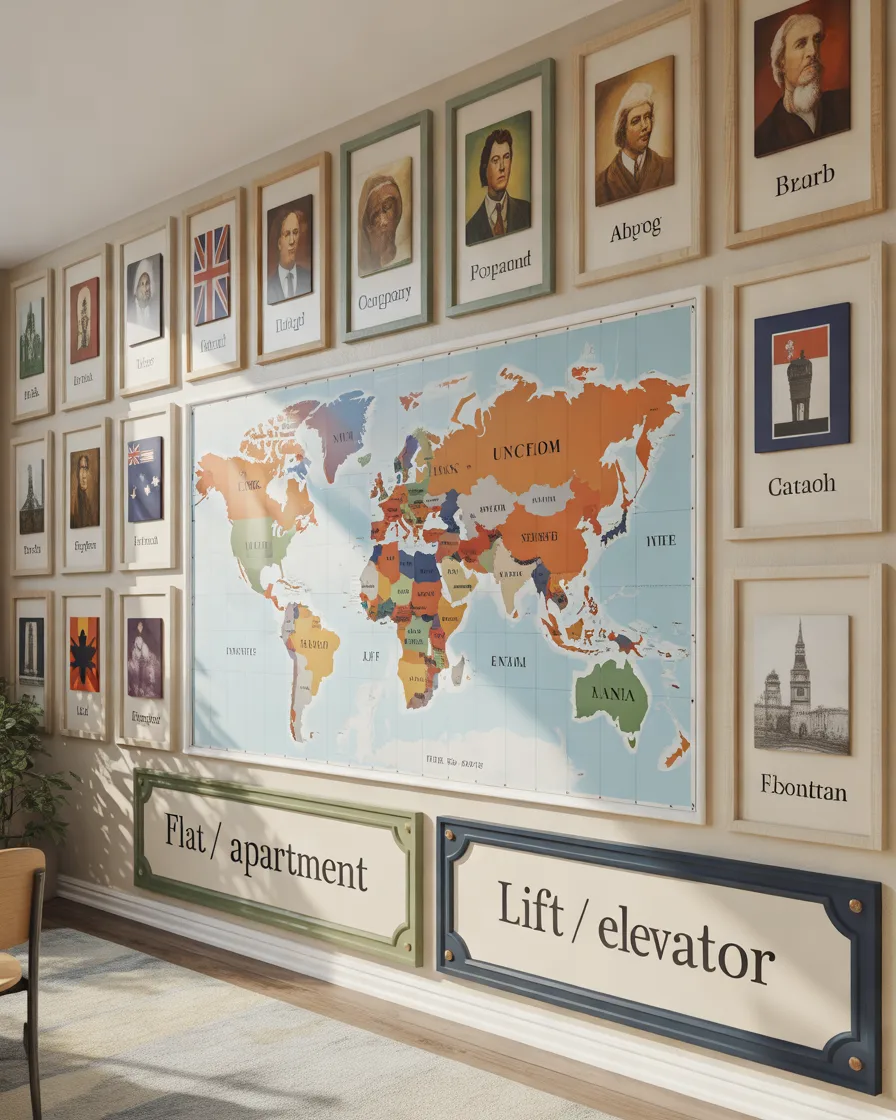
English is a global language, and an international literature wall can help students understand how stories, poetry, and communication connect people from different countries and cultures.
Start with a large world map as the central feature. Around it, highlight different English-speaking countries and their literary contributions. You can include the United Kingdom, the United States, Canada, Australia, New Zealand, and other countries where English has an important literary or educational role.
Add small information cards featuring famous writers, poets, books, and literary traditions associated with different regions. For example, students might discover authors such as Mark Twain, Maya Angelou, J.R.R. Tolkien, and Margaret Atwood.
You can also include a section about international English accents, common expressions, and differences in vocabulary. For example, compare words such as “flat” and “apartment” or “lift” and “elevator.”
Use small flags, map markers, illustrated landmarks, and colorful connecting lines to make the display visually interesting. Keep the information concise so that students can explore the wall without feeling overwhelmed.
A world literature wall is particularly suitable for classrooms that want to encourage cultural awareness, international understanding, and curiosity about language.
9. Create a Creative Writing and Storytelling Wall
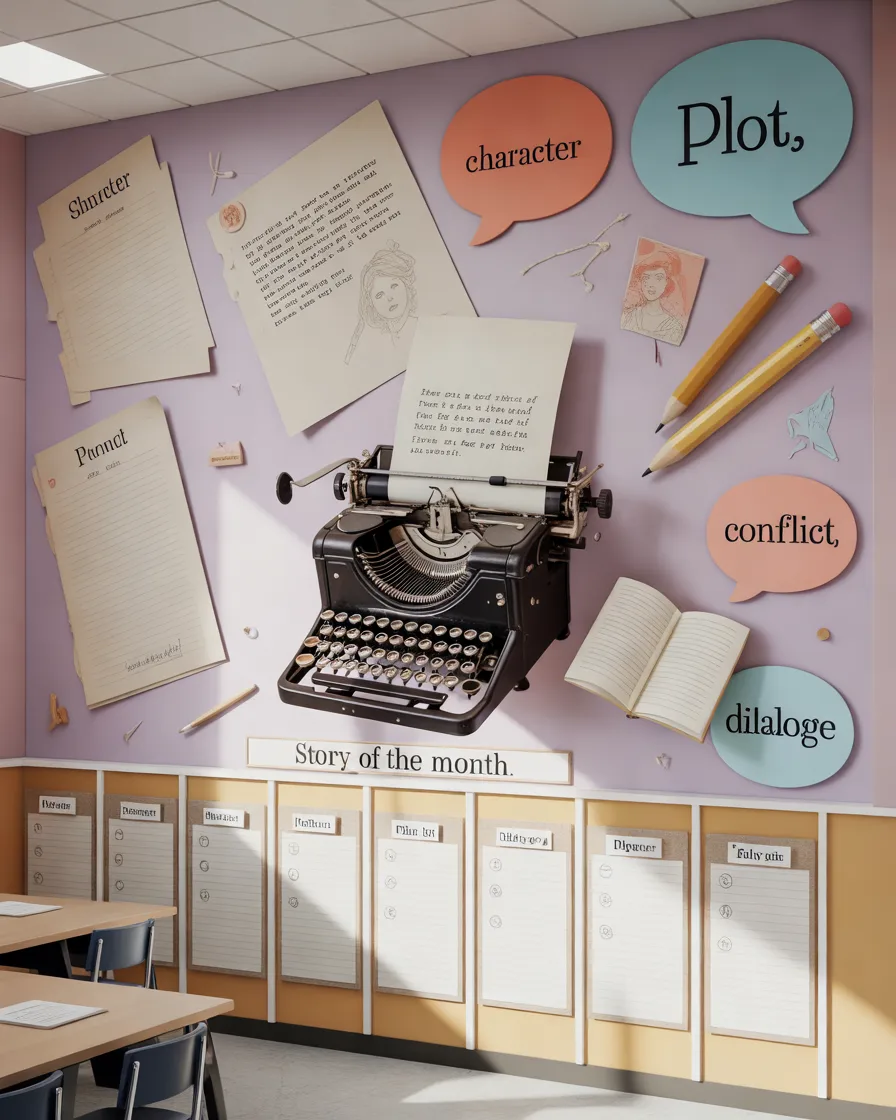
High school students often have wonderful ideas but may need encouragement to express themselves through writing. A creative writing wall can provide that encouragement while making the classroom more visually engaging.
Design a display that introduces students to different storytelling techniques, including character development, setting, plot, conflict, dialogue, and descriptive language. Give each element a separate section with a short explanation and a simple example.
You can also include creative writing prompts to help students get started. Examples might include:
- Write a story that begins with a mysterious letter.
- Describe a place you have never visited.
- Imagine waking up in a completely different world.
- Write a conversation between two unexpected characters.
For a more attractive design, create a large paper illustration of an open notebook or a typewriter surrounded by handwritten-style words, story pages, and colorful speech bubbles.
You can also introduce a “Story of the Month” section where students display short stories, poems, or imaginative paragraphs. Change the featured work regularly so that more students get an opportunity to participate.
Choose a creative color palette featuring lavender, coral, soft yellow, and sky blue. These colors can make the wall feel imaginative without becoming too childish for high school learners.
10. Decorate with a Creative Literary Theme Mural
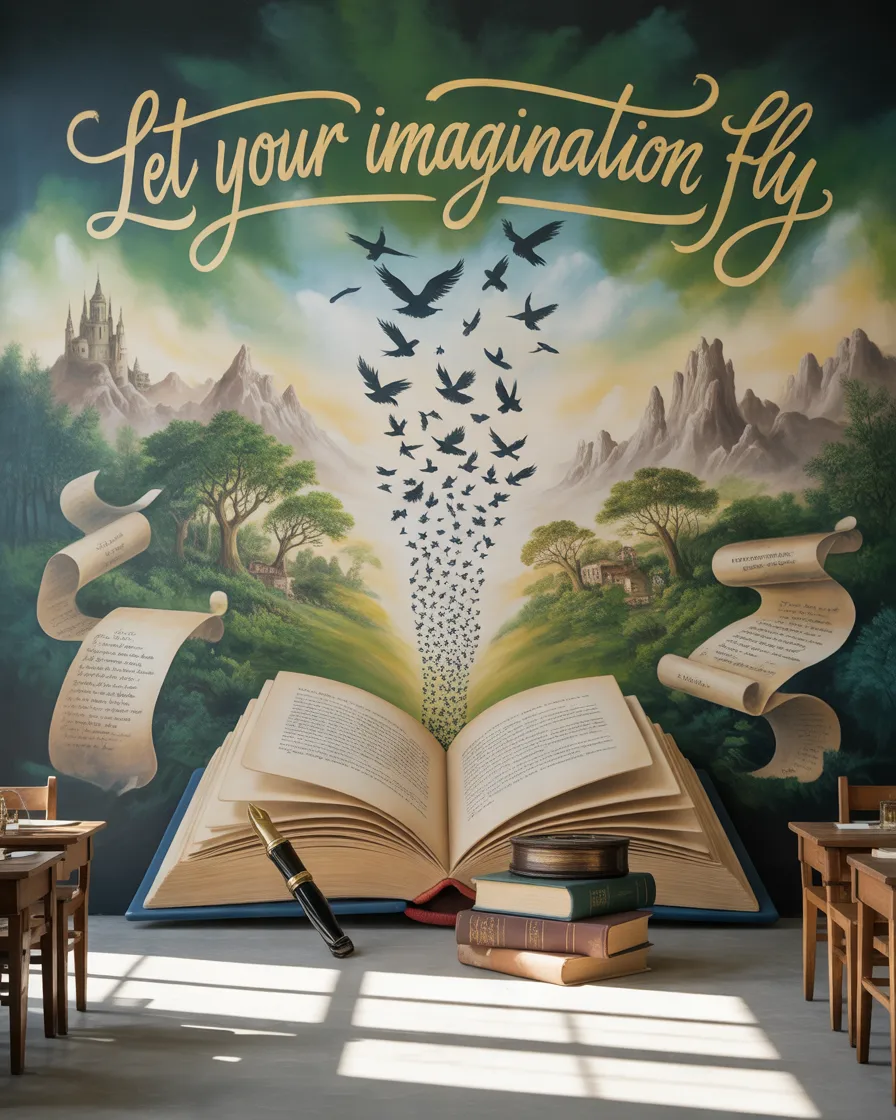
If you want to make a strong visual statement, consider creating a large literary-themed mural on one of your classroom walls. Unlike smaller posters and bulletin boards, a mural can become the main visual attraction of the entire English classroom.
You could choose a theme based on the magic of reading, the power of words, famous literary characters, or the journey of imagination. One beautiful concept is an enormous open book with colorful illustrations emerging from its pages. These could include stars, birds, trees, castles, fictional landscapes, and flying words.
Another option is a mural featuring a giant tree with branches made from English vocabulary words. Each branch could represent a different aspect of language, such as grammar, reading, writing, speaking, and listening.
If painting directly onto the wall is not possible, use removable wall decals, printed murals, or large sections of carefully arranged decorative paper.
Keep the artwork appropriate for teenagers by choosing sophisticated illustrations rather than overly cartoonish characters. Consider muted blues, forest green, cream, and warm yellow for a modern academic appearance.
A literary mural can give the classroom a distinctive identity and create an inspiring environment for students who enjoy reading and creative expression.
11. Build a Grammar and Vocabulary Learning Tree
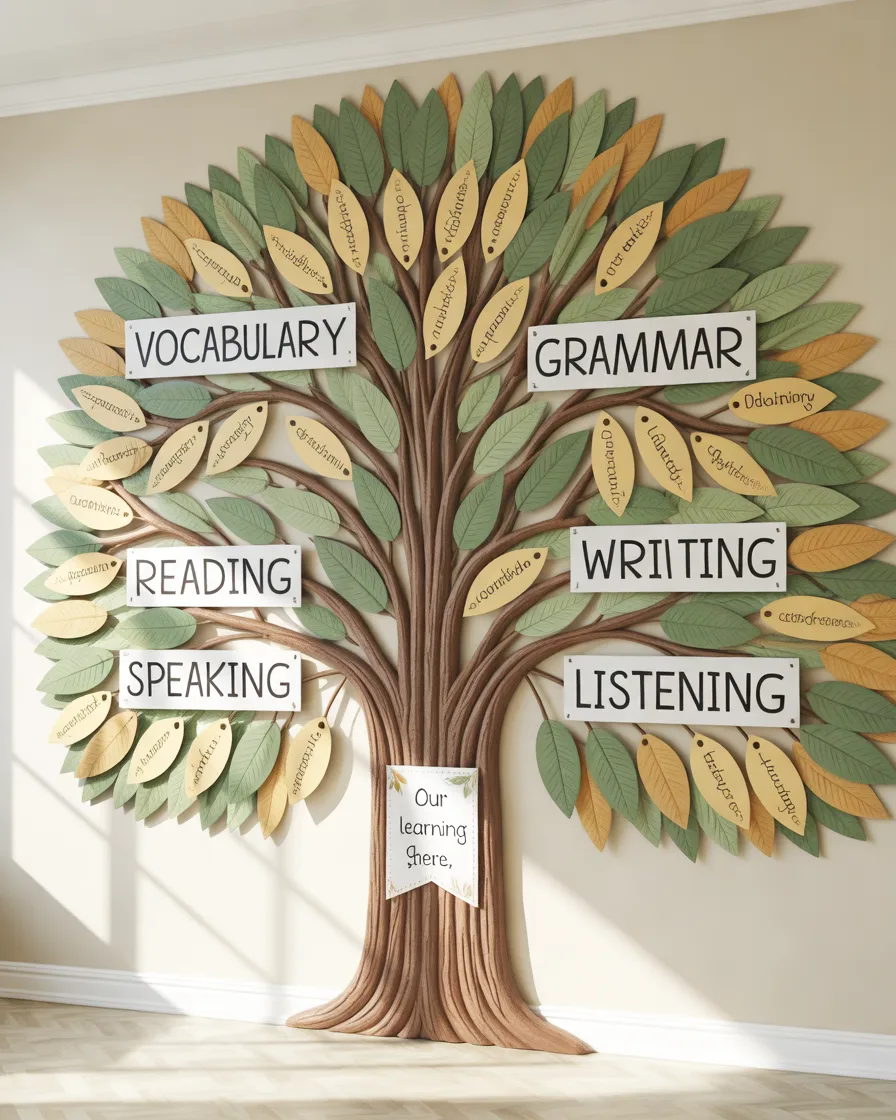
A learning tree is a creative alternative to traditional educational posters. It uses a large tree illustration to organize different English learning topics in a way that feels natural, attractive, and easy to explore.
Begin with a large tree trunk positioned in the center of the wall. Use its branches to represent different areas of English learning, such as vocabulary, grammar, reading, writing, speaking, and listening.
Add individual paper leaves containing useful words, grammar rules, short quotations, or learning tips. You can use different colors for each branch to help students identify different topics quickly.
For example, the vocabulary branch could feature new words and their meanings, while the grammar branch could display common sentence structures and punctuation reminders. The reading branch might include recommended books, while the writing branch could feature short writing challenges.
One interesting idea is to allow students to add their own leaves. Whenever someone learns a new word, completes a writing challenge, or discovers an interesting expression, they can contribute a new leaf to the tree.
This makes the wall more than a decorative feature. It becomes an evolving record of classroom learning.
Use green, brown, beige, and soft yellow for a natural appearance. If you want a more modern look, choose geometric leaves and clean typography instead of traditional cartoon-style artwork.
12. Design a Modern English Classroom Wall with a Minimalist Academic Theme
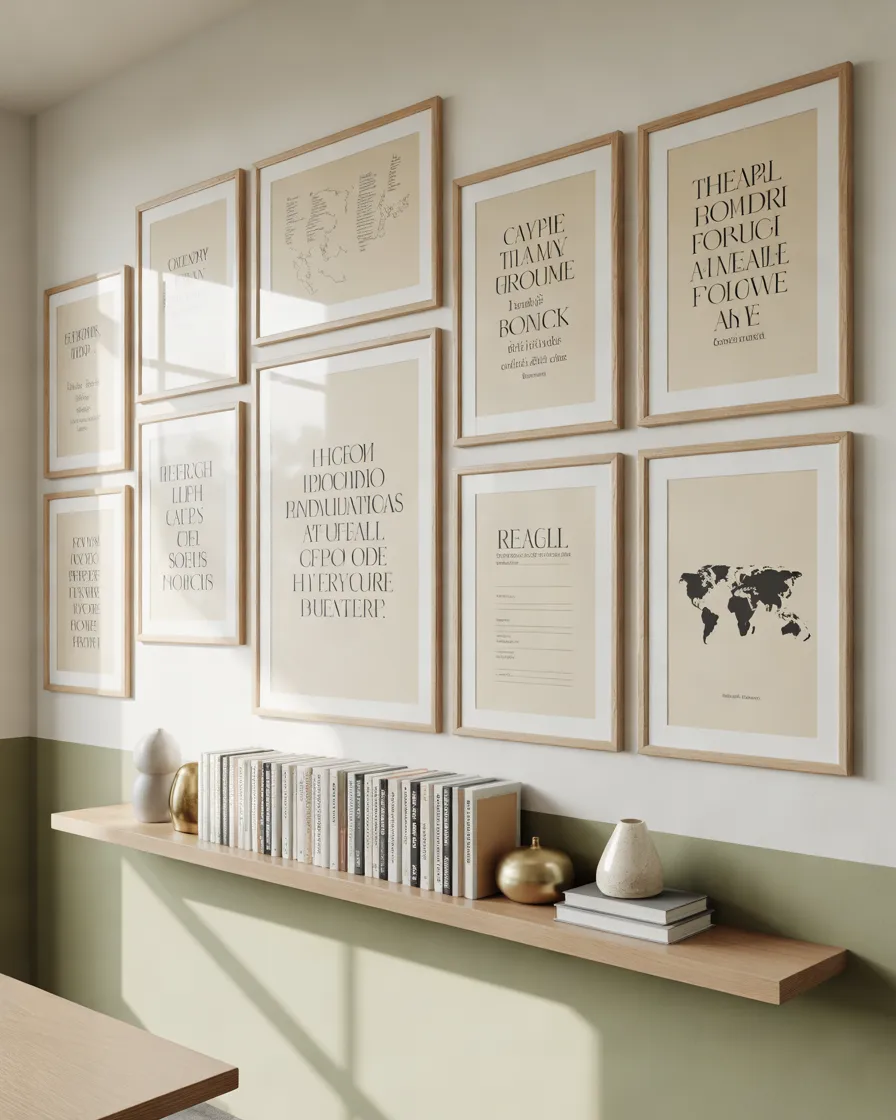
Not every classroom needs bright colors, elaborate murals, or dozens of decorative posters. Sometimes a simple, coordinated design can create a much more sophisticated learning environment.
A minimalist academic wall is an excellent option for high school classrooms where teachers want to combine functionality with modern interior design.
Begin by selecting a neutral background such as warm white, light beige, soft grey, or pale sage green. Arrange a small collection of educational posters in matching frames. These might include English grammar reminders, vocabulary-building tips, literary quotations, and reading recommendations.
Use consistent fonts and a limited color palette to maintain visual harmony. For example, black, cream, and muted green can create a calm and elegant appearance. Alternatively, navy blue, white, and soft grey can give the room a more contemporary academic feel.
You can also install a slim wooden shelf for a few carefully selected books and small decorative objects. Add a framed English alphabet poster, a minimalist world map, and a simple weekly learning objectives board.
The key is to avoid filling every available space. Leave enough empty wall area to make the room feel open and organized.
This approach is particularly useful for smaller classrooms because it creates a visually spacious environment without requiring extensive decoration.
How to Choose the Right Color Scheme for a High School English Classroom
The color scheme you choose can influence how your classroom looks and feels. A well-coordinated combination of colors makes educational displays more attractive and helps create a comfortable learning environment.
Instead of using every available color, start with two or three main shades and introduce a few accent colors where necessary.
Here are some combinations worth considering:
- Sage green and cream: These colors create a calm, natural, and sophisticated environment. They work particularly well for reading corners and literature walls.
- Navy blue and white: A classic academic combination that looks professional and works beautifully with framed educational posters.
- Mustard yellow and grey: This pairing adds warmth and energy without making the classroom look too bright.
- Pastel blue and lavender: These softer shades work well for creative writing displays, vocabulary walls, and interactive bulletin boards.
- Forest green and beige: An excellent choice for classrooms inspired by traditional libraries and classic literature.
Think about the existing classroom furniture, wall color, lighting, and available space before selecting your final palette. The goal is to create a coordinated appearance rather than making every wall look completely different.
Budget-Friendly Tips for Decorating English Classroom Walls
Creating an attractive classroom does not have to be expensive. With a little creativity, you can design impressive educational displays using affordable materials and simple DIY techniques.
Here are some practical ways to save money:
1. Use colored paper and cardboard: These materials are inexpensive and can be used to create vocabulary cards, decorative borders, paper flowers, and educational headings.
2. Print educational posters at home: Instead of purchasing expensive classroom posters, create your own using simple design software and print them in suitable sizes.
3. Reuse existing materials: Old books, unused folders, cardboard boxes, and leftover craft materials can become useful decoration supplies.
4. Make student participation part of the decoration: Ask students to create illustrations, write quotations, design vocabulary cards, and contribute short stories. This reduces costs while making the classroom more personal.
5. Use removable decorations: Paper displays, fabric boards, and reusable adhesive materials make it easier to update your classroom without damaging the walls.
6. Focus on one statement wall: You do not need to decorate every wall. A beautifully designed literature wall or creative bulletin board can become the main attraction.
Remember that thoughtful arrangement often matters more than expensive materials. A simple, well-organized classroom wall can look much more impressive than an expensive display filled with unrelated decorations.
How to Make Classroom Walls Educational Without Looking Overcrowded
One common mistake when decorating a classroom is trying to display too much information at once. Although educational posters and colorful displays are useful, covering every available space can make the room feel visually overwhelming.
A better approach is to give each wall a clear purpose.
For example, one wall could focus on grammar, another could display vocabulary, and a third could celebrate student achievements. This creates an organized learning environment where students can easily identify the information they need.
Consider the following tips:
- Keep headings large and easy to read.
- Use short explanations instead of lengthy paragraphs.
- Leave some empty space between individual posters.
- Maintain consistent colors and font styles.
- Remove outdated information regularly.
- Replace old displays with new educational themes throughout the school year.
- Position important learning materials where students can comfortably see them.
It is also helpful to think about viewing distance. A decorative quotation that looks beautiful from a few inches away may be difficult to read from the back of the classroom. Always consider the size of the room before choosing poster dimensions.
Most importantly, remember that classroom walls should support learning rather than compete with the teacher’s lessons.
Tips for Creating an Inspiring English-Learning Environment
Beautiful decorations can improve the appearance of a classroom, but the most successful English classroom designs also encourage students to participate and communicate.
Try incorporating activities that connect directly with your wall displays.
For example, if you have a vocabulary wall, introduce a weekly word challenge. Students can earn recognition for using new words correctly in their writing or conversations.
If your classroom includes a creative writing wall, organize a monthly storytelling activity. Students can submit short stories, poems, or imaginative paragraphs for display.
A reading corner can encourage independent reading, while a literature wall can introduce students to authors and books they may not have discovered otherwise.
You can also use interactive elements such as:
- A question of the week board.
- A daily English expression display.
- A student book recommendation section.
- A grammar challenge corner.
- A poetry appreciation board.
- A monthly creative writing competition.
- A student-selected quotation display.
These small activities help students see classroom decorations as part of their learning experience.
Another important consideration is age appropriateness. High school students generally respond well to designs that feel modern, mature, and relevant to their interests. Choose attractive typography, coordinated colors, meaningful illustrations, and educational content that respects their growing independence.
Frequently Asked Questions About High School Classroom Decorating Ideas
1. What are the best decorations for a high school English classroom?
Some of the best decorations include English literature walls, vocabulary displays, grammar posters, motivational quotations, reading corners, creative writing boards, and student achievement displays. These ideas combine visual appeal with useful educational information.
2. How can I decorate an English classroom wall on a small budget?
You can use colored paper, cardboard, printable educational posters, handmade vocabulary cards, and student artwork. Reusing existing classroom materials and focusing on one attractive feature wall can also help reduce expenses.
3. What should I put on an English classroom bulletin board?
An English bulletin board can feature vocabulary words, grammar rules, literary quotations, poetry, famous authors, writing prompts, book recommendations, and student assignments. You can also introduce a monthly theme to keep the display fresh.
4. How can I make my high school classroom look more attractive?
Choose a coordinated color scheme, organize educational displays into clear sections, add framed posters, introduce attractive lettering, and create a welcoming reading corner. Avoid overcrowding the walls with too many decorations.
5. What colors are best for English classroom wall decoration?
Sage green, cream, navy blue, pastel blue, beige, and muted yellow are excellent options. These shades create an attractive and comfortable academic atmosphere while allowing educational posters and displays to stand out.
6. How can students participate in classroom decoration?
Students can contribute creative writing, poetry, vocabulary cards, book recommendations, artwork, inspirational quotations, and classroom project displays. Giving students opportunities to contribute makes the classroom feel more welcoming and encourages a sense of ownership.
7. How often should English classroom decorations be changed?
You do not need to replace every decoration frequently. Permanent educational displays, such as grammar rules and literature timelines, can remain throughout the academic year. However, interactive bulletin boards, vocabulary displays, student achievements, and seasonal decorations can be updated monthly or whenever a new learning topic is introduced.
Conclusion
Decorating a high school English classroom is an opportunity to create an environment that makes learning more interesting, enjoyable, and meaningful. From beautiful literature walls and colorful vocabulary displays to interactive writing boards and comfortable reading corners, there are countless ways to transform ordinary classroom walls into inspiring educational spaces.
The most effective classroom decorations are not necessarily the most expensive or elaborate. They are the ones that combine attractive design with practical learning opportunities. A simple grammar display can help students remember important rules, while a student achievement wall can encourage confidence and motivation.
Start with one or two decorating ideas that suit your available space, choose a coordinated color scheme, and gradually introduce more creative elements. Involve your students whenever possible and allow the classroom to develop as their interests and learning needs change.
With thoughtful planning and a little imagination, you can create an English classroom that looks beautiful, feels welcoming, and inspires students to explore the wonderful world of language and literature.