A narrow hallway might not be the largest or most exciting part of a home, but it plays an important role in how the entire interior feels. It connects rooms, guides people through the house, and often creates the first impression when someone walks through the front door. Unfortunately, narrow hallways can easily feel dark, cramped, and forgotten, especially when they have limited natural light, low ceilings, or long stretches of blank walls. The right lighting can completely change that experience.
When I think about decorating a narrow hallway, I always consider lighting one of the most important elements. A beautiful light fixture can add personality, while carefully positioned illumination can make the walls appear farther apart and the ceiling feel higher. You do not necessarily need an expensive renovation or a complicated lighting system to achieve a noticeable difference. Sometimes, replacing an outdated ceiling fixture, adding a pair of elegant wall lights, or introducing subtle LED strips is enough to make the entire space feel more welcoming.
The trick is choosing lighting that complements the proportions of your hallway instead of overwhelming them. Bulky chandeliers, oversized shades, and poorly positioned fixtures can make a tight passage feel even smaller. Slim designs, indirect illumination, layered lighting, and thoughtful placement generally work much better.
Whether your home has a long apartment corridor, a small entrance hallway, or a narrow passage connecting bedrooms, there are plenty of ways to create a brighter and more attractive space. These 15 narrow hallway lighting ideas explore different fixtures, lighting techniques, and decorative approaches that combine practical illumination with beautiful interior design.
1. Install Slim Flush-Mount Ceiling Lights for a Clean and Modern Look
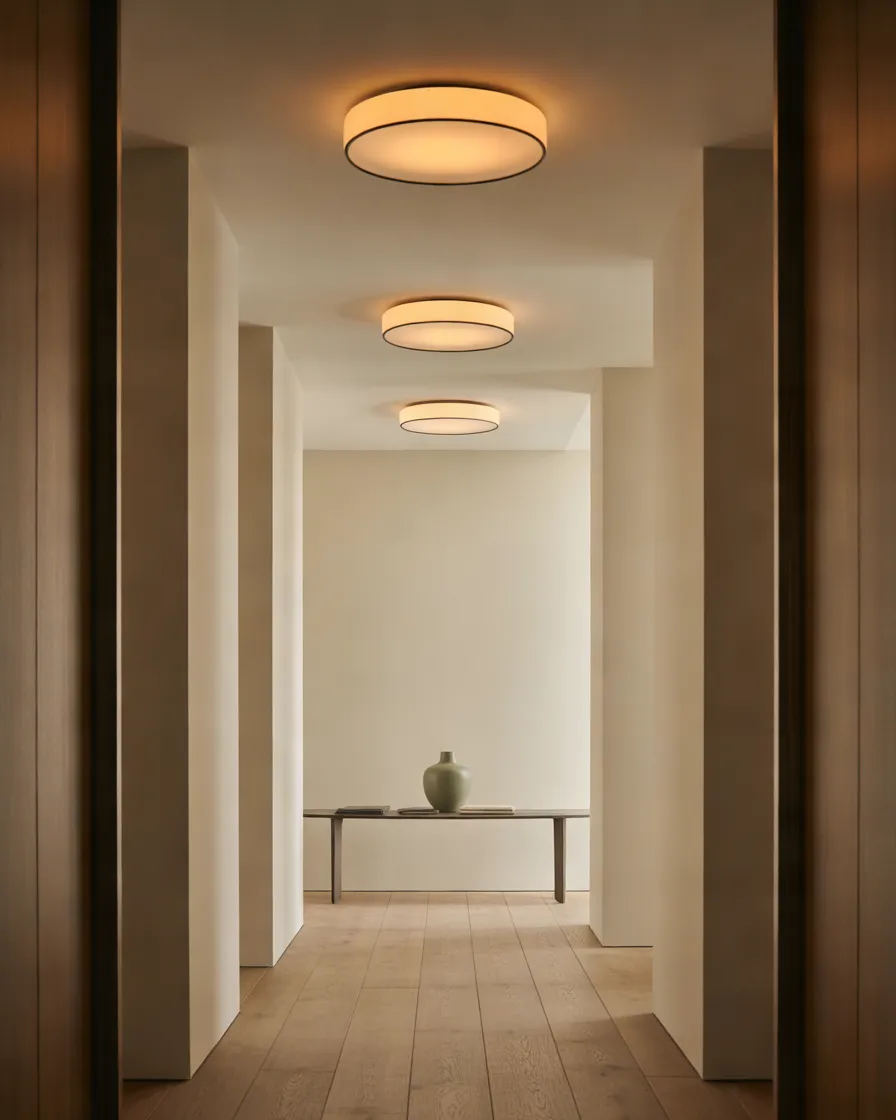
Flush-mount ceiling lights are one of the most practical solutions for narrow hallways, particularly when the ceiling is relatively low. Unlike hanging fixtures, these lights sit close to the ceiling, leaving the walking area completely unobstructed. This makes them especially useful in apartments, older homes, and compact corridors where every inch of visual space matters.
I particularly like simple circular or rectangular flush-mount fixtures with frosted glass or an integrated LED design. They distribute light across the hallway without creating an unnecessarily dramatic focal point. A white or softly diffused fixture also blends beautifully with a white ceiling, creating a clean appearance that does not interrupt the overall design.
Placement makes a considerable difference. Instead of installing one extremely bright fixture in the middle of a long hallway, consider using multiple smaller fixtures at evenly spaced intervals. This helps prevent dark patches and creates a more consistent lighting effect from one end to the other.
For a contemporary interior, choose a slim black, brushed brass, or matte white frame. A warm white colour temperature around 2700K to 3000K can create a welcoming atmosphere, while 3000K to 3500K works well when you prefer a slightly brighter, cleaner appearance.
2. Use Recessed LED Downlights for Even Hallway Illumination
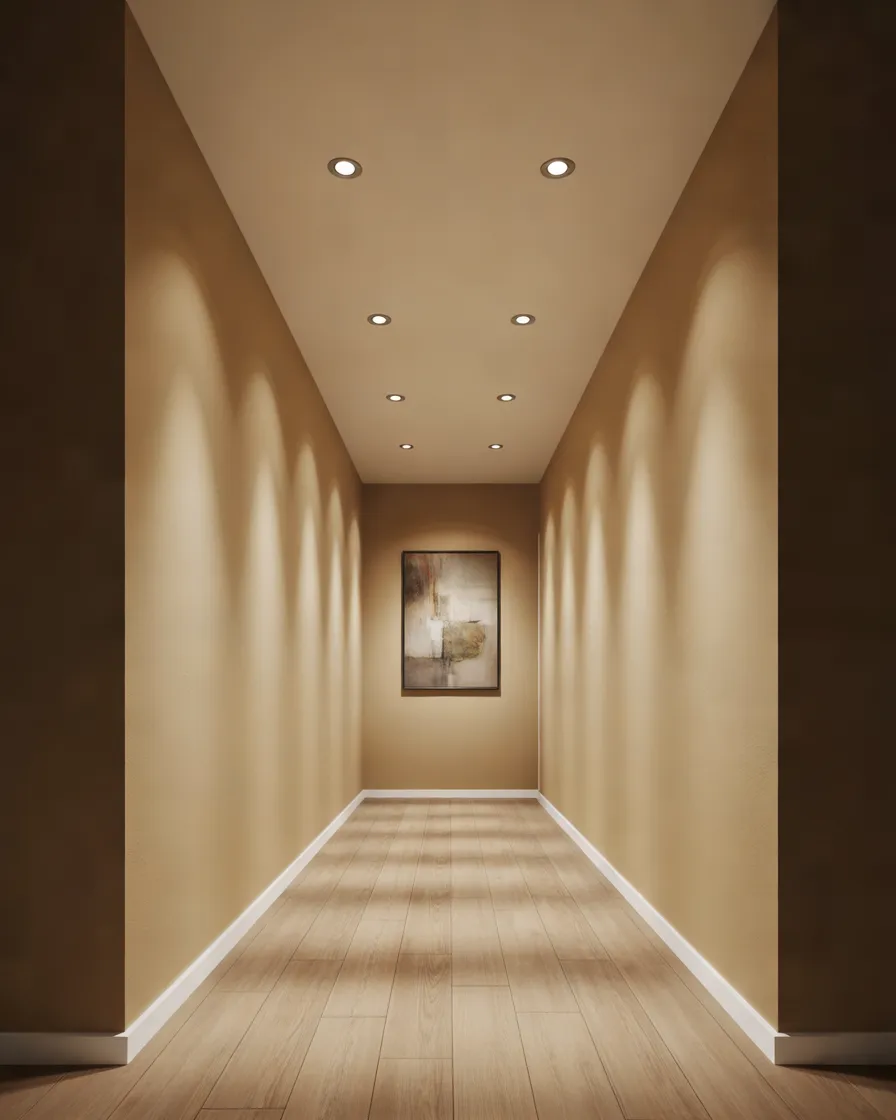
Recessed LED downlights are an excellent option when you want your hallway to look uncluttered and architecturally refined. Because the fixtures are installed inside the ceiling, they provide illumination without introducing bulky shapes or hanging elements into an already narrow space.
One of the biggest advantages of recessed lighting is its flexibility. You can arrange several small downlights in a straight line to follow the length of the hallway. This creates a consistent visual rhythm and helps illuminate areas that might otherwise remain shadowy.
For a narrow corridor, I would avoid placing too many lights too close together. Instead, plan their positions according to the ceiling height, fixture beam angle, and desired illumination. A well-designed arrangement should illuminate the walking path without producing harsh pools of light or uncomfortable glare.
Another interesting approach is to use adjustable recessed spotlights near architectural features, such as artwork, textured walls, or decorative niches. This creates visual interest while maintaining a simple ceiling design.
Choose dimmable LED fixtures if you want flexibility between daytime brightness and softer evening illumination. Also, make sure the lights are suitable for the ceiling insulation and installation conditions. Recessed lighting generally requires careful planning before installation, especially in finished ceilings.
3. Add Continuous LED Strip Lighting Along the Ceiling
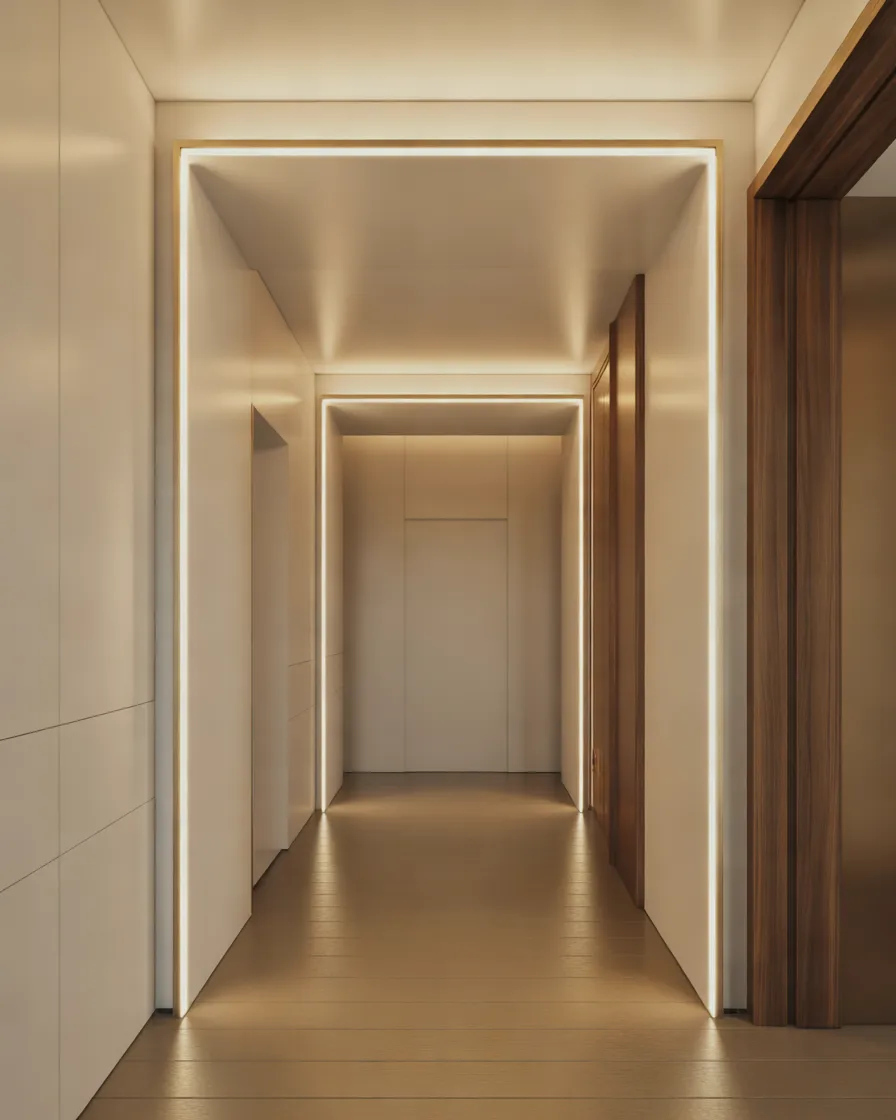
If you want something more distinctive than traditional ceiling lights, continuous LED strip lighting can create a beautiful architectural effect. Rather than relying on individual fixtures, this approach uses a long, concealed strip of light that follows the length of the hallway.
I love this idea for particularly narrow corridors because the continuous line naturally draws the eye forward. It creates a sense of movement and gives the hallway a more spacious, contemporary appearance. The light can be installed inside an aluminium profile with a diffuser, either along one ceiling edge or in a carefully designed central ceiling channel.
For a subtle appearance, position the LED strip inside a recessed ceiling detail so that the light source itself remains hidden. The resulting illumination feels smooth and sophisticated rather than overly decorative.
Warm white LED strips are particularly attractive when paired with natural wood, cream walls, or beige flooring. If your hallway has a more minimalist design, a neutral white option can create a crisp architectural atmosphere.
Pay attention to the LED strip’s brightness, colour consistency, and diffuser quality. A strip that produces visible individual LED dots can look unfinished. Choose a suitable high-density strip or continuous COB LED strip for a smoother appearance.
You can also connect the lighting to a dimmer, allowing you to reduce brightness during the evening without losing the elegant effect.
4. Install Elegant Wall Sconces to Save Ceiling Space
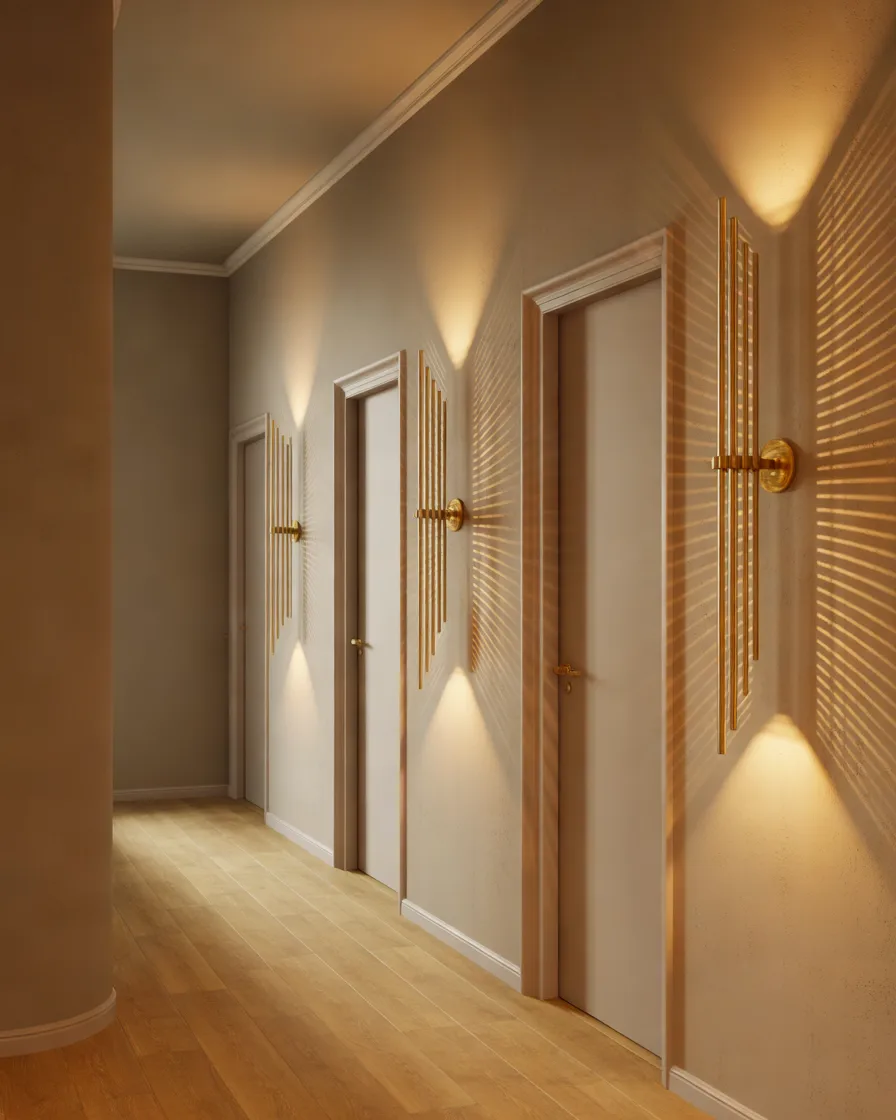
Wall sconces are a wonderful choice when you want to add character to a narrow hallway without filling the ceiling with multiple fixtures. They provide illumination at eye level and can make otherwise plain walls feel more decorative.
There are many styles to explore, from minimalist cylindrical sconces to traditional brass fixtures and contemporary glass designs. The right choice depends on the architectural style of your home.
For a particularly narrow hallway, look for fixtures with a shallow profile. Bulky wall lights that extend too far into the walking area can become inconvenient, especially in high-traffic corridors. Slim up-and-down sconces are a particularly attractive option because they distribute light toward both the ceiling and floor.
I would consider installing a pair of matching sconces on one wall if the corridor is too narrow for lights on both sides. Place them at a comfortable and consistent height, taking into account the fixture design and the height of people using the space.
Brushed brass looks beautiful against warm white or deep beige walls, while matte black can create an attractive contrast against lighter finishes. Frosted glass is another excellent choice because it softens the light and reduces direct glare.
Wall sconces are also useful for creating a layered lighting arrangement. Combine them with recessed ceiling lights or a subtle LED strip to make the hallway functional throughout the day.
5. Highlight Wall Artwork with Slim Picture Lights
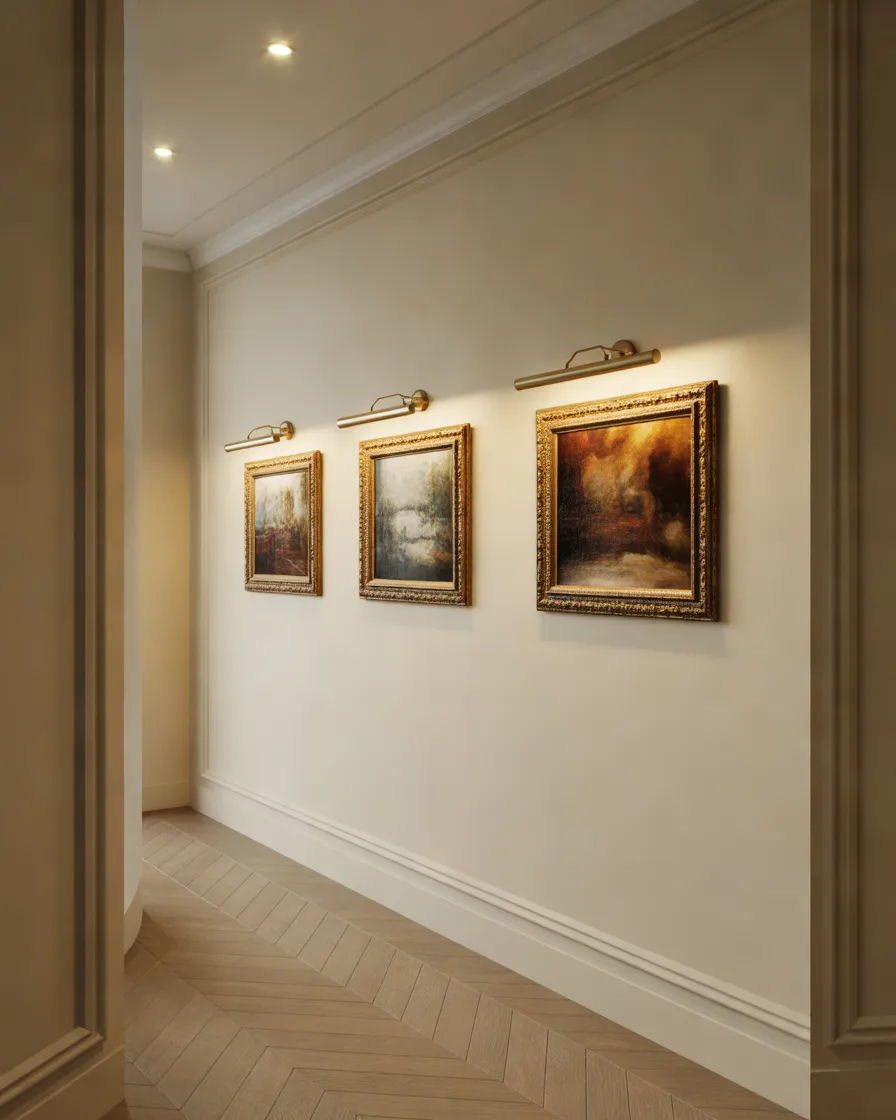
A hallway does not have to be decorated with furniture or large accessories to feel interesting. Sometimes, a beautiful collection of framed artwork can provide all the personality the space needs. Picture lights are a wonderful way to highlight those decorative details while introducing an additional layer of illumination.
These small fixtures are usually installed above individual frames or artwork arrangements. They direct light downward, drawing attention to the artwork and creating a more intentional interior design.
In a narrow hallway, this idea works particularly well because it turns a plain wall into a visual feature without occupying any floor space. You can create a small gallery wall with family photographs, abstract prints, botanical illustrations, or carefully selected paintings.
Brass picture lights can give the corridor a traditional or luxurious appearance, while black and white finishes work beautifully in contemporary interiors. If you prefer a softer atmosphere, choose fixtures with adjustable brightness and warm LED illumination.
One thing I would avoid is using excessively bright picture lights. Their purpose is to highlight the artwork, not create uncomfortable glare or make the surrounding hallway look unevenly illuminated.
For the best result, combine picture lighting with general ceiling illumination. This allows the artwork to stand out without leaving the rest of the passage dark.
6. Choose a Backlit Mirror to Make the Hallway Feel Brighter
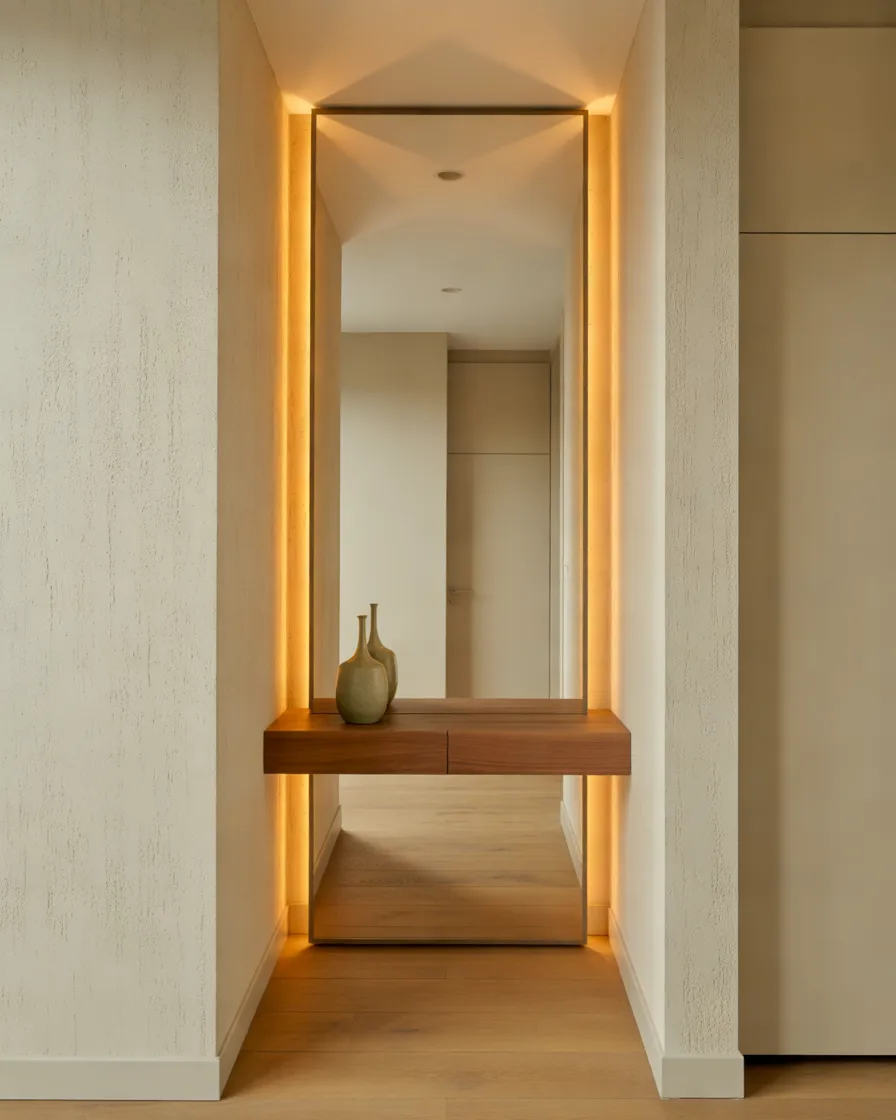
Mirrors are a classic decorating trick for making small interiors appear more spacious. When you combine a mirror with integrated LED backlighting, you get both a practical reflective surface and an attractive lighting feature.
A backlit mirror can be especially useful in an entrance hallway where you might want to check your appearance before leaving home. Its reflective surface helps distribute existing light around the corridor, while the concealed LEDs create a gentle glow around the mirror’s edges.
For a narrow hallway, consider a tall rectangular mirror rather than a wide horizontal design. A vertical mirror draws the eye upward and can make the ceiling appear higher. Positioning it on a side wall can also create a stronger sense of depth.
Choose a frameless mirror with warm LED illumination for a modern minimalist interior. Alternatively, a slim brass or black frame can add definition and coordinate with nearby hardware.
If the hallway is especially dark, avoid relying on the mirror’s backlighting as the only light source. It is primarily an accent and supplementary lighting feature, so pair it with a suitable ceiling fixture or wall lights.
Another attractive option is to position the mirror opposite an existing doorway or a window where it can reflect natural light into the passage. This makes the arrangement useful even when the LEDs are switched off.
7. Create a Soft Glow with Concealed Cove Lighting
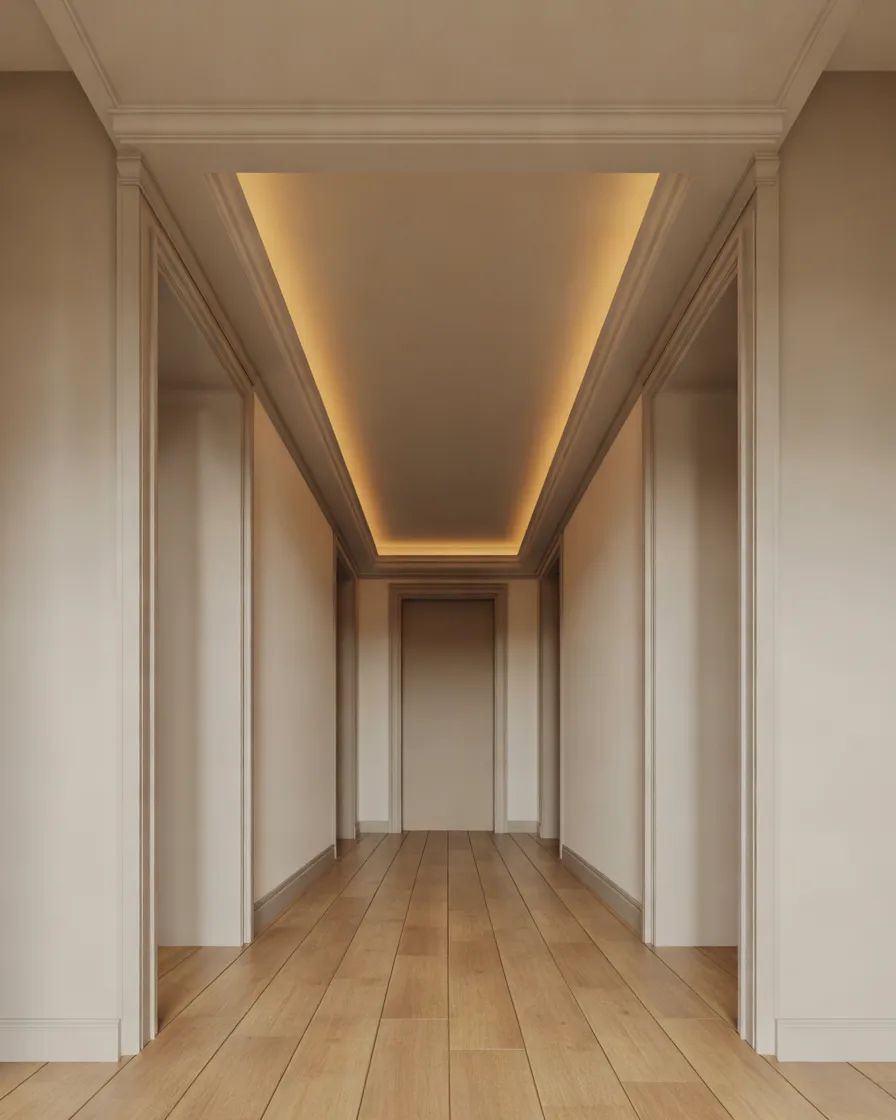
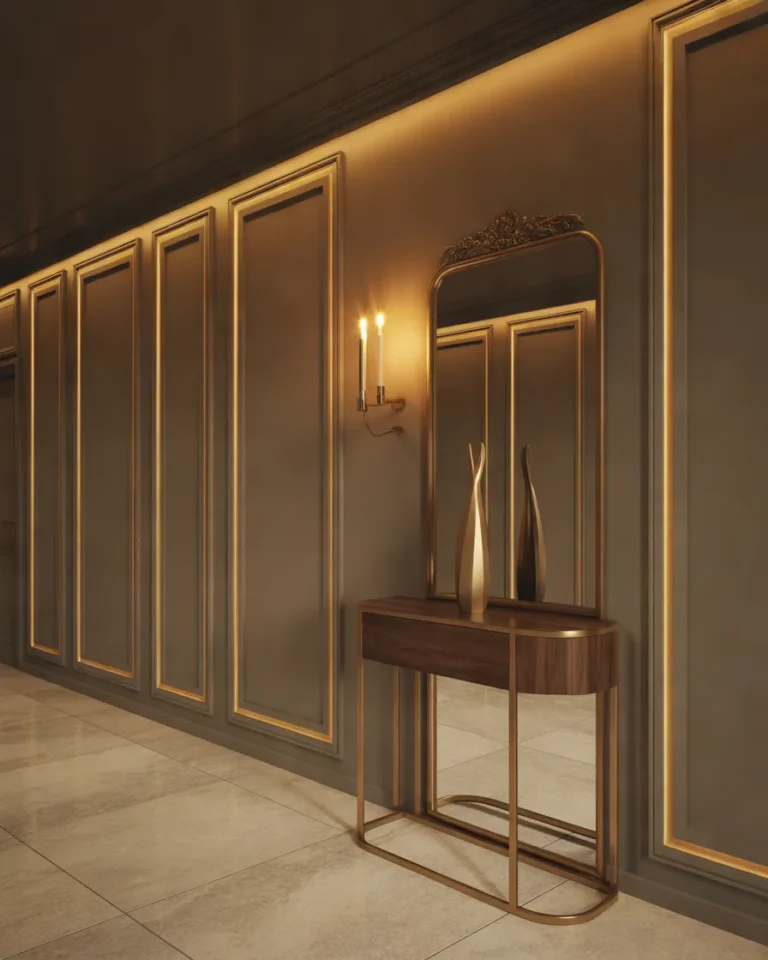
Cove lighting is an excellent choice when you prefer subtle illumination rather than visible decorative fixtures. It works by hiding LED light sources inside a ceiling recess, architectural ledge, or specially designed perimeter detail.
Instead of shining directly into the hallway, the light reflects off the ceiling or upper walls. This produces a soft, indirect glow that can make a narrow corridor feel more comfortable and visually open.
I particularly like cove lighting in homes with contemporary interiors, where clean lines and understated architectural details are important. It can also work beautifully in transitional spaces with decorative ceiling moulding.
For a narrow hallway, a concealed LED strip running along one or both ceiling edges can visually emphasize the length of the corridor. The reflected illumination softens harsh shadows and creates a more continuous appearance.
Warm white light is a lovely choice for cream, beige, and natural wood interiors. If the hallway has cool grey walls or a more modern colour palette, a neutral white light may create a better balance.
The installation needs to be planned carefully because the LED strip should remain hidden from normal viewing angles. The cove itself should be proportionate to the ceiling height so it does not make a low ceiling feel unnecessarily heavy.
8. Use Slim Track Lighting for Flexible Directional Illumination
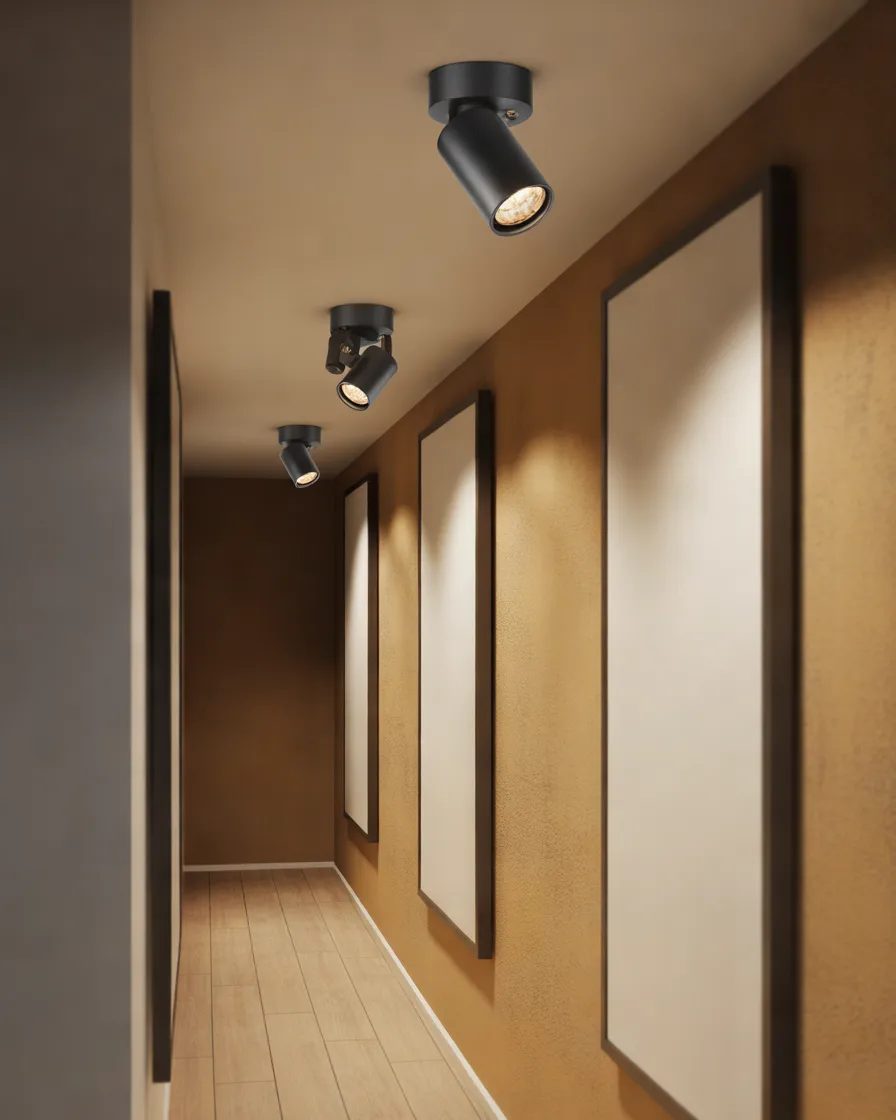
Track lighting offers something that many traditional hallway fixtures cannot: flexibility. Rather than illuminating only one fixed area, adjustable track heads can direct light toward specific parts of the corridor.
This makes track lighting particularly useful when a narrow hallway includes artwork, decorative niches, textured walls, or architectural details that deserve attention.
A slim black track against a white ceiling creates a contemporary industrial look, while a white track can blend almost invisibly into a light-coloured ceiling. Brushed metal finishes are another attractive option for modern transitional interiors.
For a narrow corridor, choose a compact track system with small adjustable heads. A bulky track with oversized spotlights can make the ceiling appear crowded, so proportion is important.
I would position the track heads to illuminate the walls or decorative features rather than pointing every spotlight directly toward the floor. This creates a more balanced atmosphere and can help the hallway feel wider.
Another advantage is that you can adjust the direction of individual lights if your decorating arrangement changes. If you move artwork or introduce a new decorative feature, the track heads can be repositioned accordingly.
Consider dimmable LED track heads to control the atmosphere, especially if your hallway connects to a living room or bedroom area.
9. Add a Small Pendant Light for a Stylish Focal Point
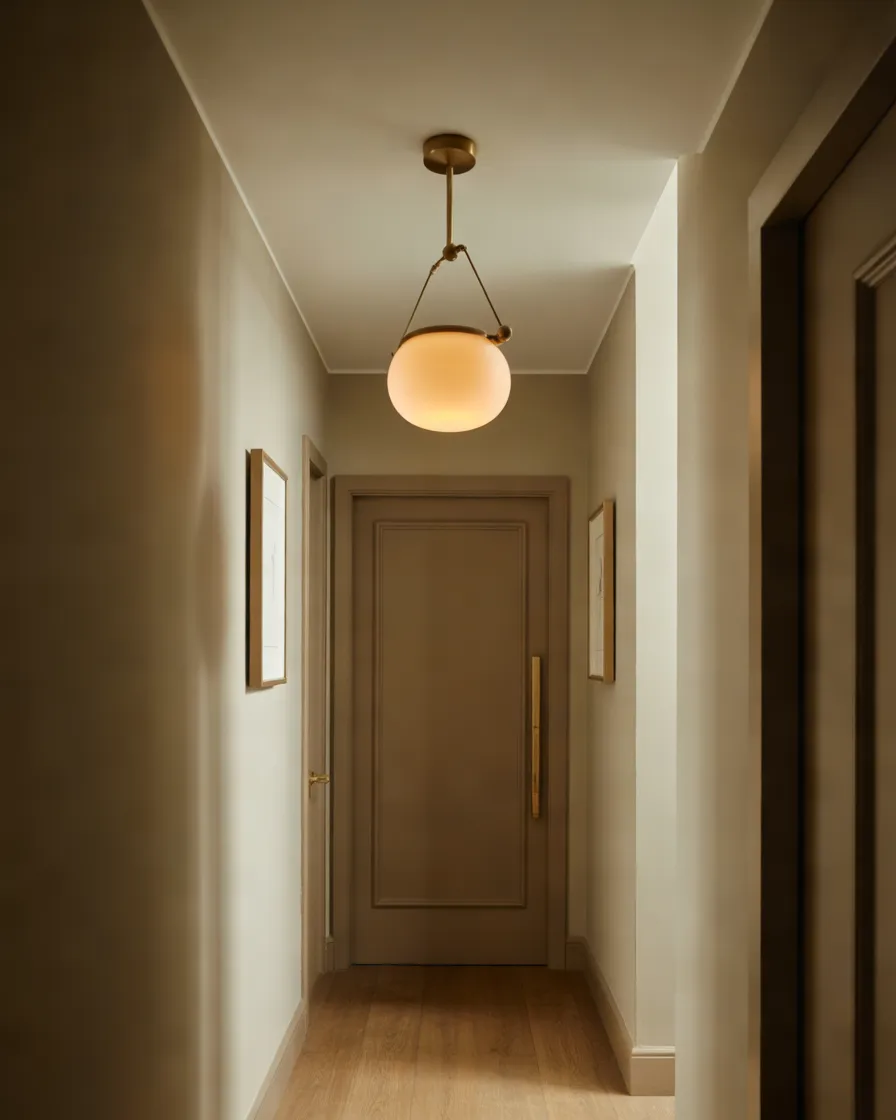
Pendant lights can bring personality and elegance to a hallway, but they need to be selected carefully when the available space is limited. An oversized chandelier or low-hanging fixture can interfere with movement and make the corridor feel crowded.
A compact pendant, on the other hand, can create a beautiful focal point without overwhelming the design. Think of a small frosted glass globe, a slim cylindrical pendant, or a delicate brass fixture with a simple shade.
This idea works particularly well in a short entrance hallway or a corridor with a slightly higher ceiling. If your hallway is long and narrow, you might use a single pendant near the entrance rather than repeating several hanging fixtures along the entire length.
The fixture should provide enough clearance for comfortable movement. Consider the ceiling height, the position of doors, and the height of household members before deciding where to install it.
A frosted glass shade is a lovely option because it produces softer illumination than an exposed bulb. For a more decorative appearance, select a fixture with subtle metallic details that complement your door handles or nearby hardware.
Pendant lighting can also help define an entrance zone in an open-plan home, making the hallway feel like a deliberate part of the overall interior design.
10. Install Low-Level LED Strip Lighting Along the Skirting
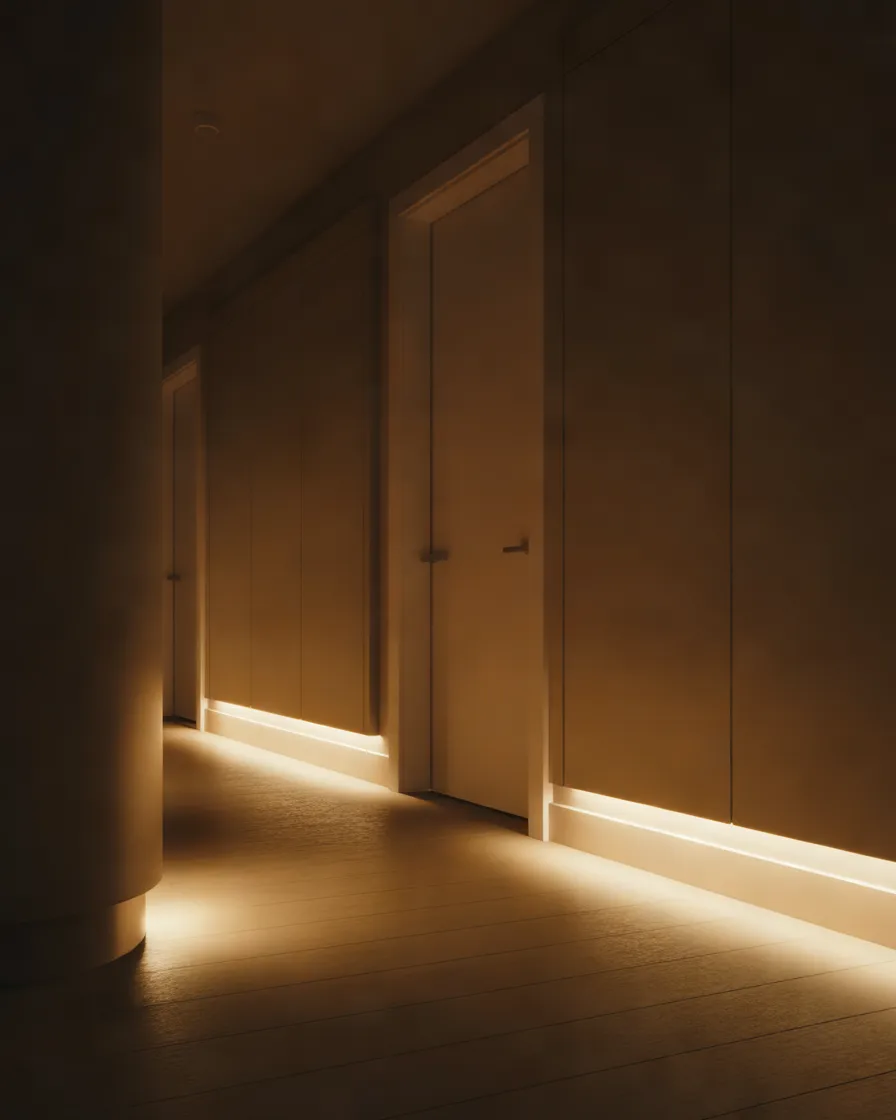
Low-level lighting is an interesting way to make a narrow hallway feel more sophisticated without introducing additional ceiling fixtures. It involves installing a concealed LED strip close to the floor, often underneath the skirting board or along a specially designed recessed detail.
The result is a gentle line of illumination that guides people through the corridor while highlighting the floor and lower wall surfaces.
This arrangement is particularly useful at night. Rather than switching on the full ceiling lighting when someone needs to walk to the bathroom or kitchen, low-level illumination can provide enough visibility for comfortable movement.
For a modern interior, choose a recessed aluminium LED profile that produces a continuous, diffused glow. The light should be subtle rather than intensely bright. Warm white illumination generally works well because it feels comfortable during evening hours.
I would pair this feature with simple skirting boards, smooth wall finishes, and natural flooring. The understated design allows the lighting itself to become an architectural detail.
You can also connect the LEDs to a motion sensor, allowing them to illuminate automatically when someone enters the hallway.
Make sure the installation is suitable for the location and that the LED system has appropriate protection against dust and everyday cleaning conditions. A properly concealed system will look much more polished than an exposed strip attached directly to the wall.
11. Choose Frosted Glass Semi-Flush Lights for Soft Diffused Illumination
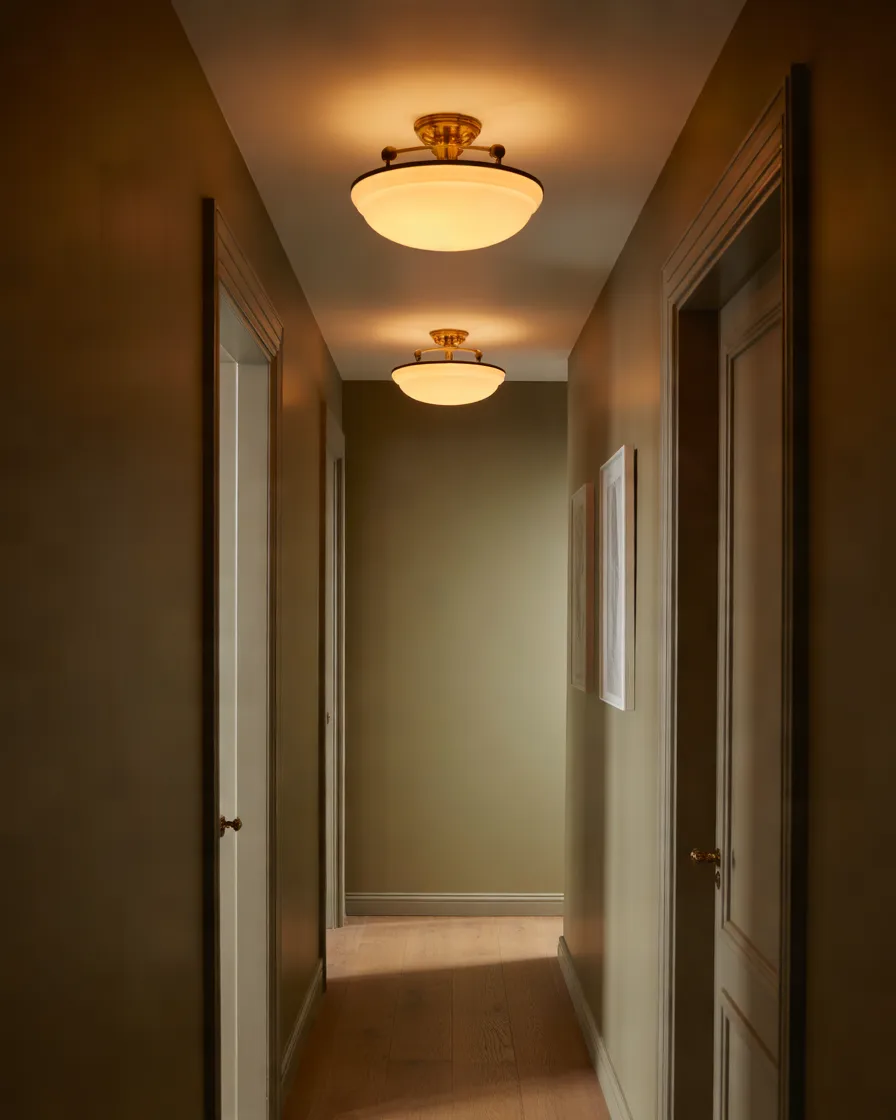
If you like decorative ceiling fixtures but do not want something that hangs too low, semi-flush lighting offers an attractive middle ground. These fixtures sit slightly below the ceiling, creating a little more visual presence than traditional flush mounts while remaining practical for smaller spaces.
Frosted glass is especially appealing because it diffuses the light rather than allowing a harsh bulb to shine directly into the hallway. This can make the overall atmosphere feel softer and more inviting.
For a narrow corridor, look for compact semi-flush fixtures with rounded or shallow geometric shapes. A simple opal glass dome with a brushed brass base can work beautifully in a modern or transitional home. Alternatively, a matte black frame with a frosted glass shade can add a contemporary touch.
You can install multiple matching fixtures along a longer corridor, provided the ceiling height and hallway proportions allow comfortable clearance.
I would avoid complicated multi-arm designs or oversized shades. They may look attractive in a large living room but can visually dominate a small hallway.
The main benefit of this approach is that it combines decorative appeal with practical illumination. It is a good option when you want the ceiling to contribute to the overall design without making the passage feel cluttered.
12. Use Wall-Washing Lighting to Make Narrow Walls Feel Wider
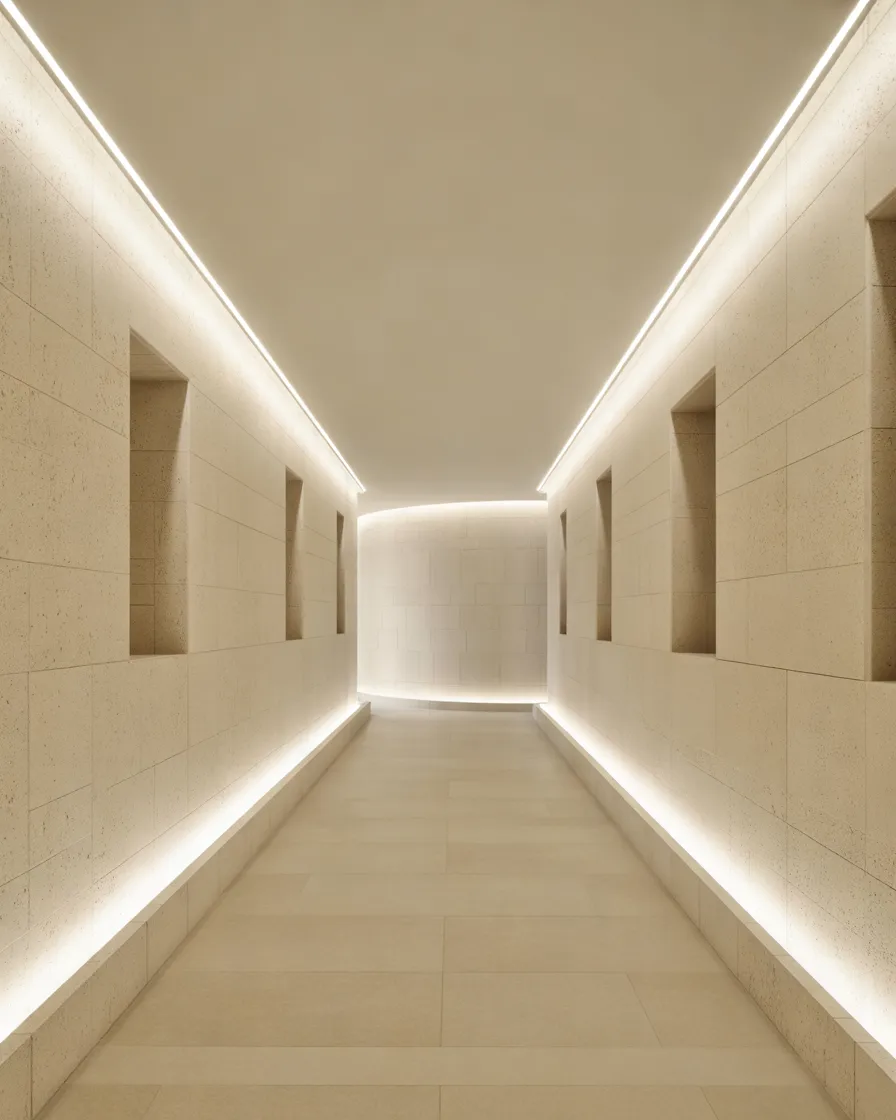
Wall-washing lighting is a technique that directs light across a vertical surface, making the wall itself an important part of the lighting design. Instead of focusing entirely on the walking path, this approach uses illumination to create a brighter and more visually interesting environment.
It is particularly useful in narrow hallways with plain walls or limited decorative features. By illuminating the vertical surfaces, you can reduce the appearance of dark corners and create a sense of openness.
Recessed wall-wash downlights, adjustable ceiling fixtures, or concealed linear LED systems can all achieve this effect. The best choice depends on the ceiling design and the amount of space available.
For example, a row of carefully positioned wall-wash lights can highlight a textured plaster wall, decorative paint finish, or subtle architectural panelling. The light creates gentle variations in brightness that make the corridor feel more thoughtfully designed.
A pale wall colour can enhance the effect by reflecting more light into the space. Soft ivory, warm white, and light beige are particularly attractive options.
One important consideration is avoiding uneven illumination. The fixtures should be positioned according to their beam characteristics and the distance from the wall. A professional lighting layout can help prevent distracting bright spots and dark gaps.
13. Add Motion-Sensor Lights for Convenient Nighttime Navigation
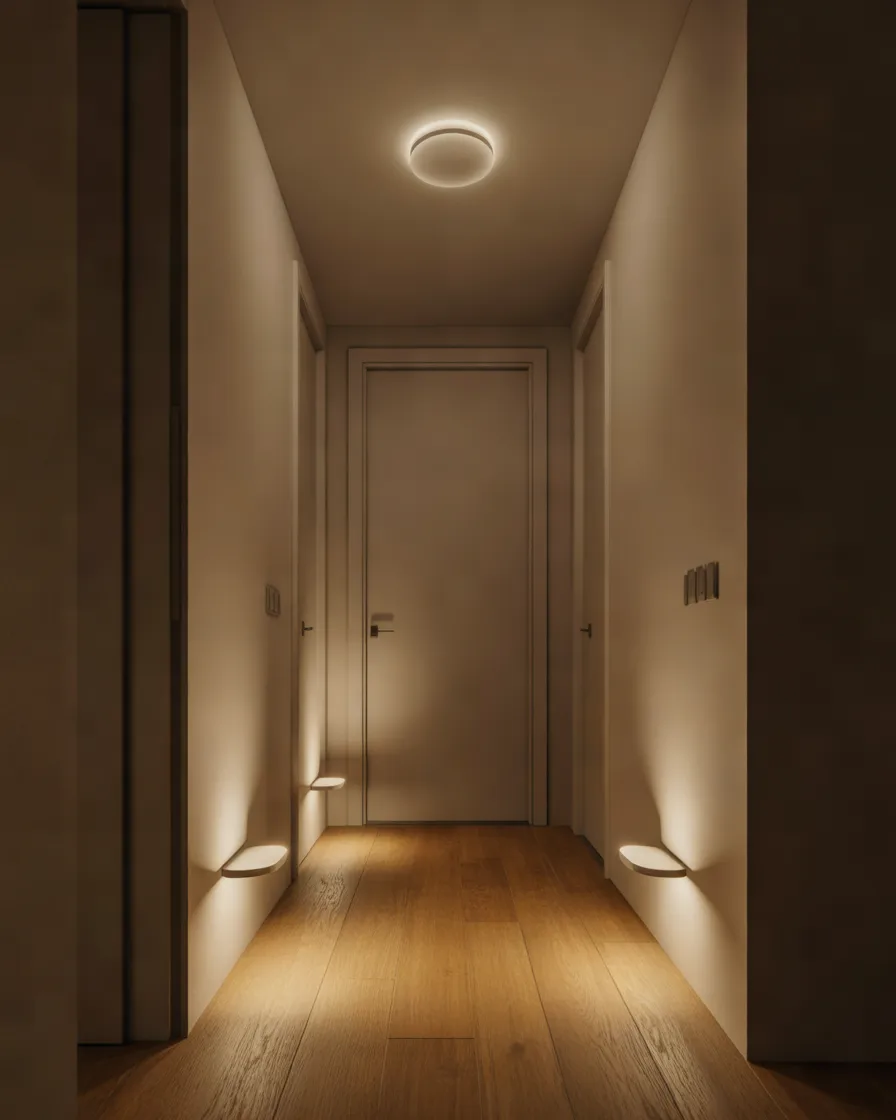
Motion-sensor lighting is not only a practical solution but also a clever way to make a narrow hallway more comfortable to use. Instead of searching for a switch in the dark, the lights automatically turn on when someone enters the corridor.
This feature is particularly useful for hallways connecting bedrooms, bathrooms, and other frequently visited areas. It can also be helpful for families with children or older household members who may need to move around during the night.
You have several installation options. A motion sensor can activate recessed ceiling lights, concealed skirting LEDs, small wall-mounted lights, or a combination of low-level fixtures.
For nighttime use, I particularly like the idea of pairing motion sensors with dimmable low-level lighting. The lights can provide gentle illumination without flooding the entire hallway with brightness.
Look for adjustable sensor settings so you can control sensitivity, activation duration, and ambient-light detection. This prevents the system from switching on unnecessarily during daylight hours.
Placement is important because the sensor needs a clear view of the area where movement occurs. Avoid positioning it behind decorative objects, doors, or other obstructions.
The result is a hallway that feels more convenient and thoughtfully designed, while reducing the need to leave unnecessary lighting switched on throughout the night.
14. Introduce Smart Dimmable Lighting for Different Times of Day
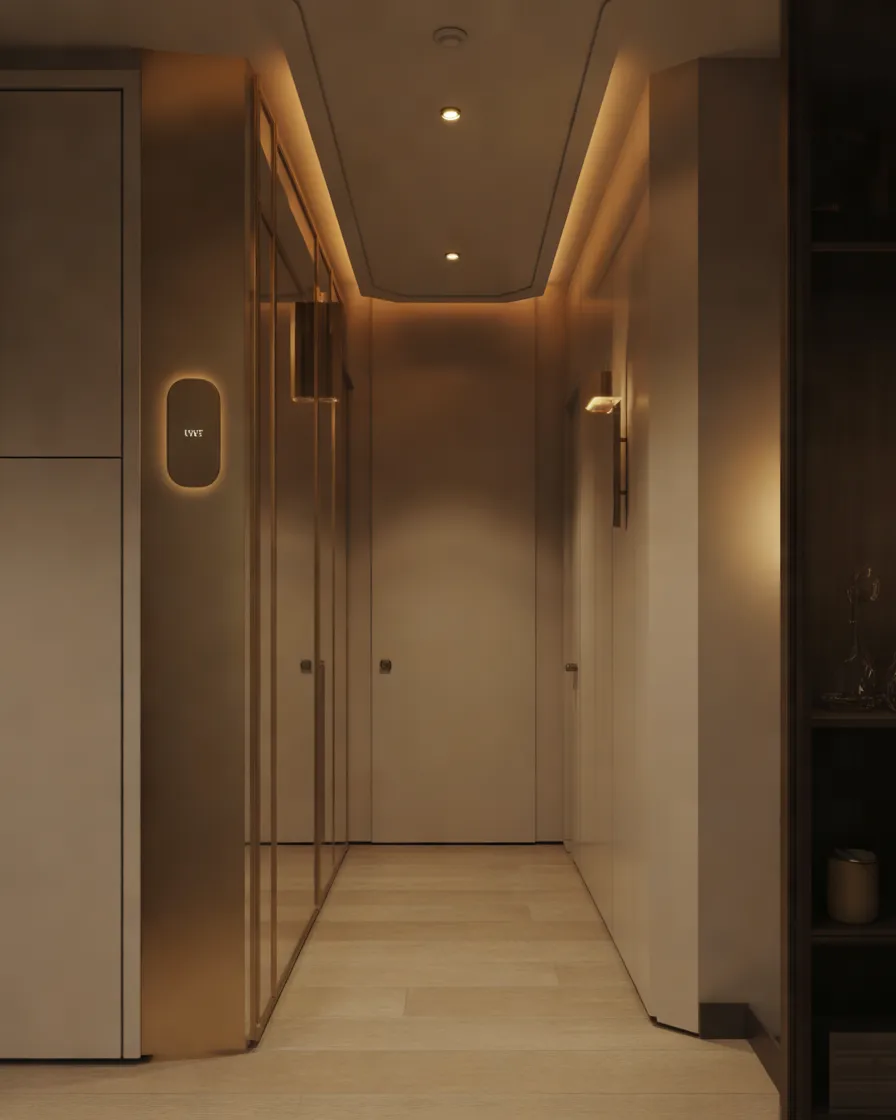
Lighting does not always need to remain at the same brightness. A hallway that looks beautiful with bright illumination during the day may feel much more comfortable with softer lighting in the evening.
Smart dimmable lighting allows you to adjust the brightness according to your routine and the atmosphere you want to create. Depending on the system, you can control the lights through a wall switch, remote control, smartphone application, or compatible smart-home assistant.
For a narrow hallway, I would start with dimmable ceiling fixtures and then consider adding smart wall sconces or concealed LED strips. This gives you the ability to create different lighting combinations without changing the physical fixtures.
For example, you might use brighter general illumination when cleaning or looking for something in a cupboard. In the evening, you could reduce the ceiling lights and rely on gentle wall lighting for a more relaxing atmosphere.
Some smart lighting systems also offer adjustable colour temperature. This allows you to move between warm and neutral white light, depending on your preference and the surrounding interior finishes.
The most important thing is choosing compatible dimmers, LED drivers, and bulbs. Not every LED fixture works with every dimming system, so check compatibility before purchasing.
Smart lighting is particularly appealing if your hallway connects several parts of the home and you want consistent control over the lighting throughout the day.
15. Create a Skylight Effect with a Recessed LED Ceiling Panel
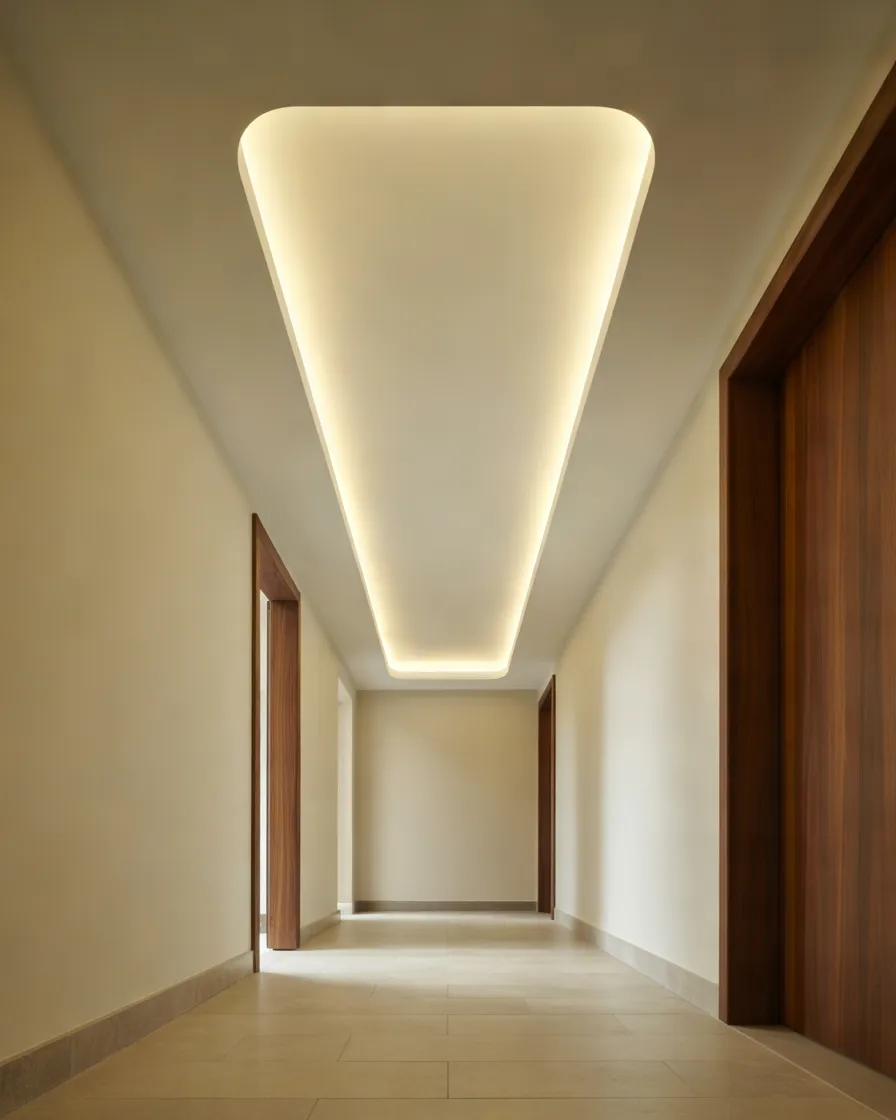
If your hallway has no windows, you might find yourself wishing it had more natural light. Although artificial lighting cannot completely replace daylight, a carefully designed skylight-effect LED panel can create a similar sense of brightness from above.
This approach uses a large diffused LED panel installed inside a recessed ceiling detail. The panel creates an even, soft glow that resembles a naturally illuminated ceiling opening.
It works particularly well in modern homes with long internal corridors and limited access to daylight. Instead of relying on several small decorative fixtures, the ceiling becomes a clean, bright architectural feature.
For a narrow hallway, a rectangular panel aligned with the corridor’s length can visually emphasize the space. A slim recessed frame helps maintain a contemporary appearance without making the ceiling feel overly decorative.
Choose a high-quality panel with an even diffuser and a suitable colour temperature. Neutral white illumination can create a daylight-inspired appearance, while warmer settings may be more appropriate if you want the hallway to feel cosy.
The size of the panel should be proportionate to the ceiling. A very large panel in a tiny corridor may feel overwhelming, so consider the available dimensions before planning the installation.
If you want a particularly realistic result, select a system designed specifically for architectural daylight simulation rather than an ordinary exposed LED panel.
How to Choose the Best Lighting for a Narrow Hallway
Choosing the right fixtures is only one part of creating a beautiful hallway. You also need to consider the proportions of the space, the ceiling height, the existing wall colours, and how people use the corridor throughout the day.
A lighting arrangement that looks impressive in a large entrance hall might not work in a narrow apartment passage. The best solution is usually one that combines comfortable illumination with fixtures that respect the available space.
Here are a few things worth considering before making your final decision.
Consider the ceiling height: Low ceilings generally benefit from flush-mount fixtures, recessed downlights, and concealed LED strips. If you have a high ceiling, you have more flexibility to introduce compact pendants or decorative semi-flush lights.
Think about the hallway width: Avoid fixtures that extend too far into the walking area. Slim wall sconces and recessed lighting are particularly practical when the corridor is extremely narrow.
Choose the right colour temperature: Warm white lighting around 2700K to 3000K creates a comfortable residential atmosphere. Neutral white around 3000K to 3500K can work well when you prefer a slightly cleaner appearance. The best choice depends on your wall colours, flooring, and personal preference.
Use reflective surfaces thoughtfully: Mirrors, glass details, and lighter finishes can help distribute existing light. However, consider where the fixtures are positioned so reflections do not create uncomfortable glare.
Avoid relying on a single light source: Long corridors often need multiple lighting points. A combination of ceiling illumination, wall lights, and subtle accent lighting can create a more balanced result.
Think about energy efficiency: Modern LED fixtures generally offer good energy efficiency and long operating life. Look at the fixture’s brightness, measured in lumens, rather than choosing bulbs based only on wattage.
Consider installation and maintenance: Some options, particularly recessed lighting and concealed LED systems, require electrical planning and ceiling modifications. Make sure your design is practical for the existing structure and consult a qualified electrician when necessary.
Final Thoughts on Narrow Hallway Lighting Ideas
A narrow hallway deserves just as much attention as any other room in your home. Although it may have limited floor space and little natural light, the right lighting can transform it into a beautiful, comfortable, and welcoming part of your interior.
From slim flush-mount ceiling fixtures and recessed downlights to elegant wall sconces, backlit mirrors, and concealed LED strips, there are plenty of ways to improve both the appearance and functionality of a compact corridor.
My favourite approach is to combine two or three complementary lighting techniques rather than relying on one decorative fixture. For example, recessed ceiling lights can provide practical everyday illumination, while wall sconces or concealed LED strips introduce warmth and personality. If your hallway is especially dark, reflective surfaces and carefully positioned wall-washing lights can help create a brighter appearance.
You also do not need to make every change at once. Start by identifying the darkest areas and deciding whether your main priority is better visibility, a more spacious appearance, or a decorative upgrade. Once you understand what the hallway needs, choosing the right fixtures becomes much easier.
Ultimately, the best narrow hallway lighting ideas are those that make the space feel natural, balanced, and connected to the rest of your home. Even a small lighting improvement can make your daily experience more enjoyable and give an overlooked corridor a completely new personality.