A Christmas tree can have the prettiest ornaments, sparkling lights, and a beautiful topper, yet something may still feel missing. Sometimes, that finishing touch is ribbon. The right ribbon adds movement, texture, color, and a sense of fullness that makes the entire tree look thoughtfully decorated.
One of my favorite things about decorating with ribbon is how easily it can change the mood of a Christmas tree. Rich velvet creates a luxurious appearance, sheer ribbon gives the branches an airy feel, and classic red plaid brings that familiar cozy holiday charm. You can even use neutral linen ribbon for a soft, understated look that blends beautifully with modern interiors.
The best part is that you do not need to replace all your ornaments or buy expensive decorations to achieve a fresh look. A few carefully chosen ribbon rolls and some simple styling techniques can make a noticeable difference.
If you are searching for Christmas tree ribbon decorating ideas that are both beautiful and practical, these 12 designs offer inspiration for different decorating styles, color preferences, and budgets. Each idea includes helpful tips for choosing ribbon, arranging it on your tree, and coordinating it with other decorations.
1. Create a Luxurious Christmas Tree With Velvet Ribbon
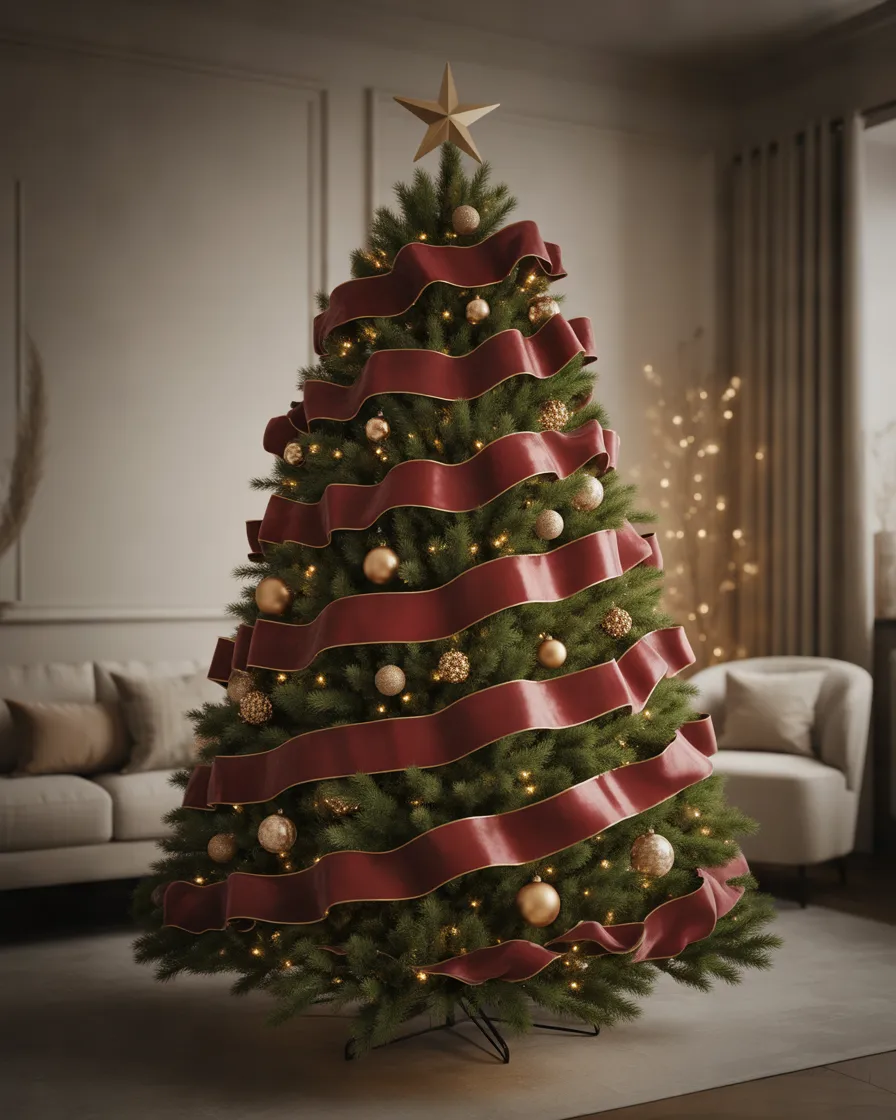
Velvet ribbon is an excellent choice when you want your Christmas tree to look elegant, rich, and inviting. Its soft texture catches the light beautifully, while its slightly substantial appearance creates depth among the branches. Deep burgundy, forest green, navy blue, and champagne velvet are particularly lovely choices for a sophisticated holiday display.
Start by selecting wired velvet ribbon if you want to create full loops that hold their shape. A width of approximately 2 to 4 inches works well for medium and large trees, although narrower ribbon can look more delicate on a smaller tree.
Instead of wrapping the ribbon tightly around the entire tree, cut it into manageable lengths. Begin near the upper branches and tuck one end securely into the greenery. Allow the ribbon to curve outward before gently pushing another section back into the branches. Repeat this pattern as you move downward, creating soft, irregular waves.
For a luxurious finish, combine burgundy velvet ribbon with gold ornaments, warm white lights, and a few champagne-colored decorations. If you prefer a woodland-inspired appearance, choose forest green velvet with wooden ornaments and natural pinecones.
The secret is to let the velvet remain visible. Avoid placing large ornaments directly over every ribbon section, and leave enough space for the fabric’s texture to stand out.
2. Use Cascading Satin Ribbon for a Soft, Flowing Look
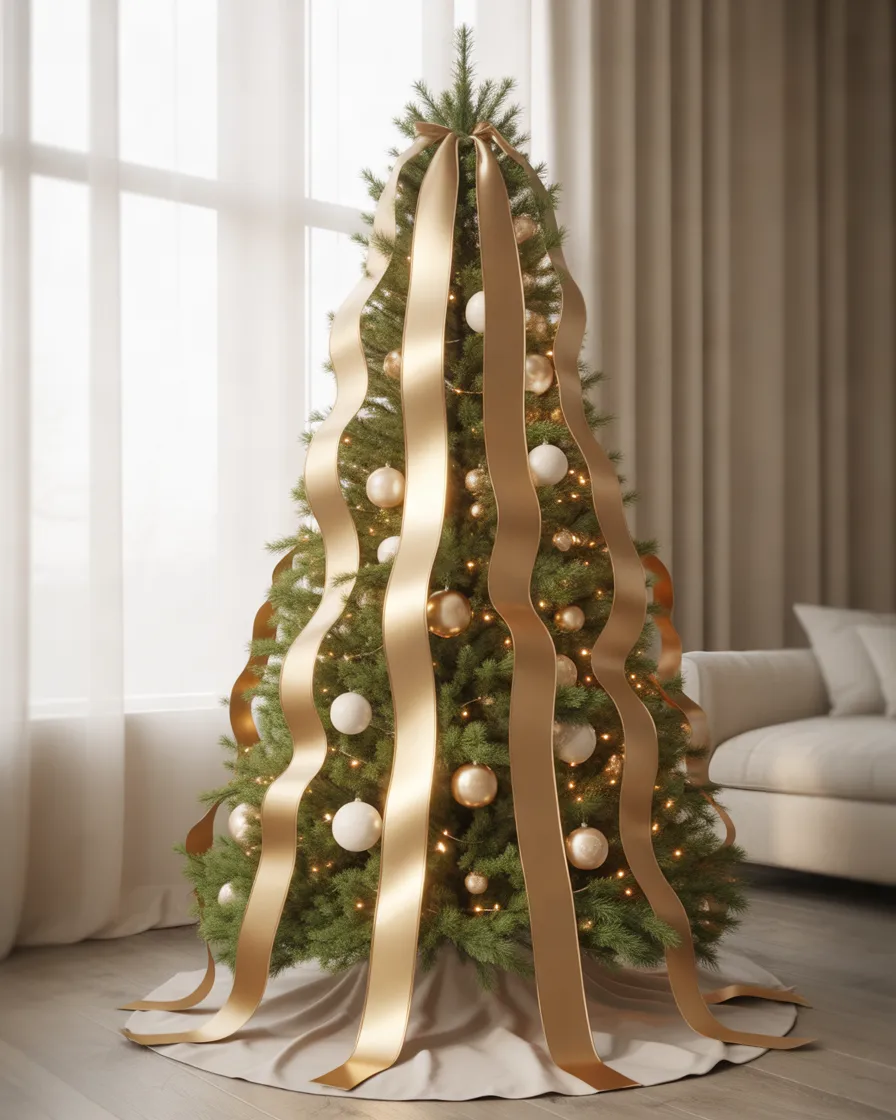
If you love a Christmas tree that feels graceful and romantic, cascading satin ribbon is worth trying. Satin has a smooth finish that reflects light softly, making it especially attractive when paired with delicate ornaments and warm lighting.
Choose ivory, blush pink, champagne, pale gold, or dusty blue satin depending on your decorating palette. For a flowing effect, wider ribbon often works better because it creates visible curves without disappearing among the branches.
Cut several long ribbon lengths and secure each piece near the top of the tree. Let the ribbon fall vertically, guiding it gently between branches so it follows the natural shape of the tree. You can create loose spirals, broad curves, or nearly straight cascades. Avoid pulling the fabric too tightly because the finished arrangement should look relaxed rather than rigid.
For an elegant combination, pair champagne satin with pearl ornaments and warm white lights. Blush satin looks lovely with rose-gold baubles and delicate white flowers, while ivory ribbon creates a timeless look with silver decorations.
One practical tip is to work from the front first, then add a few ribbon lengths to the sides that are visible from your main seating area. This helps create a balanced appearance without using unnecessary ribbon around the entire tree.
3. Decorate With Traditional Red and Gold Ribbon
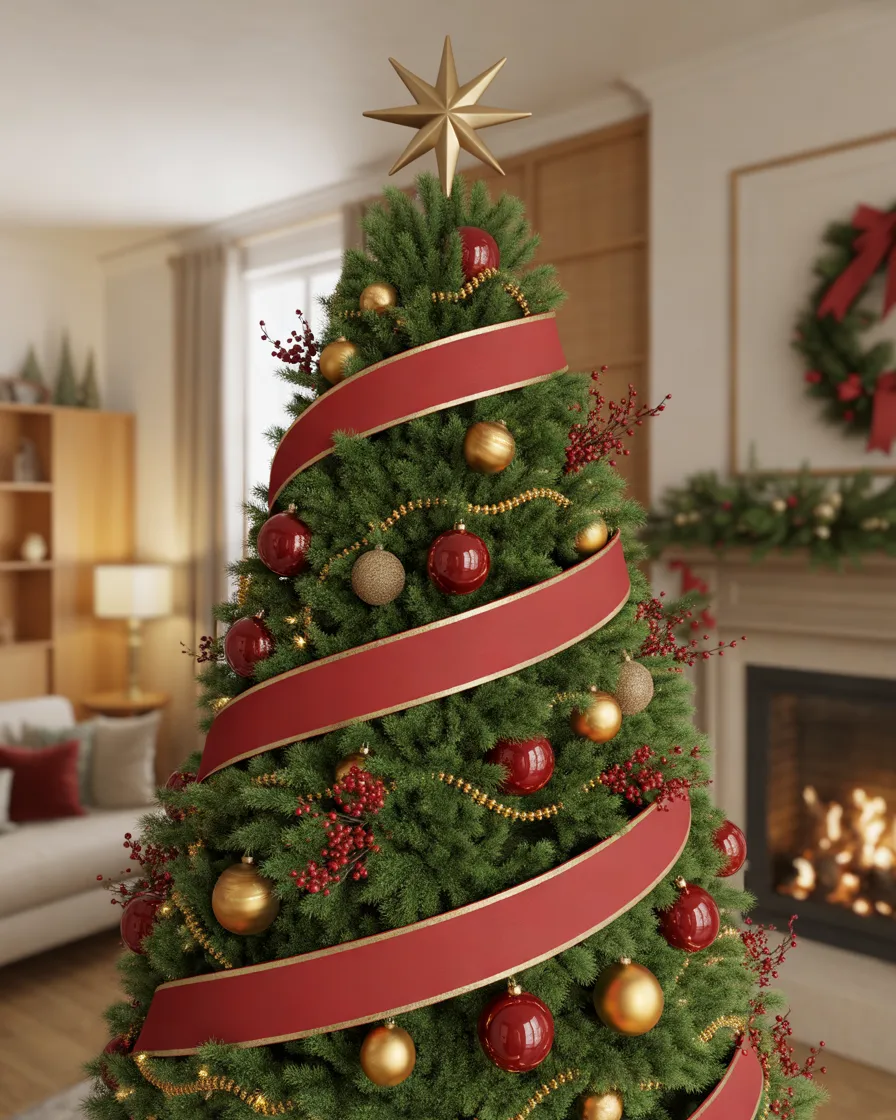
Red and gold are classic Christmas colors for a reason. Together, they create a festive display that feels warm, familiar, and cheerful. If you enjoy traditional holiday decorating, this combination can make your tree feel instantly ready for Christmas celebrations.
Choose a rich red ribbon with a gold edge, a subtle metallic pattern, or a woven finish. You can also combine plain red ribbon with a separate gold ribbon to create more visual interest without making the design overly complicated.
Begin by placing your lights and larger ornaments on the tree. Next, arrange the ribbon in loose diagonal sweeps, gentle loops, or cascading sections. Allow some ribbon to sit closer to the tips of the branches while tucking other sections slightly deeper into the greenery. This variation makes the arrangement appear more natural.
Finish with gold baubles, red glass ornaments, and a few decorative berries. A traditional gold star or an elegant bow at the top can bring the whole design together.
If your tree is already full of colorful ornaments, keep the ribbon arrangement relatively simple. On the other hand, a tree with fewer decorations can benefit from generous ribbon loops that add volume and make the branches look fuller.
4. Bring Farmhouse Charm With Burlap and Linen Ribbon
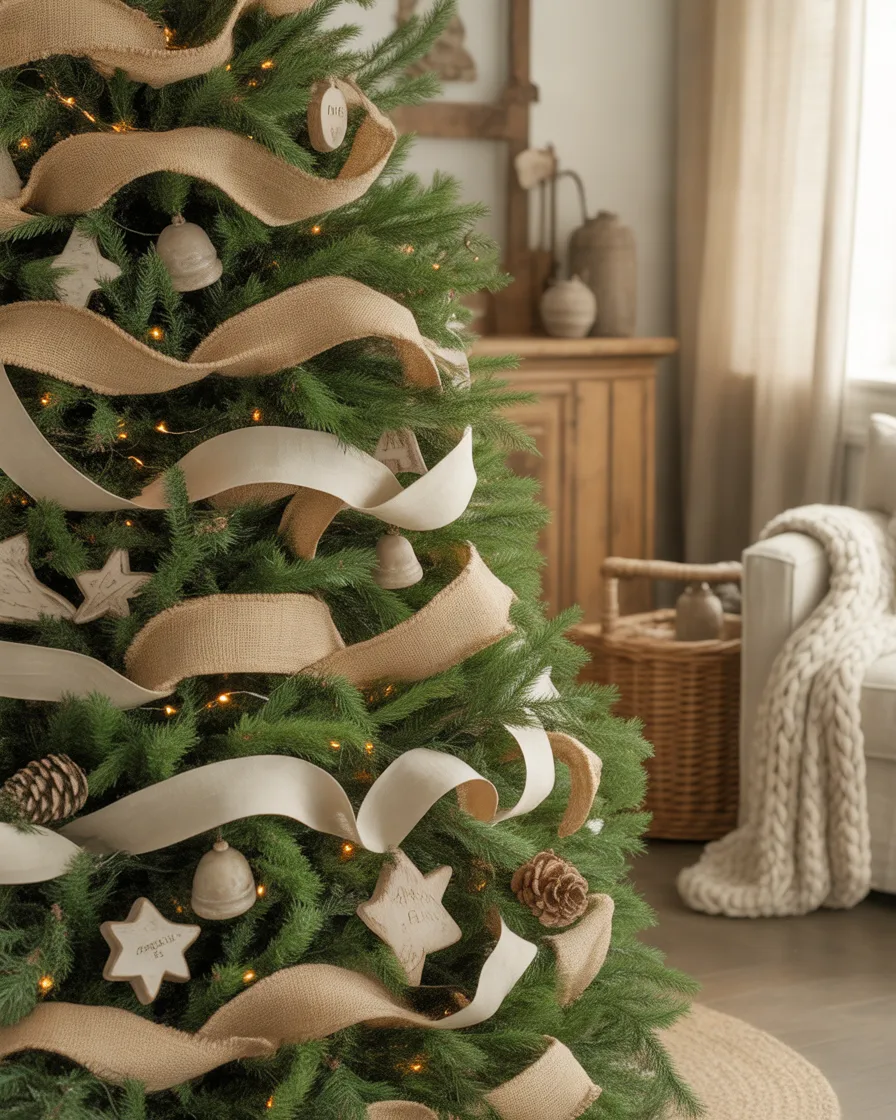
Farmhouse Christmas decorating is all about warmth, natural materials, and comfortable simplicity. Burlap and linen ribbon are ideal for creating this atmosphere because their woven textures add character without looking overly polished.
Choose natural beige burlap, soft ivory linen, or a ribbon with delicate frayed edges. If you want a little contrast, look for burlap ribbon with thin black stripes or a subtle rustic pattern.
Rather than creating perfect, symmetrical loops, arrange the ribbon in relaxed folds that follow the branches. Burlap can be a little stiff, so wired varieties are helpful when you want the fabric to stay in place. Secure the ends between branches and leave some sections loose to create a casual, handmade appearance.
Pair the ribbon with wooden stars, matte white ornaments, pinecones, dried orange slices, and small decorative bells. Warm white lights enhance the natural colors and keep the tree from looking too plain.
This style works especially well in living rooms with wood furniture, woven baskets, neutral upholstery, or other rustic accessories. If your tree is small, use narrower ribbon and a few carefully placed bows rather than covering every branch.
The goal is to create a tree that feels welcoming and personal, as though the decorations have been collected and enjoyed over several holiday seasons.
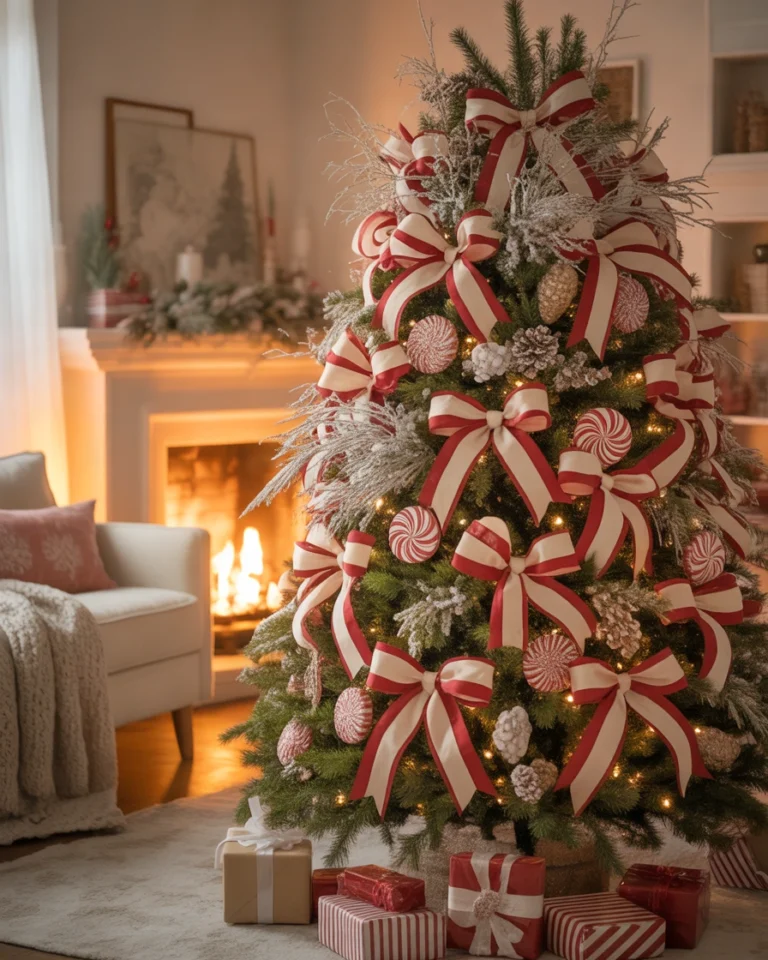
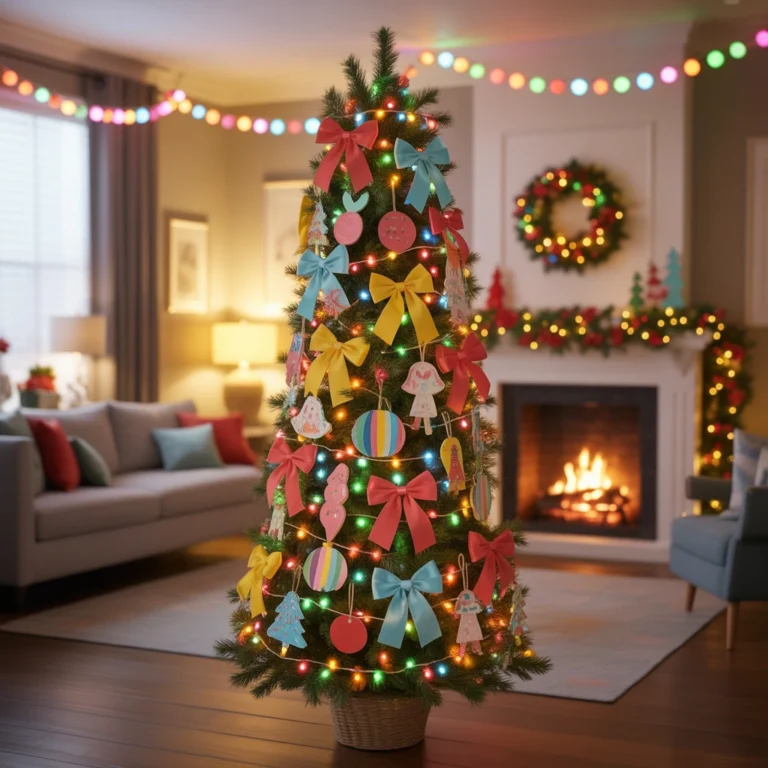
5. Make a Statement With Oversized Ribbon Bows
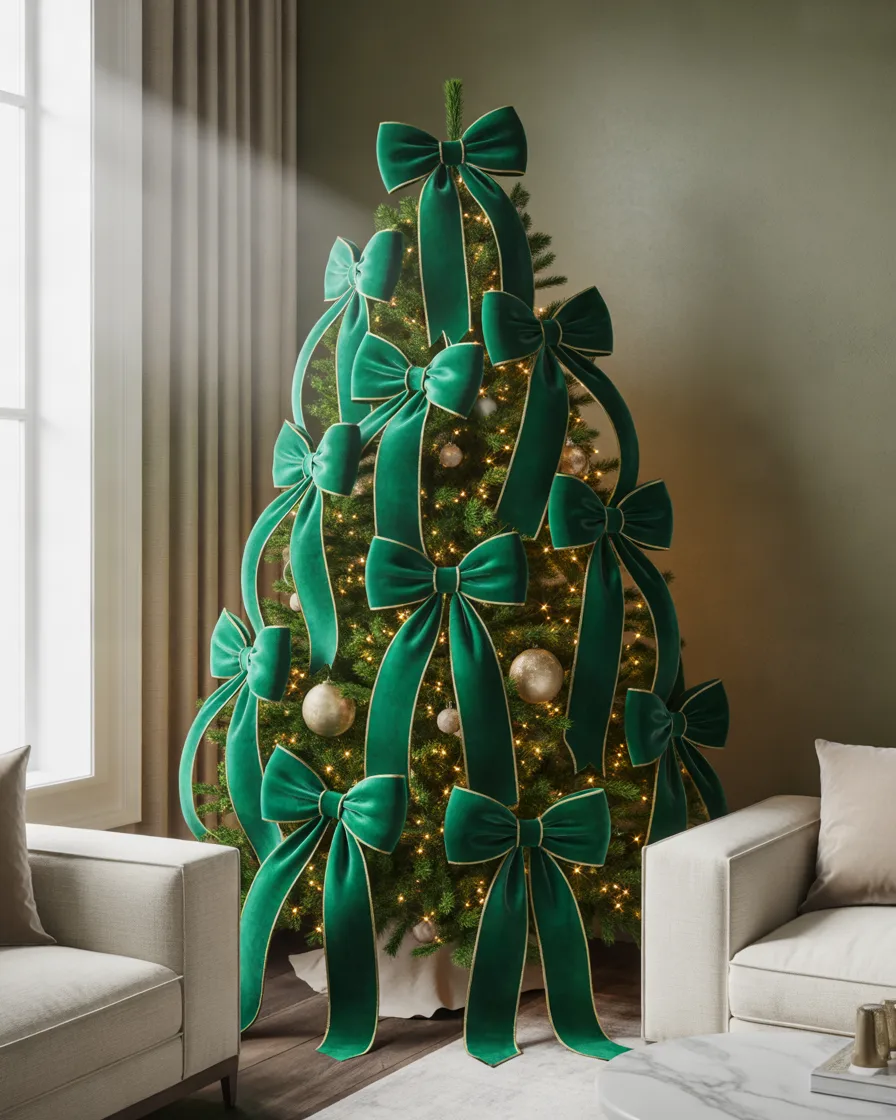
Sometimes, a few bold decorative details can make a stronger impression than dozens of small ornaments. Oversized ribbon bows are perfect for anyone who wants a playful, glamorous, or visually striking Christmas tree.
For a classic look, choose large red velvet bows. For a more contemporary design, try oversized champagne, black, ivory, or emerald green bows. Wired ribbon is especially useful because it helps the loops retain their shape.
You can place one large bow at the top of the tree and several smaller bows throughout the branches. Alternatively, use multiple oversized bows as the main decorations, allowing them to stand out against a relatively simple background of lights and understated ornaments.
To make a bow, create two or more generous loops, pinch the center, and secure it with floral wire or a suitable fastening. Leave the tails long enough to hang gracefully, then trim the ends diagonally or into a V shape. Attach the bow securely to a sturdy branch rather than relying on a delicate outer tip.
Keep the surrounding ornaments simple so the bows remain the focal point. For example, ivory bows look beautiful with gold baubles, while red bows pair well with greenery and a few traditional ornaments.
If you prefer a balanced appearance, distribute the bows at different heights rather than placing them in perfectly straight rows.
6. Add Sparkle With Metallic Gold and Silver Ribbon
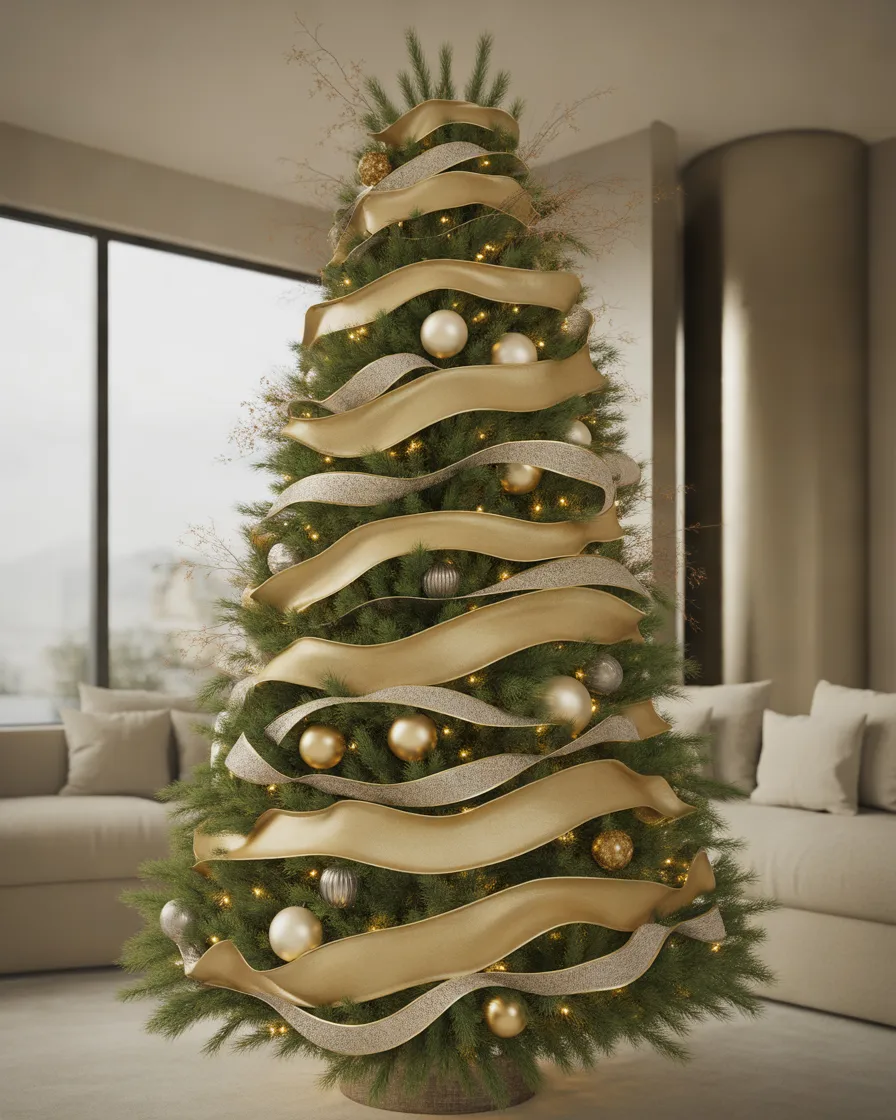
Metallic ribbon is a wonderful option when you want your Christmas tree to sparkle without relying entirely on shiny ornaments. Gold and silver catch the light in different ways, creating a festive appearance that can range from understated elegance to glamorous celebration.
For a warm look, choose champagne gold or brushed metallic ribbon and combine it with cream ornaments and warm white lights. For a cooler palette, silver ribbon looks beautiful with white, pale blue, and crystal-inspired decorations.
You can weave metallic ribbon through the branches, create loose loops, or arrange it in vertical cascades. If you are mixing gold and silver, choose one as the dominant color and use the other as an accent. This gives the tree a coordinated appearance instead of making every decoration compete for attention.
Textured metallic ribbon can be particularly attractive because it reflects light without appearing completely flat. Wired edges are helpful for creating decorative loops, while softer metallic fabrics work well for flowing arrangements.
Try adding a few matte ornaments to balance the shine. The contrast between glossy, metallic, and matte surfaces makes the overall design more interesting.
7. Create an Airy Tree With Sheer Organza Ribbon
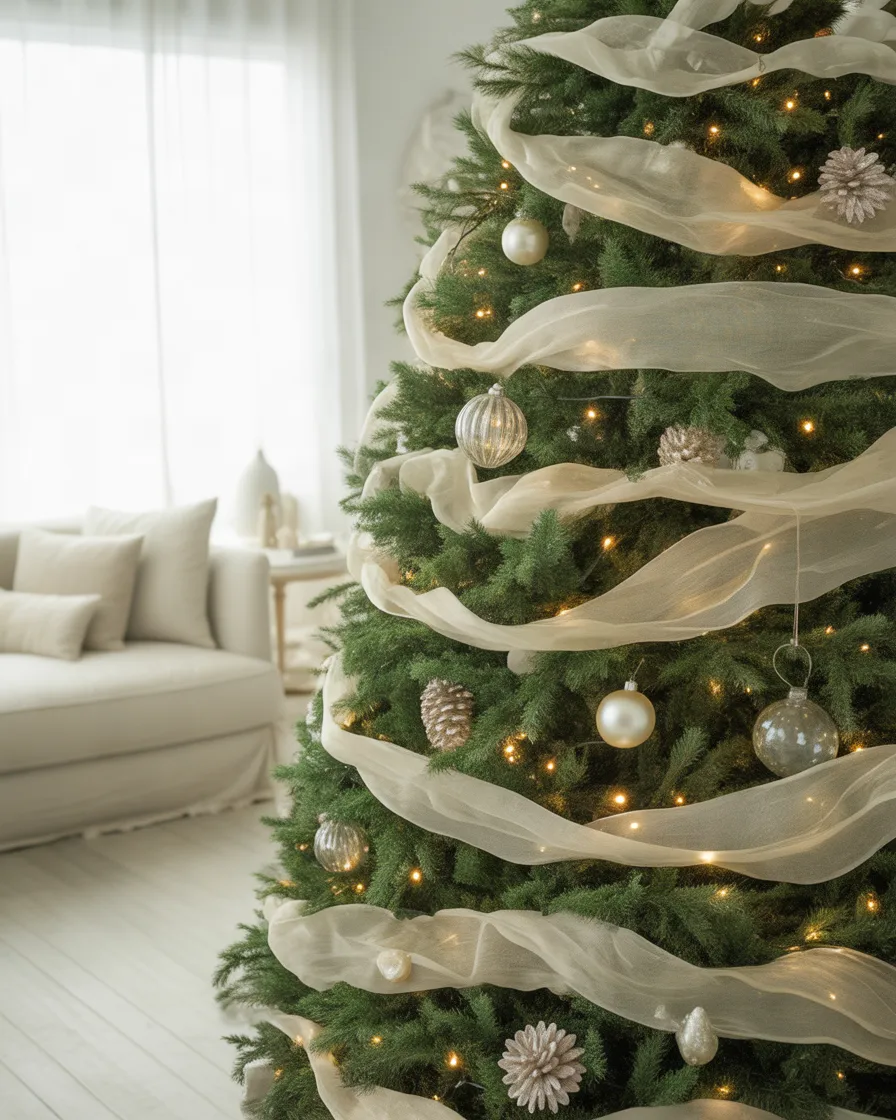
Sheer organza ribbon is perfect for creating a light, delicate Christmas tree that does not feel visually heavy. Because the fabric is translucent, the greenery and lights remain visible through it, giving the tree an airy and graceful appearance.
White, ivory, pale pink, soft blue, and champagne are lovely choices for this style. Organza with subtle glitter or a fine metallic edge can add a little sparkle without overwhelming the delicate texture.
Cut the ribbon into medium or long lengths and arrange it in loose loops between the branches. Let some sections extend outward slightly while others rest closer to the trunk. This creates depth and prevents the fabric from looking like a flat layer placed over the greenery.
Organza works beautifully with glass ornaments, pearl decorations, delicate floral picks, and warm white lights. If you want a winter wonderland effect, combine white organza with silver ornaments and a light dusting of artificial snow on the outer branches.
Since sheer fabric can be less structured than wired velvet or burlap, use discreet ties or floral wire where needed. Avoid pulling it too tightly, as this can flatten the loops and reduce the soft appearance.
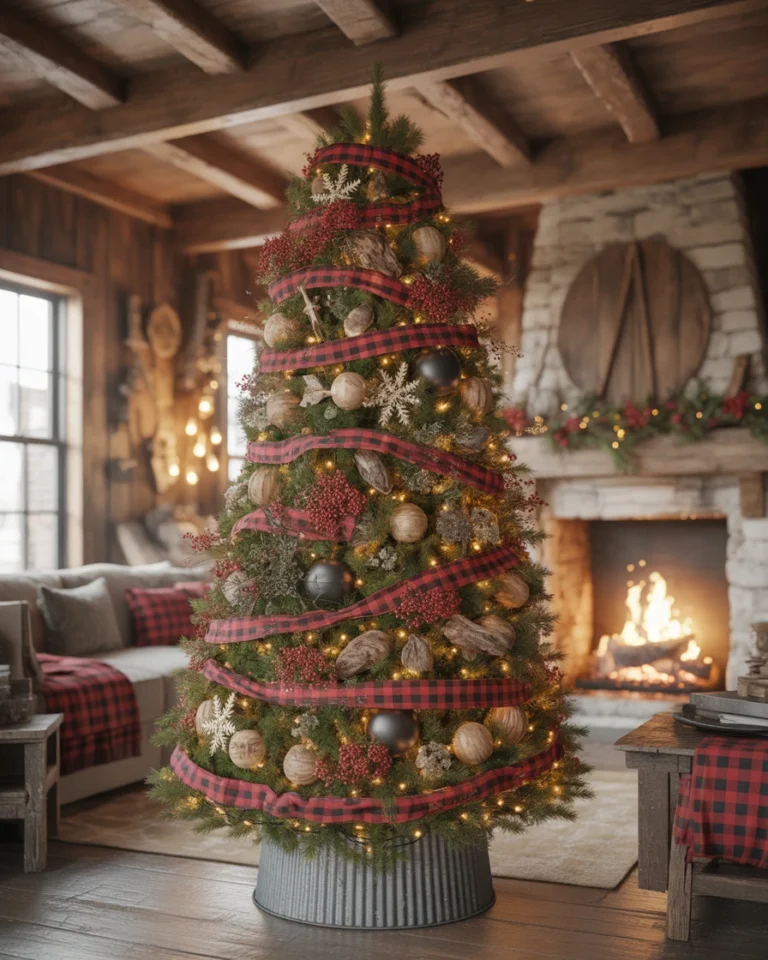
8. Choose Classic Plaid Ribbon for a Cozy Christmas Tree
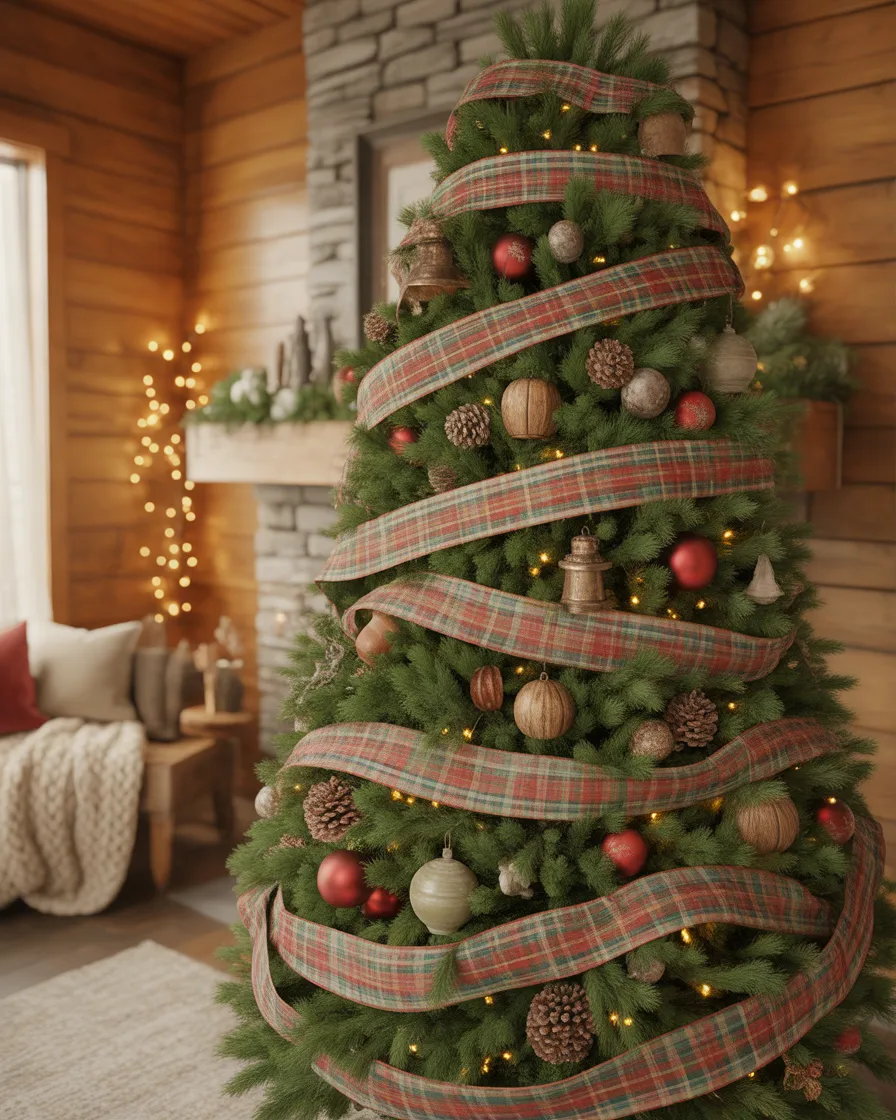
Plaid ribbon brings a comfortable, nostalgic feeling to Christmas decorating. Its familiar patterns look especially attractive on trees inspired by cabins, traditional family homes, or rustic holiday interiors.
Red-and-black buffalo plaid is a bold choice, while red-and-green tartan feels more traditional. Neutral plaid in beige, cream, and brown works well if you prefer a softer farmhouse palette.
Because plaid already has a noticeable pattern, it is best to let the ribbon provide much of the visual interest. Arrange it in broad loops, short cascading sections, or decorative bows tucked among the branches.
For a classic red plaid tree, add wooden ornaments, matte red baubles, pinecones, and warm white lights. You could also incorporate small metal bells or natural-looking berry picks for extra texture.
If you want a more contemporary appearance, combine neutral plaid ribbon with white ornaments and a few black accents. The result feels coordinated without being overly colorful.
Pay attention to how the pattern appears when you fold the ribbon. Try to keep the printed side facing outward so the plaid remains visible. Wired ribbon makes this easier because it helps you shape the fabric without repeatedly adjusting it.
9. Try a Minimalist Neutral Ribbon Color Palette
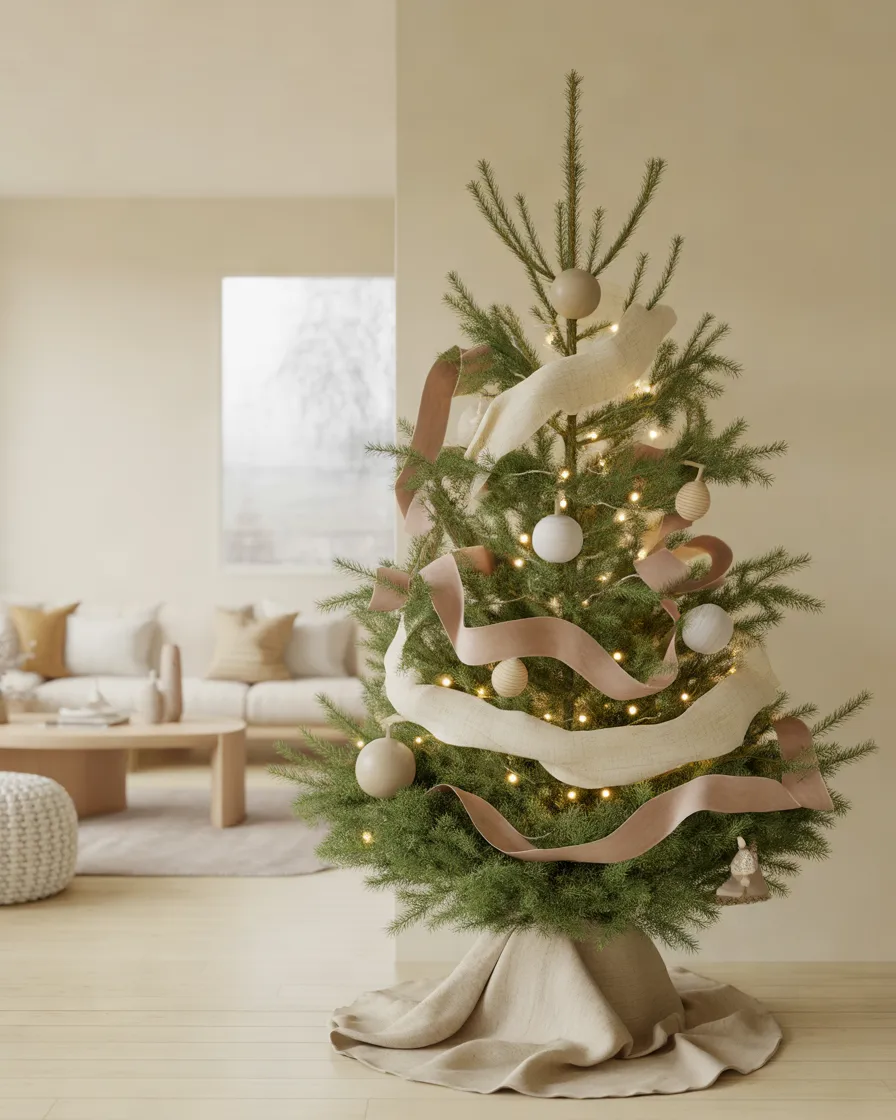
If your home decor leans toward modern, Scandinavian, or minimalist styling, you may prefer a Christmas tree that feels calm rather than colorful. A neutral ribbon palette can create a beautiful result while allowing the natural greenery to remain the star of the display.
Consider ivory, beige, taupe, soft gray, muted champagne, or warm white ribbon. Mixing two complementary shades often adds enough variation without making the design feel busy.
Start with a lightly decorated tree and arrange the ribbon in simple vertical cascades or loose, widely spaced loops. Avoid filling every gap with accessories. Instead, let the branches, ribbon, and lighting create the visual interest.
Add a few matte white ornaments, pale wooden decorations, or simple glass baubles. Warm white lights generally work well with creamy neutrals, while cooler white lights can complement gray and silver tones.
Texture matters more than strong color in this style. Try pairing linen ribbon with satin accents or combining soft velvet with sheer organza. These subtle contrasts make the tree look layered and thoughtfully styled.
A neutral ribbon tree is also easy to adapt to existing furniture and wall colors. You can change a few ornaments from year to year while keeping the same overall decorating theme.
10. Layer Different Ribbon Textures for More Depth
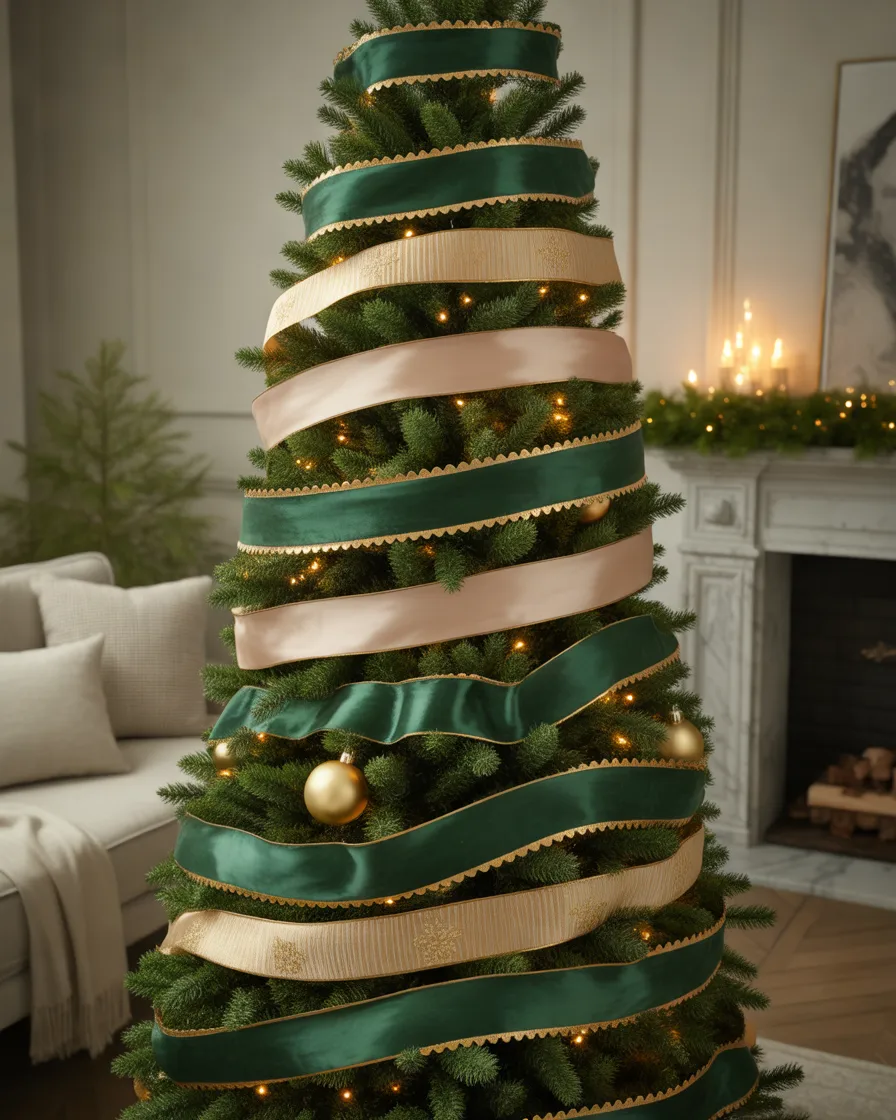
You do not have to choose just one type of ribbon for your Christmas tree. Combining different textures can create a more interesting design, especially when you keep the colors within a coordinated palette.
For example, pair velvet with satin, linen with sheer organza, or plaid with a narrow solid-color ribbon. The contrast between soft, glossy, woven, and transparent materials makes the arrangement feel more dimensional.
Begin by selecting a dominant ribbon that establishes the overall look. Add a second ribbon that complements its color and texture rather than competing with it. If you use three types, keep the third one relatively subtle.
Place the widest ribbon first, using broad loops or gentle cascades. Then tuck the narrower ribbon alongside it, allowing the two fabrics to overlap occasionally. You do not need to follow the same pattern throughout the tree; a few well-placed combinations can create enough visual interest.
For instance, forest green velvet paired with champagne satin and a fine gold-edged ribbon creates a luxurious palette. Alternatively, beige linen combined with ivory organza and narrow plaid ribbon gives a rustic tree a softer, layered finish.
Remember that too many patterns can make the tree look cluttered. Keep the palette consistent and repeat the same textures at different heights to create a cohesive appearance.
11. Decorate With Vertical Ribbon Strands for a Modern Look
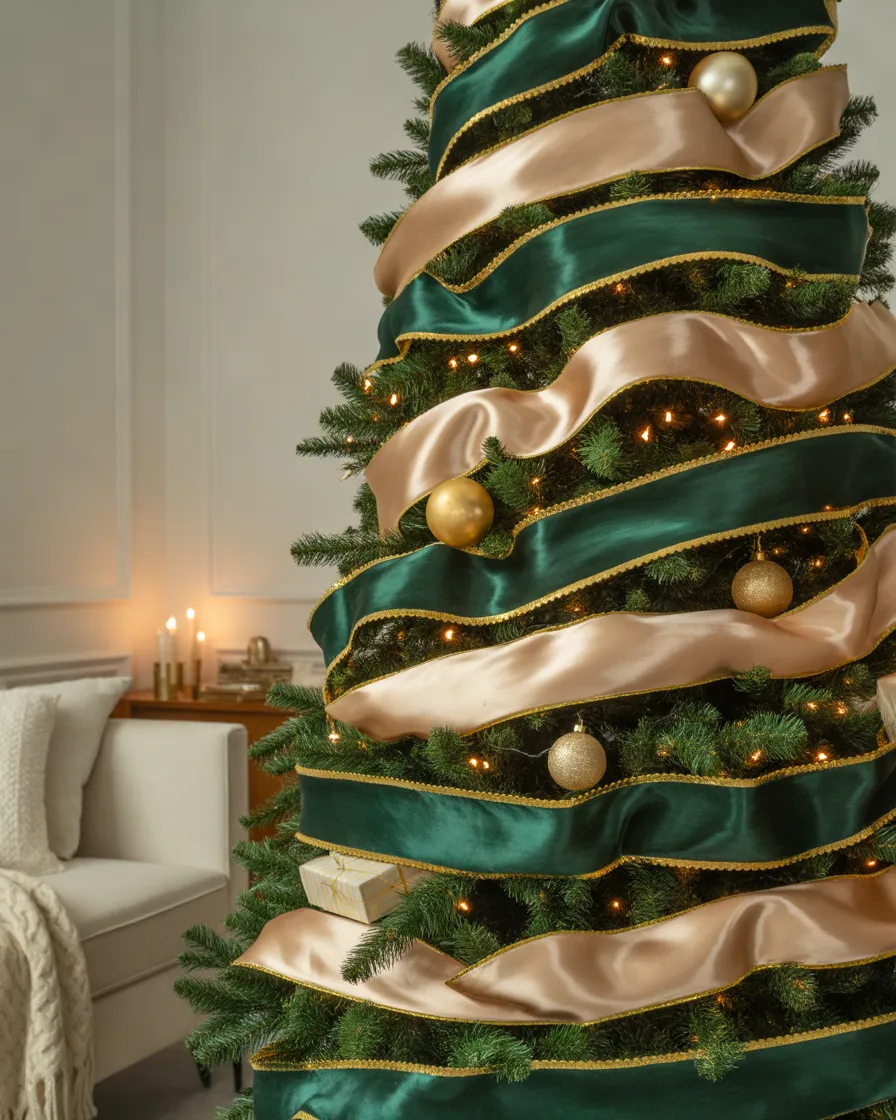
Vertical ribbon strands offer a clean, contemporary alternative to the traditional method of wrapping ribbon around a Christmas tree. This technique works especially well when you want a design that looks organized, elongated, and visually balanced.
Choose ribbon in one or two complementary colors. Champagne and ivory create a sophisticated effect, while emerald green and gold offer a richer holiday appearance. For a simple modern tree, a single color of wide satin or velvet ribbon may be all you need.
Cut several ribbon lengths according to the height of your tree. Secure each piece near the top, then guide it downward in a mostly vertical line. You can keep the strands straight for a structured design or introduce slight curves as they pass between the branches.
Distribute the ribbon evenly around the visible front and sides of the tree. Check the arrangement from a distance to make sure the strands are balanced rather than clustered in one area.
Pair vertical ribbon with evenly spaced ornaments and simple lighting. Avoid using too many large decorations between the strands because they can interrupt the clean lines.
This approach is particularly useful for tall, slim trees and modern interiors where a less crowded appearance feels appropriate.
12. Give Your Tree a Winter Wonderland Look With White and Silver Ribbon
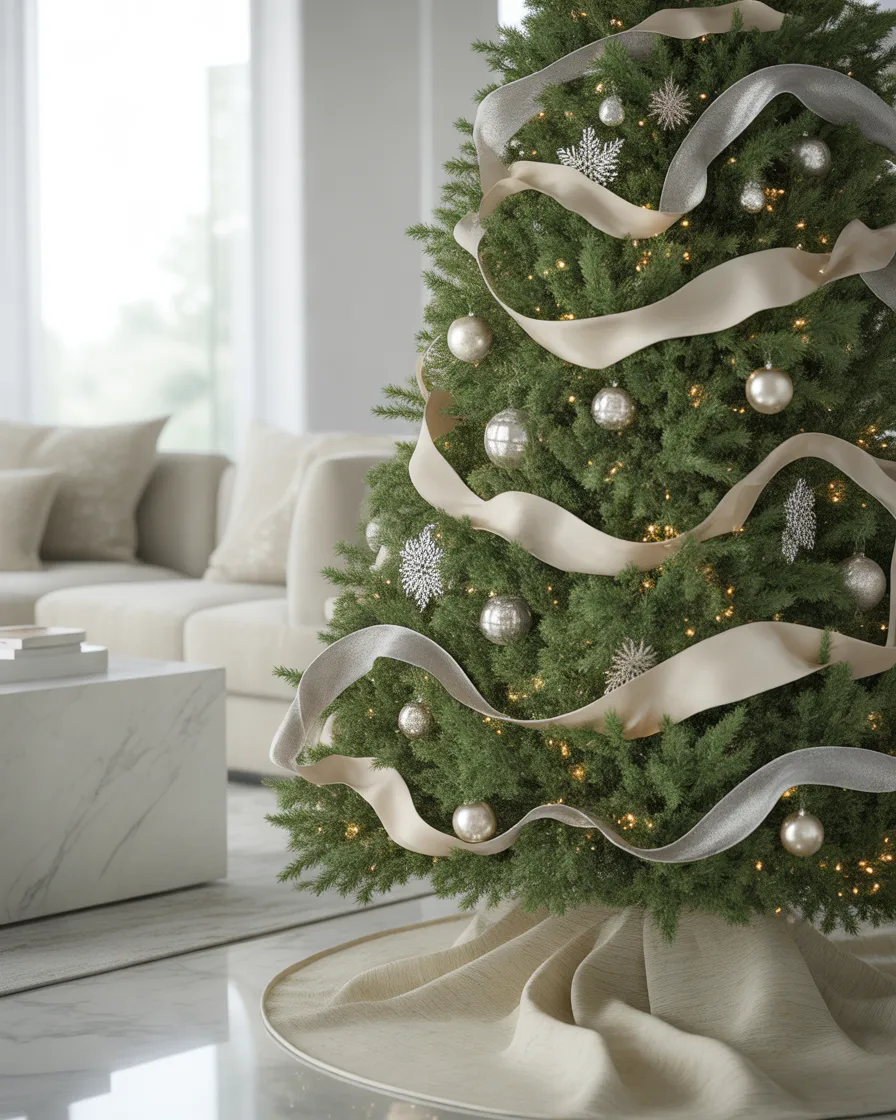
A white-and-silver Christmas tree creates a fresh, wintry atmosphere that feels elegant and peaceful. This color combination works beautifully in homes where pale furnishings, reflective accents, or cool winter-inspired decorations already play a role.
Choose white velvet, silver satin, pearl-white organza, or ribbon with subtle metallic threads. You can use a single material for a clean appearance or combine two textures for additional depth.
Arrange the ribbon in soft cascading waves or loose loops that resemble flowing snow. Keep the folds natural, allowing the ribbon to disappear briefly behind the branches before emerging again. This creates a more integrated appearance than simply laying fabric across the outer tips.
Add silver baubles, clear glass ornaments, white floral picks, and warm or neutral-white lights. If you use artificial snow, apply it sparingly so that the ribbon and ornaments remain clearly visible.
For a softer winter look, combine ivory ribbon with brushed silver decorations. If you prefer a crisp, icy appearance, choose bright white ribbon with pale blue accents and clear ornaments.
A silver star or snowflake-inspired topper can complete the theme. The finished tree should feel luminous and delicate, with the ribbon providing movement while the ornaments contribute sparkle.
How to Decorate a Christmas Tree With Ribbon: Practical Tips for the Best Results
Choosing a beautiful ribbon is only part of the process. The way you prepare and place it determines whether your tree looks professionally styled or slightly untidy. A few simple techniques can make decorating much easier.
Choose the Right Ribbon Width
Consider the height and fullness of your tree before purchasing ribbon. Wider ribbon creates a stronger visual impact on a large tree, while narrower ribbon is often easier to manage on a small tabletop tree.
As a starting point, ribbon around 2 to 4 inches wide works for many medium and large trees. However, the ideal width depends on your decorating style and how much greenery you want to leave visible.
Decide Between Wired and Unwired Ribbon
Wired ribbon is generally easier to shape into loops, bows, and structured cascades. Its edges help the fabric hold the position you create.
Unwired ribbon offers a softer, more fluid appearance and works well for delicate draping. However, it may require additional fastening to prevent it from slipping.
Estimate How Much Ribbon You Need
The amount depends on the tree’s height, width, fullness, and the arrangement you prefer. A tree decorated with a few vertical strands will need less ribbon than one covered in generous loops.
If you are unsure, buy a little extra so you can adjust the arrangement without running short. Test a small section before cutting all your ribbon into pieces.
Prepare the Ribbon Before Decorating
Fluff the branches and install the lights before adding ribbon. Then decide whether you want vertical strands, cascading curves, or a loose spiral.
For easier handling, cut ribbon into manageable lengths rather than trying to control one enormous piece. Leave enough length for natural folds and secure the ends discreetly between sturdy branches.
Place Ribbon Before or After Ornaments?
For most decorating styles, adding ribbon after the lights but before the smaller ornaments is a practical approach. This allows you to arrange the fabric without constantly moving delicate decorations.
However, some designers prefer to place large ornaments first to establish the overall color balance. Both methods can work; the important thing is to make adjustments gradually and check the tree from different angles.
Balance the Tree From Every Angle
Step back periodically and look at the tree from the front and sides. If one section looks crowded, move a ribbon loop or ornament rather than adding more decorations.
Repeat colors and ribbon textures throughout the visible area to create a cohesive design. Leave some branches exposed so the tree retains its natural shape.
Frequently Asked Questions About Christmas Tree Ribbon Decorating
What Is the Best Way to Put Ribbon on a Christmas Tree?
The best method depends on the look you want. For a flowing design, cut ribbon into manageable lengths and tuck the ends between branches to create loose cascades. For a modern style, arrange several vertical strands. Wired ribbon is particularly helpful when creating structured loops and bows.
Should Ribbon Go on a Christmas Tree Before or After Ornaments?
In most cases, place the lights first, then the ribbon, followed by smaller ornaments. This makes it easier to position the ribbon without disturbing fragile decorations. You can place a few larger ornaments beforehand if you want to establish the main color scheme.
How Much Ribbon Is Needed for a Christmas Tree?
There is no single amount that works for every tree. A tall, wide tree with generous cascading ribbon requires more material than a small tree with a few decorative bows. Estimate your needs based on the tree’s dimensions and the spacing of your ribbon, and purchase extra if you plan to create full loops or layered designs.
What Type of Ribbon Works Best for Christmas Tree Decorating?
Wired velvet, satin, organza, linen, and plaid ribbon are all useful options. Velvet offers a rich texture, satin creates a smooth finish, organza looks delicate, and linen or burlap adds rustic charm. Choose a material that complements your tree, ornaments, and interior style.
Is It Better to Use Ribbon Vertically or Horizontally on a Christmas Tree?
Neither method is universally better. Vertical ribbon strands create a clean, elongated appearance, while horizontal or diagonal arrangements can make the tree feel fuller and more traditional. Cascading curves offer a softer alternative. Choose the technique that best matches your preferred decorating style.
How Can I Keep Christmas Tree Ribbon From Slipping?
Use discreet floral wire, suitable reusable decorating clips, or secure fastening points between sturdy branches. Wired ribbon also holds its shape more easily than many unwired varieties. Avoid pulling the ribbon too tightly, and check the attachment points as you work.
Conclusion
Christmas tree ribbon decorating is one of the easiest ways to give your holiday display a fresh personality. Whether you prefer luxurious velvet, flowing satin, rustic burlap, traditional plaid, or a delicate white-and-silver palette, the right ribbon can bring color, texture, and movement to your tree.
You do not need to follow every decorating trend or cover every branch. Start with a color scheme you love, choose a ribbon material that complements your ornaments, and experiment with different placements until the arrangement feels balanced.
If you want a simple update this year, try adding a few cascading ribbon lengths to your existing decorations. For a more dramatic transformation, combine complementary textures or make oversized bows the focal point.
The most beautiful Christmas trees are the ones that feel right for the homes and people enjoying them. Choose your favorite idea, add your own personal touches, and create a festive display that makes your home feel warm and welcoming throughout the holiday season.