
There is something incredibly calming about waking up in a bedroom filled with greenery. Even a single beautiful plant can make a plain corner feel softer, warmer, and more inviting. Over time, I’ve realized that bedroom plants decor is not only about placing random pots around the room. The best results come from treating plants as part of the overall design.
Plants can fill awkward corners, soften hard furniture lines, add color to neutral bedrooms, and make small spaces feel more alive. Whether your bedroom is modern, minimalist, bohemian, cozy, rustic, or luxurious, there is almost always a way to introduce greenery without making the room feel cluttered.
I especially love bedroom plants because they create that relaxed, lived-in feeling that can sometimes be difficult to achieve with furniture and decorative accessories alone. A trailing vine on a shelf, a tall floor plant beside the window, or a few miniature pots on a nightstand can completely change how the room feels.
The good news is that you do not need to transform your bedroom into an indoor jungle. Sometimes the smallest plant styling choices make the biggest difference.
If you are looking for inspiration, these 15 bedroom plants decor ideas can help you create a bedroom that feels peaceful, stylish, fresh, and connected to nature.
One thing I always keep in mind, however, is that attractive plant styling should also be practical and safe. Some common houseplants can be irritating or toxic if chewed by pets or small children, while unstable pots, excessive watering, and poorly secured hanging planters can create avoidable problems. A little planning makes it much easier to enjoy bedroom greenery safely.
1. Place a Large Statement Plant Beside the Bed
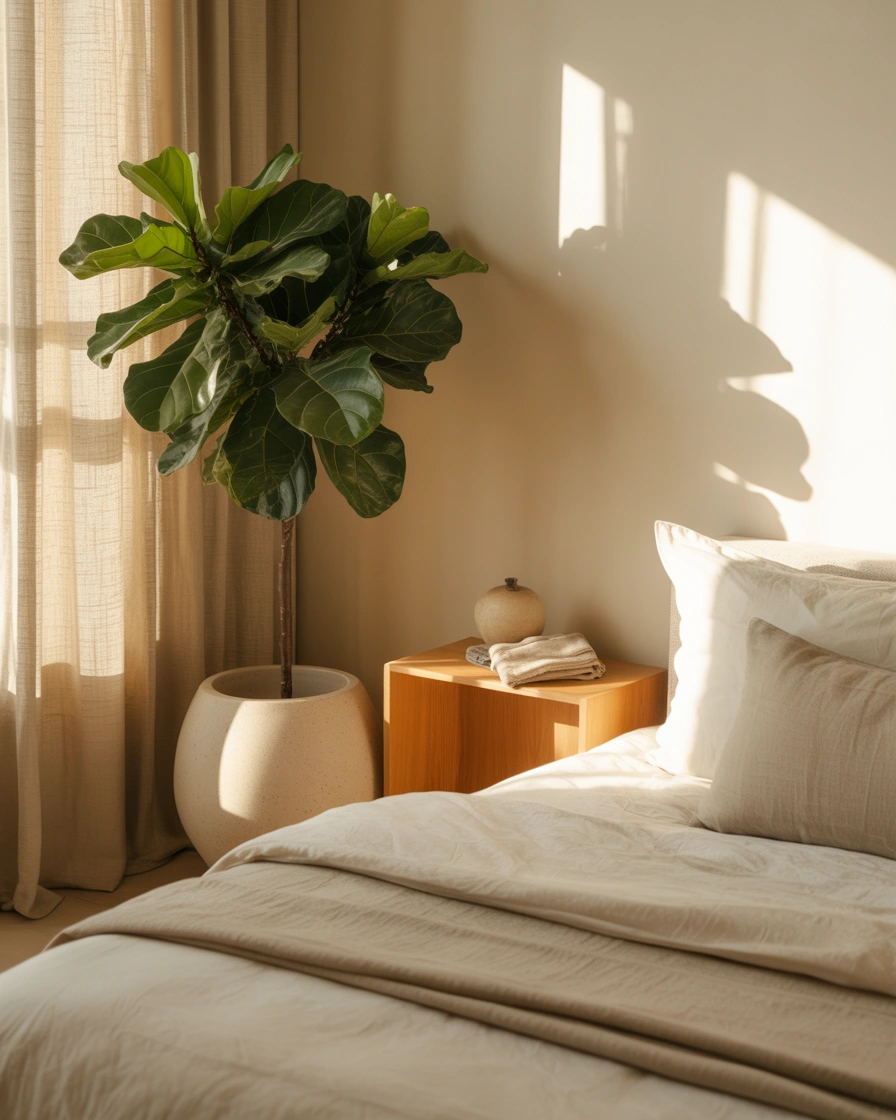
One of my favorite ways to use bedroom plants decor is by placing one large plant beside the bed. It creates an instant focal point while adding height and softness to the room.
A tall plant works particularly well when you have an empty space between the bed and the wall or beside a nightstand. Instead of filling that corner with another piece of furniture, greenery makes it feel intentionally styled without making the room heavy.
Plants with large leaves are especially beautiful in bedrooms because they add visual texture. A bird of paradise, monstera, rubber plant, or fiddle-leaf fig can look stunning depending on the lighting conditions in your room.
I like pairing a large green plant with a simple ceramic, woven, or neutral-colored planter. This allows the leaves to remain the main attraction.
If your bedroom has white, beige, cream, or light gray walls, the deep green foliage can create a striking but relaxing contrast.
You can also place the plant slightly behind your nightstand so it frames the bed instead of competing with it. The result feels natural and sophisticated.
For safety, make sure large floor plants sit in stable, appropriately sized planters that are difficult to knock over. If you have pets or young children, check whether a plant is safe for your household before bringing it into the bedroom. Decorative baskets are beautiful, but I still like to keep the actual nursery pot inside a waterproof saucer or liner so moisture does not reach the flooring.
2. Decorate Bedroom Shelves With Small Potted Plants
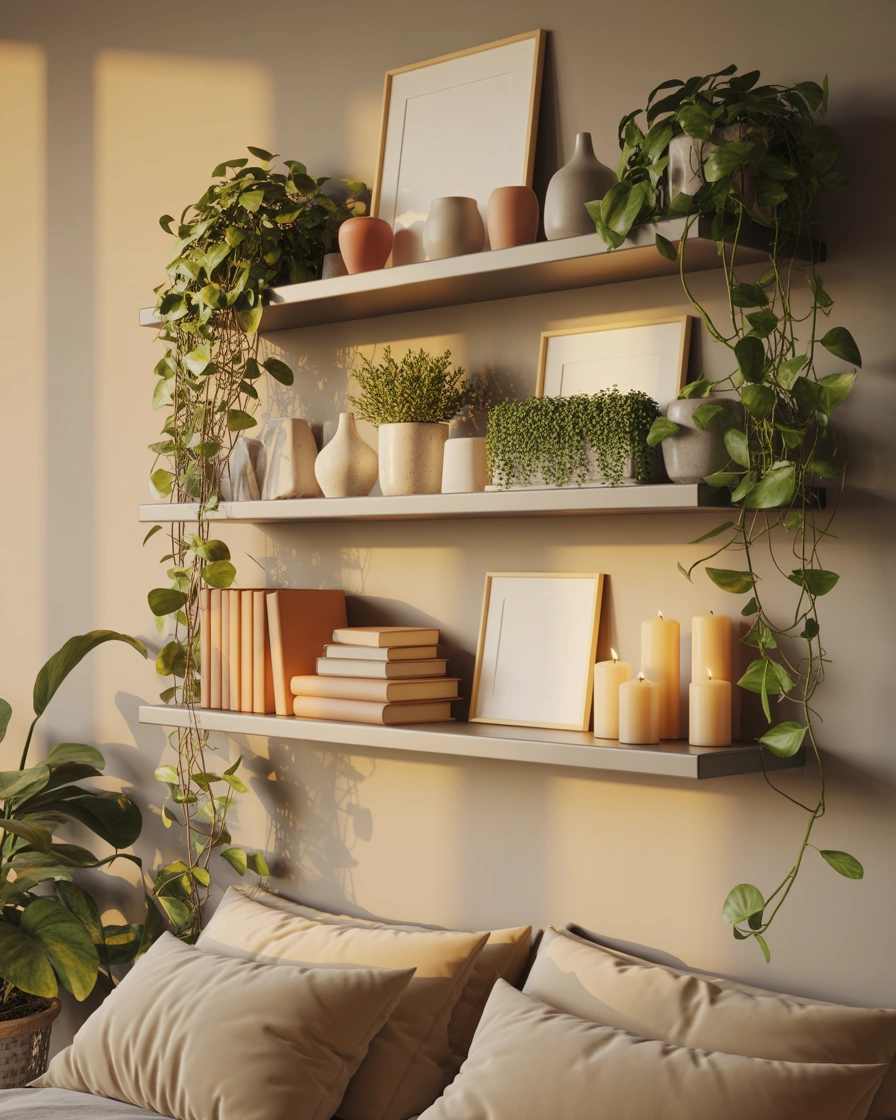
Shelves are perfect for bedroom plant styling because they allow you to add greenery without sacrificing valuable floor space.
I especially like mixing small plants with books, candles, framed artwork, and decorative objects. The combination makes shelves look more natural instead of overly arranged.
Trailing plants are excellent for higher shelves because their vines can hang downward, creating movement and softness. Pothos, heartleaf philodendron, and string-of-pearls-style plants can all create this beautiful cascading effect.
For lower shelves, I prefer compact plants in simple pots. Small succulents, peperomia, snake plant varieties, or miniature leafy plants can work well.
The secret is not to fill every inch of the shelf. Leave some breathing room between objects. Too many pots can quickly make bedroom plants decor feel cluttered.
Try combining different plant heights and leaf shapes while keeping your planters within a similar color palette. For example, white ceramic pots mixed with natural terracotta can create a relaxed and cohesive display.
Before placing plants on high shelves, I also check that the shelf is securely mounted and can comfortably support the combined weight of the pots, soil, and water. Watered soil can be surprisingly heavy. Avoid positioning unstable pots directly above the bed, a chair, or another area where someone regularly sits or sleeps.
3. Create a Green Bedroom Window Corner
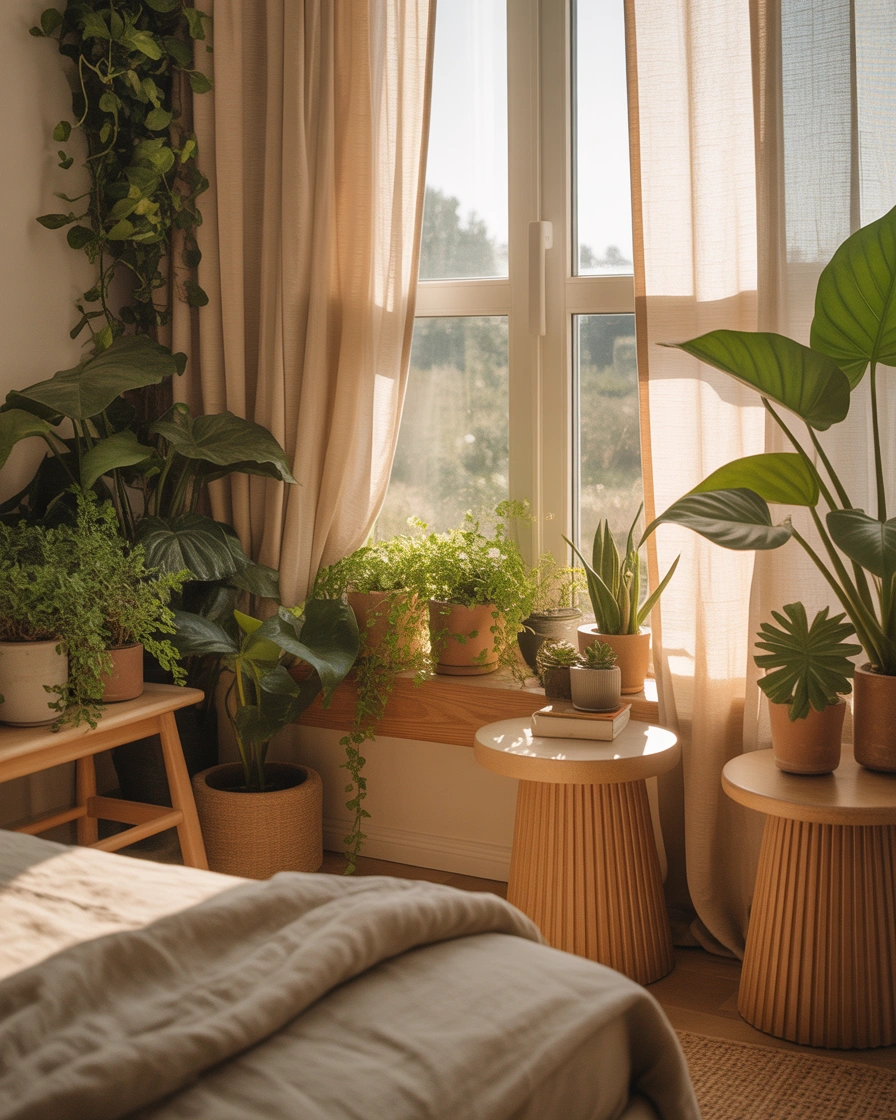
If your bedroom has a sunny window, turn the surrounding area into a dedicated plant corner.
This is one of the most natural places to display bedroom plants because many varieties benefit from bright indirect light. It also gives you the opportunity to group several plants together without spreading them throughout the entire room.
I love mixing plants at different heights around a window. One can sit directly on the windowsill, another on a wooden stool, and a taller plant can stand on the floor.
This layered arrangement creates depth and makes the corner feel lush.
You can also use decorative plant stands to raise smaller pots and create a more polished look. A combination of wood, rattan, or simple metal stands can work depending on your bedroom style.
Keep the window area airy enough that plants do not block all the daylight. The goal is to create a fresh green corner while still allowing natural light to brighten the bedroom.
I also avoid crowding plants directly against glass where extreme heat or cold could damage sensitive foliage. Make sure the arrangement does not block access to windows that may need to open for ventilation or emergency use.
4. Add Hanging Plants Above a Bedroom Corner
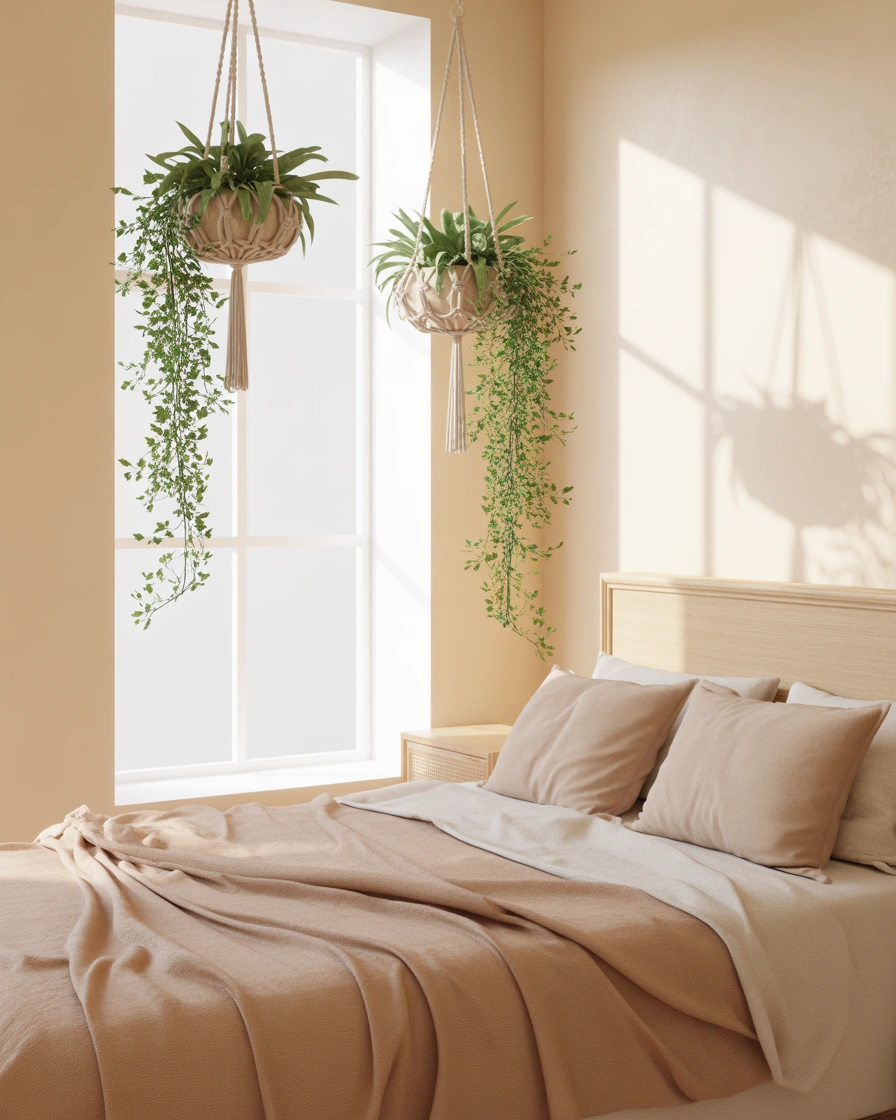
Hanging plants are a wonderful solution when floor and surface space is limited.
They immediately draw the eye upward, which can make a small bedroom feel taller and more visually interesting.
A hanging planter looks especially beautiful near a window, beside a reading chair, or in an unused corner of the room. Plants with trailing foliage work best because their vines naturally fall downward.
For a softer bedroom aesthetic, try woven macramé holders, rattan baskets, or simple ceramic hanging pots.
I personally love hanging plants in rooms with neutral bedding because the greenery introduces color while the suspended shape adds personality.
Just make sure the plant is positioned where you can easily water it and where hanging vines will not interfere with walking paths.
One or two carefully placed hanging plants usually look more stylish than covering the ceiling with too many planters.
Safety matters especially with hanging plants. The ceiling hook or wall bracket should be appropriate for the planter’s total weight when the soil is wet, not just when it is dry. I would never hang a heavy planter directly over the bed or another place where someone spends long periods of time. Check the hardware occasionally as well, particularly if the planter is frequently moved for watering.
5. Style Plants on Your Bedroom Nightstand
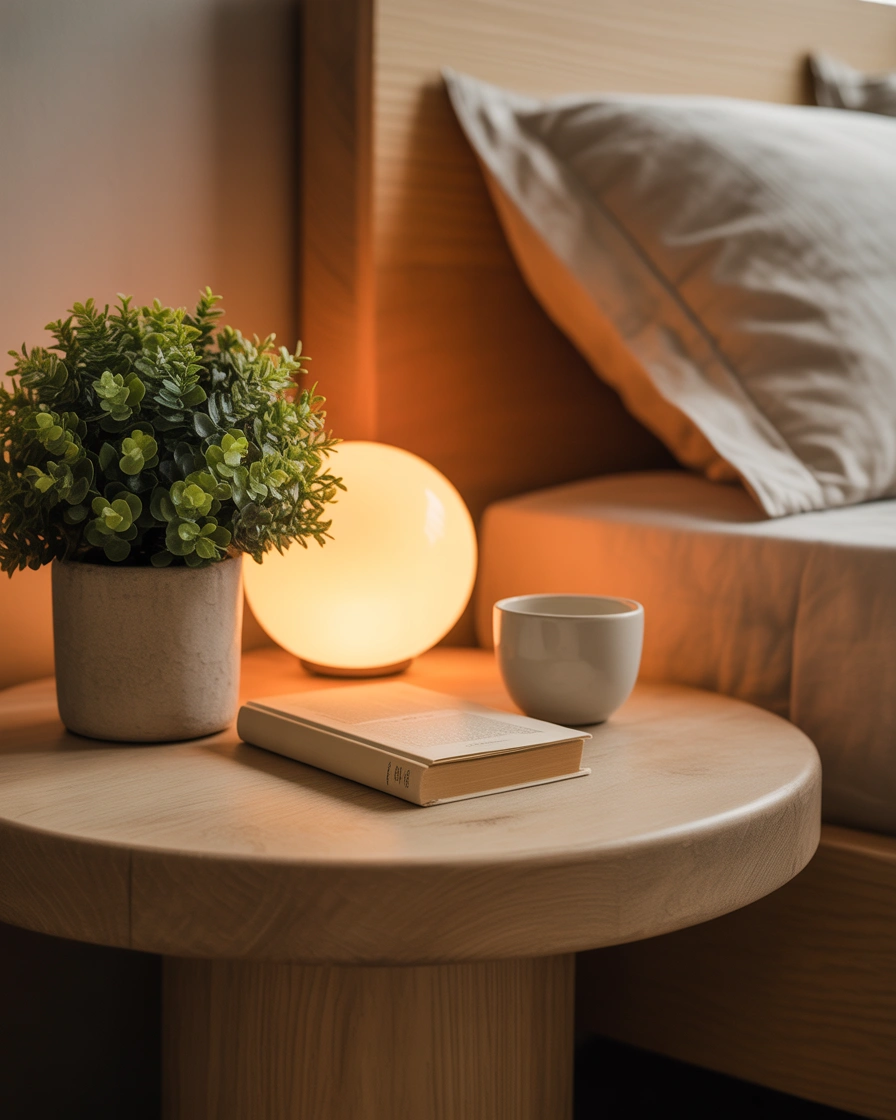
Your nightstand is one of the easiest places to introduce greenery.
A small plant beside a lamp, book, or candle instantly makes the bedside area feel softer and more personal.
Because nightstands are usually compact, choose a plant that will not overwhelm the surface. A small pothos, peperomia, succulent, mini fern, or compact snake plant can work beautifully.
I prefer keeping the pot simple so the space does not become visually busy. Neutral ceramic planters, stone pots, or soft earthy colors tend to blend naturally with bedroom decor.
If your bedside table already has several items, place the plant toward the back corner. This keeps the surface practical while still allowing greenery to become part of the design.
The combination of a bedside lamp and a small leafy plant creates such a cozy evening atmosphere.
When plants share a surface with lamps, chargers, alarm clocks, or other electronics, I always use a saucer or waterproof cachepot and remove excess drainage water promptly. Water and electrical items are not a good combination, so leaving enough space between them is a simple but worthwhile precaution.
6. Let Trailing Plants Cascade From a Headboard Shelf
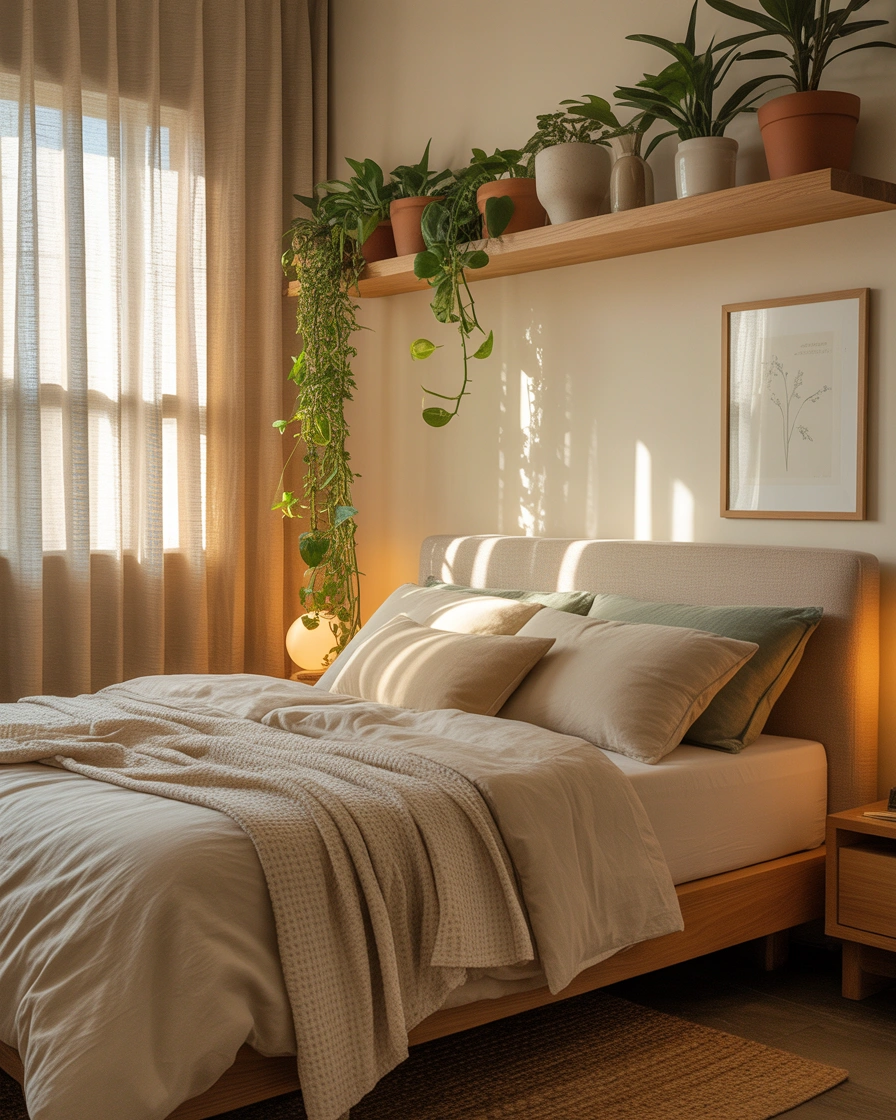
If you have a shelf above or behind your bed, trailing plants can turn it into a beautiful botanical feature.
Instead of decorating the shelf entirely with framed pictures and small objects, introduce one or two plants whose vines can gently cascade downward.
This naturally frames the bed and adds movement to the wall.
Pothos and philodendrons are popular choices because their vines are flexible and visually soft. You can guide them along the shelf or allow them to hang naturally.
For a modern look, pair green foliage with neutral planters and minimal wall decor. For a bohemian bedroom, mix plants with woven objects, books, candles, and natural wood.
Be careful not to place heavy planters directly above the sleeping area unless the shelf and containers are securely installed.
Personally, I prefer avoiding heavy pots directly over a pillow area altogether. Even a properly installed shelf can be bumped or overloaded over time. Lightweight planters placed toward the ends of a securely anchored shelf are generally a more practical way to get the same visual effect.
7. Use a Plant Stand to Create Different Heights
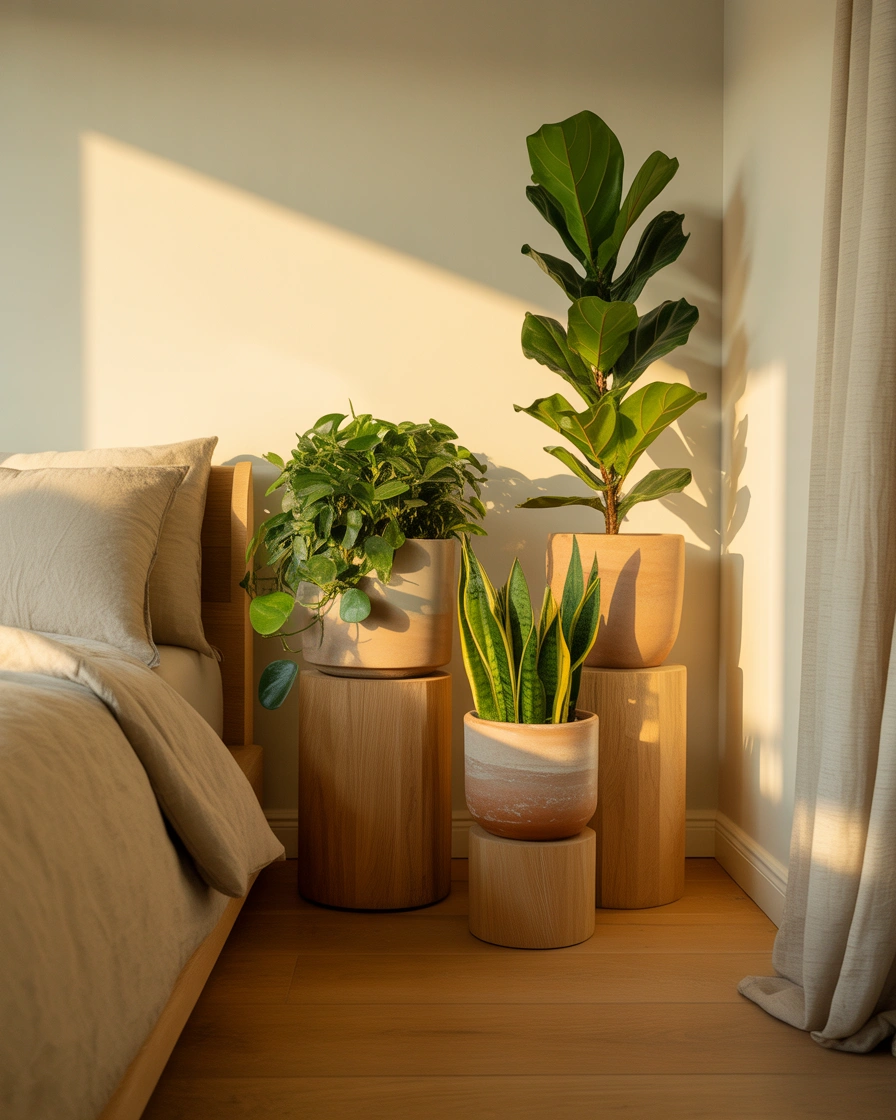
One design trick that makes bedroom plants decor look much more professional is varying the height of your plants.
When every plant sits directly on the floor, the arrangement can feel flat. Plant stands allow you to create different visual levels.
Try placing one plant on the floor, another on a medium-height stand, and a smaller plant on a taller pedestal.
This works beautifully in empty bedroom corners.
Wooden plant stands create a warm natural feeling, while thin black metal stands can complement modern or industrial spaces. Rattan stands are perfect for bohemian interiors.
You do not need matching stands. A slightly collected appearance often makes the display feel more relaxed and authentic.
Just keep the overall plant pots and materials connected through similar colors or textures.
Check that each stand is level, sturdy, and wide enough for the planter. In homes with active pets or young children, low, broad stands may be safer than narrow elevated ones that can tip when bumped.
8. Create a Minimalist Bedroom With One Perfect Plant
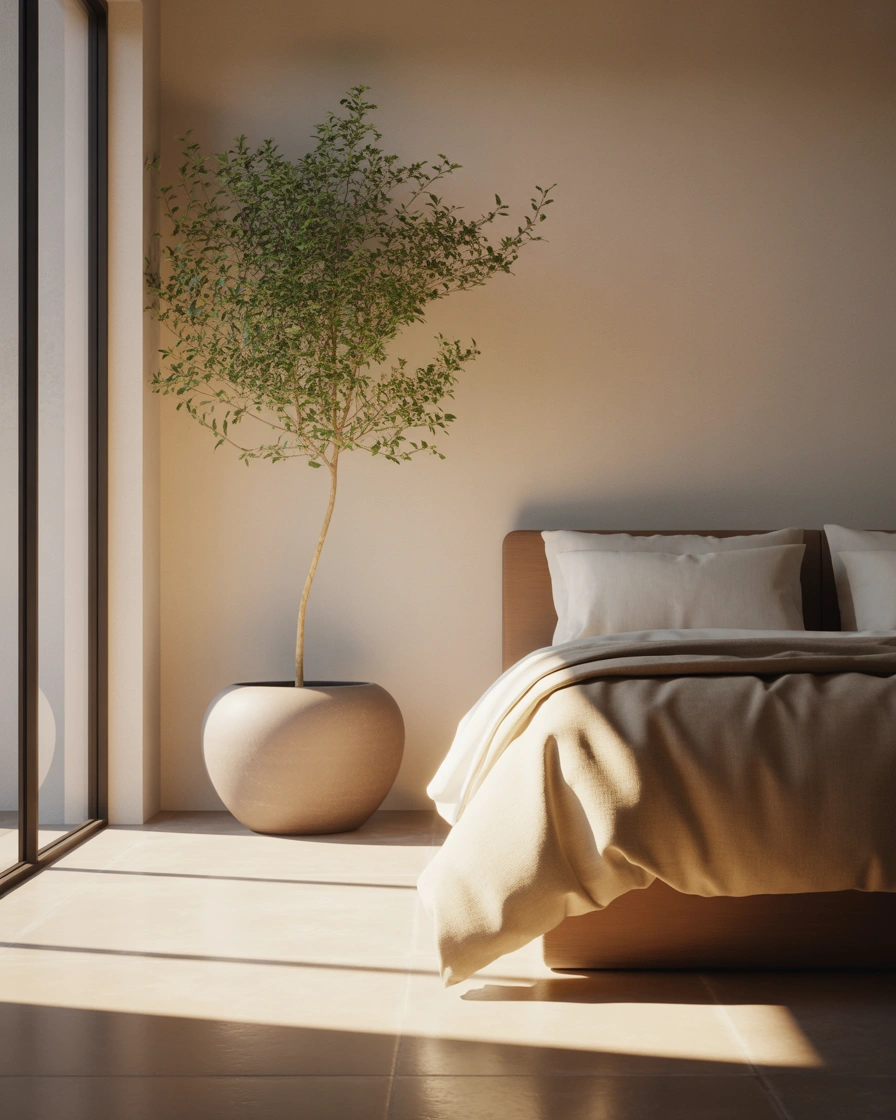
Bedroom plants decor does not always need multiple plants.
Sometimes a single perfectly placed plant can have more impact than a large collection.
If your bedroom has a clean minimalist design, choose one sculptural plant and give it plenty of space.
A tall snake plant, rubber plant, or graceful olive-tree-style indoor plant can add natural texture while preserving the calm simplicity of the room.
Place it in a large neutral planter near a window, dresser, or empty wall.
I love this approach because the plant almost becomes a piece of living artwork.
Keep the rest of the decor restrained with simple bedding, clean furniture, and a neutral palette. The green foliage becomes the strongest color in the room without feeling overwhelming.
If animals or young children can reach the plant, remember that appearance should not be the only consideration when choosing a species. Some popular decorative plants can cause irritation or illness when eaten, so verify pet and child safety for the exact plant you are considering.
9. Combine Bedroom Plants With Natural Wood Furniture
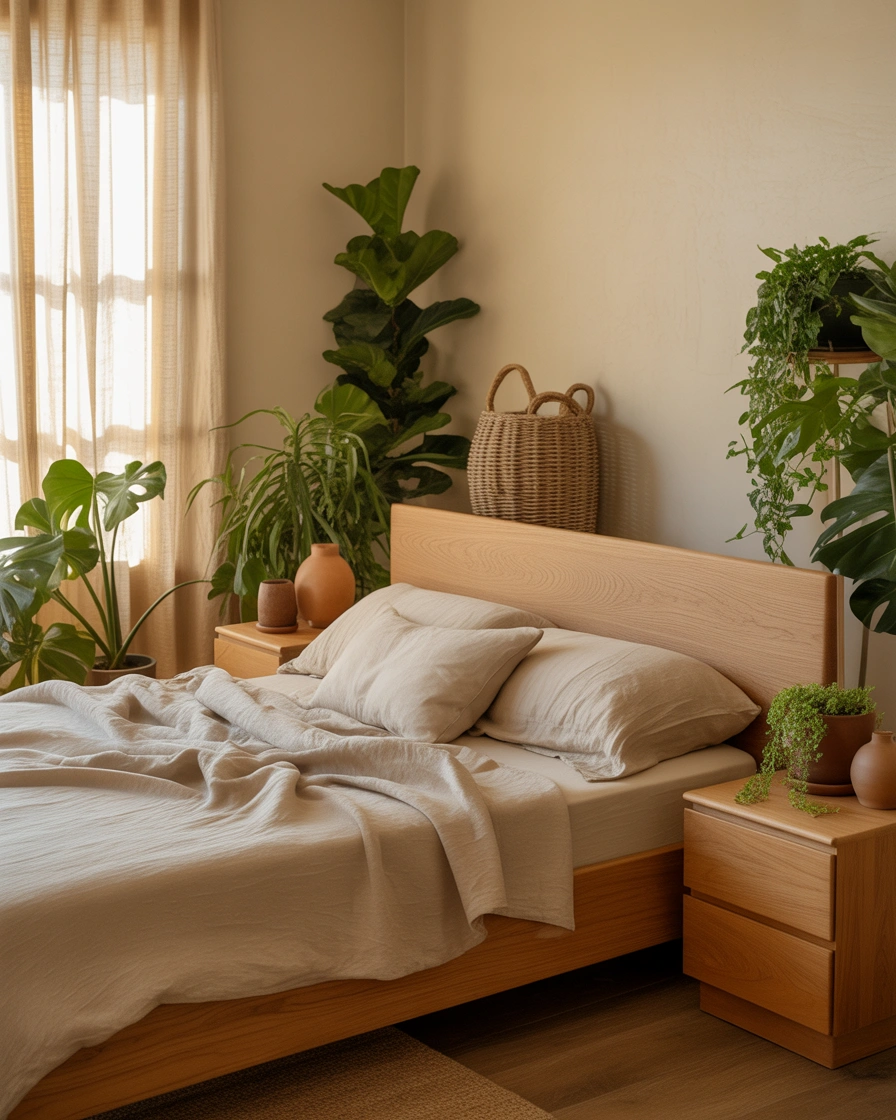
Plants and natural wood are one of my favorite interior combinations.
There is something about green leaves beside warm wood tones that instantly makes a bedroom feel grounded and comfortable.
If you already have wooden nightstands, a wooden bed frame, dresser, or flooring, place plants nearby to emphasize the natural theme.
You can also introduce smaller wooden accessories such as plant stands, trays, stools, or shelving.
Light oak creates a calm Scandinavian look, while darker wood can make the room feel richer and more dramatic.
The goal is to allow the greenery and natural grain of the wood to complement each other.
Add linen bedding, woven baskets, or soft cotton fabrics to complete the relaxed atmosphere.
To protect wood furniture and flooring, avoid letting moisture collect underneath pots. A waterproof saucer, planter liner, or raised pot feet can prevent water rings and help keep dampness from becoming a recurring problem.
10. Add Plants to a Bedroom Dresser
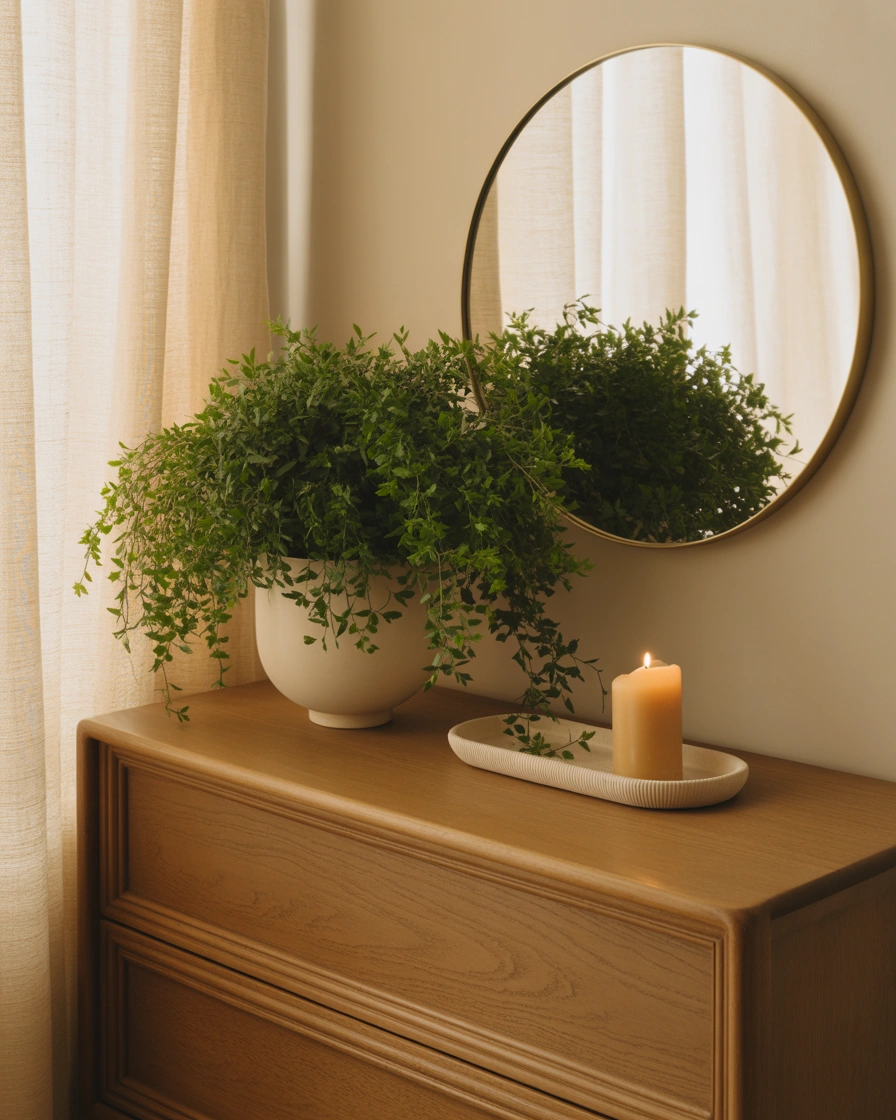
The top of a dresser often becomes an overlooked decorating opportunity.
Instead of filling it only with perfume bottles, jewelry, or decorative trays, add a plant to bring the entire arrangement to life.
A medium-sized leafy plant can anchor one side of the dresser while a mirror, artwork, lamp, or smaller decorative items balance the opposite side.
If you have a large mirror above the dresser, greenery looks especially beautiful reflected in the glass.
For a more layered look, combine one medium plant with a tiny pot positioned closer to the front.
Avoid covering the entire dresser with plants because you still want enough practical space for daily items.
Make sure pots are positioned far enough from the edge that they cannot be knocked off easily. If you mist plants, move cosmetics, electronics, and other moisture-sensitive belongings away first rather than spraying directly over the dresser.
11. Create a Boho Bedroom Plant Collection
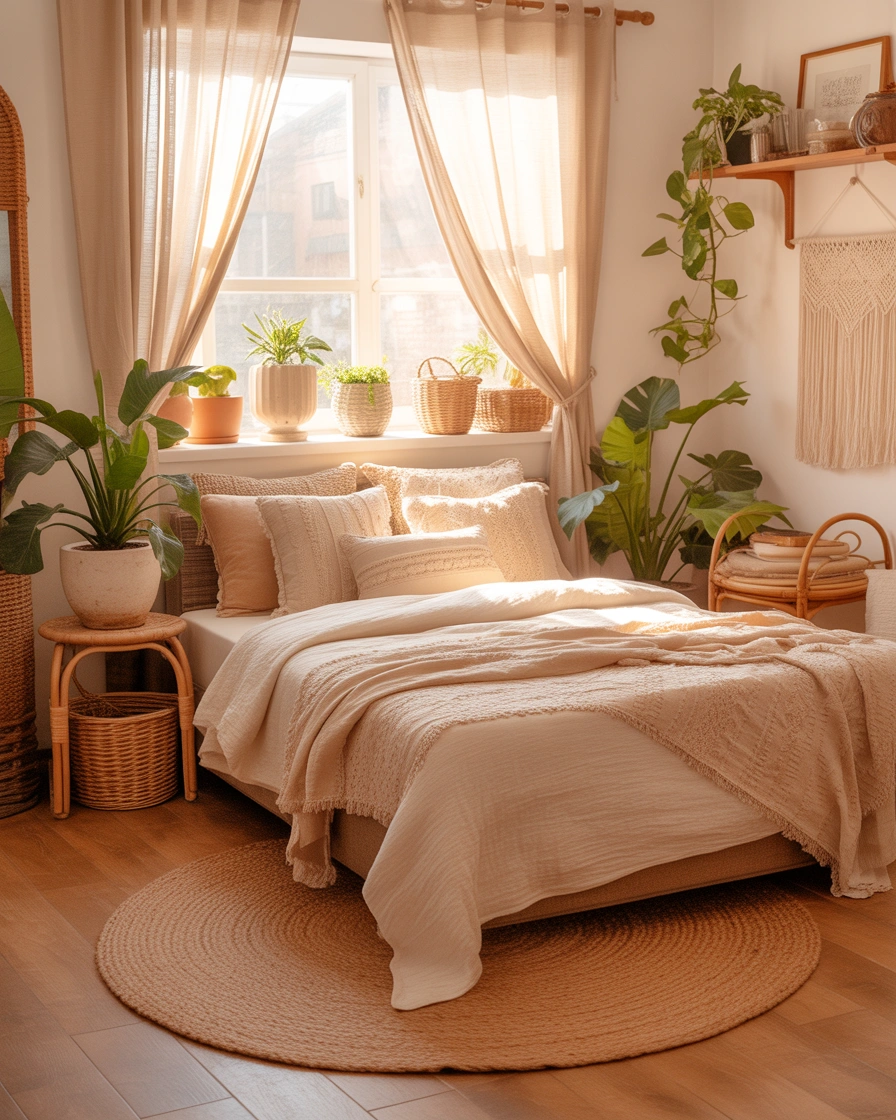
If you enjoy cozy bohemian spaces, plants are almost essential.
Boho bedrooms naturally work well with greenery because they often include earthy colors, layered textiles, woven materials, and relaxed furniture.
Instead of using identical plant pots, mix terracotta containers, baskets, ceramic pots, and textured planters.
Place plants on shelves, the floor, windowsills, and small stools to create a casual collected feeling.
Trailing plants can soften wall shelves, while tall tropical foliage adds drama beside the bed.
To keep the bedroom from looking chaotic, repeat a few materials throughout the space. For example, use similar woven baskets or terracotta tones in multiple areas.
I also like combining plants with cream bedding, patterned cushions, warm throws, and natural rugs.
The final result feels cozy, artistic, and deeply relaxing.
With a larger plant collection, good watering habits become particularly important. Avoid leaving multiple pots with constantly wet soil, because prolonged dampness can encourage fungus gnats, unpleasant odors, or mold on the soil surface. Let each plant’s care requirements guide your watering schedule rather than watering everything at the same time.
12. Decorate an Empty Bedroom Corner With a Plant Cluster
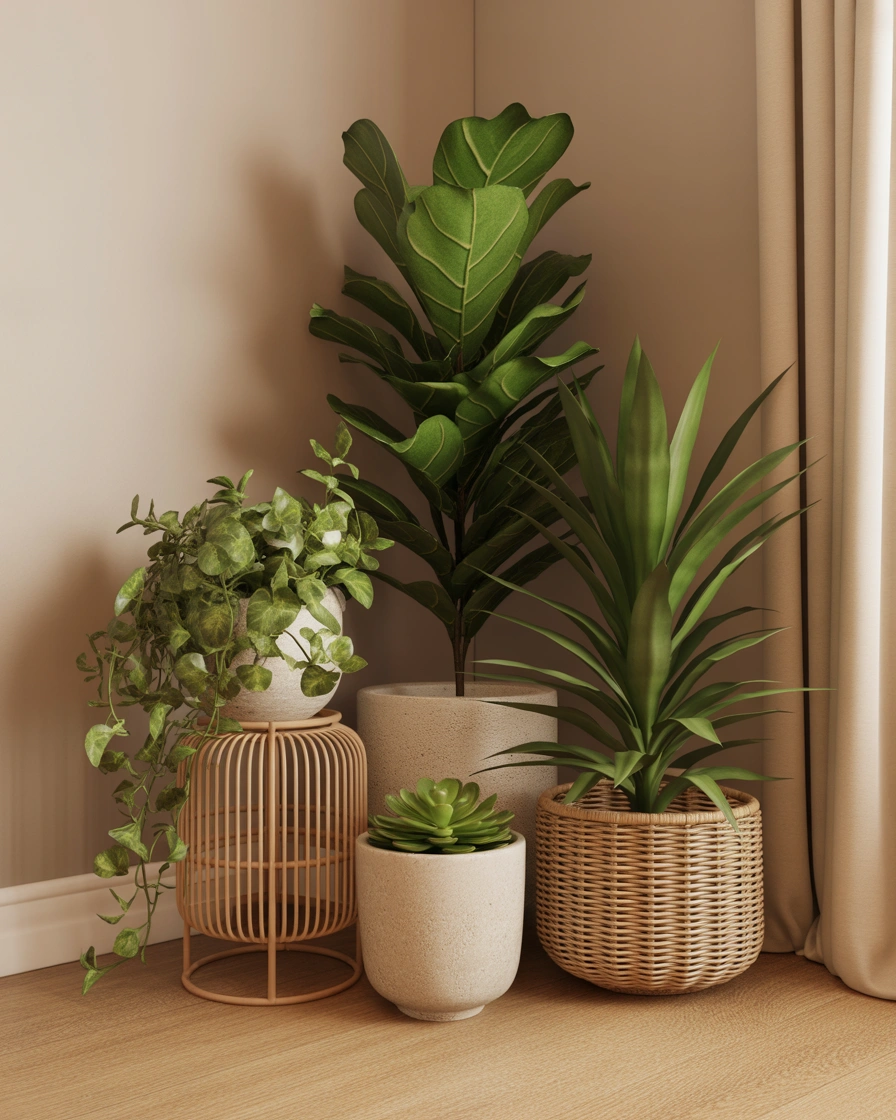
Almost every bedroom has at least one corner that feels difficult to decorate.
Instead of forcing furniture into it, turn the space into a small plant cluster.
Start with a taller plant at the back. Add a medium plant beside it and place a smaller pot slightly forward.
This simple triangular arrangement creates depth and keeps the display balanced.
You can add a basket or small stool underneath one plant to vary the height.
The best part about a plant cluster is that it makes an empty corner feel intentional without taking over the entire bedroom.
Choose containers that coordinate with the rest of your decor. In neutral bedrooms, ceramic, terracotta, or woven planters work particularly well.
Leave enough space around the grouping for comfortable movement and airflow. Plant clusters should not narrow an important walkway or create a tripping hazard, especially beside the bed where people may be walking in low light.
13. Use Plants Around a Bedroom Reading Nook
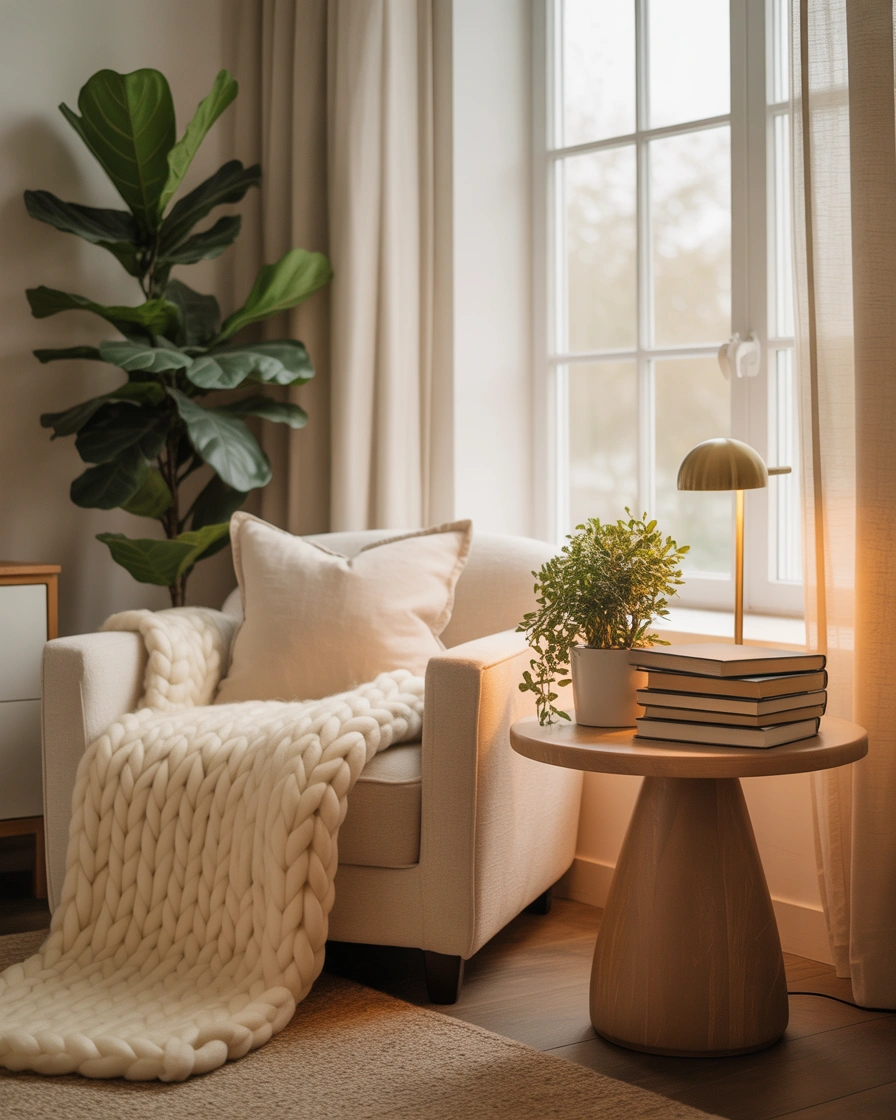
If you have enough room for a small chair, bedroom plants can help create a peaceful reading nook.
Place a comfortable armchair or accent chair near the window and position one tall plant beside it.
A smaller plant can sit on a side table next to a stack of books or a warm reading lamp.
This arrangement creates a cozy corner that feels slightly separated from the sleeping area.
I love adding greenery to reading spaces because it makes the corner feel quiet and restorative.
A soft throw, floor rug, or textured cushion can complete the look.
If the room receives good natural light, several different plant varieties can be grouped nearby to make the nook feel almost garden-like without becoming overwhelming.
Keep foliage clear of hot bulbs, heaters, candles, and other heat or flame sources. I also make sure large leaves do not obstruct the lamp, chair, or pathway around the reading area.
14. Style a Bedroom Desk With Greenery
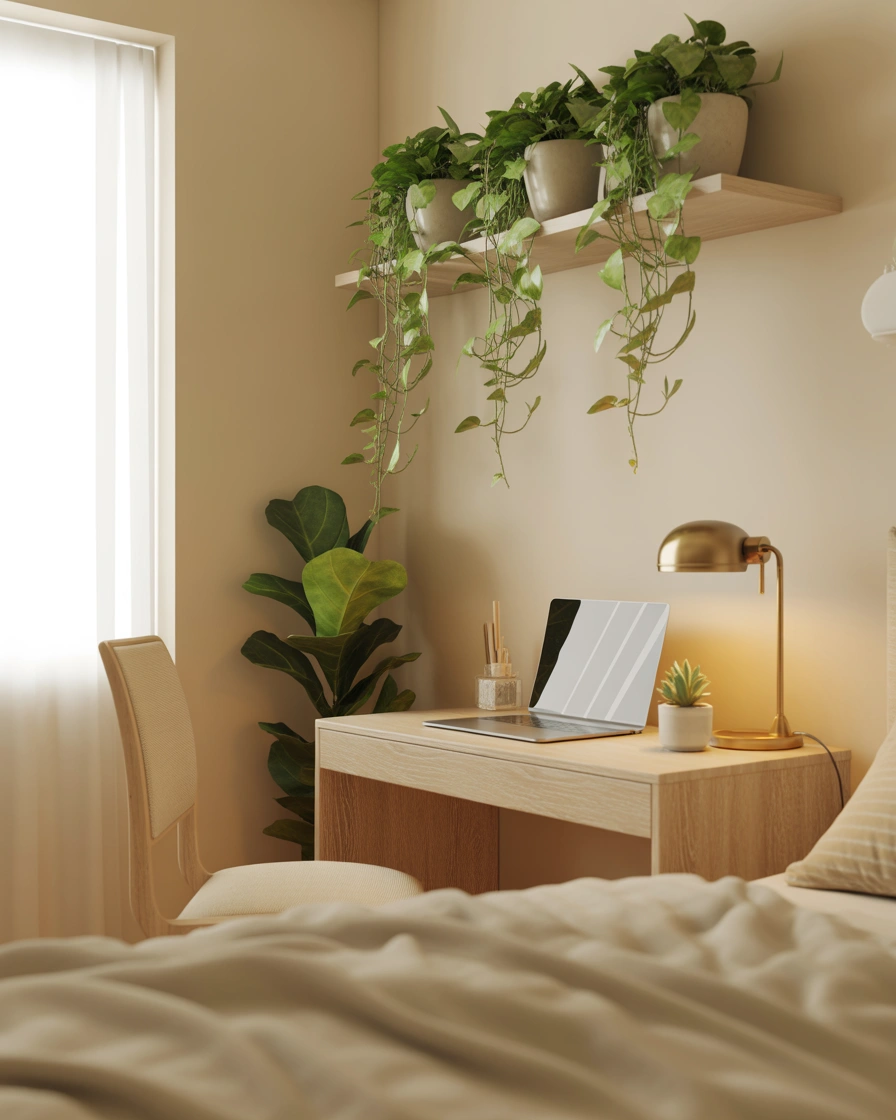
For anyone who has a workspace inside the bedroom, plants can help visually soften the desk area.
A small plant beside your computer or notebook brings natural color to a space that might otherwise feel functional and plain.
If desk space is limited, place a trailing plant on a shelf above the workspace instead.
You can also position a taller floor plant beside the desk so greenery frames the work area without occupying the desktop.
I personally prefer keeping workspace plants simple because too many decorative objects can become distracting.
One healthy leafy plant, warm desk lamp, organized stationery, and natural materials are often enough to create an inviting setup.
Plants can also visually connect a bedroom desk with greenery used elsewhere in the room, making the entire design feel more cohesive.
Just as with nightstands, use proper drainage protection and keep watering cans, wet leaves, and dripping pots away from laptops, extension cords, chargers, and power strips.
15. Create a Relaxing Botanical Bedroom Theme
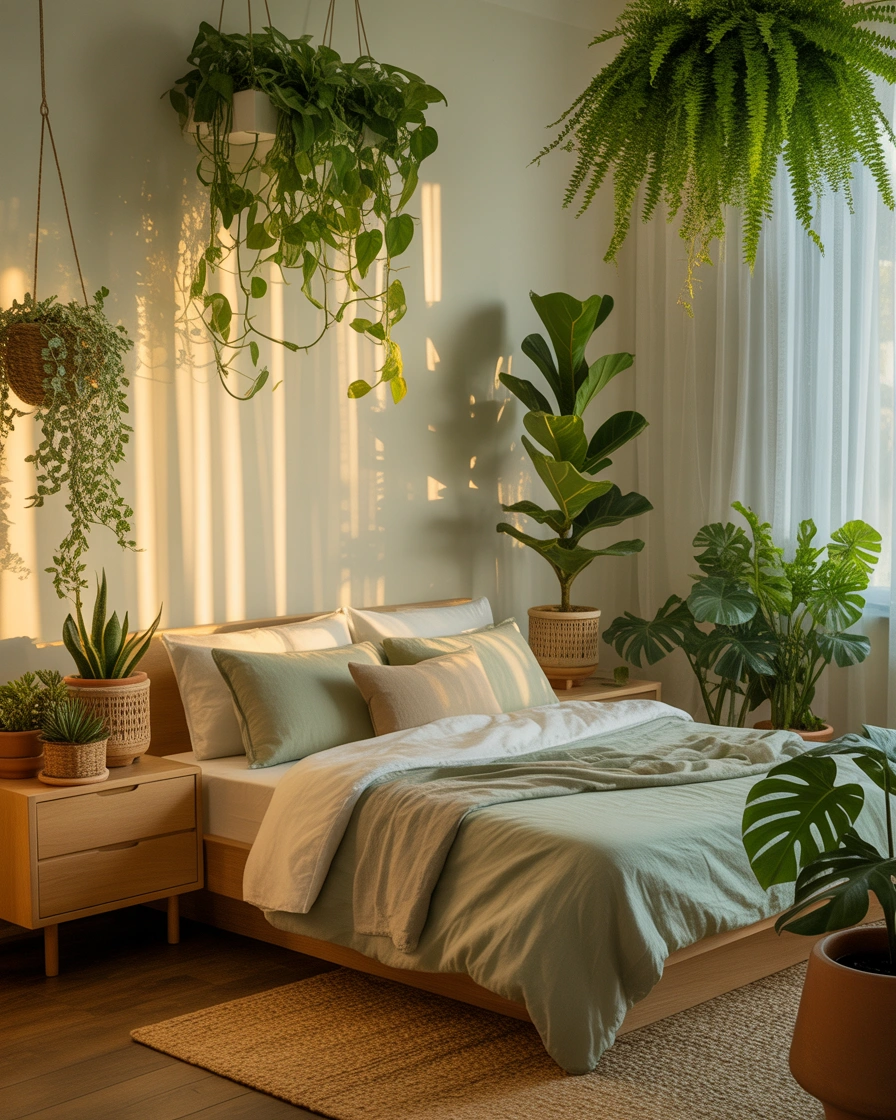
If you truly love greenery, take bedroom plants decor one step further by building the entire room around a botanical theme.
This does not mean filling every surface with plants.
Instead, combine real greenery with subtle nature-inspired colors and textures.
Start with a few strategically placed plants: one tall floor plant, one trailing plant, and a few smaller pots.
Then introduce soft green, beige, cream, brown, or muted earthy tones through bedding and accessories.
Natural materials such as wood, linen, rattan, clay, and woven fibers reinforce the organic atmosphere.
You can also include botanical artwork or subtle leaf patterns, but I prefer keeping them understated so the real plants remain the focal point.
The most beautiful botanical bedrooms still feel peaceful rather than crowded.
Leave open spaces between plants and furniture, use soft lighting, and allow natural sunlight to become part of the design.
The result can feel almost like a personal retreat.
A botanical theme should still leave the room functional. Keep doors, windows, heating and cooling vents, electrical outlets, and normal walking routes unobstructed. More greenery is not necessarily better if it makes routine cleaning, ventilation, or movement difficult.
How to Choose the Right Plants for Bedroom Decor
Choosing plants for a bedroom is slightly different from choosing them purely for appearance.
Before buying anything, I always recommend looking at the room itself.
How much natural light enters during the day? Is the window bright and sunny, or does the room remain fairly shaded? How much floor and shelf space do you actually have?
Plants should suit the conditions of the room rather than forcing the room to suit the plant.
For lower-light bedrooms, hardy varieties such as snake plants, pothos, ZZ plants, and some philodendrons are often easier to manage.
Brighter bedrooms give you more options.
You should also think about mature plant size. A tiny plant from the store may eventually become much larger, so make sure its location can accommodate future growth.
Most importantly, choose plants you realistically have time to care for.
A beautiful plant collection will not stay beautiful if maintaining it feels like a daily chore.
Safety should be part of the selection process too. If your cat, dog, or child can reach your plants, research the exact species before buying it. Several common houseplants, including pothos, philodendrons, snake plants, and some other popular decorative varieties, should not be treated as edible or pet-safe simply because they are common indoor plants.
Households with pets can instead prioritize plants specifically identified as non-toxic for the animal concerned. Because common names are sometimes shared by different plants, checking the botanical name is helpful when confirming suitability.
How Many Plants Should You Keep in a Bedroom?
There is no perfect number.
The right amount depends on the bedroom size, available light, furniture arrangement, and the style you want to achieve.
In a small bedroom, one floor plant and one or two small pots may be enough.
A larger room can comfortably accommodate a tall statement plant, shelf greenery, a hanging plant, and several smaller accents.
I usually recommend starting slowly.
Add one or two plants first and see how the room feels. You can always introduce more later.
This gradual approach also helps prevent the bedroom from becoming visually cluttered.
Remember that every pot adds another shape, color, and texture to the room. Leaving some negative space makes the greenery look more intentional.
Keeping the collection manageable also makes it easier to notice problems such as pests, moldy soil, damaged leaves, or leaking pots before they spread or affect nearby surfaces.
Best Places to Position Plants in a Bedroom
Placement can make a major difference in bedroom plants decor.
Windows are naturally one of the most useful areas because they provide light. Shelves, dressers, nightstands, desks, and unused corners are also great locations.
Try looking at the bedroom from the doorway.
Are there areas that feel empty or visually heavy?
A plant can often balance the composition.
For example, if one side of the bed has a large lamp and artwork while the other side looks bare, a plant can create balance.
Tall plants are particularly useful for filling vertical gaps. Trailing plants work well when you want to soften high shelves or wall storage.
Small plants are ideal for surfaces where you want just a touch of natural color.
At the same time, avoid placing plants where pots or trailing stems can become tripping hazards. Keep them away from frequently used doorways, narrow walking spaces, heaters, open flames, and electrical equipment that could be exposed to drainage water.
How to Make Bedroom Plants Decor Look Cohesive
One of the easiest mistakes to make is buying lots of beautiful plants and pots individually without thinking about how they will look together.
To create a cohesive bedroom, repeat certain materials and colors.
You might use mostly white ceramic planters with two woven baskets. Or combine terracotta pots with warm wooden furniture.
The plants themselves can be different.
In fact, mixing leaf sizes and shapes makes the display more interesting.
What ties everything together is usually the container style, color palette, or surrounding materials.
I also like repeating greenery across different heights. A floor plant, a medium plant on a dresser, and a small trailing plant on a shelf naturally lead the eye around the room.
Function should still come before perfect styling. A planter that looks beautiful but tips easily, leaks water, or sits somewhere difficult to reach for maintenance will eventually become frustrating.
Keep Bedroom Plant Decor Simple and Relaxing
The bedroom should ultimately feel restful.
Even if you love indoor plants, avoid filling every available surface just because you can.
Some of the most beautiful bedroom plants decor ideas are incredibly simple.
One dramatic plant beside the bed.
A trailing vine above the headboard.
Three plants arranged in an empty corner.
A miniature plant beside your reading lamp.
Simple arrangements often create more impact because each plant has room to stand out.
I like thinking of plants the same way I think about artwork: every piece needs a little space around it to be appreciated.
Keeping your collection simple can also make plant care safer and easier. You can monitor watering more accurately, clean fallen leaves quickly, inspect for pests, and keep walking surfaces clear.
Bedroom Plant Safety Tips to Keep in Mind
Decorating with plants should make a bedroom more enjoyable, not introduce unnecessary risks. Before bringing a new plant into the room, I like to think about who has access to it, where it will sit, and how it will be maintained.
If you have pets or small children, confirm whether the exact plant species is safe if touched or accidentally chewed. Do not assume a plant is harmless because it is widely sold as an indoor plant. When you are uncertain, keeping it completely out of reach or selecting a confirmed non-toxic alternative is the safer choice.
Placement matters too. Heavy planters should stay on stable surfaces, and wall-mounted shelves, ceiling hooks, and hanging brackets should be properly secured. I avoid putting substantial pots directly above beds, reading chairs, or desks.
Watering is another area where simple precautions make a difference. Pots should have suitable drainage, but drainage water needs somewhere safe to go. Use saucers, liners, or waterproof outer pots, empty standing water promptly, and never allow water to drip onto electrical outlets, chargers, lamps, computers, or power strips.
Overwatering can cause more than unhappy plants. Constantly damp soil may encourage fungus gnats, musty smells, or mold growth. Rather than following a fixed schedule for every plant, check the needs of each variety and allow the soil to dry as appropriate.
Good airflow and regular cleaning also help. Remove dead leaves, wipe dusty foliage when necessary, and inspect plants occasionally for insects or signs of disease.
People with allergies or sensitivities may find that certain plants, flowers, fragrances, soil molds, or plant-care products bother them. If you notice irritation after adding plants to the bedroom, reconsider the plant, potting medium, or placement rather than assuming every indoor plant will suit every person.
I also wash my hands after handling plants that produce irritating sap and wear gloves when pruning anything known to irritate skin. Keeping pruning tools and fertilizers stored away from children and pets is equally important.
The goal is not to make bedroom plant decor complicated. A few basic precautions allow you to enjoy the visual warmth of greenery without overlooking practical household safety.
Final Thoughts on Bedroom Plants Decor
Bedroom plants decor is one of those design ideas that can work in almost every type of home.
You do not need an enormous bedroom, expensive furniture, or dozens of plants to make it successful.
Sometimes all it takes is one beautiful plant placed in exactly the right corner.
For me, the biggest appeal of decorating bedrooms with plants is the atmosphere they create. Greenery naturally softens furniture, adds life to neutral colors, and gives the room a more comfortable and personal feeling.
Start with the areas that feel empty.
Maybe that is the corner beside your bed, the top of your dresser, a sunny windowsill, or the shelf above your desk.
Add one plant and build from there.
Whether you choose a dramatic statement plant, a collection of tiny pots, cascading vines, or a full botanical bedroom theme, the goal is the same: create a bedroom that feels fresh, peaceful, and genuinely enjoyable to spend time in.
With thoughtful placement, suitable plant varieties, sensible watering, and a few simple safety precautions, bedroom plants decor can turn an ordinary sleeping space into a calm green retreat that feels connected to nature.
