
I have always believed that a bedroom should feel like a place where your mind can finally slow down. After a long day, I don’t want to walk into a room filled with unnecessary furniture, piles of decorations, or too many competing colors. I want a space that feels calm, comfortable, and easy to live in.
That is exactly why I love minimalist bedroom decor.
Minimalism does not mean your bedroom has to look cold, empty, or boring. In fact, a thoughtfully decorated minimalist bedroom can feel incredibly warm and inviting. The secret is choosing fewer things but making sure every piece has a purpose, adds beauty, or makes the room more comfortable.
Whether you have a tiny bedroom, a spacious master bedroom, or you’re simply looking for an easy way to refresh your existing space, minimalist decorating can help you create a room that feels organized and peaceful.
In this guide, I’m sharing 15 minimalist bedroom decor ideas that you can actually use in a real home. These ideas focus on simple furniture, soothing colors, natural textures, smart storage, and small decorative details that make a big difference without overwhelming the room.
What Is Minimalist Bedroom Decor?
Before getting into the ideas, I think it helps to understand what minimalist bedroom decor really means.
Minimalism is essentially about being intentional. Instead of filling every empty wall or surface, you carefully choose what belongs in your bedroom and what doesn’t.
A minimalist bedroom typically includes a simple color palette, uncluttered surfaces, functional furniture, comfortable textiles, and a limited number of decorative accessories.
But minimalism doesn’t mean everything has to be white.
You can create a minimalist bedroom using beige, cream, taupe, warm gray, soft brown, muted green, dusty blue, or even darker colors. What matters most is that the overall space feels cohesive rather than visually chaotic.
For me, the best minimalist bedroom is one where everything has breathing room.
The bed might be the main focal point. A small nightstand might hold only a lamp and a book. A simple piece of artwork might decorate the wall. A soft rug might add warmth underneath the bed.
Nothing feels excessive, but nothing feels unfinished either.
1. Choose a Soft Neutral Color Palette
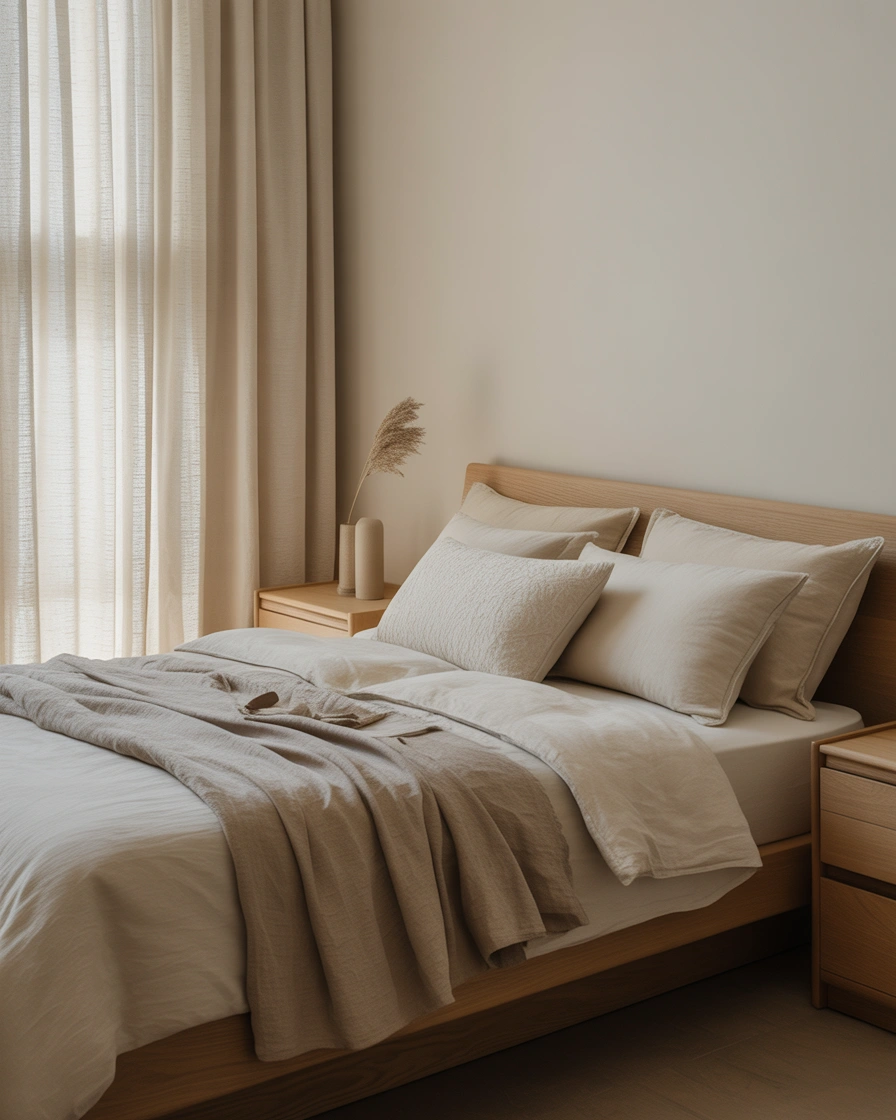
One of the easiest ways to introduce minimalist bedroom decor is to simplify your color palette.
I personally love neutral colors because they immediately make a bedroom feel calmer. Instead of using several bold shades throughout the room, choose two or three complementary colors and repeat them in subtle ways.
Cream, beige, warm white, light gray, and soft taupe are excellent choices.
For example, you could have warm white walls, beige bedding, and light oak furniture. Then add a few darker brown accents through picture frames, a bedside lamp, or a woven basket.
The result is simple without being completely monochromatic.
If you prefer a little more color, muted shades can work beautifully. Sage green, dusty blue, clay, terracotta, and soft olive can add personality while still maintaining a minimalist atmosphere.
One thing I would avoid is using too many unrelated colors. When every decorative item introduces another shade, the room can quickly lose that peaceful minimalist feeling.
Instead, think about creating a visual rhythm.
Let your bedding, curtains, rug, furniture, and accessories share similar undertones. This makes even inexpensive pieces look more intentional.
2. Make the Bed the Main Focal Point
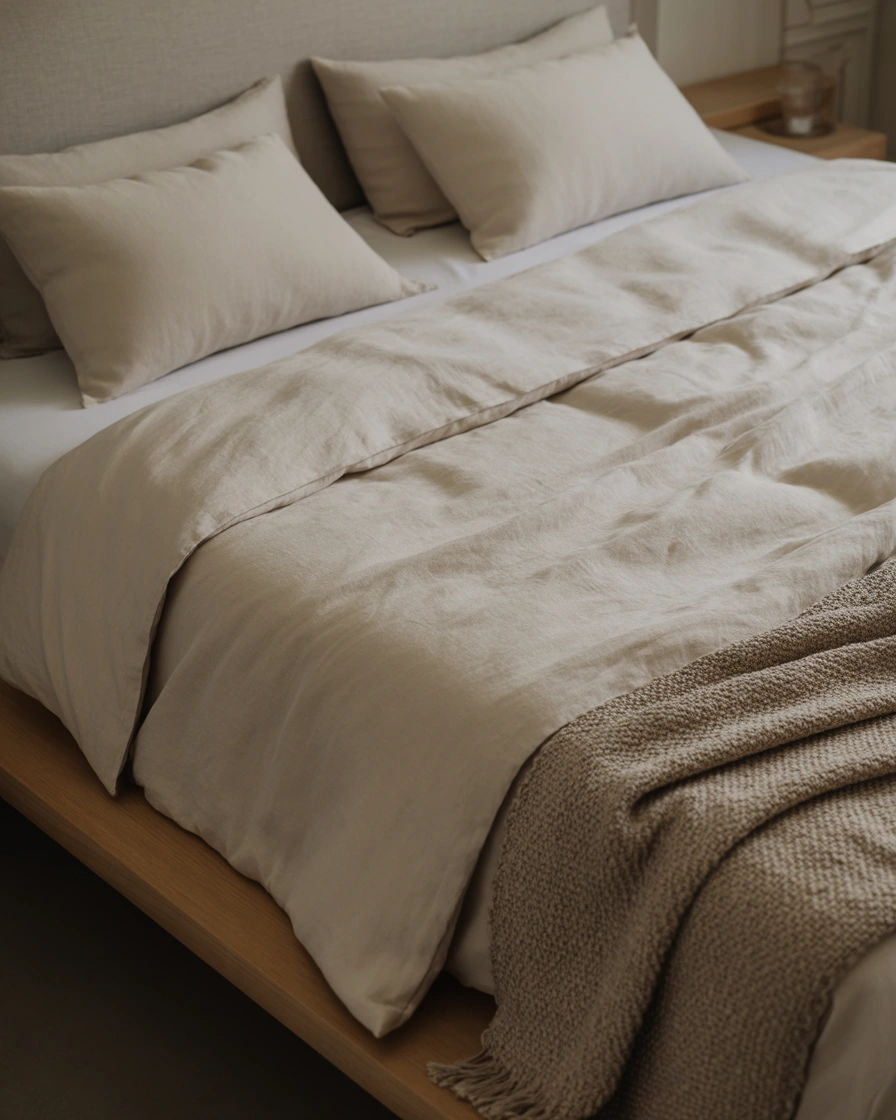
The bed is naturally the largest piece of furniture in most bedrooms, so I think it makes sense to let it become the star of the room.
You don’t need an elaborate headboard or dozens of decorative pillows. A beautifully made bed with quality-looking bedding can make the entire room feel polished.
Start with simple bedding in one dominant color. White, ivory, beige, gray, or muted earth tones are particularly effective for minimalist interiors.
Then layer a duvet, quilt, or lightweight blanket at the foot of the bed.
Instead of using ten pillows, choose two or three that complement the bedding.
Texture is especially important here.
A linen duvet cover, knitted throw, cotton sheets, or slightly textured pillowcases can make a simple bed feel much more luxurious.
I also like the slightly relaxed look of natural fabrics. Perfectly stiff bedding can sometimes make a bedroom feel like a showroom. A little softness and natural wrinkling can make the room feel much more lived-in.
The goal isn’t perfection. It’s comfort with visual simplicity.
3. Use a Low-Profile Bed Frame
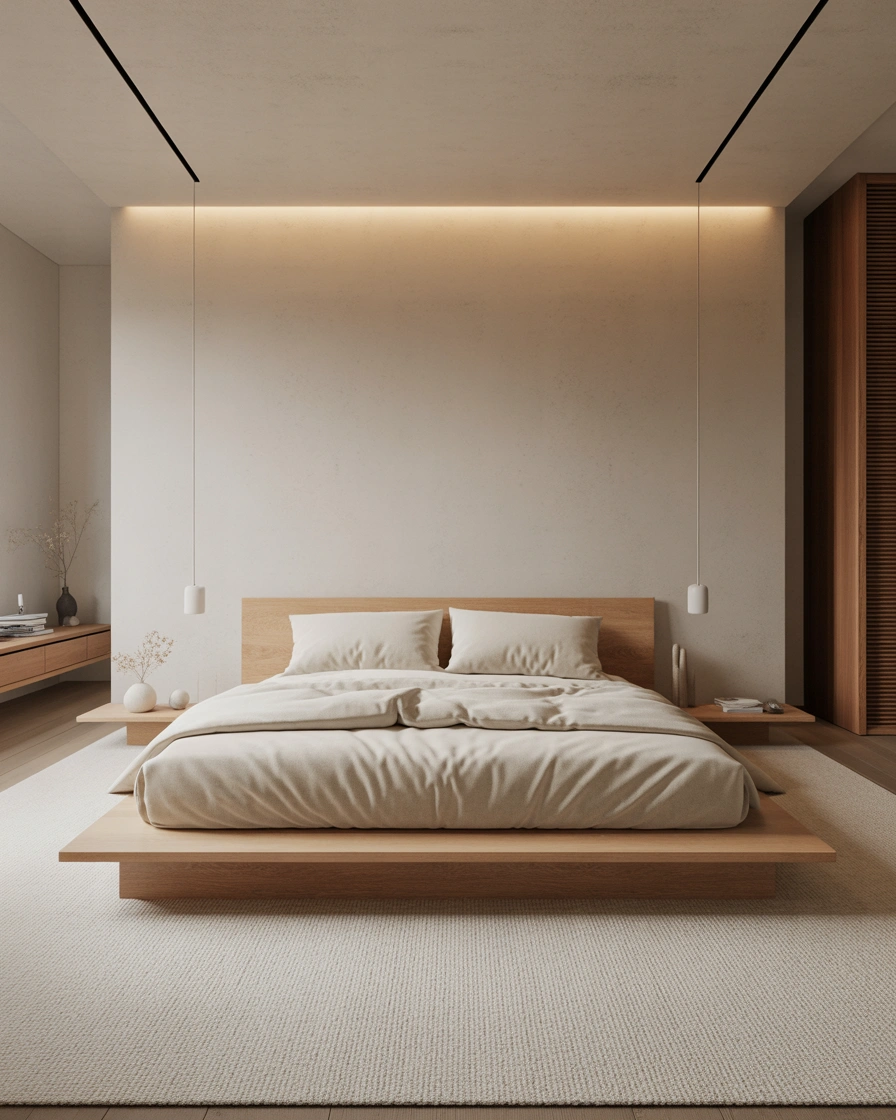
A low-profile bed is one of my favorite choices for a minimalist bedroom because it instantly creates a sense of openness.
Instead of a large, bulky bed frame that dominates the room, a low wooden or upholstered platform bed keeps the visual lines clean.
Light wood is especially nice if you want a warm Scandinavian-inspired bedroom. Dark wood can work too if you’re creating a moodier minimalist space.
If your bedroom is small, a streamlined frame can make the room feel less crowded.
You can also choose a frame with hidden or built-in storage if you need additional organization. This is particularly useful in apartments and compact bedrooms where every square foot matters.
When choosing furniture for a minimalist room, I always ask myself one question:
Does this piece solve a problem or contribute something meaningful to the room?
If the answer is yes, it deserves consideration.
4. Keep the Nightstand Simple
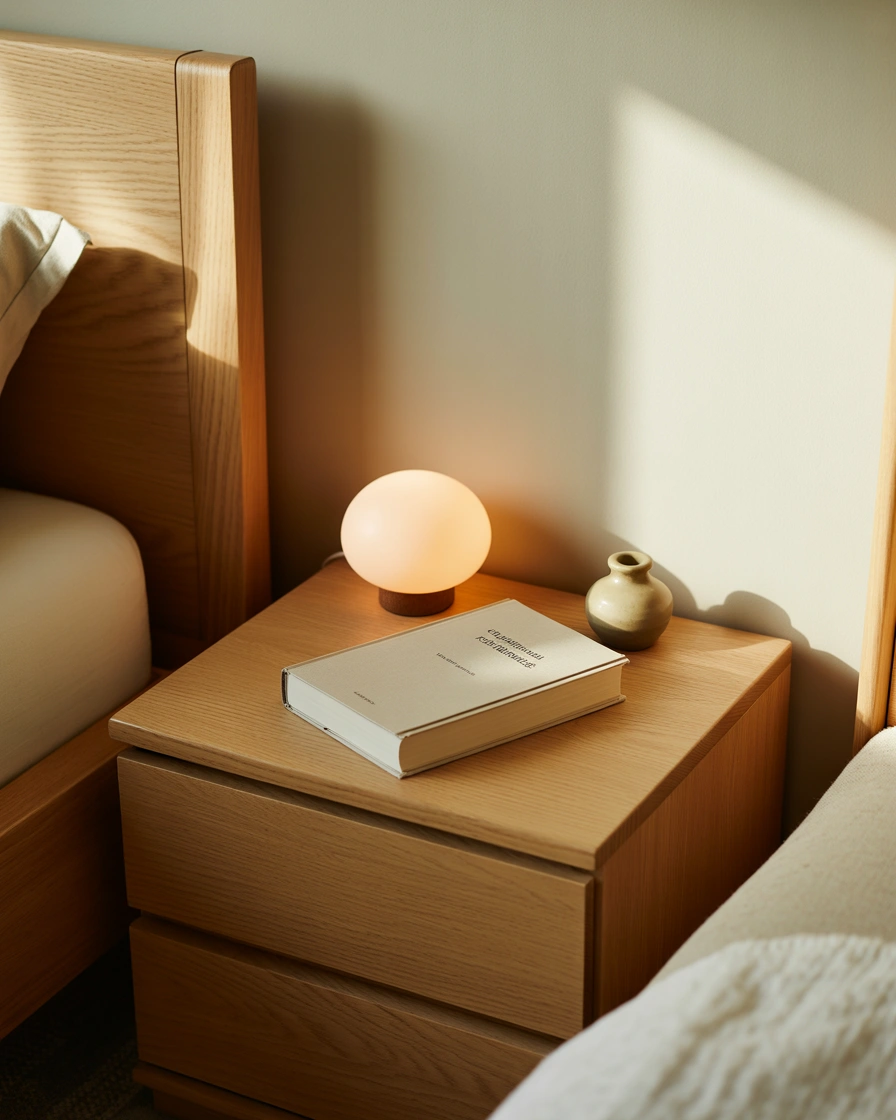
Nightstands have a funny way of becoming clutter magnets.
A book gets left there. Then a phone charger. Then a cup of water. Then random receipts, jewelry, skincare products, and other things that somehow end up staying for weeks.
Minimalist bedroom decor gives you a good reason to break that habit.
Choose a nightstand with enough space for your essentials but avoid using it as general storage.
I like the look of a small wooden nightstand with just three things on top: a lamp, a book, and perhaps a small decorative object.
If you need more storage, choose a nightstand with one or two drawers so you can keep everyday items out of sight.
The goal isn’t to have a completely empty nightstand. It’s to make sure the things sitting there are intentional.
A small ceramic vase, a simple lamp, or a framed photograph can add personality without creating clutter.
5. Add One Large Piece of Wall Art
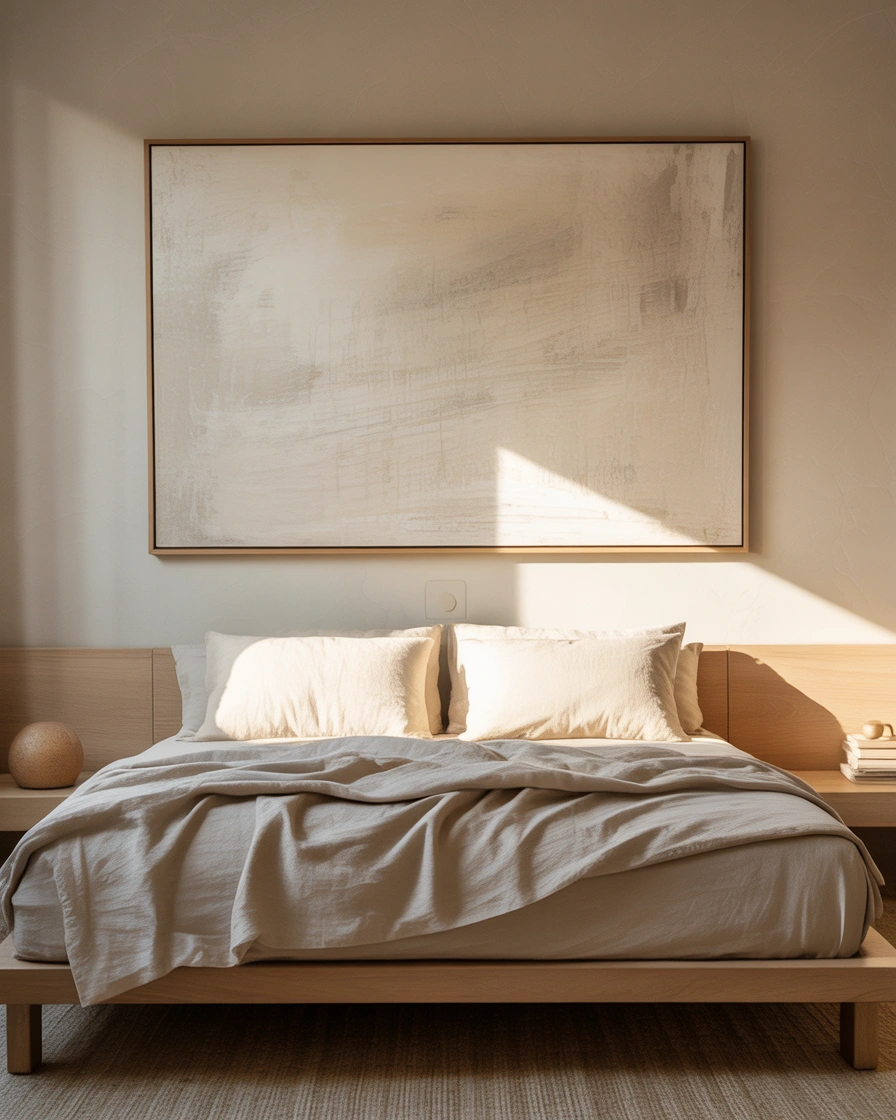
When decorating a minimalist bedroom, it can be tempting to leave every wall completely empty.
Sometimes that works.
But I think one carefully selected artwork can make a huge difference.
Rather than covering the wall with a gallery of small frames, consider choosing one larger piece that gives the room a visual focal point.
Abstract artwork in neutral colors works beautifully. Black-and-white photography, minimalist landscapes, line drawings, and subtle botanical prints can also complement the space.
Pay attention to the frame.
A simple natural wood frame can add warmth, while a thin black frame can create a sharper contemporary look.
The artwork doesn’t need to match your bedding exactly. It simply needs to belong to the same visual family.
And don’t feel like you have to fill every wall.
An empty wall is not necessarily unfinished. Sometimes the empty space is what makes the artwork feel special.
6. Bring in Natural Wood
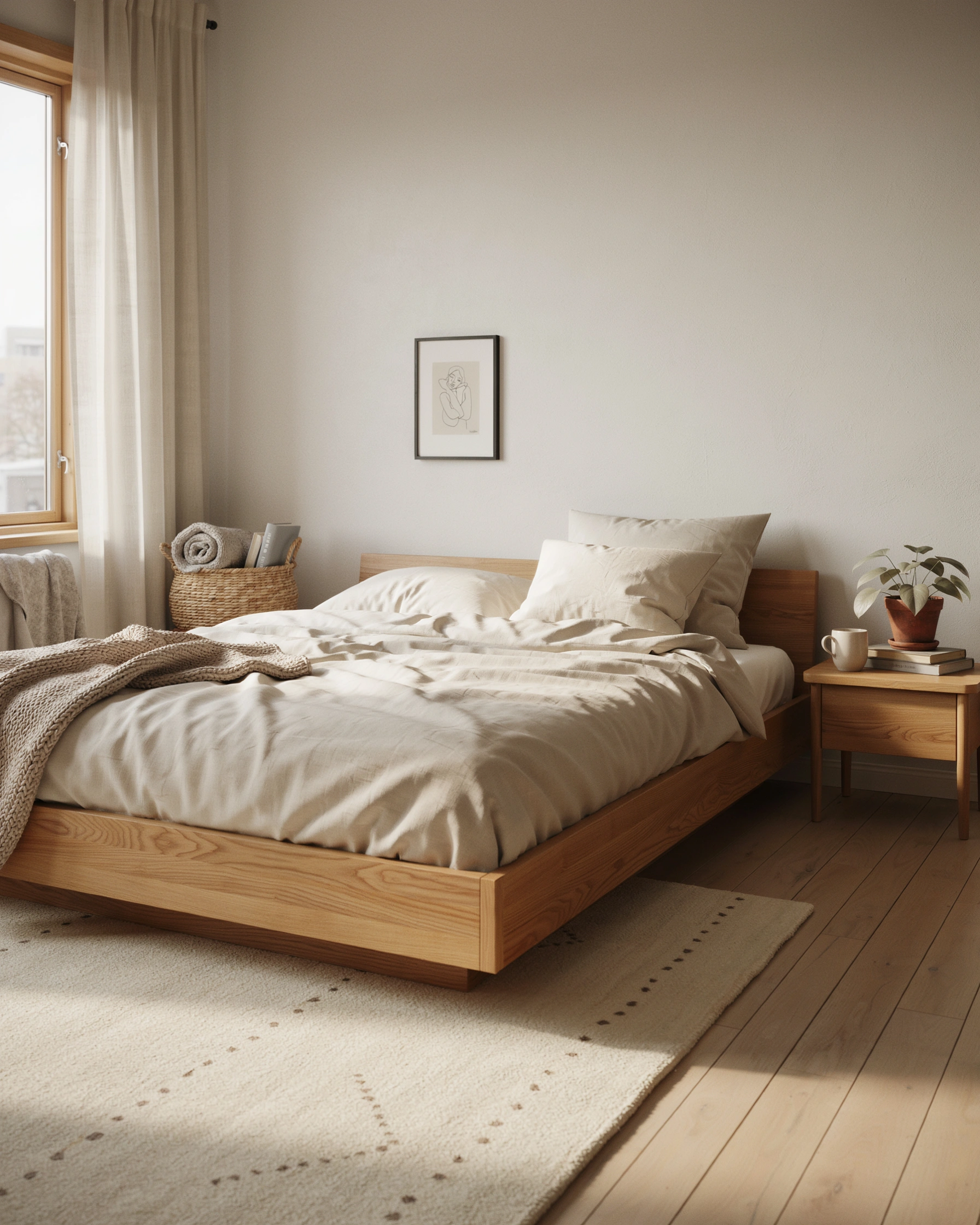
Natural materials are one of the easiest ways to prevent minimalist decor from feeling cold.
Wood is particularly effective because it introduces warmth, texture, and visual character.
You don’t need a completely wooden bedroom. Even a few carefully chosen pieces can make a noticeable difference.
Try a wooden bed frame, nightstand, bench, floating shelf, or simple picture frame.
Light oak and ash wood work beautifully in bright minimalist spaces. Walnut and darker woods can create a richer and more sophisticated atmosphere.
I especially love wood with visible natural grain because it adds subtle detail without requiring decorative clutter.
Pair it with linen, cotton, wool, or woven materials and you’ll create a bedroom that feels simple but inviting.
7. Add Texture Instead of More Decorations
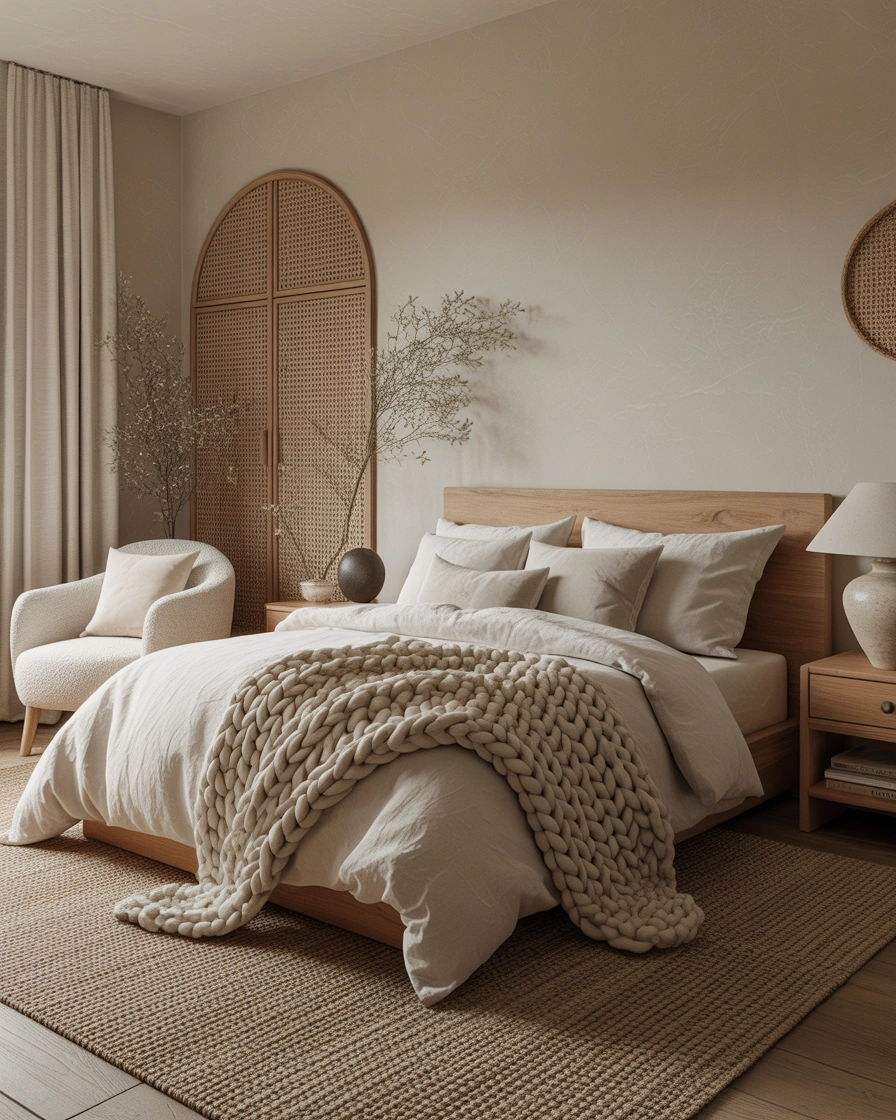
This is one of the most useful minimalist decorating tricks.
When a room starts feeling too plain, the natural reaction is often to add more accessories.
Instead, try adding texture.
A chunky knitted blanket can bring warmth to a simple bed. A woven rug can make a plain floor feel more interesting. Linen curtains can soften the windows. A boucle chair can add subtle visual interest.
Textures create depth without requiring lots of objects.
Think about combining materials such as:
- Linen
- Cotton
- Wool
- Boucle
- Jute
- Wood
- Ceramic
- Stone
- Woven fibers
The key is to keep the colors relatively harmonious.
A cream linen duvet, beige wool rug, light wooden bed, and woven basket may use several different textures while still looking beautifully cohesive.
That’s the kind of minimalism I find most appealing because it feels warm rather than sterile.
8. Use Soft and Layered Lighting
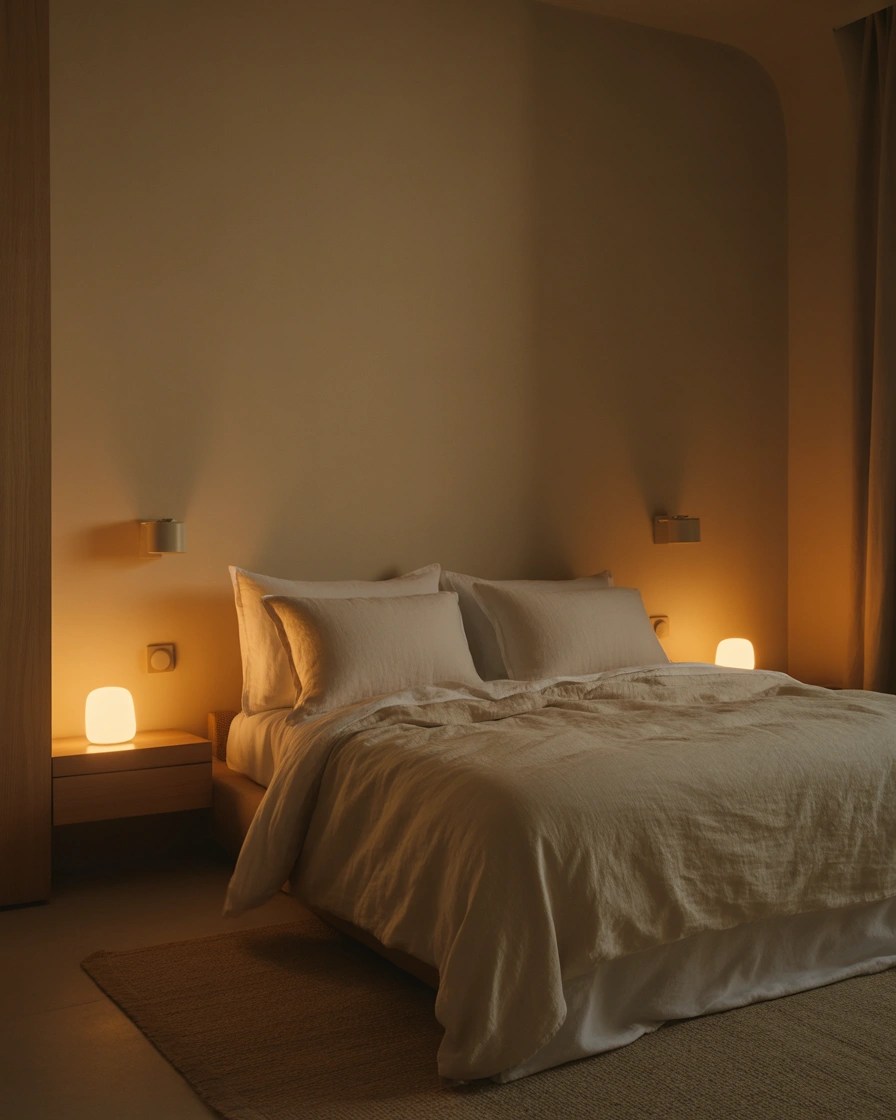
Lighting can completely change how a minimalist bedroom feels.
Even a beautifully decorated room can feel uncomfortable if it relies entirely on one bright overhead light.
Instead, try creating layers of lighting.
Start with your main ceiling fixture, then add bedside lamps or wall sconces. If possible, introduce a small floor lamp or accent light in another corner.
Warm-toned lighting tends to make bedrooms feel more relaxing.
I also love using lamps with fabric or frosted shades because they diffuse the light and create a softer glow.
During the day, make the most of natural sunlight. Lightweight curtains can filter harsh light while still keeping the room bright.
At night, turn on only the lights you actually need. A softly illuminated bedroom instantly feels more intimate and peaceful.
9. Choose Simple Window Treatments
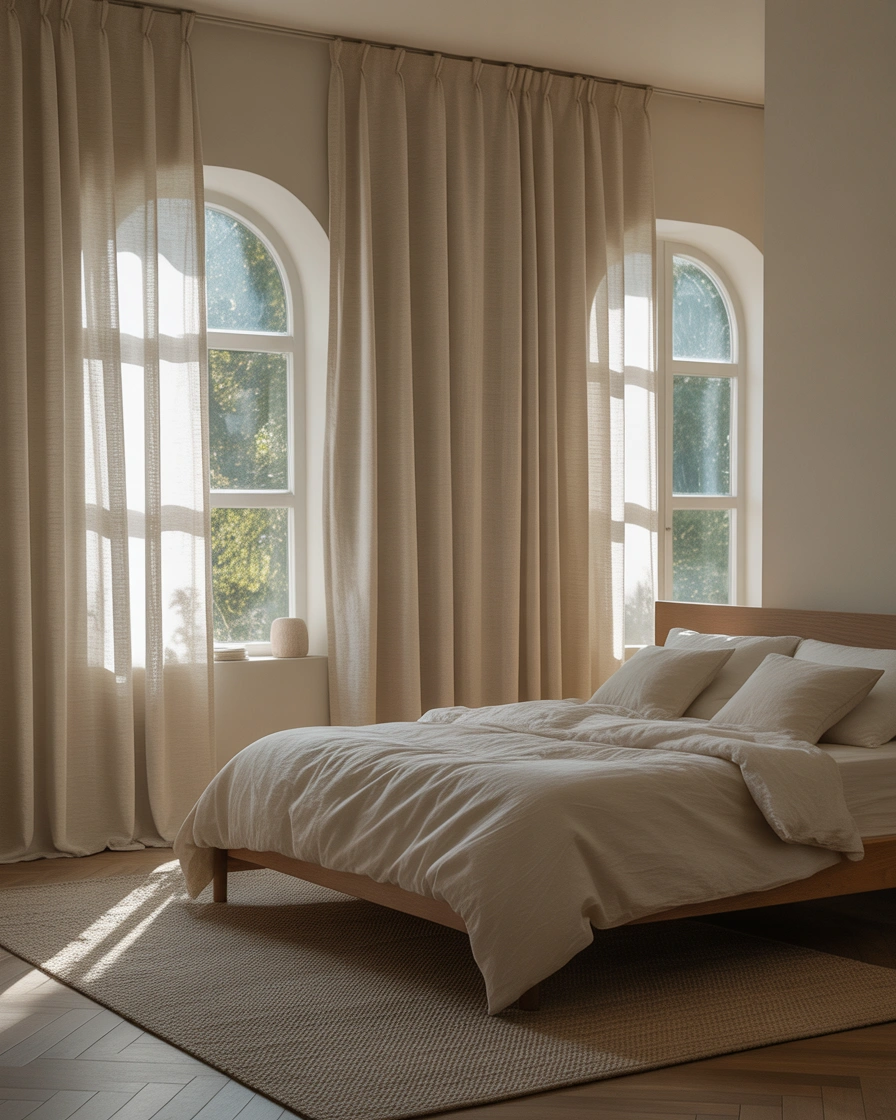
Windows are often overlooked when planning bedroom decor, but curtains can have a major impact.
For a minimalist bedroom, I prefer simple curtains with little or no decorative detailing.
Floor-length linen or cotton curtains can make the room feel taller and softer. Choose a color that blends with your walls or bedding rather than introducing a strong contrast.
If privacy is important, layer sheer curtains with blackout curtains.
This gives you flexibility throughout the day while keeping the overall appearance clean.
One small design trick I love is mounting the curtain rod slightly above the window frame. This can make the ceiling appear taller and give the bedroom a more spacious feeling.
10. Add a Minimalist Bedroom Rug
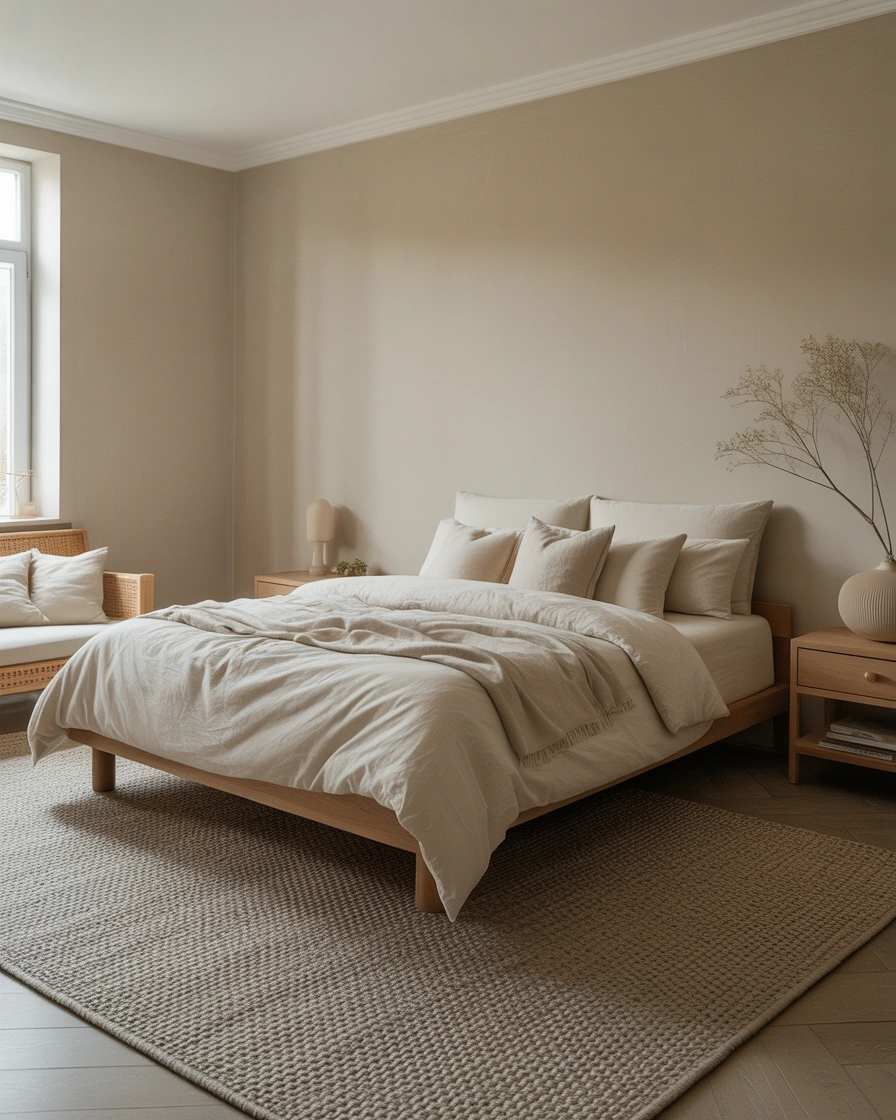
A rug can make a surprisingly big difference in a bedroom.
It adds warmth underfoot and helps visually define the sleeping area.
For minimalist bedroom decor, choose a rug with a simple pattern or solid neutral color.
Cream, beige, oatmeal, soft gray, and natural jute are all excellent options.
If you have a large bedroom, an oversized rug placed underneath the bed can anchor the entire furniture arrangement.
For a smaller room, you can use a runner or two small rugs beside the bed.
Texture is more important than elaborate pattern here.
A slightly woven or wool-like surface can make the room feel more comfortable without distracting from the rest of the decor.
11. Incorporate a Few Green Plants
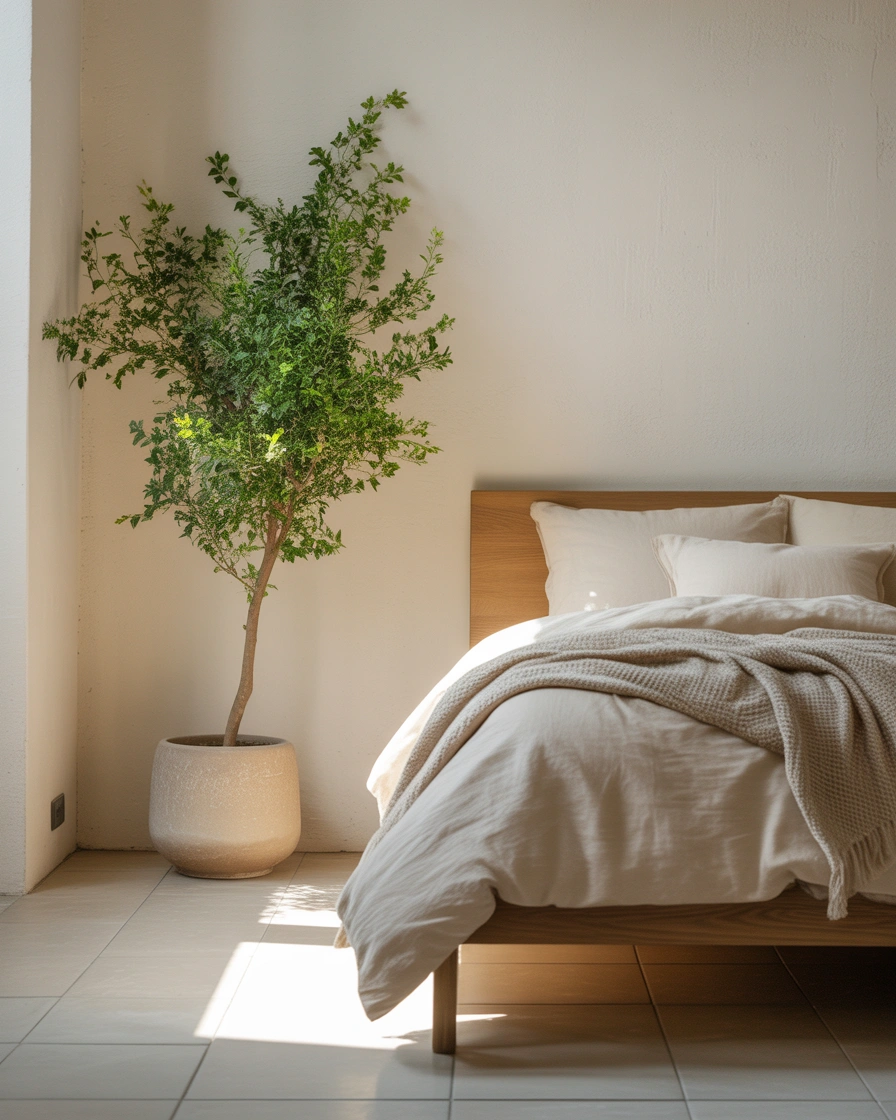
Plants can bring life into a minimalist bedroom without creating visual clutter.
You don’t need a jungle.
In fact, one or two thoughtfully positioned plants may be all you need.
A tall plant in a simple ceramic planter can fill an empty corner beautifully. A small plant on a shelf or nightstand can add a touch of natural color.
Choose plants based on the amount of natural light your room receives.
If you’re not particularly good at caring for plants, low-maintenance varieties can be a practical choice.
The planter matters too.
Instead of brightly colored decorative pots, consider simple ceramic, stone, terracotta, or woven planters that coordinate with the rest of the room.
The goal is to bring a little nature indoors while maintaining the calm visual character of the space.
12. Create Hidden Storage
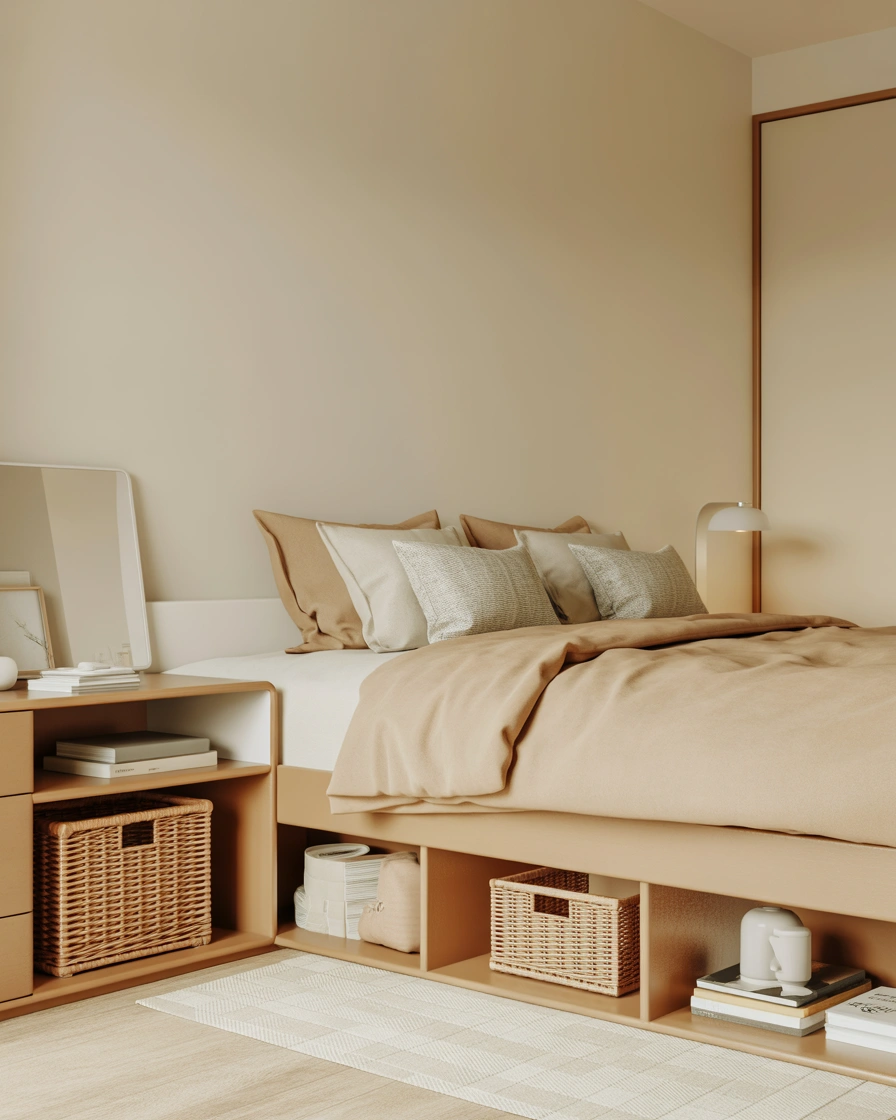
Nothing ruins the feeling of a minimalist bedroom faster than visible clutter.
That’s why storage is such an important part of minimalist design.
Look for furniture that gives you storage without making the room look bulky.
A bed with drawers underneath can be extremely useful. A nightstand with concealed compartments can hide smaller items. A simple dresser can keep clothing organized while maintaining clean visual lines.
Baskets are another practical option.
Use them for blankets, extra pillows, books, or everyday items that you want nearby but don’t want sitting in plain sight.
The best minimalist storage solutions are the ones that make tidying up easier.
If putting something away takes only a few seconds, you’re much more likely to do it regularly.
13. Create a Small Reading Corner
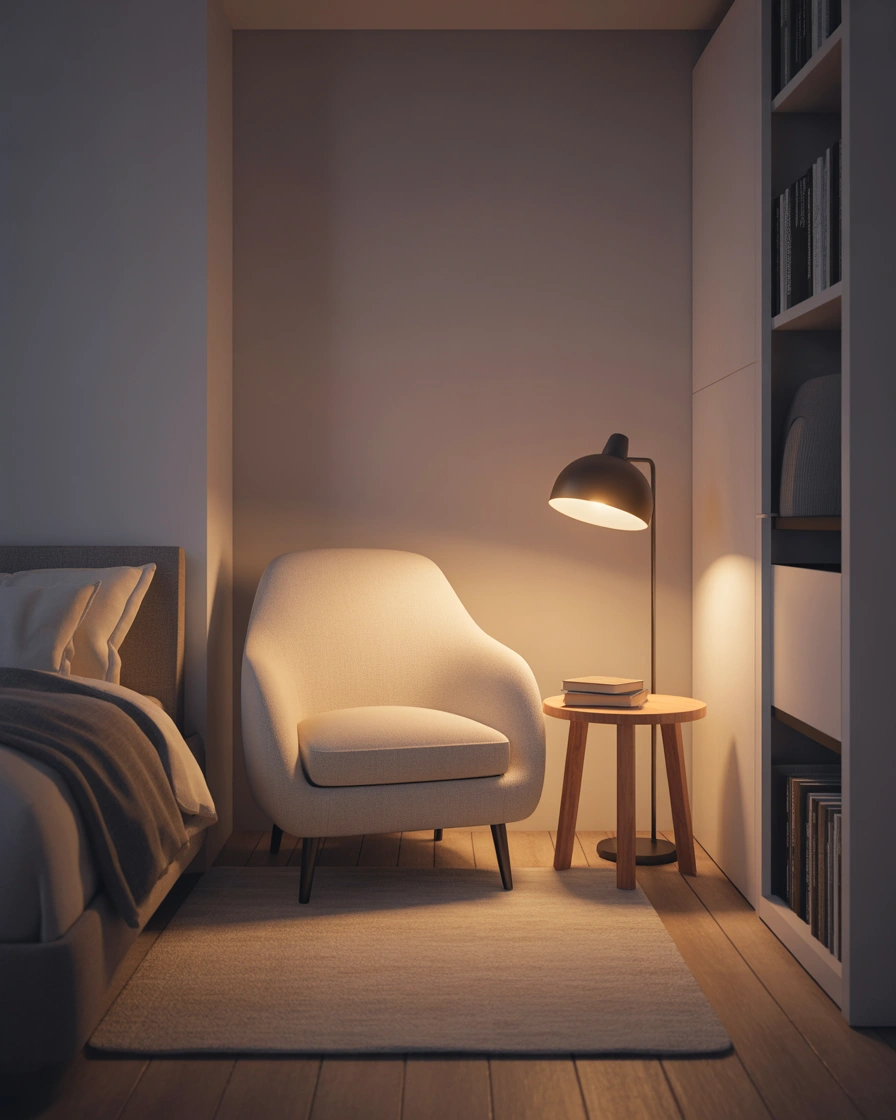
If you have enough space, consider creating a small reading corner.
It doesn’t need to be elaborate.
A comfortable chair, a small side table, and a floor lamp can be enough.
Choose furniture that complements your existing bedroom rather than creating a completely separate design style.
A wooden chair with a soft cushion can work beautifully in a warm minimalist room. A simple upholstered chair can create a more contemporary look.
Keep the surrounding area open.
You don’t need a huge bookshelf or multiple decorative tables. A single small stack of books and a soft throw can make the corner feel inviting.
I love this idea because it gives the bedroom another purpose without adding unnecessary furniture.
It becomes a quiet little spot for reading, journaling, drinking tea, or simply sitting for a few minutes at the end of the day.
14. Keep Decorative Accessories Intentional
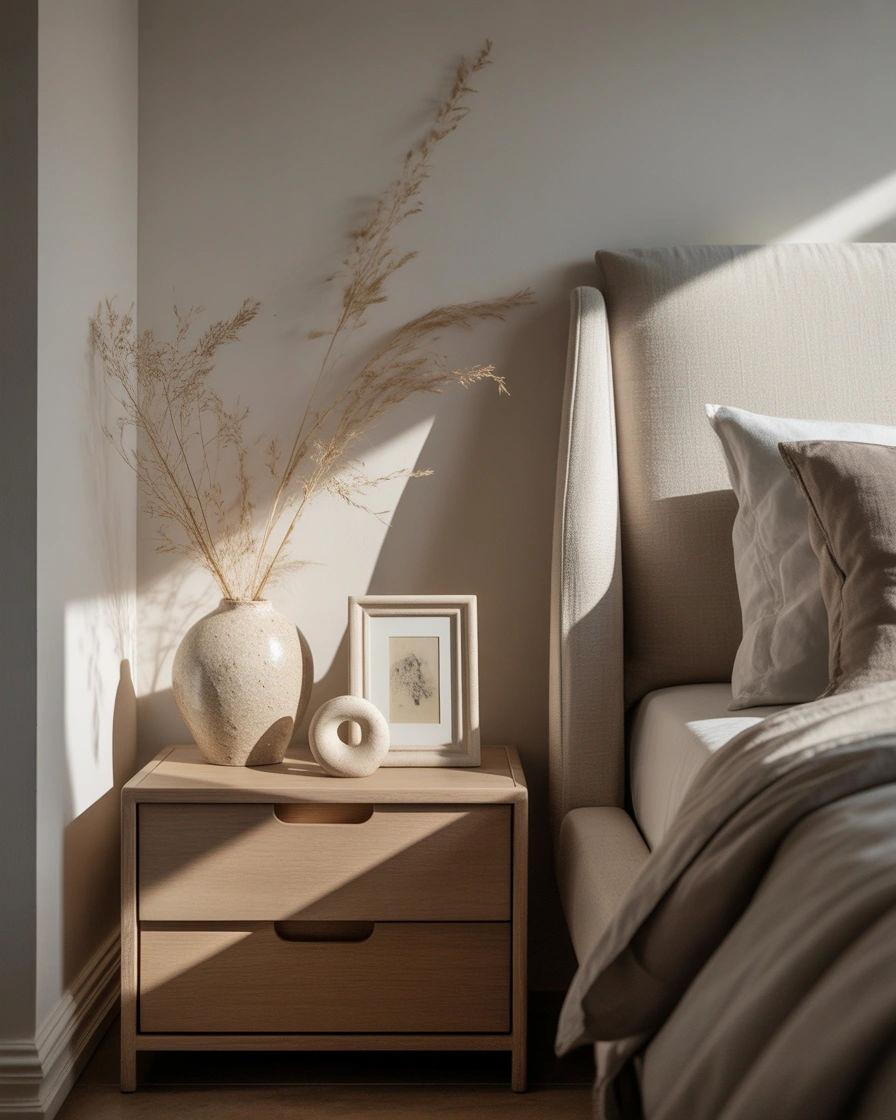
Minimalist decorating doesn’t mean removing every decorative object.
It means choosing carefully.
Instead of decorating every surface, select a few pieces that genuinely contribute to the room.
A handmade ceramic vase, a small sculptural object, a framed photograph, or a beautiful candle can add personality.
The trick is to give each object some breathing room.
If you have three decorative items on a nightstand, don’t place them right next to each other in a crowded arrangement. Leave some empty space between them.
Odd numbers often create a naturally balanced grouping, but don’t follow design rules so strictly that the room stops feeling like your own.
Your bedroom should still reflect your personality.
Minimalism is not about making your home look like everyone else’s Instagram photo.
It’s about removing distractions so the things you truly love have more room to stand out.
15. Leave Plenty of Negative Space
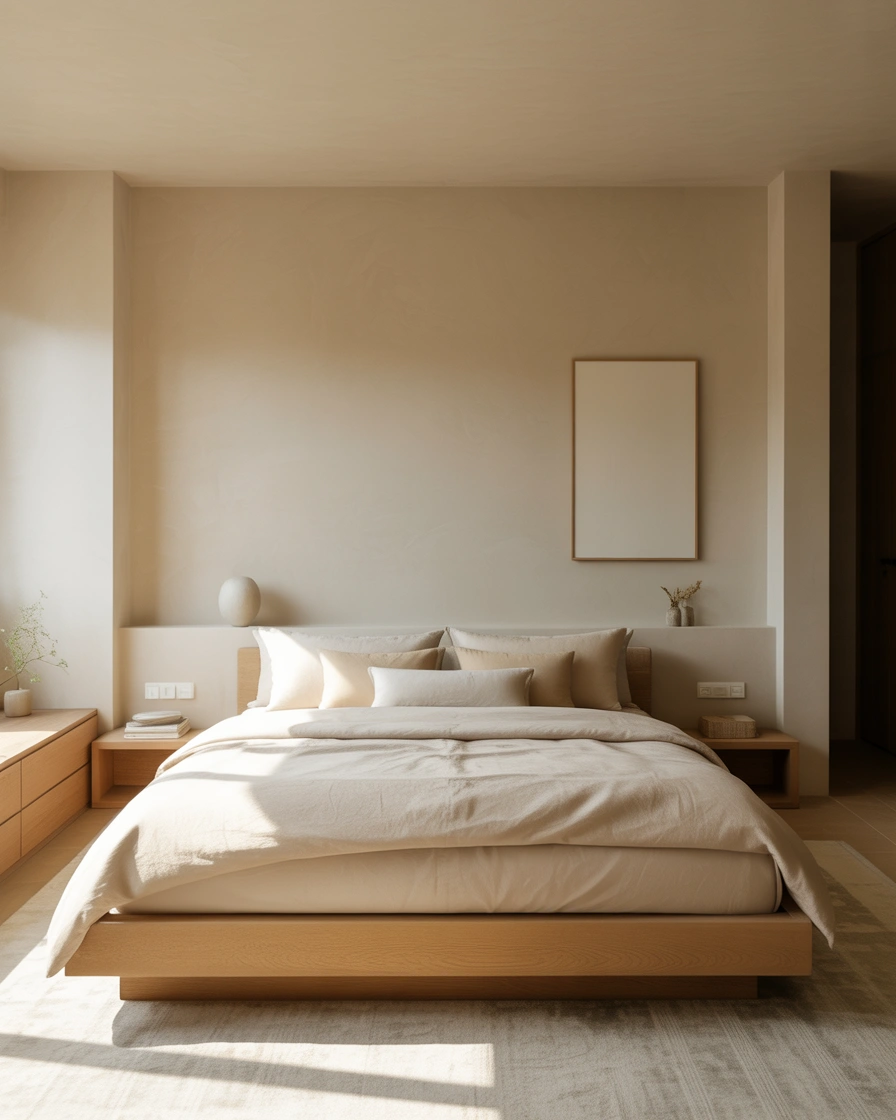
This might be the most important minimalist bedroom decor idea of all.
Leave some space empty.
It sounds incredibly simple, but empty space is what allows the rest of your design to breathe.
Don’t feel obligated to put furniture in every corner.
Don’t fill every shelf.
Don’t hang artwork on every available wall.
Don’t cover every surface with accessories.
An empty area can actually make a bedroom feel larger, calmer, and more sophisticated.
When you’re decorating, step back from the room and look at it as a whole.
If something feels visually crowded, try removing one item rather than adding another.
This is one of the easiest ways to discover what your bedroom actually needs.
Sometimes the final touch isn’t another decoration.
Sometimes it’s taking one away.
How to Make a Minimalist Bedroom Feel Cozy
One concern I often hear about minimalist interiors is that they can feel too cold.
Fortunately, that’s easy to avoid.
The secret is combining simplicity with softness.
Start with comfortable bedding. Add a textured throw and a rug. Use warm lighting instead of harsh white bulbs. Introduce natural wood and woven materials.
You can also use curtains to soften the room and add a small number of personal objects.
The colors matter too.
Pure white everywhere can sometimes feel stark. Warm whites, creams, beige, taupe, and soft browns tend to create a more welcoming atmosphere.
Think about how you want the room to feel when you enter it.
If you want cozy minimalism, don’t focus only on appearance. Think about touch, light, temperature, and comfort.
A bedroom should look good, but it should also make you want to stay there.
Minimalist Bedroom Decor for Small Spaces
Small bedrooms can actually be perfect for minimalist decorating because there is already a natural limit on how much furniture you can fit.
Start by choosing only the essential pieces.
A bed, nightstand, wardrobe or dresser, and perhaps one small chair may be enough.
Use vertical space when necessary. Floating shelves can provide storage without taking up floor area, while wall-mounted lighting can eliminate the need for bulky bedside lamps.
Mirrors can also help reflect light and make a compact bedroom feel more spacious.
Choose furniture with clean lines and avoid oversized pieces.
Most importantly, keep the floor as open as possible.
The more visible floor you have, the more spacious the room tends to feel.
Minimalist Bedroom Decor on a Budget
You don’t need a huge decorating budget to create a beautiful minimalist bedroom.
In fact, minimalism can be especially budget-friendly because you’re intentionally buying fewer things.
Start by decluttering what you already have.
You may discover that your room already contains most of what you need.
Then focus your budget on a few high-impact changes.
New bedding can completely change the appearance of the room. A simple rug can add warmth. Repainting the walls can create an entirely different atmosphere.
You can also shop secondhand for wooden furniture, mirrors, lamps, and artwork.
Instead of buying several inexpensive decorations, save your money for one or two pieces that you genuinely love.
Another inexpensive trick is rearranging the furniture.
Sometimes changing the bed position, clearing a crowded dresser, or moving a chair to a different corner can make the bedroom feel completely new.
How to Choose Minimalist Bedroom Furniture
When shopping for furniture, focus on proportion, function, and simplicity.
Avoid furniture that is unnecessarily ornate or visually heavy.
Look for clean silhouettes, natural materials, and neutral finishes.
A minimalist bedroom doesn’t necessarily require matching furniture.
In fact, combining a wooden nightstand with an upholstered bed and a simple dresser can create a more relaxed and personal look.
Just make sure the pieces share some common visual characteristics.
For example, they might all have warm undertones or simple geometric shapes.
Before buying anything, measure your room.
Minimalism depends heavily on proportion. Even beautiful furniture can make a room feel cluttered if it is too large for the space.
Common Minimalist Bedroom Decorating Mistakes
There are a few mistakes worth avoiding when creating a minimalist bedroom.
The first is confusing minimalism with emptiness.
A completely empty room isn’t necessarily minimalist. It may simply be unfinished.
The second mistake is using only one texture.
A room filled with smooth white surfaces can feel flat. Add linen, wool, wood, ceramic, or woven materials for depth.
Another mistake is choosing furniture that looks beautiful but isn’t practical.
If you don’t have enough storage, clutter will eventually return.
Finally, don’t copy someone else’s minimalist bedroom too literally.
A bedroom should work for the person who lives there.
If you love books, keep your books. If you enjoy plants, add plants. If you like artwork, display your favorite piece.
Minimalism should make your life easier, not restrict your personality.
A Simple Minimalist Bedroom Checklist
If you’re ready to refresh your bedroom, you don’t have to change everything at once.
Start with this simple checklist:
- Choose a calming color palette.
- Remove unnecessary furniture.
- Clear clutter from visible surfaces.
- Invest in comfortable, simple bedding.
- Add natural textures.
- Choose warm lighting.
- Introduce natural wood where possible.
- Add one or two plants.
- Use practical hidden storage.
- Select one meaningful piece of wall art.
- Keep decorations intentional.
- Leave some walls and surfaces empty.
- Make sure every piece of furniture has a purpose.
- Create enough open floor space.
- Prioritize comfort as much as appearance.
You can work through these steps over a weekend or gradually make changes over several weeks.
Final Thoughts on Minimalist Bedroom Decor
Creating a minimalist bedroom isn’t really about following a strict set of decorating rules.
For me, it’s more about deciding what deserves space in my home.
A peaceful bedroom doesn’t need dozens of accessories or expensive furniture. It needs thoughtful choices.
Start with a simple color palette. Make the bed comfortable and inviting. Add natural textures, warm lighting, practical storage, and a few meaningful decorative pieces.
Then stop.
Give the room some breathing space.
The beauty of minimalist bedroom decor is that it allows you to notice the things that matter. Instead of your eyes jumping from one decoration to another, you can appreciate the softness of the bedding, the grain of the wood, the warm glow of a lamp, or the sunlight coming through the curtains.
And perhaps most importantly, your bedroom becomes easier to maintain.
There is less to clean, less to organize, and less visual noise at the end of a busy day.
Whether you’re decorating a tiny apartment bedroom or a spacious master suite, the same principle applies: choose intentionally, keep things comfortable, and don’t be afraid of empty space.
Sometimes, creating a beautiful bedroom isn’t about adding more.
It’s about discovering how much you can do with less.
