
Grey is one of those colors I never get tired of using in a bedroom. It can feel soft and peaceful, dramatic and luxurious, warm and welcoming, or modern and minimal depending on how you style it. That flexibility is exactly why grey bedroom decor has remained such a popular choice for homeowners, renters, and interior design lovers.
I used to think a grey bedroom might look cold or slightly boring, but once I started paying attention to textures, lighting, furniture, and accent colors, I realized grey is actually one of the easiest shades to personalize. A pale dove-grey bedroom can feel airy and calming, while charcoal walls can turn the same room into a cozy retreat that feels like a boutique hotel.
The secret is not to fill the entire bedroom with one flat shade of grey. Instead, I like mixing different grey tones with natural materials, soft textiles, warm lighting, greenery, metallic accents, and carefully chosen colors.
If you are planning a complete bedroom makeover or simply want to refresh your current space, these 15 grey bedroom decor ideas will help you create a bedroom that feels comfortable, stylish, and completely your own.
1. Create a Soft Light Grey Bedroom for a Calm Atmosphere
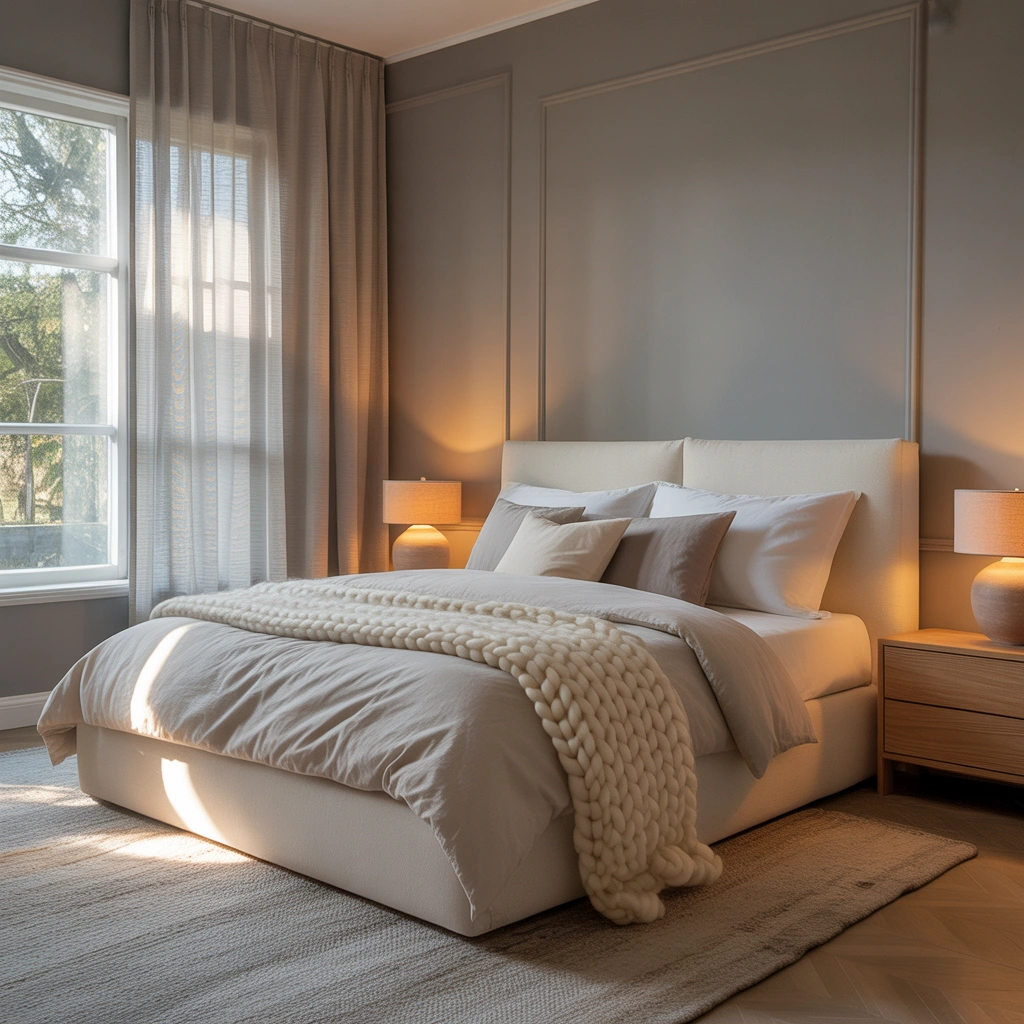
If I want a bedroom to feel peaceful from the moment I walk inside, light grey is usually my first choice. Soft grey walls provide more character than plain white without making the room feel dark or closed in.
A pale grey wall color works beautifully in bedrooms that receive plenty of natural light. During the daytime, the walls can appear almost silver or off-white, while in the evening they become warmer and more intimate under bedside lamps.
I would keep the larger pieces simple in this type of room. A white or cream upholstered bed, pale grey bedding, light wooden bedside tables, and a neutral rug can create a wonderfully relaxing foundation.
The important thing is adding several textures. For example, combine crisp cotton sheets with a knitted throw, velvet cushions, linen curtains, and a soft area rug. Even though the color palette remains neutral, the room will still look visually interesting.
Light grey is also a smart option for small bedrooms because it reflects more light than deeper shades.
2. Add a Dark Charcoal Grey Accent Wall
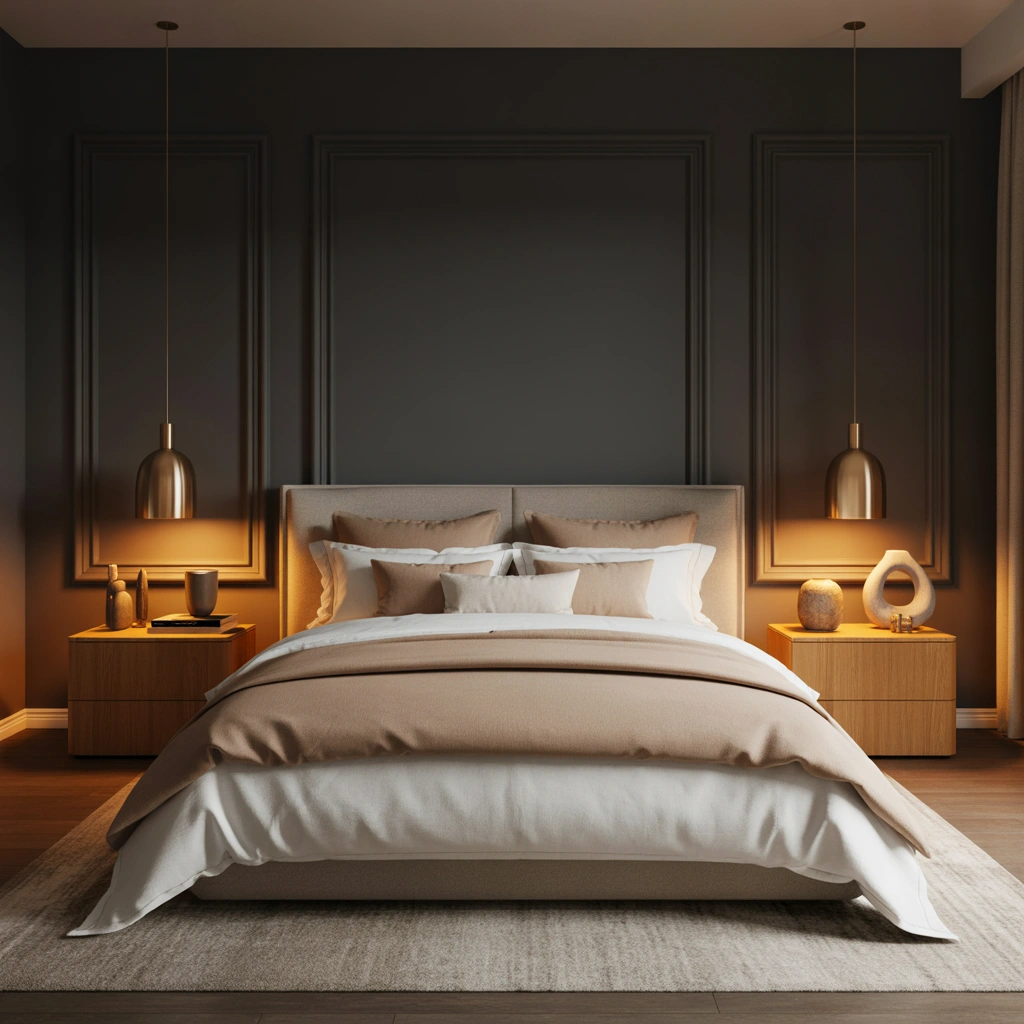
One of my favorite ways to use grey without making the entire room dark is creating a charcoal grey accent wall behind the bed.
This works especially well because the bed naturally becomes the focal point of the bedroom. A deep charcoal background immediately draws attention toward the headboard and creates a dramatic contrast with lighter bedding.
I particularly love charcoal paired with crisp white sheets, warm beige blankets, natural oak furniture, and brass lighting. The combination feels sophisticated without becoming overly formal.
If your bedroom is small, you do not necessarily need to avoid dark grey. Keeping only one wall dark while leaving the remaining walls light can actually add depth to the room.
For an even more luxurious appearance, consider adding wall molding or decorative paneling to the charcoal wall. Simple rectangular molding painted in the same grey color can make an ordinary wall look custom-designed.
3. Mix Grey and White for a Fresh Classic Look
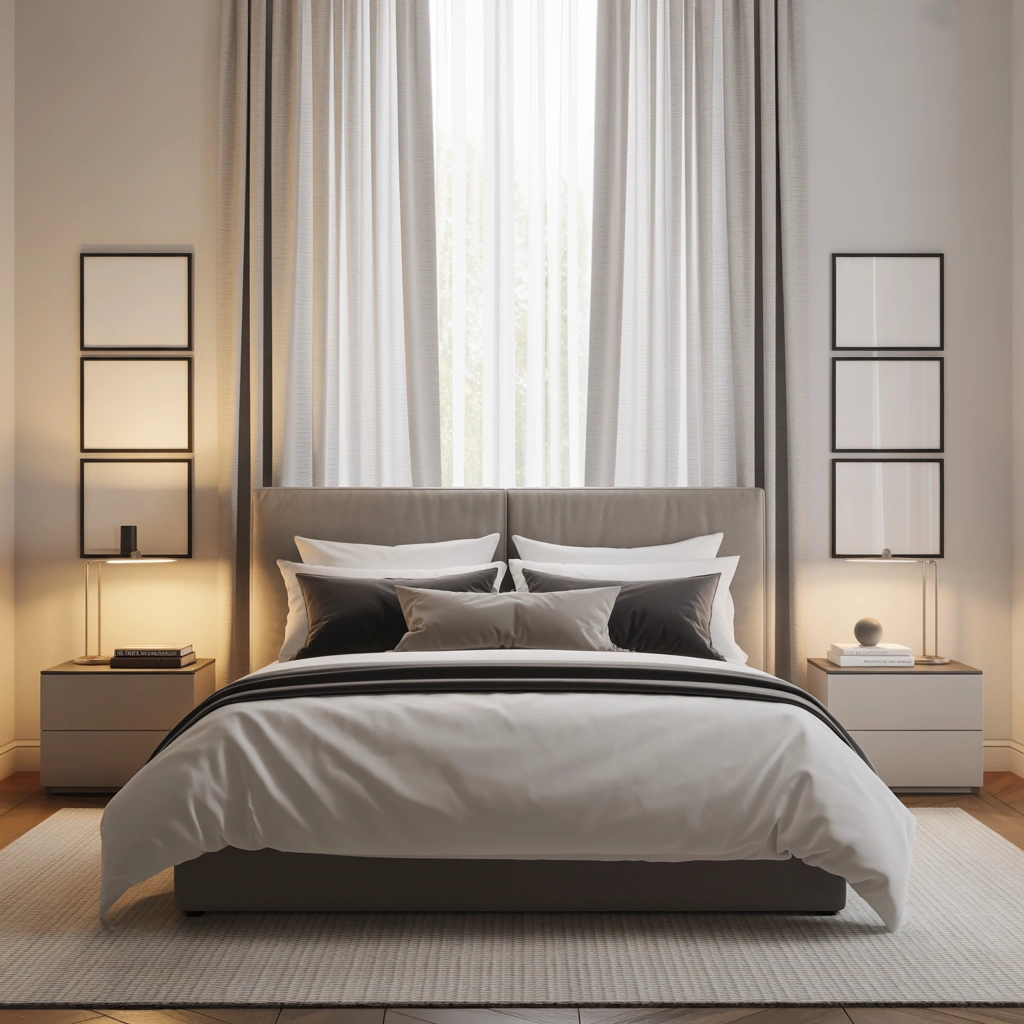
Grey and white are probably the easiest bedroom colors to combine, and there is a good reason this pairing continues to look stylish year after year.
White prevents grey from becoming too heavy, while grey adds depth to an otherwise plain white bedroom.
I personally like using warm white rather than extremely bright white. Soft ivory walls, white bedding, grey cushions, and a medium-grey upholstered bed can create a comfortable look that feels polished but not sterile.
You can also reverse the color balance by choosing grey walls with mostly white furniture and textiles.
Another little trick I love is repeating the grey shade in different parts of the room. For example, grey might appear on the headboard, a patterned rug, curtain details, and two decorative pillows. Repetition makes the space look intentional rather than randomly decorated.
Black accents, such as thin picture frames or a small bedside lamp, can provide additional definition.
4. Warm Up Grey Decor With Natural Wood
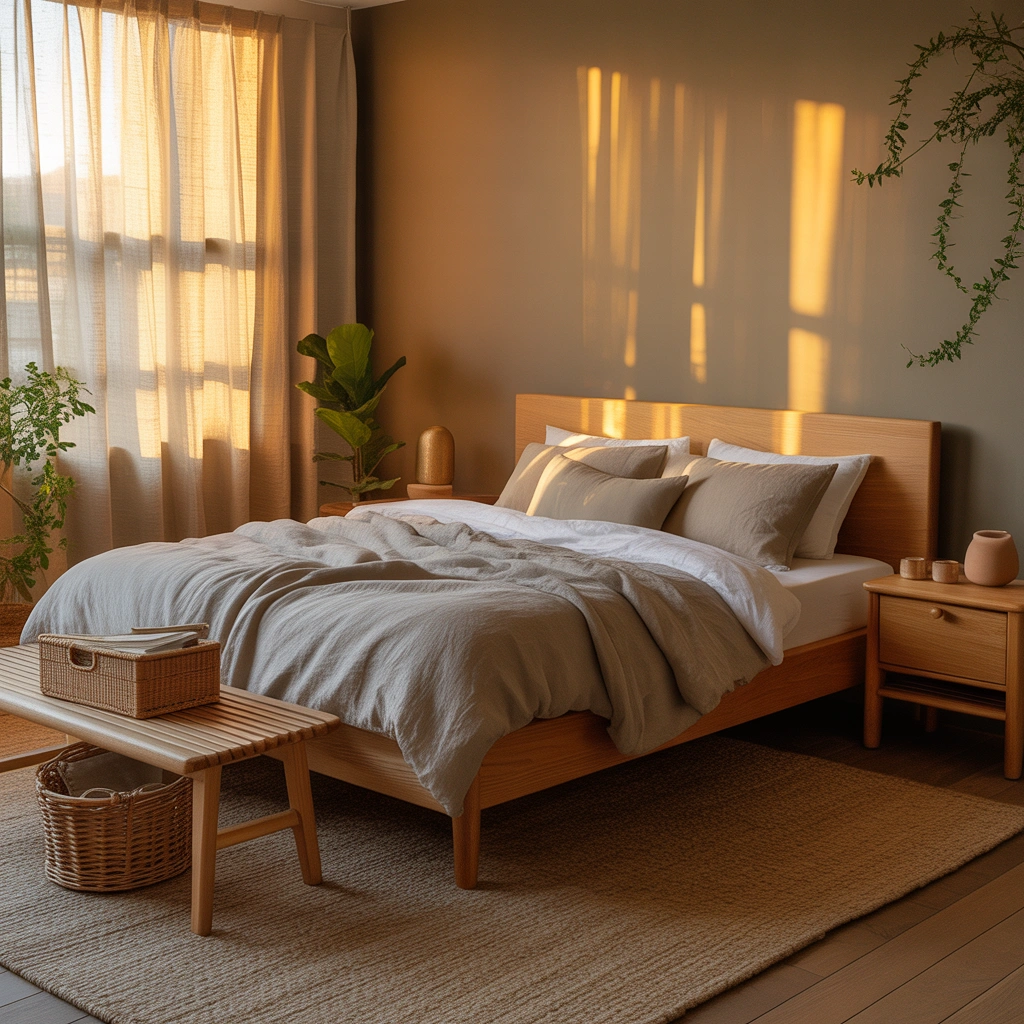
Whenever a grey bedroom starts feeling slightly cold, wood is usually the first material I introduce.
Natural wooden furniture instantly brings warmth into a neutral bedroom. Oak, walnut, pine, reclaimed wood, and even rattan can completely change the feeling of grey surroundings.
Imagine medium-grey walls combined with a natural oak bed frame, wooden nightstands, woven baskets, and a beige wool rug. The grey suddenly feels softer and more welcoming.
I also think this combination works particularly well for people who love modern rustic, Scandinavian, Japandi, or organic contemporary interiors.
You do not need to replace all your furniture either. Something as simple as adding a wooden bench at the foot of the bed, floating wooden shelves, or a small wooden side table can introduce enough warmth.
Try to let the natural grain remain visible because the variation in the wood adds texture and character against smooth grey surfaces.
5. Layer Different Shades of Grey
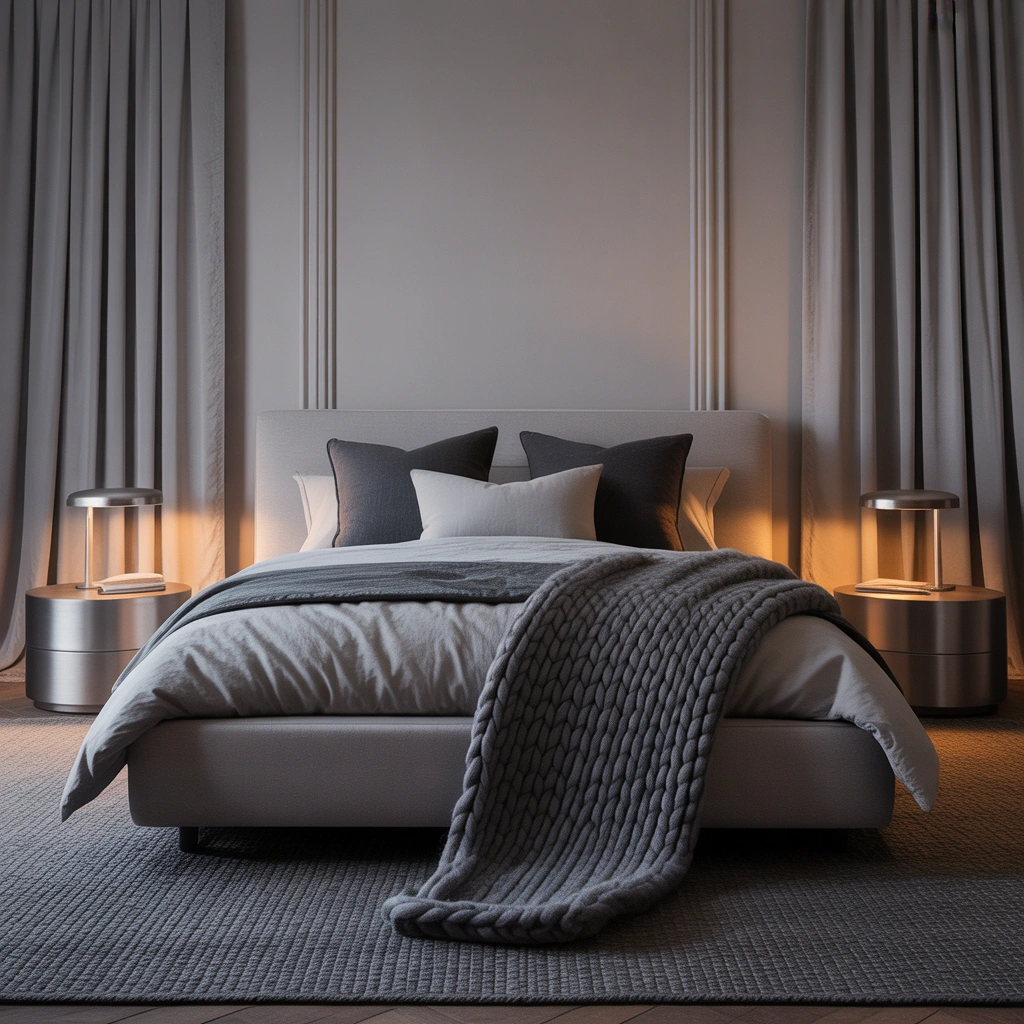
One mistake I often see in monochromatic bedrooms is using exactly the same grey everywhere. When the walls, bedding, curtains, furniture, and accessories are identical shades, the space can easily appear flat.
Instead, I would treat grey as an entire color family.
Start with pale grey walls, then introduce a medium-grey upholstered bed, darker charcoal cushions, silver-grey curtains, and a textured graphite throw.
The different tones create dimension while keeping the room beautifully coordinated.
You can also experiment with warm and cool greys. Warm grey often contains subtle beige or brown undertones, while cool grey may have hints of blue.
For a bedroom, I usually prefer keeping most of the shades within a similar undertone so everything feels connected.
Textures make this layered approach even better. Velvet, wool, linen, boucle, cotton, and faux fur can all look completely different even when they are technically grey.
6. Combine Grey and Blush Pink for Soft Elegance
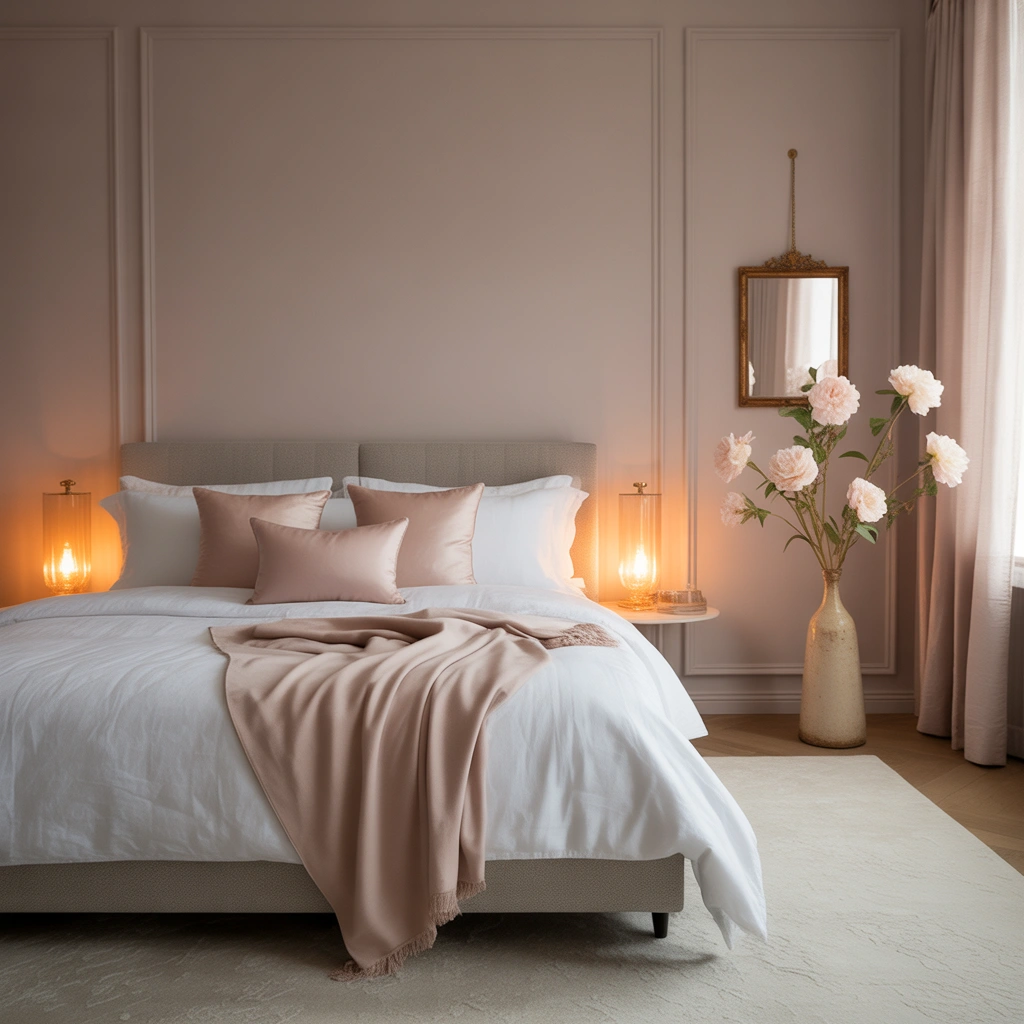
Grey and blush pink make such a beautiful combination when you want a bedroom that feels gentle and sophisticated.
The key, in my opinion, is keeping the pink muted rather than extremely bright. Dusty rose, blush, nude pink, and muted mauve complement grey much more naturally.
I would begin with a grey foundation—perhaps light grey walls and an upholstered grey headboard. Then I would introduce blush through smaller decorative pieces such as cushions, a throw blanket, artwork, flowers, or a bedside chair.
This allows you to change the accent color later without redecorating the entire bedroom.
Gold or brass accessories work particularly well with this palette. A brass bedside lamp or thin gold mirror frame adds just enough glamour.
Keep the rest of the room neutral with white, cream, or light wood so that the pink accents remain subtle.
7. Style a Grey Bedroom With Black Accents
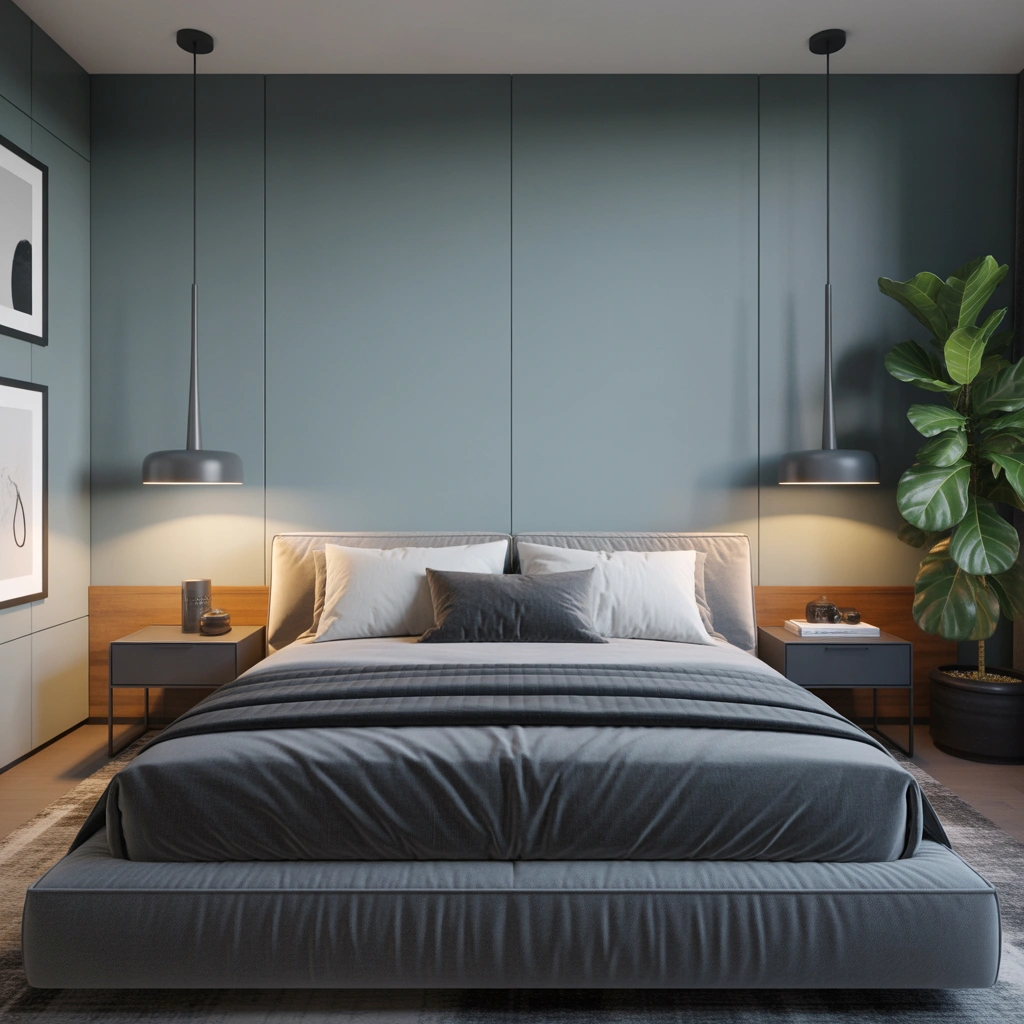
If you prefer stronger contrast, grey and black can create an incredibly modern bedroom.
I especially like this combination in contemporary and industrial-inspired spaces because black gives the softer grey tones more structure.
You do not need large amounts of black. Small details often create the strongest effect. Think black metal bedside tables, slim black pendant lights, black picture frames, curtain rods, door handles, or a black bench.
Against soft grey walls, these darker details create sharp visual lines.
I would balance everything with lighter bedding and warm elements such as wooden furniture or beige textiles. Otherwise, a grey-and-black room can sometimes feel too serious.
Adding one or two plants can also make this palette feel more natural and comfortable.
For a luxury look, choose matte black rather than shiny black finishes.
8. Bring Life Into a Grey Bedroom With Greenery
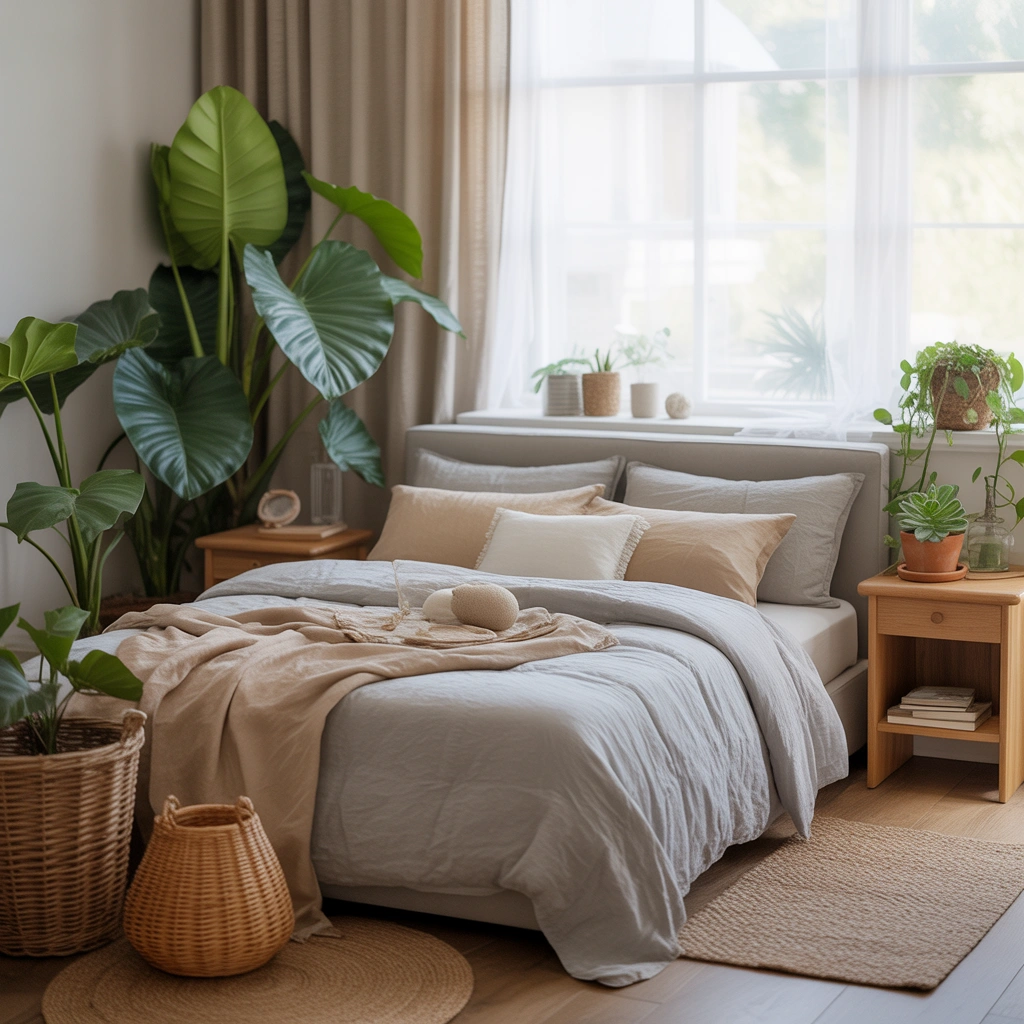
Plants and grey decor are one of my favorite combinations because the green leaves look incredibly vibrant against a neutral background.
If your bedroom receives good natural light, consider placing a larger indoor plant in an empty corner. A fiddle-leaf fig, rubber plant, monstera, or olive-style indoor tree can become a beautiful decorative feature.
Smaller plants can be placed on bedside tables, shelves, dressers, or windowsills.
I particularly enjoy using plants when the room contains darker grey walls because the contrast makes the greenery stand out even more.
Natural materials can strengthen this organic feeling. Add a jute rug, rattan basket, wooden nightstand, or linen bedding.
If maintaining live plants is difficult, high-quality artificial greenery can provide a similar visual effect without requiring constant care.
The goal is simply to prevent the grey palette from feeling too static.
9. Create a Luxury Grey Bedroom With Velvet
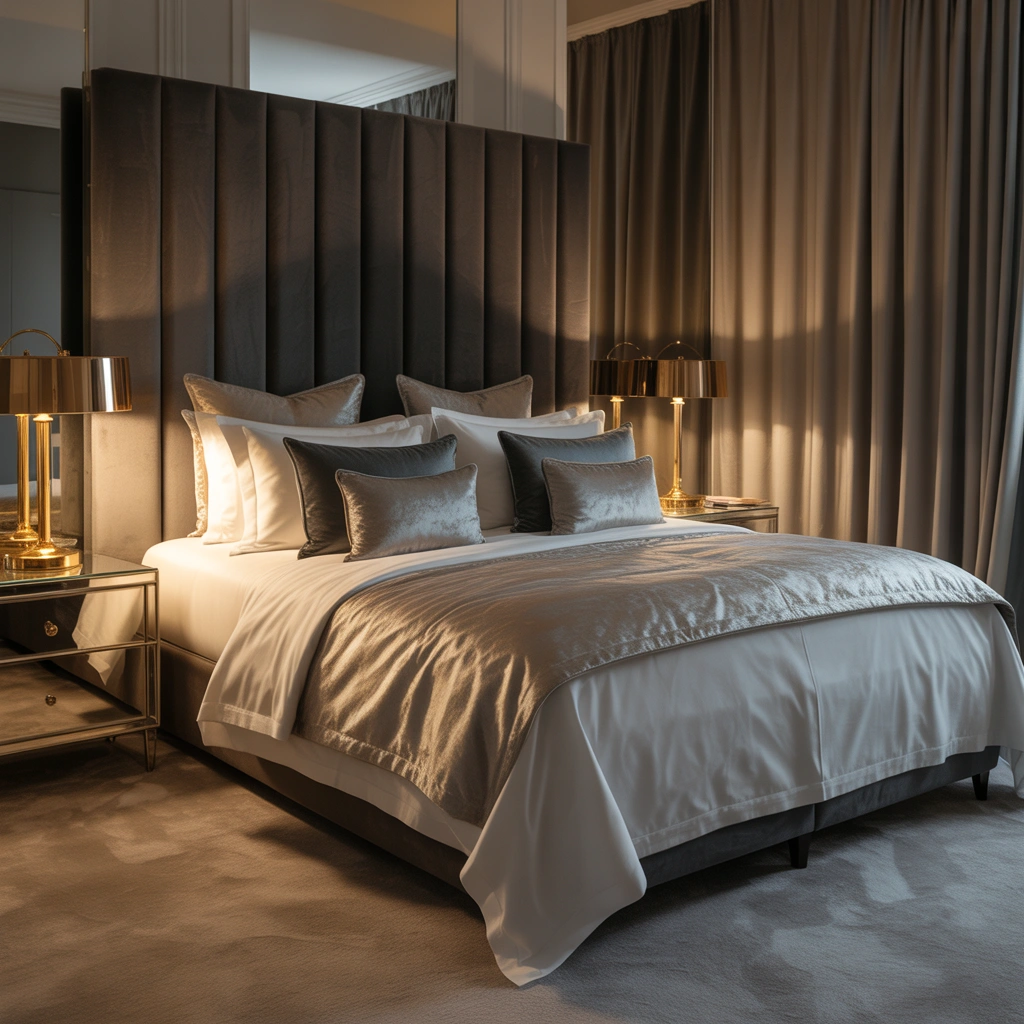
Velvet instantly makes grey look more luxurious.
A large velvet headboard in smoky grey, silver, charcoal, or greige can become the centerpiece of the entire bedroom. I especially love tall channel-tufted or vertically paneled headboards because they create the boutique-hotel feeling many people want at home.
You can continue the luxurious theme with velvet cushions or a small upholstered bench, but I would avoid covering everything in velvet. Mixing velvet with cotton, linen, or wool keeps the bedroom comfortable and balanced.
Metallic details work beautifully here too. Brass lamps, chrome side tables, mirrored accessories, or subtle gold artwork can reflect light and make the room feel more polished.
For lighting, choose warm bulbs rather than cool white ones. Warm lighting helps deeper grey tones feel rich instead of cold.
Finish the room with full-length curtains that almost touch the floor.
10. Add Grey Wall Paneling for Architectural Detail
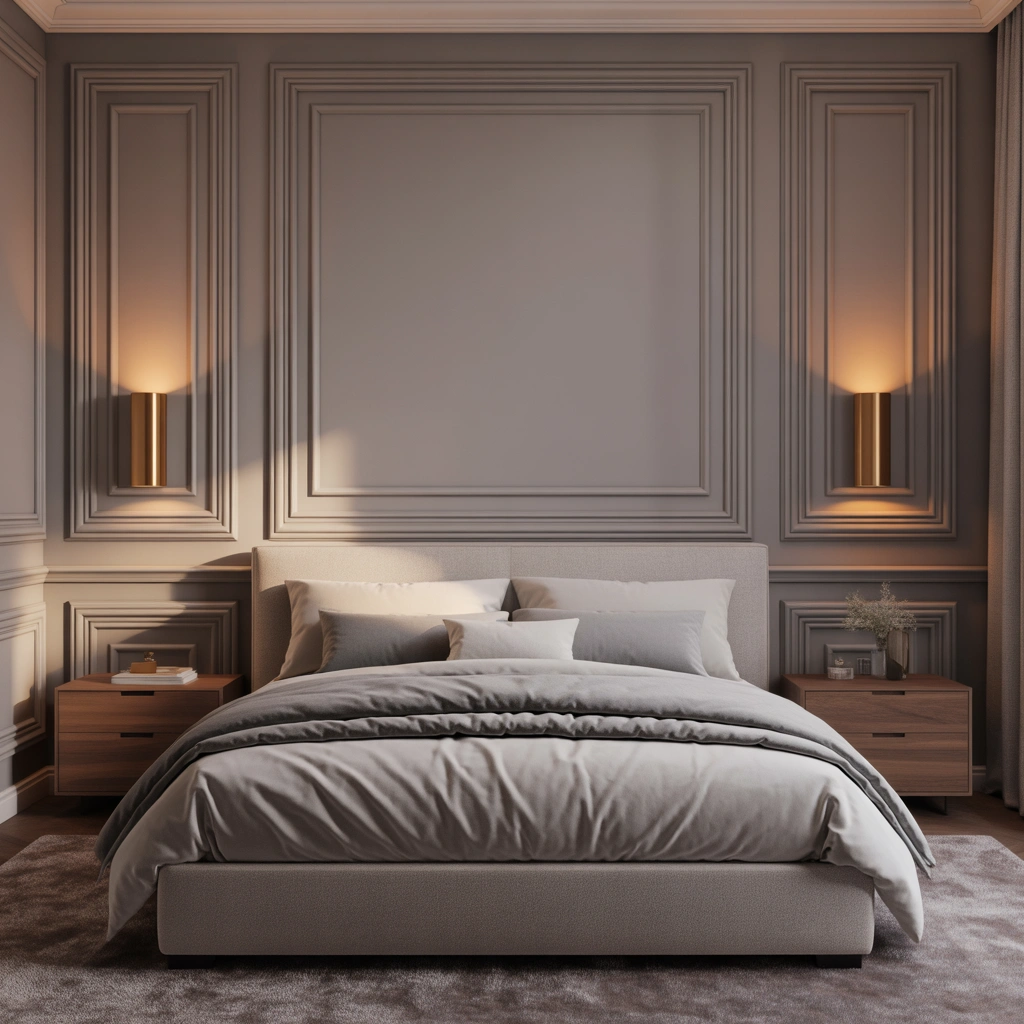
Wall paneling is an excellent option when you want the bedroom to look more expensive without relying on lots of decoration.
I love seeing classic rectangular molding, vertical slats, board-and-batten designs, or modern geometric panels painted grey.
The beauty of painting the panels and walls the same color is that the texture creates interest without making the room feel busy.
A medium greige or soft charcoal works particularly well behind the bed.
If you prefer a traditional style, symmetrical wall molding paired with bedside sconces can create a timeless look. For a more contemporary bedroom, vertical wooden slats painted dark grey can give the room a sleek architectural feeling.
Because the wall itself becomes a decorative feature, you may not need much artwork.
Keep furniture simple and let the paneling remain the main attraction.
11. Use Grey Bedding in a Neutral Bedroom
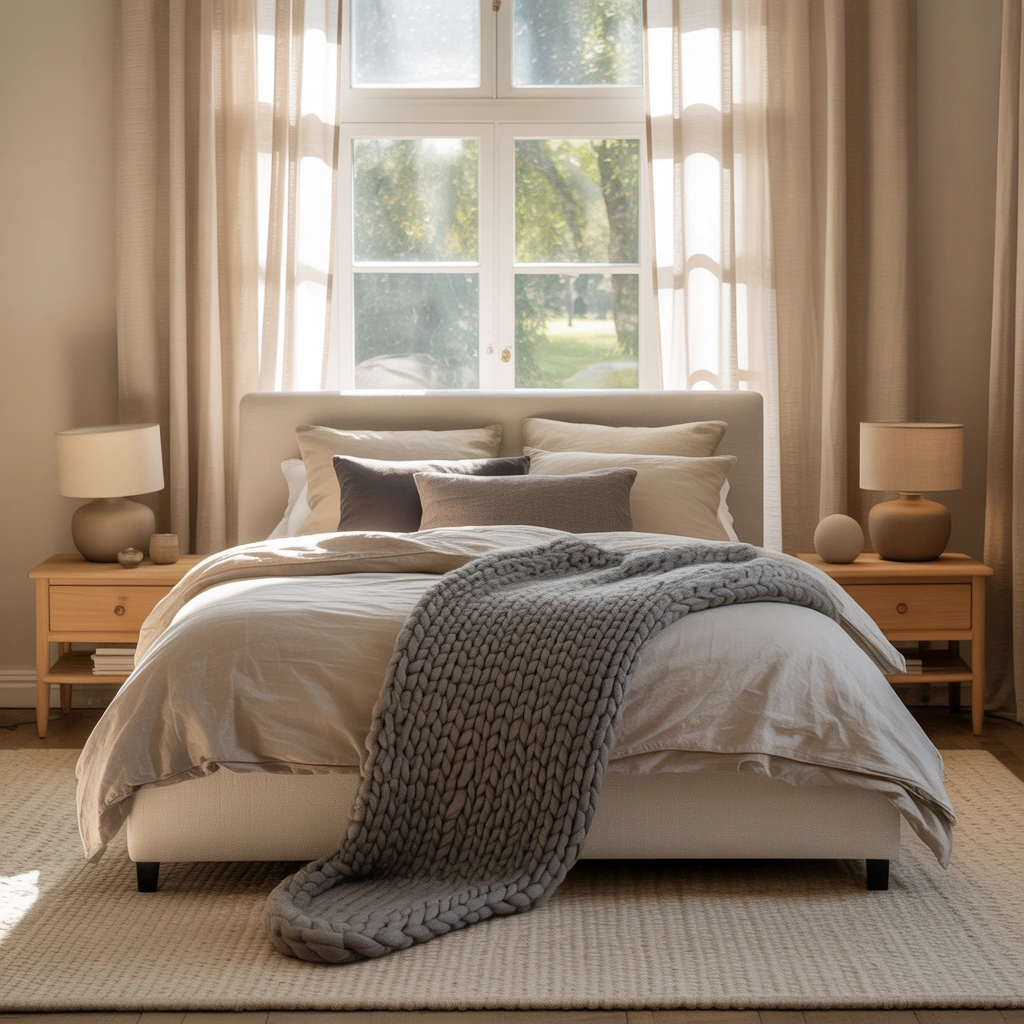
You do not have to paint your walls grey to enjoy grey bedroom decor. Sometimes bedding alone is enough to introduce the color beautifully.
This approach is particularly useful for renters or anyone who likes changing their decor frequently.
Start with neutral white, ivory, beige, or greige walls. Then layer grey sheets, a quilt, duvet, cushions, and a throw blanket.
I recommend mixing at least three different textures. For example, you could use smooth cotton sheets, a linen duvet, knitted cushions, and a chunky wool throw.
You can also layer several grey tones instead of choosing one matching bedding set. A soft stone-grey duvet with charcoal accent cushions looks more curated and relaxed.
Keep a little white visible around the bed to create contrast.
This is one of the easiest and most affordable ways to experiment with grey before committing to bigger design changes.
12. Pair Grey With Navy Blue for a Sophisticated Bedroom
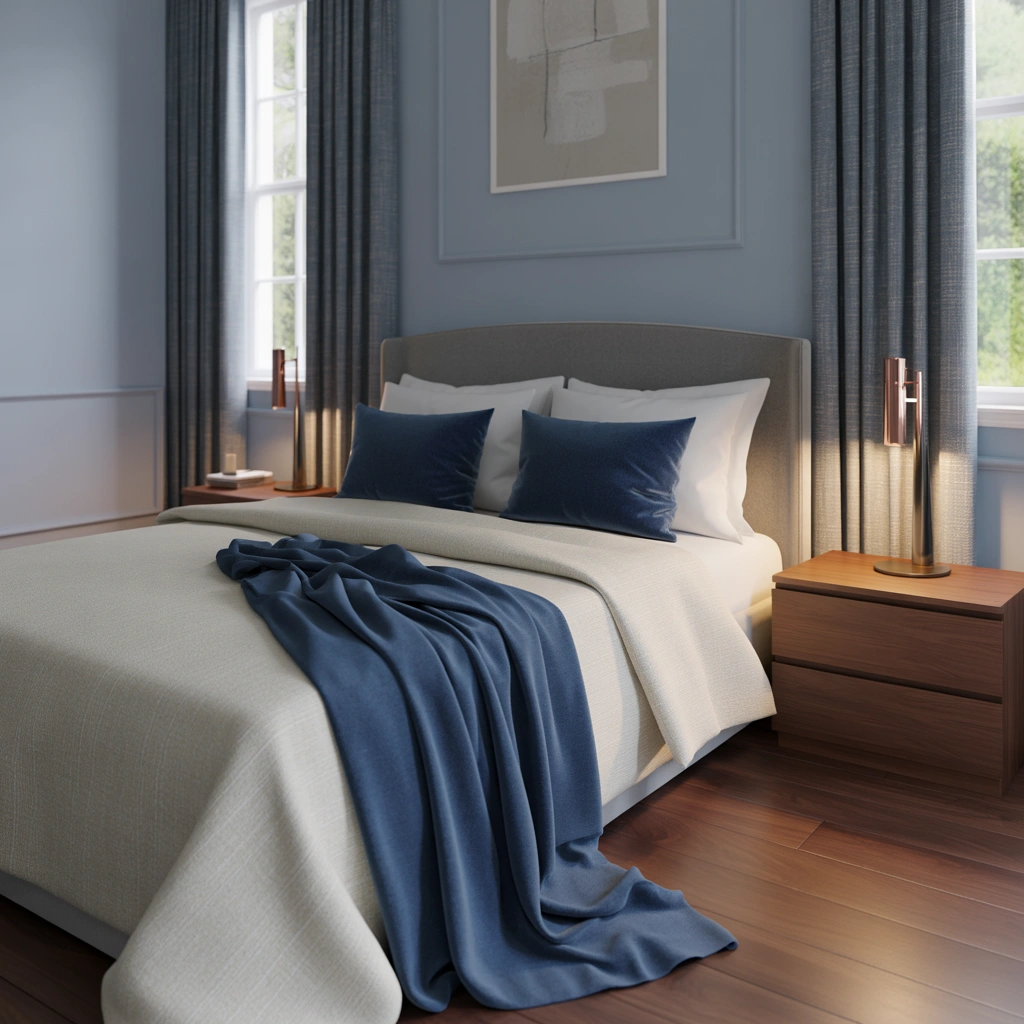
Grey and navy are an excellent combination when you want a bedroom to feel sophisticated without becoming completely monochromatic.
Navy provides color, but because it is deep and muted, it still feels calm enough for a sleeping space.
I usually prefer light or medium grey as the dominant color and navy as the accent. A grey upholstered bed, light grey walls, white bedding, and a navy throw or cushions create a clean, balanced arrangement.
You can also introduce navy through curtains or a statement chair.
Warm wood and brass finishes help soften the cooler color palette. For example, navy cushions paired with brass bedside lamps and walnut tables look beautifully refined.
This combination works well in both contemporary and traditional bedrooms.
If you want the room to feel lighter, use navy sparingly. If you prefer dramatic interiors, use navy on a larger piece such as the headboard or curtains.
13. Create a Cozy Grey Bedroom With Warm Lighting
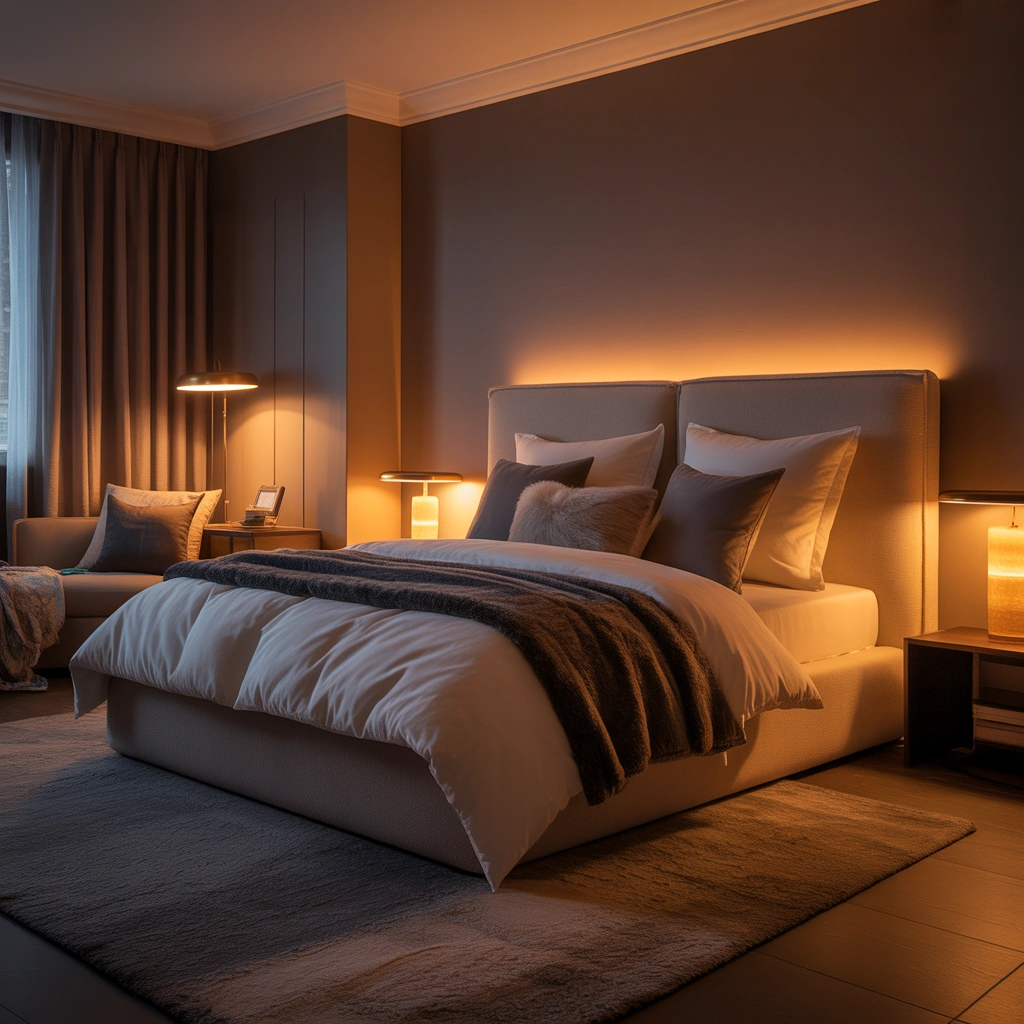
Lighting can completely change how grey looks.
I have seen the exact same grey wall appear blue and cold under harsh white bulbs but soft and cozy under warm lighting.
For bedrooms, I prefer using multiple light sources rather than relying only on the ceiling fixture.
Place warm bedside lamps on both sides of the bed, add a floor lamp in a reading corner, and consider subtle LED lighting behind the headboard or underneath floating furniture.
Wall sconces can also create a sophisticated atmosphere while saving space on small nightstands.
Dimmable lighting is particularly useful because you can use brighter light when dressing or cleaning and lower the brightness when relaxing before bed.
Candles or flameless LED candles can add another layer of warmth.
If you choose charcoal or deep grey walls, good lighting becomes even more important because it prevents the room from feeling gloomy.
14. Design a Minimalist Grey Bedroom
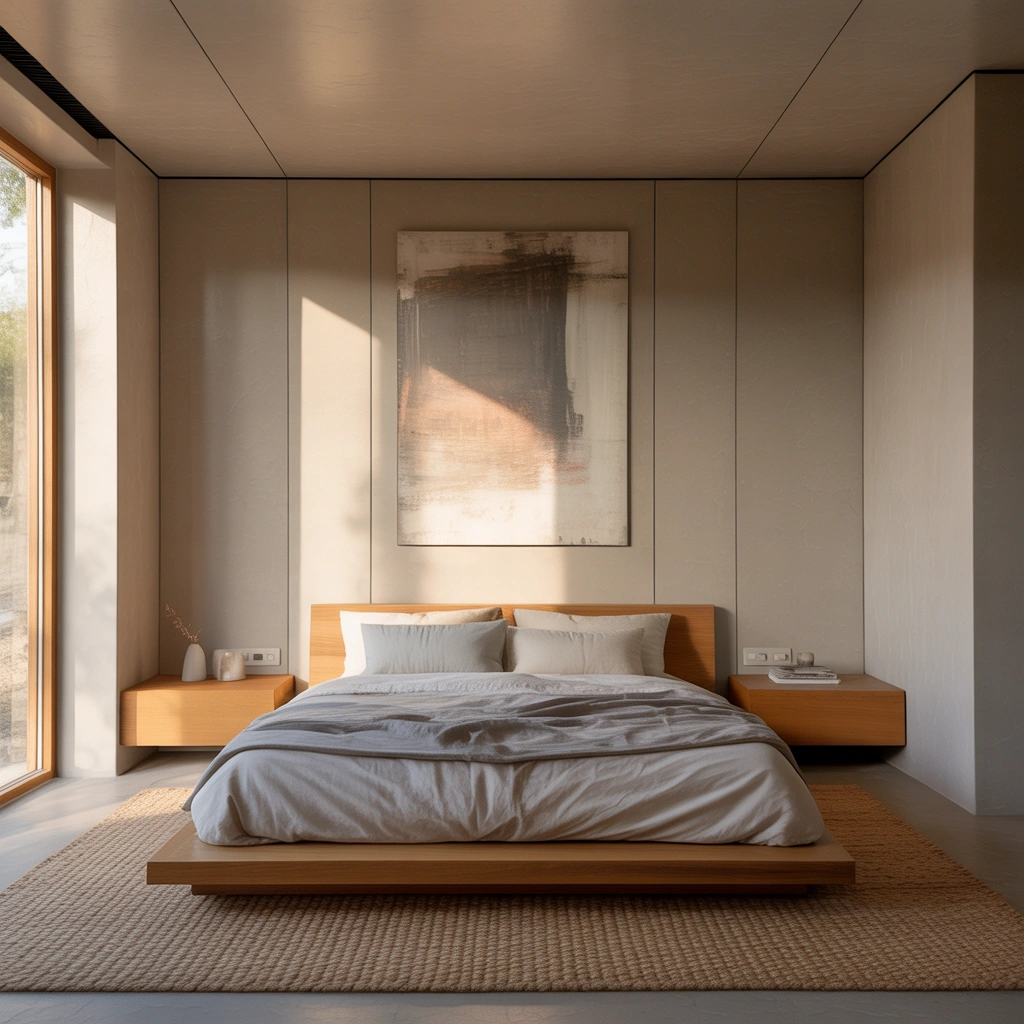
Grey is naturally suited to minimalist interior design because it creates visual calm without feeling as stark as pure white.
For a minimalist grey bedroom, I would focus on clean lines, carefully selected furniture, and plenty of open space.
Choose a simple platform bed, two streamlined bedside tables, neutral bedding, and perhaps one oversized piece of artwork.
Instead of adding lots of decorative accessories, use beautiful materials to create interest. A textured linen duvet, smooth plaster-look grey walls, an oak nightstand, and a wool rug can provide more impact than dozens of small objects.
Hidden storage is also important. Beds with built-in drawers, floating cabinets, or wardrobes with simple doors help keep visual clutter under control.
Minimalism does not mean the bedroom must feel empty or uncomfortable. Add softness with curtains, bedding, rugs, and warm lighting.
The final room should feel peaceful rather than unfinished.
15. Mix Grey With Beige for a Warm Greige Bedroom
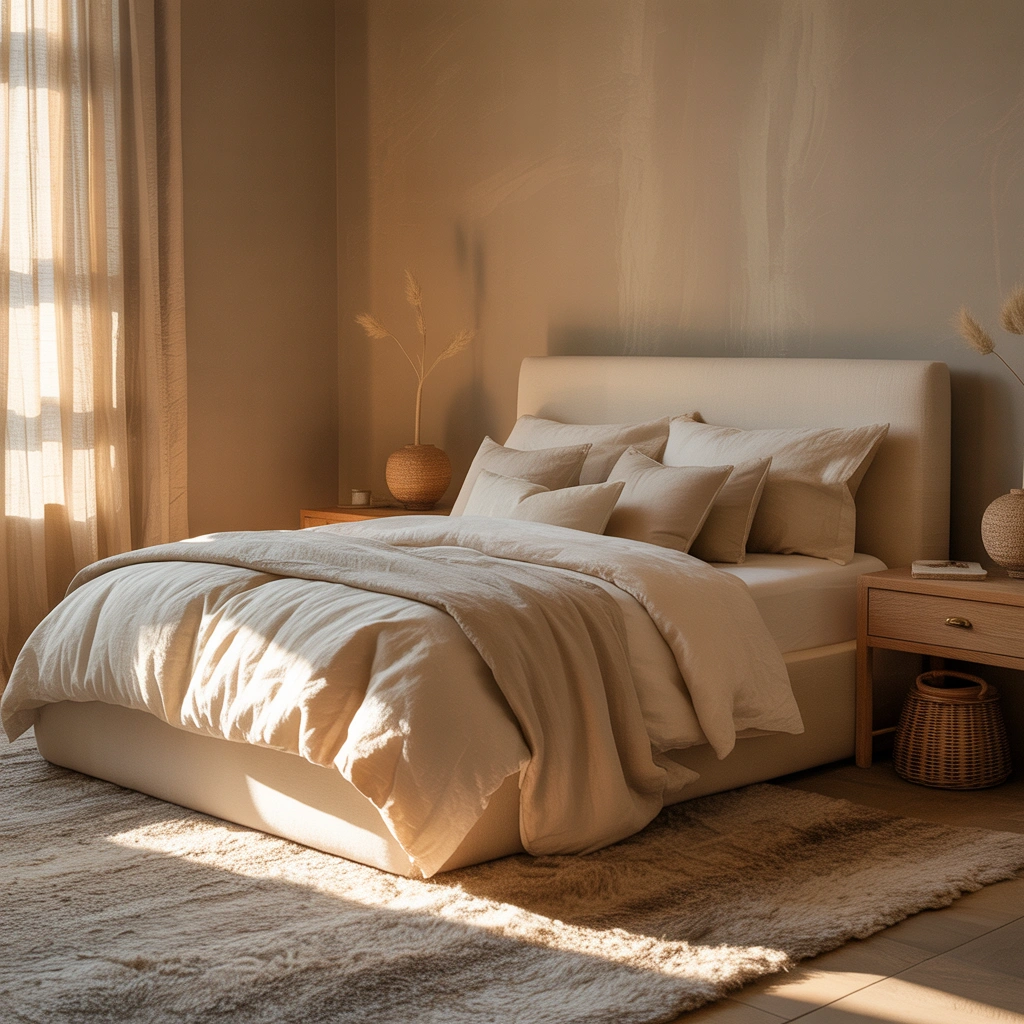
If you love neutral interiors but worry that grey might feel too cool, combining grey and beige may be the perfect solution.
This combination is often described as greige, and I find it incredibly easy to live with.
Start with warm grey or greige walls, then add beige bedding, cream upholstery, light brown wood, and natural woven accessories.
Because all these colors sit close together visually, the bedroom feels calm and cohesive. However, each shade still contributes enough variation to prevent the room from appearing flat.
I particularly like pairing greige with stone, linen, wool, oak, and rattan. These natural textures make the bedroom feel relaxed and timeless.
Black details can be added in very small amounts for contrast, while brass accessories can create a warmer luxury effect.
This is probably one of my favorite grey bedroom ideas for anyone who wants something stylish but does not want to keep redecorating every few years.
How to Choose the Right Shade of Grey for Your Bedroom
Before choosing paint, furniture, or bedding, I always recommend looking carefully at the amount and type of natural light in the bedroom.
A grey shade that looks beautiful in a bright showroom can appear completely different inside your home.
Rooms with plenty of warm sunlight can usually handle cooler or darker greys. Bedrooms that receive limited natural light often benefit from warm grey, pale greige, or lighter stone tones.
It is also important to pay attention to undertones.
Some greys contain blue undertones, others lean green, violet, brown, or beige. These subtle differences become much more noticeable once the color covers an entire wall.
I would always test a few paint samples directly on different walls and observe them during the morning, afternoon, and evening before making a final decision.
Your existing furniture matters as well. Warm wooden furniture usually works beautifully with warm grey, while black, chrome, or cooler modern finishes often coordinate well with cooler greys.
What Colors Go Best With Grey Bedroom Decor?
One reason I enjoy decorating with grey is that almost every accent color can work with it.
For a calm and airy bedroom, combine grey with white, cream, beige, or soft taupe.
For something elegant and romantic, try blush pink, dusty rose, or muted mauve.
If you prefer richer contrast, navy blue, forest green, emerald, burgundy, or black can make grey feel dramatically more sophisticated.
Earthy colors such as terracotta, rust, caramel, and warm brown can also prevent grey from feeling cold.
Metallic accents should not be overlooked either. Brass and gold introduce warmth and glamour, while chrome and silver create a cooler, more contemporary appearance.
The best approach is usually choosing one main grey tone, one supporting neutral, and one accent color rather than introducing too many competing shades.
How to Make a Grey Bedroom Feel Cozy Instead of Cold
A cozy grey bedroom is less about the actual color and more about the materials surrounding it.
Whenever I feel a grey space needs warmth, I introduce texture first.
Layering rugs, curtains, blankets, cushions, upholstered furniture, and natural fabrics instantly makes a bedroom more comfortable.
Warm lighting is equally important. Replace harsh cool bulbs with soft warm bulbs and use several smaller lamps around the bedroom.
Natural wood is another easy solution. Even one oak bedside table or wooden bench can soften a cool grey palette.
Plants, woven baskets, dried flowers, ceramic accessories, and artwork can also help the room feel more personal.
And finally, avoid trying to make everything perfectly matching. A bedroom usually feels more welcoming when colors and textures are thoughtfully layered rather than identical.
Grey Bedroom Decor Tips for Small Bedrooms
Grey can work wonderfully in a small bedroom when used carefully.
If your room has limited natural light, I would generally start with pale grey walls and keep larger furniture pieces relatively light.
Mirrors can help reflect both natural and artificial light. Placing a large mirror opposite or near a window is especially effective.
Choose furniture that provides storage wherever possible. A bed with drawers underneath, wall-mounted bedside shelves, or a tall narrow wardrobe can reduce clutter without using additional floor space.
Vertical elements can also make the ceiling feel taller. Floor-to-ceiling curtains and tall headboards draw the eye upward.
If you love dark grey, do not feel that a small room completely rules it out. Use charcoal on the wall behind the bed while keeping the remaining walls, bedding, and curtains lighter.
The contrast can actually make the room appear deeper.
Frequently Asked Questions About Grey Bedroom Decor
Is grey a good color for a bedroom?
Yes. Grey is an excellent bedroom color because it is neutral, versatile, and easy to coordinate with other shades. Lighter greys can make a bedroom feel peaceful and airy, while darker greys create a cozy and dramatic atmosphere.
What color furniture looks best in a grey bedroom?
Natural wood, white, black, cream, walnut, and upholstered neutral furniture all coordinate beautifully with grey. The best choice depends on whether you want the room to feel warm, minimalist, rustic, or luxurious.
How can I add warmth to a grey bedroom?
Use warm wood tones, beige textiles, cream bedding, warm lighting, woven accessories, brass details, plants, and layered fabrics. These elements prevent grey from appearing cold.
Can I use dark grey in a small bedroom?
Absolutely. Dark grey can create depth and character in a small bedroom, particularly when used as an accent wall. Balance it with lighter bedding, reflective surfaces, and good lighting.
What curtains work with a grey bedroom?
White, cream, beige, grey, navy, blush, and even muted green curtains can work beautifully. For a soft and airy look, choose light linen curtains. For a more luxurious room, consider full-length velvet or heavier fabric curtains.
Does grey bedroom decor go out of style?
Grey trends change, but grey itself remains a highly versatile neutral. The most timeless approach is combining it with natural textures, warm neutrals, classic furniture, and personal accessories instead of relying heavily on one particular trend.
Final Thoughts
There are so many ways to make grey bedroom decor feel personal, comfortable, and stylish. Grey does not have to mean creating a cold room filled with matching silver furniture and identical grey accessories. In fact, I think the most beautiful grey bedrooms are the ones that use grey as a flexible foundation and then build character through texture, contrast, lighting, and natural materials.
For a bright and relaxing bedroom, I would choose pale grey with white, cream, and light wood. If you love dramatic interiors, charcoal walls with warm lighting and luxurious textiles can look incredible. For something softer, blush pink adds subtle elegance, while navy and black create a stronger contemporary look.
And if you are worried about grey feeling too cool, start with greige. Mixing warm grey with beige, oak, linen, and woven textures creates a bedroom that feels effortlessly comfortable.
Ultimately, the best bedroom is not simply the one that looks good in photographs. It should also feel relaxing when you come home, comfortable when you wake up, and personal enough that you genuinely enjoy spending time there.
Use these 15 grey bedroom decor ideas as inspiration, then adapt the colors, furniture, and accessories to your own space. Whether your style is minimalist, luxurious, modern, rustic, Scandinavian, or cozy and traditional, there is a shade of grey that can make your bedroom feel beautifully complete.
