
If there is one interior design trend that instantly makes me smile, it is dopamine decor. While neutral bedrooms will always have their place, sometimes I want my bedroom to feel less like a perfectly styled showroom and more like a space filled with personality, color, memories, and things that genuinely make me happy.
That is exactly why I love the idea of creating a dopamine decor bedroom.
Dopamine decorating is all about designing around joy. Instead of worrying too much about whether every color perfectly coordinates or whether a particular piece follows the latest interior design rules, you focus on the colors, patterns, artwork, furniture, and decorative details that make you feel good.
For some people, that might mean a bright orange bedside table and a pink velvet headboard. For others, it could mean colorful bedding, playful artwork, a scalloped mirror, and a collection of nostalgic objects displayed on open shelves.
The beautiful thing about dopamine decor is that there really isn’t one correct way to do it.
Your bedroom should feel personal.
It should remind you of places you love, colors that energize you, memories that make you smile, and objects that you genuinely enjoy seeing every day.
If you are ready to move beyond plain beige walls and predictable bedroom styling, these 12 dopamine decor bedroom ideas will help you create a colorful, uplifting, and completely individual space.
What Is a Dopamine Decor Bedroom?
A dopamine decor bedroom is a bedroom designed around colors, patterns, textures, and objects that create positive emotional reactions.
The idea takes inspiration from dopamine, a chemical messenger in the brain associated with motivation and reward. Interior designers and homeowners began using the term “dopamine decor” to describe spaces filled with joyful colors, nostalgic pieces, playful patterns, and highly personal decorative choices.
That doesn’t mean your bedroom needs to look like a rainbow exploded inside it.
Dopamine decorating can actually be surprisingly sophisticated.
You might use one vibrant color against a softer background, introduce whimsical furniture, display sentimental objects, or create unexpected color combinations that simply make you happy.
I personally think the most successful dopamine bedrooms have one thing in common: they look like someone actually lives there.
They’re expressive rather than overly perfect.
Here are some of my favorite ways to bring that feeling into a bedroom.
1. Start With a Joyful Color Palette
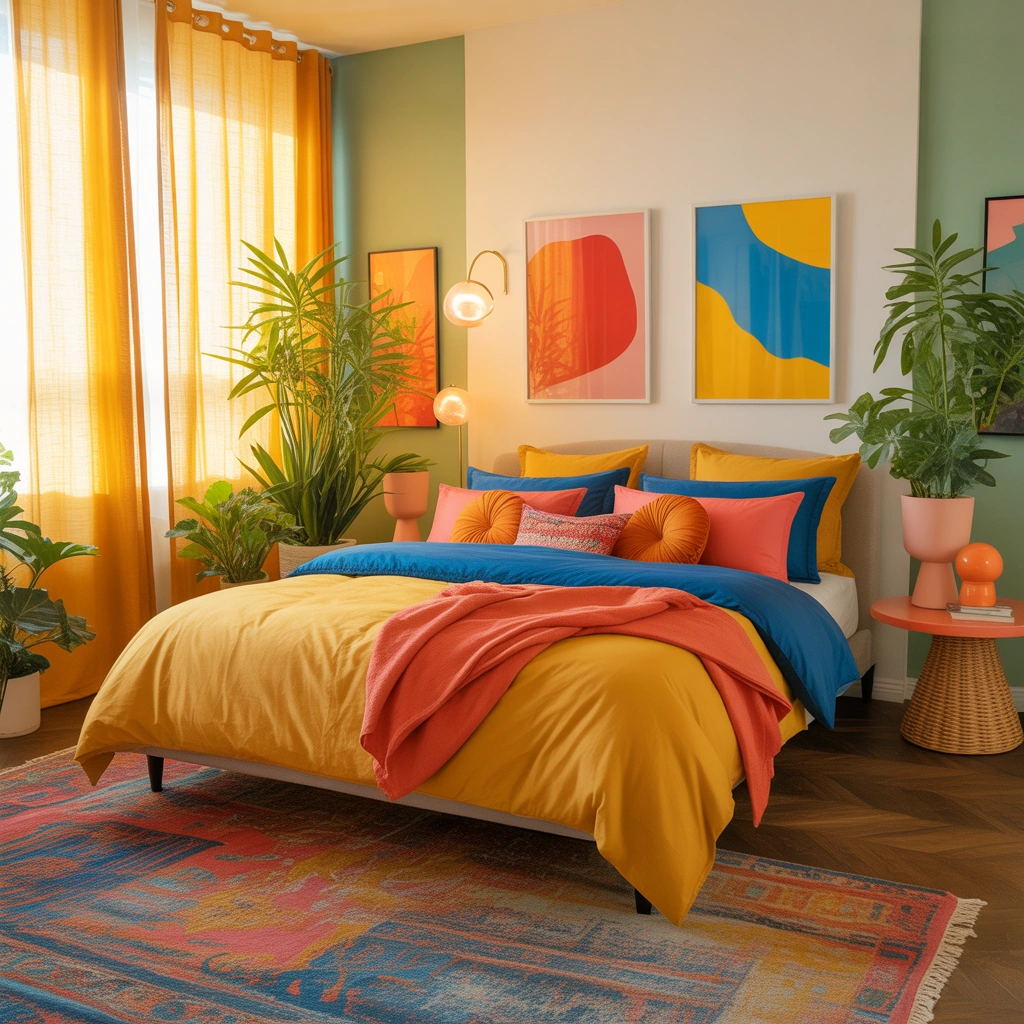
Color is usually the easiest place to begin when creating a dopamine-inspired bedroom.
Instead of choosing shades purely because they’re considered safe or timeless, think about which colors genuinely improve your mood.
Maybe you have always loved coral pink.
Perhaps cobalt blue immediately catches your attention.
Maybe warm yellow reminds you of sunshine, while emerald green makes you feel relaxed.
Your dopamine color palette doesn’t necessarily need five or six strong colors. In fact, starting with two or three main shades often makes the bedroom feel more intentional.
For example, you could combine:
- Bubblegum pink with cherry red
- Mustard yellow with cobalt blue
- Lilac with bright orange
- Mint green with soft pink
- Teal with coral
- Peach with raspberry pink
Personally, I love combining one slightly unexpected color with a more familiar shade. Pink and green, for example, feel cheerful without becoming overwhelming.
You can also use a neutral base if you are nervous about committing to lots of color. Cream walls, natural flooring, or simple white furniture can provide breathing room while colorful bedding, artwork, lamps, and accessories bring the dopamine energy.
The goal isn’t maximum color.
The goal is choosing colors that make you happy every time you walk into your bedroom.
2. Create a Bold Statement Wall
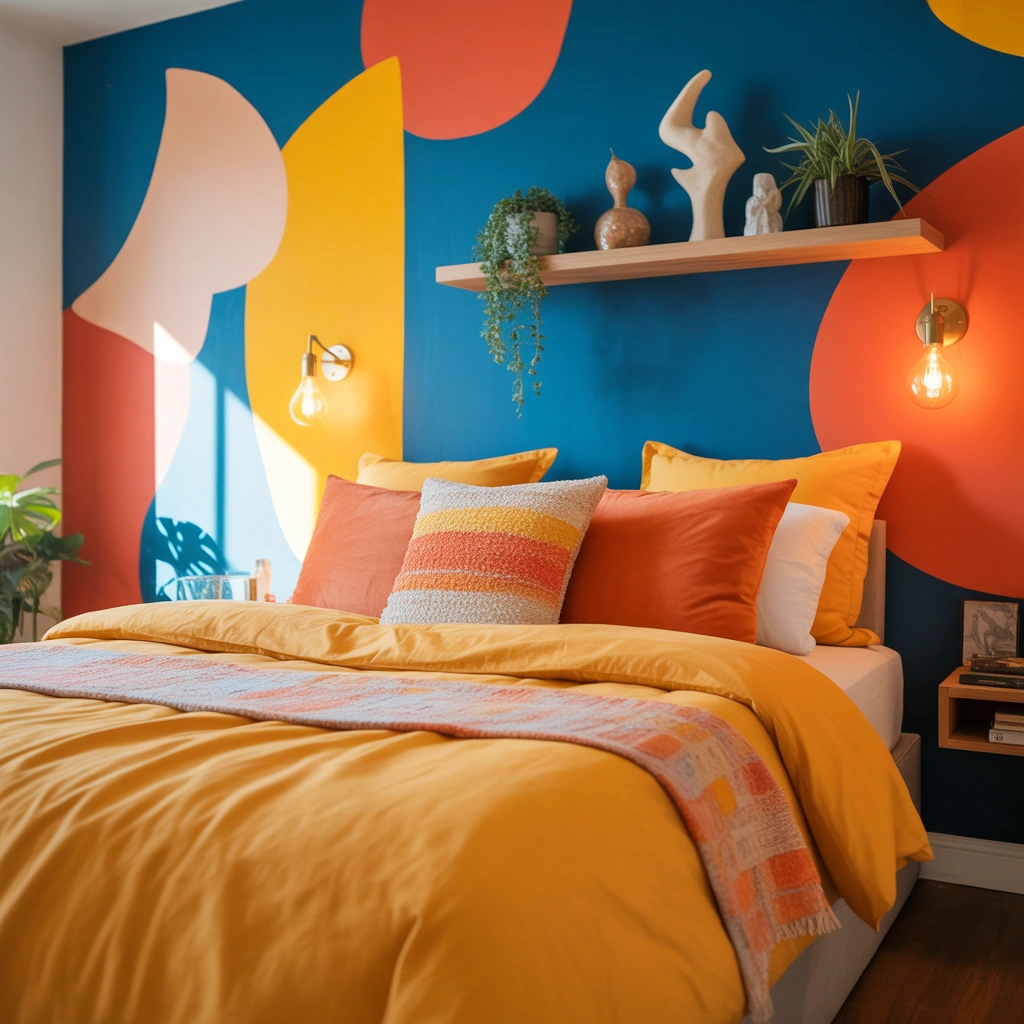
If painting an entire bedroom bright orange or electric blue feels intimidating, start with one statement wall.
A bold feature wall can instantly change the personality of a bedroom without requiring a complete makeover.
The wall behind the bed is usually the easiest place to experiment.
You could paint it a saturated shade such as raspberry pink, sunshine yellow, cobalt blue, emerald green, or terracotta orange.
Wallpaper is another wonderful option.
For a playful dopamine decor bedroom, look for designs featuring oversized flowers, abstract shapes, checkerboard prints, fruit, botanical patterns, retro swirls, or colorful geometric motifs.
I especially love wallpaper when the rest of the furniture is fairly simple because the pattern becomes almost like artwork.
Another idea is to paint arches, scallops, stripes, or wavy shapes directly onto the wall.
These designs can look particularly charming behind a headboard or around a dressing table.
If you rent your home, removable wallpaper and wall decals are great alternatives.
A statement wall gives the room an immediate focal point while allowing the rest of your dopamine decor to develop around it.
3. Layer Colorful Bedding
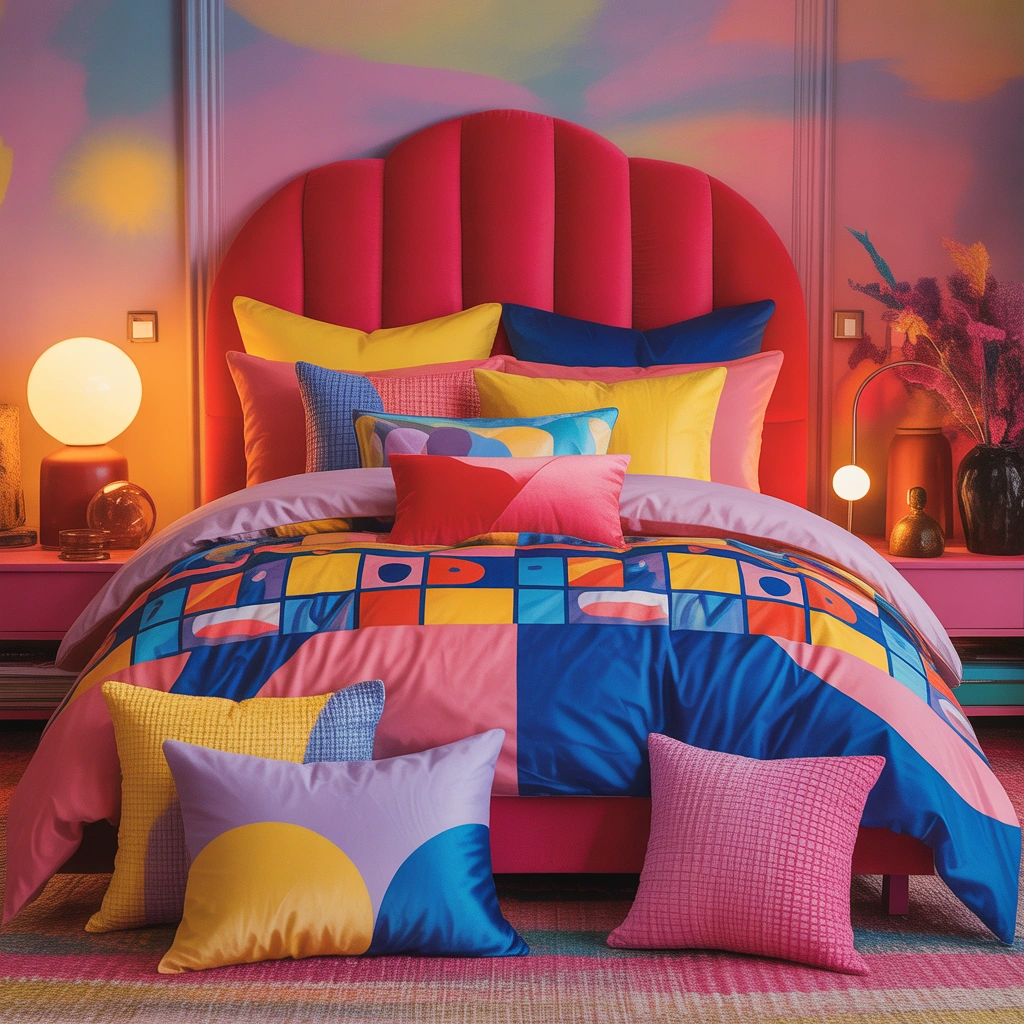
Bedding takes up so much visual space in a bedroom that changing it can completely transform the room.
This is one of my favorite dopamine decor bedroom tricks because it doesn’t involve painting walls or buying expensive furniture.
Start with a colorful duvet cover or quilt.
You could choose floral patterns, bold stripes, gingham, abstract designs, checkerboard prints, or even simple solid-colored bedding.
Then layer in contrasting pillowcases, cushions, and throws.
Don’t feel that every piece needs to match perfectly.
In fact, dopamine decor often looks better when colors and patterns feel slightly unexpected.
Imagine a lavender duvet with red-striped pillows.
Or a yellow quilt layered with pink and green cushions.
You could combine tiny florals with gingham or large stripes with playful embroidered pillows.
Texture also matters.
Try adding velvet cushions, chunky knitted throws, tufted pillows, ruffled pillowcases, quilted blankets, or soft faux-fur accents.
A layered bed feels warm, inviting, and visually interesting.
It also gives you an easy way to update your bedroom whenever your favorite colors change.
4. Introduce Playful Furniture
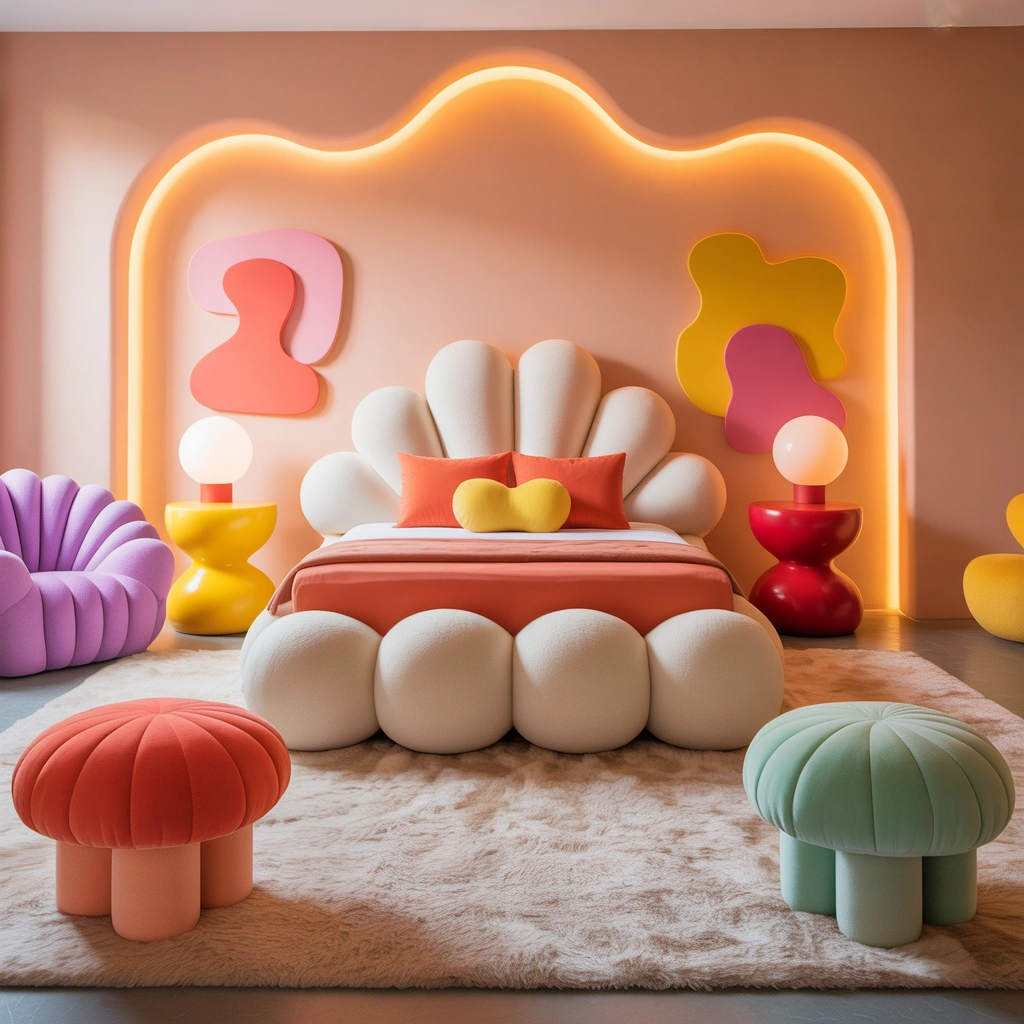
Furniture doesn’t always need to disappear quietly into the background.
In a dopamine decor bedroom, even practical pieces can become part of the decoration.
Instead of choosing another ordinary wooden bedside table, consider painting one in a vibrant shade.
A bright red, mint green, sunny yellow, or cobalt blue nightstand can completely change the room.
You could also look for:
- Curved bedside tables
- Scalloped headboards
- Colorful upholstered chairs
- Wavy mirrors
- Mushroom-shaped stools
- Vintage dressing tables
- Acrylic side tables
- Painted wooden cabinets
- Retro-inspired drawers
I particularly like mixing one quirky furniture piece with simpler surroundings.
For instance, if your bed frame and wardrobe are fairly minimal, a bright orange bedside cabinet suddenly becomes a playful focal point.
Secondhand furniture is perfect for this style because it gives you opportunities to customize pieces.
A basic vintage dresser can be painted, fitted with colorful knobs, or decorated with patterned drawer liners.
Dopamine decor isn’t about buying an entirely new bedroom set.
Sometimes one unusual chair or brightly painted nightstand brings more personality than replacing everything.
5. Build a Happy Gallery Wall
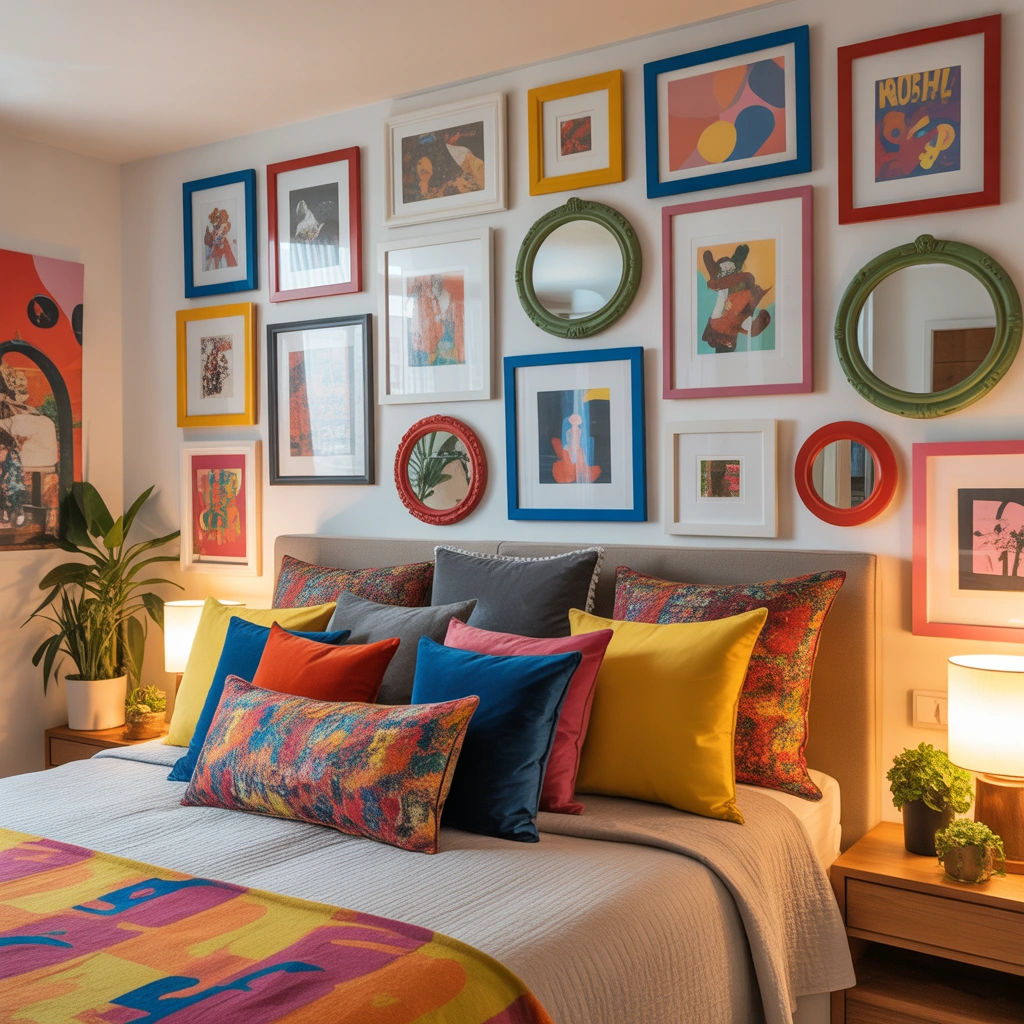
Artwork is one of the easiest ways to make a bedroom feel deeply personal.
Instead of choosing artwork because it perfectly coordinates with the curtains, choose pieces that make you smile.
A dopamine gallery wall might include colorful illustrations, vintage travel posters, photographs, typography prints, botanical artwork, postcards, concert tickets, children’s drawings, personal photos, or even small textile pieces.
I like gallery walls that feel collected over time rather than purchased as one matching set.
Different frame styles can actually add charm.
Try mixing colorful frames with natural wood, metallic finishes, and simple white frames.
You can also combine different shapes and sizes.
Place one larger piece in the center and build smaller artwork around it.
Another idea is to create a themed gallery wall.
You might focus on places you have traveled, favorite flowers, retro food illustrations, fashion photography, music, or inspirational quotes.
The important thing is that the wall tells your story.
Whenever you look at it, you should recognize something you love rather than simply seeing decoration.
6. Mix Patterns Without Overthinking Them
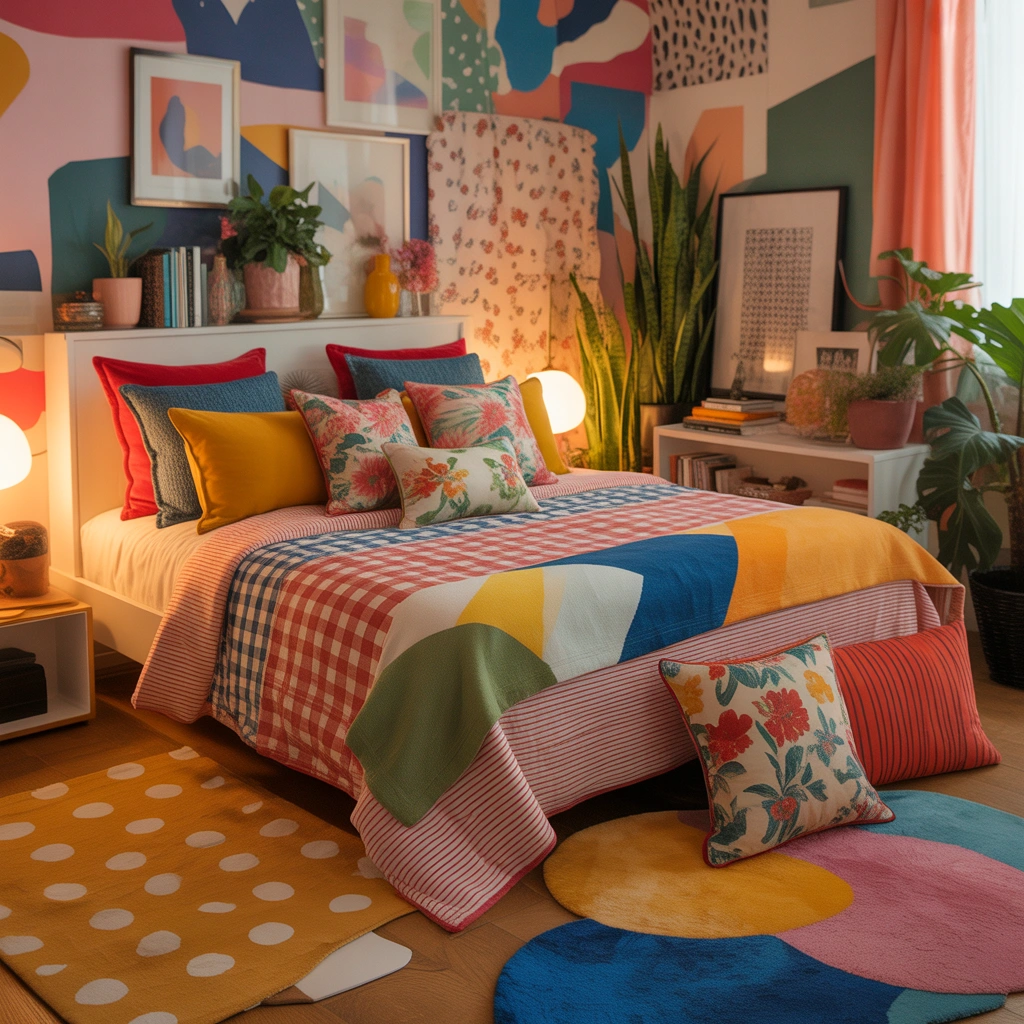
Pattern mixing is one of the defining features of dopamine decor.
And while interior design rules often encourage careful coordination, this trend gives you permission to experiment.
Stripes can sit beside florals.
Checkerboard patterns can work with wavy prints.
Gingham can mix with fruit motifs.
Abstract designs can appear alongside traditional botanical patterns.
The easiest way to keep everything feeling connected is to repeat at least one color throughout the different patterns.
For example, if your floral duvet contains red, use a red-striped pillow or red checkerboard rug nearby.
Even though the patterns are different, that repeated color creates visual consistency.
You can introduce patterns through:
- Bedding
- Curtains
- Rugs
- Wallpaper
- Cushions
- Lampshades
- Upholstery
- Storage baskets
- Artwork
I usually recommend starting with one larger pattern and then introducing smaller patterns around it.
If you have bold floral wallpaper, for instance, choose simpler striped or gingham bedding rather than adding another equally dramatic oversized pattern.
Dopamine decor should feel energetic, but your eyes still need places to rest.
7. Add Fun Lighting
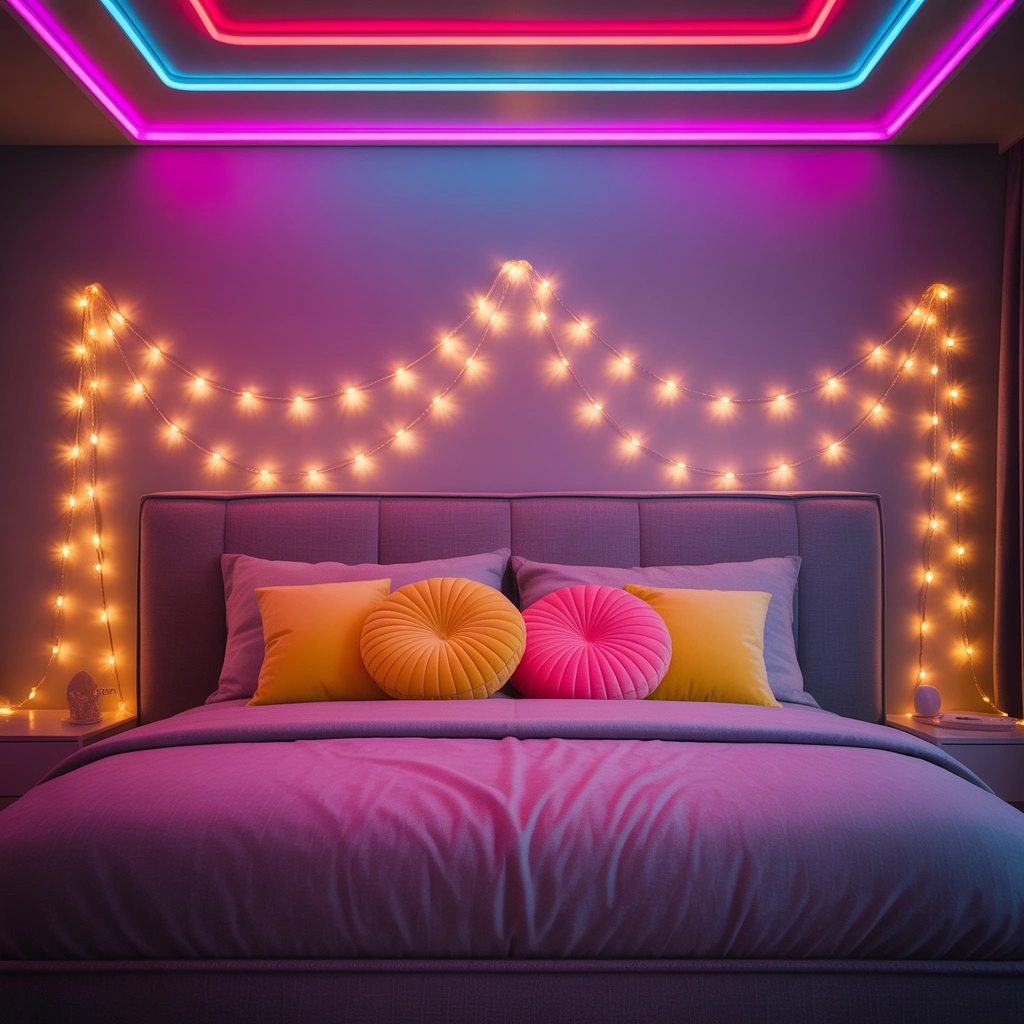
Lighting is often treated as something purely practical, but in a dopamine decor bedroom, lamps can be decorative objects too.
Instead of basic white lamps, look for pieces with interesting shapes, colorful bases, sculptural forms, or unusual shades.
I love mushroom lamps for this style because their rounded shapes instantly give a bedroom a fun retro feeling.
Other options include glass globe lamps, ceramic lamps in bright colors, floral lampshades, pleated fabric shades, neon signs, colorful pendant lights, or sculptural bedside lighting.
Even changing a plain lampshade can make a huge difference.
Try covering or replacing it with a patterned, striped, floral, or brightly colored version.
Fairy lights can also work if they are styled intentionally.
Rather than randomly hanging them around the ceiling, drape them around artwork, a headboard, or a mirror.
Warm lighting is especially important in colorful bedrooms.
It softens strong colors in the evening and creates a cozy atmosphere.
I like having at least two or three lighting sources in a bedroom: a main ceiling light, bedside lighting, and one softer ambient light.
That layered approach makes the room feel much more inviting.
8. Bring in Retro and Nostalgic Details
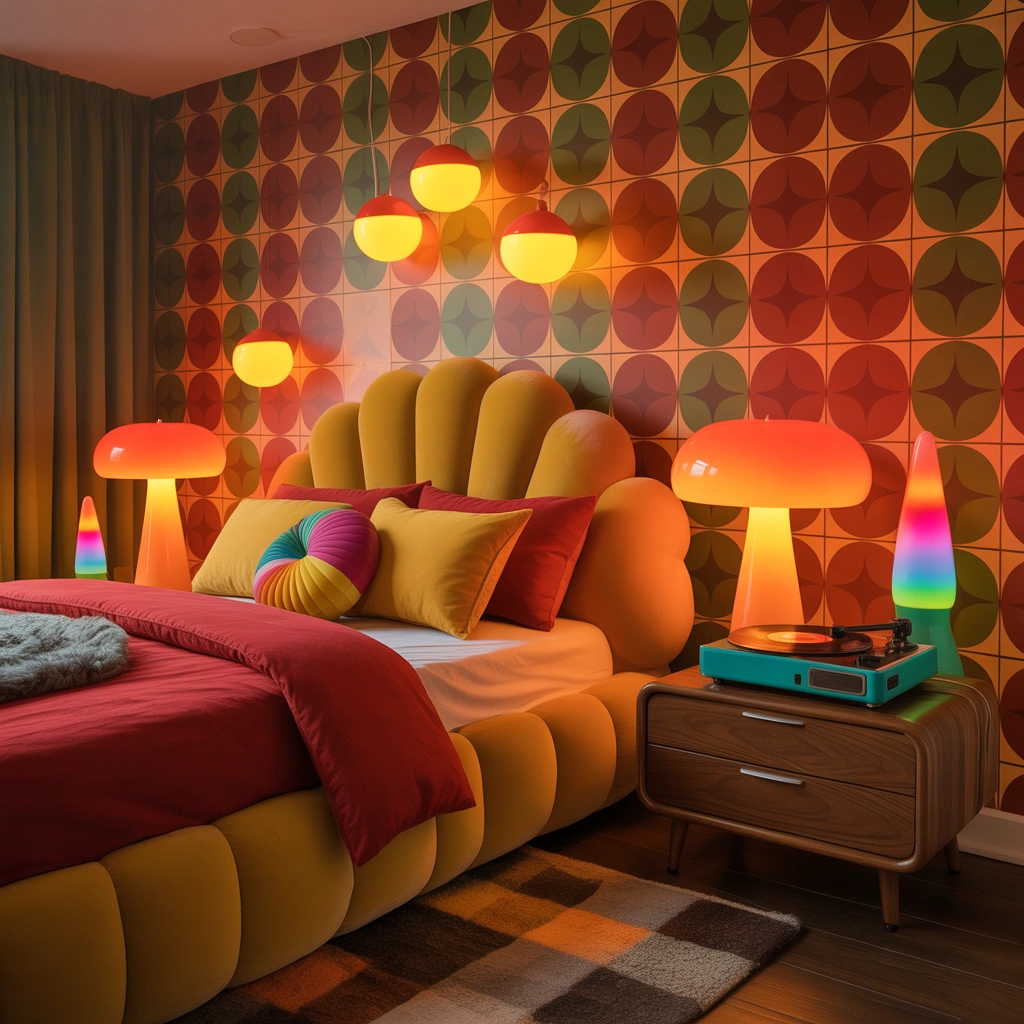
One of the most charming parts of dopamine decor is its connection with nostalgia.
Sometimes the objects that make us happiest are things that remind us of childhood, family homes, favorite decades, holidays, or past experiences.
This is where vintage and retro accessories work beautifully.
You could introduce a 1970s-style lamp, an old-fashioned alarm clock, vintage posters, colorful glassware, retro floral bedding, framed records, a rotary-style telephone, or secondhand furniture.
You don’t need to recreate an entire decade.
Small nostalgic details are usually enough.
For example, a modern bedroom with a vintage floral lamp and retro checkerboard rug can feel far more interesting than a room where every object follows the same contemporary style.
Sentimental items work too.
Display souvenirs from holidays, old photographs, handwritten cards, favorite books, childhood keepsakes, or family objects.
I think this is where dopamine decor becomes genuinely meaningful.
A colorful vase is nice.
But a colorful vase you found while traveling somewhere special can make you smile every time you see it.
9. Use a Statement Rug to Anchor the Bedroom
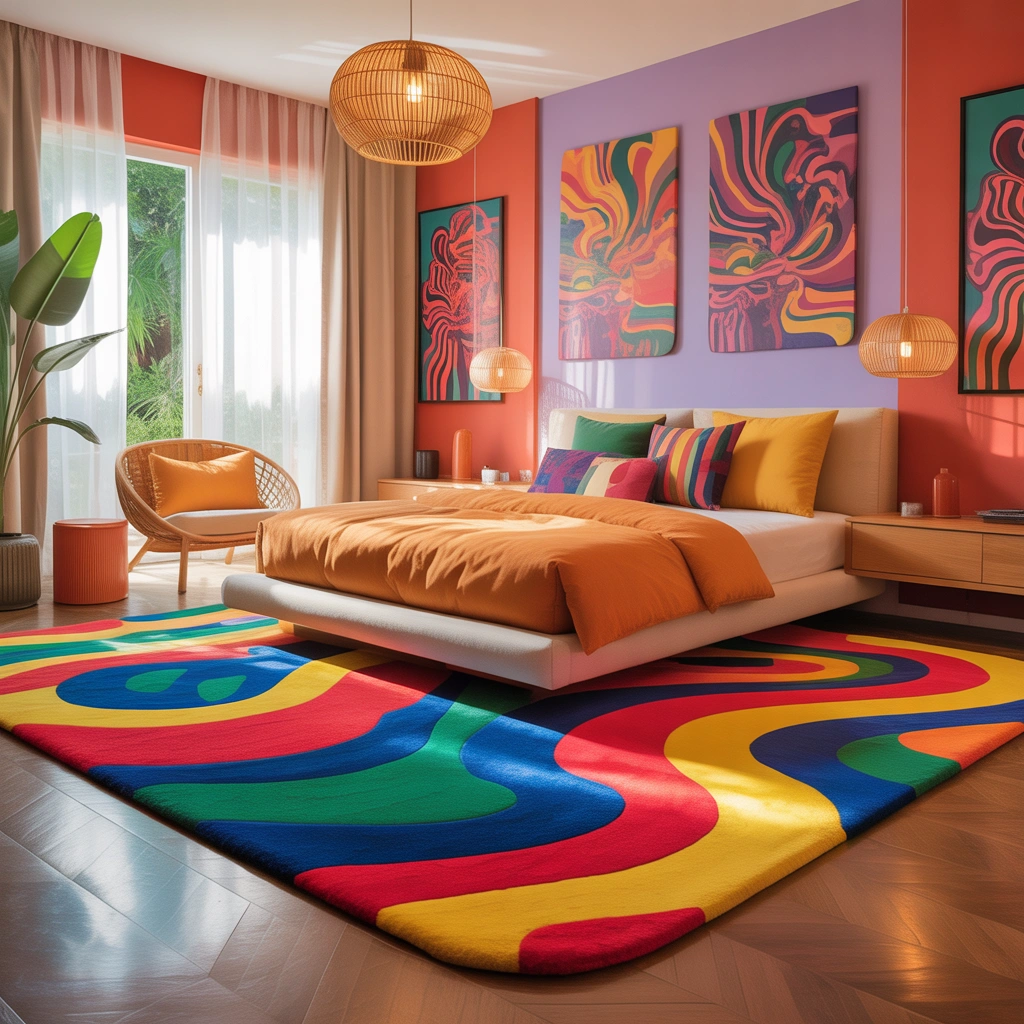
If your bedroom feels unfinished, a rug might be the missing piece.
A statement rug can tie together several different colors while introducing pattern and softness.
For dopamine decor bedrooms, I love rugs with bold geometric designs, checkerboard patterns, colorful stripes, abstract shapes, floral motifs, or wavy patterns.
Even a small bedside rug can make an impact.
If you have neutral flooring, a colorful rug creates an immediate contrast.
If your bedroom already contains several strong patterns, choose a simpler rug in one vibrant color.
Size is important.
A tiny rug floating awkwardly in the middle of a large bedroom can make the space feel disconnected.
Ideally, a larger rug should extend underneath the bed with enough material visible around the sides and foot of the bed.
For smaller rooms, two matching or coordinating bedside rugs can work beautifully.
Besides adding color, rugs introduce physical comfort.
Stepping onto something soft in the morning makes a bedroom feel instantly more welcoming.
10. Display Collections Instead of Hiding Everything
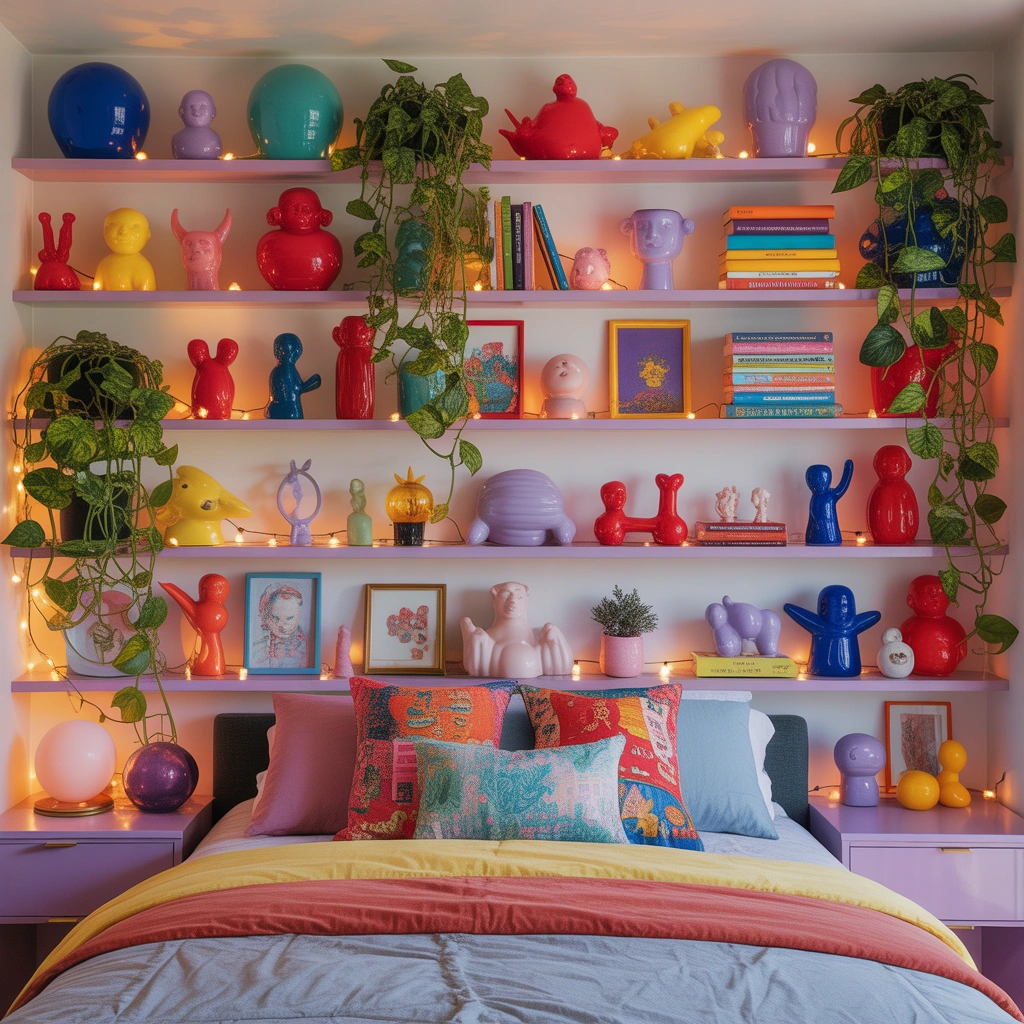
Minimalist interiors often encourage us to hide possessions behind closed doors.
Dopamine decor takes almost the opposite approach.
If you own objects you genuinely love, display them.
Your favorite books could become part of a colorful bedside arrangement.
Perfume bottles can be displayed on a decorative tray.
Jewelry can hang from an artistic wall organizer.
Small ceramic pieces, candles, framed photographs, vinyl records, miniature artwork, or travel souvenirs can sit on shelves.
The important thing is to create intentional displays rather than random clutter.
I like grouping objects in small collections.
For example, place three colorful vases together instead of spreading them across the entire bedroom.
Stack several books and place a decorative object on top.
Arrange perfume bottles on one tray rather than scattering them across the dressing table.
Open shelving works especially well for dopamine decor because it gives you space to constantly rearrange and refresh your favorite objects.
Your possessions become part of your interior design story.
11. Decorate With Unexpected Shapes
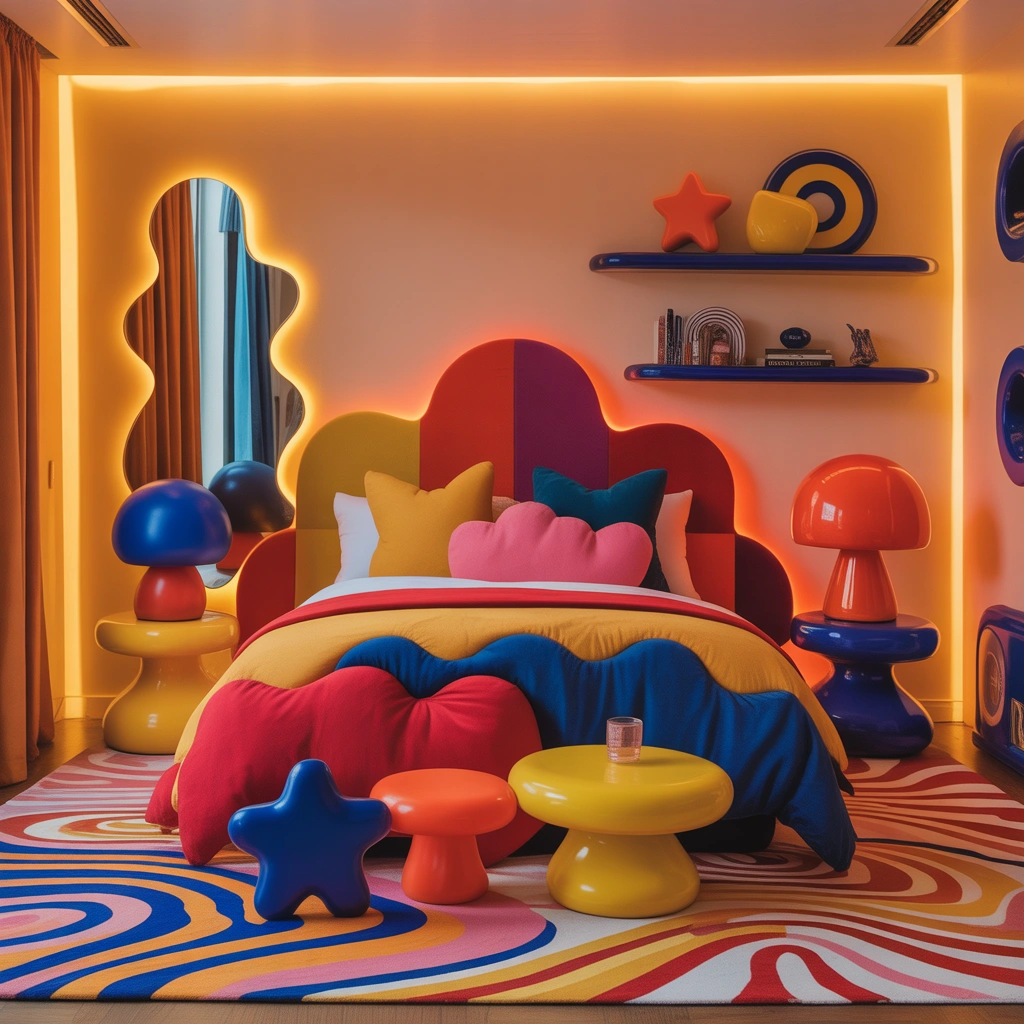
Dopamine decor isn’t only about color.
Shape can add just as much personality.
Curves, scallops, arches, waves, flowers, clouds, hearts, and organic forms make interiors feel playful and less predictable.
Instead of a standard rectangular mirror, choose one with a wavy frame.
Replace ordinary cushions with flower-shaped or heart-shaped versions.
Try a scalloped bedside table, cloud shelf, rounded headboard, or curvy lamp.
You can even introduce playful shapes through smaller accessories such as trays, candleholders, hooks, rugs, and picture frames.
Personally, I think curved shapes are especially helpful when you are using lots of strong colors.
They soften the visual energy and keep the room from feeling harsh.
You don’t need every object to have an unusual silhouette.
One or two statement pieces can be enough.
A large wavy mirror above a dresser, for instance, can give a simple bedroom an entirely different personality.
12. Finish With Personal Details That Make You Happy
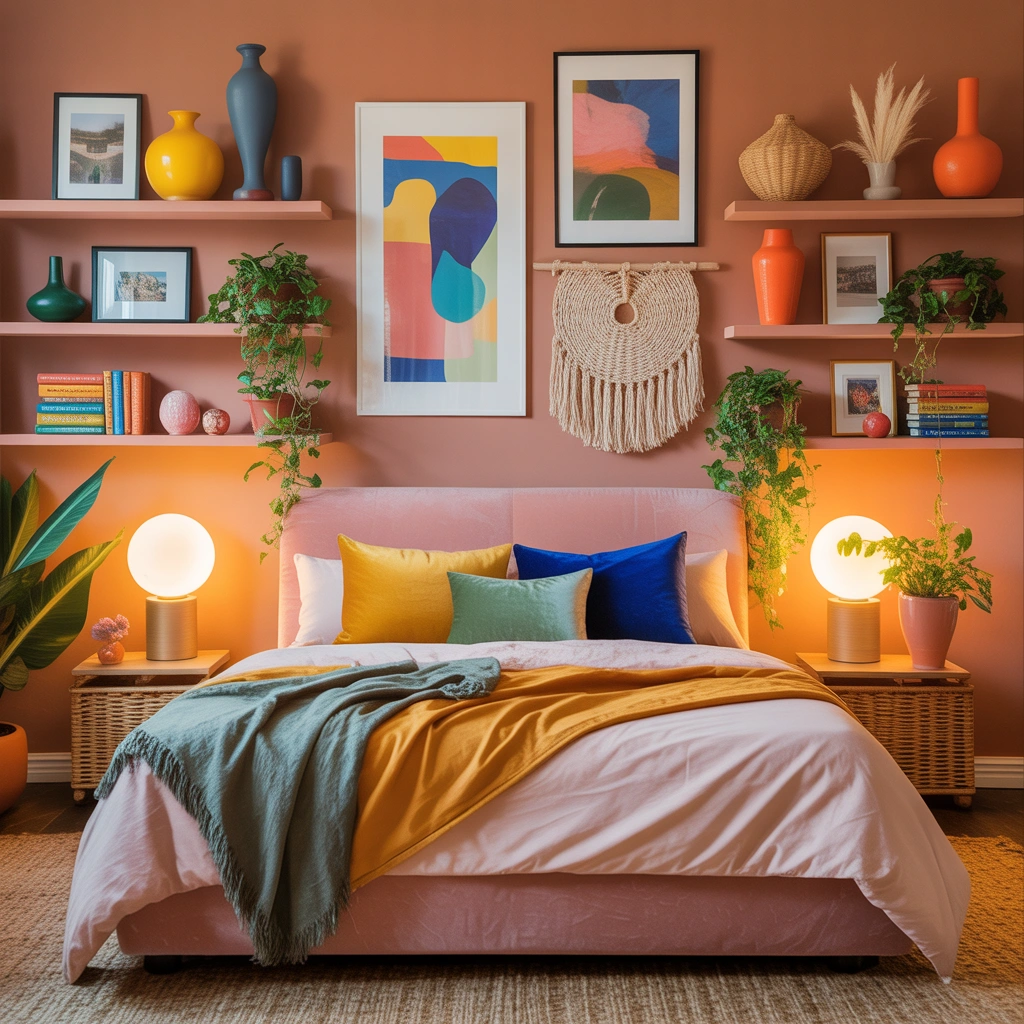
The final step in creating a dopamine decor bedroom is probably the most important: make it yours.
Interior trends can give you inspiration, but your bedroom shouldn’t look like an exact copy of someone else’s social media post.
Think about the small things that genuinely improve your mood.
Maybe you love fresh flowers beside your bed.
Perhaps you enjoy waking up and seeing photographs of friends and family.
Maybe your favorite novels deserve their own shelf.
You might love candles, colorful ceramics, art supplies, plants, vinyl records, fashion books, postcards, or handmade objects.
Display them.
You can also decorate with items connected to your hobbies.
If you love music, display album artwork.
If you paint, lean a few canvases against the wall.
If you travel, frame postcards or maps.
If you love fashion, display colorful accessories instead of hiding all of them.
Dopamine decorating works best when your bedroom feels like a visual representation of your personality.
It doesn’t need to impress everyone else.
It needs to make you happy.
How to Create Dopamine Decor Without Making Your Bedroom Feel Cluttered
One concern people often have about dopamine decor is that the bedroom will become visually overwhelming.
It can happen, but it is surprisingly easy to avoid.
The first trick is to create intentional breathing room.
If one wall features bold wallpaper, another wall can remain relatively simple.
If your bedding contains several patterns, keep the headboard fairly straightforward.
If your shelves display colorful collections, leave some empty space between groups of objects.
Repeating colors also helps.
Even if your bedroom contains many different patterns and decorative pieces, repeating three or four key colors makes everything feel connected.
Another strategy is to vary visual intensity.
Not every item needs to shout.
You can combine vivid pieces with softer versions of the same colors.
For example, bright red accents might be balanced with dusty pink bedding and cream walls.
Finally, keep practical clutter under control.
Dopamine decor celebrates visible personality, not piles of random belongings.
Use baskets, drawers, under-bed storage, and closed cabinets for everyday items that don’t add anything visually.
Dopamine Decor Bedroom Ideas for Small Spaces
You don’t need a huge bedroom to embrace this trend.
In fact, small bedrooms can look incredible with dopamine decor because even one colorful change has a noticeable impact.
If space is limited, use vertical surfaces.
Hang artwork, decorative shelves, mirrors, and wall-mounted lighting instead of filling the floor with furniture.
Bedding is another easy opportunity because it doesn’t take up additional space.
A colorful duvet, patterned pillows, and vibrant throw can create almost the entire look.
Choose one or two statement accessories rather than filling every surface.
A playful lamp, colorful mirror, and small gallery wall might be all you need.
Mirrors can help reflect both natural light and color, making a small room feel brighter.
You can also paint the inside of shelves or wardrobes with unexpected colors for a subtle dopamine effect.
Small spaces don’t require less personality.
They simply benefit from slightly more editing.
How to Create a Dopamine Decor Bedroom on a Budget
Dopamine decorating doesn’t need to involve expensive designer furniture.
Actually, I think this style works especially well when you mix affordable, secondhand, handmade, and existing pieces.
Start by shopping your own home.
Move artwork from another room.
Reuse colorful books as decorative objects.
Bring in a vase, lamp, mirror, or cushion that has been sitting somewhere unnoticed.
Next, try simple DIY projects.
Paint old furniture.
Change drawer knobs.
Create your own artwork.
Make cushion covers from patterned fabric.
Paint picture frames.
Add removable wall decals.
Decorate inexpensive lampshades with trim or fabric.
Secondhand shops and flea markets can also be amazing places to find unusual accessories.
Because dopamine decor doesn’t rely on perfectly matching furniture, secondhand pieces often fit naturally into the look.
Focus your budget on things that create the biggest visual changes: bedding, paint, lighting, rugs, and artwork.
What Colors Work Best for Dopamine Decor?
There is no official dopamine color palette.
The best colors are the ones that make you feel good.
Still, some shades appear frequently in dopamine-inspired interiors because they naturally create strong visual energy.
Pink is especially popular, ranging from pale blush to vivid magenta.
Yellow adds warmth and optimism.
Orange creates a retro, energetic feeling.
Green can feel refreshing and natural.
Blue provides contrast and can help balance warmer colors.
Purple adds a playful, slightly unexpected element.
Red works beautifully in smaller doses when you want something dramatic.
Pastels can also be used.
A dopamine bedroom doesn’t need to rely entirely on saturated colors. Pastel pink, butter yellow, mint green, lavender, peach, and powder blue can create a softer version of the trend.
The key is emotional connection rather than following a fixed palette.
Final Thoughts on Creating a Dopamine Decor Bedroom
What I love most about a dopamine decor bedroom is the freedom it gives you.
You don’t have to choose between one perfectly defined interior style.
Your bedroom can contain a vintage lamp beside a modern table, floral bedding underneath abstract artwork, a bright pink cushion beside a green velvet chair, and sentimental objects collected over many years.
If those things make you happy together, they belong together.
Start slowly if you’re unsure.
Change your bedding.
Add one colorful lamp.
Paint a bedside table.
Hang artwork you actually love.
Introduce a playful rug or patterned cushion.
Then live with the room for a while and notice which elements make you smile.
The best dopamine bedrooms aren’t created by following a strict decorating formula. They’re built gradually through personal choices.
So instead of asking whether a certain color, print, or accessory is fashionable enough, ask a much simpler question:
Does seeing this make me happy?
If the answer is yes, you are already on the right path to creating a bedroom filled with color, comfort, character, and genuine joy.
