
A beautiful outdoor space is not only about comfortable furniture, colorful flowers, or a perfectly arranged patio. The walls surrounding your garden, balcony, porch, or backyard also have a major effect on the overall atmosphere.
A large, empty exterior wall can make even a thoughtfully furnished area feel unfinished. On the other hand, the right outdoor wall decor can instantly introduce warmth, personality, color, texture, and visual interest.
I used to think of outdoor walls as simple backgrounds. I focused on plants, chairs, lighting, rugs, and accessories but rarely paid attention to the vertical surfaces around them. Once I began treating those walls as an important part of the design, the entire area started to feel more complete.
A simple mirror made a narrow patio appear larger. A few trailing plants softened a hard brick wall, while decorative lights made the seating area feel inviting after sunset. These were not necessarily expensive changes, but they made a noticeable difference.
The good news is that decorating an exterior wall does not require a huge budget or professional design experience. You can create an attractive outdoor feature wall using plants, reclaimed wood, metal art, paint, lighting, baskets, tiles, or even practical storage.
The right choice will depend on the size of your space, your local weather, your decorating style, and the amount of maintenance you are comfortable handling.
Here are 15 outdoor wall decor ideas that can help you turn an empty wall into one of the most beautiful features of your outdoor space.
1. Create a Living Wall With Vertical Plants
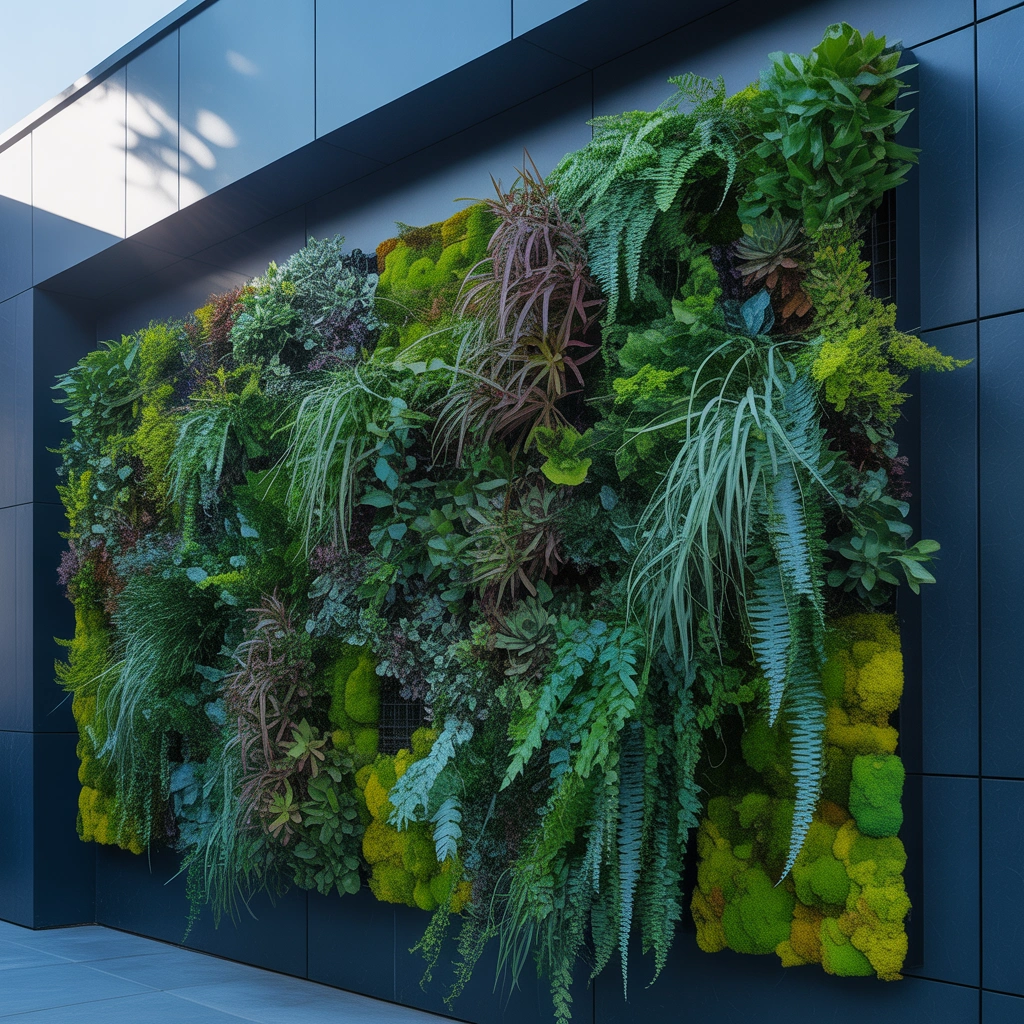
A living wall is one of my favorite outdoor wall decor ideas because it brings immediate color, texture, and life to an otherwise plain surface. Instead of placing every plant on the ground, you use the wall itself as a vertical garden.
You can create this look with wall-mounted pots, modular planting pockets, wooden crates, hanging baskets, or a metal grid fitted with small containers. The final design can be as simple or dramatic as you like.
A small arrangement of six herb pots can look beautiful on a compact balcony. In a larger backyard, an entire wall covered with ferns, flowering plants, ornamental grasses, and trailing vines can become the main attraction.
Before choosing plants, pay attention to how much sunlight the wall receives throughout the day. Succulents, lavender, rosemary, and many ornamental grasses are usually suitable for sunny areas. Ferns, ivy, and other shade-loving foliage plants may be better for walls that receive limited direct sunlight.
It is also important to think about watering. Wall-mounted containers can dry out faster than garden beds, especially during warm or windy weather. Make sure every planter has suitable drainage, and place the containers where you can water them without difficulty.
For a neat and modern appearance, use matching planters and repeat the same plant varieties. For a relaxed cottage-style effect, combine different pot shapes, leaf textures, and flower colors.
I personally love mixing upright plants with trailing varieties. The hanging foliage helps hide the planters and gives the arrangement a fuller, more natural appearance.
A living wall is especially useful in small outdoor spaces because it allows you to enjoy more greenery without taking up valuable floor space. It can also soften the appearance of brick, concrete, stone, and fencing, making your outdoor area feel calmer and more connected to nature.
2. Hang Weather-Resistant Metal Wall Art
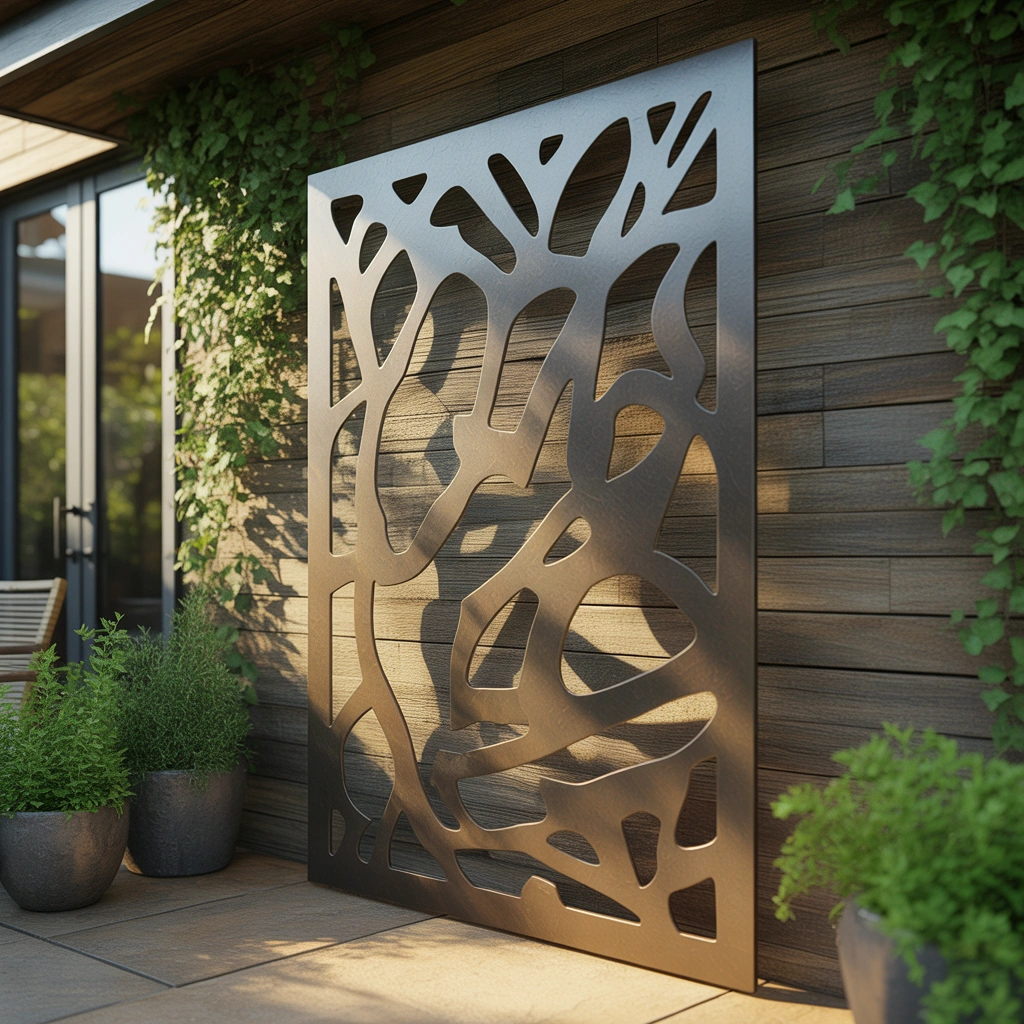
Metal artwork is a reliable option when you want outdoor wall decor that looks stylish but does not require constant attention. It is available in countless designs, including flowers, leaves, birds, butterflies, sunbursts, abstract shapes, geometric panels, and sculptural pieces.
The type of metal and its finish are important. Powder-coated steel, galvanized metal, aluminum, and properly sealed iron are generally more suitable for outdoor conditions than untreated materials.
Some metal pieces are intentionally designed to develop a weathered or rusted finish. This natural aging can look beautiful in rustic, farmhouse, industrial, and country-style spaces. However, when you want the artwork to retain its original appearance, choose a weather-resistant coating and inspect it occasionally for scratches or signs of corrosion.
Scale is another important consideration. A tiny piece of artwork can disappear on a large wall, while an oversized decoration may overwhelm a narrow balcony.
Before buying anything, measure your wall and use painter’s tape to mark the approximate dimensions of the artwork. This simple step can help you understand how the piece will look before you drill holes or install mounting hardware.
One large metal sculpture can create a strong focal point above an outdoor sofa, dining table, or bench. A collection of smaller pieces can create movement across a long wall.
For example, several metal birds can be arranged to look as though they are flying across the surface. Botanical metal panels can create a sophisticated outdoor gallery, while a large sun-shaped sculpture can add warmth to a Mediterranean-style patio.
Metal wall art also works beautifully with outdoor lighting. A spotlight positioned above or below a sculptural piece can produce interesting shadows after dark, giving your wall a completely different appearance at night.
3. Add an Outdoor Mirror to Reflect Light
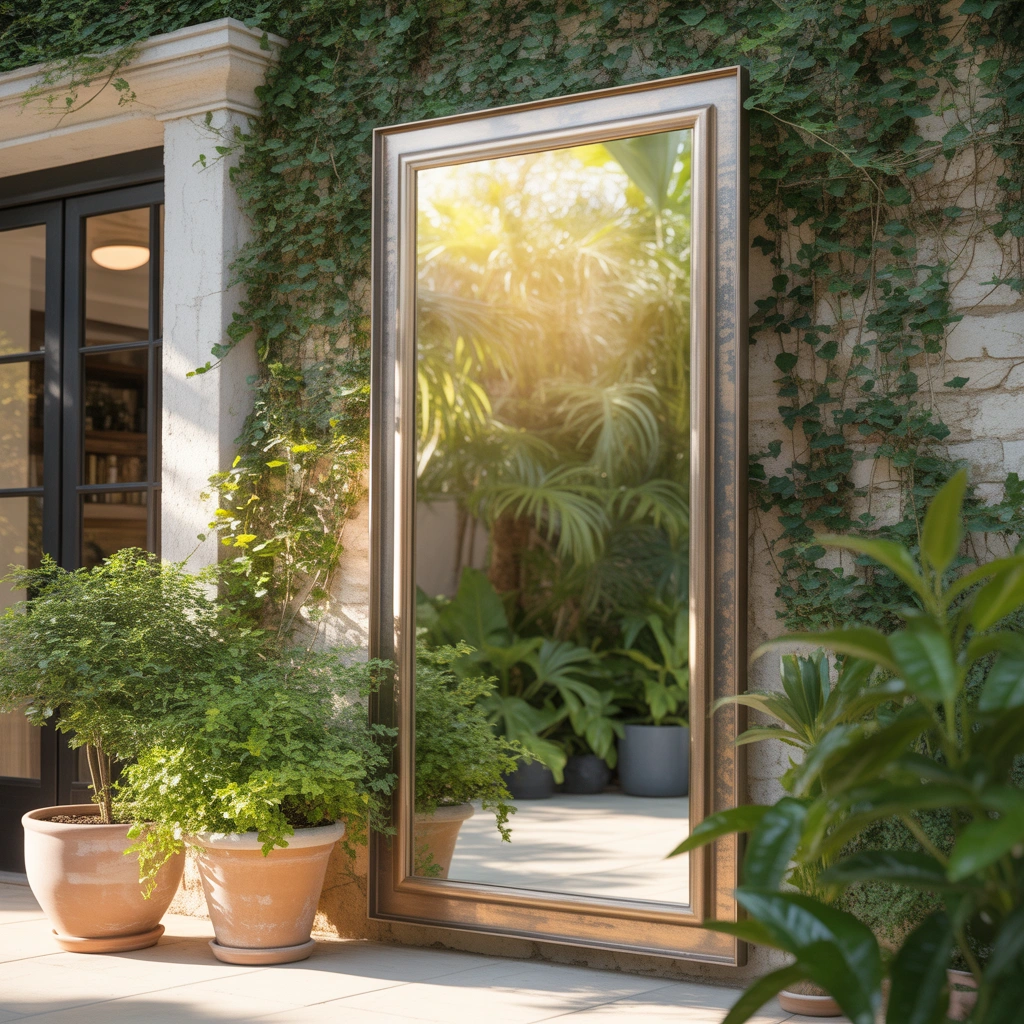
An outdoor mirror can make a small patio, balcony, or courtyard feel larger and brighter. It reflects plants, sky, lighting, and surrounding colors, creating the impression of additional space and depth.
For exterior use, choose a mirror with a weather-resistant frame and a backing designed to tolerate moisture. Frames made from sealed wood, powder-coated metal, resin, or durable plastic are often more practical than delicate indoor frames.
Whenever possible, place the mirror in a somewhat protected area, such as beneath a covered patio or porch roof. This can reduce direct exposure to rain, harsh sunlight, and changing weather conditions.
The shape of the mirror can support the overall style of your outdoor space. An arched mirror can resemble a garden window and introduce architectural character. A round mirror creates a soft, modern focal point, while a grid-style mirror can imitate a traditional window.
Placement is important for both appearance and safety. Position the mirror so that it reflects greenery, flowers, a fountain, or an attractive seating area rather than a storage corner or an unattractive neighboring wall.
You should also avoid placing it where reflected sunlight may create uncomfortable glare or excessive heat.
One of the best ways to make an outdoor mirror feel like a natural part of the garden is to surround it with climbing plants, lanterns, or wall-mounted planters. As the greenery grows, it can frame the mirror and make it look like a hidden opening into another part of the garden.
This is a particularly effective patio wall decor idea for narrow or enclosed areas that feel dark or restricted.
4. Display a Collection of Decorative Baskets
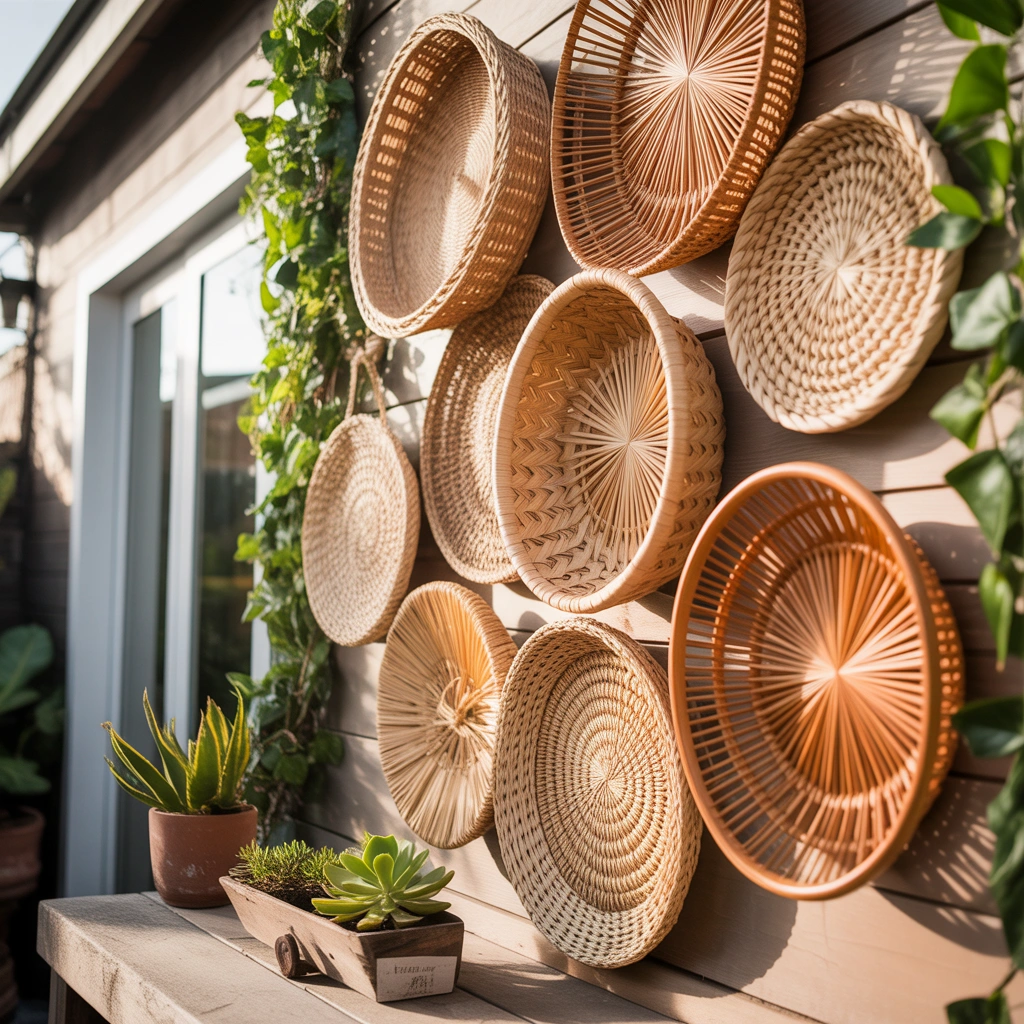
Decorative baskets are normally associated with indoor spaces, but weather-friendly woven pieces can also add warmth and texture to outdoor walls.
This idea works especially well on covered porches, sheltered balconies, and protected patios where the baskets will not be exposed to constant rain.
Look for pieces made from synthetic rattan, resin wicker, treated bamboo, metal wire, or sealed natural fibers. Natural materials may fade or weaken when left outdoors, so they are more suitable for protected locations.
A basket wall looks most interesting when the pieces vary in size, pattern, and texture but share a similar color palette. You could combine shallow trays, woven plates, and small round baskets in shades of tan, cream, black, brown, or terracotta.
Before hanging the baskets, arrange them on the ground. Begin with the largest piece slightly away from the center and position smaller baskets around it. Leave some breathing room between them so that the display does not feel crowded.
Once you are satisfied with the layout, take a photograph. You can refer to the picture while transferring the arrangement to the wall.
Decorative baskets give an outdoor area a relaxed, handmade appearance. They pair especially well with wooden furniture, clay pots, linen cushions, outdoor rugs, and natural greenery.
To make the display feel more personal, include a few baskets collected during travels or purchased from local craftspeople. A wall arrangement becomes much more meaningful when the pieces have individual stories behind them.
5. Install a Decorative Trellis
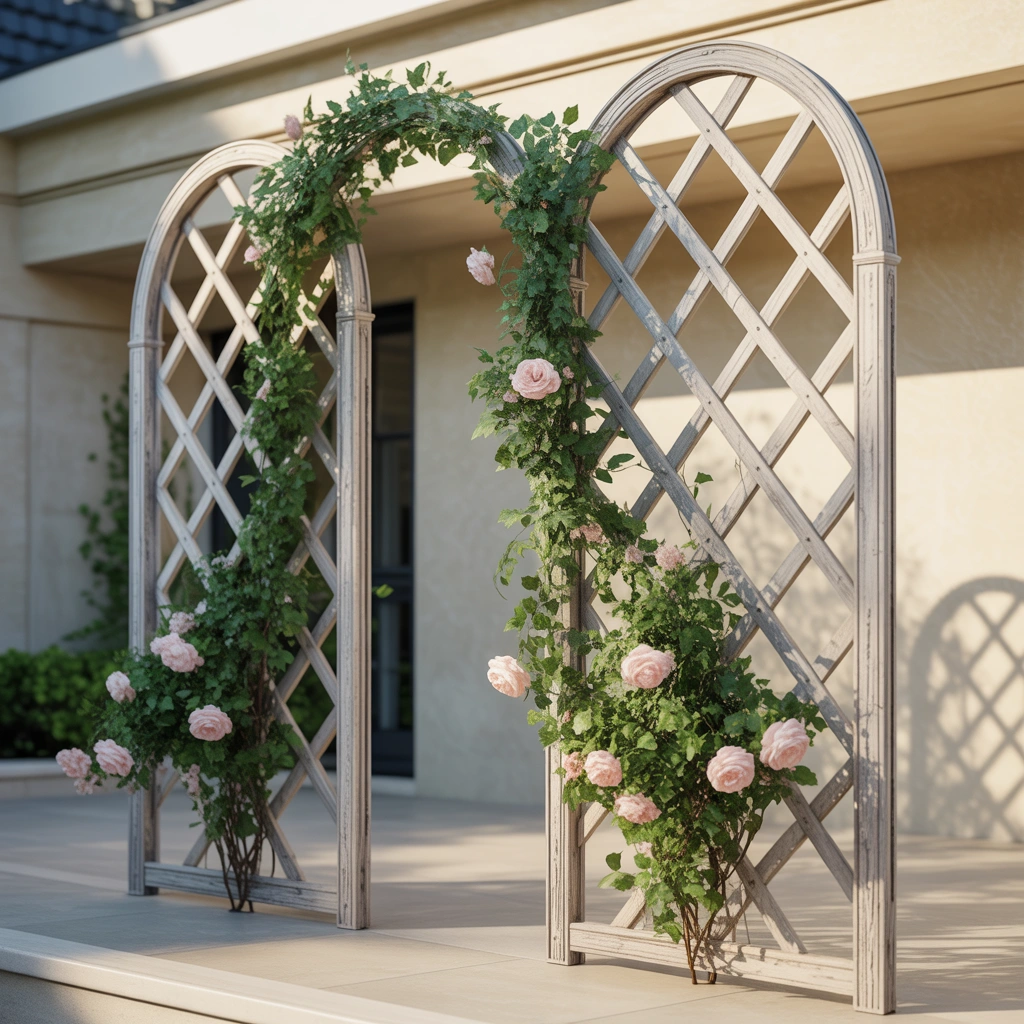
A trellis is both practical and decorative. It adds structure to a blank outdoor wall while providing climbing plants with the support they need to grow vertically.
Traditional wooden lattice creates a classic garden appearance, while a black metal grid can feel more modern and minimalist. You can also find decorative trellises shaped like arches, branches, fans, leaves, or geometric patterns.
Even before plants cover them, these structures can function as attractive exterior wall art.
Climbing roses, jasmine, clematis, honeysuckle, bougainvillea, and ivy can all produce beautiful effects. However, the right plant will depend on your climate, available sunlight, wall material, and desired level of maintenance.
Some climbing plants require regular tying and pruning, while others naturally attach themselves to nearby surfaces. Before planting, check whether a particular species could damage masonry, paint, siding, or roofing.
Leave a small gap between the trellis and the wall. This improves air circulation, gives the plants room to grow, and makes maintenance easier.
The trellis should also be attached securely. A structure that seems lightweight at the beginning can become surprisingly heavy once it is covered with mature vines, leaves, and flowers.
I love the way a planted trellis changes throughout the year. It may begin as a simple architectural pattern, become covered with green foliage and flowers during the growing season, and reveal its shape again after pruning.
This natural transformation keeps the wall visually interesting without requiring you to replace the decor every season.
6. Use Outdoor String Lights as Wall Decor
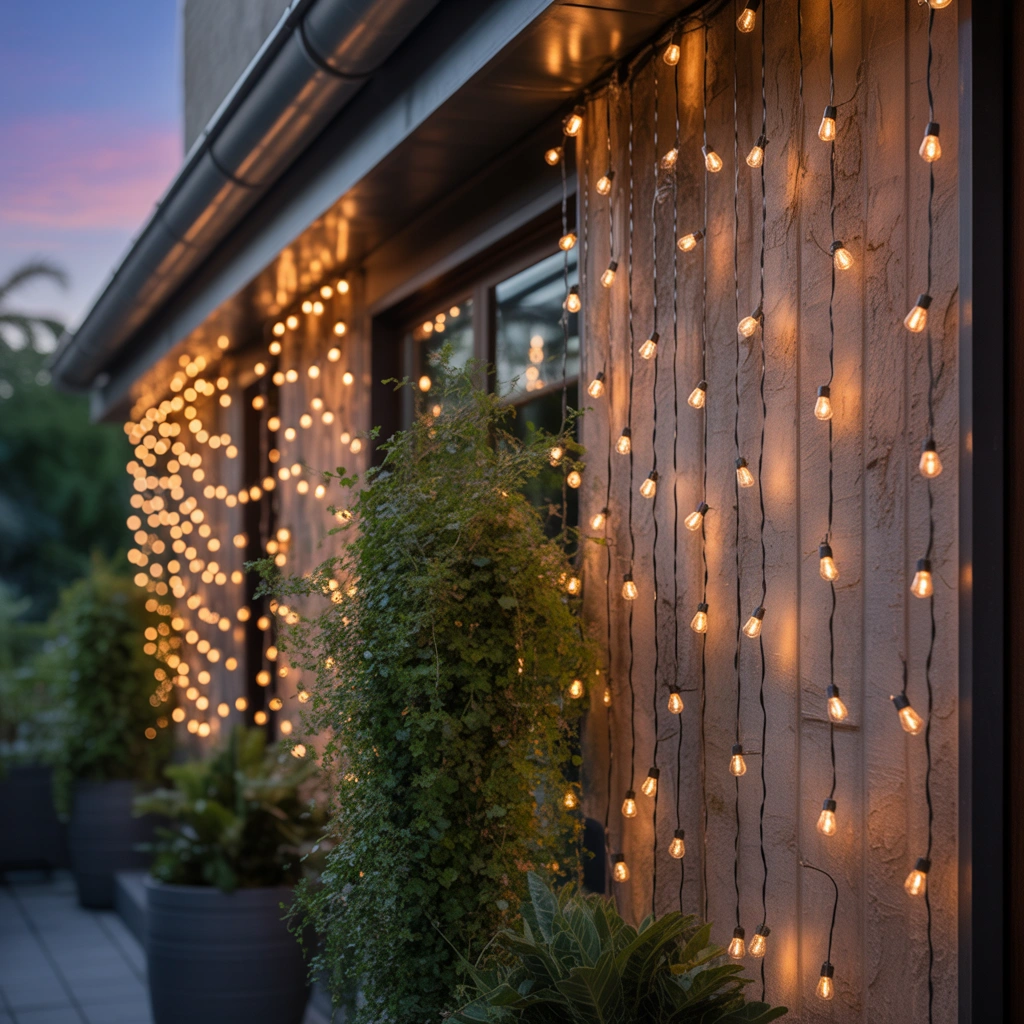
String lights do more than illuminate an outdoor area. When arranged carefully, they become decorative features that bring warmth, atmosphere, and a sense of intimacy to a wall.
You can hang them in straight horizontal rows, arrange them in a gentle zigzag pattern, outline an architectural feature, or drape them outward from a central point.
Small warm-toned bulbs usually create a cozy atmosphere, while larger café-style bulbs give a patio a festive and social feeling.
Always choose lights specifically rated for outdoor use. Use suitable exterior hooks or cable clips rather than nails or sharp fasteners that could damage the wire.
When an electrical outlet is not available, solar-powered or rechargeable lights may offer a practical alternative. Check how much direct sunlight a solar panel needs and how long the lights are expected to operate after charging.
For a layered design, combine string lights with vines, trellises, artwork, or hanging planters. During the daytime, the other decorations will keep the wall interesting. After sunset, the lights become the main feature.
One of the easiest ways to make an outdoor seating area feel finished is to include lighting at or slightly above eye level. A single overhead light can sometimes feel harsh, but lights placed along a wall create a softer glow.
This is also one of the most affordable outdoor wall decor ideas. Even a simple arrangement of lights can make a basic patio feel like a welcoming outdoor café.
7. Paint a Bold Outdoor Mural
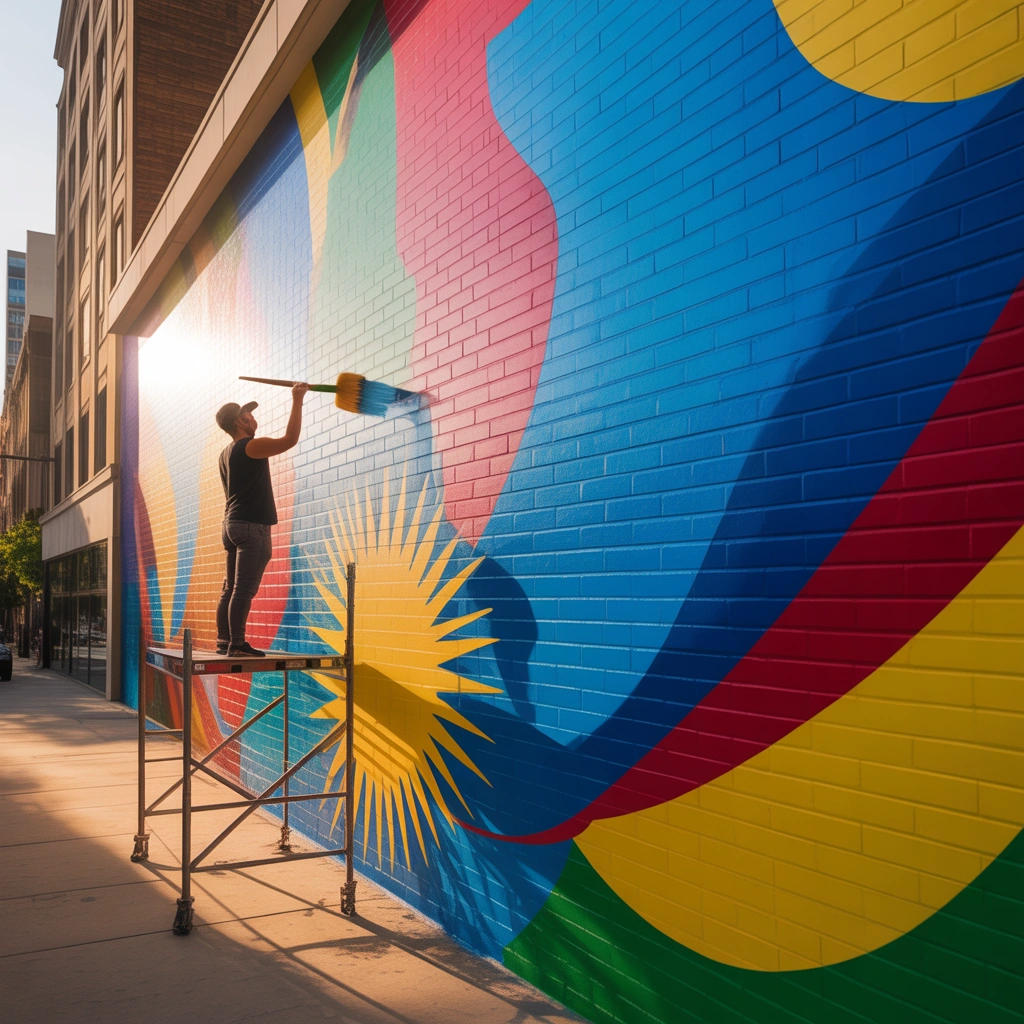
A mural can transform an ordinary exterior wall into a genuine statement piece. It is particularly effective on concrete walls, garden boundaries, sheds, fences, and enclosed courtyards.
Your mural does not need to be extremely detailed. Simple arches, botanical silhouettes, large leaves, color blocks, abstract shapes, or geometric patterns can be easier to paint than a complicated landscape.
Using a limited color palette often produces a more polished result and makes the mural easier to coordinate with your furniture, planters, rugs, and cushions.
Proper preparation is essential. Clean the wall thoroughly, remove loose paint, repair visible cracks, and use a suitable exterior primer when necessary. Select paint made for outdoor surfaces so the design can better tolerate sunlight, moisture, and temperature changes.
When drawing freehand feels intimidating, use a stencil, grid, projector, or painter’s tape. Geometric patterns are especially beginner-friendly because the lines can be planned in advance and small mistakes are easier to correct.
Botanical silhouettes are another good choice because they naturally relate to the surrounding plants and garden.
When choosing colors, think about the mood you want to create. Terracotta, cream, muted pink, and olive green feel warm and earthy. Blue and white can create a fresh coastal appearance. Black-and-white patterns look modern and dramatic.
A mural is also a smart way to repeat colors that already appear elsewhere in your outdoor space. This connection can make separate furniture pieces and accessories feel like part of one complete design.
8. Mount Wooden Panels or Reclaimed Boards
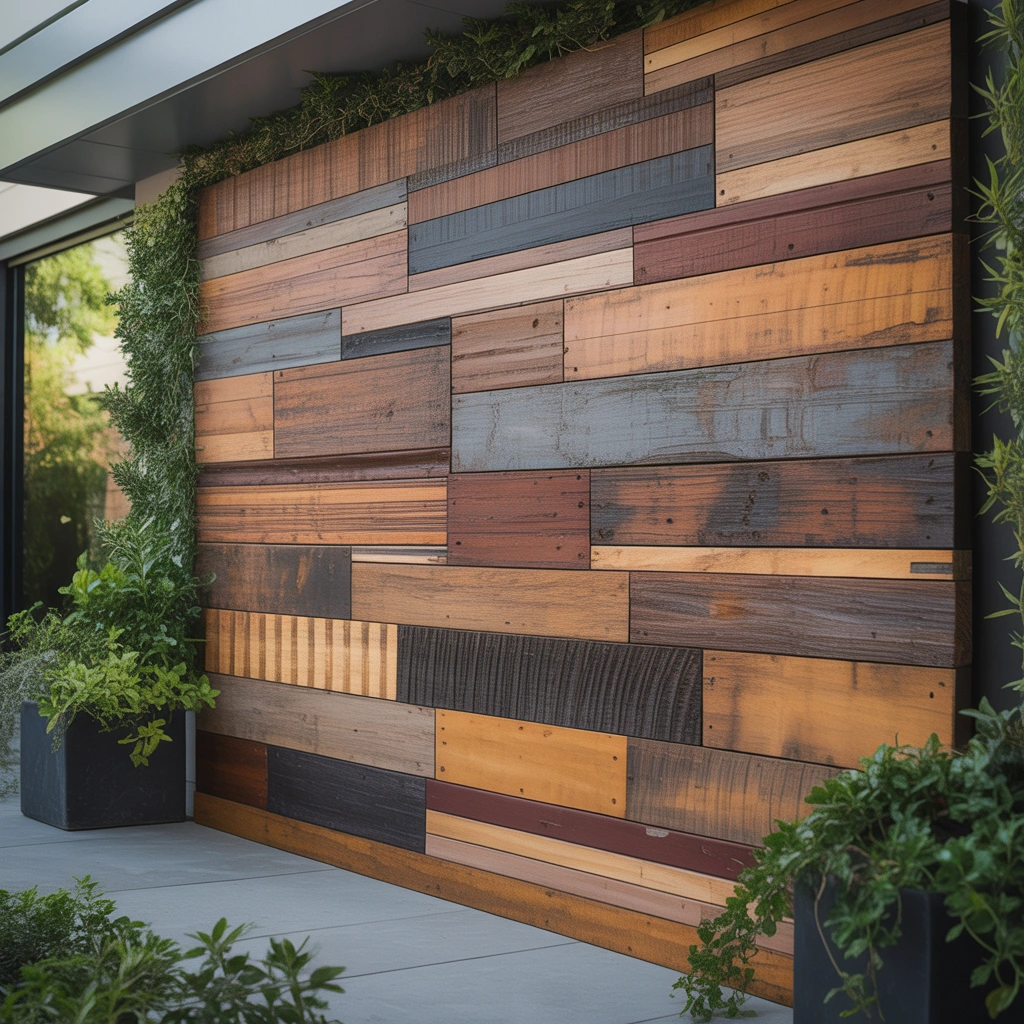
Wood introduces warmth to an outdoor area, particularly when the surrounding space contains a lot of concrete, stone, or metal.
Decorative wooden panels can cover an entire feature wall, form a narrow accent section, or provide a background for plants, lighting, and artwork.
Horizontal boards can make a wall appear wider, while vertical slats can create the impression of greater height. Slatted wood panels are especially popular in contemporary outdoor design because they create a clean background without appearing cold or plain.
Reclaimed wood produces a more rustic effect. Natural variations in grain, color, and texture give the wall character that new materials may not have.
However, any reclaimed material used outside should be cleaned, inspected, treated, and sealed properly. Avoid boards that may contain harmful chemicals, insects, extensive rot, or structural damage.
For a simpler project, consider premade exterior wood panels or composite slats. Composite materials can produce a similar visual effect while requiring less maintenance.
Whatever material you choose, make sure it is suitable for your climate. It should also be installed with enough ventilation to prevent moisture from becoming trapped between the boards and the original wall.
I particularly like wooden feature walls because they create a beautiful base for other decorations. A row of simple black planters, a metal sign, an outdoor clock, or two modern sconces can stand out clearly against warm wood.
9. Create an Outdoor Gallery Wall
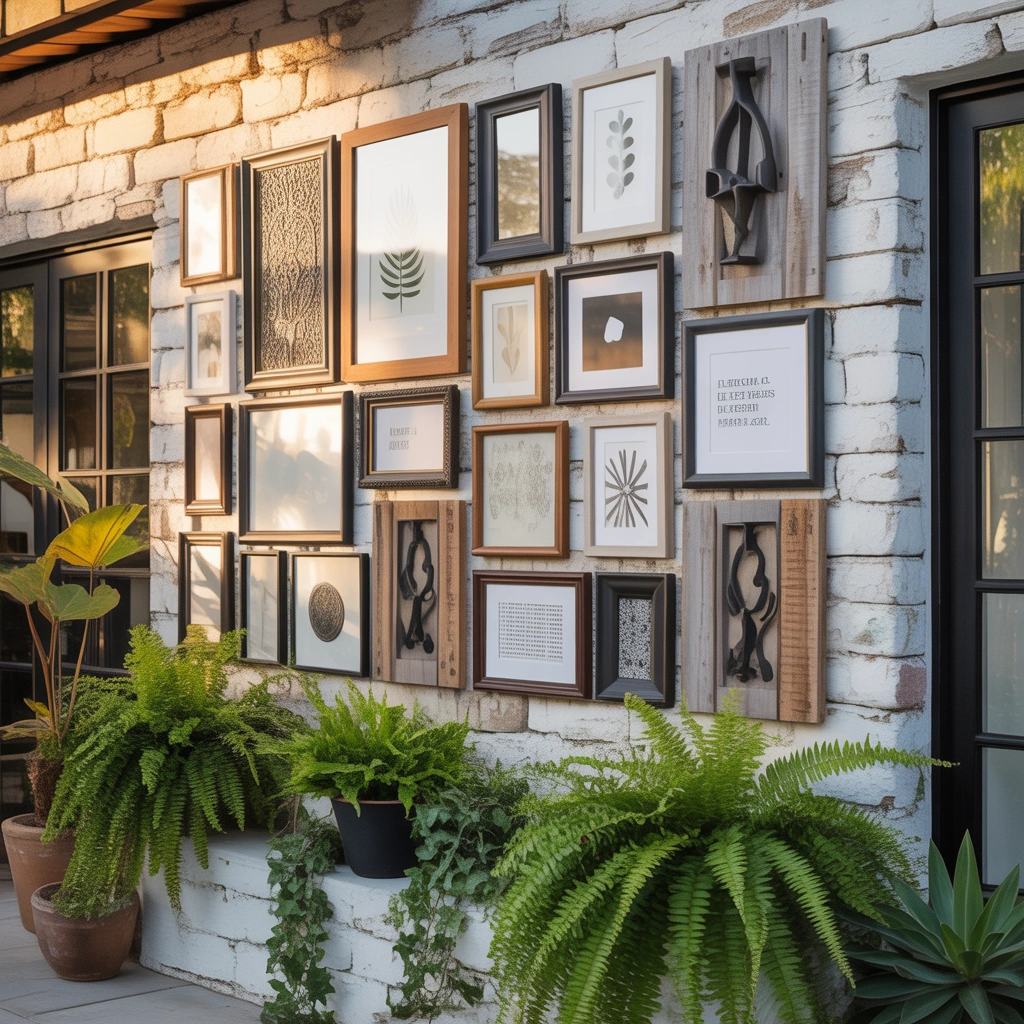
An outdoor gallery wall allows you to combine several decorative pieces into one personal display. Instead of relying on a single large item, you can arrange signs, plaques, mirrors, tiles, planters, sculptural objects, and weather-resistant artwork together.
The most successful gallery walls usually have one element that connects everything. This could be a shared material, color palette, theme, or shape.
A coastal gallery wall might include blue-and-white tiles, a rope-framed mirror, and metal sea-life decorations. A garden-themed display could combine botanical plaques, small planters, old watering cans, and flower-shaped sculptures.
Begin by selecting one main focal piece and build the arrangement around it. Keep the spacing fairly consistent, but do not feel that every item must be perfectly symmetrical.
A slightly irregular arrangement often feels more relaxed and natural in an outdoor setting.
Every piece should be appropriate for its location. Paper prints and ordinary indoor picture frames are not suitable unless the wall is completely protected from moisture.
Ceramic, metal, resin, sealed wood, acrylic, and artwork specifically produced for exterior use are generally more practical options.
This is one of the best outdoor wall decor ideas for expressing your personality. You can include handmade objects, family initials, favorite quotations, travel-inspired pieces, or small decorations collected over time.
The final result will feel less like a store display and more like a reflection of the people who use the space.
10. Add Colorful Ceramic or Mosaic Tiles
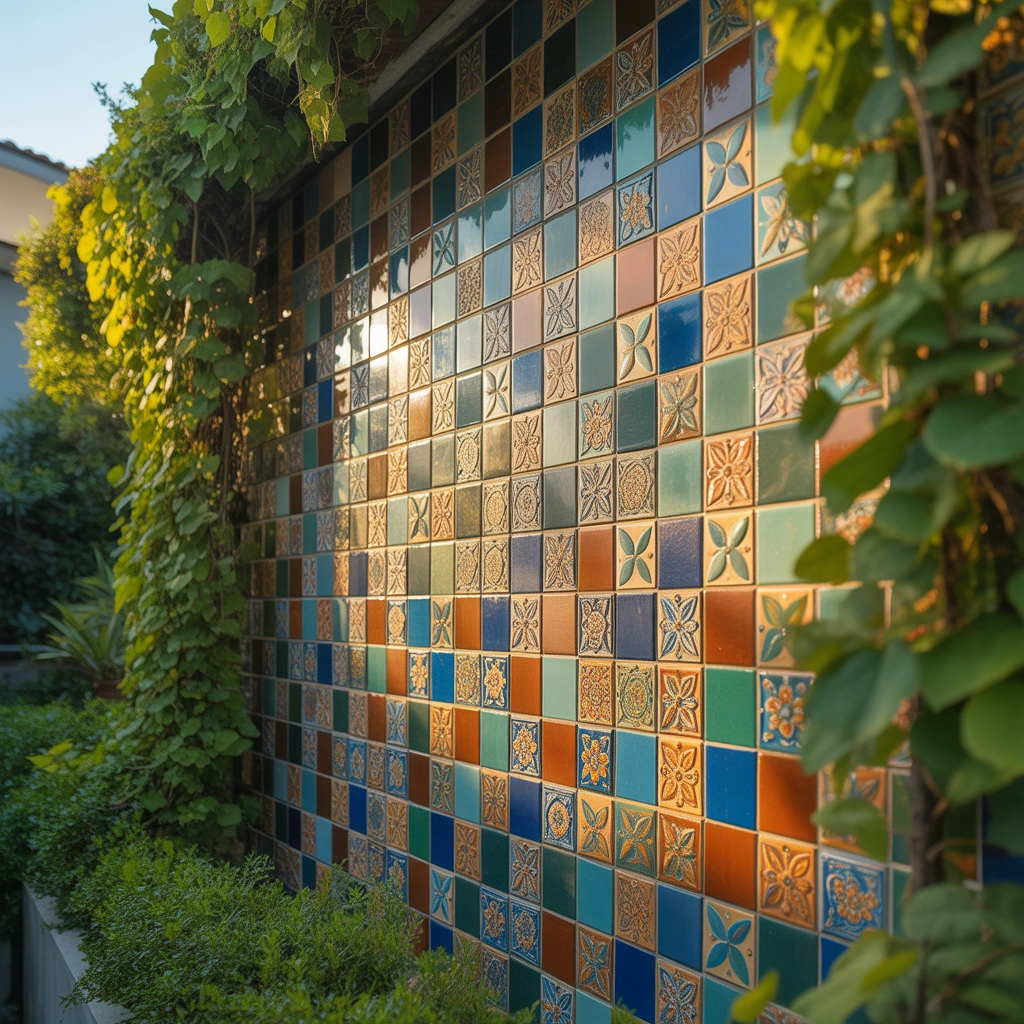
Ceramic and mosaic tiles can introduce rich color, intricate patterns, and a sense of craftsmanship to an outdoor wall.
They are especially attractive in Mediterranean, Moroccan, Spanish, bohemian, and eclectic spaces, although simple tiles can also suit modern designs.
You do not have to cover an entire wall. A small framed tile panel can function like a piece of outdoor artwork. You could also create a narrow decorative border, tile the area behind an outdoor sink, or arrange individual patterned tiles in a balanced grid.
For a handmade appearance, combine different patterns that share similar colors. For a cleaner result, repeat a single tile style in a structured arrangement.
Broken tiles can also be used to create a custom mosaic, although this project requires careful planning and suitable outdoor adhesive, grout, and surface preparation.
Tile is a useful way to add lasting color without relying entirely on fabric accessories, which may fade or need frequent cleaning. Deep blue, emerald green, mustard, terracotta, turquoise, and white can look especially vibrant in natural sunlight.
In a small outdoor area, I prefer using patterned tiles as an accent rather than covering every available surface. A compact decorative panel surrounded by plain brick or paint gives the eye somewhere to rest and allows the tile design to stand out.
You can also repeat one or two tile colors in nearby plant pots, seat cushions, or tableware to create a more coordinated design.
11. Hang Wall-Mounted Lanterns or Sconces
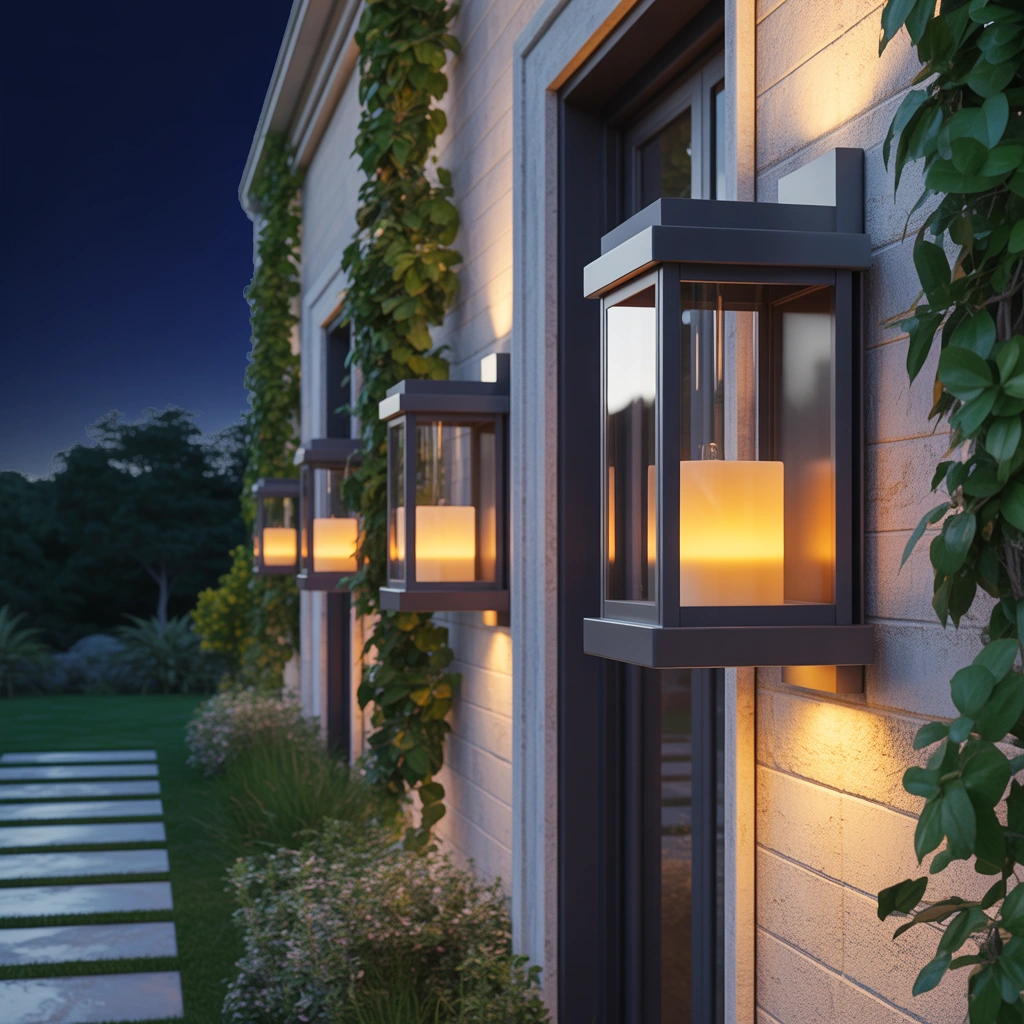
Outdoor lighting can be functional and decorative at the same time. Wall-mounted lanterns and sconces create a more permanent and architectural appearance than portable lights.
The style of the fixture should relate to the surrounding space. Black metal lanterns work well with modern farmhouse, industrial, and traditional homes. Simple cylinder sconces complement contemporary patios, while aged brass or bronze finishes can add warmth to Mediterranean and rustic designs.
Place the lights where they can support the way you use the area. A pair of matching sconces can frame a doorway, mirror, outdoor sofa, or piece of artwork.
A single decorative lantern can highlight a small reading corner, while several repeated fixtures can create rhythm along a long garden wall.
Electrical work should always be completed safely and according to local requirements. When permanent wiring is not practical, wall-mounted solar lanterns or battery-operated fixtures may provide an easier alternative.
Read the product information carefully to confirm that the fixture is suitable for outdoor conditions.
I consider lighting one of the highest-impact outdoor upgrades because it improves both appearance and function. A wall that seems flat during the day can gain depth, shadow, and atmosphere at night.
Lighting also allows you to enjoy your patio or garden for longer, particularly during evenings when the temperature is more comfortable.
12. Build a Wall-Mounted Herb Garden
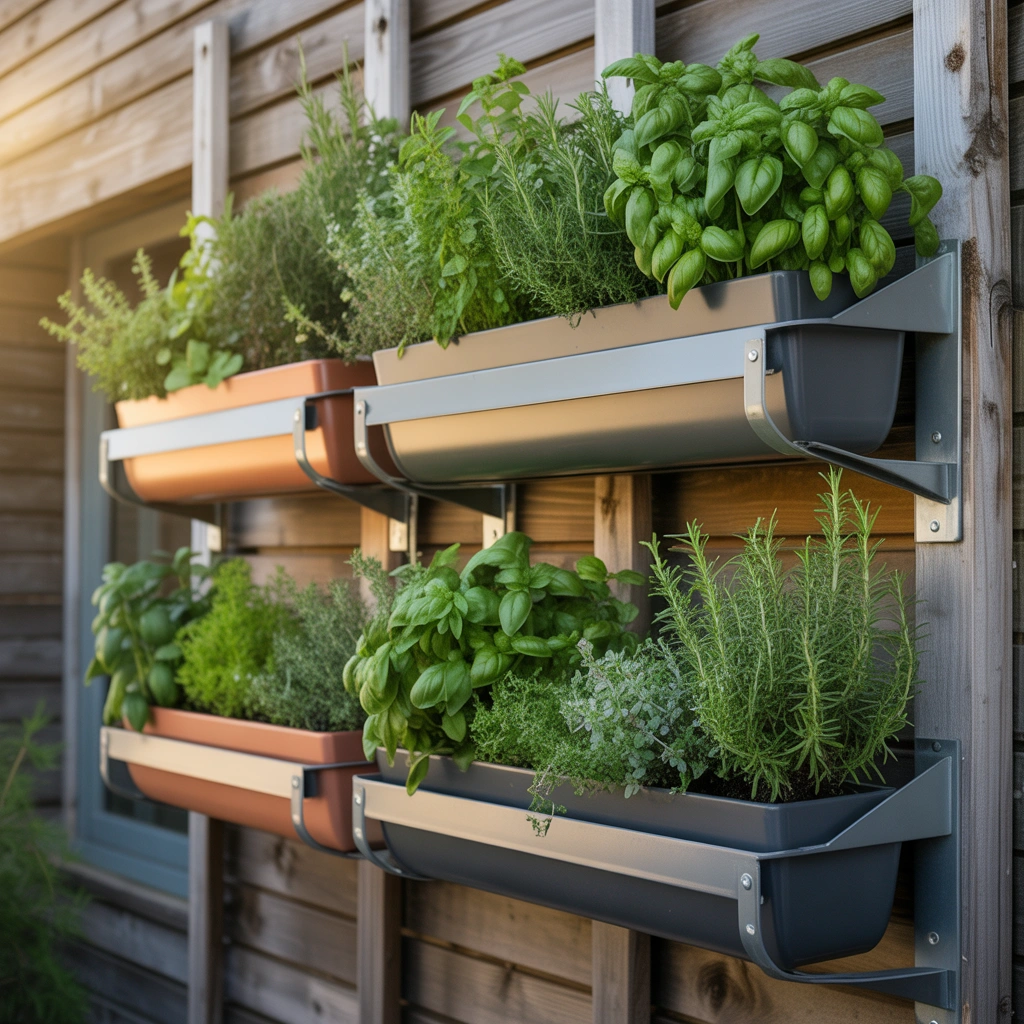
A wall-mounted herb garden is perfect when you want your outdoor wall decor to be both beautiful and useful. It keeps fresh herbs within easy reach while adding fragrance, color, and greenery to a patio, balcony, or outdoor kitchen.
You can use individual pots, a tiered rack, a wooden pallet planter, metal containers, or a purpose-built vertical gardening system.
Adding labels to each container can make the display more attractive while helping everyone identify the plants.
Choose herbs according to the amount of sunlight the wall receives. Basil, rosemary, thyme, oregano, and sage generally enjoy bright conditions. Parsley, mint, and chives may tolerate some partial shade.
Because herbs in small containers can dry out quickly, check the soil regularly and make sure every planter has drainage holes.
Position the herb wall close to your cooking or dining area whenever possible. I find that herbs are used far more often when they are visible and easy to reach.
There is something especially satisfying about cutting fresh mint for a drink or picking rosemary while preparing dinner outside.
For a coordinated look, paint or stain the planter structure to match your nearby furniture. Terracotta pots create a warm and traditional appearance, while galvanized metal containers offer a more industrial or farmhouse-inspired effect.
You can also mix herbs with edible flowers or compact vegetables, provided the containers are large enough for healthy growth.
13. Repurpose Vintage Objects as Exterior Wall Decor
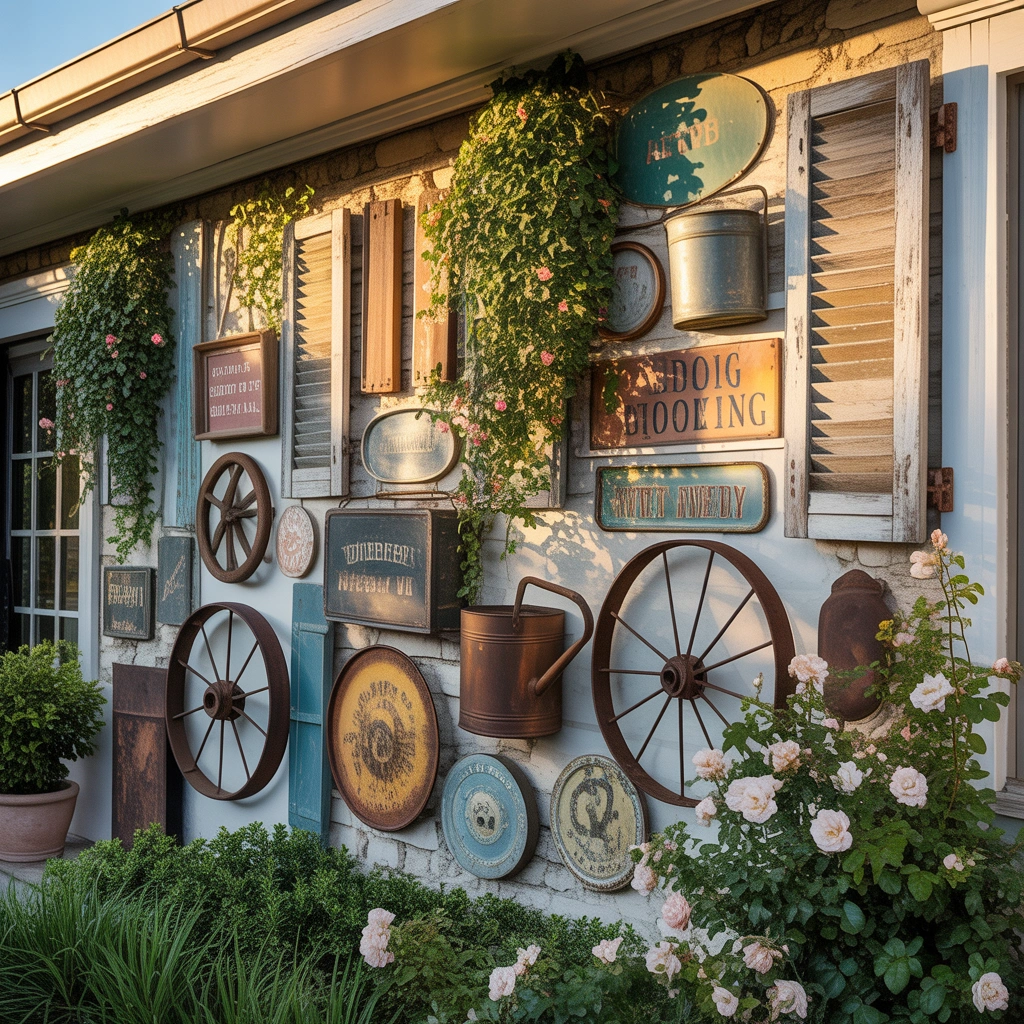
Repurposed decorations can give an outdoor wall a sense of history and individuality. Old shutters, window frames, ladders, gates, wheels, watering cans, garden tools, and architectural fragments can all become eye-catching wall features.
The key is to display these objects intentionally rather than attaching random items without a plan.
One large vintage window frame can become a focal point, especially when placed above a bench or surrounded by plants. A set of old garden tools can be arranged neatly on a shed wall. A weathered wooden ladder can hold lightweight planters, lanterns, or baskets.
Before hanging anything, clean the object thoroughly and inspect it for sharp edges, insects, loose pieces, and structural damage. Apply an appropriate protective finish when you want to slow down further weathering.
Some people enjoy a naturally aged appearance, but even rustic decorations should be stable, secure, and safe.
I recommend limiting the number of repurposed objects in one area. Too many unrelated pieces can make a wall look cluttered rather than creative.
Select one strong item or a small collection connected by color, material, age, or purpose.
This approach can also be budget-friendly. Flea markets, salvage stores, thrift shops, and your own storage area may contain items that can be transformed with little more than cleaning, paint, or a new method of display.
14. Install Decorative Outdoor Shelves
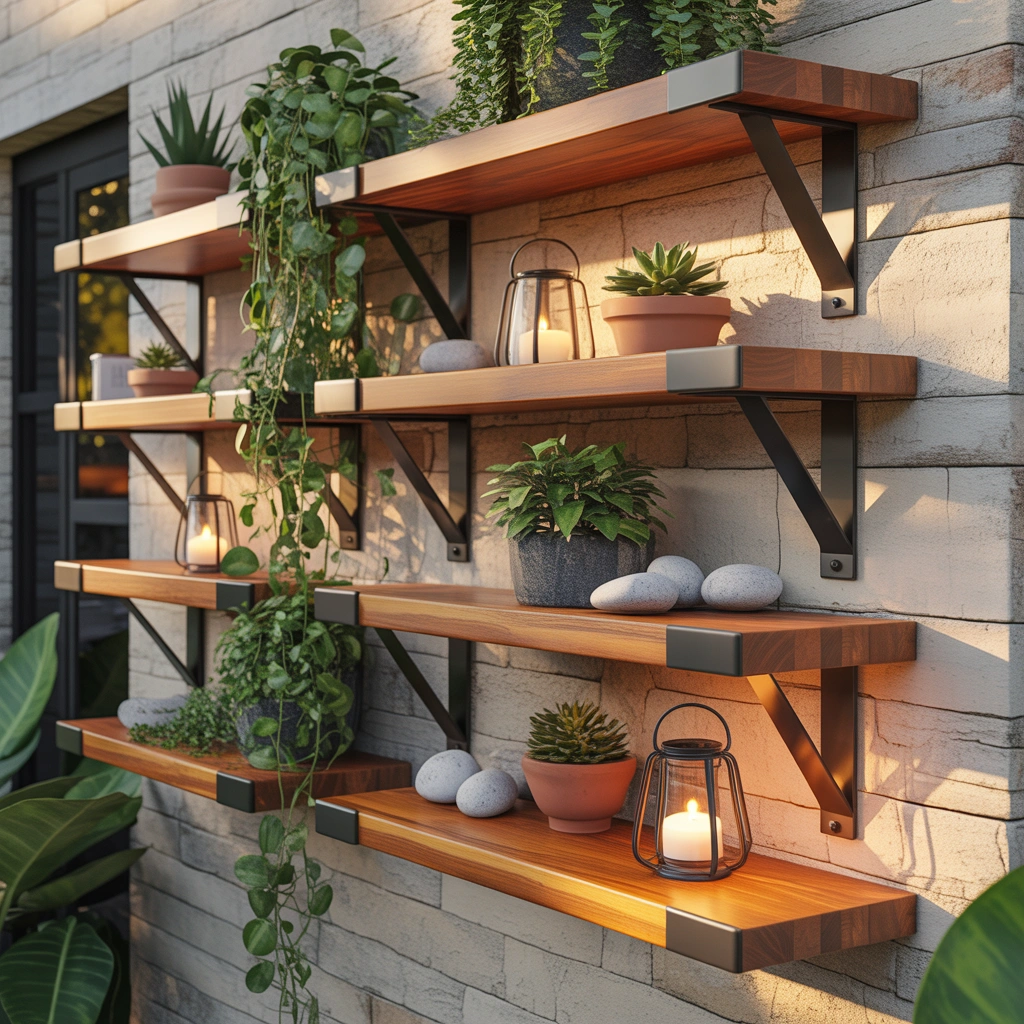
Outdoor shelves provide flexible surfaces for displaying plants, lanterns, candles, small sculptures, pottery, and seasonal accessories.
They are especially useful when you enjoy changing your decorations throughout the year.
Choose materials that can tolerate exterior conditions, such as treated wood, powder-coated metal, stone, or composite boards. The brackets should be rust-resistant and strong enough to support the combined weight of the shelf and the displayed items.
Install shelves securely into the correct wall structure instead of relying on lightweight indoor mounting hardware.
A single long shelf creates a clean, modern effect. Several shorter shelves arranged at different heights feel more relaxed and give trailing plants room to hang freely.
Avoid overcrowding each shelf. A few carefully selected objects will usually look more attractive than a large collection of small, unrelated accessories.
I like to combine decorative and practical pieces. For example, one shelf might hold a lantern, two herb pots, and a ceramic container for small garden tools. Another could display a trailing plant beside a sculptural object.
Remember that anything placed on an outdoor shelf may be affected by wind. Choose heavier items, secure lightweight pieces, and avoid using fragile accessories in exposed areas.
In rainy climates, make sure water can drain freely and does not collect behind objects or against the wall.
15. Add a Decorative Water Feature
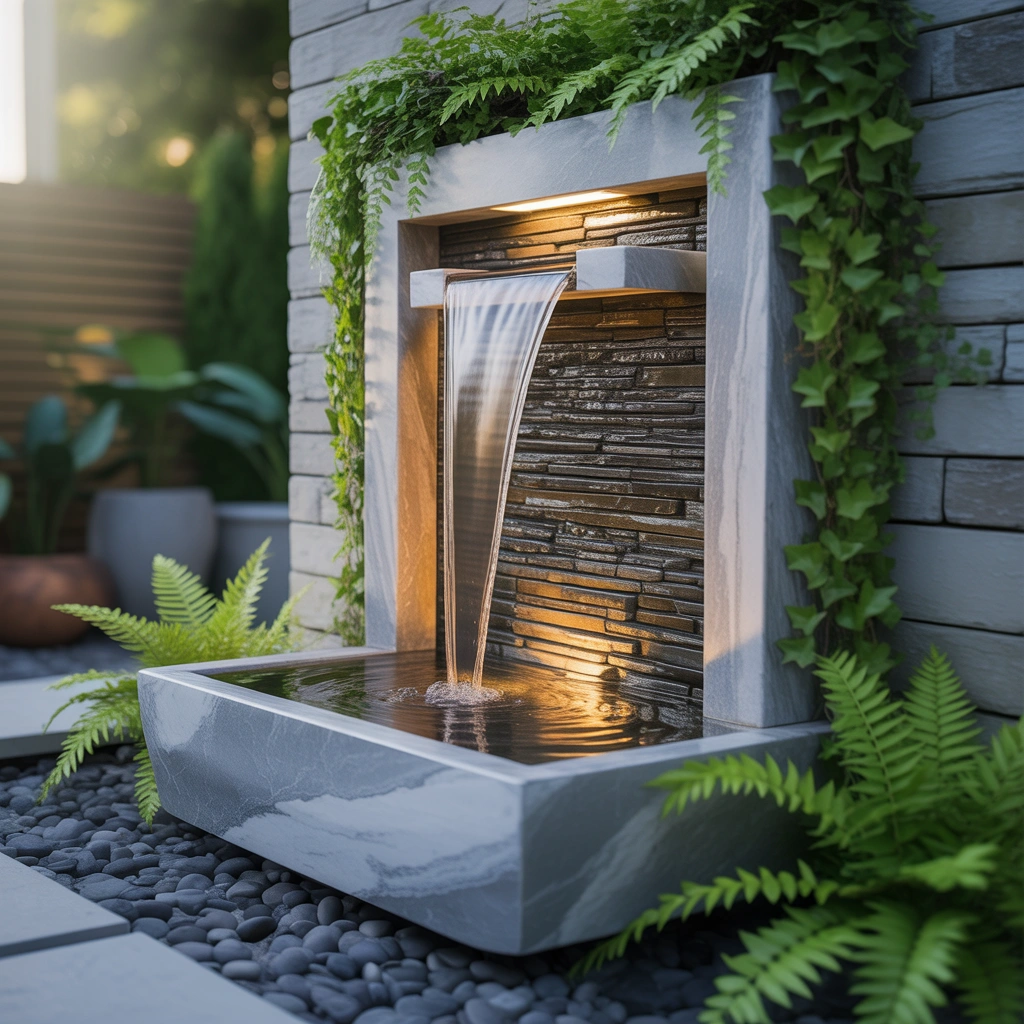
A wall-mounted water feature can bring movement, sound, and a peaceful atmosphere to an outdoor space.
It works particularly well in courtyards, meditation areas, small patios, and gardens where nearby traffic or neighborhood sounds are noticeable.
Wall fountains are available in stone, concrete, metal, ceramic, and lightweight resin. Some have traditional bowls and basins, while others produce a smooth sheet of water for a more contemporary effect.
Before installing one, consider the strength of the wall, access to electricity, water splash, drainage, and ongoing maintenance.
The feature must be mounted securely and positioned where moisture will not damage surrounding surfaces. Pumps require occasional cleaning, and the water level may need to be checked frequently during hot weather.
Scale is important. A small fountain can feel charming on a narrow wall, while a large sculptural design may be more suitable for a spacious courtyard.
Surrounding the fountain with greenery can make it appear integrated into the landscape rather than attached to the wall as an afterthought.
I find that the sound of moving water changes the atmosphere of an outdoor area immediately. Even a modest fountain can make a seating area feel more private, peaceful, and intentional.
Adding subtle lighting around the feature can also create beautiful reflections during the evening.
How to Choose the Right Outdoor Wall Decor
With so many outdoor wall decor ideas available, it can be tempting to combine several of them at once. However, a focused approach normally creates a stronger and more balanced result.
Begin by considering the wall material. Brick, concrete, stucco, stone, wood siding, and fencing require different installation methods and mounting hardware.
Check whether you are permitted to drill into the surface, particularly when you rent your home. Freestanding trellises, railing planters, tension-mounted systems, and suitable removable hooks may be better for temporary spaces.
Next, study the conditions around the wall. Is it exposed to full sunlight, heavy rain, high humidity, strong wind, salt air, or freezing temperatures?
A decorative item that lasts for years on a covered porch may deteriorate quickly on a completely exposed garden wall. Always select materials and finishes suitable for the location.
Think carefully about scale and visibility. Stand where you normally sit or enter the space and look at the wall from that position.
Your chosen decoration should be large enough to notice without overwhelming the nearby furniture. Painter’s tape and paper templates are useful for testing the size and arrangement before installation.
It also helps to select a clear style direction. You do not have to follow one design category perfectly, but the wall decor should relate to the rest of the area.
Natural wood, woven textures, and pottery create an earthy atmosphere. Black metal, clean lines, and simple planters feel contemporary. Painted signs, vintage objects, and distressed finishes produce a farmhouse-inspired look.
Finally, be realistic about maintenance. Living walls, herb gardens, and fountains are beautiful, but they require regular attention. Metal art, tiles, and weather-resistant sculptures may be easier to maintain.
Choose an idea that fits your routine as well as your visual preferences.
Simple Styling Tips for a Finished Outdoor Wall
The difference between a decorated wall and a thoughtfully designed wall often comes down to layering, repetition, and balance.
Try repeating one or two colors from your outdoor furniture, rug, planters, or cushions in the wall decorations. This small connection helps the entire area feel coordinated.
Use a mixture of shapes and textures, but remember to leave some empty space. A wall does not need to be filled from one edge to the other.
Negative space gives important decorations room to stand out and prevents the arrangement from becoming visually overwhelming.
Consider how the wall will look after sunset. Even a beautiful daytime display can disappear in darkness. A nearby lantern, spotlight, string light, or sconce can extend the visual impact into the evening.
Plants are another useful finishing element. They soften hard edges and help almost every type of decoration feel natural outdoors.
A potted plant beneath a mirror, a vine growing around a trellis, or trailing greenery placed beside a shelf can connect the wall to the surrounding landscape.
Most importantly, select decorations that feel personal. Outdoor areas are meant to be enjoyed, not simply photographed.
A handmade mosaic, a favorite color, an old family garden tool, or a collection built gradually can make your space more meaningful than a perfectly matched set of accessories.
Common Outdoor Wall Decorating Mistakes to Avoid
One common mistake is choosing decorations that are too small for the wall. A tiny sign or planter may look attractive in a store but feel insignificant when placed on a large exterior surface.
Measure the wall first and consider grouping several pieces together when one item is not large enough.
Another mistake is using indoor decorations outdoors without considering moisture, sunlight, and wind. Standard frames, untreated wood, delicate fabric, and unsealed artwork may fade or deteriorate quickly.
Choose items intended for outdoor use or place delicate pieces in a completely sheltered location.
Improper installation can also create safety problems. Heavy mirrors, planters, shelves, and sculptures require mounting hardware suitable for both the object and the wall material.
Do not rely on lightweight hooks for heavy decorations, especially in windy areas.
It is also easy to add too many competing elements. A mural, gallery wall, fountain, trellis, and several shelves may each look attractive individually, but using all of them on the same wall can create visual confusion.
Choose one main feature and use smaller supporting elements around it.
Finally, do not forget maintenance. Plants need watering and pruning, lights need inspection, metal pieces may need rust treatment, and wooden decor may require resealing.
A small amount of regular care will help your exterior wall decoration stay attractive for longer.
Final Thoughts
Outdoor walls offer far more decorating potential than many people realize. With the right approach, a blank surface can become a vertical garden, a glowing nighttime feature, an organized herb station, a personal art display, or a calming focal point.
My advice is to begin with the idea that best suits how you already use the space.
When you love gardening, start with wall planters or a trellis. When you entertain guests in the evening, focus on string lights or decorative sconces. When your patio feels narrow, try an outdoor mirror. When you prefer a low-maintenance solution, consider metal art, ceramic tiles, or a weather-resistant gallery wall.
You do not have to complete the entire wall in one weekend. Begin with one strong feature, live with it for a while, and add supporting details gradually.
This slower approach often creates a more personal, practical, and balanced result.
Whether your outdoor area is a spacious backyard, a compact balcony, a covered porch, or a narrow courtyard, these outdoor wall decor ideas can help you create a place that feels welcoming, stylish, and uniquely yours.
Frequently Asked Questions About Outdoor Wall Decor
What can I put on a blank outdoor wall?
You can decorate a blank exterior wall with metal artwork, planters, mirrors, trellises, shelves, ceramic tiles, lanterns, murals, wooden panels, fountains, or weather-resistant signs.
Choose materials suitable for outdoor conditions and select a decoration that is proportional to the size of your wall.
How can I decorate an outdoor wall on a small budget?
Paint is one of the most affordable ways to transform an outdoor wall. You can also repurpose old shutters, baskets, window frames, ladders, garden tools, or leftover wood.
A small collection of inexpensive wall planters can also create a strong feature without covering the entire surface.
What type of wall art lasts outdoors?
Powder-coated metal, aluminum, ceramic, stone, resin, treated wood, and artwork specifically labeled for outdoor use are normally more durable than standard indoor decorations.
The lifespan of any item will depend on your climate, the amount of exposure it receives, its installation, and how well it is maintained.
How can I decorate an exterior wall without drilling?
Consider freestanding trellises, leaning ladders, tension-mounted systems, railing planters, or removable exterior hooks.
Tall plants and narrow decorative screens can also be placed in front of the wall to add visual interest without permanent installation.
Always check that any removable hanging product is suitable for the surface and can support the weight of the decoration.
How do I protect outdoor wall decor from the weather?
Choose weather-resistant materials and use an appropriate protective sealant when recommended. Install every item securely and place delicate decorations in covered areas.
Inspect your decor regularly for rust, fading, water damage, loose hardware, cracking, or other signs of wear.
How do I make a small patio wall look bigger?
An outdoor mirror is one of the most effective options because it reflects light and creates the illusion of depth.
You can also use vertical plants, light paint colors, slim shelves, and decorations with clean lines. Avoid overcrowding the wall with too many small items.
Can indoor wall decor be used outside?
Some indoor decorations may be used in completely covered outdoor spaces, but they can still be affected by humidity, temperature changes, and insects.
Whenever possible, select pieces made for outdoor use. If you place an indoor item outside, protect it properly and understand that it may not last as long.
How high should outdoor wall decor be hung?
The correct height depends on the furniture and the viewing position. As a general design approach, place the center of the main decoration near eye level when viewed from the area where people normally stand or sit.
When hanging decor above a sofa, bench, or table, leave enough space between the furniture and the decoration so they feel connected without appearing crowded.
What is the easiest outdoor wall decor to maintain?
Powder-coated metal artwork, ceramic tiles, resin sculptures, and properly installed outdoor mirrors are generally easier to maintain than living walls or fountains.
They may still need occasional cleaning and inspection, but they do not require regular watering, pruning, or pump maintenance.
How can I make my outdoor wall decor look more expensive?
Use fewer, larger decorations rather than many tiny pieces. Repeat a limited color palette, select high-quality materials, and add carefully positioned lighting.
A simple arrangement with balanced spacing often looks more sophisticated than a wall filled with unrelated accessories.
