
Indian interiors have always fascinated me because they never feel cold or impersonal. They carry warmth, culture, craftsmanship, color, and a strong sense of home. An Indian-inspired bedroom is not simply a room filled with traditional furniture or bright textiles. It is a personal retreat where comfort, heritage, and beauty come together.
The most attractive thing about Indian bedroom décor is its flexibility. You can create a rich royal bedroom inspired by Rajasthan, a peaceful earthy room with handcrafted wooden furniture, a colorful bohemian space filled with prints, or a simple modern bedroom with subtle Indian details. You do not need to decorate every corner or use expensive antiques. Even a carved headboard, an embroidered cushion, a block-printed bedsheet, or a brass lamp can give your bedroom a distinctive Indian character.
In this guide, I am sharing 12 Indian bedroom decor ideas that can help you create a warm, stylish, and welcoming bedroom. Each idea can be adapted according to your room size, budget, personal taste, and existing furniture.
Why Choose Indian Bedroom Décor?
Indian bedroom décor is ideal for anyone who wants a space that feels expressive, comfortable, and connected to culture. Unlike minimalist interiors that often depend on empty surfaces and neutral colors, Indian décor encourages personality. It allows you to display handmade pieces, family treasures, colorful fabrics, traditional art, and objects collected during travels.
Another reason I love this style is that it celebrates imperfections. A slightly distressed wooden cabinet, a handwoven rug with minor variations, or a block-printed fabric with natural irregularities often looks more beautiful than a perfectly manufactured item. These details make the bedroom feel lived-in and authentic.
Indian décor also works beautifully with modern interiors. You can combine traditional craftsmanship with clean furniture, contemporary lighting, and simple layouts. This creates a balanced bedroom that feels cultural without appearing old-fashioned.
1. Create a Statement Wall with Indian-Inspired Colors

A statement wall is one of the easiest ways to introduce Indian style into a bedroom. Indian interiors are known for their rich, expressive colors, but that does not mean every wall needs to be bold. Painting one wall in a deep shade can create visual depth while allowing the rest of the room to remain calm.
Some beautiful color choices include:
- Terracotta
- Mustard yellow
- Deep teal
- Peacock blue
- Burnt orange
- Maroon
- Emerald green
- Dusty rose
- Warm beige
I especially love terracotta and deep teal for bedrooms because they feel dramatic without becoming overwhelming. Terracotta brings an earthy, grounded quality, while teal creates a luxurious background for brass accessories, wooden furniture, and colorful fabrics.
You can paint the wall behind the bed so that it naturally becomes the focal point. Another option is to use Indian-inspired wallpaper featuring paisley patterns, floral vines, mandalas, miniature-art motifs, or Mughal-style designs.
For a more handmade appearance, consider stencil work. A simple floral border, geometric pattern, or arch-shaped design can make an ordinary wall look customized. Keep the remaining walls neutral in shades such as ivory, cream, sand, or warm white so that the feature wall stands out.
When choosing a bold wall color, repeat the shade in smaller details such as cushions, lampshades, artwork, or rugs. This creates a coordinated look instead of making the statement wall feel disconnected.
2. Use a Carved Wooden Bed as the Main Feature
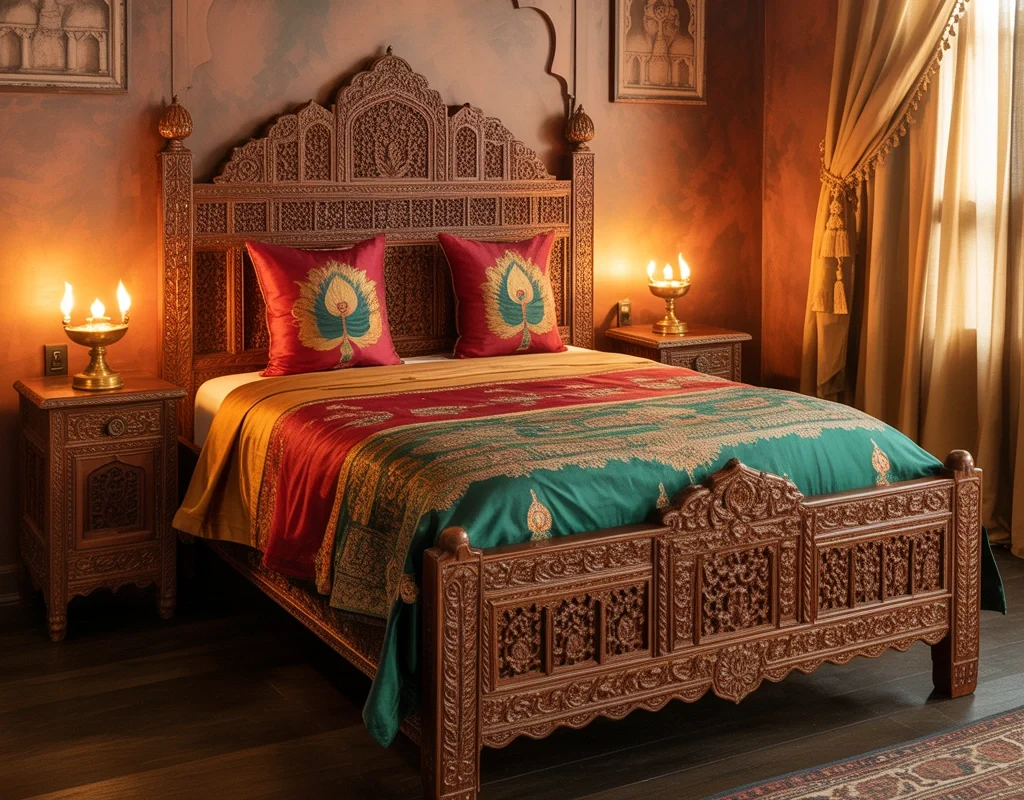
Nothing creates an Indian bedroom atmosphere more effectively than a beautifully carved wooden bed. Traditional Indian furniture is often made from sheesham, teak, mango wood, or reclaimed wood. These materials bring natural warmth and character into the room.
A carved headboard can feature floral motifs, arches, geometric patterns, latticework, or temple-inspired designs. It immediately becomes the centerpiece of the bedroom, even when the rest of the décor is simple.
When I imagine a peaceful Indian bedroom, I often picture a solid wooden bed dressed in soft cotton bedding, surrounded by warm lighting and handmade textiles. The natural grain of the wood gives the room a comforting and timeless quality.
You do not necessarily need a large four-poster bed. A simple platform bed with a carved panel behind it can create the same effect. For smaller bedrooms, select a low-profile bed with storage drawers underneath. This offers the traditional wooden appearance without making the room feel crowded.
If your current bed is modern and you do not want to replace it, install a separate carved wooden panel behind the bed. You can also use an old wooden door, decorative screen, or reclaimed window frame as a creative headboard.
To prevent the room from becoming too heavy, balance dark wood with light walls, pale bedding, and soft curtains. A few brass or gold details can enhance the richness of the wood without overpowering it.
3. Decorate with Block-Printed Bedding
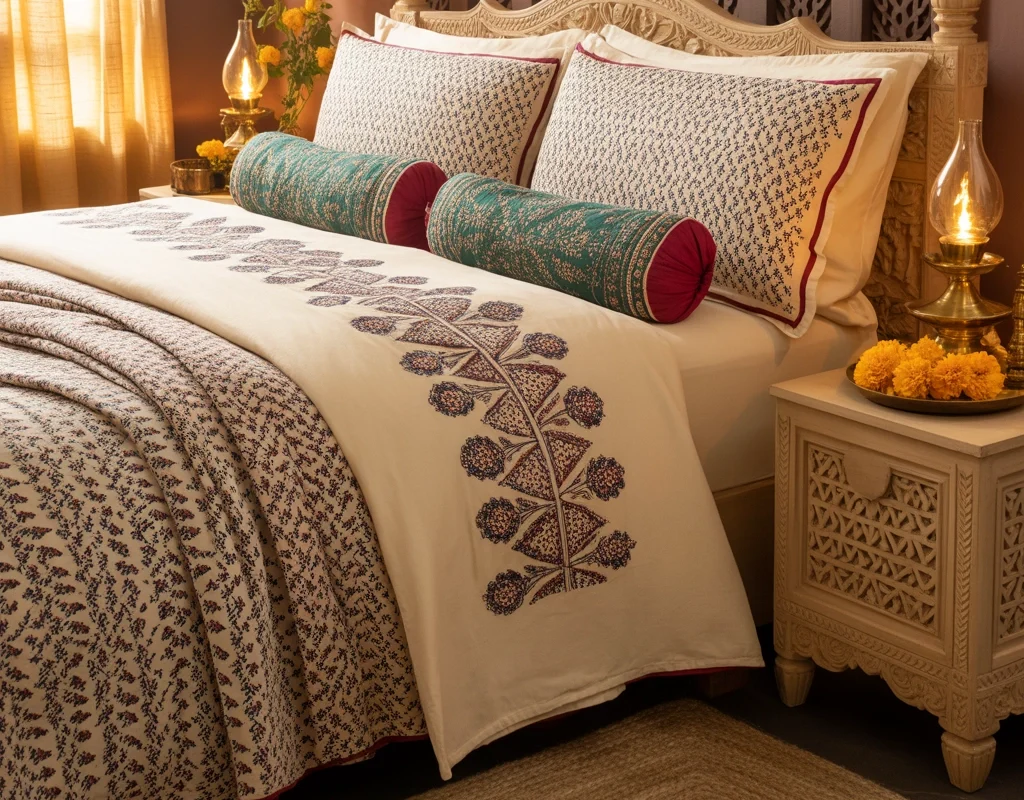
Block-printed textiles are one of my favorite elements of Indian bedroom décor. They bring pattern, craftsmanship, and color into the room while still feeling relaxed and comfortable.
Traditional block printing is associated with regions such as Rajasthan and Gujarat. Common motifs include flowers, leaves, vines, paisleys, elephants, birds, and geometric shapes. These designs are often printed on breathable cotton, making them especially suitable for warm climates.
A block-printed bedsheet or duvet cover can completely transform a plain bedroom. You can choose soft indigo patterns for a peaceful look, red and orange prints for a vibrant atmosphere, or neutral beige and black designs for a modern Indian bedroom.
The key is to layer patterns thoughtfully. For example, combine a floral block-printed bedspread with solid-colored pillows and one or two patterned cushions. If every textile has a different bold print, the room may begin to feel visually busy.
I prefer using one main pattern and supporting it with simple textures. A printed quilt can be paired with plain linen sheets, a knitted throw, and velvet cushions. This creates depth without losing balance.
You can also mix traditional bedding with modern furniture. A clean-lined bed covered with handcrafted Indian textiles creates a fresh fusion style that works well in apartments and contemporary homes.
4. Add Colorful Cushions and Layered Textiles

Indian bedrooms often feel inviting because of their layers. Instead of relying on one bedsheet and two pillows, they use cushions, throws, quilts, rugs, and curtains to create softness.
Start by selecting a basic color palette. For instance, you might choose mustard, maroon, and cream, or teal, pink, and gold. Then introduce different fabrics within those colors.
Decorative cushion options include:
- Embroidered cushions
- Mirror-work cushions
- Velvet cushions
- Kantha-stitched covers
- Silk brocade pillows
- Block-printed cotton cushions
- Cushions with tassels or pom-poms
You do not need a perfectly matched set. Indian styling often looks more authentic when cushions have slightly different designs but share similar colors.
Place two or three large pillows against the headboard, followed by medium cushions and one smaller decorative cushion in front. This arrangement gives the bed a luxurious, comfortable appearance.
Add a folded quilt or throw at the foot of the bed. A kantha quilt is particularly beautiful because its visible stitching and layered fabric bring a handmade quality to the room. During colder months, you can replace lightweight cotton throws with wool or velvet.
Textiles can also be used on benches, window seats, reading chairs, or storage trunks. The goal is to make the bedroom feel soft and welcoming rather than overly decorated.
5. Bring in Brass and Antique Metal Accents
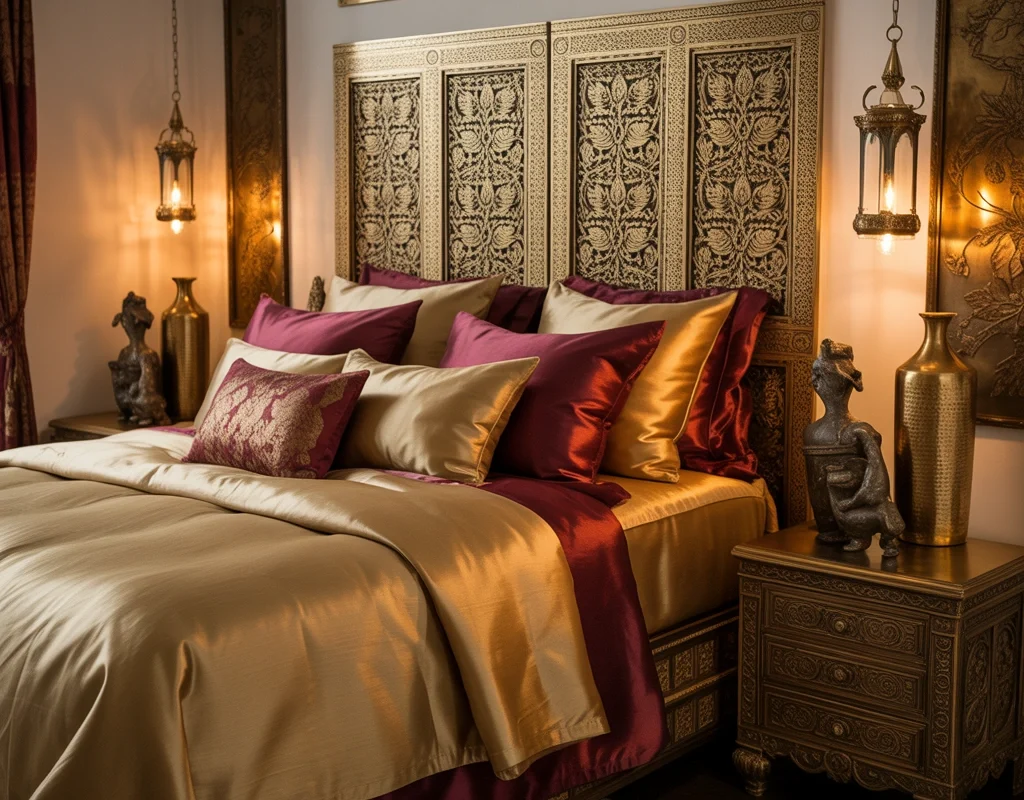
Brass has a natural connection with Indian interiors. It adds warmth, elegance, and a gentle golden glow without looking excessively glamorous.
Small brass details can make a noticeable difference in a bedroom. You might add:
- Brass table lamps
- Traditional oil lamps
- Brass trays
- Metal candleholders
- Decorative bowls
- Brass-framed mirrors
- Small figurines
- Antique-style drawer handles
One of the easiest styling ideas is to place a brass tray on a bedside table or dresser. Use it to organize perfume bottles, jewelry, candles, or small decorative objects. This keeps the surface functional while adding a refined Indian touch.
A pair of brass lamps on both sides of the bed creates symmetry and warmth. For a more traditional look, choose lamps with engraved bases or fabric shades. For a modern Indian bedroom, select simple brass fixtures with clean shapes.
Antique metal pieces do not need to look perfectly polished. A slightly aged surface often adds more charm and character. However, avoid filling the room with too many metallic accessories. A few carefully selected pieces will look more elegant than a large collection.
Brass works especially well with dark wood, emerald green, maroon, navy blue, cream, and terracotta.
6. Install Indian Jali Screens or Decorative Panels

Jali patterns are an important feature in Indian architecture. These decorative lattice designs were traditionally used in windows, doors, screens, and architectural partitions. In a bedroom, they can add beauty, texture, and privacy.
A wooden or MDF jali panel can be installed behind the bed as a decorative feature. You can also use it as a room divider, wardrobe insert, radiator cover, or window screen.
For a dramatic effect, place soft lighting behind the panel. The pattern will create beautiful shadows on the wall, giving the bedroom a warm and luxurious atmosphere.
If your room is small, use a light-colored jali screen instead of a dark, heavy panel. White, cream, or pale wood will make the design feel airy. In a larger bedroom, darker carved wood can create a richer and more traditional look.
Jali patterns can also be introduced in smaller ways. Look for bedside tables with lattice doors, mirrors with carved frames, lamps with cut-out designs, or cabinet panels featuring geometric patterns.
I like jali décor because it adds a strong Indian identity without depending on bright colors. It is an excellent option for people who prefer neutral bedrooms but still want cultural detail.
7. Style the Room with Traditional Indian Artwork
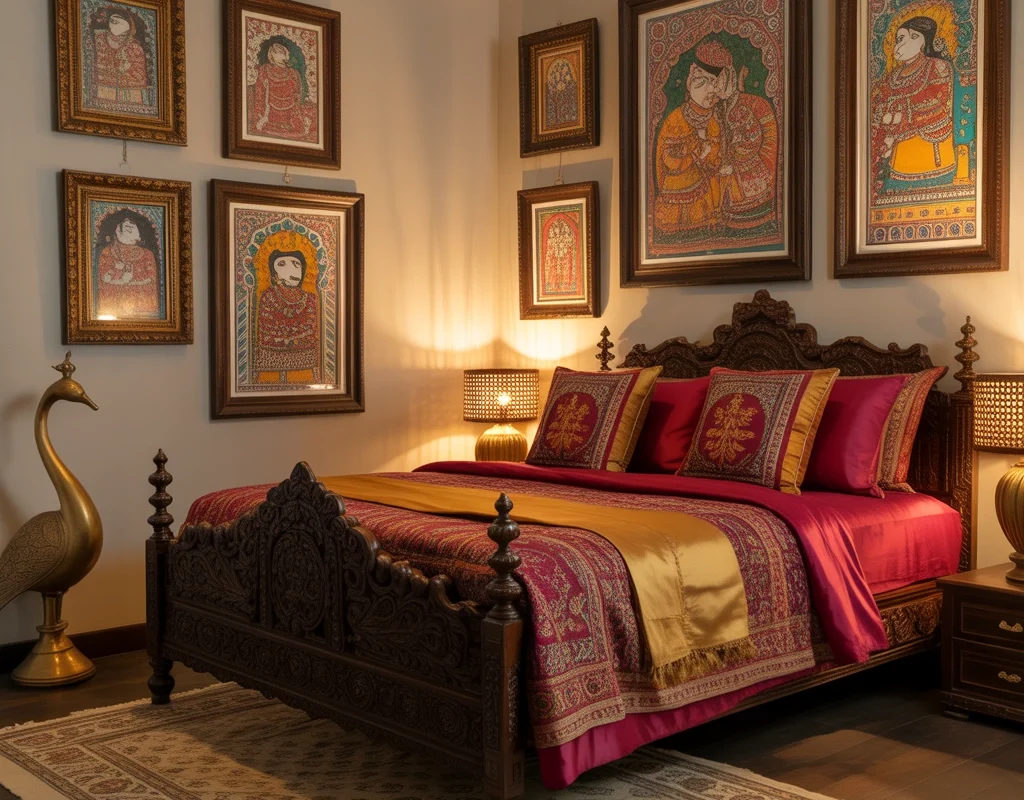
Artwork gives a bedroom personality and tells a story. Indian art offers an enormous variety of styles, so you can choose pieces that reflect your taste rather than selecting something simply because it looks traditional.
Popular Indian art styles include:
- Madhubani painting
- Warli art
- Pattachitra
- Gond art
- Tanjore painting
- Rajasthani miniature art
- Kalamkari
- Mughal-inspired artwork
- Tribal paintings
- Botanical and folk prints
A large piece above the bed can act as the main focal point. Alternatively, create a gallery wall using several small framed prints. To keep the arrangement cohesive, use frames in similar tones, such as wood, black, brass, or antique gold.
You can also display textiles as wall art. A piece of embroidered fabric, vintage sari border, block-printed cloth, or woven tapestry can look beautiful when properly framed.
When decorating a bedroom, choose artwork that creates a peaceful feeling. Religious or spiritual art may also be included, depending on your personal beliefs and comfort. Place meaningful artwork respectfully and avoid positioning sacred images in unsuitable areas.
For a modern look, select traditional art with a simple frame and plenty of space around it. This allows the craftsmanship to stand out without making the wall feel crowded.
8. Add a Cozy Indian-Style Reading Corner
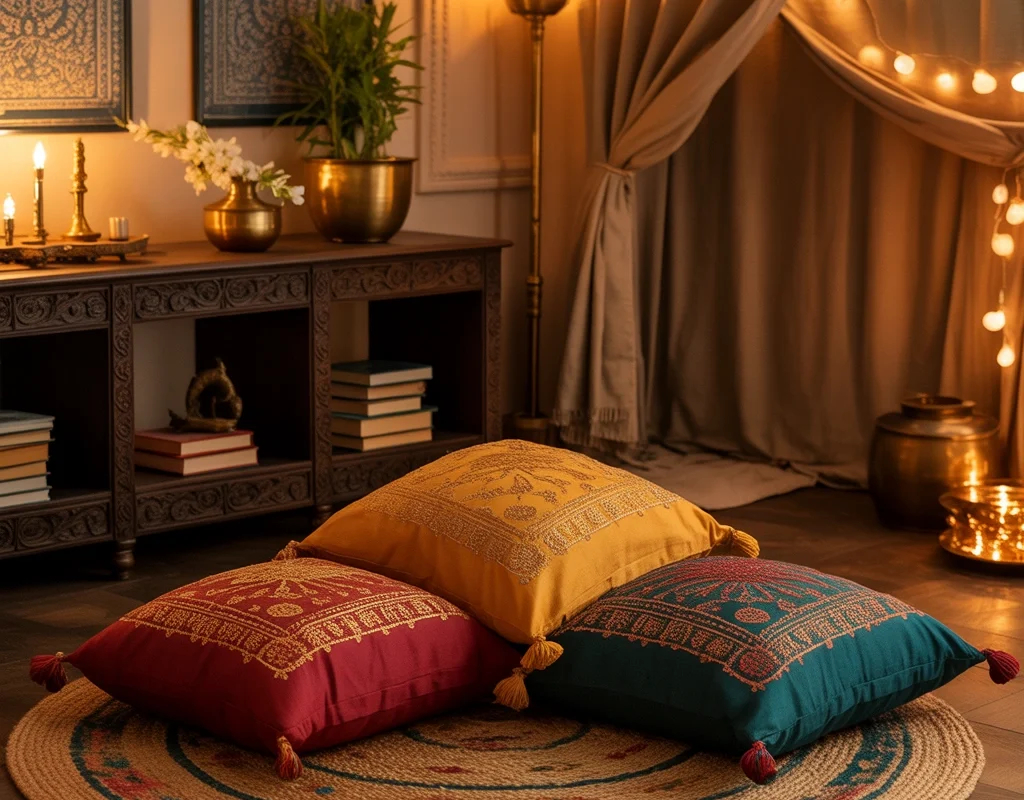
A bedroom should not only be a place for sleeping. A small reading or relaxation corner can make the room feel more personal and useful.
You do not need much space. A comfortable chair, floor cushion, small table, and warm lamp may be enough. To create an Indian-inspired reading corner, use a cane chair, wooden armchair, low divan, or upholstered bench.
Add a colorful cushion and a lightweight throw. Place a handwoven rug underneath to visually separate the corner from the rest of the bedroom. A small carved stool can function as a side table for books, tea, or a candle.
For a more casual arrangement, use large floor cushions or a traditional gadda against the wall. This works especially well in bedrooms with low furniture and a relaxed bohemian style.
A hanging lantern or fabric pendant light can create a soft glow above the reading area. Add a small plant or a basket for books to complete the corner.
Personally, I think a bedroom feels more complete when it includes a place to sit quietly. Even if you only use it for ten minutes in the evening, it turns the room into a true retreat rather than just a sleeping space.
9. Use Handwoven Rugs and Dhurries

Floor coverings play an important role in Indian bedroom décor. A handwoven rug or dhurrie adds pattern, warmth, and texture while making the bedroom more comfortable.
Dhurries are generally flat-woven and lighter than thick carpets. They are available in geometric, striped, floral, and traditional designs. Because they are relatively lightweight, they are easy to move, clean, and layer.
Place a large rug under the bed so that it extends beyond both sides. This gives the room a finished and well-proportioned appearance. In a smaller bedroom, use runners on either side of the bed instead.
A bold rug can become the main decorative feature in a neutral room. For example, a red, blue, and mustard rug can energize a bedroom with cream walls and wooden furniture. If the bedding is already colorful, choose a quieter rug in beige, black, indigo, or muted terracotta.
Layering rugs can also work beautifully. Place a smaller patterned rug over a larger natural-fiber rug. This creates a collected, comfortable look.
Always consider practicality. Choose washable or easy-to-clean rugs for busy homes, and use a non-slip pad underneath to prevent movement.
10. Introduce Natural Materials and Indoor Plants

Indian-inspired bedrooms feel most authentic when they include natural materials. Wood, cane, rattan, cotton, linen, clay, jute, and stone create a sense of calm that balances colorful patterns.
You can introduce natural texture through:
- Cane headboards
- Rattan chairs
- Jute baskets
- Clay lamps
- Wooden side tables
- Cotton curtains
- Linen bedding
- Woven storage boxes
- Terracotta planters
Indoor plants also bring freshness and softness to the bedroom. Select plants that suit the light conditions in your room. Snake plants, pothos, peace lilies, rubber plants, and ZZ plants are popular indoor choices, although every plant should be selected according to household safety and care requirements.
Place one medium plant near a window, or use smaller plants on shelves and dressers. Terracotta pots are especially suitable for Indian décor. You can leave them plain or paint them with simple white patterns.
Avoid overcrowding the bedroom with plants. One or two healthy plants look much better than many neglected ones.
Natural materials are particularly useful when decorating with bold colors. A jute rug, wooden bed, or cane chair can calm the overall look and prevent the bedroom from feeling overly intense.
11. Create Warm Lighting with Lanterns and Lamps

Lighting can completely change how Indian bedroom décor looks and feels. Bright white overhead lighting often makes rich colors appear harsh. Warm, layered lighting creates a softer and more intimate atmosphere.
Instead of relying on a single ceiling light, combine several sources:
- Bedside lamps
- Wall sconces
- Hanging lanterns
- Floor lamps
- String lights
- Candles
- Decorative pendant lights
Indian lanterns often feature colored glass, cut-out metalwork, or perforated patterns. When illuminated, they create beautiful shadows and a warm glow.
You can hang matching lanterns on both sides of the bed instead of using table lamps. This saves bedside space and creates a stylish focal point. For a simpler look, choose fabric pendant shades with block prints or woven textures.
Use warm-toned bulbs rather than cool white light. Dimmable lighting is especially useful because it allows you to adjust the brightness according to the time of day.
Candles can also add atmosphere, but they should always be used safely. Flameless candles are a practical alternative for bedrooms.
A well-lit Indian bedroom should feel glowing rather than overly bright. The aim is to highlight textures, woodwork, metal accents, and textiles while creating a relaxing environment.
12. Mix Traditional Indian Décor with Modern Simplicity
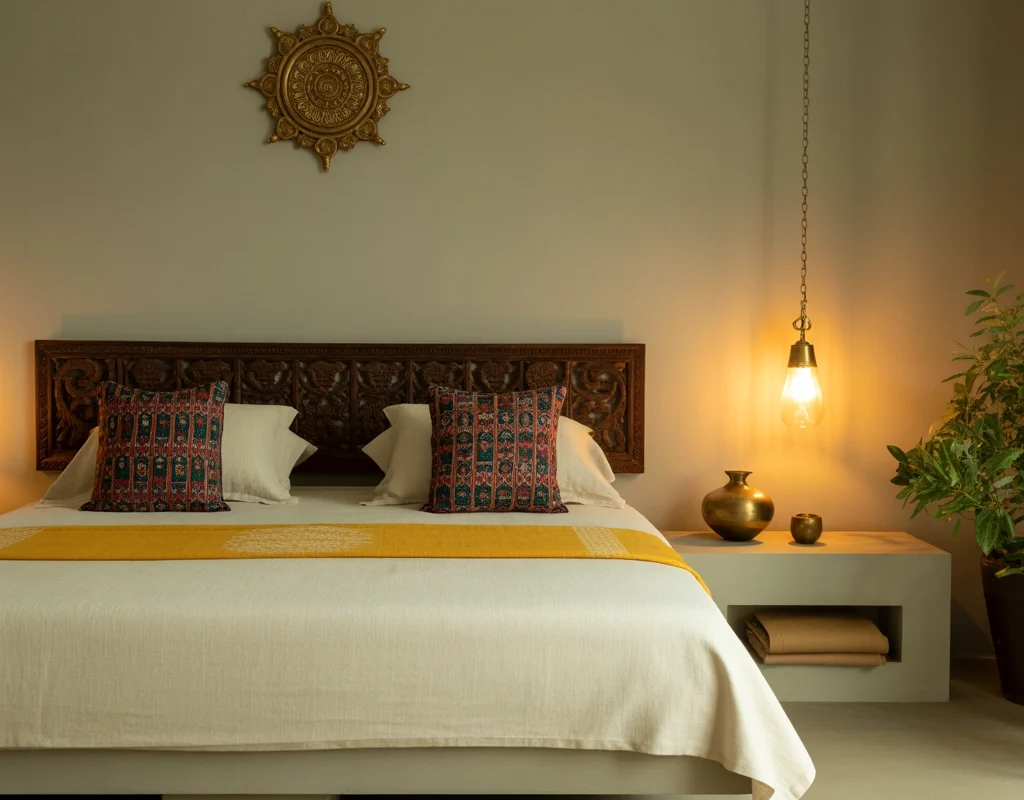
One of the best Indian bedroom decor ideas is to avoid making the room look like a themed display. A balanced combination of traditional and modern elements usually feels more natural and sophisticated.
Start with clean, functional furniture. Then introduce Indian character through selected details such as a carved headboard, printed bedding, brass lamps, a handwoven rug, or traditional artwork.
For example, a modern white bedroom can be styled with an indigo block-printed quilt, wooden side tables, brass lighting, and one Madhubani painting. The result will feel distinctly Indian without becoming visually crowded.
Similarly, a contemporary grey bedroom can be warmed with terracotta cushions, a cane bench, a patterned dhurrie, and carved wooden accessories.
Try to leave some empty space around decorative items. Indian décor is known for richness, but every surface does not need to be filled. A carefully chosen object becomes more noticeable when it has room to breathe.
I also recommend mixing old and new pieces. A vintage trunk can sit at the foot of a modern bed. An antique mirror can hang above a clean-lined dresser. Traditional textiles can be paired with plain curtains and simple walls.
This fusion approach makes the bedroom easier to update over time. You can change the cushions, bedding, artwork, or accessories without replacing the main furniture.
Choosing the Right Indian Bedroom Color Palette
A successful color palette keeps the bedroom harmonious. Before buying décor items, choose two main colors, one neutral color, and one accent shade.
Here are a few combinations you can try:
Earthy and Calm
Use terracotta, beige, cream, and muted olive. This combination works beautifully with natural wood, jute, and clay accessories.
Royal and Luxurious
Combine maroon, deep blue, antique gold, and ivory. Add velvet, brass, carved furniture, and rich embroidery.
Fresh and Modern
Use white, indigo, pale wood, and small touches of mustard. This palette feels clean while still maintaining an Indian identity.
Colorful and Bohemian
Mix teal, pink, orange, and turquoise with warm neutral walls. Use the colors through cushions, rugs, artwork, and quilts rather than painting every surface.
Soft and Romantic
Choose dusty rose, cream, muted gold, and sage green. Add floral prints, soft lighting, and delicate carved details.
How to Decorate a Small Indian Bedroom
A small bedroom can still look beautiful and culturally rich. The key is to control the number and size of decorative elements.
Use a bed with built-in storage to reduce clutter. Choose one strong focal point, such as a carved headboard or patterned wall, instead of using several bold features.
Mirrors can help the room appear larger. Select a mirror with a carved wooden or brass frame to keep the Indian aesthetic. Place it where it can reflect natural light.
Use floating shelves instead of bulky cabinets. Display only a few meaningful items, such as a brass lamp, framed print, small plant, or handcrafted box.
Light-colored walls and curtains will help the room feel open. Introduce deeper colors through bedding and accessories, which can be changed easily.
Vertical design elements are also useful. Hang artwork higher, use tall curtains, and select narrow storage units to draw the eye upward.
Budget-Friendly Indian Bedroom Decor Tips
You do not need a large budget to create a stylish Indian bedroom. I believe thoughtful choices are more important than expensive purchases.
Begin with textiles because they provide the biggest visual change at a reasonable cost. Replace a plain bedsheet with a printed one, add two embroidered cushion covers, and place a colorful throw at the foot of the bed.
Visit local craft markets, thrift stores, antique shops, and online marketplaces for handcrafted décor. Old wooden trays, metal containers, embroidered fabrics, and traditional frames can often be reused creatively.
You can also try simple DIY projects. Paint terracotta pots, frame a piece of block-printed fabric, stencil a wall border, or replace plain drawer knobs with ceramic or brass handles.
Rearranging existing furniture can make a surprising difference. Move the bed to create a stronger focal point, clear unnecessary items from surfaces, and group decorative objects instead of spreading them throughout the room.
Most importantly, decorate gradually. A room collected over time often feels more personal than one decorated all at once.
Common Mistakes to Avoid
Indian décor can be rich and layered, but without balance it may become overwhelming. Avoid using too many bright colors in equal amounts. Choose one or two dominant shades and use the remaining colors as accents.
Do not mix every available pattern. Florals, paisleys, geometric prints, embroidery, and mirror work can look beautiful together, but they need common colors or simpler supporting pieces.
Avoid buying decorative items only because they look traditional. Select objects that are useful, meaningful, or genuinely attractive to you.
Poor lighting is another common mistake. Even the most beautiful carved furniture and textiles can lose their charm under harsh lighting.
Finally, do not ignore comfort. A bedroom should remain easy to clean, move through, and relax in. Decorative pillows, rugs, and accessories should enhance the room rather than make it difficult to use.
Final Thoughts
Indian bedroom décor is about more than bold colors and traditional patterns. It is about warmth, craftsmanship, comfort, memory, and personal expression. The most beautiful Indian bedrooms often combine handmade details with practical modern living.
You can begin with one simple change. Add a block-printed quilt, place a brass lamp beside the bed, introduce a handwoven rug, or hang a piece of traditional art. Once you establish a clear color palette, you can gradually layer in wooden furniture, textured fabrics, plants, and decorative lighting.
The goal is not to copy a showroom or create a heavily themed room. Your bedroom should reflect your personality and make you feel comfortable every time you enter it. Whether you prefer royal elegance, earthy simplicity, colorful bohemian style, or modern Indian fusion, these 12 Indian bedroom decor ideas can help you design a space that feels beautiful, soulful, and completely your own.
Frequently Asked Questions About Indian Bedroom Décor
What colors are best for an Indian-style bedroom?
Popular colors include terracotta, mustard, maroon, teal, peacock blue, emerald green, ivory, and warm beige. For a relaxing bedroom, pair one rich color with lighter neutral shades.
How can I make my bedroom look Indian without changing the furniture?
Use block-printed bedding, embroidered cushions, brass accessories, Indian artwork, a patterned rug, and warm lighting. These details can transform the room without requiring new furniture.
Is Indian bedroom décor suitable for small rooms?
Yes. Use lighter walls, compact wooden furniture, one statement feature, wall-mounted lighting, mirrors, and carefully selected textiles. Avoid filling every surface with decorative objects.
Can Indian and modern décor be mixed?
Indian and modern décor work very well together. Pair simple furniture with traditional textiles, carved accents, brass lighting, handcrafted rugs, or folk artwork for a balanced fusion style.
Which materials work best in Indian bedroom interiors?
Wood, cotton, linen, silk, cane, rattan, jute, brass, clay, and handwoven fabrics are ideal. These materials add warmth, texture, and an authentic handcrafted quality.
How can I create a luxury Indian bedroom?
Use a carved wooden bed, rich fabrics, coordinated cushions, brass lighting, deep colors, quality bedding, framed artwork, and layered rugs. Keep the arrangement balanced so the room feels elegant rather than crowded.
