
When I first started paying attention to kitchen interiors, I always looked at cabinets, countertops, backsplash tiles, and flooring. The ceiling was honestly the last thing on my mind. But over time, I realized something important: the ceiling can completely change the way a kitchen feels. A plain ceiling can make even a beautiful kitchen look unfinished, while a thoughtfully designed ceiling can add warmth, height, character, and style.
That is why ceiling design ideas for kitchen spaces have become so important in modern home design. The kitchen is no longer just a place where meals are prepared. It is where families talk, guests gather, kids do homework, and late-night snacks somehow taste better. Because the kitchen has become such a central part of the home, every detail matters, including the ceiling.
A good kitchen ceiling design can do many things at once. It can hide wiring, improve lighting, define the cooking zone, add texture, create a cozy mood, or make a small kitchen feel more open. The right ceiling design can also connect the kitchen with the dining area or living room, especially in open-plan homes.
In this article, I am sharing 15 ceiling design ideas for kitchen spaces that feel practical, stylish, and realistic. Some ideas are simple and budget-friendly, while others are more luxurious and architectural. Whether your kitchen is small, modern, rustic, traditional, or open-concept, you will find inspiration here to make your ceiling look like a real design feature instead of an empty white surface.
1. Simple False Ceiling with Recessed Lights
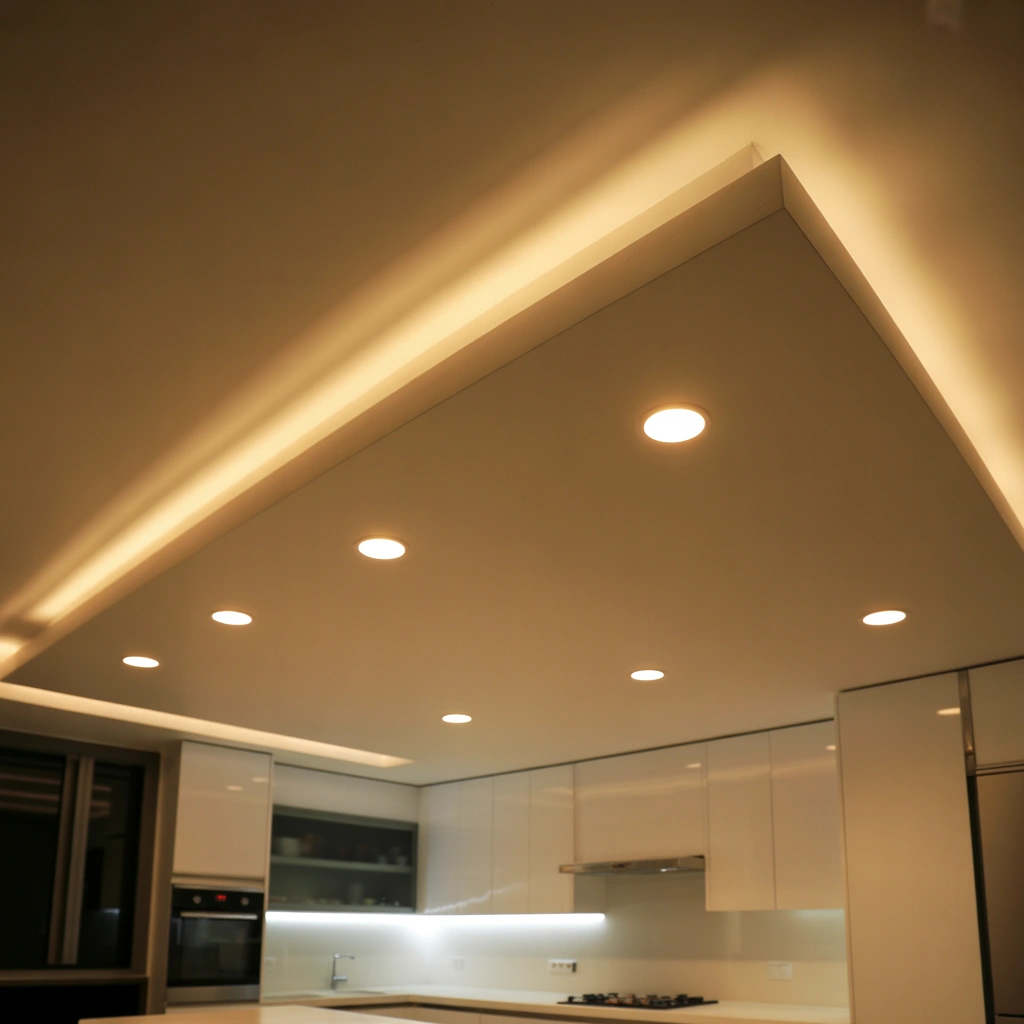
A simple false ceiling is one of the most popular ceiling design ideas for kitchen interiors because it looks clean, modern, and practical. If you prefer a neat kitchen without too many decorative details, this design is a safe and stylish choice.
A false ceiling is usually installed below the main ceiling. It gives you space to hide electrical wiring, install recessed lights, and create a smooth finished look. In a kitchen, this can be very useful because lighting is not just decorative. You need proper light for chopping, cooking, cleaning, and serving food.
I personally like this design because it does not overpower the kitchen. It works beautifully with white cabinets, wooden cabinets, marble countertops, or even colorful kitchen themes. The ceiling stays simple, but the recessed lights make the whole space feel brighter and more polished.
For a modern look, choose warm white lights instead of harsh bright white lighting. Warm lighting makes the kitchen feel comfortable, especially in the evening. You can also install separate lighting zones so the cooking area, sink area, and breakfast counter can be controlled individually.
This ceiling design is perfect for small and medium kitchens because it adds elegance without making the room feel heavy. Keep the edges clean, avoid too many layers, and let the lighting do the work.
2. Wooden Beam Ceiling for a Warm Kitchen Look
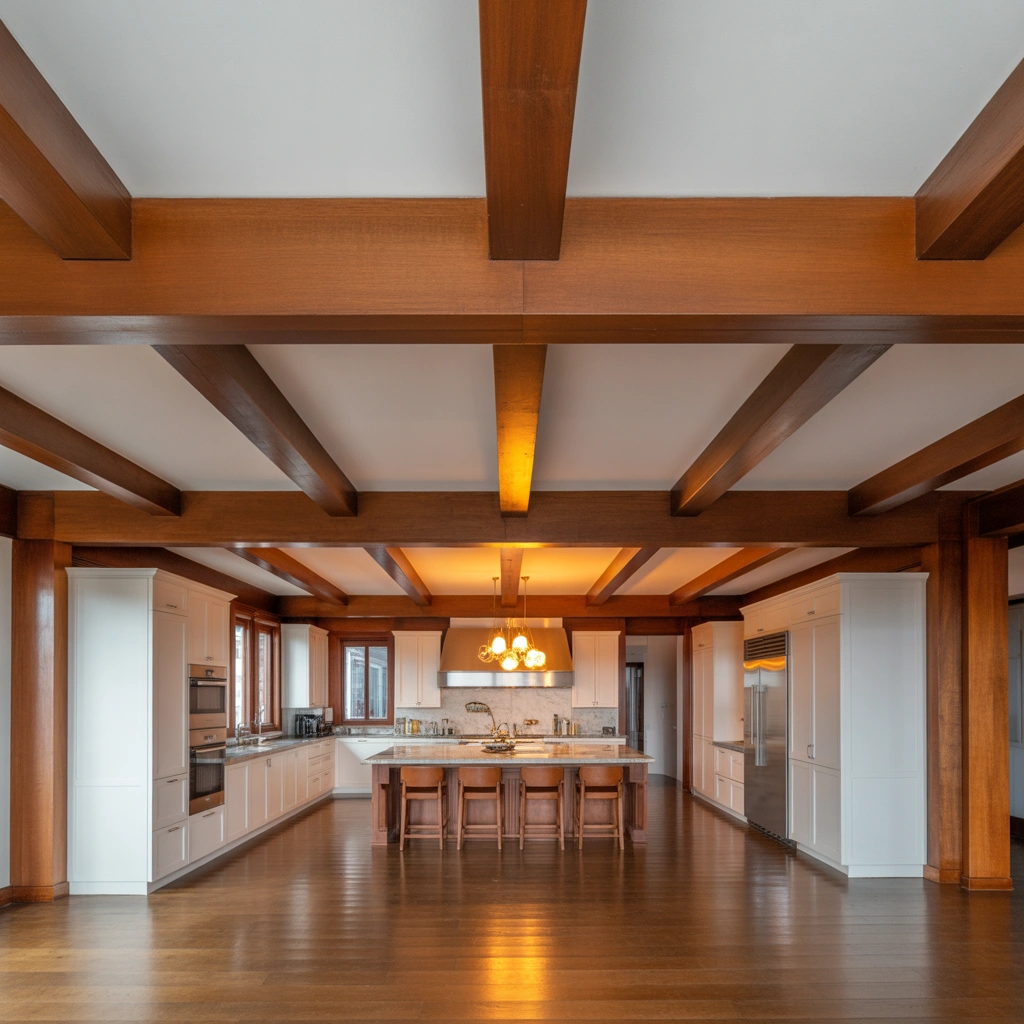
Wooden beams can instantly make a kitchen feel warm, welcoming, and full of character. This is one of my favorite kitchen ceiling design ideas because it brings natural texture into the room without needing too much decoration.
Wooden beams work especially well in farmhouse kitchens, rustic kitchens, cottage-style homes, and modern organic interiors. Even if your kitchen is very simple, adding beams to the ceiling can make it feel more designed and intentional.
You do not always need real structural beams. Many homeowners use decorative wooden beams that are lighter and easier to install. These beams can be stained dark for a bold rustic look or kept light for a soft Scandinavian-inspired kitchen.
If your kitchen has white cabinets, wooden beams create a beautiful contrast. If your kitchen already has wooden cabinets, match the beam tone carefully so the space feels coordinated instead of too busy. A light oak ceiling beam with cream cabinets can feel calm and natural, while dark walnut beams can make the space feel rich and dramatic.
This idea works best when the ceiling has enough height. In a low-ceiling kitchen, choose slimmer beams and keep the color lighter. Heavy dark beams can make a small kitchen feel closed in if not balanced properly.
3. Tray Ceiling for an Elegant Kitchen
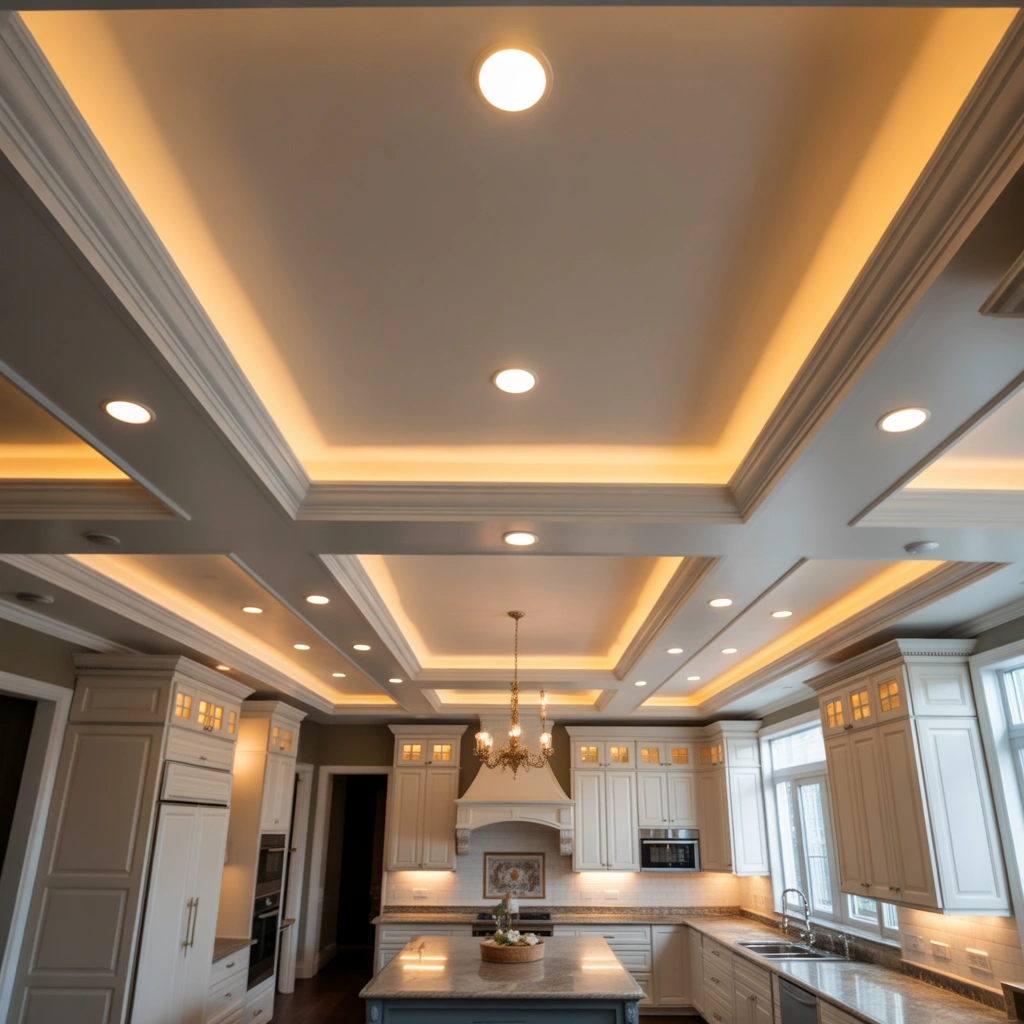
A tray ceiling is a beautiful way to add depth and elegance to a kitchen. It has a raised center section that creates a layered effect, almost like a frame on the ceiling. This design is perfect if you want your kitchen to feel more refined without making it too flashy.
Tray ceilings look especially good above kitchen islands. The raised center can visually define the island area and make it feel like the heart of the kitchen. You can also add cove lighting inside the tray for a soft glow that feels cozy and luxurious.
What I like about tray ceilings is that they add architecture without needing bold colors or heavy materials. Even a white tray ceiling can look beautiful because the shape itself creates interest.
For a modern kitchen, keep the tray lines straight and minimal. For a traditional kitchen, you can add crown molding around the edges. If your kitchen has pendant lights over the island, a tray ceiling can make those lights look even more dramatic.
This ceiling design works best in kitchens with medium to high ceilings. If the ceiling is too low, the layered structure may feel cramped. But when done correctly, a tray ceiling can make the kitchen look expensive and well-planned.
4. Coffered Ceiling for a Luxury Kitchen
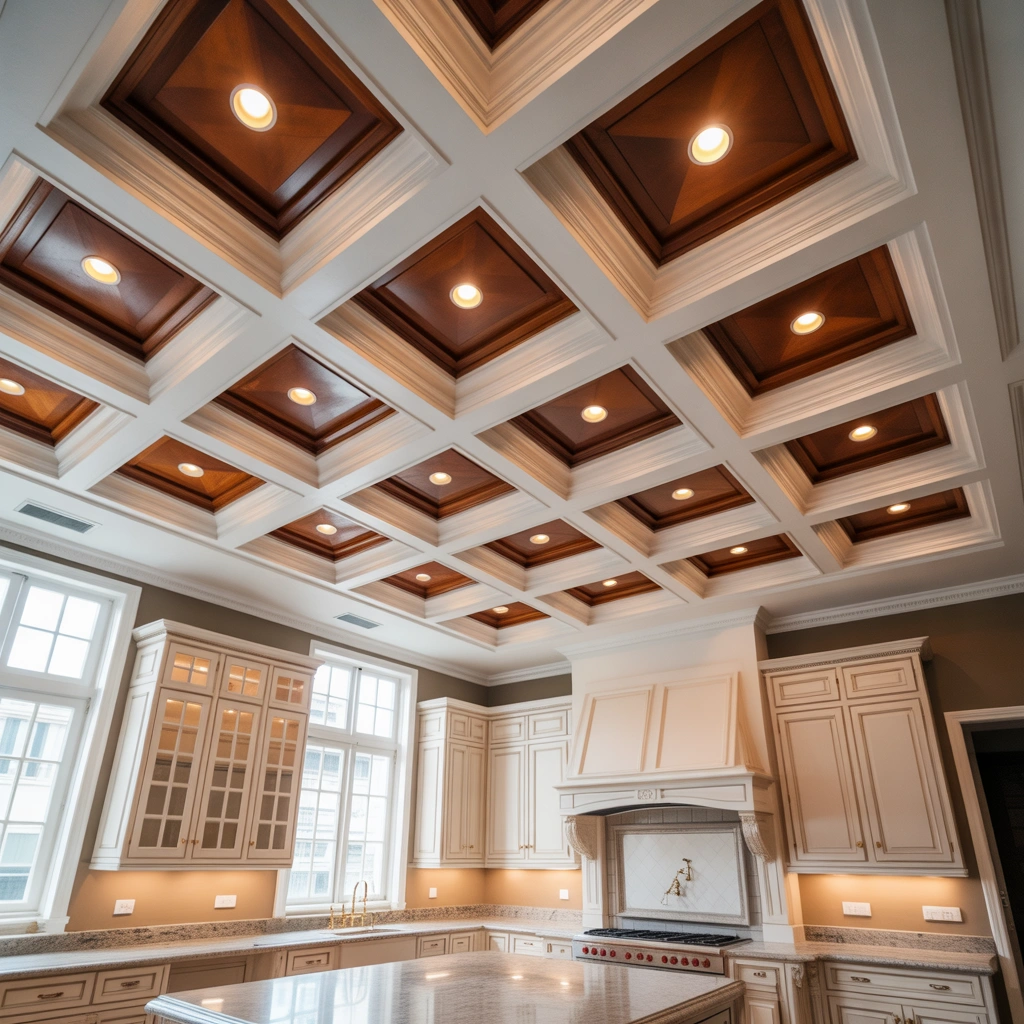
A coffered ceiling is one of the most classic and luxurious ceiling design ideas for kitchen spaces. It features a grid of recessed panels, usually framed with beams or molding. The result is rich, architectural, and timeless.
This design is ideal for large kitchens, open kitchens, and homes with traditional or transitional interiors. If you have a spacious kitchen with a big island, a coffered ceiling can make the room feel grand and balanced.
Coffered ceilings can be painted white for a clean and elegant look. You can also use contrasting colors to highlight the grid pattern. For example, white beams with a soft gray recessed panel can add depth without feeling too dark.
One thing to remember is that coffered ceilings are visually strong. They naturally draw the eye upward, so the rest of the kitchen should not compete too much. If your cabinets, backsplash, and flooring are already very detailed, keep the coffered ceiling simple.
This design may cost more than basic ceiling options, but it can completely transform the kitchen. It gives the room a custom-built feeling, which is perfect if you want your kitchen to look high-end and memorable.
5. POP Ceiling Design for a Stylish Kitchen
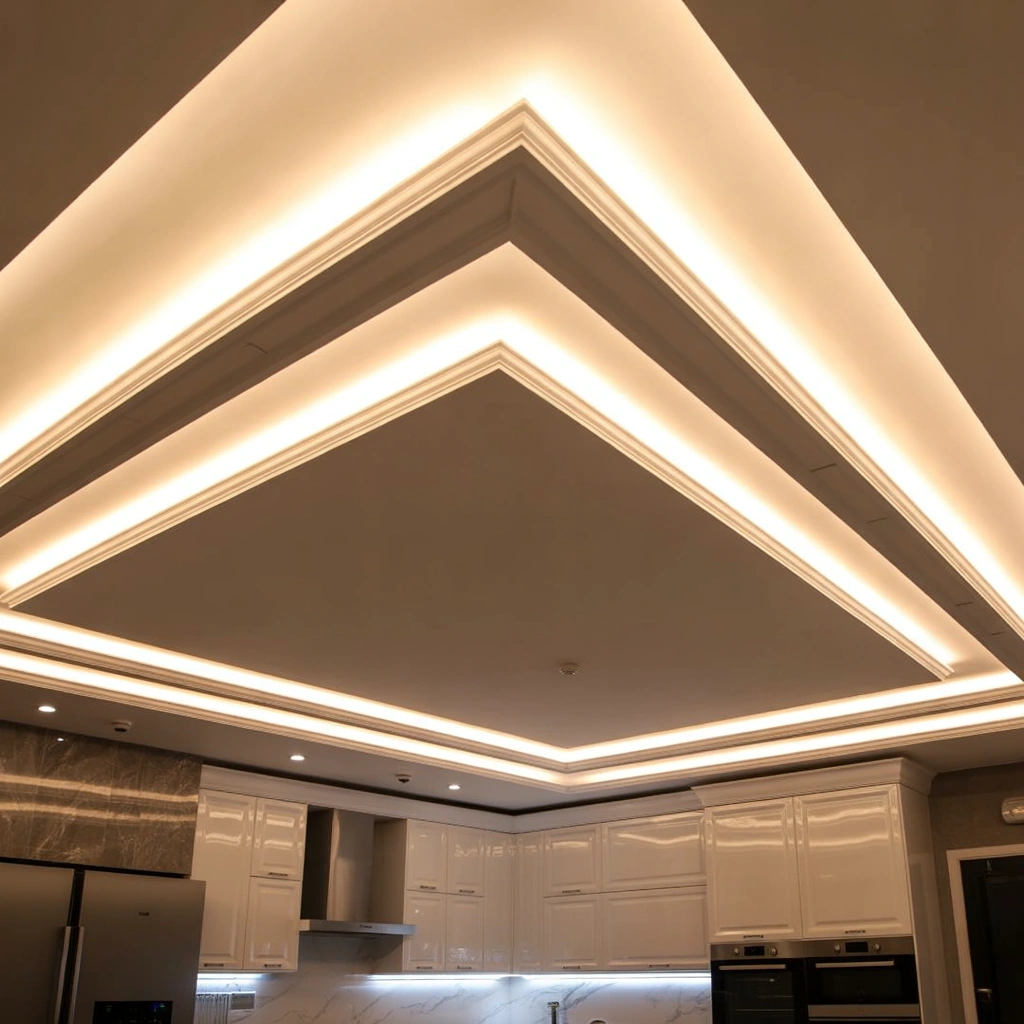
POP, or Plaster of Paris, is widely used for decorative ceiling designs. A POP ceiling can be shaped into clean lines, curves, borders, or layered patterns. This makes it a flexible option for homeowners who want a customized kitchen ceiling.
One reason POP ceilings are so popular is that they can suit many styles. You can create a simple border with recessed lights, a soft curved design above the island, or a more detailed pattern for a decorative kitchen.
For a modern kitchen, I would suggest keeping the POP design minimal. Too many curves or heavy patterns can make the kitchen look outdated. Clean borders, simple layers, and hidden lighting usually look more elegant.
POP ceilings are also useful for hiding wiring, uneven ceiling surfaces, or lighting fixtures. If your kitchen ceiling has imperfections, a POP design can give it a smooth and finished appearance.
This idea is great for homeowners who want something more decorative than a plain ceiling but less expensive than wood or coffered designs. Choose a moisture-resistant finish and make sure the kitchen has proper ventilation, because kitchens deal with heat, steam, and humidity.
6. Exposed Concrete Ceiling for an Industrial Kitchen
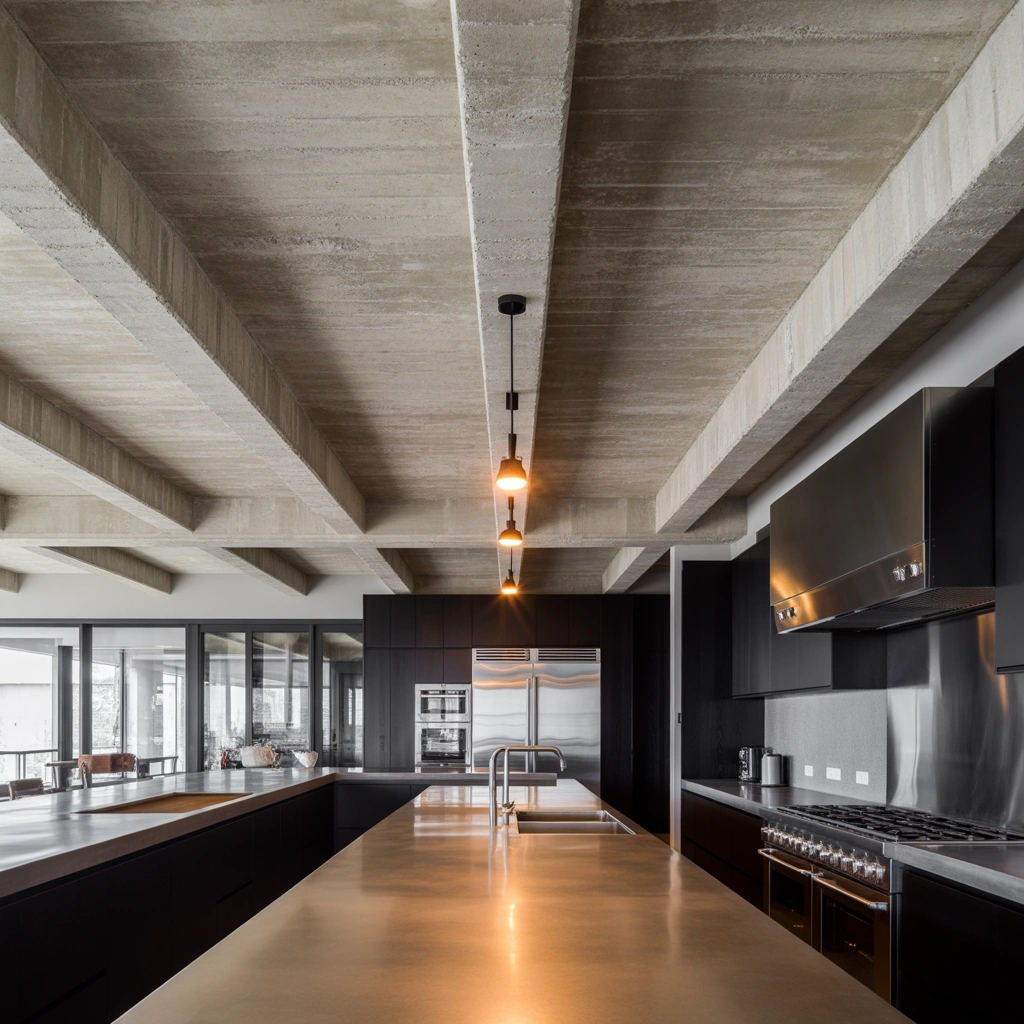
An exposed concrete ceiling gives the kitchen a raw, modern, and urban look. It is perfect for industrial-style kitchens, loft apartments, and minimalist homes. Instead of hiding the ceiling, this design celebrates its natural texture.
This type of ceiling pairs well with black metal fixtures, open shelving, matte cabinets, and stone countertops. It creates a strong design statement without needing extra decoration.
I like exposed concrete ceilings because they feel honest and bold. They are not trying to look overly polished. They bring a sense of personality to the kitchen, especially when paired with warm wood or soft lighting.
However, concrete can feel cold if the rest of the kitchen is too plain. To balance it, add wooden cabinets, brass handles, warm lights, or textured rugs. These details soften the industrial look and make the kitchen feel livable.
This ceiling design works best in spaces with good natural light. In a dark kitchen, exposed concrete may feel heavy. But in the right setting, it can make the kitchen look modern, artistic, and very stylish.
7. Shiplap Ceiling for a Cozy Kitchen
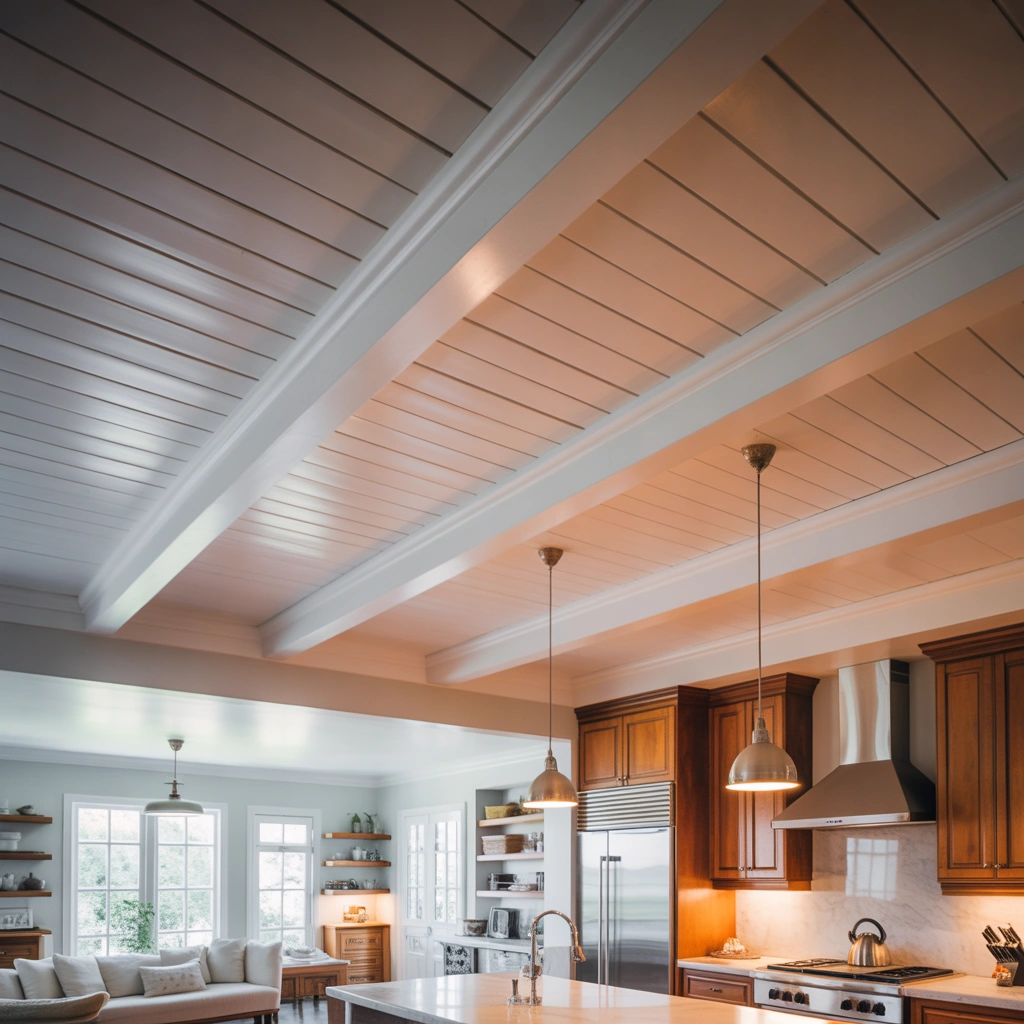
A shiplap ceiling is a lovely choice if you want your kitchen to feel cozy, casual, and charming. Shiplap consists of horizontal or vertical wooden boards installed across the ceiling. It adds texture without looking too heavy.
This design works beautifully in farmhouse kitchens, coastal kitchens, cottage kitchens, and relaxed modern homes. White shiplap ceilings are especially popular because they brighten the room while adding subtle detail.
If you want a soft and airy kitchen, pair a white shiplap ceiling with light wood flooring, cream cabinets, and simple pendant lights. For a more rustic feel, use natural wood shiplap instead of painted boards.
One thing I love about shiplap is that it makes a kitchen feel lived-in and comfortable. It does not feel too formal. It gives the space personality in a quiet way.
Shiplap is also useful for long kitchens because the direction of the boards can visually stretch the space. Running boards lengthwise can make the kitchen feel longer, while crosswise boards can make it feel wider.
8. Ceiling with Statement Pendant Lights
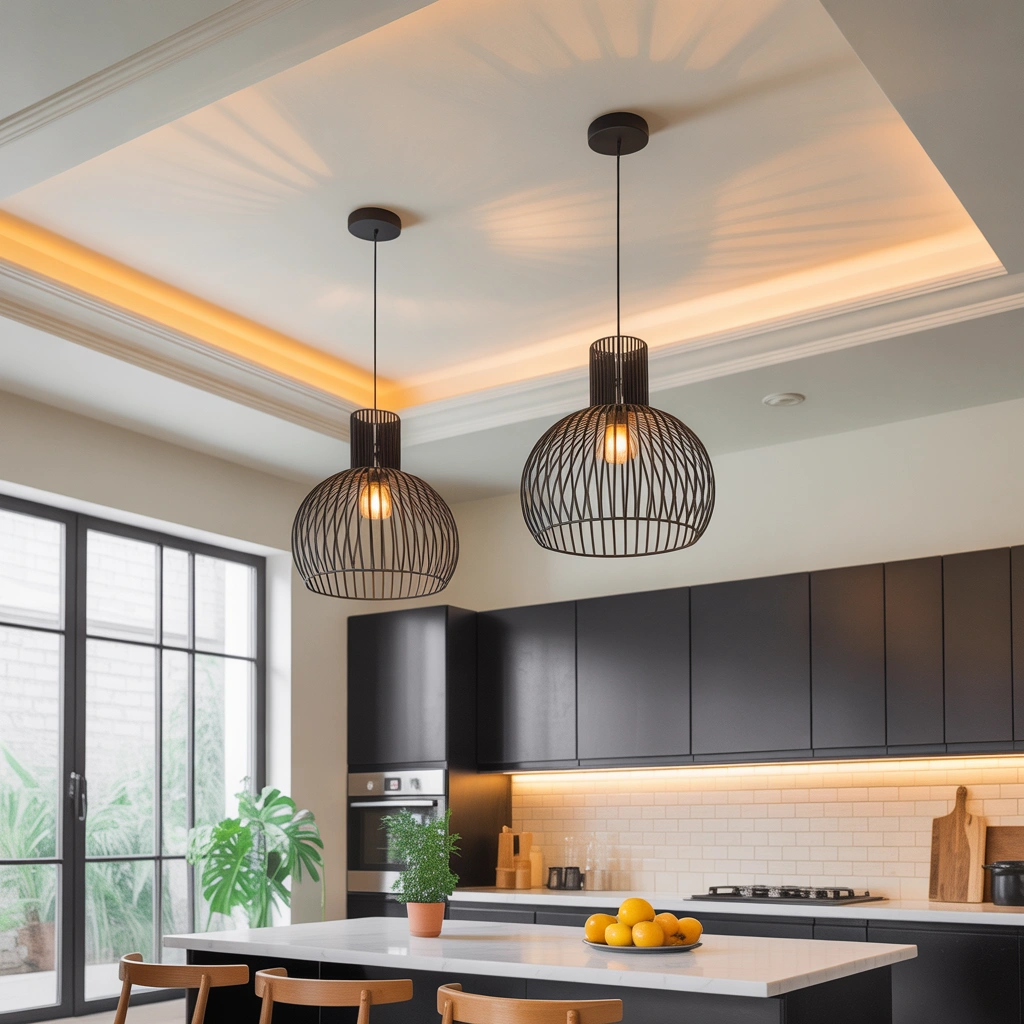
Sometimes the best kitchen ceiling design is not about changing the ceiling structure itself. It is about choosing the right lighting. Statement pendant lights can turn a simple ceiling into a stylish focal point.
Pendant lights are especially effective above kitchen islands, breakfast bars, and dining corners. They add personality and help define the area below. A plain white ceiling can look completely different when paired with beautiful lighting.
There are many styles to choose from. Glass pendants feel light and elegant. Black metal pendants feel modern and bold. Woven rattan pendants create a relaxed natural look. Brass pendants add warmth and luxury.
The key is choosing the right size. Small pendants can look lost over a large island, while oversized pendants can overwhelm a small kitchen. As a general design rule, the lights should feel proportional to the island and ceiling height.
I also suggest using dimmable lighting if possible. Bright light is useful while cooking, but softer light feels better when eating or relaxing. This small detail can make your kitchen feel much more comfortable.
9. Cove Lighting Ceiling for a Soft Glow
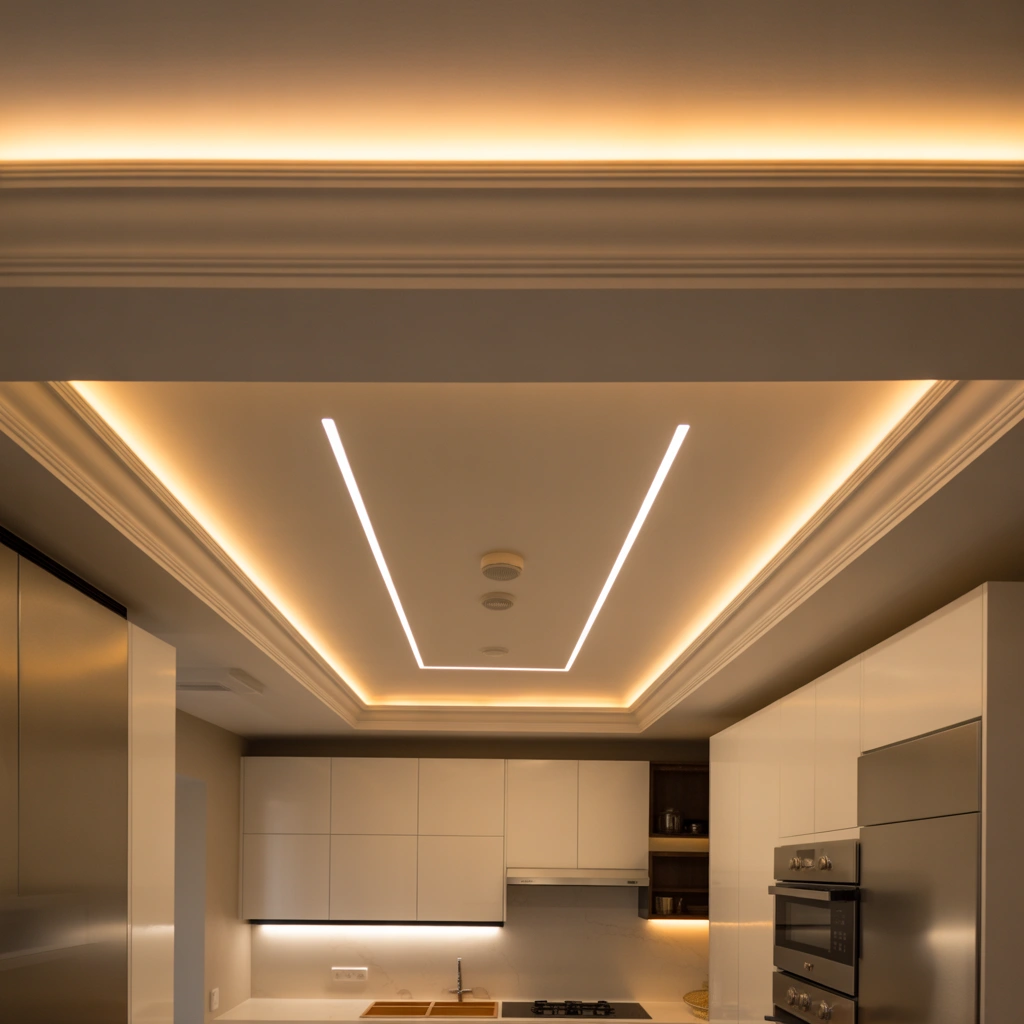
Cove lighting is a beautiful ceiling idea for kitchens where you want a soft and elegant atmosphere. It uses hidden lighting placed inside ceiling edges, recesses, or ledges. Instead of shining directly downward, the light reflects gently across the ceiling.
This type of lighting makes the kitchen feel calm, modern, and slightly luxurious. It is especially nice in open-plan kitchens because it creates mood lighting without feeling harsh.
Cove lighting works well with tray ceilings, false ceilings, and POP ceilings. You can use it around the perimeter of the ceiling or only above the kitchen island. The result is subtle but very effective.
I like cove lighting because it makes the kitchen feel warm in the evening. When the main lights are off, the soft ceiling glow can make the whole space feel relaxing.
For the best result, choose warm or neutral light tones. Avoid overly colorful LED strips unless you are designing a very playful or themed kitchen. In most homes, soft white lighting looks more timeless.
10. Skylight Ceiling for Natural Brightness
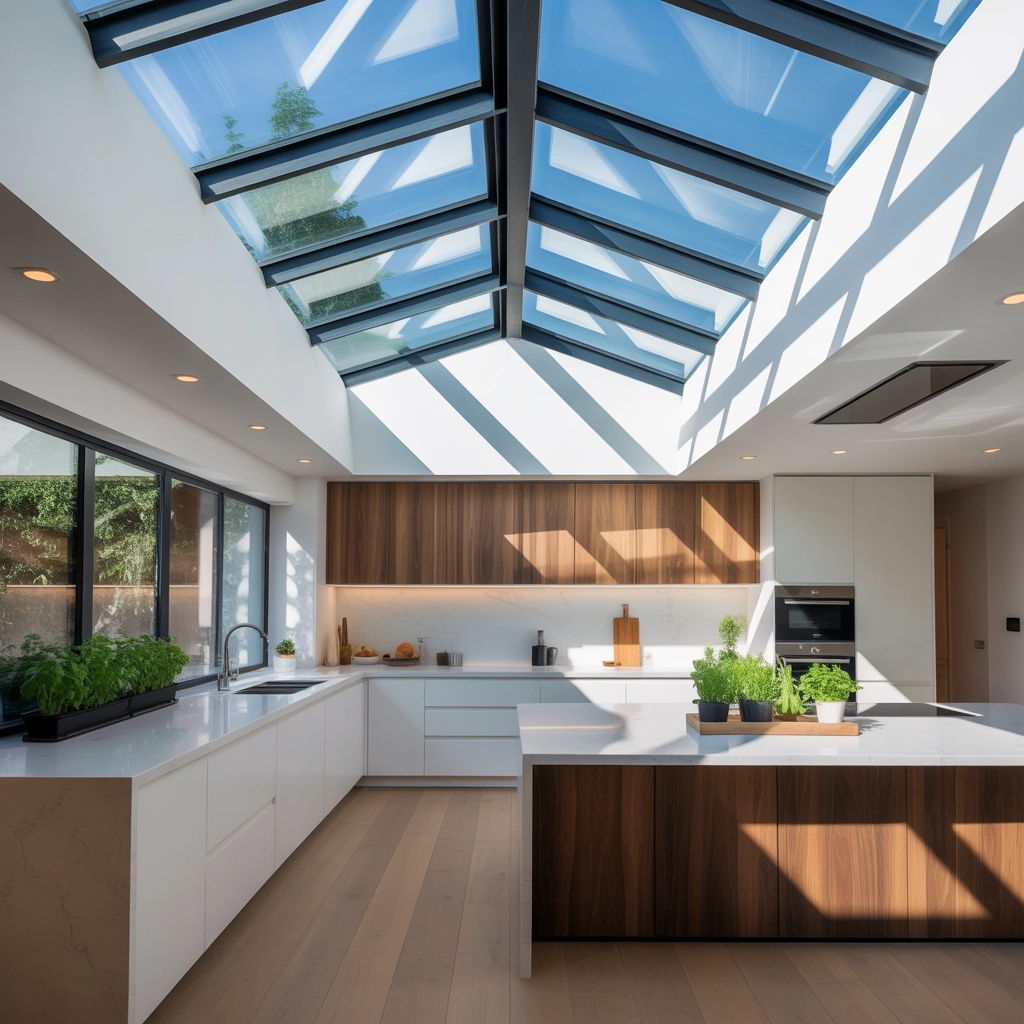
If your kitchen allows it, a skylight ceiling can be one of the most beautiful upgrades. Natural light makes a kitchen feel fresh, open, and happy. A skylight brings daylight from above, which is especially helpful in kitchens that do not have many windows.
A skylight works well above the island, sink, or dining area. It can make everyday tasks feel more pleasant because the space feels naturally bright.
This ceiling idea is perfect for modern homes, small kitchens, and kitchens located in the center of the house. It can reduce the need for artificial lighting during the day and make the room feel more connected to the outdoors.
However, skylights need careful planning. You must consider heat, glare, waterproofing, and ventilation. A poorly installed skylight can create problems, so it is important to work with a professional.
For a softer look, choose a skylight with a clean frame and pair it with simple ceiling finishes. Let the natural light become the main feature.
11. Vaulted Ceiling for an Open Kitchen Feel
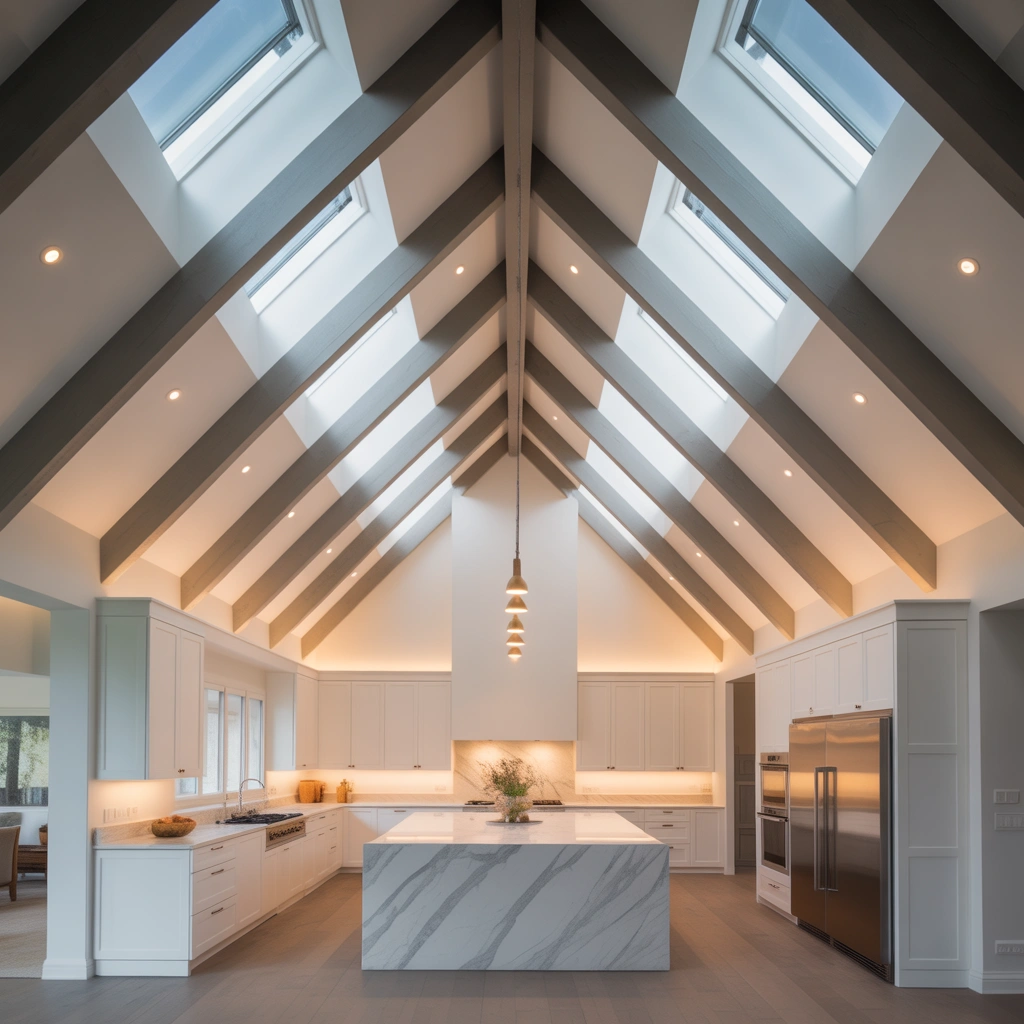
A vaulted ceiling can make a kitchen feel spacious, airy, and dramatic. This design follows the roofline, creating a higher ceiling that opens up the room. If you love bright and open interiors, this is a stunning option.
Vaulted ceilings work beautifully in open-concept kitchens, farmhouse homes, modern rustic interiors, and homes with large windows. They make the kitchen feel less boxed in and more connected to the rest of the house.
You can keep a vaulted ceiling plain white for a clean look, or add beams for extra character. Wooden beams on a vaulted ceiling create a warm and architectural feeling.
The main benefit of a vaulted ceiling is the sense of space. Even a simple kitchen can feel impressive when the ceiling height is generous. It also gives you more room for larger pendant lights or chandeliers.
The only thing to keep in mind is lighting. High ceilings need well-planned lighting so the kitchen does not feel dim. A mix of recessed lights, pendants, and wall lighting usually works best.
12. Metal Ceiling Panels for a Bold Look
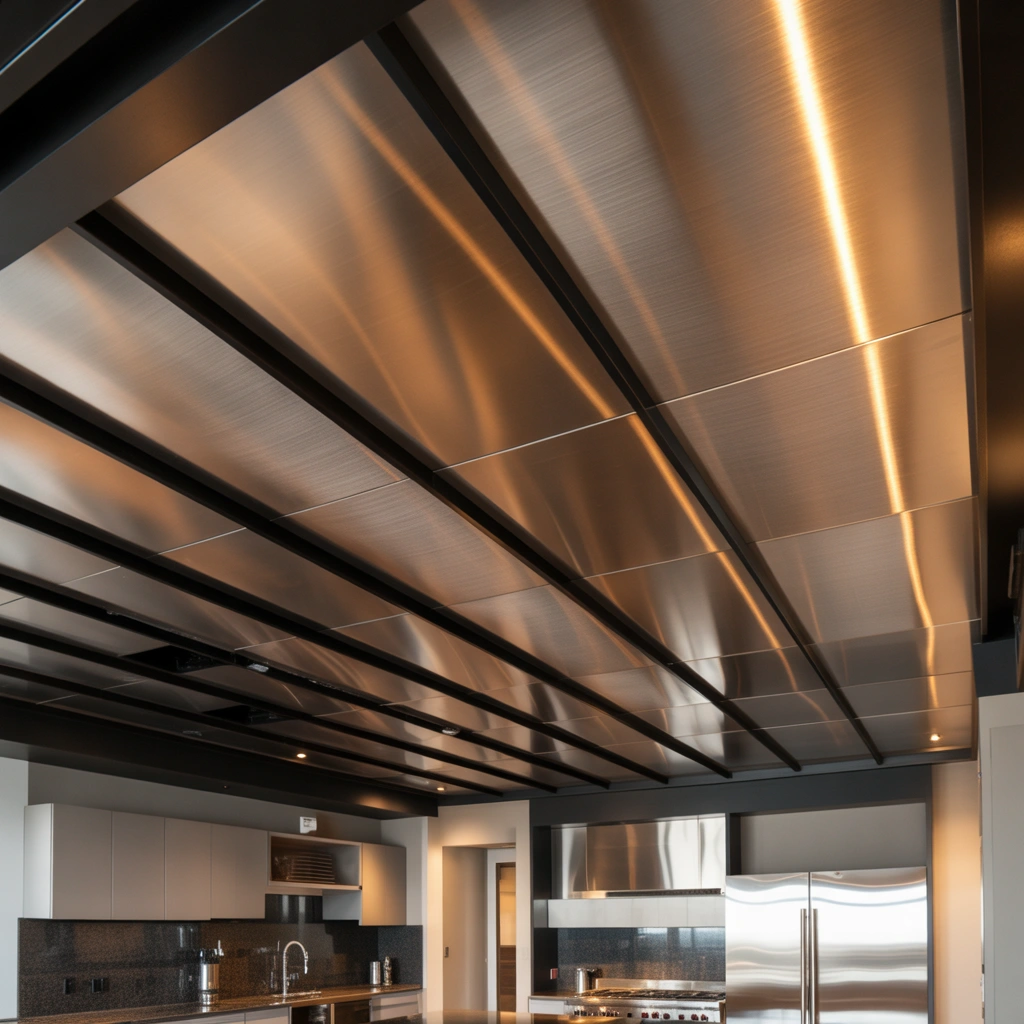
Metal ceiling panels can give a kitchen a unique and stylish appearance. They are not as common as wood or false ceilings, which makes them perfect if you want something different.
Tin-style ceiling panels are often used in vintage or industrial kitchens. They add pattern, shine, and texture to the ceiling. In a modern kitchen, sleek metal panels can create a clean and contemporary look.
This idea works especially well in kitchens with simple cabinets and neutral colors. The ceiling becomes the feature, so the rest of the kitchen should stay balanced.
Metal ceilings can reflect light, which helps brighten the space. However, too much shine can feel overwhelming, so choose the finish carefully. Brushed metal, matte metal, or antique finishes often look more elegant than highly polished surfaces.
If you want a bold kitchen ceiling design but do not want heavy construction, metal panels can be a creative choice. They add instant character and can make the kitchen feel custom-designed.
13. Painted Ceiling for a Budget-Friendly Upgrade
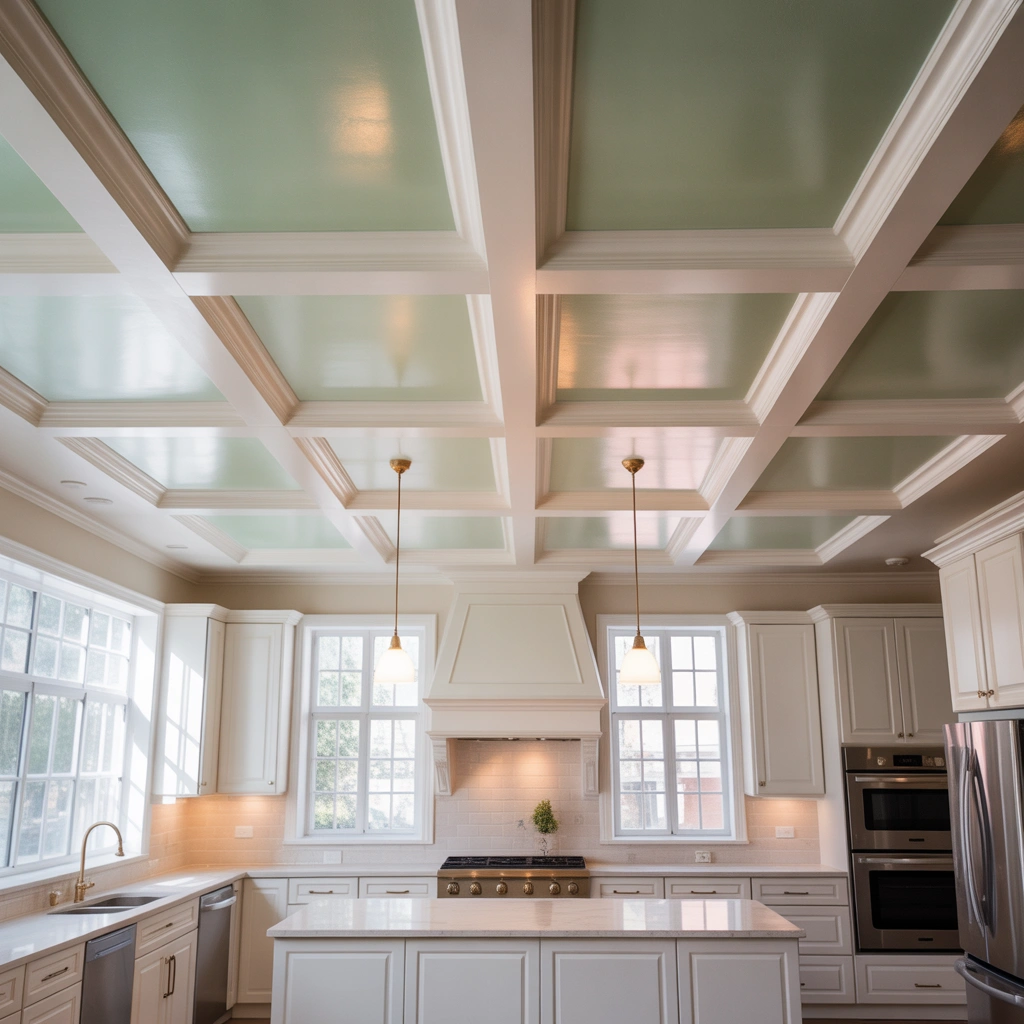
A painted ceiling is one of the easiest and most budget-friendly kitchen ceiling design ideas. You do not always need major construction to make your ceiling stand out. Sometimes, the right paint color is enough.
Most people paint kitchen ceilings white, and that is perfectly fine. But adding a soft color can create a beautiful effect. Pale blue, warm beige, soft gray, muted green, or creamy ivory can make the kitchen feel more thoughtful and complete.
If your kitchen has neutral cabinets, a colored ceiling can add personality without changing the whole room. For example, a soft sage green ceiling can look lovely with white cabinets and brass handles.
For a bold design, you can paint the ceiling a darker shade. This works best in kitchens with high ceilings and plenty of natural light. Dark ceilings can feel cozy and dramatic, but they should be used carefully in small kitchens.
Always choose paint that can handle kitchen conditions. A washable finish is helpful because kitchens deal with steam, grease, and occasional splashes.
14. Ceiling with Wallpaper for a Decorative Touch
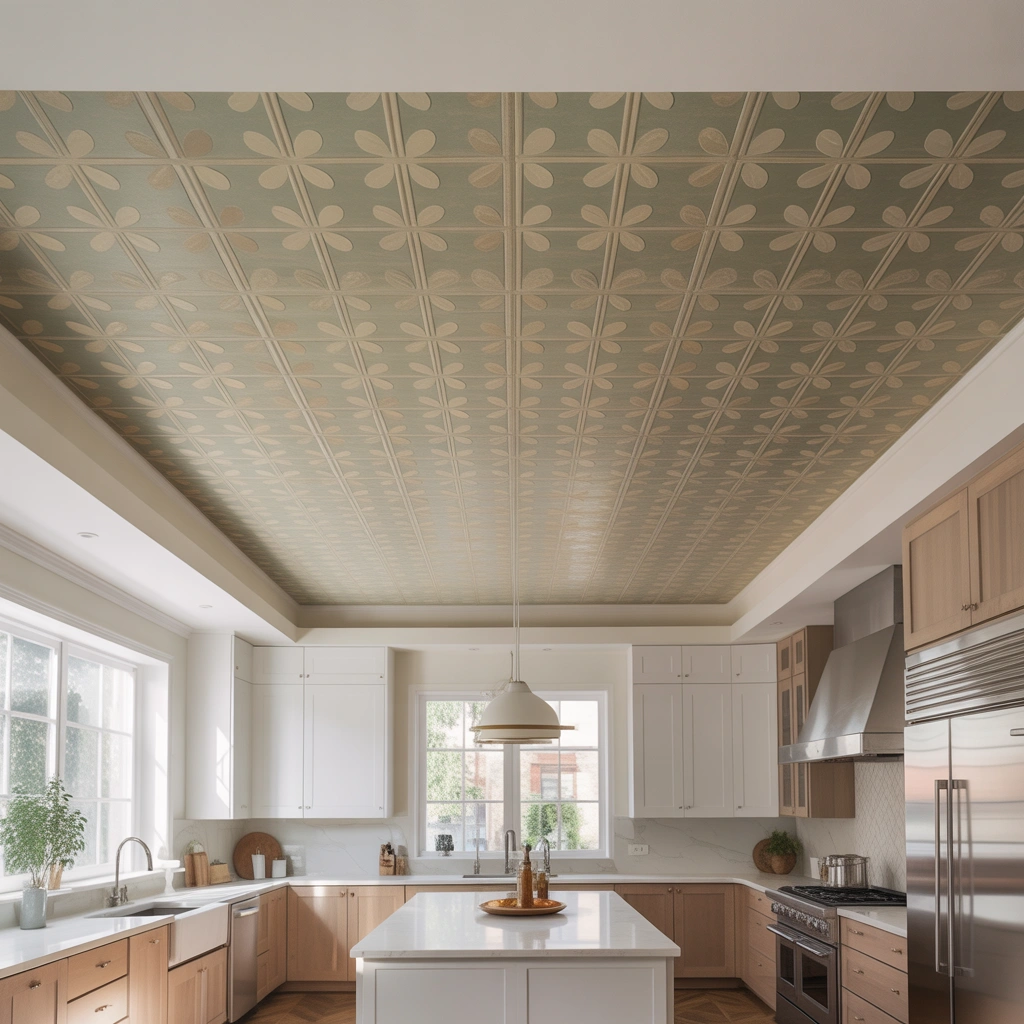
Ceiling wallpaper is a creative idea for homeowners who want something unique and expressive. It may sound unusual at first, but when done well, it can look beautiful.
Wallpaper on the ceiling can add pattern, color, and charm. It works especially well in small kitchens, breakfast nooks, butler’s pantries, or cozy cottage-style kitchens. Since the ceiling is separate from the walls, the pattern can feel surprising without overwhelming the whole room.
For a subtle look, choose a soft pattern in neutral colors. For a playful kitchen, try floral, geometric, or vintage-inspired wallpaper. If your kitchen cabinets are simple, wallpaper can bring life to the space.
I personally think ceiling wallpaper works best when the rest of the kitchen is not too busy. If you already have patterned tiles, colorful cabinets, and bold countertops, adding wallpaper overhead might be too much.
Make sure to use wallpaper suitable for kitchen conditions. Good ventilation is important because moisture and heat can affect adhesive over time.
15. Minimalist Flat Ceiling with Layered Lighting
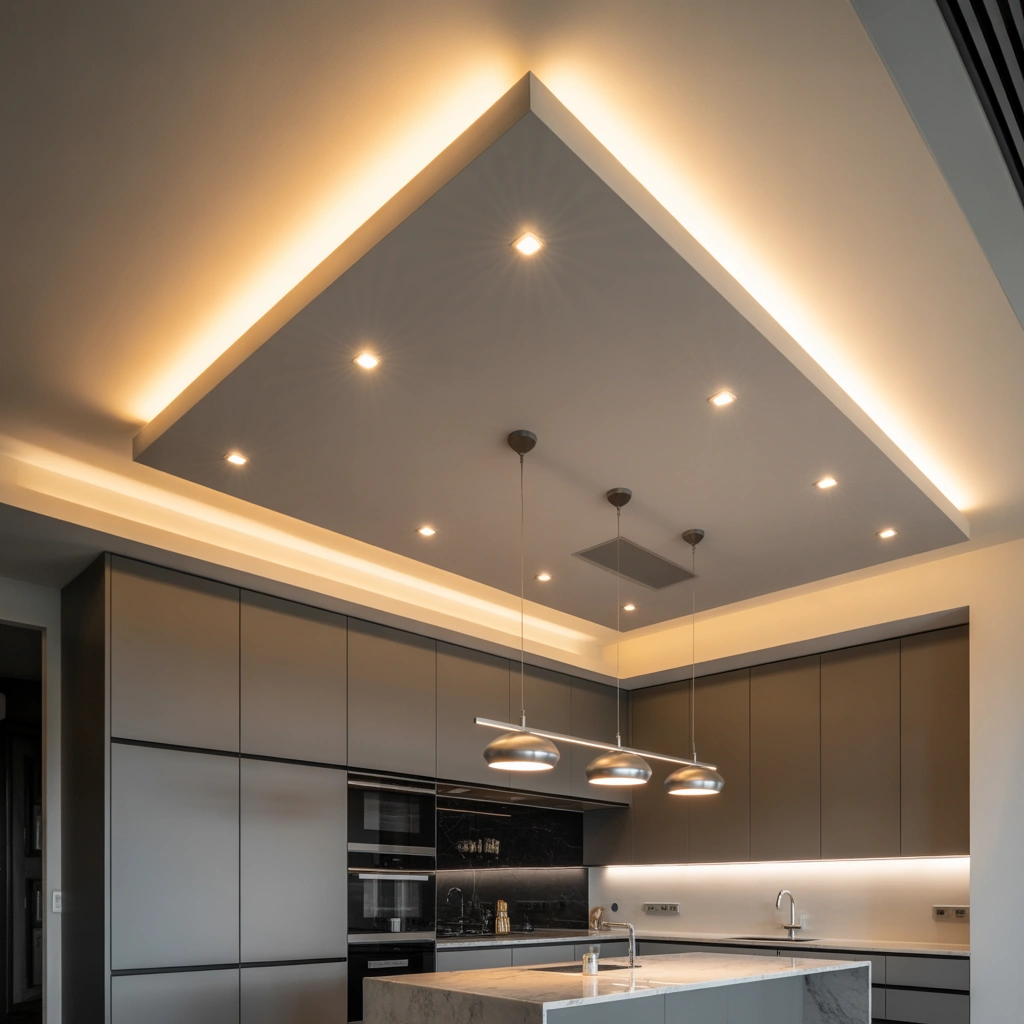
Not every kitchen needs a dramatic ceiling. Sometimes a clean flat ceiling with layered lighting is the most elegant choice. This design is perfect for modern, minimalist, and Scandinavian-style kitchens.
A minimalist ceiling focuses on simplicity. The ceiling surface stays smooth and uncluttered, while the lighting plan does the design work. You can combine recessed lights, pendant lights, under-cabinet lighting, and soft ambient lights.
This idea is great for small kitchens because it keeps the room feeling open. Heavy ceiling details can sometimes make a small kitchen feel crowded, but a flat ceiling keeps everything calm and clean.
To make this design work, pay attention to the quality of the finish. A smooth ceiling, neat paintwork, and carefully placed lights are important. Minimalist design looks simple, but every detail must be intentional.
I like this option because it feels timeless. Trends come and go, but a clean ceiling with good lighting always looks fresh. It also gives you more freedom to change cabinets, backsplash, or decor later without worrying about the ceiling style.
How to Choose the Best Ceiling Design for Your Kitchen
Choosing the right kitchen ceiling design depends on your space, budget, ceiling height, and overall interior style. Before selecting a design, look at your kitchen carefully.
If your kitchen is small, choose light colors, simple false ceilings, recessed lights, or a clean flat ceiling. These options keep the room open and bright. Avoid heavy beams, dark colors, or too many layers unless the design is very carefully planned.
If your kitchen is large, you have more freedom. You can try coffered ceilings, tray ceilings, exposed beams, vaulted ceilings, or statement lighting. Large kitchens can handle stronger ceiling features because the space gives them room to breathe.
If your kitchen has low ceilings, avoid bulky designs. Slim recessed lighting, painted ceilings, or simple ceiling borders will work better. If your ceiling is high, you can use beams, chandeliers, layered designs, or dramatic lighting.
Also think about maintenance. Kitchens deal with heat, smoke, oil, and moisture. Choose materials that are easy to clean and suitable for kitchen conditions. A beautiful ceiling should not become a cleaning problem later.
Best Kitchen Ceiling Materials to Consider
There are several materials you can use for kitchen ceiling design. Gypsum is common for false ceilings because it is smooth and modern. POP is flexible for decorative designs. Wood adds warmth and texture. Metal panels create a bold look. Paint is simple and affordable. Wallpaper adds pattern and charm.
The best material depends on your lifestyle. If you cook often, choose finishes that are durable and easy to wipe. If your kitchen has poor ventilation, avoid materials that may absorb too much moisture. If you want a premium look, wood, coffered panels, and layered lighting can make a big difference.
In my opinion, lighting is just as important as the ceiling material. Even the most expensive ceiling can look dull with poor lighting. On the other hand, a simple ceiling can look amazing with the right light placement.
Final Thoughts
The ceiling is often called the fifth wall, and in the kitchen, it truly deserves attention. A beautiful ceiling can make your kitchen feel brighter, warmer, bigger, or more luxurious. It can also help define different zones and bring the whole design together.
These 15 ceiling design ideas for kitchen spaces show that there is no single perfect option. The best ceiling design is the one that fits your home, your budget, and the way you actually use your kitchen.
If you want something simple, go for a flat ceiling with layered lighting or a clean false ceiling. If you want warmth, try wooden beams or shiplap. If you want elegance, consider a tray ceiling or coffered ceiling. If you want something bold, explore concrete, metal panels, wallpaper, or statement lighting.
My personal advice is to choose a ceiling design that supports the rest of your kitchen instead of competing with it. A good ceiling should feel connected to the cabinets, lights, flooring, and overall mood of the room. When everything works together, the kitchen feels complete.
A well-designed kitchen ceiling may not be the first thing people notice, but it is often the detail that makes the whole space feel finished. And once you start looking up, you may never ignore the ceiling again.
