Look, we need to talk about that disaster zone you call a wardrobe. You know the one – where shirts mysteriously disappear into a black hole, and finding matching socks requires an archaeological expedition. I’ve been there, staring at my overstuffed closet at 7 AM, wondering how I own “nothing to wear” yet can’t close the doors properly.
Here’s the brutal truth: small wardrobes aren’t the enemy. Your complete lack of organization strategy is. After living in five different apartments with progressively tinier closets (thanks, urban housing crisis), I’ve become somewhat of a wardrobe wizard. Not by choice, mind you, but because I got tired of my clothes avalanching onto my head every morning.
What you’re about to read isn’t some Pinterest-perfect fantasy that requires a trust fund and carpentry degree. These are real solutions I’ve tested, failed at, refined, and actually use. Some cost less than your morning coffee habit, others might require a weekend and a patient friend. But every single one will transform your cramped closet chaos into something that actually works.
Maximize Vertical Wardrobe Storage
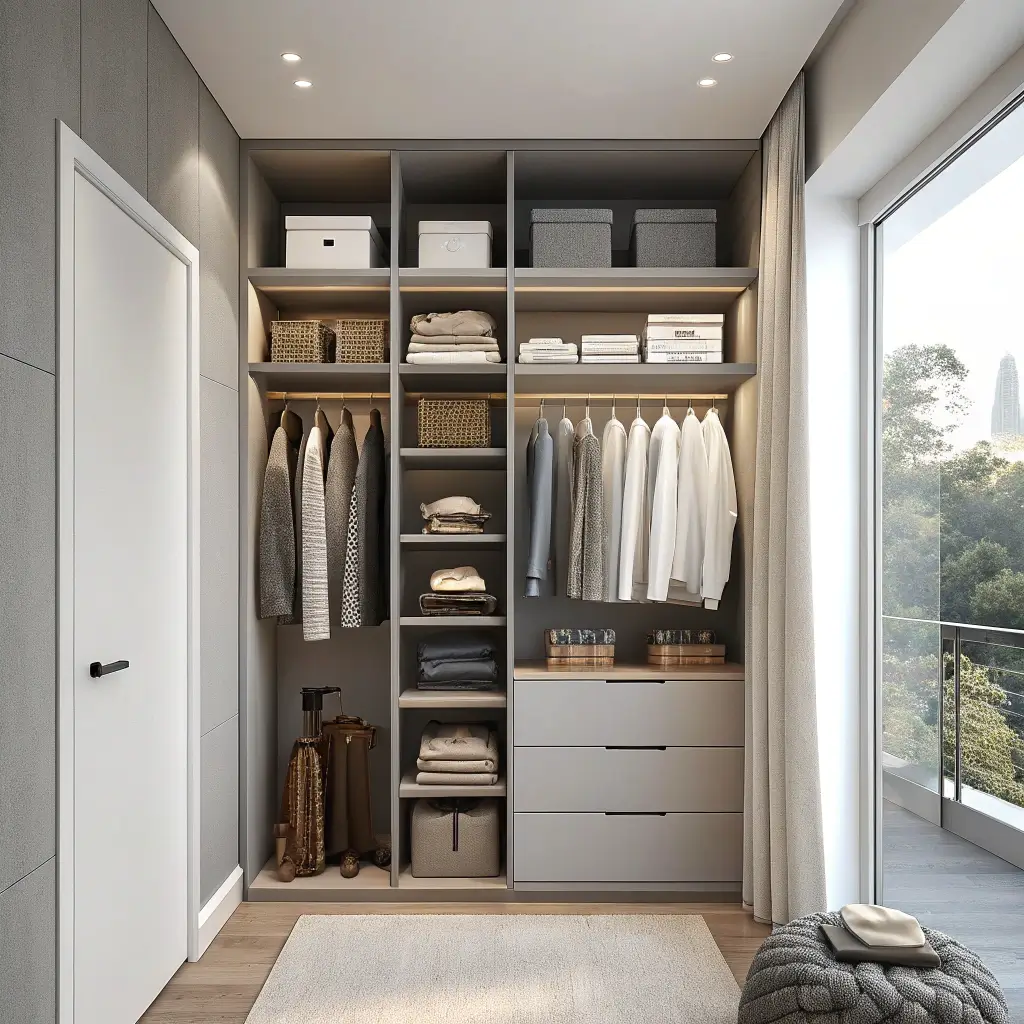
Let’s start with the most underutilized space in your wardrobe – everything above eye level. You’ve got all this vertical real estate just sitting there, mocking you while your clothes pile up on that chair. (We all have that chair. Stop pretending you don’t.)
I discovered the vertical storage game-changer when I moved into a studio apartment with a closet smaller than my childhood dollhouse. The solution? Think up, not out. Installing a second rod above the existing one literally doubled my hanging space overnight. Cost me $15 and an argument with a drill, but totally worth it.
The Art of Stacking Without Toppling
Here’s what nobody tells you about vertical storage – you need strategic accessibility. Put seasonal stuff up high, daily essentials at eye level, and shoes at the bottom. I learned this after spending six months climbing on a wobbly stool every morning to reach my work clothes. Not my brightest moment.
Get yourself some shelf dividers – these vertical panels keep stacked items from creating the Leaning Tower of T-shirts. Mine came from the dollar store, and they’ve survived three moves and one overly enthusiastic closet reorganization. The key is creating sections that match your folding width, usually about 12 inches for most clothing.
For the really high spaces, invest in a telescoping rod or those pulldown closet rods. They’re like magic – your clothes descend from the heavens when you need them, then ascend back to storage heaven when you don’t. Revolutionary stuff, really.
Hidden Shoe Rack Solutions
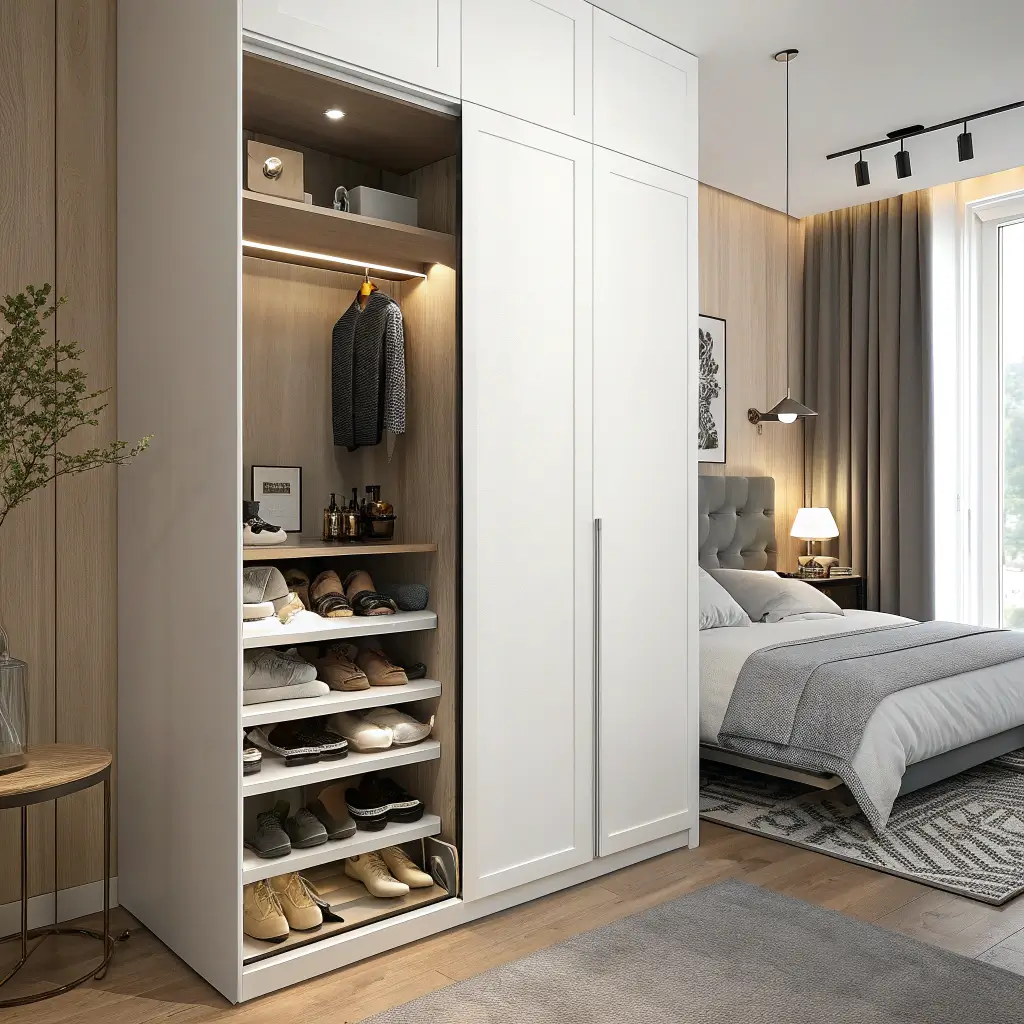
Can we discuss the shoe situation for a minute? Because if you’re anything like me, you’ve got shoes scattered across your floor like confetti after a particularly wild party. The solution isn’t buying fewer shoes (let’s be realistic here) – it’s getting creative with hidden storage.
My personal favorite discovery? Over-the-door shoe organizers that nobody knows exist. Not those clear plastic monstrosities from college, but sleek fabric ones that blend with your door. I’ve got one hiding behind my bedroom door that holds 24 pairs. Twenty-four! That’s more shoes than I’ll admit to owning in public.
Sneaky Shoe Storage Spots
The space under hanging clothes? Prime shoe real estate. I built a simple shoe shelf platform using a piece of wood and some furniture legs from the hardware store. Total cost: $30. Total shoes stored: 15 pairs. Total satisfaction: immeasurable.
Here’s another trick that’ll blow your mind – ceiling-mounted shoe storage. Sounds insane? Hear me out. Those rarely-worn fancy shoes taking up prime closet space? Hang them in clear boxes from ceiling hooks. They’re out of the way but visible, like functional decoration. Plus, it makes you feel fancy having your shoes displayed like art.
Don’t overlook the bed space either. Those flat under-bed storage boxes aren’t just for sweaters. Line them with shoes, slide them under, and boom – instant shoe garage. Just maybe dust them occasionally. I pulled out my wedding shoes after two years and… well, let’s just say spiders had taken residence.
Sliding Door Wardrobe Hacks
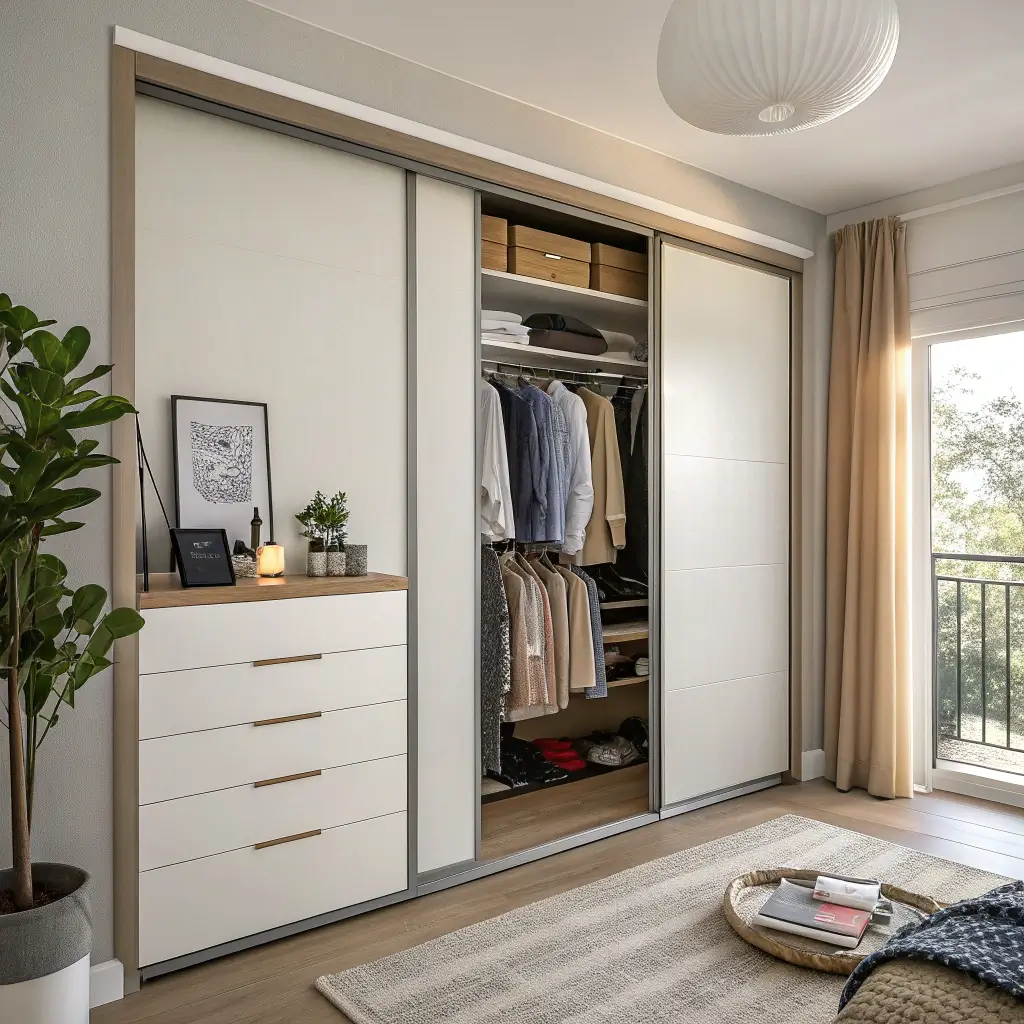
Sliding doors seem great until you realize you can only access half your wardrobe at a time. It’s like Sophie’s Choice but with clothing. The hack that saved my sanity? Strategic zone planning.
Organize your wardrobe so each sliding section contains complete outfits or clothing categories. Left side: work clothes. Right side: casual wear. No more sliding back and forth like you’re operating a very boring DJ booth. This simple change cut my morning routine by ten minutes. That’s 50 minutes a week I got back. You do the math on yearly savings.
Making Sliding Doors Work Harder
Install hooks on the inside of sliding doors. These become instant storage for belts, scarves, or that tie you wear once a year. I’ve got six hooks on each door panel, and they hold everything from bags to tomorrow’s outfit. It’s like having a secret storage compartment that appears when you slide the door.
The real game-changer? Magnetic strips on sliding door frames. Stick them on, and suddenly you’ve got spots for bobby pins, nail clippers, or any small metal items that usually disappear into the wardrobe abyss. My girlfriend thinks I’m a genius for this one. (I didn’t tell her I saw it on TikTok.)
Also Read: 15 Exclusive Luxury Wardrobe Design Ideas for Refined Spaces
Compact Hanging Organizer Ideas
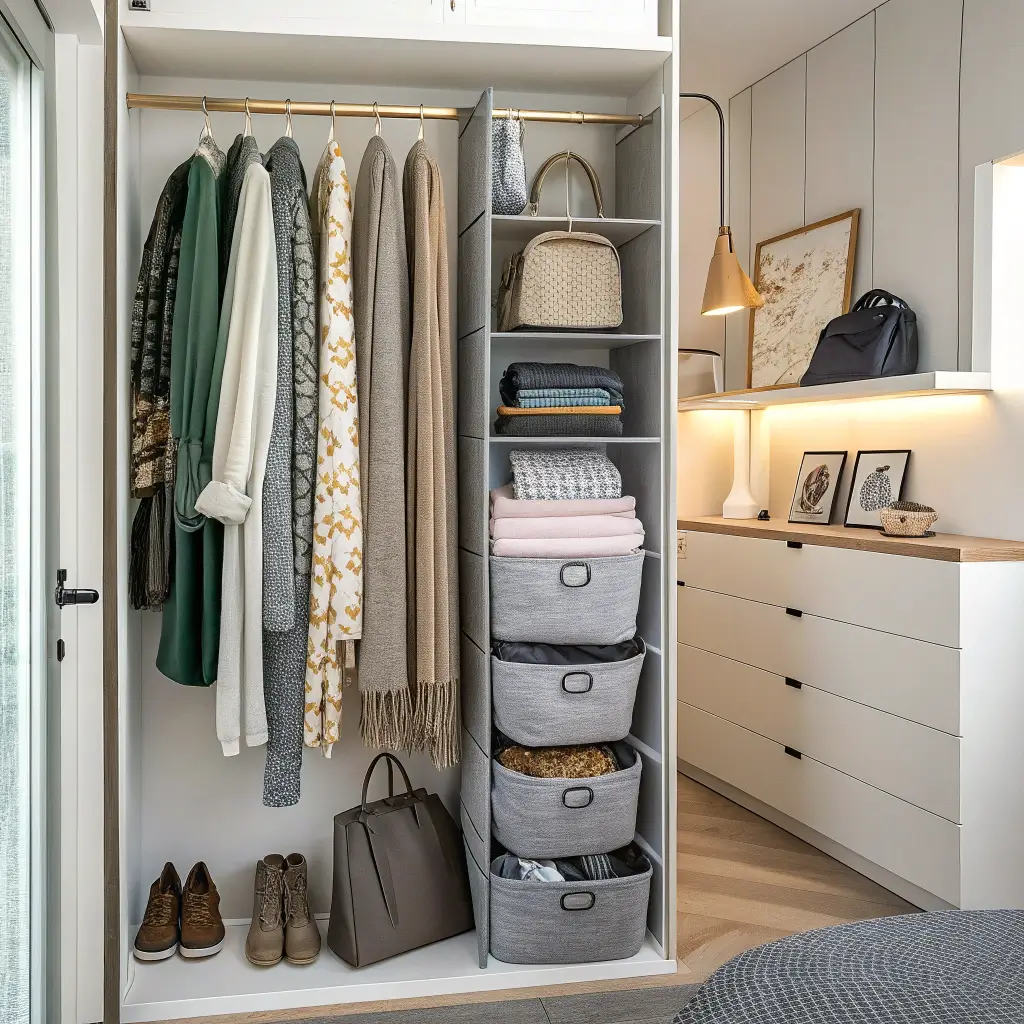
Hanging organizers are the Swiss Army knives of wardrobe storage. They take up minimal rod space but maximize vertical storage like nobody’s business. I’ve got three different types, and each serves a specific purpose in my closet ecosystem.
The classic fabric shelving unit that hangs from your rod? Perfect for folded jeans, sweaters, and workout clothes. Mine has six compartments and cost less than lunch at Chipotle. The trick is not overstuffing them – treat each compartment like a studio apartment for your clothes. They need breathing room.
Beyond Basic Hanging Storage
Ever seen those cascading hangers? They’re basically hangers that hang from hangers, creating a waterfall effect of clothes. I use them for tank tops and light shirts. One vertical space now holds six items instead of one. It’s multiplication magic without the math anxiety.
Accessory organizers that hang are absolute game-changers. I’ve got one with clear pockets for watches, sunglasses, and jewelry. No more morning treasure hunts for matching earrings. Everything’s visible, accessible, and takes up exactly zero drawer or shelf space.
The unexpected hero? Hanging laundry bags. Stick one in your wardrobe for dirty clothes. No more floor piles, no more sniff tests to determine cleanliness. When it’s full, grab and go to the laundry. Simple, effective, slightly life-changing.
DIY Modular Wardrobe Systems
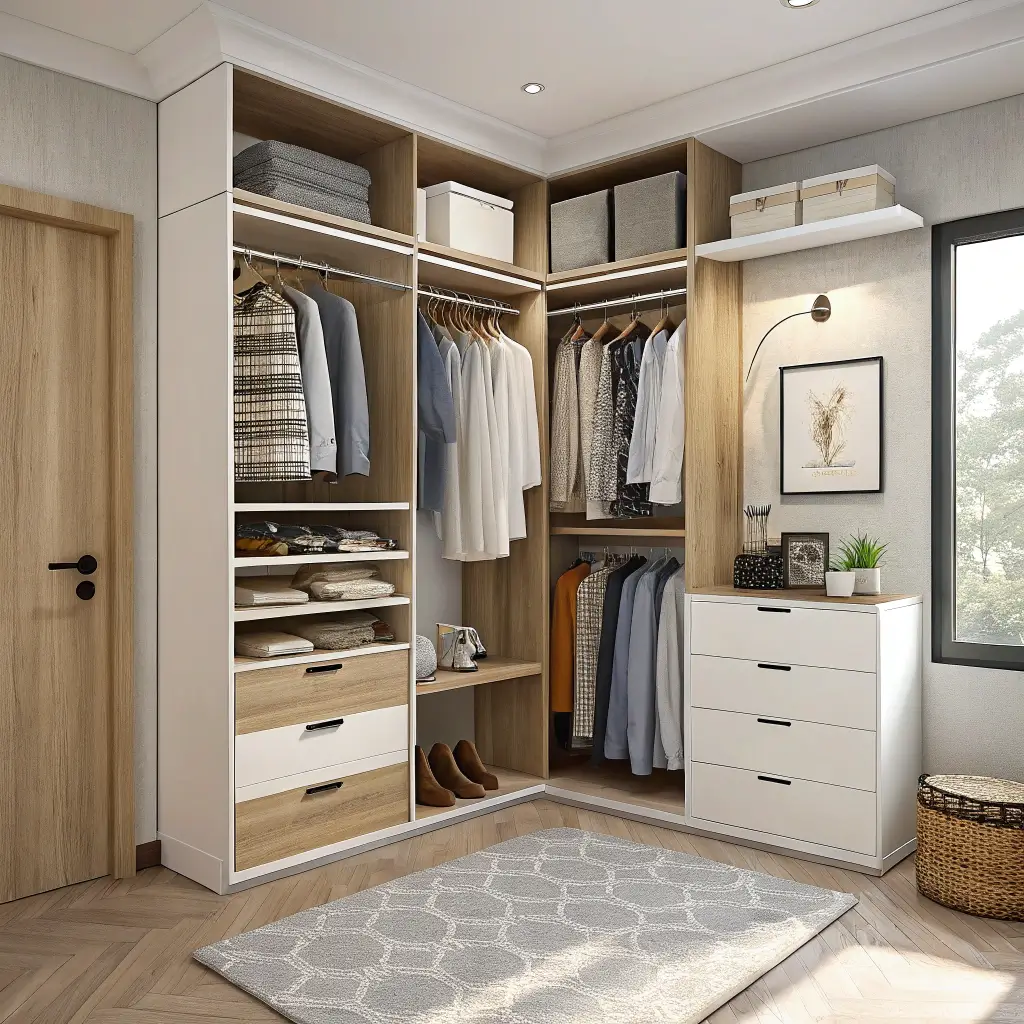
Let me tell you about my DIY modular system journey. Started with a simple cube organizer from Target, ended with a completely customized wardrobe that adapts to my needs. It’s like LEGO for adults, but actually useful.
The beauty of modular systems? You build exactly what you need. Need more shelves? Add cubes. More hanging space? Insert a rod between cubes. I’ve reconfigured mine three times as my wardrobe needs changed. Try doing that with traditional furniture.
Building Your Own System
Start with basic cube organizers as your foundation. The 6-cube or 9-cube units work best for most closets. Then customize with fabric boxes, drawer inserts, or leave them open for display. My system cost about $150 total and looks like something from a fancy organizing store.
Wire shelving units offer another modular approach. They’re adjustable, affordable, and surprisingly sturdy. I reinforced mine with zip ties (engineering degree at work here) and created a system that holds everything from heavy boots to delicate silk scarves. Plus, the open design means no more mystery items hiding in dark corners.
Pro tip: Mix and match different modular elements. I combined cube organizers with a tension rod system and some floating shelves. The result? A fully customized wardrobe that makes me feel like I’ve got my life together, even when I definitely don’t.
Corner Wardrobe Optimization Tricks
Corners are the Bermuda Triangle of wardrobes – stuff goes in and never returns. But with the right approach, corner spaces become premium storage real estate instead of dead zones.
The lazy Susan approach changed my corner game completely. I installed a rotating platform in my wardrobe corner for shoes and accessories. One spin and everything’s accessible. It’s like a carousel of organization. Cost me $25 and about 30 minutes of installation time.
Corner Solutions That Actually Work
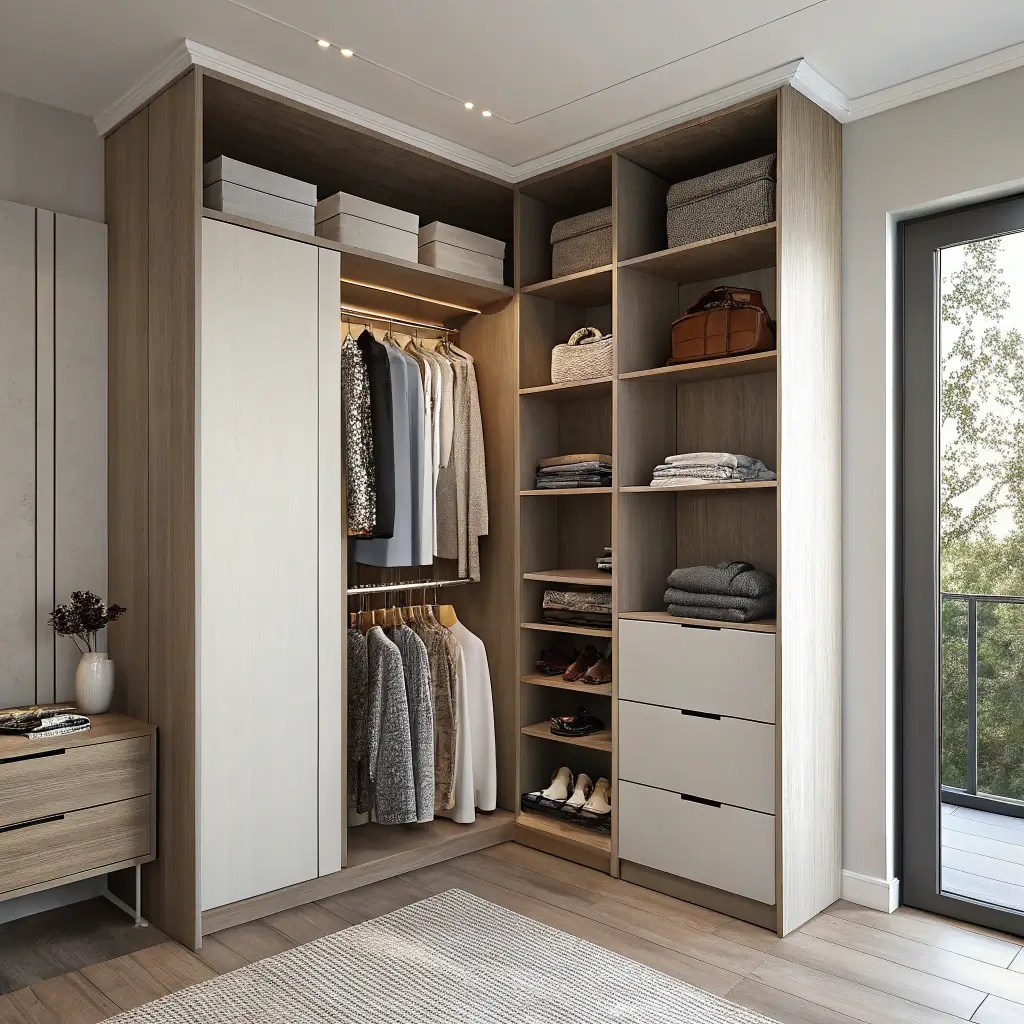
Corner hanging rods are revolutionary. Install them at an angle, and suddenly that dead corner space holds 8-10 more items. I hung my special occasion dresses here – they’re accessible but not taking up prime daily-use space.
Another winner? Triangular corner shelves. They fit perfectly into 90-degree angles and hold surprising amounts. Mine store handbags on top, folded scarves in the middle, and those random accessories that don’t fit anywhere else on the bottom. It’s organized chaos that actually makes sense.
Don’t forget about corner hooks and pegs. Install them on both corner walls for bags, belts, or robes. I’ve got a whole belt collection displayed on corner pegs that used to live in a tangled drawer mess. Now they’re functional art. Sort of.
Also Read: 10 Modern Kids Room Wardrobe Design Ideas for Minimalist Rooms
Mirror-Integrated Small Wardrobes
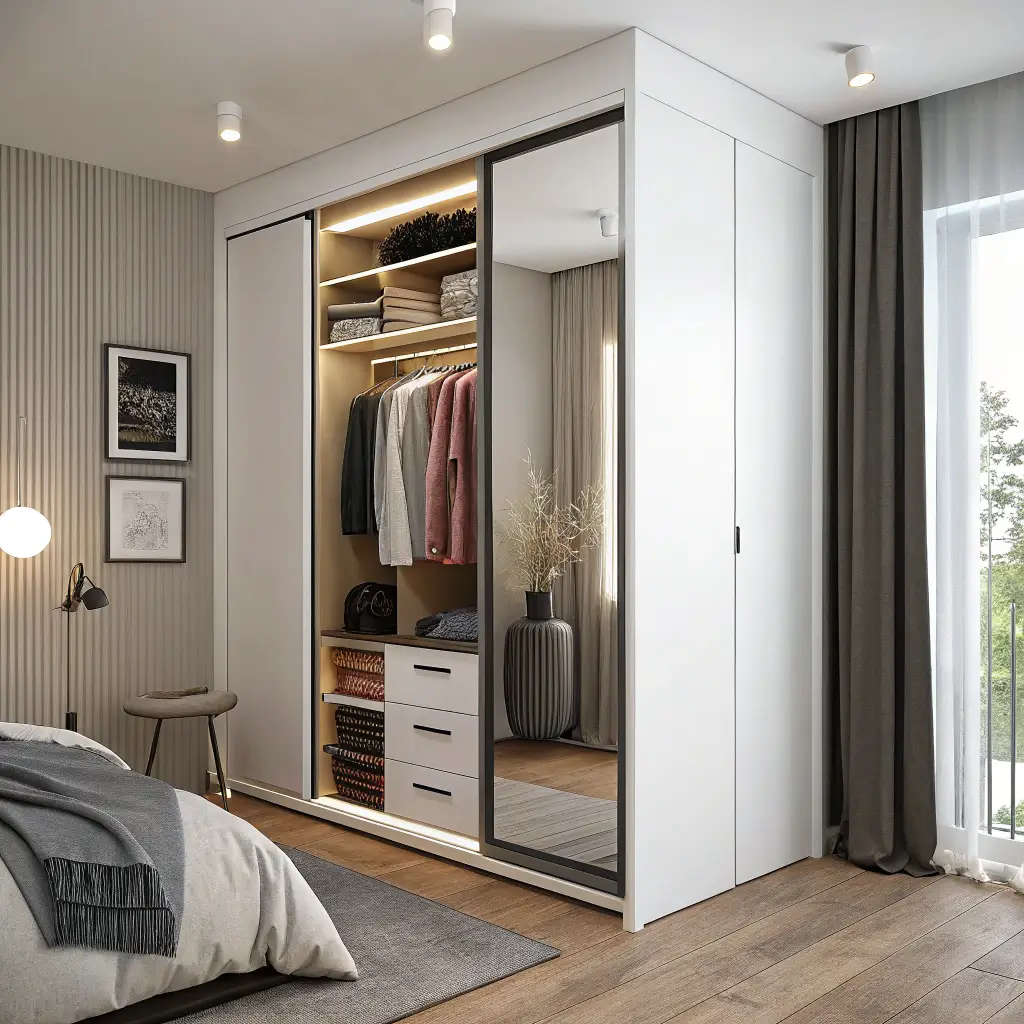
Mirrored wardrobe doors aren’t just about checking your outfit – they’re psychological space expanders. My tiny bedroom looked twice its size after I installed mirror doors. It’s like magic, except it’s just physics and light reflection.
But here’s the next level move – interior wardrobe mirrors. Stick a full-length mirror inside your wardrobe door. Close the door, and it’s hidden. Open it, and you’ve got your own private dressing room moment. I added LED strips around mine because apparently, I need Hollywood lighting to pick out socks.
Mirror Hacks Beyond the Obvious
Try mirror tiles on the back wall of your wardrobe. They create depth and make finding things easier because you can see everything from multiple angles. Plus, they’re removable if you’re renting. Landlord-friendly solutions FTW!
The unexpected bonus of mirrors? They reflect light into dark corners. Add a small battery-powered light, and suddenly your wardrobe interior is bright enough to actually see that navy vs. black debate clearly. No more accidentally wearing two different colored shoes to work. (Yes, that happened. No, I won’t elaborate.)
Minimalist Wardrobe Makeovers
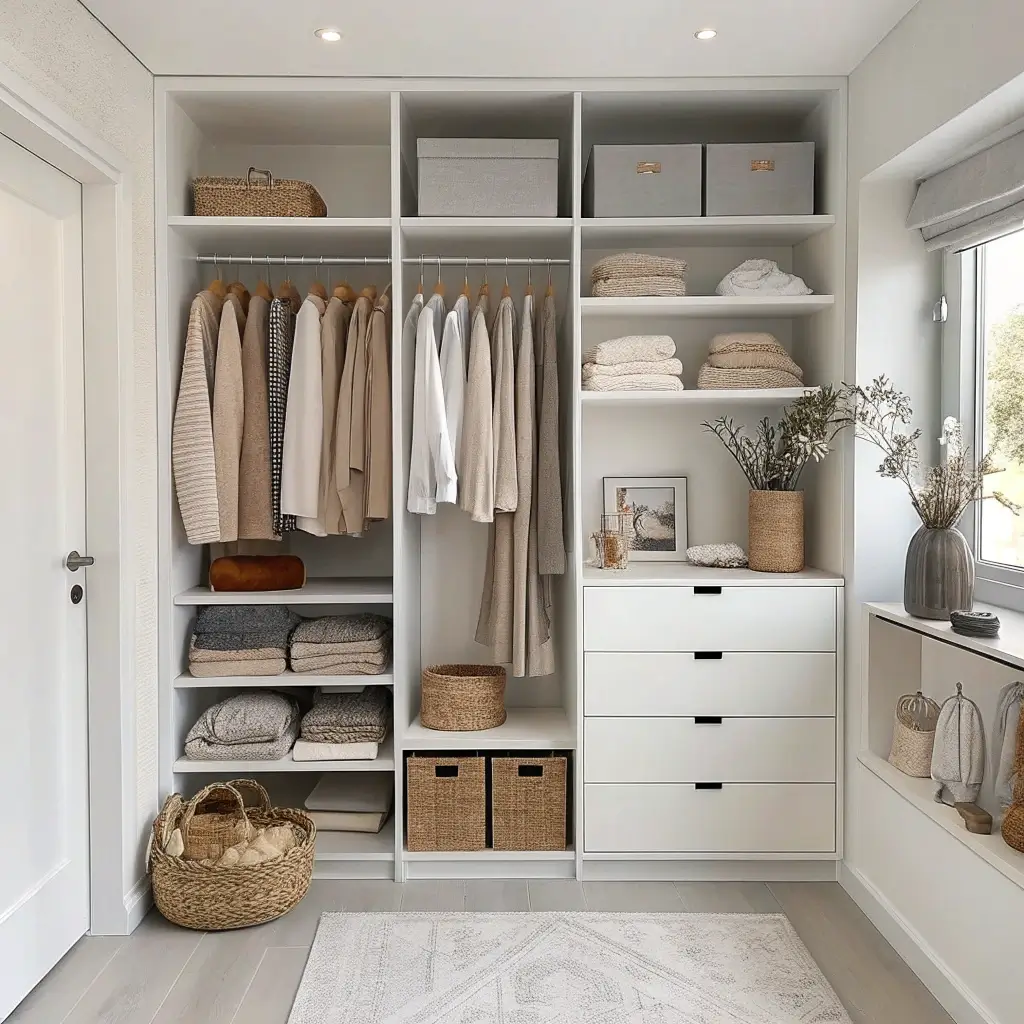
Going minimalist with your wardrobe doesn’t mean owning three white t-shirts and calling it a day. It means intentional choices and smart storage that makes fewer items work harder. I did a minimalist makeover last year, and honestly? Best decision ever.
Start with the capsule wardrobe concept. Keep 30-40 items that all work together. Everything matches everything. Getting dressed becomes a no-brainer, and suddenly you’ve got space for things that matter. Like that guitar you swear you’ll learn to play.
Minimalism That Makes Sense
Uniform hangers make a bigger difference than you’d think. Matching hangers create visual calm and actually save space – those wire ones from the dry cleaner are space hogs. I switched to slim velvet hangers, gained about 3 inches of rod space, and my wardrobe looks like a boutique. 🙂
The minimalist secret weapon? Quality over quantity. One great jacket that goes with everything beats five mediocre ones that match nothing. My wardrobe went from stuffed to spacious, and ironically, I have more outfit options now with less stuff.
Pull-Out Drawer Space Savers
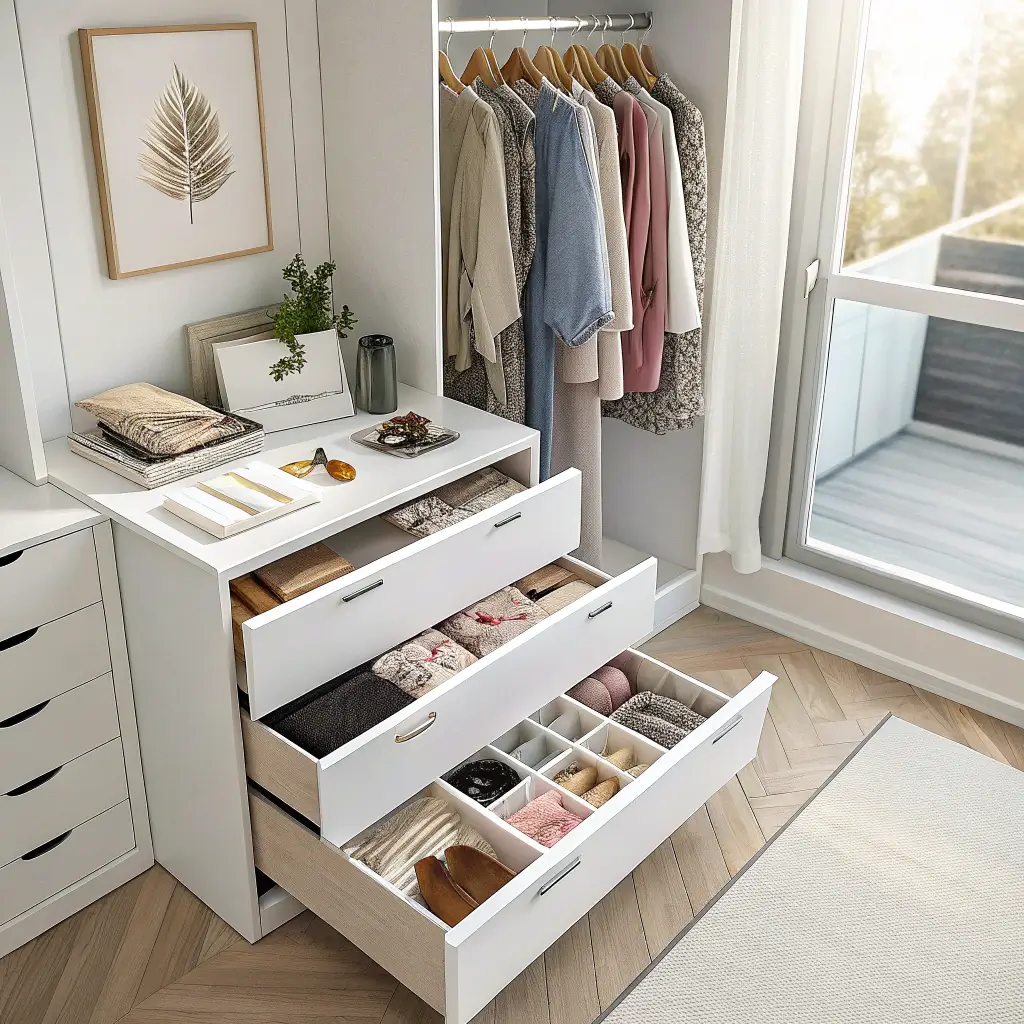
Pull-out drawers in wardrobes are like finding extra fries at the bottom of the bag – unexpected but absolutely delightful. They maximize deep spaces that would otherwise become graveyards for single socks and forgotten t-shirts.
I installed DIY sliding drawers using drawer slides from the hardware store and some basic wood. Total investment: $40 and a Saturday afternoon. Return on investment: actually being able to find my underwear without excavation equipment.
Drawer Organization That Works
Inside those drawers, dividers are non-negotiable. I use adjustable bamboo ones that create perfect little homes for different items. Socks here, underwear there, ties in their own special section. It’s like a filing system but for things that actually matter in daily life.
The game-changer? Drawer organizers specifically for small items. Those little compartments for watches, cufflinks, or jewelry transform chaos into order. Mine came from IKEA, cost $8, and probably saved my relationship. (Nobody wants to hear “Have you seen my…” every morning.)
Also Read: 10 Unique Wardrobe Shutter Design Ideas to Elevate Decor
Closet Lighting & Visibility Tips
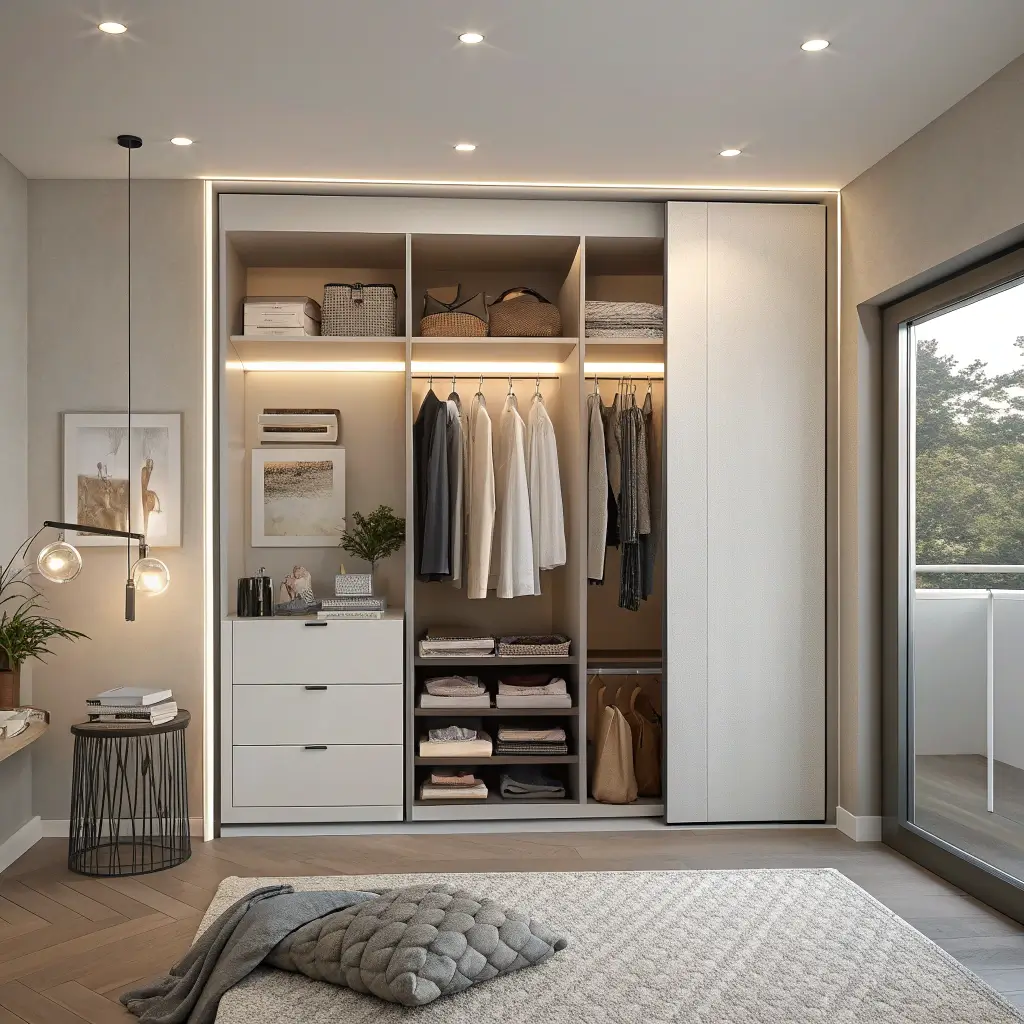
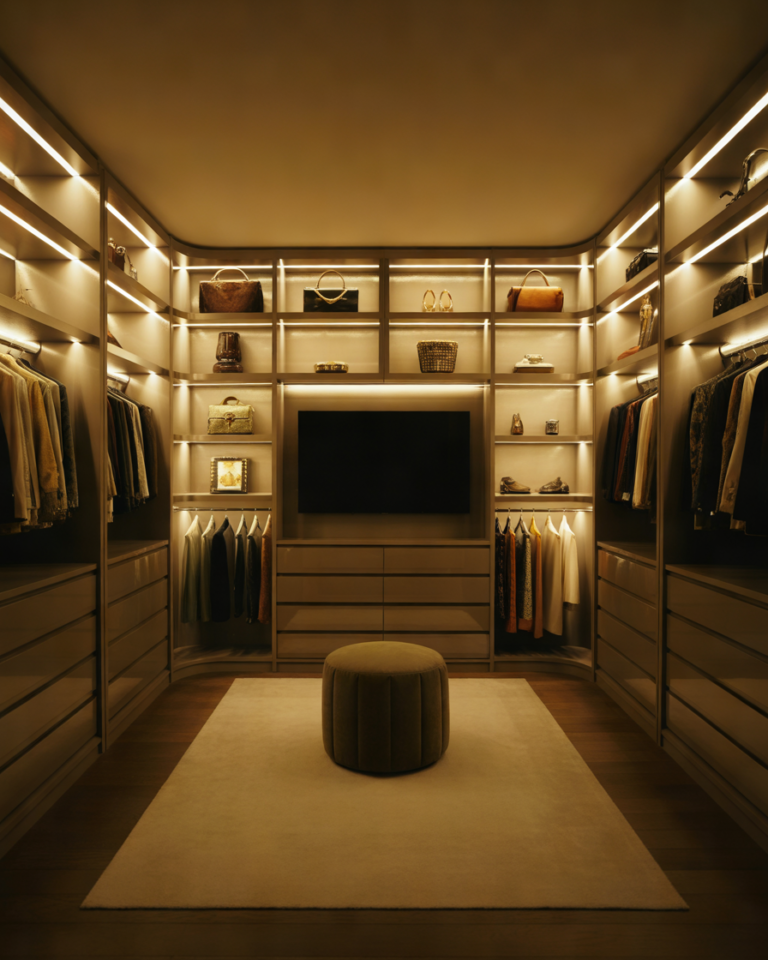
Let’s talk about wardrobe lighting – because choosing clothes in the dark is like online dating: disappointing and full of regret. Good lighting transforms your wardrobe from a cave into a functional space where you can actually see what you own.
LED strip lights are the MVP here. I installed battery-powered ones with motion sensors. Now my wardrobe lights up like a retail display when I open it. It’s unnecessarily dramatic and I love it. The motion sensor means no fumbling for switches with arms full of laundry.
Bright Ideas for Dark Spaces
Puck lights work brilliantly for spot lighting. Stick them under shelves to illuminate the space below. I’ve got three highlighting my shoe section because apparently, I need gallery lighting for my sneaker collection. Don’t judge – good lighting prevents morning outfit disasters.
Consider color temperature too. Warm white (3000K) makes everything cozy but can distort colors. Cool white (5000K) shows true colors but feels clinical. I went with 4000K – neutral white that shows true colors without making my wardrobe feel like an operating room.
Open Shelf Wardrobe Styling
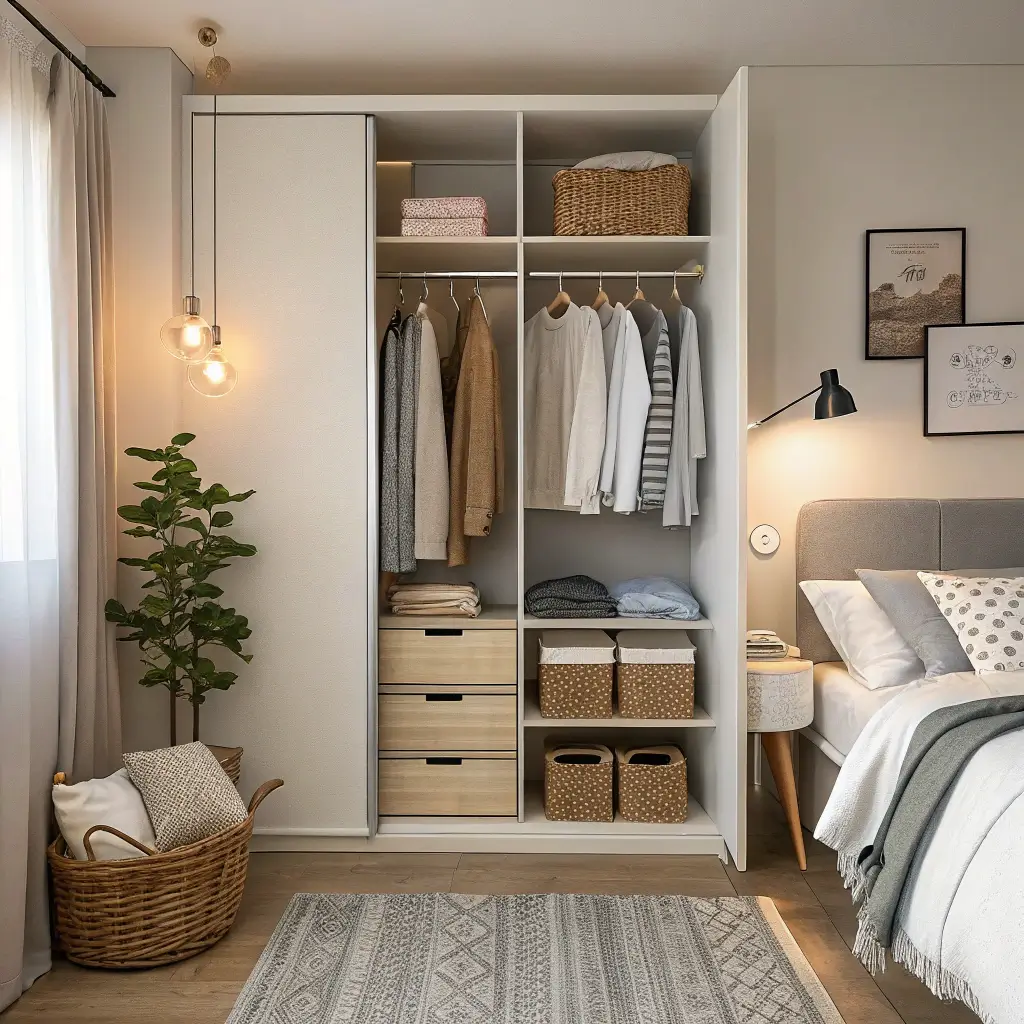
Open shelving in wardrobes requires discipline but delivers accessibility. Everything’s visible, grabbable, and forces you to keep things tidy. Or at least tidier than usual. My open shelf section keeps me honest about my folding skills.
The trick is treating open shelves like displays. Fold items uniformly, organize by color, and suddenly your wardrobe looks like a high-end boutique. I spent an embarrassing amount of time perfecting my jean-folding technique, but now they look like denim art installations.
Making Open Shelves Work
Use shelf baskets for items that don’t fold nicely. Belts, scarves, and accessories look intentional in nice baskets rather than chaotic in piles. I’ve got woven baskets that cost more than they should’ve, but they make my $10 Target scarves look expensive.
Color coordination makes open shelves Instagram-worthy. Organize from light to dark, or group by color families. My t-shirt rainbow might be extra, but it makes getting dressed faster and more fun. Plus, it’s weirdly satisfying to maintain.
Wardrobe Divider & Sectioning Ideas
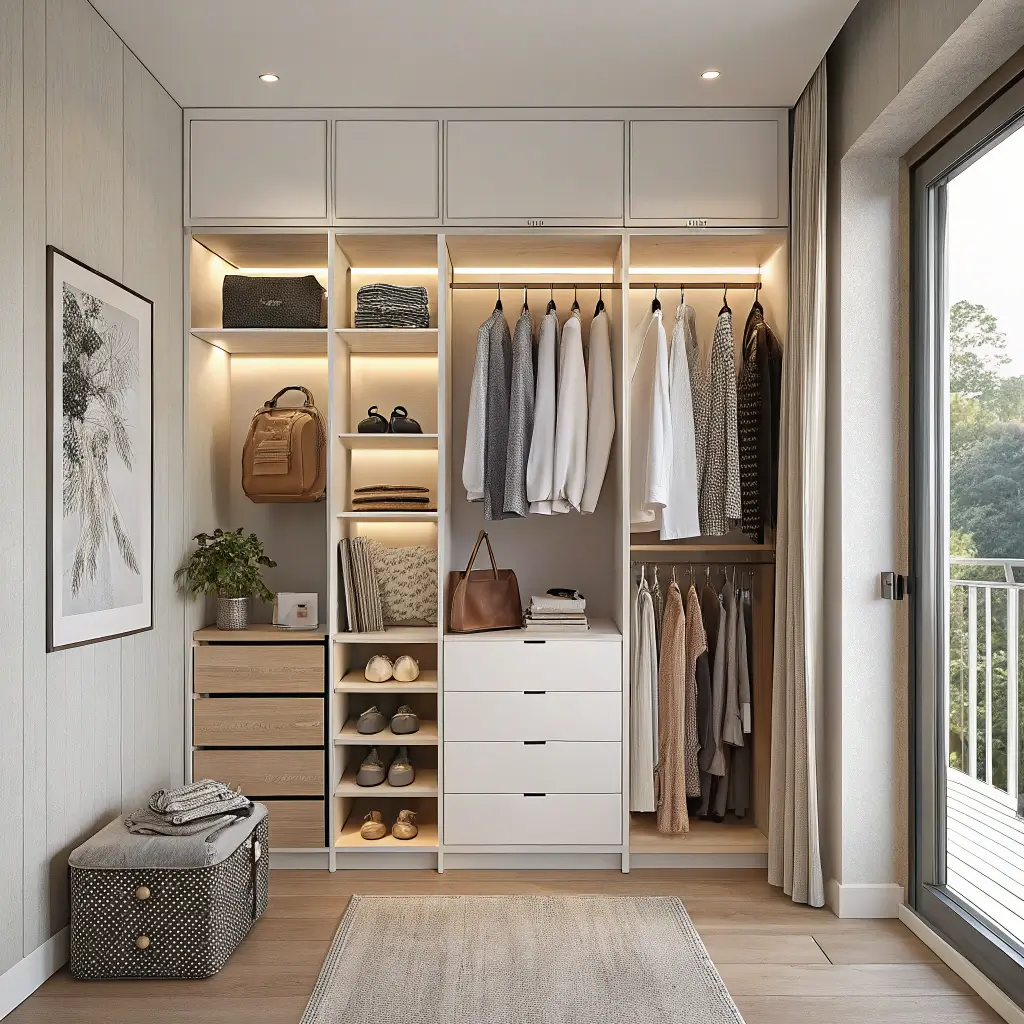
Dividers and sections turn chaotic wardrobes into organized systems. Think of them as creating neighborhoods in your closet city. Each section has its purpose, its residents, and its own vibe.
Shelf dividers changed my sweater game completely. No more toppling towers when I grab the bottom one. These vertical separators create stable stacks that stay put. Mine are acrylic, practically invisible, and stronger than my willpower around online shopping.
Strategic Sectioning Systems
Create zones using different organizational tools. Hanging organizers for one section, shelves for another, drawers for a third. My wardrobe has five distinct zones, and everything has its place. It’s like urban planning but for clothes.
Rod dividers are underrated heroes. These little rings separate clothing categories on your hanging rod. Work clothes, casual wear, formal stuff – all clearly defined. No more pushing through everything to find that one shirt. Game-changer level: expert.
Foldable & Stackable Storage Solutions
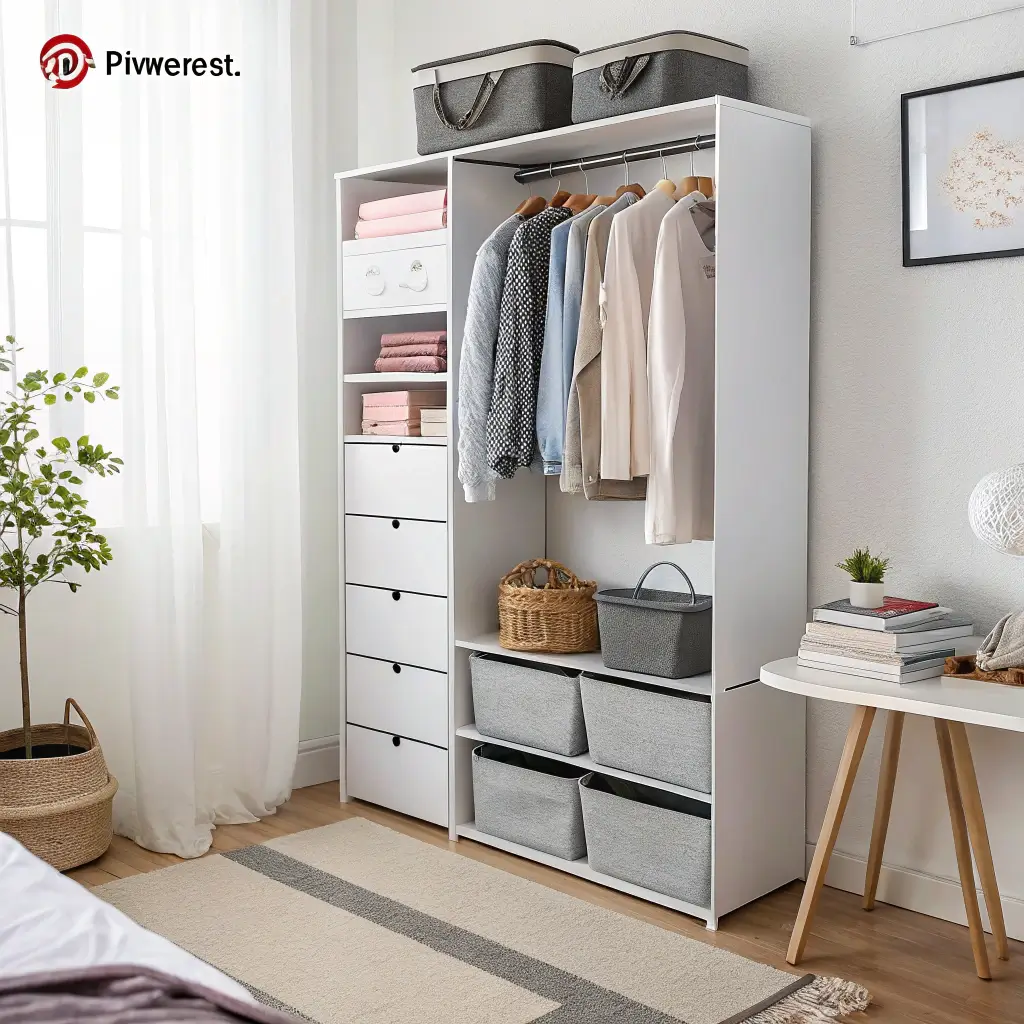
Foldable storage is perfect for renters and commitment-phobes (no judgment). These solutions adapt, travel, and don’t require permanent installation. My entire spare closet storage consists of foldable solutions that could pack flat in an hour.
Stackable boxes with clear fronts let you see contents without unstacking everything. I’ve got a tower of them holding seasonal items, accessories, and things I can’t throw away but never use. They’re like transparent storage Tetris.
Flexible Storage That Adapts
Collapsible fabric cubes work everywhere – shelves, floors, or inside larger storage units. Empty? They fold flat. Full? They hold their shape surprisingly well. I’ve got about 15 in various sizes, and they’ve survived four moves. That’s durability.
The unexpected winner? Foldable hanging shelves. When not needed, they collapse to nothing. During heavy sweater season, they expand to hold the knitwear collection that would make your grandmother proud. Flexibility at its finest.
Multi-Functional Wardrobe Corners
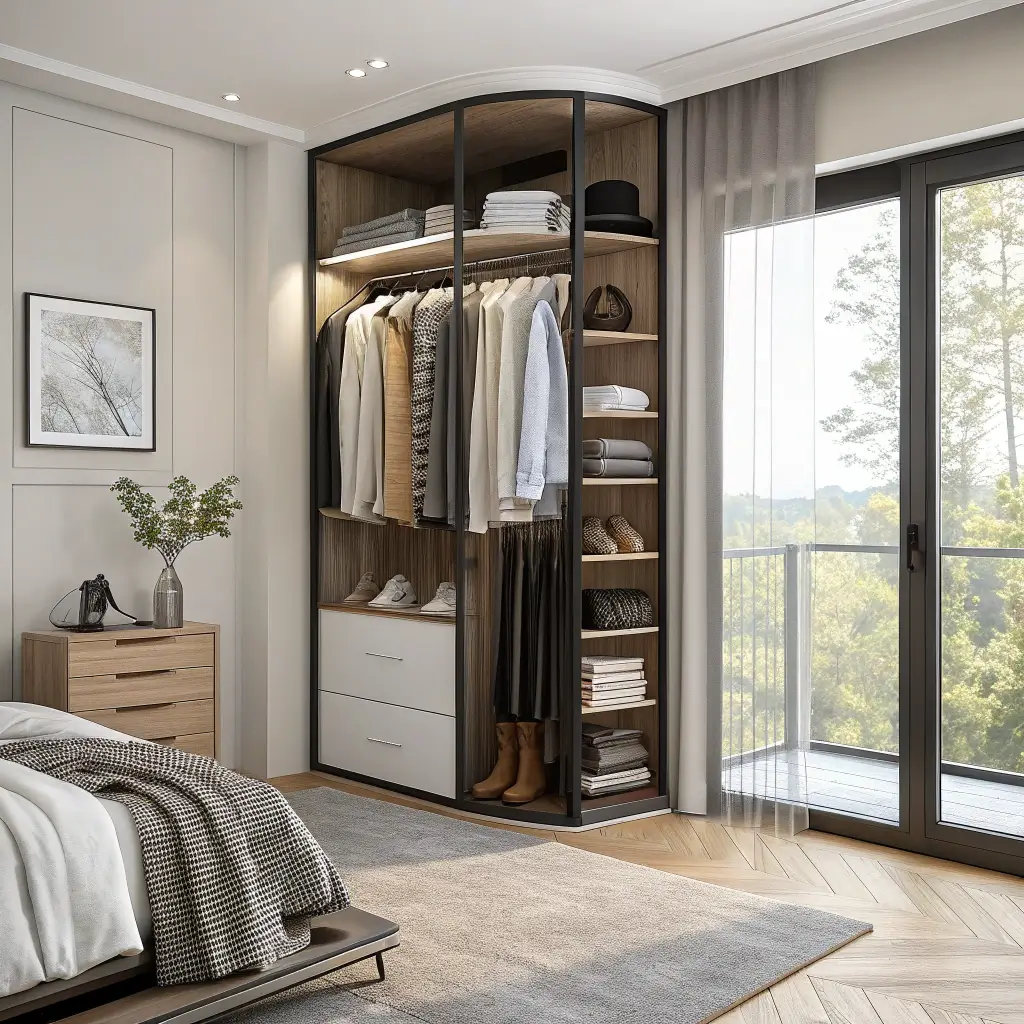
Every corner of your wardrobe should work harder than a coffee shop WiFi connection. Multi-functional solutions mean one item, multiple uses, maximum efficiency.
Ottoman storage benches at the wardrobe base provide seating and hidden storage. Mine holds out-of-season shoes and doubles as my “getting ready” seat. It’s furniture multitasking at its finest.
Double-Duty Design Ideas
Valet stands that lean in corners hold tomorrow’s outfit and provide additional hanging space. Mine was a thrift store find that now holds my “chair clothes” – you know, the clothes that aren’t dirty enough for laundry but not clean enough for the wardrobe. We all have them.
Ladder-style organizers lean against walls providing hanging space, shelf space, and visual interest. Mine holds bags on top rungs, scarves on middle ones, and shoes on the bottom. It’s functional art, if you squint.
Seasonal Clothing Rotation Hacks
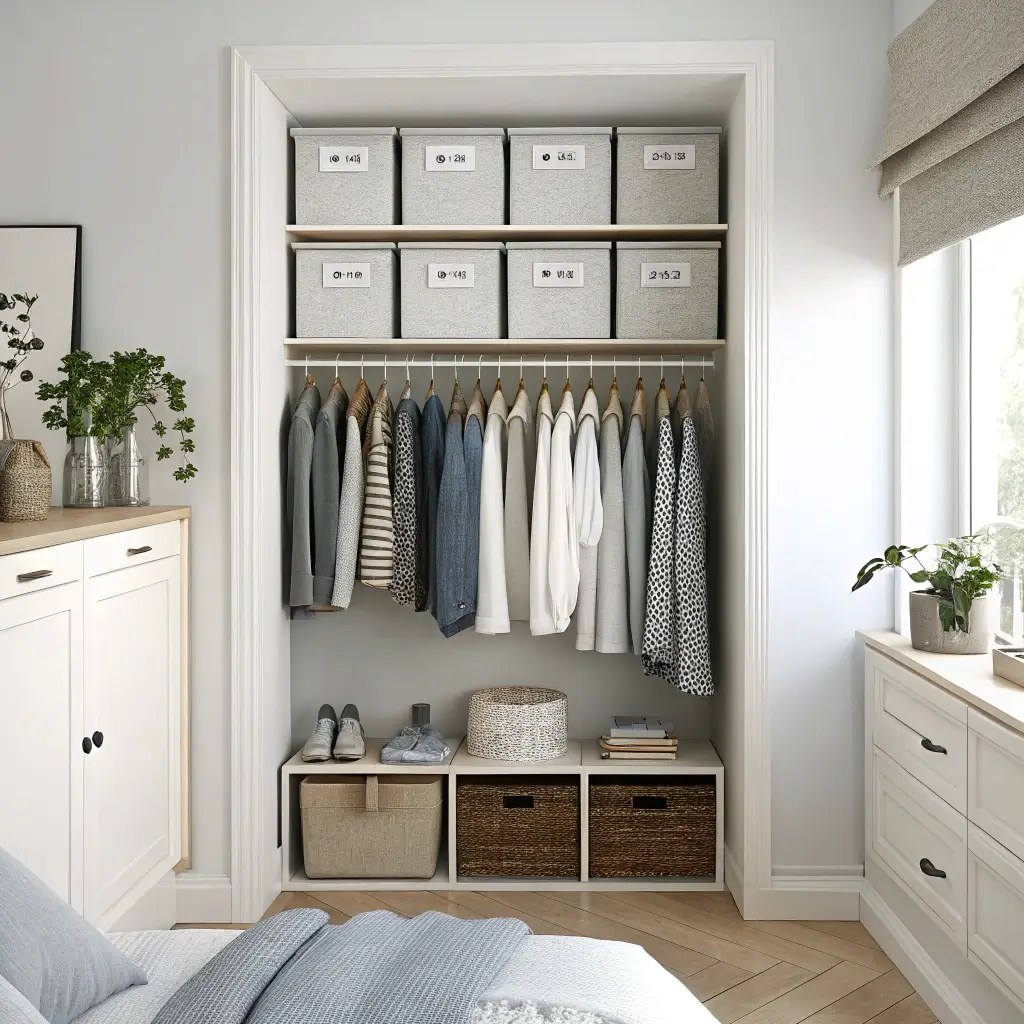
Seasonal rotation sounds tedious but saves massive space and morning decision fatigue. Why wade through sundresses in January? I rotate quarterly, and my wardrobe feels fresh and manageable year-round.
Vacuum storage bags are the secret weapon for off-season storage. Winter coats compress to notebook thickness. It’s like space-time compression but for sweaters. Store them under beds, in attic spaces, or that awkward cupboard above your wardrobe.
Rotation Without the Hassle
Label everything obsessively. Clear bins with detailed labels prevent the “where did I put…” game every season change. My labels include contents, sizes, and even outfit suggestions. Excessive? Maybe. Helpful? Absolutely.
Create a transition zone for between-season items. Those pieces that work in multiple seasons stay accessible. My transition zone saved me from freezing in unexpected cold snaps and sweating through surprise heat waves. Climate change demands flexible wardrobe strategies, IMO.
Making It All Work Together
Here’s the thing about small wardrobe optimization – it’s not about implementing all 15 ideas at once. Pick what resonates with your lifestyle, your space, and your patience level. Start small, maybe with some vertical storage or better lighting. Build from there.
The perfect wardrobe system doesn’t exist, but the perfect system for YOU does. It might take some trial and error (and possibly some choice words directed at instruction manuals), but you’ll get there. My current setup took two years to perfect, and I still tweak things regularly.
Remember, an organized wardrobe isn’t about impressing anyone or achieving Pinterest perfection. It’s about making your mornings easier, your clothes last longer, and maybe, just maybe, finally being able to close those doors properly. Now if you’ll excuse me, I need to go reorganize my shoe collection again. Those sneakers won’t color-coordinate themselves. :/