
You know that feeling when you walk into someone’s home and the first thing that catches your eye is that stunning ceiling? Yeah, that’s the power of a well-designed false ceiling right there! I’ve spent years obsessing over interior design (my friends call it unhealthy, I call it passionate), and let me tell you – false ceilings transform spaces like nothing else.
They’re not just about hiding ugly wires anymore; they’re about creating moods, defining spaces, and honestly, making your neighbors jealous.
Here’s the thing – you don’t need to break the bank or hire some fancy designer charging astronomical fees. I’ve discovered 15 simple yet trendy false ceiling designs that’ll turn your home into that Pinterest-worthy dream space you’ve been scrolling through at 2 AM. Ready to give your ceiling some serious personality?
Minimalist Layered False Ceiling
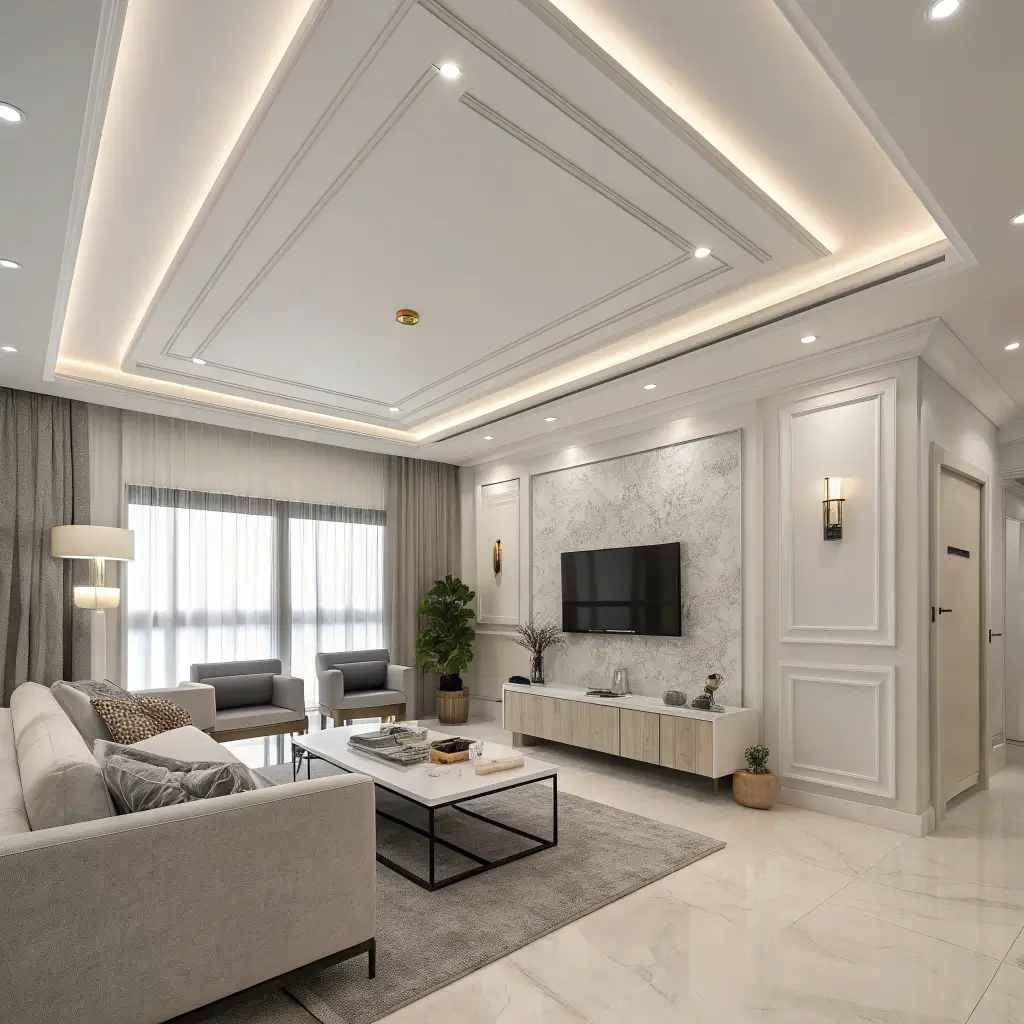
Let’s kick things off with my personal favorite – the minimalist layered ceiling. Think of it as the little black dress of ceiling designs – simple, elegant, and never goes out of style. I installed one in my living room last year, and honestly, the transformation blew my mind.
The beauty lies in its subtle layers. You create depth without overwhelming the space. Picture this: a main ceiling level with a slightly recessed border running along the perimeter. No fancy curves, no complicated patterns – just clean, straight lines that scream sophistication.
What makes this design brilliant? It works in literally any room size. Got a small apartment? The layers create an illusion of height. Living in a mansion? The minimalist approach keeps things grounded and cozy. I’ve seen this work wonders in bedrooms where you want that zen-like atmosphere without all the fuss.
Why This Works So Well
The layered effect adds dimension without cluttering your visual space. You can paint each layer in slightly different shades – maybe a soft white for the main area and a warm gray for the recessed portion. Trust me, the subtle contrast creates magic when natural light hits it during golden hour.
LED Strip Accent Ceiling
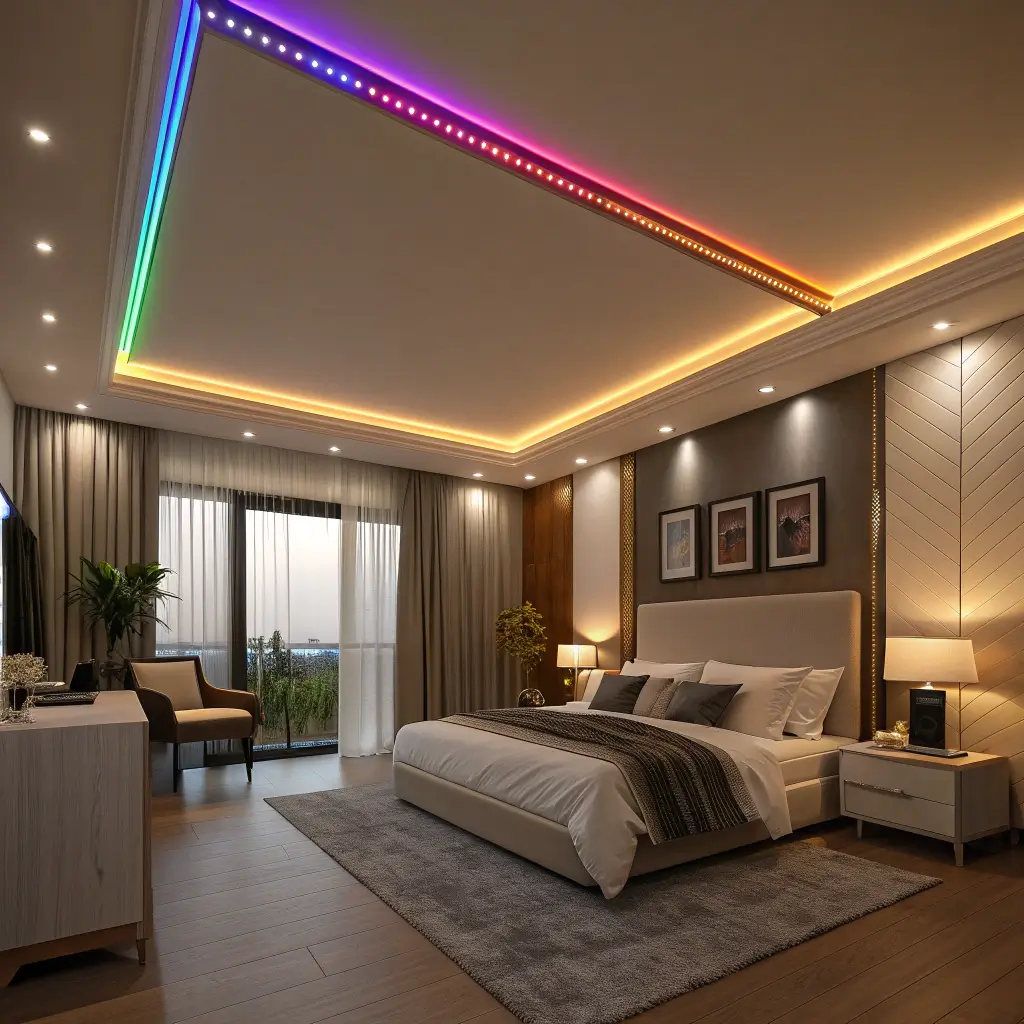
Ever walked into a high-end hotel lobby and wondered how they get that amazing ambient glow? LED strip lighting tucked into false ceilings – that’s the secret sauce, my friend! This design combines functionality with serious style points.
I remember helping my sister renovate her studio apartment. Space was tight, budget was tighter, but we needed something special. We created a simple false ceiling with a recessed channel running along the edges, hiding LED strips inside. The result? Her tiny space suddenly felt like a luxury suite.
The best part about LED strips? You control everything – brightness, color temperature, even RGB colors if you’re feeling adventurous. Want warm, cozy vibes for movie night? Done. Need bright, energizing light for your morning yoga? Just adjust the settings on your phone. FYI, smart LED strips have become ridiculously affordable lately.
Installation Tips That Save Headaches
Here’s what I learned the hard way: always use high-quality aluminum channels for your LED strips. They dissipate heat better and give you that professional, seamless look. Also, go for strips with at least 60 LEDs per meter – anything less looks spotty and cheap.
Wooden Panel False Ceiling
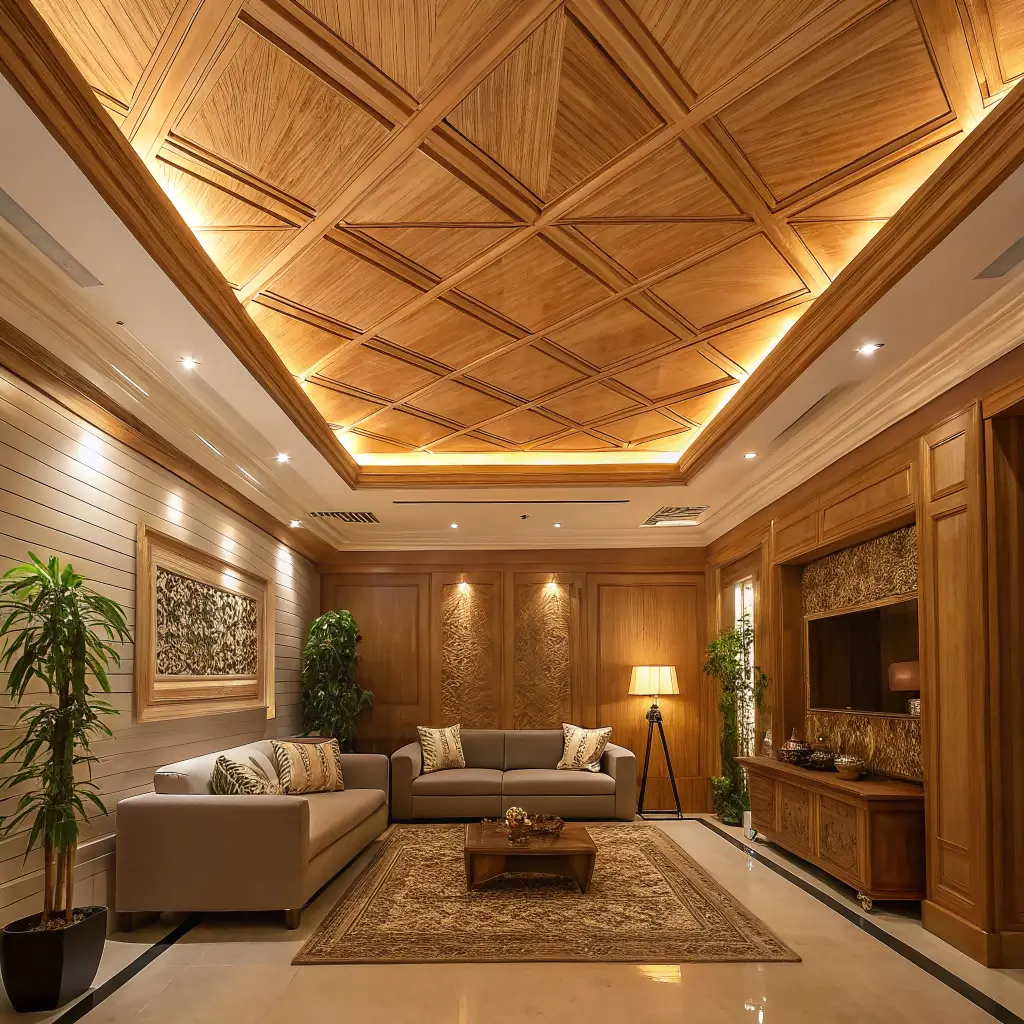
Nothing says warmth quite like wood, right? Wooden panel false ceilings bring that organic, earthy vibe that makes spaces feel instantly inviting. I’ve seen this transform cold, sterile rooms into cozy havens that make you want to curl up with a book.
The trick with wooden panels? Mix them with modern elements. I once worked on a friend’s home office where we combined sleek wooden panels with recessed spotlights. The contrast between natural wood grain and contemporary lighting created this perfect balance – professional yet comfortable.
You don’t need actual solid wood (unless you’ve got money to burn). Today’s laminated panels and engineered wood options look stunning at a fraction of the cost. Plus, they’re way easier to maintain – no termite worries or constant polishing drama.
Wood Types That Work Best
From my experience, lighter woods like pine or oak work beautifully in smaller spaces. They reflect light better and don’t make rooms feel cave-like. For larger areas? Go bold with darker walnut or mahogany tones – they add instant drama and sophistication.
Also Read: 10 Gorgeous Gypsum Ceiling Design Ideas That Feel Luxurious
Coffered Ceiling Design
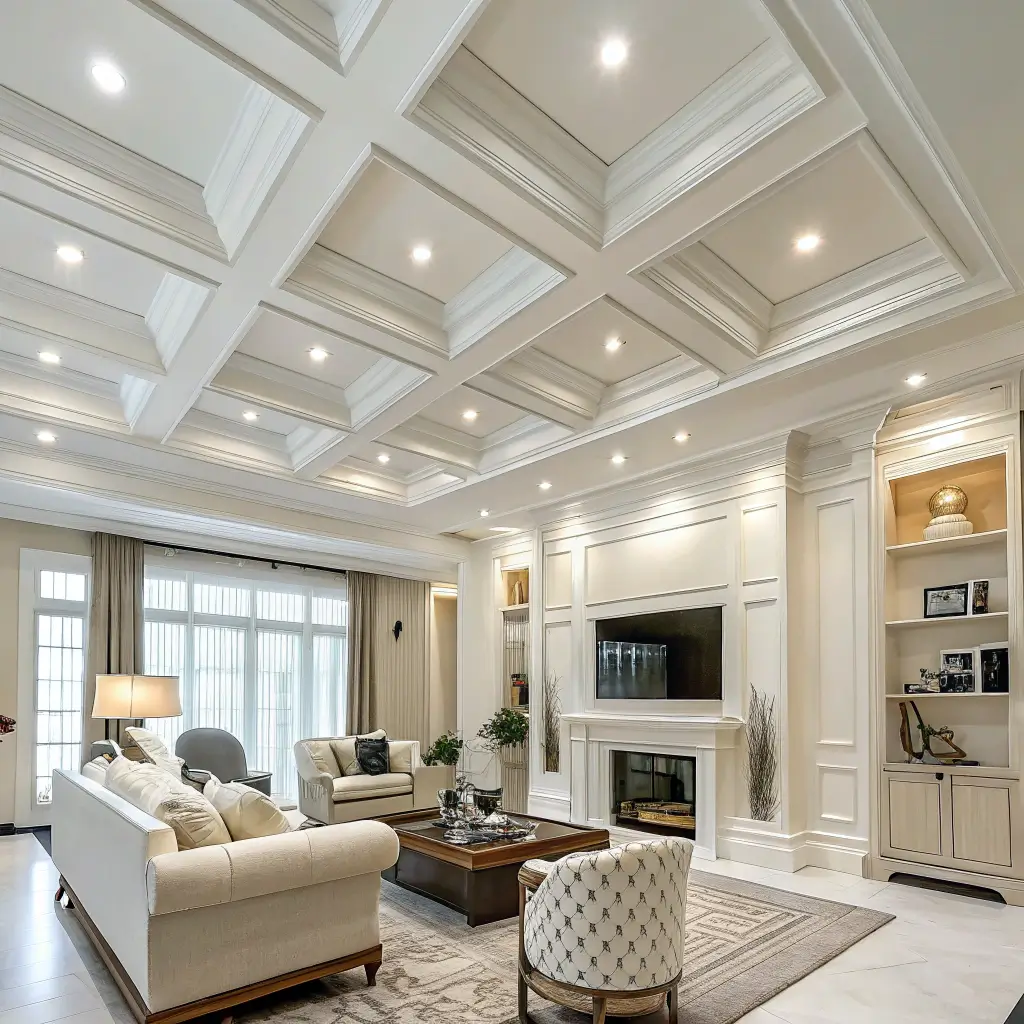
Want to feel like you’re living in a classic European manor? Coffered ceilings deliver that old-world charm while somehow looking completely modern. These grid-like patterns of recessed panels create texture and depth that flat ceilings can only dream about.
I’ll admit, my first reaction to coffered ceilings was “too fancy for my taste.” Then I saw a simplified version in a friend’s dining room – clean lines, subtle depth, painted all white. It added elegance without screaming “look at me!” That’s when I realized coffered doesn’t have to mean complicated.
The panels can be square, rectangular, or even octagonal if you’re feeling adventurous. Each recessed section becomes a frame for lighting fixtures or simply adds architectural interest. It’s like giving your ceiling its own personality.
Modern Takes on Classic Coffering
Here’s a pro tip: paint the recessed areas a shade darker than the beams. This creates incredible depth without needing actual deep coffers. I’ve done this with just a 2-inch depth difference, and guests always think it’s way more elaborate than it actually is.
Circular Tray Ceiling
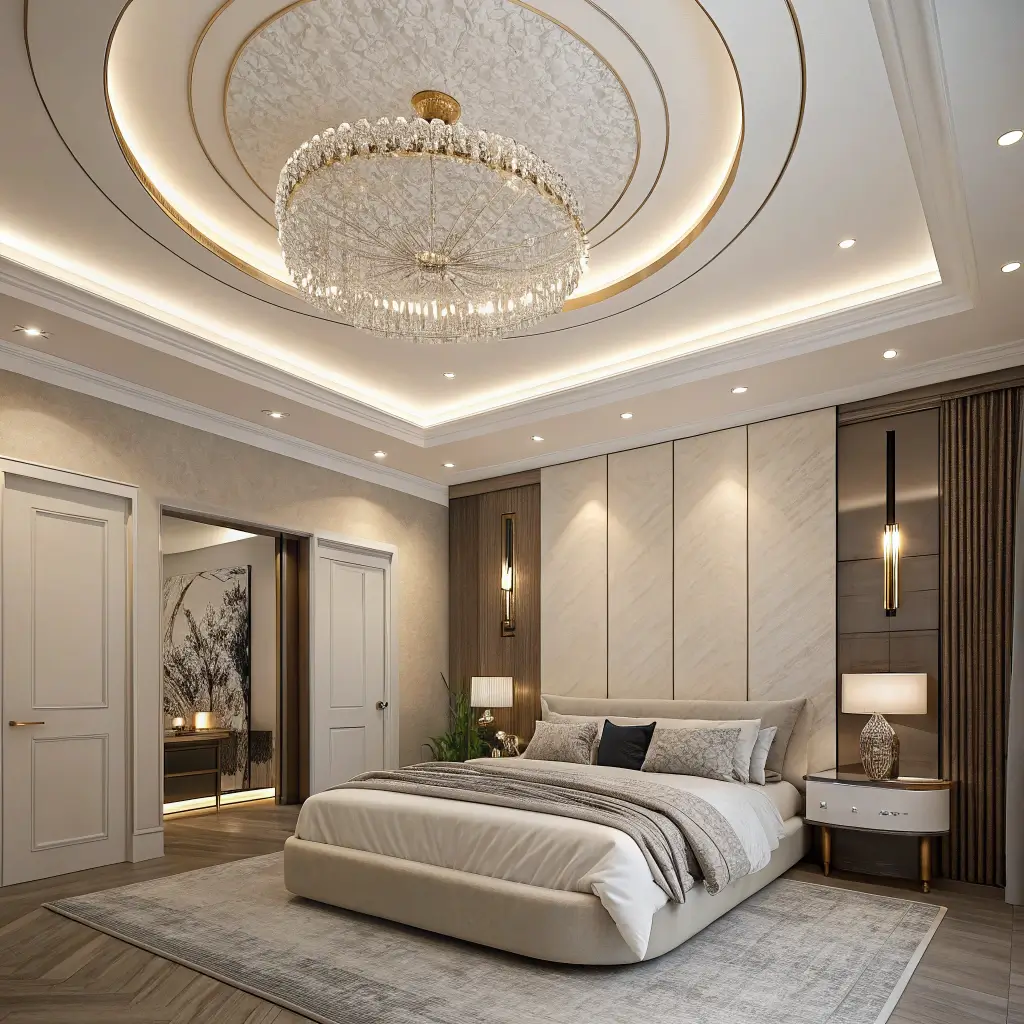
Round shapes in a world full of squares and rectangles? That’s exactly why circular tray ceilings make such a statement! They break up the monotony of straight lines and create this beautiful focal point that naturally draws your eye upward.
Picture walking into a room where the ceiling features a perfect circle recessed into it, maybe with hidden lighting around the edge. It’s unexpected, elegant, and honestly, kind of mesmerizing. I installed one above my dining table, and now dinner parties feel way more special – like we’re dining in some fancy restaurant.
The circular design works especially well in rooms with round elements – circular dining tables, curved sofas, or round mirrors. It creates this visual harmony that rectangular ceilings just can’t achieve.
Making Circles Work in Square Rooms
Don’t worry if your room is perfectly square or rectangular. The circle creates beautiful negative space in the corners that you can use for additional lighting or decorative elements. IMO, this contrast between geometric shapes adds sophisticated visual interest.
Geometric Pattern Ceiling
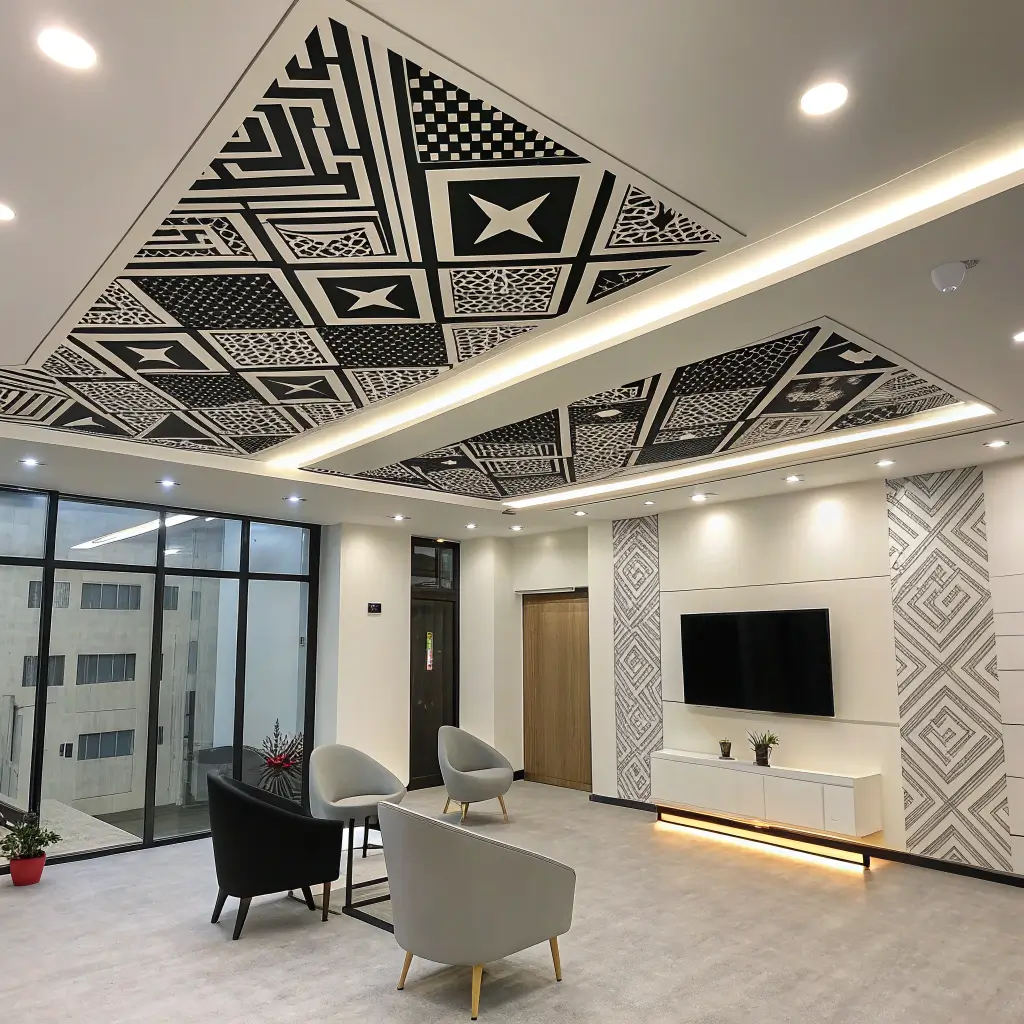
Speaking of shapes, let’s talk about geometric pattern ceilings – the perfect choice for anyone who wants to make a bold statement without going overboard. These designs use triangles, hexagons, or abstract shapes to create patterns that are modern art pieces in their own right.
I helped design one for my nephew’s gaming room using interlocking triangles in different shades of gray. The result? A ceiling that looks like it belongs in a tech startup’s headquarters. Every friend who visits wants to know who his “designer” was (spoiler: it was just his design-obsessed aunt with too much free time).
The key with geometric patterns? Balance is everything. Too many shapes or colors, and you’ll get dizzy looking up. Too few, and it looks incomplete. Find that sweet spot where the pattern is interesting but not overwhelming.
Color Combinations That Pop
Stick to three colors maximum for geometric patterns. I usually go with two neutrals and one accent color. Think white, gray, and a pop of navy blue. Or cream, beige, with touches of sage green. The accent color should only cover about 20% of the pattern – just enough to catch attention.
Also Read: 15 Unique Luxury Ceiling Design Ideas and Luxe Finishes
Floating Ceiling with Cove Lighting
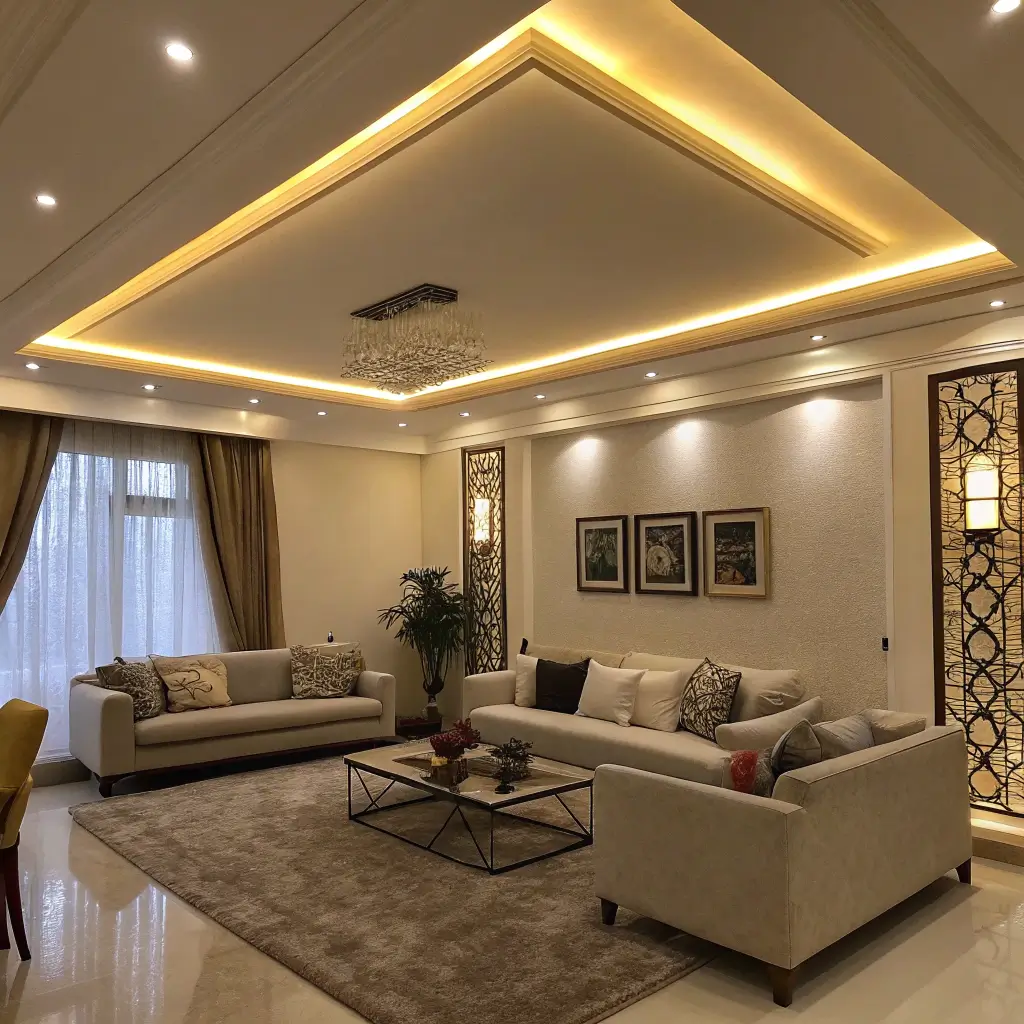
Want to know what makes a room feel expensive without actually being expensive? Floating ceilings with cove lighting. This design creates the illusion that your ceiling is levitating – seriously, it’s like architectural magic.
The concept is simple: create a false ceiling that’s slightly detached from the walls with a gap all around. Hide lights in this gap, and boom – you’ve got this ethereal glow that makes the ceiling appear to float. I’ve seen tough guys get emotional over how beautiful this looks 🙂
The indirect lighting is a game-changer for creating ambiance. Unlike harsh overhead lights that cast shadows on your face (not flattering for those late-night selfies), cove lighting bathes everything in soft, even illumination.
Technical Tricks for Perfect Float
The gap between your floating ceiling and walls should be at least 4 inches for proper light diffusion. Any less and you’ll see individual light spots instead of that smooth glow. Also, use warm white LEDs (3000K) for living spaces – cool white makes everyone look like vampires.
Simple False Ceiling with Spotlights
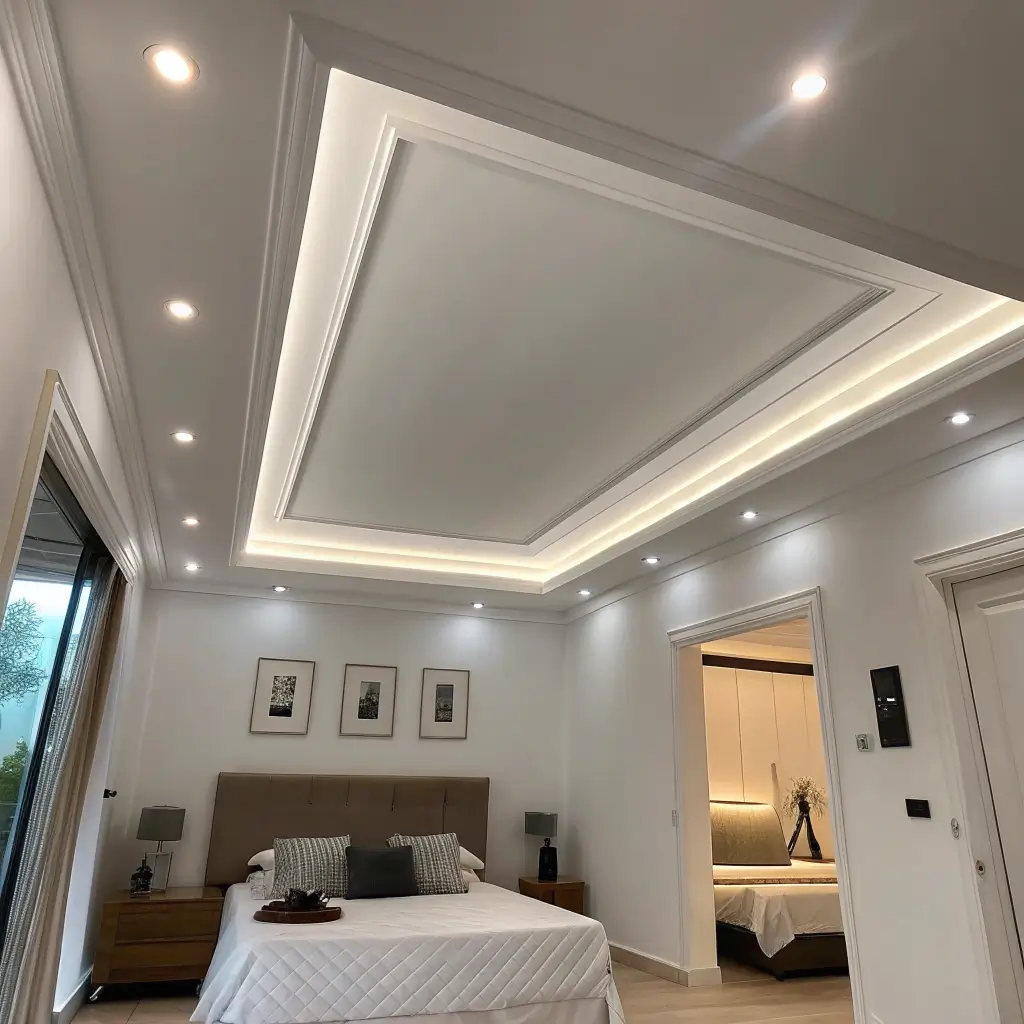
Sometimes, simple really is better. A clean, flat false ceiling dotted with strategically placed spotlights delivers functionality and style without any fuss. This is my go-to recommendation for first-timers who want to upgrade their ceiling game.
The beauty of spotlights? You control exactly where light goes. Want to highlight your artwork? Angle a spotlight. Need task lighting over your kitchen counter? Position spots accordingly. It’s like being the lighting director of your own home.
I recently redid my kitchen with this approach – white false ceiling, twelve adjustable spotlights. The transformation was incredible. No more shadows while chopping vegetables, no more squinting at recipes. Plus, the clean ceiling makes my small kitchen feel twice as big.
Spotlight Placement Strategy
Here’s the formula I swear by: one spotlight per 25 square feet for general lighting. Add extra spots for task areas. Space them evenly in a grid pattern for modern vibes, or cluster them for a more casual look. Always use dimmable LEDs – your electricity bill will thank you.
Pop Design with Central Pendant
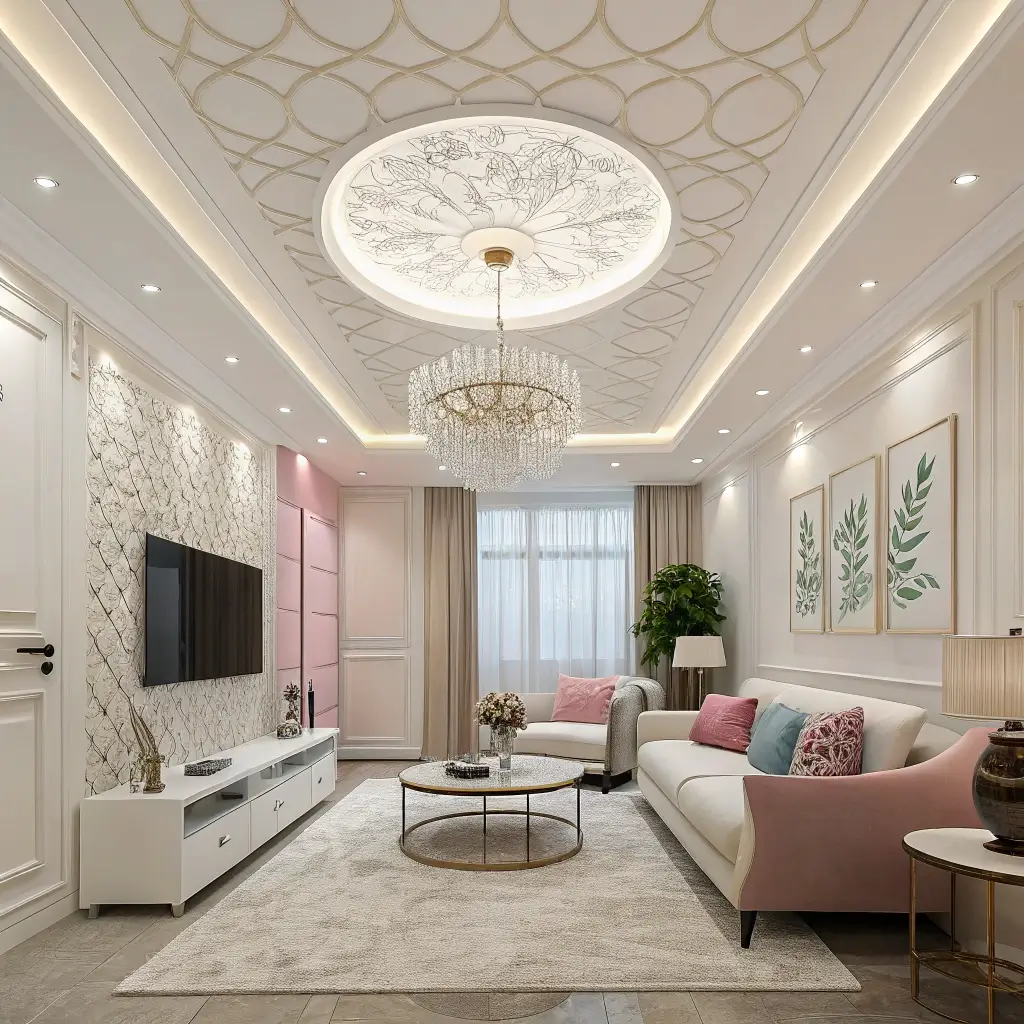
POP (Plaster of Paris) ceilings with a stunning central pendant light? That’s the perfect marriage of traditional craftsmanship and modern style. POP allows for smooth curves and intricate designs that other materials simply can’t match.
I’ve always loved how POP designs can be as simple or elaborate as you want. You could go with a basic circular design around your pendant, or create flowing patterns that look like frozen waves. The material is so versatile, it’s like working with ceiling Play-Doh (but way more sophisticated).
The central pendant becomes your room’s jewelry – choose something that makes a statement. I splurged on a gorgeous brass geometric pendant for my bedroom’s POP ceiling, and honestly, it’s the first thing everyone notices.
POP Maintenance Reality Check
Let’s be real – POP needs more care than other materials. It can develop cracks if your building settles, and moisture is its enemy. But with proper installation and occasional touch-ups, it’ll last decades. The stunning results make the extra effort worthwhile.
Also Read: 15 Creative POP False Ceiling Design Ideas You’ll Love
Modern Rectangular Ceiling Panels
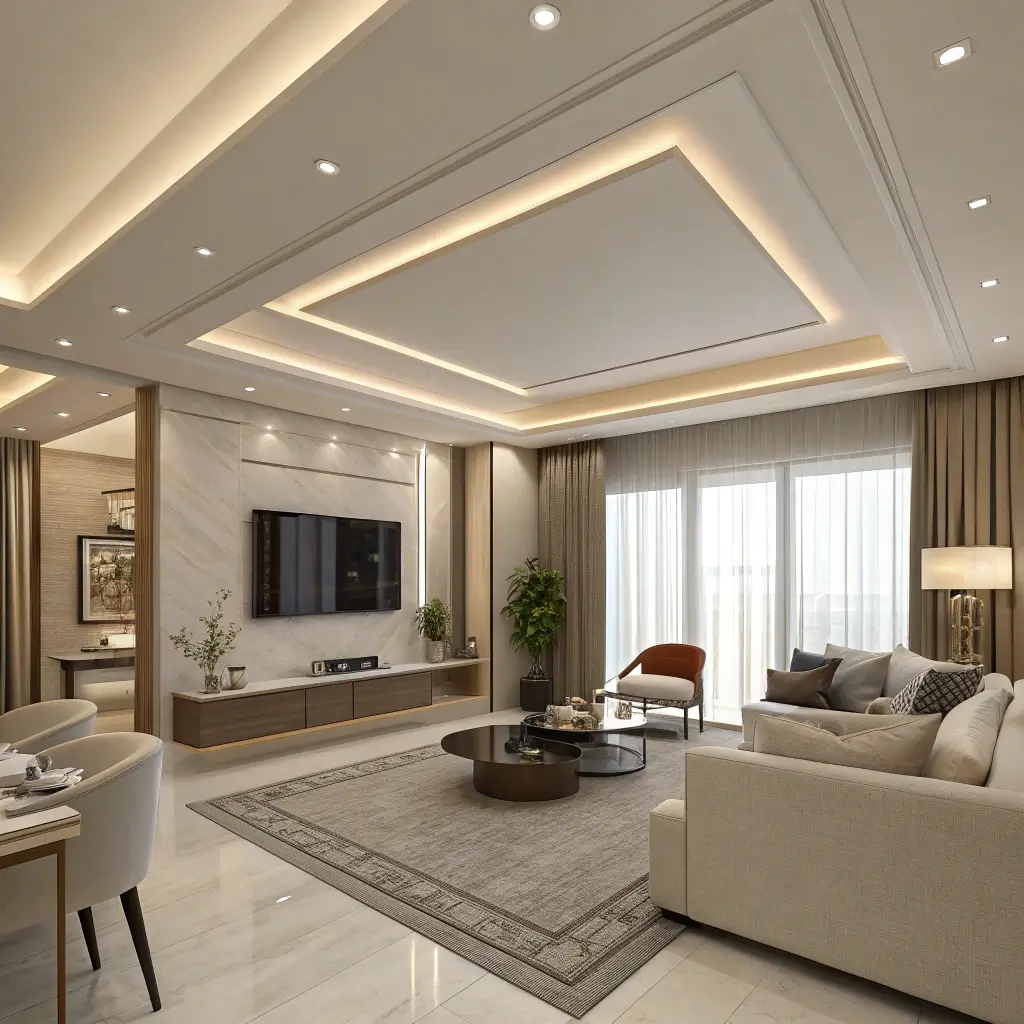
Rectangular panels arranged in a grid pattern offer the perfect blend of modern minimalism and visual interest. Think of it as coffered ceiling’s cooler, younger sibling – less traditional, more contemporary.
What I love about rectangular panels? They create rhythm and movement across your ceiling. You can play with panel sizes – maybe larger rectangles in the center gradually getting smaller toward the edges. Or alternate between horizontal and vertical orientations for dynamic visual flow.
I used this design in my home office, combining matte white panels with thin metallic gold trim. The result looks like something from an architecture magazine, but it cost less than what I spent on my office chair.
Panel Material Options
MDF panels work great for budget-conscious projects. For something fancier, try acoustic panels that also reduce echo – perfect for home theaters or music rooms. Fabric-wrapped panels add softness and warmth to bedrooms.
Two-Tone Color False Ceiling
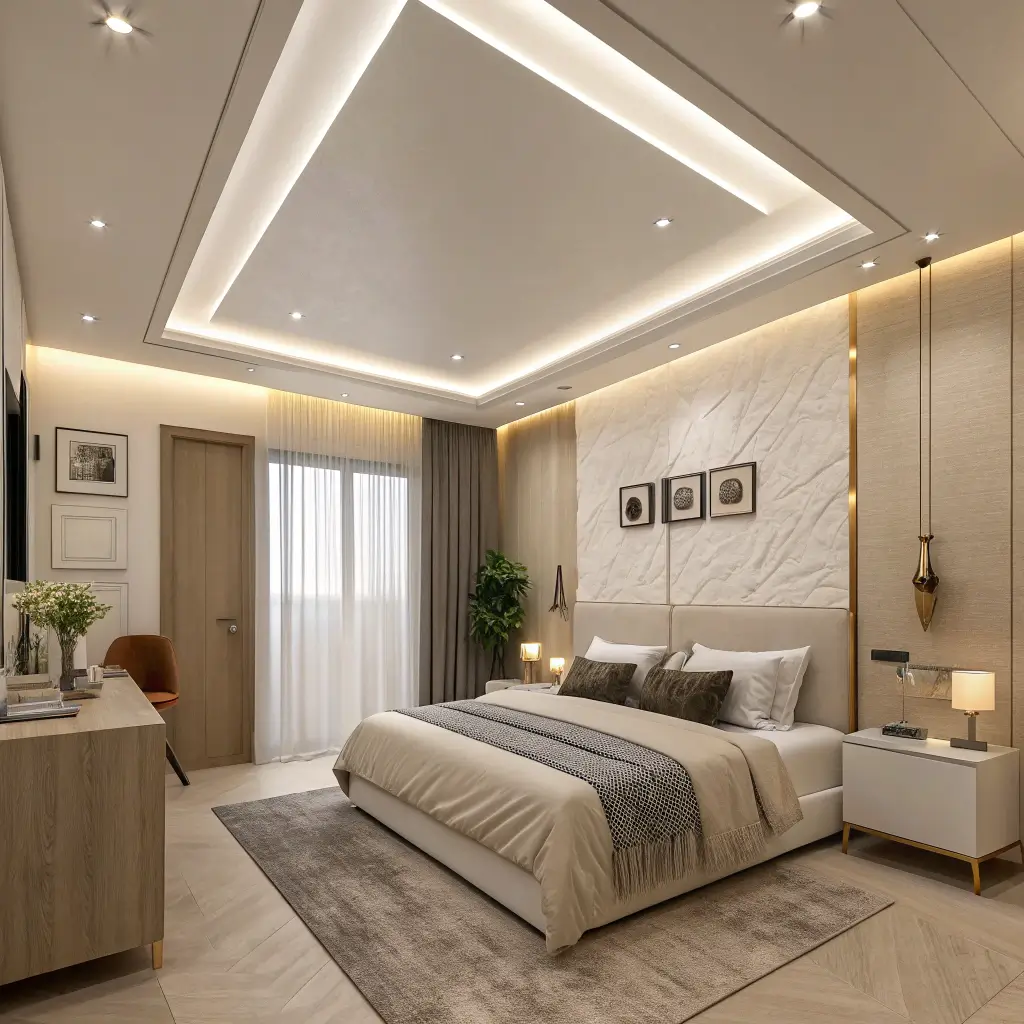
Why settle for one color when two create twice the impact? Two-tone false ceilings add depth and define spaces without using physical barriers. This technique has saved me in open-plan layouts where I needed visual separation.
Picture this: your living area ceiling in warm beige while your dining space rocks a sophisticated charcoal. The color change subtly signals different zones while maintaining that open, airy feel. No walls needed – just clever color psychology doing its thing.
The trick is choosing colors that complement rather than clash. I typically stick to the same color family – different shades of gray, varying tones of blue, or warm neutrals in different intensities.
Color Pairing Rules That Work
Follow the 60-30-10 rule: 60% dominant color (usually lighter), 30% secondary color, and save 10% for accent elements like trim or lighting fixtures. This creates balance without monotony.
Symmetrical Square False Ceiling
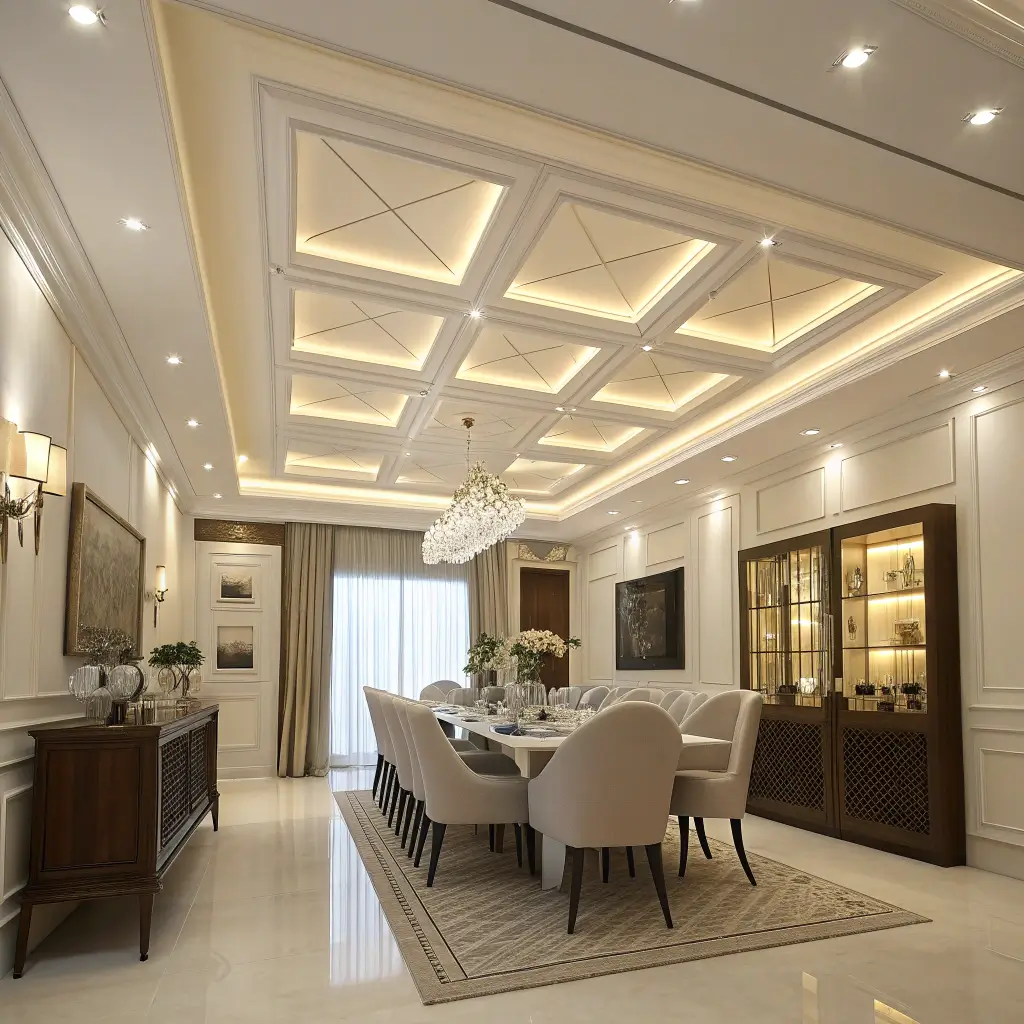
There’s something deeply satisfying about perfect symmetry, isn’t there? Symmetrical square ceilings tap into our brain’s love for order and balance, creating spaces that feel inherently calm and organized.
I designed one for my meditation room (yes, I have one – don’t judge). A perfect square recessed into the ceiling with LED strips forming an inner square of light. The geometric precision is oddly soothing – like everything in the universe suddenly makes sense.
This design shines in square rooms obviously, but it also works in rectangular spaces. Just center the square and use the remaining ceiling space for complementary design elements.
Creating Perfect Symmetry
Measure twice, install once – seriously. Even a slight offset ruins the effect. Use a laser level and mark your center point precisely. The extra time spent on accuracy pays off when you see that perfectly balanced result.
Curved False Ceiling with Lights
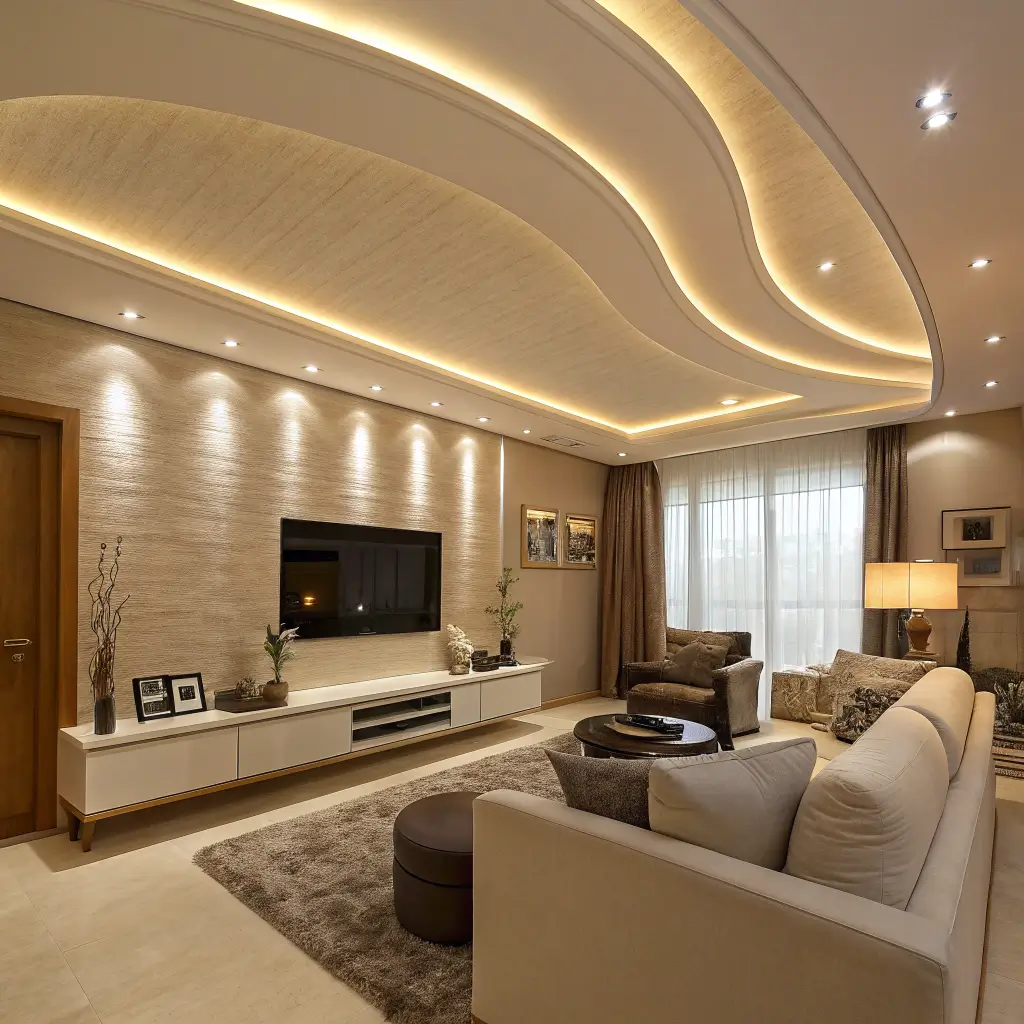
Straight lines are overrated. Curved false ceilings bring fluidity and movement to spaces that might otherwise feel rigid. These organic shapes soften harsh angles and create this beautiful flow that guides your eye around the room.
My favorite application? Creating a curved ceiling that follows the room’s traffic pattern. In my hallway, the ceiling curves gently from the entrance toward the living area, with embedded lights following the curve. It literally guides guests through my home – functional art at its finest.
Curves also work brilliantly for hiding structural elements. Got an awkward beam? Incorporate it into a flowing curved design. Ugly air conditioning duct? Hide it behind gentle waves.
Curve Construction Considerations
Flexible drywall or specially scored regular drywall creates smooth curves. For tighter radiuses, consider flexible POP or even stretched fabric systems. The key is ensuring curves are gradual and smooth – jarring transitions kill the flow.
Minimal Recessed Ceiling Design
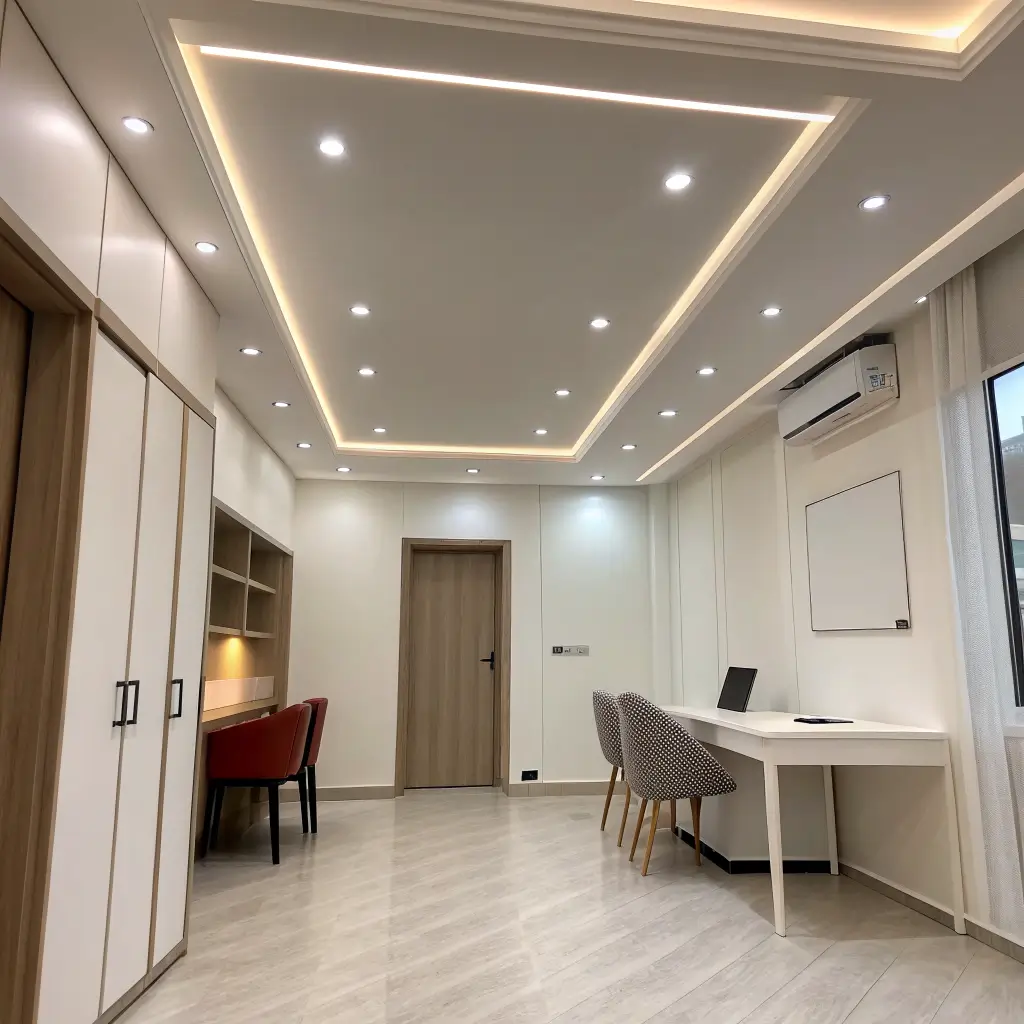
Less really can be more. Minimal recessed ceilings create subtle depth without overwhelming your space. This is my recommendation for anyone who wants ceiling interest but prefers understated elegance.
The recession doesn’t need to be deep – even 4-6 inches makes a noticeable difference. I’ve seen this transform bland, boxy rooms into spaces with architectural character. The recessed area becomes a natural frame for your room, defining the space without closing it in.
What makes this design genius? It works with any decor style. Modern minimalist? Perfect. Traditional? Absolutely. Bohemian? Why not! The simple recession adapts to whatever style you throw at it.
Lighting the Recess
Here’s where you can get creative. Rope lights around the perimeter create ambient glow. Recessed can lights provide focused illumination. Or keep it simple with a central chandelier – the recessed frame makes it even more dramatic.
Compact Bedroom False Ceiling Idea
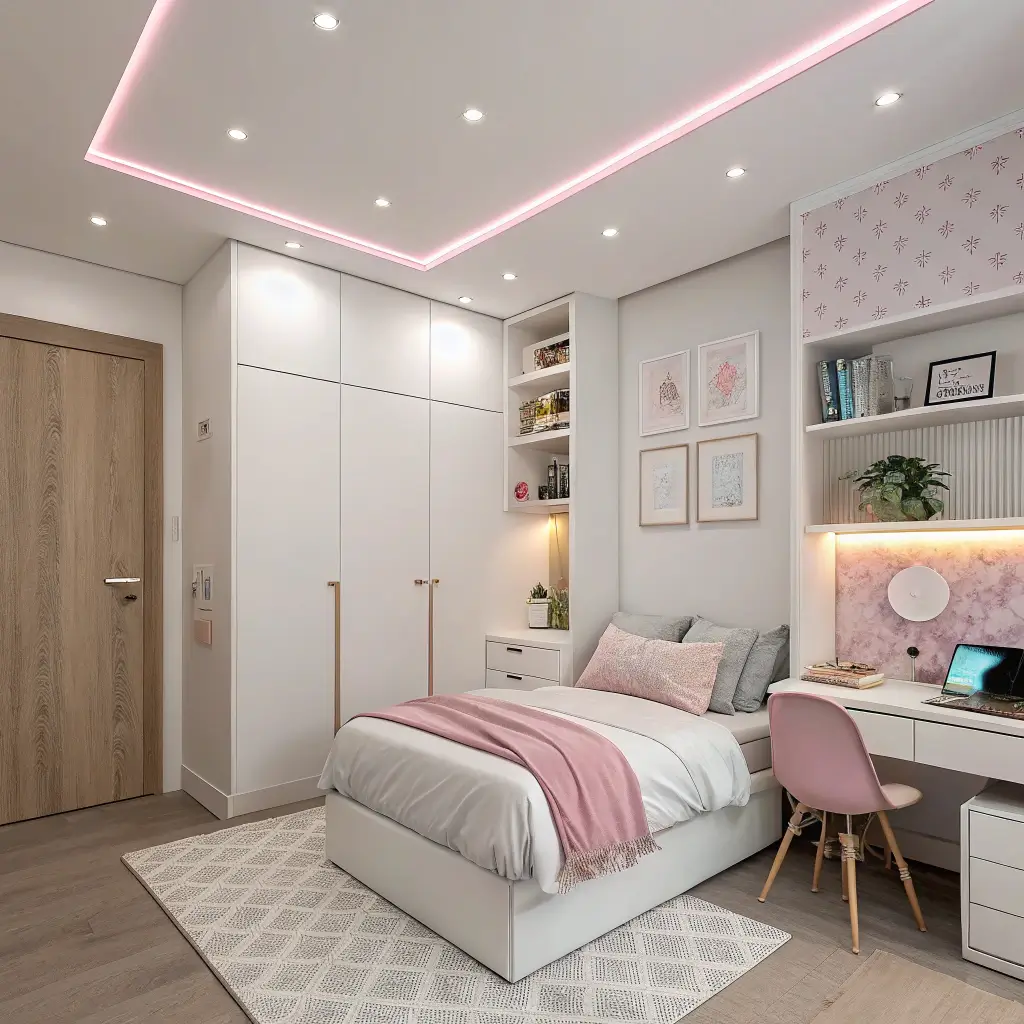
Bedrooms need special consideration – the ceiling is literally the last thing you see before sleeping. For compact bedrooms, the false ceiling design should enhance without overwhelming the intimate space.
My approach? Keep the central area simple and clean, with interest around the edges. Maybe a subtle cove around the perimeter with warm lighting, or a small recessed area directly above the bed. This creates a cocoon effect that’s perfect for rest and relaxation.
In my guest bedroom (a whopping 10×10 feet), I installed a false ceiling that drops just 4 inches with hidden LED strips. The lower height actually makes the room feel cozier, not smaller. Sometimes design rules are meant to be broken!
Small Room, Big Impact Strategies
Use light colors to maintain spaciousness. Add mirrors to the ceiling’s recessed sections for depth illusion. Keep lighting warm and dimmable – harsh light in small bedrooms feels like an interrogation room.
Final Thoughts
After exploring all these designs, you might wonder which one’s right for you. Here’s my advice: start with your room’s purpose and your lifestyle. Love entertaining? Go bold with geometric patterns or floating ceilings. Prefer quiet evenings? Minimalist or curved designs create that zen atmosphere.
Remember, false ceilings aren’t just decorative – they’re problem solvers. They hide imperfections, improve acoustics, enable better lighting, and even help with insulation. You’re not just making your ceiling pretty; you’re upgrading your entire living experience.
The best part? You don’t need to commit to one design throughout your home. Mix it up! Maybe curves in the living room, geometric in the kids’ room, and minimalist in the master bedroom. Your home should tell your story, and these ceiling designs are just another chapter in that narrative.
So what are you waiting for? Pick a design that speaks to you, grab some measurements, and start planning. Your dream ceiling (and the envy of everyone who visits) is just one installation away. Who knew looking up could be so inspiring?
