
Small room got you feeling claustrophobic? Yeah, I’ve been there. My first apartment was basically a glorified shoebox with 7-foot ceilings that made me feel like Alice after she ate the wrong mushroom. That’s when I discovered the magic of false ceilings – and no, they don’t make your space smaller like everyone thinks.
Here’s the truth: false ceilings in small spaces can actually create the illusion of height, add architectural interest, and hide all those ugly wires and pipes that make your room look unfinished. After installing my first false ceiling in that tiny apartment, friends started asking if I’d knocked down walls. Nope, just got clever with the fifth wall.
I’ve spent the last five years experimenting with different false ceiling designs in compact spaces, and let me tell you, the right design can transform your cramped quarters into something that feels downright spacious.
Ready to make your small space work harder and look better? Let’s talk about 10 false ceiling designs that’ll make you forget you’re working with limited square footage.
Layered Gypsum False Ceiling
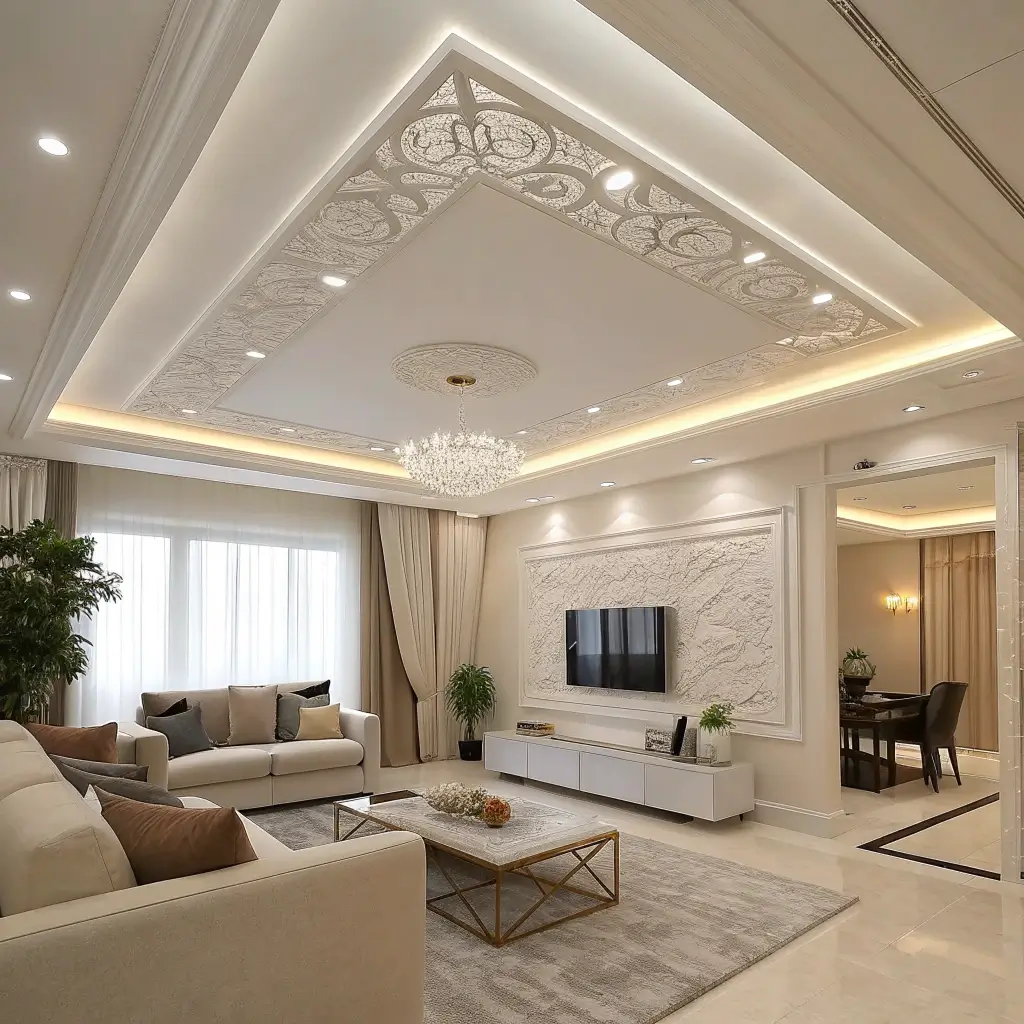
Layered gypsum ceilings are like the Swiss Army knife of small space design. Multiple levels create depth without eating up precious headroom, and the play of shadows makes your ceiling feel miles high. I installed one in my 10×10 bedroom, and suddenly everyone thinks I hired an architect.
Why Layers Work in Tight Spaces
The genius of layered gypsum lies in its ability to define zones without walls. Got a studio apartment? A dropped layer over your bed area instantly creates a cozy sleeping nook. The varying heights trick your eye into perceiving more space than actually exists.
Here’s what makes layered gypsum perfect for small rooms:
- Lightweight material that doesn’t stress your structure
- Clean lines that complement modern aesthetics
- Accommodates recessed lighting seamlessly
- Creates visual interest without overwhelming
The installation process isn’t as scary as it looks. Gypsum boards are surprisingly forgiving, and mistakes hide easily under a coat of paint. Just make sure you maintain at least 7 inches of clearance from your original ceiling – any less and you’ll feel like you’re wearing a hat indoors.
Design Tips That Actually Work
Keep your layers subtle in small spaces. A 2-3 inch difference between levels creates impact without drama. I learned this after my first attempt looked like a wedding cake – not the vibe I was going for.
Color plays a huge role here. Paint all layers the same light color to maintain flow, or go bold with a darker recessed center to create the illusion of infinite height. Trust me, that dark center trick makes even 8-foot ceilings feel cathedral-like.
Wooden Beam False Ceiling
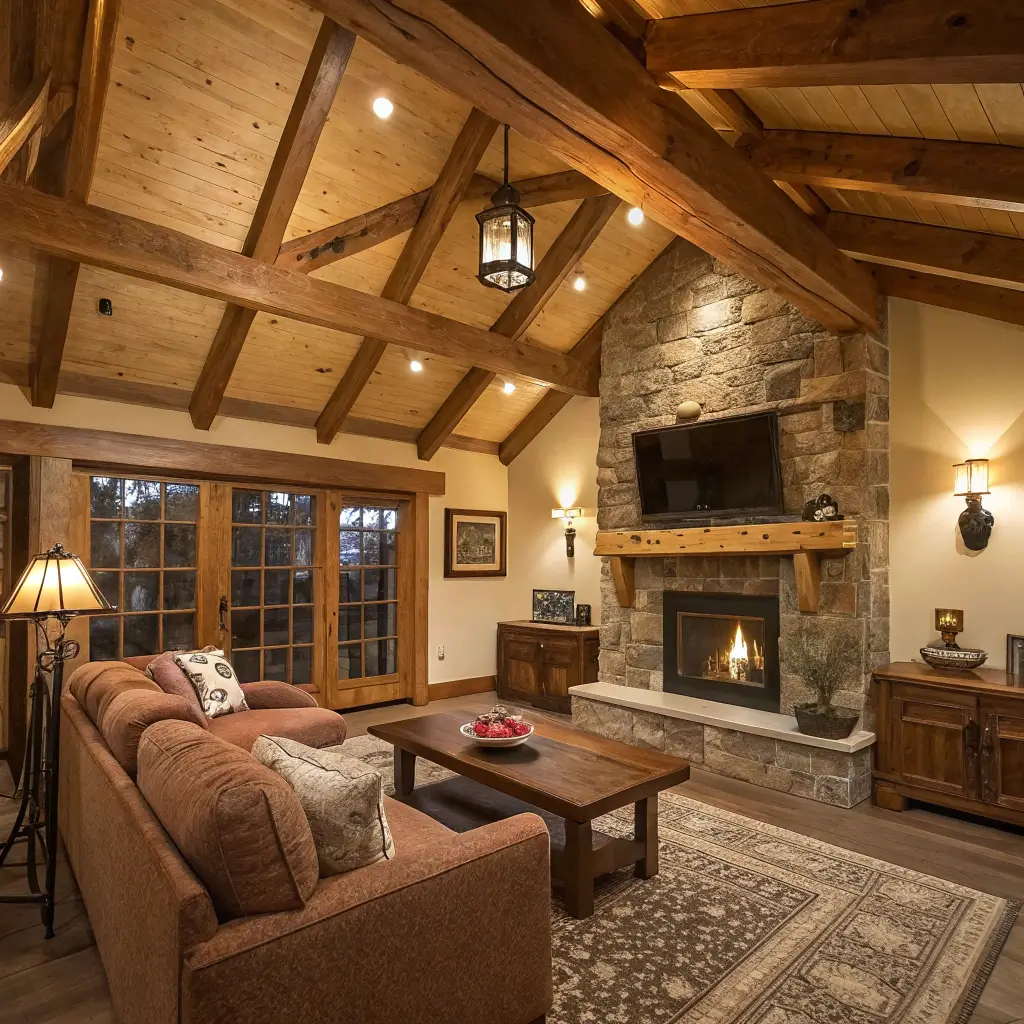
Who says small spaces can’t have character? Wooden beam false ceilings bring warmth and personality without the structural headaches of real beams. My studio apartment went from “sad millennial rental” to “cozy cabin retreat” with just four faux beams.
Choosing Beams That Don’t Overwhelm
The key to wooden beams in small spaces? Scale and spacing matter more than authenticity. Those massive barnwood beams you saw on Pinterest? They’ll make your room feel like it’s wearing its dad’s suit. Stick to beams no wider than 4-6 inches for rooms under 150 square feet.
Smart beam strategies for small spaces:
- Parallel beams elongate narrow rooms
- Perpendicular placement adds width visually
- Light wood tones keep things airy
- Hollow beams reduce weight and cost
I made the mistake of going too dark with my first beam attempt. The espresso stain looked amazing in the store but turned my bright room into a cave. Medium wood tones like honey oak or natural pine work magic in compact spaces.
Installation Without the Headache
Here’s a secret: you don’t need to be Bob Vila to install faux beams. Polyurethane beams look incredibly realistic and install with basic tools. They’re literally hollow boxes that slip over mounting blocks. My entire living room took one weekend and cost less than a fancy dinner out.
The spacing formula that works? Divide your ceiling width by 3 or 4 for the number of beams. Any closer and you’ll feel like you’re in jail; any farther and they look randomly placed.
LED Cove False Ceiling
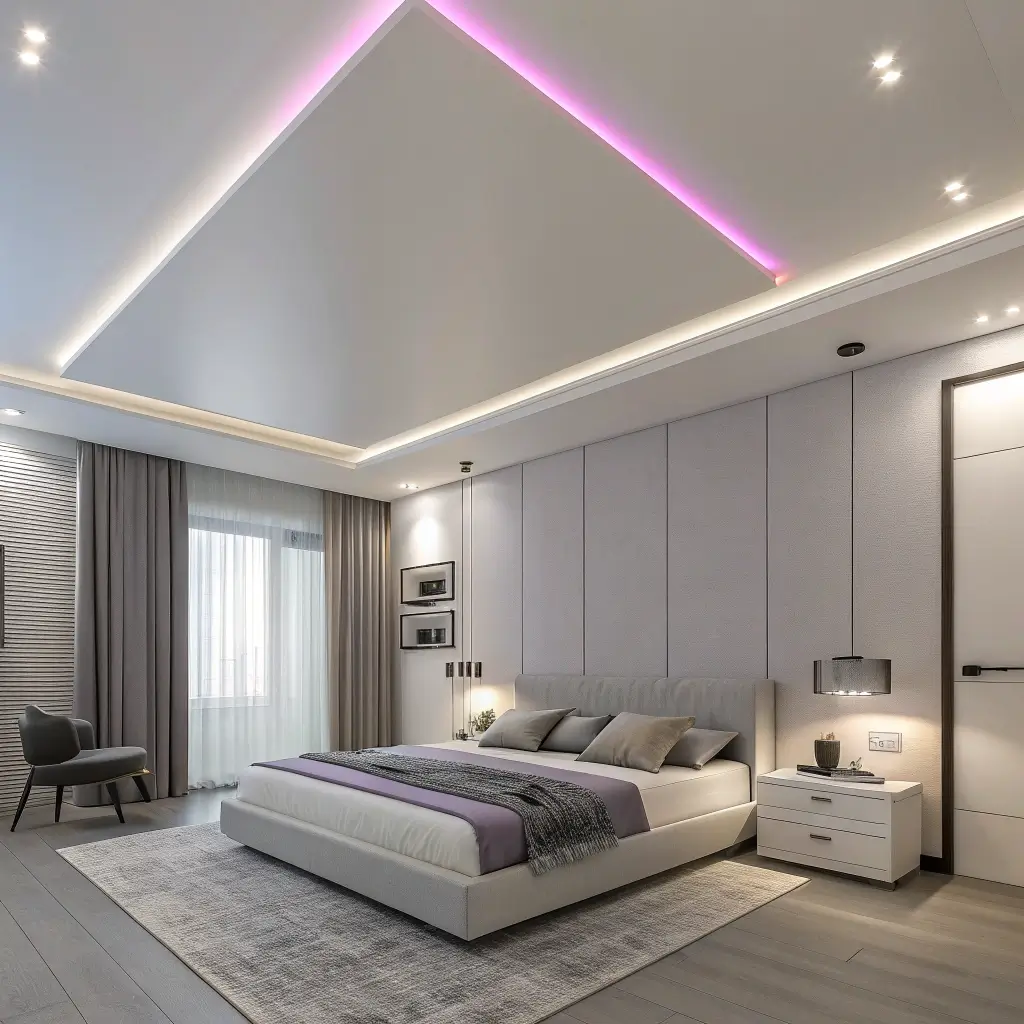
LED cove lighting changed my life – and I’m only slightly exaggerating. This indirect lighting technique eliminates harsh shadows, makes rooms feel larger, and creates ambiance that overhead lights could never achieve. Plus, your electricity bill will thank you.
Creating the Perfect Glow
The magic happens in the gap. A 4-6 inch cove around your ceiling perimeter houses LED strips that wash your walls with light. The result? Your room feels like it extends beyond its actual boundaries. Science or sorcery? Who cares when it works this well.
Essential elements for LED cove success:
- Warm white LEDs (2700-3000K) for living spaces
- Daylight (5000K) for work areas
- Dimmable drivers for mood control
- Aluminum channels for even light distribution
My first DIY attempt taught me that quality matters with LED strips. Cheap ones create dotted patterns instead of smooth light. Spend the extra $20 – your eyes will appreciate it every single day.
Maximizing Impact in Minimal Space
Small rooms benefit most from perimeter cove lighting. Skip the center fixtures entirely and let the cove do all the work. The uninterrupted ceiling makes your space feel larger, while the wall washing effect adds architectural interest.
Want to get fancy? RGB strips let you change colors for different moods. Movie night? Deep blue. Dinner party? Warm amber. Just maybe skip the rainbow disco mode for everyday use 🙂
Also Read: 15 Fabulous Ceiling Design Ideas to Refresh Your Home
Minimalist POP False Ceiling
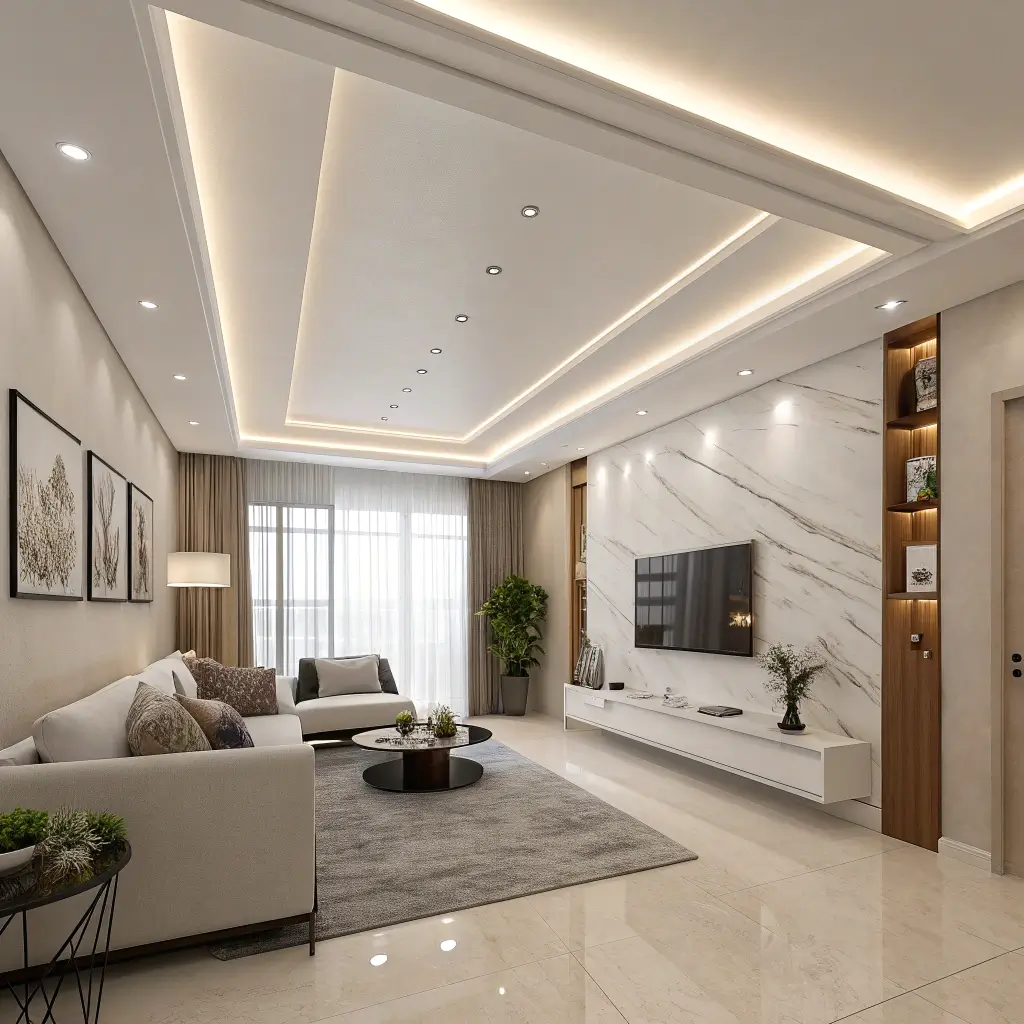
POP (Plaster of Paris) ceilings get a bad rap for being old school, but minimalist POP designs are having a serious moment. Clean lines, smooth finishes, and zero fuss – exactly what small spaces need. My bathroom’s POP ceiling has survived three years of steam and still looks fresh.
The Beauty of Simple
Minimalist POP design means restraint is your superpower. Forget elaborate moldings or ornate patterns. We’re talking smooth surfaces with maybe one recessed rectangle for subtle definition. The result looks expensive but costs surprisingly little.
Why POP works in small spaces:
- Seamless finish creates visual continuity
- Moisture-resistant when properly sealed
- Accepts any paint color beautifully
- Repairs easily if damaged
The installation requires more skill than gypsum, but hiring a professional costs less than you’d think. My entire bedroom ceiling cost $400 installed – less than that designer lamp I never use.
Design Elements That Elevate
Even minimalist designs need some personality. A single recessed channel with LED strips adds drama without complexity. Or create a subtle border detail that frames your room without shrinking it.
My favorite trick? Paint the recessed areas a shade darker than the main ceiling. This creates depth without adding actual layers, perfect for rooms where every inch counts.
Geometric Pattern False Ceiling
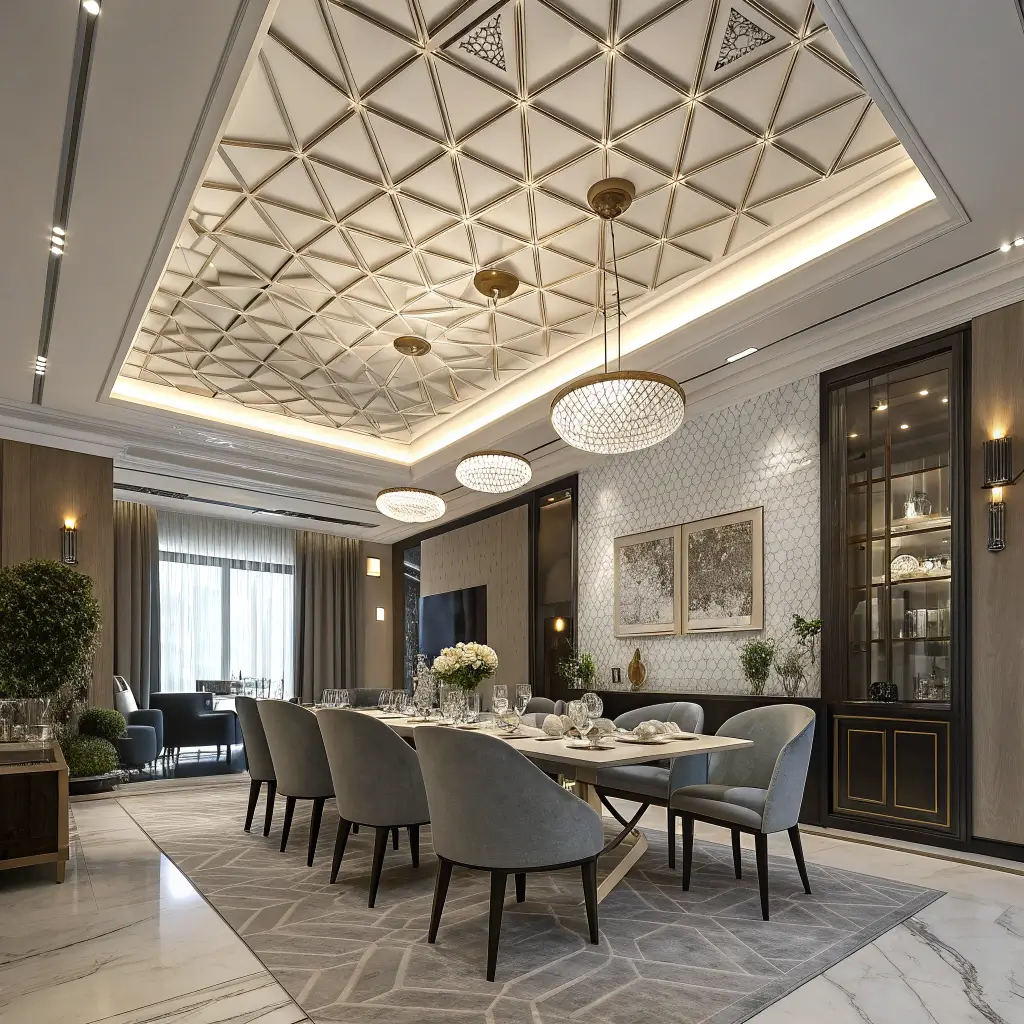
Geometric patterns and small spaces? Sounds like a recipe for disaster, right? Wrong. Strategic geometric designs actually help small rooms feel larger and more organized. The key is choosing patterns that guide the eye rather than trap it.
Patterns That Expand, Not Overwhelm
I learned through expensive trial and error that large-scale patterns beat tiny repeating ones in small spaces. Think bold diamonds or oversized hexagons rather than intricate tessellations. Your brain processes simple shapes faster, making the room feel calmer.
Geometric patterns that work:
- Linear strips for lengthening
- Concentric squares for depth
- Diagonal lines for dynamism
- Asymmetric shapes for modern edge
The pattern should enhance your room’s best feature. Got a great window? Direct geometric lines toward it. Trying to highlight a furniture piece? Frame it with your ceiling pattern.
Execution Without Chaos
Creating geometric patterns doesn’t require an engineering degree. Painter’s tape and patience get you 90% there. Map out your design on paper first, then transfer it using a chalk line or laser level.
Color choice makes or breaks geometric ceilings. Tone-on-tone patterns (like light grey on white) add interest without overwhelming. Save the high contrast for accent walls, not ceilings in small spaces.
Also Read: 15 Pretty Pink Christmas Bedroom Ideas Sweet Decor
False Ceiling with Skylight Panels
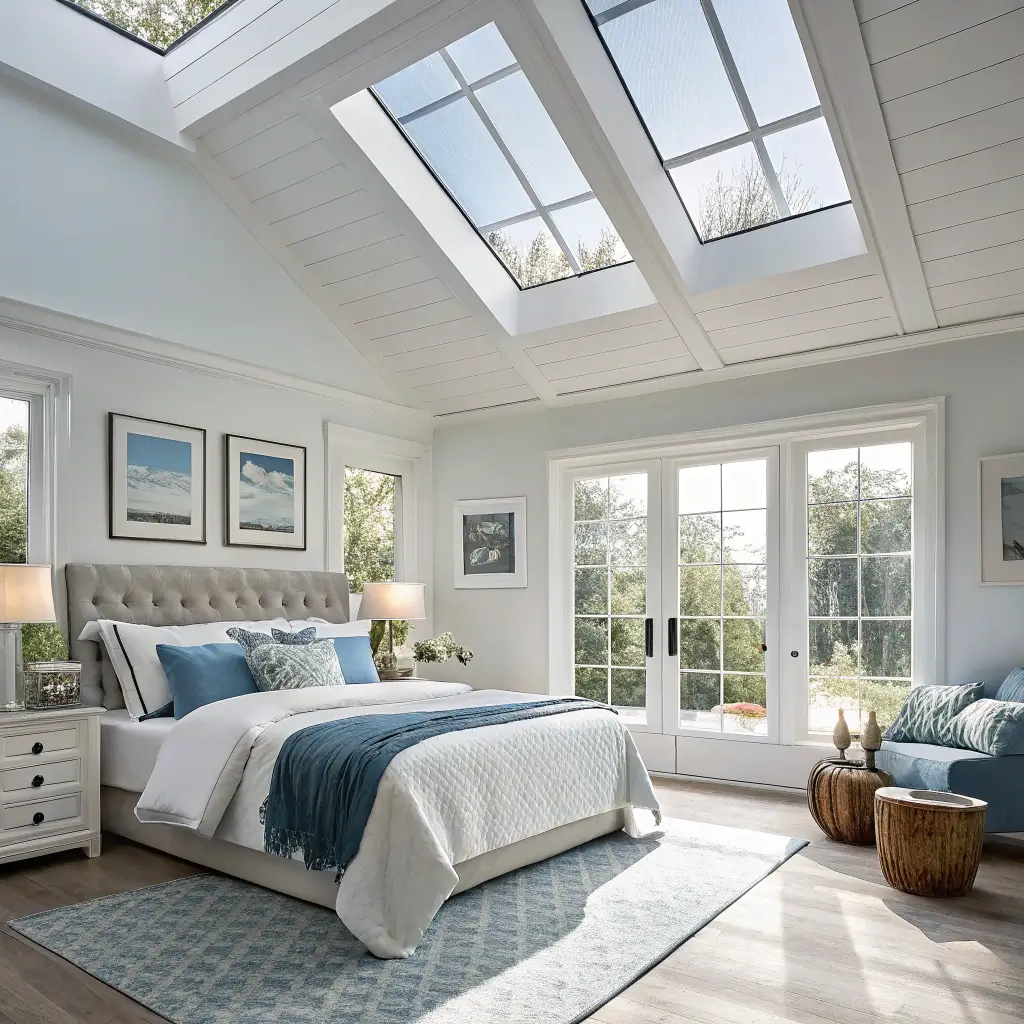
Nothing opens up a small space like natural light, but what if you’re in a basement or interior room? Enter false skylights – the ultimate optical illusion. My windowless home office went from depressing to delightful with two LED skylight panels.
Creating Convincing Daylight
Modern false skylights use LED panels and diffusion materials to mimic real daylight so well, your brain genuinely believes it. Some even change color temperature throughout the day, supporting your circadian rhythm. FYI, this is probably the best investment I’ve made for my mental health.
Components of effective false skylights:
- Daylight-balanced LEDs (5600K-6500K)
- Diffusion panels for soft light
- Recessed installation for authenticity
- Optional cloud effects for realism
The placement matters enormously. Center them over activity areas like desks or reading chairs rather than random spots. And please, don’t overdo it – one or two panels max for rooms under 200 square feet.
Installation Considerations
False skylights require more planning than other false ceiling options. You need adequate depth for the light box (usually 6-8 inches) and proper electrical planning. But the transformation? Absolutely worth the effort.
My contractor tried to talk me out of it, saying it would look fake. Three months later, he installed them in his own house. That’s the power of quality false skylights – they convert skeptics instantly.
Circular or Dome-Shaped False Ceiling
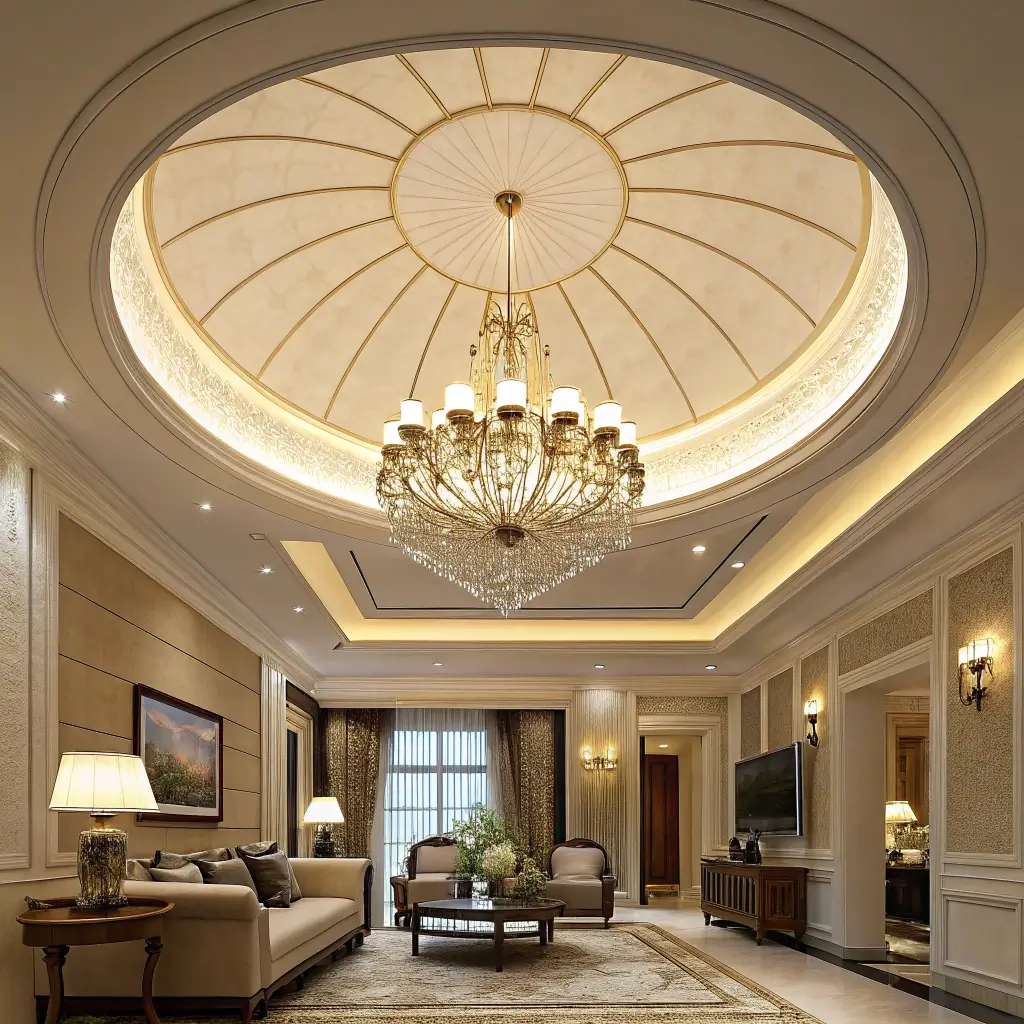
Curves in small spaces sound counterintuitive, but circular ceiling elements actually soften boxy rooms and create flow. My square dining nook became infinitely more inviting with a circular false ceiling detail above the table.
Why Circles Work Magic
Rectangular rooms create visual tension with all those corners. A circular ceiling element breaks up the monotony and draws the eye upward and outward. It’s like giving your room a architectural exhale.
Circular ceiling benefits:
- Softens harsh angles in square rooms
- Creates natural focal points
- Accommodates pendant lights perfectly
- Makes rooms feel taller
The size ratio matters here. Your circle should be about 1/3 to 1/2 the room’s width. Any larger and it dominates; any smaller and it looks like a random UFO landed on your ceiling.
Creating Curves Without Crying
Cutting perfect circles in ceiling materials sounds nightmare-inducing, but flexible drywall or pre-formed rings make it surprisingly manageable. I managed mine with a homemade compass from string and a pencil – seriously.
The finishing touch? Cove lighting around the circle’s perimeter creates a halo effect that makes the circle appear to float. This adds dimension without reducing headroom, crucial in tight spaces.
Rustic Wooden False Ceiling with Exposed Beams
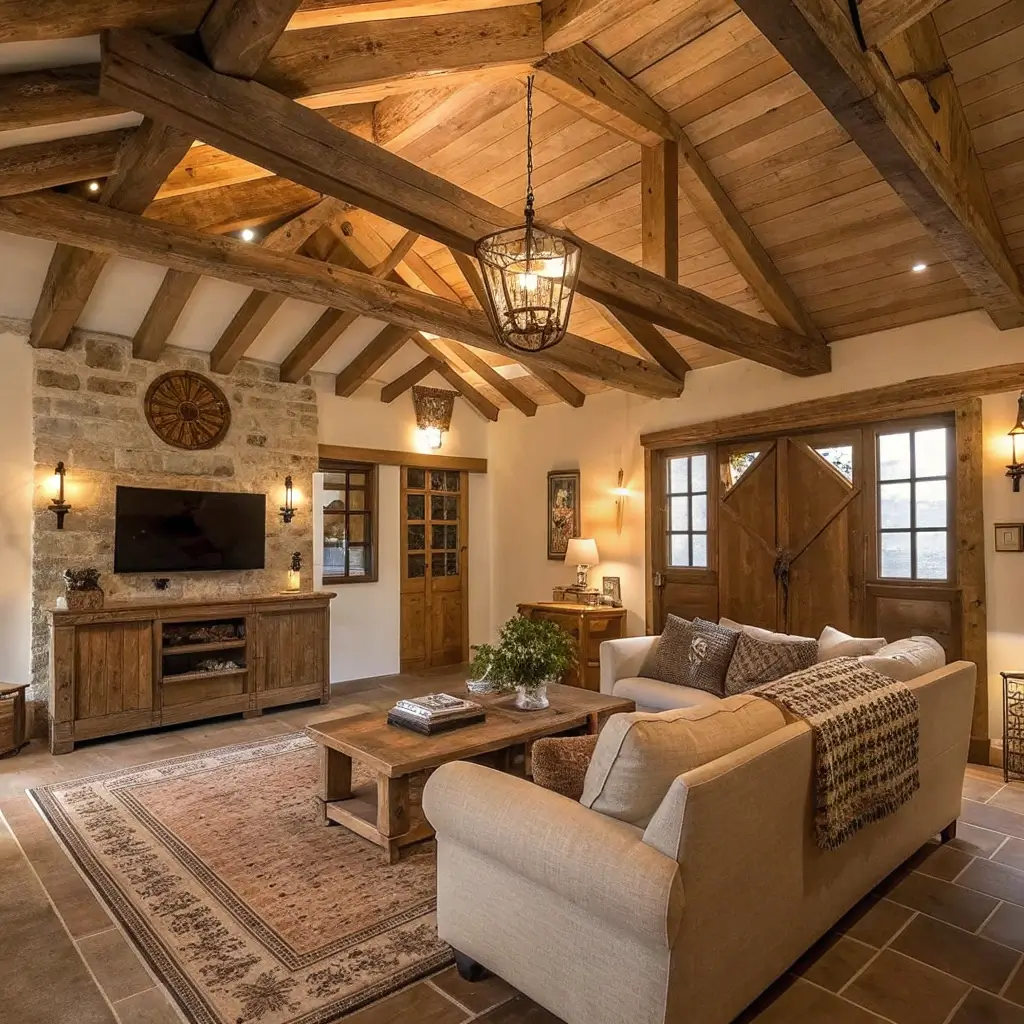
Rustic doesn’t mean rough, especially in small spaces. Exposed beam ceilings with wooden planking between them create texture and warmth without overwhelming. My tiny kitchen went from clinical to charming with this treatment.
Balancing Rustic and Refined
The trick with rustic ceilings in small spaces is keeping the color palette light. Dark wood everywhere will shrink your room faster than a hot wash. Mix whitewashed planks with natural beam tones for balance.
Rustic elements that work in small spaces:
- Reclaimed wood planks for character
- Painted beams for brightness
- Mixed widths for visual interest
- Strategic beam placement for room division
I discovered that perpendicular planking between beams makes narrow rooms feel wider. Running them parallel emphasizes length instead. Choose based on your room’s weakness.
DIY-Friendly Installation
Rustic wooden ceilings are surprisingly DIY-friendly. Lightweight pine planks install with construction adhesive and finishing nails. The rustic aesthetic means imperfections add character rather than detracting.
My biggest tip? Start with a perfectly level first row. Everything else follows that initial line, so take your time getting it right. And buy 10% extra material – matching wood tones later is nearly impossible.
Backlit Stretch Ceiling Design
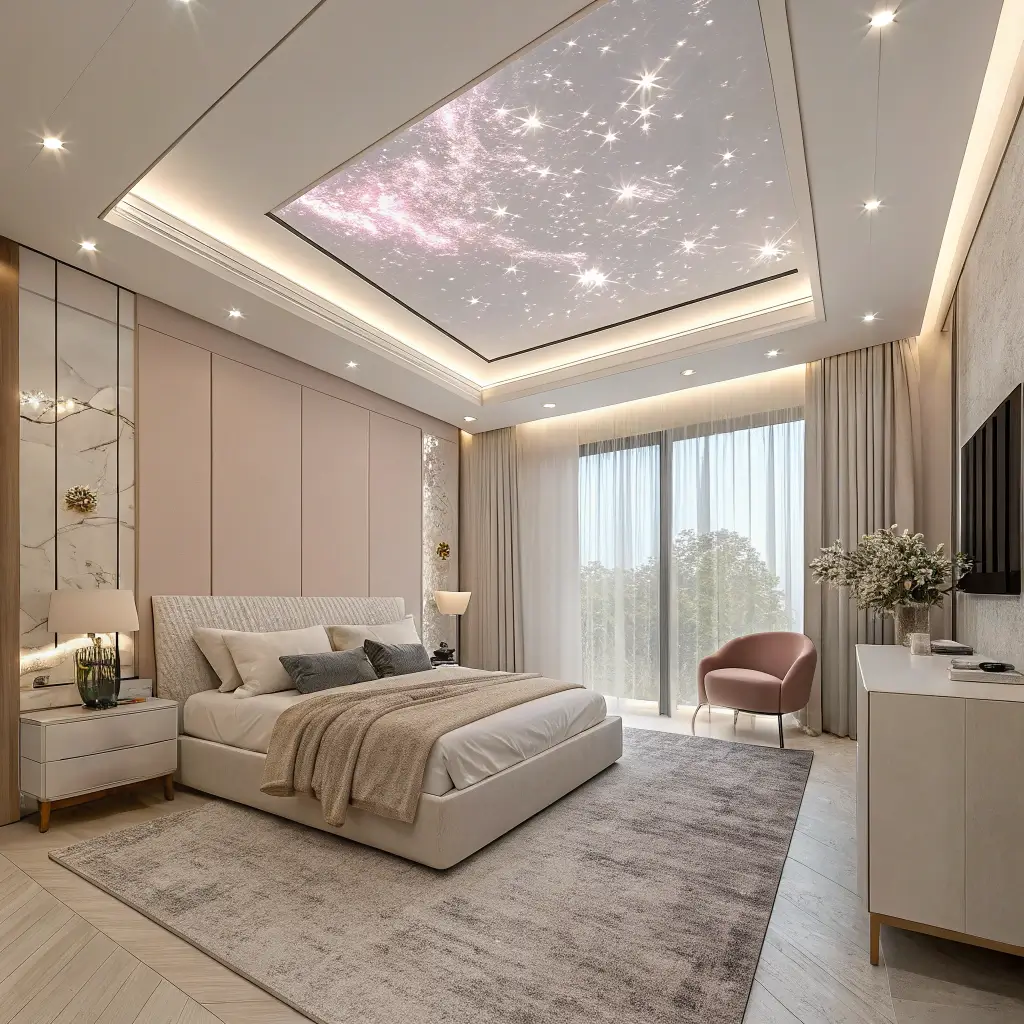
Stretch ceilings sound space-age, but they’re basically fabric or PVC membranes stretched across your ceiling. Add backlighting, and you get a luminous surface that makes small rooms feel infinite. My bathroom went from cramped to spa-like with this one change.
The Stretch Ceiling Advantage
The best part about stretch ceilings? They take up virtually no height – we’re talking 2-3 inches max. Perfect for those basement rooms or apartments where every inch counts. Plus, they hide all ceiling imperfections without extensive prep work.
Why stretch ceilings rock in small spaces:
- Completely smooth surface reflects light
- Waterproof options for bathrooms
- Acoustic benefits in echoey rooms
- Print custom designs or images
The backlighting possibilities are endless. Even illumination makes rooms feel larger, while selective lighting creates intimate zones. Some systems even display moving clouds or stars – maybe too much for everyday, but amazing for special occasions.
Professional Installation Worth It
I’ll be honest – stretch ceilings aren’t DIY territory. Professional installation ensures proper tension and seamless edges. But the installation takes just hours, not days, and creates zero mess.
Cost-wise, you’re looking at $15-30 per square foot installed. Not cheap, but considering the dramatic transformation and minimal space loss, IMO it’s worth saving up for.
Also Read: 15 Festive Cozy Christmas Bedroom Ideas for Warm Glow
Metallic Finish False Ceiling
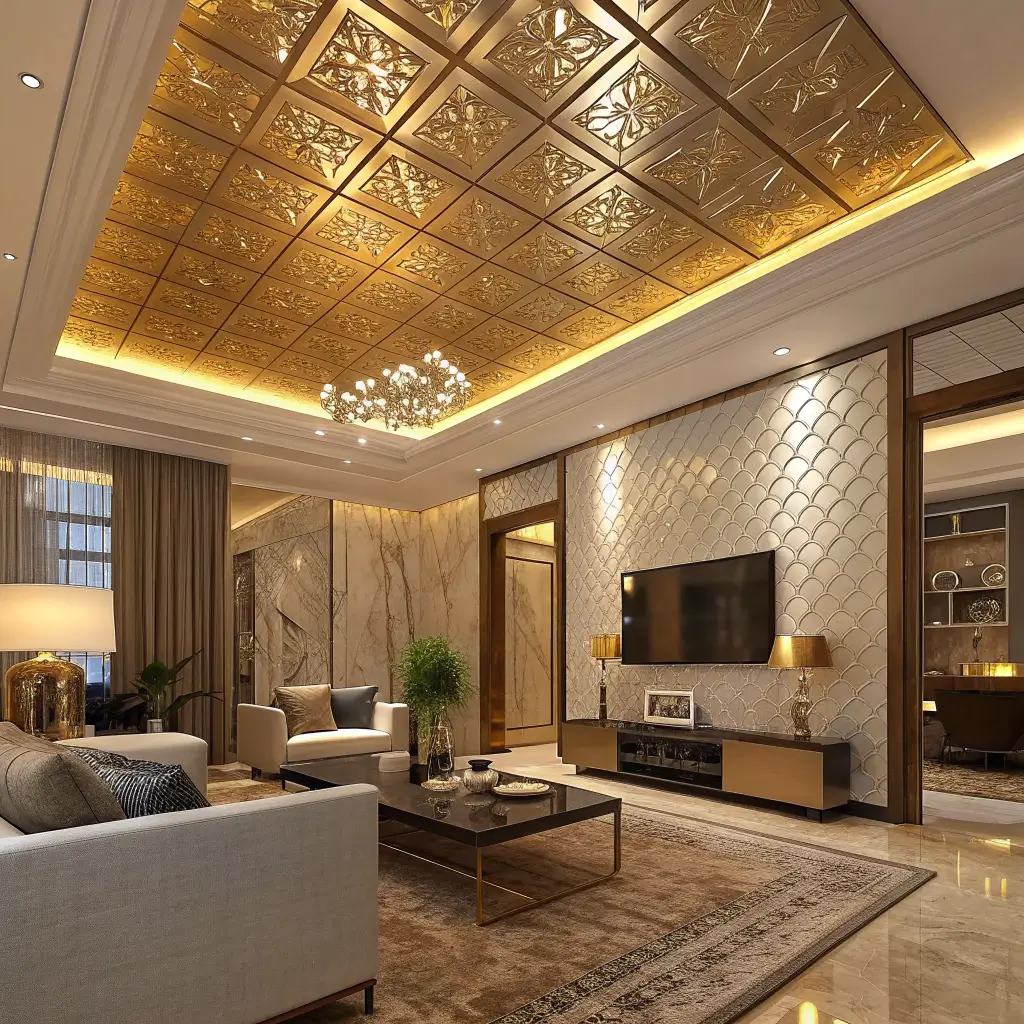
Metallic ceilings in small spaces? Hear me out. Subtle metallic finishes reflect light and add glamour without the disco ball effect. My entryway’s copper-toned ceiling makes guests stop and stare – in a good way.
Choosing Your Metal Mood
Different metallics create different vibes. Warm metals like copper and bronze add coziness, while cool metals like silver and pewter feel modern. Gold splits the difference and works with almost any color scheme.
Metallic application options:
- Metallic paint for DIY ease
- Metal-look tiles for texture
- Actual metal panels for authenticity
- Foil ceiling papers for temporary glamour
The reflection factor helps small spaces, but avoid high-gloss finishes. They show every imperfection and create glare. Satin or brushed finishes give you shine without the headache.
Application Techniques That Work
Metallic paint requires technique to avoid streaks. Work in sections with a partner – one cutting in edges while the other rolls. The wet edge is crucial for even finish.
My game-changer discovery? Metallic glaze over regular paint gives more control and depth than straight metallic paint. Build up thin layers for the perfect shimmer level.
Making Your Small Space Ceiling Dreams Reality
So there you have it – ten false ceiling designs that’ll make your small space feel anything but cramped. The right ceiling treatment can literally transform how you experience your room every single day.
Remember, small spaces need smart design, not less design. That false ceiling you’re considering isn’t stealing height – it’s creating the illusion of more space while hiding all the unsightly stuff that makes rooms feel unfinished.
My advice? Pick the design that solves your biggest problem. Need more light? LED cove or skylight panels. Want character? Wooden beams or rustic planking. Craving drama? Go geometric or metallic. The beauty of false ceilings is that they’re changeable – unlike structural modifications, you can update them as your style evolves.
Start with your most problematic room and commit to one design. Once you see the transformation, you’ll wonder why you waited so long. Trust me, life’s too short for boring ceilings, especially when the solution hangs just inches above your head :/
The best part? Every single one of these designs works in spaces under 200 square feet. So stop making excuses about your small rooms and start looking up. Your perfect ceiling solution is waiting – you just need to reach for it!
