
Remember that time you walked into someone’s living room and thought, “Wow, I could actually live here?” Yeah, me too. That feeling hits different when you realize your own living room looks like a furniture store had a fight with a thrift shop.
But here’s the thing—transforming your space doesn’t require selling a kidney or hiring some fancy designer who uses words like “juxtaposition” every five seconds.
I’ve spent the last decade experimenting with living room designs (and making plenty of mistakes along the way).
Trust me, I’ve tried everything from painting an accent wall hot pink at 2 AM to arranging my furniture according to feng shui principles I barely understood. Some worked brilliantly, others… well, let’s just say my friends still laugh about the “purple phase” of 2019.
What I’ve learned? Creating a stunning living room comes down to finding a style that actually speaks to you, not just copying whatever’s trending on Instagram. So grab your coffee (or wine, no judgment here), and let’s walk through 15 killer living room decor ideas that’ll make your space look like a million bucks—without actually spending that much.
Minimalist Monochrome Magic
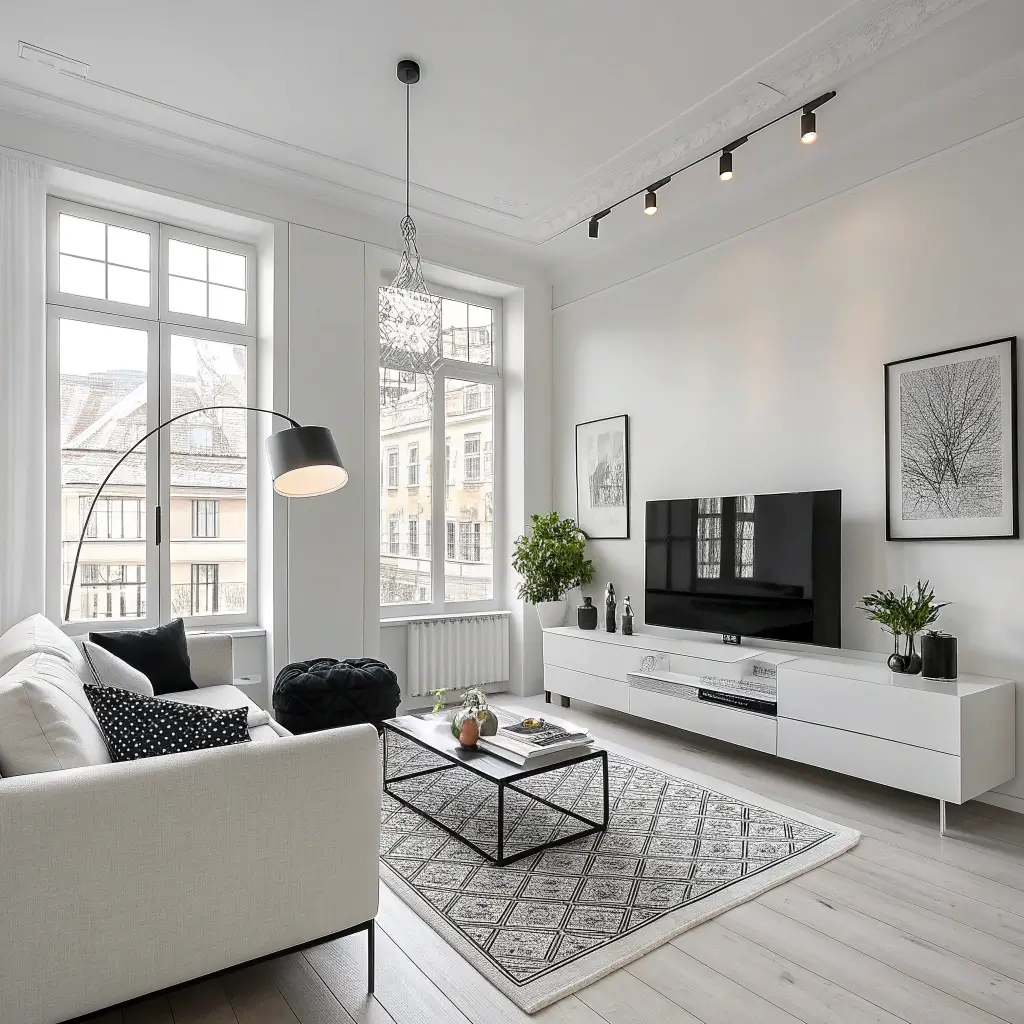
You know what’s surprisingly hard? Making a room look amazing with basically nothing in it. Minimalist monochrome design strips everything down to the essentials, and honestly, it’s liberating AF once you get the hang of it.
I went full minimalist in my apartment last year, and my mother literally asked if I was moving out. But here’s what makes it work: you pick one color (usually white, gray, or black) and build your entire room around different shades and textures of that color. Think charcoal gray sofa, light gray walls, and maybe a black coffee table that looks like it could double as modern art.
Key Elements for Nailing the Look:
- Clean lines everywhere – furniture should look like it was designed with a ruler
- Hidden storage solutions – because clutter kills the vibe instantly
- One statement piece – maybe a massive abstract painting or sculptural lamp
- Texture variety – mix smooth leather, nubby linen, and soft wool
- Negative space – embrace the emptiness; it’s not lazy, it’s intentional
The trick? Quality over quantity every single time. You can’t hide behind tons of decorative pillows when your sofa stands alone like a sculpture. I learned this the hard way when I bought a cheap couch thinking nobody would notice in my minimalist setup. Spoiler alert: everyone noticed.
Boho Chic Comfort Corners
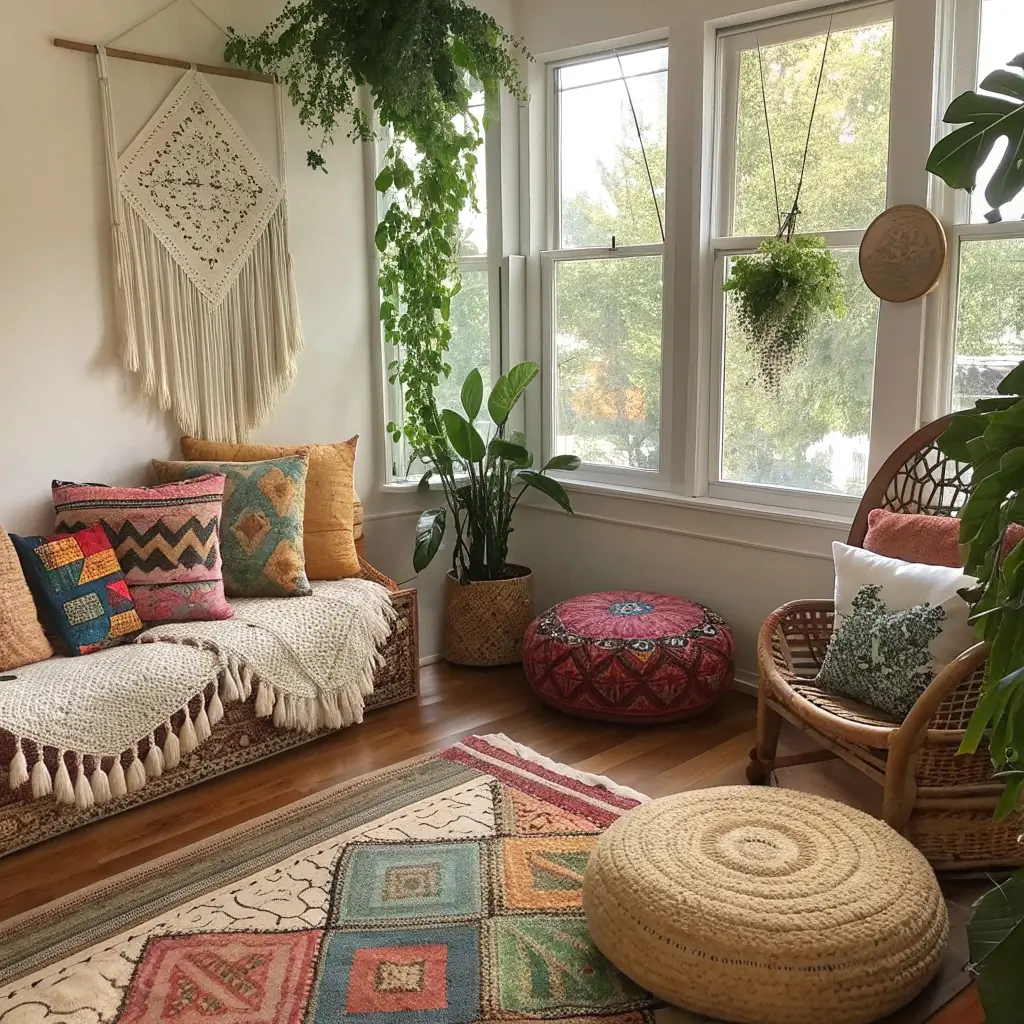
Alright, if minimalism makes you anxious (totally get it), let’s swing completely the other direction. Boho chic basically says “more is more” and then adds even more on top of that. It’s the design equivalent of that friend who somehow pulls off wearing seven different patterns at once.
Creating a boho living room feels like curating a collection of everything you’ve ever loved. That random tapestry from your college dorm? Perfect. The moroccan pouf you impulse-bought at a flea market? Essential. Those seventeen throw pillows that your partner keeps threatening to burn? They finally have a purpose!
Making Boho Work Without Looking Messy:
Start with a neutral base – white or beige walls keep things from getting too chaotic. Then layer in your colors through textiles: think deep jewel tones, burnt oranges, and dusty pinks. I once tried starting with purple walls and… let’s just say it looked less “free-spirited artist” and more “fortune teller’s waiting room.”
Plants are non-negotiable in boho design. If you can’t keep real ones alive (solidarity, plant killers), fake ones work too. Just make sure they look realistic—nobody’s fooled by that neon green plastic fern, Karen.
The magic happens in the mix:
- Vintage rugs layered on top of each other
- Macramé wall hangings (yes, they’re back)
- Floor cushions for extra seating
- Woven baskets for storage and decoration
- Mix of metals – brass, copper, and gold all playing nice together
Rustic Farmhouse Charm
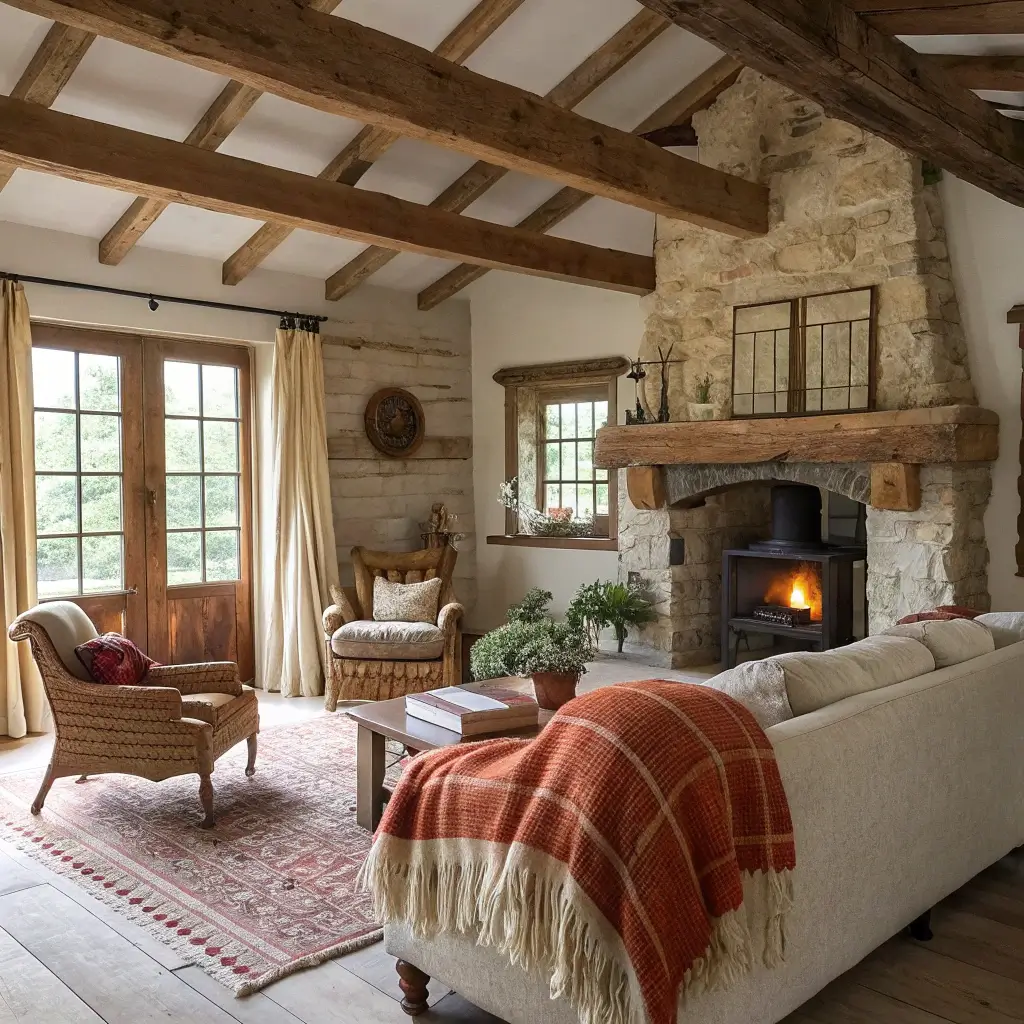
Who doesn’t love the idea of living in a cozy farmhouse? Even if your “farm” consists of one sad succulent on your windowsill, you can totally nail this look. Rustic farmhouse style makes everyone feel like they should be baking bread from scratch or something equally wholesome.
The foundation starts with reclaimed wood everything. Coffee table? Reclaimed barn wood. Floating shelves? You guessed it. The more weathered and beaten up, the better. I actually caught my neighbor attacking a brand new table with chains to get that “authentic” distressed look. Whatever works, right?
Essential Farmhouse Elements:
- Shiplap walls (or faux shiplap if you’re renting)
- Neutral color palette – whites, creams, and soft grays
- Industrial touches – black metal fixtures and Edison bulb lighting
- Vintage signs – bonus points if they reference coffee or wine
- Cozy textiles – chunky knit throws and buffalo check patterns
The real secret? Mix old and new pieces seamlessly. That ancient trunk from your grandmother’s attic makes a perfect coffee table when paired with a crisp white modern sofa. Just avoid going full pioneer museum—you want “charming farmhouse,” not “living history exhibit.”
Also Read: 15 Stylish Peel and Stick Floor Tile Bathroom Ideas Made Simple
Scandinavian Simplicity Spaces
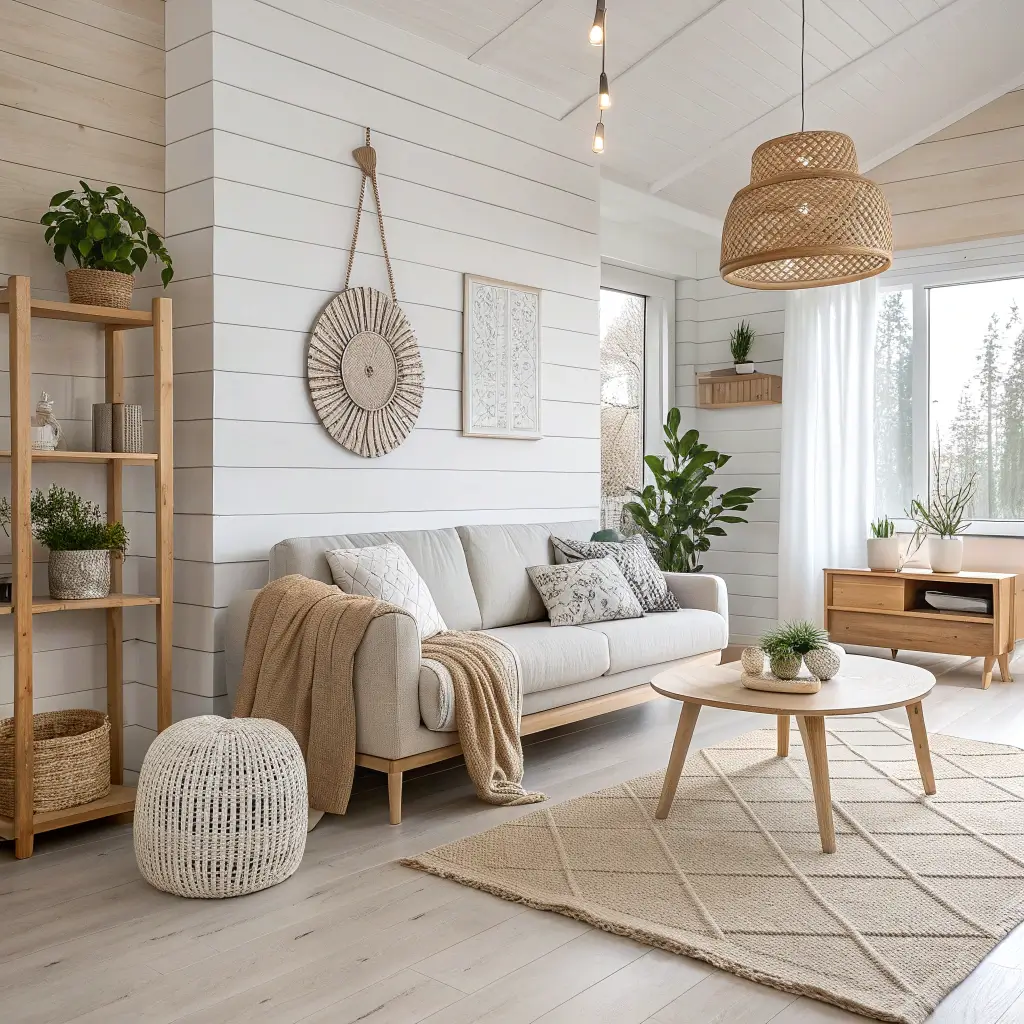
Scandinavians figured out something the rest of us are still catching up to: you can have a minimalist space that doesn’t feel cold and uninviting. Scandinavian design takes everything good about minimalism and adds warmth, making it actually livable for humans who aren’t robots.
The color palette stays super simple—white, gray, black, and natural wood tones. But here’s where it gets interesting: texture becomes everything. Layer different materials like wool, linen, leather, and wood to create visual interest without adding clutter.
Scandi Must-Haves:
- Light wood furniture – think birch, pine, or ash
- Cozy textiles – sheepskin rugs and chunky knit blankets
- Simple, functional furniture – every piece should earn its spot
- Statement lighting – one gorgeous pendant light can transform the room
- Hygge elements – candles, soft throws, and general coziness
I tried going full Scandi once but kept adding “just one more thing” until my living room looked more like Scandinavian-meets-hoarder. The key is restraint—which, FYI, is harder than it sounds when you’re scrolling through home decor sites at midnight.
Vibrant Color Pop Living
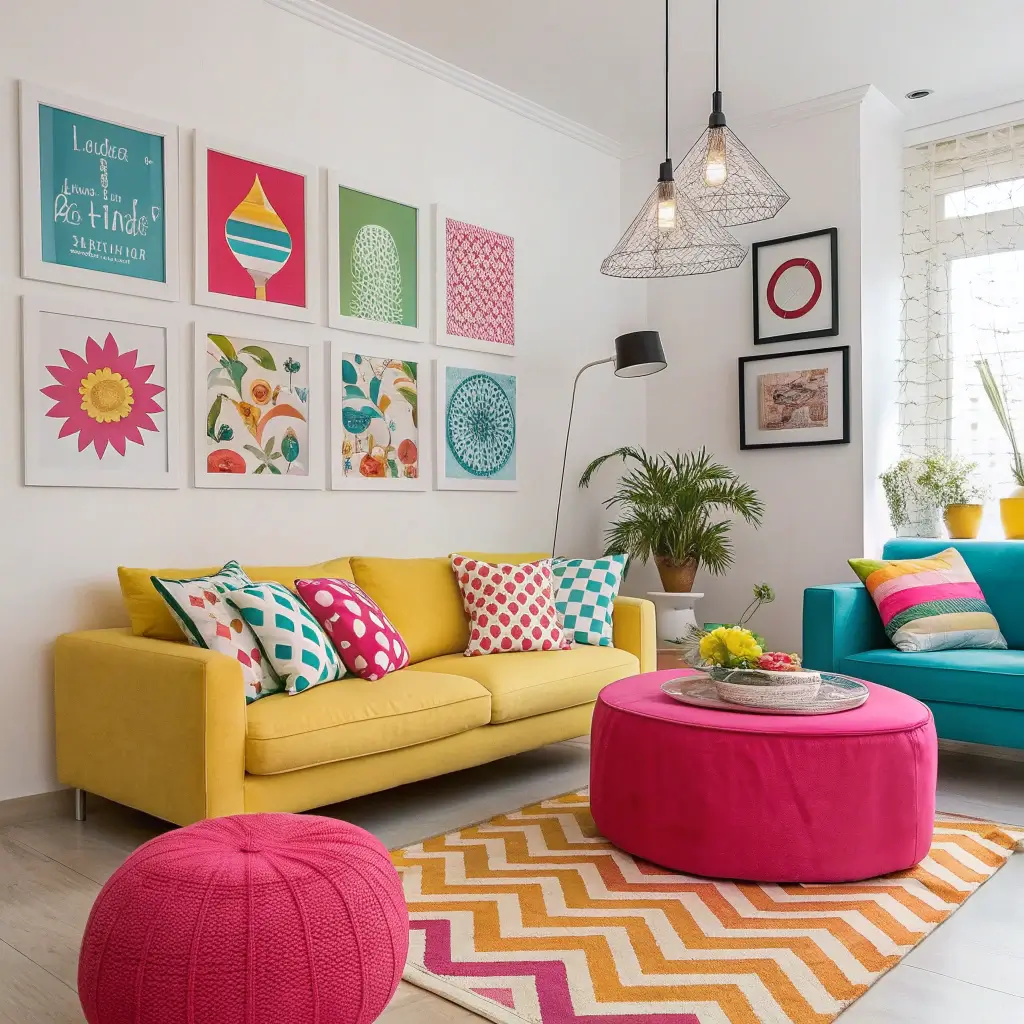
Ready to make your retinas happy? Color pop design throws the neutral rulebook out the window and says “let’s party.” This style works perfectly if you’re someone who gets depressed looking at beige walls (guilty).
Pick one or two bold colors as your stars, then build everything else around them. Maybe it’s a electric blue sofa against crisp white walls, or hot pink accent chairs that make everyone do a double-take. The goal is controlled chaos—emphasis on controlled.
Color Pop Strategy:
Start with a neutral foundation (I know, boring but necessary). Then add your pops through:
- Statement furniture – that velvet emerald green couch you’ve been eyeing
- Bold artwork – the bigger and brighter, the better
- Colorful accessories – pillows, vases, and throws in coordinating hues
- Painted accent pieces – maybe a bright yellow bookshelf or coral side table
The trick is knowing when to stop. I once went overboard and my living room looked like a bag of Skittles exploded. Now I follow the 60-30-10 rule: 60% neutral, 30% secondary color, 10% bold accent. Works like a charm.
Vintage Retro Revival
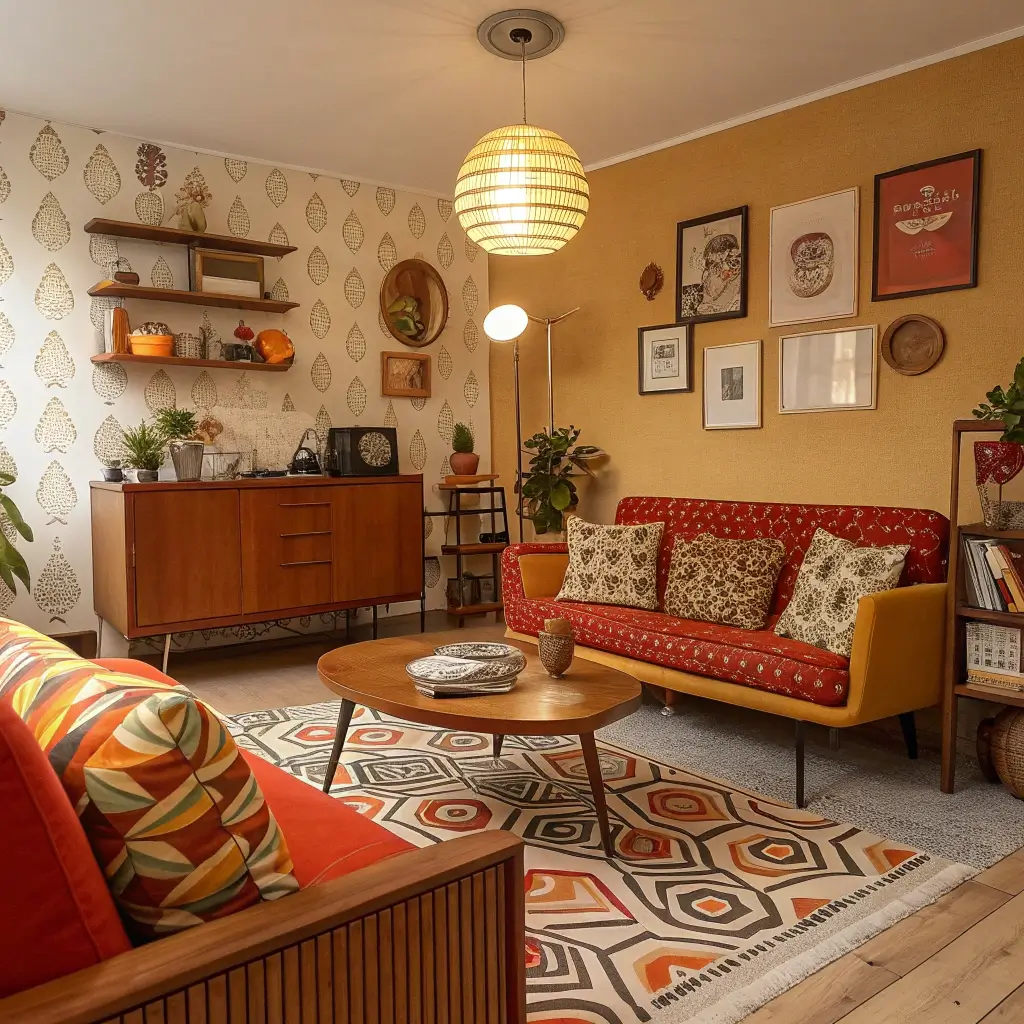
Nothing says “I have impeccable taste” quite like successfully pulling off vintage retro style. Whether you’re channeling the ’50s, ’60s, or ’70s, retro revival brings serious personality to your living room. Plus, thrift shopping for vintage pieces? Best. Hobby. Ever.
Pick your era and commit. Mixing decades can work, but it requires a master’s touch. I once combined ’50s furniture with ’80s neon accents and created what my best friend lovingly called “time travel gone wrong.”
Retro Elements by Decade:
1950s Vibes:
- Atomic-inspired patterns
- Pastel colors with chrome accents
- Kidney-shaped coffee tables
- Starburst clocks and mirrors
1960s Groovy:
- Conversation pit seating (if you’re lucky enough)
- Bold geometric patterns
- Shag carpets (yes, really)
- Hanging bubble chairs
1970s Disco:
- Earth tones—mustard, avocado, burnt orange
- Macramé everything
- Sunken living rooms
- Wood paneling (but like, ironically)
The beauty of retro? Mixing authentic vintage finds with modern reproductions keeps your room from looking like a museum exhibit. That original Eames chair might be out of budget, but a quality replica? Totally doable.
Also Read: 15 Bright Vertical Subway Tile Bathroom Ideas to Refresh Your Room
Cozy Hygge Haven
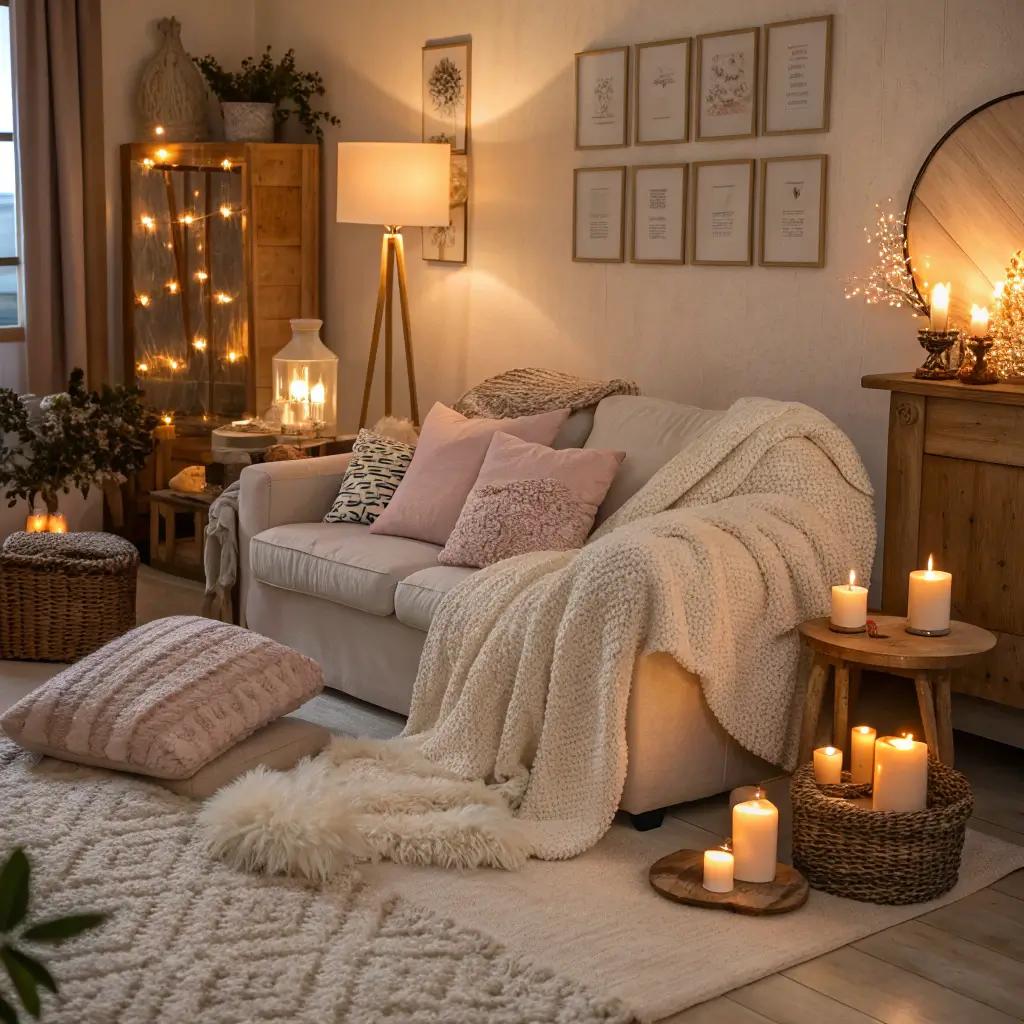
Let me introduce you to hygge (pronounced “hoo-gah”), the Danish concept that basically means maximum coziness at all times. Creating a hygge living room makes you want to curl up with a book and never leave. Ever had a room hug you? That’s the goal here.
Soft lighting is everything in hygge design. Overhead lights? Banned. Instead, layer warm light sources: table lamps, floor lamps, string lights, and approximately 47 candles. My electric bill dropped significantly when I embraced hygge lighting—turns out, candles are cheaper than keeping every light in the house on.
Hygge Essentials:
- Layers of soft textiles – blankets on blankets on blankets
- Natural materials – wood, wool, leather, stone
- Warm, muted colors – think oatmeal, caramel, and soft gray
- Personal touches – family photos, handmade items, beloved books
- Fireplace or faux fireplace – even those YouTube fireplace videos count
Creating hygge isn’t about buying stuff—it’s about creating an atmosphere. Some of my most hygge moments happened with a $5 thrift store blanket and tea lights from the dollar store. Don’t let Instagram fool you into thinking you need a trust fund to achieve peak coziness.
Modern Luxe Makeover
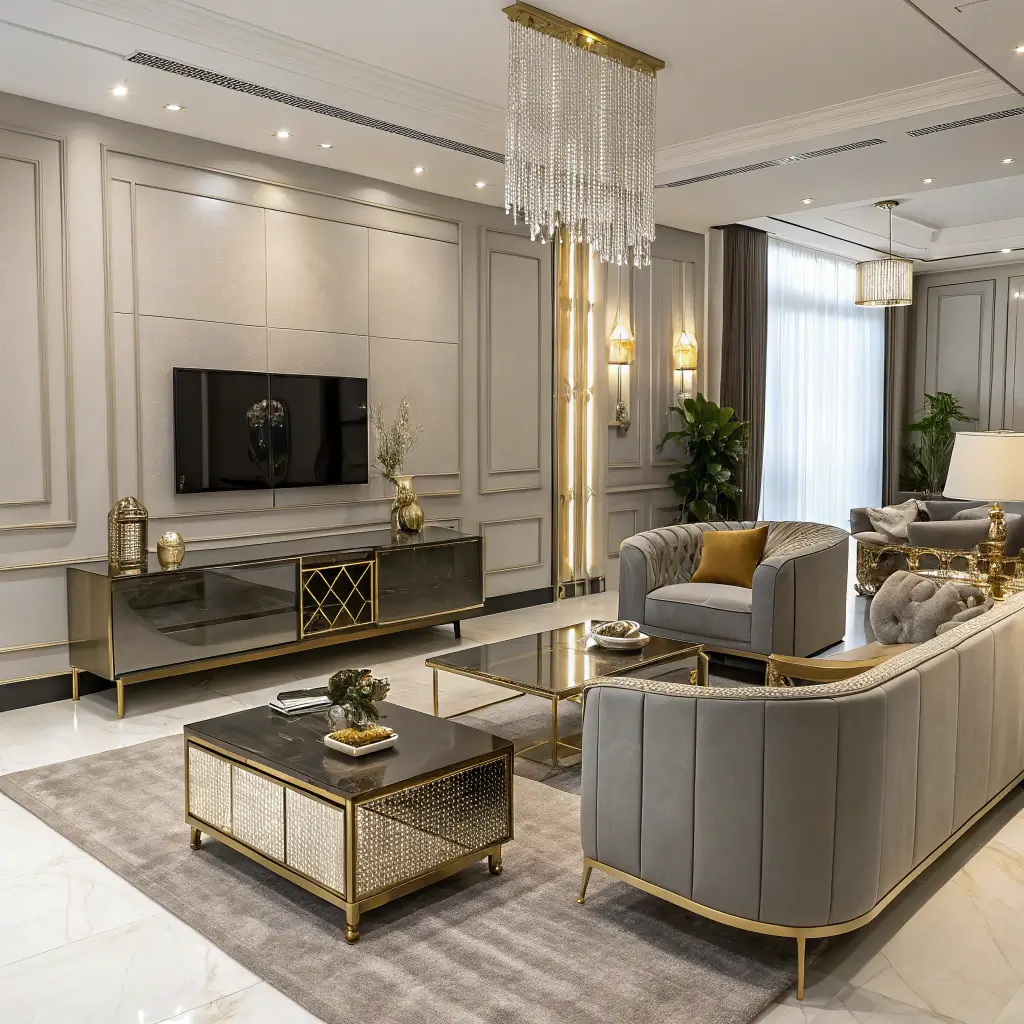
Want your living room to look like it belongs in an upscale hotel lobby? Modern luxe delivers that expensive look without requiring you to actually be a millionaire. It’s all about creating an atmosphere of understated elegance—think less “lottery winner” and more “quietly successful.”
The foundation starts with a sophisticated color palette: deep blues, rich grays, warm golds, and plenty of white space. Then you layer in luxurious textures—velvet, silk, marble, and metals. My first attempt at modern luxe involved spray-painting everything gold. Pro tip: that’s not how it works.
Luxe Living Essentials:
- Statement lighting – a chandelier or sculptural pendant that commands attention
- Plush seating – deep sofas you can sink into
- Metallic accents – brass, gold, or chrome (pick one and stick with it)
- Rich textures – velvet pillows, silk curtains, cashmere throws
- Marble elements – coffee table, side tables, or decorative objects
The secret to affordable luxe? Invest in one or two high-quality pieces and fake the rest. That marble coffee table might actually be marble-contact paper on an IKEA table (your secret’s safe with me). Nobody needs to know your “cashmere” throw came from the clearance section.
Nature-Inspired Serenity
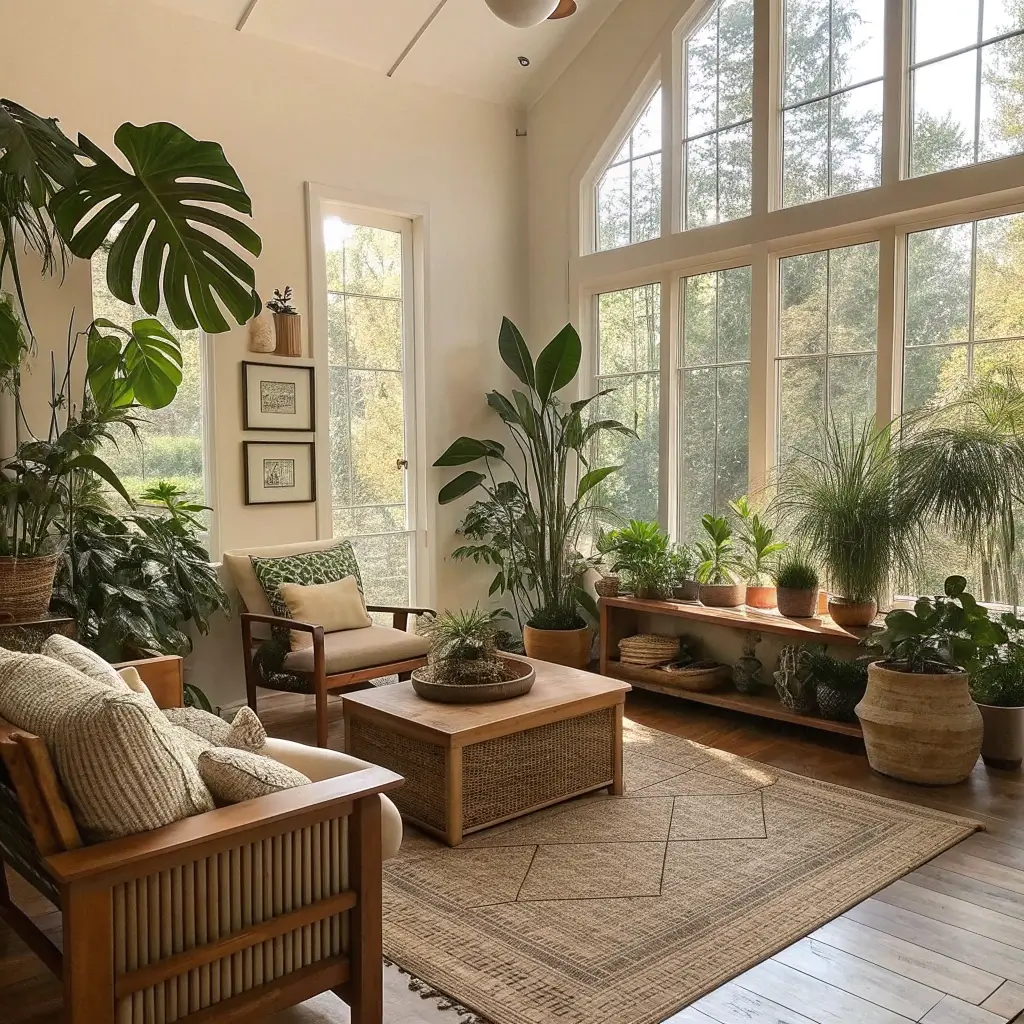
Bringing the outdoors in never goes out of style. Nature-inspired design creates a calming, grounding atmosphere that makes your living room feel like a peaceful retreat. Plus, surrounding yourself with natural elements supposedly reduces stress—and honestly, we all need that right now.
Start with an earth-tone color palette: warm browns, soft greens, sky blues, and stone grays. Then bring in natural materials wherever possible. Real wood furniture, jute rugs, stone accents, and enough plants to start your own jungle. Can you have too many plants? According to my partner, yes. According to me? Absolutely not 🙂
Natural Elements to Include:
- Live plants – from tiny succulents to massive fiddle leaf figs
- Natural wood furniture – preferably showing its grain and imperfections
- Stone or clay accessories – vases, bowls, sculptural pieces
- Water features – even a small tabletop fountain counts
- Nature-inspired artwork – botanical prints, landscape photography
The best part about nature-inspired design? It’s inherently sustainable. Buying secondhand wooden furniture, propagating plants from friends, and using found objects like driftwood or stones as decor—it’s good for your wallet and the planet.
Also Read: 15 Modern Black Hexagon Tile Bathroom Ideas You Can Copy
Artistic Gallery Walls
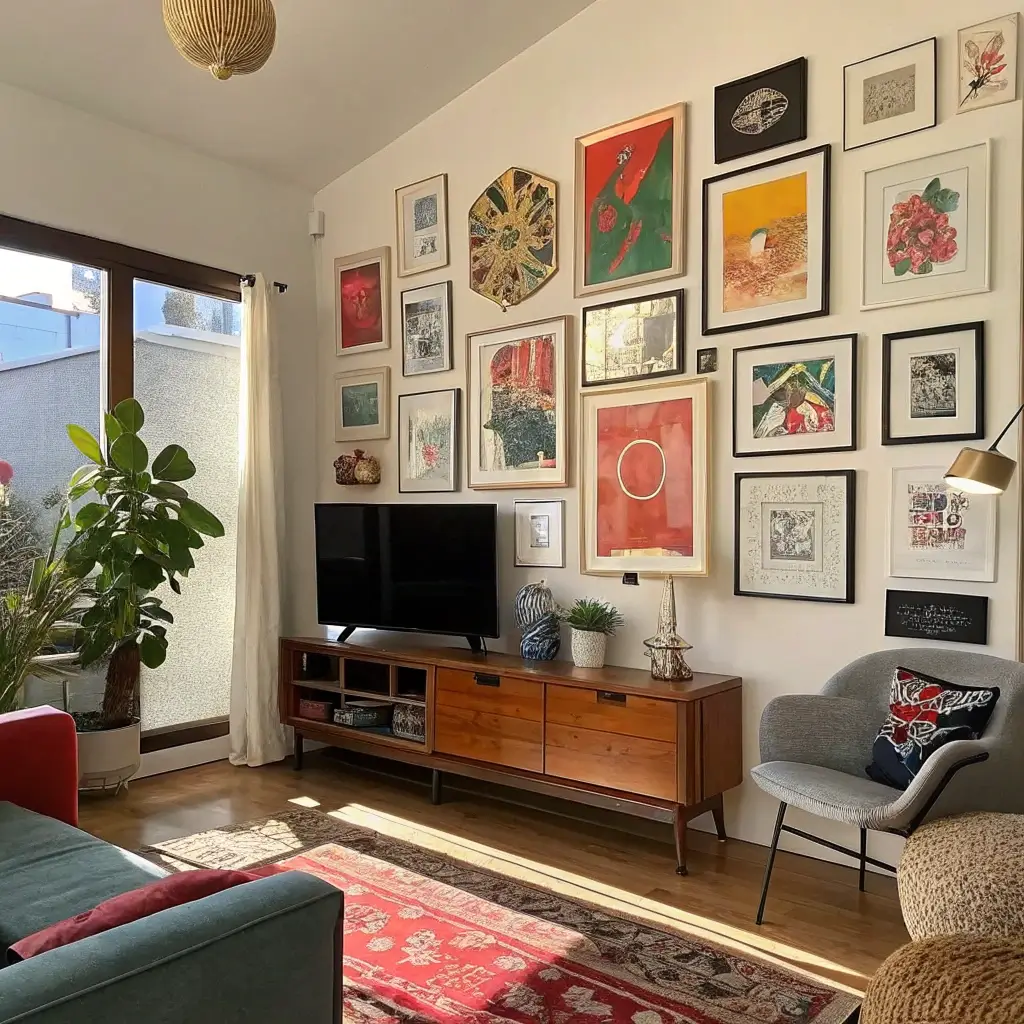
Ever walked into someone’s home and spent the entire visit staring at their walls? That’s the power of a well-executed gallery wall. It transforms a boring blank wall into a conversation starter that reflects your personality better than any furniture ever could.
Creating a gallery wall seems easy until you’re standing there with 20 frames and a hammer, wondering why nothing looks like Pinterest. Here’s the secret: plan it on the floor first. Arrange everything exactly how you want it, then trace the frames on paper and tape those to the wall. Game changer, trust me.
Gallery Wall Components:
- Mix of frame sizes – uniformity is boring
- Variety of art types – photos, prints, paintings, even small sculptures
- Personal elements – concert tickets, postcards, meaningful quotes
- Consistent element – maybe all black frames or a color theme
- Proper spacing – 2-3 inches between frames usually works
Don’t stress about making it perfect. My first gallery wall looked like it was arranged by a toddler with depth perception issues. Now? It’s the first thing people compliment when they visit. The slight imperfection makes it feel authentic, not like you hired someone to curate your life.
Multifunctional Small Spaces
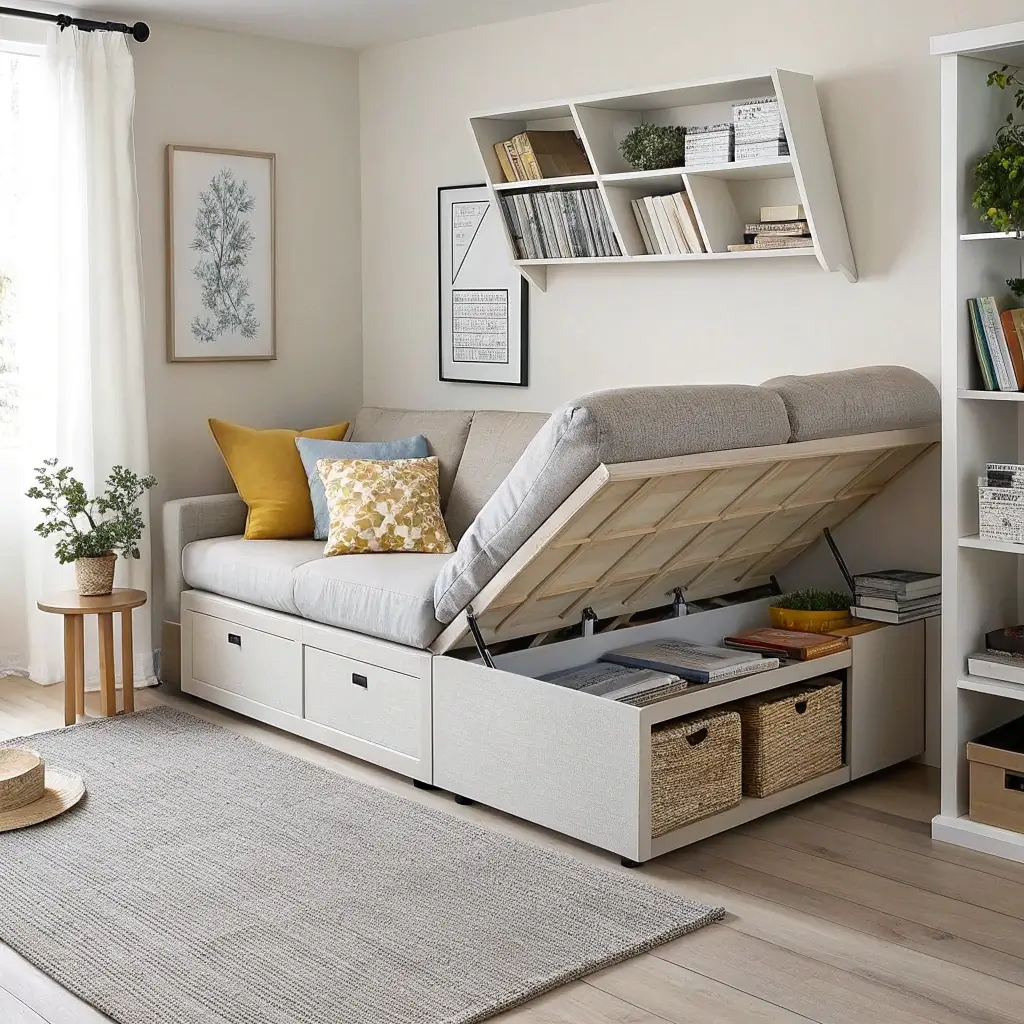
Living in a shoebox? Join the club. Small space design forces you to get creative, and honestly, some of the most ingenious living rooms I’ve seen were tiny. When every square foot counts, you learn to make furniture work harder than a coffee shop WiFi connection.
Every piece needs to multitask. That ottoman? It better have storage inside. Your coffee table? It should lift up to become a desk. Your sofa? If it doesn’t turn into a bed, what are we even doing here? I once lived in a 400-square-foot studio where my dining table was also my desk, vanity, and occasional nap spot.
Small Space Solutions:
- Vertical storage – floor to ceiling shelving maximizes space
- Furniture on legs – creates visual space underneath
- Mirrors everywhere – instantly doubles the visual size
- Light colors – dark colors make small spaces feel smaller
- Multi-purpose furniture – storage ottomans, nesting tables, expandable consoles
The biggest mistake in small spaces? Choosing tiny furniture thinking it’ll make the room look bigger. Wrong! A few properly-scaled pieces work better than a bunch of doll-house furniture. My tiny living room actually looked bigger once I bought a proper-sized sofa instead of that sad loveseat I was squishing into.
Coastal Beach Vibes
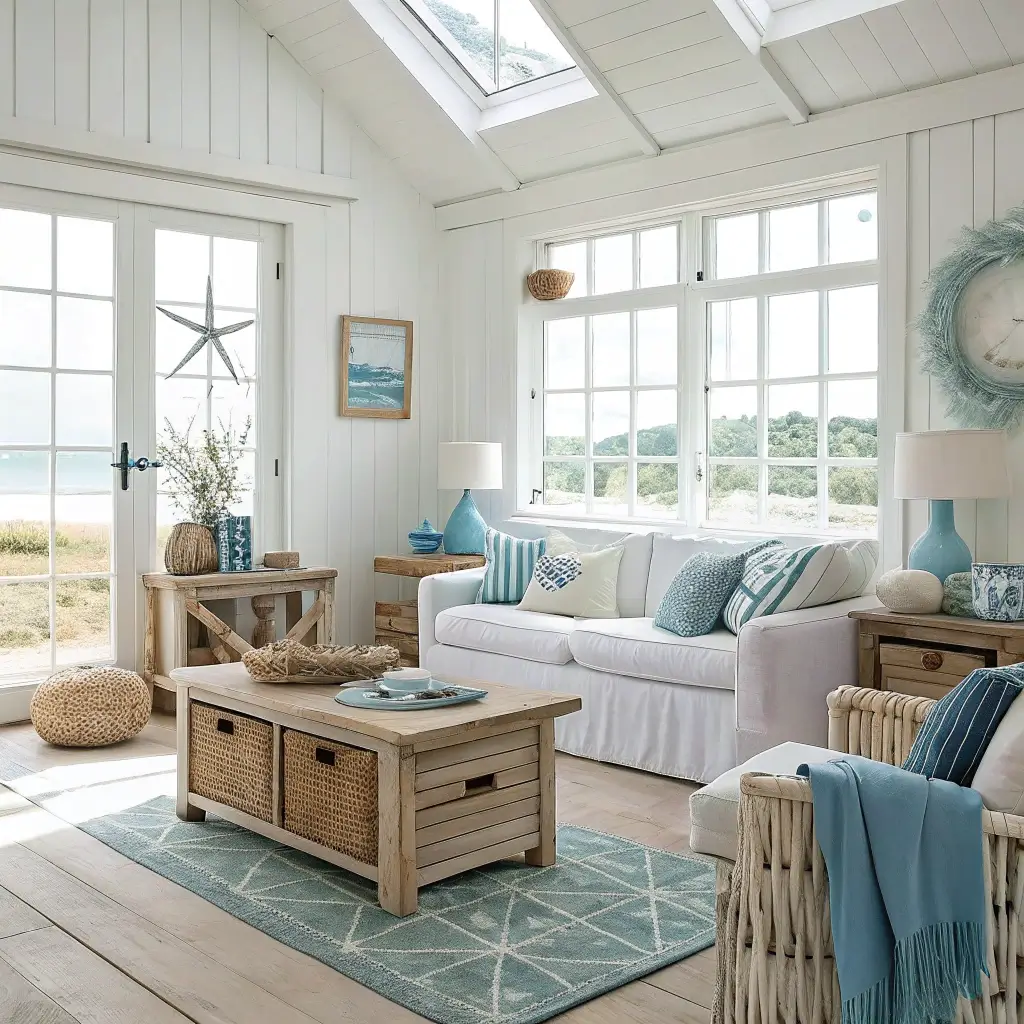
Missing the beach? Coastal decor brings those vacation vibes home, minus the sand in uncomfortable places. This style makes every day feel like a lazy Sunday at the beach house—even if the closest ocean is 500 miles away.
The color palette practically chooses itself: whites, blues, sandy beiges, and maybe some seafoam green if you’re feeling adventurous. But please, PLEASE, resist the urge to go full nautical theme park. One or two subtle anchors? Fine. An anchor on every surface? You’re one step away from living in a seafood restaurant.
Coastal Elements That Work:
- Natural textures – rattan, jute, weathered wood
- Breezy fabrics – linen, cotton, light and flowing
- Ocean-inspired colors – various blues, whites, and sand tones
- Natural light – sheer curtains or no curtains at all
- Beach-found objects – driftwood, shells, sea glass (sparingly!)
IMO, the best coastal rooms feel beachy without screaming it. You want guests to feel relaxed and wonder if they can hear the ocean, not feel like they’re trapped in a beach-themed escape room.
Eclectic Mix & Match
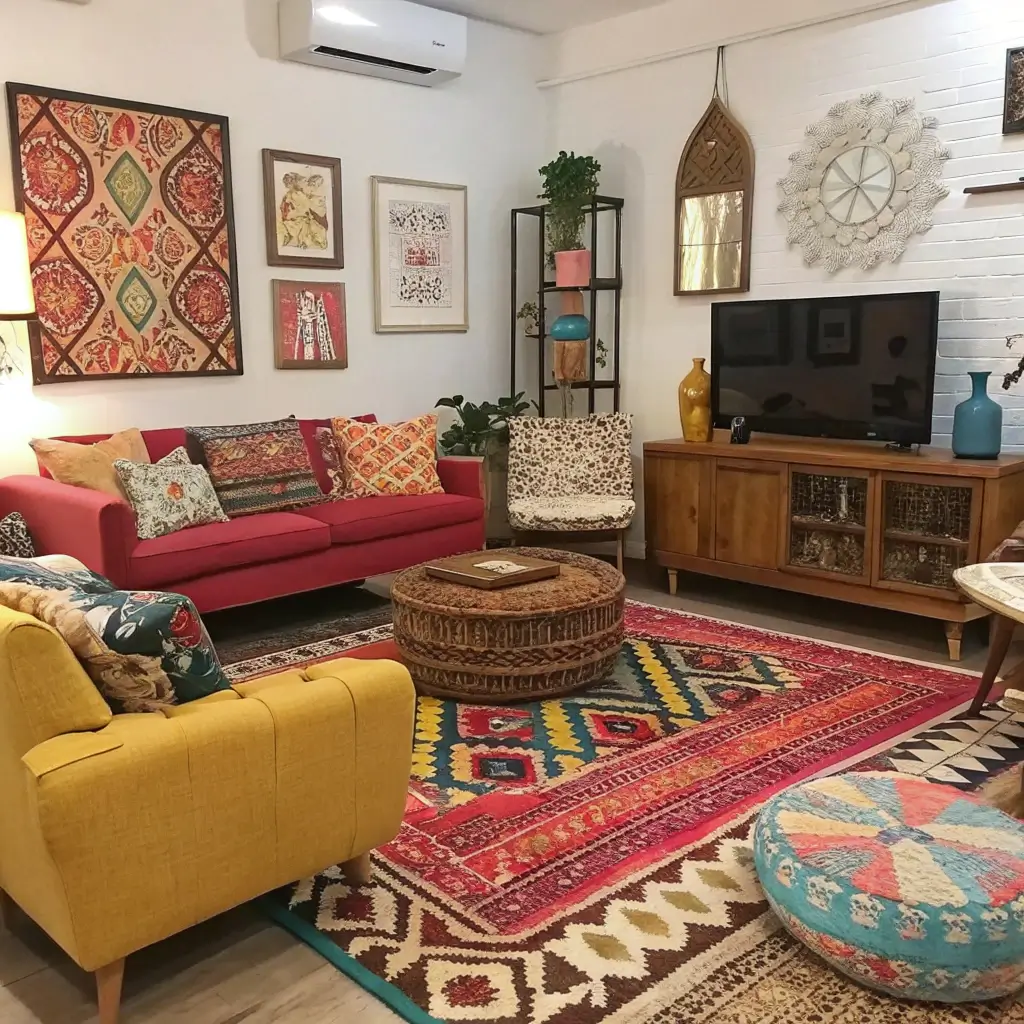
Rules? Where we’re going, we don’t need rules. Eclectic style basically throws the design handbook out the window and says “if you love it, it belongs.” This is your permission slip to mix patterns, periods, and styles like you’re making the world’s wildest smoothie.
The trick to eclectic design? Having a method to your madness. You can’t just throw random stuff together and call it eclectic—that’s just messy. Pick a unifying element: maybe it’s a color that appears throughout, or a particular shape that repeats, or even just a consistent vibe.
Making Eclectic Work:
- Balance is key – mix loud pieces with quiet ones
- Repeat elements – colors, patterns, or shapes throughout
- Vary scales – big statement pieces with smaller accompaniments
- Mix periods – antique chair next to modern art? Perfect
- Personal meaning – every piece should have a story
My living room currently features a Victorian settee, a mid-century modern coffee table, and Moroccan floor cushions. Does it follow any traditional design rules? Nope. Does it look awesome? Absolutely. The confidence in your choices makes eclectic work.
Industrial Urban Loft
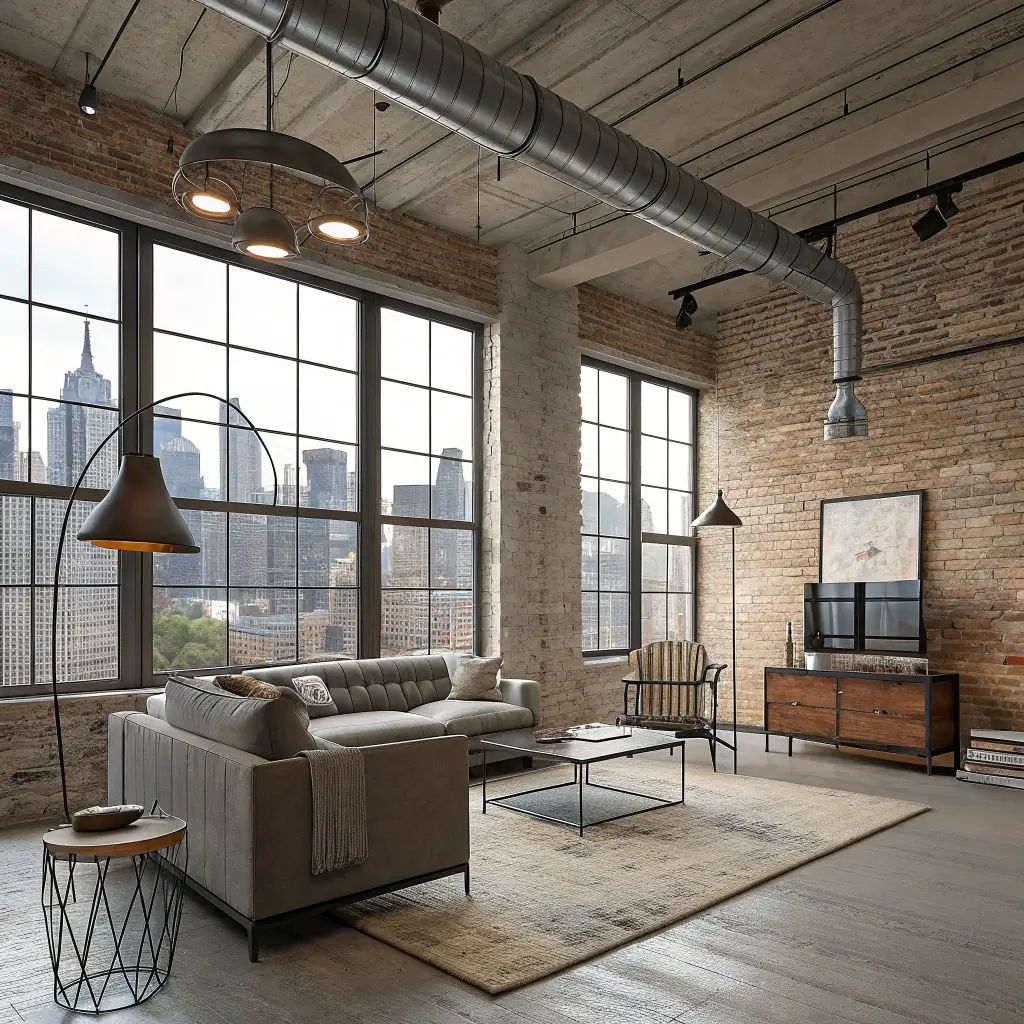
Channel your inner city dweller with industrial design, even if your “loft” is actually a suburban ranch house. This style celebrates raw materials and unfinished elements—basically, it makes looking unfinished look finished. Mind. Blown.
Exposed everything is the name of the game. Brick walls, visible pipes, concrete floors—if it looks like the construction crew forgot to finish, you’re on the right track. Don’t have exposed brick? Fake it with removable wallpaper. Nobody has to know your “authentic loft details” came from Amazon.
Industrial Must-Haves:
- Metal and wood combination – the rougher, the better
- Open shelving – preferably made from pipes and reclaimed wood
- Edison bulb lighting – exposed filaments everywhere
- Neutral colors – blacks, grays, browns, and rust tones
- Vintage industrial pieces – old factory carts, metal lockers, vintage signs
The challenge with industrial? Keeping it from feeling cold. Add warm elements like soft throws, area rugs, and maybe a plant or two. My first industrial attempt looked more like “abandoned warehouse” than “trendy loft”—turns out, you need some soft elements to make it actually livable.
Soft Pastel Retreat
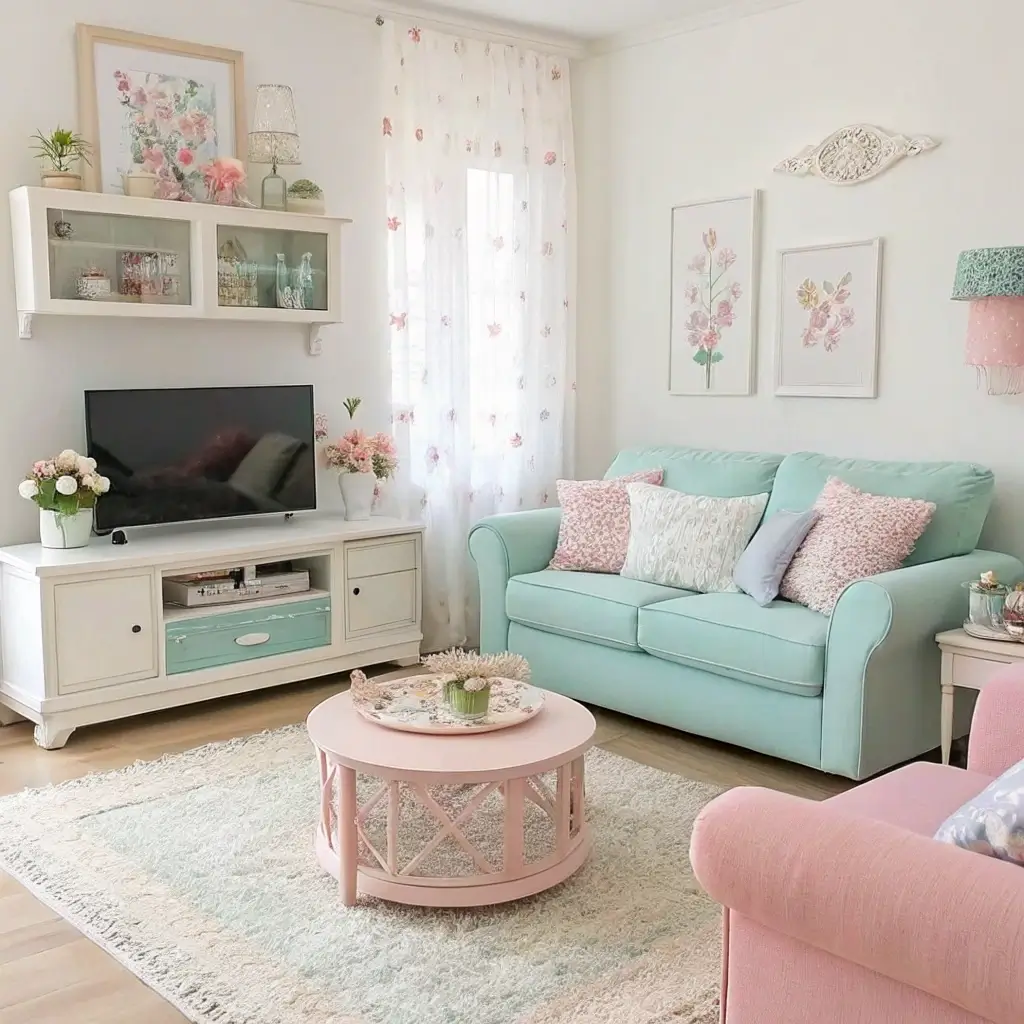
Last but definitely not least, let’s talk about pastel paradise. This isn’t just for nurseries and Easter parties—done right, pastels create a sophisticated, calming space that feels like living inside a macaron (in the best way possible).
Choose your pastel palette carefully. Mixing too many pastels turns your living room into a unicorn explosion. Pick 2-3 complementary pastels—maybe blush pink, mint green, and butter yellow—then ground them with plenty of white and natural wood tones.
Pastel Perfection Tips:
- Layer different shades – light pink to dusty rose creates depth
- Mix with neutrals – white, cream, and gray keep things sophisticated
- Add metallic accents – rose gold or brass elevates the look
- Include texture – velvet, bouclé, and linen add interest
- Natural elements – wood and plants prevent sugar overload
The biggest pastel mistake? Going too sweet. You want “sophisticated French patisserie,” not “five-year-old’s birthday party.” I learned this after painting my walls mint green and adding pink everything—looked like I was living in a cotton candy factory. Now I keep the pastels to accents and soft furnishings, with plenty of breathing room between them.
Wrapping It All Up
So there you have it—15 completely different ways to transform your living room from “meh” to “magnificent.” Whether you’re drawn to the simplicity of Scandinavian design or the maximalist joy of boho chic, the key is choosing what genuinely speaks to you, not what some algorithm thinks you should like.
Remember, your living room should reflect your personality, not some magazine’s idea of perfection. Mix and match elements from different styles if that’s what makes you happy. Break the “rules” if they don’t serve you. The best living rooms I’ve ever seen weren’t the most expensive or perfectly styled—they were the ones where you could tell someone actually lived and loved there.
Start small if you’re feeling overwhelmed. Maybe just swap out some throw pillows or add a gallery wall. Rome wasn’t built in a day, and your dream living room doesn’t have to be either. The journey of transforming your space should be fun, not stressful. And if you mess up? Well, that’s what throw blankets are for—covering mistakes since forever.
Your living room is where life happens—where you binge Netflix, argue over takeout options, and occasionally pretend to be adults when guests come over. Make it a space that supports all versions of you, from Sunday morning pajama person to Friday night host extraordinaire.
Now stop reading and start doing. Your dream living room is waiting, and trust me, it’s going to be absolutely stunning. Even if it takes a few tries to get there. Mine certainly did, but hey, that’s what makes it interesting, right? Happy decorating
