
When I think about a preschool classroom, I imagine a place filled with curiosity, colors, imagination, and tiny moments of discovery. A preschool is not just a room where children sit and learn; it is their first little world outside home where they begin exploring creativity, friendships, and confidence. That is why preschool wall decoration ideas are so important.
The walls of a preschool classroom have a powerful impact on children’s moods and learning experiences. A blank wall can feel boring, while a thoughtfully decorated wall can become a storytelling area, a learning tool, or even a source of inspiration for young minds.
Over the years, teachers and educators have discovered that classroom decorations are not only about making the space beautiful. The right preschool wall decorations can help children recognize letters, numbers, colors, emotions, nature, and everyday concepts in a fun and interactive way.
In this article, I am sharing some creative preschool wall decoration ideas that can transform any classroom into a welcoming, educational, and playful environment. Whether you are designing a new preschool room or refreshing your existing classroom, these ideas will help you create walls that children will love.
1. Create a Colorful Alphabet Learning Wall
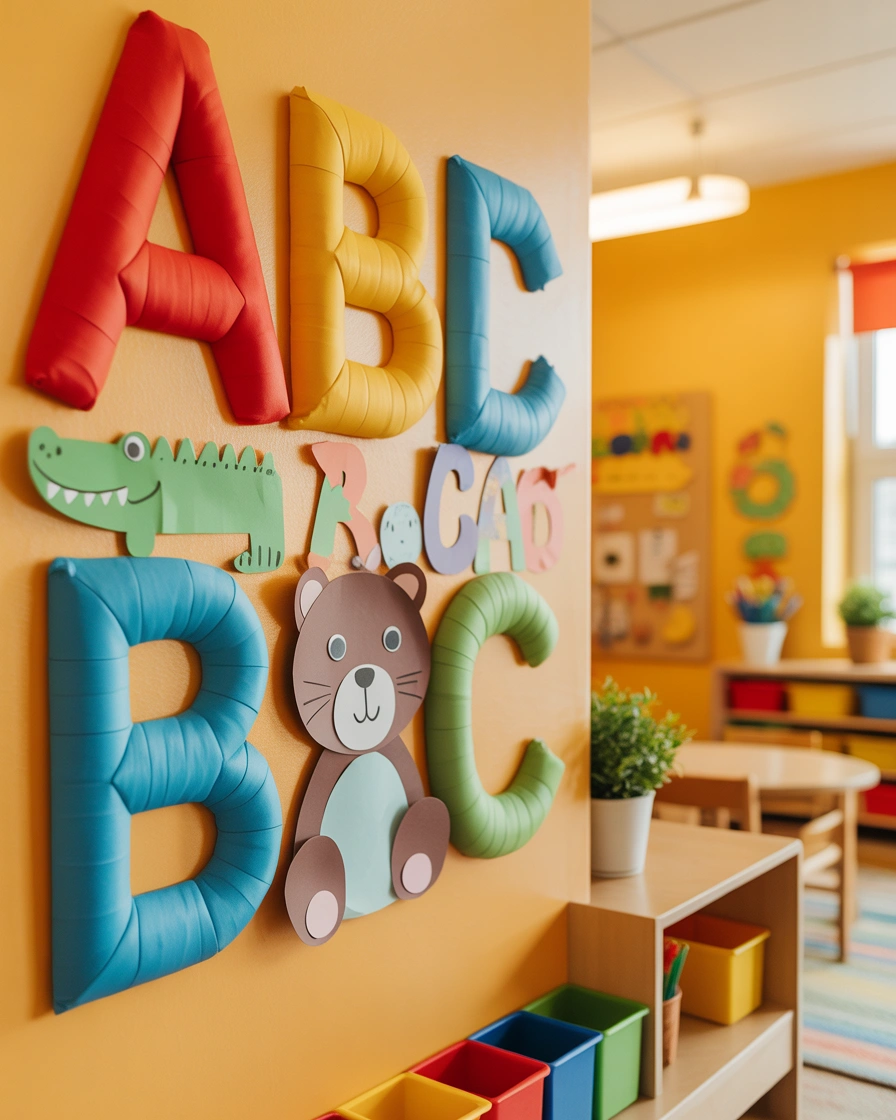
One of the most useful preschool wall decoration ideas is creating an alphabet learning wall. Young children are naturally attracted to colorful letters, and a creative alphabet display can make letter recognition much easier.
Instead of simply placing large alphabet posters on the wall, you can design a more interactive learning area. For example, each letter can have a matching picture beside it. The letter “A” can include an apple illustration, “B” can have a colorful butterfly, and “C” can feature a cute cat.
This type of wall decoration allows children to connect letters with real objects, making learning more memorable. Teachers can also encourage children to point at letters, identify sounds, and participate in small classroom activities.
Adding different textures can make the alphabet wall even more interesting. Soft felt letters, foam shapes, or handmade paper decorations give children a chance to touch and interact with the learning materials.
A beautiful alphabet wall also creates a strong visual identity for the classroom. It immediately tells children that this is a place where learning is fun and exciting.
2. Design a Magical Nature-Themed Classroom Wall
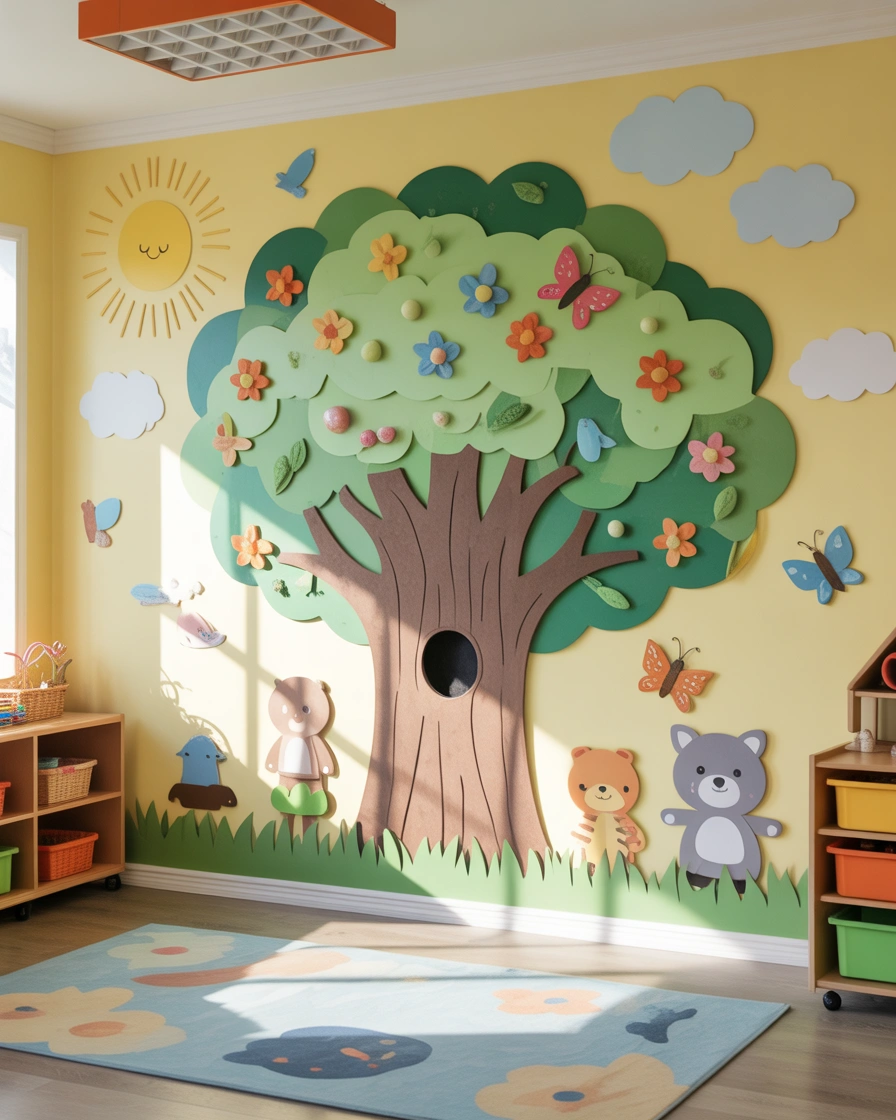
Nature-themed walls are one of my favorite preschool decoration ideas because children are naturally fascinated by animals, plants, clouds, and outdoor environments.
A nature wall can transform an ordinary classroom into a small imaginative world. You can create a beautiful forest scene with trees, flowers, butterflies, birds, and friendly animals. This decoration not only looks attractive but also introduces children to the natural world.
A tree-shaped wall decoration is especially popular in preschools. The branches can display children’s artwork, seasonal activities, or learning projects. Teachers can change the decorations according to different themes throughout the year.
For example, during spring, the tree can have colorful flowers. During autumn, children can add paper leaves in orange and yellow colors. This keeps the classroom environment fresh and connected to real-life experiences.
Nature walls are also excellent for teaching vocabulary. Children can learn words like leaf, flower, bird, tree, butterfly, and cloud while enjoying the visuals around them.
3. Make an Interactive Number Learning Wall
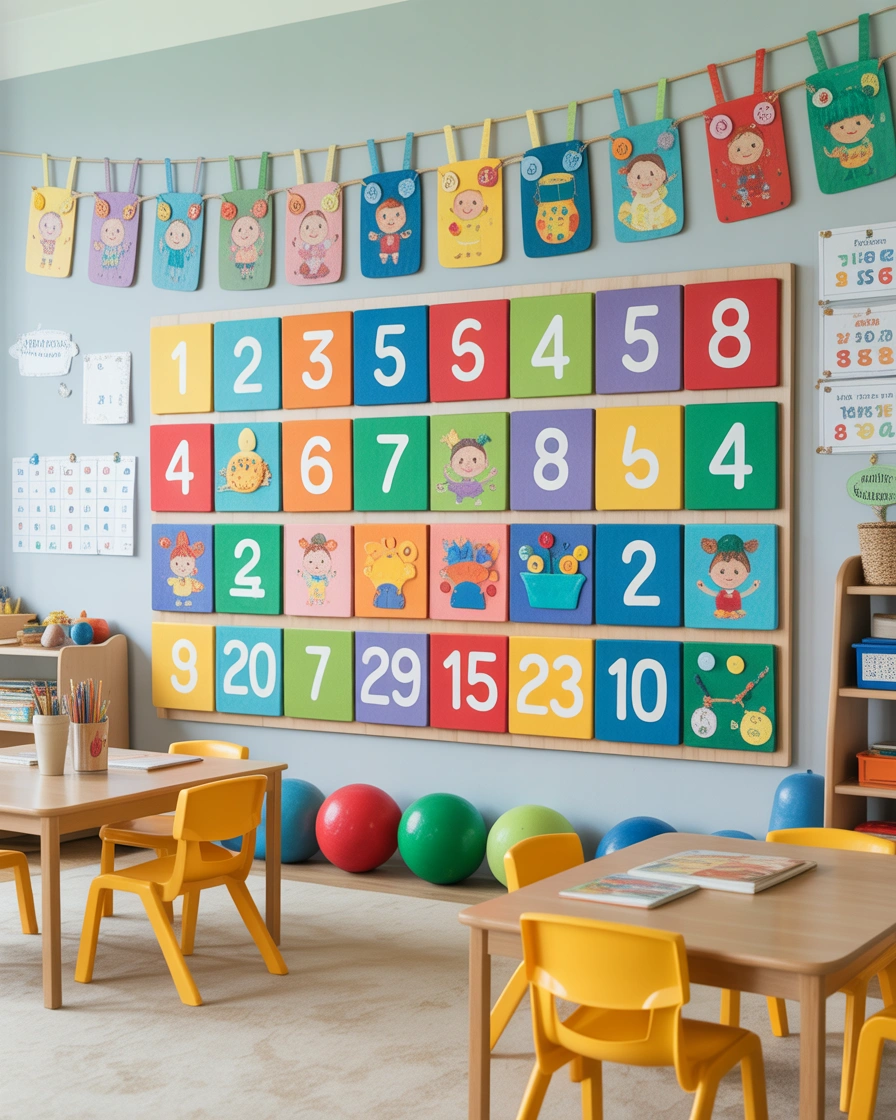
Numbers can sometimes feel difficult for young children, but a creative number wall can make mathematics enjoyable.
A preschool number wall should be more than just printed numbers. It should encourage children to count, compare, and recognize quantities.
You can design a wall from numbers 1 to 20 with colorful illustrations. For example, number five can have five balloons, number ten can have ten stars, and number fifteen can show fifteen playful objects.
Adding movable elements can make the wall more interactive. Children can attach numbers, count objects, or match numbers with pictures during classroom activities.
Another great idea is creating a “Number Garden.” Each number can become a flower with different quantities of petals. This combines mathematics with creativity and creates a beautiful classroom feature.
Interactive number walls are especially helpful because children learn better when they can see and participate instead of only listening.
4. Add a Welcome Wall With Children’s Names
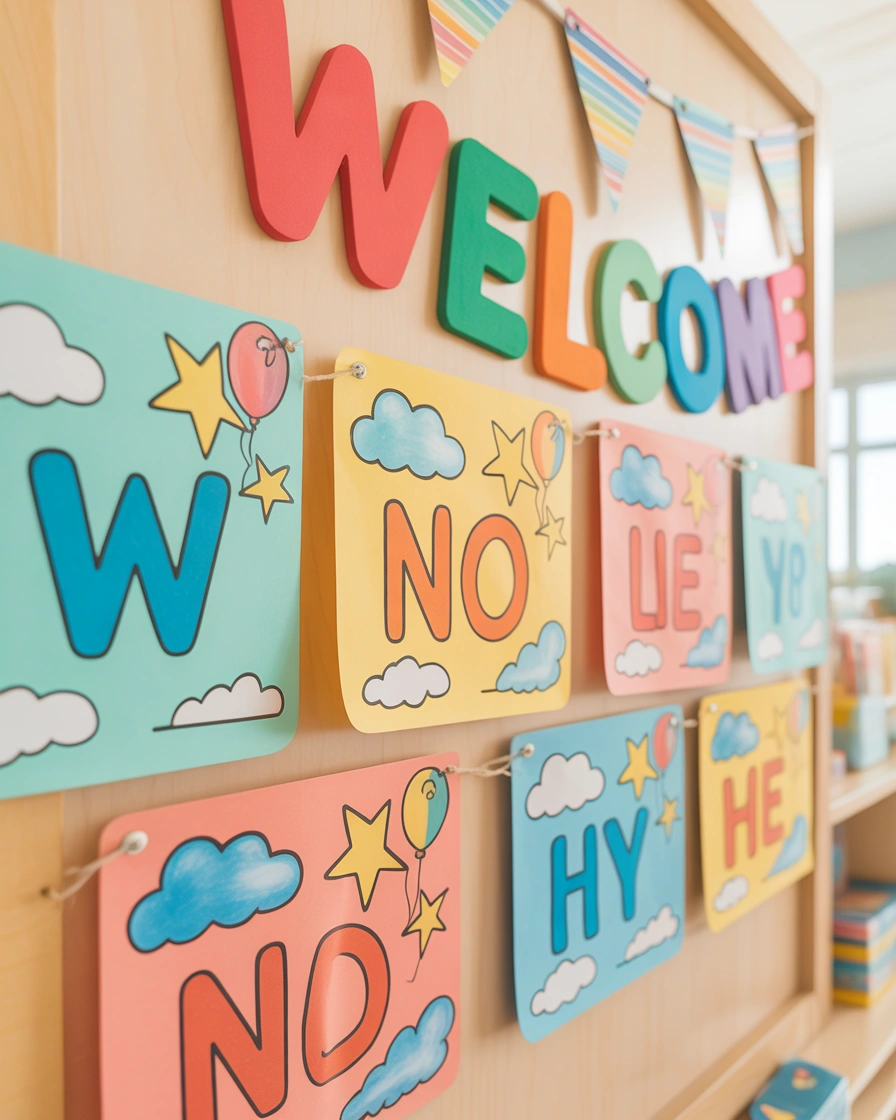
A preschool classroom should make every child feel special and included. A personalized welcome wall is a wonderful way to create a sense of belonging.
Children love seeing their names displayed in the classroom. It gives them confidence and helps them recognize their own names and the names of their classmates.
You can create a wall with colorful name tags, clouds, flowers, stars, balloons, or animal characters. Each child can have a personal space where their name is displayed.
Some teachers also include children’s photos along with their names. This helps young learners identify themselves and their friends while building classroom relationships.
A welcome wall can also become a daily routine area where children place their names when they arrive at school. This simple activity helps develop independence and classroom participation.
5. Create a Storytelling Corner Wall
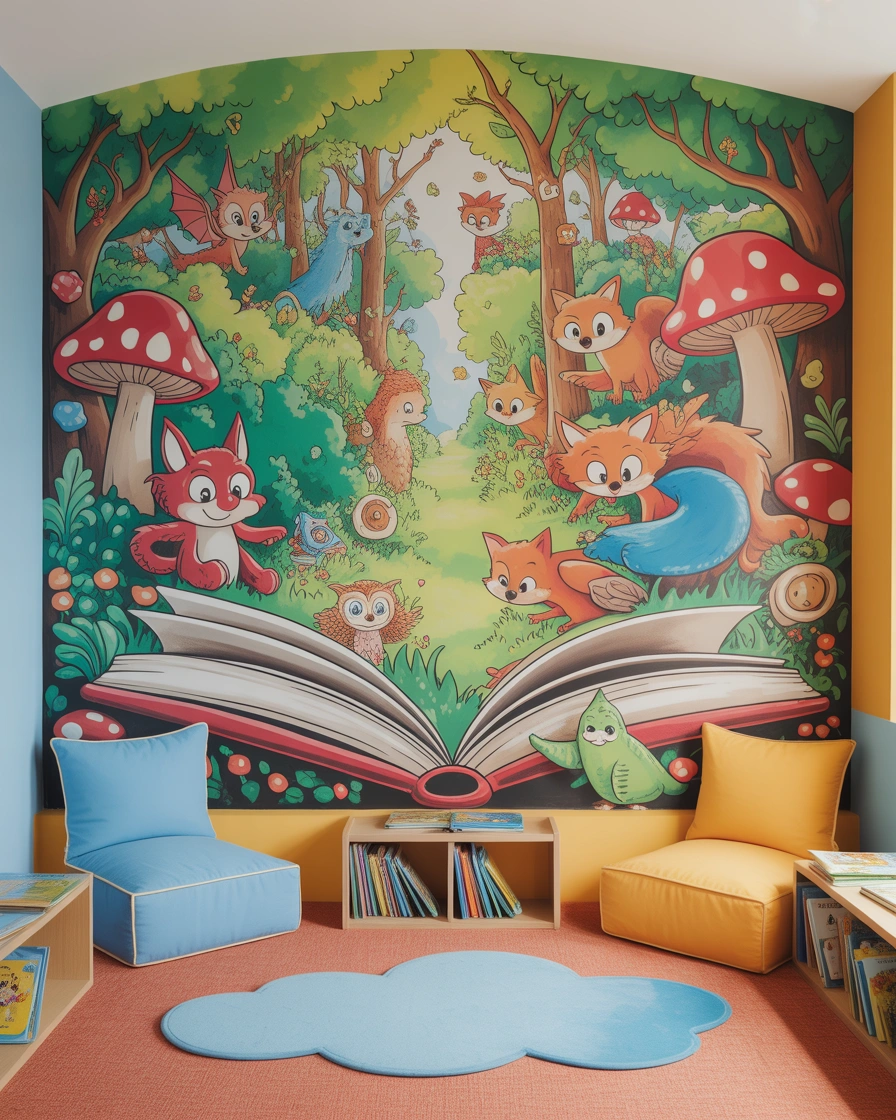
Storytelling plays an important role in preschool education because it develops imagination, vocabulary, and communication skills.
A storytelling corner wall can become one of the most loved areas in the classroom. Instead of keeping books only on shelves, teachers can create a visual storytelling environment.
You can decorate the wall with a large open book design, cartoon characters, story scenes, and colorful backgrounds. The wall can represent a forest adventure, a fairy tale village, an underwater world, or a space journey.
Teachers can change the theme based on the stories children are learning. For example, if the class is reading about animals, the wall can become an animal adventure scene.
This type of decoration encourages children to create their own stories and improves their creativity.
A storytelling wall is not only decoration; it becomes a learning station where imagination grows.
6. Design a Weather and Seasons Learning Wall
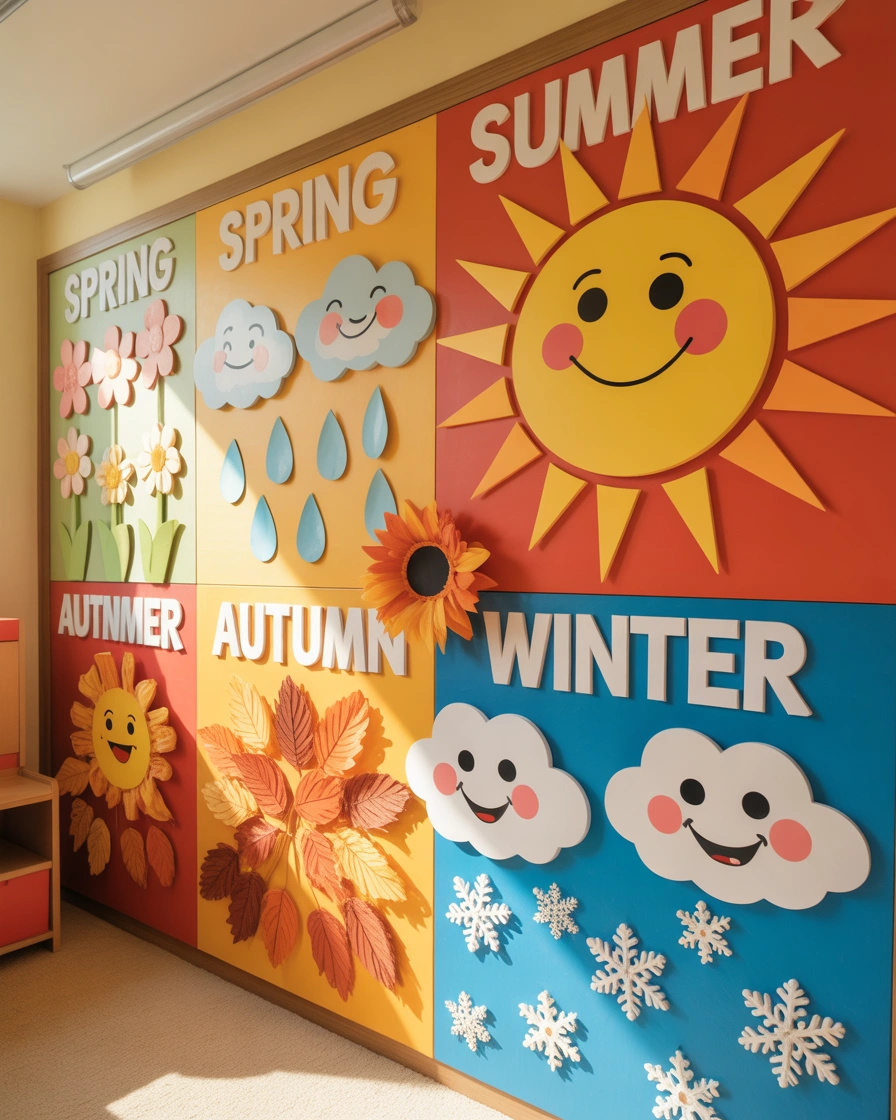
A weather and seasons wall is a wonderful preschool wall decoration idea because it connects classroom learning with the world children see every day. Young children are naturally curious about sunshine, rain, clouds, snow, and changing seasons.
Instead of using simple weather charts, you can create a complete interactive weather corner on the wall. A large smiling sun, fluffy clouds, colorful rain drops, and seasonal characters can make the classroom feel more alive.
You can divide the wall into four sections representing spring, summer, autumn, and winter. Each section can include related pictures and activities. For example, spring can have flowers and butterflies, summer can include beaches and sunshine, autumn can feature falling leaves, and winter can show snowflakes and warm clothing.
A daily weather board can also be added where children move a weather symbol according to the day’s conditions. This small activity encourages observation skills and helps children learn basic science concepts.
I personally love this idea because it turns a simple wall into a daily learning experience. Children begin understanding nature while practicing communication skills by discussing the weather.
7. Create a Creative Shapes and Colors Wall
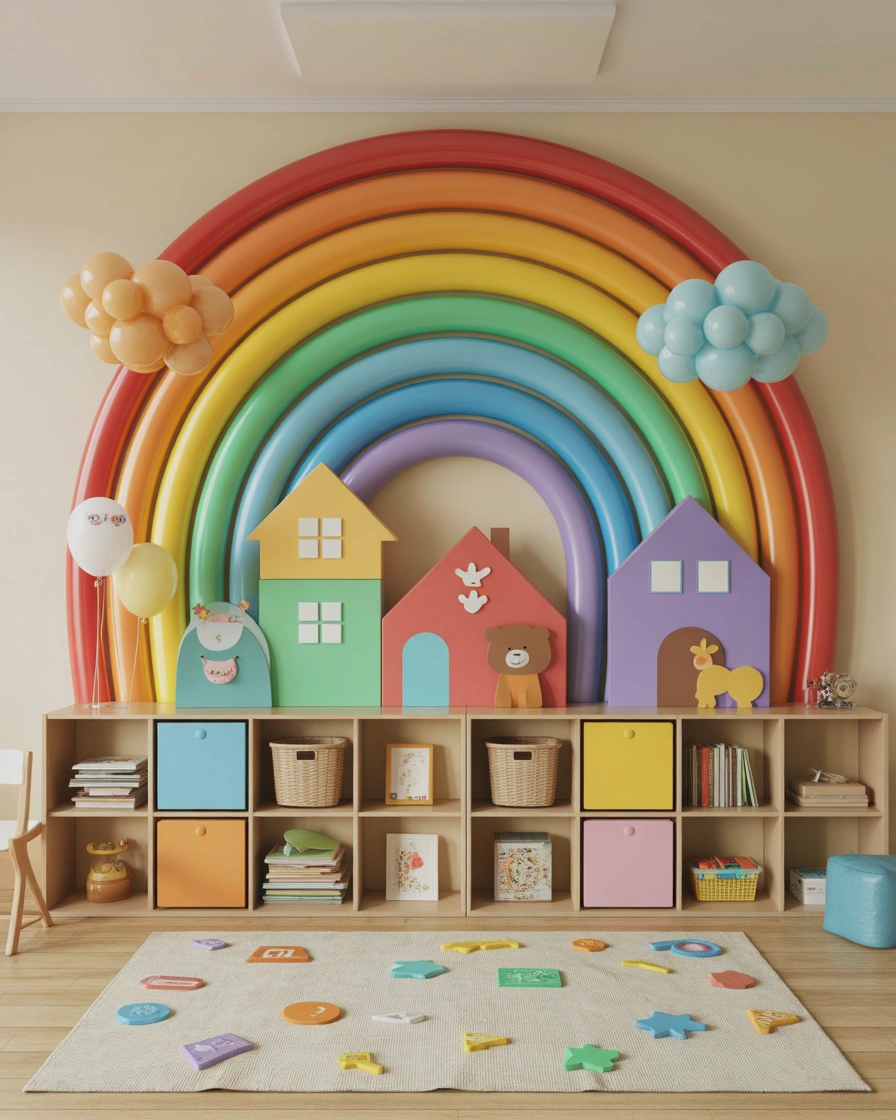
Learning shapes and colors is one of the first steps in early childhood education. A shapes and colors wall can make these basic concepts easier and more enjoyable for preschool children.
Instead of displaying ordinary shape charts, create an artistic wall where shapes become part of a bigger design. Circles can become balloons, triangles can become mountains, squares can become houses, and rectangles can become doors or buildings.
This approach helps children understand that shapes are not just classroom concepts; they exist everywhere around them.
For colors, you can create a rainbow-themed display with different objects representing each color. A red apple, yellow sun, green leaf, blue ocean, and purple flower can help children connect colors with familiar things.
Adding touch-and-feel elements can make the wall more engaging. Soft fabric, foam shapes, or textured materials allow children to explore through different senses.
A shapes and colors wall also works as a beautiful background for classroom activities and photographs.
8. Make an Emotions and Feelings Wall
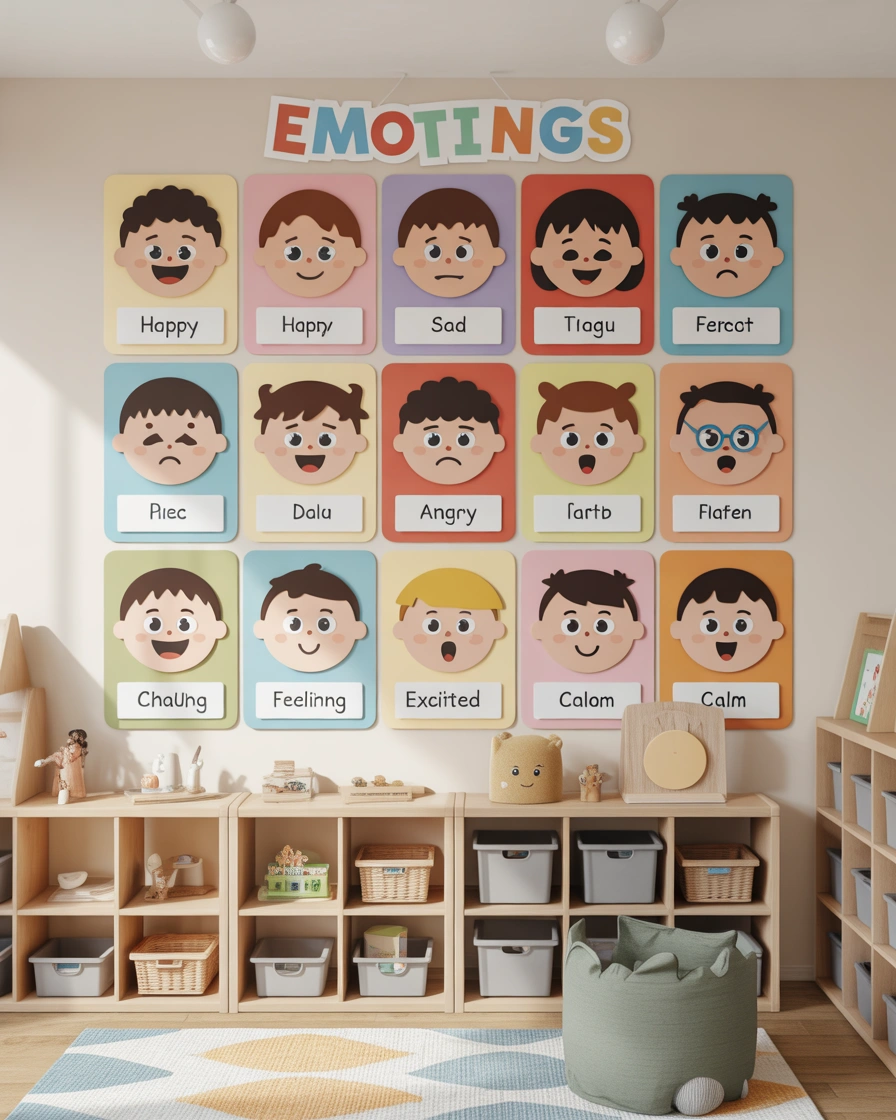
Helping children understand emotions is an important part of preschool development. An emotions wall teaches children that feelings are normal and gives them the confidence to express themselves.
A feelings wall can include different facial expressions showing happiness, sadness, excitement, anger, surprise, and calmness. Cute cartoon characters with different emotions make the concept easier for young children to understand.
You can create an interactive “How Do You Feel Today?” section where children place their names under the emotion they are experiencing. This simple classroom routine encourages emotional awareness and communication.
Teachers can use the wall during morning discussions by asking children questions like:
- How are you feeling today?
- What made you happy?
- When do you feel worried?
This decoration idea supports social and emotional learning while making the classroom environment more supportive.
I believe every preschool classroom should have an emotions wall because children need help understanding their feelings just as much as they need help learning letters and numbers.
9. Create an Underwater Adventure Wall
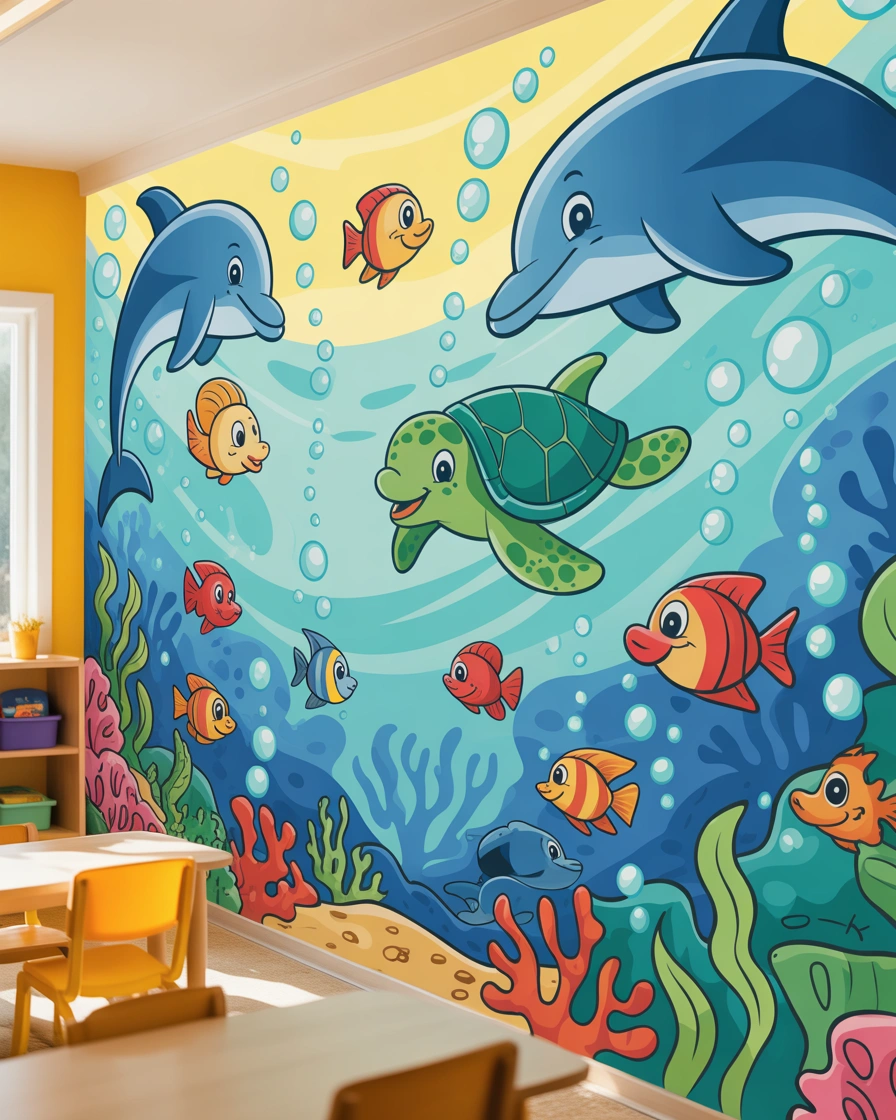
Children are fascinated by the ocean, sea animals, and underwater worlds. An underwater-themed classroom wall can turn a normal classroom into an exciting learning adventure.
You can design the wall with a deep blue ocean background, colorful fish, turtles, dolphins, coral reefs, bubbles, and sea plants. The underwater theme creates a peaceful and imaginative atmosphere.
This type of wall decoration also provides many educational opportunities. Teachers can introduce children to different sea creatures, discuss marine life, and teach vocabulary related to oceans.
Adding children’s artwork to the underwater wall makes it even more special. Students can create their own paper fish, sea stars, and underwater characters to add to the display.
An underwater wall works especially well near reading areas because the calm ocean environment creates a relaxing learning space.
10. Create an Amazing Space and Galaxy Learning Wall
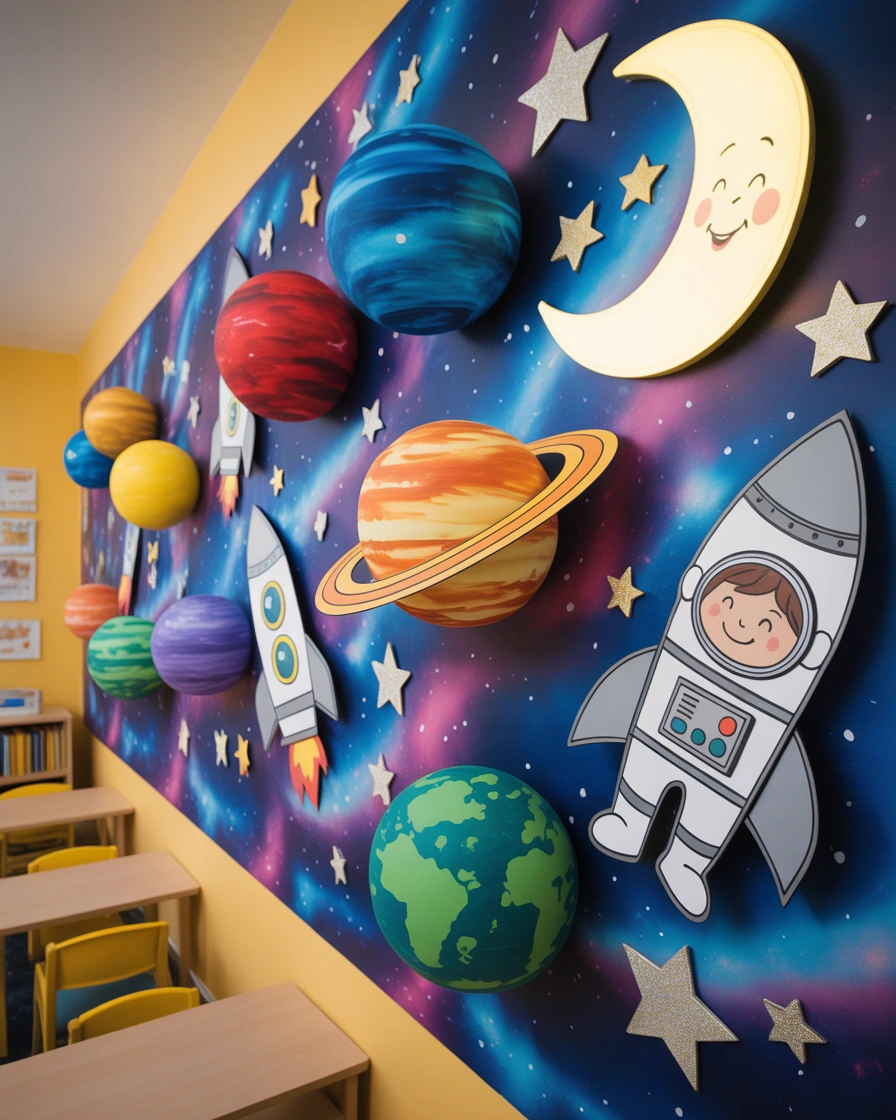
A space-themed wall is perfect for encouraging curiosity and imagination among preschool children. Many young learners dream about astronauts, planets, stars, and exploring the universe.
A galaxy wall can include planets, rockets, astronauts, stars, and colorful galaxies. Dark blue backgrounds with glowing stars can create a magical classroom atmosphere.
Teachers can use this wall to introduce simple science concepts like planets, the moon, stars, and space exploration. Even very young children enjoy learning about things beyond Earth.
A creative idea is to create a “Future Astronauts” section where children’s pictures are placed inside astronaut suits. This makes children feel connected to the theme and encourages imagination.
Space decorations also work well because they can grow with children. As students learn new concepts, teachers can add new planets, facts, or creative projects to the wall.
A space wall reminds children that learning has no limits and encourages them to stay curious.
11. Add a Classroom Rules and Good Habits Wall
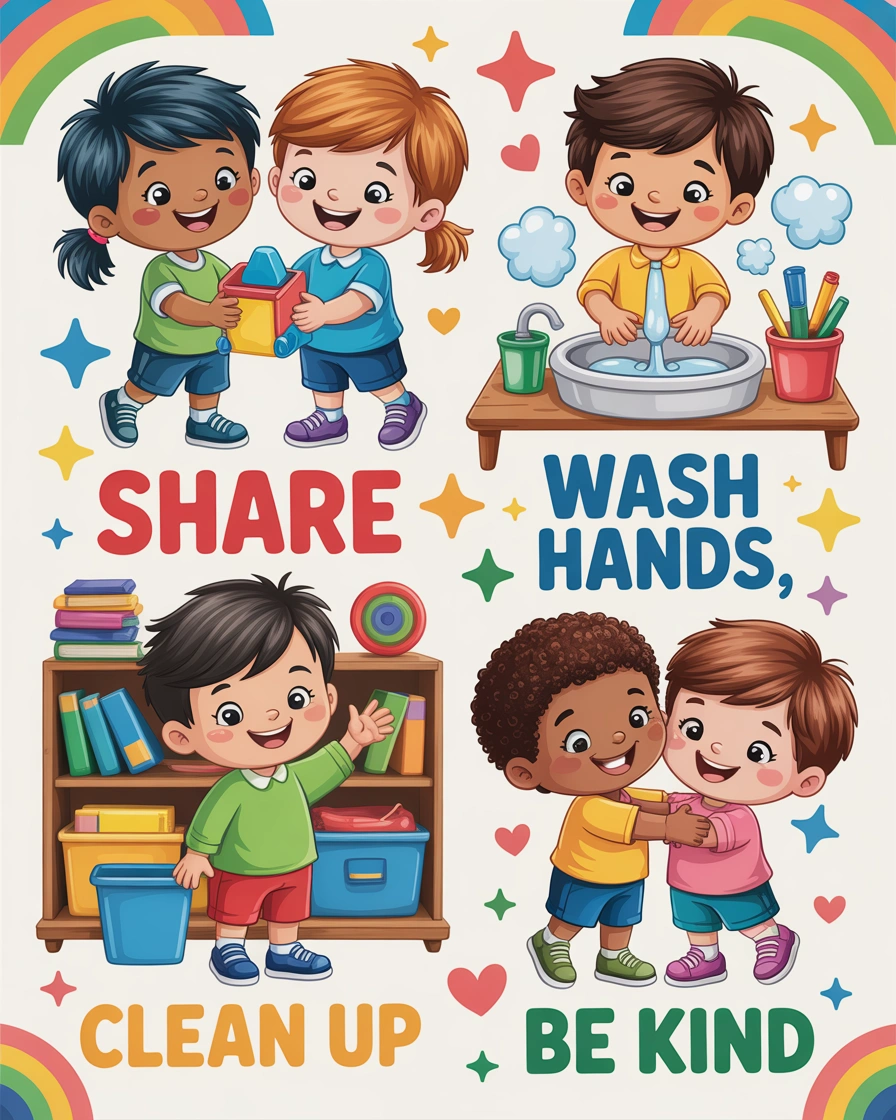
A preschool classroom needs structure, but rules should be presented in a positive and friendly way. A classroom rules wall helps children understand expectations while keeping the environment cheerful.
Instead of using strict instructions, create a wall featuring positive messages with cute illustrations. Examples include:
- Be kind
- Share with friends
- Listen carefully
- Keep the classroom clean
- Use gentle hands
Each rule can include a simple picture showing the behavior. Young children often understand visuals faster than written instructions.
A good habits wall can also include daily routines like washing hands, organizing toys, greeting friends, and helping others.
This type of decoration supports classroom management while creating a positive learning environment. Children slowly develop responsibility because they can see and remember the expectations around them.
The best classroom walls do not only decorate the room; they guide children’s behavior in a gentle way.
12. Create a Farm Animal Learning Wall
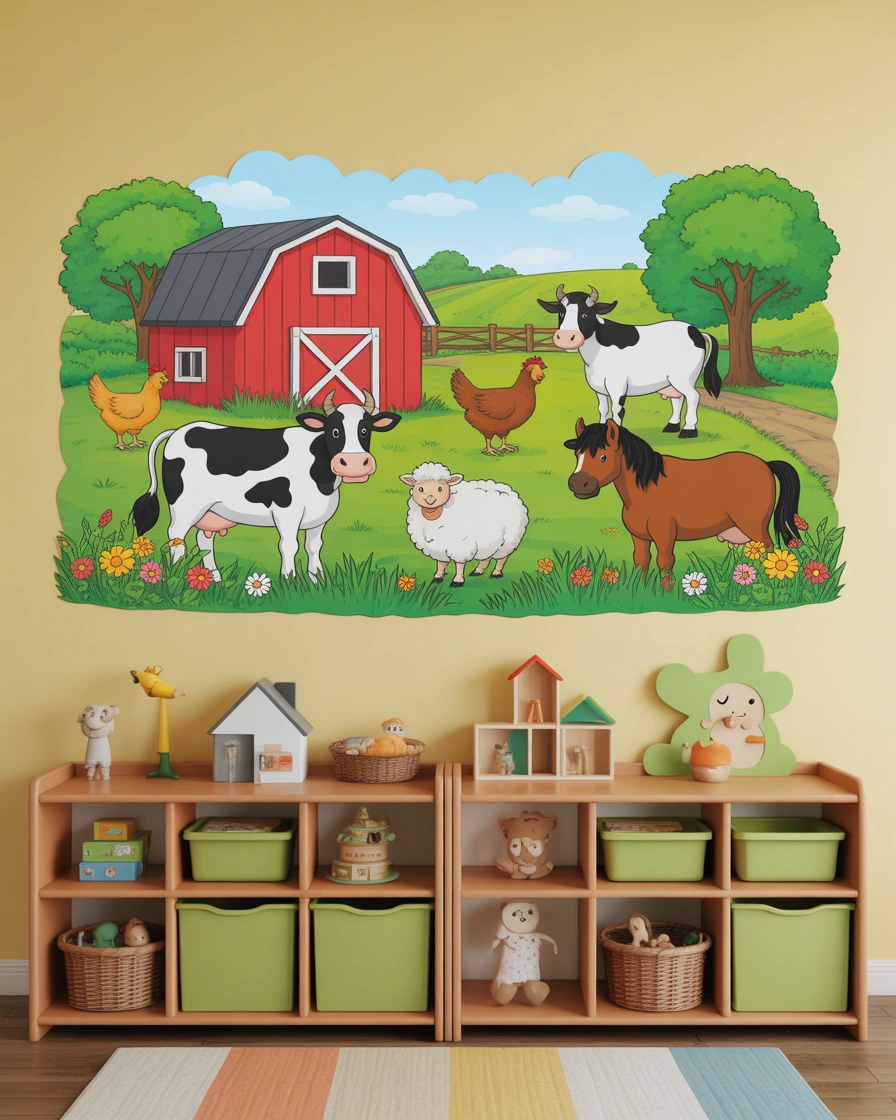
A farm-themed wall is another engaging preschool decoration idea that combines learning and creativity. Children enjoy animals, and farm themes allow them to explore nature, sounds, and vocabulary.
You can create a colorful farm scene with a red barn, green grass, trees, clouds, and friendly farm animals like cows, chickens, horses, sheep, and pigs.
Teachers can use the wall to teach animal names, sounds, food sources, and basic environmental concepts. Children can learn that cows provide milk, chickens lay eggs, and plants grow on farms.
A farm wall can also include counting activities. For example, children can count chickens, flowers, or fruits displayed on the wall.
This theme creates a warm and playful classroom atmosphere that children immediately connect with.
13. Design a Transportation-Themed Learning Wall
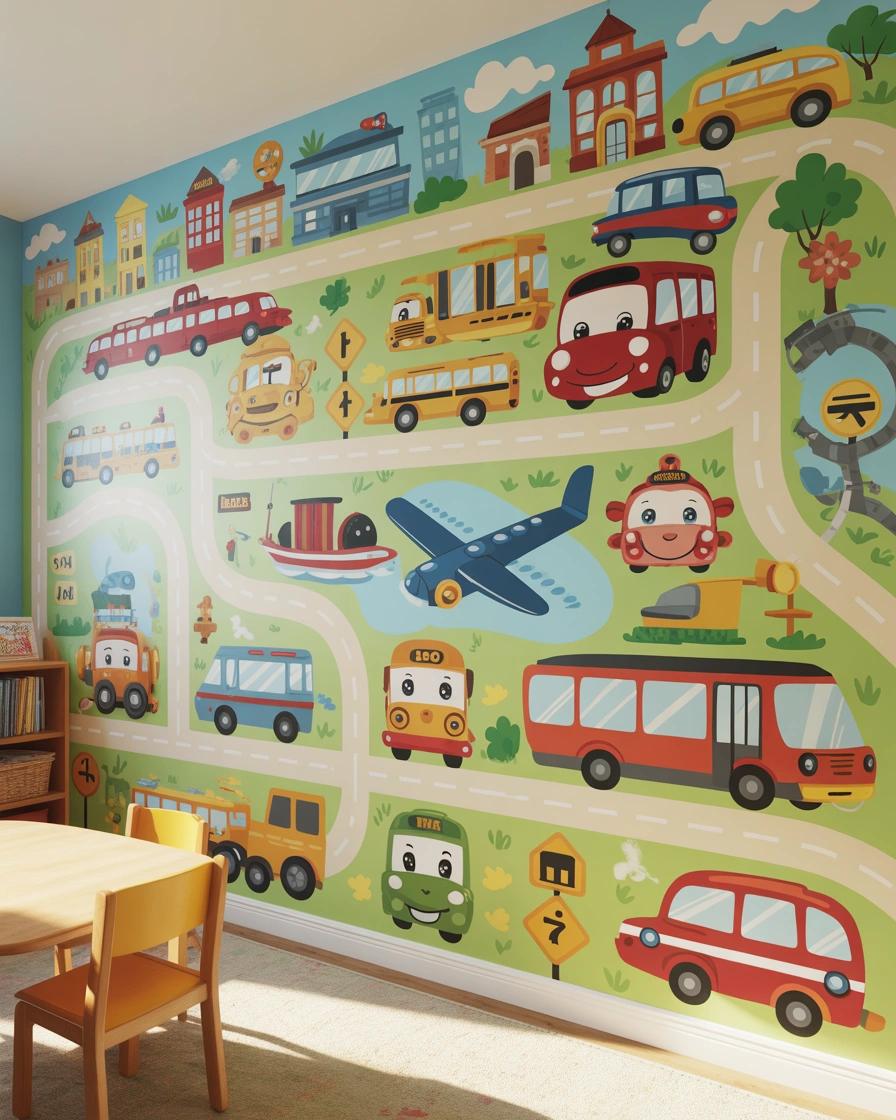
Transportation is a topic that almost every preschool child finds exciting. Cars, buses, airplanes, trains, and boats capture children’s imagination and provide endless opportunities for learning. A transportation-themed wall decoration can turn an ordinary classroom wall into a fun educational journey.
You can create a large road map across the wall with colorful vehicles traveling through different areas. Add a city scene with buildings, traffic lights, roads, trees, and different types of transportation. Children can identify vehicles and learn where each one travels.
For example, airplanes can be placed in the sky section, boats can be displayed on a blue ocean area, and cars or buses can move along a road created with paper materials.
This type of wall decoration is also useful for teaching basic concepts like direction, safety rules, and community helpers. Teachers can introduce words such as driver, pilot, captain, road, airport, and station.
A creative idea is to include children’s names inside small cars or buses. This creates a personalized classroom display where every child feels included.
Transportation walls are especially effective because they combine imagination with real-world learning. Children can create stories around the vehicles and develop their language skills while playing.
14. Create a Beautiful Reading Corner Wall
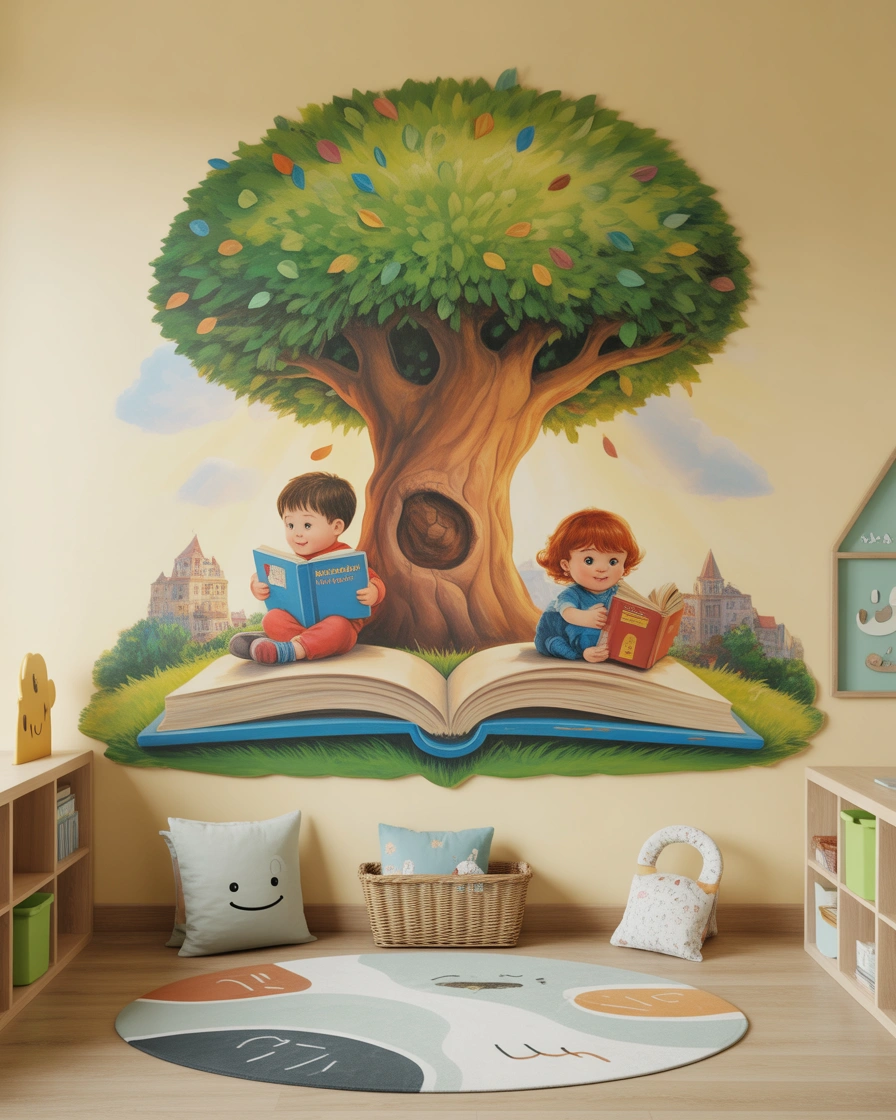
A reading corner wall can completely change the feeling of a preschool classroom. A comfortable and attractive reading space encourages children to develop a love for books from an early age.
Instead of leaving the reading area plain, decorate the wall with creative book-inspired designs. You can create a large open book mural, floating shelves, cartoon characters reading books, or a magical story tree.
A popular idea is creating a “Reading Tree” where every branch represents a different story or book theme. Children can add their favorite stories, drawings, or reading achievements to the tree.
You can also decorate the wall with motivational messages about reading, using simple phrases that children can understand. Examples include “Books Take Us Anywhere” or “Every Story Is An Adventure.”
Soft colors and peaceful designs work best for reading walls because they create a calm environment. Adding clouds, stars, animals, or fantasy elements can make the area feel magical.
A reading corner wall does more than decorate the classroom. It helps children associate books with happiness, creativity, and adventure.
15. Create a Seasonal and Celebration Wall
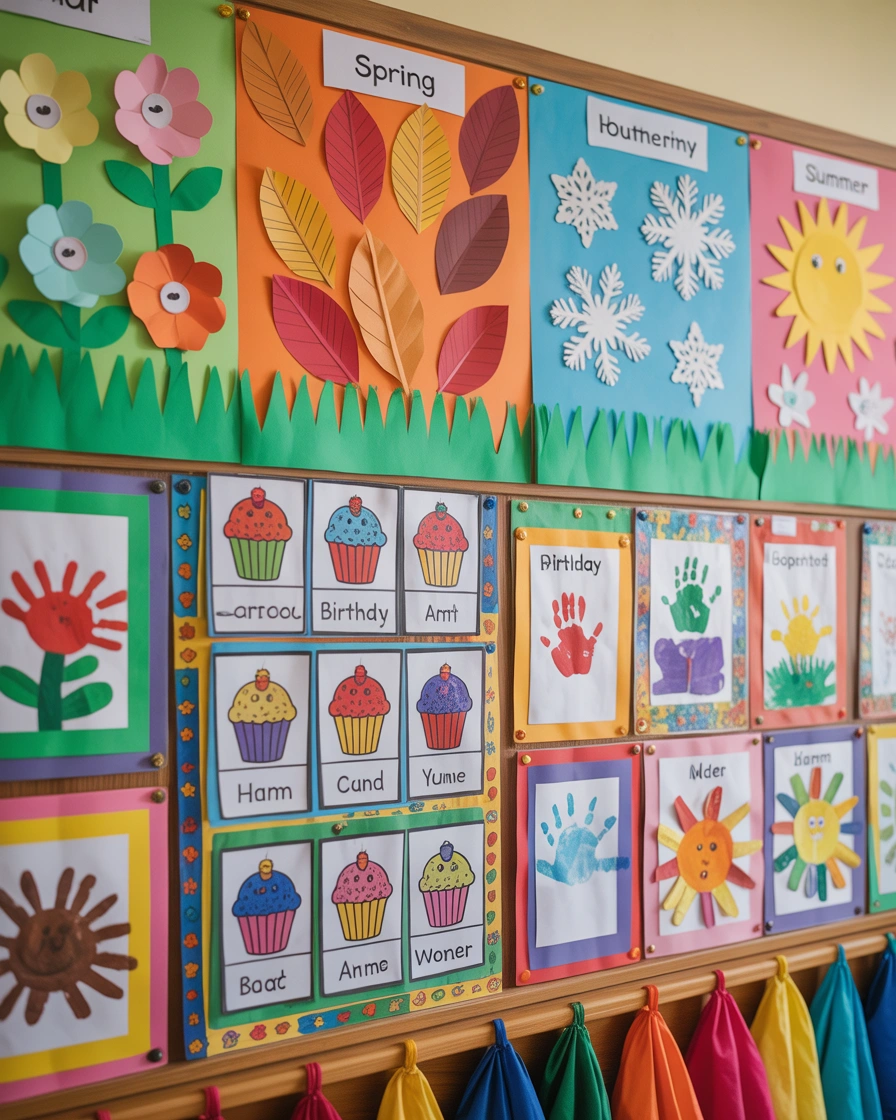
A seasonal and celebration wall is one of the most flexible preschool wall decoration ideas because it allows teachers to refresh the classroom throughout the year.
Children enjoy celebrating special moments, festivals, and seasonal changes. A celebration wall can be updated with different themes such as birthdays, holidays, spring flowers, autumn leaves, winter scenes, or cultural events.
For birthdays, you can create a colorful birthday calendar with children’s names and photos. For seasonal changes, you can decorate the wall with related artwork created by students.
A celebration wall also gives children a chance to participate in decorating the classroom. When children contribute their own artwork, they develop creativity and feel a stronger connection with their learning space.
This type of wall keeps the classroom environment exciting because children always have something new to discover. It prevents the classroom from feeling repetitive and encourages students to look forward to new activities.
The best part about seasonal decorations is that they create memories. Children remember the classroom not only as a place where they learned but also as a place where they celebrated and created happy moments.
Tips for Creating the Perfect Preschool Wall Decoration
After exploring these preschool wall decoration ideas, it is important to remember that effective classroom decoration is not only about adding more colors or filling every empty space. The goal is to create a balanced environment where children can learn, explore, and feel comfortable.
Here are some simple tips that can help you design better preschool walls:
Keep Decorations Child-Friendly
Preschool children respond best to simple, clear, and colorful designs. Avoid making walls too complicated because too many details can distract young learners.
Use large pictures, friendly characters, and easy-to-understand visuals. Every decoration should have a purpose, whether it is teaching a concept or creating a welcoming atmosphere.
Make Walls Interactive
The most successful preschool wall decorations are those children can interact with. Add movable pieces, matching activities, name sections, counting games, or artwork displays.
Interactive walls encourage participation and make learning more enjoyable.
Include Children’s Artwork
A classroom becomes more special when children’s creativity is displayed. Adding student artwork makes the environment feel personal and gives children confidence.
Even simple drawings, paper crafts, or paintings can become beautiful classroom decorations.
Choose a Balanced Color Theme
Colors influence children’s emotions and attention. Bright colors can create excitement, while soft colors create calmness.
A good preschool classroom usually combines different colors without making the space overwhelming.
Update Decorations Regularly
Children enjoy seeing new things. Updating classroom walls according to lessons, seasons, or activities keeps the learning environment fresh.
You do not need to completely redesign the classroom every time. Small changes can make a big difference.
Final Thoughts on Preschool Wall Decoration Ideas
Creating a beautiful preschool classroom is about more than making the walls look attractive. The best preschool wall decoration ideas combine creativity, learning, and emotional connection.
A well-designed classroom wall can teach children letters, numbers, colors, emotions, nature, and social skills without feeling like traditional studying. It transforms the classroom into a place where children feel excited to explore and discover new things.
Whether you choose an alphabet wall, nature theme, storytelling corner, space adventure, or personalized welcome display, the most important thing is creating an environment where children feel happy and inspired.
The walls of a preschool classroom are like a blank canvas waiting for creativity. With thoughtful planning and a little imagination, you can create a learning space that children will remember for years.
A classroom filled with colorful, meaningful decorations does not just look beautiful — it helps build curiosity, confidence, and a lifelong love for learning.
