
A living room wall can completely change the personality of a home. I have always felt that when a living room looks slightly unfinished, the problem is not necessarily the furniture or color palette. Sometimes, the wall simply needs one meaningful decorative element to pull everything together. For me, a beautiful wall clock is one of the easiest ways to achieve that balance.
Wall clocks are no longer just practical accessories that tell us the time. Today, they can work as statement pieces, subtle accents, gallery-wall additions, or even the main focal point of a living room. From oversized modern clocks to vintage wooden designs, there are so many ways to use a clock creatively without making the space feel outdated.
The best part is that wall clock decor for living room spaces can work with almost every interior style. Whether your home is modern, farmhouse-inspired, minimalist, luxurious, rustic, Scandinavian, or traditional, there is a clock style that can complement it beautifully.
If you are wondering how to decorate your living room with a wall clock, I have gathered 15 wall clock decor ideas for living room interiors that feel stylish, practical, and easy to personalize.
Why Use a Wall Clock as Living Room Decor?
Before getting into the ideas, I think it is worth talking about why wall clocks deserve more attention in interior decorating.
A living room usually has one or two walls that naturally attract the eye. These might be the wall behind the sofa, the fireplace wall, or an empty wall opposite the entrance. Leaving these spaces completely bare can sometimes make the room feel unfinished.
A decorative clock fills that visual gap while still serving a useful purpose.
Unlike ordinary artwork, a clock adds movement and function to the wall. It can also introduce another material into your living room, such as wood, brass, black metal, glass, marble, or natural fibers.
Most importantly, you do not need to redesign your entire living room to make a wall clock work. Changing one wall can often make the whole room feel refreshed.
1. Make an Oversized Wall Clock the Main Focal Point
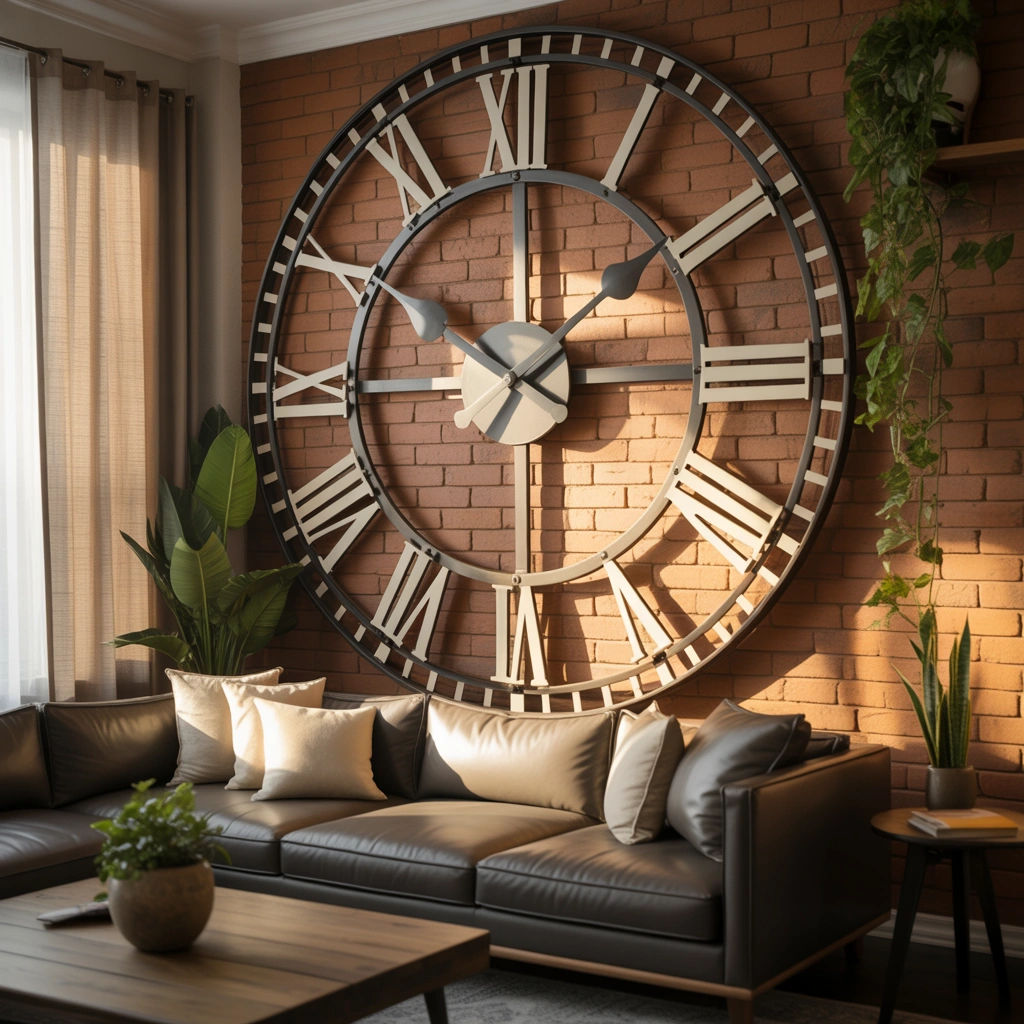
One of my favorite ways to decorate with a clock is to choose an oversized design and let it become the star of the room.
A large wall clock for living room decor works particularly well above a sofa, console table, fireplace, or sideboard. Because of its scale, it immediately attracts attention and can visually anchor the furniture beneath it.
Large open-frame metal clocks are especially beautiful in contemporary and industrial living rooms. Their airy construction keeps them from looking too heavy, even when the clock itself is quite large.
If your living room is neutral, consider a black metal clock for contrast. In warmer interiors, antique brass, bronze, or wooden finishes can create a softer effect.
I would avoid surrounding an oversized clock with too many small decorations. Let the clock breathe. A little empty wall space around it actually makes the arrangement look more intentional and expensive.
For the best proportions, try choosing a clock that visually relates to the width of the furniture underneath it without completely overpowering the wall.
2. Style a Wall Clock Above the Sofa
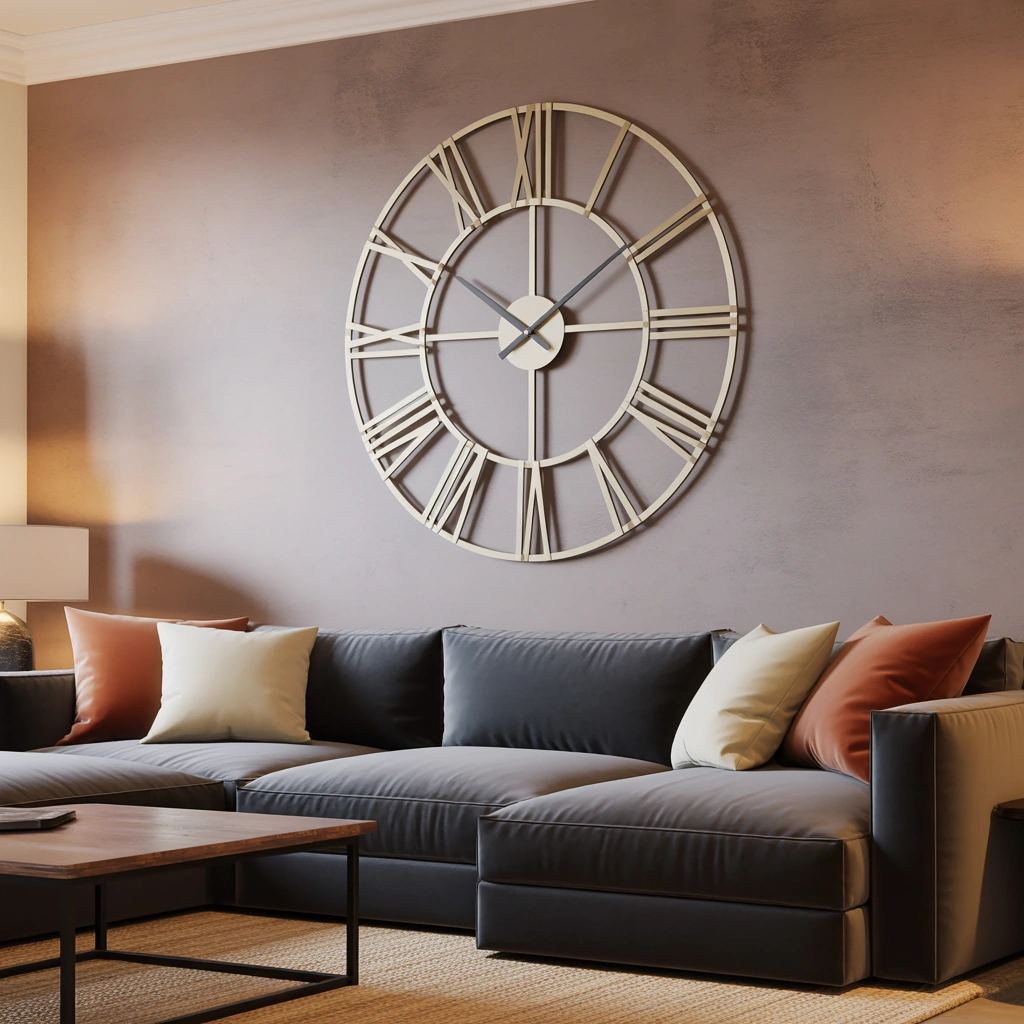
The wall behind the sofa is often the largest blank space in a living room, which makes it a natural place for decorative wall clocks.
Instead of hanging traditional artwork, try placing a statement clock directly above the center of the sofa.
You can keep the arrangement simple with just the clock, or build a slightly layered look around it using small framed prints, decorative sconces, or wall-mounted greenery.
Personally, I prefer keeping some visual breathing space between the sofa and the clock. Hanging it too close to the furniture can make the wall feel crowded.
For a modern living room, a minimalist clock with thin hands and clean numbers can look beautiful. For traditional interiors, consider something with Roman numerals, carved wood, or an antique-inspired frame.
The clock should complement the sofa rather than compete with it. If your sofa already has bold patterns or bright colors, a simpler clock usually works better.
3. Create a Wall Clock Gallery Wall
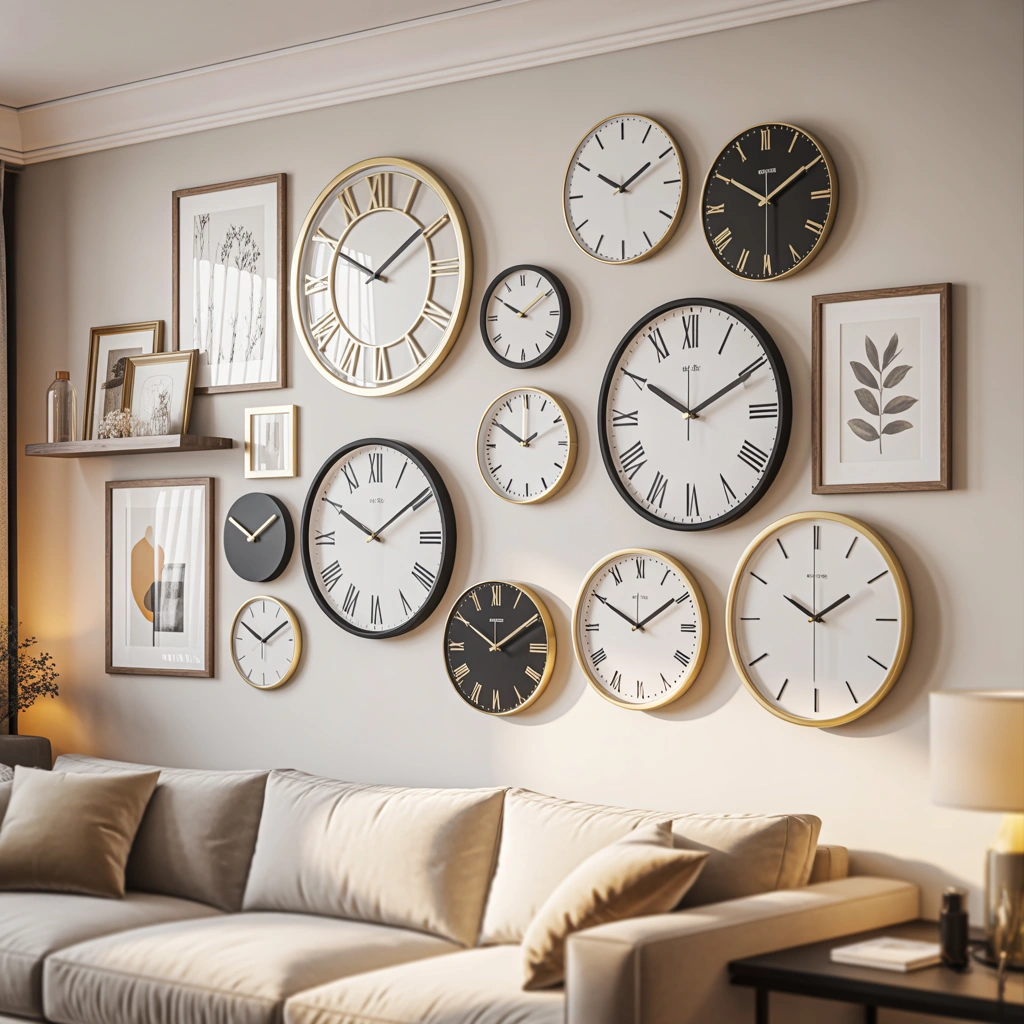
A gallery wall does not have to consist entirely of framed pictures. Adding a clock can make the arrangement feel much more interesting.
I especially love using a medium-sized clock as the central element of a gallery wall and arranging framed photographs, artwork, quotes, botanical prints, or mirrors around it.
This creates a wall that feels collected rather than overly coordinated.
For a cohesive appearance, repeat certain colors or materials throughout the arrangement. For example, if the clock has a black metal frame, you could use black picture frames nearby.
A wooden clock can be paired with warm wooden frames, woven accents, and earthy artwork.
Before putting nails in the wall, I recommend laying all the pieces on the floor first. Experiment with several arrangements until the spacing feels balanced.
A gallery wall is also a wonderful opportunity to make your living room more personal. Family photos, travel memories, meaningful artwork, and a stylish clock can create a wall that tells your story.
4. Choose a Minimalist Wall Clock for a Modern Living Room
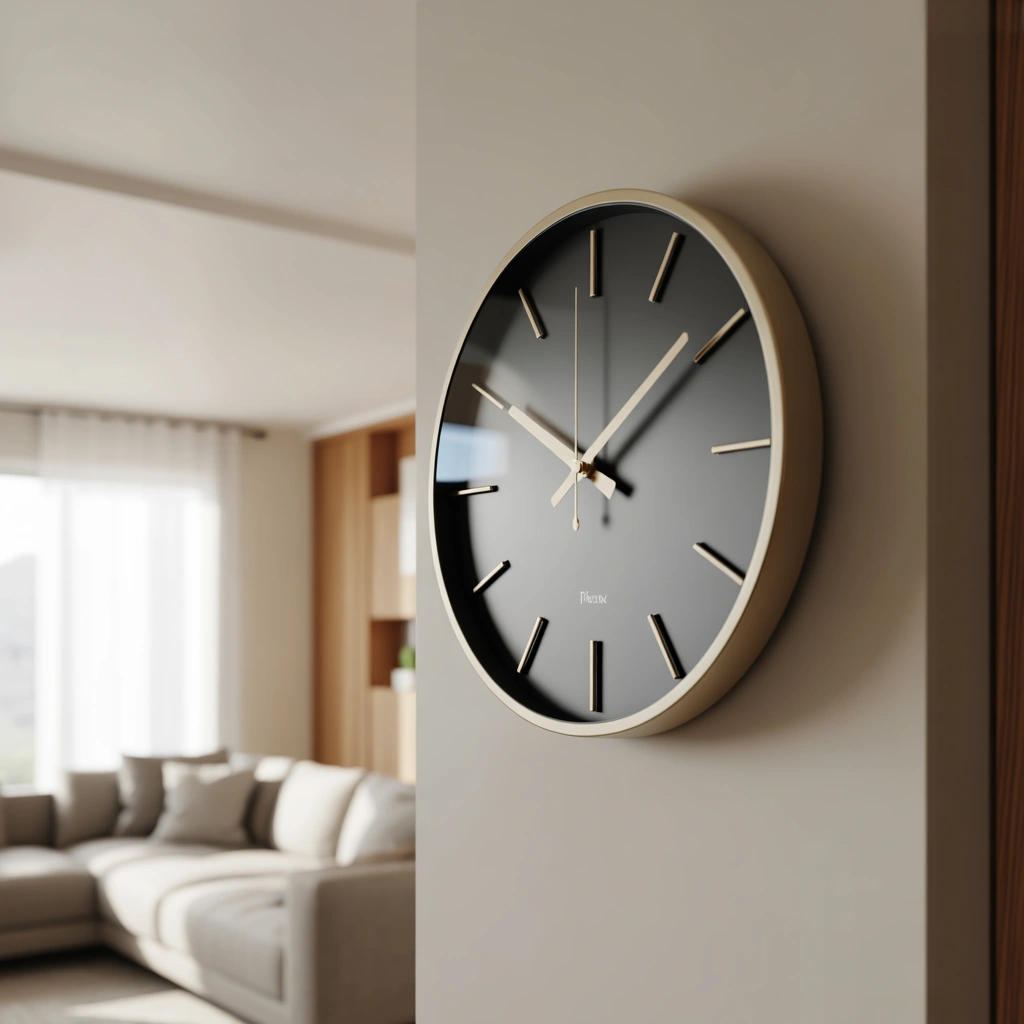
Sometimes less really is more.
If your living room already has beautiful furniture, textured fabrics, architectural details, or statement lighting, you may not need a dramatic clock.
A modern wall clock for living room decor can be incredibly simple while still making the wall feel finished.
Look for designs with:
- Thin clock hands
- Minimal or no numbers
- Simple geometric shapes
- Neutral colors
- Clean metal frames
- Natural wood finishes
I particularly like minimalist clocks in white, beige, black, muted gray, or natural oak because they blend easily with modern interiors.
Place the clock on a clean wall with plenty of negative space around it. This keeps the overall look calm and sophisticated.
Minimalist clocks work especially well in Scandinavian, Japandi, contemporary, and modern minimalist homes.
5. Add Warmth With a Wooden Wall Clock
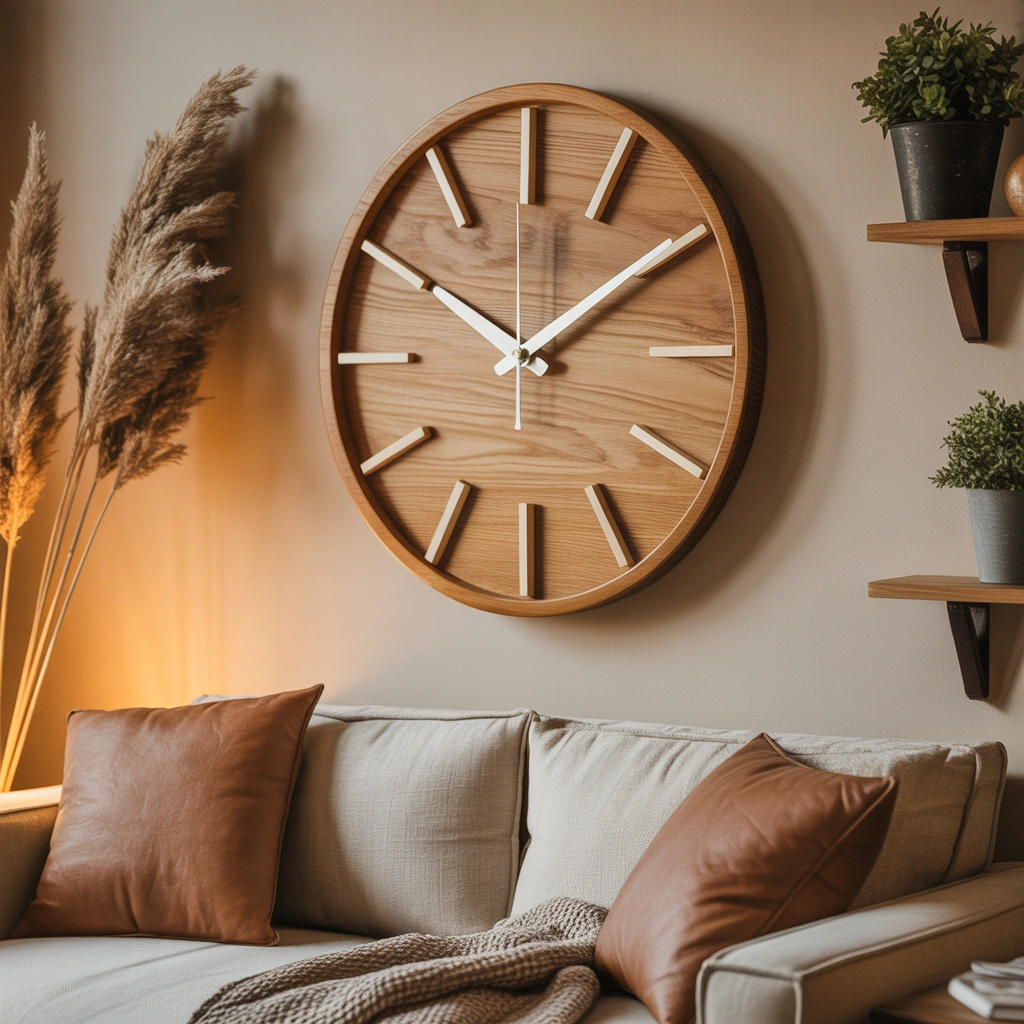
Wood has an amazing ability to make almost any room feel warmer.
If your living room has lots of white, gray, cream, or black elements, a wooden clock can prevent the space from feeling too cold.
A wooden wall clock for living room decor can range from sleek contemporary designs to chunky farmhouse-inspired pieces.
Light oak looks beautiful in Scandinavian and coastal interiors, while walnut creates a richer, more sophisticated feeling. Distressed or reclaimed wood works particularly well in farmhouse and rustic spaces.
You can coordinate the clock with other wooden elements in your living room, including:
- Coffee tables
- Floating shelves
- Picture frames
- Console tables
- Wooden lamps
- Decorative bowls
The woods do not need to match perfectly. In fact, slightly different wood tones can make a room look more natural and layered.
6. Try a Black Metal Wall Clock for an Industrial Touch
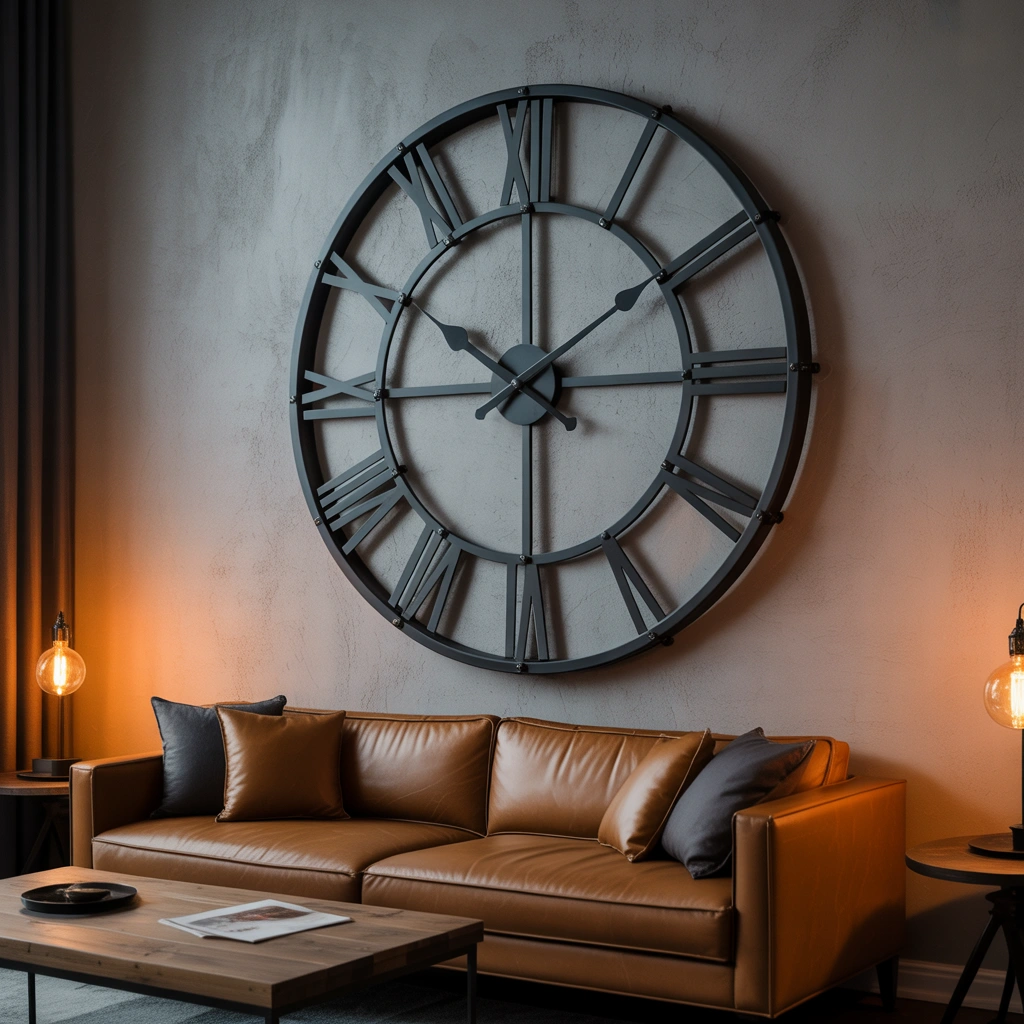
Black accents are one of the easiest ways to create definition in a room.
A large black metal wall clock immediately introduces structure and contrast, especially against white, beige, greige, or light-gray walls.
Industrial-style clocks often feature open frames, exposed mechanisms, Roman numerals, or oversized numbers.
If your living room already contains black window frames, lighting fixtures, furniture legs, or shelving, a black clock can help repeat the color and create visual continuity.
One styling combination I particularly like is:
Neutral wall + black oversized clock + wooden console + ceramic accessories + indoor greenery.
It feels modern but still warm and welcoming.
You do not need a completely industrial home to use this style. A simple black clock can fit beautifully into modern, transitional, farmhouse, or eclectic interiors too.
7. Decorate Around a Clock With Floating Shelves
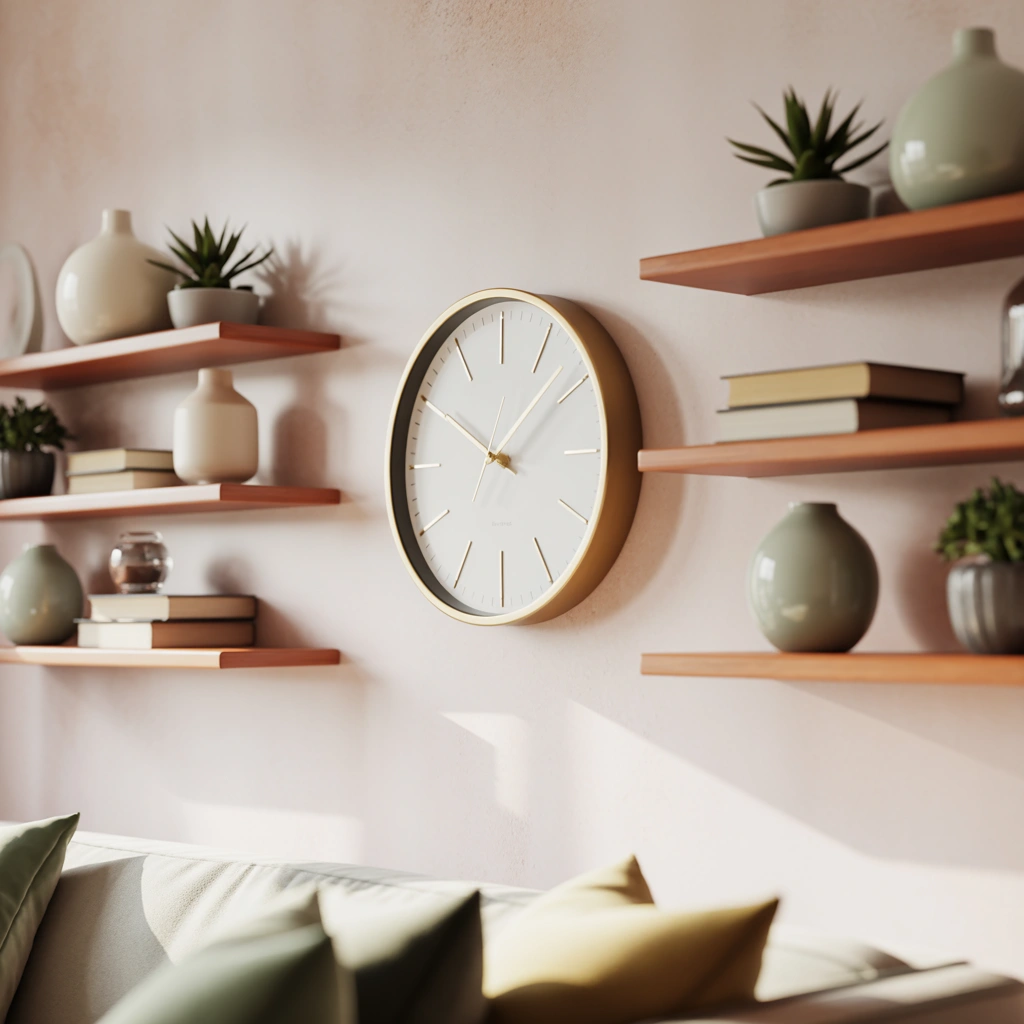
Floating shelves and wall clocks make a surprisingly good combination.
Instead of placing a clock alone on a large blank wall, install one or two floating shelves underneath or beside it.
The shelves can then hold smaller decorative items such as:
- Framed photographs
- Candles
- Small plants
- Ceramic vases
- Sculptures
- Books
- Decorative bowls
I recommend varying the height of the objects rather than arranging everything in one straight line. This gives the display more movement.
For example, you could place a medium-sized clock slightly above the upper shelf while letting a tall plant or framed picture visually connect the two areas.
Try not to fill every inch of the shelves. Leaving a little empty space helps individual pieces stand out.
This wall clock decor idea works particularly well above media units, consoles, reading corners, and small living room sideboards.
8. Use an Antique or Vintage-Inspired Wall Clock
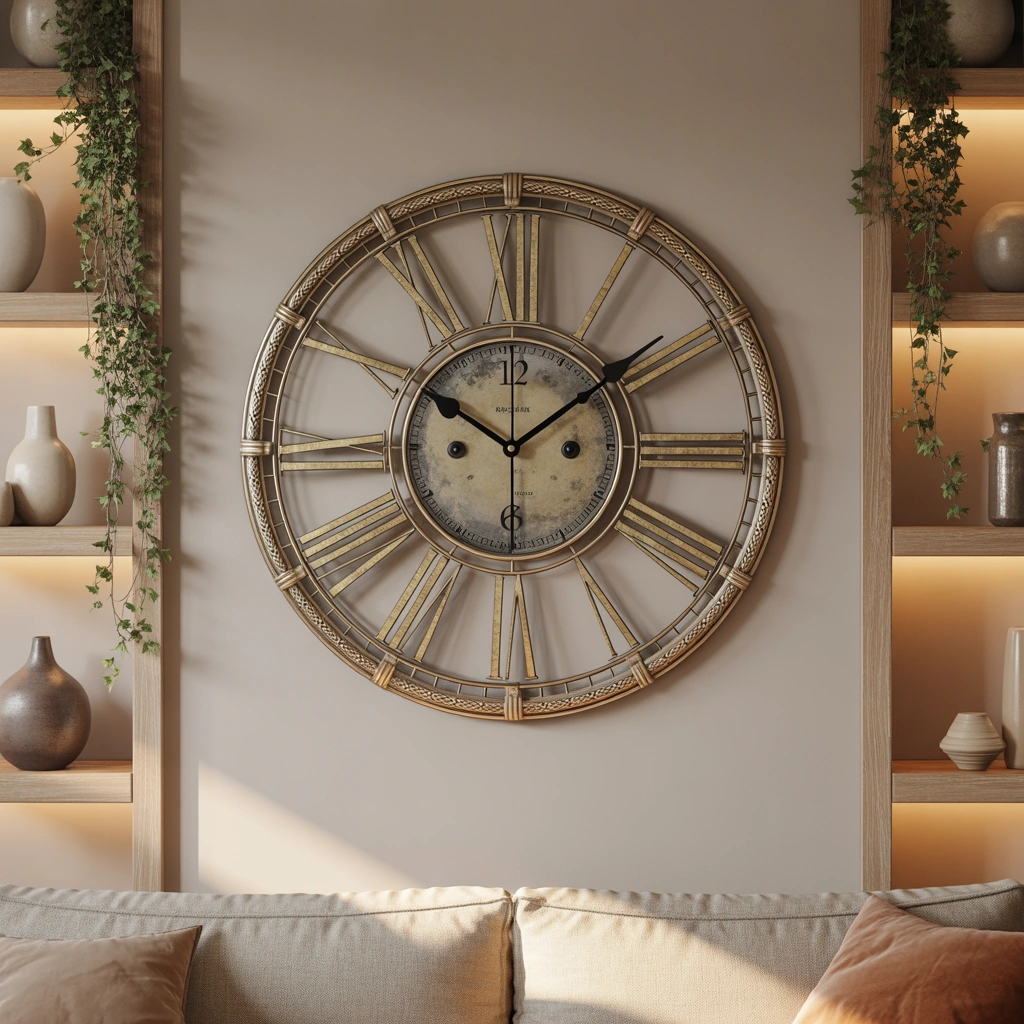
There is something charming about decor that looks as though it has a history.
A vintage-inspired wall clock can instantly add character to a living room, even if the rest of your furniture is relatively new.
Look for finishes such as distressed wood, aged brass, antique gold, weathered metal, or faded clock faces.
Roman numerals can also contribute to the traditional look.
I would pair a vintage clock with other subtle old-world details instead of making everything antique. A room usually feels more interesting when old and new elements are mixed together.
For instance, an antique-inspired clock above a modern console table can create beautiful contrast.
Complete the arrangement with books, warm lighting, ceramic pieces, or framed artwork.
This approach works beautifully in farmhouse, traditional, French-country, cottage, and eclectic living rooms.
9. Add Luxury With a Gold Wall Clock
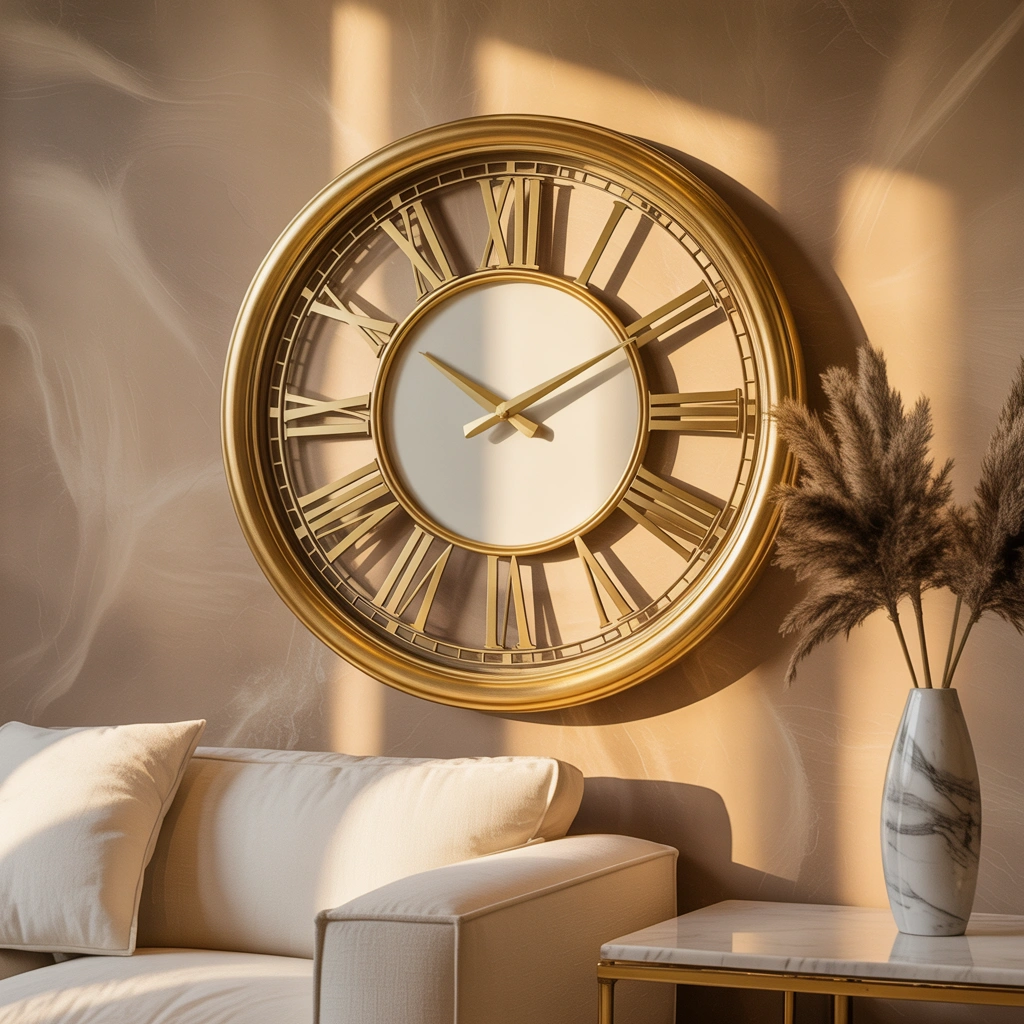
Gold accents have a way of making an ordinary wall look instantly more refined.
A gold wall clock can work as a decorative jewel in the living room, particularly against dark green, navy blue, charcoal, cream, black, or warm white walls.
For a subtle luxurious look, choose a slim brass or brushed-gold frame rather than something overly ornate.
You can repeat the metallic finish through small details elsewhere in the room, including:
- Lamp bases
- Cabinet handles
- Candleholders
- Side tables
- Picture frames
- Decorative trays
The key is moderation.
I personally prefer two or three repeated gold accents rather than using metallic finishes everywhere.
If you have a glamorous, Art Deco-inspired, contemporary, or modern-classic living room, this is one of the easiest wall clock decorating ideas to introduce a little sophistication.
10. Place a Wall Clock Above the Fireplace
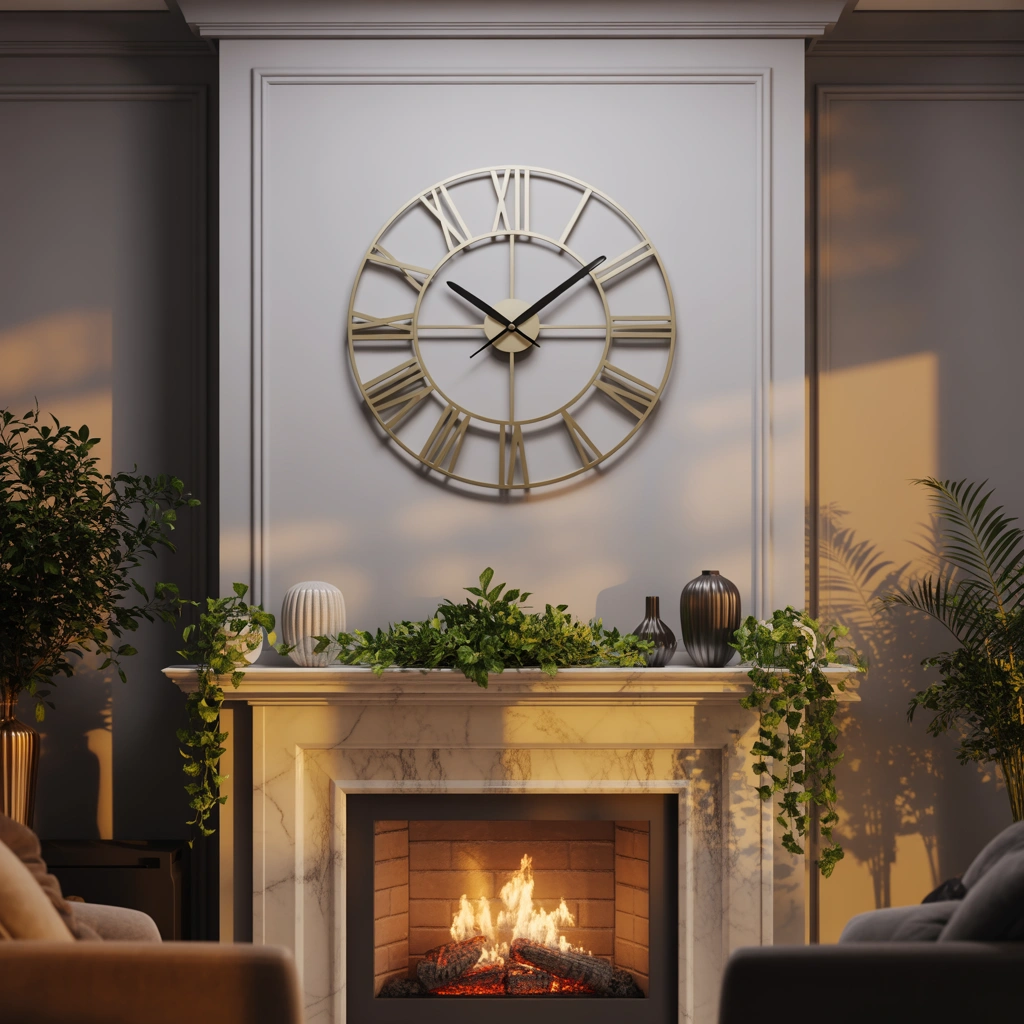
A fireplace naturally becomes a focal point in the living room, so the wall directly above it deserves thoughtful styling.
Instead of using a mirror or painting, consider a beautiful wall clock.
For traditional fireplaces, round wooden or antique-style clocks can feel timeless. For modern fireplaces, a clean metal or minimalist clock usually works better.
You can also create a layered mantel arrangement underneath it.
Try placing a few pieces at different heights, such as candlesticks, small plants, decorative books, or vases.
Keep the clock visually dominant by avoiding accessories that are too large.
Another important detail is scale. A tiny clock above a wide fireplace can look lost, while an excessively large clock may overwhelm the mantel.
Choose something that fills enough of the wall to feel intentional while still leaving visible space around the edges.
11. Combine a Wall Clock With Indoor Plants
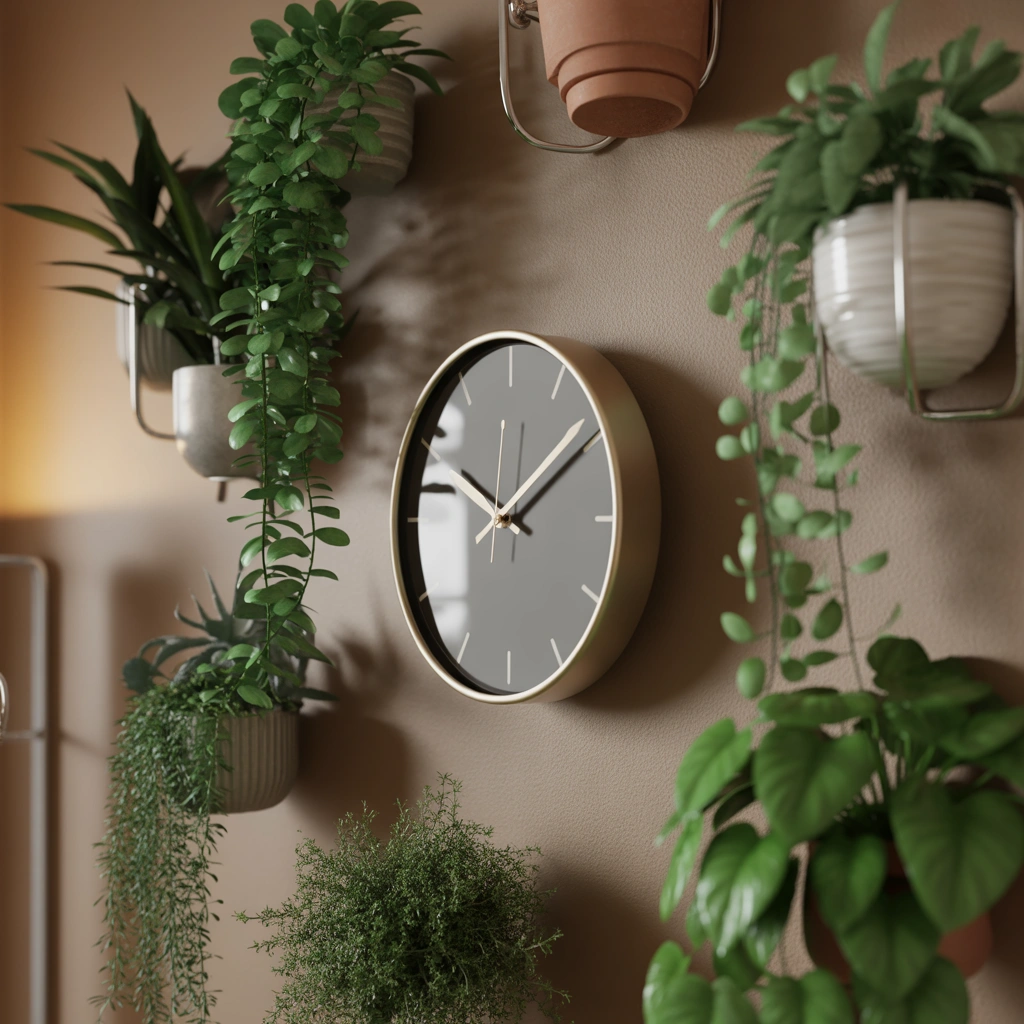
Plants and clocks may seem unrelated, but they can look surprisingly beautiful together.
Plants bring softness and natural movement, while a clock adds structure and shape.
If you have a large wall clock, try placing a tall indoor plant below and slightly to one side. This creates asymmetrical balance without making the arrangement look overly formal.
Plants such as fiddle-leaf figs, palms, rubber plants, monsteras, and olive trees can work especially well depending on your living room style.
For smaller rooms, use tabletop greenery on a console beneath the clock instead.
A wooden wall clock surrounded by greenery creates a relaxed organic feeling, while black metal clocks paired with plants look modern and dramatic.
This idea is perfect for anyone who loves biophilic interiors or simply wants their living room to feel fresher and more inviting.
12. Create a Farmhouse Wall Clock Display
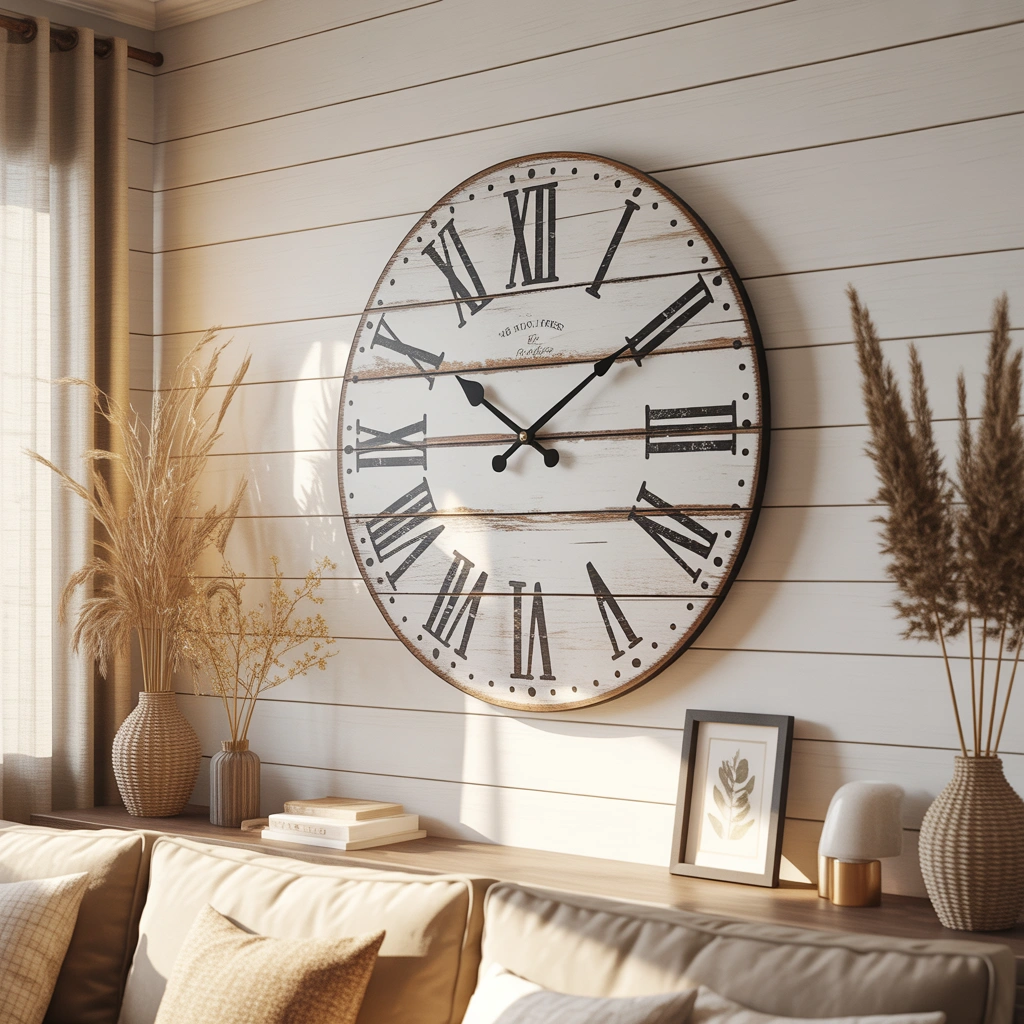
If you love cozy interiors, a farmhouse-style clock can bring warmth and personality to your living room.
Traditional farmhouse clocks are usually larger and often feature wooden frames, distressed finishes, whitewashed surfaces, or bold Roman numerals.
Place one above a rustic wooden console and add a few simple accessories underneath.
For example, you could style the area with:
- Woven baskets
- Ceramic pitchers
- Green branches
- Lanterns
- Wooden candlesticks
- Neutral books
I would keep the color palette soft and natural—think cream, beige, brown, muted green, white, and black.
One mistake I would avoid is using too many decorative signs or overly rustic accessories around the clock. Modern farmhouse style looks best when traditional textures are balanced with clean, uncluttered styling.
13. Use a Clock on an Accent Wall
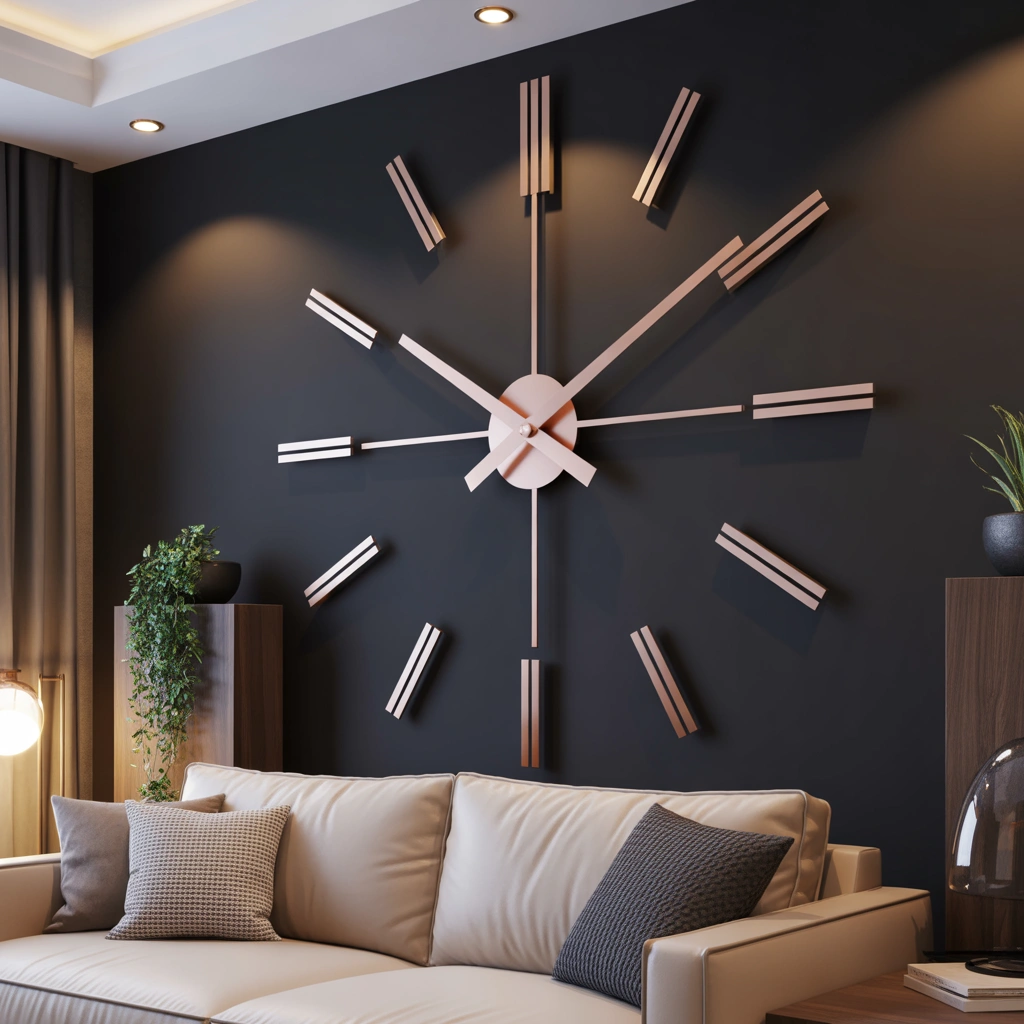
An accent wall and a decorative wall clock can create a powerful combination.
If you have painted one living room wall in a darker or contrasting color, hanging a clock there can make it stand out even more.
Imagine a brass clock against a deep green wall, a black clock against warm beige, or a light wooden clock against charcoal gray.
Wall paneling is another beautiful option.
A round wall clock placed against vertical wood slats, board-and-batten molding, or decorative paneling can look incredibly polished.
Wallpaper can work too, although I recommend choosing a simple clock when the wallpaper already has a strong pattern.
The goal is balance.
If the wall itself is visually dramatic, let the clock have a quieter design. If the wall is simple, you have more freedom to choose something bold.
14. Style a Wall Clock Above a Console Table
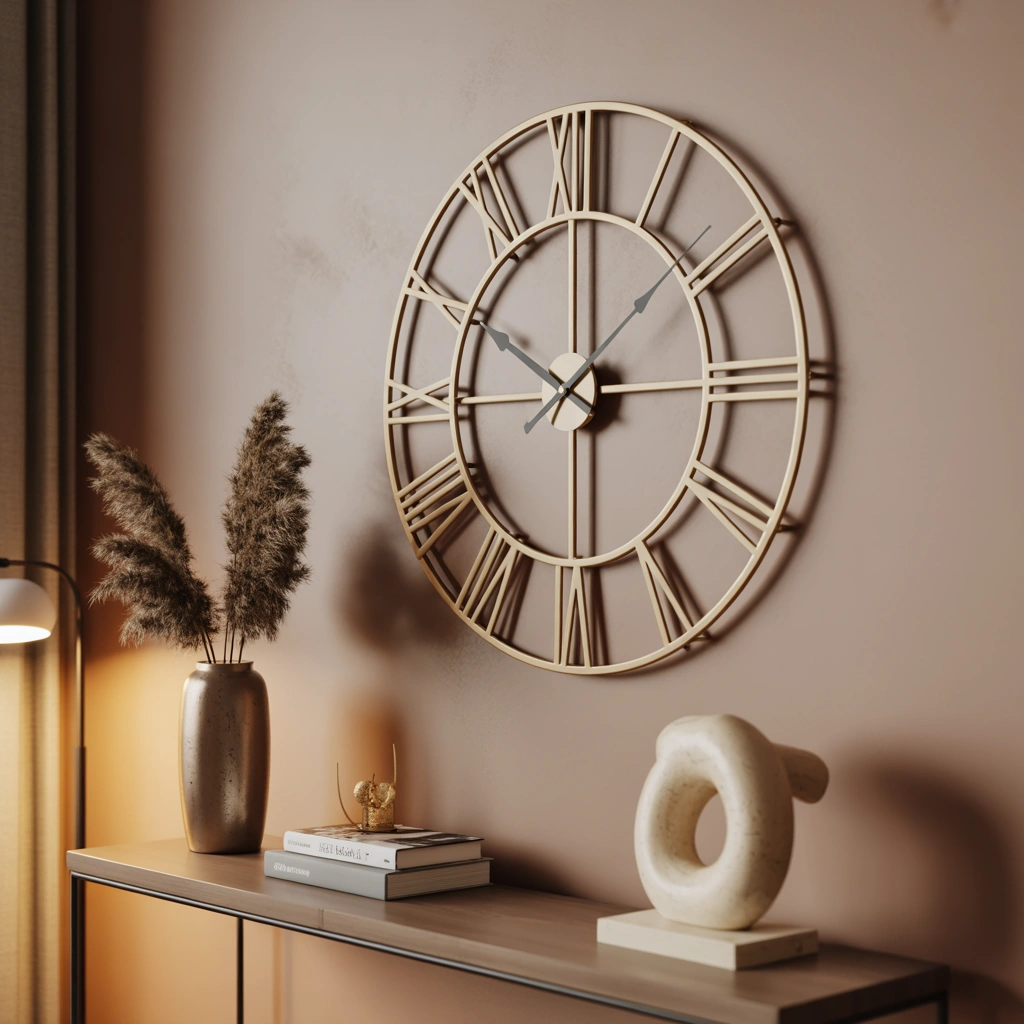
A console table gives you a natural foundation for creating a complete decorative wall.
Place a round or rectangular wall clock above the center of the console, then style the tabletop underneath.
Instead of making both sides identical, I like creating slightly asymmetrical arrangements.
For example, place a tall lamp or vase on one side and a stack of books with a smaller decorative object on the other.
The clock visually connects everything.
You can also add a small basket, tray, candle, plant, or framed photograph.
If your living room is small, a narrow console combined with a wall clock provides decoration without taking up much floor space.
This arrangement is especially useful on the wall behind a sofa, near the living room entrance, or in an empty corner that needs more purpose.
15. Create a Unique Clock Feature Wall
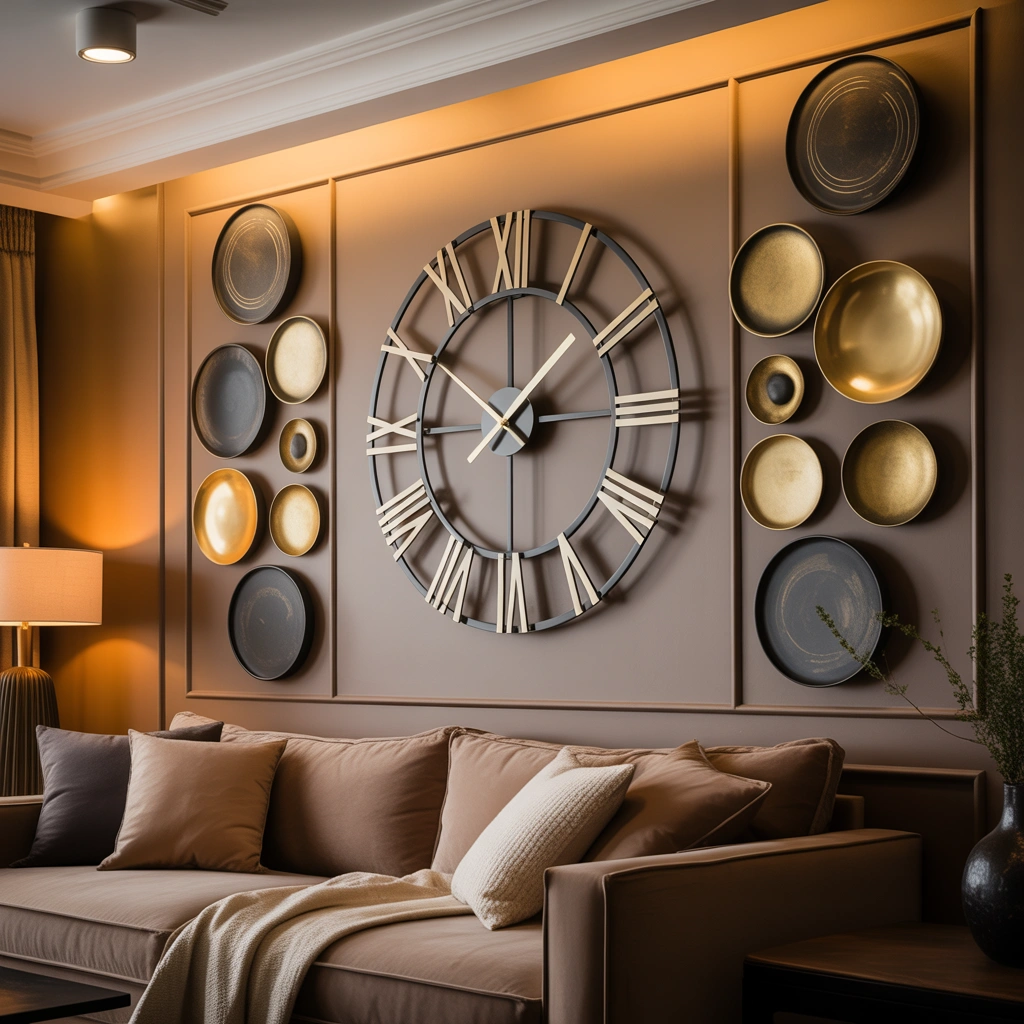
If you want your living room to feel completely different, consider turning the clock itself into an architectural feature.
Instead of buying a conventional framed clock, use an oversized DIY or frameless clock where the numbers and hands are installed directly onto the wall.
This creates a dramatic contemporary effect.
The design can take up a large section of the wall, making it almost feel like functional wall art.
Another option is surrounding a central clock with decorative molding, wood panels, mirrors, geometric details, or lighting.
However, I would keep the rest of the living room relatively simple when creating such a strong feature.
One statement wall is usually enough.
A unique clock installation works particularly well in modern living rooms with high ceilings or large empty walls where standard artwork might feel too small.
How to Choose the Right Wall Clock for Your Living Room
Finding a beautiful clock is easy. Choosing one that actually works with your room takes a little more thought.
Here are the main things I consider before buying one.
Consider the Size of Your Wall
Scale is probably the most important factor.
A small clock on a huge wall can look forgotten, while an enormous clock squeezed into a narrow corner can make the room feel uncomfortable.
For large empty walls, oversized clocks are usually appropriate.
For smaller areas or gallery walls, choose medium or smaller designs.
Always look at the wall and nearby furniture together rather than judging the clock by itself.
Match the Clock to Your Interior Style
Your wall clock does not have to perfectly match every item in the room, but it should feel connected to the overall style.
For example:
- Modern living room: minimalist black, white, metallic, or frameless clocks
- Farmhouse living room: distressed wood or oversized Roman numeral clocks
- Luxury interior: gold, brass, marble-effect, or sculptural clocks
- Scandinavian space: light wood and simple designs
- Industrial interior: black metal or exposed-mechanism clocks
- Traditional living room: wooden or antique-inspired designs
Thinking about your existing furniture makes narrowing down the options much easier.
Pay Attention to Color
You can either coordinate the clock with your room or use it to introduce contrast.
A black clock against a white wall creates a bold graphic effect.
A wooden clock against cream or beige feels softer.
Gold against dark walls creates a luxurious contrast.
If you already have an accent color in your living room, repeating it subtly through the clock can also make the entire room feel more cohesive.
Think About the Clock Mechanism
Since living rooms are places where we relax, I strongly prefer silent or non-ticking clocks.
A loud ticking sound might not bother you initially, but it can become noticeable when reading, working, or watching television.
Look for clocks described as having a silent sweep, quiet mechanism, or non-ticking movement.
It is a small practical detail that can make a big difference.
Where Should a Wall Clock Be Placed in a Living Room?
There is no single perfect position, but some locations naturally work better than others.
Popular placements include:
- Above the sofa
- Above the fireplace
- Over a console table
- Beside floating shelves
- On an accent wall
- Near the living room entrance
- Within a gallery wall
- Above a sideboard or storage cabinet
The clock should generally be easy to see without forcing you to constantly look upward.
For decorative arrangements, think about visual balance rather than following an exact height measurement.
If a clock is being placed above furniture, leave enough space between the two so they feel connected without appearing crowded.
How to Decorate Around a Wall Clock
One of the questions people often have is whether they should put other decorations around their clock.
My answer is: it depends on the clock.
An oversized statement clock usually needs very little decoration.
A smaller or simpler clock can benefit from surrounding elements.
You might use framed pictures, mirrors, shelves, plants, sconces, baskets, decorative plates, or artwork.
Try to vary the shapes.
Since most clocks are round, rectangular picture frames or shelves can create nice visual contrast.
You can also repeat one material or color to keep everything connected.
For example, a black metal clock with black picture frames will instantly make a mixed gallery wall feel more intentional.
Common Wall Clock Decorating Mistakes to Avoid
Even beautiful clocks can look awkward if they are placed incorrectly.
One common mistake is choosing something too small for the wall. When decorating a large space, do not be afraid of scale.
Another mistake is hanging the clock too high. It should feel connected to the furniture or decorative arrangement below it rather than floating close to the ceiling.
Overdecorating is another problem.
You do not need artwork, shelves, plants, mirrors, signs, and decorative objects surrounding the same clock. Choose a few elements and allow negative space to become part of the design.
Finally, remember functionality. A decorative wall clock should still be easy to read and preferably quiet enough for a relaxing living environment.
Frequently Asked Questions About Wall Clock Decor for Living Room
Are wall clocks still fashionable for living rooms?
Yes. Wall clocks remain a practical and stylish living room accessory, although contemporary designs look very different from traditional clocks. Oversized metal clocks, minimalist wooden clocks, frameless designs, and sculptural clocks can all work beautifully in modern interiors.
The secret is choosing a clock that complements your interior style instead of treating it purely as a functional object.
What size wall clock is best for a living room?
The ideal size depends on the wall.
Medium clocks work well for smaller spaces or gallery walls, while oversized clocks are better for large blank walls and areas above wide furniture.
Before buying, measure the available wall area and consider the width of the furniture below it.
What color wall clock looks best?
Black is one of the most versatile choices because it provides contrast and works with many decorating styles.
Natural wood creates warmth, while gold or brass adds elegance. White or neutral clocks are ideal when you want something subtle.
The best color ultimately depends on the colors already present in your living room.
Should a wall clock match the furniture?
Not exactly.
Matching every material perfectly can make a room look overly coordinated.
Instead, choose a clock that shares one or two visual characteristics with the room, such as a similar wood tone, metallic finish, accent color, or design style.
This allows the space to feel connected without becoming repetitive.
Can you place pictures around a wall clock?
Absolutely.
Pictures and clocks work very well together when creating a gallery wall.
Use a mixture of frame sizes while maintaining fairly consistent spacing. The clock can either become the center of the arrangement or sit slightly off-center for a more relaxed look.
Final Thoughts
Decorating with wall clocks is one of those simple design ideas that can make a surprisingly big difference.
Whether you choose an enormous metal clock above your sofa, a wooden design surrounded by greenery, a luxurious gold clock against a dark accent wall, or a vintage piece above the fireplace, the right clock can become much more than a way to check the time.
For me, the most successful wall clock decor living room ideas are the ones that feel connected to the rest of the space without looking overly planned. I like repeating a material, color, or shape from somewhere else in the room and then giving the clock enough empty space to stand out.
You also do not need to fill every wall. Sometimes one thoughtfully chosen clock can have more impact than several smaller decorations.
Start by looking at the empty areas in your living room. Consider the wall above your sofa, fireplace, console, or sideboard. Then think about whether your space needs warmth, contrast, texture, elegance, or simply a stronger focal point.
Once you know what the room is missing, choosing the right wall clock becomes much easier.
With these 15 wall clock decor ideas for living room spaces, you can turn an ordinary blank wall into something functional, stylish, and completely personal.
