
The living room is one of those spaces that tells a story about the people who live in a home. It is where I imagine enjoying a quiet morning with a cup of coffee, welcoming friends for an evening together, or relaxing after a long day. Because this room serves so many purposes, choosing the right furniture is about much more than appearance. It is about creating a space that feels comfortable, welcoming, practical, and genuinely personal.
When exploring living room furniture ideas, I always recommend starting with the way you want to use the room. A family that enjoys movie nights might need a large sectional sofa and plenty of hidden storage, while someone living in a compact apartment might benefit more from a small loveseat, a nesting coffee table, and a multifunctional console. The best furniture choices reflect your lifestyle rather than simply following the latest interior design trend.
Fortunately, creating an attractive living room does not require purchasing every piece of furniture at once. Sometimes, replacing an oversized coffee table, adding a comfortable accent chair, or introducing a beautifully designed sideboard can make a remarkable difference.
In this guide, I am sharing 15 living room furniture ideas that combine style, comfort, functionality, and visual appeal. Whether you prefer contemporary interiors, warm traditional spaces, minimalist furniture, or a relaxed modern farmhouse aesthetic, these ideas can help you design a living room that feels thoughtfully put together.
1. Choose a Comfortable Sofa as the Centerpiece
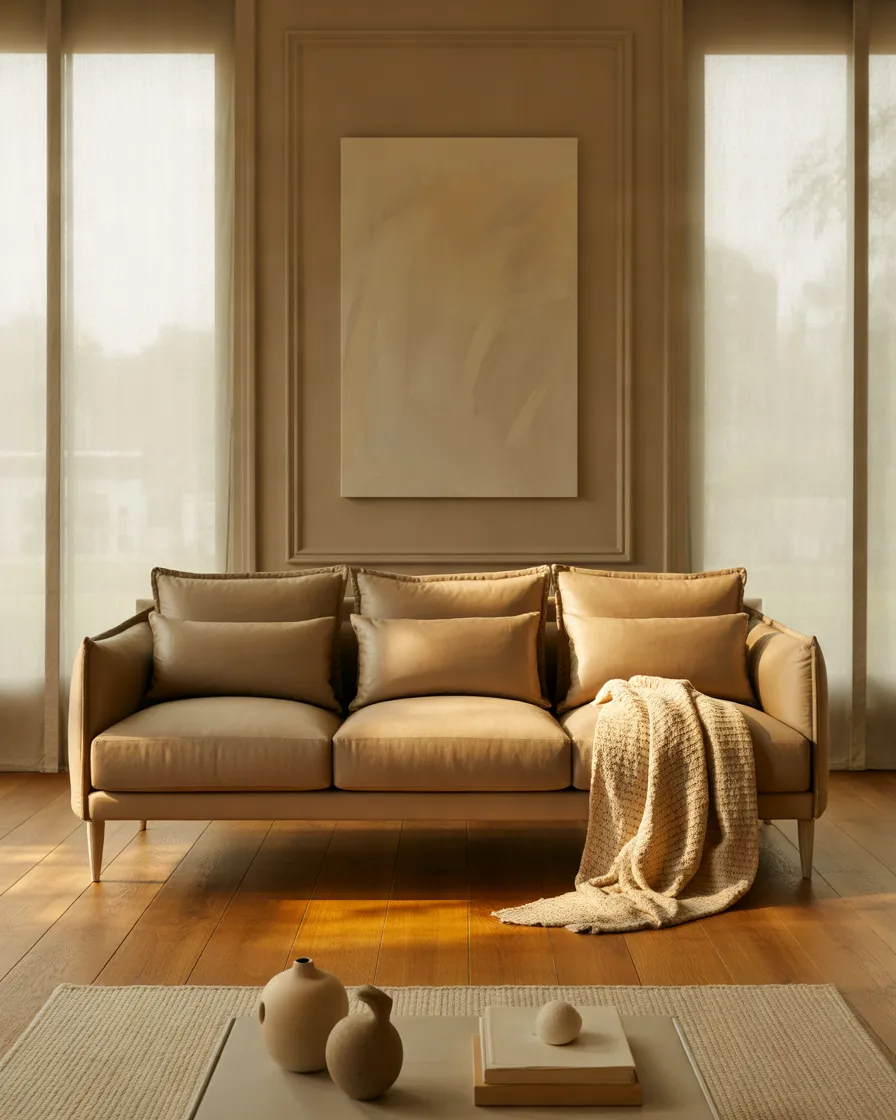
If there is one piece of furniture I would prioritize in almost any living room, it is the sofa. The sofa usually occupies a significant amount of visual space and influences how the rest of the room is arranged. A well-chosen sofa can make the entire interior feel coordinated, while an unsuitable one can leave the room looking crowded or unfinished.
For a timeless look, consider a sofa with clean lines, supportive cushions, and a neutral fabric such as warm beige, soft gray, ivory, or taupe. These shades work particularly well because they can complement different wall colors, flooring materials, and decorative accessories. You can introduce stronger colors through cushions, blankets, artwork, and accent furniture whenever you want to refresh the room.
The sofa’s proportions matter just as much as its color. In a spacious living room, a generous three-seater or deep contemporary sofa can create an inviting gathering area. In a smaller room, a streamlined two-seater with raised legs can make the floor appear more visible, helping the space feel less cramped.
Before buying, measure the available wall space, doorways, and walking routes. Pay attention to seat depth, cushion firmness, and upholstery durability, especially if children or pets regularly use the room.
My styling tip: Position the sofa where it creates a natural focal point, such as facing a fireplace, a media unit, or a large window with an attractive view.
2. Add a Sectional Sofa for Family-Friendly Comfort
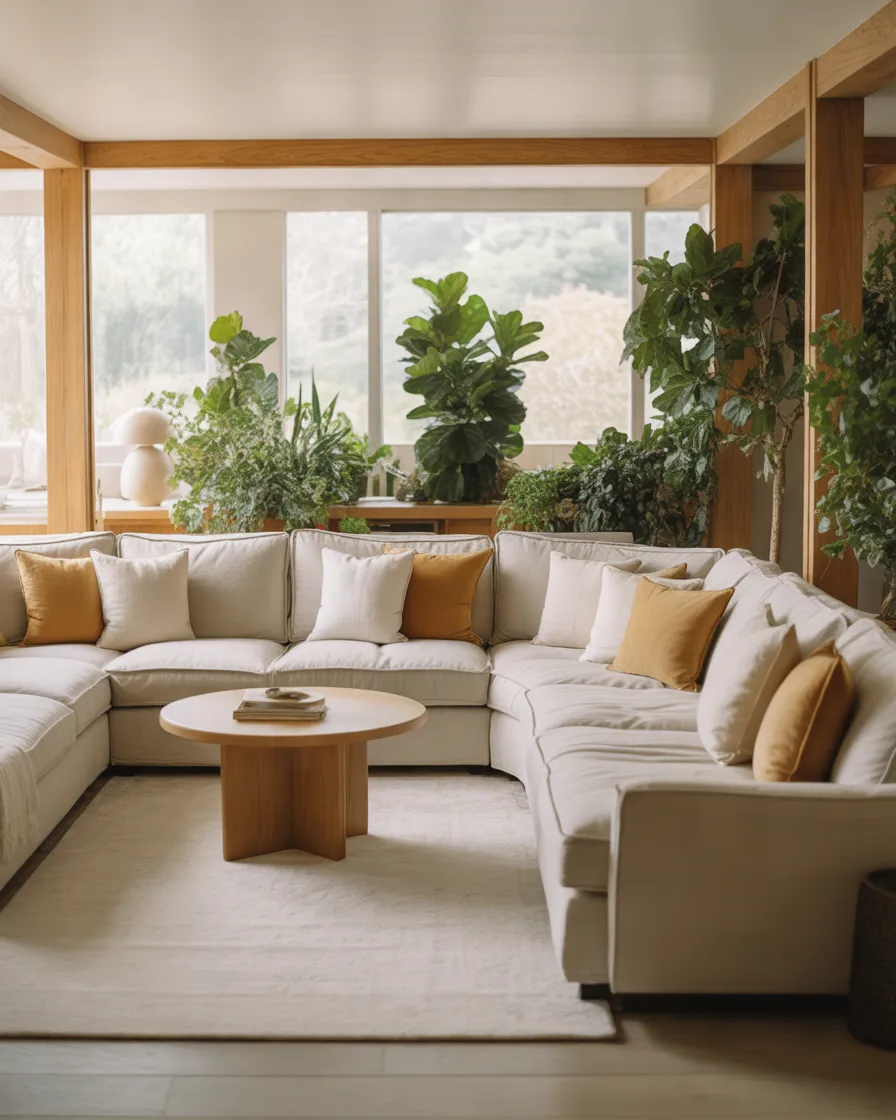
A sectional sofa is one of the most practical living room furniture ideas for households that need generous seating without filling the room with several separate couches. Its L-shaped or U-shaped configuration creates a comfortable gathering area and can help define the living room in an open-plan home.
I particularly like the flexibility of an L-shaped sectional. It can fit neatly into a corner, leaving the center of the room available for a coffee table or a large area rug. In an open-concept layout, a sectional can also separate the living area from the dining space without introducing a physical partition.
When choosing a sectional, consider whether the chaise should extend to the left or right. This decision should depend on the room’s entrance, windows, and existing furniture rather than appearance alone. Some modular designs allow individual sections to be rearranged, which is useful if you move frequently or enjoy changing your layout.
For upholstery, performance fabric can be a sensible choice for busy homes because certain varieties resist stains and are easier to maintain. Look for removable covers or washable cushion cases if easy cleaning is important to you.
Avoid selecting the largest possible sectional simply because it looks luxurious in a showroom. A sofa that leaves enough room to walk around it will make your living room more comfortable in everyday use.
My styling tip: Pair a neutral sectional with two contrasting cushions and a soft area rug to make the seating arrangement feel intentional rather than oversized.
3. Introduce Accent Chairs for Extra Personality
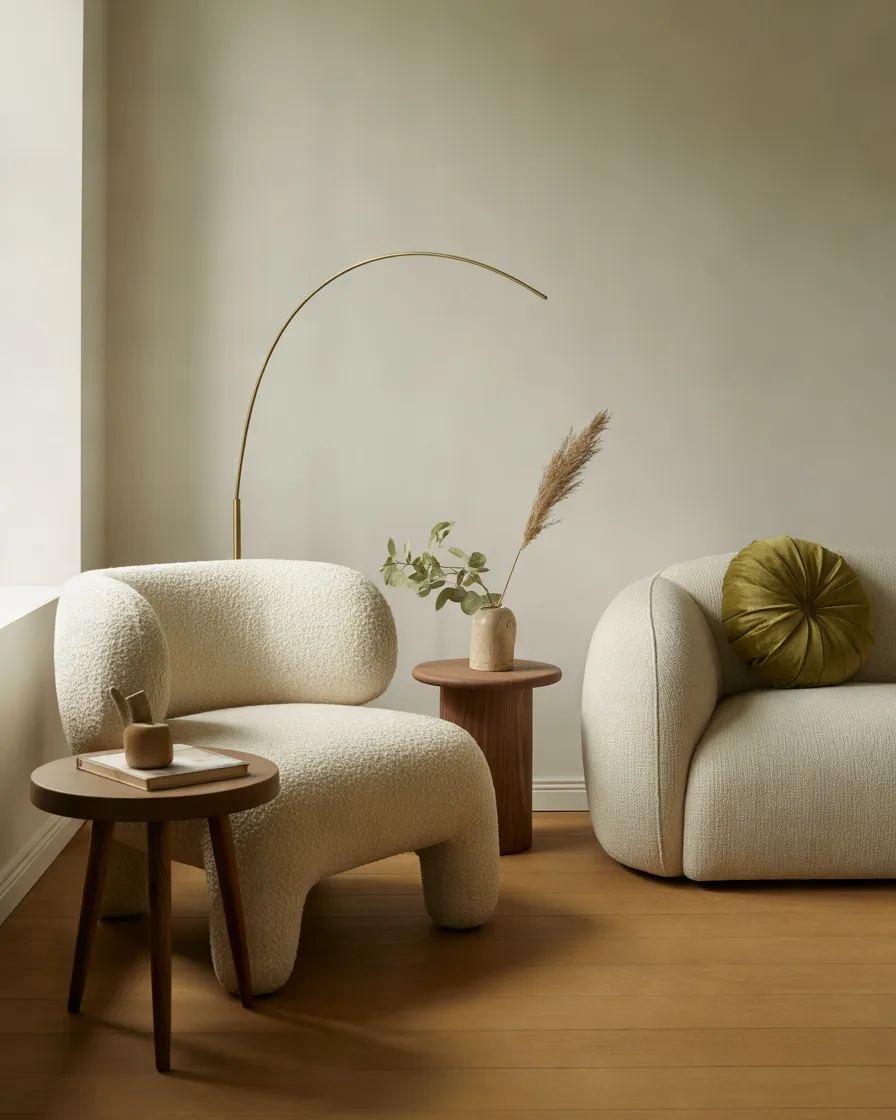
Accent chairs offer a wonderful opportunity to introduce a different shape, color, or material into your living room. While the sofa often establishes the main style, an accent chair can provide the detail that makes the space feel more individual.
For example, a curved bouclé chair can soften a contemporary interior, while a mid-century modern chair with tapered wooden legs can add a subtle vintage influence. A leather accent chair may create a richer, more traditional atmosphere, especially when paired with warm wood furniture and textured fabrics.
Placement is important. Instead of pushing every chair against a wall, consider positioning one beside the sofa at a slight angle. This creates a more conversational arrangement and encourages people to face one another naturally.
If you have limited floor space, select a chair with an open frame, narrow arms, or exposed legs. These details can make the piece feel visually lighter than a bulky upholstered armchair.
Color is another useful design tool. A muted olive, rust, dusty blue, or deep chocolate chair can add contrast without overwhelming a neutral living room. If your room already includes patterned wallpaper or colorful artwork, a simpler chair may provide a better balance.
My styling tip: Place a small side table beside your accent chair and add a reading lamp to create a comfortable corner for reading, relaxing, or enjoying a morning drink.
4. Select a Coffee Table That Balances Style and Function
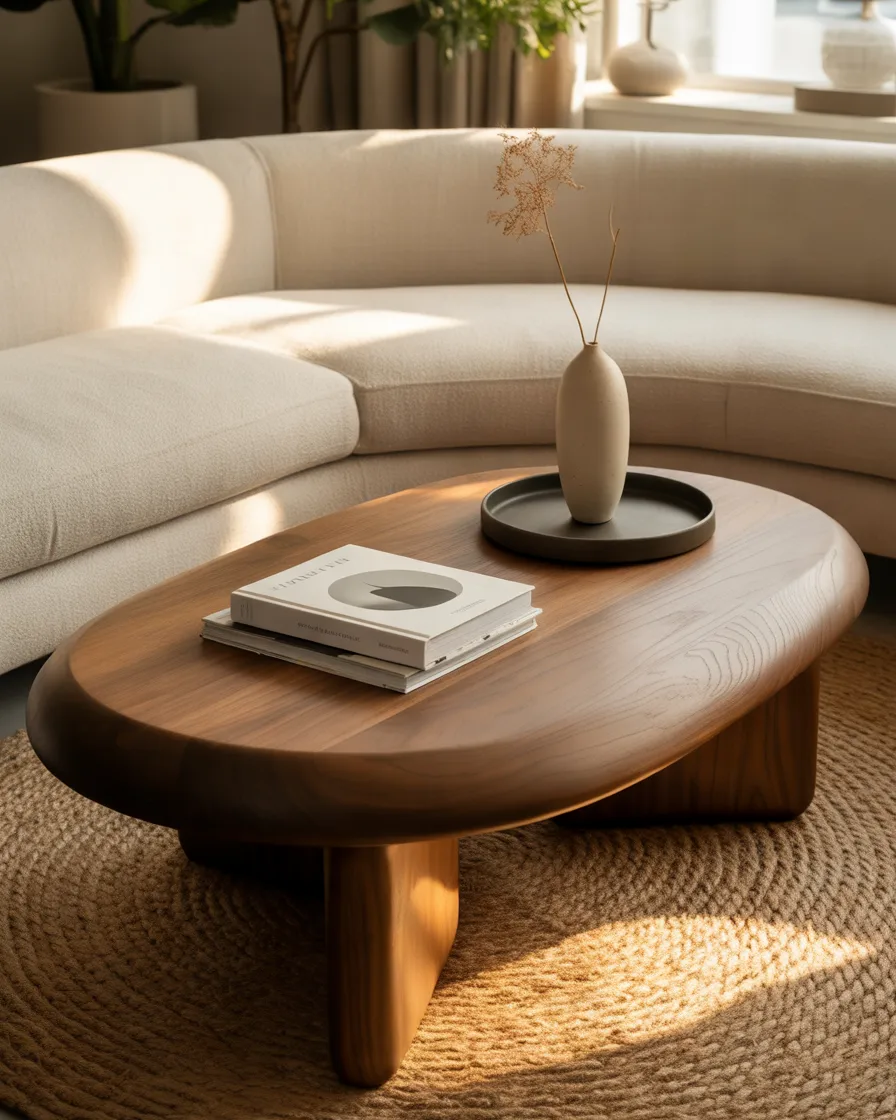
A coffee table can bring the entire seating arrangement together. It provides a convenient surface for drinks, books, decorative objects, and everyday essentials while creating a visual connection between the sofa and surrounding chairs.
The most suitable coffee table depends on your room’s proportions and furniture style. A rectangular wooden table works well with a long sofa, while a round table can soften a room filled with straight lines and angular furniture. Glass tables are useful when you want to maintain an open visual appearance, although they require regular cleaning and may not be ideal for every household.
Material selection can change the mood of the room. Solid wood introduces warmth, marble adds a refined appearance, and metal creates a contemporary industrial accent. Mixed-material tables can offer a balanced combination, such as a walnut top with a black metal frame.
Think about practical details before purchasing. The table should be easy to reach from the sofa, and its height should work comfortably with the seating. Rounded edges may also be preferable in homes with young children.
If you enjoy styling surfaces, keep the arrangement simple. A small tray, one or two books, and a low decorative vase can look attractive without leaving little space for everyday use.
My styling tip: Choose a coffee table that complements the sofa rather than competing with it. If the upholstery is visually busy, a simpler table can create a more harmonious result.
5. Use Nesting Tables to Make Small Spaces More Flexible
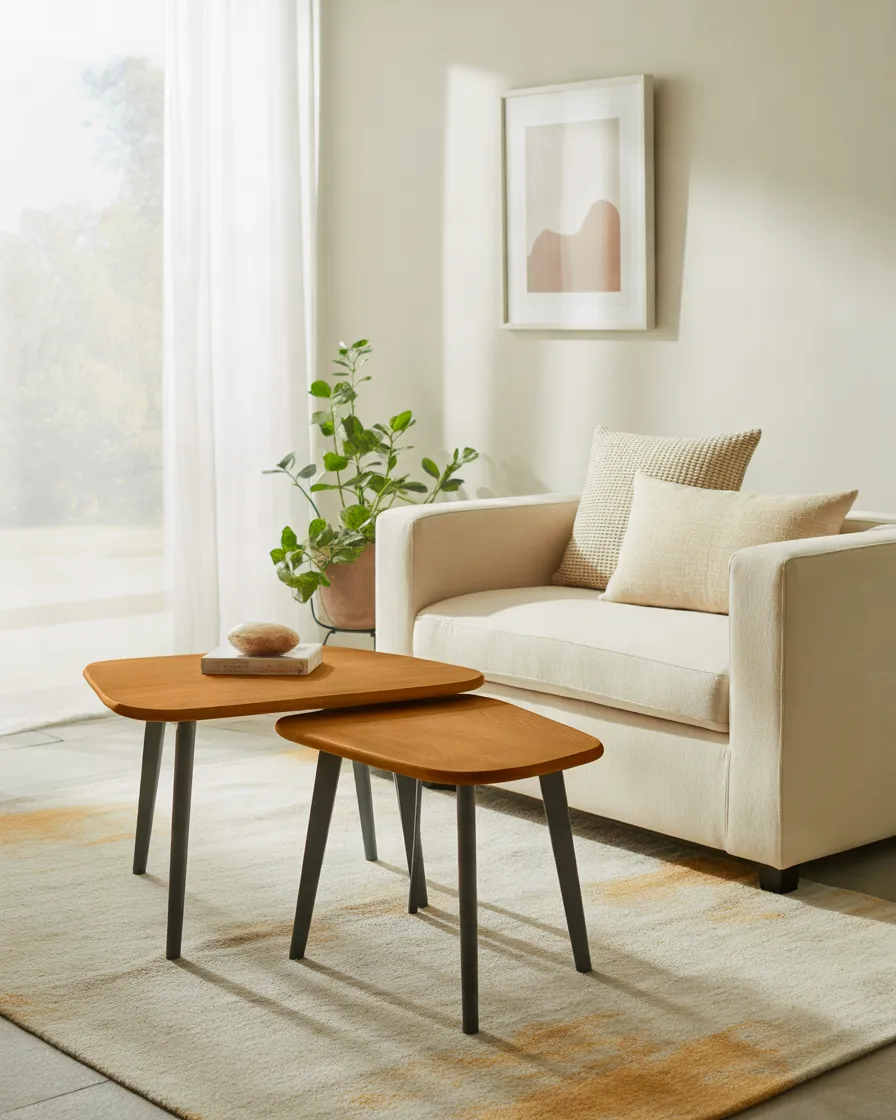
Small living rooms often need furniture that can perform different functions without taking up unnecessary space. Nesting tables are an excellent solution because two or three tables can fit together when they are not needed and spread apart when extra surface space becomes useful.
I find this especially helpful when a living room serves several purposes throughout the day. A compact arrangement can keep the room open during ordinary use, while separate tables provide convenient places for snacks, drinks, or books when guests arrive.
Nesting tables are available in many styles, from Scandinavian-inspired wooden designs to modern metal frames and stone-look surfaces. Choose a set that relates to your existing furniture rather than treating it as an isolated accessory.
For a small apartment, lightweight nesting tables are particularly practical because they are easy to move around. You can place one beside an accent chair, keep another near the sofa, or bring both together for a larger serving surface.
Consider the space between the tables and nearby furniture as well. Even compact furniture can make a room feel crowded if it interrupts the natural walking route.
My styling tip: Choose nesting tables with slightly different heights and a coordinated finish. The layered effect creates visual interest while preserving the flexibility that makes these tables useful.
6. Invest in a Stylish Media Console
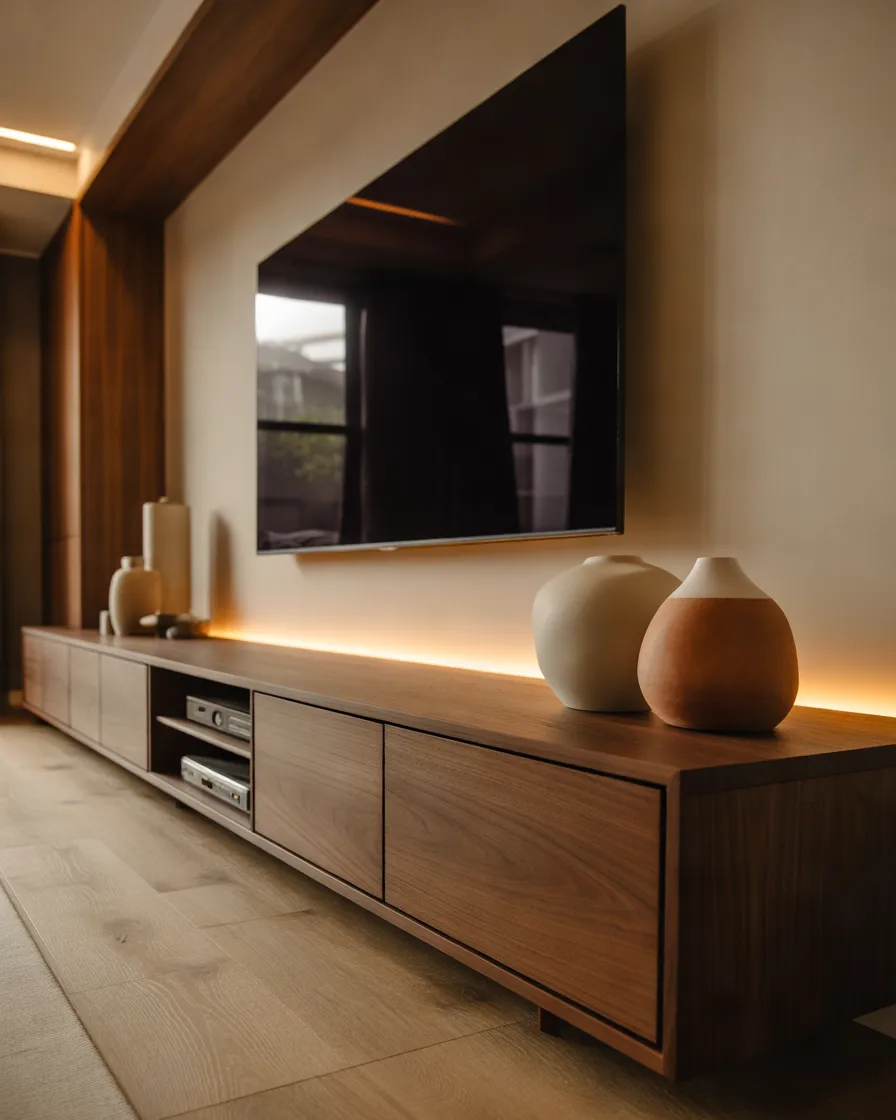
A media console can organize the television area while giving the living room a more polished appearance. Instead of leaving electronic equipment, remotes, and cables scattered around, a thoughtfully designed console provides a central place to keep everything organized.
The right console should suit the width of your television and the overall scale of the room. A long, low-profile unit can create a clean contemporary look, while a wooden cabinet with textured doors may feel more suitable for a traditional or transitional interior.
Storage is worth considering carefully. Closed compartments can conceal gaming equipment, spare cables, DVDs, and other accessories. Open shelves are useful for displaying a few books or decorative objects, but too many exposed items can make the area appear cluttered.
For a minimalist design, consider a floating media console. Because it leaves the floor visible underneath, it can create a lighter visual effect and make cleaning easier. Make sure the wall and mounting system can safely support the unit and its contents.
Cable management also makes a noticeable difference. Look for built-in cable openings and plan how wires will reach power outlets before installing the console.
My styling tip: Balance the television’s dark rectangular shape with a wooden console, a small plant, and one or two carefully selected decorative pieces.
7. Add a Storage Ottoman for Hidden Organization
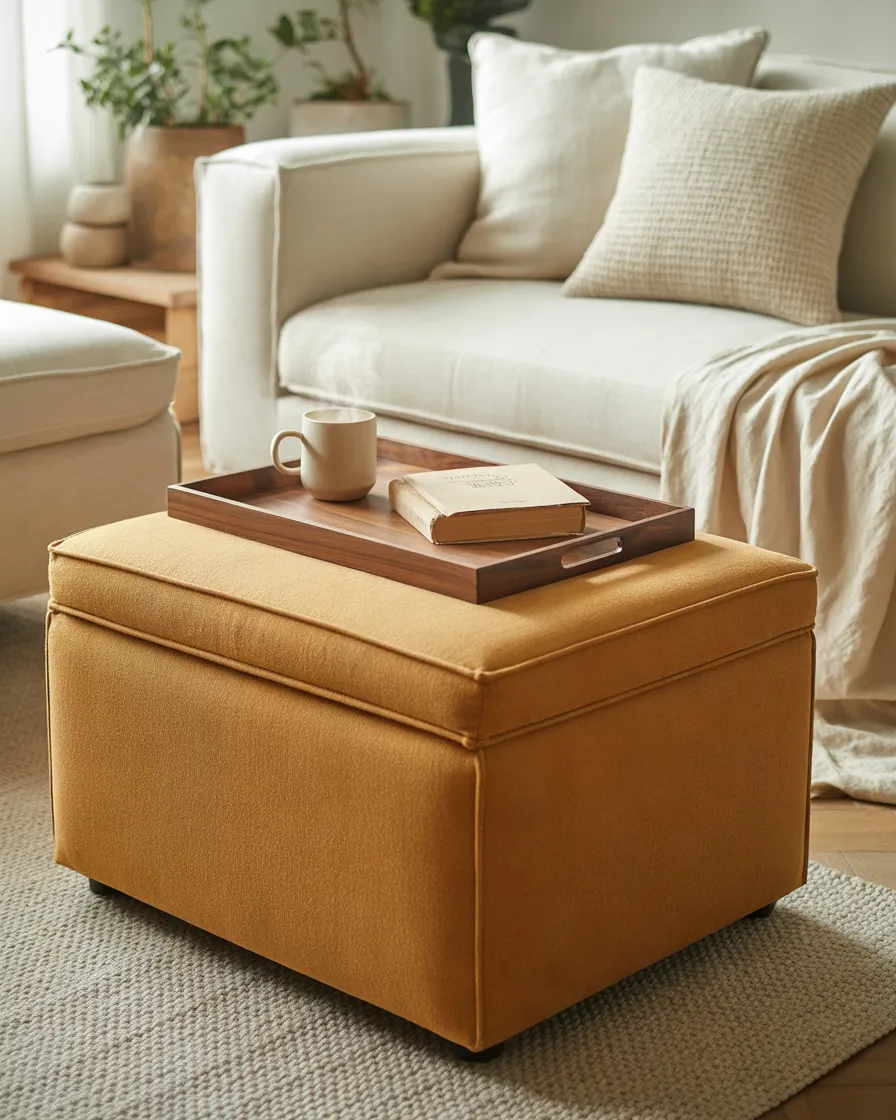
A storage ottoman is a smart furniture choice when you want additional seating, a comfortable footrest, and discreet storage in one piece. It is especially useful in family living rooms where blankets, remote controls, magazines, and children’s toys need a convenient home.
The best part is that an ottoman can work in several different positions. Place it in front of a sofa as a soft alternative to a traditional coffee table, position it beside an armchair as a footrest, or move it closer to the entrance when extra seating is required.
Upholstered ottomans can also introduce texture. A velvet design creates a richer appearance, while linen-look fabric offers a relaxed, casual feel. Leather and faux-leather options may suit contemporary or industrial interiors.
If you plan to use an ottoman as a coffee table, consider placing a sturdy tray on top to provide a stable surface for cups and small objects. Always check the manufacturer’s weight guidance before using it as seating.
For households with children, look for rounded corners and a lid mechanism designed to reduce the risk of trapped fingers. Easy-to-clean upholstery is another practical advantage.
My styling tip: Choose an ottoman in a contrasting but coordinated color, such as muted green, caramel, or soft charcoal, to add personality while keeping the room organized.
8. Bring Warmth With Wooden Side Tables
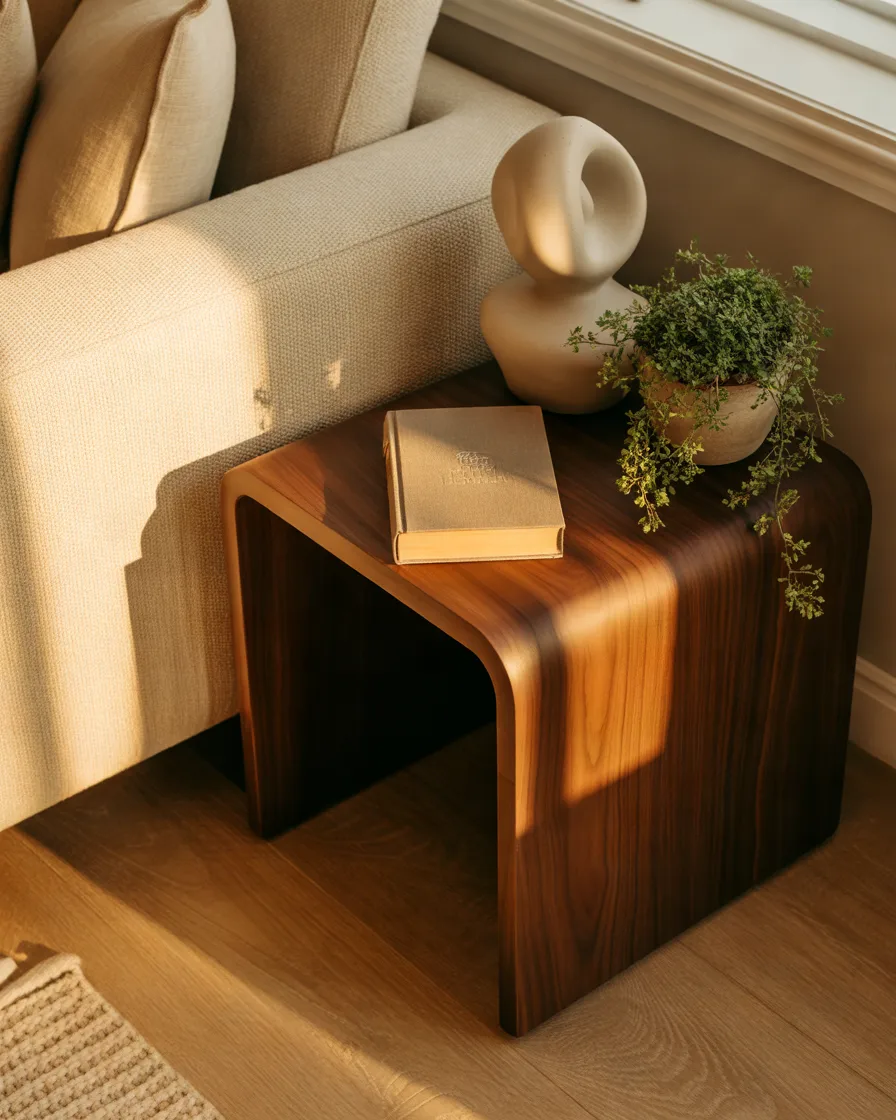
Side tables may be small, but they make a living room more convenient and visually complete. They provide a natural place for lamps, books, glasses, and personal belongings, particularly when positioned beside frequently used seating.
Wooden side tables are especially versatile because they introduce warmth and texture without demanding too much attention. Light oak and ash can complement Scandinavian interiors, while walnut and darker stained woods work beautifully in sophisticated contemporary spaces.
You do not necessarily need matching tables on both sides of the sofa. Using two different designs can make a room feel more relaxed and collected. The key is to connect them through a shared detail, such as a similar finish, color, or shape.
For smaller living rooms, consider a narrow C-shaped side table that slides partially under the sofa. This design keeps essentials within reach without requiring a large footprint.
If you use a table for a lamp, make sure its surface is large and stable enough to support the lamp safely. For everyday practicality, a small drawer or lower shelf can provide extra storage without making the design bulky.
My styling tip: Combine a wooden side table with a ceramic lamp, a small plant, or a favorite book to create a simple arrangement that feels personal rather than overly decorated.
9. Create a Reading Corner With a Lounge Chair
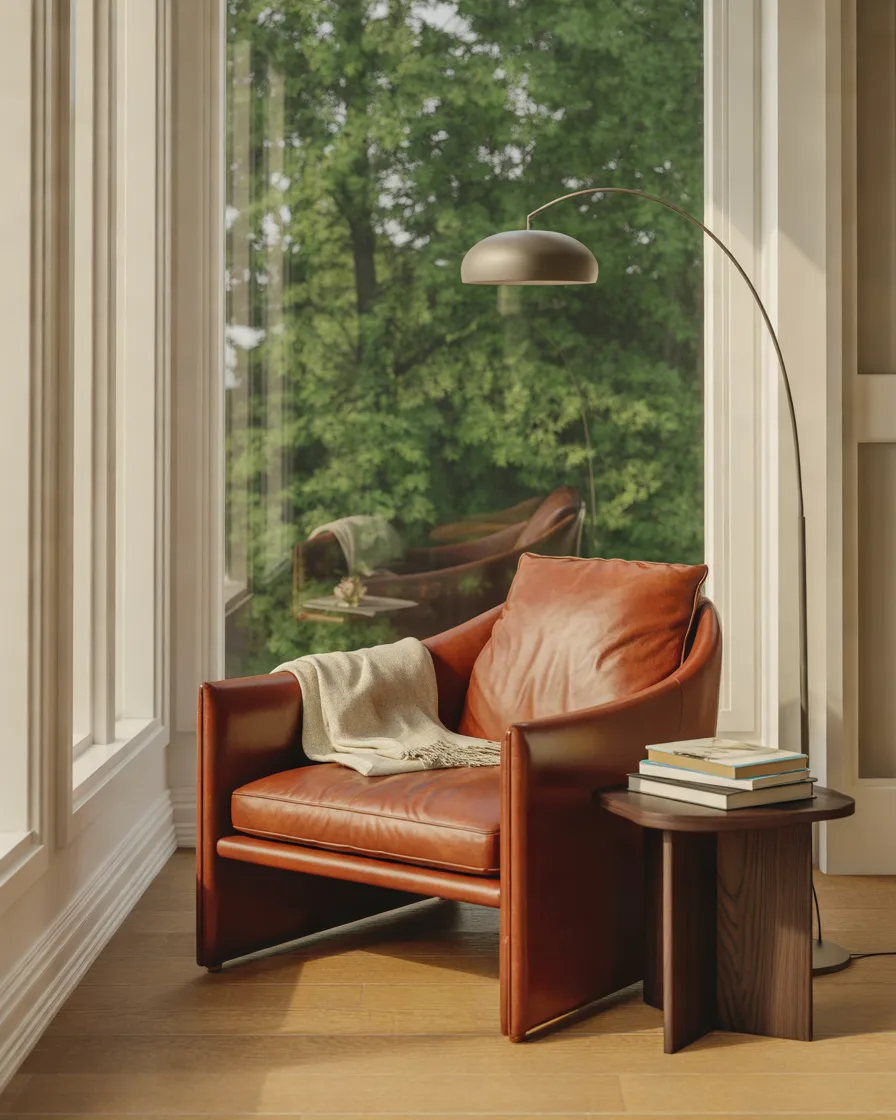
A dedicated reading corner can make a living room feel more thoughtful and multifunctional. Rather than using every available area for the main seating arrangement, you can create a quieter spot for reading, listening to music, or taking a break from screens.
Start with a comfortable lounge chair that supports your preferred sitting position. A gently reclined back, supportive seat cushion, and appropriately sized armrests can make a considerable difference during longer periods of use.
Place the chair near a window if natural light is available. A floor lamp can provide additional illumination in the evening, while a small side table keeps books and drinks close at hand. If space permits, a compact footstool can make the arrangement even more comfortable.
The reading corner should complement the main living room without needing to match every piece of furniture. A chair in muted blue, terracotta, olive, or warm tan can provide an appealing contrast against neutral walls.
Soft furnishings help make the corner feel inviting. A textured cushion and lightweight throw add comfort without making the chair look overly crowded.
My styling tip: Leave enough space around the chair to move comfortably and open nearby curtains. A reading corner should feel like a natural part of the room, not a piece of furniture squeezed into an unused gap.
10. Make a Statement With a Distinctive Bookshelf
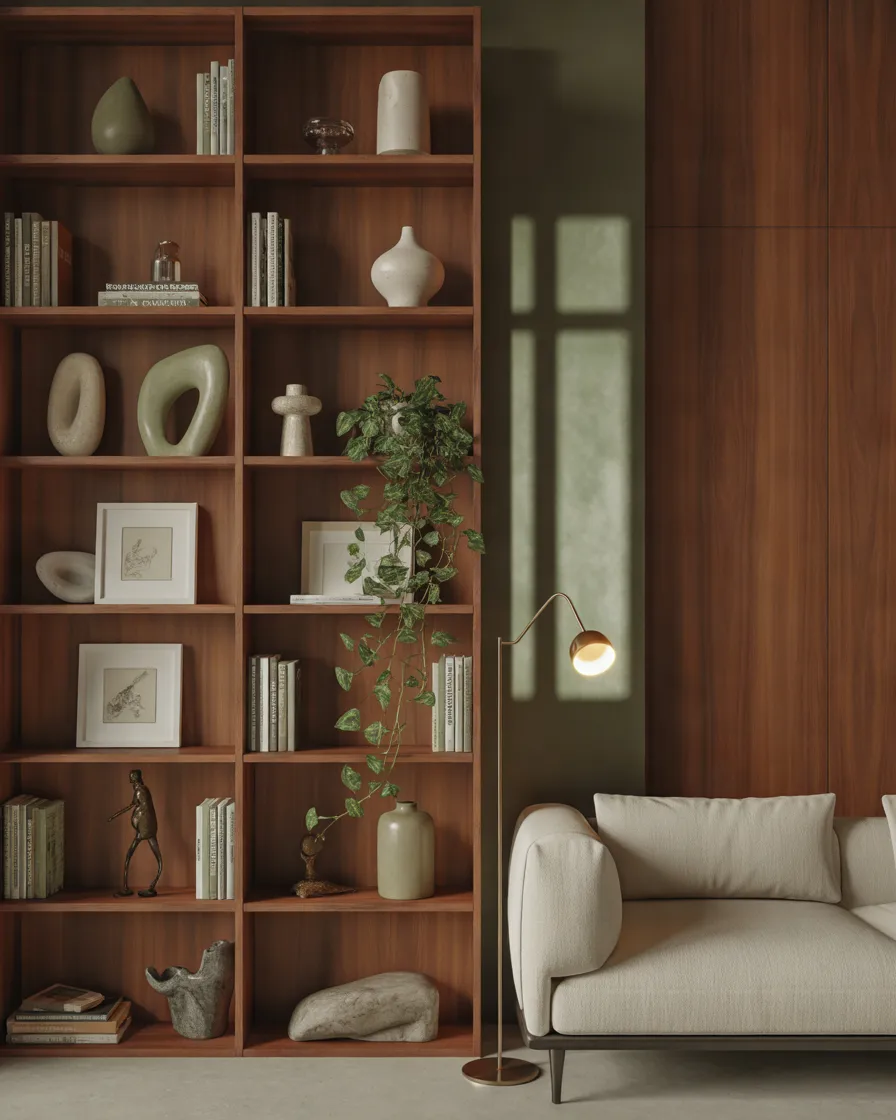
A bookshelf can do much more than store books. It can introduce height, create architectural interest, and display objects that reflect your interests and personality. In a living room, this makes it both a functional storage solution and a decorative feature.
For a contemporary home, a tall open bookshelf with thin metal framing can create a light, understated appearance. A solid wooden bookcase may feel warmer and more traditional, while a built-in shelving unit can provide a seamless look in a room with an unused wall.
When arranging shelves, avoid filling every available space. Combine books with a few framed photographs, small ceramic objects, plants, or meaningful souvenirs. Varying the height and shape of the objects can create a more interesting composition.
Bookshelves can also help divide an open-plan living space. A freestanding unit with an open back allows light to pass through while creating a subtle boundary between seating and dining areas. Ensure that tall units are properly secured against tipping.
If you have a small living room, vertical shelving can make use of wall height without taking up much floor area. Measure the available space carefully, particularly around windows and doors.
My styling tip: Organize some books vertically and others in short horizontal stacks. This small change can make the arrangement feel natural and carefully curated.
11. Choose a Console Table for an Elegant Finishing Touch
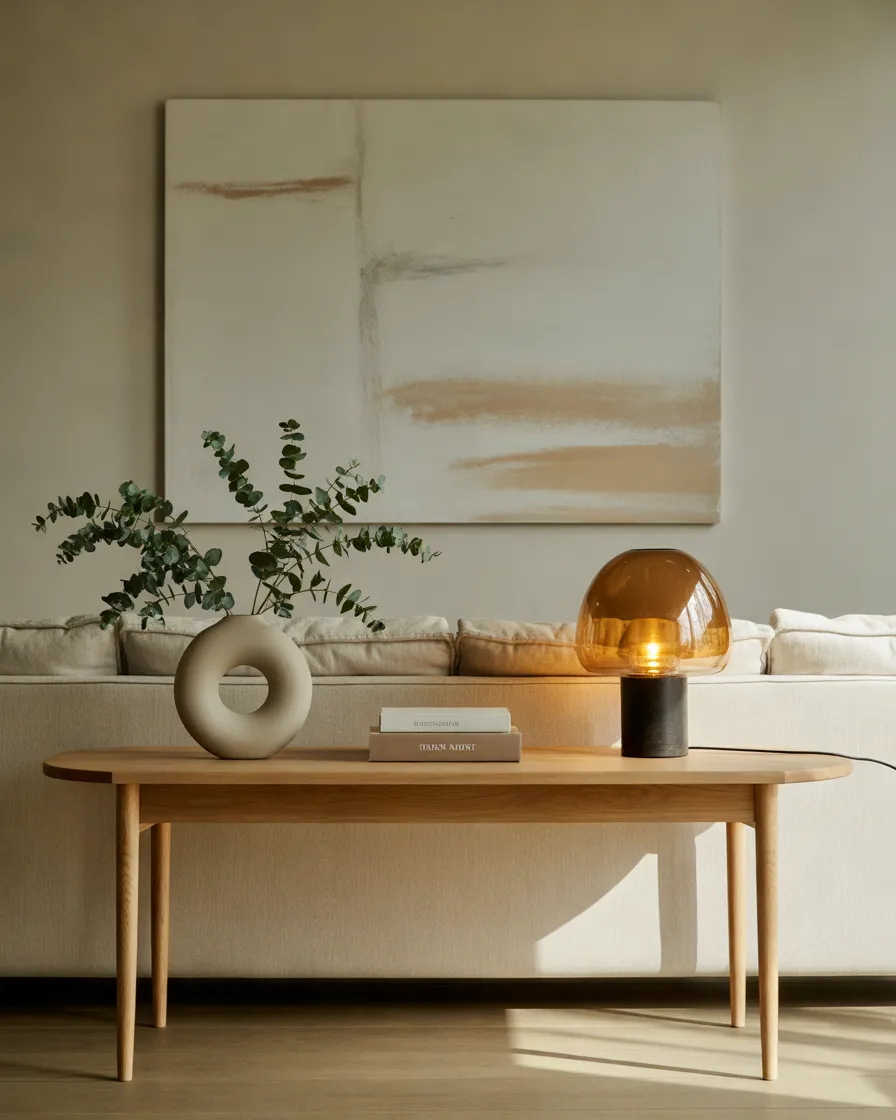
A console table is a versatile piece that can make an empty wall or an entrance area feel more complete. In a living room, it works beautifully behind a sofa, beneath a large mirror, or along a wall that needs a little additional visual interest.
A narrow console is particularly useful when you want extra surface space without obstructing movement. You can use it for a table lamp, a small arrangement of flowers, decorative bowls, or a selection of books.
Material choice can help the console connect different elements of the room. A wood console introduces warmth, a metal-framed design creates a contemporary feel, and a stone-topped option can bring a more refined finish.
For a layered look, hang a mirror or artwork above the table. The scale should feel balanced: a very small picture may look lost above a long console, while an oversized piece can dominate a narrow arrangement.
If the table sits behind the sofa, check that its height and depth do not interfere with the seating or walking routes. A console with drawers can provide useful storage for small household items.
My styling tip: Use an odd number of decorative objects at different heights, such as a lamp, a vase, and a small stack of books, to create an arrangement that feels balanced without appearing too formal.
12. Introduce a Bench for Flexible Seating
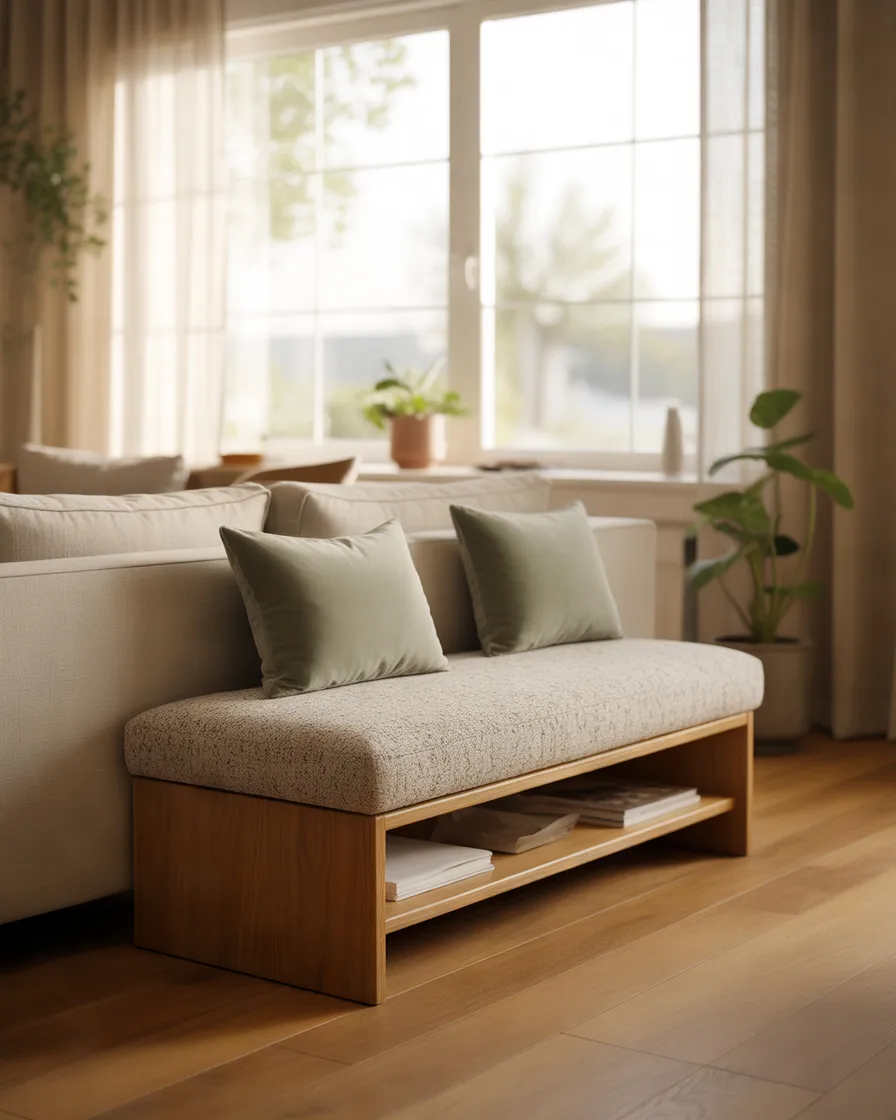
A bench is an often-overlooked addition to a living room, but it can be surprisingly useful when you need flexible seating without introducing another bulky armchair.
An upholstered bench can sit beneath a window, along the edge of a seating area, or against a wall where a traditional sofa would be too large. A wooden bench with a simple silhouette can suit minimalist interiors, while a padded design provides a softer, more comfortable appearance.
Some benches include built-in storage, making them useful for blankets, cushions, or other items that you do not want to leave on display. This is particularly valuable in compact homes where storage space is limited.
A bench can also be useful when guests visit. It provides additional seating that can be moved closer to the main conversation area when needed. Choose a stable design with an appropriate weight capacity and enough depth for comfortable sitting.
For visual balance, consider adding a long cushion or a pair of smaller cushions. Keep the colors coordinated with the sofa and curtains so that the bench feels connected to the rest of the interior.
My styling tip: A bench positioned beneath a large window can create a relaxed architectural feature, especially when paired with soft cushions and a nearby floor plant.
13. Use a Sideboard to Add Storage and Character
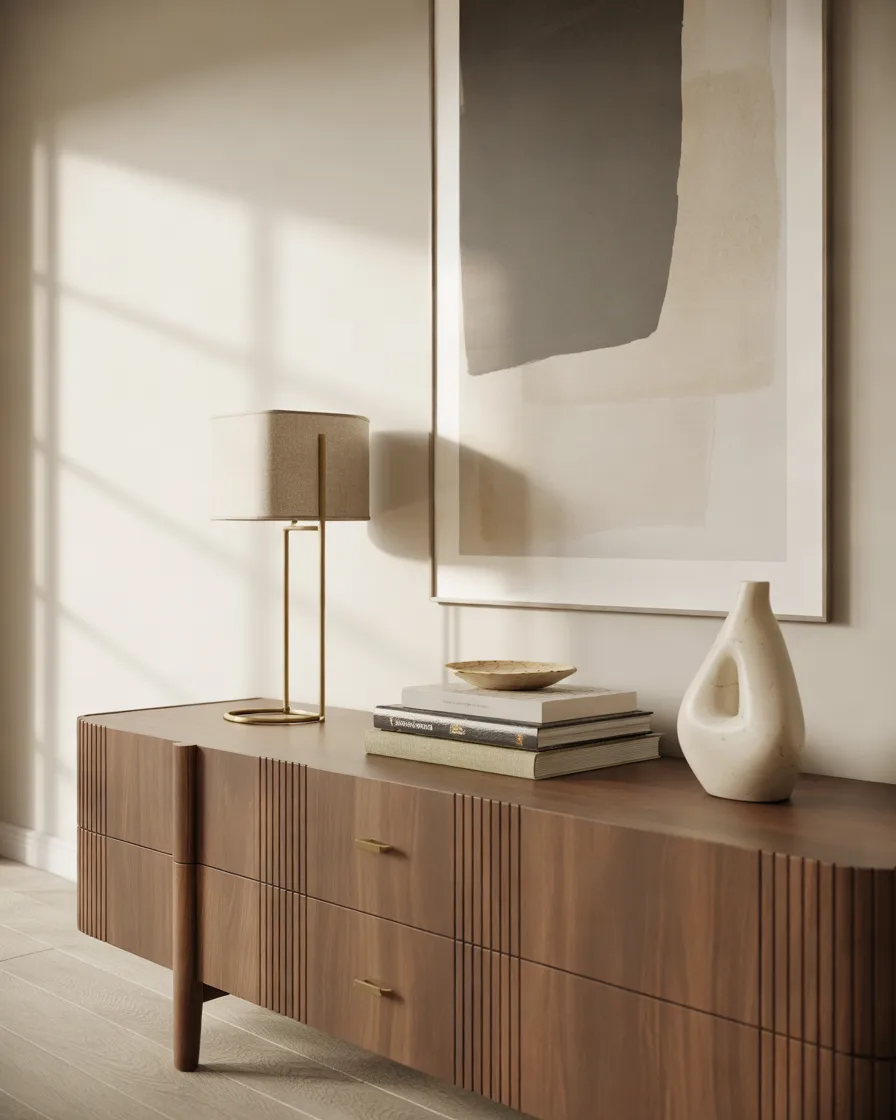
A sideboard is an excellent option when you need concealed storage but want something more decorative than a standard cabinet. It can anchor an empty wall, organize everyday household items, and provide a surface for lighting or carefully selected accessories.
In a contemporary living room, a low sideboard with flat-front doors and a warm wooden finish can create a streamlined appearance. For a more distinctive look, consider fluted cabinet doors, rounded edges, vintage-inspired hardware, or a combination of wood and metal.
Think about what you intend to store before choosing the design. Adjustable shelves are helpful for items of different sizes, while drawers can organize smaller objects. Closed storage is particularly useful for maintaining a tidy appearance in busy family spaces.
The surface above the sideboard offers an opportunity for decoration. A large piece of artwork, a mirror, or a pair of lamps can help create a strong focal point. Avoid displaying too many small objects, as they can make the arrangement feel cluttered.
If you place a sideboard near a dining area within an open-plan room, it can also serve as a convenient station for serving dishes or storing table accessories.
My styling tip: Select a sideboard with a finish that complements the coffee table or flooring. Repeating one or two materials helps create visual continuity throughout the living room.
14. Embrace Multifunctional Furniture for Small Living Rooms
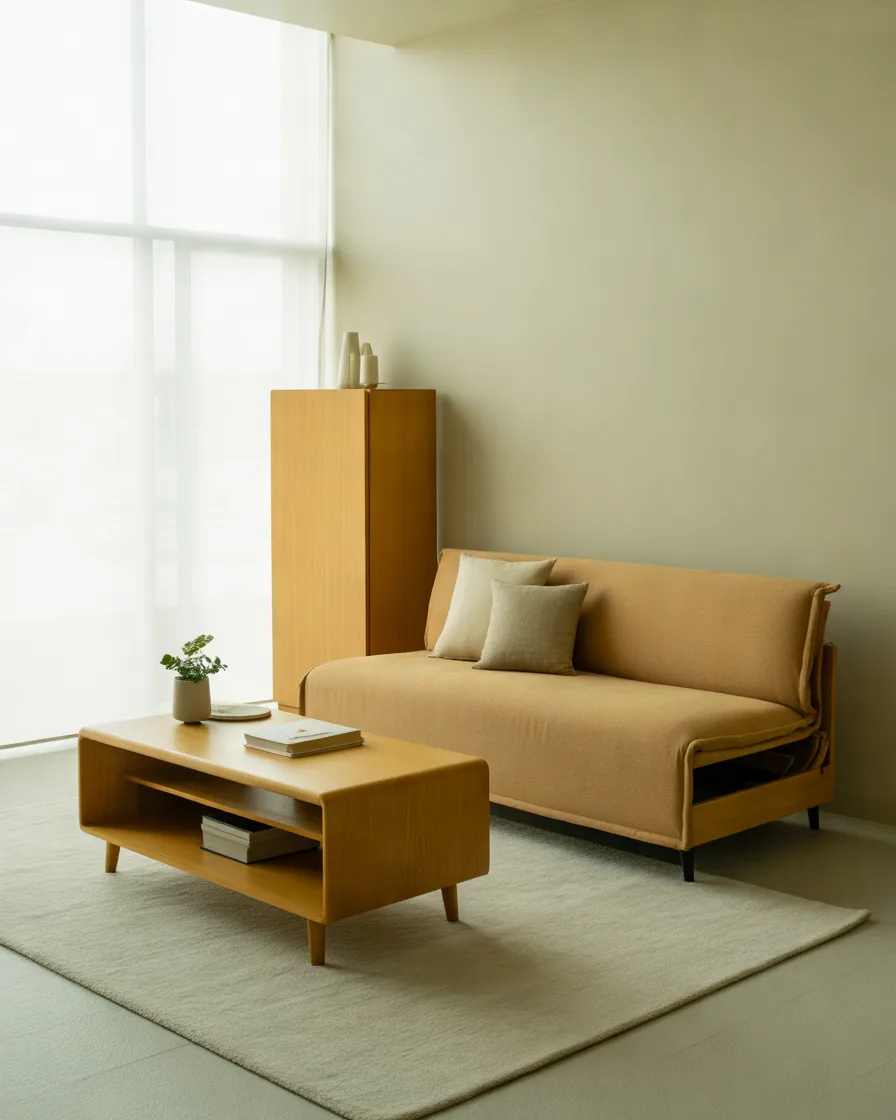
Multifunctional furniture is one of the smartest approaches to designing a small living room. When floor space is limited, individual pieces should ideally serve more than one purpose without compromising comfort or appearance.
A sofa bed is a practical choice if you occasionally host overnight guests but do not have a separate guest room. Modern designs range from compact loveseats to larger sofas with integrated sleeping mechanisms. Check the mattress dimensions and conversion process before making a decision.
An extendable coffee table can provide a compact surface during everyday use and expand when guests arrive. Similarly, an ottoman with internal storage can replace a separate storage box while providing additional seating.
Wall-mounted desks and foldable tables may also be useful when the living room doubles as a workspace. Choose designs that can be folded away or visually integrated into the room when not in use.
The most effective multifunctional furniture still looks intentional. A piece that performs three jobs but is uncomfortable or difficult to operate may create more frustration than convenience.
Before buying, consider how frequently you will use each function. Prioritize features that genuinely support your routine instead of paying extra for mechanisms you rarely need.
My styling tip: Keep the color palette relatively consistent across multifunctional pieces. A cohesive finish helps practical furniture blend into the room rather than making the space feel like a collection of compromises.
15. Mix Furniture Materials for a Layered, Designer Look
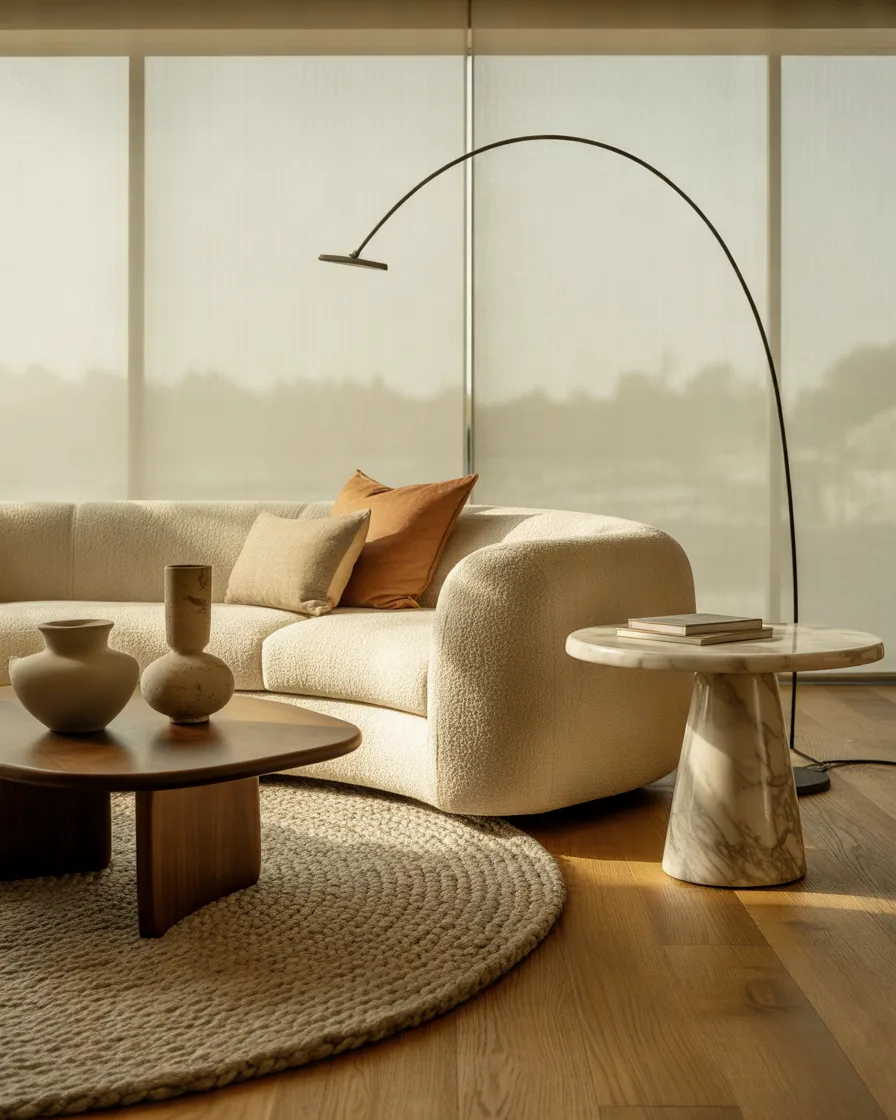
One of the easiest ways to make a living room feel more sophisticated is to combine different furniture materials thoughtfully. When every piece has the same finish, the room can sometimes feel flat. Introducing a mixture of wood, metal, glass, stone, and upholstery adds depth and makes the interior more visually interesting.
For example, a walnut coffee table can look beautiful beside a cream upholstered sofa, while a slim black metal floor lamp adds contrast. A marble-topped side table introduces another texture without requiring a major change to the room’s overall color scheme.
The key is to create balance rather than mixing materials randomly. Choose one or two dominant finishes and introduce other materials in smaller amounts. Natural wood can provide warmth, soft textiles can add comfort, and metal details can introduce definition.
Color also plays an important role. Warm woods often work well with cream, beige, olive, and earthy terracotta. Cooler gray woods can complement crisp white, charcoal, and muted blue. These are flexible guidelines rather than strict rules, so consider the existing flooring, wall color, and natural light.
Texture matters as much as color. A boucle chair, a smooth stone tabletop, a woven rug, and a wooden cabinet can create an appealing combination even when the palette remains neutral.
My styling tip: Repeat selected materials in at least two places. For instance, walnut in the coffee table and media console can connect the room, while black metal in a lamp and chair frame provides a subtle visual thread.
How to Choose the Best Living Room Furniture for Your Space
With so many living room furniture ideas available, it is easy to become overwhelmed by styles, finishes, and layouts. I recommend approaching the process in a practical order so that each purchase supports the overall design.
Start by measuring the room. Record the dimensions of the walls, windows, doorways, and any architectural features that affect furniture placement. Then identify the main activities the room needs to support, such as watching television, entertaining guests, reading, or working.
Next, establish a furniture priority list. The sofa is often the first major purchase, followed by a coffee table, appropriate lighting, and storage. Accent chairs, bookshelves, benches, and decorative side tables can be added once the primary layout works comfortably.
Pay attention to circulation space. Furniture should not block doors or make it difficult to move naturally between seating areas. Where possible, arrange the main seating so that conversation feels easy and the room has a clear focal point.
Consider durability before committing to upholstery and finishes. Households with children, pets, or frequent visitors may benefit from stain-resistant fabrics, sturdy frames, washable covers, and scratch-resistant surfaces. Ask manufacturers about cleaning instructions and material performance rather than relying only on appearance.
Finally, set a realistic budget. It can be worthwhile to invest in frequently used items, such as a supportive sofa, while saving on easily replaceable accessories. You can create a beautiful interior gradually, adding pieces as your needs and preferences become clearer.
Common Living Room Furniture Mistakes to Avoid
Even attractive furniture can make a room feel uncomfortable if it is arranged poorly. One common mistake is buying pieces before measuring the available space. A sofa that looks perfect in a showroom may overwhelm a compact apartment or prevent a door from opening fully.
Another issue is overcrowding the room. Adding more furniture does not automatically make a living room more functional. In many cases, removing an unnecessary chair or replacing a bulky table with a smaller design can improve the overall layout.
Ignoring lighting is another mistake worth avoiding. Furniture can look different under warm lamps, cool overhead lighting, and natural daylight. Consider how the room will appear at different times of day, particularly if it receives limited sunlight.
It is also helpful to avoid choosing every item from the same furniture collection simply for convenience. Matching sets can work, but mixing complementary shapes and finishes often creates a more personal and layered result.
Finally, do not sacrifice comfort for appearance. A beautiful sofa with insufficient back support or an impractical coffee table may become frustrating in daily life. Whenever possible, test seating, check dimensions, and consider maintenance requirements before purchasing.
Final Thoughts on Living Room Furniture Ideas
Creating a beautiful living room begins with understanding how you want the space to feel and function. The right sofa, a practical coffee table, comfortable accent chairs, and thoughtfully selected storage can transform an ordinary room into a welcoming part of your home.
The 15 living room furniture ideas in this guide offer different ways to improve comfort, organization, flexibility, and style. You might choose a sectional sofa for family gatherings, a reading chair for quiet evenings, a storage ottoman for everyday clutter, or a distinctive sideboard to add character. Each piece can contribute something valuable when it suits the room and your lifestyle.
My favorite approach is to begin with a few well-chosen essentials and build the design gradually. Pay attention to proportions, combine materials thoughtfully, and leave enough open space for the room to breathe. You do not need to follow every trend or purchase everything at once.
Ultimately, the most successful living room is not necessarily the most expensive or the most elaborately decorated. It is the one that feels comfortable when you sit down, practical when life gets busy, and personal enough that you enjoy spending time there every day.
