
The wall behind your bed is often the first thing people notice when they enter your bedroom. Because the bed is usually the largest piece of furniture in the room, the wall above and behind it naturally becomes the main focal point. Yet, this important space is often left blank, decorated without a clear plan, or filled with artwork that feels too small for the size of the bed.
I have always felt that decorating the wall behind a bed can completely change the mood of a bedroom. Even a simple addition, such as a large framed print or a painted accent wall, can make the space feel more intentional, comfortable, and personal.
The best part is that you do not need a huge budget or professional interior design experience. Some of the most beautiful behind bed wall decor ideas involve paint, fabric, lighting, shelves, natural textures, or meaningful objects you may already own.
Whether your bedroom style is modern, cozy, minimalist, bohemian, luxurious, rustic, or traditional, the following ideas will help you create a wall that complements your bed and makes the entire room feel complete.
Why Is the Wall Behind the Bed So Important?
The bed is the visual anchor of a bedroom. When the wall behind it is thoughtfully decorated, it creates balance and gives the room a clear design direction.
A well-decorated bed wall can also:
- Make a small bedroom feel more finished
- Add warmth and personality to a plain room
- Create the appearance of a larger or taller space
- Introduce color without replacing furniture
- Make an inexpensive bed frame look more stylish
- Connect the room’s bedding, curtains, rugs, and accessories
- Create a relaxing atmosphere for sleep
Before choosing your decor, look at the width of your bed, the height of the ceiling, the size of the room, and the style of your existing furniture. Your wall decor should feel connected to the bed rather than appearing like a separate, unrelated feature.
1. Create a Statement Wall With Paint
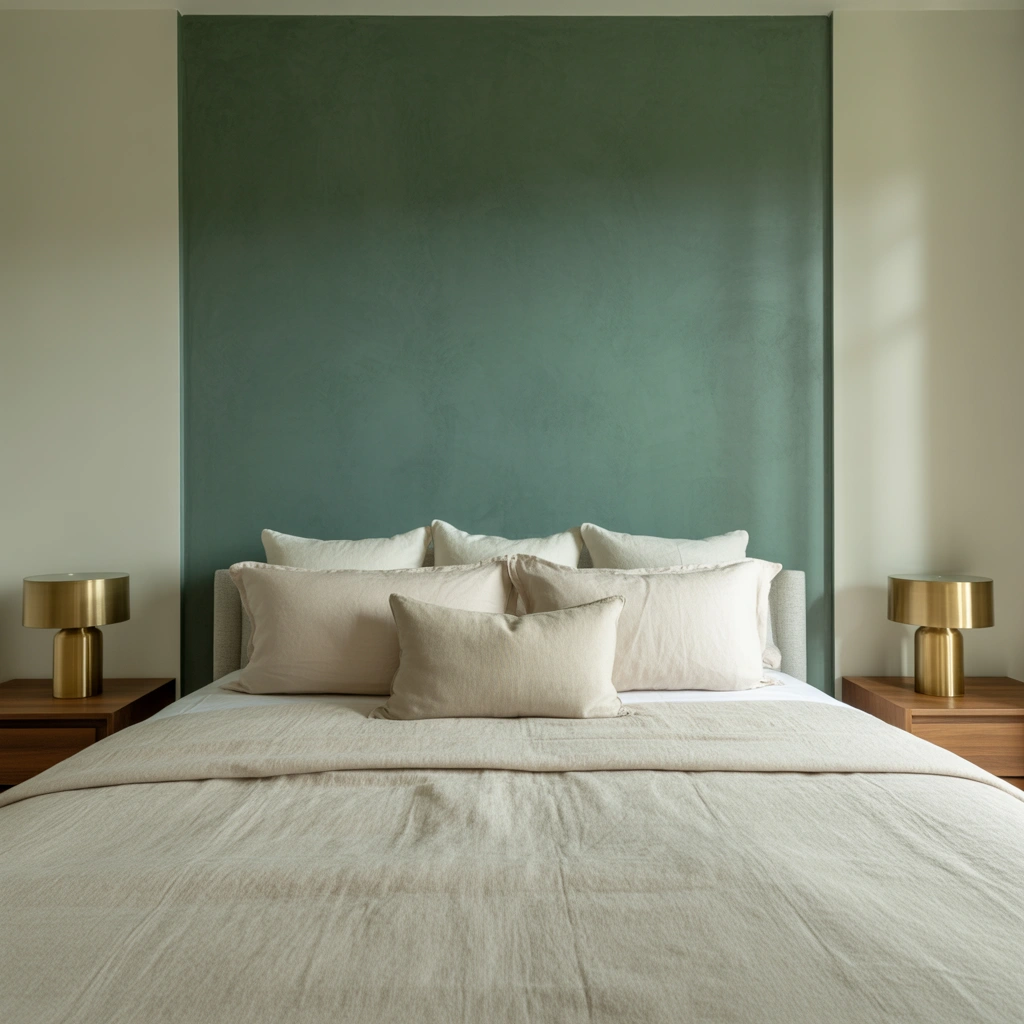
One of the easiest behind bed wall decor ideas is to use paint to create an accent wall. A different wall color immediately draws attention to the bed and gives the room a stronger focal point.
You can paint the entire wall in a deep, dramatic shade such as navy blue, forest green, charcoal, burgundy, or chocolate brown. Dark colors often make a bedroom feel intimate and restful, especially when paired with warm lighting and soft bedding.
For a brighter space, consider dusty blue, muted sage, warm beige, soft terracotta, blush pink, or creamy taupe. These colors add interest without making the room feel heavy.
You do not have to paint the whole wall in one color. Try a painted arch behind the headboard, a wide horizontal stripe, a half-painted wall, or a large rectangular color block that frames the bed.
A painted shape is especially useful in a rental or small bedroom because it creates the look of a headboard without taking up floor space.
When selecting a color, repeat it in one or two smaller details, such as cushions, a throw blanket, artwork, or a bedside lamp. This makes the design feel coordinated rather than random.
2. Install Decorative Wall Paneling
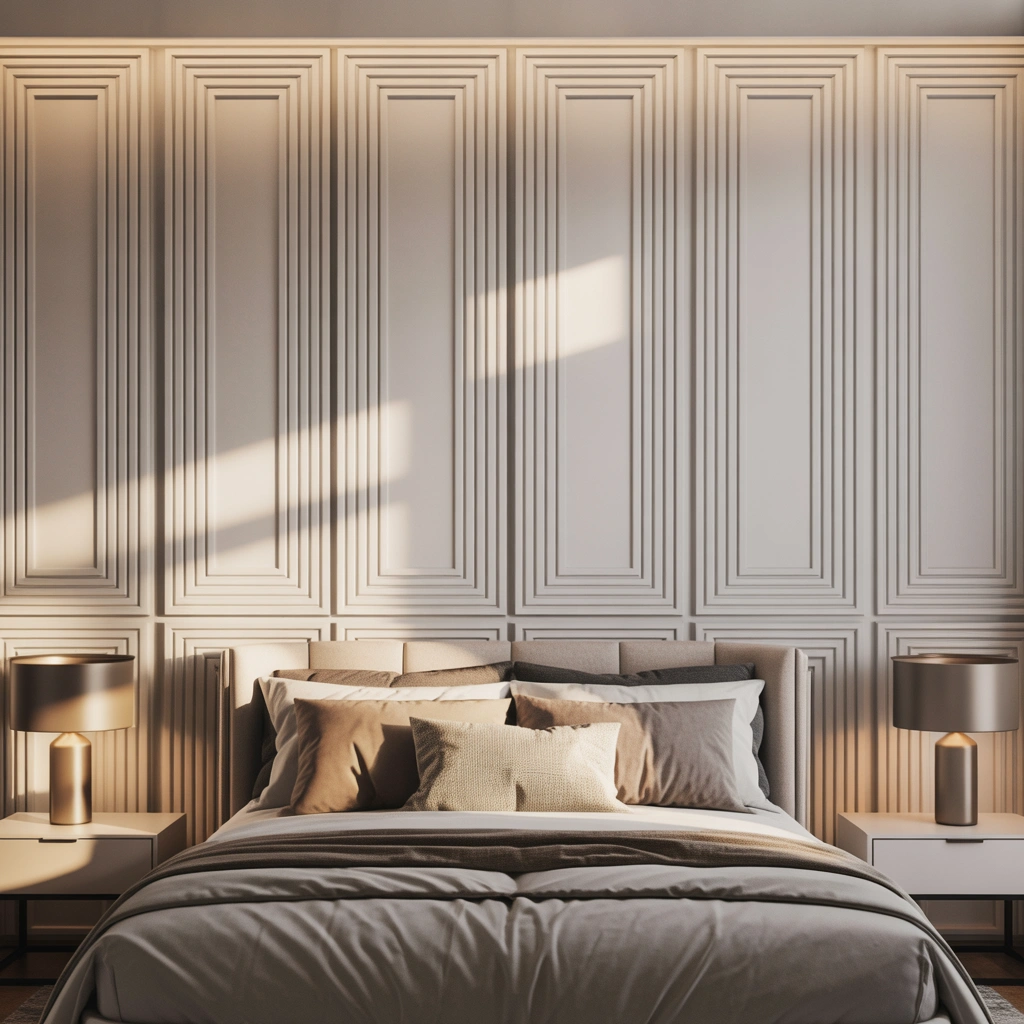
Wall paneling adds depth, structure, and architectural interest behind a bed. It can make even a simple bedroom look custom-designed.
There are several types of paneling you can consider:
- Vertical wood slats
- Board-and-batten panels
- Square grid molding
- Shiplap
- Beadboard
- Raised wall molding
- Upholstered panels
Vertical slats can make the ceiling appear higher, while horizontal paneling can make the wall look wider. A grid or rectangular molding pattern creates a more classic and elegant appearance.
You can paint the panels the same color as the rest of the wall for a subtle effect. For a stronger statement, use a contrasting shade. Dark green, deep blue, warm gray, and black paneling can look especially beautiful when paired with pale bedding.
If real wood paneling is outside your budget, consider using thin molding strips or lightweight decorative panels. With careful measuring and painting, you can achieve a sophisticated look without spending a fortune.
3. Hang One Oversized Piece of Artwork
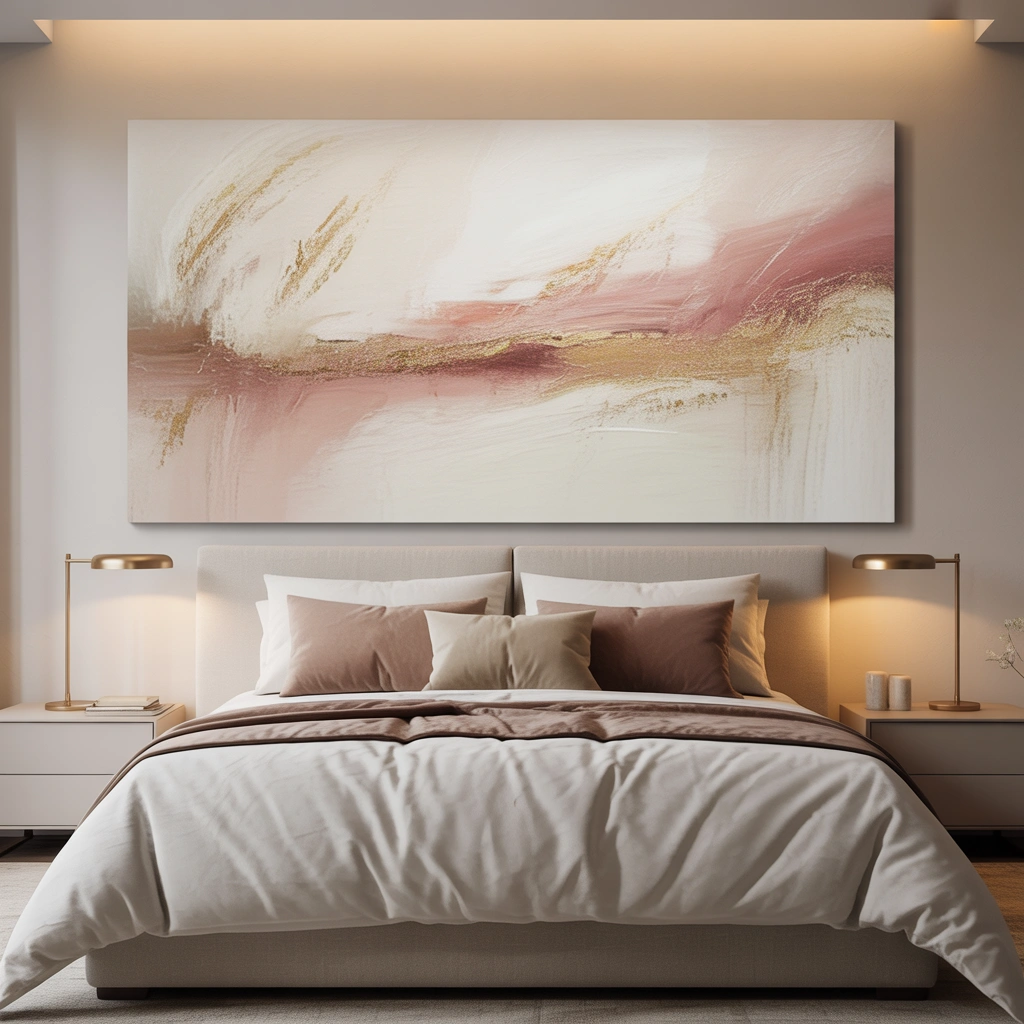
A single large artwork is one of my favorite ways to decorate behind a bed because it feels clean, balanced, and easy to style.
Choose a piece that is wide enough to relate visually to the bed. As a general guide, artwork should measure approximately two-thirds to three-quarters of the width of the bed or headboard. A piece that is too small may look lost on a large wall.
Abstract paintings work well in modern bedrooms, while landscapes, botanical prints, photography, or vintage-style artwork can create a softer or more traditional feeling.
The colors in the artwork do not have to match your bedding exactly. However, repeating one or two shades from the room can help everything feel connected.
Hang the artwork low enough that it appears visually linked to the headboard. Leaving too much empty space between the bed and the frame can make the arrangement feel disconnected.
For safety, make sure the frame is securely attached to the wall. Use suitable wall anchors, particularly for heavy artwork.
4. Design a Personal Gallery Wall
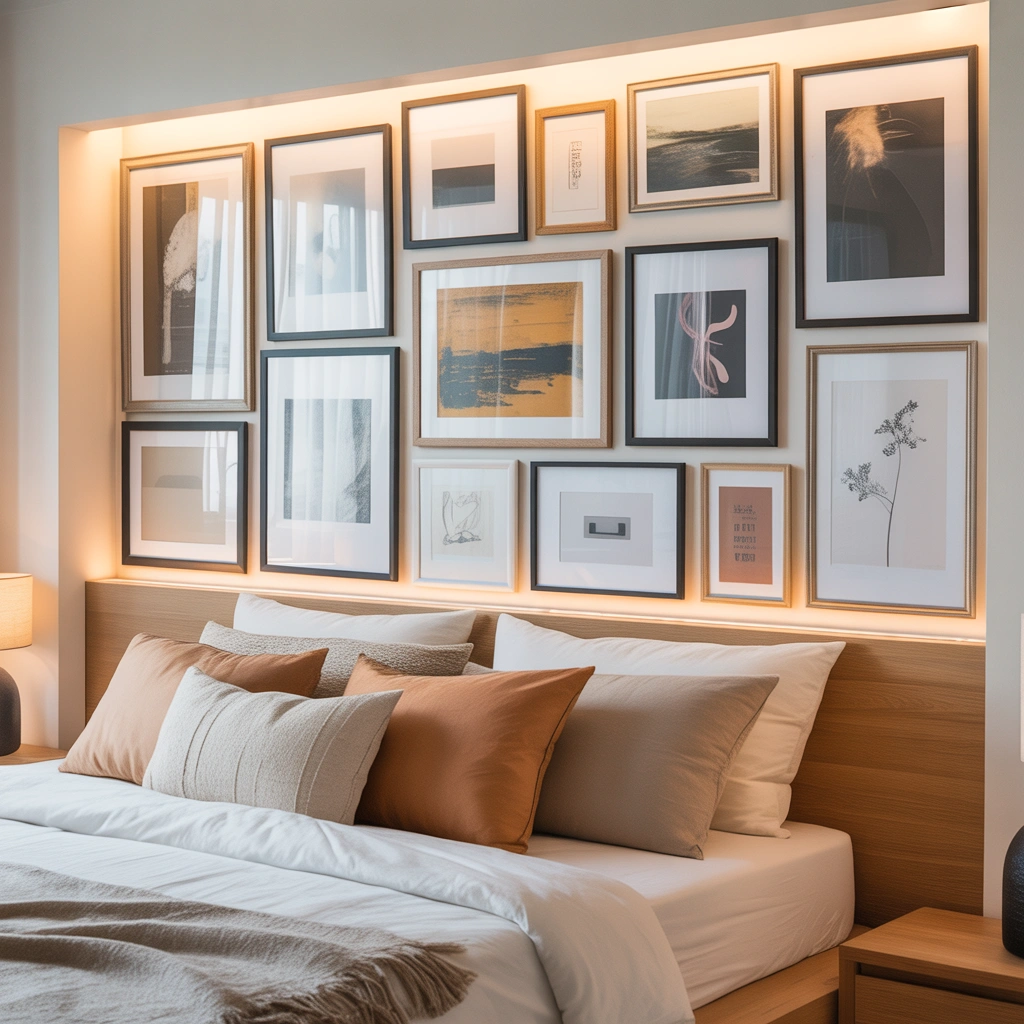
A gallery wall is a wonderful choice when you want the bedroom to feel personal and collected over time.
Instead of using one large frame, arrange several smaller pieces above the bed. You could include:
- Family photographs
- Travel pictures
- Illustrations
- Pressed flowers
- Meaningful quotes
- Postcards
- Small paintings
- Vintage prints
- Textile samples
- Handwritten notes
For a polished look, use matching frames and equal spacing. For a relaxed, eclectic effect, mix different frame sizes, materials, and styles.
Before putting nails into the wall, arrange the frames on the floor. This allows you to test different layouts. You can also cut paper templates in the same sizes as your frames and tape them to the wall.
Keep the full arrangement centered above the bed. It should feel like one complete composition rather than several unrelated pictures floating across the wall.
If the room already contains patterned bedding, bold curtains, or many decorative objects, choose a simple gallery wall with a limited color palette. This will prevent the bedroom from looking visually crowded.
5. Use Wallpaper to Introduce Pattern
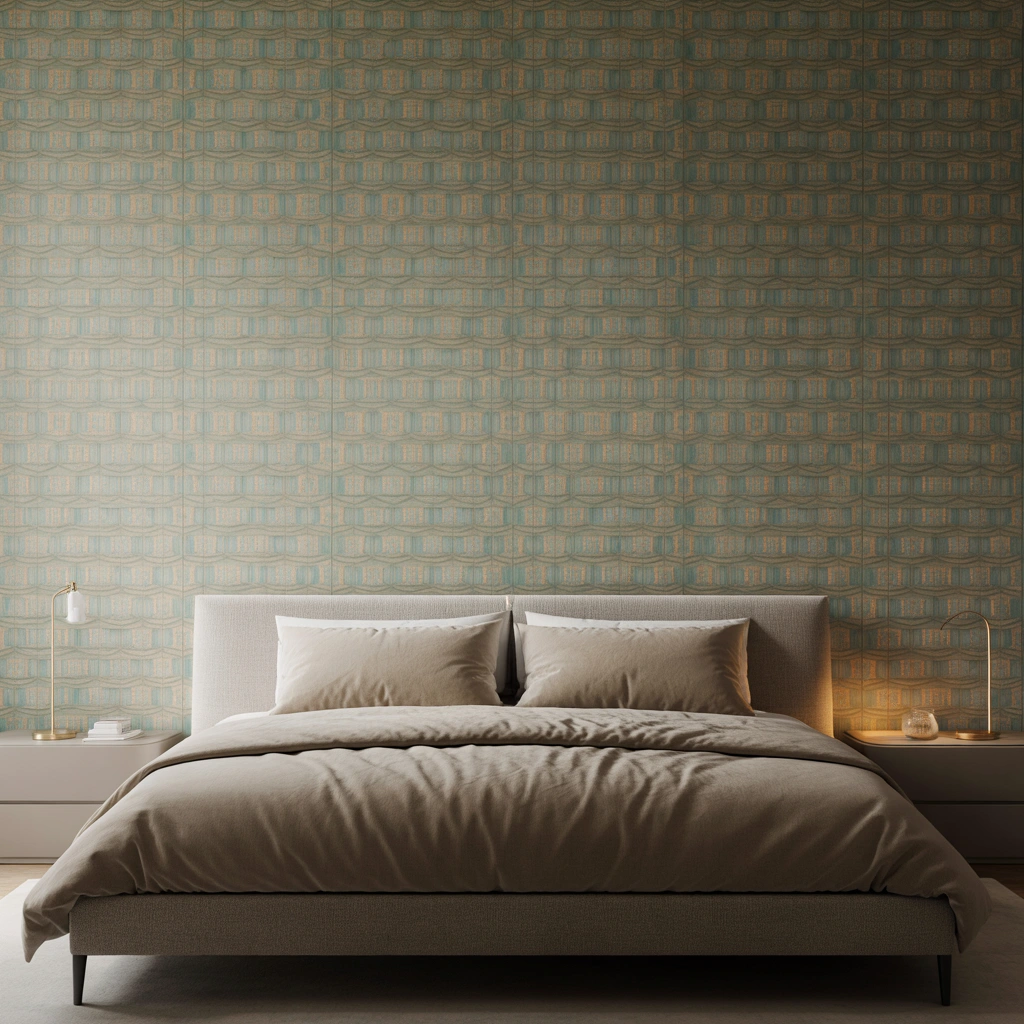
Wallpaper can transform a plain bedroom wall into a dramatic feature. It is particularly effective behind a bed because you can enjoy a strong pattern without using it throughout the entire room.
Floral prints can create a romantic or vintage mood. Geometric wallpaper works beautifully in modern spaces, while botanical and tropical patterns bring freshness and energy. Textured wallpaper can imitate linen, plaster, grasscloth, concrete, brick, or wood.
For a calm bedroom, choose wallpaper with soft colors and a low-contrast pattern. For a bold focal point, consider oversized flowers, dark botanicals, metallic details, or a graphic design.
Peel-and-stick wallpaper is a practical option for renters or anyone who likes changing their decor regularly. It is also useful for decorating only a section of the wall behind the bed.
You can make wallpaper look more intentional by framing it with molding. Another option is to wallpaper the wall and then add a plain upholstered headboard in front of it. The combination of pattern and soft fabric creates a layered, luxurious appearance.
6. Add a Large Woven Wall Hanging
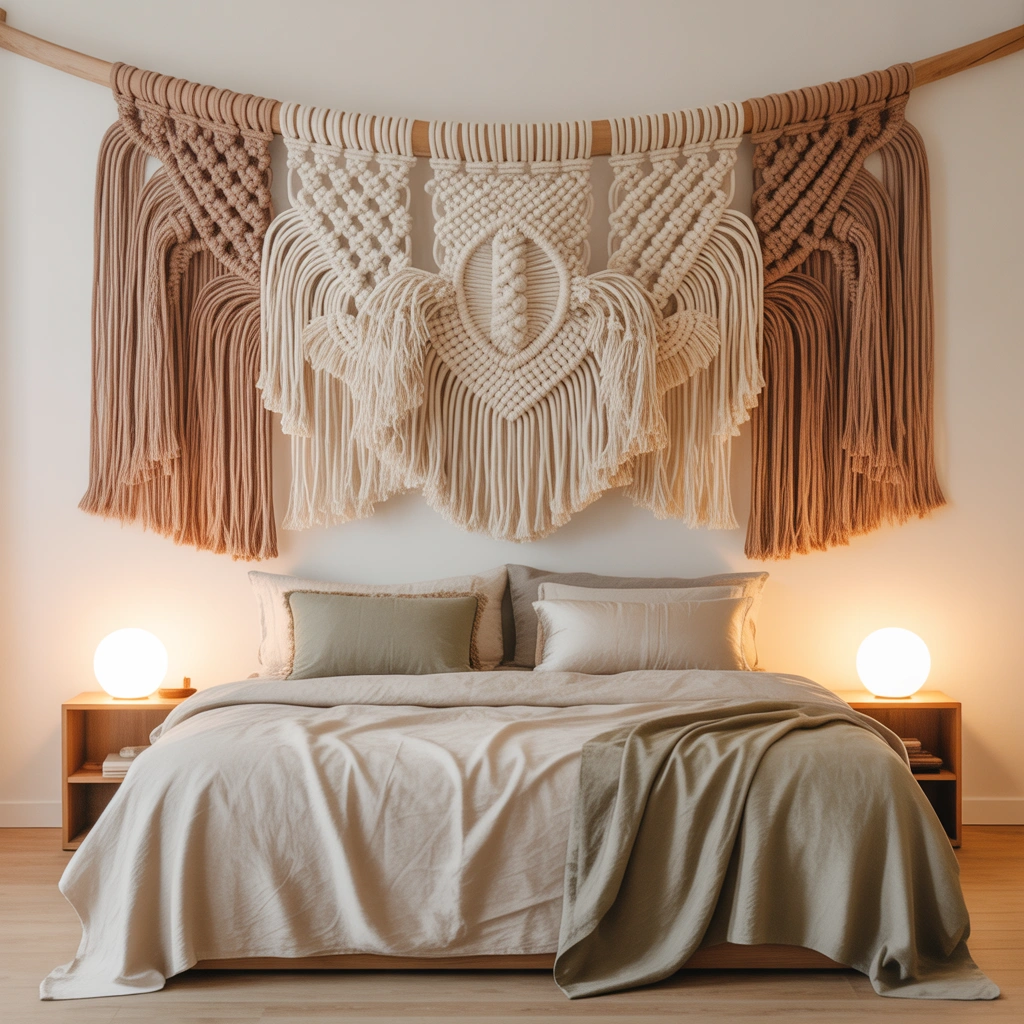
Woven decor brings softness and texture to a bedroom. It is an ideal alternative to framed art, especially in bohemian, coastal, rustic, or relaxed interiors.
A large macramé hanging can fill the wall above a bed without making the space feel too formal. Woven baskets, fiber art, handmade tapestries, and decorative rugs can create a similar effect.
Natural materials such as cotton, wool, jute, raffia, and rattan add warmth to rooms with white or neutral walls.
When hanging a large textile, make sure its width suits the bed. A narrow piece may work over a twin bed, but a queen- or king-size bed usually needs a wider design or a group of several smaller woven pieces.
Textile wall decor is often lighter than framed artwork, but it should still be secured carefully. Avoid placing anything with sharp or heavy elements directly above the area where you sleep.
To complete the look, repeat the natural texture in a woven rug, storage basket, bench, or pendant light.
7. Display Decorative Plates or Woven Baskets
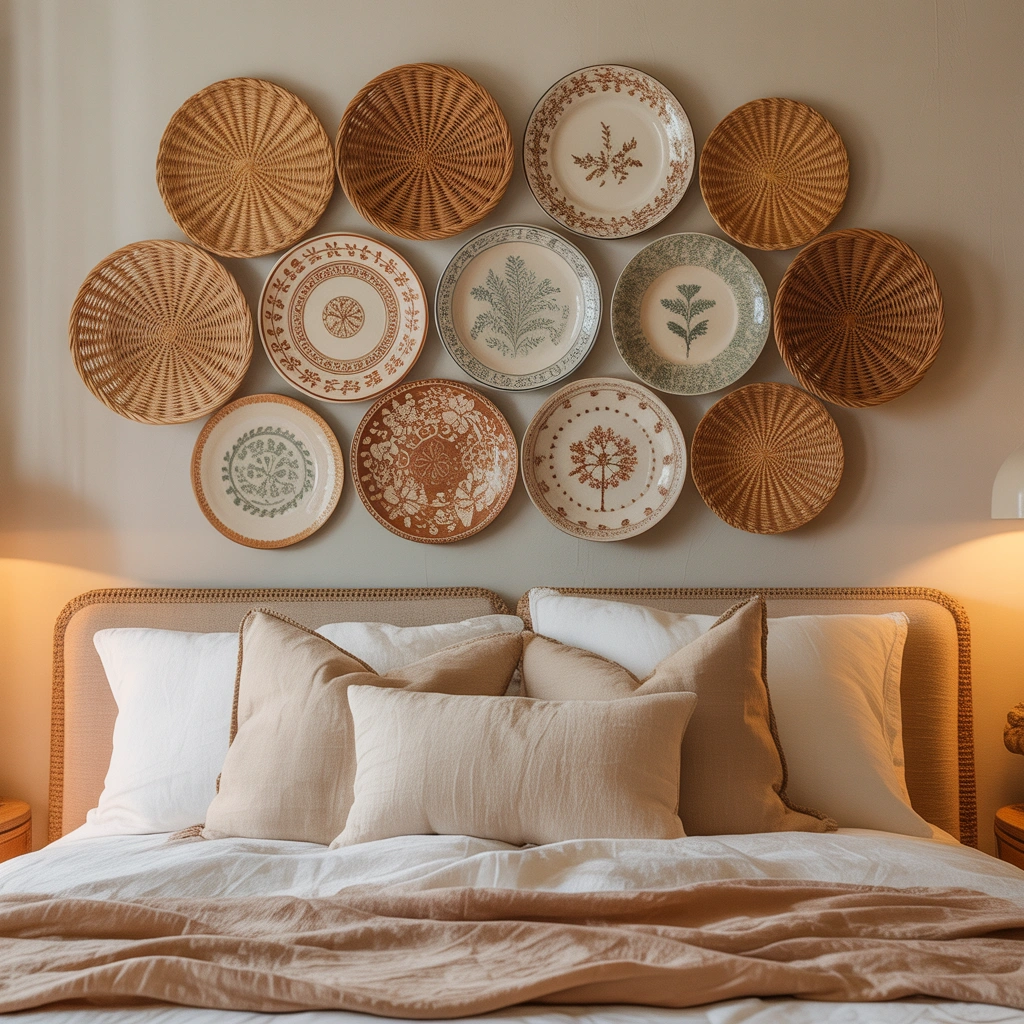
Decorative plates and shallow woven baskets can turn the wall behind your bed into an artistic display.
For a traditional or cottage-inspired bedroom, use ceramic plates with floral, blue-and-white, or hand-painted patterns. Arrange them symmetrically for a formal appearance or create an irregular composition for a more relaxed look.
Woven baskets suit bohemian, coastal, farmhouse, and globally inspired interiors. Choose baskets in different sizes and weaving patterns while keeping the overall color palette consistent.
Start with the largest piece near the center and arrange smaller items around it. Leave enough space between each piece so the display does not feel cramped.
An arrangement of baskets is especially attractive above a simple wooden or rattan headboard. It creates visual interest while maintaining a warm, natural atmosphere.
Because baskets are lightweight, they are also useful when you want to decorate a large wall without hanging extremely heavy objects.
8. Install a Picture Ledge Above the Bed
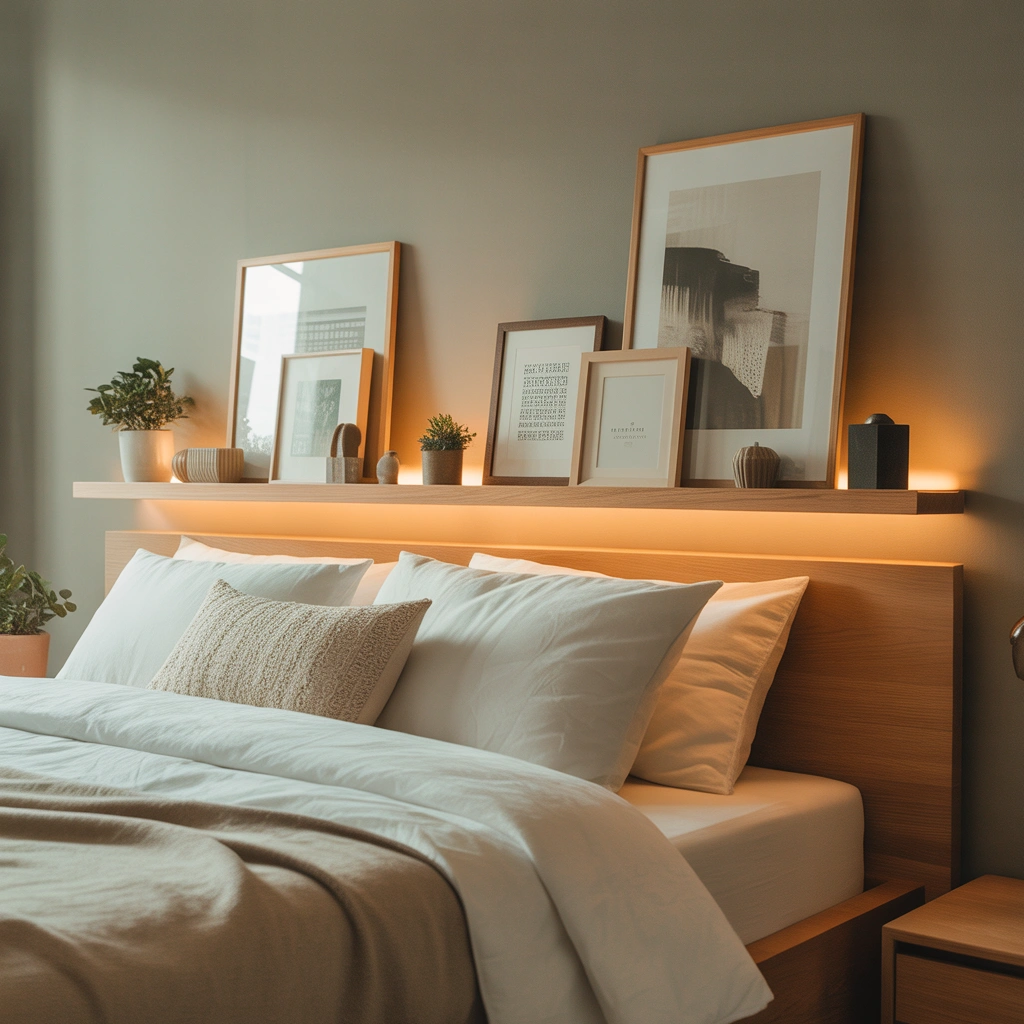
A picture ledge gives you the freedom to change your decor whenever you like. Instead of hanging every frame directly on the wall, you can lean artwork, photographs, books, and small decorative objects on a slim shelf.
This approach is ideal for people who enjoy updating their bedroom throughout the year. You can replace prints, add seasonal items, or rearrange the display without creating new holes in the wall.
Choose a ledge that is wide enough to look balanced with the bed. A long shelf that extends across most of the headboard usually creates the strongest effect.
Layer frames of different heights, but avoid filling every inch of the ledge. A little empty space allows each item to stand out.
Keep heavier objects toward the back and smaller pieces in front. Avoid placing unstable glass, ceramics, or sharp decorations directly above your pillows.
A ledge can be painted the same color as the wall for a seamless look or matched with the wood finish of your bedside tables.
9. Create Warmth With Wall-Mounted Lighting
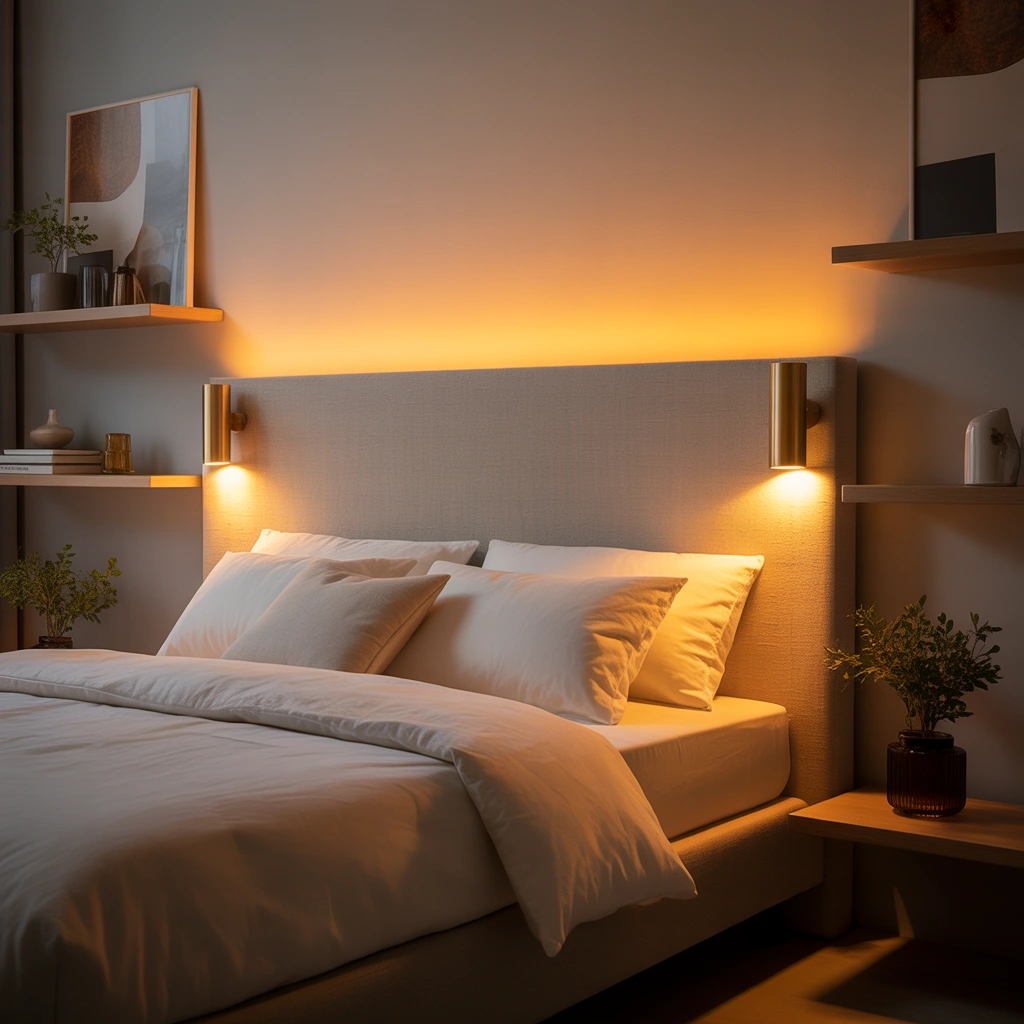
Lighting can serve as both decoration and a practical bedroom feature.
Wall sconces placed on either side of the bed frame the sleeping area and free up space on your bedside tables. They also create a comfortable glow for reading or relaxing in the evening.
For a modern bedroom, consider simple black, brass, chrome, or white sconces. Fabric-shaded lights create a softer, more traditional appearance, while adjustable swing-arm lamps are useful for nighttime reading.
Plug-in wall sconces are an excellent option when you do not want to hire an electrician. Their cords can be covered with decorative cord channels for a cleaner finish.
You can also use pendant lights suspended on both sides of the bed. This draws the eye upward and can make the room appear taller.
Always use warm-toned bulbs in the bedroom. Harsh, cool lighting can make the space feel less relaxing. A dimmer switch is also helpful because it allows you to adjust the light according to your mood.
10. Hang a Decorative Mirror
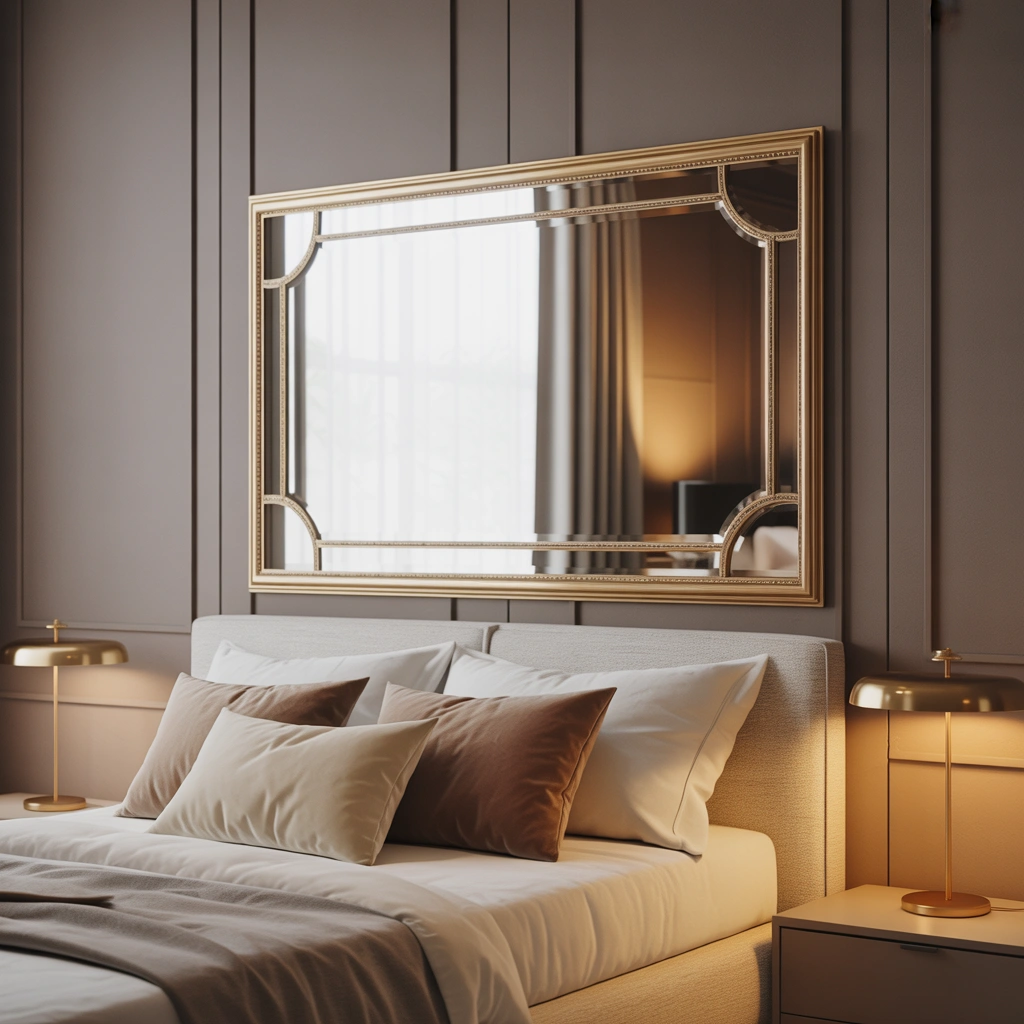
A mirror above or behind the bed can make the room feel brighter and more spacious. It reflects natural and artificial light, which is particularly valuable in a small or dark bedroom.
A large round mirror creates a gentle contrast with the straight lines of a bed and bedside tables. An arched mirror introduces an architectural shape, while an ornate frame can bring elegance and character.
You could also arrange several smaller mirrors in a symmetrical pattern. However, avoid using too many highly reflective surfaces, as the room may begin to feel busy.
The mirror should be securely installed with hardware suitable for its weight. Because it will be positioned above the sleeping area, safety must be the first priority.
Consider what the mirror will reflect before hanging it. Ideally, it should reflect a pleasant part of the room, such as a window, artwork, or soft lighting—not clutter or an open bathroom door.
11. Build a Floor-to-Ceiling Headboard Feature
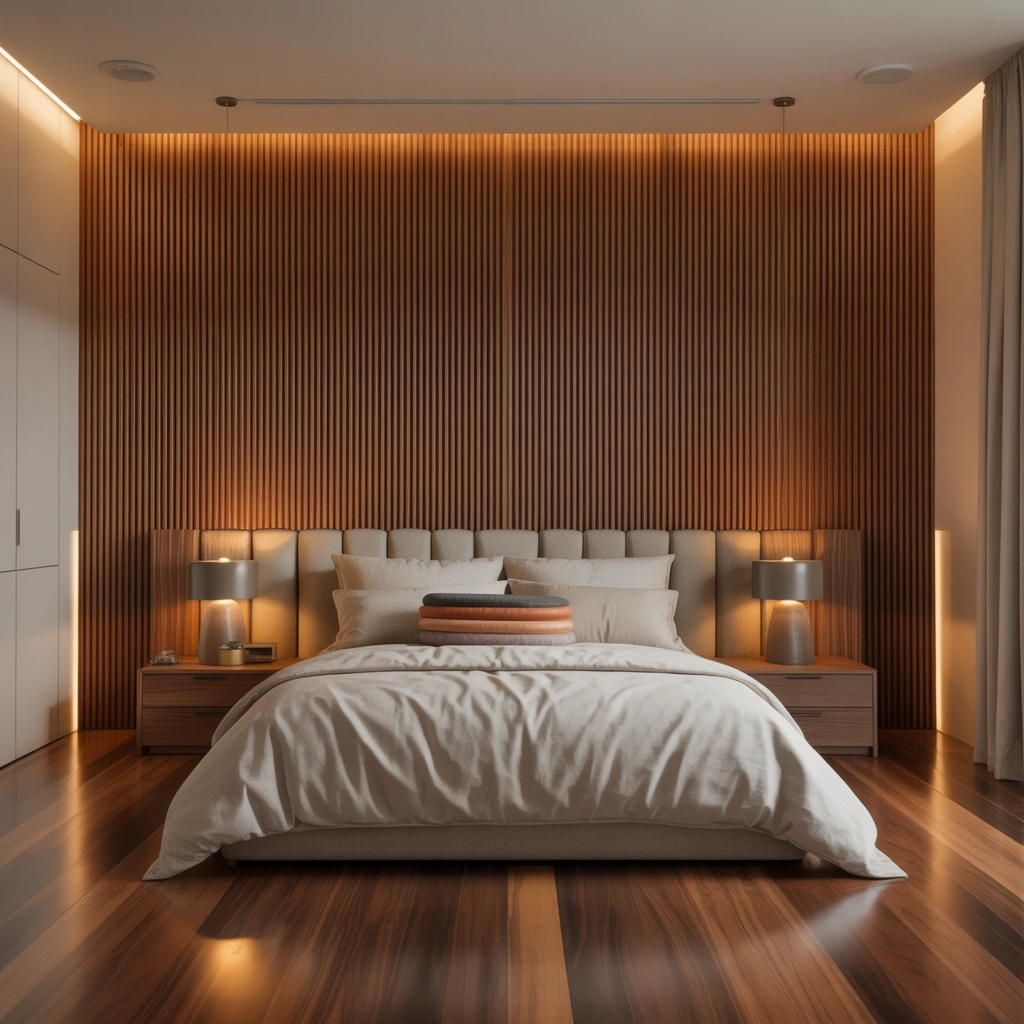
A tall headboard or headboard wall can create an impressive hotel-inspired bedroom.
Instead of limiting the headboard to the height of your pillows, extend the feature vertically toward the ceiling. You can use upholstered panels, wood slats, painted molding, padded fabric sections, or a combination of materials.
A floor-to-ceiling design makes the room feel taller and gives the bed a strong architectural presence. It is particularly effective in master bedrooms with wide walls or high ceilings.
For a luxurious look, use velvet, suede, linen, or channel-tufted upholstery. For a modern and natural appearance, try vertical oak or walnut slats.
You can extend the design slightly beyond the width of the bed or cover the entire wall. Integrated lighting, narrow bedside shelves, or hidden electrical outlets can make the feature both beautiful and functional.
Even if you cannot build a permanent installation, you can create a similar visual effect by painting a tall section behind the bed or attaching removable padded panels.
12. Decorate With a Tapestry or Fabric Panel
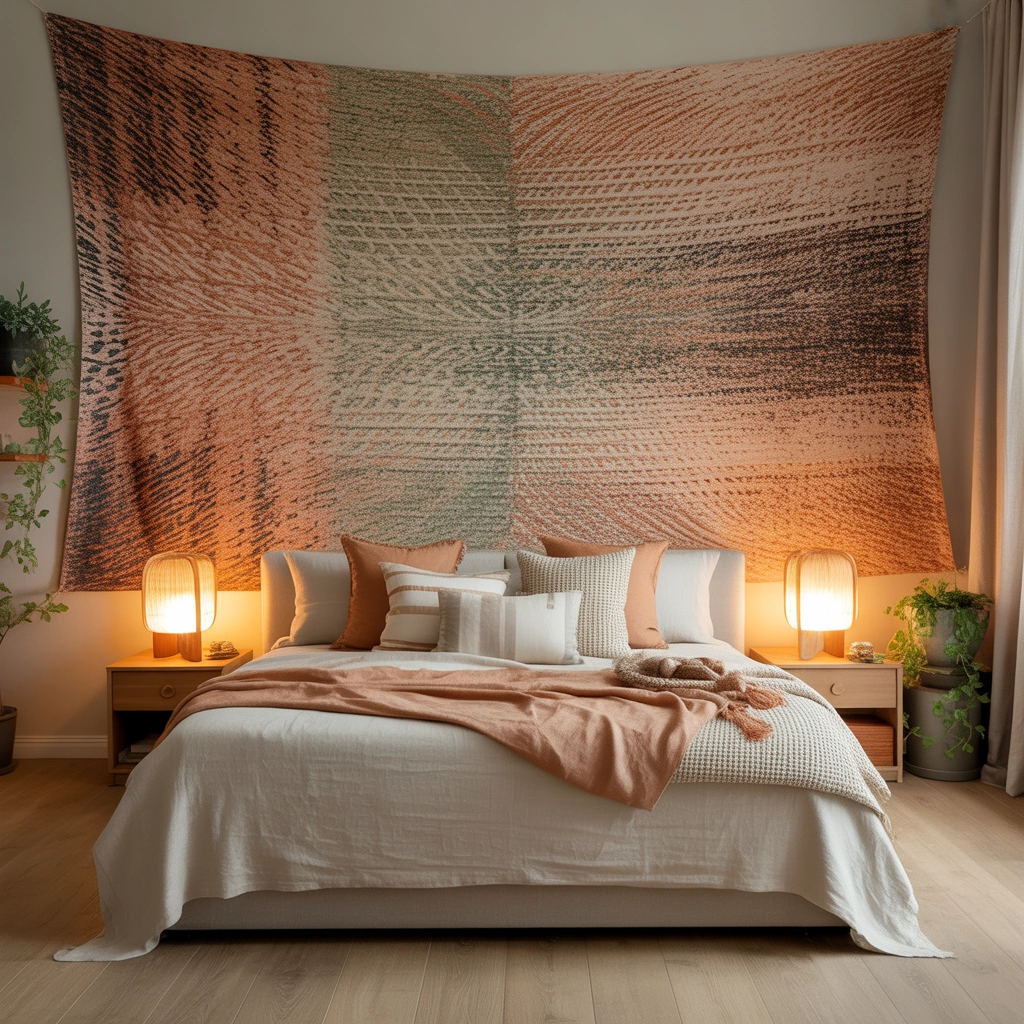
A tapestry is an affordable way to cover a large wall while introducing color, texture, and pattern.
Unlike framed artwork, fabric creates a softer appearance. It can also improve the cozy feeling of a room by reducing the visual hardness of bare walls.
Choose a design that complements the scale of the bed. Large botanical scenes, abstract patterns, landscapes, block prints, and vintage-inspired illustrations can all work well.
For a polished finish, stretch the fabric over a lightweight wooden frame. You can also hang it from a decorative rod or attach it neatly with removable strips.
Another creative option is to frame a beautiful piece of fabric. Printed linen, embroidered cloth, traditional textiles, and even an attractive scarf can become personalized wall art.
Avoid hanging fabric loosely near candles, heaters, or exposed bulbs. Keep it clean and dust it regularly, especially if you have allergies.
13. Add Nature With Plants and Botanical Decor
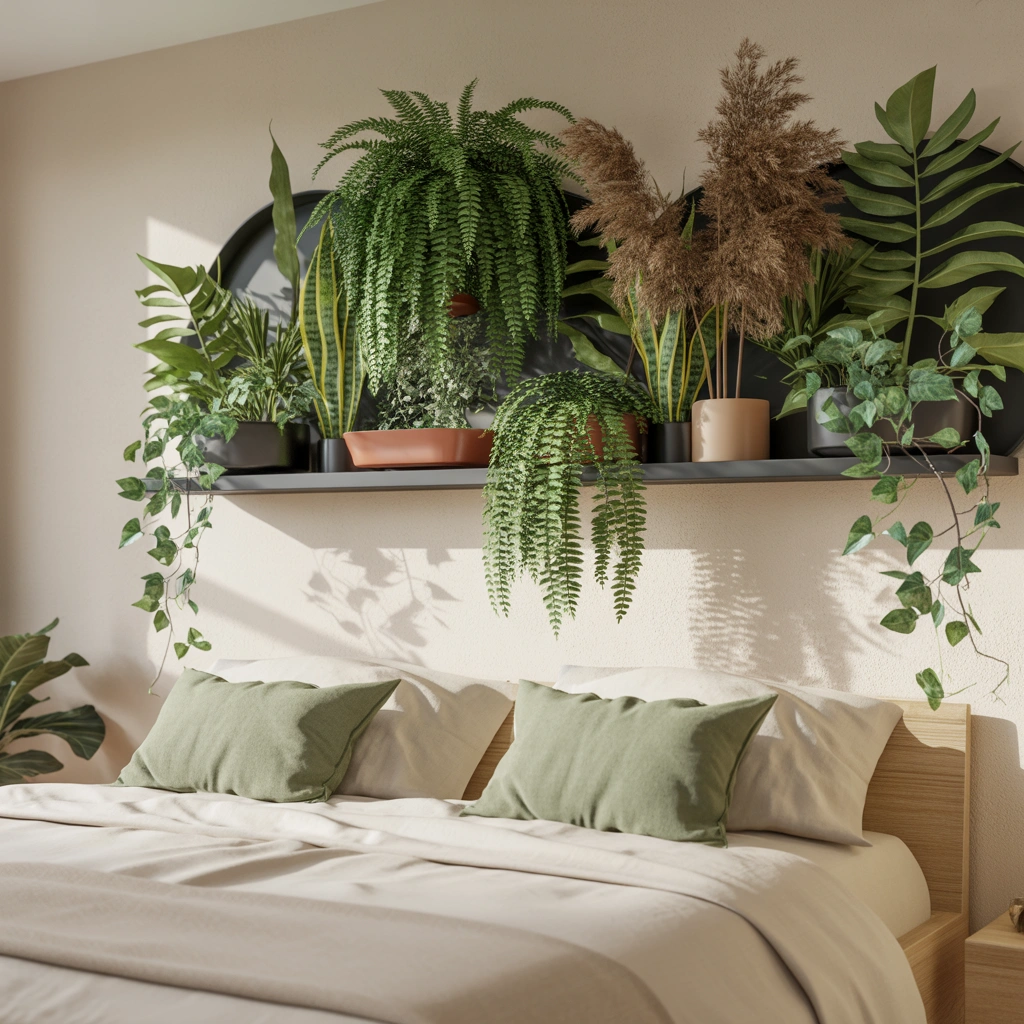
Plants bring life, freshness, and gentle color to a bedroom. When used carefully, they can also become part of your behind bed wall decor.
You could place trailing plants on a high shelf, install wall-mounted planters beside the headboard, or position tall plants near each side of the bed.
Pothos, heartleaf philodendron, and other trailing varieties can create beautiful cascading shapes. However, choose plants according to the amount of natural light in your bedroom.
If live plants are difficult to maintain, use realistic artificial greenery, dried branches, preserved leaves, or framed botanical prints.
A botanical wall does not need to be completely green. You can create a calmer look by combining one or two plants with wooden decor, neutral artwork, and natural fabrics.
Be careful not to place heavy ceramic pots directly above the bed. Lightweight planters and securely installed shelves are safer choices.
14. Create a Canopy Effect With Fabric
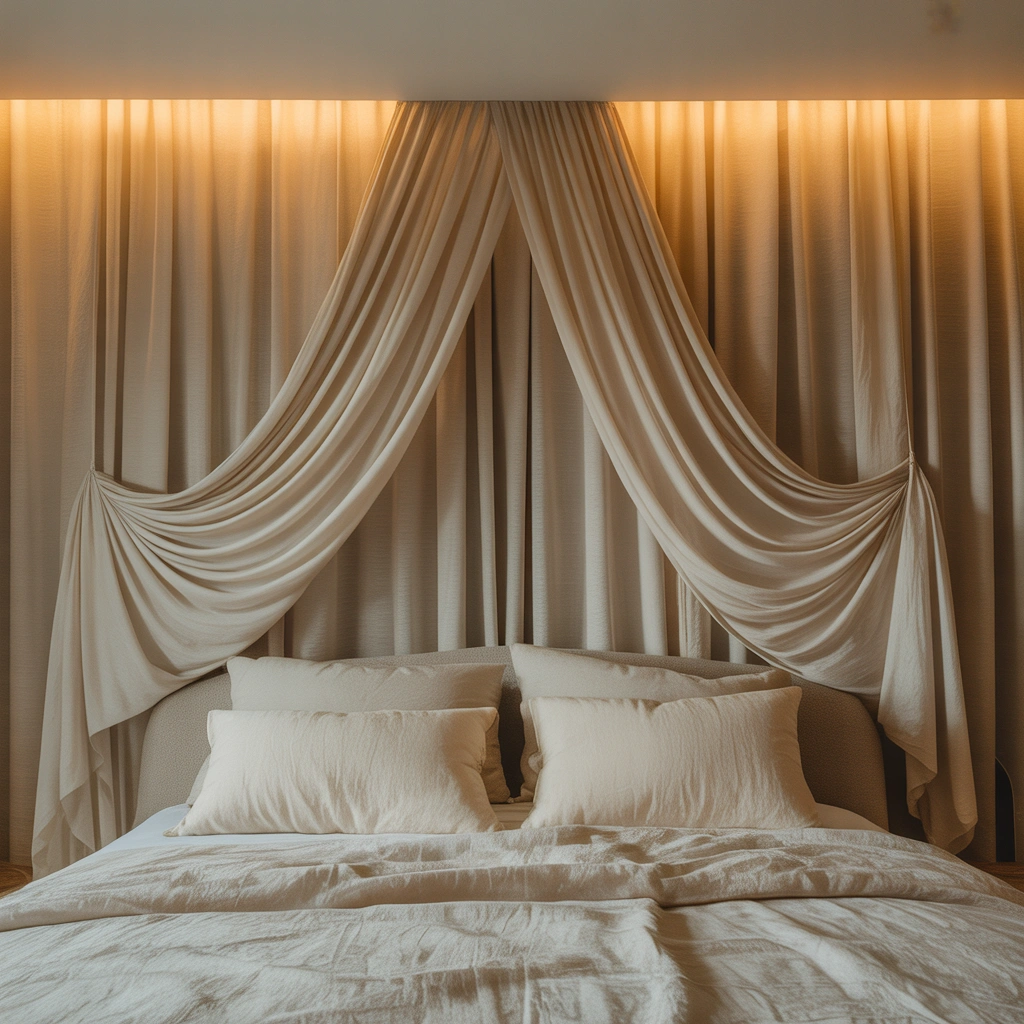
Fabric draped behind or above the bed can make the bedroom feel romantic, soft, and peaceful.
You can hang curtains from a ceiling-mounted track behind the headboard, allowing the fabric to fall from ceiling to floor. This creates a dramatic backdrop and can hide an uneven or unattractive wall.
Sheer white curtains give the room a light, airy feeling. Velvet or heavier fabric creates a richer, more luxurious effect. Linen-look curtains work well in relaxed, natural bedrooms.
For a canopy-style arrangement, attach fabric above the head of the bed and drape it gently toward the sides. Keep the fabric away from lamps, ceiling fans, heaters, and electrical fixtures.
Ceiling-to-floor curtains can also make a low ceiling appear higher. Choose fabric in a color close to the wall for a subtle look, or use a contrasting color to make the bed stand out.
This idea is especially effective when paired with soft lighting, layered bedding, and simple furniture.
15. Combine Several Decor Elements for a Layered Look
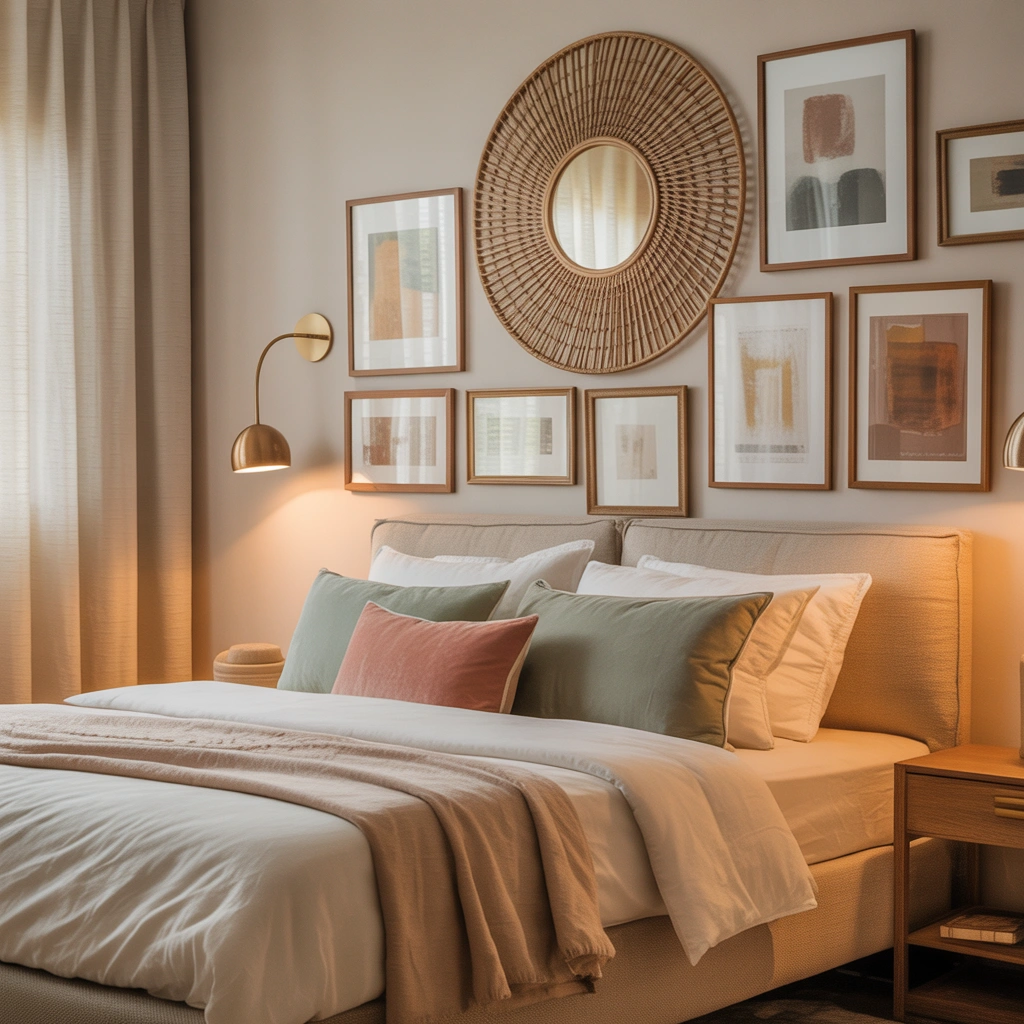
Sometimes the most interesting behind bed wall decor ideas involve more than one feature.
For example, you could combine:
- Wall paneling with framed art
- Wallpaper with wall sconces
- A painted arch with a floating shelf
- Wood slats with pendant lights
- A fabric headboard with a gallery wall
- A mirror with decorative molding
- A tapestry with string lights
- A picture ledge with trailing plants
The key is to create layers without overwhelming the wall. Choose one main feature and allow the other elements to support it.
For instance, patterned wallpaper can be the main attraction, while simple brass sconces add function and balance. If you already have dramatic paneling, one understated artwork may be enough.
Try to repeat colors, shapes, or materials throughout the room. A wooden frame above the bed might connect with wooden bedside tables, while brass lighting could relate to drawer handles or curtain rods.
A layered wall should still feel restful. Bedrooms need visual interest, but they also need calm. Leaving some open space will keep the design from becoming too heavy.
How to Choose the Right Decor for Your Bedroom
With so many options available, it can be difficult to decide which idea is right for your space. I recommend considering the following factors before buying or installing anything.
Consider the Size of the Bed
A king-size bed needs decor with enough visual weight to fill the wall. A tiny frame above a large bed will usually look out of proportion.
A twin or single bed can work well with a narrow vertical artwork, a small gallery arrangement, or a painted arch.
Measure the Available Wall Space
Measure the width above the headboard and the distance between the top of the bed and the ceiling. This will help you avoid choosing decor that is too large, too small, or awkwardly shaped.
Work With Your Existing Style
Your wall decor should complement the furniture and bedding already in the room. A highly ornate display may feel out of place in a minimalist bedroom, while a single plain print may not provide enough character in a richly decorated traditional space.
Think About Safety
Anything installed above a bed must be secure. Use proper anchors, brackets, and hanging hardware. Avoid placing very heavy, sharp, or breakable objects directly over your pillows.
Choose a Restful Color Palette
Your bedroom should support relaxation. Bold colors can work beautifully, but consider balancing them with neutral bedding, natural textures, and soft lighting.
Common Behind Bed Wall Decor Mistakes to Avoid
Even attractive decor can look wrong when the scale or placement is incorrect.
One common mistake is hanging artwork too high. The decor should feel connected to the bed, not as though it is floating near the ceiling.
Another issue is choosing pieces that are too small. When in doubt, select a larger artwork or group several smaller pieces together.
Avoid overcrowding the wall with too many unrelated items. A bedroom can quickly feel cluttered when every available space is filled.
Ignoring the width of the headboard is another mistake. Your wall arrangement should generally remain within the visual boundaries of the bed or extend beyond it in an intentional, balanced way.
Finally, do not overlook lighting. Beautiful wall decor may lose its impact if the room is poorly lit. Warm bedside lamps, sconces, or pendant lights can make colors and textures appear richer.
Budget-Friendly Behind Bed Wall Decor Ideas
You do not need to spend a large amount of money to create an attractive focal wall.
Some affordable options include:
- Painting a simple arch or color block
- Printing digital artwork at home
- Framing fabric or wallpaper samples
- Creating a gallery wall with thrifted frames
- Hanging lightweight woven baskets
- Using peel-and-stick wallpaper
- Making a simple wood picture ledge
- Painting secondhand frames in matching colors
- Displaying postcards or personal photographs
- Creating DIY molding with inexpensive wood strips
I often find that inexpensive decor looks more stylish when the scale and placement are correct. One large, thoughtfully positioned item can have more impact than several costly accessories placed without a clear arrangement.
Frequently Asked Questions
What should I put on the wall behind my bed?
You can use oversized artwork, wallpaper, paint, mirrors, decorative paneling, woven hangings, shelves, sconces, plants, tapestries, or a gallery wall. The best choice depends on your bedroom size, decorating style, and budget.
How big should artwork be above a bed?
Artwork should usually measure about two-thirds to three-quarters of the width of the bed or headboard. For a gallery wall, consider the total width of the complete arrangement rather than the size of each individual frame.
How high should decor be hung above a headboard?
In many bedrooms, leaving approximately 6 to 10 inches between the top of the headboard and the bottom of the artwork creates a visually connected arrangement. However, the ideal distance depends on the height of the headboard, artwork, and ceiling.
Is it safe to hang a mirror above a bed?
A mirror can be hung above a bed when it is installed with secure hardware designed for its weight and wall type. Heavy mirrors should be professionally installed when necessary. Lightweight alternatives may be more suitable if safety is a concern.
How can I decorate behind a bed without a headboard?
Paint a large arch, install wallpaper, hang a tapestry, create a wood-slat feature, use decorative molding, or add a wide picture ledge. These ideas can visually frame the bed and create the appearance of a headboard.
What is the best wall color behind a bed?
Popular choices include navy, sage green, charcoal, warm beige, terracotta, dusty blue, taupe, and soft gray. The best color will complement your bedding, flooring, natural light, and overall bedroom style.
Final Thoughts
The wall behind your bed offers an opportunity to make your bedroom feel more personal, stylish, and complete. Whether you choose a dramatic wallpaper, a large piece of artwork, elegant paneling, warm lighting, or a simple painted shape, the most successful design will feel balanced with the bed and connected to the rest of the room.
You do not need to follow every trend or fill the wall with expensive decorations. Start with one idea that suits your taste, measure the space carefully, and build the arrangement gradually.
Personally, I believe the best bedrooms are not simply beautiful—they also feel peaceful and meaningful. By choosing behind bed wall decor that reflects your personality and supports a relaxing atmosphere, you can turn an ordinary sleeping space into a room you genuinely enjoy spending time in.
SEO Title: 15 Behind Bed Wall Decor Ideas for a Stylish Bedroom
Meta Description: Discover 15 behind bed wall decor ideas, including artwork, wallpaper, paneling, lighting, mirrors, shelves, plants, and budget-friendly bedroom styling tips.
Suggested URL Slug: /behind-bed-wall-decor-ideas/
