
You can make a small bedroom work for your life, style, and storage without feeling cramped. This article shows, room ideas for men bedroom small spaces that help you sleep, work, and store things better in tight quarters.
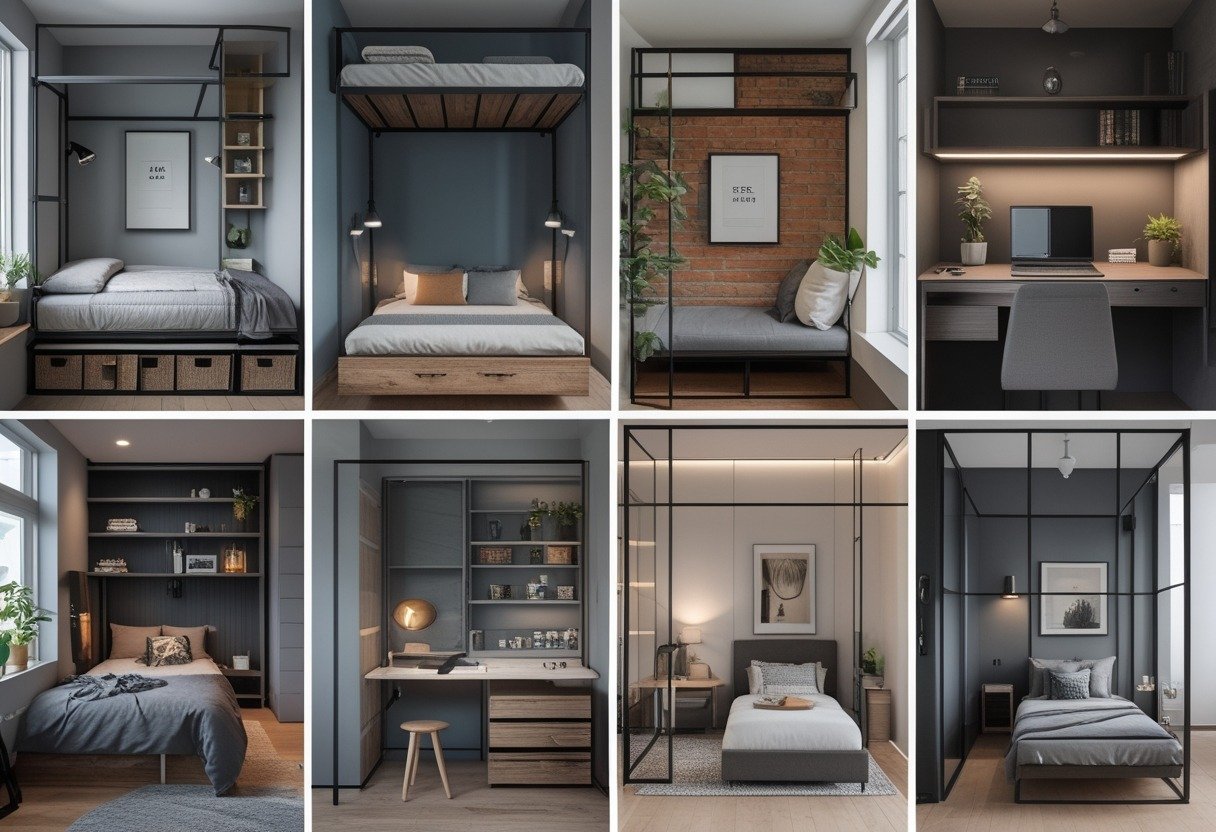
Expect clear options for beds, storage, lighting, and layout that fit different tastes and budgets. Use the ideas to plan a room that feels larger, stays organized, and matches your personal look.
1) Loft bed with integrated desk and storage
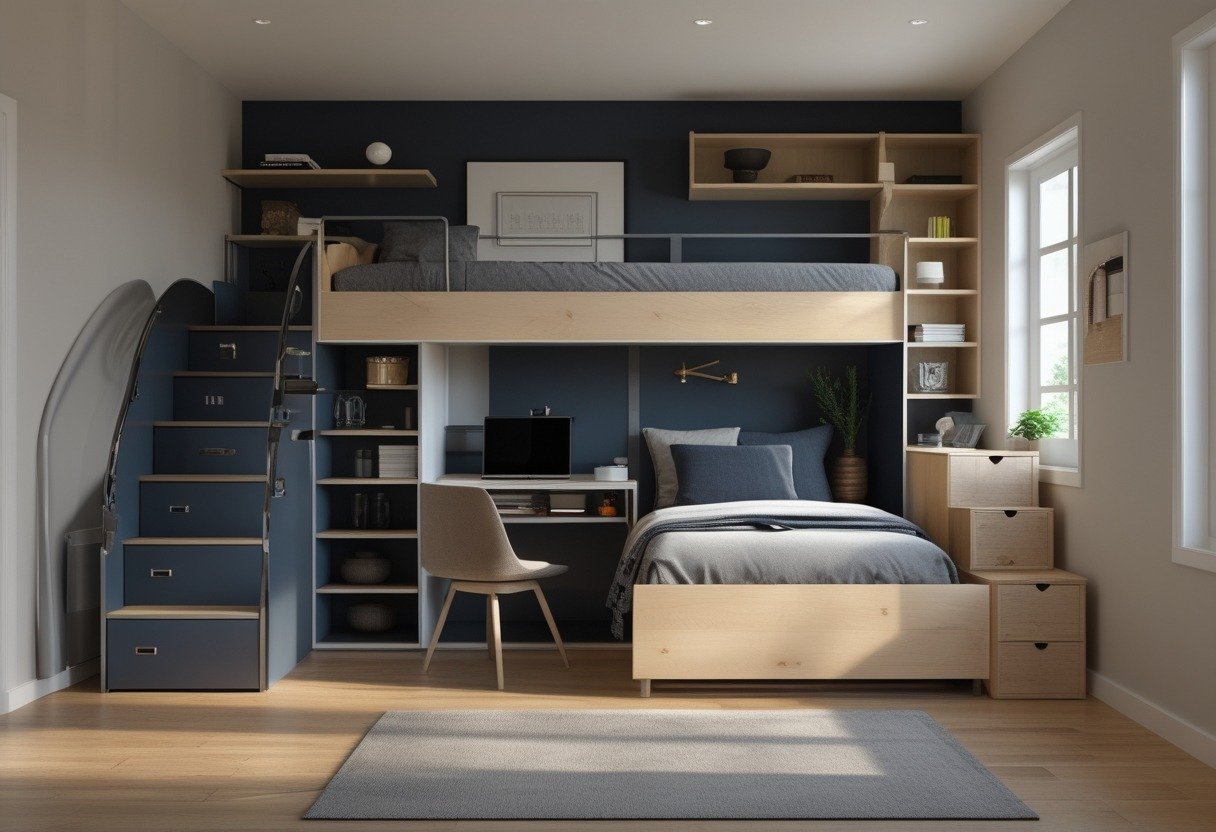
A loft bed with a built-in desk and drawers saves floor space and keeps your room tidy. You get a dedicated work area under the bed, so your sleeping and working zones stay separate.
Choose sturdy materials and secure anchoring for safety. Add shelves or cubbies for books and gear to keep essentials within reach.
This setup works well in studios or shared rooms and gives a clean, modern look without crowding the floor.
2) Built-in floor-to-ceiling wardrobe with sliding doors
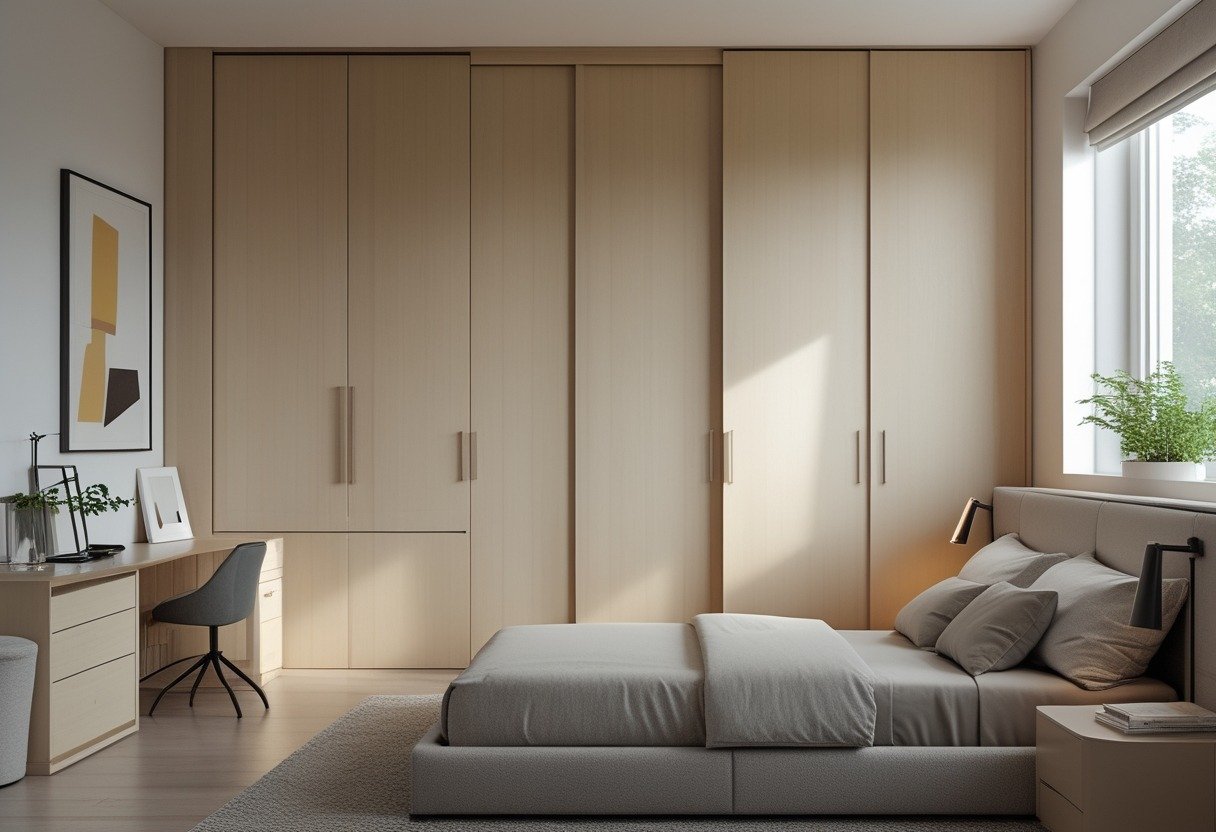
A built-in floor-to-ceiling wardrobe uses the full height of your wall to give more storage without wasted gaps. Sliding doors save floor space because they don’t swing out, so you can place furniture closer.
Choose mirror or light-colored finishes to reflect light and make the room feel larger. Inside, add adjustable shelves, drawers, and double hanging rods to keep clothes and shoes organized.
3) Platform bed with under-bed drawers and shoe cubbies
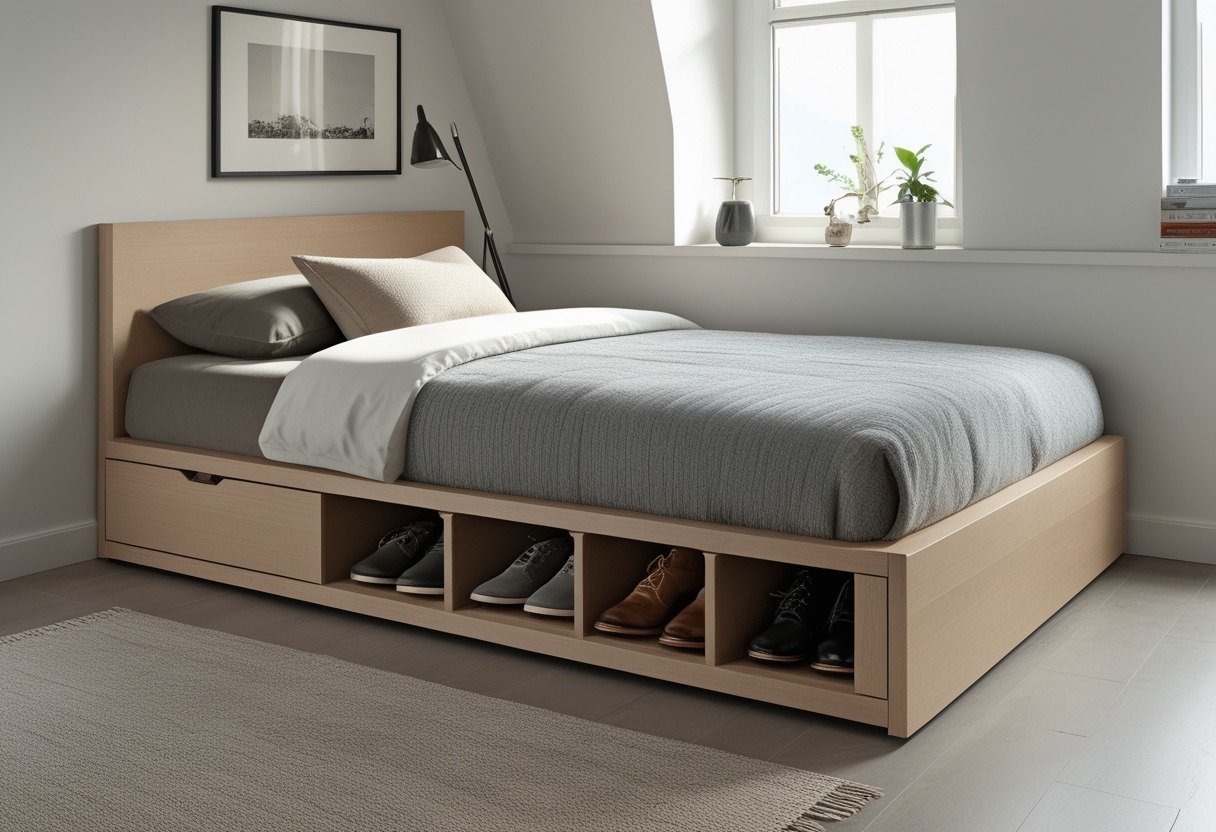
Choose a platform bed that uses the space under your mattress for deep drawers and small cubbies for shoes.
This keeps clothes, bedding, and footwear organized without needing extra furniture.
Look for drawers that glide smoothly and fit your room height.
A low-profile frame keeps the room feeling open while adding lots of hidden storage.
4) Floating nightstands and wall-mounted reading lamp
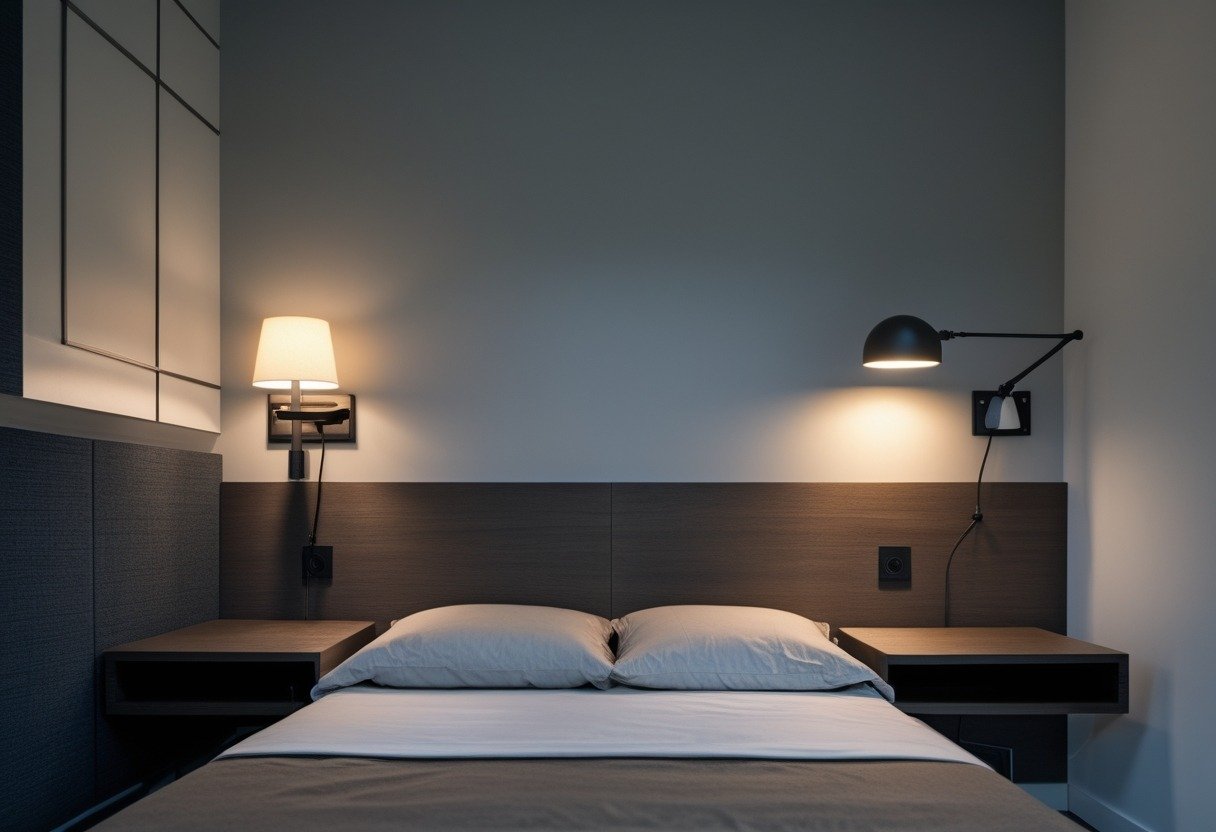
Choose a floating nightstand to free floor space and keep your room tidy. It gives a clean, modern look and leaves room for a small chair or rug.
Mount a reading lamp above the nightstand to save surface clutter. Position the lamp so light hits your book without shining in your eyes.
Pick a nightstand with a drawer or shelf to hide chargers and small items. Use a lamp with an adjustable arm for flexible, focused light.
5) Murphy bed that folds into a shelving unit
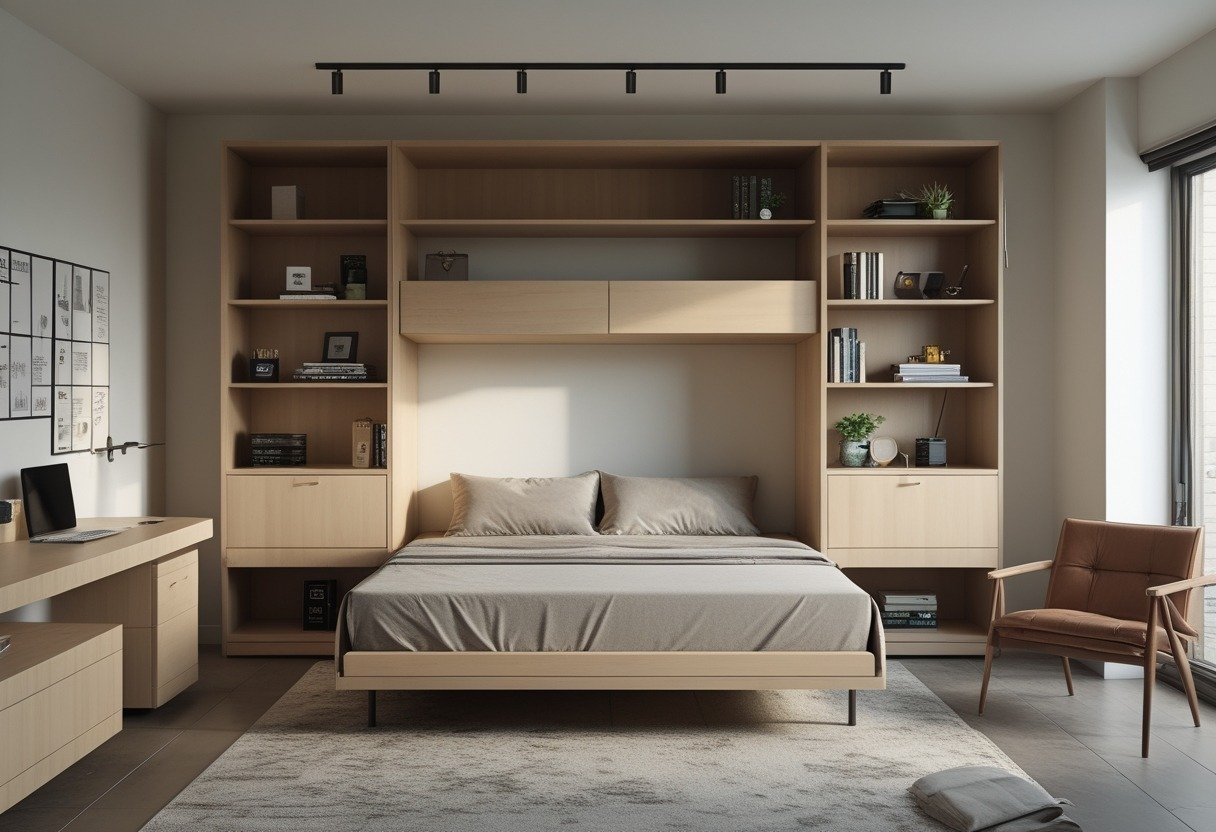
A Murphy bed that folds into a shelving unit frees up floor space and adds storage. You get a full bed at night and shelves, cabinets, or a desk by day.
Choose a unit with strong hardware and easy lift action so you can operate it alone. Match the shelves to your style with books, gear, or boxes to keep the room tidy.
6) Monochrome palette with matte black accents
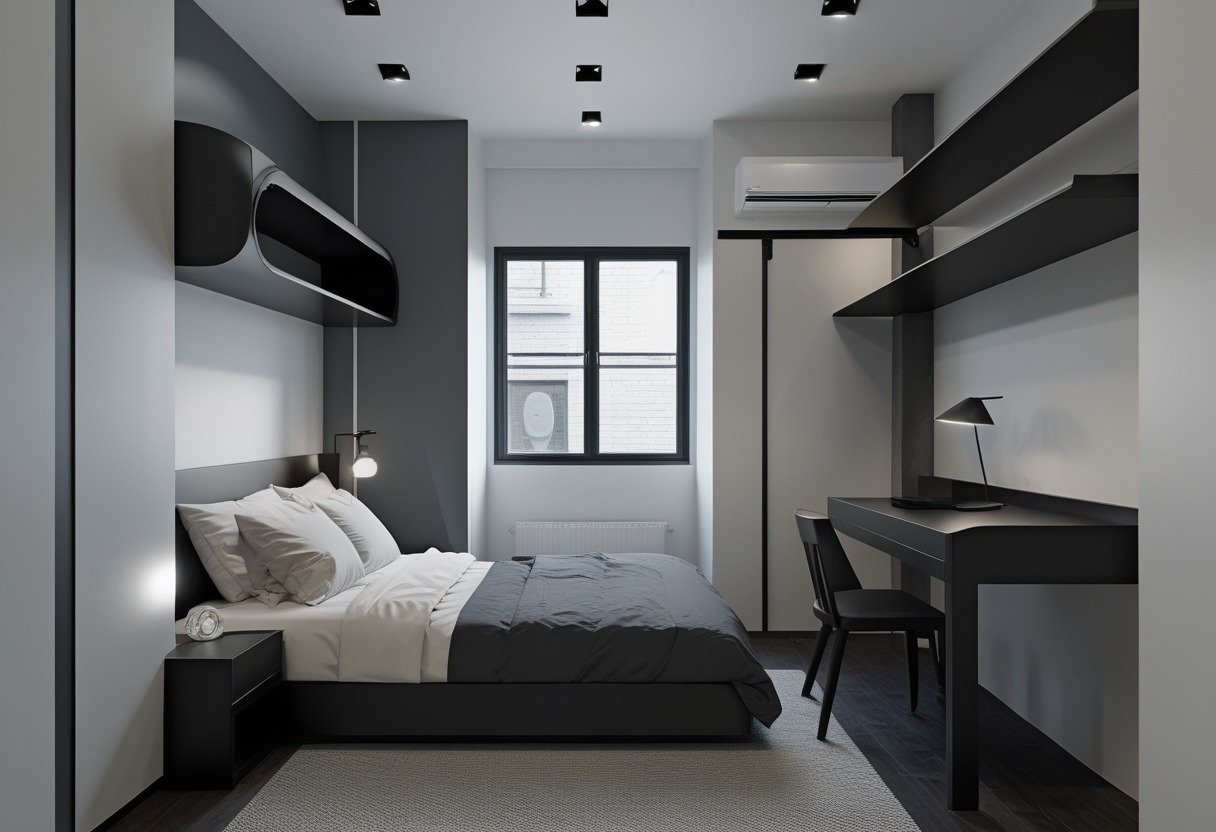
Choose a base of white, gray, and soft black to keep your small room feeling open and calm.
Add matte black accents like a lamp, shelf brackets, or drawer pulls to give the space a modern edge.
Use texture—wool throws, matte-painted walls, and a leather pillow—to prevent the palette from looking flat.
Keep furniture simple and low-profile so the dark accents read as intentional, not heavy.
7) Compact L-shaped desk with cable management grommet
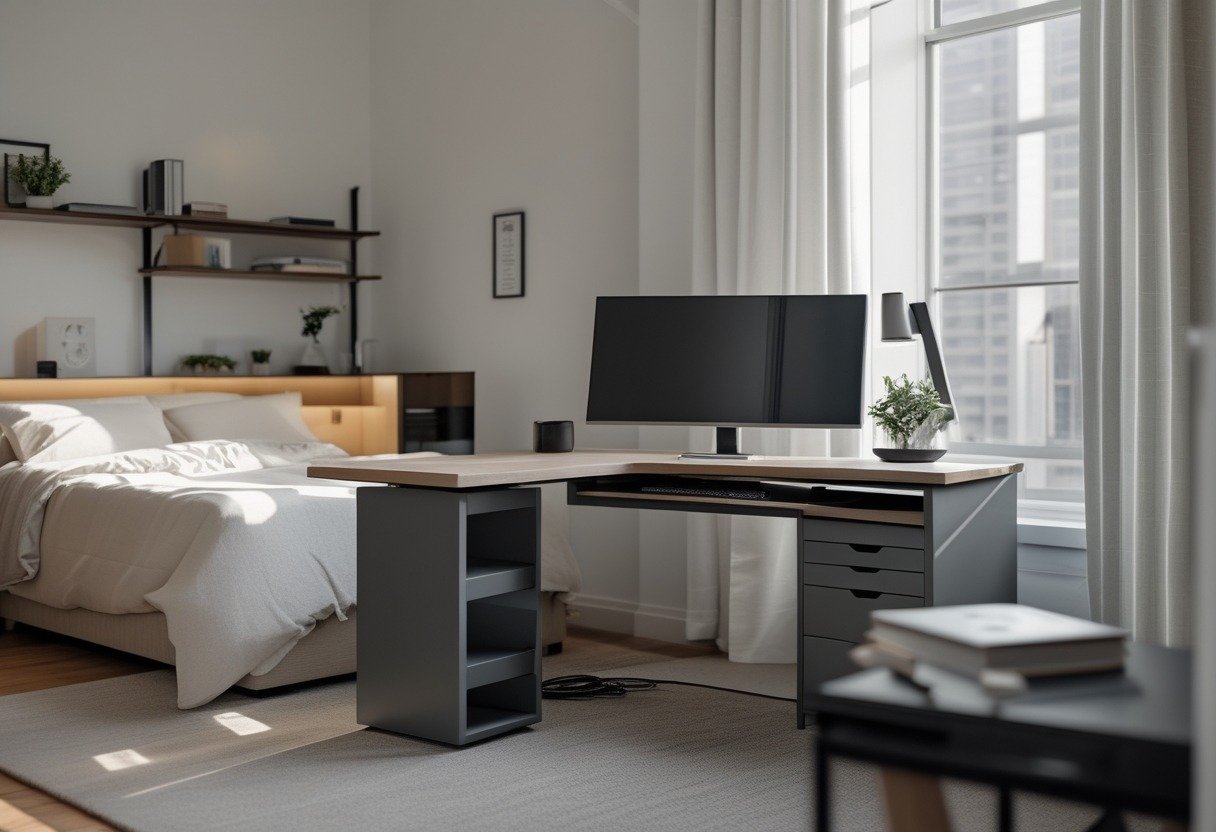
Choose an L-shaped desk to fit a corner and free up floor space. You get more surface area for a laptop and a small monitor without crowding the room.
Look for a built-in grommet or cable channel to hide cords. That keeps your setup tidy and reduces clutter on shelves and the floor.
Pick a slim model with a small storage shelf or drawer so you can store headphones or chargers. This keeps essentials close without eating into your workspace.
8) Corner open shelving with labeled storage bins
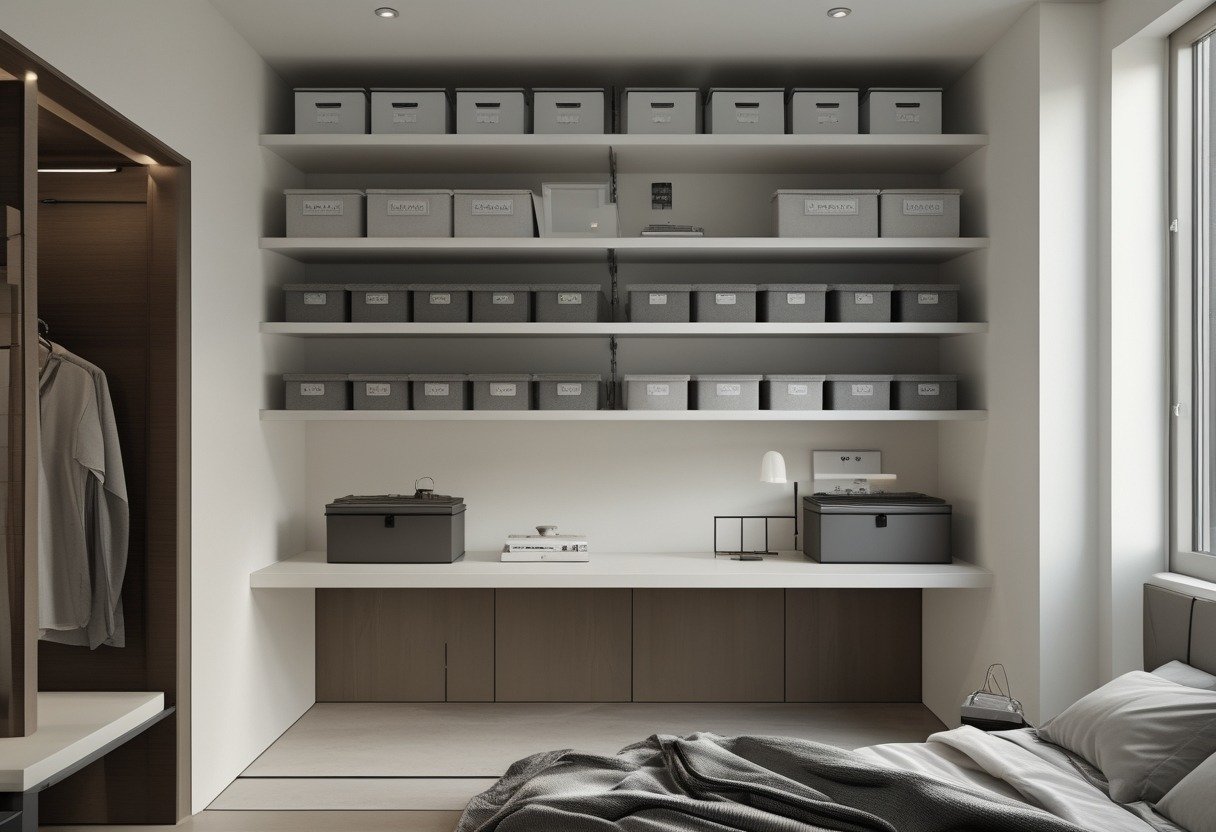
Place open shelves in an unused corner to add vertical storage without crowding the floor. You get easy access to gear, books, and shoes while keeping the room tidy.
Use uniform bins and label them for socks, chargers, paperwork, and spare cables. Labels speed up cleanups and help you find things fast.
Keep heavier items on lower shelves and display a few items on top to avoid a cluttered look.
9) Industrial pipe clothing rack and reclaimed wood shelf
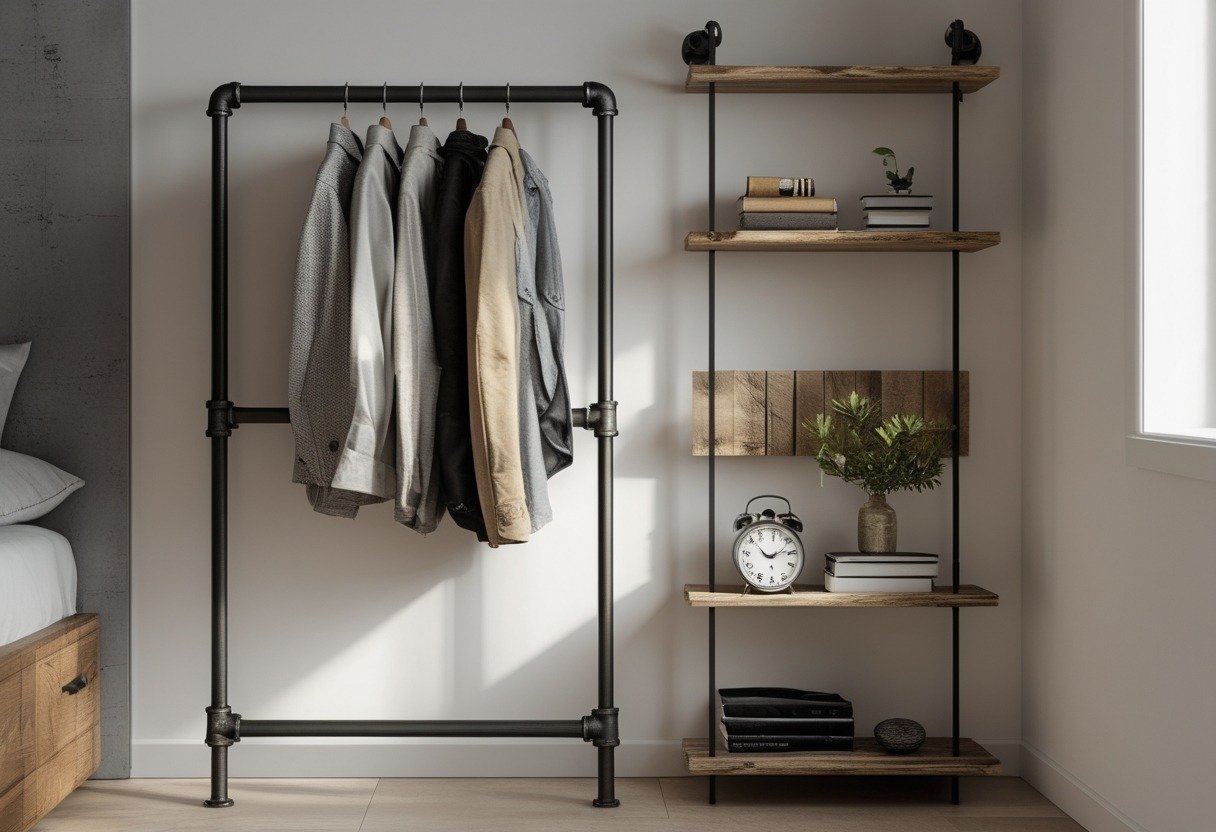
You can add a slim industrial pipe rack to save floor space while keeping clothes visible. Pair it with a reclaimed wood shelf above for shoes, hats, or folded items.
The metal pipes give a strong, simple look that fits small, masculine rooms. The wood adds warmth and hides wear for a relaxed, lived-in feel.
This setup is easy to build or buy and works well in tight closets or against a spare wall. It keeps your room organized without crowding it.
10) Full-length mirror with hidden jewelry and tech drawer
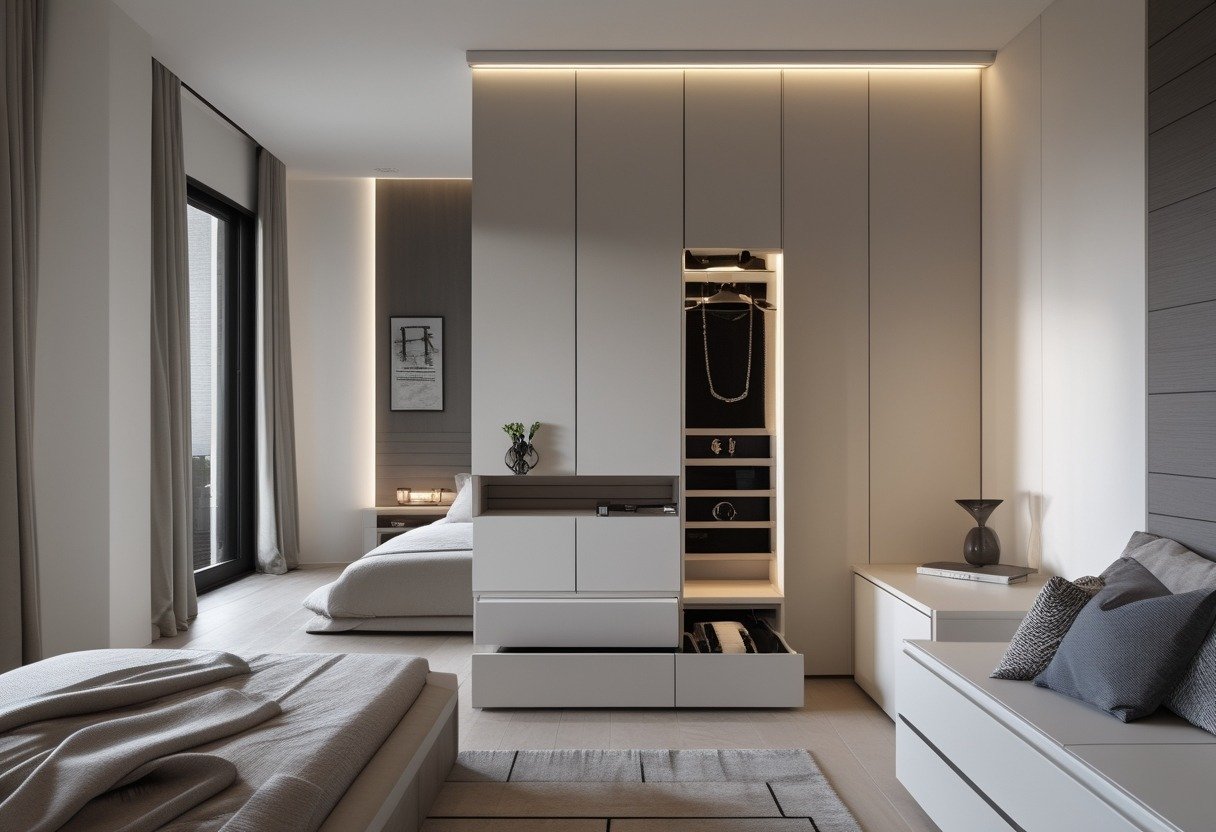
Place a full-length mirror that hides storage to save floor space and keep things tidy. You can store watches, chains, and small gadgets like earbuds in divided compartments.
Choose a lockable model if you need extra security. Built-in LED lighting helps when you dress and check accessories.
11) Fold-down wall table that doubles as breakfast bar
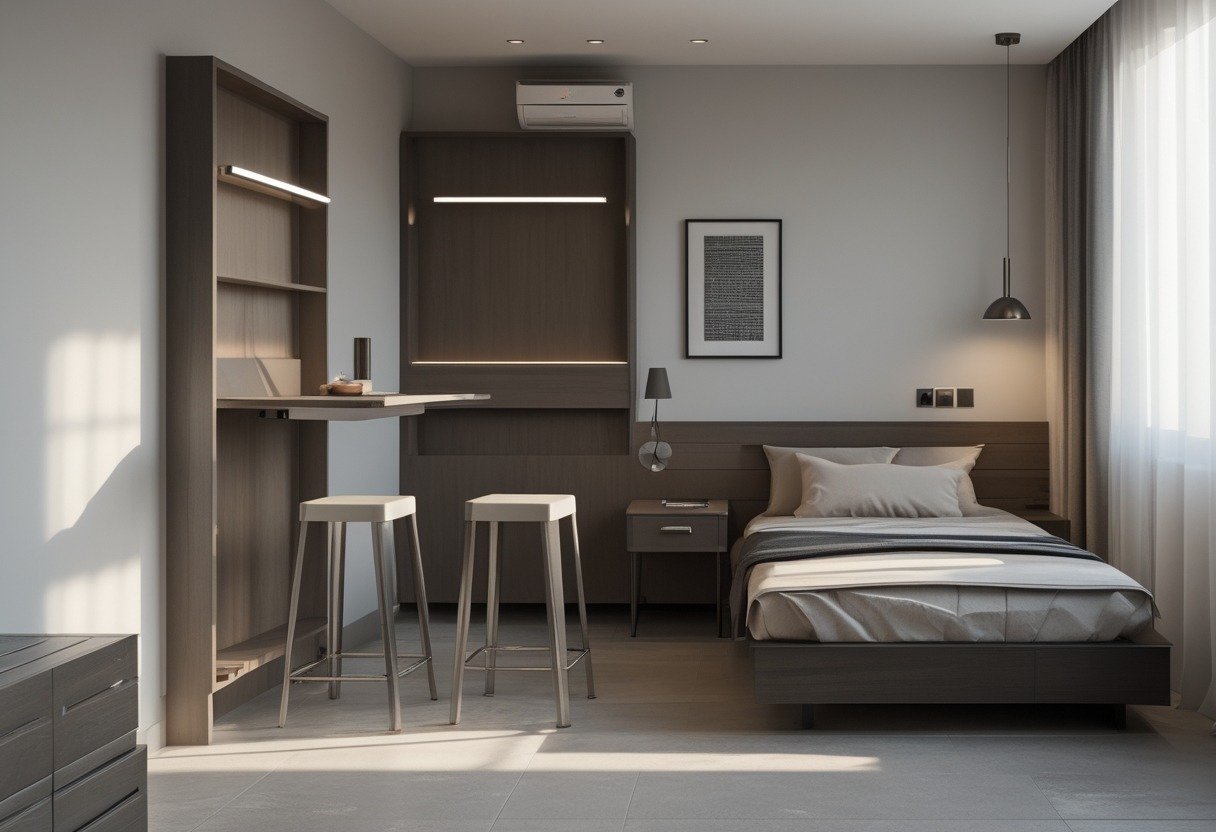
Choose a fold-down wall table to save floor space and add a spot for meals or work. Mount it at bar height so you can use stools and keep the room open.
Pick a sturdy model with simple hardware so it folds easily. Use it for coffee, quick meals, or a laptop without crowding your small bedroom.
12) Neutral textured rug to define the sleeping zone
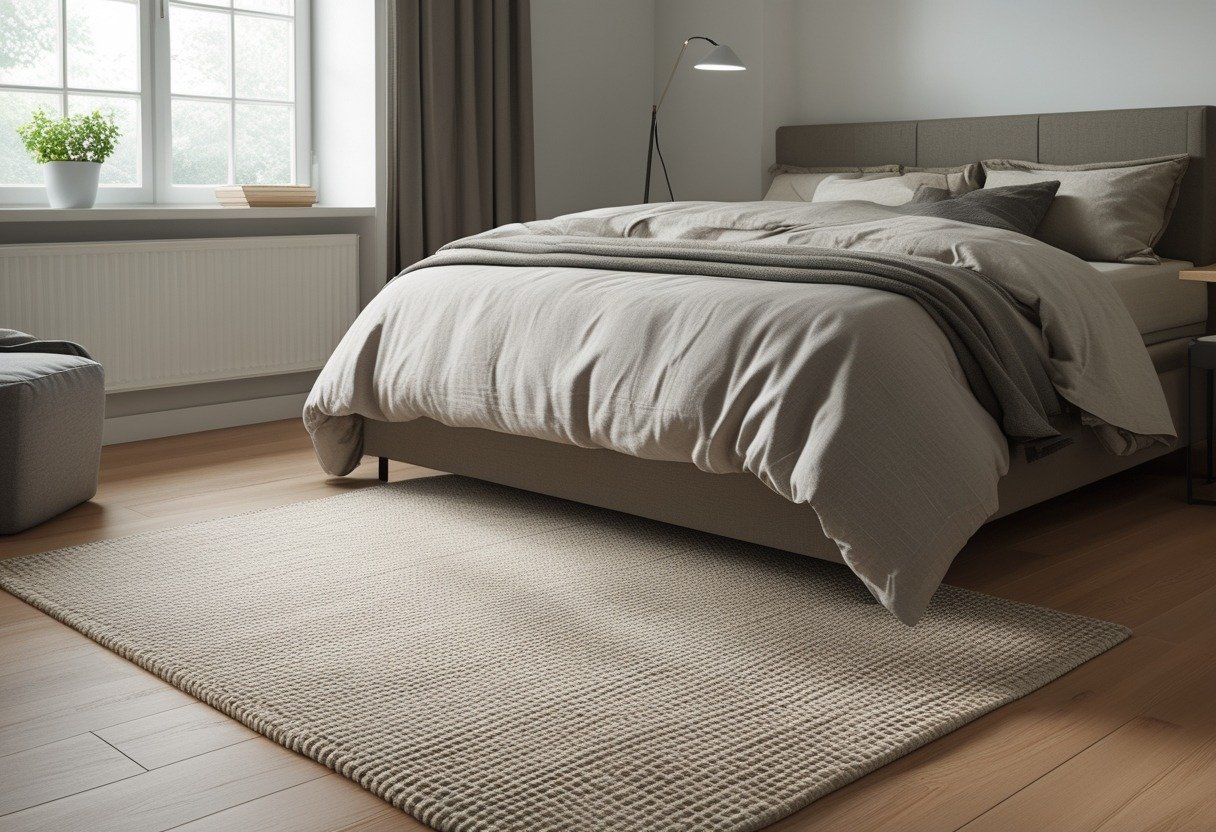
Choose a neutral rug with a clear texture to anchor your bed without stealing focus. It adds warmth and sound dampening while keeping the room visually calm.
Place the rug so it extends beyond the bed sides and foot to create a defined sleeping area. Pick low- to mid-pile for easy cleaning and to fit small-space furniture.
Design Principles for Compact Bedrooms
Focus on furniture that serves more than one purpose and storage that uses vertical space. Keep sightlines clear and pick a simple color palette to make the room feel larger and calmer.
Maximizing Limited Floor Space
Choose a bed that fits the room with at least 24 inches of walking space on one side. Consider a platform bed with built-in drawers or a loft bed if ceiling height allows. Place the bed against the longest wall to open floor area and avoid centering it under a window where circulation is tight.
Use multi-function pieces: a desk that doubles as a nightstand, a bench with internal storage, or nesting tables. Limit large, bulky furniture; swap a bulky dresser for a tall chest. Arrange furniture so pathways stay clear and the door swings freely. Measure before buying and make a simple floor plan on paper or an app to test layouts.
Utilizing Vertical Storage
Install shelving up to near the ceiling and use a step stool for access. Open shelves keep things visible and reduce the need for extra furniture. Add hooks and pegboards on unused wall space for bags, hats, and headphones.
Use tall wardrobes instead of wide ones to free floor space. Mount a shallow closet organizer to maximize hanging space and add under-shelf baskets for shoes. Keep frequently used items at eye level and store seasonal or infrequent items higher up. Consider wall-mounted lighting to free bedside surface area.
Choosing Color Schemes and Materials
Pick colors and materials that make the room feel larger and more purposeful. Use bold accents, durable finishes, and smart contrasts to create a masculine, tidy space that still feels breathable.
Incorporating Dark Tones for Sophisticated Style
Dark colors like navy, charcoal, and forest green add depth without crowding a small room when used carefully. Paint one wall a deep shade as an accent behind the bed; this anchors the room and keeps three walls light to reflect daylight. Use matte finishes on walls to hide imperfections and reduce glare.
Add contrast with lighter bedding, a woven rug, or metal accents. Keep textiles in solid or subtle patterns so the dark wall stays the focal point. If you use black furniture, pick slim profiles or raised legs to keep visual weight down. Add a single bright accent—amber lamp, rust pillow—to break monotony without harming the sophisticated feel.
Selecting Multifunctional Furniture Finishes
Choose finishes that resist wear and hide marks in a small room. Powder-coated metal and laminated wood are durable and easy to clean, ideal for a bed frame, desk, or shelving. Matte or low-sheen laminates hide scratches better than high-gloss surfaces.
Prioritize furniture with multiple functions and consistent finishes. Examples:
- Bed with built-in drawers in a textured oak laminate.
- Desk with a metal frame and laminate top that doubles as a dresser surface.
- Floating shelves in the same wood tone as the bed to create continuity.
Match hardware finishes—black, brushed steel, or aged brass—across pieces to make the room feel larger and organized. Keep surfaces clutter-free; visible materials should look intentional, not mismatched.
