
Remember when wardrobes were just big wooden boxes that ate up half your bedroom? Yeah, those days are dead and buried. I just finished renovating my bedroom, and let me tell you – modern wardrobe designs have completely blown my mind.
Last week, my neighbor walked into my bedroom and literally gasped at my new floating wardrobe. She thought I’d hired some fancy designer from Milan. Nope, just did my research and picked something that actually makes sense for how we live now. Modern wardrobes aren’t just about storing clothes anymore; they’re about creating spaces that actually work with our chaotic lives.
If you’re sick of fighting with creaky doors and playing hide-and-seek with your favorite shirt, these modern wardrobe ideas will revolutionize your bedroom. And trust me, once you see what’s possible, you’ll wonder why you waited so long to upgrade.
Minimalist Floating Wardrobe
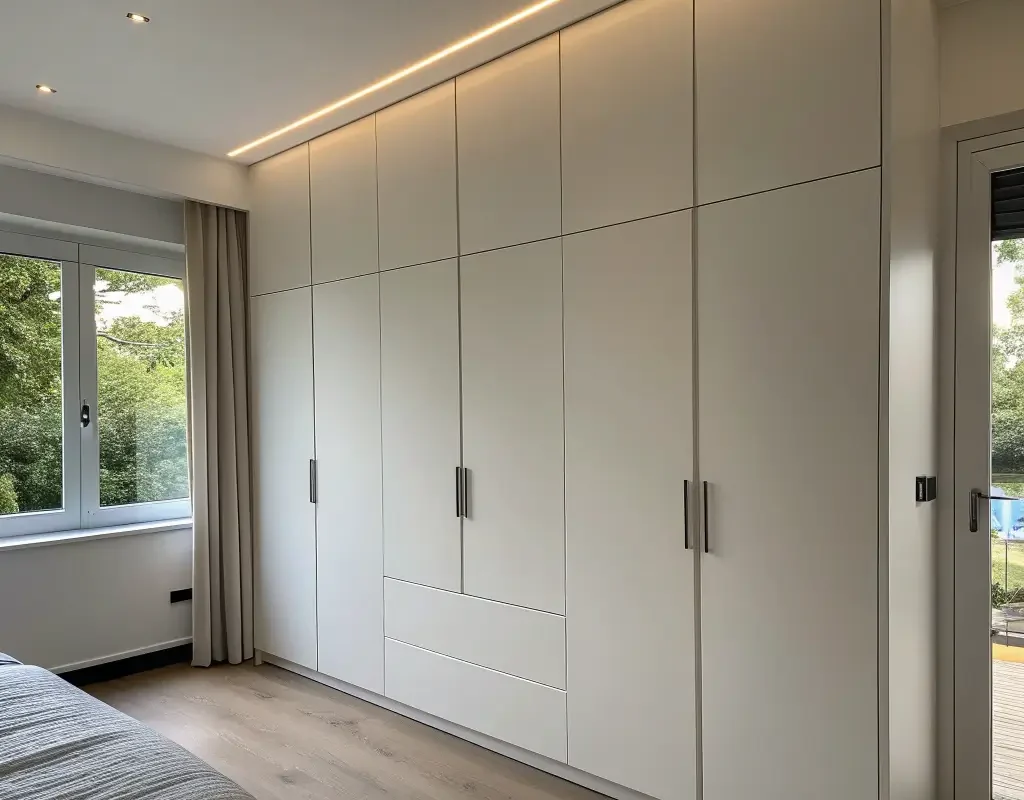
Floating wardrobes make me feel like I’m living in the future. No visible legs, no bulky base – just sleek storage that hovers above your floor like magic. I installed one six months ago, and cleaning underneath it takes literally seconds now.
The whole wall-mounted concept changes everything about bedroom dynamics. My room instantly felt 20% bigger just because I could see more floor space. It’s psychological, sure, but who cares when it actually works?
What really sells the minimalist floating wardrobe is the clean aesthetic. No handles, no visible hinges, just smooth surfaces that blend into your walls. I went with matte white to match my walls, and sometimes guests don’t even realize it’s there until I open it.
Installation Considerations
Here’s something nobody tells you – floating wardrobes need serious wall support. We’re talking heavy-duty brackets anchored into studs, not just drywall anchors. I learned this after my first attempt started sagging. Not cute.
The ideal mounting height sits about 6-8 inches off the ground. High enough to create that floating effect, low enough that you’re not straining to reach lower shelves. Mine sits at 7 inches, and I can robot vacuum underneath without any issues.
Interior Organization
Minimalist outside doesn’t mean chaos inside. I organize mine with:
- Uniform hangers (black velvet, because I’m fancy like that)
- Matching storage boxes for accessories
- Built-in LED strips that activate when doors open
The key is maintaining that minimalist vibe even when doors are open. Everything has its place, and everything stays in its place.
Sliding Door Wardrobe with Mirror Panels

Mirror panels on sliding doors? Absolute game-changer. My bedroom doubled in size overnight – okay, not literally, but it sure looks like it did. Plus, no more buying separate full-length mirrors that eat up wall space.
The reflective surfaces do double duty by bouncing light around the room. I positioned mine opposite my window, and now my morning routine happens in basically natural spotlight conditions. No more getting to work and realizing my outfit doesn’t match.
What I love most about sliding mechanisms? Zero clearance needed. My bed sits 12 inches from my wardrobe, and I can still access everything perfectly. Try doing that with traditional doors.
Mirror Quality Matters
Cheap mirrors warp over time and make you look like you’re in a funhouse. I splurged on high-quality safety-backed mirrors after seeing myself in my friend’s bargain version. The difference? Night and day.
Tinted options add sophistication while being more forgiving. Bronze-tinted mirrors warm up cool bedrooms, while grey-tinted ones hide dust and fingerprints better. I chose smoke-grey, and honestly, I look better in them every morning.
Sliding Mechanism Tips
Invest in soft-close technology if you value your sanity. Nothing ruins a peaceful morning like sliding doors crashing into frames. Mine glide shut silently with the gentlest push.
Top-hung tracks beat bottom tracks every time. No dirt accumulation, no tripping hazards, just smooth operation for years. The installation costs more initially but saves headaches forever.
Open Concept Modular Wardrobe
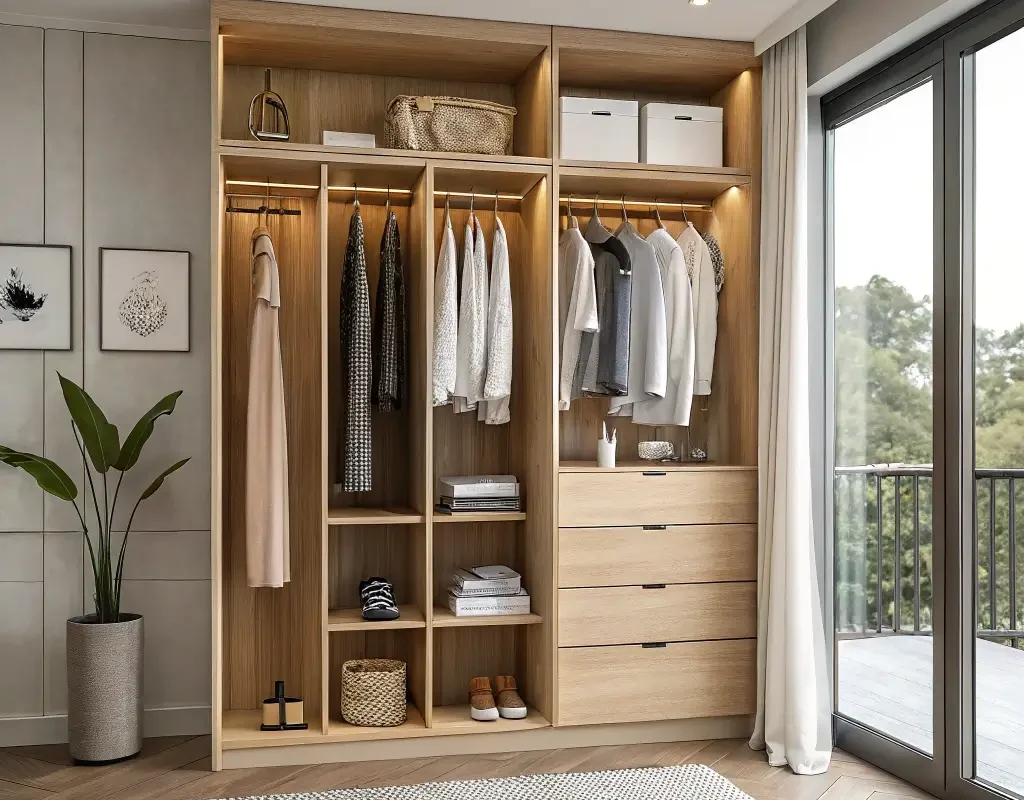
Open wardrobes force you to be organized, and honestly? That’s exactly what I needed. No more shoving things behind closed doors and pretending the mess doesn’t exist. My open modular system keeps me accountable.
The modular aspect means I can reconfigure everything as my needs change. Started with more hanging space, now I have more shelves for my growing sneaker collection. Flexibility beats fixed layouts every single time.
Creating Visual Harmony
The trick with open wardrobes? Color coordination. I organize my clothes by color gradient – whites to greys to blacks, then colors arranged rainbow-style. Sounds extra, but it looks like a boutique display.
Keep accessories in matching containers to prevent visual chaos. I use woven baskets for scarves, clear acrylic boxes for watches, and felt trays for jewelry. Everything visible but organized.
Dust Management Strategies
Yes, open wardrobes collect dust. But here’s my secret – I use garment bags for special occasion wear and rotate seasonal clothes to closed storage. Daily wear doesn’t sit long enough to get dusty.
A handheld vacuum lives in my wardrobe for quick weekly clean-ups. Takes five minutes every Sunday while my coffee brews. Small price for the aesthetic impact.
Also Read: 10 Amazing Sliding Door Wardrobe Designs Ideas for Small Rooms
Built-In Corner Wardrobe

Corners are the Bermuda Triangle of bedroom storage – stuff goes in and never comes back out. Built-in corner wardrobes finally make that awkward space useful. Mine transformed dead space into my favorite storage spot.
The L-shaped configuration maximizes every inch while creating natural zones. I keep work clothes on one side, casual wear on the other. The corner junction holds shoes and bags – previously impossible to store efficiently.
Custom-built doesn’t mean expensive anymore. I used modular components to create a semi-custom solution that cost half what full custom would. Looks built-in, works perfectly, didn’t require selling a kidney.
Maximizing Corner Access
Lazy Susan mechanisms bring corner contents forward with a spin. I installed one for shoes, and now I actually wear all 30 pairs instead of the same three within easy reach.
Pull-out drawers work better than shelves in corners. You see everything without excavation missions. Mine slide out fully on heavy-duty rails that handle the weight without sagging.
Lighting Solutions
Corners get dark fast. I installed motion-activated LED strips along the sides and back. Now the darkest part of my wardrobe is the brightest when I need it. Total game-changer for morning outfit selection.
Walk-In Wardrobe with LED Lighting

Walking into my LED-lit wardrobe feels like entering a high-end boutique. Dramatic? Maybe. But getting dressed shouldn’t feel like a chore, and proper lighting transforms the entire experience.
The layered lighting approach works best:
- Ceiling spots for general illumination
- LED strips under shelves for task lighting
- Accent lights for display areas
I programmed mine with smart controls. Morning settings use bright, cool light for color accuracy. Evening settings switch to warm, dim lighting for a calming vibe.
Strategic Light Placement
Position lights to eliminate shadows where you need clarity. Inside drawer lighting seemed excessive until I installed it. Now I find everything instantly without rummaging.
Mirror lighting needs special attention. Side-mounted LEDs prevent unflattering shadows. I learned this after installing overhead lights that made me look tired every morning. Not the confidence boost you want while getting dressed.
Color Temperature Choices
Daylight bulbs (5000K) show true colors but feel harsh in bedrooms. Warm white (3000K) feels cozy but makes color matching tricky. I compromised with 4000K neutral white – accurate enough for outfit selection, pleasant enough for daily use.
Two-Tone Contemporary Wardrobe
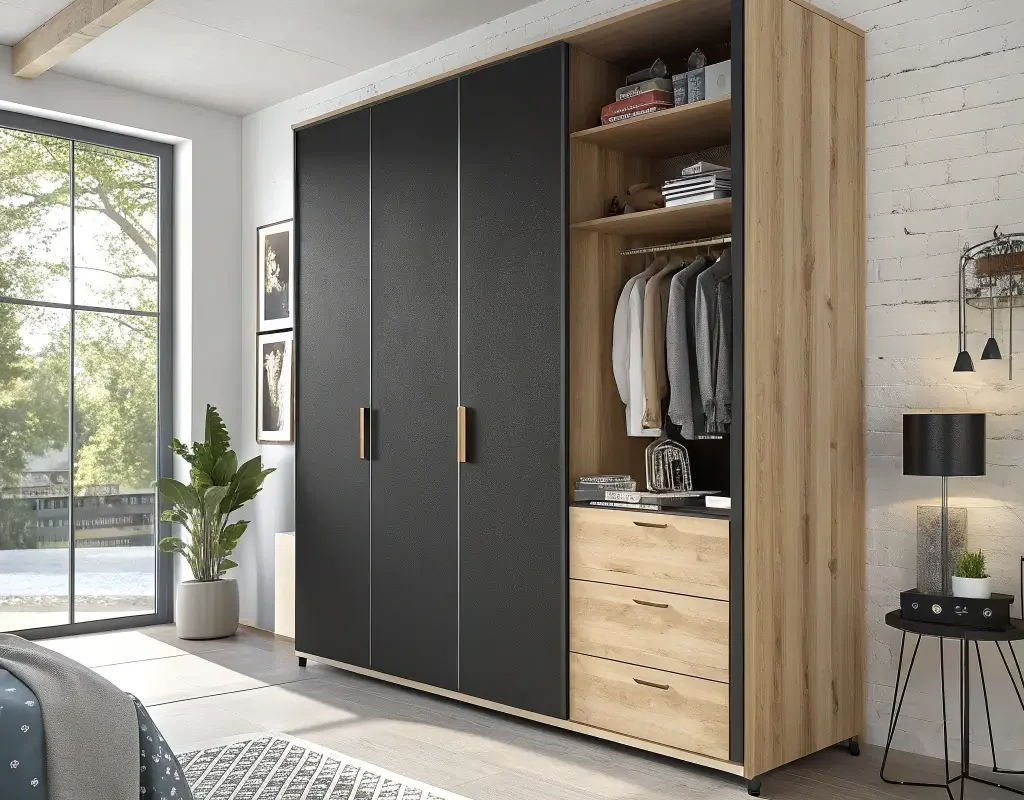
Two-tone wardrobes add visual interest without overwhelming the space. My white-and-walnut combination looks expensive but cost less than single-tone premium options. The contrast creates depth that makes my bedroom look professionally designed.
The horizontal split works particularly well – light colors on top, darker below. This grounds the piece while maintaining airiness. Vertical splits create drama but need bigger rooms to pull off properly.
Color combination rules I swear by:
- Neutral base with accent color (never two bold colors)
- Wood with white always works
- Matte with gloss in the same color family adds subtle interest
Proportion Matters
The ratio between colors affects the entire room’s feel. My wardrobe uses 70% white, 30% walnut. This keeps things light while adding warmth. Equal splits can look indecisive IMO.
Hardware should complement both tones. I chose brushed brass handles that bridge the warm wood and cool white perfectly. Black hardware would’ve been too stark, chrome too cold.
Maintenance Considerations
Different finishes require different care. My white sections need regular wiping to stay pristine, while the wood sections hide fingerprints better. Worth considering if you’re not into constant cleaning.
Also Read: 10 Modern Sliding Wardrobe Design Ideas That Wow Instantly
Compact Wardrobe with Pull-Out Drawers

Small bedroom? Pull-out drawers maximize every cubic inch. My compact wardrobe holds more than my previous full-size unit, just through smarter organization. It’s not about having more space; it’s about using space better.
Full-extension drawer slides changed my life. Everything pulls out completely, so back corners become as accessible as front sections. No more archaeology expeditions for that one specific shirt.
Drawer Depth Optimization
Shallow drawers (4-6 inches) for underwear and accessories. Medium drawers (8-10 inches) for t-shirts and casual wear. Deep drawers (12+ inches) for bulky sweaters. I learned this through trial and error – mostly error.
Soft-close mechanisms on every drawer prevent morning noise and evening frustration. The extra cost pays for itself in relationship harmony. Trust me on this one.
Interior Dividers
Adjustable dividers keep drawers organized long-term. I use:
- Bamboo dividers for underwear and socks
- Acrylic dividers for accessories
- Fabric boxes for delicate items
The key? Everything needs a designated spot, or chaos returns within days.
Glass Front Wardrobe with Hidden Storage

Glass-front wardrobes sound terrifying until you understand the hidden storage concept. The visible sections showcase your best pieces while hidden compartments hide the chaos. It’s basically Instagram versus reality in furniture form 🙂
My setup uses frosted glass panels for the main sections – you see shapes and colors but not wrinkles or mess. Clear glass display boxes on top shelf hold my designer bags. Everything else hides behind strategic organization.
Display Strategy
Curate what’s visible like you’re styling a boutique:
- Color-coordinated sections create visual calm
- Statement pieces at eye level draw attention
- Matching hangers unify the look
Hidden sections hold the reality – gym clothes, old t-shirts, that dress you’ll definitely fit into again someday.
Glass Types and Treatments
Tempered glass only – safety isn’t negotiable. Frosted or reeded glass offers privacy while maintaining lightness. Tinted glass adds sophistication but needs good lighting to see contents clearly.
My bronze-tinted glass panels hide slight disorganization while adding warmth. Clear glass demands perfection I can’t maintain daily.
Wardrobe with Integrated Dressing Table
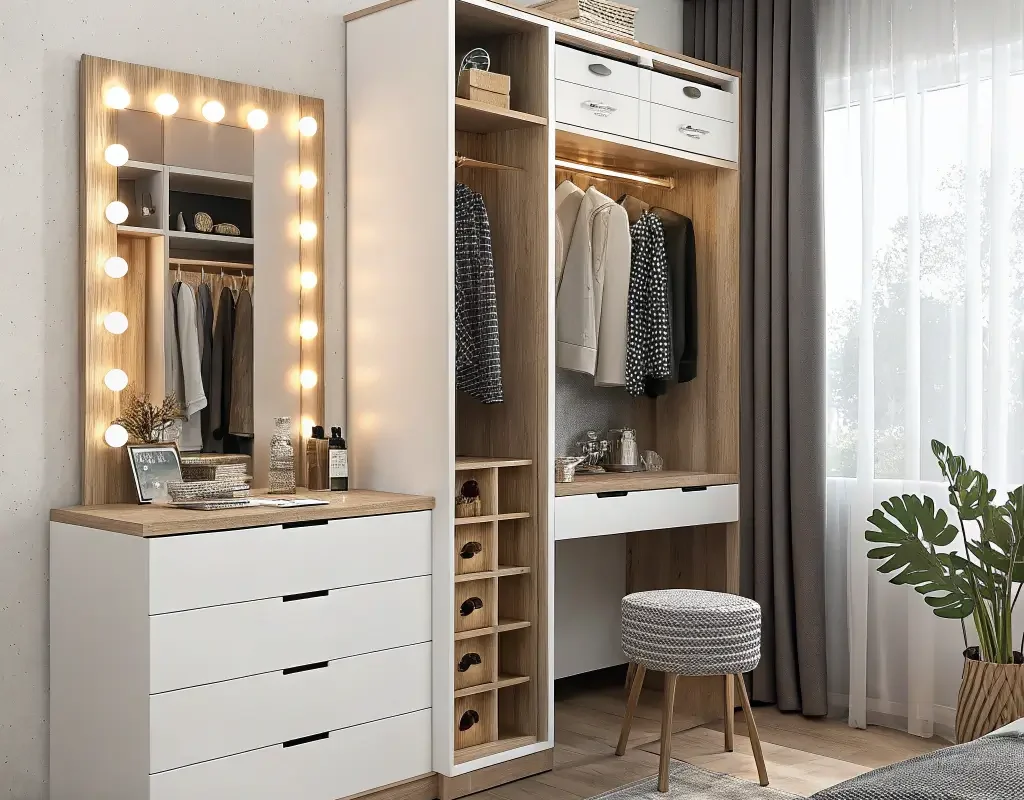
Why waste space on separate furniture? My wardrobe’s integrated dressing table pulls out when needed, tucks away when not. This space-saving marvel gave me back 9 square feet of floor space.
The fold-down table includes:
- Built-in mirror with LED surround
- Hidden drawers for makeup and jewelry
- Cable management for hair tools
- Cushioned stool that slides underneath
Morning routines happen in one spot now. No more bathroom counter chaos or bedroom floor explosion. Everything stays contained and organized.
Height Considerations
Standard desk height (29-30 inches) works for most people. But I’m 5’2″, so I customized mine to 27 inches. Adjustable options exist but cost more. Know your needs before committing.
The mirror should position at eye level when seated. Mine tilts to accommodate standing touch-ups too. Small details make huge differences in daily use.
Storage Integration
Vertical dividers keep makeup brushes upright and accessible. Felt-lined drawers protect jewelry from scratches. Hidden power outlets charge devices out of sight.
Everything designed for actual use, not just looks. Pretty storage that doesn’t function is just clutter with extra steps.
Also Read: 15 Trendy Wardrobe Design Ideas for Contemporary Homes
Scandinavian Style Wardrobe with Clean Lines

Scandinavian design makes small spaces feel larger through visual simplicity. My Scandi-inspired wardrobe proves you don’t need ornate details to make a statement. Sometimes the absence of fuss is the biggest flex.
Light wood, white surfaces, and minimal hardware create that signature Nordic calm. I chose birch plywood with white laminate doors. The combination feels fresh and timeless, not trendy.
Functional Minimalism
Every element serves a purpose:
- Push-open doors eliminate handle clutter
- Adjustable shelving adapts to changing needs
- Integrated lighting provides function without visible fixtures
The philosophy? If it doesn’t improve function, it doesn’t belong.
Natural Materials
Real wood beats veneer for authentic Scandinavian style. The natural grain variations add subtle interest without busy patterns. My birch plywood edges are exposed and finished – a detail that screams quality craftsmanship.
White isn’t the only option. Soft grays, pale blues, and sage greens work beautifully. Just keep saturation low and undertones warm :/
Organization Philosophy
Scandinavian style demands internal organization matching external simplicity. I use:
- Natural fiber baskets for soft items
- White boxes for miscellaneous storage
- Open shelving for everyday items
The goal? Opening the wardrobe should feel as calm as looking at it closed.
Conclusion
Modern wardrobe design has evolved beyond basic storage into lifestyle statements that actually improve how we live. After testing multiple styles and learning from plenty of mistakes, I can say the perfect wardrobe matches your life, not magazine spreads.
The best modern wardrobe combines form and function seamlessly. Whether you choose floating minimalism or integrated dressing tables, the design should solve your specific storage challenges while elevating your bedroom aesthetic.
Start with your biggest pain point. Lack of space? Go vertical with floating designs. Messy habits? Open wardrobes force organization. Dark rooms? Mirror panels and LED lighting transform everything. Every design decision should address a real need.
My journey from cramped, chaotic storage to organized, stylish solutions started with admitting what wasn’t working. Now my wardrobe actively improves my daily routine instead of complicating it. FYI, that’s the real mark of modern design – it makes life easier, not just prettier.
Ready to revolutionize your bedroom storage? Pick the design that speaks to your lifestyle, not just your Pinterest board. Because the best wardrobe is the one you’ll actually maintain, and modern design finally makes that possible. Your future organized self will thank you every single morning.
