
Small room, big dreams, zero floor space – sound familiar? I spent three years battling a tiny bedroom where opening my wardrobe door meant performing gymnastics over my bed. Then I discovered sliding door wardrobes, and honestly, it felt like finding extra square footage I never knew existed.
Last month, I helped my sister transform her 8×10 bedroom with a sliding wardrobe, and she actually cried happy tears. Not because she’s dramatic (okay, maybe a little), but because she finally had both storage AND walking space. That’s the magic we’re talking about here.
If you’re tired of playing Tetris with your furniture just to access your clothes, these sliding door wardrobe ideas will change everything. Trust me, I’ve tested most of them in various tiny apartments over the years.
Space-Saving Sliding Wardrobe Designs
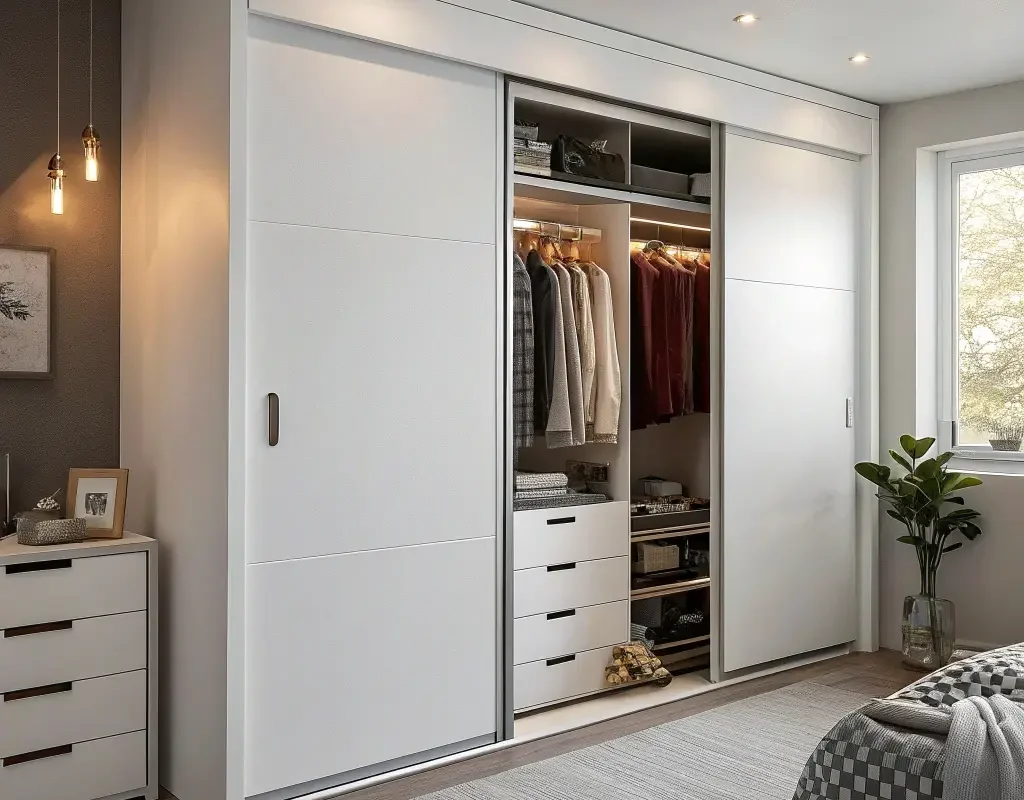
Let’s address the elephant in the room – or rather, the wardrobe that’s eating your room. Traditional hinged doors need about 24-30 inches of clearance to open properly. Know what sliding doors need? Zero. Zilch. Nada.
I measured my bedroom before and after installing sliding doors, and I gained back 18 square feet of usable space. That might not sound like much, but in a small room? That’s the difference between having a nightstand and not having one.
The trick with space-saving designs lies in thinking vertically. My current wardrobe reaches from floor to ceiling – 8 feet of storage in a 2-foot deep footprint. The top shelves hold seasonal stuff I access twice a year, while daily essentials stay at eye level.
Wall-to-Wall Installation
Going wall-to-wall creates the illusion of architectural built-ins without the renovation costs. I installed mine across an entire 10-foot wall, and visitors think I have custom closets. The seamless look actually makes the room feel bigger, not smaller.
Here’s what makes wall-to-wall work:
- Consistent door heights that align with room proportions
- Matching tracks that run the entire length without breaks
- Unified color schemes that blend with wall colors
Alcove Adaptations
Got a weird alcove or indent? Perfect wardrobe spot. My friend converted a useless 3-foot alcove into a fully functional wardrobe with sliding doors. What was wasted space now holds her entire professional wardrobe.
The beauty of alcove installations? They don’t protrude into the room at all. The sliding doors sit flush with the wall when closed, creating a smooth, uninterrupted wall surface.
Minimalist Sliding Door Wardrobe Concepts
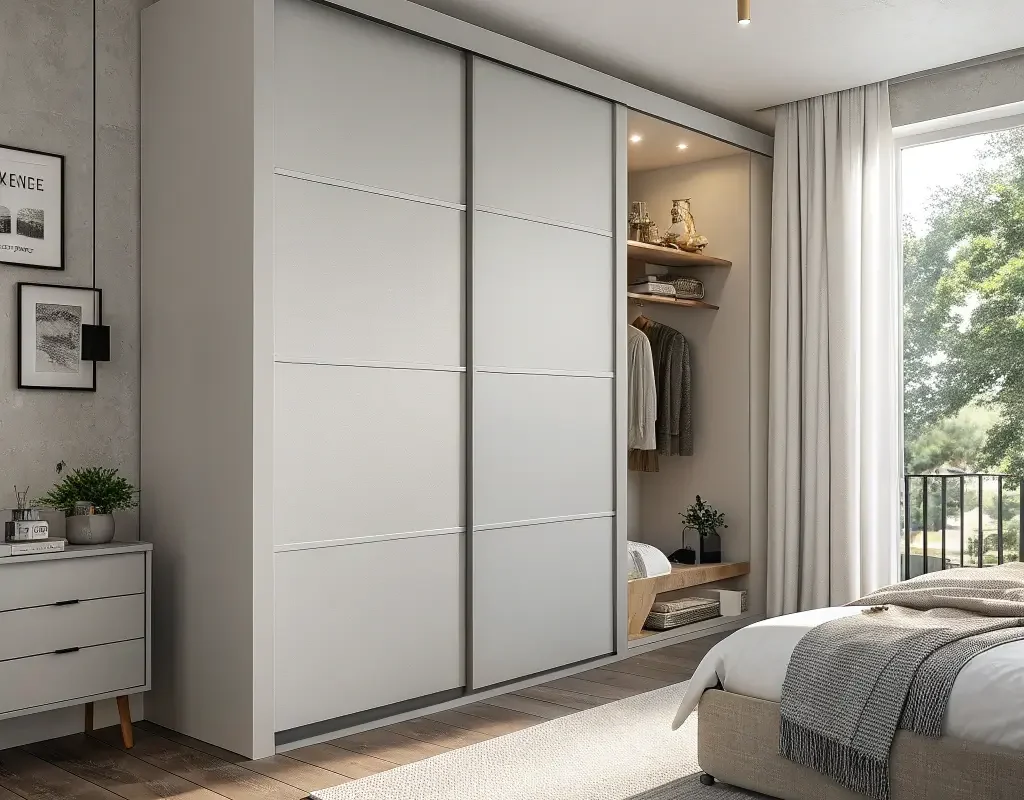
Minimalism in small spaces isn’t just trendy – it’s survival. My minimalist sliding wardrobe makes my tiny bedroom feel like a boutique hotel room instead of a storage unit.
The secret sauce? Handle-free designs that disappear into walls. I chose push-to-open mechanisms that keep surfaces completely clean. No protruding handles to catch on clothes or break up visual lines.
Color plays a huge role here. I went with pure white doors matching my walls exactly. When closed, you barely notice the wardrobe exists. The room feels twice as big because there’s no visual interruption.
Internal Minimalism
Minimalist exteriors need minimalist interiors to work. I use:
- Uniform hangers in one color (black velvet in my case)
- Matching storage boxes for accessories
- Clear drawer dividers that maintain visual calm
This consistency means even when doors slide open, there’s no visual chaos. Everything looks intentional and organized.
Material Choices
Matte finishes beat glossy for minimalist small rooms. Glossy surfaces reflect clutter and make spaces feel busier. My matte white laminate doors hide fingerprints and create that serene, gallery-like atmosphere I was after.
Wood grain can work minimally too. Light oak or ash in simple, flat panels adds warmth without busy-ness. Just avoid heavy grains or dark woods that visually weigh down small spaces.
Mirror-Front Sliding Wardrobe Ideas
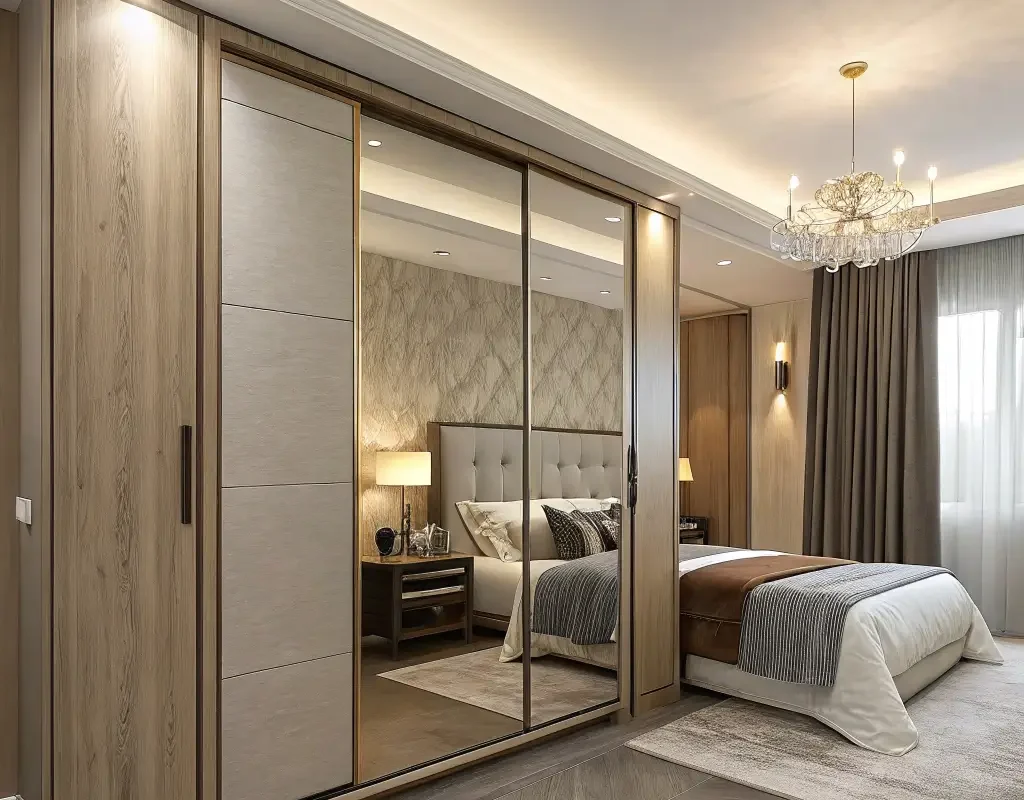
Want to double your room size instantly? Mirrored sliding doors deliver that optical illusion brilliantly. My 10×12 bedroom looks like a 10×24 space thanks to full-length mirror doors.
But here’s what nobody tells you – not all mirrors work equally. I learned this the hard way with cheap mirrors that warped and made me look like a funhouse reflection. Quality mirrors with proper backing cost more but maintain true reflections.
Strategic Mirror Placement
Position matters more than you think. Place mirrored wardrobes:
- Opposite windows to maximize natural light
- Perpendicular to beds to avoid awkward morning reflections
- Away from direct sunlight to prevent glare issues
My mirrors face my window, and the light bouncing effect means I rarely need overhead lighting during the day.
Tinted Options
Clear mirrors aren’t your only choice. Bronze-tinted mirrors add warmth while still expanding space. Grey-tinted versions create a modern, sophisticated look that’s more forgiving in harsh light.
I chose smoky grey mirrors for my bedroom because they hide minor imperfections and dust better than clear glass. Plus, they look expensive even though they weren’t.
Safety Considerations
Always use safety-backed mirrors in bedrooms. When my nephew accidentally kicked a ball into my wardrobe, the safety backing held everything together. Regular mirrors would have created a dangerous mess.
Also Read: 10 Modern Sliding Wardrobe Design Ideas That Wow Instantly
Modern Luxury Sliding Wardrobe Styles
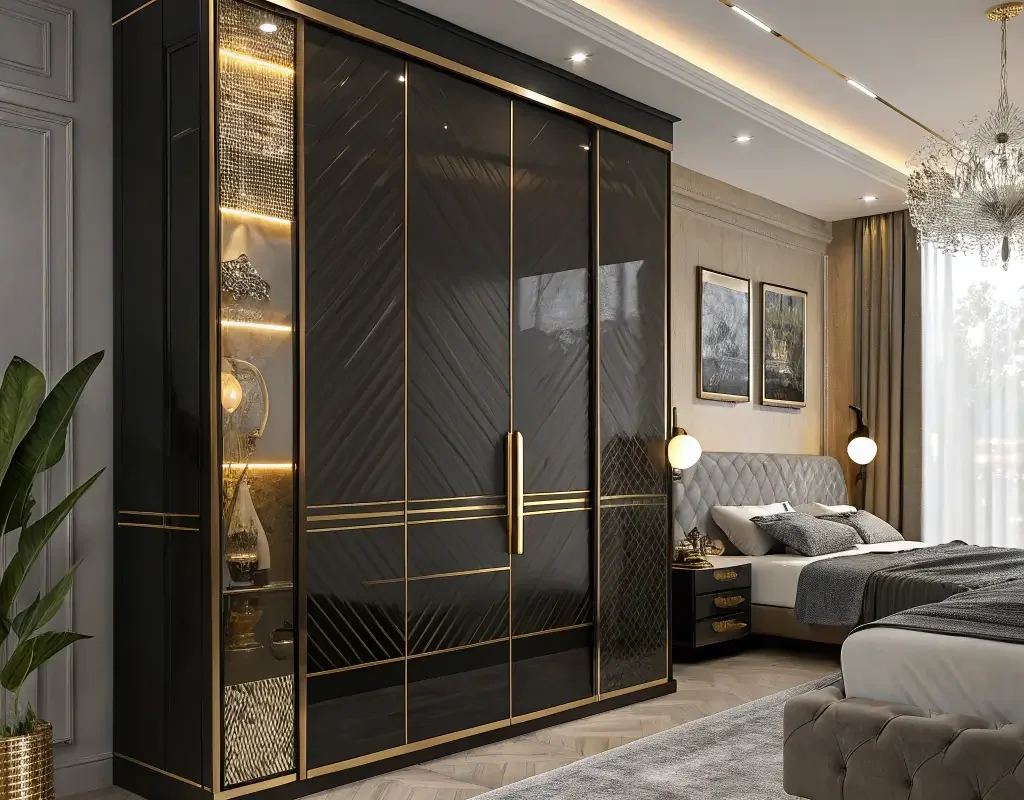
Luxury doesn’t always mean expensive – sometimes it just means thoughtful details. My “luxury” sliding wardrobe cost less than a designer handbag but makes me feel rich every morning.
Soft-close mechanisms transform the entire experience. No more accidentally slamming doors at midnight. The doors glide shut silently with barely a touch. Once you experience this, regular sliding doors feel primitive.
Premium Hardware
Invest in quality tracks and rollers. Cheap hardware starts squeaking within months and eventually fails completely. I splurged on German-engineered tracks that still slide like butter after four years.
Hidden tracks create that floating door effect that screams luxury. The doors appear to glide magically without visible support. It costs more to install but the visual impact is worth every penny.
Integrated Lighting
LED strips that activate when doors slide open? Game-changer. I installed motion-activated warm white LEDs that illuminate my wardrobe contents automatically. No more fumbling in darkness or forgetting to turn lights off.
The lighting setup includes:
- Adjustable brightness for different times of day
- Color temperature control for accurate color matching
- Timer functions that shut off after 10 minutes
Compact Bedroom Sliding Wardrobe Solutions
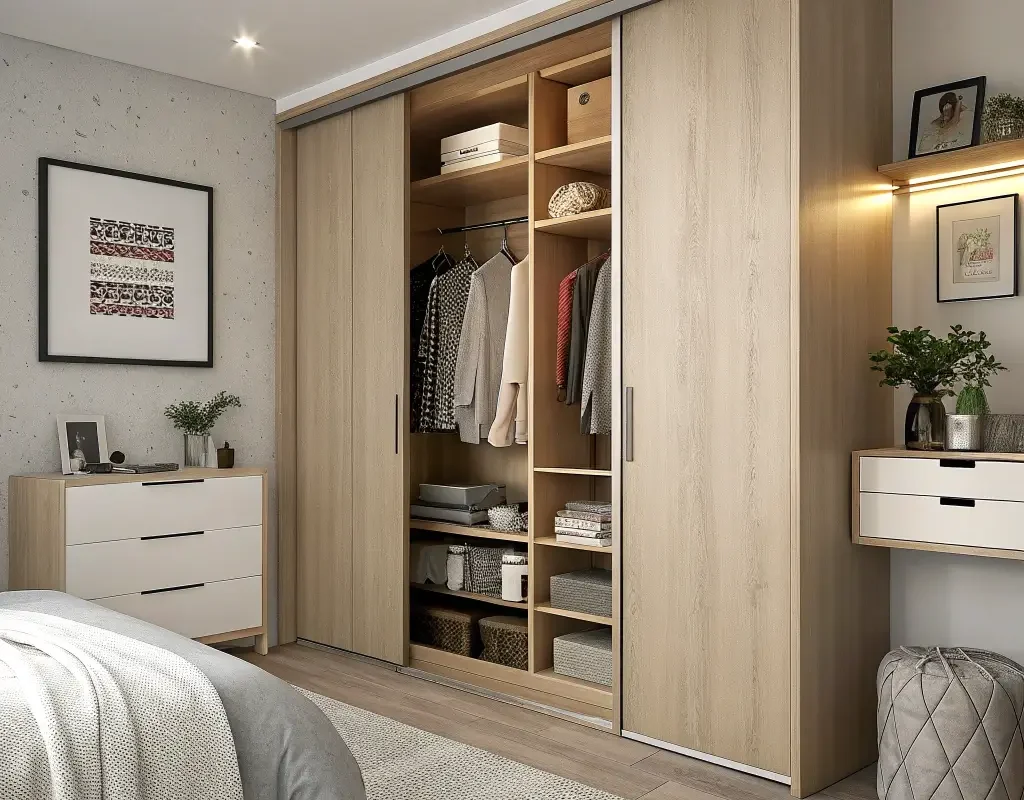
Compact doesn’t mean compromised. My current wardrobe is only 20 inches deep but holds more than my previous 24-inch hinged version. How? Smart internal configuration.
Shallow wardrobes work brilliantly with the right approach. I angle my hangers slightly, allowing clothes to overlap without crushing. This simple trick gained me 4 inches of walking space in my bedroom.
Multi-Level Rod Systems
Double hanging rods maximize vertical space for shorter items. My setup has:
- Upper rod for shirts and blouses
- Lower rod for pants and skirts
- Side hooks for belts and scarves
This configuration doubled my hanging capacity without increasing wardrobe footprint.
Corner Solutions
L-shaped sliding systems turn corner dead zones into storage gold. My corner unit uses curved tracks that allow doors to slide around the corner. What was wasted space now holds all my seasonal clothing.
The key to corner success? Proper track alignment and quality rollers that handle the curve smoothly. Cheap systems bind at corners and become frustrating fast.
Rustic Wooden Sliding Wardrobe Designs
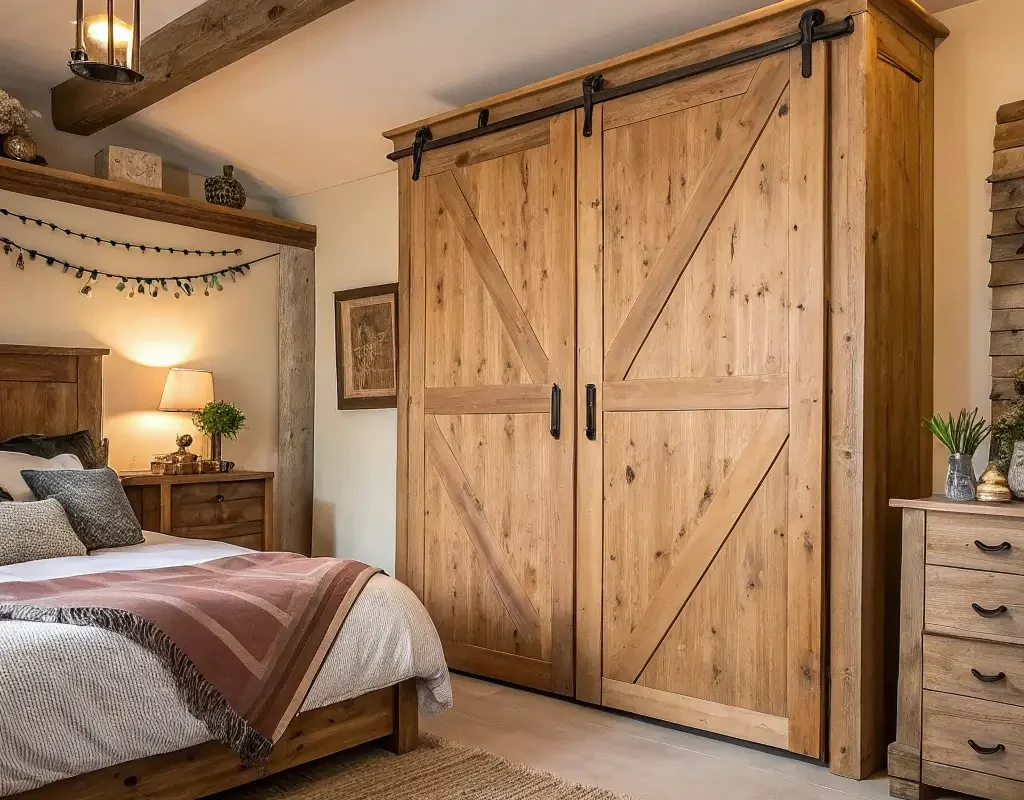
Who says small rooms can’t have character? Rustic wooden sliding doors add warmth and personality without overwhelming limited space. My reclaimed barn wood doors get more compliments than anything else in my apartment.
The texture of natural wood actually helps small spaces feel less boxy. Vertical wood grain draws eyes upward, making ceilings feel higher. Horizontal grain widens narrow rooms visually.
Wood Selection for Small Spaces
Light woods work best in compact rooms:
- Pine brightens while adding rustic charm
- Ash provides subtle grain without darkness
- Weathered oak offers character without heaviness
Avoid heavy, dark woods like mahogany or walnut in truly tiny spaces. They absorb light and make rooms feel smaller.
DIY Aging Techniques
New wood can look authentically rustic with simple techniques. I used steel wool and vinegar to age pine doors, creating that weathered gray patina in one weekend. The process costs almost nothing but delivers designer results.
Wire brushing raises wood grain for authentic texture. Sand lightly afterward for smoothness that still shows character. Natural imperfections make each door unique.
Also Read: 15 Trendy Wardrobe Design Ideas for Contemporary Homes
Colorful Sliding Wardrobe Inspirations
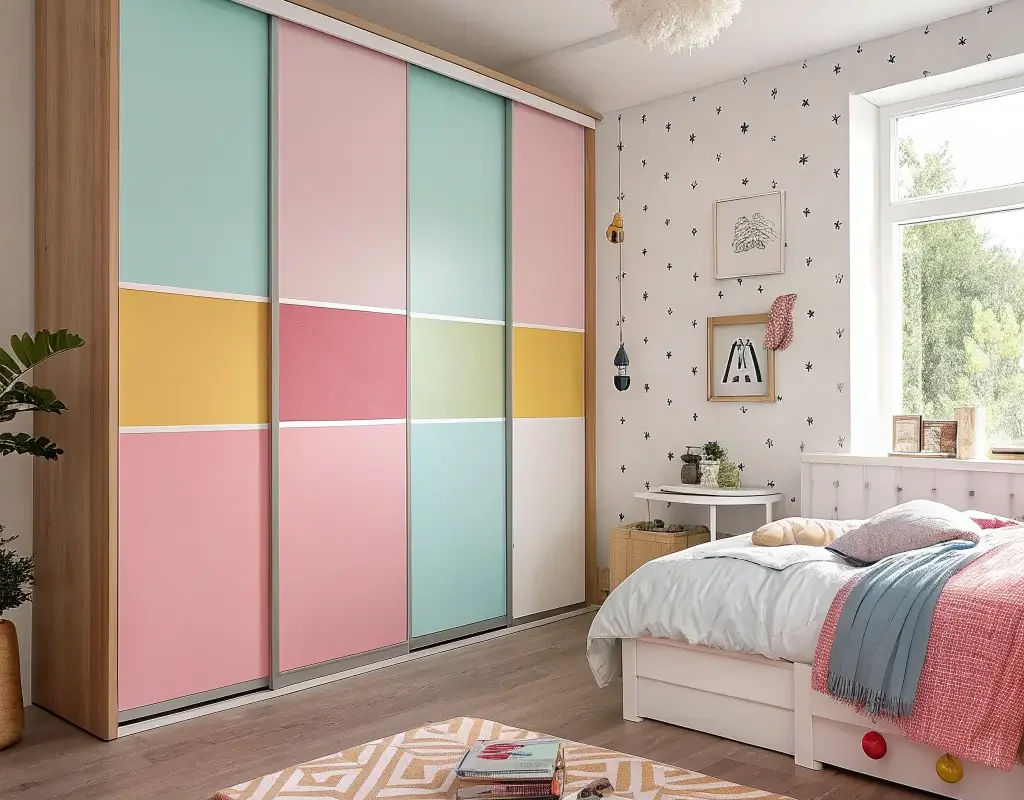
Scared of color in small rooms? Don’t be. The right colors can actually make spaces feel larger and definitely more interesting. My sage green sliding doors turned my boring bedroom into a design statement.
Color psychology matters in bedrooms. Soft blues and greens promote calm, while warm terracotomy colors energize. I chose sage because it’s soothing but not sleepy – perfect for a room that needs to function morning and night.
Gradient Effects
Ombre or gradient doors add depth without overwhelming. My friend painted her doors in a sunset gradient – peach to coral to pink. Sounds crazy, but it’s absolutely stunning and makes her tiny room feel artistic rather than cramped.
The trick with gradients? Keep transitions subtle and use colors from the same family. Harsh contrasts fragment small spaces visually.
Two-Tone Designs
Split your doors horizontally with two colors. Light on top, darker below creates the illusion of higher ceilings. I’ve seen this done with white upper panels and navy lower panels – sophisticated and space-enhancing.
Sleek Glass Sliding Door Wardrobe Ideas
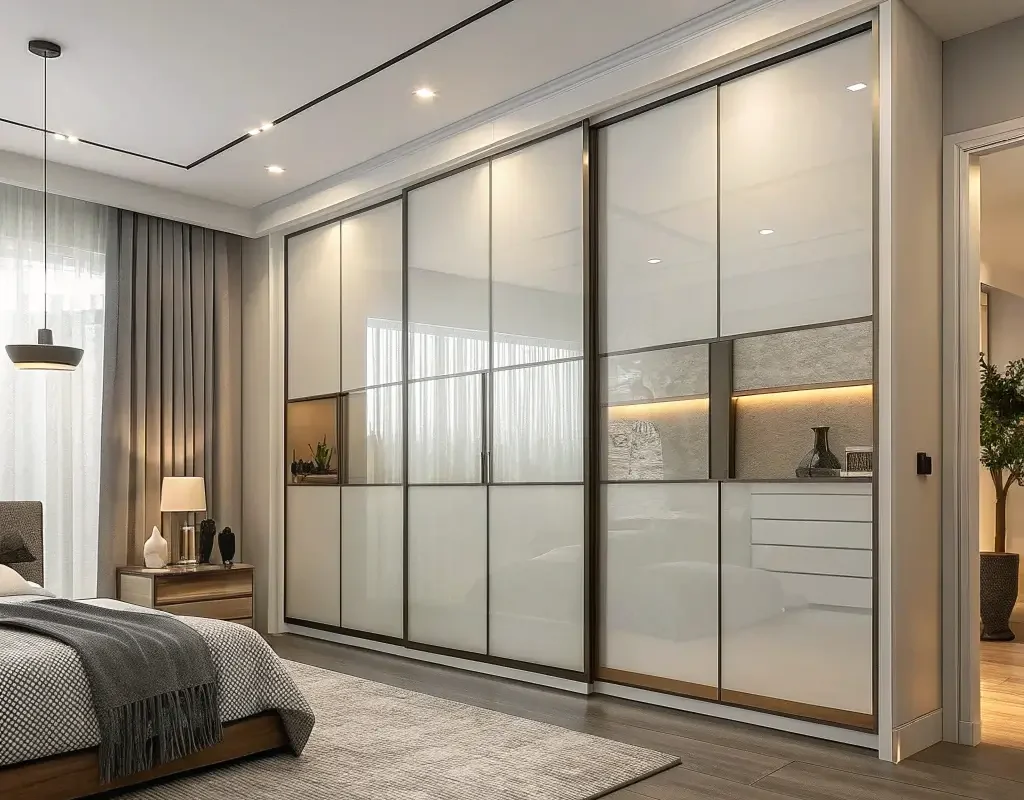
Glass doors in small bedrooms? Absolutely. But you need the right type. Frosted or textured glass maintains privacy while keeping spaces light and airy.
I installed acid-etched glass doors last year, and they transformed my dark bedroom. Light passes through but contents stay private. The translucent quality prevents the visual weight of solid doors.
Frame Considerations
Thin frames maximize glass area and minimize visual bulk. My aluminum frames are only 1 inch wide but plenty strong. Black frames add definition, while silver ones nearly disappear.
Frameless glass creates ultimate minimalism but requires perfect installation. One millimeter off and doors won’t slide properly. FYI, this isn’t a DIY project unless you’re seriously skilled.
Maintenance Reality
Glass shows everything, but that’s actually motivation to stay organized. I keep microfiber cloths in my nightstand for quick wipe-downs. Takes 30 seconds but keeps everything looking pristine 🙂
DIY Sliding Wardrobe Makeover Concepts
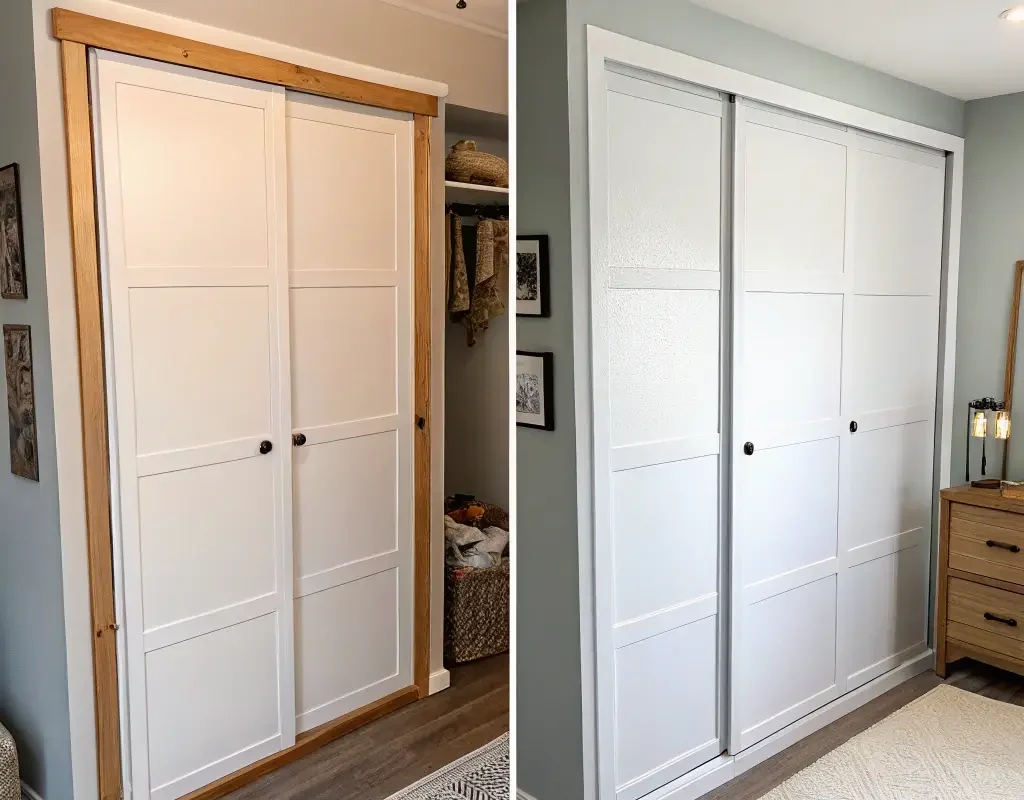
You don’t need a complete replacement to transform your wardrobe. My first sliding door makeover cost $150 and completely changed my bedroom’s vibe.
Start with the doors themselves. Peel-and-stick wallpaper offers endless design possibilities. I used marble-pattern contact paper on plain doors, and everyone thinks they’re real stone. The best part? Totally removable for renters.
Hardware Upgrades
Swapping hardware creates instant impact:
- Replace plastic rollers with ball-bearing versions for smoother operation
- Upgrade to soft-close mechanisms (retrofit kits exist!)
- Add decorative handles or pulls for personality
These changes take an afternoon but deliver professional results.
Paint Transformations
Paint remains the cheapest dramatic change. I transformed builder-grade hollow doors with chalk paint and wax. The matte finish hides imperfections while adding texture.
Spray painting delivers the smoothest finish but requires door removal. Brush painting works in-place but needs careful technique to avoid streaks.
Adding Functionality
Stick-on LED strips revolutionize dark wardrobes. Battery-powered versions need no wiring and last months between charges. I added motion sensors to mine – total cost under $40.
Adhesive hooks and organizers on door interiors maximize space. My doors hold jewelry organizers, belt racks, and shoe pockets. Invisible when closed but incredibly functional.
Also Read: 15 Functional Wardrobe Design Bedroom Ideas Worth Saving
Smart Storage Sliding Wardrobe Layouts
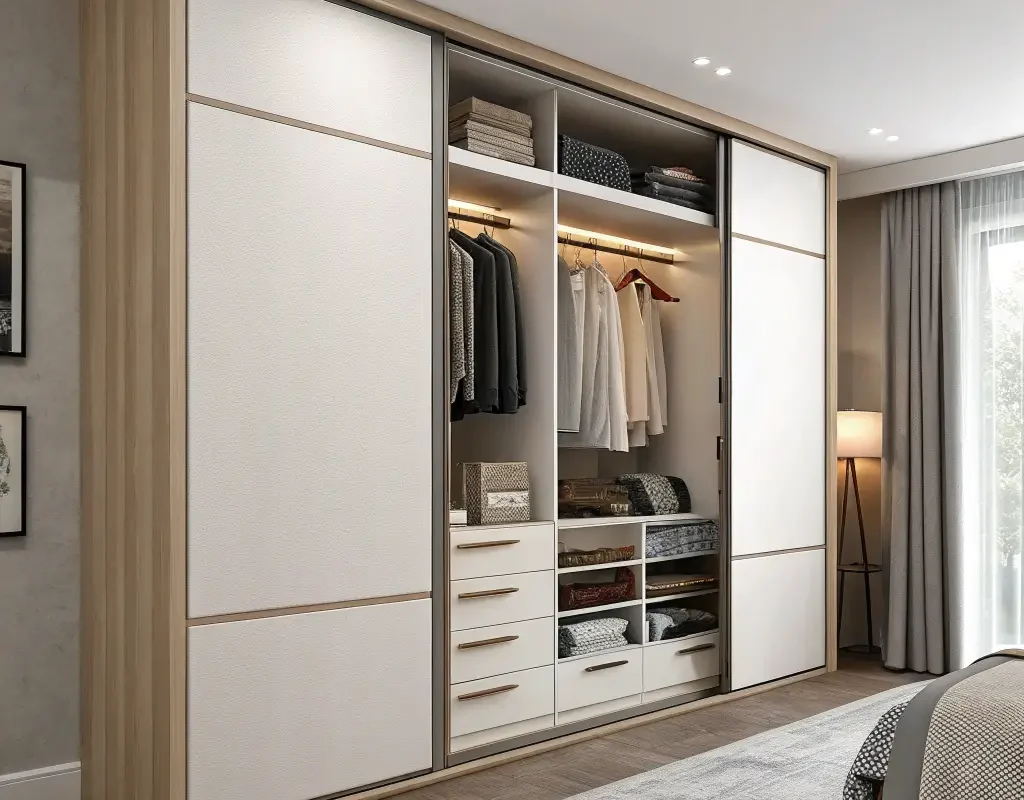
Smart storage in small rooms means every inch works harder. My sliding wardrobe holds twice what it did originally, just through better organization.
Adjustable everything allows customization as needs change. Modular shelving systems let me reconfigure seasonally. Summer means more shelf space for t-shirts, winter needs hanging space for coats.
Vertical Divisions
Divide wardrobe width into zones:
- Daily wear section at easiest access point
- Work clothes zone with appropriate hanging height
- Occasional wear area can be less accessible
This zoning prevents daily excavation through formal wear to find jeans.
Pull-Out Features
Pull-out accessories multiply accessibility:
- Sliding shoe racks utilize floor space efficiently
- Pull-out baskets for accessories and small items
- Extending valet rods for outfit planning
My pull-out shoe rack holds 20 pairs in space that previously fit 8.
Tech Integration
Modern solutions include built-in charging stations for devices. I installed USB outlets inside my wardrobe for charging watches and phones overnight. Cables stay hidden, devices stay organized.
Some systems now include inventory apps that catalog your wardrobe digitally. Sounds excessive? Maybe. But I haven’t bought duplicate items since installing mine :/
Conclusion
Here’s what I’ve learned after years of small bedroom warfare: sliding door wardrobes don’t just save space – they transform how you live in that space. Every design I’ve shared comes from real experience in real tiny bedrooms.
The perfect sliding wardrobe for your small room depends on your specific needs. Need more light? Go mirrored or glass. Want character? Rustic wood delivers. Craving calm? Minimalist designs create serenity.
Start with your biggest pain point. If you’re constantly battling door clearance, any sliding system helps. If your room feels dark and cramped, mirrors or glass doors open everything up. Small improvements compound into major lifestyle upgrades.
My journey from cramped, cluttered bedrooms to organized, stylish spaces started with one sliding door installation. Now I can’t imagine dealing with swinging doors again. The space savings alone justify the switch, but the aesthetic possibilities? That’s where things get fun.
Remember, small rooms force creativity, and creativity leads to solutions you never expected. Your perfect sliding wardrobe design is out there – or maybe it’s a combination of ideas that nobody’s tried yet. Either way, your small bedroom is about to get a whole lot bigger. Ready to slide into better storage?
