
Sharing a bedroom with a sibling is basically like living with your arch-nemesis who also happens to share your DNA. One kid wants lights out at 8 PM, the other thinks bedtime is merely a suggestion.
Creating divided spaces in shared kids’ bedrooms isn’t just about preventing World War III – it’s about giving each kid a sense of ownership in their shared domain.
I learned this the hard way when my kids spent an entire week arguing over invisible boundary lines. My daughter literally taped string down the middle of the room like some kind of domestic Berlin Wall.
That’s when I realized they didn’t need separate rooms – they needed defined spaces within the room they had.
After three years of trial, error, and one memorable incident where they tried to build their own wall using LEGO boxes (structural integrity: zero), I’ve discovered what actually works.
These aren’t those magazine-perfect solutions that require an architect – these are real ways to divide kids’ bedrooms that normal parents can actually pull off without losing their minds.
1. Bunk Bed Zones for Shared Kids Bedrooms
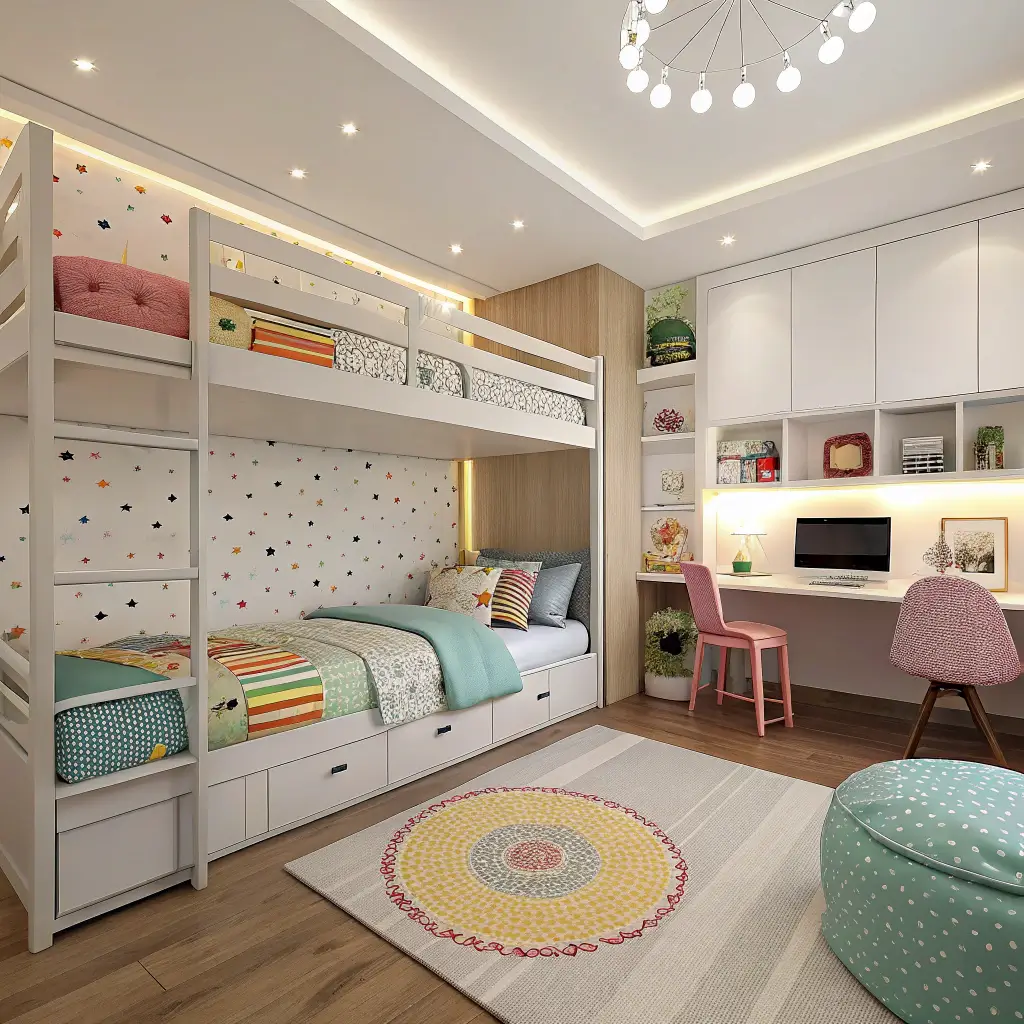
Bunk beds are the Swiss Army knife of room division – they create vertical territories without eating up floor space. Each bunk becomes its own little kingdom, complete with sovereignty rights and immigration policies (no siblings allowed without permission).
My kids’ bunk bed transformation started with basic IKEA bunks that looked like every other bunk bed on Earth. Then we added curtains to each level, creating instant private zones. The fights dropped by 80% overnight because suddenly they each had a space that was genuinely theirs.
Creating Bunk Bed Boundaries
Make bunks work as dividers:
• Curtains on all sides for complete privacy
• Different themes for each bunk level
• Personal reading lights to prevent bedtime battles
• Side caddies for individual storage
The genius move was positioning the bunks perpendicular to the wall instead of against it. This created two distinct room areas – one behind the bunks, one in front. My son claimed the back area for LEGO building, daughter got the front for her art station.
What nobody tells you about bunk zones? They make bedtime easier. Kids actually want to go to their “private fort” instead of fighting sleep in a shared space. Marketing bedtime as alone time in their special space? Parenting win.
2. Curtain Dividers for Privacy in Kids Rooms
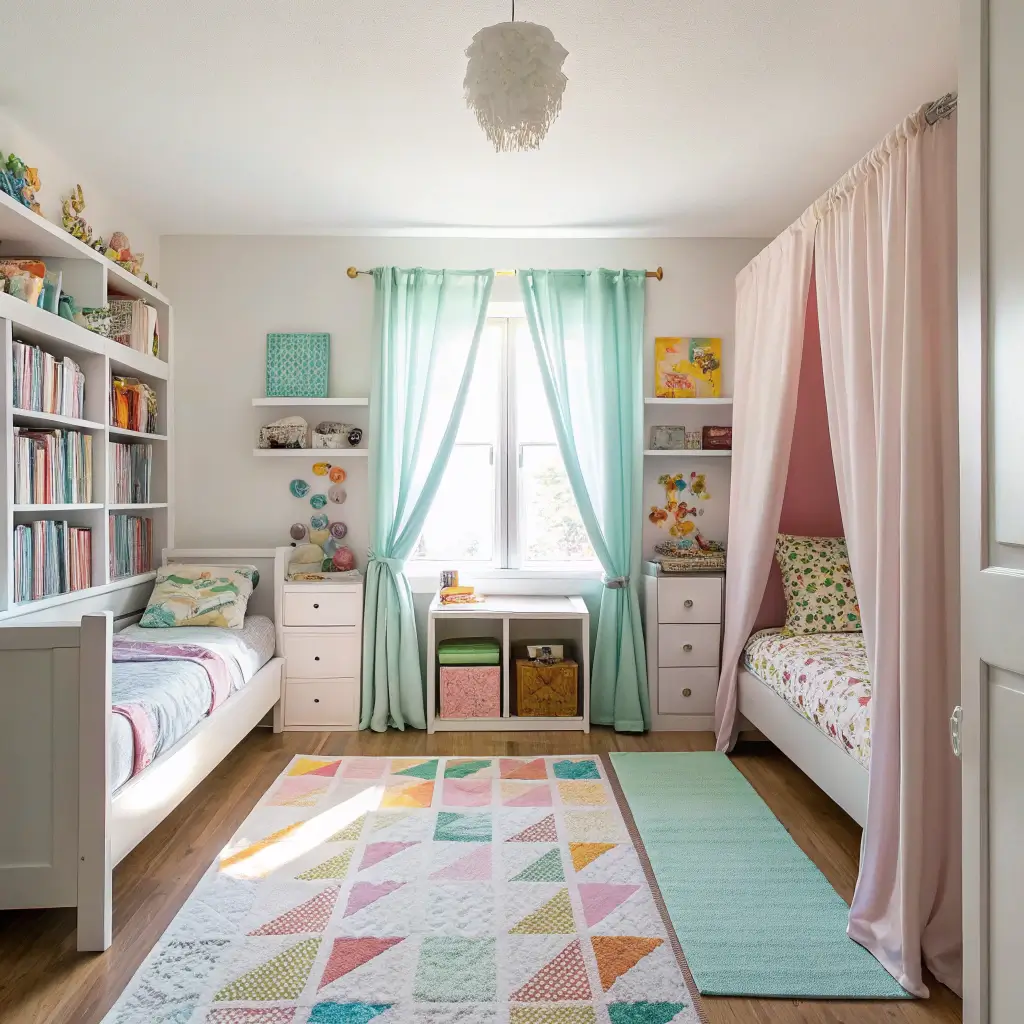
Curtains are basically the duct tape of room division – cheap, versatile, and surprisingly effective. A ceiling-mounted curtain track changed our shared bedroom game completely.
I installed a curved curtain track for $40 that runs down the middle of my kids’ room. During the day, curtains push to the sides. At night or when someone needs space, instant privacy. It’s like having two rooms that can become one whenever they actually want to play together (rare but it happens).
Curtain Division That Works
Set up success with:
• Ceiling-mounted tracks for smooth operation
• Blackout curtains for different sleep schedules
• Fun patterns each kid chooses for their side
• Tiebacks to keep them open during play
The unexpected benefit? Curtains muffle sound. My early riser can get dressed without waking the night owl. Never thought fabric could prevent so many morning meltdowns.
FYI, let kids pick their curtain side design. My daughter chose unicorns, son picked space. Looking at different patterns from each side makes the division feel more real than a single pattern would.
3. Bookshelf Room Partitions
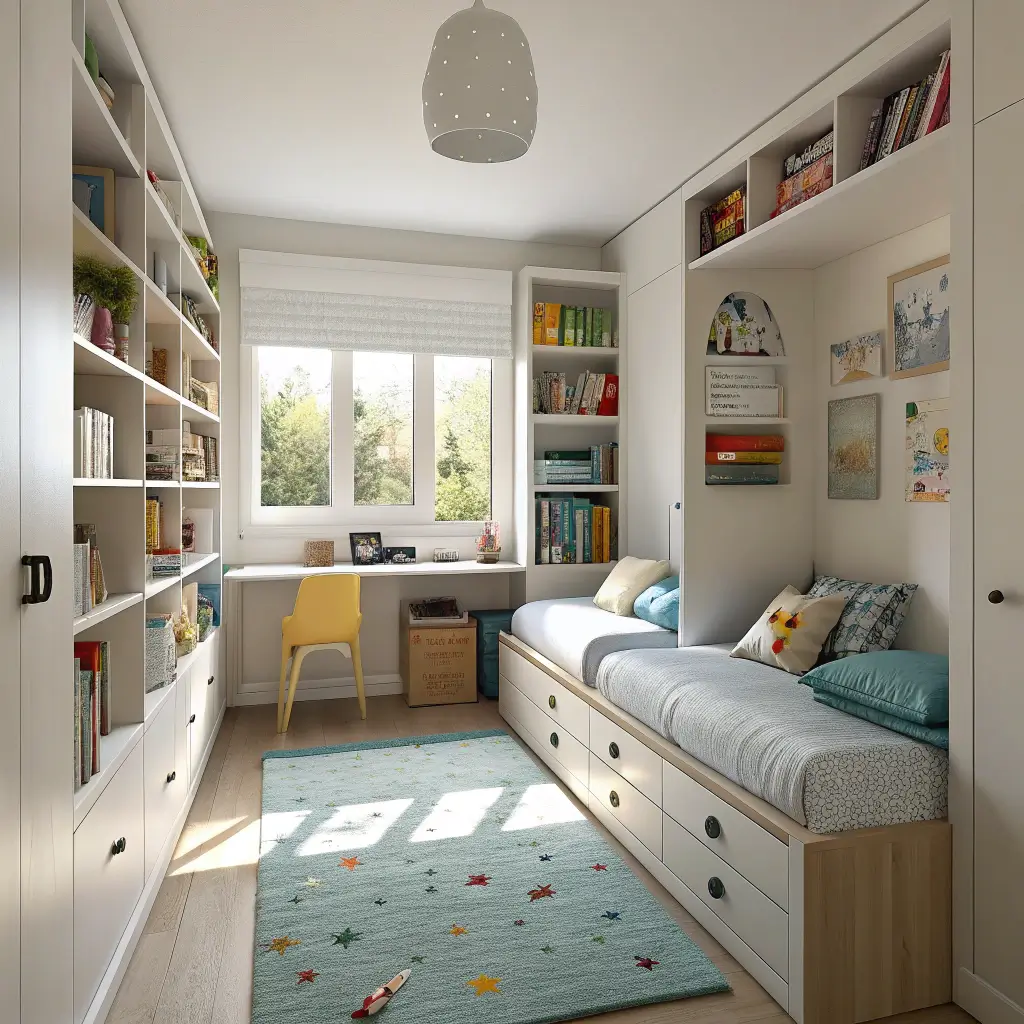
Bookshelves as room dividers are brilliant because they divide AND provide storage. It’s multitasking at its finest, like finding a babysitter who also does laundry.
We positioned a tall bookshelf perpendicular to the wall, instantly creating two zones. Books face both directions, each kid decorates their side differently. The shelf became a functional wall that doesn’t make the room feel closed in.
Bookshelf Division Strategies
Maximize bookshelf barriers:
• Secure to wall and ceiling for safety
• Mixed storage – books, bins, display items
• Different colored bins for each child’s items
• Leave some open spaces to prevent cave feeling
My favorite part? The bookshelf created a natural sound barrier for my reader and my LEGO engineer. She reads in peace while he builds without either disturbing the other.
The pro tip nobody mentions? Don’t fill every shelf space. Leave strategic gaps so light passes through and kids can still communicate when they want to. Complete isolation breeds resentment, partial privacy maintains sibling bonds.
Also Read: 10 Playful Kids Bedroom Boys Ideas and Jungle Themes
4. Loft Beds with Personal Nooks
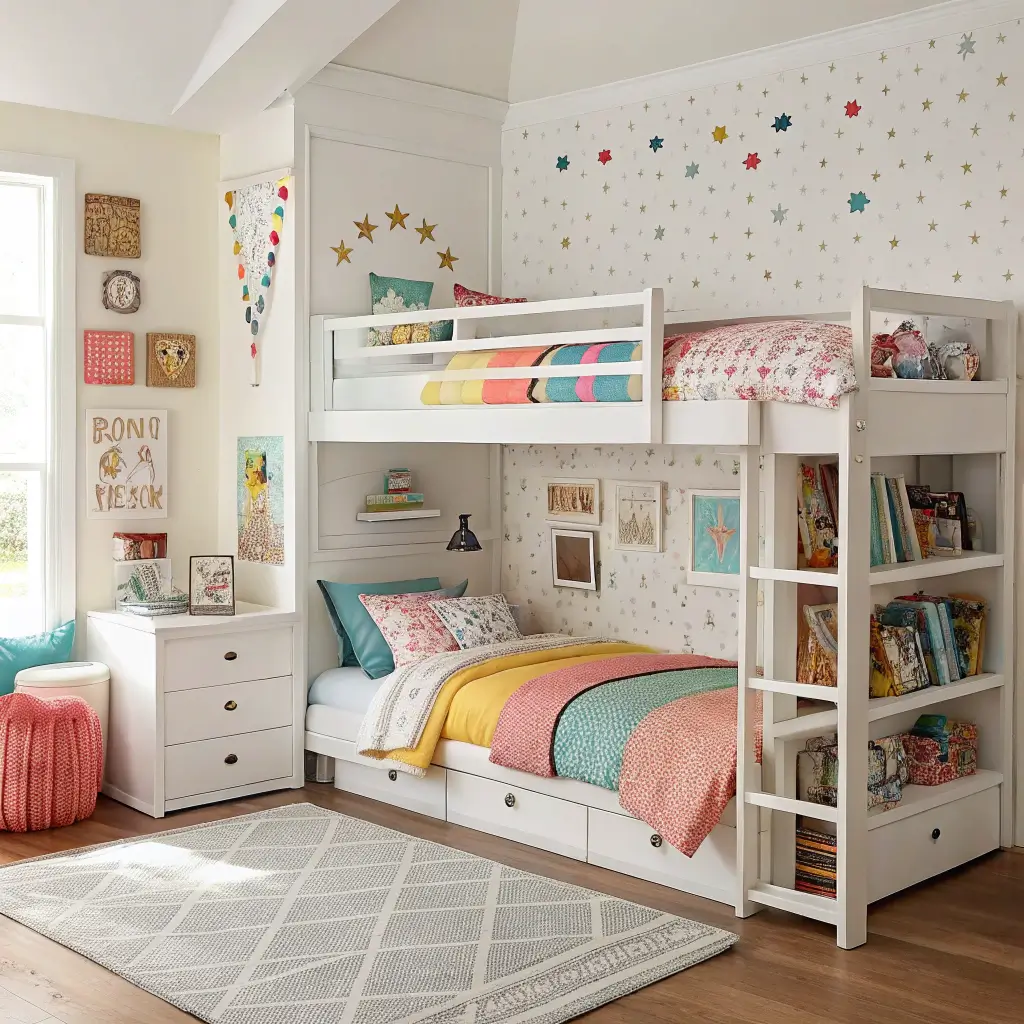
Loft beds are room division in 3D – they create upper and lower territories that feel completely separate. Each kid gets their own level of existence, literally.
My kids have perpendicular loft beds creating an L-shape, with personal spaces underneath each. Son has a reading cave under his loft, daughter has an art studio under hers. They can be in the same room without being IN each other’s space – crucial for sibling sanity.
Loft Bed Territory Design
Create distinct loft zones:
• Curtains underneath for cave-like privacy
• Different functions below each loft
• Personal lighting for each area
• Designated decoration zones
The game-changer was letting them completely control their under-loft space. My daughter’s looks like a rainbow exploded, my son’s is mysteriously dark with LED strips. Both are happy, nobody fights about decor choices.
What makes loft division magical? Height separation. Being on different vertical planes reduces conflict – they’re literally not in each other’s faces.
5. Sliding Panel Room Dividers
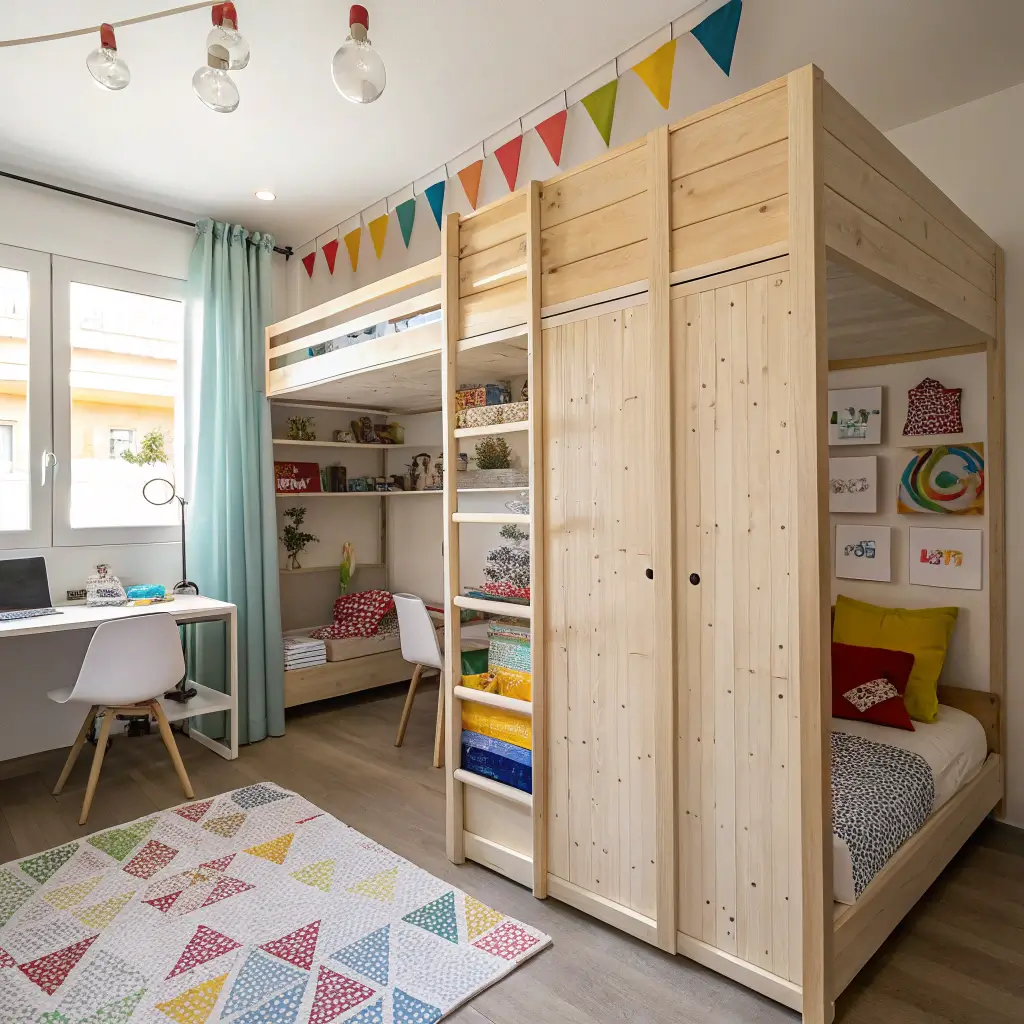
Sliding panels are the fancy solution that’s actually not that fancy to install. Think barn doors but lighter and kid-friendly.
I installed sliding panels using a basic hardware kit from the home improvement store and lightweight hollow-core doors. Total cost: under $200. The ability to open or close the space changed everything – shared when they want, separate when they don’t.
Sliding Into Separation
Make panels work:
• Lightweight materials kids can move safely
• Fun decorations on each side
• Soft-close mechanisms to prevent slammed fingers
• Floor guides to prevent swinging
The unexpected win? My kids love the drama of sliding their panels. Homework time? Slide closed. Play time? Slide open. They feel like they’re controlling their environment, which apparently matters a lot to kids.
Best part about sliding panels? They grow with kids. Toddlers need supervision, teens need privacy – same panels, different positions.
6. Color-Coded Zones for Each Child
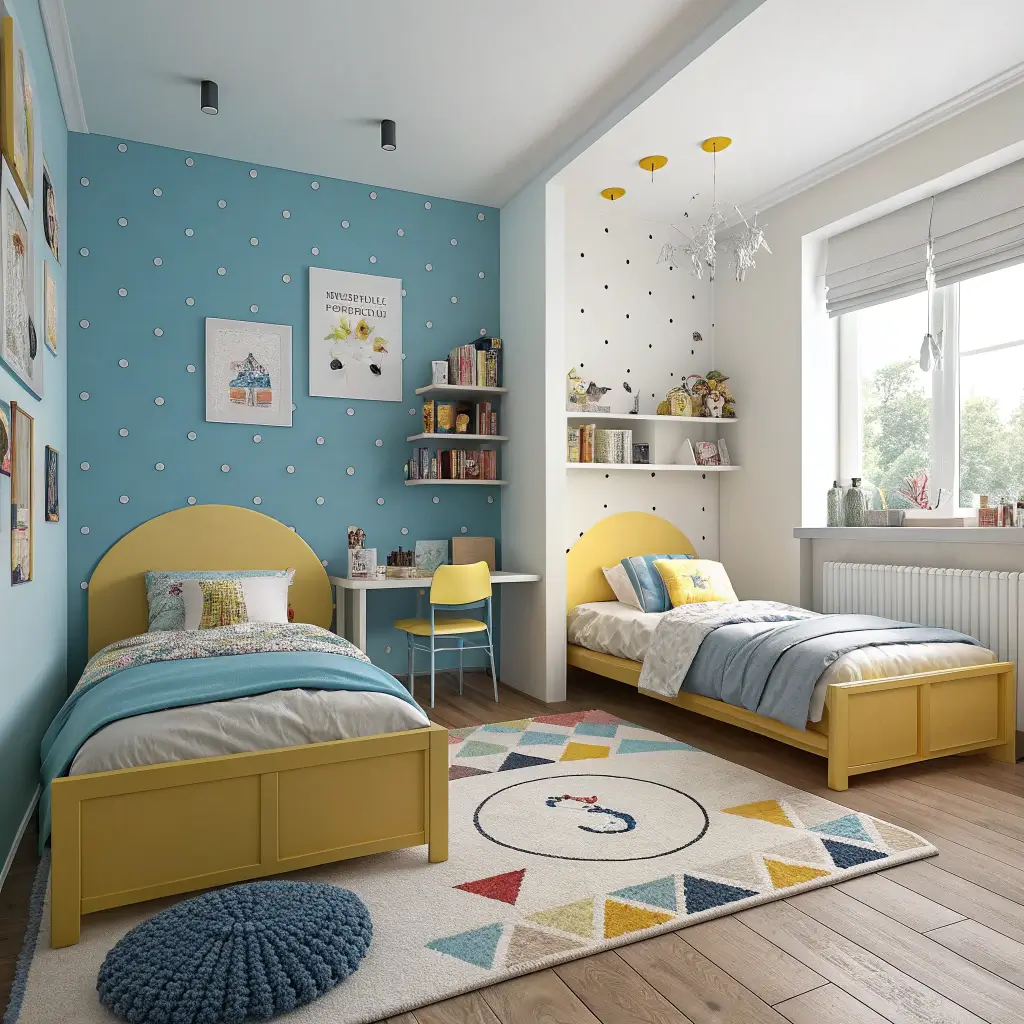
Color coding isn’t technically a physical divider, but it creates visual boundaries that kids instantly understand. Blue side versus green side becomes as real as any wall.
We painted each kid’s half in their chosen color (one wall each, not all walls – I’m not insane). Added matching bedding, storage bins, and even drawer pulls. The visual distinction is so clear that visitors immediately know whose space is whose.
Color Division Psychology
Create color boundaries:
• Accent walls in each child’s color
• Matching accessories throughout their zone
• Neutral shared areas in the middle
• Color-coded storage for zero confusion
The magic moment came when they started respecting the color boundaries without being told. “That’s her purple zone” became automatic thinking. Visual cues work better than rules with kids.
IMO, color coding reduces arguments by 90% because ownership is crystal clear. No more “that’s mine” fights when everything in the blue zone obviously belongs to blue zone resident.
Also Read: 10 Charming Modern Kids Bedroom Ideas and Playful Touches
7. DIY Hanging Fabric Separators
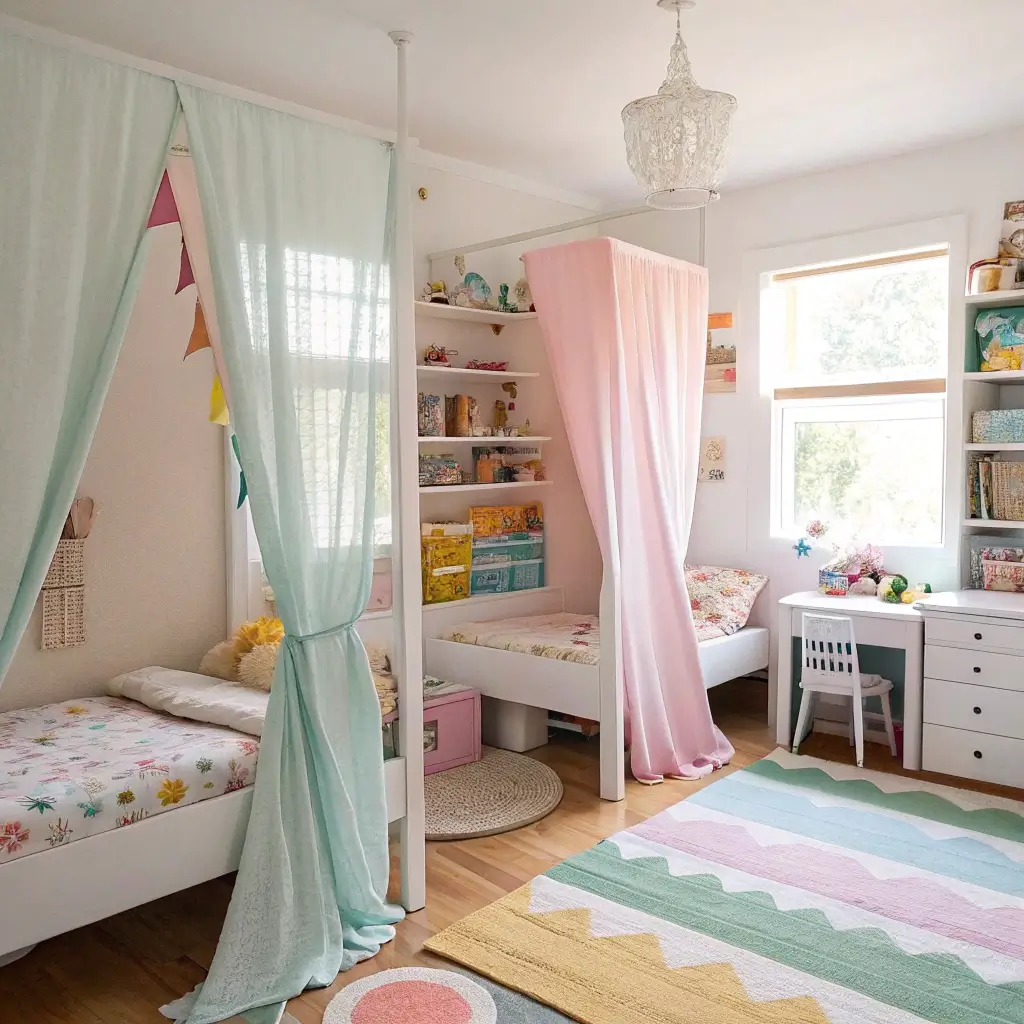
Hanging fabric separators are the budget hero of room division. For less than $50, you can create stunning divisions that look intentional, not improvised.
I created hanging panels using wooden dowels, rope, and fabric my kids chose. Hung them from ceiling hooks creating a soft wall that moves with air currents. It feels magical rather than institutional like rigid dividers would.
Fabric Division on a Budget
DIY your way to peace:
• Tension rods for damage-free installation
• Fabric shower curtains for waterproof options
• Macramé or beaded curtains for boho vibes
• Canvas drop cloths for painting custom designs
My kids painted their own fabric panels one rainy weekend. The mess was legendary but the pride in their custom dividers? Priceless. They actually take care of them because they made them.
The genius of fabric dividers? They’re changeable. Swap seasonally, wash when needed, replace when destroyed (because kids). No commitment issues here.
8. Foldable Screens for Flexible Spaces
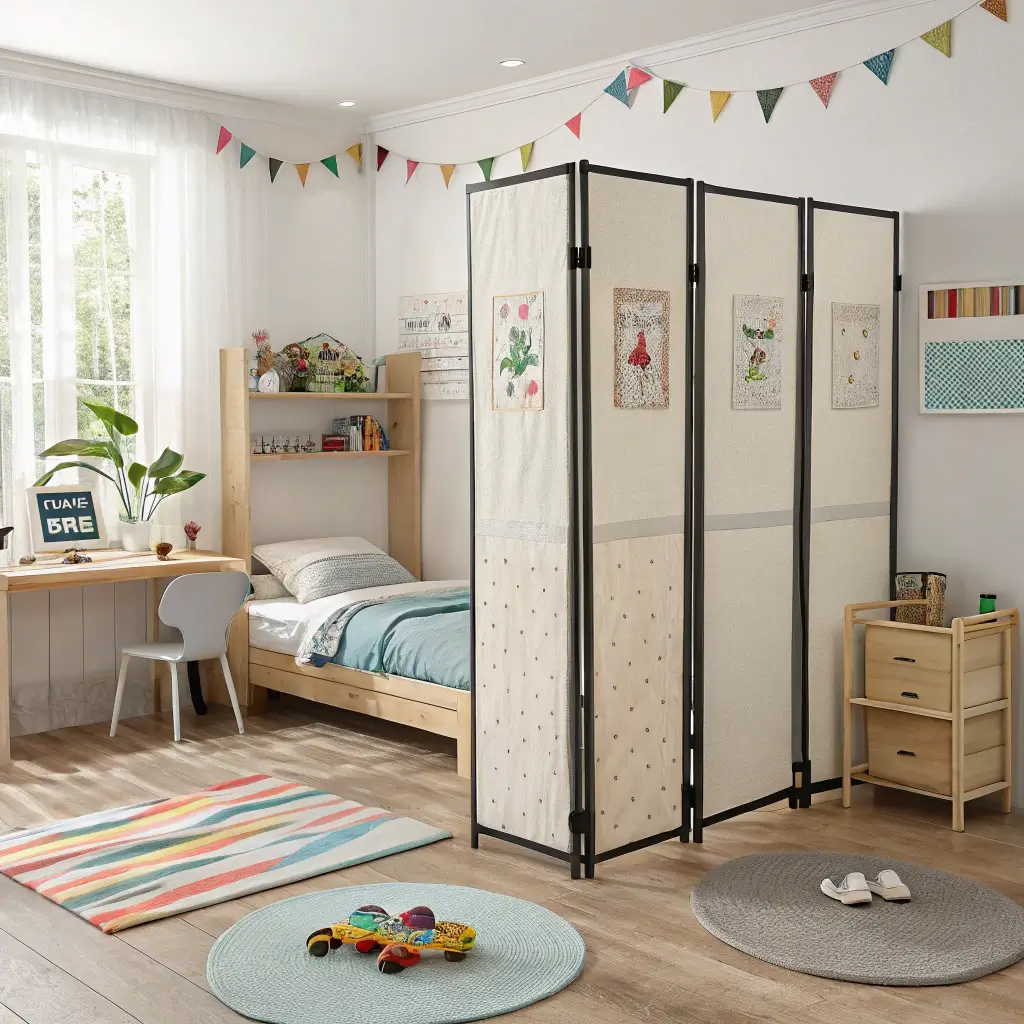
Foldable screens are the transformer toys of room division. They create instant privacy then disappear when not needed – perfect for kids whose relationship status with siblings changes hourly.
We bought two tall folding screens that my kids decorated with their artwork and photos. During conflict times, screens up. During peace treaties, screens folded against walls. The flexibility matches their moody dynamics perfectly.
Screen Solutions That Adapt
Make screens work overtime:
• Lightweight options kids can move themselves
• Double-sided decoration for personal expression
• Magnetic surfaces for displaying art
• Wheeled bases for easy repositioning
The revelation? Giving kids control over when to use dividers. They learned to self-regulate – feeling cranky? Put up the screen. Want to play? Take it down. Personal space management skills: achieved.
Screens also work great for different schedules. Early bird can get ready behind screen without waking night owl sibling. Simple but effective.
9. Furniture as Natural Dividers
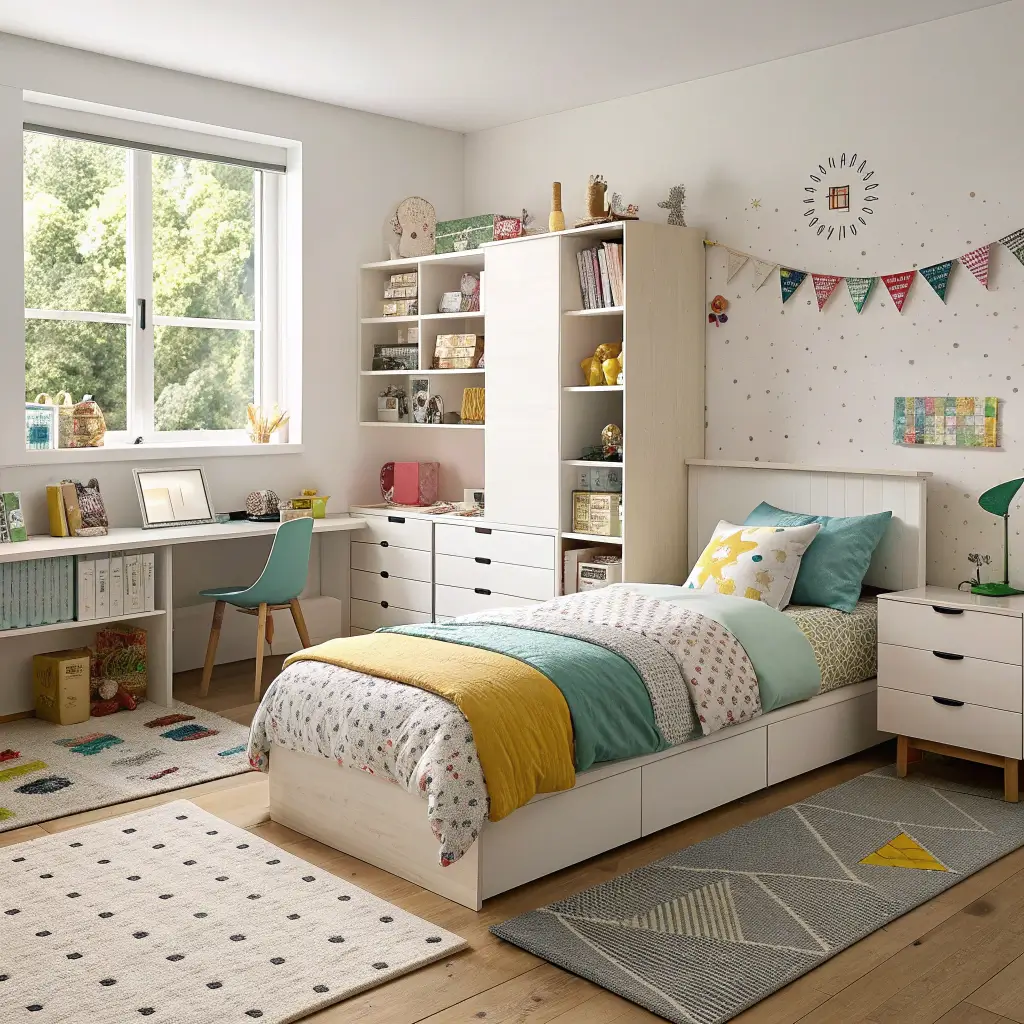
Sometimes the best divider is the furniture you already have. Strategic placement creates boundaries without buying anything new.
We positioned their desks back-to-back in the center of the room, creating a natural barrier. Dressers perpendicular to walls section off areas. The room naturally divided itself through furniture placement.
Furniture Division Tactics
Use what you have:
• Back-to-back desks create study wall
• Perpendicular dressers section spaces
• Toy storage units as partial walls
• Reading chairs defining cozy corners
The beauty of furniture dividers? They’re functional barriers. That dresser dividing the room also holds clothes – no wasted space on purely decorative divisions.
My favorite configuration puts a storage bench at the foot of each bed, creating a natural walkway that divides territories. Looks intentional, works perfectly, costs nothing extra 🙂
Also Read: 10 Stylish Kids Bedroom Ideas for Shared Rooms
10. Lofted Play and Study Areas
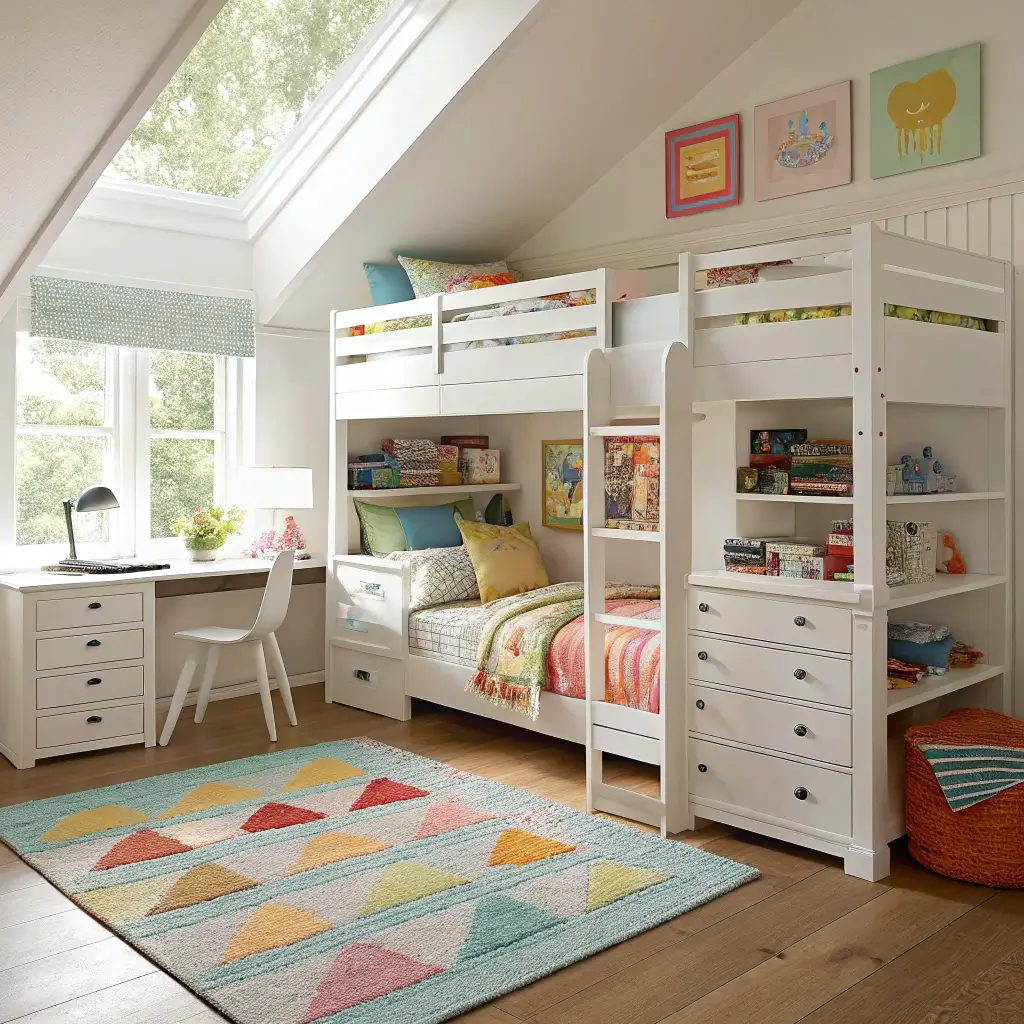
Lofting specific activity zones creates division by function rather than just space. Each kid gets their own elevated kingdom for different purposes.
We built a lofted study platform on one side (just 3 feet high) and a lofted play area on the other. Each kid claimed their loft, decorated it their way, and suddenly had private zones within the shared room. Different heights made different worlds.
Lofted Zone Creation
Build vertical divisions:
• Platform beds with study space below
• Raised reading nooks in corners
• Elevated play areas with storage underneath
• Multi-level solutions for different activities
The game-changer was realizing kids don’t need huge lofts. Even 2-3 feet of elevation creates psychological separation. My daughter’s raised reading corner feels completely separate from floor-level chaos.
What makes lofted areas brilliant? They maximize floor space while creating defined zones. The room feels bigger because you’re using vertical space that normally goes to waste.
Making Divided Bedrooms Actually Work
So there you have it – 10 ways to divide kids’ bedrooms without actually dividing kids’ bedrooms. The biggest lesson I’ve learned? Perfect division isn’t the goal – peaceful coexistence is.
The best room divisions are the ones kids help create and can control themselves. When they have ownership over their space and their privacy, they respect boundaries better.
Who knew giving kids power would make them more responsible? (Every parent ever, once they figure this out).
Start with one division method that addresses your biggest pain point. Constant bickering? Try curtains. Different sleep schedules? Invest in good dividers.
You don’t need to implement everything at once – small divisions lead to big peace.
Here’s my challenge: ask your kids what type of division they want, then find a way to make it happen within your budget and sanity limits.
They might surprise you with reasonable requests (or they might ask for a moat with crocodiles, but at least you’re talking).
When kids feel heard about their space needs, they’re more likely to respect the solutions you create together. And honestly? A little division goes a long way toward household harmony :/
