
Let’s talk about the elephant in your small living room – those naked windows making your space feel like a fishbowl while simultaneously looking unfinished.
I spent two years living with bedsheets thumbtacked over my windows because I thought curtains were “too complicated” for my tiny apartment. Spoiler alert: I was wrong, and my living room looked like a dorm room having an identity crisis.
Here’s what changed everything: the right curtains can literally transform a cramped living room into a sophisticated space that feels twice its actual size.
After helping dozens of friends pick curtains for their shoebox apartments (and making every mistake possible in my own), I’ve learned exactly which modern curtain styles work magic in small spaces.
The trick isn’t just picking pretty fabric and calling it a day. Small living rooms need curtains that multitask – creating illusions of height, filtering light perfectly, and adding style without overwhelming your already limited space. Get ready to turn those windows from problem areas into the best features of your room.
Floor-to-Ceiling Sheer Curtains
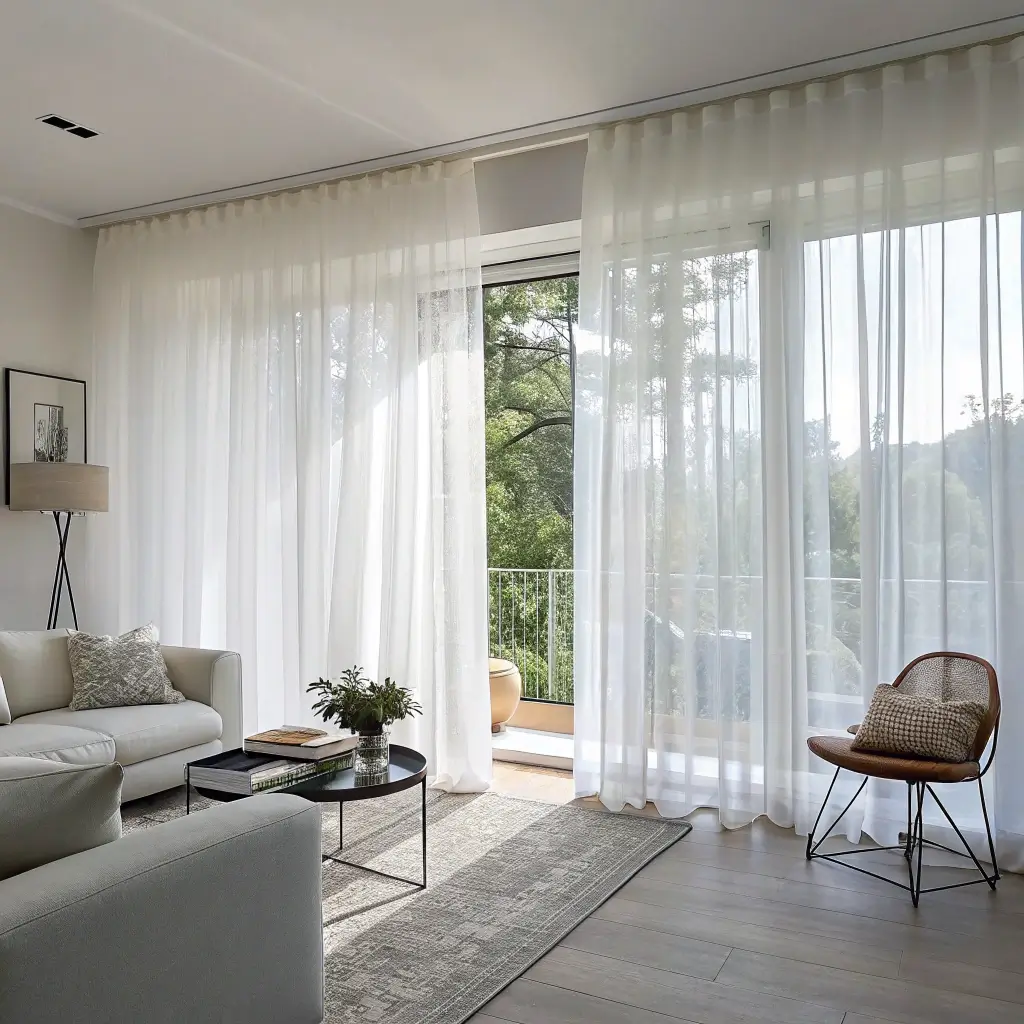
Want to know the fastest way to make your 8-foot ceilings look like 10-footers? Floor-to-ceiling sheer curtains create vertical lines that draw eyes upward, making your small living room feel like it belongs in a luxury high-rise. I discovered this trick accidentally when I bought curtains too long for my windows and was too lazy to hem them.
The magic happens when you mount the curtain rod close to the ceiling – not right above the window frame like your instincts tell you. Leave at least 6-8 inches above the window, more if you can swing it. Those extra inches of fabric trick your brain into thinking the windows are taller, and suddenly your entire room feels more spacious.
Sheers work particularly well because they maintain privacy without blocking precious natural light. In small spaces, every photon counts. The translucent fabric softens harsh sunlight while keeping your room bright and airy during the day.
Why Sheers Work in Small Spaces
Here’s what makes them perfect:
- Light maximization keeping rooms bright
- Visual flow that doesn’t create barriers
- Affordable options at every price point
- Easy maintenance – most are machine washable
- Layer-friendly for adding privacy at night
Minimalist Linen Drapes
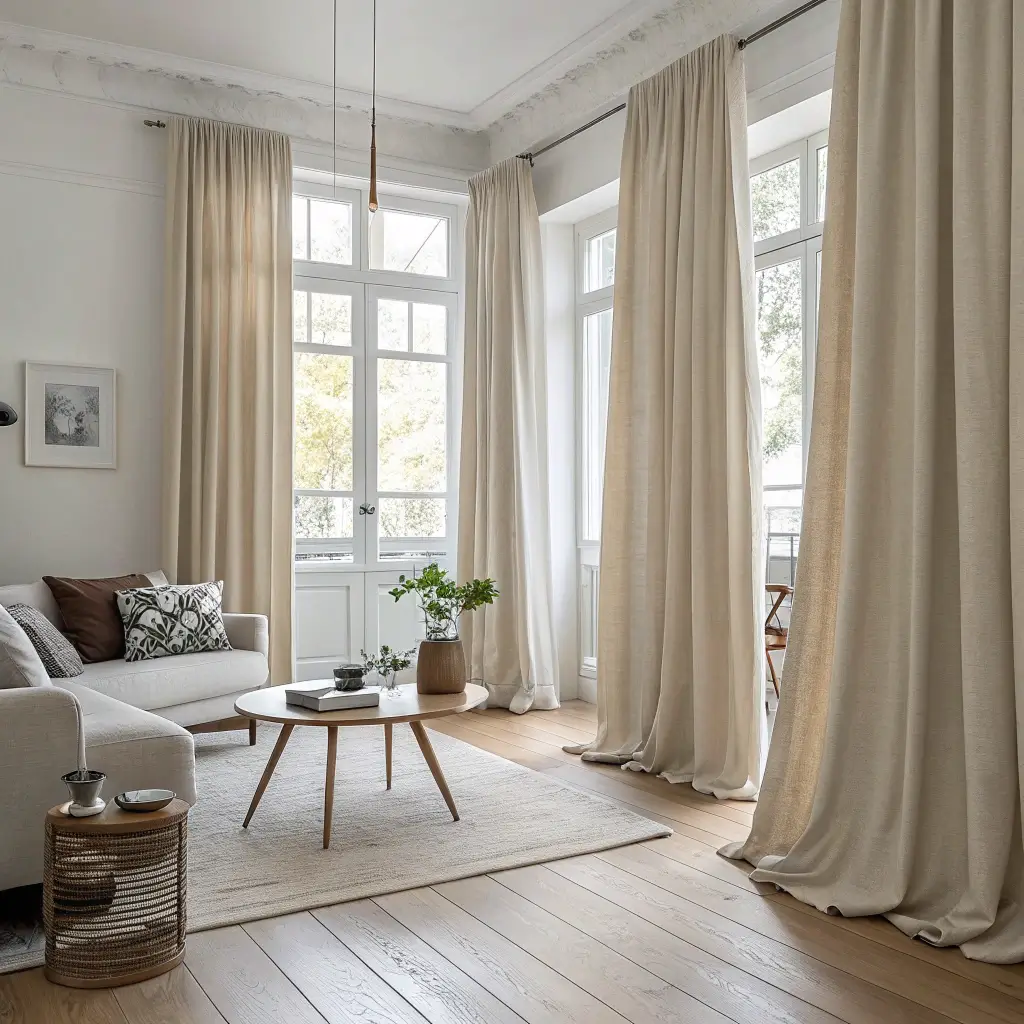
Linen drapes bring that effortless, expensive look without the expensive part. Natural linen texture adds depth to small living rooms without overwhelming them with pattern or color. My first set of linen curtains cost $30 from IKEA, and people still ask if I had them custom-made.
The beauty of linen lies in its imperfection. Those natural wrinkles and texture variations mean you never have to iron (hallelujah), and they look intentionally relaxed rather than sloppy. In small spaces, this casual elegance prevents things from feeling too formal or stuffy.
Choose lighter linen colors for maximum space enhancement. White, cream, or light gray linen drapes basically disappear against light walls while still providing structure and softness to your windows.
Styling Linen Curtains
Make them work with:
- Simple curtain rods that don’t compete
- Puddle-free lengths for clean lines
- Natural wood accents to complement the organic feel
- Minimal furniture to maintain the aesthetic
Bold Geometric Pattern Curtains
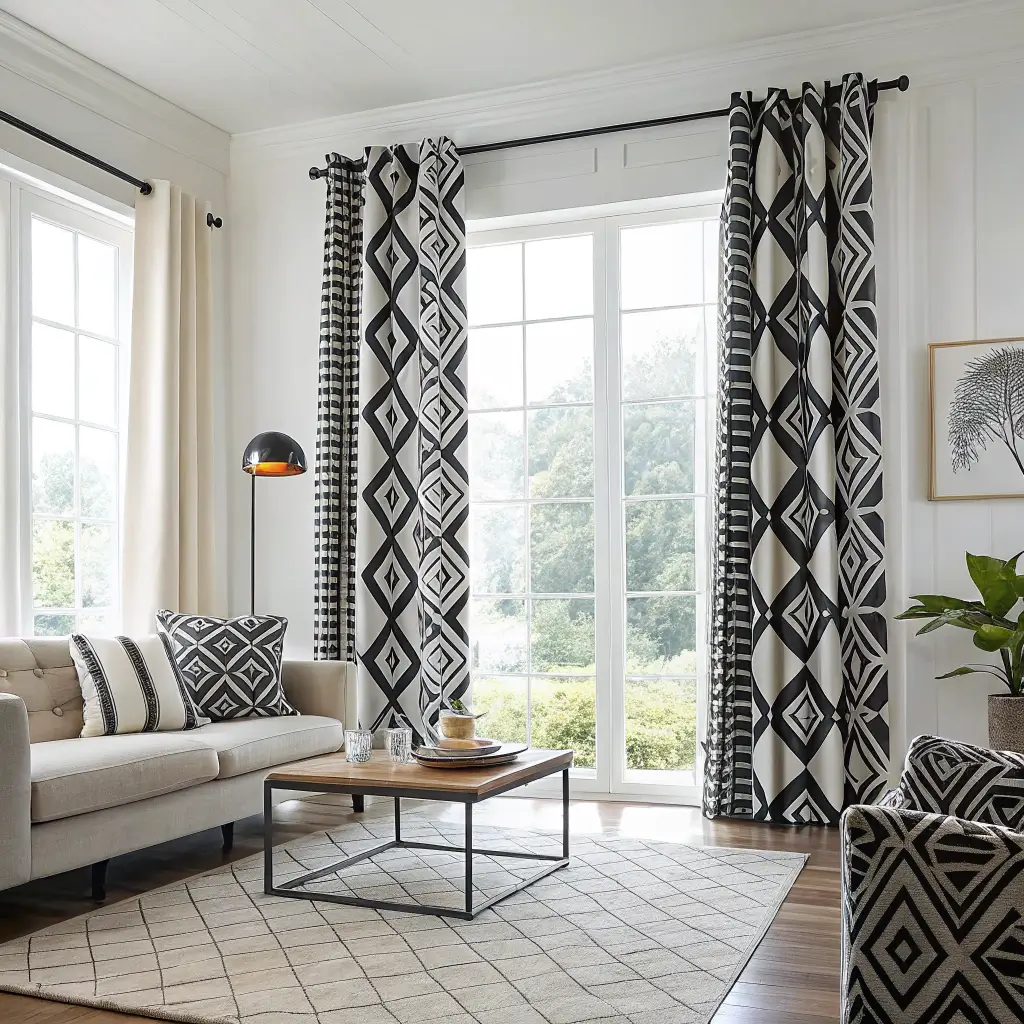
Think patterns are off-limits in small spaces? Think again. Bold geometric patterns actually create focal points that distract from size limitations. The key is choosing the right scale and commitment level.
I learned this lesson when I impulse-bought chevron curtains during a Target run. Initially terrified they’d shrink my living room, they actually made it more interesting. The structured pattern added energy without chaos, and suddenly my boring box of a room had personality.
Pattern Rules for Small Spaces
Follow these guidelines:
- Large-scale patterns work better than tiny prints
- Vertical stripes add height illusion
- Consistent color palette prevents overwhelming
- One patterned element per room maximum
- Echo colors from curtains in throw pillows
The trick? Let geometric curtains be the star while everything else plays supporting roles.
Also Read: 15 Classy Blue Curtains Living Room Ideas with Designer Flair
Velvet Textured Panels
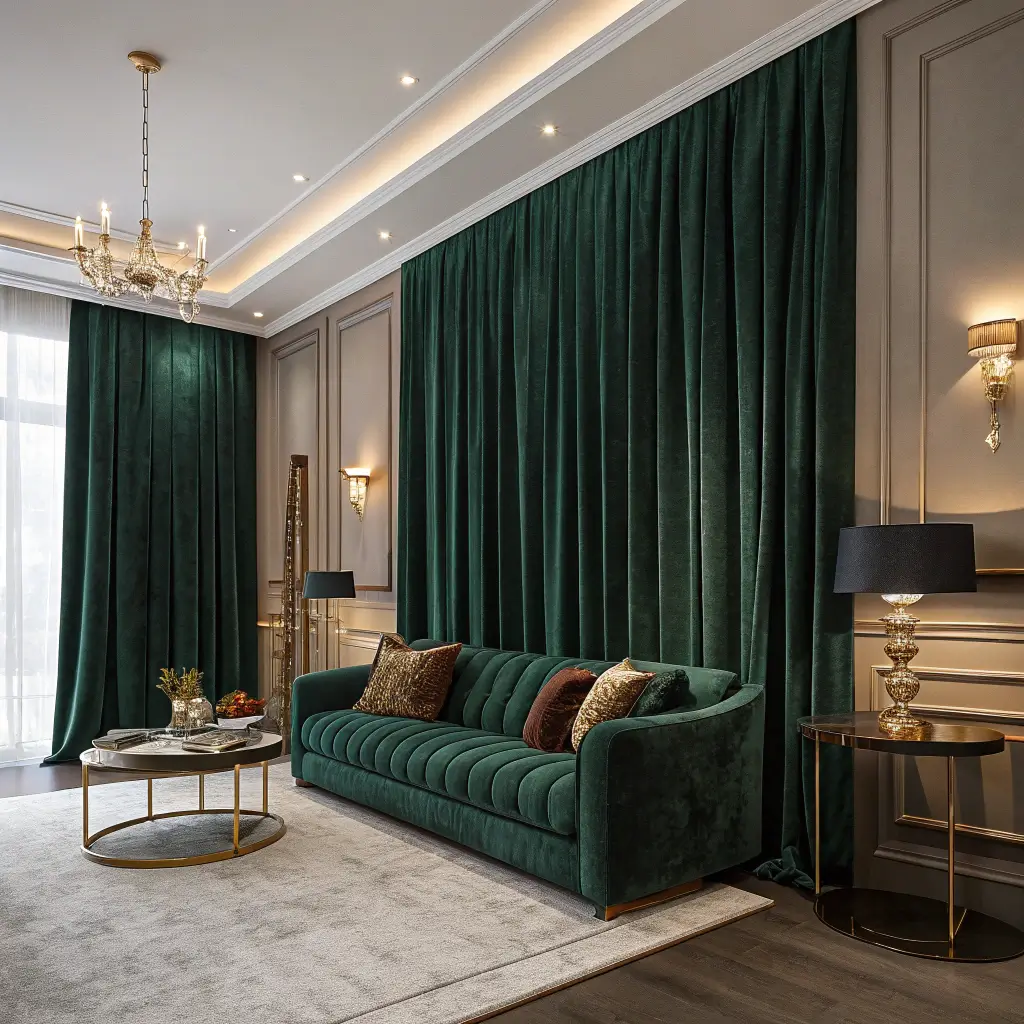
Velvet curtains in a small space sound counterintuitive, but luxe textures actually elevate tiny rooms from cramped to cozy. That rich fabric transforms your modest living room into something that feels intentionally intimate rather than accidentally small.
My velvet curtain phase happened during a particularly cold winter when I needed something – anything – to make my drafty apartment feel warmer. Those heavy panels didn’t just block cold; they added acoustic dampening that made my space feel more substantial.
Choose jewel tones for drama or soft neutrals for sophistication. Either way, velvet’s light-absorbing properties create depth that flat fabrics can’t match.
Making Velvet Work
Key considerations:
- Quality matters – cheap velvet looks terrible
- Proper hanging prevents sagging
- Steam, don’t iron to remove wrinkles
- Consider weight for your rod choice
Neutral Layered Curtains
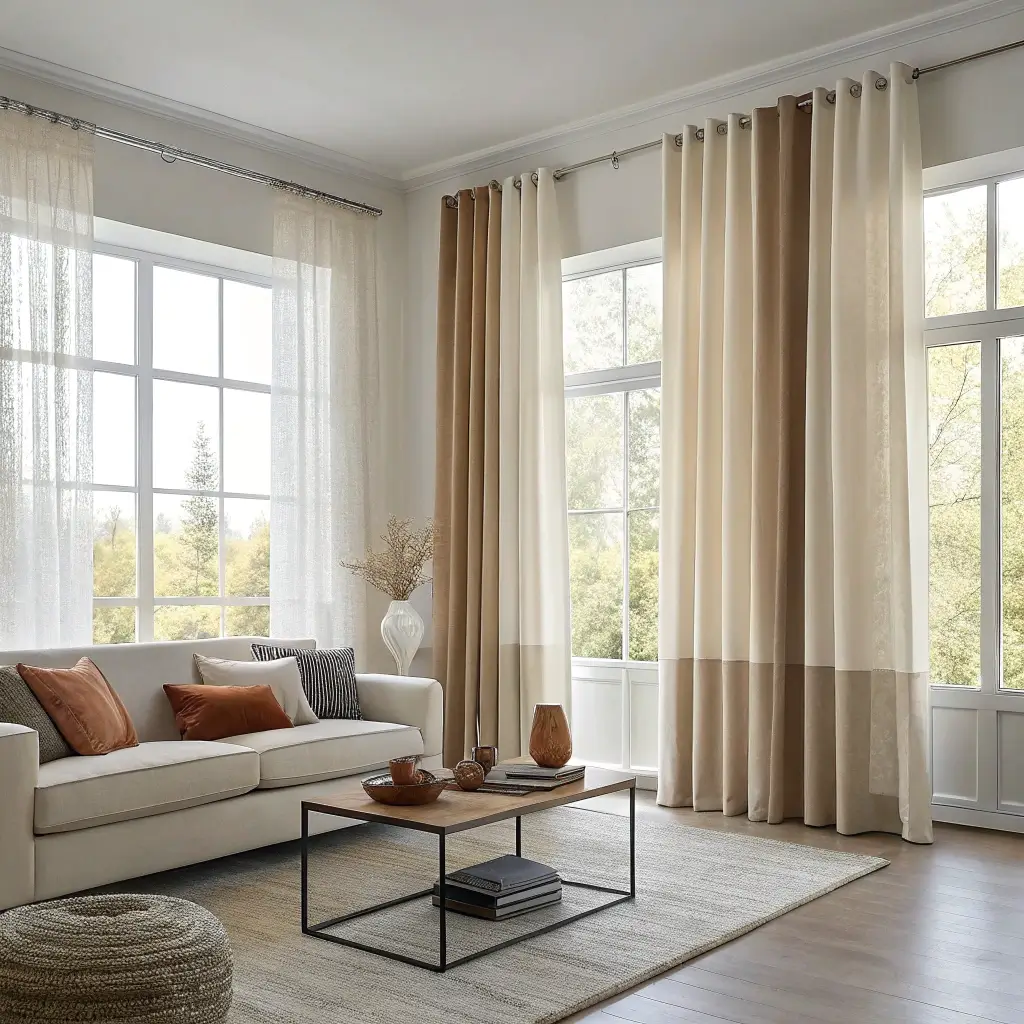
Layering curtains gives you flexibility that single panels can’t match. Combine sheers with heavier drapes for the ultimate in light control and privacy options. This approach turns your windows into customizable light sources throughout the day.
I stumbled onto layering when my blackout curtains made my living room feel like a cave during daylight hours. Adding sheers behind them changed everything – now I have options instead of all-or-nothing darkness.
Layering Like a Pro
Master the technique:
- Double curtain rods keep layers organized
- Sheers inside, drapes outside for easy access
- Coordinate colors within the same family
- Vary textures for visual interest
- Keep it simple – two layers maximum
Monochrome Modern Drapes
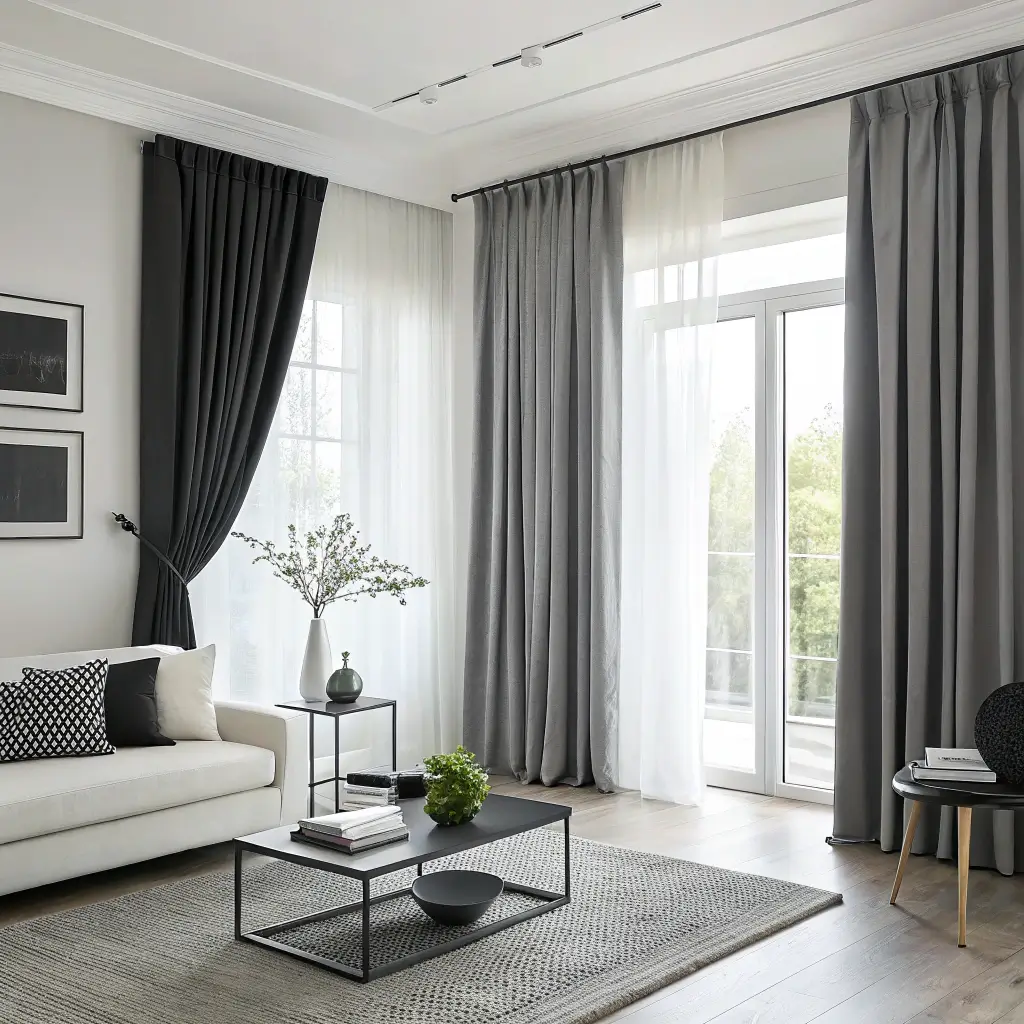
Monochrome curtains create visual continuity that expands small spaces rather than chopping them up. When your curtains match your walls, boundaries blur and rooms feel larger. It’s basically camouflage for your windows.
My all-white phase taught me this lesson. White walls, white curtains, white furniture – suddenly my 400-square-foot living room felt like 600. The lack of visual interruption lets your eye travel smoothly through the space.
Monochrome Mastery
Nail the look with:
- Exact color matching to walls
- Textural variation preventing flatness
- Quality fabric since there’s nowhere to hide
- Proper fullness for luxe appearance
FYI, this works with any color, not just white. Gray-on-gray or beige-on-beige creates the same spacious effect.
Also Read: 10 Amazing Window Curtains Living Room Ideas for Wow-Factor
Two-Tone Color Block Curtains
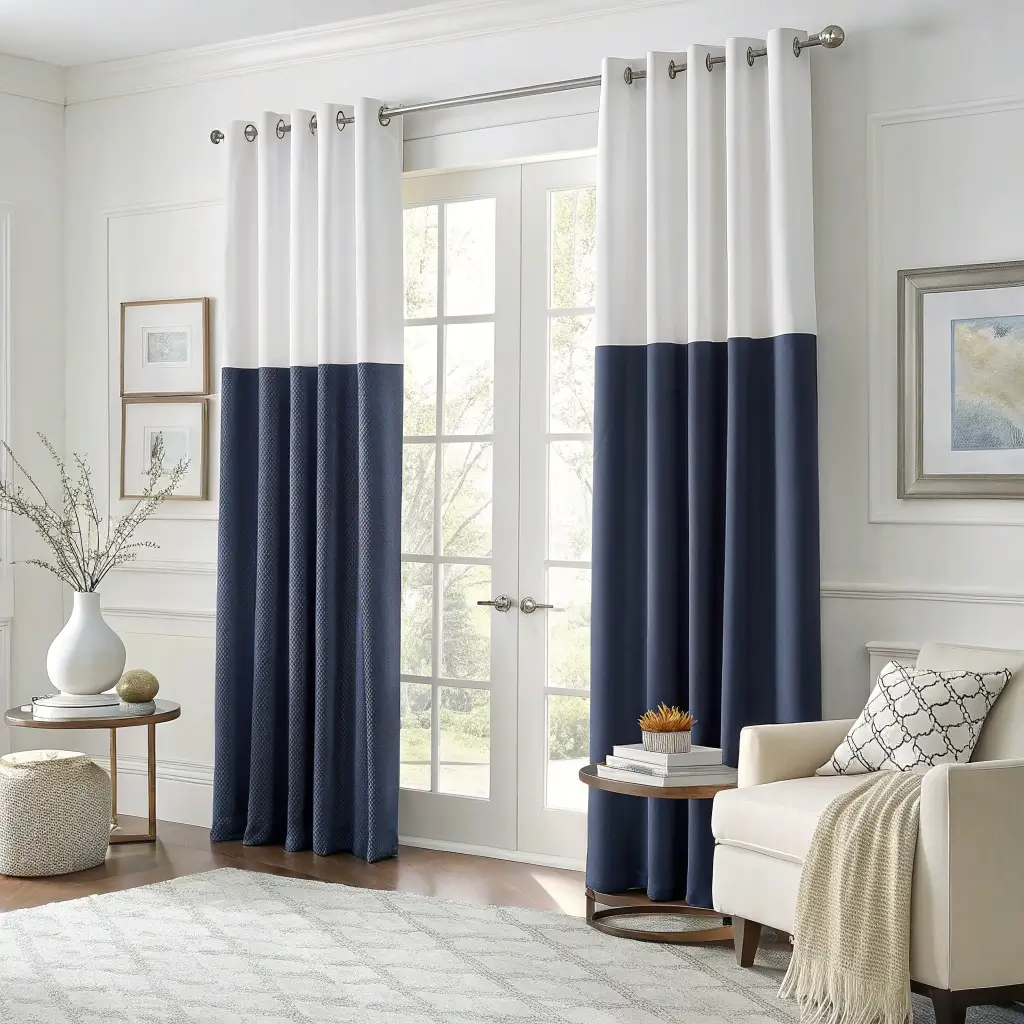
Color blocking brings modern art vibes to your windows without requiring an art degree to pull off. Strategic color placement can actually adjust your room’s proportions – darker colors on bottom ground the space, lighter on top lifts the ceiling.
I discovered color blocking after a DIY disaster where I ran out of fabric mid-project. Improvising with a contrasting color on the bottom third created an accidentally brilliant design that made my windows look taller.
Color Block Strategy
Smart blocking techniques:
- 70/30 ratio for proportion balance
- Horizontal blocks for width illusion
- Vertical blocks for height emphasis
- Neutral base with color accent
Light-Filtering White Panels
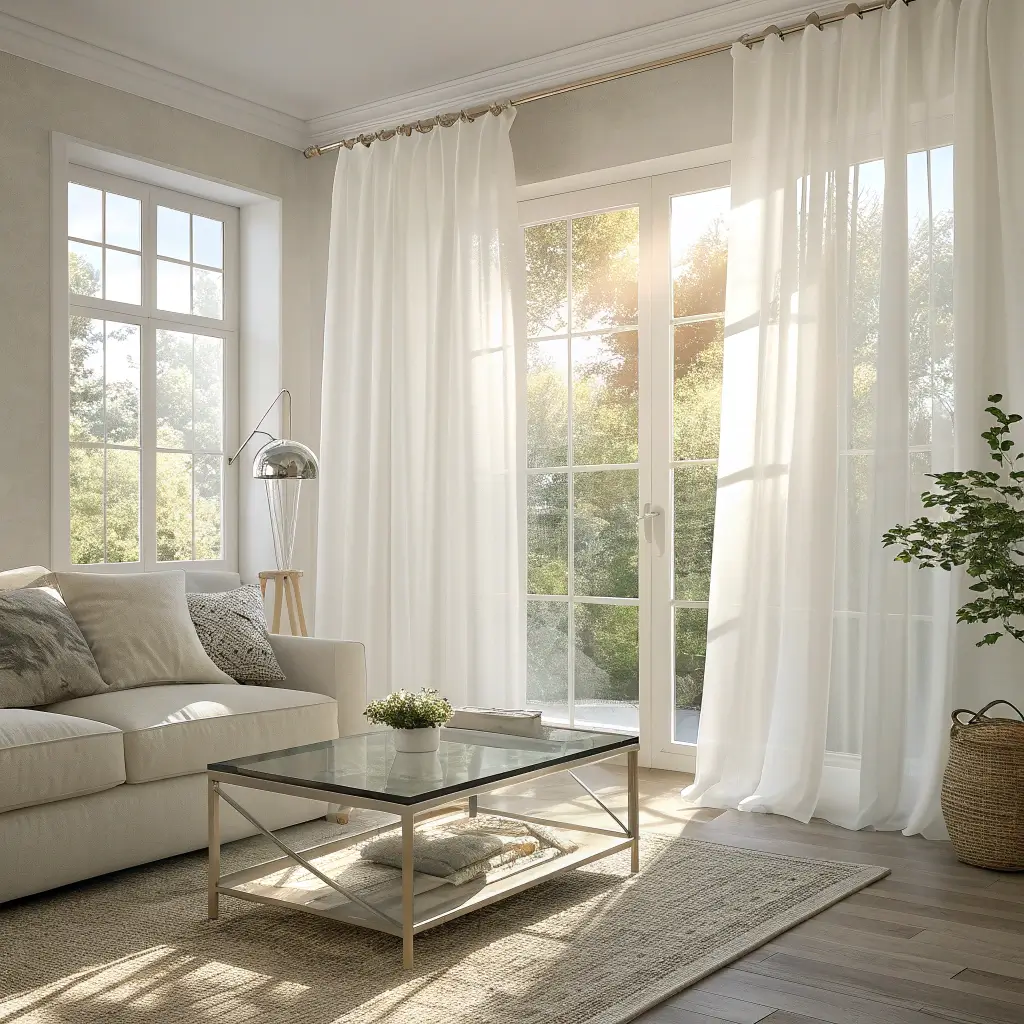
White panels are the Switzerland of curtains – neutral, peaceful, and they go with everything. Light-filtering whites maximize brightness while still providing privacy, crucial when you’re working with limited square footage.
My love affair with white curtains started in my first studio apartment where every photon mattered. These panels turned harsh afternoon sun into soft, diffused light that made the space feel larger and more welcoming.
White Panel Perfection
Optimize with:
- Multiple panels for fullness
- Floor-length always, never shorter
- Clean regularly to maintain brightness
- Layer options for nighttime privacy
Sleek Blackout Curtains
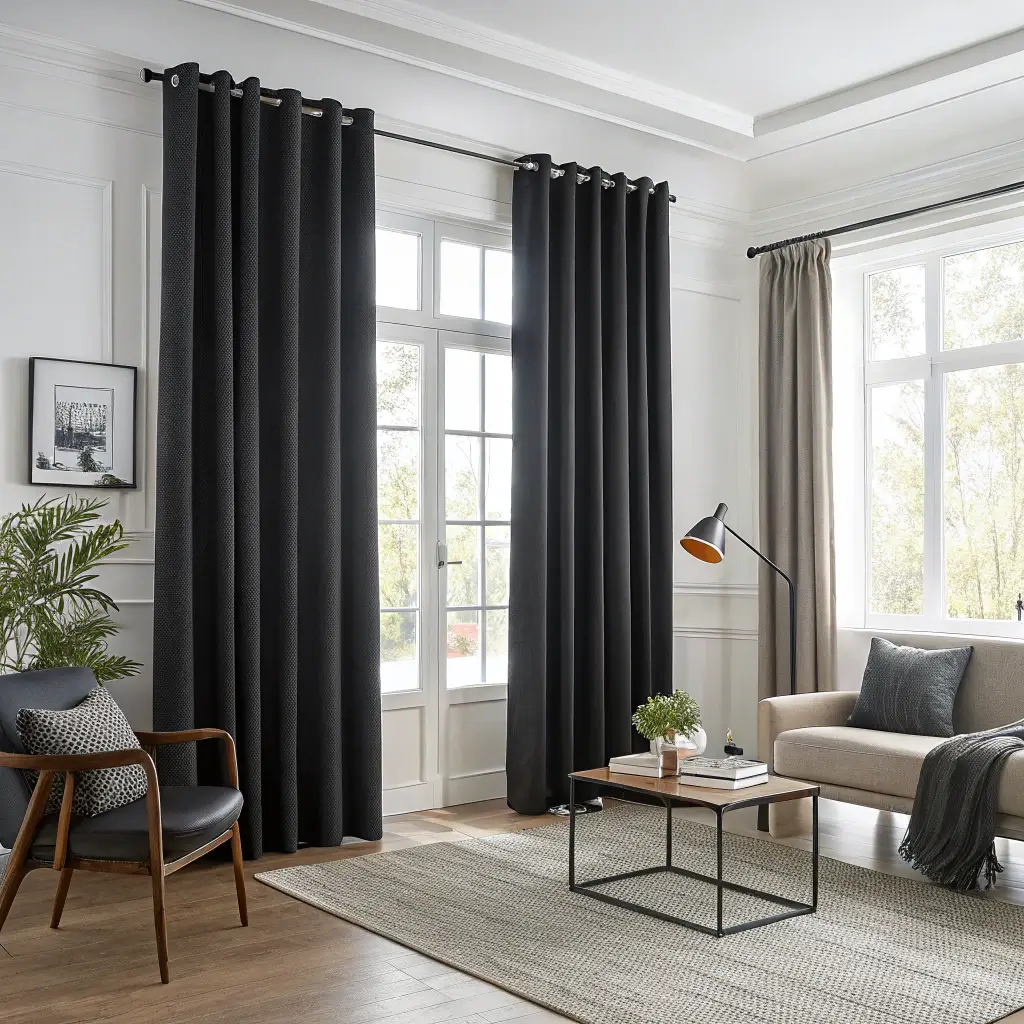
Blackout curtains don’t have to look like hotel drapes anymore. Modern blackout technology comes in sleek, stylish packages that block light without blocking style. Essential for small living rooms that double as media rooms.
I resisted blackouts for years, thinking they’d make my small space feel smaller. Wrong! The right blackout curtains actually create depth when closed and disappear when open. Plus, that afternoon nap potential? Priceless.
Blackout Without Bulk
Modern solutions include:
- Blackout lining on regular curtains
- White backing to prevent heat absorption
- Slim profiles that don’t overwhelm
- Noise reduction bonus in thin-walled apartments
Also Read: 10 Trendy Black Curtains Living Room Ideas for Luxe Interiors
Metallic Accent Curtains
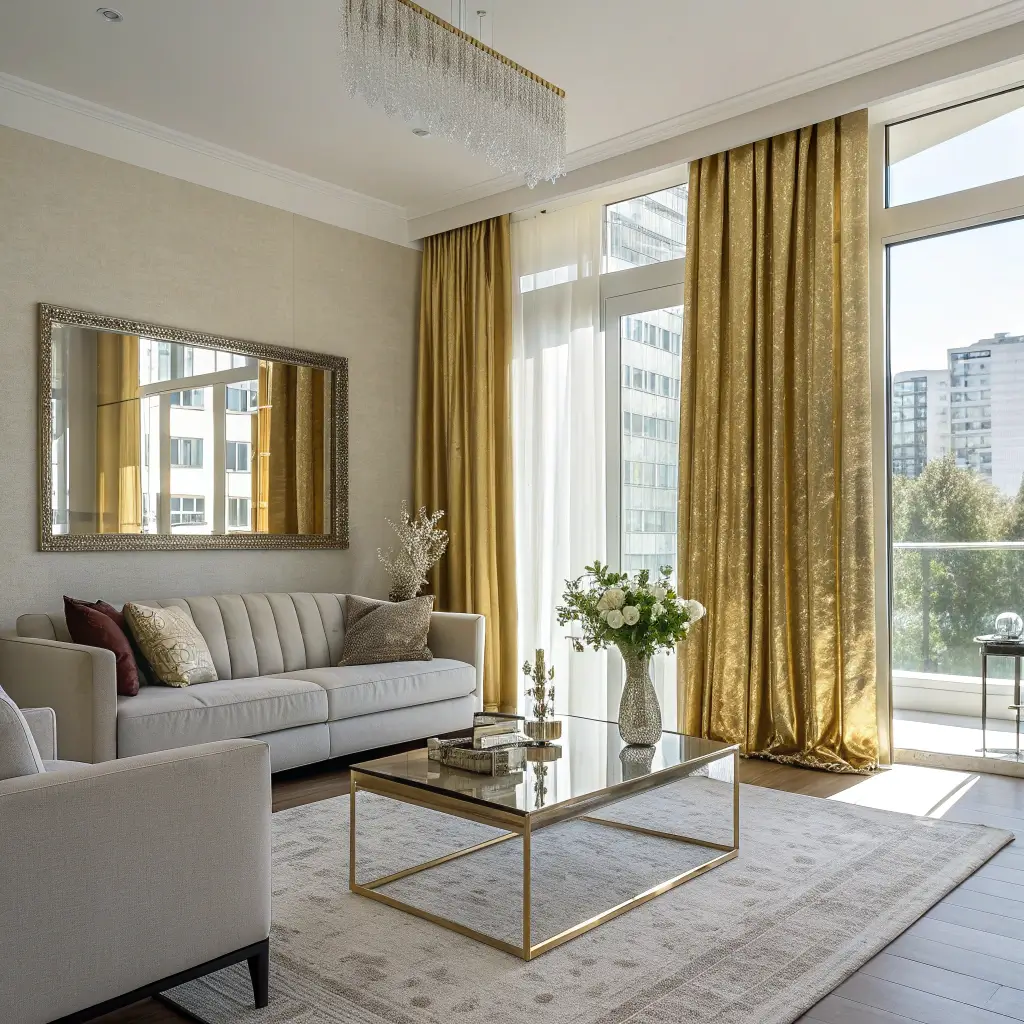
Metallic curtains sound Vegas tacky, but done right, they’re absolutely sophisticated. Subtle metallic threading or sheen catches light and creates movement that energizes small spaces without overwhelming them.
My metallic phase started with champagne-colored curtains on clearance. That subtle shimmer bounced light around my north-facing living room like nobody’s business. The light-reflecting properties literally brightened my space and my mood.
Metallic Without Mayhem
Keep it classy:
- Subtle sheen over full-on sparkle
- Neutral base colors with metallic threads
- Natural light to activate the shimmer
- Minimal competing elements elsewhere
Scandinavian-Inspired Drapes
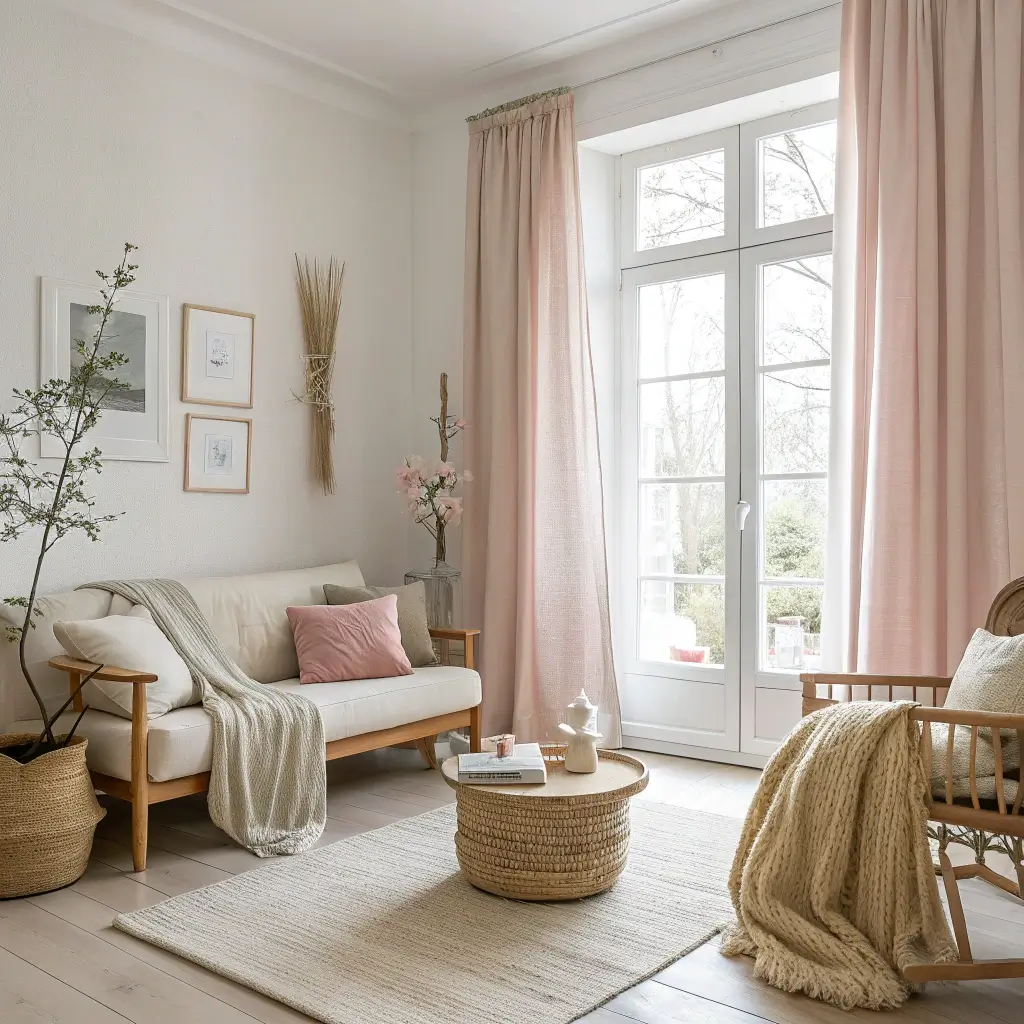
Scandinavian design and small spaces are basically best friends. These drapes emphasize function, simplicity, and natural materials – exactly what cramped living rooms need. Think lightweight linens, subtle textures, and calming colors.
My Scandi curtain revelation came during a Copenhagen Airbnb stay. Those simple, perfectly functional drapes made the tiny space feel intentional rather than limited. Now I embrace the “less but better” philosophy in all my curtain choices.
Scandi Curtain Essentials
Achieve the look:
- Natural fabrics like linen or cotton
- Neutral palette – whites, grays, beiges
- Simple hanging systems
- Functional beauty over pure decoration
Pleated Contemporary Curtains
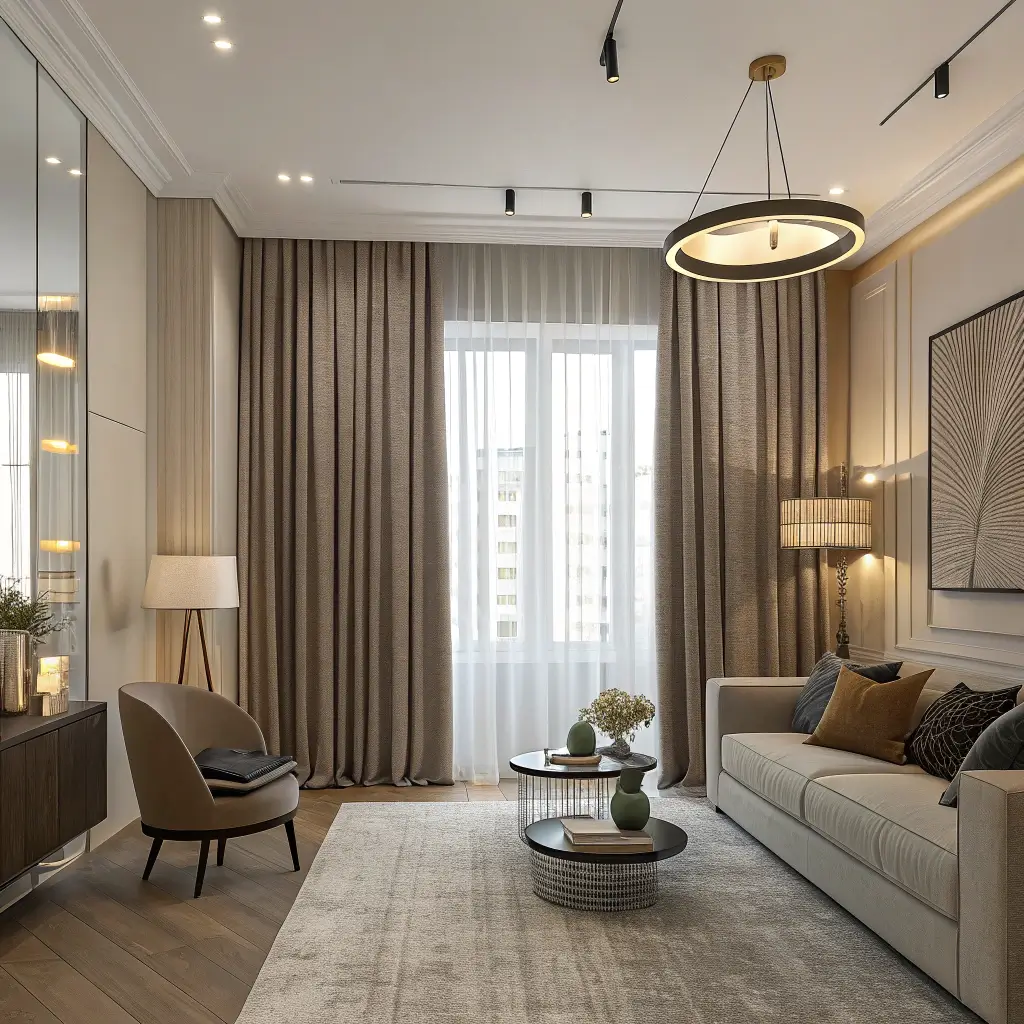
Pleated curtains add structure and sophistication that flat panels can’t achieve. Modern pleating techniques create clean lines that complement contemporary decor without feeling outdated or fussy.
I avoided pleats for years, haunted by memories of my grandmother’s dust-collecting valances. Modern pleated curtains changed my mind – they’re crisp, tailored, and somehow make my chaotic living room look organized.
Pleat Styles That Work
Contemporary options:
- Pinch pleats for classic elegance
- Ripple fold for modern minimalism
- Inverted pleats for subtle texture
- Tailored spacing for uniform appearance
Natural Bamboo or Cotton Panels
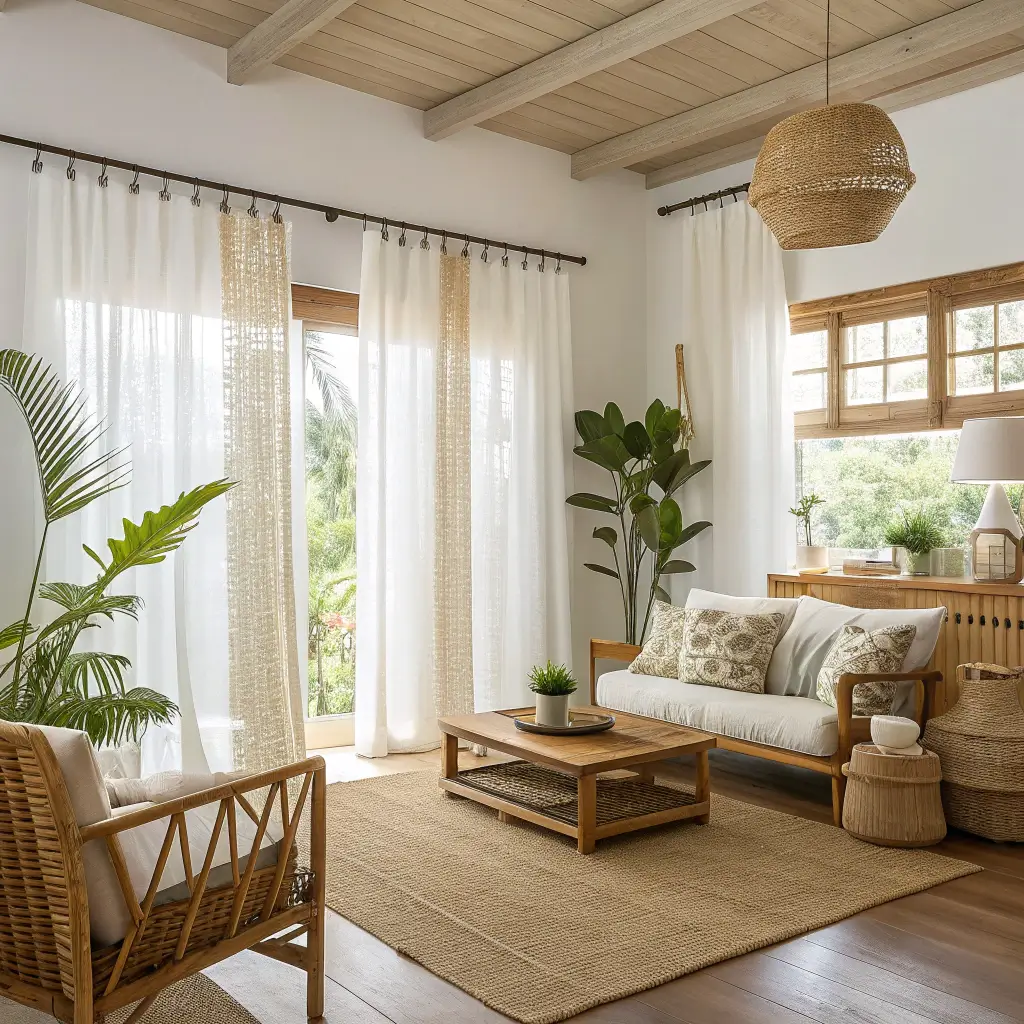
Natural materials bring warmth and texture that synthetic fabrics can’t replicate. Bamboo and cotton panels filter light beautifully while adding organic elements that make small spaces feel less boxy.
My bamboo curtain experiment started as a temporary solution that became permanent. Those natural fibers soften harsh angles and add visual interest without pattern or color. Plus, the eco-friendly aspect makes me feel slightly less guilty about my occasional Amazon binges :/
Natural Material Benefits
Why they work:
- Sustainable options for eco-conscious decorating
- Unique textures adding depth
- Light filtering properties
- Durability with proper care
Curtain Rod Hidden Designs
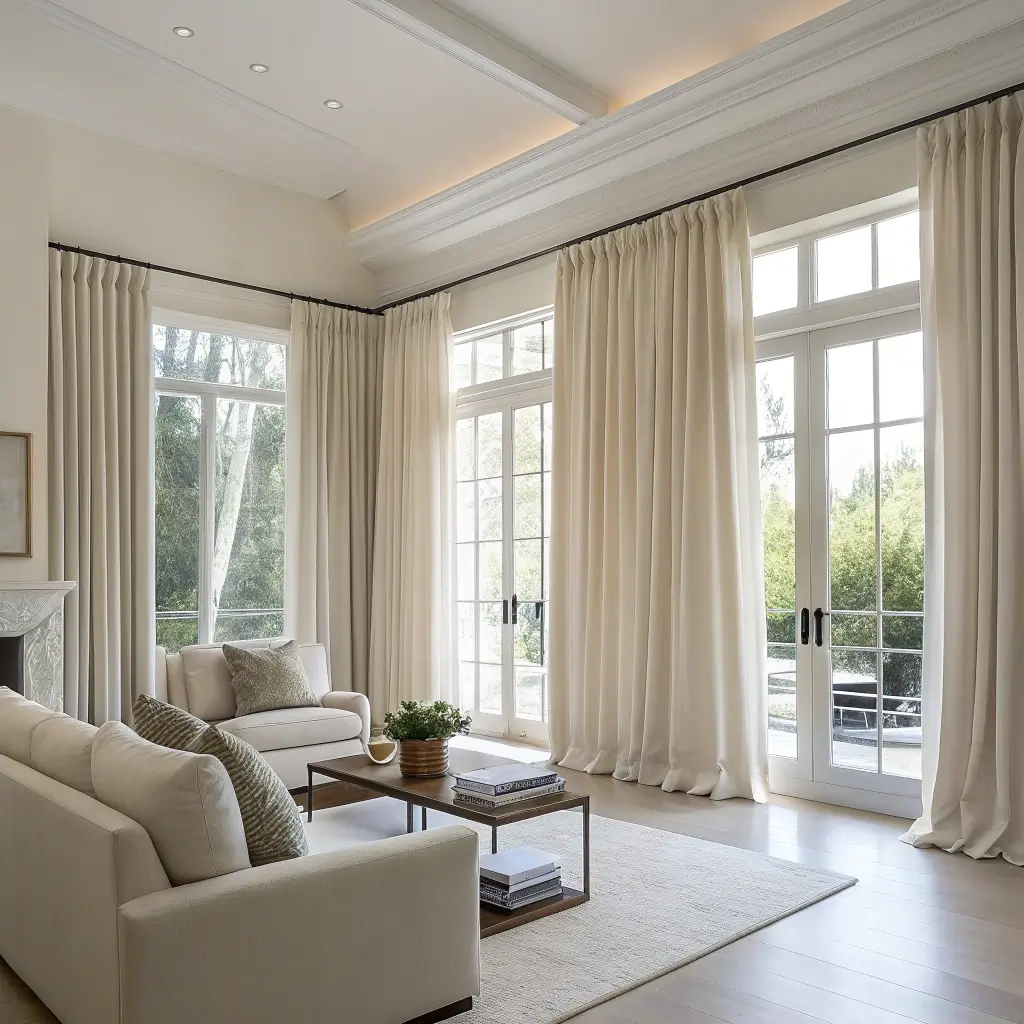
Hidden curtain rods create the illusion of floating curtains that maximize visual space. When hardware disappears, your small living room gains precious visual real estate.
I discovered hidden rod systems while trying to make my rental apartment ceiling look higher. Recessed tracks and ceiling-mounted channels made my curtains look like they materialized from nowhere. The clean lines eliminate visual clutter that traditional rods create.
Hidden Hardware Options
Invisible solutions:
- Ceiling-mounted tracks for seamless look
- Recessed channels in crown molding
- Behind-valance mounting for traditional rooms
- Motorized systems for ultimate invisibility
IMO, the investment in hidden hardware pays off in small spaces where every visual inch counts.
Ombre Gradient Curtains
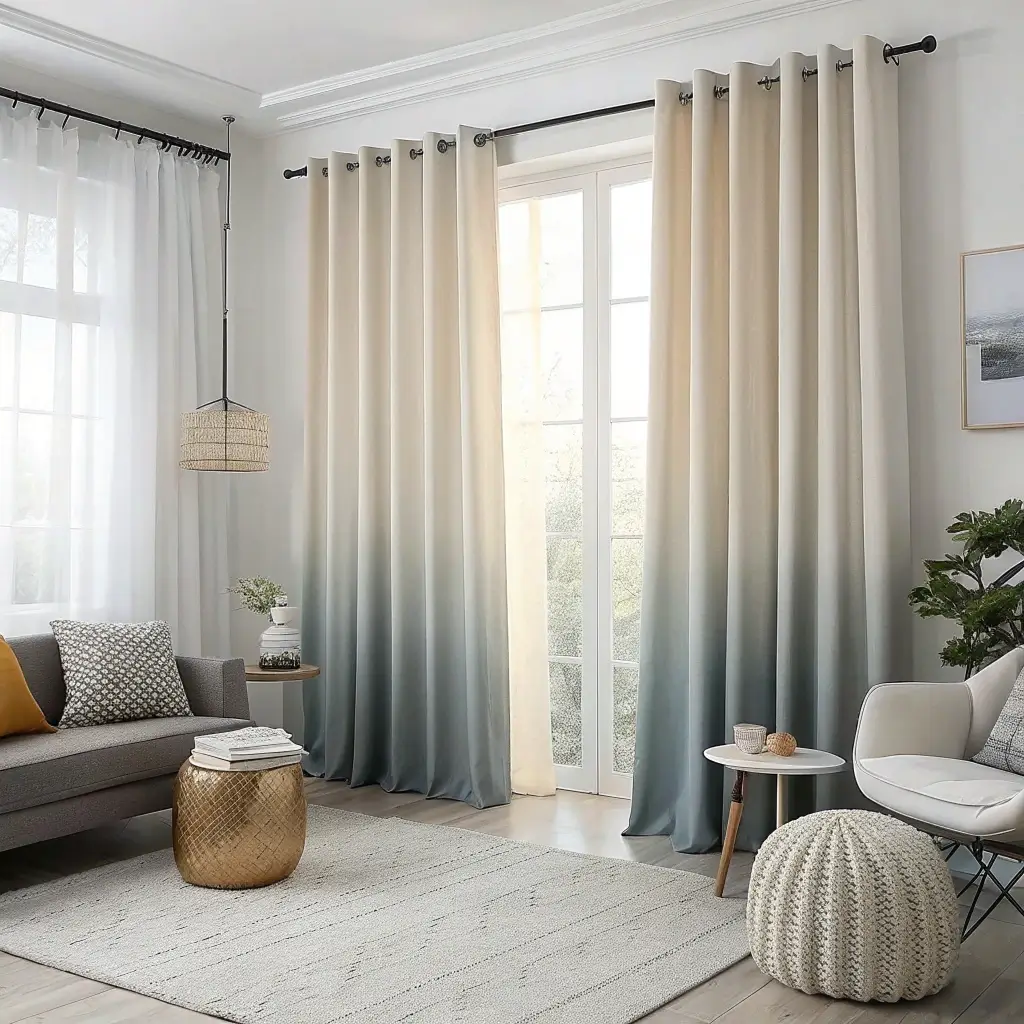
Ombre curtains bring artistic flair without overwhelming small spaces. The gradient effect draws eyes upward, creating height illusion while adding sophisticated color that evolves from top to bottom.
My ombre journey started with a DIY dip-dye disaster that somehow worked. Light-to-dark gradients made my ceilings look taller, while the subtle color transition added interest without busy patterns.
Gradient Guidelines
Make ombre work:
- Light on top for height illusion
- Subtle transitions prevent harsh lines
- Coordinate with walls for cohesion
- Single gradient per room maximum
Pulling It All Together
After years of curtain experiments in various tiny living rooms, here’s the truth: the best curtains for small spaces are the ones that solve YOUR specific problems. Need more light? Sheers. Want drama? Velvet. Seeking simplicity? Scandinavian linen.
Start by identifying your living room’s biggest challenge. Too dark? Focus on light-filtering options. Too public? Prioritize privacy. Too boring? Add pattern or texture. Match the solution to the problem, not the Pinterest board to the room.
Remember, curtains are relatively easy to change. That commitment phobia keeping you with naked windows? Get over it. Buy something, try it, and adjust as needed. The transformation from bare windows to properly dressed ones will shock you.
Mix these ideas freely. Layer sheers with blackouts, combine natural materials with modern hardware, go bold with color or play it safe with white. Your small living room deserves curtains that work as hard as the space does – providing privacy, controlling light, and looking fantastic while doing it.
The biggest mistake people make with small living room curtains? Thinking they need to play it safe. Bold choices often work better than timid ones in small spaces. That dramatic floor-to-ceiling installation you’re considering? Do it. Your living room will thank you, your guests will compliment you, and you’ll wonder why you waited so long.
Stop living with sad, naked windows or those temporary solutions you installed three years ago. Pick one idea from this list, measure your windows properly (twice, trust me), and transform your small living room into the sophisticated space it deserves to be. Because great curtains don’t just cover windows – they complete rooms 🙂
