
Living in 400 square feet doesn’t mean you have to sacrifice style or sanity. Trust me, I spent three years in a studio apartment that was basically a glorified closet with a window, and somehow managed to host poker nights, work from home, AND maintain a dating life without anyone running away screaming at the door.
Here’s what nobody tells you about studio living: it forces you to be clever. Every piece of furniture needs to earn its keep, every corner demands purpose, and suddenly you become a spatial planning genius out of pure necessity.
After helping dozens of buddies transform their shoebox apartments into legitimate bachelor pads, I’ve learned exactly what works and what’s just Instagram nonsense.
So grab a beer, measure your space twice, and let’s turn that studio into something that actually reflects who you are – not what some lifestyle blogger thinks a “man cave” should look like.
Industrial Loft Vibes
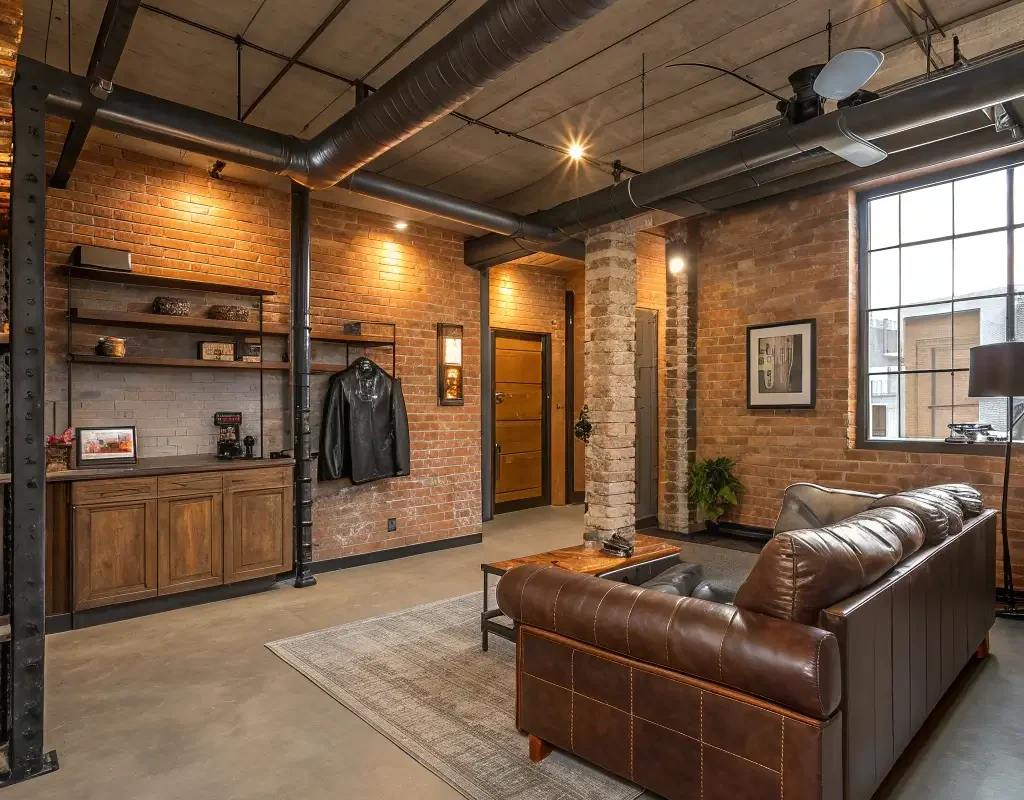
Nothing says “I’m an adult with taste” quite like exposed brick, metal fixtures, and raw wood. Industrial design works brilliantly in studios because it celebrates the bones of your space instead of trying to hide them. Those pipes running across your ceiling? Feature, not bug.
I transformed my first studio using industrial elements for less than a grand. The secret? Embrace what you’ve got. Can’t afford real exposed brick? I used removable brick wallpaper on one wall (judge me later, it looked incredible). Those ugly radiator pipes became design elements once I painted them matte black.
Key Industrial Elements That Work
Here’s what actually makes the industrial look work in small spaces:
- Metal shelving units that double as room dividers
- Edison bulb string lights for that warehouse ambiance
- Reclaimed wood furniture with metal legs
- Concrete-look surfaces (peel-and-stick tiles work wonders)
- Black metal fixtures throughout
The industrial aesthetic naturally favors open storage, which keeps your space feeling larger. Plus, when everything’s on display, you’re forced to keep things organized – win-win.
Minimalist Masculine Retreat

Ever notice how the most confident guys own the least stuff? Minimalism isn’t about deprivation – it’s about being intentional with what you keep. My studio became infinitely more livable when I stopped treating it like a storage unit.
The minimalist approach works especially well for studios because clutter makes small spaces feel suffocating. I follow the one-in-one-out rule: buy a new shirt? An old one goes. New gadget arrives? Something else gets sold. This keeps the space breathing.
Creating a minimalist masculine space means choosing quality over quantity. That one leather chair beats three cheap ones. A single piece of art trumps a gallery wall. Your space should feel curated, not collected.
Minimalist Essentials for Studios
Focus on these foundational pieces:
- Platform bed with built-in storage
- Single statement sofa in neutral tones
- Clear surfaces with hidden storage
- Monochromatic color palette (more on this later)
Compact Smart Storage Solutions
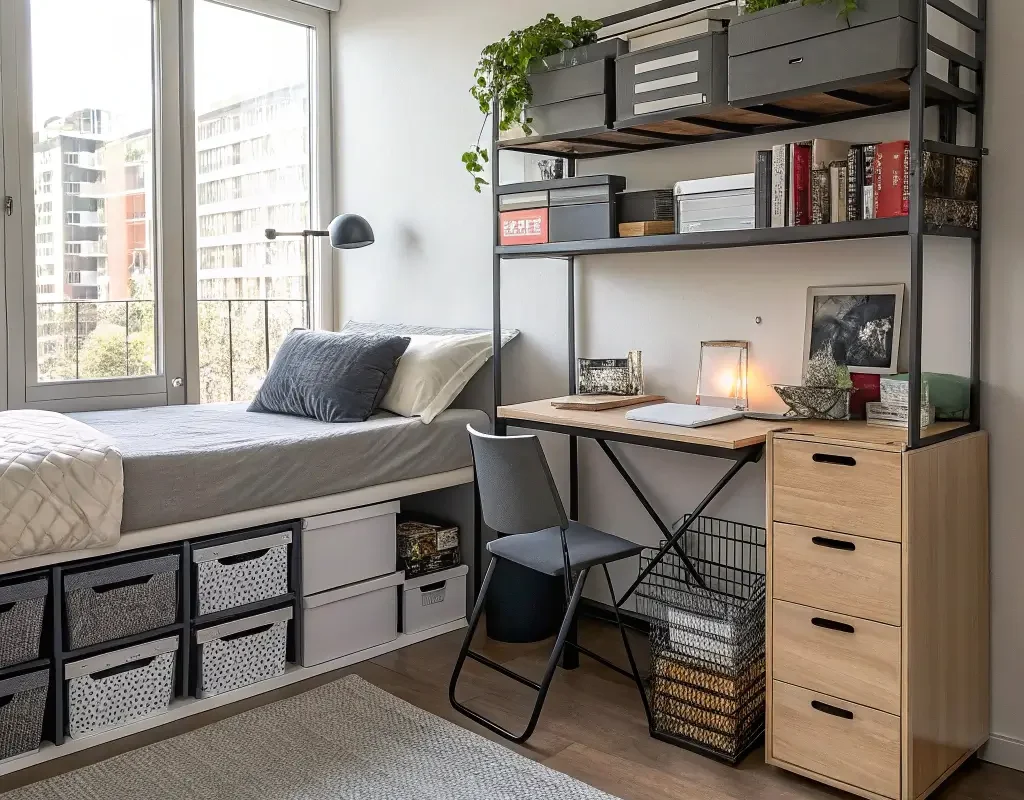
Let’s talk about the unsexy stuff that makes studio life actually work: storage that doesn’t suck. Every surface in your studio should pull double duty. That coffee table? Storage. The bed? Massive storage. That weird corner behind the door? You guessed it – storage goldmine.
I discovered the magic of vertical storage after tripping over shoes for the thousandth time. Wall-mounted everything became my religion. Floating shelves, pegboards, magnetic strips for knives – if it can stick to a wall, it’s not eating floor space.
The game-changer for me? Ottoman storage cubes. They’re seats, footrests, coffee tables, AND they hide all your random crap. Stack them, spread them out, use them as a room divider – these things adapt to whatever you need.
Smart storage hacks that actually work:
- Ceiling-mounted bike storage (frees up 15 square feet instantly)
- Under-bed vacuum bags for seasonal clothes
- Behind-door organizers for shoes and accessories
- Magnetic spice racks on the fridge side
- Floating nightstands instead of bulky tables
Also Read: 15 Masculine Apartment Decorating for Men Ideas Done Right
Cozy Reading Nook Setup
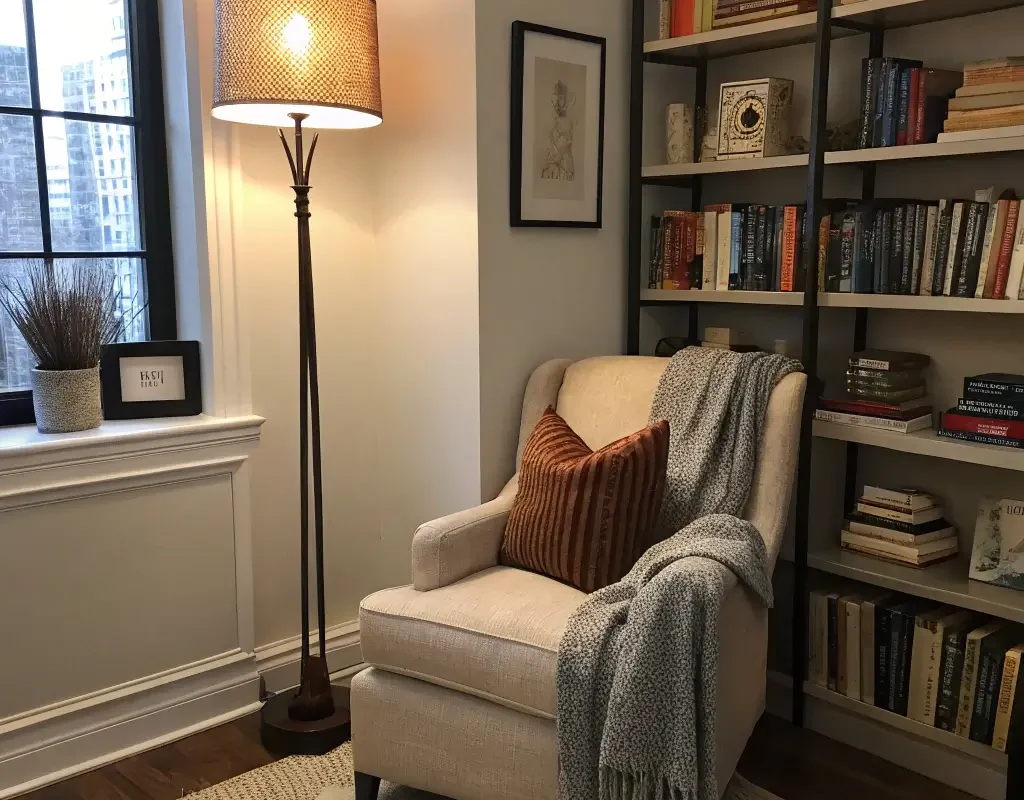
Who says you need a separate room for a reading corner? Creating a defined reading space in your studio adds personality and gives you a mental escape zone without leaving your apartment.
My reading nook consists of one comfortable chair, a small side table, and good lighting – that’s it. Position it near a window if possible. Natural light beats everything else for reading, and it makes your space feel larger. The psychological boundary created by a different seating area works wonders for studio living.
Building Your Reading Corner
Essential elements for the perfect nook:
- Comfortable chair that fits your body (test before buying!)
- Adjustable reading lamp with warm bulbs
- Small bookshelf or floating shelves within arm’s reach
- Soft throw blanket for texture and comfort
- Side table for coffee/beer/whiskey
Urban Jungle Studio Decor
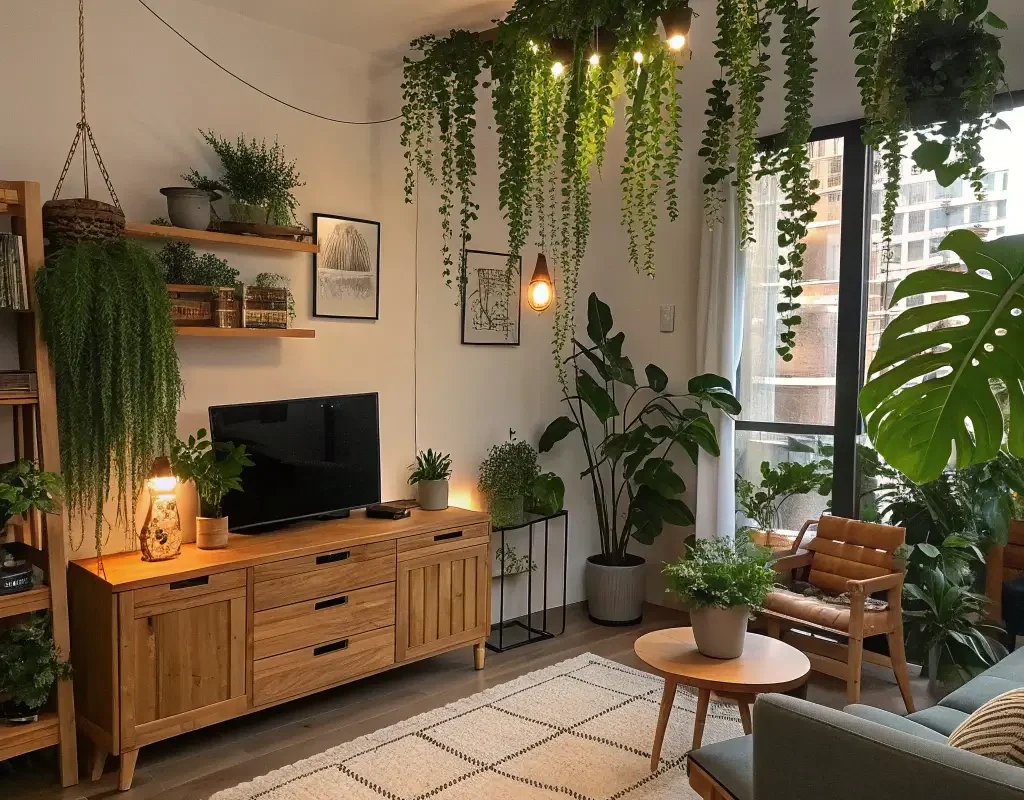
Plants do more than just look good (though they definitely do that). They clean your air, add color, and create natural divisions in your space. Plus, taking care of something living makes you feel less like you’re living in a box.
Started with one snake plant that survived my black thumb. Now I’ve got 15 plants thriving in my current place. The trick? Choose plants that match your laziness level. If you forget to water things, get succulents or ZZ plants. Travel a lot? Spider plants laugh at neglect.
Best plants for studio apartments:
- Pothos – trails beautifully, impossible to kill
- Snake plants – vertical growth, needs zero attention
- Rubber plants – statement pieces that grow with you
- Peace lilies – tell you when they need water by drooping
- Hanging plants – save surface space
Position larger plants strategically to create natural room divisions. That monstera between your bed and desk? Instant privacy screen that looks way better than a curtain.
Tech-Friendly Apartment Layout
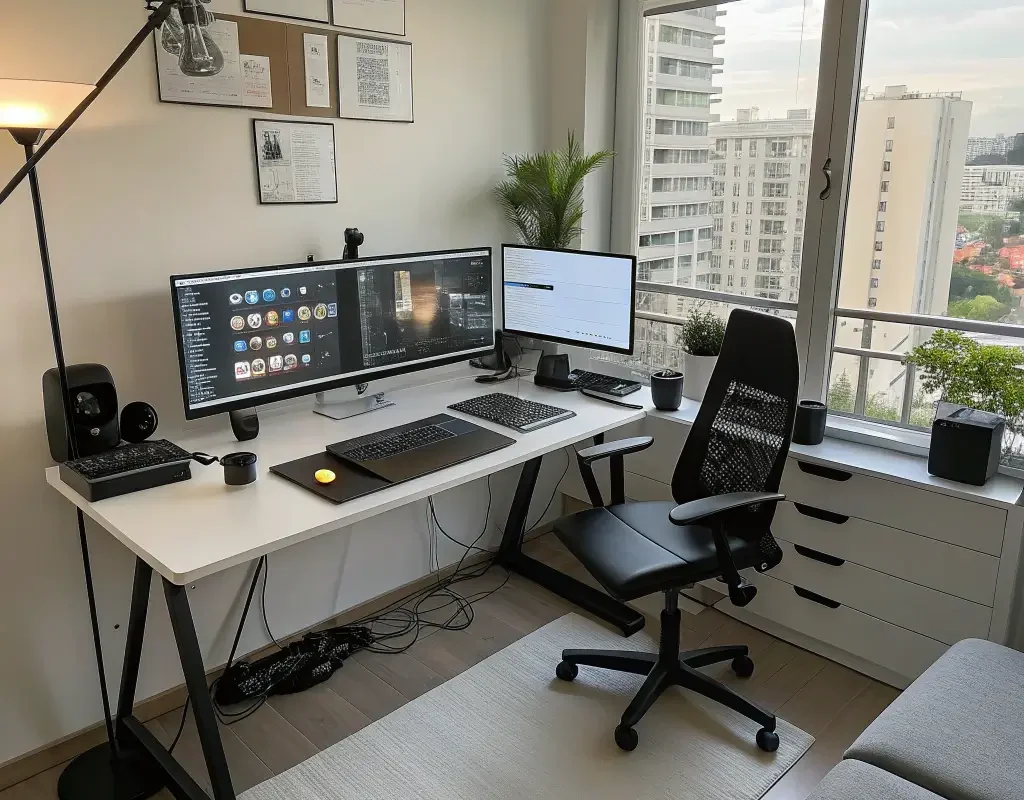
Real talk: we live on our devices. Your studio needs to accommodate your tech life without looking like Best Buy exploded. Cable management makes or breaks a small space – nothing kills the vibe faster than cord spaghetti everywhere.
I invested in wireless everything possible. Wireless charging pads built into furniture, Bluetooth speakers that double as decor, smart lighting you control from bed – the future is now, and it’s cord-free. The initial investment hurts, but the visual payoff is immediate.
Tech Setup That Doesn’t Suck
Here’s my setup that keeps things clean:
- Wall-mounted TV with hidden cable channels
- Wireless mesh router hidden behind books
- USB outlets everywhere (no more adapter blocks)
- Smart home hub controlling lights and temperature
- Projector instead of TV for movie nights (rolls away when done)
Also Read: 10 Simple Apartment Balcony Decorating Ideas to Transform Yours
Monochrome Modern Style

Black, white, and fifty shades of gray might sound boring, but monochrome design creates cohesion that makes small spaces feel intentional. When everything shares a color family, your eye moves smoothly through the space without jarring interruptions.
My current studio rocks the monochrome look, and visitors always comment on how spacious it feels. The trick? Layer different textures within your color scheme. Rough concrete gray, smooth charcoal leather, soft gray wool – same color family, totally different vibes.
Why monochrome works in studios:
- Visual continuity makes spaces feel larger
- Easy to maintain aesthetic coherence
- Timeless look that won’t date quickly
- Simple to add pops of color when you want change
Vintage Gentleman Aesthetic
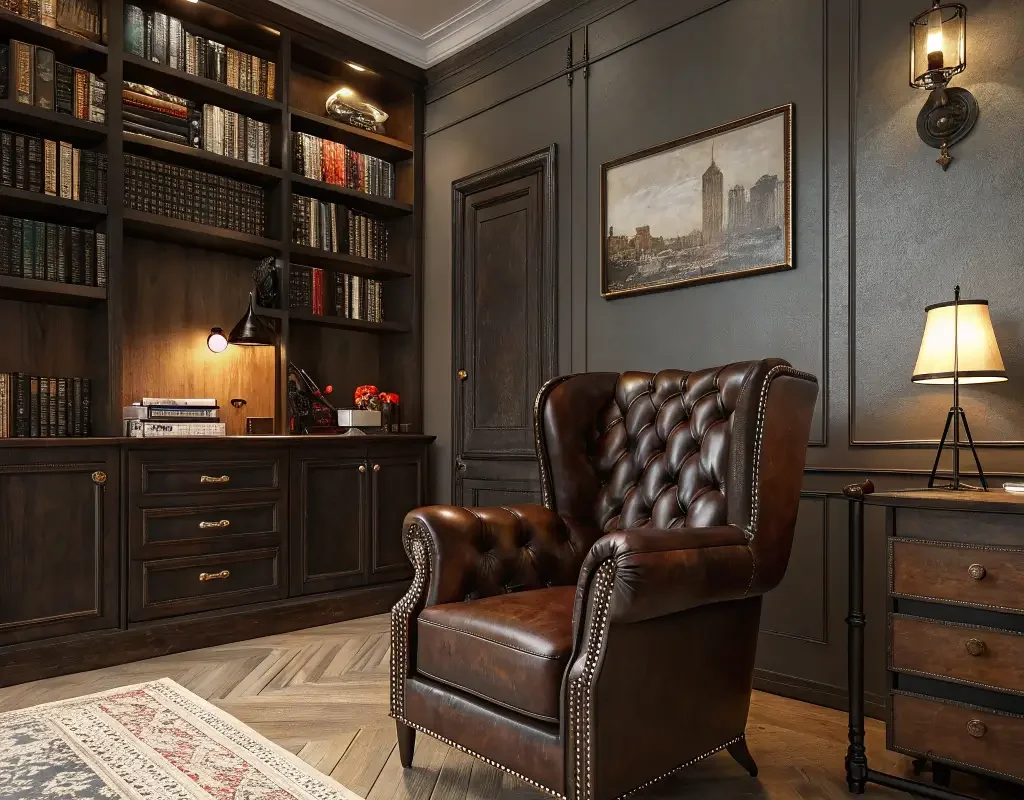
Channel your inner Don Draper without the problematic behavior. Vintage gentleman style brings sophistication through leather, dark wood, and classic masculine elements that never go out of style.
Found my leather Chesterfield couch at an estate sale for $200 (needed cleaning, but so worth it). Paired with vintage barware, a few old books, and strategic use of brass accents, my studio suddenly felt like a sophisticated speakeasy. The mix of old and new prevents it from feeling like a museum.
Gentleman’s Essentials
Must-haves for this aesthetic:
- Quality leather seating (even just one piece)
- Dark wood furniture with character
- Vintage bar cart or bar area
- Classic artwork or vintage posters
- Rich textiles like wool or velvet
Multi-Functional Furniture Hacks
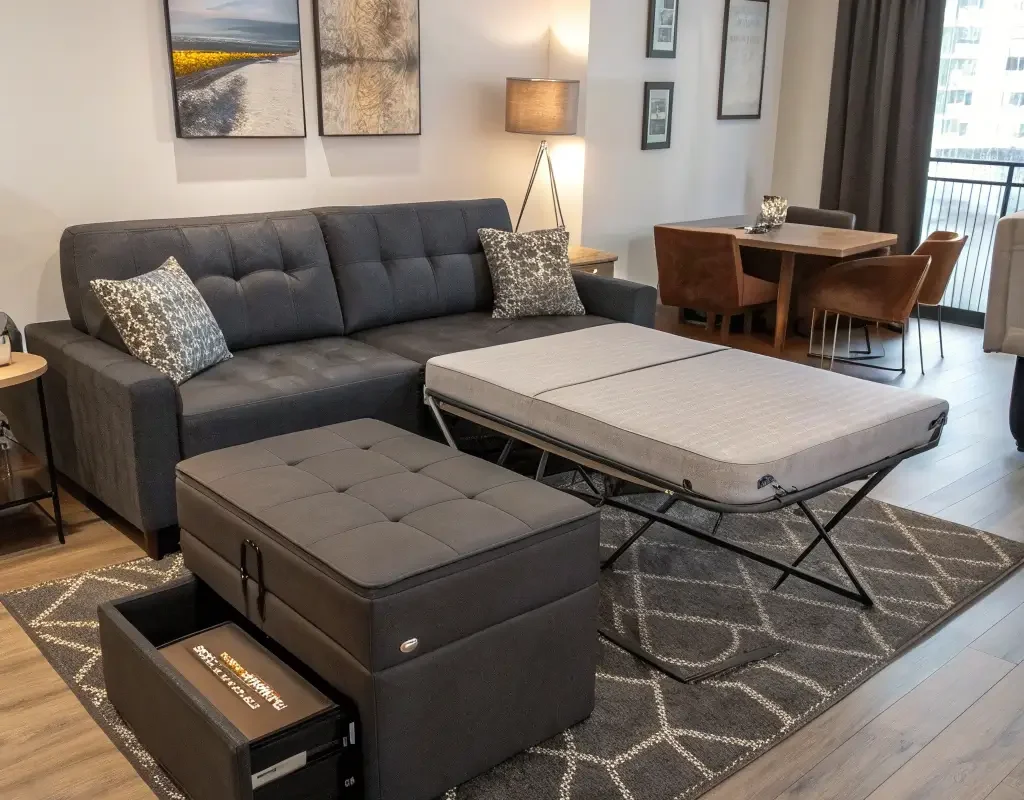
Every piece of furniture in a studio needs to work harder than a regular apartment. That console? It’s also your desk and dining table. The couch? It better have storage or convert to a bed. Multi-functional doesn’t mean ugly – plenty of pieces look great while pulling triple duty.
My dining table extends from seating two to six, then folds completely against the wall. Cost me $300 on Facebook Marketplace, saves me approximately 40 square feet daily. The Murphy bed debate is real, but honestly? A good storage bed frame works just as well without the installation hassle.
Furniture that earns its keep:
- Expandable dining tables
- Storage ottomans (mentioned earlier because they’re that good)
- Nesting tables that tuck away
- Convertible desk/vanity pieces
- Modular shelving systems
Also Read: 10 Inspiring Apartment Decorating on a Budget Ideas Easily
Open-Concept Living Flow
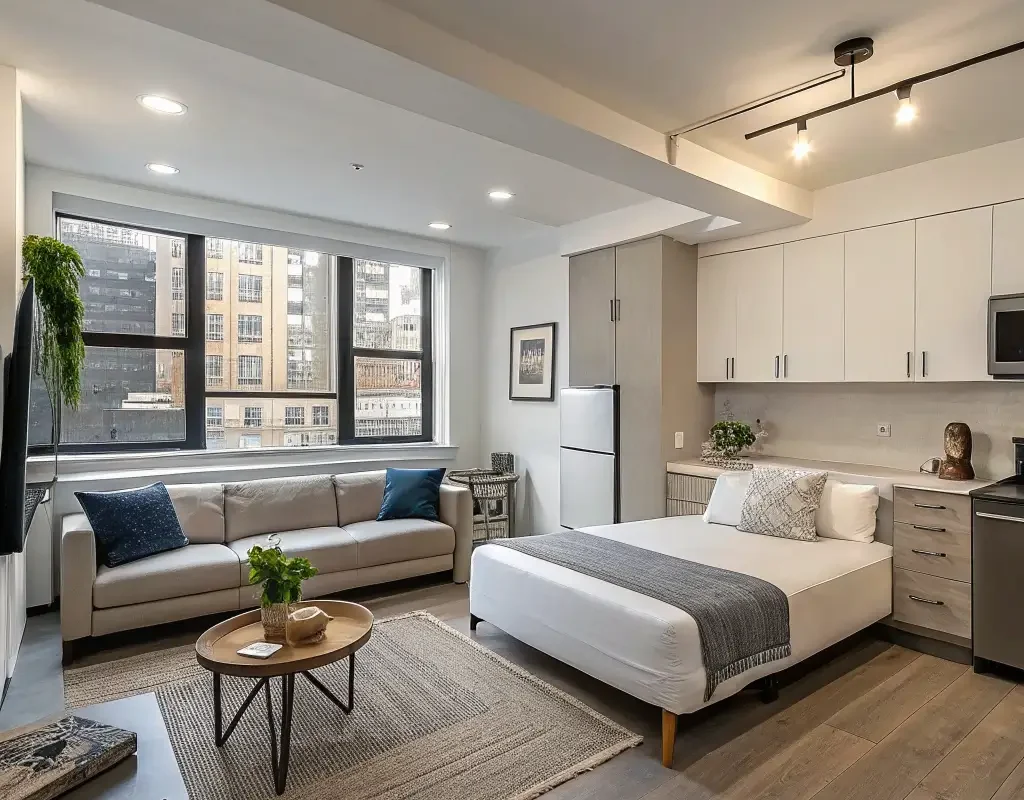
Studios force open-concept living whether you like it or not. The key? Create zones without walls. Your bed area, living space, and work zone need definition without physical barriers killing the flow.
I use rugs to define different areas – sounds simple because it is. Different rug textures and sizes naturally guide movement through the space. Furniture placement creates pathways that make sense. Back of the couch facing the bed? Natural divider that doesn’t block light.
Zoning Without Walls
Smart ways to create separation:
- Curtain tracks for flexible privacy
- Bookcases as dividers (accessible from both sides)
- Different lighting for each zone
- Strategic furniture placement
- Color blocking with paint or wallpaper
Warm Lighting Mood Zones
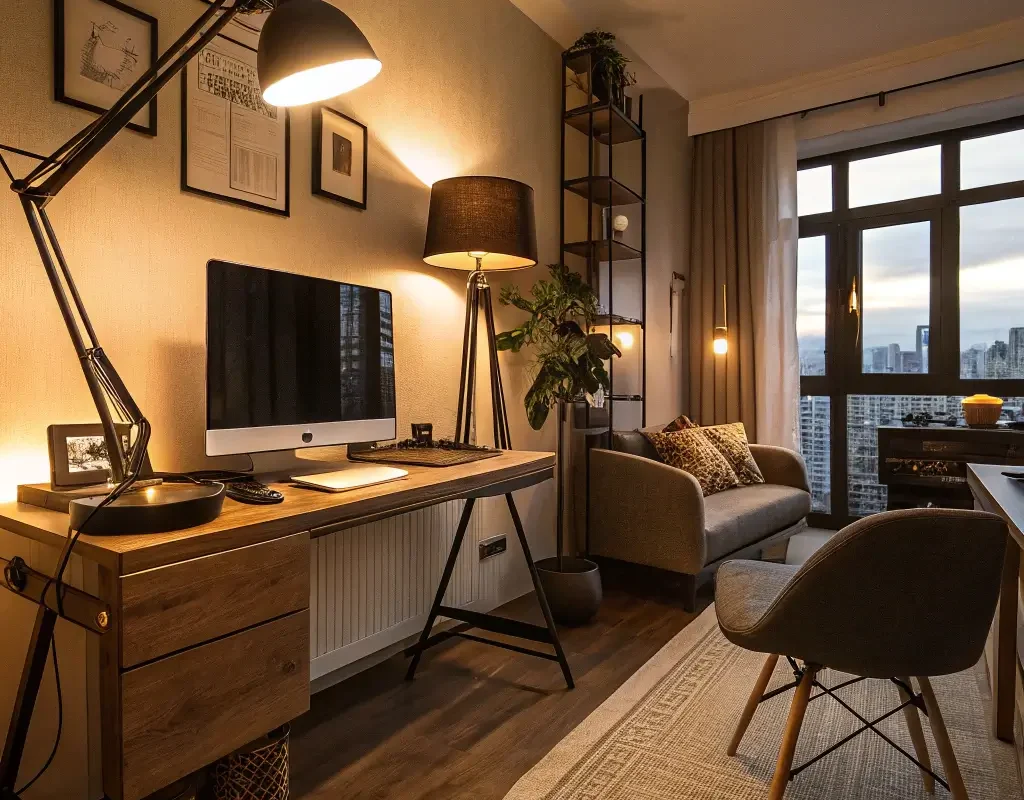
Overhead lighting is the enemy of ambiance. Layer your lighting like you’re creating a movie set because basically, you are. Different activities need different moods, and your studio should adapt.
I have seven light sources in my 450-square-foot space. Sounds excessive? Each serves a purpose. Work lamp for focus, reading light for the nook, ambient LED strips for evening, bright bathroom lighting for grooming – you get it. Smart bulbs let me control everything from my phone, shifting from productive daylight to romantic evening with one tap.
Lighting hierarchy that works:
- Task lighting for work and reading
- Ambient lighting for general mood
- Accent lighting to highlight art or plants
- Natural light maximized during the day
Budget-Friendly Chic Design

Look, not everyone has trust fund money for West Elm everything. Great design happens at every budget – you just need creativity and patience. My first studio came together for under $2000 total, including furniture.
Thrift stores, Facebook Marketplace, and estate sales are goldmines. That $3000 restoration hardware couch? Found the same model for $400 because someone was moving. Paint transforms everything – I’ve made IKEA furniture look high-end with spray paint and new hardware.
Budget Hacks That Look Expensive
Money-saving moves that work:
- DIY artwork using high-res prints and thrifted frames
- Peel-and-stick everything (wallpaper, tiles, wood planks)
- Updated hardware on cheap furniture
- Throw pillows and blankets to refresh old pieces
- Plants propagated from cuttings (free decor!)
Bold Accent Wall Concepts
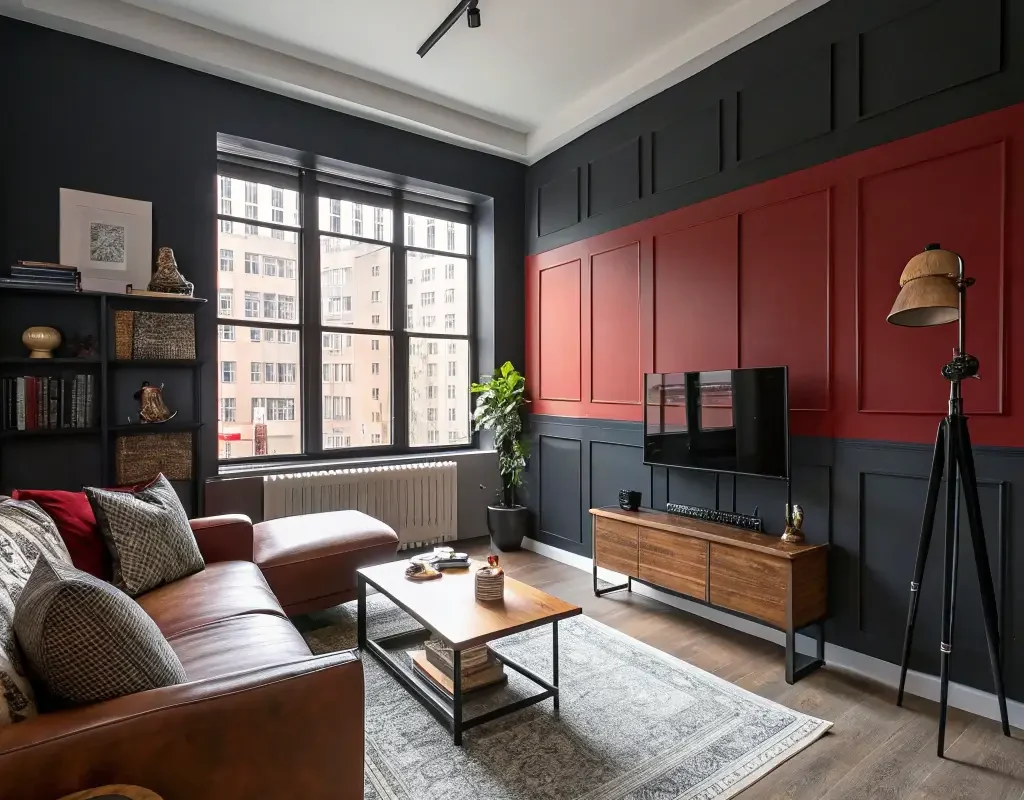
One bold wall changes everything. Accent walls in studios create focal points that distract from the size limitations. Whether it’s paint, wallpaper, or texture, that single wall becomes your design anchor.
My current accent wall? Painted navy blue, almost black. Sounds dark for a small space, right? Actually makes the room feel deeper, especially with proper lighting. The psychological impact of a statement wall can’t be overstated – it shows intention and confidence.
Accent wall ideas that slap:
- Dark paint for depth and drama
- Geometric patterns for modern edge
- Wood planking for texture
- Gallery wall of personal photos/art
- Removable murals for renters
Scandinavian Masculine Touch
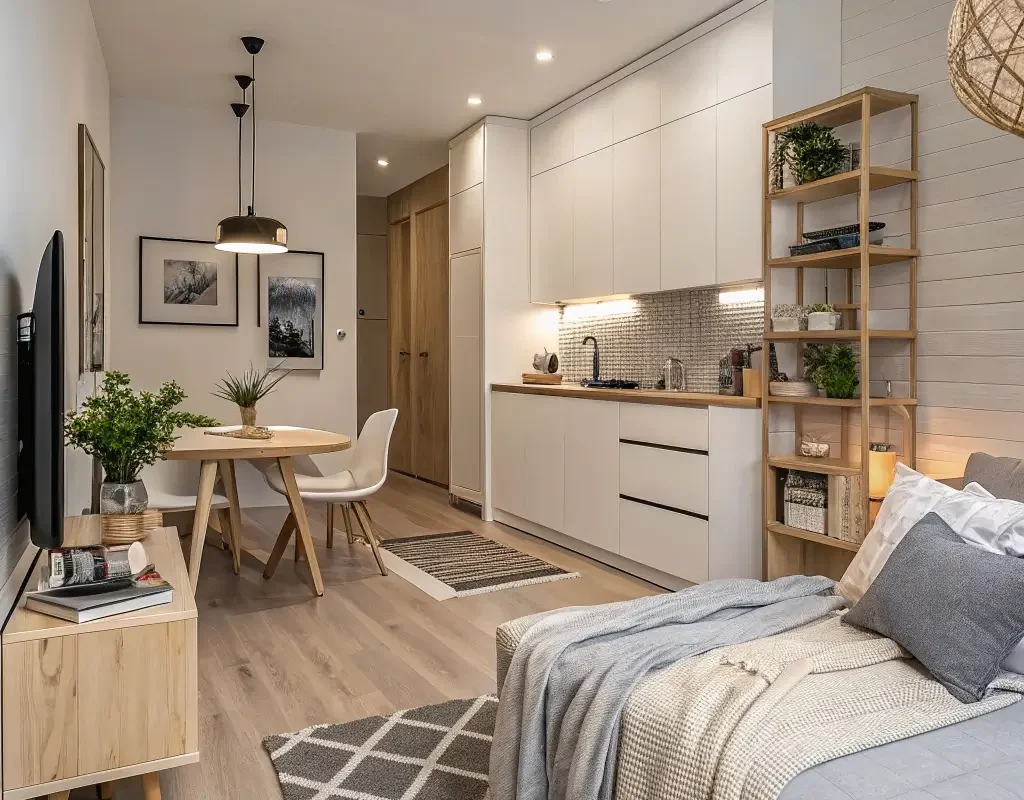
Scandinavian design gets mocked for being basic, but hygge works perfectly in studios. The emphasis on functionality, natural materials, and cozy minimalism aligns perfectly with small space living.
I adopted Scandi principles after visiting Copenhagen and seeing how they maximize tiny apartments. Light woods, clean lines, and purposeful design create calm spaces that feel larger than they are. The masculine touch comes through darker accents and rougher textures.
Scandi Essentials for Guys
Nordic elements that work:
- Light wood furniture with clean lines
- Neutral color palette with black accents
- Cozy textiles in natural fibers
- Functional design prioritized over decoration
- Natural light maximized at every opportunity
Creative Workspace Corners

Working from home in a studio requires serious creativity. Your workspace needs boundaries or your bed becomes your office, and trust me, that path leads nowhere good. Even a tiny dedicated work zone beats working from your couch.
My desk? A wall-mounted folding number that disappears after 5 PM. This physical act of “closing the office” maintains work-life balance when your commute is three steps. Vertical storage above the desk keeps supplies accessible but not cluttered.
Workspace solutions for studios:
- Wall-mounted desks that fold away
- Secretary desks with closing fronts
- Corner desks maximizing dead space
- Standing desk converters for existing surfaces
- Laptop stands that clear table space quickly
FYI, investing in a good chair matters more than the desk itself. Your back will thank you, and you’ll actually use the workspace instead of defaulting to the couch.
Smart Design Principles That Tie It All Together
After living in studios for years and helping friends optimize theirs, certain principles always apply. Scale matters more than size – one large piece often works better than several small ones. Your eye reads it as intentional rather than cramped.
Mirrors double your space visually. Position them to reflect windows or interesting views, not your unmade bed. The oldest trick in the book still works because physics doesn’t lie 🙂
Keep your color palette tight. Three main colors maximum, with one dominant, one supporting, and one accent. This creates cohesion that makes 400 square feet feel planned, not chaotic.
The Rules That Never Fail
Universal studio truths:
- Keep floors clear – visible floor space equals perceived room
- Go vertical with storage and decor
- Invest in quality basics over quantity
- Maintain clear sightlines through the space
- Regular purging keeps clutter at bay
Final Thoughts
Living in a studio apartment doesn’t mean settling for less – it means being smarter about what you choose. Every item earns its place, every design decision has purpose, and suddenly you realize you don’t need 2000 square feet to live well.
The best studio apartments reflect their owners without overwhelming the space. Pick two or three ideas from this list that resonate with your lifestyle and start there. Trying to implement everything at once creates chaos, not cohesion.
IMO, the biggest mistake guys make with studios is apologizing for them. Own your space, design it intentionally, and watch how differently people respond. That studio isn’t a temporary compromise – it’s a masterclass in efficient living.
Your studio apartment is a design challenge, not a limitation. Embrace the constraints, get creative with solutions, and build something that makes you excited to come home. Because at the end of the day, a well-designed 400 square feet beats a poorly planned mansion every single time.
Start with one corner, one idea, one improvement. Before you know it, you’ll have friends asking for your advice on their own spaces. And that tiny studio you were embarrassed about? It becomes the apartment everyone wants to hang out in. Trust the process, measure twice, and remember – good design isn’t about money, it’s about intention.
