
Remember that moment when you signed your lease, walked into your tiny apartment, and thought “What have I done?” Yeah, me too. That 500-square-foot studio looked way bigger in the photos, and now you’re standing there wondering how you’ll fit your life into what feels like a glorified closet.
Plus, your landlord just reminded you that you can’t paint, can’t drill major holes, and definitely can’t knock down that weird half-wall between the kitchen and living room.
Here’s the thing though – small apartments can actually be incredible spaces when you know the right tricks. I’ve lived in five different rentals over the past decade, ranging from a 380-square-foot studio to my current one-bedroom that’s barely 600 square feet. Each move taught me something new about making small spaces work without losing my security deposit.
Let me share what actually works when you’re dealing with limited square footage and a landlord who treats their beige walls like the Sistine Chapel. These aren’t just Pinterest-pretty ideas that fall apart in real life – these are battle-tested solutions that’ll transform your shoebox into a space you actually want to come home to.
Floating Shelves for Extra Storage
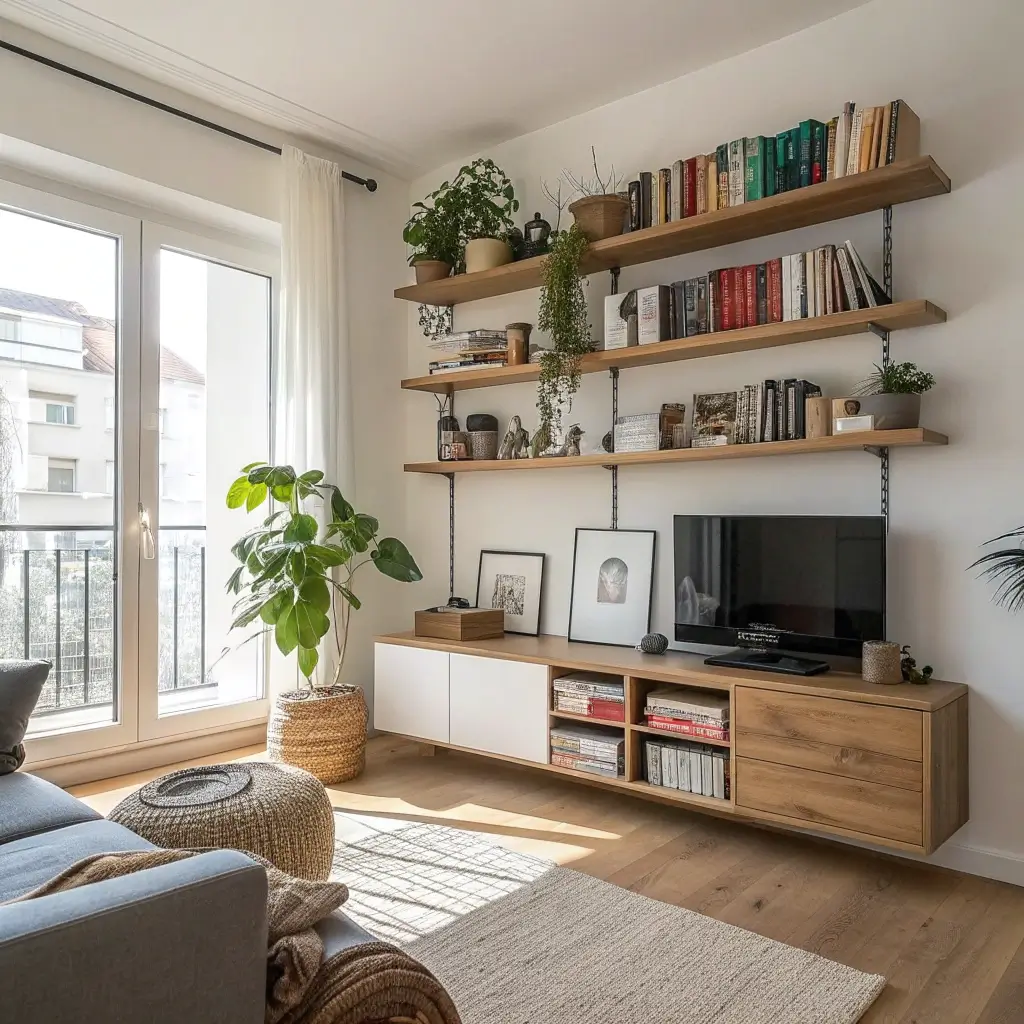
You know what changed my life? Discovering that floating shelves don’t require massive holes in the wall. Command strips and rental-friendly brackets exist, and they’re about to become your new best friends.
I installed three floating shelves in my bathroom last year using heavy-duty adhesive strips. Not only did they hold all my skincare products (yes, all 47 of them), but they also made the room look bigger by drawing the eye upward. The vertical space you’re ignoring right now? That’s free real estate.
Where to Install Floating Shelves
Here’s where floating shelves work magic:
- Above the toilet (classic move, always works)
- Kitchen corners for spices and oils
- Beside your bed instead of nightstands
- That awkward wall space beside doorways
The trick? Keep them at eye level or higher. Lower shelves make rooms feel cramped, but high shelves create the illusion of height. Plus, they’re perfect for hiding stuff you don’t use daily but can’t bear to throw away.
Styling Your Shelves
Don’t just dump everything on there and call it a day. Try the rule of thirds:
- 1/3 practical items (books, storage boxes)
- 1/3 decorative pieces (plants, candles)
- 1/3 empty space for breathing room
Multi-Functional Furniture Pieces
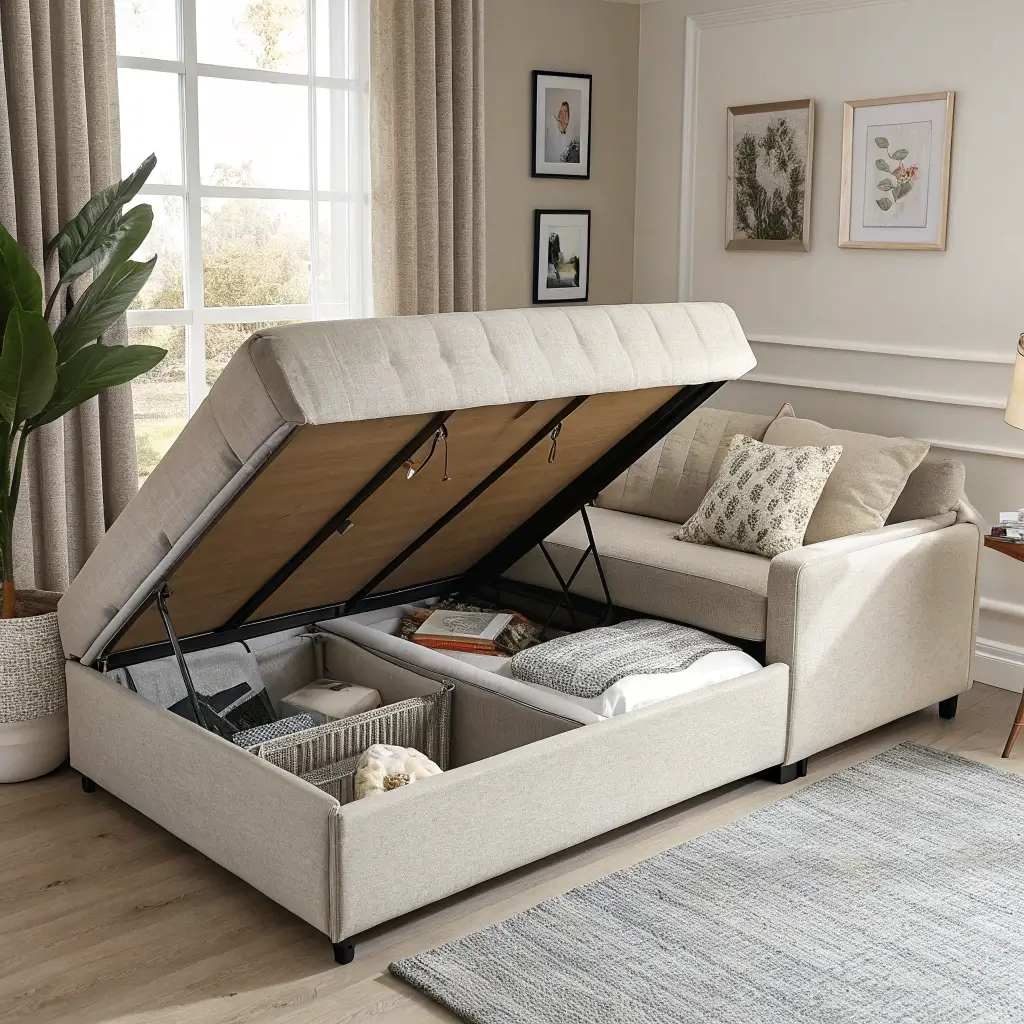
Every piece of furniture in a small apartment needs to earn its keep. That cute accent chair that only looks pretty? Sorry, it’s gotta go. Multi-functional furniture transforms your space from cramped to clever.
My coffee table lifts up to become a desk, has hidden storage inside, and rolls on wheels when I need more floor space for yoga. Did it cost more than a regular coffee table? Sure. Has it saved my sanity working from home? Absolutely.
Must-Have Multi-Taskers
These pieces pull serious double-duty:
- Ottoman with storage (seating + hiding spot for blankets)
- Expandable console tables (desk by day, dining table by night)
- Sofa beds that actually don’t suck
- Nesting tables that tuck away when not needed
The Investment Strategy
Look, good multi-functional furniture costs more upfront. But think about it – you’re basically buying 2-3 pieces in one. My storage ottoman replaced a coffee table, extra seating, and a blanket basket. That math works out pretty nicely, FYI.
Mirror Walls to Expand Space
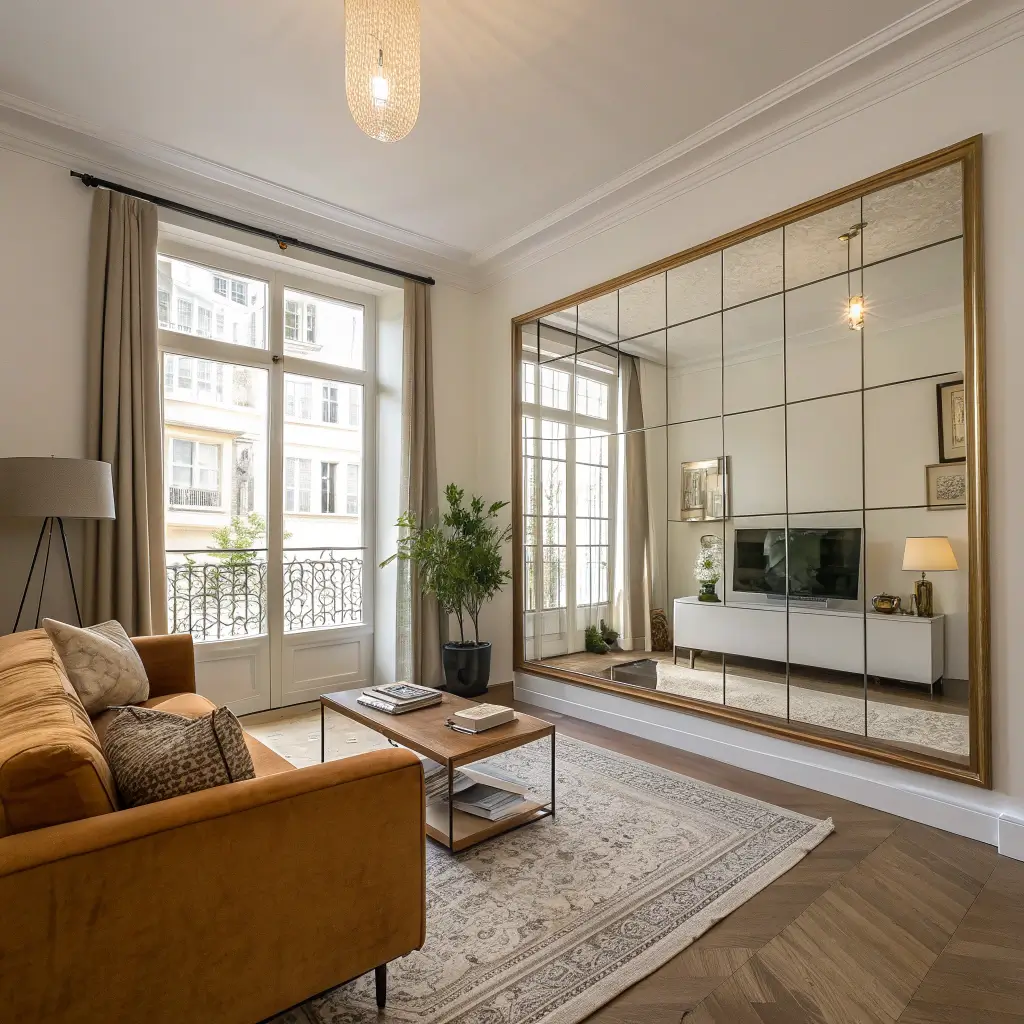
Want to double your apartment’s visual size without knocking down walls? Mirrors create instant depth and bounce light around like nobody’s business. And no, I’m not talking about turning your place into a funhouse.
I hung a massive floor mirror ($40 from Facebook Marketplace) across from my window, and suddenly my living room felt twice as big. The natural light reflects everywhere, and guests always comment on how spacious the room feels. They have no idea they’re being tricked by a piece of glass.
Strategic Mirror Placement
Position mirrors to maximize impact:
- Across from windows (double the natural light)
- Behind light sources for ambient glow
- At the end of narrow hallways
- Above low furniture to create height
Beyond Basic Mirrors
Get creative with mirror styles:
- Gallery wall of small vintage mirrors
- Mirrored furniture (side tables, dressers)
- Peel-and-stick mirror tiles for renters
- Full-length mirrors that lean against walls (no drilling!)
Also Read: 15 Minimalist Apartment Decorating Ideas That Feel Warm
Vertical Garden Wall Décor
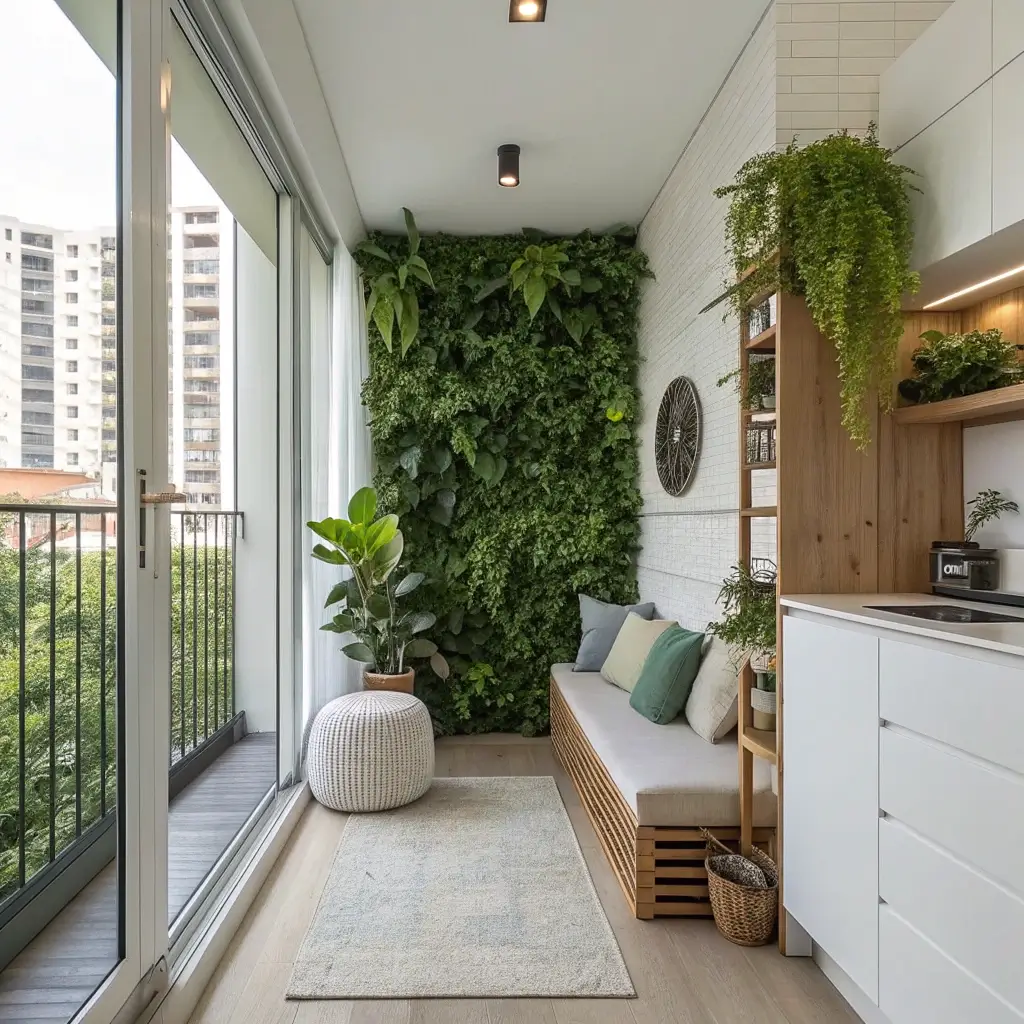
Plants make everything better, but counter space? That’s sacred in a small apartment. Vertical gardens solve this problem while making you look like you have your life together. Win-win.
My kitchen herb garden grows on the wall now, thanks to a simple rail system with S-hooks and hanging planters. Fresh basil for pasta, mint for mojitos, and I didn’t sacrifice an inch of counter space. Plus, it smells amazing.
Creating Your Vertical Garden
Start with these renter-friendly options:
- Tension rod systems between cabinets
- Macramé plant hangers from ceiling hooks
- Wall-mounted planter pockets
- Ladder shelves against walls
Plant Selection for Beginners
Don’t have a green thumb? Choose these survivors:
- Pothos (thrives on neglect)
- Spider plants (impossible to kill)
- Succulents (water once a month)
- Herbs (useful and forgiving)
Under-Bed Storage Solutions
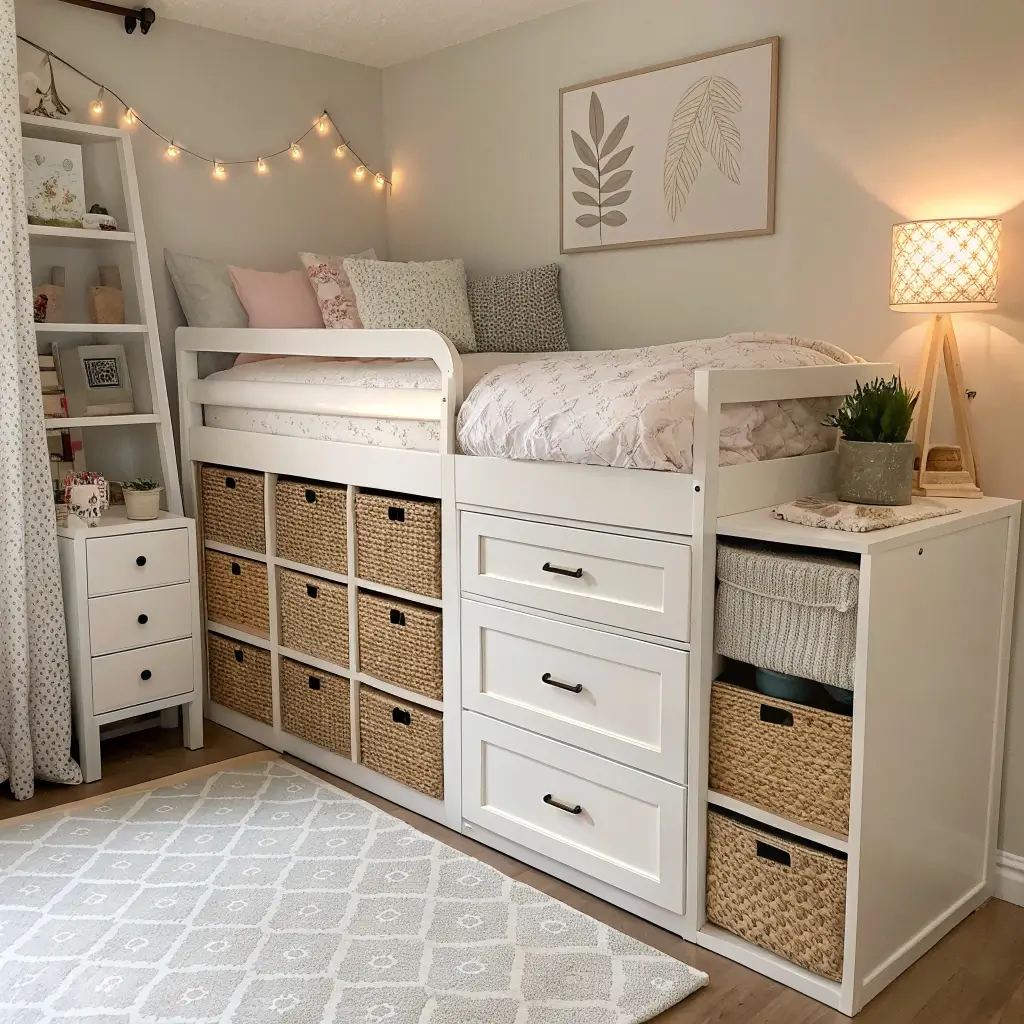
That space under your bed? Stop wasting it. Under-bed storage hides everything you don’t need daily but can’t throw away. Seasonal clothes, extra bedding, those books you swear you’ll read someday – it all goes under there.
I use rolling storage boxes under my bed, and they’ve basically given me an entire extra closet. Pro tip: measure your bed height first. I learned this the hard way when my “perfect” storage boxes were an inch too tall :/
Maximizing Under-Bed Space
Get organized with:
- Vacuum seal bags for bulky items
- Clear boxes so you can see contents
- Rolling drawers for easy access
- Bed risers for extra height (if allowed)
The Bed Skirt Debate
Yes, bed skirts hide the storage. No, they don’t have to look like your grandma’s house. Modern bed skirts come in sleek designs, or skip them entirely and use matching storage boxes that look intentional.
Foldable Dining Tables
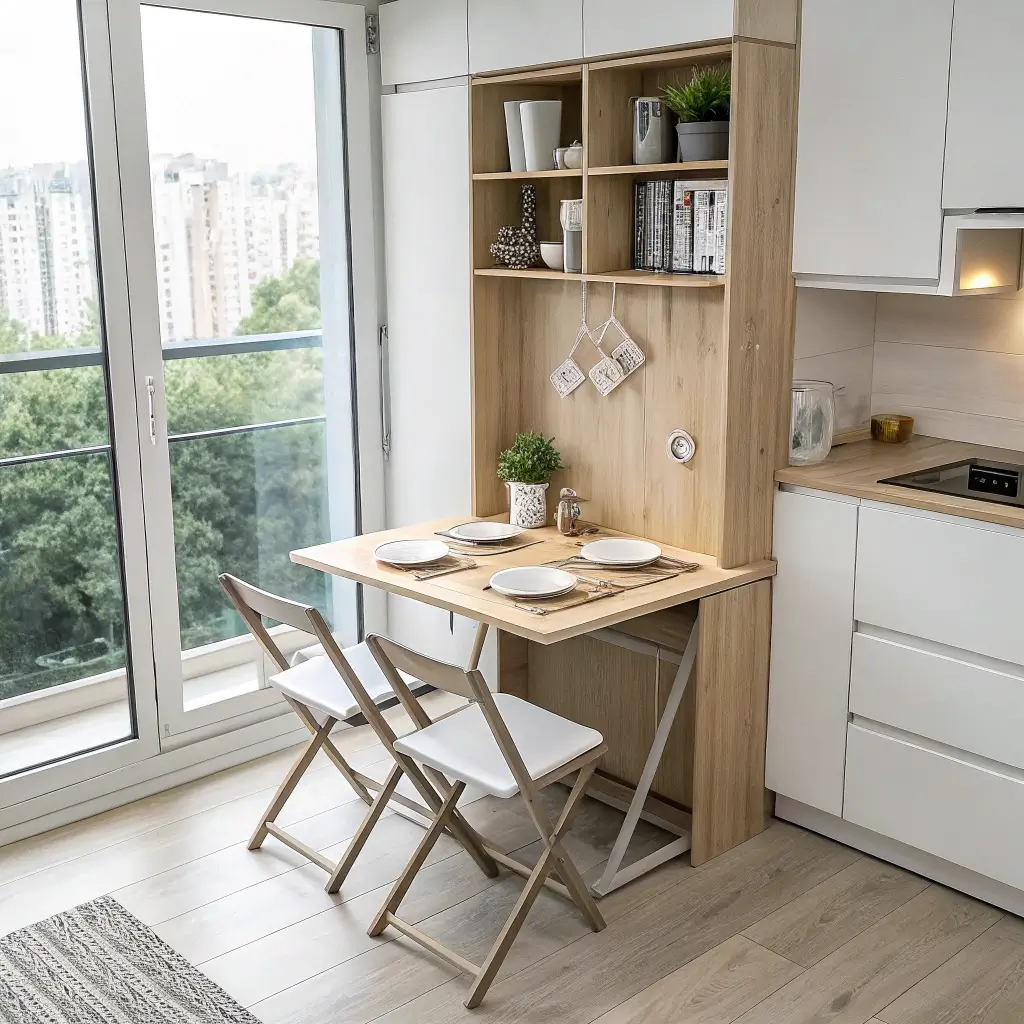
Who needs a full dining table taking up space 24/7 when you eat most meals on the couch anyway? Foldable dining tables give you options without the commitment.
My wall-mounted drop-leaf table has been a game-changer. It folds completely flat against the wall when I’m not using it, then extends to seat four when friends come over. Takes up literally zero floor space when folded.
Types of Space-Saving Tables
Consider these options:
- Wall-mounted drop-leaf tables
- Gateleg tables that expand sideways
- Console tables that extend
- Murphy desk/table combos
Making It Work Daily
The key? Keep it accessible. If you have to move three things to use your table, you won’t. Mount it at counter height for a breakfast bar vibe, or standard height for traditional dining. Either way, keep the area clear.
Also Read: 10 Amazing Living Room Ceiling Design Modern Ideas and Tips
Minimalist Open-Concept Layout
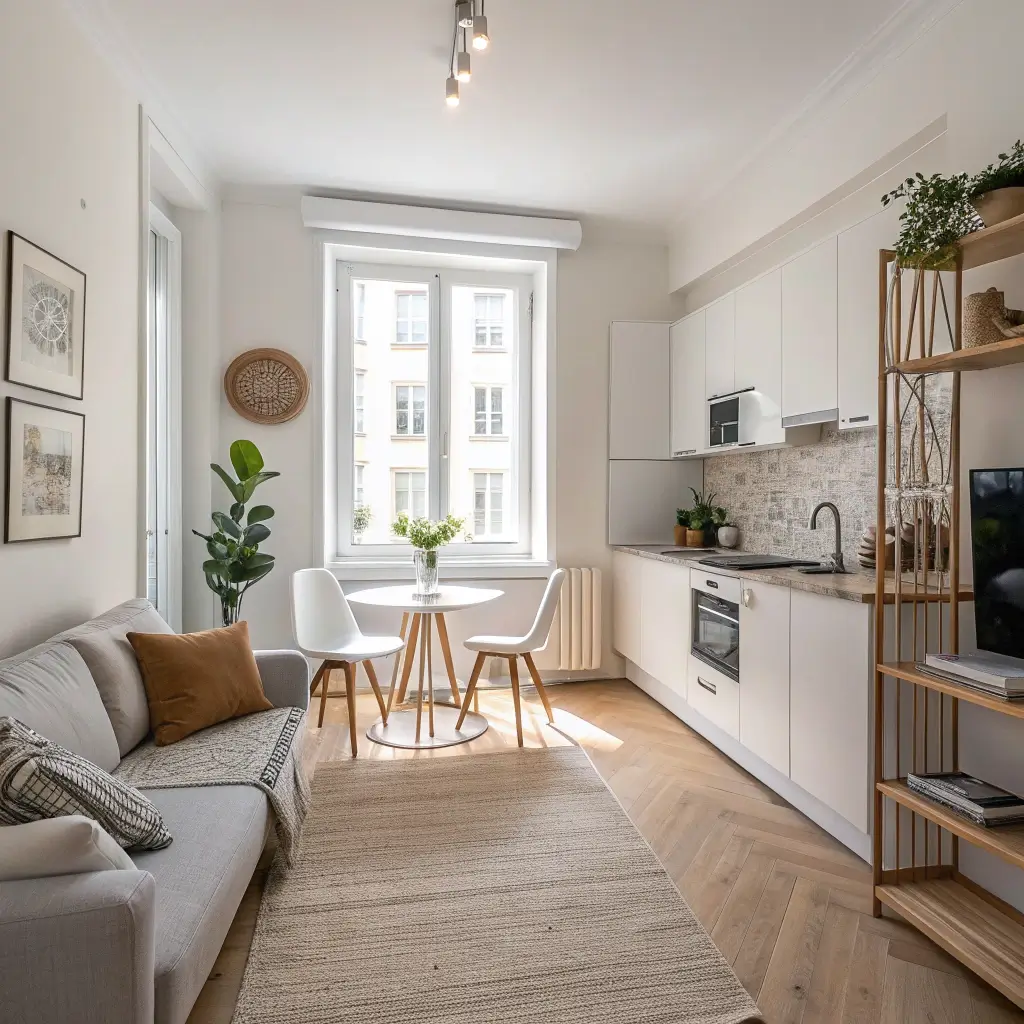
Small apartments actually benefit from fewer visual barriers. Opening up your layout makes everything feel larger, even if the square footage stays the same.
I removed my bulky entertainment center and mounted my TV on the wall. Suddenly, my living room and kitchen felt connected instead of like two tiny boxes. The flow improved, the light traveled better, and my 600 square feet started feeling almost… spacious?
Creating Open Flow
Remove these space-killers:
- Bulky room dividers
- Unnecessary furniture against walls
- Heavy curtains blocking light
- Closed storage blocking sightlines
Defining Spaces Without Walls
Use these tricks instead:
- Area rugs to designate zones
- Different lighting for different areas
- Color changes on accent walls
- Furniture placement creating natural paths
Lofted Bed with Workspace
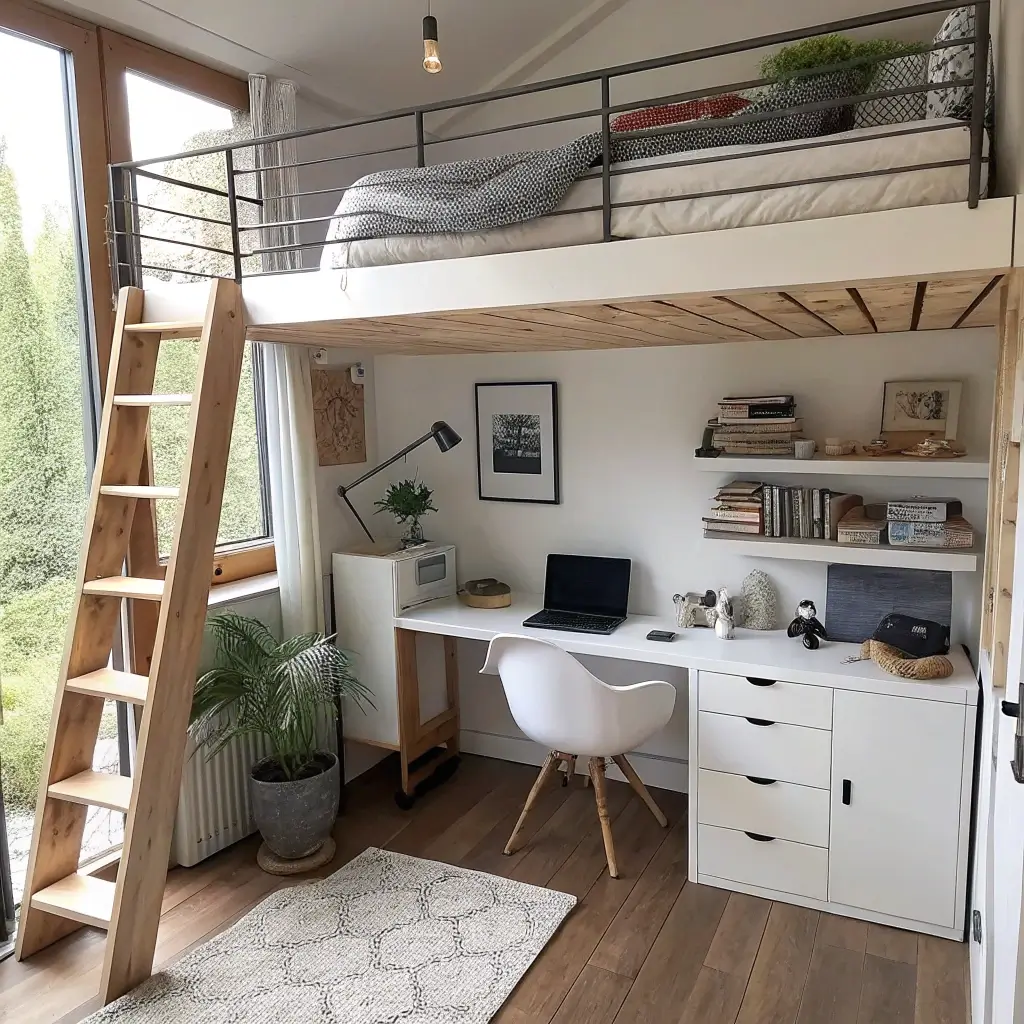
Going vertical with your bed literally doubles your usable space. A lofted bed creates an entire room underneath for an office, closet, or living area.
My friend lofted her bed in her studio and fit an entire home office underneath. Desk, chair, filing cabinet, the works. She basically got a one-bedroom apartment’s functionality in a studio’s footprint.
Making Lofted Beds Work
Consider these factors:
- Ceiling height (you need at least 8.5 feet)
- Sturdy construction (no wobbling allowed)
- Easy ladder or stair access
- Good lighting for underneath space
Alternative Loft Solutions
Not ready for full lofting? Try:
- Mid-height loft with storage below
- Bunk bed with desk underneath
- Platform bed with built-in drawers
- Captain’s bed with surrounding storage
Statement Rugs to Define Zones
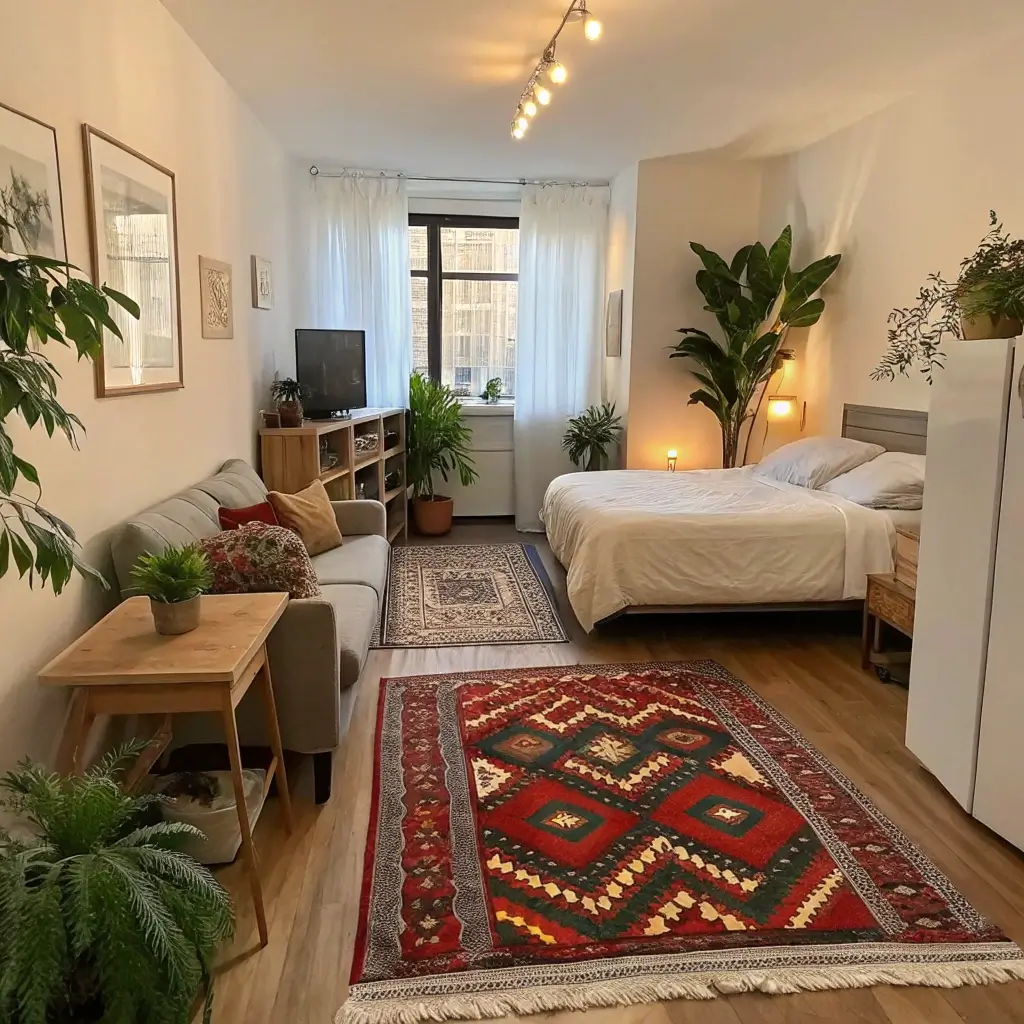
Rugs do more than keep your feet warm. They create visual boundaries that trick your brain into seeing separate rooms where walls don’t exist.
I use three rugs in my studio: one under the bed (bedroom), one under the coffee table (living room), and a runner in the “hallway” (aka the three feet between my door and kitchen). Sounds excessive? Each rug creates a distinct zone that makes my studio feel like an actual apartment.
Choosing the Right Rugs
Follow these guidelines:
- Size up, always (small rugs make rooms feel smaller)
- Different textures for different zones
- Consistent color palette throughout
- Low pile for high-traffic areas
Rug Placement Rules
Get the placement right:
- Front furniture legs ON the rug
- 6-8 inches of rug beyond furniture edges
- Runners for narrow spaces
- Round rugs to soften angular rooms
Also Read: 12 Chic Interior Ceiling Design Ideas That Stand Out
Wall-Mounted Lighting Fixtures
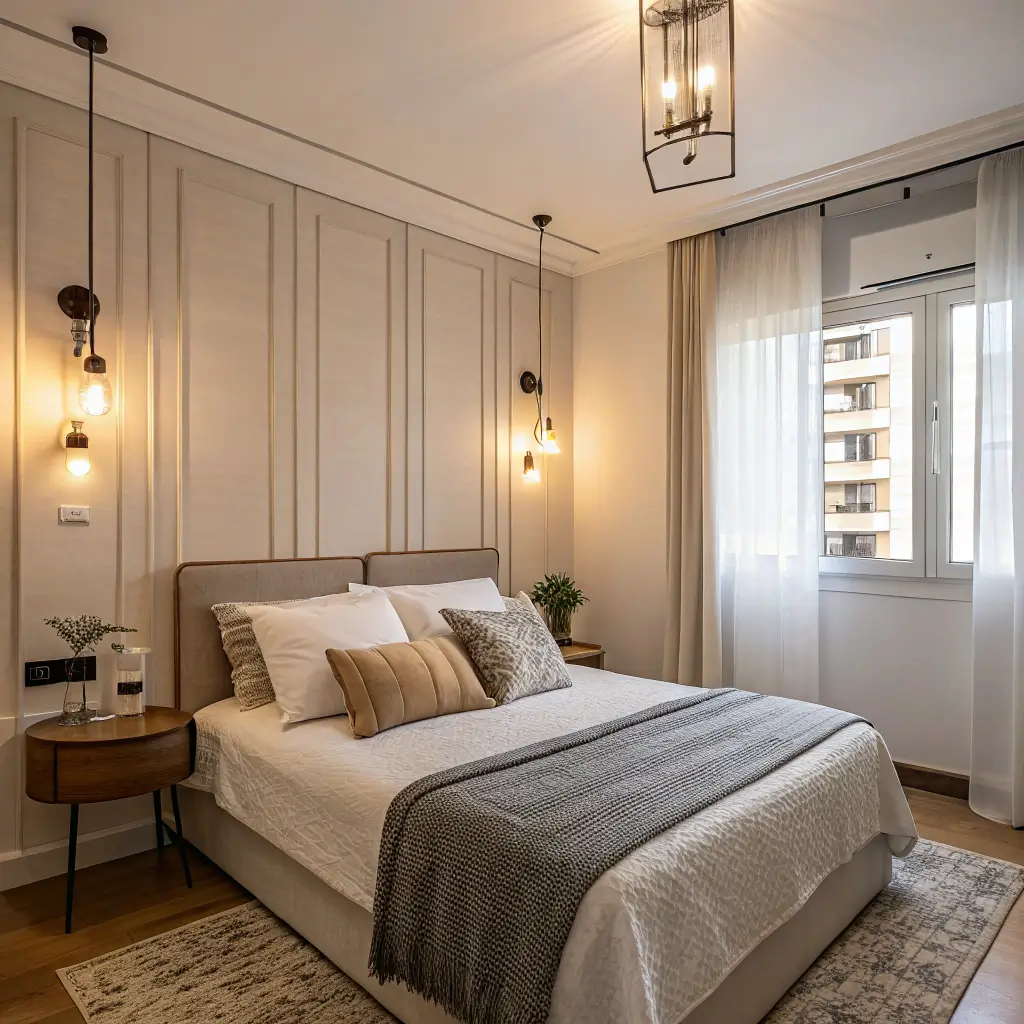
Table lamps eat up precious surface space. Wall-mounted lighting frees up tables while adding ambiance and style.
I replaced my bedside table lamps with swing-arm wall sconces. Not only did I gain entire nightstand surfaces back, but the adjustable arms mean I can direct light exactly where I need it. Reading in bed has never been better.
Renter-Friendly Lighting Options
Try these no-drill solutions:
- Adhesive LED strip lights
- Battery-powered sconces
- Plug-in wall lights with cord covers
- Clamp lights on shelves or headboards
Layering Your Lighting
Create depth with multiple sources:
- Overhead for general lighting
- Task lighting for specific activities
- Accent lighting for ambiance
- Natural light maximized during day
Color-Blocking with Accent Walls
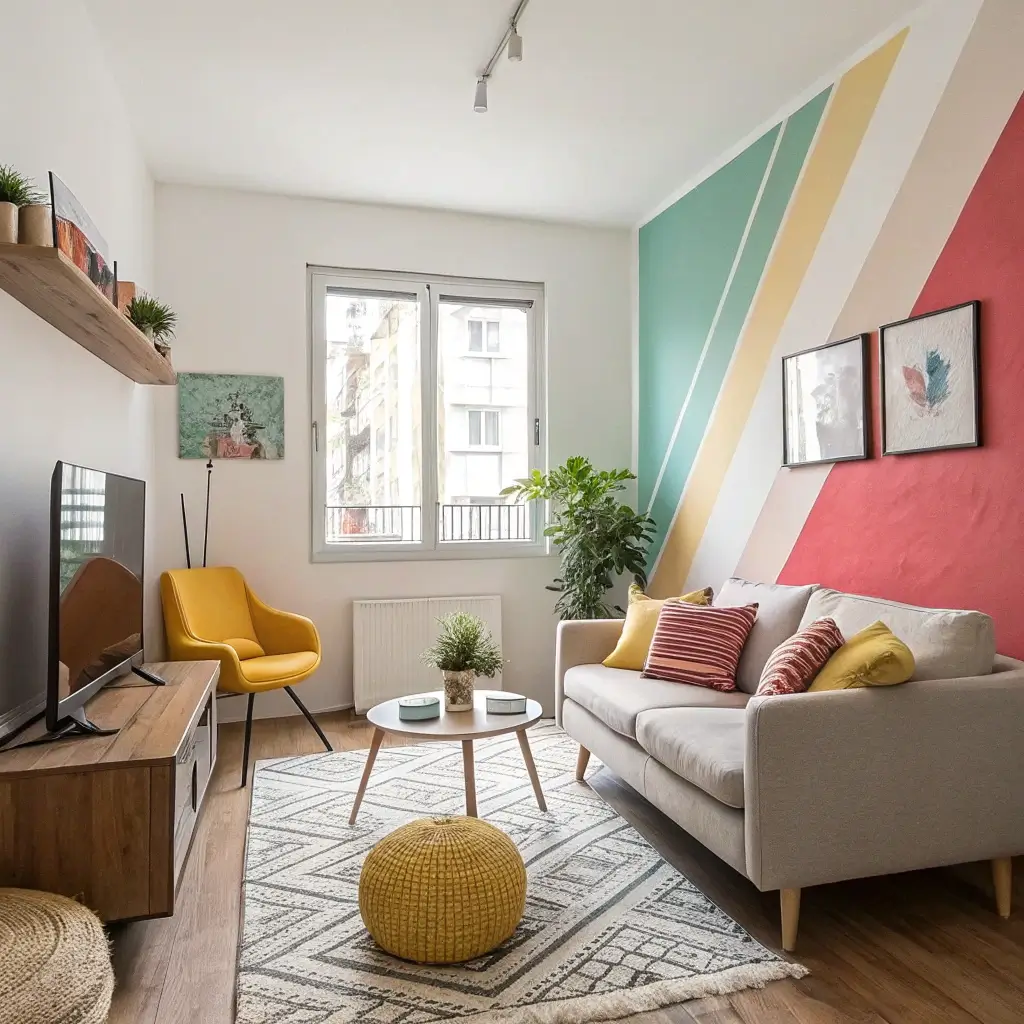
Can’t paint? Wrong! Removable wallpaper and decals let you create accent walls that come down when you move. No security deposit drama required.
I covered one wall in geometric peel-and-stick wallpaper, and it completely transformed my bedroom. Took four hours to install, will take one hour to remove, and my landlord will never know. That’s what I call a win.
Accent Wall Strategies
Make the most impact:
- Choose the first wall you see when entering
- Go bold in small spaces (powder rooms, entryways)
- Use vertical stripes to add height
- Horizontal stripes to add width
Beyond Wallpaper
Other renter-friendly options:
- Fabric panels with starch
- Removable wall decals
- Tapestries or textile art
- Gallery walls with removable strips
Sliding Room Dividers
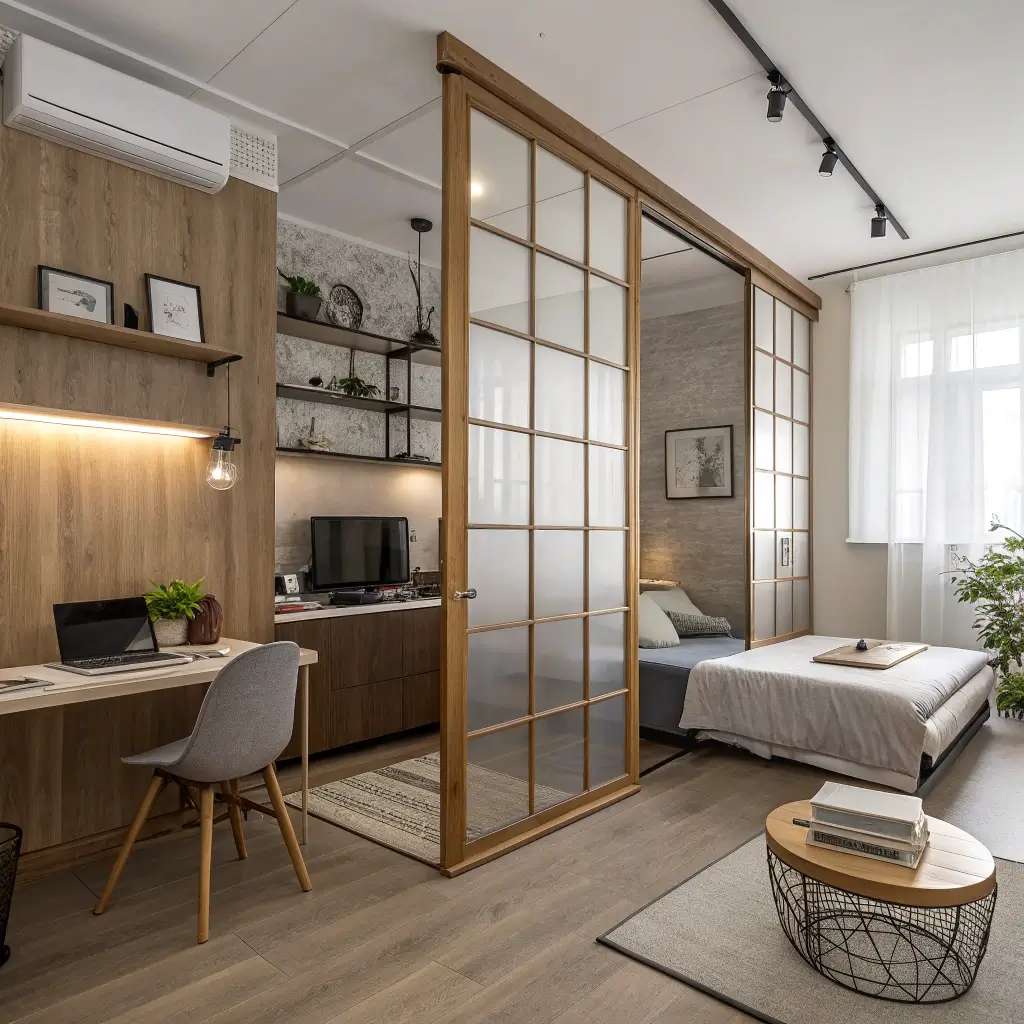
Open floor plans sound great until you realize everyone can see your unmade bed from the front door. Sliding dividers create privacy without permanent walls.
My ceiling-mounted curtain system cost $50 total and separates my sleeping area from the living space. When friends come over, I slide it closed. When I want openness, it bunches to one side. Flexible privacy for the win.
Divider Options for Renters
Explore these solutions:
- Ceiling-mounted curtain tracks
- Bookshelf room dividers
- Hanging panels on tension wire
- Folding screens that store flat
Choosing the Right Divider
Consider these factors:
- Weight (lighter = easier to move)
- Transparency level (privacy vs. light)
- Storage potential (shelving units)
- Style consistency with your décor
Transparent Furniture for Airiness
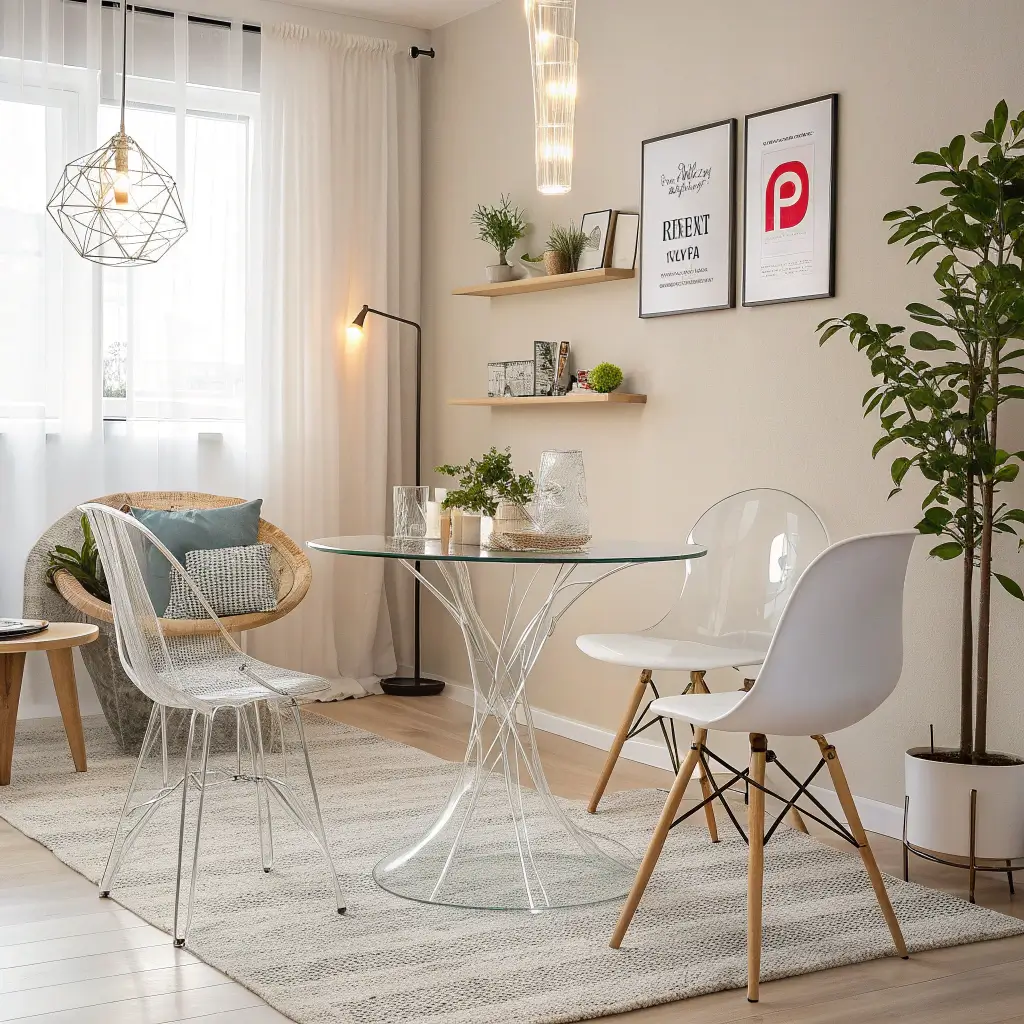
Clear furniture basically disappears, making rooms feel bigger. Transparent pieces maintain sightlines while providing full functionality.
My acrylic console table looks like it’s floating. It holds all my stuff but doesn’t visually clutter the entryway. Magic? Nah, just good design choices.
Best Transparent Pieces
Start with these:
- Clear dining chairs
- Acrylic coffee tables
- Glass nesting tables
- Lucite bar stools
Mixing Transparent with Solid
Don’t go full invisible:
- One or two transparent pieces maximum
- Balance with textured, solid furniture
- Add colorful accessories for interest
- Keep surfaces clean (fingerprints show)
Hanging Baskets for Plants & Storage
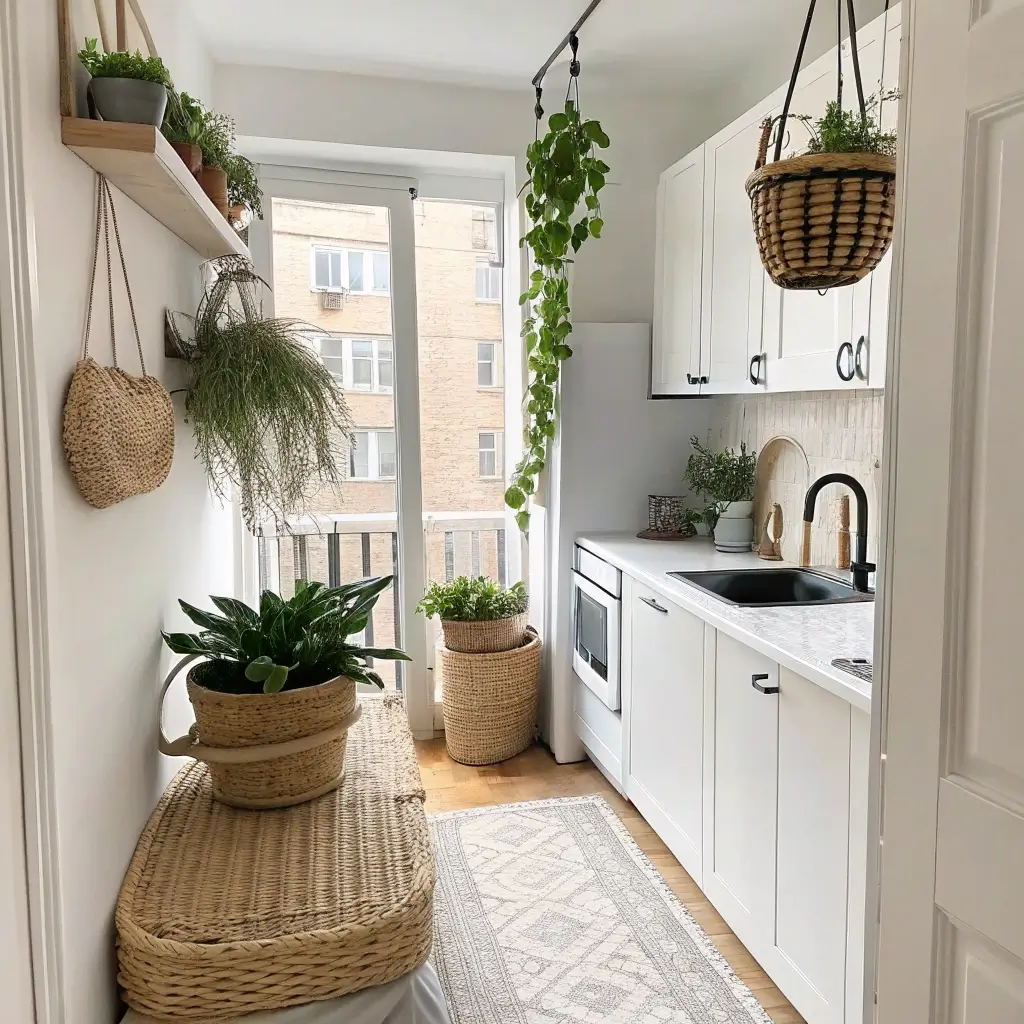
Ceilings and walls have so much untapped potential. Hanging baskets add storage and style without touching precious floor space.
My bathroom has three hanging baskets at different heights. One holds towels, another has toiletries, the third has a plant. Functional, pretty, and my counter stays clear. That’s the trifecta right there.
Creative Hanging Solutions
Think beyond basic baskets:
- Multi-tier hanging organizers
- Macramé fruit hammocks in kitchens
- Mesh bags for toys or laundry
- Wire baskets for bathroom storage
Installation Without Damage
Protect your deposit:
- Ceiling hooks rated for weight
- Over-door hanging systems
- Tension rods between walls
- Command hook alternatives
Modular Shelving Units
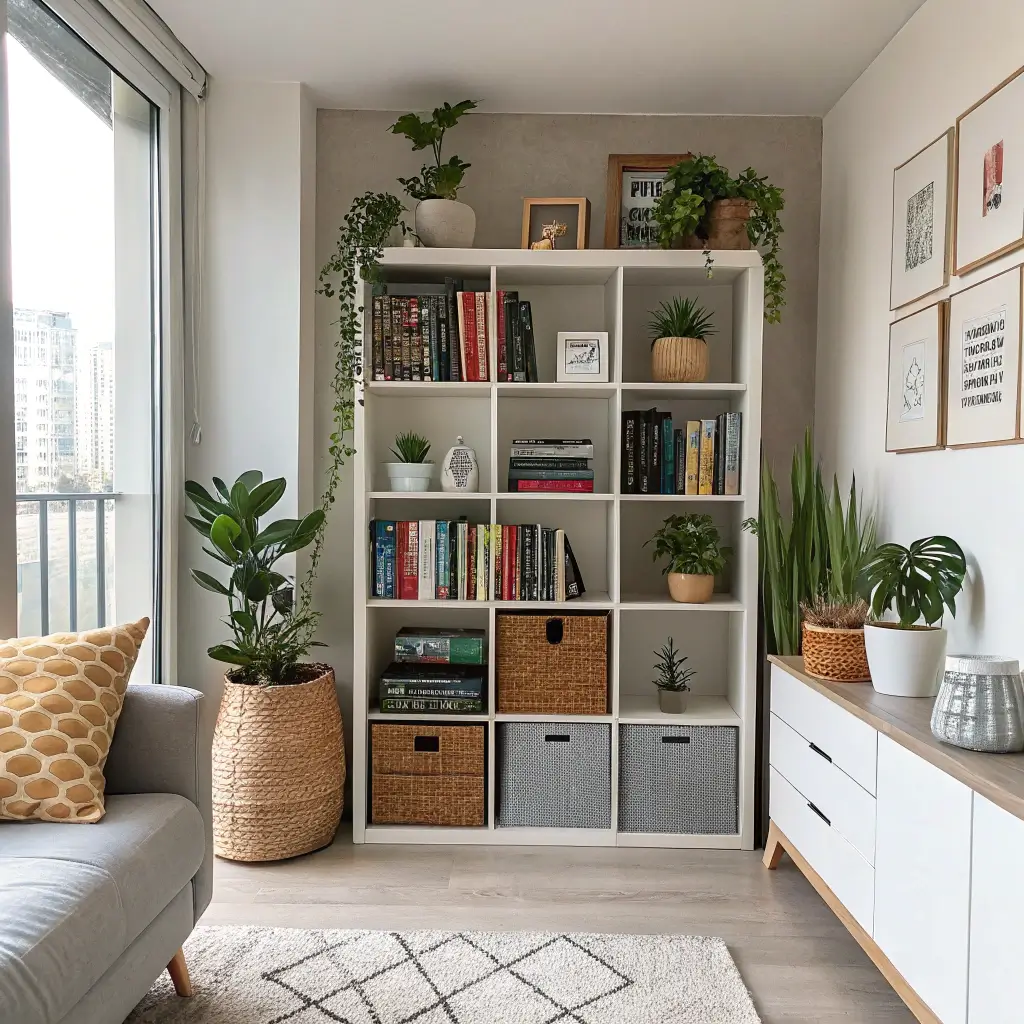
Modular systems grow and change with your needs. These units adapt to any space and move with you to your next place.
I started with four cubes, added four more when I needed them, and rearranged them three times as my needs changed. They’ve been a bookshelf, room divider, and TV stand – sometimes all at once. IMO, modular shelving might be the best investment for renters.
Choosing Modular Systems
Look for these features:
- Stackable and arrangeable components
- Multiple configuration options
- Sturdy construction for longevity
- Standard sizes for mixing brands
Styling Modular Units
Keep them looking intentional:
- Use baskets for hidden storage
- Mix open and closed storage
- Add lighting inside cubes
- Color-coordinate visible items
Making It All Work Together
Here’s what nobody tells you about decorating a small rental – it’s actually easier than decorating a house. Every choice matters more, so you naturally become more intentional. You can’t just buy random stuff and hope it works.
Start with one or two ideas from this list. See how they feel in your space. Then add more as you figure out what your apartment actually needs. My space evolved over two years, and honestly? It keeps getting better.
The real secret to small apartment living isn’t about having less stuff or living with limitations. It’s about being clever with what you have and making every square foot count. Your rental might be temporary, but that doesn’t mean it can’t feel like home.
So grab some Command strips, measure that weird corner you’ve been ignoring, and start transforming your space. Your landlord doesn’t need to know about half these tricks anyway. And when you move? Everything comes with you. That’s the beauty of renter-friendly decorating – your style travels wherever you go 🙂
