
Remember that blank wall in your living room that’s been staring at you for months? Yeah, the one you’ve been meaning to do something with but keep putting off because traditional art feels either too expensive or too predictable.
Well, grab your coffee (or wine, no judgment here), because I’m about to share some fabric wall decor ideas that transformed my boring apartment into a space my friends actually compliment.
I stumbled into fabric wall art completely by accident. After a failed attempt at hanging a ridiculously heavy mirror that nearly took out my toe, I discovered that fabric offers something paintings and prints just can’t match – texture, movement, and warmth that makes a room feel alive.
Plus, you can change them out without patching fourteen nail holes in your wall. Win-win, right?
Boho Macramé Fabric Hangings
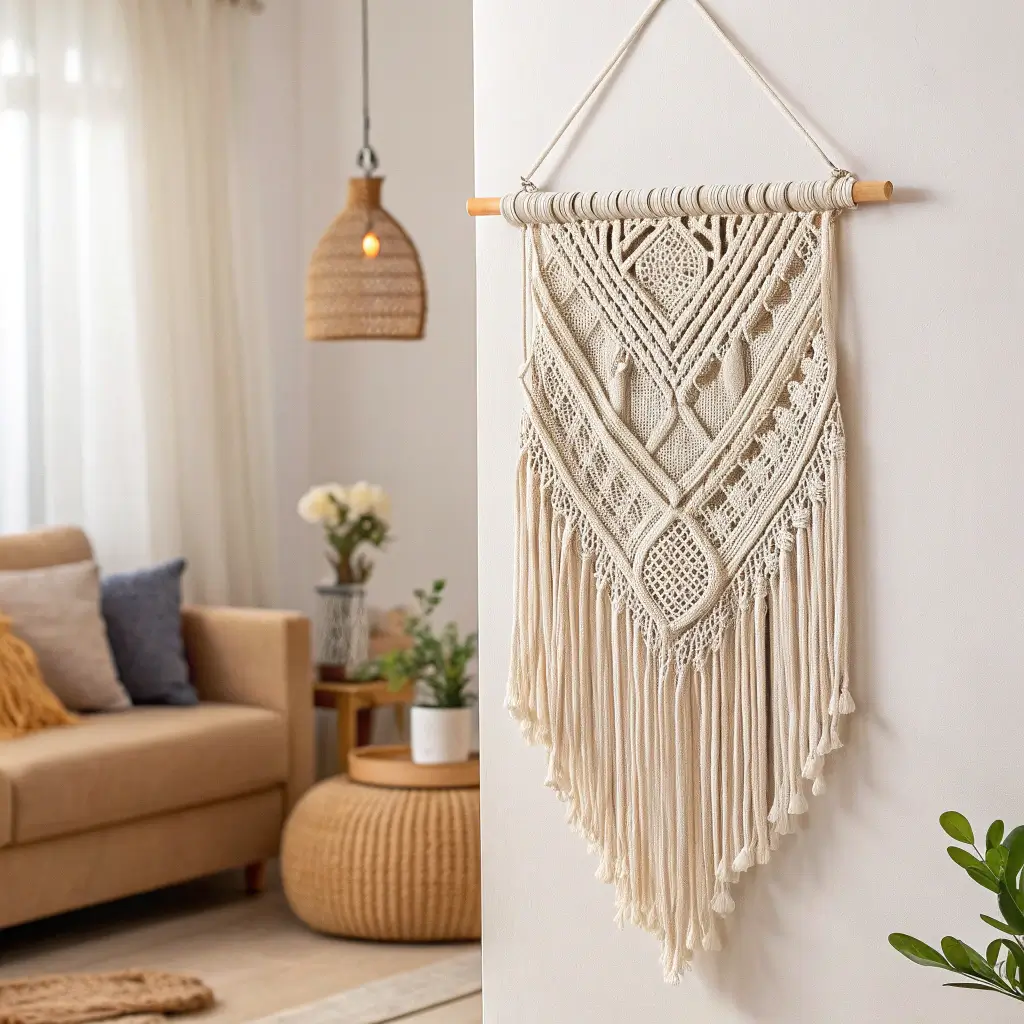
Let me tell you about my obsession with macramé that started during lockdown (because what else were we doing, honestly?). These boho beauties bring instant personality to any space, and contrary to what Instagram might have you believe, you don’t need to live in a converted van to pull them off.
What makes macramé so special? The texture game is absolutely unmatched. I hung my first piece above my bed, and suddenly my room went from “basic apartment” to “trendy boutique hotel” vibes. The best part is how the shadows play across the wall throughout the day – it’s like having living art that changes with the light.
Creating your own macramé hanging requires just a few essentials:
- Natural cotton rope (thicker = more dramatic)
- A wooden dowel or branch
- Basic knot knowledge (YouTube University, anyone?)
- Patience for when you mess up the first three times
The trick I learned? Start small. My first attempt looked like a tangled fishing net, but now I make them as gifts. Pro tip: add wooden beads or incorporate dyed sections for extra personality. Your wall deserves more than just beige, trust me.
Framed Patchwork Fabric Panels
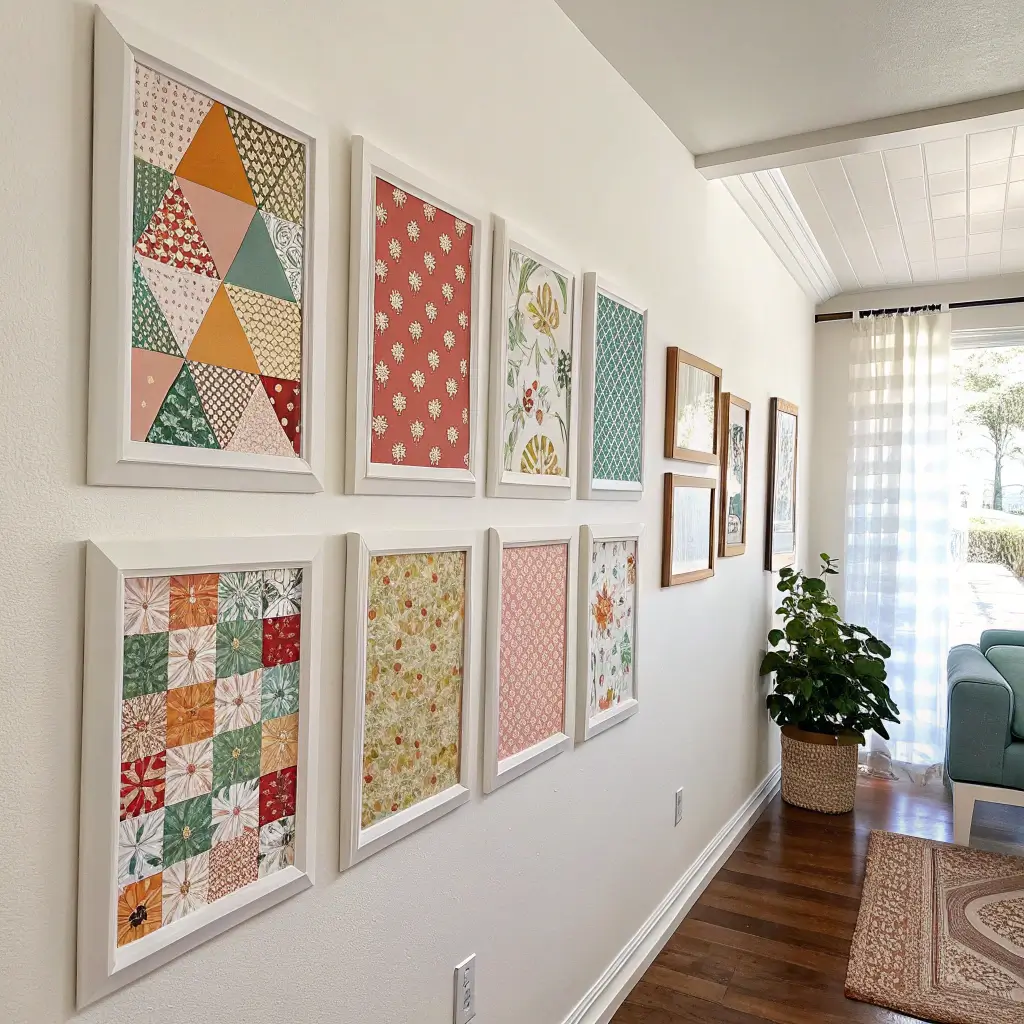
Ever wonder what to do with all those fabric scraps from your crafting adventures? Framed patchwork panels turn your hoarding tendencies into actual art. I started making these after realizing I had enough fabric remnants to clothe a small village.
The beauty of patchwork lies in its imperfect perfection. You’re literally creating order from chaos, and somehow it works every single time. I arrange my scraps by color family first, then play around with patterns until something clicks. Sometimes I go for a rainbow effect, other times I stick to a monochrome palette – depends on my mood and how much coffee I’ve had.
Here’s my foolproof approach:
- Mix patterns fearlessly (florals with geometrics? Why not?)
- Use a simple frame from the thrift store
- Mount fabric on foam board for dimension
- Layer different textures for visual interest
My living room features three mismatched frames with coordinating patchwork, and visitors always ask where I bought them. The answer? “I made them from scraps” gets the best reactions 🙂
Ombre Dyed Fabric Wall Art
Ombre might feel like it peaked in 2015, but hear me out – when you do it right, this gradient effect creates stunning focal points that never get old. I discovered this technique after accidentally leaving a tea towel partially submerged in dye. Happy accident? Absolutely.
The process is surprisingly therapeutic. Watching the dye slowly creep up the fabric feels like meditation, except you end up with wall art instead of just inner peace. I’ve made these for every room in my house, and each one tells a different color story.
Want to nail the ombre effect? Follow these steps:
- Choose natural fibers (cotton or linen work best)
- Dilute your dye in stages for gradual color shifts
- Dip, wait, dip deeper, repeat
- Iron flat and stretch over canvas or embroidery hoops
The sunset-inspired piece in my bedroom gets more compliments than anything else I own. Sometimes simple really is better – who knew?
Geometric Fabric Wall Tapestry
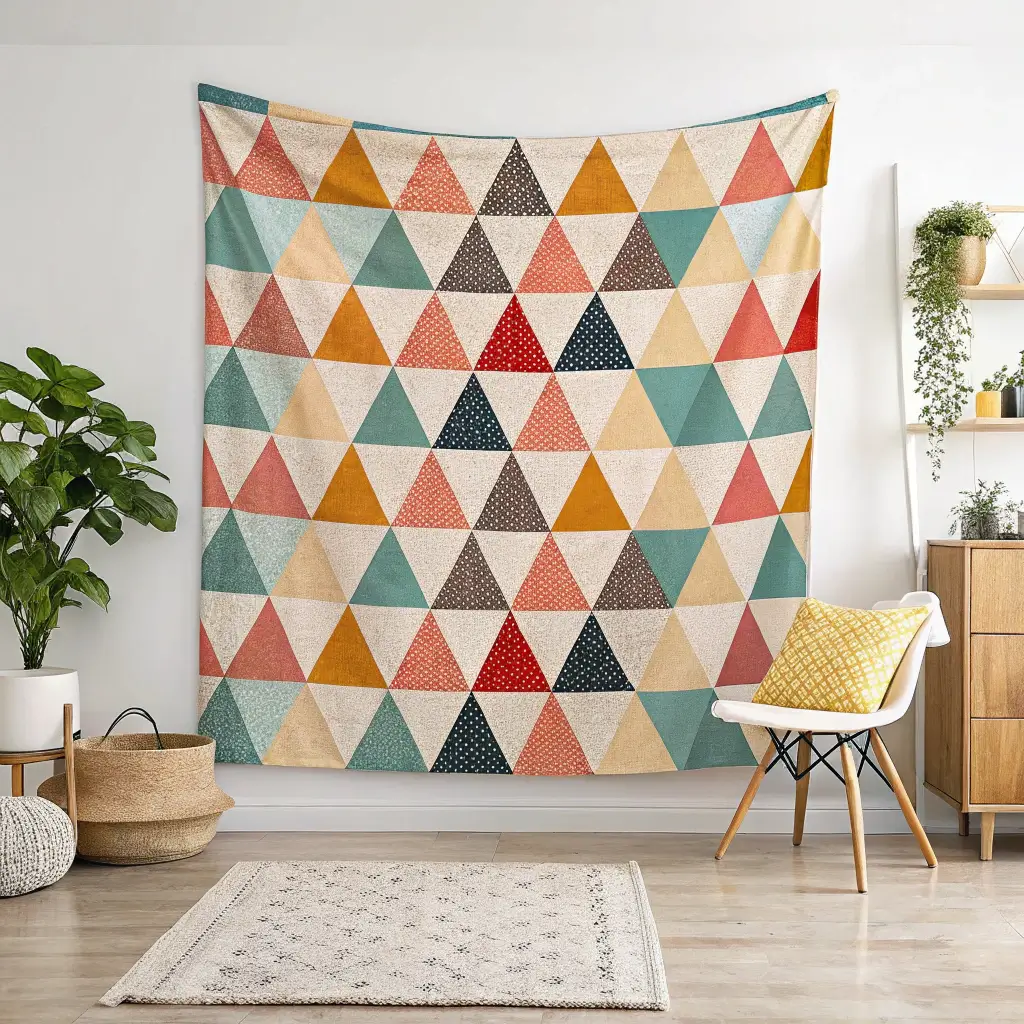
Geometry isn’t just for math class anymore. These modern tapestries bring structure and sophistication to spaces that need a little edge. I made my first geometric piece after getting tired of everyone having the same mandala tapestry from that one website we all know.
Creating geometric patterns with fabric opens up endless possibilities. You can go minimalist with simple triangles or get complex with hexagons and diamonds. The key is precision in cutting – crooked lines will haunt you forever (speaking from experience here).
My favorite geometric tapestry tips:
- Use a rotary cutter for clean edges
- Create templates from cardboard first
- Mix solids with subtle patterns
- Consider negative space as part of the design
The massive geometric piece behind my couch took a weekend to complete, but it’s become the conversation starter at every gathering. People literally take photos with it. FYI, that’s when you know you’ve nailed your decor game.
Also Read: 15 Unique Wooden Wall Decor Ideas for a Cozy Touch
Quilted Fabric Wall Squares
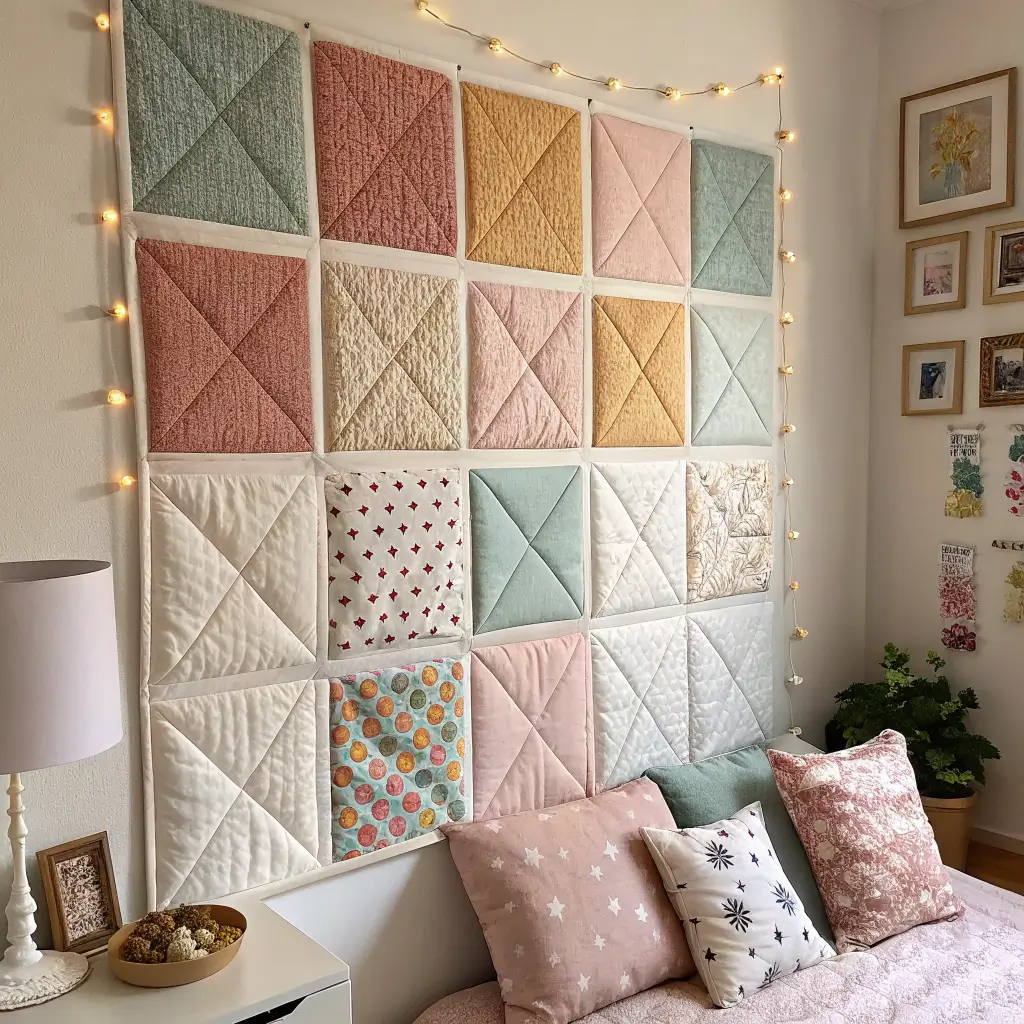
Quilting isn’t just for grandmas anymore (though props to them for being ahead of the trend). Modern quilted squares bring incredible texture and warmth to walls, especially in spaces that feel a bit cold or impersonal.
I started making these after inheriting my grandmother’s fabric stash. Instead of letting it gather dust, I created a gallery wall of small quilted squares that tells our family’s textile story. Each square uses different techniques – some hand-stitched, others machine-quilted with wild patterns.
Here’s what makes quilted wall art special:
- Dimensional texture that paintings can’t replicate
- Sound absorption (goodbye, echo-y room)
- Customizable to any color scheme
- Surprisingly lightweight for hanging
My bedroom features nine quilted squares in varying shades of blue, arranged in a grid pattern. The texture adds so much visual interest that I actually removed other decorations – sometimes one strong element beats cluttered walls.
Floating Fabric Shelf Backdrops
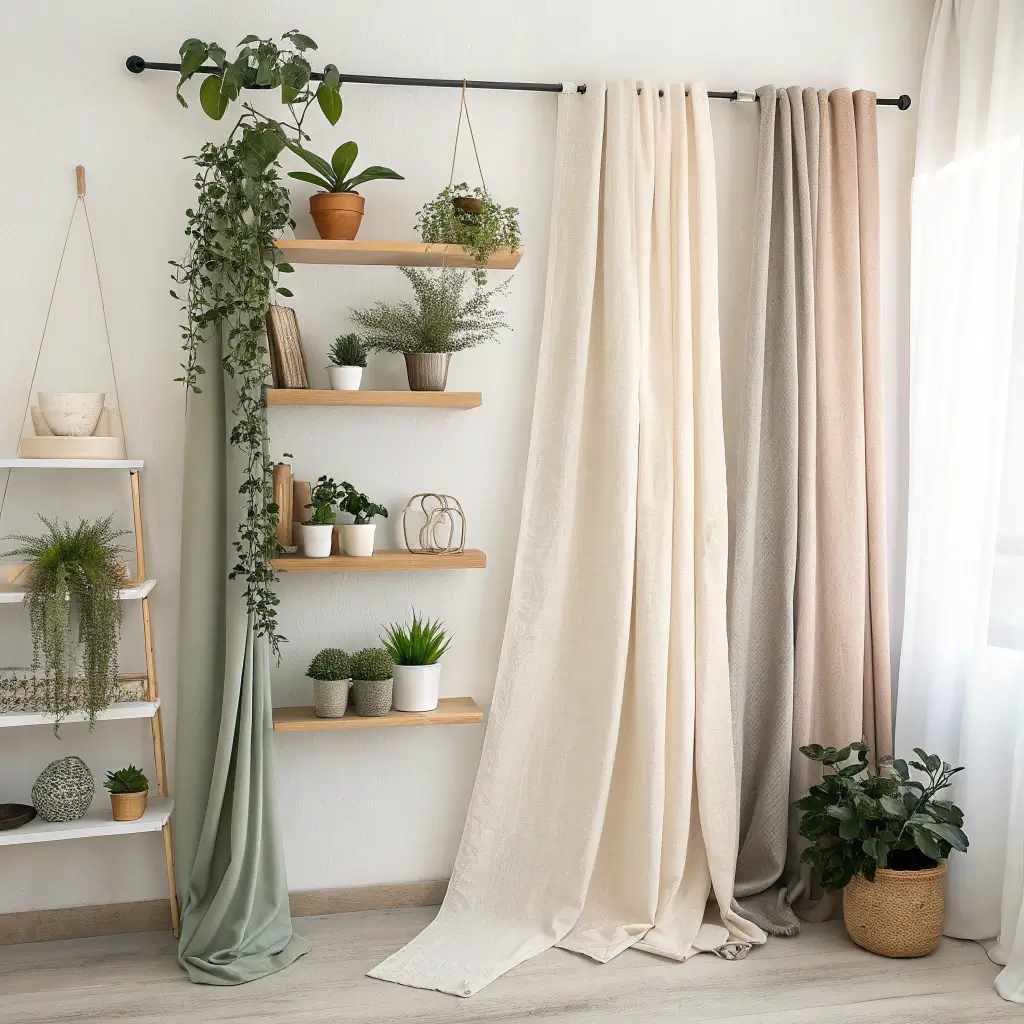
Who says fabric has to hang flat? Creating fabric backdrops behind floating shelves adds depth and personality to your display areas. This trick saved my boring bathroom shelves from mediocrity.
The concept is simple but the impact is huge. Mount fabric behind your shelves to create a pop of color or pattern that makes your displayed items stand out. I use removable adhesive strips so I can switch fabrics seasonally – spring florals, summer brights, fall textures, winter cozies.
Making shelf backdrops work:
- Measure twice, cut once (seriously)
- Iron everything – wrinkles kill the vibe
- Choose fabrics that complement, not compete
- Consider the items you’re displaying
My kitchen shelves now feature a subtle botanical print backdrop that makes my mismatched dishes look intentionally eclectic instead of “I’m still using college plates.”
Fabric Flower Wall Installations
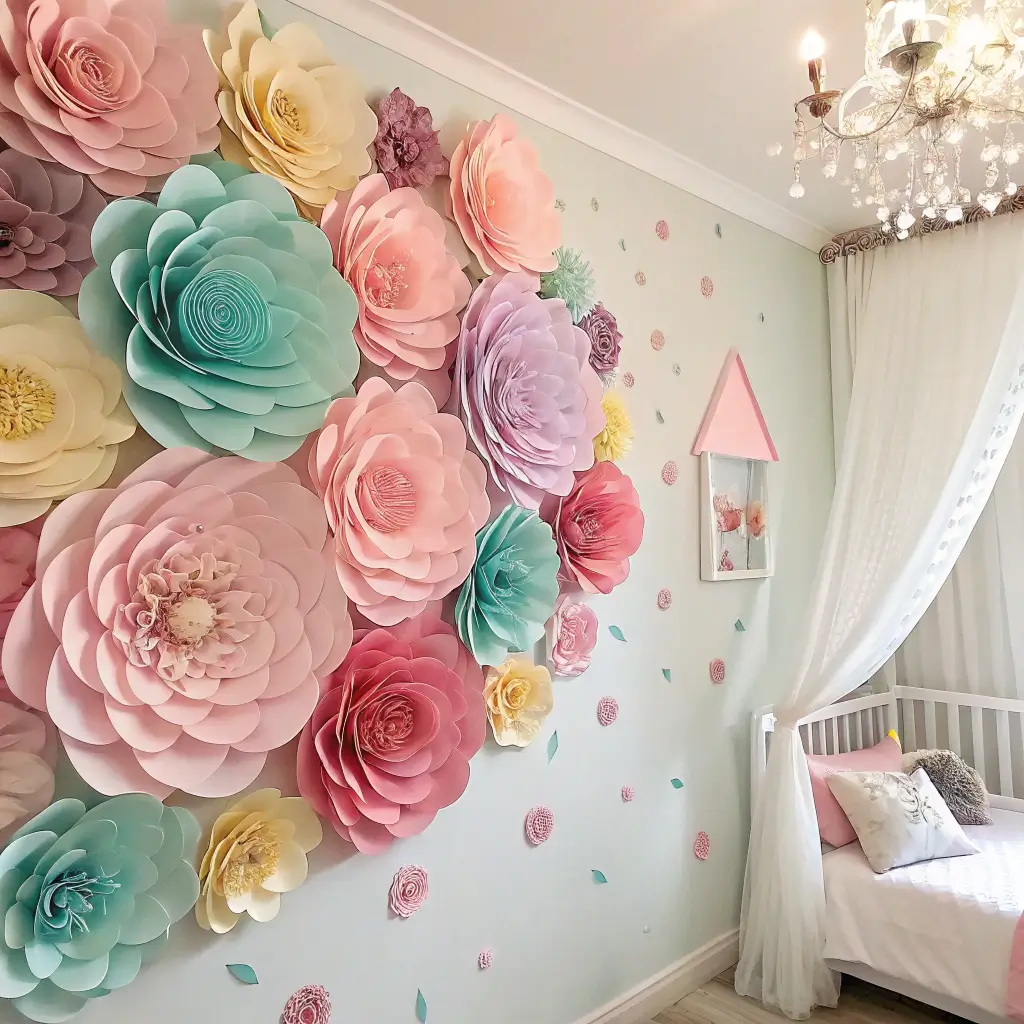
Before you roll your eyes at fabric flowers, let me change your mind. 3D fabric flower installations create stunning focal points that look nothing like your craft store clichés. These babies make serious statements.
I went all-in with a flower wall for my home office background (Zoom calls have never looked better). The process is meditative – cutting petals, shaping them, building each flower by hand. It’s basically adult craft time that results in legitimate art.
Creating show-stopping fabric flowers:
- Mix sizes dramatically for visual impact
- Combine different fabric textures
- Use wire edges for shapeable petals
- Build depth with layering techniques
The 5-foot flower installation in my entryway took three weekends to complete, but guests literally gasp when they see it. That reaction? Totally worth the hot glue burns.
Also Read: 15 Stylish Staircase Wall Decor Ideas and Warm Accents
Pleated Fabric Accent Panels
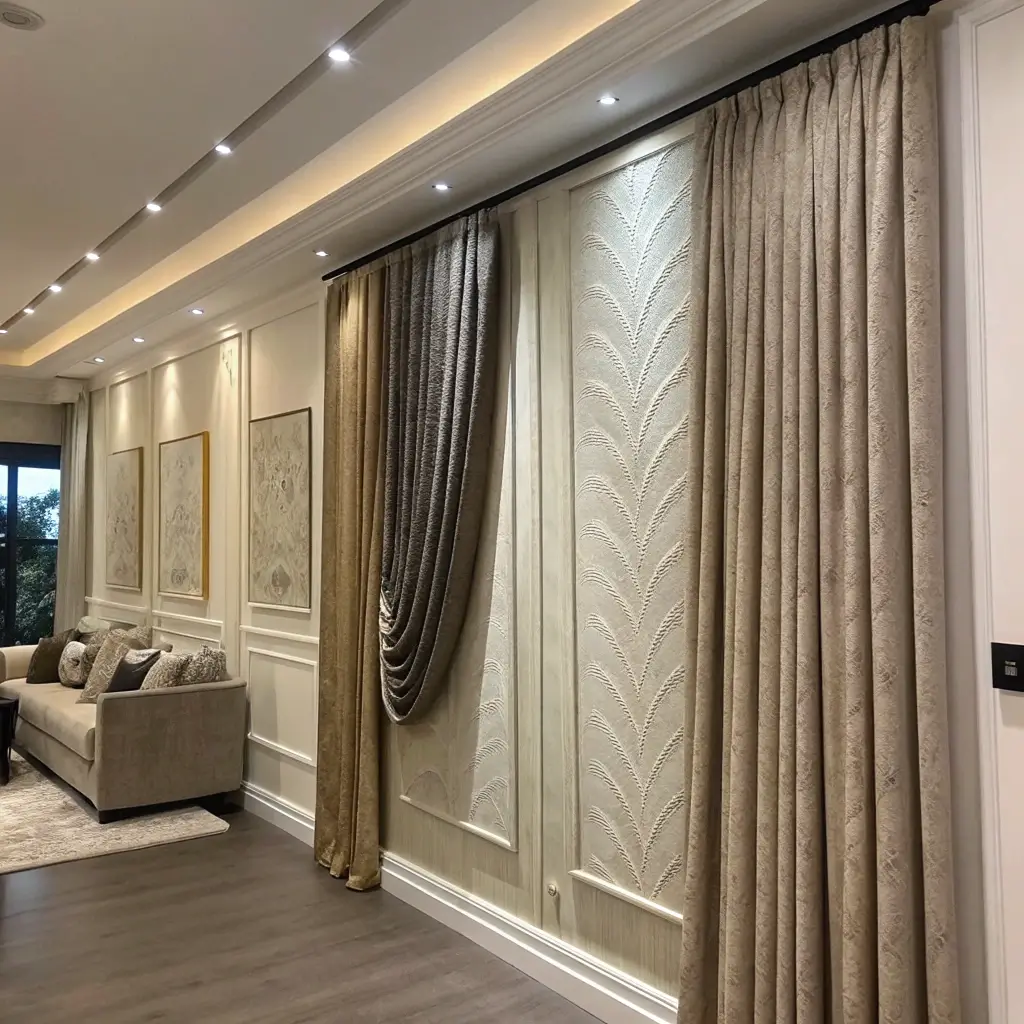
Pleating adds instant sophistication to any fabric, transforming basic material into architectural art. I discovered this after attempting to hide an ugly electrical panel and accidentally creating my favorite wall feature.
The rhythm of pleats creates visual movement that draws the eye upward, making rooms feel taller and more dynamic. Plus, the shadows they cast throughout the day provide ever-changing visual interest. Your walls become literally dynamic.
Mastering the pleat game:
- Consistent spacing is everything
- Steam or iron each pleat individually
- Mount on lightweight boards for easy hanging
- Play with pleat depths for different effects
My hallway features three pleated panels in graduating shades of gray, and they’ve completely transformed that forgotten transitional space into a gallery-worthy corridor.
Fabric-Covered Canvas Collages
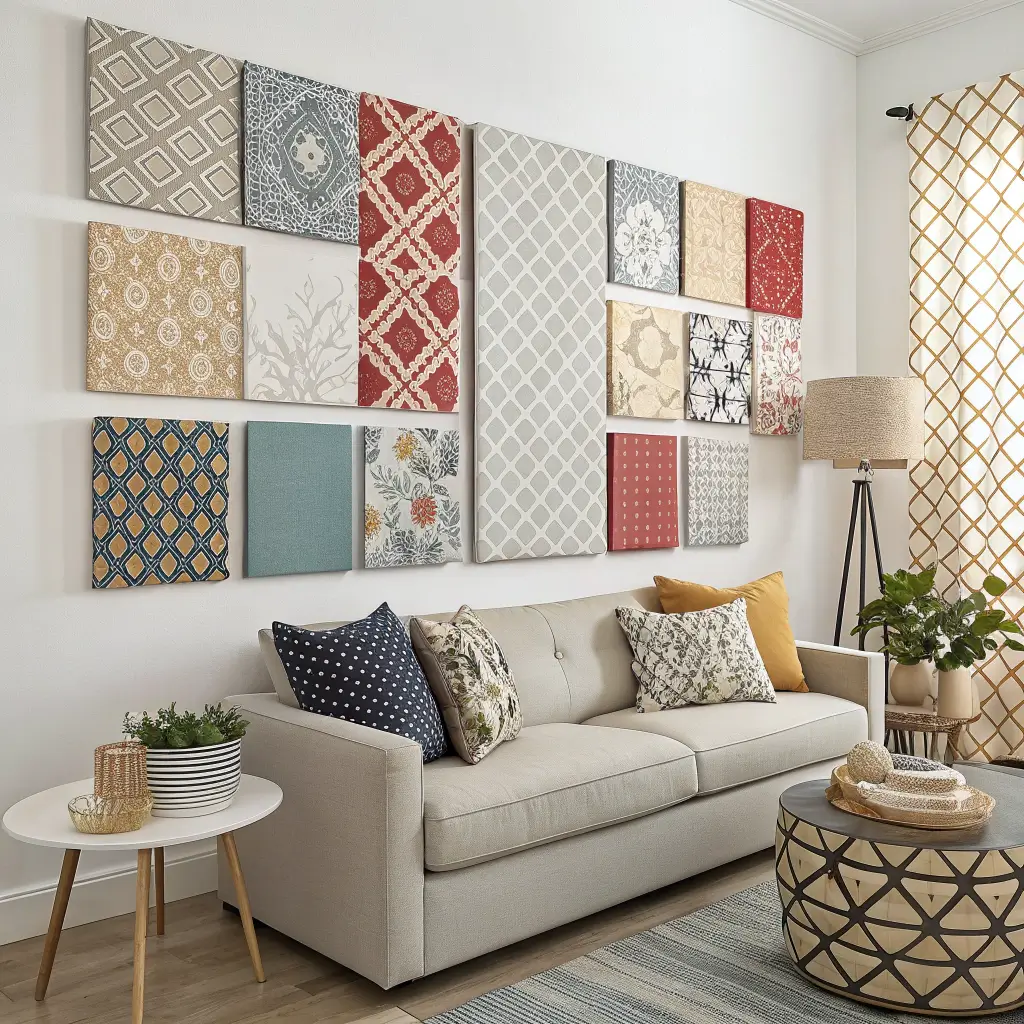
Canvas isn’t just for paint anymore. Wrapping canvases with fabric creates instant art that’s both affordable and completely customizable. This technique saved my wallet when I needed to fill a large wall on a tiny budget.
The process couldn’t be simpler – stretch fabric over canvas, staple the back, hang it up. But the possibilities? Endless. I create seasonal collections, switching them out when the mood strikes. Spring might feature vintage florals, while winter gets cozy plaids and rich textures.
Canvas collage success tips:
- Mix canvas sizes for dynamic arrangements
- Coordinate fabrics without being matchy-matchy
- Include one unexpected pattern for interest
- Consider the wall color as part of the palette
My dining room wall showcases nine canvases in various sizes, all wrapped in complementary fabrics that tie into my curtains and pillows. Cohesive without being boring? That’s the sweet spot.
Also Read: 15 Chic Over the Bed Wall Decor Ideas for Modern Bedrooms
Striped Fabric Wall Murals
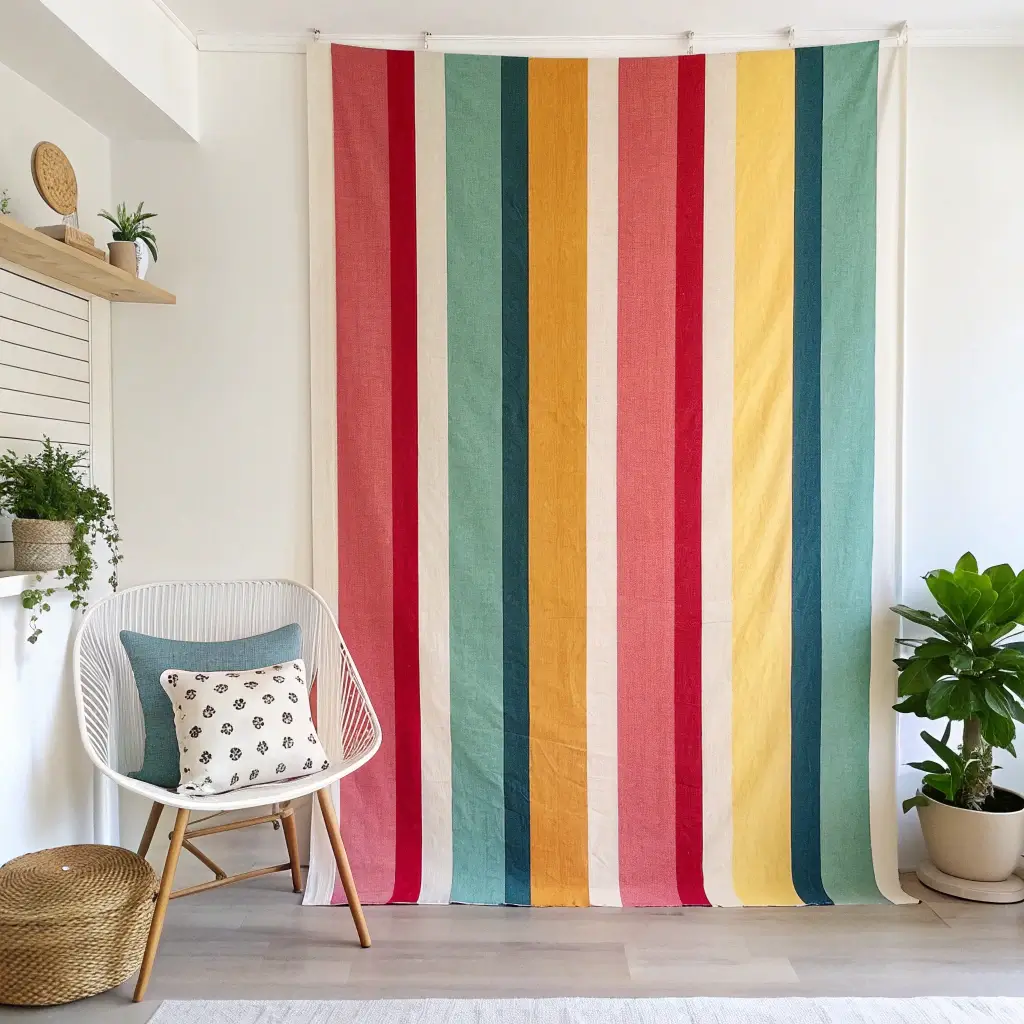
Stripes might seem basic, but executed right, they create powerful visual statements that can completely transform a space. I learned this after using striped fabric to create an accent wall that paint could never achieve.
The beauty of fabric stripes over painted ones? No taping, no bleeding, no crying over crooked lines at 2 AM. Plus, you can remove them without repainting the entire wall when you’re over it.
Creating striped magic:
- Vary stripe widths for visual interest
- Mix textures within the same color family
- Consider diagonal stripes for drama
- Use removable adhesive for rental-friendly options
My home office features floor-to-ceiling navy and white striped fabric that makes the tiny space feel twice as large. Optical illusions for the win, IMO.
Hanging Fabric Pocket Organizer Wall
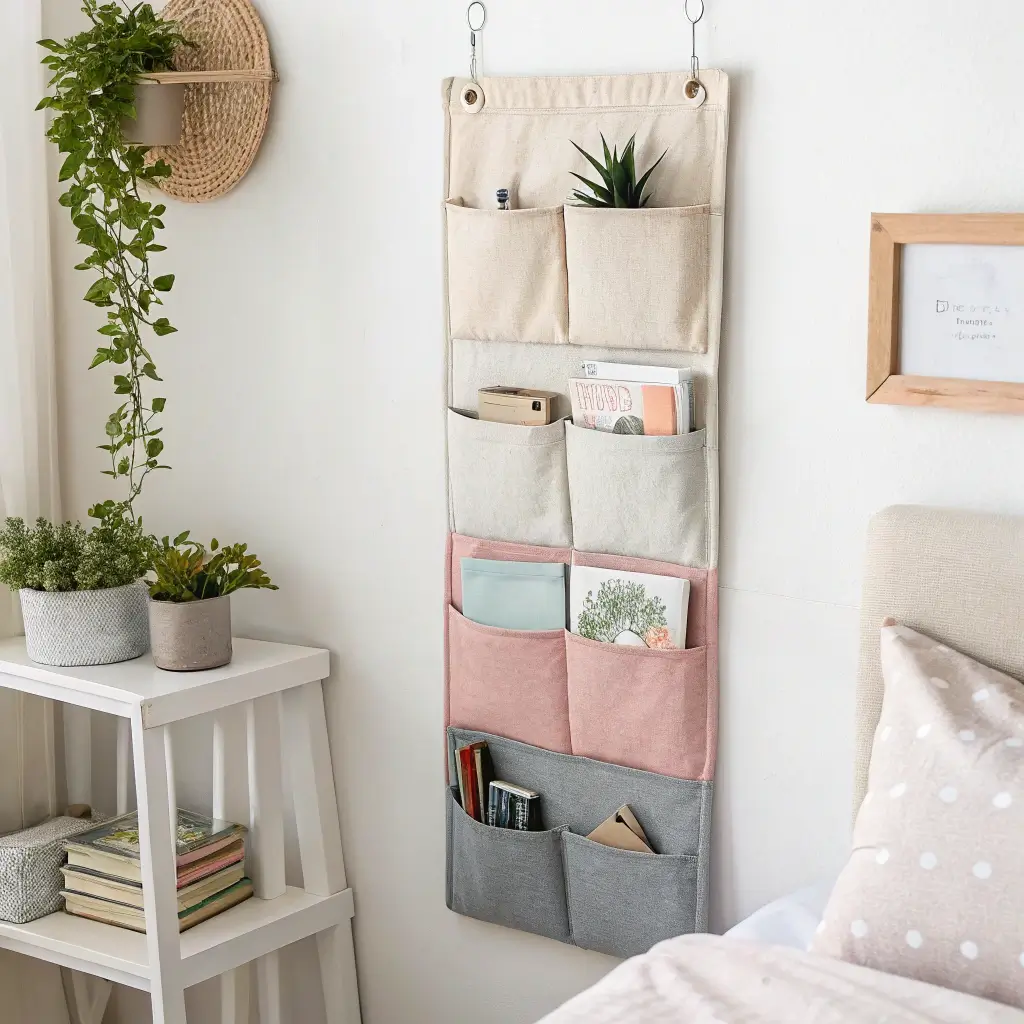
Function meets fabulous with fabric pocket organizers that double as wall art. These aren’t your dorm room shoe organizers – we’re talking elevated, stylish storage that you actually want to display.
I created custom pocket organizers for my craft room using gorgeous Japanese fabrics, and suddenly my supplies became part of the decor. Each pocket holds different materials while the overall piece reads as textile art. Genius or extra? Maybe both, but it works.
Pocket organizer design elements:
- Choose quality fabrics that hold their shape
- Reinforce pocket edges for durability
- Mix pocket sizes for various items
- Add decorative elements like trim or buttons
The organizer in my entryway holds mail, keys, and sunglasses while looking like an intentional design choice rather than utilitarian storage.
Layered Sheer Fabric Panels
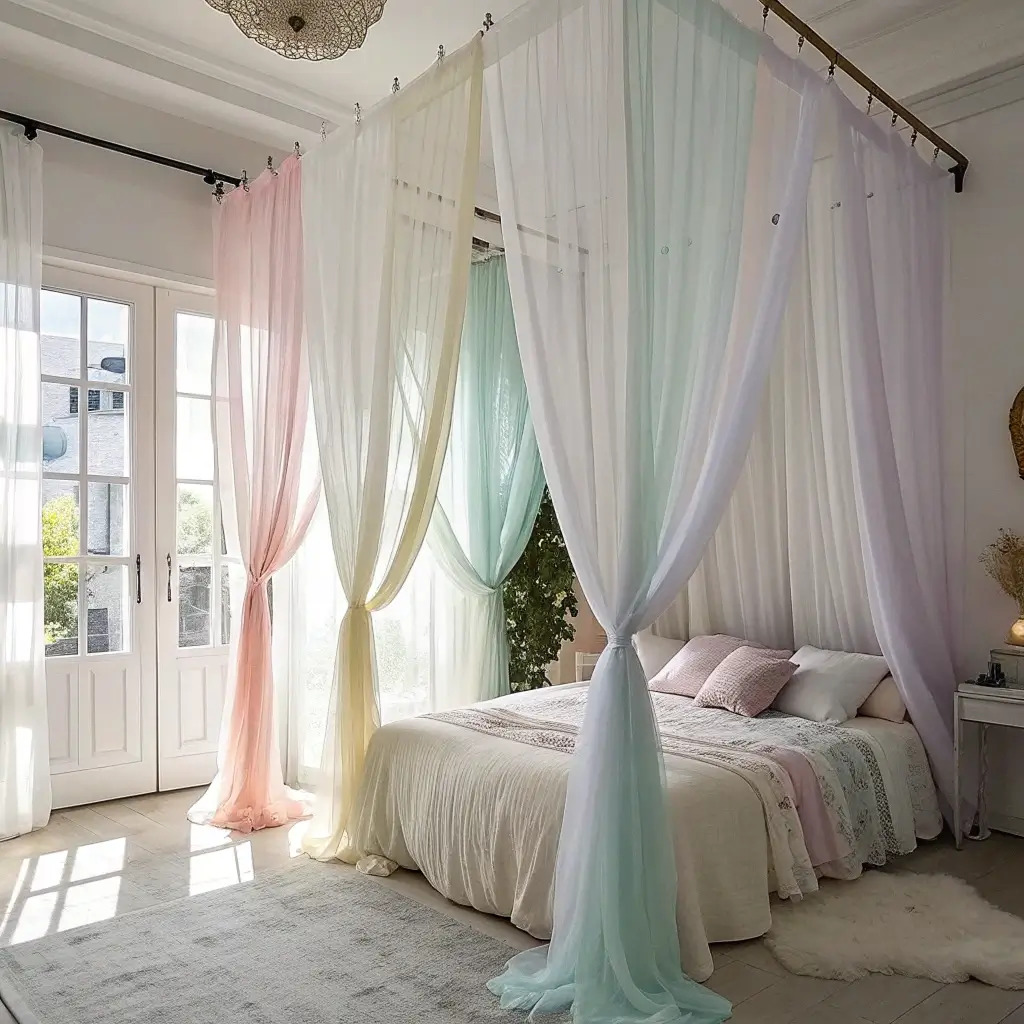
Sheer fabrics create dreamy, ethereal effects when layered strategically. This technique brings softness and movement to spaces that feel too rigid or harsh. My bedroom went from stark to serene with just three panels of varying opacity.
The magic happens when light filters through multiple layers, creating depth and subtle color variations. Morning sun through my layered panels makes me feel like I’m waking up in a fancy hotel. Every. Single. Day.
Layering like a pro:
- Start with the lightest layer at the back
- Vary panel lengths for visual interest
- Mix textures (organza, chiffon, tulle)
- Secure at different points for natural draping
The corner of my reading nook features five layers of white and cream sheers that create the most incredible shadows on the wall. It’s basically free art that changes with the weather :/
Upcycled Clothing Wall Art
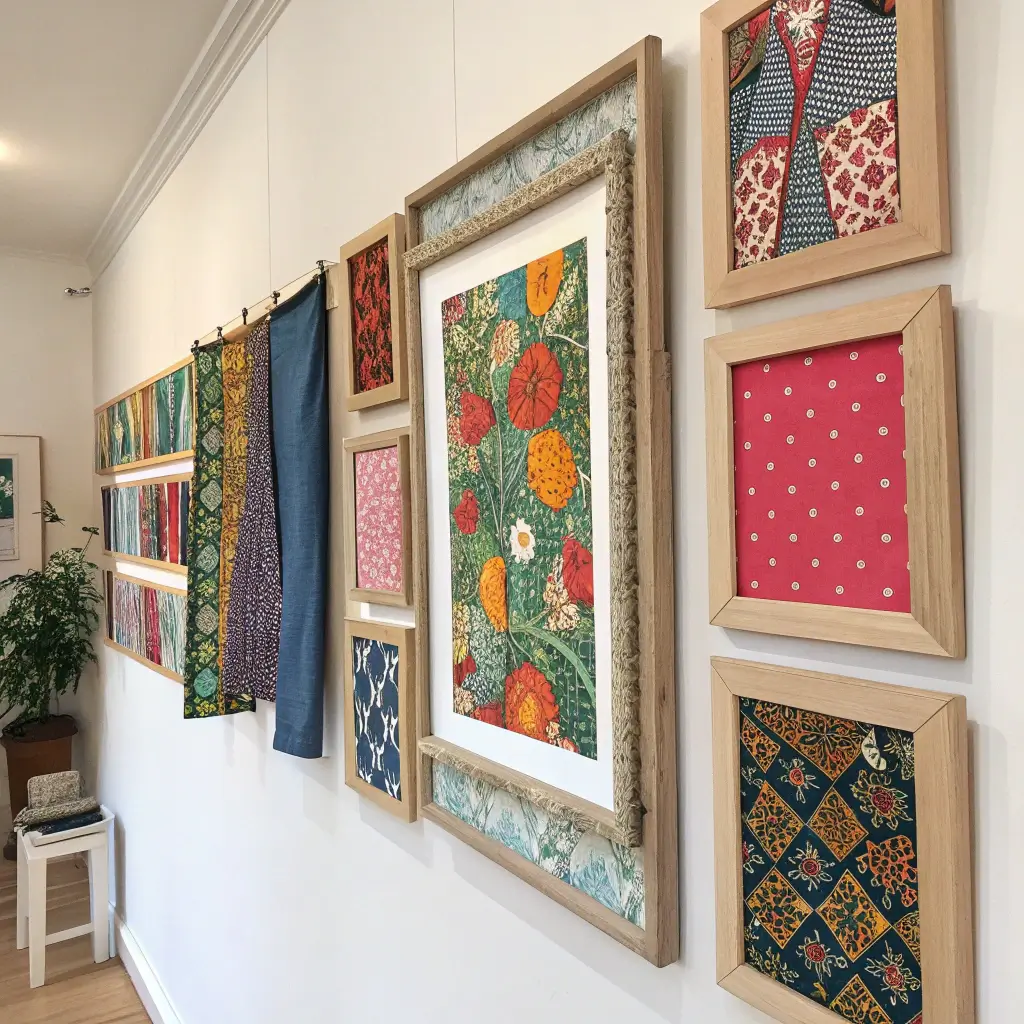
That designer shirt with the wine stain? Your kid’s outgrown concert tee? Transform meaningful clothing into wall art instead of letting it collect dust in your closet. This approach tells your story through textiles.
I framed my grandmother’s vintage scarves, my daughter’s first dress, and yes, even that band tee from my questionable music phase. Each piece carries memories, making my walls a visual autobiography that no store-bought art could match.
Upcycling clothing successfully:
- Press everything flat before framing
- Use shadow boxes for dimensional items
- Group similar colors or themes together
- Include labels with dates or stories
My hallway gallery of upcycled clothing gets more attention than any expensive art I own. People stop, look closer, and always ask about the stories behind each piece.
Fabric Ribbon Wall Weaving
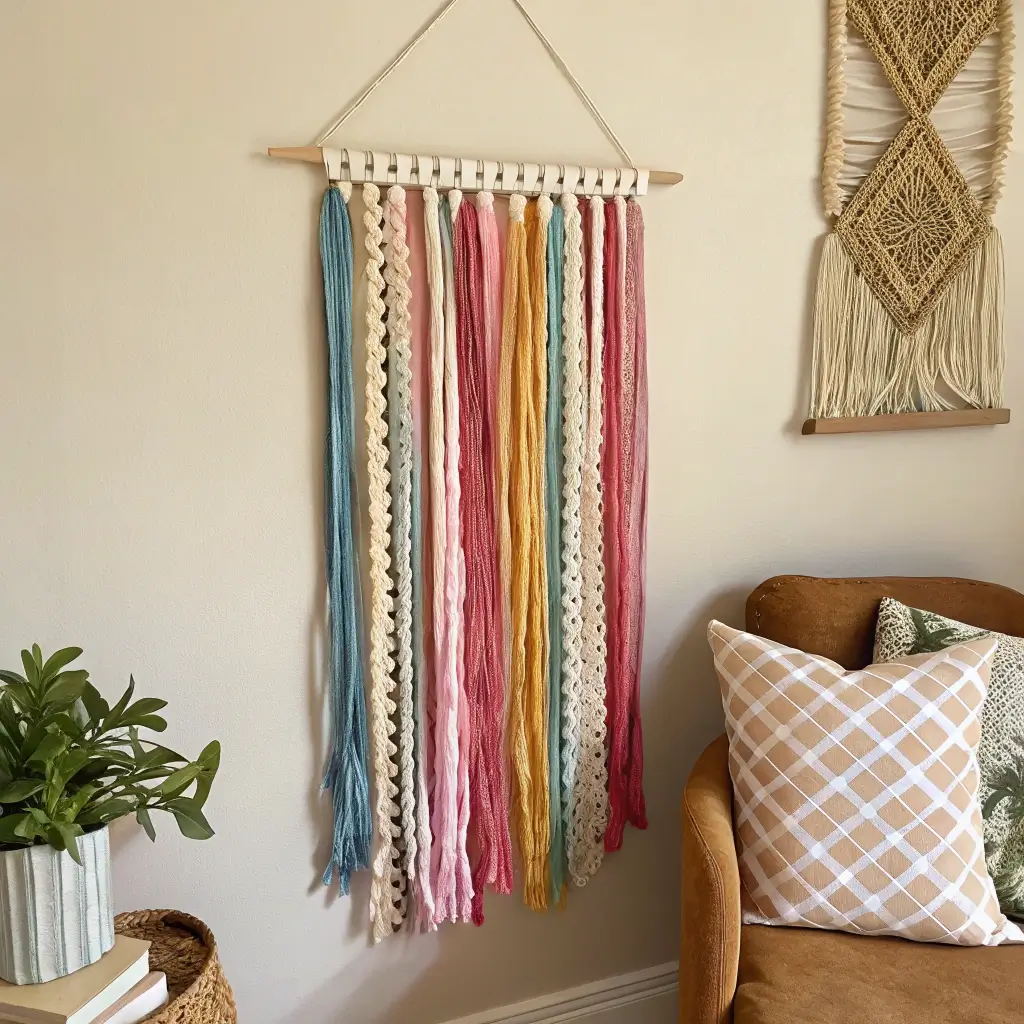
Remember those friendship bracelet techniques from summer camp? Scale them up with fabric ribbons for stunning woven wall hangings that bring color and texture to any space. This technique turns basic materials into complex-looking art.
I started weaving after accumulating an embarrassing amount of ribbon from gift wrapping. Instead of stuffing it in a drawer, I created a massive woven piece that now anchors my daughter’s room. She picks new ribbons to add, making it an evolving artwork.
Weaving wall art essentials:
- Build a simple frame from wood strips
- Mix ribbon widths and textures
- Include unexpected materials (leather strips, yarn)
- Leave some areas loose for movement
The woven piece above my desk incorporates everything from velvet ribbon to strips cut from old t-shirts, creating texture that I literally can’t stop touching.
Tassel-Trimmed Fabric Panels
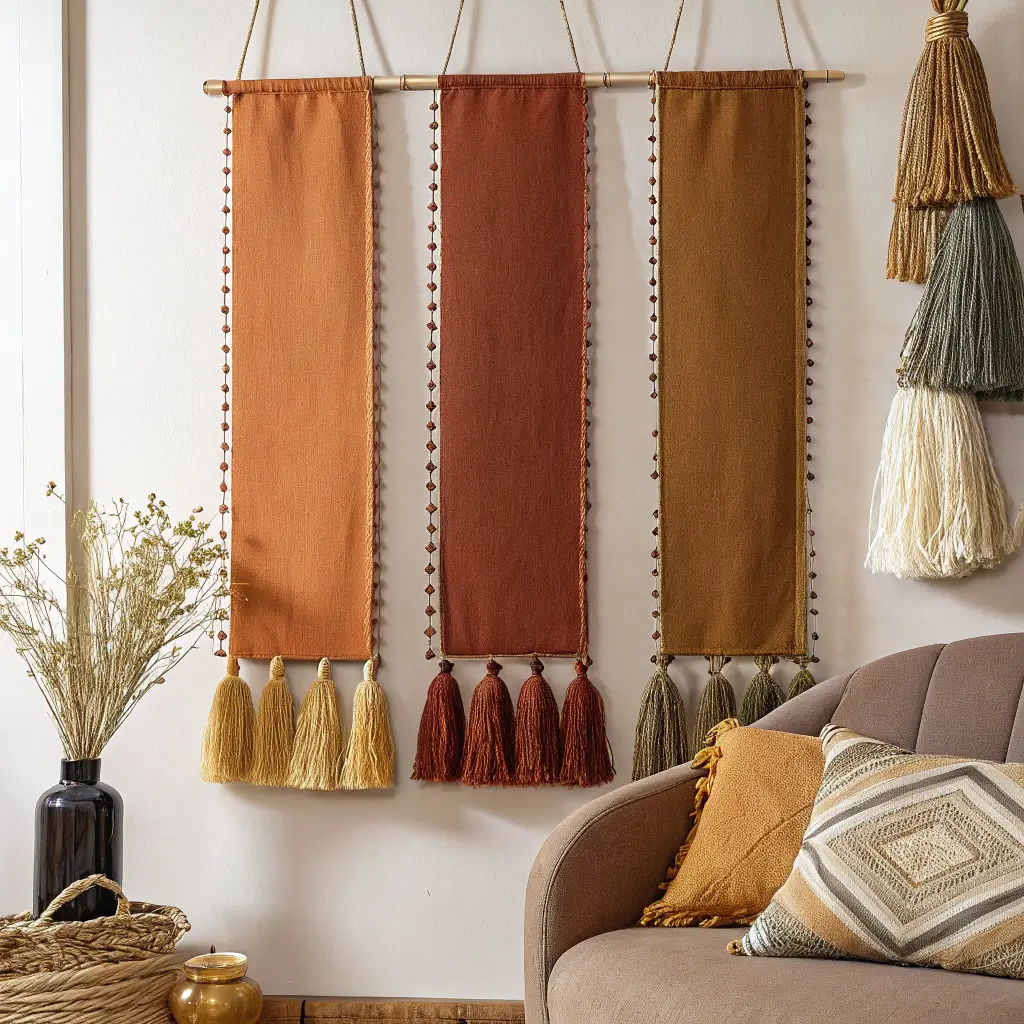
Tassels add instant bohemian flair to simple fabric panels, taking them from basic to Instagram-worthy in minutes. This finishing touch transforms plain fabric into statement pieces that demand attention.
My first tassel-trimmed panel happened by accident when I had leftover trim from curtains. Now I add tassels to everything – lampshades, pillows, and especially wall hangings. They bring movement and whimsy that makes spaces feel more dynamic and lived-in.
Tassel trim techniques:
- Make your own tassels for custom colors
- Vary tassel sizes along the same piece
- Mix tassel styles (pom-poms, fringe, beaded)
- Secure with fabric glue and stitching
The panel behind my couch features three rows of graduating tassel sizes in complementary colors, creating a waterfall effect that everyone wants to touch. Interactive art? Yes, please.
Making It All Work Together
After living with fabric wall decor for years, I’ve learned that mixing techniques creates the most interesting spaces. My home combines macramé with geometric panels, quilted squares with sheer layers. The key is finding a common thread – whether that’s color, texture, or style – that ties everything together.
Don’t feel pressured to transform every wall at once. Start with one piece, live with it, then add more as inspiration strikes. Your walls should tell your story, not Pinterest’s. The best fabric wall art reflects who you are, what you love, and maybe includes a few happy accidents along the way.
The beauty of fabric decor lies in its flexibility. When you’re ready for change, switch it out. No repainting, no major renovation, just a fresh perspective. Your walls become an evolving canvas that grows with you, and honestly? That’s what makes a house feel like home.
