
Let me guess – you’re staring at your tiny dining room thinking, “How the heck do I make this shoebox look like something from a magazine?” Trust me, I’ve been there. My first apartment had a dining “room” that was basically a corner pretending to be a space, and I thought I’d have to eat standing up forever.
But here’s the thing: small dining rooms can actually be incredible. They force you to get creative, think outside the box, and sometimes end up looking way better than those massive, echo-y dining halls your rich aunt has.
After years of experimenting (and yes, making some hilarious mistakes), I’ve discovered that tiny dining spaces just need the right tricks to shine.
So grab your coffee, get comfy, and let’s chat about how to transform your cramped eating area into a space that’ll make your dinner guests forget they’re practically sitting in your kitchen. These aren’t just random Pinterest ideas – these are real, tested solutions that actually work when you’re dealing with square footage that makes you cry.
1. Minimalist Monochrome Dining

You know what’s funny? The smaller your space, the more you need to embrace simplicity. Monochrome dining rooms are basically magic for tiny spaces because they create this seamless flow that tricks your eye into thinking there’s more room than there actually is.
I learned this the hard way after painting my first dining area in three different colors. Spoiler alert: it looked like a circus tent had exploded. When I switched to an all-white palette with subtle gray accents, suddenly my 8×8 space felt like it could breathe.
Why Monochrome Works
The beauty of sticking to one color family lies in visual continuity. Your brain doesn’t have to process multiple color zones, which automatically makes the space feel larger. Plus, when everything flows together, you can actually focus on the important stuff – like that amazing meal you’re serving.
Here’s what makes monochrome dining rooms work:
- Clean lines that don’t compete for attention
- Cohesive furniture that blends rather than stands out
- Textural variety to keep things interesting (think smooth tables with nubby linen chairs)
- Strategic pops of metallics for just enough contrast
2. Floating Shelves & Wall Art
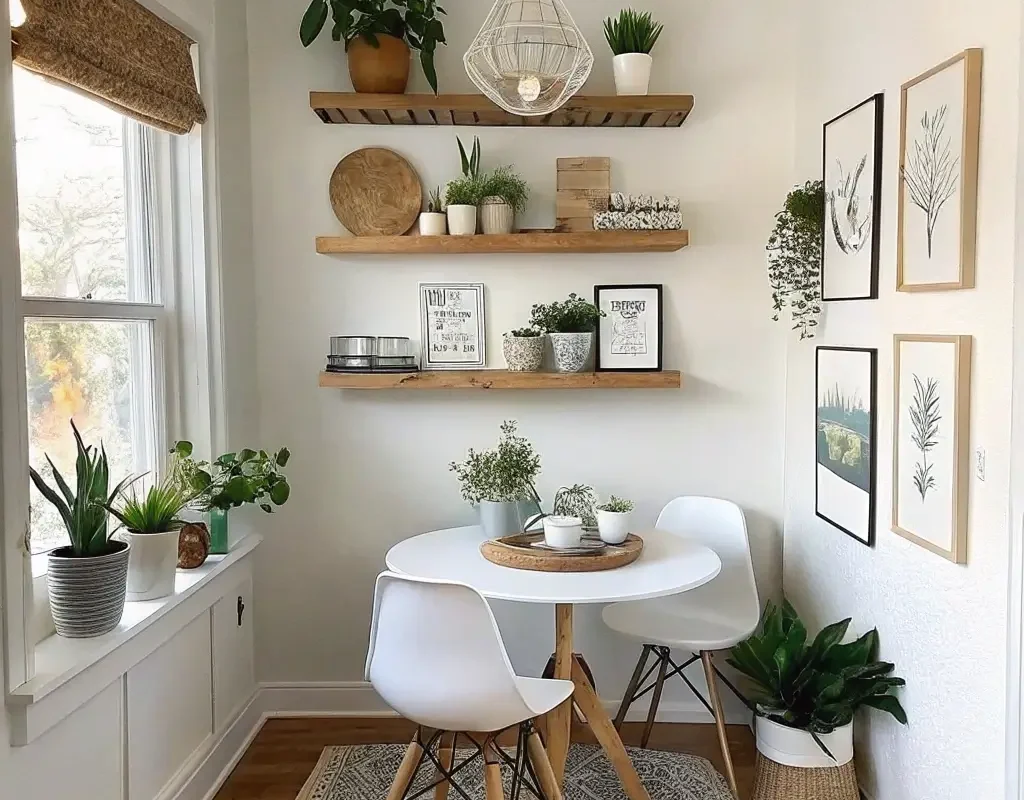
Okay, can we talk about how floating shelves are basically the superheroes of small dining rooms? They give you storage without eating up floor space, and they make your walls work harder than a coffee shop barista during morning rush.
I installed my first floating shelf system after tripping over a floor basket one too many times. Best. Decision. Ever. Not only did I gain storage, but I created this gorgeous display area that made my dining room feel like an actual designed space instead of an afterthought.
Making Walls Work Overtime
Your walls are prime real estate in a tiny dining room. Why waste them with just paint when they could be doing double duty?
The trick with floating shelves is placement. Mount them high enough that nobody’s hitting their head (learned that one the hard way), but low enough that you can actually reach your stuff without a ladder. I like to keep mine about 18 inches above the table – perfect for grabbing wine glasses without standing up 🙂
3. Foldable Furniture Magic

Let me blow your mind for a second: your dining table doesn’t need to exist 24/7. Wild, right? Foldable furniture changed my small space game completely, and honestly, I don’t know why more people don’t jump on this bandwagon.
My current fold-down wall table takes up exactly zero floor space when I’m not using it. During the day, it’s flat against the wall like a piece of art. Come dinner time? Boom – instant dining for four. It’s like having a transformer in your apartment, minus the explosions.
The Folding Revolution
Here’s what you need to know about foldable dining furniture:
- Wall-mounted drop-leaf tables are perfect for studio apartments
- Collapsible chairs can hide in the tiniest closets
- Nesting stools stack like Russian dolls when not needed
- Expandable consoles transform from side table to dining table in seconds
Also Read: 15 Gorgeous Dining Room Table Decor Ideas for Holidays
4. Mirror-Enhanced Illusions

Want to know the oldest trick in the interior design book? Mirrors. But here’s the thing – most people use them wrong in dining rooms. You don’t just slap a mirror on the wall and call it a day.
Strategic mirror placement can literally double the visual size of your dining area. I have a massive floor-to-ceiling mirror opposite my dining table, and every single guest comments on how “spacious” my dining room feels. Meanwhile, it’s literally the size of a walk-in closet.
Mirror Placement That Actually Works
The key is positioning mirrors where they’ll reflect something worth seeing. Nobody wants to stare at themselves chewing, trust me. Instead, place mirrors to:
- Reflect natural light from windows
- Bounce chandelier light around the room
- Create the illusion of depth behind furniture
- Make your art collection look twice as impressive
5. Rustic Farmhouse Charm

Who says tiny spaces can’t have that cozy farmhouse vibe? The rustic look actually works brilliantly in small dining rooms because it’s all about functionality meeting charm – exactly what you need when every inch counts.
I went through a major farmhouse phase (didn’t we all?), and while I’ve moved on from some trends, the practical elements stuck around. That reclaimed wood bench? Still using it. The vintage mason jar storage? Genius for a small space.
Farmhouse Elements That Save Space
What makes farmhouse style perfect for tiny dining rooms? It’s all about multi-purpose pieces and vertical thinking:
- Bench seating that opens for storage
- Pegboard walls for hanging everything from plants to plates
- Vintage crates as shelving units
- Industrial pipe shelving that takes up minimal visual space
6. Vertical Storage Solutions

Let’s get real for a second – if you’re not using your vertical space, you’re basically throwing away square footage. And in a tiny dining room? That’s practically criminal.
I once visited a friend whose dining room was so cluttered I couldn’t see the table. Two weeks and some vertical storage later, same room, completely transformed. The floor was clear, everything had a place, and suddenly there was room to actually, you know, dine.
Going Up, Not Out
Think of your walls as extensions of your floor. Every inch from floor to ceiling is potential storage:
- Ceiling-mounted pot racks for dishes (yes, in the dining room!)
- Wall-mounted wine racks that double as art
- Tall, narrow shelving units that fit in corners
- Hanging planters for herbs and decor
Also Read: 15 Lovely Dining Room Wall Decor Ideas and Unique Accents
7. Cozy Corner Nooks
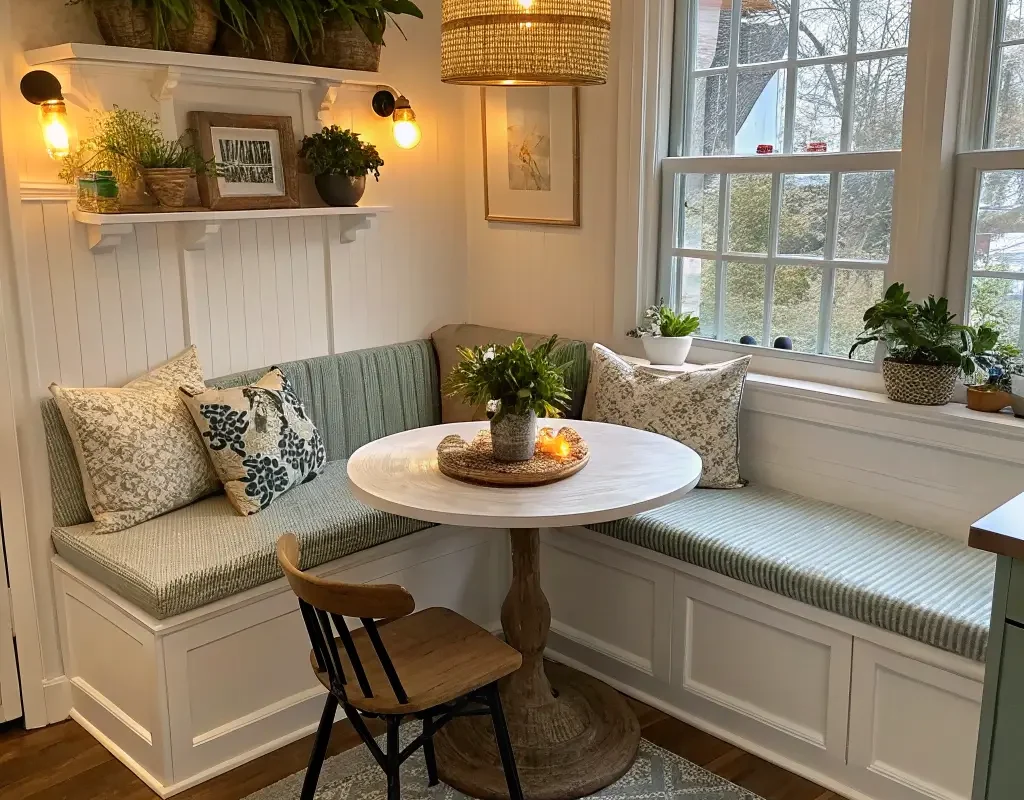
Ever notice how the best conversations happen in the smallest spaces? Corner nooks create intimacy that you just can’t get in a big, open room. Plus, they’re perfect for making use of those awkward corners that usually just collect dust bunnies.
My corner banquette is hands-down my favorite dining room feature. Built it myself (okay, with help from YouTube), and it transformed a dead corner into the most-used spot in my apartment. FYI, it also hides about 50 pounds of random stuff I don’t know where else to put.
Creating Your Perfect Nook
The secret to a great corner dining nook? Making it feel intentional, not forced:
- L-shaped seating maximizes corner potential
- Round tables work better than square in tight corners
- Built-in storage underneath seating is non-negotiable
- Soft cushions and throws make it irresistibly cozy
8. Compact Round Tables

Can we have a moment of appreciation for round tables? While everyone’s fighting over rectangular tables, round tables are quietly solving all of small dining room problems. No corners to bump into, easier conversation flow, and they somehow fit more people in less space.
I switched from rectangular to round three years ago and I’m never going back. My 36-inch round table fits four people comfortably in a space where a rectangular table barely fit two. Math doesn’t make sense? Neither did I until I tried it.
Why Round Rules in Small Spaces
Round tables aren’t just space-savers; they’re space-optimizers:
- No wasted corner space means more room for chairs
- Better traffic flow around the table
- More flexible seating arrangements
- Pedestal bases mean no table legs to navigate around
9. Scandinavian Light & Airy

The Scandinavians know something we don’t, and it’s not just about hygge. Their approach to small spaces is basically revolutionary – make everything light, bright, and purposeful. No clutter, no darkness, no unnecessary anything.
When I adopted Scandi principles in my dining room, it felt like someone had opened a window in my brain. Suddenly, less really was more. White walls, light wood, simple lines – and somehow my tiny dining room felt twice as big.
Scandi Secrets for Small Spaces
Here’s what makes Scandinavian design perfect for tiny dining rooms:
- Light wood tones that don’t visually weigh down the space
- White or pale gray walls that reflect maximum light
- Minimal decorations that serve actual purposes
- Natural textiles that add warmth without bulk
Also Read: 15 Timeless Dining Room Decor Ideas That Never Fail
10. Bold Accent Wall Colors

Okay, this might sound counterintuitive, but hear me out: sometimes the best thing for a small dining room is one really bold wall. Not all four walls – that’s a recipe for claustrophobia. Just one gorgeous, statement-making wall that gives your space personality.
I painted my dining room accent wall navy blue last year, and everyone thinks I’m some kind of design genius. Reality? I was just tired of beige and figured one wall couldn’t hurt. Turns out, it made the room feel more defined and somehow bigger. Go figure.
Choosing Your Power Color
The trick with bold accent walls in small spaces? Choose wisely:
- Deep blues and greens add depth without darkness
- Rich jewel tones create luxury vibes
- Charcoal or black can actually expand space (seriously!)
- Warm terracotta or rust brings cozy without cramped
11. Indoor Plant Corners

Plants in a tiny dining room? You bet. Strategic greenery can make your small space feel like a lush oasis instead of a cramped box. Plus, they literally clean your air while looking pretty. Win-win, IMO.
I started with one tiny succulent. Now I have what my friends call a “jungle corner” in my dining room. The vertical plant stand takes up maybe two square feet of floor space but adds so much life to the room it’s ridiculous.
Green Without the Sprawl
Here’s how to add plants without sacrificing precious space:
- Hanging planters from the ceiling or wall brackets
- Tiered plant stands that go vertical
- Wall-mounted planters that double as art
- Windowsill herbs that you can actually use while cooking
12. Multi-Functional Benches

Let’s talk about the MVP of small dining rooms: the storage bench. It’s seating, it’s storage, it’s sometimes a coffee table, and occasionally it’s where you dump your bag when you come home. Versatility at its finest.
My dining bench holds all my table linens, candles, and serving pieces. Guests sit on it during dinner parties, never knowing they’re literally sitting on my entire entertaining arsenal. It’s like having a secret weapon disguised as furniture.
Bench Benefits Beyond Seating
Why benches beat chairs in small spaces:
- Hidden storage for everything you don’t use daily
- Flexible seating that can squeeze in extra guests
- Space-saving profile when pushed under the table
- Double duty as extra surface when needed
13. Vintage Chic Touches

Here’s something nobody tells you: vintage pieces are often smaller than modern furniture. People were literally smaller back then, and so was their stuff. This makes vintage finds perfect for tiny dining rooms.
My grandmother’s 1950s dining set fits perfectly in my small space, while every modern set I looked at was comically oversized. Plus, vintage pieces have character that new stuff just can’t match. That slightly wonky chair leg? Character. That patina on the table? Character. That weird smell? Okay, maybe Febreze that.
Vintage Hunting for Small Spaces
What to look for when vintage shopping for tiny dining rooms:
- Drop-leaf tables from the 40s and 50s
- Telephone benches that work as dining seating
- Nesting tables that can expand when needed
- Bar carts for mobile storage and serving
14. Statement Lighting Fixtures
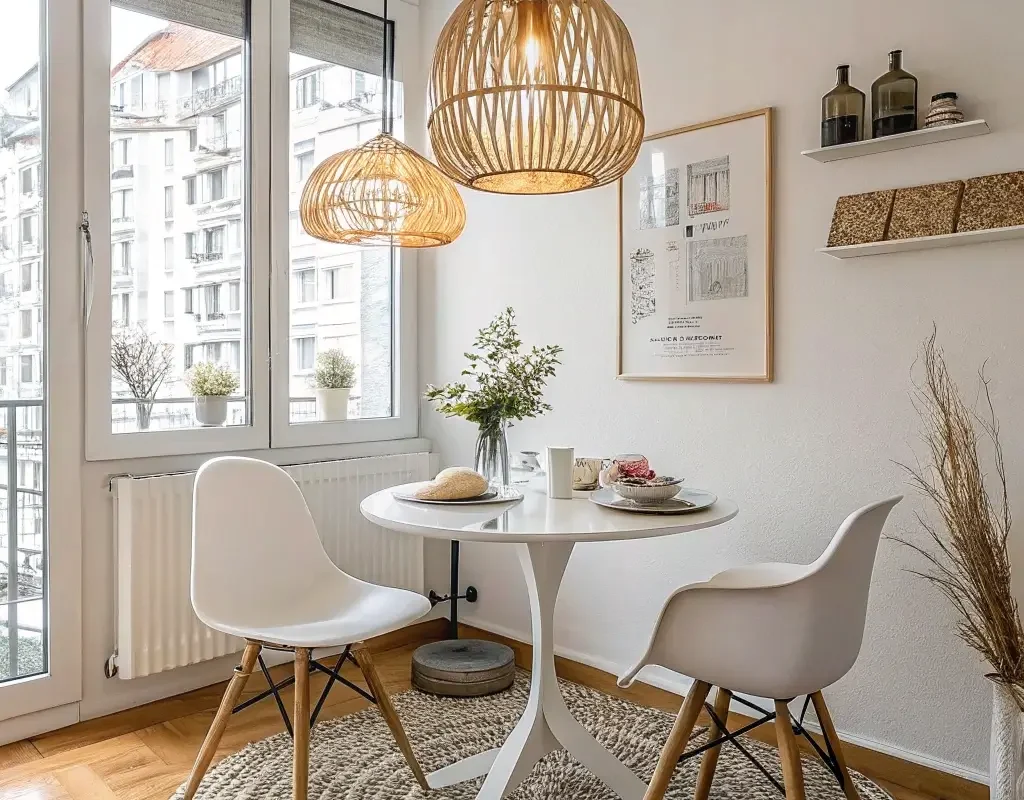
You want to know the fastest way to make a small dining room feel special? Hang a knockout light fixture. I’m talking about something that makes people look up and go “Wow.” It draws the eye up, makes the ceiling feel higher, and gives your space a focal point that isn’t the lack of square footage.
I splurged on a brass chandelier that’s probably too fancy for my apartment, but you know what? It makes my $20 IKEA table look expensive, so money well spent.
Lighting That Elevates Everything
The right lighting can transform your tiny dining space:
- Oversized pendants create drama without taking floor space
- Multiple small pendants add interest and better light distribution
- Wall sconces free up table space
- Dimmers are non-negotiable for ambiance
15. Glass & Acrylic Furniture
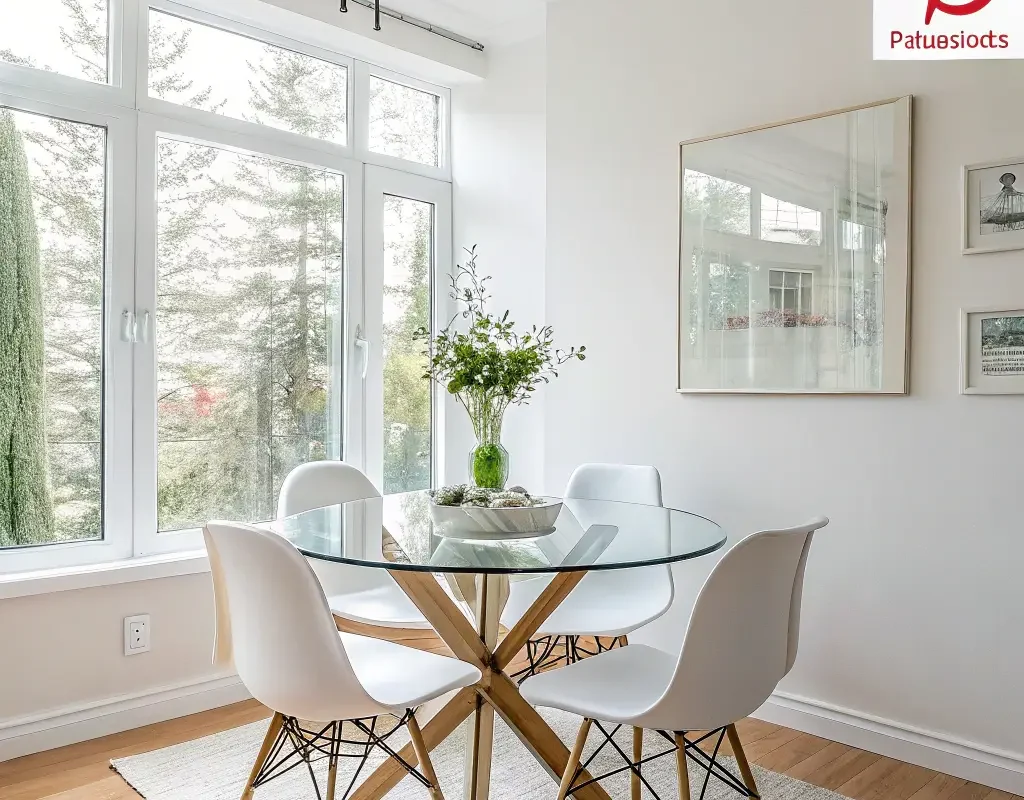
Last but definitely not least, let’s talk about the magic of transparent furniture. Glass and acrylic pieces are basically invisible, which means they take up physical space without taking up visual space. Mind-blowing when you think about it.
My acrylic chairs were a game-changer. Four chairs that you can barely see? Suddenly my dining room doesn’t look like a furniture store exploded in it. The glass-top table? Makes the room feel twice as open.
The Clear Advantage
Why transparent furniture rocks in small spaces:
- Visual lightness that doesn’t block sightlines
- Easy to clean (though fingerprints are real)
- Modern aesthetic that works with any style
- Light reflection that brightens the whole room
Bringing It All Together
So there you have it – fifteen ways to make your tiny dining room not just livable, but actually amazing. The truth is, small spaces force creativity, and that’s where the magic happens. You can’t just throw money at the problem and buy bigger furniture. You have to think, plan, and get clever.
Remember, you don’t need to implement all these ideas at once. Start with one or two that resonate with you. Maybe it’s adding floating shelves this month and trying a round table next month. Rome wasn’t built in a day, and your perfect tiny dining room doesn’t have to be either.
The most important thing? Make your space work for how you actually live. If you never have dinner parties, skip the expandable table and get that cozy corner nook instead. If you’re always entertaining, invest in multi-functional pieces that can adapt to different situations.
Your small dining room might never be huge, but it can be perfectly, wonderfully, uniquely yours. And honestly? That beats a boring, oversized dining room any day of the week. Now excuse me while I go fold up my table – I need the space for yoga :/
