
Remember that time you walked into someone’s dining room and thought, “Wow, those walls are doing absolutely nothing for this space”? Yeah, me too. Blank dining room walls are like unseasoned food – technically fine, but missing that special something that makes people actually want to stick around.
I’ve spent the last decade transforming boring dining rooms into conversation-starting spaces, and let me tell you, the walls make all the difference. Whether you’re hosting fancy dinner parties or just trying to make Tuesday night tacos feel a bit more special, these 15 wall decor ideas will completely transform your dining experience.
Gallery Wall with Family Photos
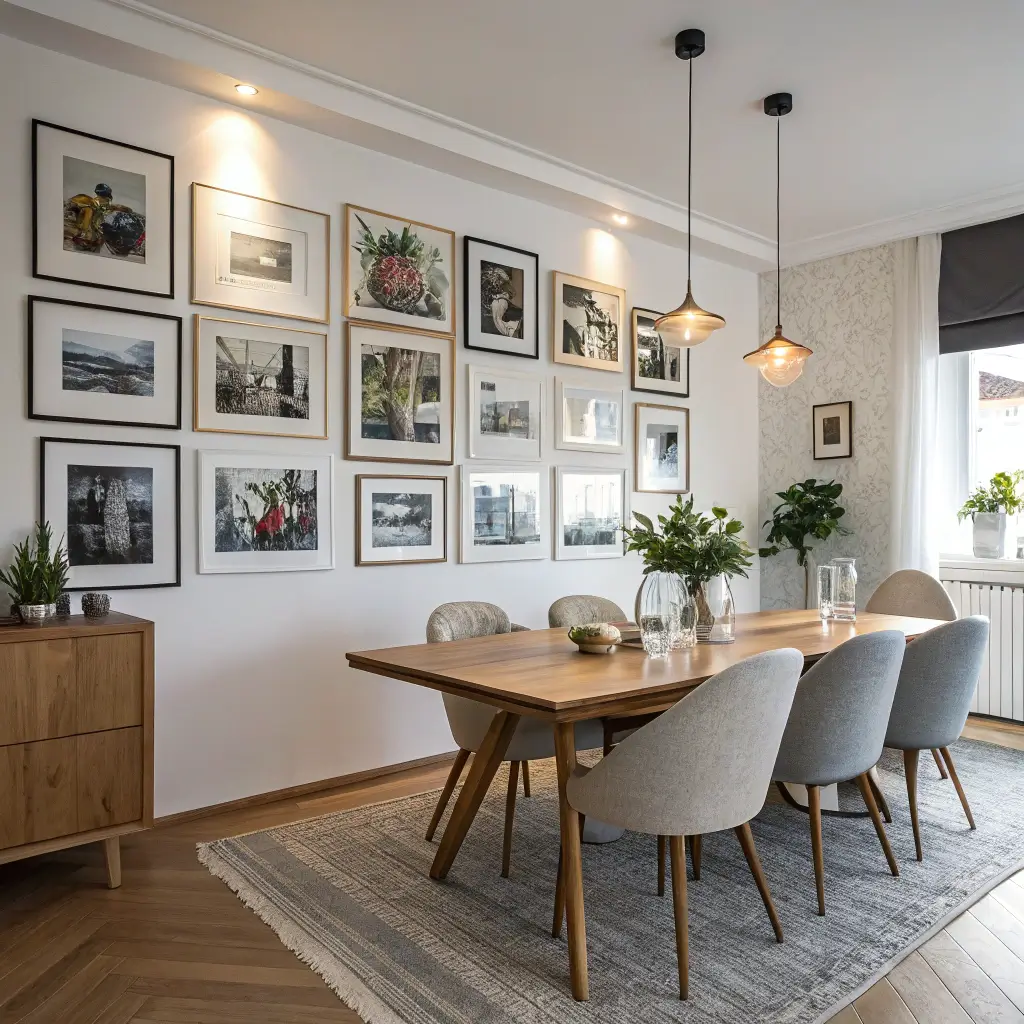
Creating a gallery wall with family photos might sound like something your grandma would do, but hear me out – this trend has gotten a serious upgrade. I started my own gallery wall after realizing my dining room looked like a hospital cafeteria (minus the mysterious smell).
The trick here is mixing different frame sizes and styles to create visual interest. You want that collected-over-time vibe, not the “I bought everything at the same store” look. I combine black frames with natural wood, throw in a few metallic accents, and suddenly you’ve got something that looks intentional rather than random.
What really makes this work? Strategic spacing and alignment. Use painter’s tape to map out your arrangement on the wall first – trust me, you don’t want to play the “oops, that nail hole is showing” game. Keep about 2-3 inches between frames for breathing room.
Making It Personal Yet Polished
Here’s where most people mess up: they include every single family photo from 1987 to present. Don’t do that. Choose photos that tell a story but also work together visually. Mix black and white shots with color ones, include some landscape photos alongside portraits, and maybe throw in a piece of handwritten text or a vintage postcard.
The best part about a photo gallery wall? It’s an instant conversation starter. Guests always gravitate toward these walls, and before you know it, you’re sharing stories over dessert instead of struggling through awkward small talk.
Oversized Statement Art Piece
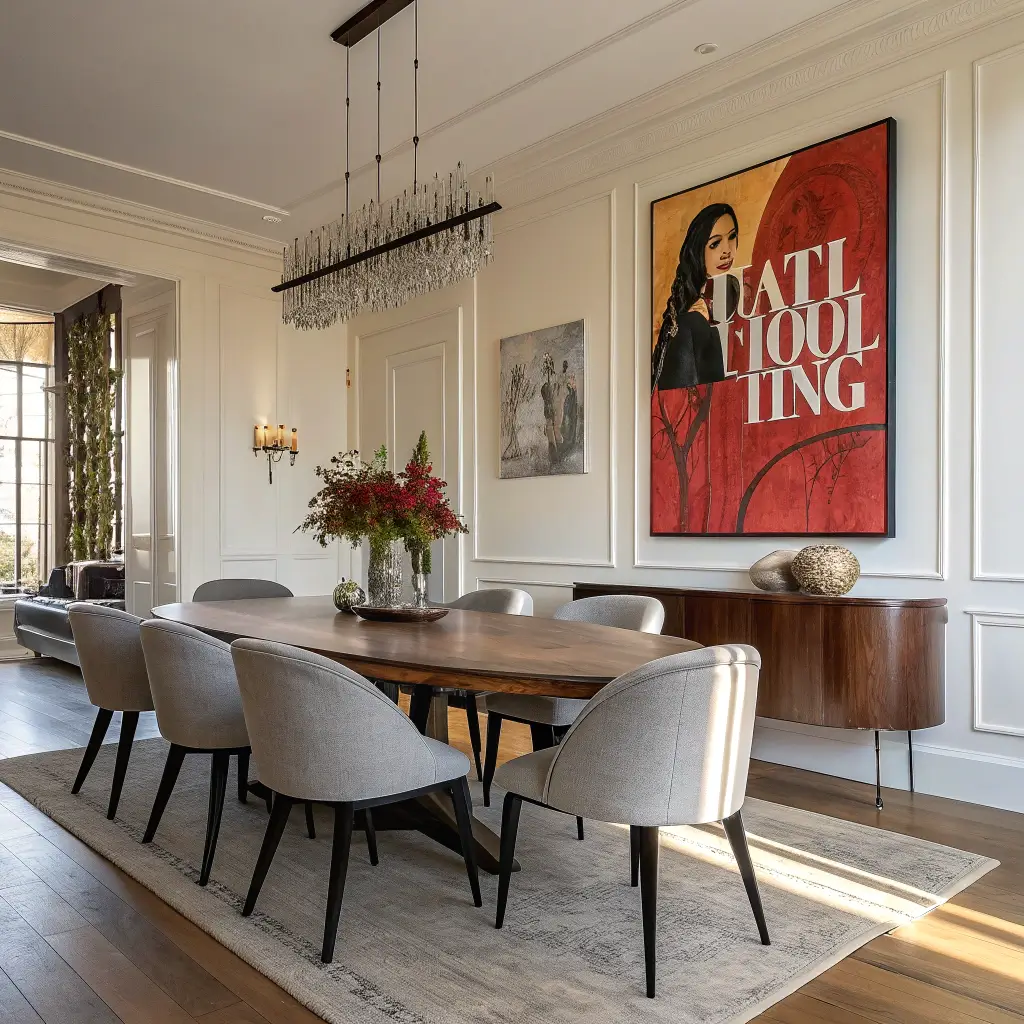
Sometimes you just need to go big or go home. An oversized statement piece commands attention and sets the entire mood for your dining space. I once hung a massive abstract painting above my dining table, and suddenly every meal felt like we were eating in an upscale restaurant.
The key measurement to remember? Your art should be about two-thirds the width of your dining table or buffet. Any smaller and it looks lost; any bigger and it overwhelms the space. This isn’t just my opinion – it’s basic visual balance that interior designers swear by.
Choosing the Right Piece
Abstract art works brilliantly because everyone interprets it differently (perfect dinner conversation fodder). But landscape photography, oversized botanical prints, or even a blown-up vintage map can work just as well. The trick is choosing something that reflects your personality without clashing with your existing decor.
Color coordination matters here. Pick one or two colors from your dining room’s existing palette and find art that incorporates those hues. This creates cohesion without being too matchy-matchy – because nobody wants their dining room looking like a furniture showroom display.
Floating Shelves with Greenery
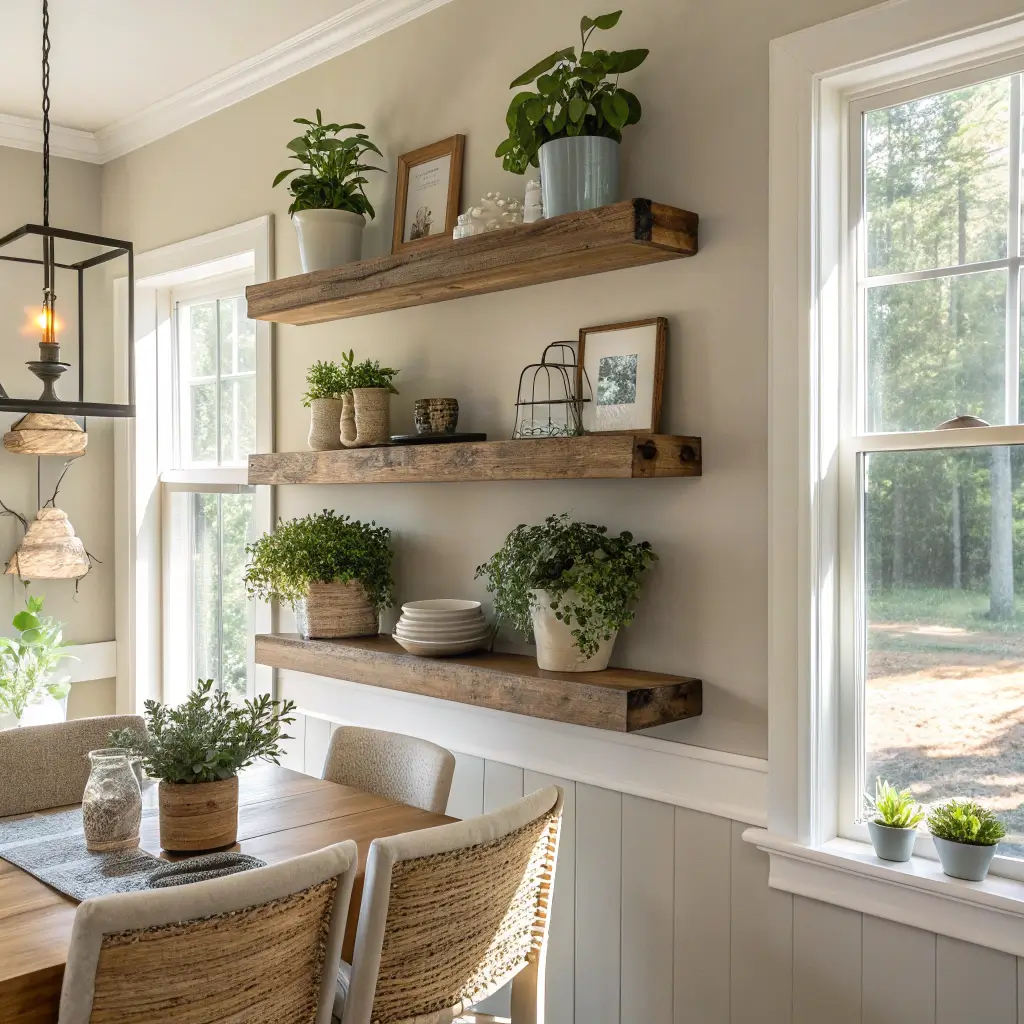
Who says dining room storage can’t be gorgeous? Floating shelves kill two birds with one stone – they give you display space AND make your walls look intentional. I installed three staggered floating shelves in my dining room, and suddenly I had a place for my plant addiction that actually looked planned.
The magic formula: Mix plants at different heights with decorative objects. Think trailing pothos next to a small succulent arrangement, balanced with a few ceramic pieces or candles. The greenery brings life to the space (literally), while the objects add personality.
Installation Tips That Actually Matter
Mount these shelves at eye level or slightly above – you want to admire them, not duck under them while serving dinner. Space them about 12-15 inches apart vertically for the best visual flow. And please, for the love of all that’s holy, use proper wall anchors. Nothing ruins dinner faster than a shelf crashing down mid-meal.
Want to level up? Install LED strip lighting underneath each shelf. It highlights your displays and creates ambient lighting that makes everyone look good at dinner. Win-win, right?
Also Read: 15 Timeless Dining Room Decor Ideas That Never Fail
Geometric Wall Panels
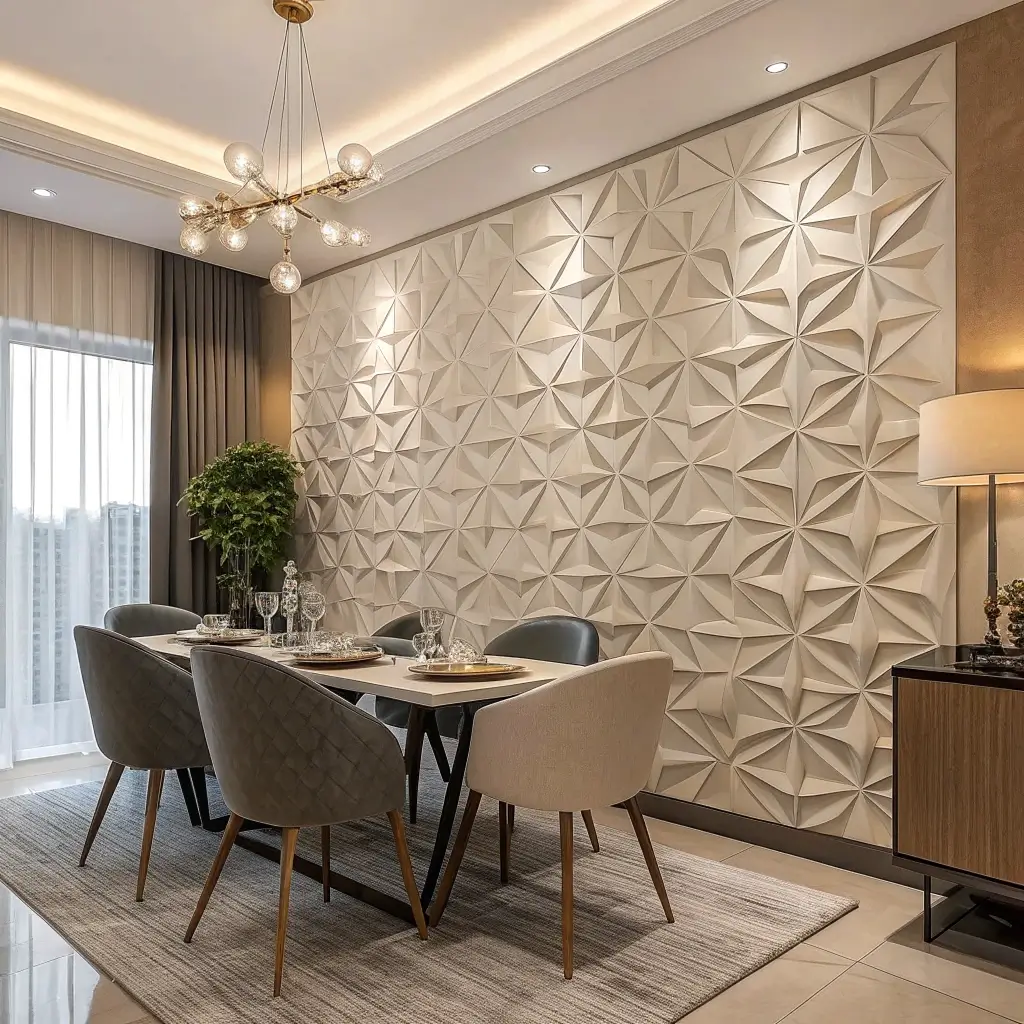
Geometric panels are having a serious moment, and I’m here for it. These aren’t your grandmother’s wood panels – we’re talking modern, angular designs that add depth and sophistication to flat walls. I installed hexagonal panels in my dining room last year, and now everyone thinks I hired an interior designer.
The beauty of geometric panels? They create visual interest without overwhelming the space. You can go subtle with tone-on-tone colors or make a statement with contrasting hues. Either way, you’re adding architectural detail that most dining rooms desperately need.
DIY vs. Professional Installation
You can totally DIY this with wood strips and some basic tools. Create triangles, hexagons, or even asymmetrical designs – whatever floats your boat. Paint them the same color as your wall for subtle texture, or go bold with metallic accents.
FYI, if you’re not the handy type, 3D wall panels come pre-made now. They’re basically adult LEGOs for your walls. Stick ’em up, paint if desired, and boom – instant sophistication.
Vintage Mirrors Arrangement
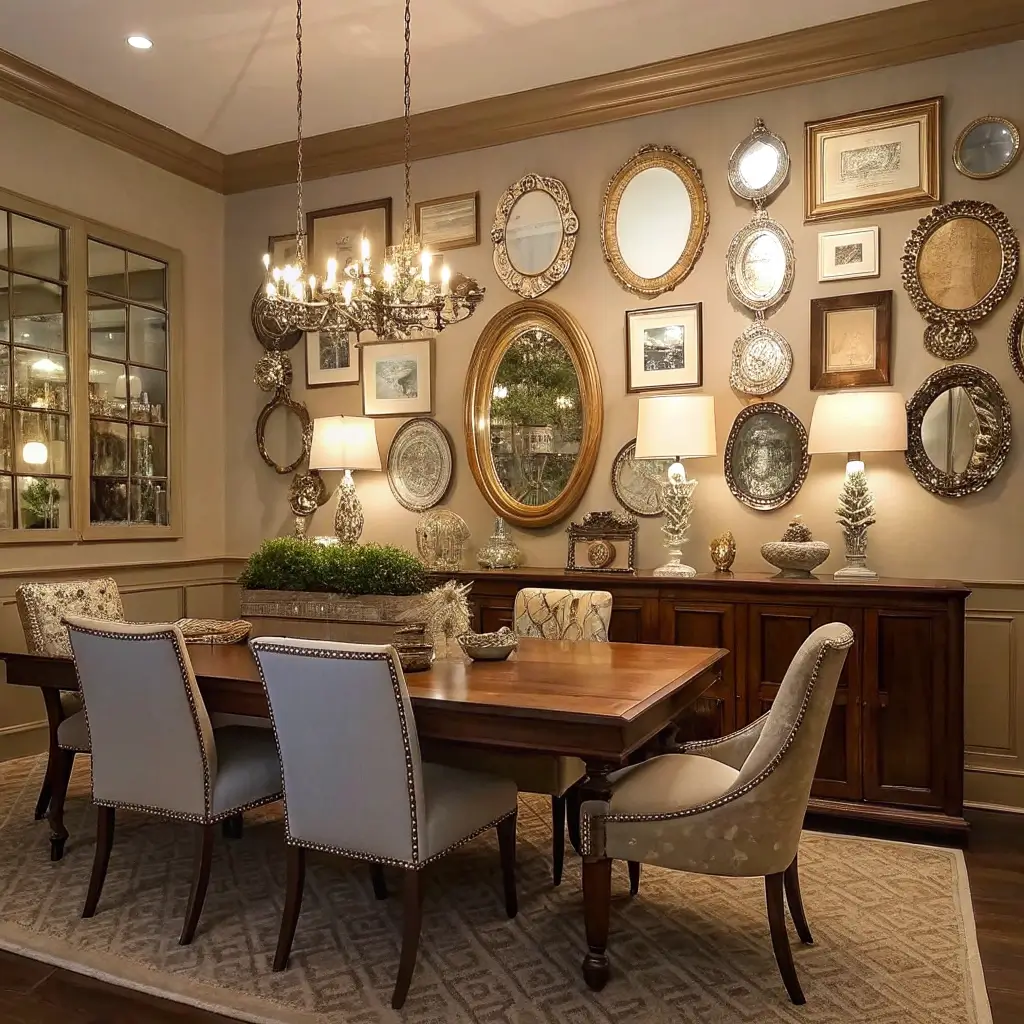
Mirrors in the dining room aren’t just for checking if you have spinach in your teeth (though that’s definitely a bonus). A well-arranged collection of vintage mirrors opens up the space and bounces light around, making even the smallest dining room feel grand.
I started collecting vintage mirrors at flea markets and estate sales – each one tells a story and adds character. The trick is mixing shapes and frames: combine ornate gilded mirrors with simple wooden ones, throw in a sunburst mirror for drama, and maybe add an art deco piece for good measure.
Strategic Placement for Maximum Impact
Position mirrors to reflect something beautiful – a chandelier, a window with a nice view, or even your statement art piece. Avoid placing them where they’ll reflect the kitchen mess or that pile of mail you keep meaning to sort through.
Group them asymmetrically for a collected-over-time look. Start with your largest piece slightly off-center, then build around it with smaller mirrors. Leave some breathing room between pieces – this isn’t a mirror store display.
Textured Wood Wall Accent
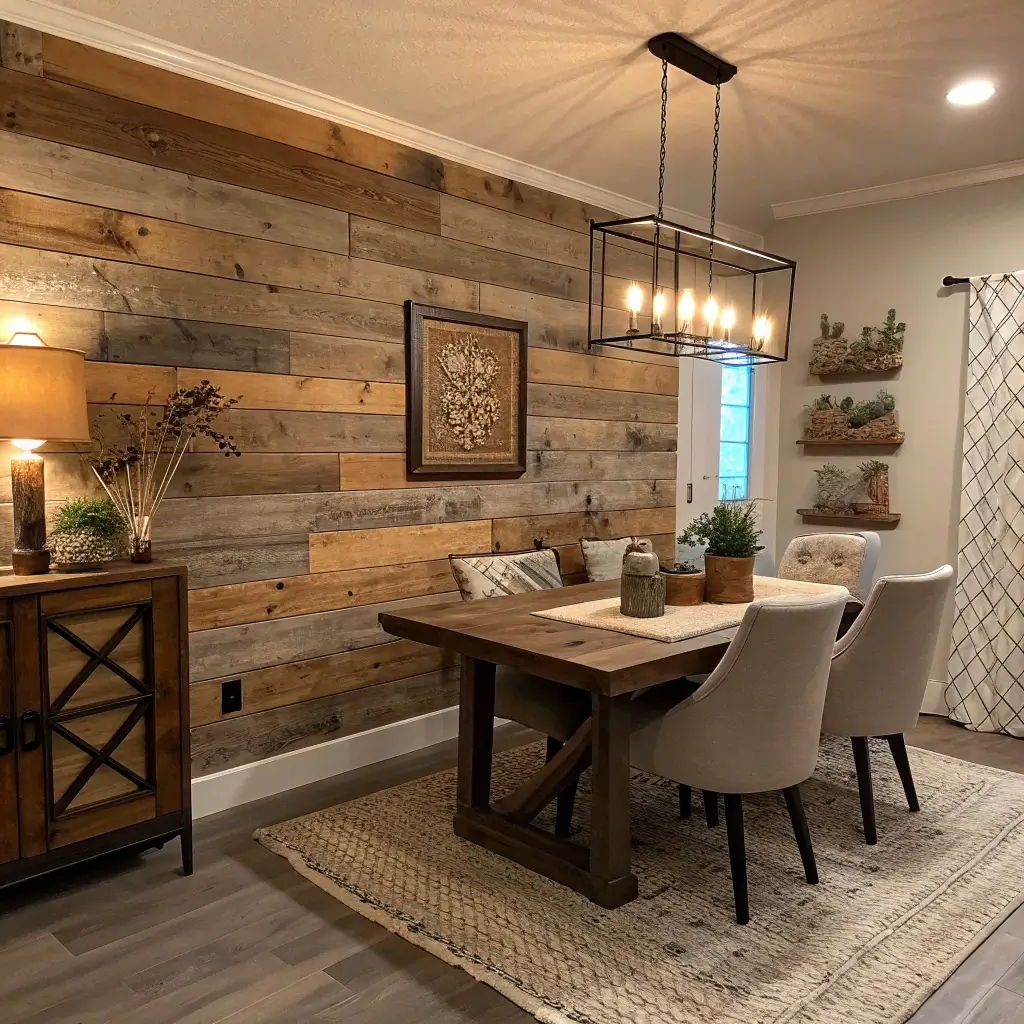
Nothing warms up a dining space quite like a wood accent wall. But we’re not talking about that dated 70s paneling your parents had. Modern wood accents range from reclaimed barn wood to sleek horizontal slats that scream contemporary chic.
I went with horizontal cedar planks in a natural finish, and the transformation was insane. The wood adds warmth, texture, and acoustic benefits (goodbye, echo-y dinner conversations). Plus, it’s the perfect backdrop for minimalist decor – the wood does all the heavy lifting visually.
Installation Considerations
Before you start nailing up boards, consider the direction. Horizontal planks make rooms feel wider, vertical ones add height. Diagonal? Well, that’s for the brave souls who like making a statement 🙂
Seal the wood properly if you’re going natural – dining rooms see plenty of action, and you don’t want spaghetti sauce becoming a permanent part of your decor. A matte polyurethane finish protects while maintaining that organic look.
Also Read: 15 Fun Bedroom Decor Ideas for Women Ideas and Instagram-Worthy Looks
DIY Macrame Wall Hanging
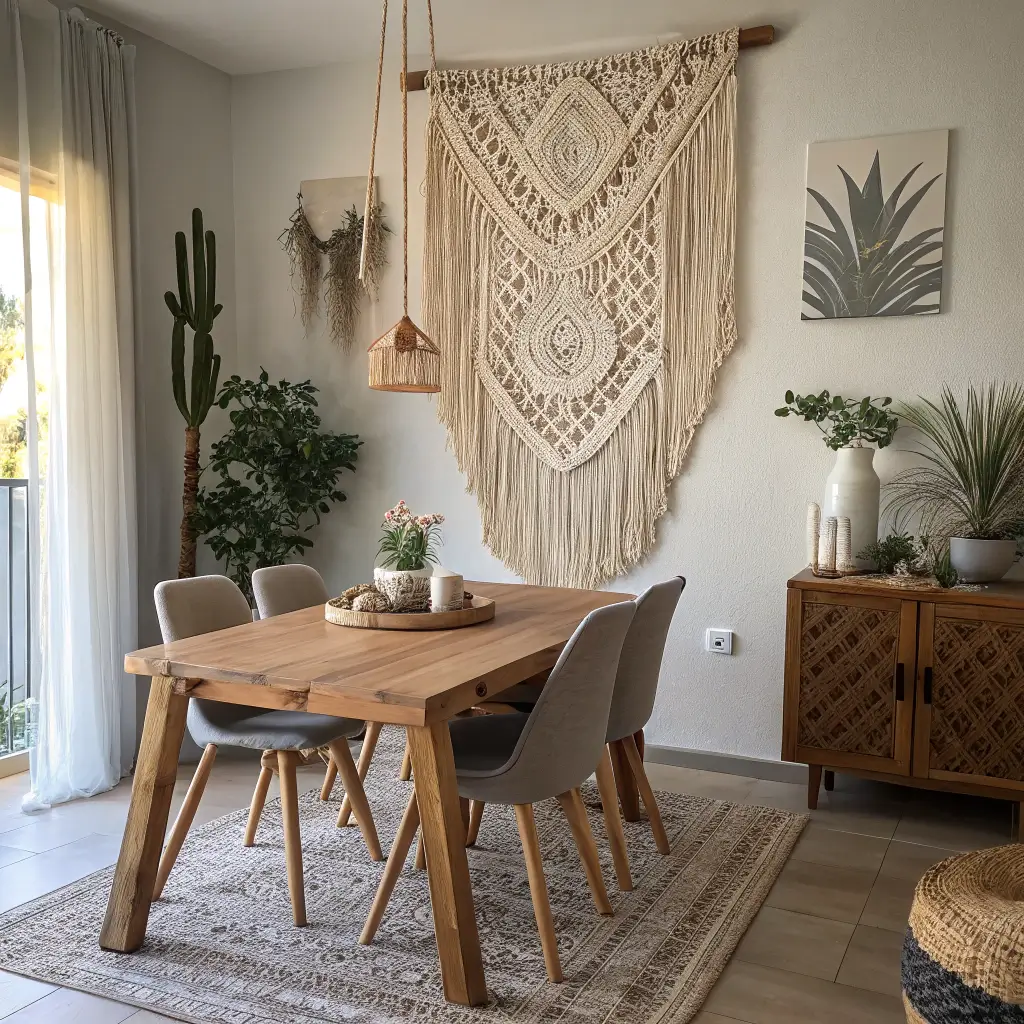
Okay, macrame might trigger some 1970s flashbacks, but modern macrame is actually stunning. These textile pieces add softness and bohemian charm to dining spaces that might otherwise feel too rigid. I made my first macrame piece during lockdown (didn’t we all pick up weird hobbies?), and it’s still hanging proudly in my dining room.
The best part? You can customize the size, pattern, and color to perfectly fit your space. Natural cotton rope gives that classic boho vibe, while black cord creates a more modern, dramatic look.
Making Your Own vs. Buying
YouTube University teaches macrame basics in about 20 minutes. Start with simple patterns – a few basic knots create surprisingly complex-looking designs. Budget about $20-30 for materials to make a decent-sized piece.
Not crafty? No judgment here. Etsy sellers create gorgeous custom pieces that won’t break the bank. Just measure your wall space first – these pieces can look either perfectly proportioned or weirdly tiny, with no in-between.
Chalkboard or Menu Wall
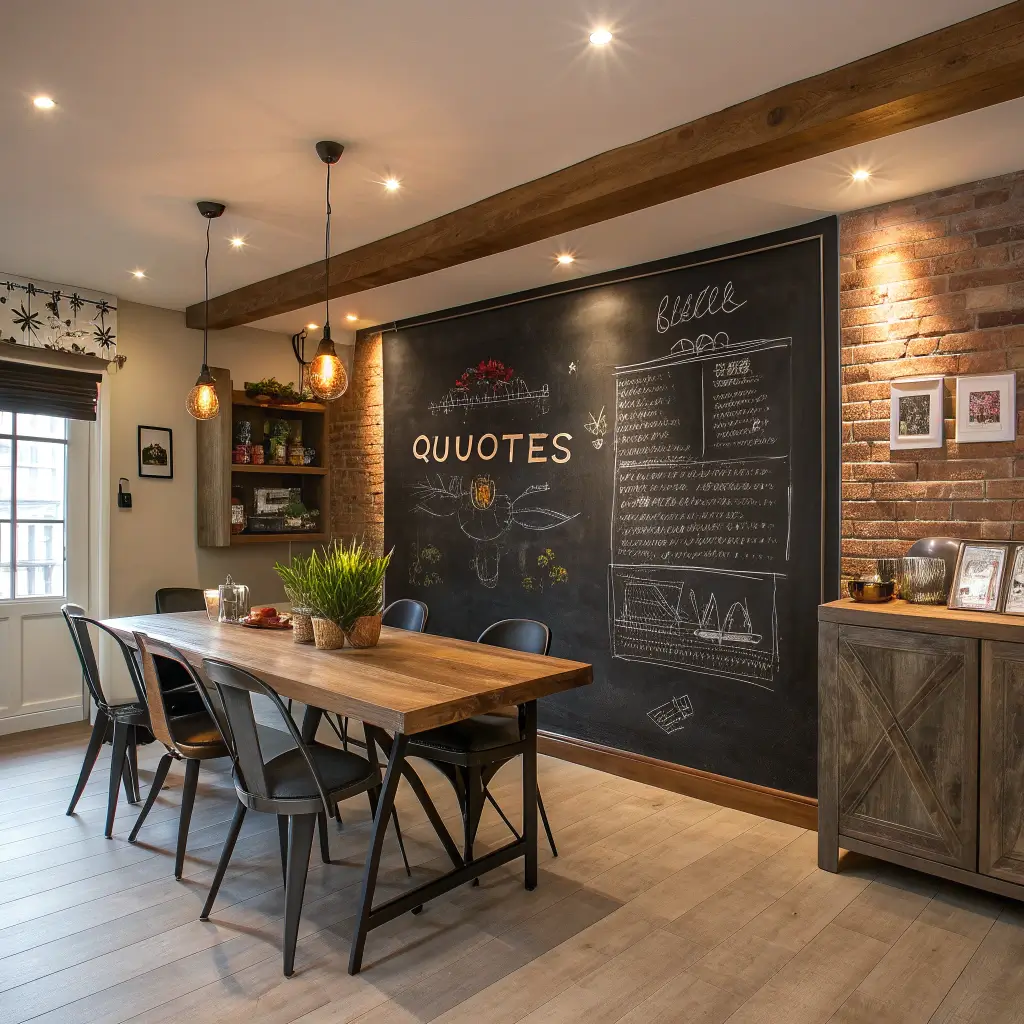
Transform one wall into a functional chalkboard surface, and suddenly your dining room becomes interactive. I painted a section of my dining wall with chalkboard paint, and now it displays everything from dinner menus to kids’ artwork to wine tasting notes.
This idea works especially well in kitchens that open to dining areas. Write the week’s menu, grocery lists, or inspirational quotes. Hosting a dinner party? Create a custom menu that makes guests feel like they’re at a fancy restaurant.
Beyond Basic Black
Chalkboard paint comes in colors now – navy, green, even pink if that’s your thing. Choose a color that complements your dining room palette while still providing enough contrast for chalk to show up clearly.
Pro tip: Season your chalkboard properly before first use. Rub chalk sideways over the entire surface, then erase. This prevents permanent ghosting from your first drawings. Learned that one the hard way.
Metal Wall Sculptures
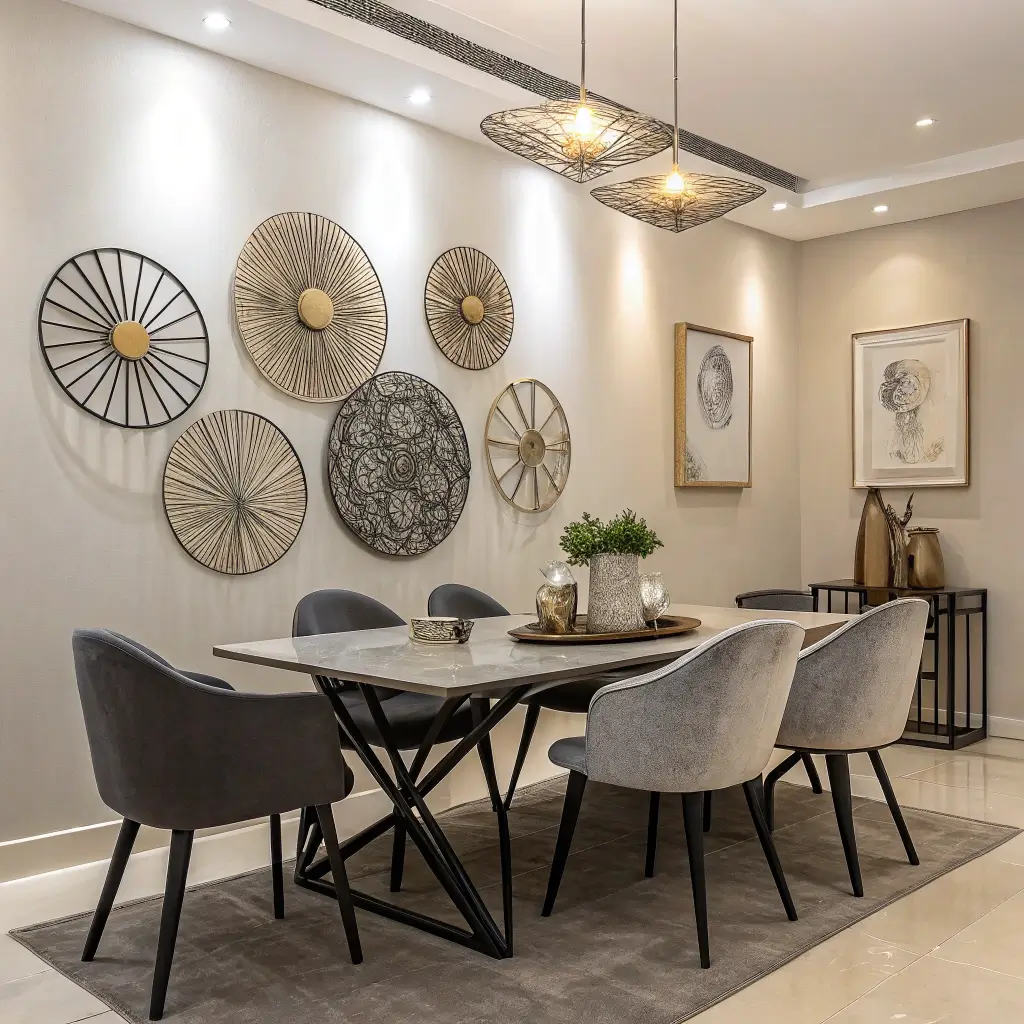
Metal wall art adds an industrial edge that plays beautifully against softer dining room elements. I hung a copper tree sculpture above my buffet, and the way it catches candlelight during dinner parties is absolutely magical.
These pieces range from abstract geometric designs to nature-inspired forms. The key is choosing a finish that complements your existing hardware – mixing metals can work, but it needs to look intentional, not accidental.
Size and Scale Matters
Metal sculptures can overwhelm a space faster than you can say “industrial chic.” Start with the 60-70% rule – your sculpture should cover about that percentage of the wall space you’re decorating. Any bigger risks looking cramped; smaller might get lost.
Consider the weight too. These pieces can be surprisingly heavy, requiring serious wall anchors. Nobody wants their artistic statement becoming a safety hazard during dessert.
Also Read: 15 Inspiring 1 Bedroom Apartment Decor Ideas for Stylish Homes
Large Canvas Prints
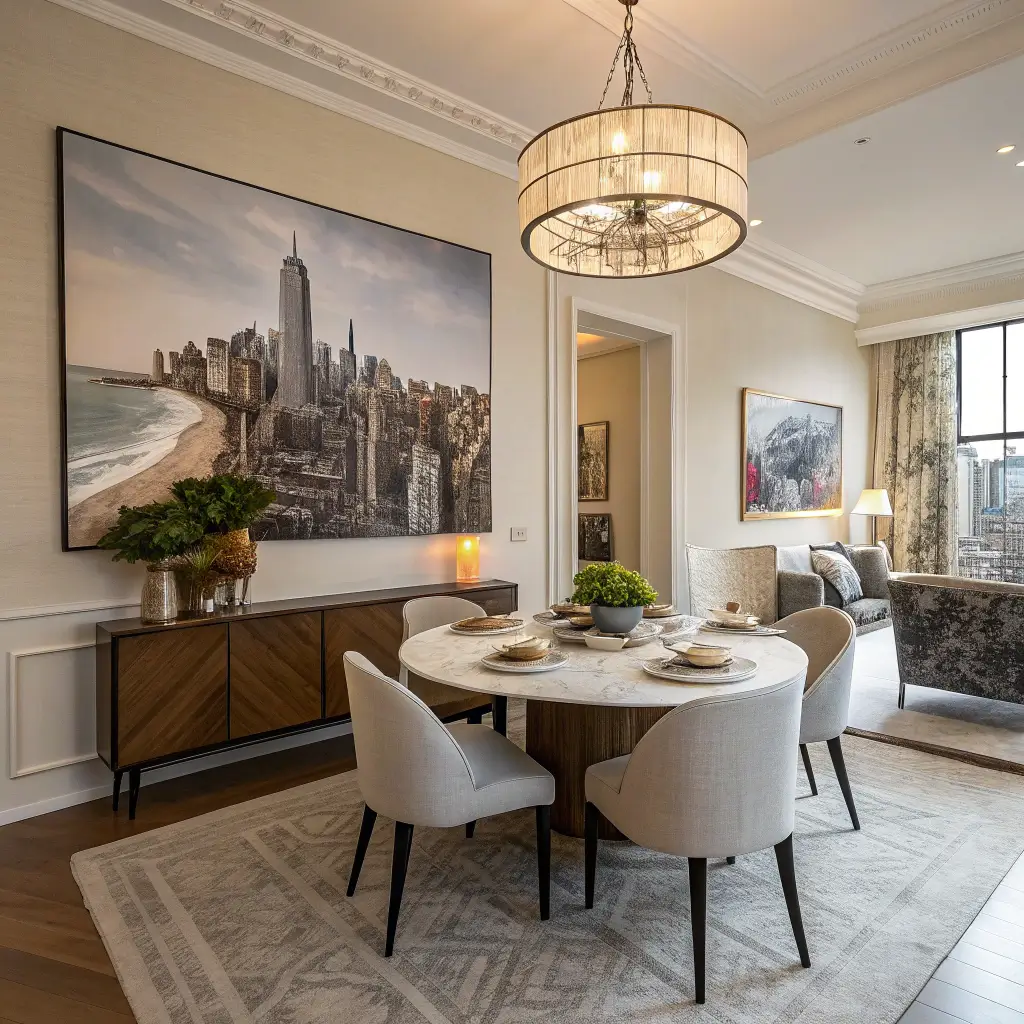
Canvas prints offer the impact of original art without the gallery price tag. I’ve got a massive botanical print that cost less than a nice dinner out, but guests always assume it’s an original piece. The texture of canvas adds depth that regular prints just can’t match.
Choose images that resonate with your dining style. Food photography works obviously, but abstract pieces, landscapes, or even oversized typography can create amazing focal points. The key is going big enough to make a statement.
Quality Makes the Difference
Not all canvas prints are created equal. Look for gallery-wrapped edges (where the image continues around the sides) and UV-resistant inks. Cheap prints fade faster than your enthusiasm for that diet you started Monday.
IMO, black and white photography on canvas looks particularly sophisticated in dining rooms. It’s classic, won’t clash with changing decor, and makes colorful food presentations pop even more.
Wall-Mounted Planters
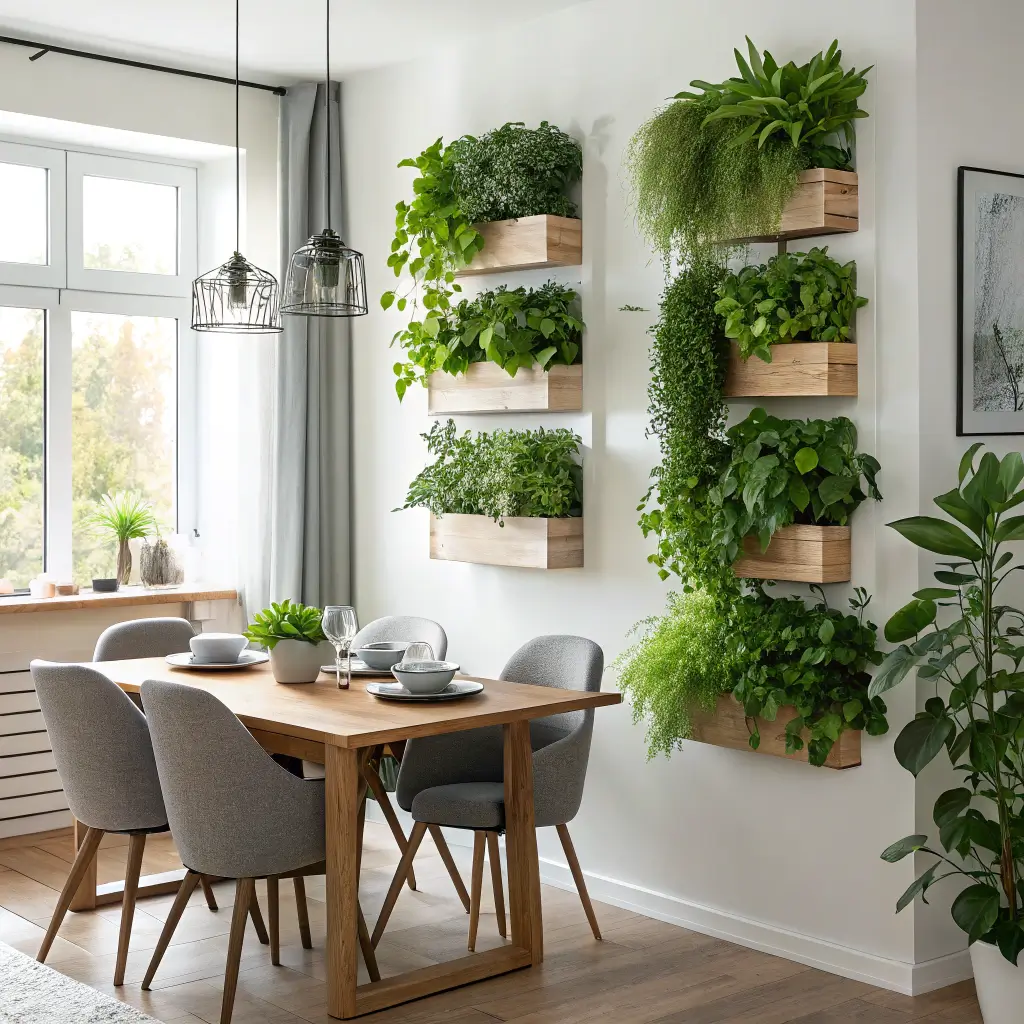
Vertical gardens aren’t just for outdoor spaces anymore. Wall-mounted planters bring life and fresh air to your dining room while keeping surfaces clear for actual dining stuff. I installed a grid of small planters filled with herbs – now I can literally grab fresh basil while setting the table.
These systems range from simple mounted pots to elaborate living wall installations. Start small with a few mounted planters and expand if you don’t kill everything immediately (we’ve all been there).
Plant Selection for Dining Spaces
Choose plants that thrive in your dining room’s light conditions. Pothos, philodendrons, and snake plants forgive neglect and look great cascading from wall planters. Herbs work if you have good light, plus they smell amazing.
Avoid anything toxic if you have pets or kids who might nibble. Also skip heavy feeders or plants that drop leaves constantly – nobody wants salad garnished with dead plant matter.
Woven Wall Baskets Display
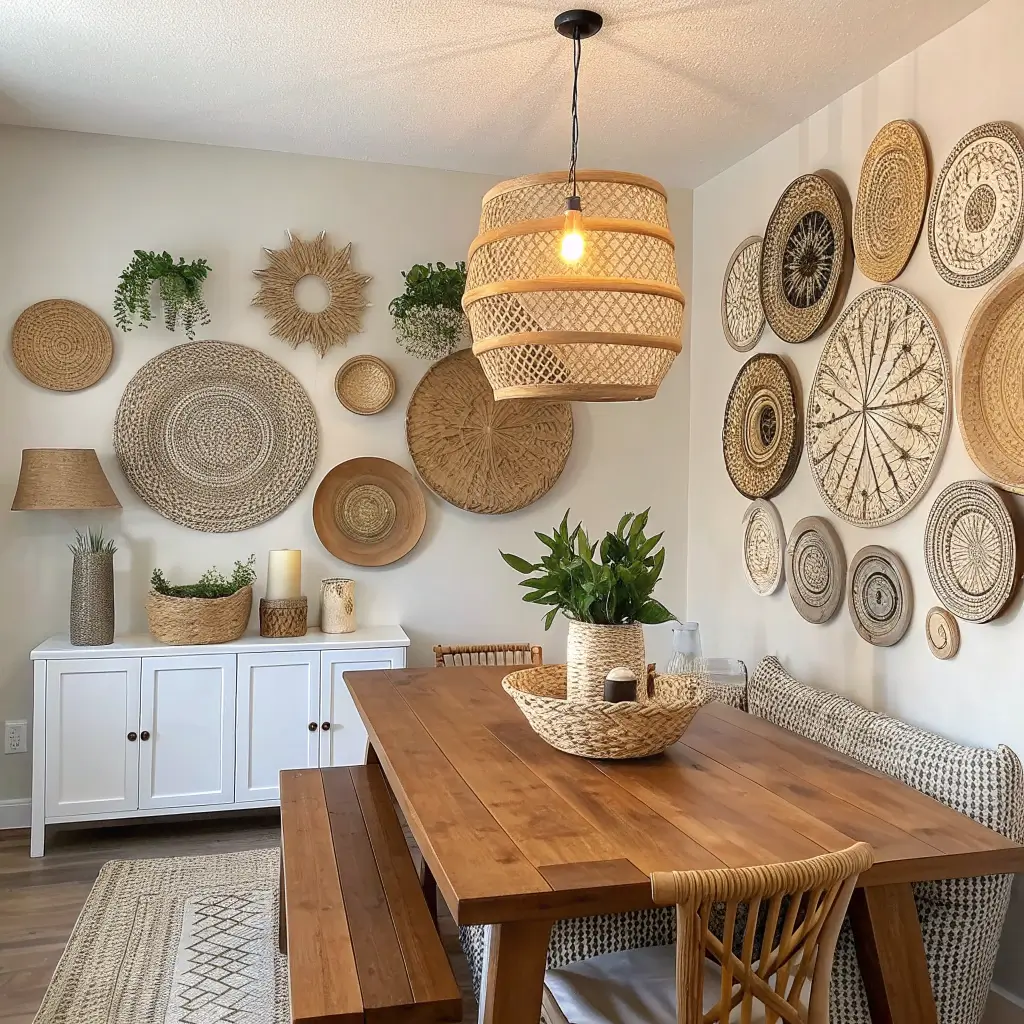
Basket walls are having a major moment, and honestly, they deserve it. These textural pieces add warmth and global style without overwhelming the space. I started with three baskets I found at a thrift store, and now I have twelve creating a stunning focal wall.
Mix different sizes, patterns, and weaving styles for visual interest. African juju hats, Native American baskets, and Asian bamboo pieces can coexist beautifully when arranged thoughtfully.
Creating the Perfect Arrangement
Start with your largest basket slightly off-center, then build outward with progressively smaller pieces. Keep spacing consistent – about 3-4 inches between baskets usually works well. Use paper templates to plan your layout before hammering nails.
The beauty of baskets? They’re lightweight and easy to rearrange when you get bored. Plus, they add texture that softens hard surfaces and absorbs sound – perfect for those lively dinner conversations.
Fabric Wall Tapestry
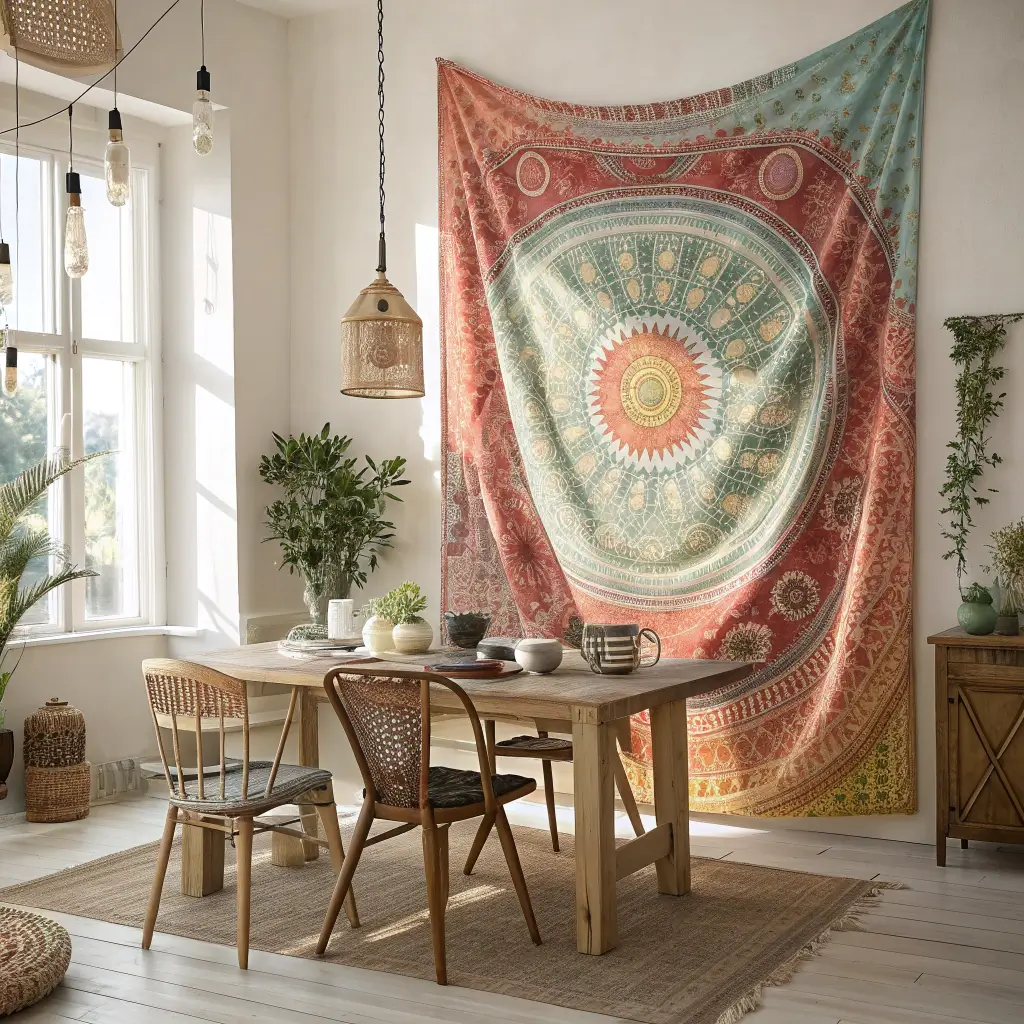
A large fabric tapestry can transform your dining room into something that feels traveled and worldly. I hung a vintage Turkish kilim on my largest wall, and suddenly my IKEA dining set looked intentionally eclectic rather than budget-conscious.
Tapestries work especially well in rentals where you can’t paint or make permanent changes. They hide imperfect walls, add instant color, and can be easily swapped out when you’re ready for change.
Hanging Without Damage
Skip the pushpins – they leave holes and don’t support weight properly. Instead, use a curtain rod system or wooden dowel that extends slightly beyond the tapestry width. This creates a professional look and prevents sagging.
For heavier pieces, consider Velcro strips along the top edge. They distribute weight evenly and won’t damage walls when removed properly. Just make sure you get the heavy-duty version – regular Command strips won’t cut it for substantial textiles.
Painted Accent Wall Patterns
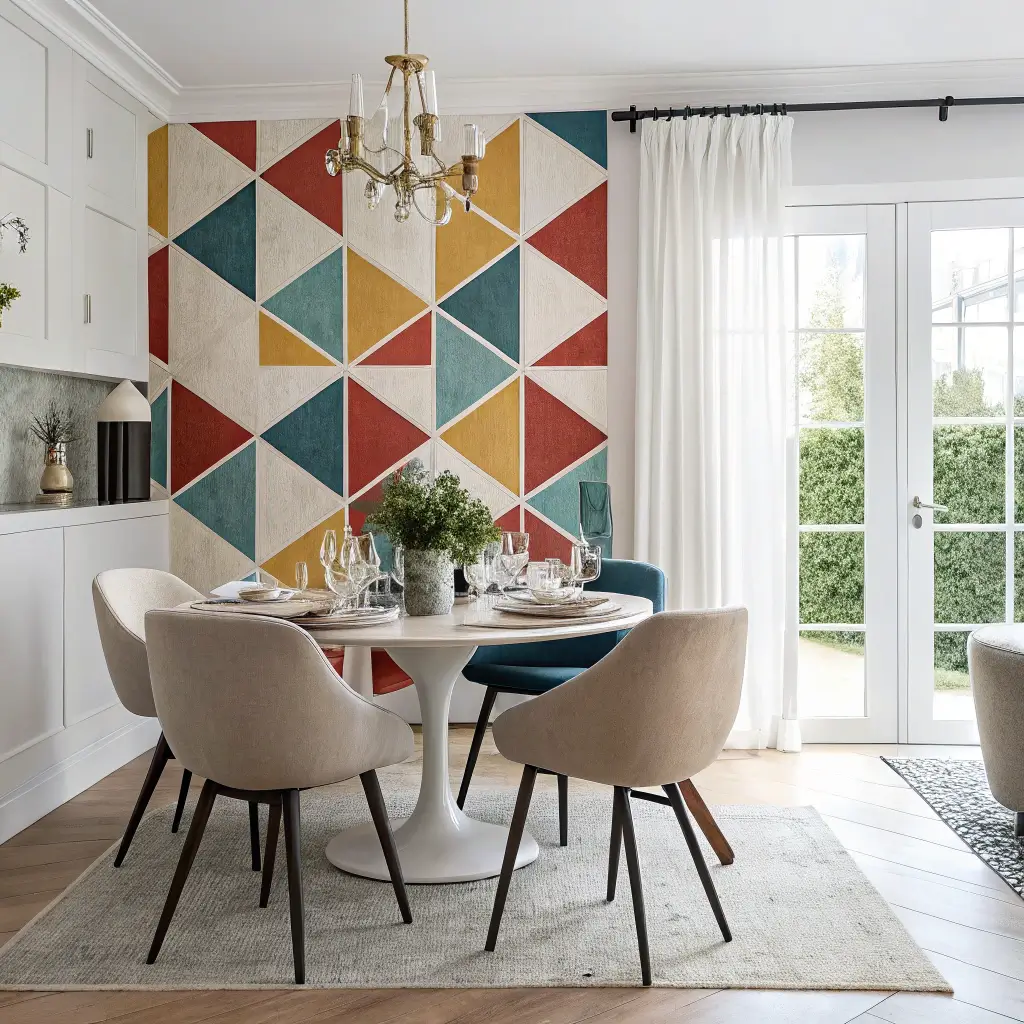
Sometimes the best wall decor is the wall itself. Painted patterns add permanent visual interest without taking up any space – perfect for smaller dining rooms. I painted geometric triangles in three shades of blue, and it cost less than $50 total but looks like expensive wallpaper.
Patterns can range from simple stripes to complex geometric designs. The trick is choosing something you won’t tire of quickly – you can’t exactly stick it in storage when you’re over it.
DIY Pattern Techniques
Painter’s tape is your best friend for crisp lines. Apply it carefully, seal edges with the base color to prevent bleeding, then paint your pattern color. Remove tape while the paint’s still slightly wet for the cleanest lines.
For more organic patterns, try sponging, rag-rolling, or even large-scale stencils. These techniques add texture and movement without requiring artistic skills. Just practice on cardboard first – trust me on this one.
Minimalist Floating Frames
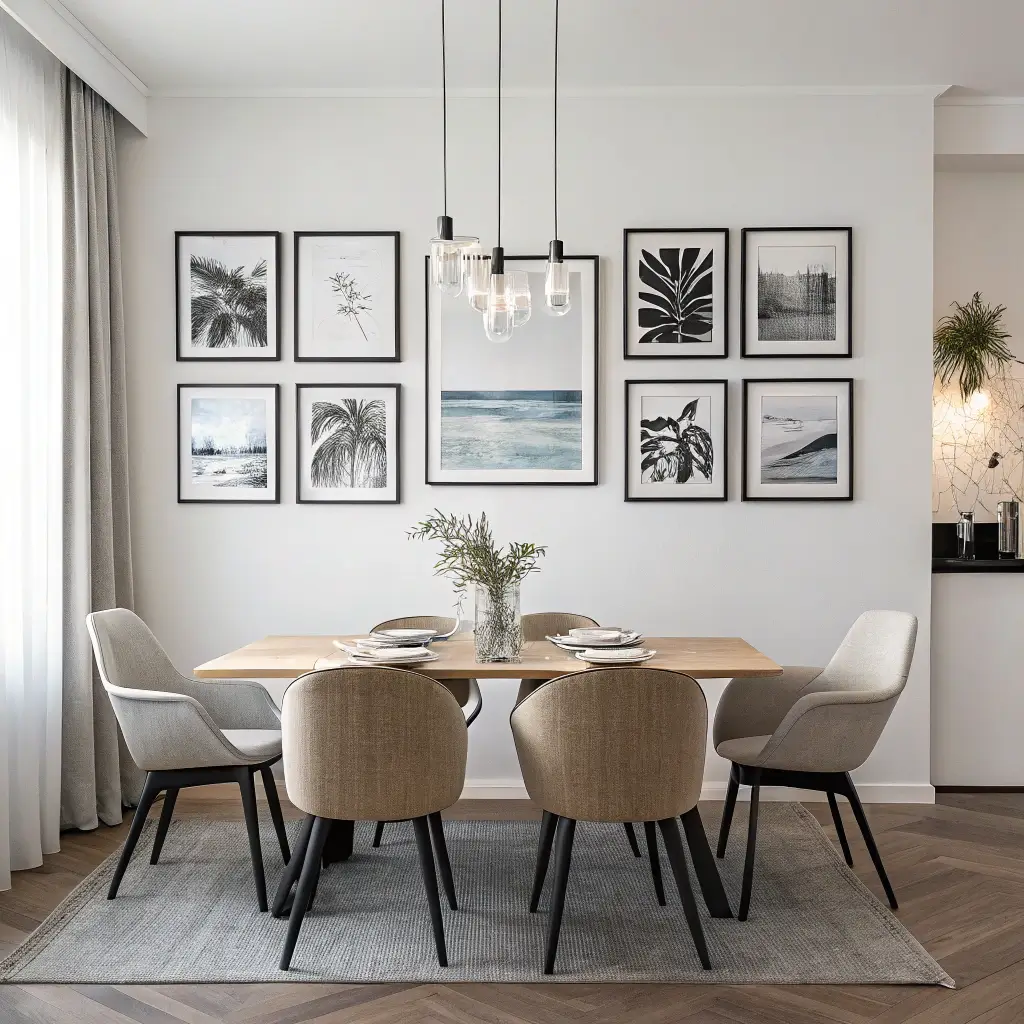
Sometimes less really is more. Floating frames showcase art, photos, or even pressed botanicals in a way that feels modern and gallery-like. I created a grid of nine identical floating frames with black and white photography, and it looks like something from a design magazine.
The magic of floating frames is their versatility and clean lines. They work with any decor style and can display practically anything flat – vintage postcards, children’s artwork, fabric samples, even beautiful wrapping paper.
Creating Impact Through Simplicity
Stick to odd numbers when grouping frames – three, five, or nine typically work best. Keep spacing mathematically consistent for that intentional, curated look. Use a level and measuring tape religiously; eyeballing it never works with minimalist design.
Consider what you’re framing carefully. The simplicity of floating frames means your content needs to be strong enough to stand alone. When in doubt, black and white photography or simple line drawings always look sophisticated.
Bringing It All Together
Creating the perfect dining room wall decor isn’t about following every trend or filling every inch of wall space. Pick two or three ideas that genuinely excite you and start there. Your dining room should reflect your personality while creating an atmosphere where people want to linger over meals and conversation.
Remember, the best dining rooms tell a story – your story. Whether you go bold with geometric panels or keep it personal with a gallery wall, make choices that you’ll still love when trends change. After all, you’re the one eating breakfast there every morning, hopefully admiring your handiwork instead of wondering what you were thinking.
The transformation doesn’t have to happen overnight either. Start with one wall, live with it for a while, then add more elements as inspiration strikes. Some of my favorite dining room moments happened completely by accident – like when I hung that vintage mirror at just the right angle to catch sunset light during dinner. Those happy accidents are what make a space feel truly special.
So grab that hammer, channel your inner designer, and give those boring dining room walls the glow-up they deserve. Your dinner guests (and your Instagram feed) will thank you.
